Background
This invention relates to the fields of telecommunications and computer systems. More particularly, a method and apparatus are provided for presenting content to a caller and/or a called party before, during and/or after a communication session (e.g., a telephone call) between the parties.
Calls from or to a mobile telephone are typically accompanied by minimal display content. For example, when placing a call, the caller may simply see a dialer screen used to enter a telephone number, or to select a number or contact to be dialed. When receiving a call, a called party may see the caller's telephone number (or some other display if the number is blocked or unknown) or a name of the caller (if the caller's telephone number is stored in the called party's contacts), but little else.
Although this minimal information may be sufficient for the basic purpose of identifying who is being called or who has originated a call, it fails to deliver the type of multimedia experience many people have come to expect in the electronic age. Just as computer systems have evolved from textual operating systems (e.g., DOS or Disk Operating System) to complex graphical operating systems (e.g., iOS®, Android™, Microsoft Windows®), the display capabilities of mobile telephones have evolved in a similar manner.
Although mobile telephone applications that operate independently of telephone calls have been developed to take advantage of the telephones' richer display capabilities, such as offline games, photography and GPS (Global Positioning System) navigation, applications that make and receive calls or that operate during a call have not. Therefore, there is a need for methods and apparatuses for enriching the experience of a person making or receiving a call.
Summary
In some embodiments, a method and apparatus are provided for presenting content to a caller and/or a called party in association with a telephone call or other communication connection. In these embodiments, content may be presented pre-ring (e.g., before the called party's telephone rings), in-call (e.g., during the call) and/or post-call (e.g., after one or both parties have hung up).
Content presented to a party may be related to that party, another party participating in the call (or other communication connection), or a third party (e.g., an advertiser that paid to have its content presented). Thus, rights to present content to parties engaging in a call may be auctioned to various advertisers and other organizations, and a party to a call may receive content that is or is not associated with any purpose or party to the call.
In some embodiments, presented content may be actuable (i.e., include one or more actuable controls), to allow a caller to change the destination or routing of a call, add or remove a party to/from the call, take advantage of an offer presented to him in the content, redeem a coupon, schedule or queue a subsequent call, respond to a query from another party, initiate some other desired action, etc.
In some embodiments, a person's ability to search for a desired destination party's contact information (e.g., telephone number) or to initiate a call to the party without knowing its number is greatly enhanced. In these embodiments, the person may initiate a direct or indirect search of any number of contact lists, telephone directories, and/or other databases, including lists maintained on his device and/or off his device—such as at a central call server or a third party repository.
Such a search may be conducted via keyword, so that as the person enters characters describing the target destination (e.g., by name, by category), the search is automatically updated and narrowed as the characters are entered. Results of a search may be filtered or prioritized based on the person's profile (e.g., with contacts known to that person having relatively high priority) and/or by a general profile (e.g., based on which numbers/contacts have been used most often or most recently by other people that conducted similar searches, and/or with respect to some other relevant or measurable attribute).
In some embodiments, one party to a call (e.g., the caller or a called party) provides some type of assistance to another party, regarding operation of the other party's communication device, operation of a program executing on the other party's communication device, obtaining a good or service, repairing or maintaining a good, supporting a service, making a diagnosis, retrieving desired information, or performing some other action or pertaining to some other subject matter. The one party may be associated with a particular organization (e.g., an organization that sold or that supports the device, a retail or wholesale organization), or may be a provider of concierge-type services, assisted shopping, or some other service to any number of other parties.
In association with the one party's assistance to the other party, the other party may be required to provide and/or confirm information regarding payment (e.g., for the one party's assistance, for a good or service or information that was ordered or obtained), such as a payment mechanism (e.g., a credit card, an electronic wallet), an account number, and so on. The other party's satisfaction of a payment requirement may be completed before, during, and/or after a related call, or may be performed as a separate event not associated with a particular communication connection. A “payment” may be a traditional form of payment using currency (including virtual currency and/or cryptocurrency), a credit/debit device (e.g., credit card, debit card), or a prepaid account, and/or may involve barter, exchange, equity, debt, or other type of legal transaction.
In some embodiments, real-time call control is applied when the communication connection is a telephone call from a caller (e.g., a private individual) to an organization represented by multiple agents. The call's control channel is diverted to a call controller, call server, or other entity, which determines a suitable termination point (e.g., a particular agent) for the call, and the call's voice channel is routed accordingly. During the agent's conversation with the caller, the agent may employ a data connection that allows the agent to obtain information from the call controller and/or other sources, regarding the caller, a transaction conducted with the caller, a good or service desired by the caller, a complaint from the caller, etc.
In some embodiments, a suitable agent or representative for engaging in a communication connection (e.g., a telephone call) is selected based on characteristics of the agent, the agent's employer/organization, and/or another party to the connection (e.g., language, gender, location), and possibly a topic of their communication (e.g., a particular good or service, information desired by the other party). Selection of the agent may occur as part of a method of providing real-time call control.
Description of the figures
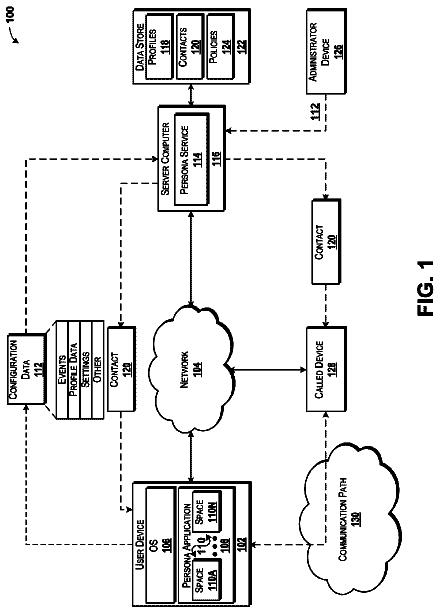
FIG. 1 is a block diagram of a communication environment in which some embodiments described herein may be implemented.
FIG. 2 is a block diagram demonstrating establishment of a telephone call and associated presentation of content, according to some embodiments.
FIGS. 3-8 demonstrate content that may be presented on a communication device of a caller and/or a called party before, during and/or after a telephone call, according to some embodiments.
FIG. 9 is a flow diagram demonstrating the presentation of content to a caller and/or a called party in association with a telephone call, according to some embodiments.
FIG. 10 is a flow diagram demonstrating the presentation of content to a caller in association with a telephone call, according to some embodiments.
FIG. 11 is a block diagram of hardware apparatus for facilitating presentation of content in association with a telephone call, according to some embodiments.
FIG. 12 is a block diagram of a call server for facilitating presentation of content in association with a telephone call, according to some embodiments.
FIG. 13 depicts the collection of payment information from a payor, according to some embodiments.
FIG. 14 depicts control of a telephone call in real-time or near real-time, according to some embodiments.
FIG. 15 is a flow chart demonstrating a method of performing real-time call control, with selection of a suitable agent, according to some embodiments.
Detailed description
The following description is presented to enable any person skilled in the art to make and use the embodiments disclosed herein, and is provided in the context of one or more applications and their requirements. Various modifications will be readily apparent to those skilled in the art, and the general principles defined herein may be applied to other embodiments and applications without departing from the scope of the following description. Thus, the embodiments provided here are to be accorded the widest scope consistent with the principles and features disclosed herein.
Introduction
In some embodiments, a method and apparatus are provided for presenting content before, during and/or after a telephone call or other communication connection. The call or communication connection is not limited to only two parties. For example, it may be a group call or chat involving three or more parties.
The content is displayed on a device that initiates or receives the call or connection, if the device's display is capable of displaying rich content; otherwise, it may be displayed on an associated computing device. In these embodiments, the displayed content may be selected based on an identity or a characteristic of the caller or the called party, may be relevant to a purpose or nature of the call, or may be selected by an entity that paid to have the selected content presented.
For example, for a telephone call between friends or acquaintances, a caller or called party may be presented with content drawn from a social media or other distributed electronic presence of the other party (e.g., Twitter™, Skype®, Snapchat®, Instagram®, WhatsApp®, LinkedIn®, MySpace®, Facebook®, Flickr®, Google+™, Google Voice™, Apple iMessage®, Flickr®) or from private storage (e.g., the friend's computing device). Or, he may be shown recent electronic mail, other communication(s) involving the friend (e.g., his or her latest tweet on Twitter), or other content the friend is willing to share. In some embodiments, people may assemble content for the specific purpose of having it presented to another party in association with a telephone call or other communication connection.
For a telephone call with an organization (e.g., a merchant, a business), an advertisement or special offer from that entity (or from an associate or a competitor of that entity) may be presented (e.g., a video ad, a social media ad, a Google AdSense Ad™, a yellow page ad), or a menu or list of services, directions or location information, information regarding a current or recent transaction, etc.
Content presented before, during, and/or after a telephone call may be accompanied by one or more controls for taking action, such as seeing more content, navigating to a particular web page or web site, downloading content, ordering a good or service, adding another party to the call, re-routing or aborting the call in favor of a different destination, sharing the content displayed on one party's device (or some other content) with another party, terminating the sharing or presentation of content, or initiating other action enabled by the content.
As used herein, a “service” related to content presented to a party (e.g., a service ordered by a caller) is intended to encompass not only repetitive activity (e.g., a subscription to a publication or information feed, telephone service, or some other utility), but also single or individual activities or solutions as well as a combination of a single activity and repeated activities. For example, some illustrative services include diagnosing a problem from an image or video of mechanical or electrical equipment (e.g., an engine, a computer), making a medical diagnosis from a suitable image (e.g., an image generated using radiography, Magnetic Resonance Imaging or MRI, ultrasound, tomography, or thermography), providing input to a 3-D printer, and analyzing a video or image of a scene (e.g., a crime scene, a crowd of faces, a view from an unattended camera in a natural habitat). A service may also, or instead, involve identifying or proposing one or more solutions to a specified problem or a condition depicted in an image or video.
Determination of what content to present to a party is made by a call controller. In embodiments described herein, a controller for a particular telephone connection may be the caller, a called party, a call center configured to process content in association with a telephone call, or some other third party. The decision of what to present may be made in real-time, or may be predetermined.
For example, a commercial message (e.g., an advertisement, an offer) may be pre-selected for presentation to some number of callers to a particular telephone number. Merchants or other organizations may pay for the opportunity to have their selected content presented to a caller or called party, even if the paying organization is not a party to the call.
In some embodiments, content selected by one party for presentation to another party before, during, and/or after a call between the parties may include some or all content presented (e.g., displayed, played) on the one party's communication device. For example, the one party may share his or her display, or a portion of the display (e.g., one window), so that both parties can mutually enjoy the content. Also, or instead, either party may assist the other with manipulation or understanding of the content or an associated application, make recommendations regarding the content (e.g., which of multiple products or services to purchase), assist with directions to a destination, etc.
During the sharing of content, the shared content may be manipulated (e.g., to select menu options, to browse or co-browse), annotated, highlighted, or otherwise affected by either or both parties. Thus, one party may highlight for the other which controls or menu options to actuate in order to achieve a particular goal, may actuate those controls for the other party, may make notations or marks on the content, may overlay the other party's display with other content (e.g., to provide a sample view of the result of actuating a particular control), may browse to additional content, etc.
As indicated above, embodiments are not limited to communication connections or content-sharing involving only two parties. Thus, content may be selected by one party for presentation to multiple other parties, or vice versa, multiple parties may observe or share content presented (or residing) on one party's device, and so on. Also, a given party participating in a communication connection may be an individual or (a representative of) an organization, and different parties may select content to be presented or shared, and/or control the presentation/sharing of the content, at different times.
Although some terms used herein reflect telephonic communications, such as “caller,” “called party,” “telephone,” “call,” “pre-ring,” “in-call,” and “post-call,” one of ordinary skill in the art will appreciate that methods of presenting content (or controlling presentation of content) in association with other types of communication connections (e.g., chat sessions, group chat sessions, video calls) are also within the scope of this disclosure. Terms encountered herein thus have different connotations depending on the types of communications being conducted.
Content Presentation in Association with a Telephone Call
FIG. 1 is a diagram of a communication environment in which content may be presented in association with a telephone call, according to some embodiments. In FIG. 1 , caller telephone or device 110 is used to place a call to a called party at called party telephone or device 150 . Call server 130 acts as a call controller to manage the presentation of content on the caller's device or telephone and/or the called party's device or telephone in association with the call.
In FIG. 1 , each telephone is capable of supporting parallel data and voice channels. A voice channel between caller telephone 110 and called party telephone 150 may be established through the PSTN (Public Switched Telephone Network), one or more telephone carrier's networks, other public/private networks such as the Internet (e.g., for VoIP calls), etc. Specifically, a telephone or other electronic/communication device described herein as participating in a communication connection (e.g., a call) supports traditional telephone connections (e.g., through POTS or Plain Old Telephone System) and/or digital telephony (e.g., VoIP). In illustrative embodiments, a party's communication device may be a smartphone, a tablet, or other mobile (or stationary) device having telephony capability.
Data channels to/from a party's telephone may be established using EvDO (Evolution Data Optimized or Evolution Data Only), UMTS (Universal Mobile Telecommunications System), HSDPA (High-Speed Downlink Packet Access or High-Speed Downlink Protocol Access), LTE (Long Term Evolution), VoLTE (Voice over LTE), and/or other communication protocols and links capable of carrying digital data. The data channels are routed via call server 130 , and are used to convey content to the telephones and to convey other data to the call server as necessary (e.g., to upload data from a telephone, activate a control within presented content).
Caller telephone 110 hosts any number of applications, applets, plug-ins, or other collections of executable program code. Illustrative code that may be installed on the caller telephone includes browser 112 for presenting and navigating content, one or more other applications in addition to browser 112 (e.g., a game, a chat utility), call processor 114 (e.g., a dialer application) for processing an outgoing or incoming call, and optional block/allow list 116 .
Call processor 114 comprises logic for detecting and/or controlling telephone events (e.g., dialing of a number, outgoing call ringing, incoming call ringing, outgoing or incoming call connected) and for using the data channel to receive content to be presented and to submit data to the call server and/or other destination (e.g., another party to the call). Call processor 114 may comprise logic that hooks into a telephone dialer application and can control how a call is handled. Or, the call processor may comprise logic that replaces or supersedes a device's native dialer application.
In some embodiments, call processor 114 may delay signaling of a voice call from caller telephone 110 to the caller's telephone service provider, in order to delay establishment of the voice channel. The call processor may do this automatically or based on instructions from the call server. Similarly, ringing at a called party's telephone may be delayed.
For example, calls placed to certain numbers or to certain types of parties (e.g., merchants, other organizations) may be delayed while content is selected and transmitted to the caller's telephone and/or a device operated by the called party. A timer may be displayed on the telephone and/or the caller may be able to terminate the delay and make the call proceed immediately. Thus, a delay may be fixed or may be aborted by the affected party.
A call processor may also comprise logic for performing keyword-based lookups, or may be configured to invoke similar logic that executes separate from the call processor. For example, when a caller enters part (or all) of the name of a person or organization that she wishes to call (or a partial telephone number), the keyword logic will search the called party's telephone for matching contacts.
The call processor, or other logic, may also contact a central location (e.g., call server 130 ) to initiate a keyword-based search on a larger telephone directory. Thus, a search for a destination party may be automatically conducted on the caller's telephone and/or off the device at a central location (e.g., call server 130 ) or a third party directory. As the caller enters additional characters, the search results are narrowed accordingly, and may be prioritized based on the caller's previous interaction with some of the contacts, based on which destination parties other callers selected in similar searches, based on the caller's present location, based on fees paid by merchants for priority listing, etc.
Other software may be installed on a party's communication device to alter or enhance the presentation of media. For example, a set of APIs (Application Programming Interfaces) may be provided to allow injection of particular types of content. The APIs may be used to facilitate presentation of content in association with a telephone call and/or without any association with a telephone call. However, in some embodiments, a person's communication device need not be modified in any way in order to receive and display content before, during, and/or after a call.
In the illustrated embodiments, caller telephone 110 (and/or call server 130 ) automatically blocks or rejects calls attempted between telephone 110 and telephone numbers (and/or people and organizations) identified in a block list. Additionally, or alternatively, an allow list may be maintained to specifically identify telephone numbers with which caller telephone 110 is permitted to be connected (e.g., all entries in a contact list or telephone directory maintained on a party's telephone). In yet other embodiments, a single combined block/allow list may be maintained to identify target telephone numbers and indicate whether calls with those numbers are blocked or allowed. A list of allowed and/or blocked telephone numbers or other identifiers of destination parties (e.g., screen names, chat handles, IP addresses, URLs) may be limited or expanded based on parameters such as the location of the caller and/or a called party, current time (e.g., at the caller's or called party's location), available communication bandwidth, and so on.
Block/allow lists may be maintained on a user's telephone and/or at a call controller or call server. A block/allow list maintained on telephone 110 (i.e., block/allow list 116 ) may be considered a “local” list, while a list maintained on a call controller (e.g., block/allow list 132 ) may be considered a “central” or “global” list.
In some embodiments, a block/allow list (or other filter) may be used to screen calls to/from malicious telephone numbers or entities. For example, calls received from telephone numbers known to be associated with telemarketers, spammers (e.g., entities that spam via SMS or Short Messaging Service), pranksters and/or other undesirables may be blocked automatically (or after querying the called party to identify the call as possibly or certainly being from an undesired party).
Illustratively, a global list may be maintained to identify telemarketers and spammers, especially those that call nationally or regionally. A local list may be maintained to block calls from pranksters, people who have made harassing calls and/or other parties from whom calls are not desired.
A called party may identify a caller as malicious (or, alternatively, not malicious) during or after a telephone call from that caller, by activating a control on her telephone. For example, during or after a call from a previously unknown caller, content may be presented to the called party to ask her if the caller is a telemarketer or harasser (or should otherwise be blocked), or if the caller should be added to her contact list. Choosing to add a previously unknown party or number to her contact list may cause the call server to interrogate the caller's telephone or other data source to retrieve a contact card, if one has been prepared for sharing.
In some embodiments, caller device 110 may include additional components or executable code for performing other functions, without exceeding the scope of the present disclosure. For example, a telephone may also include one or more storage components for storing, among other things, contacts, user preferences, content to be presented on the telephone or to be transmitted to another party for presentation on their device, etc.
Locally stored content may be quickly presented to a user without having to wait for receipt of the content from call controller 130 . Such stored content may be selected for storage and/or presentation randomly, based on an identity of the a party or parties within a contact list stored on the telephone, according to an agreement with a third party (e.g., an advertiser) and the call server or call controller, etc.
Called party telephone/device 150 may be configured similarly to caller telephone/device 110 (e.g., with a browser, a call processor, a block/allow list). In some embodiments, when a call is being initiated from caller telephone 110 to called party telephone 150 , call server 130 may query the called party's telephone to determine if it possesses any content that the called party would like to have presented to the caller. Such content may then be transferred before, during, and/or after the call. Similarly, content from caller telephone 110 may be copied to called party telephone 150 .
When a user's telephone is unable to display content chosen for presentation to that user in association with a telephone call, the content may instead be presented via a different device.
For example, and as shown in FIG. 1 , a called party (or a caller) may operate an associated computing device (e.g., a desktop computer, a laptop computer, a personal digital assistant, a netbook computer). The computing device may be registered with a call controller (e.g., call server 130 ) before or during a call (e.g., by IP address or other network address).
When the call controller determines that it cannot present pre-ring, in-call, and/or post-call content on called party telephone 150 , it will instead transmit it to the associated computing device. The call controller may determine that it cannot send content to telephone 150 based on the type of telephone or the telephone number (e.g., a landline), because the telephone connection lacks a data channel, because the device is registered in the called party's user profile, etc.
A party's associated computing device may be coupled to call server 130 by a network connection that traverses one or more public or private data networks (e.g., the Internet, an intranet). To register a computing device, a party may operate the computing device to navigate a browser to a registration site or page. There, the party may identify one or more telephone numbers and associate them with the computing device so that when a call is placed to or from one of the telephone numbers, content will be delivered to the computing device instead of the telephone.
Call server 130 comprises central or global block/allow list 132 for screening a call to determine whether it should be placed and/or whether content should be presented in association with the call. The call server also includes media selection logic 134 for selecting content to be displayed on a caller's or called party's communication or computing device. Call processor 136 is configured to receive or establish data (and/or voice) channels with caller telephone 110 and/or called party telephone 150 via virtually any data protocol and media.
Central call processor 136 (or some other component of call server 130 ) may thus incorporate some or all functionality of a local call processor (e.g., call processor 114 ), to support or enable delayed establishment of calls and/or other communication connections between devices, to perform lookups of contacts, to screen calls with a block/allow list (e.g., list 132 ), to select content to be presented on one or more devices (e.g., using logic 134 ), to transmit content to be presented on a device, etc.
Database(s) 140 are configured to store data regarding subscribers and their communication/computing devices, content that may be presented on such devices, information regarding advertisers and/or other third parties that may provide content, factors for determining or selecting content to be presented for a particular call, etc. Call server 130 may also expose various APIs (Application Programming Interfaces) to allow third parties to provide media for presentation in association with a telephone call, and/or other logic for retrieving or obtaining such content from a third party.
A call server or call controller according to other embodiments may be configured to perform a subset or a superset of the operations described herein, and therefore may include fewer or additional components. Call server 130 is an example of a third party call controller—that is, a controller that is not operated by the caller or a called party. Illustratively, call server 130 may be operated by a telephone service provider, a data management service, a directory service, or some other entity with which the caller and/or called party (or their service providers) have established agreements.
In other embodiments, a call controller may be operated by a caller or called party, particularly when that party represents an organization. Thus, a call to or from a commercial enterprise may be controlled by an agent of that enterprise (e.g., a telephone agent or operator, a sales agent, a customer service representative, a technical support representative, a concierge). That agent can select content for presentation on the other party's communication device based on a purpose of the call, a previous or current transaction between the parties, an offer being made to the other party, etc. Or, such content may be selected automatically, based on whether the organization has a pre-existing relationship with the caller (e.g., whether the caller's telephone number is known), which of multiple telephone numbers of the organization the caller called, etc.
In some embodiments, a call controller, call server, or associated entity may auction or directly sell a right to have content presented to callers and/or called parties. For example, an entity that operates a call server may auction the right to present content to callers that dial a particular organization (e.g., a commercial company) or that are called by the organization. The winner may be the same organization, a competitor, or an unrelated party.
Or, an entity that operates a call server may auction content presentation rights based on identities or demographics of private callers and calling parties. Thus, content presented to a party may be selected based on his current location, as reported by a GPS (Global Positioning System) element of his communication device, his country code (if applicable), his area code, his telephone exchange or number, his city, his type of communication device, his telephone service provider, and so on. For example, a content provider may be a vendor of goods or services and may have purchased the ability to have content presented to callers who place calls while they are within some predetermined distance of the content provider.
Content presented on a communication device may fill the area of the target party's telephone display screen, or only a portion thereof. For example, when a call is placed to a commercial organization, content from a single source may cover the caller's entire telephone display. But, when a call is placed to one private party from another private party, some or all of the display area may be used to present content associated with one or both parties (e.g., from Twitter™, Skype®, FaceTime®, Snapchat®, WhatsApp®, LinkedIn®, Facebook®, MySpace®, Instagram®, YouTube® Google+®, Flickr®), and only a small area may be filled with content (e.g., an advertisement) from a third party. Thus, content displayed on a party's telephone may comprise multiple content components from the same or different sources or providers.
When content is presented to a caller pre-ring (e.g., before a destination party's telephone rings, before a chat session is established with a recipient of the communication connection), the caller may activate a control embedded in the content to take some action offered by the content. For example, if he activates a control to re-route the call to a different destination (e.g., based on an offer or advertisement in the presented content), the call controller or the call processor logic on the caller's telephone will cancel the attempted call and initiate a call to the new destination. Or, a caller may be presented with content that offers to route the voice channel differently (e.g., via a different carrier for a cheaper rate).
In some embodiments, a call server and a separate call controller may cooperate to control the presentation of content to a caller and/or a called party. For example, and as shown in FIG. 1 , data channels may be established between the parties and a call server, and the call server may be responsible for actually transmitting content to the parties and receiving any data they submit.
The separate call controller, however, may be a third-party content provider (or other third party) and may determine (and/or dynamically provide) content to be provided to a particular party. Thus, a call server may participate in many calls, and connect to different call controllers for different calls (or at different times during one call) to receive content to be presented to a party. Even when a call server and a call controller are co-located or comprise a single entity, content to be served to callers and/or called parties may be retrieved from other parties.
As one alternative, a call may be initially handled by a call server, perhaps to facilitate presentation of appropriate pre-ring content to a caller or called party. However, at some point (e.g., when the called party's telephone rings, when a chat session is established), control of content presentation may be passed to a call controller associated with or employed by the called party. As yet another alternative, control of content presentation may be passed immediately to an organizational call controller when a call destined for that organization is identified.
FIG. 2 is a diagram illustrating presentation of content to a caller and/or a called party in association with a telephone call, according to some embodiments.
At step A, the caller enters or selects a telephone number or contact listing for called party 250 , in order to initiate a voice call to that party. Alternatively, she may enter part of the target party's name or number and select the party from results produced by her communication device and/or a source external to her device. At step B, the telephone numbers and/or other identifiers of the caller and called party (e.g., IP addresses if either party is using VoIP equipment) are transmitted to call controller/call server 230 via a data channel of the caller's telephone.
Control of the call may be passed to a particular call controller, based on an identity of the caller or the called party. Specifically, calls from a certain number (or set of numbers, such as those of a single organization) or to a certain number (or set of numbers) may be controlled by predetermined call controllers. Or, call controller 230 may be a general call server configured to handle presentation of calls involving multiple private parties and/or organizations. In some embodiments, the terms call server and call controller are synonymous, and either entity may delay (or support/enable delayed establishment of) a communication connection; enable presentation of pre-ring, in-call, and/or post-call content; support sharing of content between device; and so on.
In step C, call controller 230 identifies a source of content to be presented to caller 210 and/or called party 250 , or may identify specific content (i.e., not just a content source). In step D, the call controller solicits content from a selected source, which may be a web server, a data server, an advertisement server or other repository of advertisements, an organization's data server, the called party, the caller, etc.
Content may be selected for presentation based on an identity of a particular party, a relationship between the caller and the called party, an assumed (or known) purpose of the call, previous purchases or other behavior of a party, the location of a party, the local time with respect to a particular party, and/or other factors.
In step E, call controller 230 forwards the selected content to either or both of the caller and the called party. In some embodiments, the content may be served directly to a caller or called party from a content provider. Content may be presented to either party before the called party's telephone rings, during the parties' call and/or after the call is terminated.
The voice channel between caller 210 and called party 250 may be routed and established in a normal fashion. However, initiation of the connection may be delayed for a short period of time (e.g., by call processor logic operating on the caller's telephone). Thus, the actual voice connection may be completed any time after step A.
Illustrative content that may be presented to a caller or a called party pre-ring includes commercial offers and advertisements (e.g., if the other party is a commercial organization), private content such as pictures, communications, present status, current location (e.g., if the other party is a private individual), notifications, alerts, an identifier of the other party to the call (e.g., a corporate logo, a personal avatar), etc. As part of pre-ring or pre-call content, a caller may be able to better target his destination party. For example, if he is calling an organization's main (or toll-free) number, he may be presented with content that allows him to choose a particular office or outlet (e.g., based on city or address), a particular department (e.g., customer service, technical assistance), etc.
Illustrative content that may be presented to a party during a call includes any or all types of content that may be presented pre-ring. In-call content may also or instead relate to the parties' voice connection, perhaps to provide visual description of a subject of the parties' conversation, to graphically show different products or product options, to show a transcript of the conversation in real-time or near real-time (or provide other assistance to a hearing-impaired party), to guide a party through an IVR (Interactive Voice Response) menu, to provide customer assistance graphically (instead of or in addition to verbally), to exchange information textually/graphically instead of having to speak it or punch it in via a keypad, to promote an up-sell, to guide a party through an organization's telephone directory to find a desired person, to share content displayed on or stored on one party's device, to recreate annotations (e.g., mark-ups, comments, highlights, drawings) generated on one party's device on another party's device, etc.
Illustrative post-call content includes content that may be presented pre-ring and/or in-call. Post-call content may also or instead summarize the parties' conversation or transaction, provide a receipt, identify follow-on actions, confirm a later appointment or other scheduled event, return a party to a previously viewed set of content, etc. In some implementations, presentation of post-call content may entail providing to a party's device a link or reference to the content, in which case the device retrieves and presents the content to the party.
The description continues in the full USPTO document.
 Lapsed, fee not paid4 drawings