Background
When a communication is initiated between a sending device and a receiving device (e.g., a calling party and a called party), caller identification (“callerID”) information is sometimes displayed to assist users of the respective devices in identifying parties to the communication. Generally speaking, the calling party accesses a local directory such as a contact list, locates information that relates to a party being called or otherwise communicated with, and displays the information on a visual display. The called party, meanwhile, generally executes a similar process to match a phone number or other contact information exposed during a communication with a calling party, and displays information for a user to identify a calling party, a sending party, or the like.
Generally speaking, the information displayed at the calling and/or called devices (or sending and/or receiving devices) can be based on information stored in a local data storage location. Some technologies support using remote contact lists, or the like, but these technologies can be confusing for users and/or can cause latency and/or other performance issues during queries. For example, if a user is outside of work, the lookups or queries performed to access data relating to a calling party may cause latency and/or performance issues, while if the user is not working this lookup or query may not be needed or desired.
Summary
The present disclosure is directed to providing multiple persona support for communications. A persona service can be executed by a computing device such as a server computer to provide multiple persona support for communications. In some embodiments, the user device can initiate a communication with another device such as a receiving device, a called device, or the like. The communication can occur, in some embodiments, over a communication path. The communication can include an email, an instant message, a telephone call, a voice-over-IP (“VoIP”) call, a notification (e.g., a push notification, a special purpose short message, a control channel signal, or the like), a text message, a multimedia message service (“MMS”) message, combinations thereof, or the like. As such, the communication path can be established over a control channel, a data pipeline, a voice channel, combinations thereof, or the like. At initiation of a communication at the user device, a persona application executed by the user device can generate a signal, request, or service call to the persona service or elsewhere, in some embodiments, though this is not necessarily the case. Additionally, or alternatively, the persona service can query profiles and/or policies to determine one or more handling rules associated with the communication. The handling rules can define call routing for the communications, or the like.
If the communication corresponds to a communication such as an email, text message, instant message, or the like, the persona service can identify one or more contacts associated with the parties to the communication and provide the contacts to the parties engaged in the communication. The persona service also can be configured to allow delivery of the communication. If the communication corresponds to a call, the persona service can identify one or more call handling rules, which can be based upon the profiles and/or the policies. The call handling rules can define whether or not calls are to be allowed, blocked, sent to voicemail, or the like. The call handling rules also can define interruption rules that may specify when and how activities occurring at a device within one space may be interrupted to accommodate calls in a different space.
If the call handling rules define that the call is to be completed, the persona service can obtain contacts for the calling and called parties, and provide those contacts to the parties for display and/or use during the call. If the call is not to be allowed, the call can be routed to another destination such as a voicemail system, an assistant, an announcement, or the like. Thus, the persona service can use profiles and/or policies to determine if calls are to be completed, to provide contacts for the calls, and/or to define how the calls will be routed. In some embodiments, the contacts obtained by the persona service can be used to override or replace contact information included in a contact list or directory associated with one or more devices involved in a communication (e.g., a sending or calling device and a receiving or called device). In some instances, the contact override functionality can be used if a device is operating in accordance with some personas, but not others (e.g., in a work persona but not a personal persona). In various embodiments of the concepts and technologies described herein, the persona service can support archiving functionality. Thus, the persona service can be configured to support archiving during any communication for various reasons.
According to one aspect of the concepts and technologies disclosed herein, a method is disclosed. The method can include detecting, at a processor executing a persona service at the user device, a communication request that can include a request to initiate a communication. The method also can include determining, at the processor, at the information technology administrator level of the work space, if the communication includes a call, and if a determination is made that the communication includes the call, obtaining, by the processor, call handling rules, initiating, by the processor, setup of a communication path for the call, providing, by the processor, contacts to parties to the call, determining, by the processor, if the call is accepted, and if a determination is made that the call is accepted, allowing, by the processor, initiation of the call.
In some embodiments, the method also can include if a determination is made that the communication does not include the call, providing, by the processor, the contacts to parties to the communication, and allowing, by the processor, delivery of the communication. In some embodiments, providing the contacts includes providing a first contact to a user device associated with a calling party and a providing a second contact to a called device associated with a called party. The second contact can include an image associated with the calling party, a phone number associated with the calling party, and an organization associated with the calling party.
In some embodiments, obtaining the call handling rules can include obtaining a profile and a policy associated with the called party, and determining a call routing based upon analysis of the profile and the policy. In some embodiments, determining the call routing can include determining an active space associated with the called party, determining if the called device is busy, and if a determination is made that the called device is busy, determining if a policy suggests interruption of a communication in which the called device is engaged. The policy can be based upon the active space. In some embodiments, the method also can include if a determination is made that the policy suggests interruption of the communication, routing the communication to another destination, and allowing initiation of the call.
In some embodiments, the active space can include one space selected from a group of spaces including a personal space and a work space, and the active space can include a virtual environment hosted by a persona application executed by the called device. In some embodiments, determining the call routing can include determining an active space associated with the called party, determining if the called device is located in an irregular time zone or geo-location that differs from a time zone and geo-location associated with the active space, and if a determination is made that the called device is located in the irregular time zone or geo-location, routing the call to another destination. In some embodiments, the other destination can include a voicemail box associated with the called device. In some embodiments, the method also can include determining that the communication should be archived, and archiving the communication.
According to another aspect of the concepts and technologies disclosed herein, a system is disclosed. The system can include a processor and a memory. The memory can store computer-executable instructions that, when executed by the processor, cause the processor to perform operations. The operations can include detecting a communication request including a request to initiate a communication, determining, at the processor, if the communication can include a call, and if a determination is made that the communication can include the call, obtaining call handling rules, initiating setup of a communication path for the call, providing contacts to parties to the call, determining if the call is accepted, and if a determination is made that the call is accepted, allowing initiation of the call.
In some embodiments, providing the contacts can include providing a first contact to a user device associated with a calling party and a providing a second contact to a called device associated with a called party. The second contact can include an image associated with the calling party, a phone number associated with the calling party, and an organization associated with the calling party. In some embodiments, obtaining the call handling rules can include obtaining a profile and a policy associated with the called party and determining a call routing based upon analysis of the profile and the policy. Determining the call routing can include determining an active space associated with the called party, determining if the called device is busy, and if a determination is made that the called device is busy, determining if a policy suggests interruption of a communication in which the called device is engaged. The policy can be based upon the active space.
In some embodiments, obtaining the call handling rules can include obtaining a profile and a policy associated with the called party, and determining a call routing based upon analysis of the profile and the policy. Determining the call routing can include determining an active space associated with the called party, determining if the called device is located in an irregular time zone or geo-location that differs from a time zone and geo-location associated with the active space, and if a determination is made that the called device is located in the irregular time zone or geo-location, routing the call to another destination. In some embodiments, execution of the computer-executable instructions can cause the processor to perform operations further including if a determination is made that the policy suggests interruption of the communication, routing the communication to another destination, and allowing initiation of the call.
According to yet another aspect, a computer storage medium is disclosed. The computer storage medium can have computer-executable instructions stored thereon that, when executed by a processor, cause the processor to perform operations. The operations can include detecting a communication request including a request to initiate a communication, determining, at the processor, if the communication can include a call, and if a determination is made that the communication can include the call, obtaining call handling rules, initiating setup of a communication path for the call, providing contacts to parties to the call, determining if the call is accepted, and if a determination is made that the call is accepted, allowing initiation of the call.
In some embodiments, providing the contacts can include providing a first contact to a user device associated with a calling party and a providing a second contact to a called device associated with a called party. The second contact can include an image associated with the calling party, a phone number associated with the calling party, and an organization associated with the calling party. In some embodiments, obtaining the call handling rules can include obtaining a profile and a policy associated with the called party and determining a call routing based upon analysis of the profile and the policy. Determining the call routing can include determining an active space associated with the called party, determining if the called device is busy, and if a determination is made that the called device is busy, determining if a policy suggests interruption of a communication in which the called device is engaged. The policy can be based upon the active space.
In some embodiments, execution of the computer-executable instructions can cause the processor to perform operations further including if a determination is made that the policy suggests interruption of the communication, routing the communication to another destination, and allowing initiation of the call. In some embodiments, obtaining the call handling rules can include obtaining a profile and a policy associated with the called party, and determining a call routing based upon analysis of the profile and the policy. Determining the call routing can include determining an active space associated with the called party, determining if the called device is located in an irregular time zone or geo-location that differs from a time zone and geo-location associated with the active space, and if a determination is made that the called device is located in the irregular time zone or geo-location, routing the call to another destination.
Other systems, methods, and/or computer program products according to embodiments will be or become apparent to one with skill in the art upon review of the following drawings and detailed description. It is intended that all such additional systems, methods, and/or computer program products be included within this description, be within the scope of this disclosure.
Brief description of the drawings
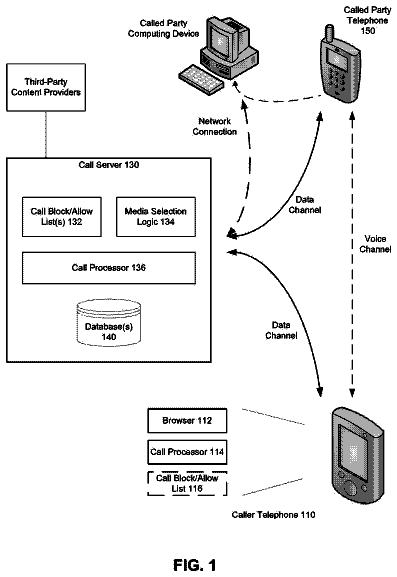
FIG. 1 is a system diagram illustrating an illustrative operating environment for various embodiments of the concepts and technologies described herein.
FIG. 2 is a flow diagram showing aspects of a method for storing policies and profiles for a persona service, according to an illustrative embodiment of the concepts and technologies described herein.
FIG. 3 is a flow diagram showing aspects of a method for providing multiple persona support for a communication, according to an illustrative embodiment of the concepts and technologies described herein.
FIG. 4 is a flow diagram showing aspects of a method for determining handling rules for a communication, according to an illustrative embodiment of the concepts and technologies described herein.
FIG. 5 is a flow diagram showing aspects of a method for determining call routing for a communication, according to an illustrative embodiment of the concepts and technologies described herein.
FIG. 6 is a flow diagram showing aspects of a method for archiving communications, according to an illustrative embodiment of the concepts and technologies described herein.
FIG. 7 schematically illustrates a network, according to an illustrative embodiment of the concepts and technologies described herein.
FIG. 8 is a block diagram illustrating an example computer system configured to provide multiple persona support for communications, according to some illustrative embodiments of the concepts and technologies described herein.
FIG. 9 is a block diagram illustrating an example mobile device configured to interact with a persona service, according to some illustrative embodiments of the concepts and technologies described herein.
Detailed description
The following detailed description is directed to providing multiple persona support for communications. A persona service/container can be created by a computing device such as a server computer to provide multiple persona support for highly secured communications. In some embodiments, the user device can initiate a communication with another device such as a receiving device, a called device, or the like. The communication can occur, in some embodiments, over a communication path. The communication can include an email, an instant message, a telephone call, a voice-over-IP (“VoIP”) call, a notification (e.g., a push notification, a special purpose short message, a control channel signal, or the like), a text message, a multimedia message service (“MMS”) message, combinations thereof, or the like. At initiation of a communication at the user device, depending on where the communication is originated from (which container/personality), a persona application executed by the user device can generate a signal, request, or service call to the receiving device. The persona service within the container can query profiles and/or policies to determine one or more handling rules associated with the communication. The handling rules also can define call routing for the communications, or the like.
The communication can include a communication such as an email, text message, instant message, or the like. The persona service within the specific container can identify one or more contacts associated with the parties of the communication and provide the contacts to the parties engaged in the communication. The persona service within the specific container can be configured to allow delivery of the communication. If the communication corresponds to a call, the persona service can identify one or more call handling rules, which can be based upon the profiles and/or the policies. The call handling rules can define whether or not calls are to be allowed, blocked, sent to voicemail, or the like. The call handling rules also can define interruption rules that may specify when and how activities occurring at a device within one space may be interrupted to accommodate calls in a different space.
If the call handling rules define that the call is to be completed, the persona service can obtain contacts for the calling and called parties, and provide those contacts to the parties for display and/or use during the call. If the call is not to be allowed, the call can be routed to another destination such as a voicemail system, an assistant, an announcement, or the like. Thus, the persona service can use profiles and/or policies to determine if calls are to be completed, to provide contacts for the calls, and/or to define how the calls will be routed. In some embodiments, the contacts obtained by the persona service can be used to override or replace contact information included in a contact list or directory associated with one or more devices involved in a communication (e.g., a sending or calling device and a receiving or called device). In various embodiments of the concepts and technologies described herein, the persona service can support archiving functionality. Thus, the persona service and container can be configured to support archiving during any communication for various reasons.
While the subject matter described herein is presented in the general context of program modules that execute in conjunction with the execution of an operating system and application programs on a computer system, those skilled in the art will recognize that other implementations may be performed in combination with other types of program modules. Generally, program modules include routines, programs, components, data structures, and other types of structures that perform particular tasks or implement particular abstract data types. Moreover, those skilled in the art will appreciate that the subject matter described herein may be practiced with other computer system configurations, including hand-held devices, multiprocessor systems, microprocessor-based or programmable consumer electronics, minicomputers, mainframe computers, and the like.
Referring now to FIG. 1 , aspects of an operating environment 100 for various embodiments of the concepts and technologies disclosed herein for providing multiple persona support for communications will be described, according to an illustrative embodiment. The operating environment 100 shown in FIG. 1 includes a user device 102 . The user device 102 can operate in communication with and/or as part of a communications network (“network”) 104 .
According to various embodiments, the functionality of the user device 102 may be provided by one or more server computers, desktop computers, mobile telephones, smartphones, laptop computers, tablet computers, media devices, set-top boxes, embedded computing systems, vehicle computing and/or communication systems, other computing systems, and the like. It should be understood that the functionality of the user device 102 can be provided by a single device, by two similar devices, and/or by two or more dissimilar devices. For purposes of describing the concepts and technologies disclosed herein, the user device 102 is described herein as a smartphone. It should be understood that this embodiment is illustrative, and should not be construed as being limiting in any way.
The user device 102 can execute an operating system 106 and one or more application programs such as, for example, a persona application 108 . The operating system 106 can include a computer program for controlling the operation of the user device 102 . The persona application 108 can include an executable program configured to execute on top of the operating system 106 to provide various functions illustrated and described herein for enabling multiple persona support for communications. The persona application can partition one or more independent container(s). In various embodiments, there is a personal space within the user device. It is possible that information on the personal space can be cut-and-paste to one, or more of the container(s). However, information exchange among the container(s) can be restricted by the application.
According to various embodiments of the concepts and technologies described herein, a “persona” can include a personality, profile, an environment, and/or the like for a user associated with the user device 102 . In some embodiments, the persona application 108 can create and/or support operations within virtual spaces (“spaces”) 110 A-N (hereinafter collectively and/or generically referred to as “spaces 110 ” or a “container”). The spaces 110 can include virtual operating environments that can correspond to each personality associated with the user device 102 and/or a user thereof.
The spaces 110 can provide a virtual environment (container) in which a user or entity can interact with and/or operate a device. This container can be associated with a specific role/work-related group/organization with which the owner of the user device is associated. One, or multiple work space(s)/container(s) can be created within the user device to associate with the possible role(s), work-related group(s), or organization(s) that the owner of the user device could have. Within the virtual environment or container, almost any aspect (e.g., user identity, phone number, communication mode, title, user image or photograph, combinations thereof, or the like) can be configured by the administrator of the work-related group, or organization. The spaces 110 , however, can be configured to change the various profile or persona details associated with a user while maintaining as consistent underlying hardware, core functionality, and/or even features or other functions in some embodiments. Of course, some spaces 110 can include extra functions or features, or eliminate others, though this is not necessarily the case.
In some embodiments, a space 110 that is associated with a work persona, referred to herein as a work space 110 , can allow copying of information into the space 110 (e.g., from a personal persona), but may restrict copying out of the space 110 (e.g., to a personal persona). Thus, the spaces 110 can be used to improve security associated with a device such as the user device 102 without affecting the hardware and/or software associated with the user device 102 other than creating and hosting the spaces 110 . It should be understood that these examples are illustrative and therefore should not be construed as being limiting in any way.
For example, a first space 110 can correspond to a personal space and a second space 110 can correspond to a work space for a user. The user can operate within the personal space when the user is away from work and/or at other times, and the user can operate within the work space when the user is at work and/or during working hours. In some embodiments, each of the spaces 110 can include or represent a profile for a user. Thus, the space 110 can include or represent a phone number, an instant messaging (“IM”) address, an email address, a VoIP identity and/or address information, call routing tables, user photographs, and/or other aspects of the user's profile and/or identity associated with the space 110 . Any number of spaces 110 can be supported by the persona application 108 illustrated and described herein, according to various embodiments.
A user can operate within a work space when the user is at work or at other times. As such, when the user initiates a communication such as a text message, an instant message, an email, a phone call, or the like, the personal application 108 can apply data represented within the associated space 110 (in this example the work space) and provide the communications in accordance with the space 110 . Thus, for example, the persona application 108 can route calls in accordance with the space 110 , set an identity associated with the space 110 , provide information about the user in accordance with the space 110 , combinations thereof, or the like. As will be explained in more detail below, the spaces 110 also can be used by other entities to provide contact information to receiving devices or users to identify the sending or calling party based upon information in the space 110 or persona being used to initiate or conduct the communication. These and other functions of the persona application 108 will be illustrated and described in more detail below.
In some embodiments, the persona application 108 can be used to create, apply, and or use the spaces 110 to conduct communications. In various embodiments, the persona application 108 can generate configuration data 112 . The configuration data 112 can include events, profile data, settings, and/or other information associated with the spaces 110 , the user device 102 , and/or the user thereof. It should be understood that this example is illustrative and therefore should not be construed as being limiting in any way.
According to various embodiments, the events can reflect a current space 110 and/or changes among spaces 110 . Thus, for example, if a user switches from a personal space to a work space, the persona application 108 can generate an event indicating this change and provide that event to other entities as part of the configuration data 112 . It should be understood that changes among spaces 110 can occur without user actions, for example by the persona application 108 based upon detected triggers or events. In some embodiments, the configuration data 112 can be provided to a persona service 114 and/or other service, module, application, or the like, which can be hosted and/or executed by a computing device such as a server computer 116 . It should be understood that this example is illustrative and therefore should not be construed as being limiting in any way. More details regarding the persona service 114 and/or its associated functionality will be illustrated and described in more detail below.
The configuration data 112 also can include profile data. The profile data can include data that can reflect or describe one or more user profiles or personas (“profiles”), which can correspond to the spaces 110 . The profile data can include, for example, one or more user names, one or more instances of organization and/or department or other business or organization information, one or more phone numbers, one or more email addresses, one or more photographs or other images, one or more instances of callerID information, combinations thereof, or the like. According to various embodiments, the persona service 114 can analyze the events and the profile data to identify a current profile 118 associated with the user device 102 and therefore, a space 110 within which the user device 102 is operating at a particular time. Additional details regarding the profiles 118 , the generation and/or storage thereof, and/or how the profiles 118 are used will be provided below.
The configuration data 112 also can include settings. The settings can define various configurations, options, and/or other settings associated with the persona application 108 and/or the persona service 114 . Thus, the settings can indicate, for example, how events are defined and/or the particular aspects of various events, definitions of the spaces 110 or related information, how information is provided to other entities, combinations thereof, or the like. The other data can include other information such as historical movement information, trends, time zone information (e.g., a time zone associated with one or more of the spaces 110 and/or profiles 118 ), organization chart information, combinations thereof, or the like. The other data also can include location information such as geographic location (“geo-location”), or the like. Thus, the other data can be used to determine a geo-location and whether or not the geo-location is associated with and/or departs from an expected geo-location.
The persona application 108 can be activated at the user device 102 and/or interacted with to set a space 110 as being a current space and/or to operate within the space 110 . In some embodiments, the persona application 108 can execute in the background and determine a current space 110 based upon a geographic location of the user device 102 (e.g., at home, at work, in transit, or the like); an explicit setting (e.g., a user selects a work space as active, a personal space as active, or the like); communications occurring via the user device 102 ; times and/or schedules; combinations thereof, or the like. Upon setting or changing a space 110 , and/or at other times, the user device 102 can transmit the configuration data 112 to the persona service 114 .
The persona service 114 can obtain the configuration data 112 (or a component thereof such as an event, a profile data or indicator, a setting, or the like). The persona service 114 can analyze the configuration data 112 and generate, in some embodiments, one or more profiles 118 based upon the configuration data 112 . The profiles 118 can correspond to personas and therefore can include a name, title, a phone number, an email address, other contact information and/or communication routing information, combinations thereof, or the like. Thus, a profile 118 can define a persona or profile associated with the user device 102 . Because multiple personas can be defined for the user device 102 , it should be understood that multiple profiles 118 may relate to the user device 102 and/or a user thereof.
The persona service 114 also can generate, based upon the configuration data, one or more contacts 120 . In some other embodiments, the contacts 120 can be generated by other devices, applications, services, or the like. The contacts 120 can include information associated with one or more spaces 110 and/or profiles 118 . The contacts 120 can include at least a name; a department or organization associated with the name; and a telephone number, email address, instant message address, or other contact information associated with the user. As will be illustrated and described in more detail below, the persona service 114 can be configured to provide contacts 120 to devices during communications to support display of space-specific and/or persona-specific information that otherwise may not be displayed during the communication.
According to various embodiments, the persona service 114 can store the profiles 118 and/or the contacts 120 in a local memory or other storage device or computer storage medium as defined herein. According to some other embodiments, the persona service 114 can store the profiles 118 and/or the contacts 120 in a remote data storage device or medium such as a data store 122 . The functionality of the data store 122 can be provided by one or more databases, server computers, desktop computers, mobile telephones, laptop computers, other computing systems, and the like. In the illustrated example embodiment, the functionality of the data store 122 can be provided by a server computer that can host the data illustrated within the data store 122 . It should be understood that this example is illustrative and therefore should not be construed as being limiting in any way.
As shown in FIG. 1 , the data store 122 also can be configured to store one or more policies 124 . The policies 124 can be used to define or determine call routing, communication flows, interruption rules, access limits, combinations thereof, or the like, for the user device 102 . The policies 124 can include group policies such as, for example, a policy 124 that can govern how a user device 102 is to interrupt a communication, the use of distinctive rings, combinations thereof, or the like. Some example policies 124 will be illustrated and described in more detail below, particularly with reference to FIG. 5 . Because the profiles 118 , the contacts 120 , and/or the policies 124 can be created by administrators and/or other entities, FIG. 1 also shows the configuration data 112 being received by the server computer 116 from a computing device associated with an administrator or other entity such as, for example, an administrator device 126 . It should be understood that this example is illustrative and therefore should not be construed as being limiting in any way.
According to various embodiments, the persona service 114 can provide multiple persona support for communications. In some embodiments, the user device 102 can initiate a communication with another device such as a called device 128 . The communication can occur, in some embodiments, over a communication path 130 . Notwithstanding the name assigned to the “called device,” it should be understood that the called device 128 can communicate (and/or be communicated with) via emails, instant messages, telephone calls, voice-over-IP (“VoIP”) calls, notifications, text messages, multimedia message service (“MMS”) messages, combinations thereof, or the like.
As such, the example of a phone call should be understood as being illustrative of the concepts and technologies described herein and should not be construed as being limiting in any way. Although not shown in FIG. 1 , it should be understood that the called device 128 can execute an operating system that can be similar or even identical to the operating system 106 ; a persona application that can be similar or event identical to the persona application 108 ; and/or can host or provide multiple personas or spaces that can be similar or even identical to the spaces 110 . As such, it should be understood that the illustrated example is illustrative and therefore should not be construed as being limiting in any way.
At initiation of a communication at the user device 102 , the persona application 108 can generate a signal (e.g., as part of the call or communication setup signaling) to the persona service 114 or elsewhere (e.g., a call setup device, a data setup device, or the like), if desired, though this is not necessary. The persona service 114 also can be configured to query the profiles 118 and/or the policies 124 to determine one or more handling rules associated with the communication. Alternatively, communications can be detected without queries and/or signaling. Regardless of how the communications are detected, if the communication is a call, the persona service 114 can determine whether the call is to be blocked, accepted, whether distinctive rings are to be used, combinations thereof, or the like. The handling rules also can define call routing for the communications, or the like.
If the communication corresponds to a communication such as an email, text message, instant message, or the like, the persona service 114 can identify one or more contacts 120 associated with the parties to the communication. For example, a contact 120 associated with a party sending the communication can be obtained and provided to the receiving device, and a contact 120 associated with the receiving device can be provided to the sending device. The persona service 114 also can be configured to allow delivery of the communication.
If the communication corresponds to a call, the persona service 114 can identify one or more call handling rules, which can be based upon the profiles 118 and/or the policies 124 . Thus, the call handling rules can define whether or not calls are to be allowed, blocked, sent to voicemail, or the like. The call handling rules also can define interruption rules that may specify when and how activities occurring at a device within one space 110 may be interrupted to accommodate calls in a different space 110 . These and additional call handling rules are illustrated and described in more detail herein with reference to FIG. 5 .
If the call handling rules define that the call is to be completed, the persona service 114 can obtain contacts 120 for the calling and called parties, and provide those contacts 120 to the respective parties for display and/or use during the call. If the call is not to be allowed, the call can be routed to another destination such as a voicemail system, an assistant, an announcement, or the like. Thus, the persona service 114 can use profiles 118 and/or policies 124 to determine if calls are to be completed, to provide contacts 120 for the calls, and/or to define how the calls will be routed.
In some embodiments, the contacts 120 obtained by the persona service 114 can be used to override or replace contact information included in a contact list or directory associated with one or more devices involved in a communication (e.g., a sending or calling device and a receiving or called device). Thus, a called device may not have information for a particular calling device in a local contacts list, but the persona service 114 may provide the contact 120 to provide a photograph, a name, a department or organization, a phone number, or the like to the called device for display during call setup and/or during the call. Alternatively, a called device may have information for the calling device in a local contacts list, but the persona service 114 may provide the contact 120 to override the existing information. Thus, work information included in the contact 120 can override personal information or vice versa. It should be understood that this example is illustrative and therefore should not be construed as being limiting in any way.
It can be appreciated that in some organizations, only a phone number may appear during a call without the contact 120 . Thus, the concepts and technologies described herein can enable users (e.g., users within an enterprise) to view various calling party or called party information before, during, or after a communication such as a call by providing new information or overriding existing information. It should be understood that this example is illustrative and therefore should not be construed as being limiting in any way.
The description continues in the full USPTO document.
 Lapsed, fee not paid11 drawings