 Lapsed, fee not paid32 drawings
Biotech & Lab · US 9,975,922 B2
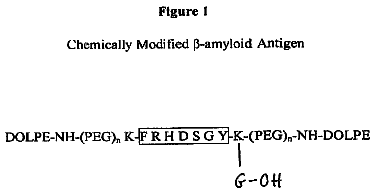
Peptide inhibitor of HIV reverse transcription
Disclosed are peptides that exhibit good binding to the anticodon stem and loop of human lysine tRNA species, tRNALys3.
US 9,975,930 B2 · Assignee: NAICONS S.R.L. · Inventors: Maffioli; Sonia I. et al.
Sheet 1 of 25 from the published document. All sheets in the USPTO PDF
The present invention concerns novel antibiotic compounds, which are lantibiotics, the processes for their preparation, their pharmaceutically acceptable salts, pharmaceutical compositions containing the lantibiotics, and their use as antibacterial agents. Compounds designated as lantibiotics, such as those of the present invention, are peptides belonging to the general class of antibiotic compounds, and are further generally characterized by the presence of the amino acids lanthionine and/or 3-methyllanthionine. The novel lantibiotic compounds are active against bacterial infections caused by Clostridium difficile, Staphylococcus spp., Streptococcus spp, Enterococcus spp., and other bacteria.
The compounds designated as lantibiotics are peptides belonging to the general definition of antibiotic compounds, characterized by the presence of the amino acids lanthionine and/or 3-methyllanthionine. The term lantibiotic thus defines a structural feature of these compounds and not necessarily a common possible pharmacological activity. In fact, some lantibiotics possess antibacterial activity while others are totally devoid of it. Among the lantibiotics possessing antibacterial activity, of particular relevance are those active against methicillin-resistant Staphylococcus aureus (MRSA), which can be of considerable interest in medicine. All the lantibiotics endowed with antibacterial activity described so far, exert their action by interfering with cell wall biosynthesis, through sequestration of a key intermediate in peptidoglycan formation. The antibacterial lantibiotics can be bro
1 of 25 drawing sheets so far from the published document, cropped to the drawing. Every sheet is in the USPTO PDF.
What the patent claimed, word for word. All of it is now free to use.
Incorporated by reference herein is the TXT file named 15435NeSseqListingWithSeqFormula1ST25.txt created on 20 Apr. 2017 and containing 9722 bytes of information.
The present invention concerns novel lantibiotic compounds having general formula (I), the processes for their preparation, their pharmaceutical acceptable salts and the pharmaceutical compositions containing them as well as their use as antibacterial agents.
The compounds designated as lantibiotics are peptides belonging to the general definition of antibiotic compounds, characterized by the presence of the amino acids lanthionine and/or 3-methyllanthionine. The term lantibiotic thus defines a structural feature of these compounds and not necessarily a common possible pharmacological activity. In fact, some lantibiotics possess antibacterial activity while others are totally devoid of it. Among the lantibiotics possessing antibacterial activity, of particular relevance are those active against methicillin-resistant Staphylococcus aureus (MRSA), which can be of considerable interest in medicine. All the lantibiotics endowed with antibacterial activity described so far, exert their action by interfering with cell wall biosynthesis, through sequestration of a key intermediate in peptidoglycan formation.
The antibacterial lantibiotics can be broadly divided into two groups on the basis of their structures: type-A lantibiotics are typically elongated, amphiphilic peptides, while type-B lantibiotics are compact and globular. Nisin is the typical representative of type A lantibiotic, whereas actagardine and mersacidin belong to the type B lantibiotic subclass. Remarkably, despite differences in shape and primary structure, both nisin-type and mersacidin-type lantibiotics interact with the membrane-bound peptidoglycan precursor lipid II. Furthermore, while the spectrum of antibacterial activity is generally restricted to Gram-positive bacteria, individual members of subclasses A and B greatly vary in their potency. Overall, the structural elements responsible for increased target binding and/or enhanced antibacterial activity in lantibiotics are poorly understood.
Traditionally, lantibiotics have been isolated mostly from the order Firmicutes (low G-C Gram-positive bacteria) and relatively few have been described from the Actinomycetales, the order best known for the ability to produce a large variety of other antibacterial agents. Actagardine and the recently described 107891 (International Publication Number WO2005/014628) are representative lantibiotics produced by the Actinomycetales.
These lantibiotics are active in vitro against Methicillin-Resistant Staphylococcus aureus (MRSA), streptococci and enterococci. S. aureus can cause life-threatening infections and MRSA is of particular clinical significance because it is resistant to all penicillins and cephalosporins and also to multiple other antibiotics; in addition it easily spreads from patient to patient causing outbreaks of infection with important implications for healthcare facilities. Vancomycin resistant enterococci (VRE) are emerging as important hospital-acquired pathogens responsible for severe human infections (such as endocarditis, meningitis and septicemia) posing an increasing therapeutic challenge. Streptococcus pneumoniae and Moraxella catarrhalis are recognized important human pathogens. They are a common cause of respiratory tract infections, particularly otitis media in children and lower respiratory tract infections in the eldery. M. catarrhalis and S. pneumoniae have been recently accepted as the commonest pathogens of the respiratory tract.
Variants and/or derivatives of naturally occurring antibiotics have been long sought after and can be useful in medicine. They can be produced by chemical synthesis or by modification of a natural product, but most structural variations in naturally occurring antibiotics tend to abolish or severely impair their antibacterial activity. This is particularly true in the field of lantibiotics, where structure-activity relationships (SAR) are poorly defined, in the absence of molecular details about antibiotic-target interactions. Furthermore, other factors likely to contribute to antibacterial potency are the diffusion rate of the compound to the target, after crossing the thick peptidoglycan layer, and possible interactions with polar, charged and hydrophobic moieties present on the protective external surfaces of the bacterial cell. An additional element rendering unpredictable the outcome of lantibiotic modifications is the existence of unrelated compounds possessing a similar mechanism of action, preventing conclusions drawn from SAR studies on one subtype to be applied to the other.
The disclosure herein encompasses novel lantibiotic compounds, processes for their preparation and their use in therapy, including for treating conditions requiring antibacterial therapy. These and other aspects of the present disclosure are described herein.
The present disclosure encompasses novel antibiotic compounds, which are lantibiotics, having the general formula (I), the processes for their preparation, and the pharmaceutical compositions containing them, their pharmaceutical acceptable salts and their use as antibacterial agents.
The present disclosure encompasses lantibiotic substances of microbial origin of general formula (I), their pharmaceutical acceptable salts, pharmaceutical compositions and their use as antibacterial agents.
The present disclosure encompasses a process for preparing lantibiotic derivatives according to formula (I), which comprises culturing one of the following strains: Streptomyces sp. ID105857 hereinafter identified as Streptomyces sp. DSM 24069 (deposited on 29 Sep. 2010 with the Deutsche Sammlung von Mikroorganismen und Zellkulturen GmbH (DSMZ) with accession number DSM 24069), or Streptomyces sp. ID106130 hereinafter identified as Streptomyces sp. DSM 24058 (deposited on 29 Sep. 2010 with the Deutsche Sammlung von Mikroorganismen und Zellkulturen GmbH (DSMZ) with accession number DSM 24058), or Streptosporangium sp. ID114623 hereinafter identified as Streptosporangium sp. DSM 24060 (deposited on 29 Sep. 2010 with the Deutsche Sammlung von Mikroorganismen und Zellkulturen GmbH (DSMZ) with accession number DSM 24060), or Streptomyces sp. ID99438 hereinafter identified as Streptomyces sp. DSM 24056 (deposited on 29 Sep. 2010 with the Deutsche Sammlung von Mikroorganismen und Zellkulturen GmbH (DSMZ) with accession number DSM 24056) or a variant or mutant of each one, still maintaining the ability to produce lantibiotics belonging to those of general formula (I), recovering the lantibiotic according to the present disclosure from the mycelium and/or from the fermentation broth and isolating the pure substance by chromatographic means. The present disclosure also encompasses a process for the preparation of lantibiotics derivatives according to formula (I) comprising modifications through chemical reactions of the lantibiotics directly obtained from culturing different strains of Streptomyces sp. according to the above.
According to the disclosure encompassed herein, compounds of formula (I) (SEQ ID No. 5) have the following general formula:
##STR00001## wherein X represents an amino acid chosen among Ala, Val, Leu or Ile; Y represents an amino acid chosen among Phe, Tyr, Trp or His; n is 1 or 2 and R.sub.1 and R.sub.2 independently represent OH or NR.sub.3R.sub.4 wherein R.sub.3 and R.sub.4 independently represent: hydrogen or an alkyl of 1 to 20 carbon atoms; an alkenyl of 2 to 20 carbon atoms; an alkynyl of 2 to 20 carbon atoms; a cycloalkyl of 3 to 8 carbon atoms optionally substituted by one or two substituents independently selected from halo, cyano, (C1-C4)alkyl optionally substituted by 1 to 3 halogen atoms, (C1-C4)alkoxy optionally substituted by 1 to 3 halogen atoms, phenyl, phenyl-(C1-C4)alkyl, phenoxy, phenoxy-(C1-C4)alkyl wherein each of phenyl, phenyl portion of the phenyl (C1-C4), alkoxy, phenoxy, phenoxy portion of the phenoxy-(C1-C4)alkyl group is optionally substituted by 1 to 3 halogen atoms, and (C1-C4)alkoxy optionally substituted by 1 to 3 halogen atoms; a phenyl radical optionally substituted by one or two substituents independently selected from halo, cyano, (C1-C4)alkyl optionally substituted by 1 to 3 halogen atoms, (C1-C4)alkoxy optionally substituted by 1 to 3 halogen atoms, phenyl, phenyl-(C1-C4)alkyl, phenoxy, phenoxy-(C1-C4)alkyl wherein each of phenyl, phenyl portion of the phenyl (C1-C4), alkoxy, phenoxy, phenoxy portion of the phenoxy-(C1-C4)alkyl group is optionally substituted by 1 to 3 halogen atoms, and (C1-C4)alkoxy optionally substituted by 1 to 3 halogen atoms a benzyl radical optionally substituted on the phenyl ring by one or two substituents independently selected from halo, cyano, (C1-C4)alkyl optionally substituted by 1 to 3 halogen atoms, (C1-C4)alkoxy optionally substituted by 1 to 3 halogen atoms, phenyl, phenyl-(C1-C4)alkyl, phenoxy, phenoxy-(C1-C4)alkyl wherein each of phenyl, phenyl portion of the phenyl (C1-C4), alkoxy, phenoxy, phenoxy portion of the phenoxy-(C1-C4)alkyl group is optionally substituted by one or two substituents selected from halo, cyano, (C1-C4)alkyl optionally substituted by 1 to 3 halogen atoms, and (C1-C4)alkoxy optionally substituted by 1 to 3 halogen atoms a naphthyl radical optionally substituted by one or two substituents selected from halo, (C1-C4)alkyl optionally substituted by 1 to 3 halogen atoms, and (C1-C4)alkoxy optionally substituted by 1 to 3 halogen atoms a group of formula —(CH.sub.2).sub.pOR.sub.5 in which p represents an integer from 2 to 8 and R.sub.5 represents hydrogen or (C.sub.1-C.sub.4) alkyl or a cycloalkyl of 3 to 8 carbon atom optionally substituted by one or two substituents independently selected from halo, cyano, (C1-C4)alkyl optionally substituted by 1 to 3 halogen atoms, (C1-C4)alkoxy optionally substituted by 1 to 3 halogen atoms, phenyl, phenyl-(C1-C4)alkyl, phenoxy, phenoxy-(C1-C4)alkyl wherein each of phenyl, phenyl portion of the phenyl (C1-C4), alkoxy, phenoxy, phenoxy portion of the phenoxy(C1-C4)alkyl group is optionally substituted by one or two substituents selected from halo, cyano, (C1-C4)alkyl optionally substituted by 1 to 3 halogen atoms, and (C1-C4)alkoxy optionally substituted by 1 to 3 halogen atoms a phenyl radical optionally substituted by one or two substituents independently selected from halo, cyano, (C1-C4)alkyl optionally substituted by 1 to 3 halogen atoms, (C1-C4)alkoxy optionally substituted by 1 to 3 halogen atoms, phenyl, phenyl-(C1-C4)alkyl, phenoxy, phenoxy-(C1-C4)alkyl wherein each of phenyl, phenyl portion of the phenyl (C1-C4), alkoxy, phenoxy, phenoxy portion of the phenoxy-(C1-C4)alkyl group is optionally substituted by one or two substituents selected from halo, cyano, (C1-C4)alkyl optionally substituted by 1 to 3 halogen atoms, and (C1-C4)alkoxy optionally substituted by 1 to 3 halogen atoms a group of formula —(CH.sub.2) q NR.sub.6R.sub.7 in which q represents an integer from 2 to 8 and R.sub.6 and R.sub.7 independently represent hydrogen or (C.sub.1-C.sub.4) alkyl or a cycloalkyl of 3 to 8 carbon atom optionally substituted by one or two substituents independently selected from halo, cyano, (C1-C4)alkyl optionally substituted by 1 to 3 halogen atoms, (C1-C4)alkoxy optionally substituted by 1 to 3 halogen atoms, phenyl, phenyl-(C1-C4)alkyl, phenoxy, phenoxy-(C1-C4)alkyl wherein each of phenyl, phenyl portion of the phenyl (C1-C4), alkoxy, phenoxy, phenoxy portion of the phenoxy-(C1-C4)alkyl group is optionally substituted by one or two substituents selected from halo, cyano, (C1-C4)alkyl optionally substituted by 1 to 3 halogen atoms, and (C1-C4)alkoxy optionally substituted by 1 to 3 halogen atoms a phenyl radical optionally substituted by one or two substituents independently selected from halo, cyano, (C1-C4)alkyl optionally substituted by 1 to 3 halogen atoms, (C1-C4)alkoxy optionally substituted by 1 to 3 halogen atoms, phenyl, phenyl-(C1-C4)alkyl, phenoxy, phenoxy-(C1-C4)alkyl wherein each of phenyl, phenyl portion of the phenyl (C1-C4), alkoxy, phenoxy, phenoxy portion of the phenoxy-(C1-C4)alkyl group is optionally substituted by 1 to 3 halogen atoms, and (C1-C4)alkoxy optionally substituted by 1 to 3 halogen atoms a benzyl radical optionally substituted on the phenyl ring by one or two substituents independently selected from halo, cyano, (C1-C4)alkyl optionally substituted by 1 to 3 halogen atoms, (C1-C4)alkoxy optionally substituted by 1 to 3 halogen atoms, phenyl, phenyl-(C1-C4)alkyl, phenoxy, phenoxy-(C1-C4)alkyl wherein each of phenyl, phenyl portion of the phenyl (C1-C4), alkoxy, phenoxy, phenoxy portion of the phenoxy-(C1-C4)alkyl group is optionally substituted by one or two substituents selected from halo, cyano, (C1-C4)alkyl optionally substituted by 1 to 3 halogen atoms, and (C1-C4)alkoxy optionally substituted by 1 to 3 halogen atoms R.sub.6 and R.sub.7 taken together represent a —(CH.sub.2).sub.3, —(CH.sub.2).sub.4—, —(CH.sub.2).sub.2—O—(CH.sub.2).sub.2, —(CH.sub.2).sub.2—S—(CH.sub.2).sub.2 or R.sub.6 and R.sub.7 taken together with the adjacent nitrogen atom represent: a piperazine moiety which may be substituted in position 4 with a substituent selected from (C.sub.1-C.sub.4) alkyl, (C.sub.3-C.sub.8) cycloalkyl, pyridyl, benzyl and substituted benzyl wherein the phenyl moiety bears 1 or 2 substituents selected from chloro, bromo, nitro, (C.sub.1-C.sub.4) alkyl and (C.sub.1-C.sub.4) alkoxy provided that when n=2, X is never selected as Val and Y is never selected as Trp.
In particular embodiments are featured lantibiotic compounds of formula (I) herewith arbitrarily named NAI-857, NAI-130, NAI-114 and NAI-438.
In an embodiment, the terms “antibiotic NAI-857”, “lantibiotic NAI-857”, or simply “NAI-857” are referred, unless otherwise specified, to the novel lantibiotic compound of general formula (I), wherein X is Ile, Y is Tyr, n is 1 and R.sub.1 and R.sub.2 are OH.
In an embodiment, the terms “antibiotic NAI-130”, “lantibiotic NAI-130”, or simply “NAI-130” are referred, unless otherwise specified, to the novel lantibiotic compound of general formula (I), wherein X is Val, Y is Tyr, n is 1 and R.sub.1 and R.sub.2 are OH.
In an embodiment, the terms “antibiotic NAI-114”, “lantibiotic NAI-114”, or simply “NAI-114” are referred, unless otherwise specified, to the novel lantibiotic compound of general formula (I), wherein X is Ile, Y is Trp, n is 2 and R.sub.1 and R.sub.2 are OH.
In an embodiment, the terms “antibiotic NAI-438”, “lantibiotic NAI-438”, or simply “NAI-438” are referred, unless otherwise specified, to the novel lantibiotic compound of general formula (I), wherein X is Ile, Y is Tyr, n is 2 and R1 and R2 are OH.
Generally lantibiotics are known for their conservative and complex structure, lantibiotics of the present disclosure overcome the limits of prior art. In fact the disclosure encompasses novel lantibiotics wherein specific and conservative amino acids, in a polypeptide chain, are substituted and replaced on the basis of chemical and functional similarity. In an embodiment, substitution and/or replacement are predetermined. In another embodiment, substitution and/or replacement are determined using experimental testing to identify the most suitable amino acid to use in a particular position, based on the desired use and/or function of the resultant lantibiotic.
The term “(C.sub.1-C.sub.4) alkyl” represents straight or branched alkyl chains of from 1 to 4 carbon atoms such as, but not limited to: methyl, ethyl, propyl, 1-methylethyl, butyl, 1-methylpropyl or 1,1-dimethylethyl. The term “(C.sub.3-C.sub.8) cycloalkyl” represents a cycloalkyl group selected from cyclopropyl, cyclobutyl, cyclopentyl, cyclohexyl and cycloheptyl, ciclooctyl. The term “(C.sub.1-C.sub.4) alkoxy” represents a straight or branched alkoxy chain of 1 to 4 carbon atoms such as, but not limited to, methoxy, ethoxy, propoxy, 1-methylethoxy, butoxy, 1-methylpropoxy and 1,1-dimethylethoxy.
According to another embodiment, when X is Ile, Y is Trp, n is 2 and R.sub.1 and R.sub.2 is NR.sub.3R.sub.4 where R.sub.3 (or R.sub.4) is H and R.sub.4 (or R.sub.3) is (CH.sub.2)qNR.sub.6R.sub.7 with q=2 and R.sub.6 and R.sub.7 are H, the compound is called NAI-114 derivative.
According to still another embodiment, when X is Ile, Y is Tyr, n is 1 and R.sub.1 and R.sub.2 is NR.sub.3R.sub.4 where R.sub.3 (or R.sub.4) is H and R.sub.4 (or R.sub.3) is (CH.sub.2)qNR.sub.6R.sub.7 with q=2 and R.sub.6 and R.sub.7 are H, the compound is called NAI-857 derivative.
In another preferred embodiment, the present disclosure encompasses novel compounds of general formula (I) wherein X represents an amino acid chosen among Ala, Val, Leu or Ileu; Y represents an amino acid chosen among Phe, Tyr, Trp or His; n is 1 or 2 and R.sub.1 and R.sub.2 are independently chosen among NR.sub.3R.sub.4 wherein the group —NR.sub.3R.sub.4 has the following formula:
The present disclosure also encompasses a process for the preparation of the novel compounds having the general formula (I) wherein X is chosen among Ala, Leu, Val or Ile; Y is chosen among Phe, His, Tyr or Trp; n is 1 or 2 and and R.sub.1 and R.sub.2 represent OH or NR.sub.3R.sub.4 wherein R.sub.3 and R.sub.4 are defined as above.
In an embodiment, compounds of general formula (I) wherein and R.sub.1 and R.sub.2 represent NR.sub.3R.sub.4 can be obtained and prepared by reacting corresponding compounds of formula (I) wherein R.sub.1 and R.sub.2 are chosen as OH, with a selected amine of formula HNR.sub.3R.sub.4, wherein R.sub.3 and R.sub.4 are defined as above.
In an embodiment, the reaction is carried out in the presence of a condensing agent, i.e. in the presence of a solvent. Preferred inert organic aprotic solvents useful for the condensation reaction are those solvents which do not unfavorably interfere with the reaction course and are capable of at least partially solubilizing the starting material, for example compounds chosen among those previously indicated as NAI-857, NAI-130, NAI-114 or NAI-438. Solvents can be chosen among organic amides, ethers of glycols and polyols, phosphoramide derivatives, sulfoxides. Preferably solvents are chosen among, but not limited to: dimethylformamide, dimethoxyethane, hexamethyl phosphoroamide, dimethylsulphoxide, dioxane, N-15 methylpyrrolidone and mixtures thereof. Preferably, dimethylformamide (DMF) is employed. The condensing agent according to the present disclosure is one suitable for forming amide bonds in organic compounds and, in particular, in peptide synthesis. Representative examples of condensing agents are diisopropylcarbodiimide (DIC), dicyclohexylcarbodiimide (DCC) without or in the presence of hydroxybenzotriazole (HOBT), N,N,N′,N′-tetramethyl-O-(benzotriazol-1-yl)uronium tetrafluoroborate. (TBTU), N,N,N′,N′-tetramethyl-O-(7oxabenzotriazol-1-yl)uranium hexafluorophosphate (HATU), benzotriazolyl-oxy-tris-(dimethylamino)phosphonium hexafluorophosphate (HBTU), benzotriazolyloxy-tris-(pyrrolidino)phosphonium hexafluorophosphate (PyBOP) and (C1-C4) alkyl, phenyl or heterocyclic phosphorazidates such as diphenylphosphorazidate, dimorpholyl-phosphorazidate. The preferred condensing agent is PyBOP. The condensing agent is generally employed in a slight molar excess, such as from 2.2 to 5; preferably the molar excess of condensing agent is about 2.5 times the molar amount of lantibiotic starting compound, for example chosen among NAI-857, NAI-130, NAI-114 or NAI-438. According to one embodiment, the amine is used in slight molar excess with respect to the starting compound. In general, a 3 to 10 fold molar excess of the selected amine is used, while a 4-5 fold molar excess is preferred. In an embodiment, when the amine HNR.sub.3R.sub.4 is reacted as a corresponding salt, for example the hydrochloride salt, it is necessary to add a suitable base in at least a molar proportion to obtain the free base of the amine HNR.sub.3R.sub.4 which reacts with compounds for example chosen among those indicated as NAI-857, NAI-130, NAI-114 or NAI-438. In this case, an excess of the base is generally preferred. It is convenient to add a salt-forming base to the reaction mixture in an at least equimolecular amount, and preferably in about 2.2 fold molar excess with respect to the amine HNR.sub.3R.sub.4. Examples of said salt-forming bases include, but are not limited to, tertiary organic aliphatic or alicyclic amines such as trimethylamine, triethylamine (TEA), N-methylpyrrolidine or heterocyclic bases such as picoline and the like, alkali metals (e.g. sodium and potassium) hydrogen carbonates and carbonates. The reaction temperature will vary considerably depending on the specific starting materials and reaction conditions. In general, it is preferred to conduct the amidation reaction at temperature from about 0° C. to about 50° C., and in an embodiment, preferably at room temperature. Also the reaction time varies considerably, depending on the other reaction parameters; in general the condensation is completed in about 2-4 h. In an embodiment, the condensation is completed in less than 2 hours. In an embodiment, the condensation is completed in more than 4 hours. When the amine HNR.sub.3R.sub.4 contains a further primary amino group it might be protected, if necessary, as known in the art, in order to get the desired product. Any typical protecting group of the amino rest, which is resistant to the conditions applied during the process of this disclosure and may be readily removed under conditions which do not affect the stability of the compounds for example chosen among NAI-857, NAI-130, NAI-114 or NAI-438 core portion can be utilized here. In an embodiment, suitable protecting groups of the amino function can be selected, for instance, from the groups described in: T. W. Greene, “Protective Groups in Organic Synthesis”, J. Wiley, N. Y., 1981. In an embodiment, in this case, those protecting groups, which are formed by acylating the amino moiety, are preferred. The protecting groups employed in the process herein described are those generally employed in peptides synthesis. A deprotection step is then necessary to obtain the desired final product. Generally, the reaction course is monitored by HPLC according to methods known in the art. On the basis of the results of this assays it will be possible to evaluate the reaction course and decide when to stop the reaction and start working up the reaction mass according to per se known techniques which include, for instance, precipitation by addition of non-solvents, extraction with solvents, in conjunction with further common separation operations and purification, e.g. by column chromatography.
Encompassed herein are a series of compounds can be prepared, as summarized in Table 1.
TABLE-US-00001 TABLE 1 —NR.sub.3R.sub.4 1. 2. 3. 4. 5. 6. 7. 0 8. 9. 10. 11. 12. 13. 14. 15. 16. 17. 0 18. 19. 20. 21.
In an embodiment, a compound is characterized in that X is Ile, Y is Trp, n=2, R.sub.1 or R.sub.2 is —NHCH.sub.2CH.sub.2NH.sub.2. The disclosure herein also encompasses a compound where X is Ile, Y is Tyr, n=1, R.sub.1 or R.sub.2 is —NHCH.sub.2CH.sub.2NH.sub.2.
Compounds of general formula (I) possess acid and/or basic functions, they are capable of forming salts with suitable bases or acids according to known procedures and it may exist also in the form of inner salt. In an embodiment, the lantibiotics, when obtained in the acid form or in the form of inner salt, may be converted into a corresponding non-toxic pharmaceutically acceptable salt with bases. Suitable salts include the alkali and alkaline earth metal salts, typically the sodium, potassium, calcium and magnesium salts, and the ammonium and substituted ammonium salts. Representative, non-limiting, substituted ammonium salts include primary, secondary or tertiary (C1-C4) alkylammonium and hydroxy (C1-C4) alkylammonium salts and, according to an embodiment of the present disclosure, the benzathine, procaine, hydrabamine and similar water insoluble, non-toxic, pharmaceutically acceptable salts. Another preferred class of salts of the compound of the present disclosure is represented by the basic addition salts with basic amino acids such as arginine or lysine, or aminosugars such as glucosamine and the like.
The alkali and alkaline earth metal salts are prepared according to the usual procedures commonly employed for preparing metal salts. As an example, lantibiotics according to the present disclosure, in the acid form or in the inner salt form, are dissolved into the minimum amount of a suitable solvent, typically a lower alkanol, or a lower alkanol water mixture, the stoichiometric amount of a suitable selected base is gradually added to the obtained solution and the obtained salt is precipitated by the addition of a non-solvent. The alkali or alkaline earth metal salt, which forms are then recovered by filtration or evaporation of the solvents.
Alternatively, these salts can be prepared in a substantially anhydrous form through lyophilization; in this case aqueous solutions containing the desired salts, resulting from the salification of the compounds according to the disclosure with a suitably selected alkali or alkaline earth metal carbonate or hydroxide in such a quantity as to obtain a pH comprised between and are filtered from any non soluble and lyophilized.
The organic ammonium salts can be prepared according to the above procedure by adding the properly selected amine to a solution of compounds in a suitable solvent and then evaporating off the solvent and the excess of the amine reagent or by lyophilizing the concentrate solution.
The addition salts of compounds encompassed herein with acids can be also prepared. Representative and suitable acid addition salts of the compounds of the disclosure include those salts formed by standard reaction with both organic and inorganic acids such as, for example, hydrochloric, hydrobromic, sulfuric, phosphoric, acetic, trifluoroacetic, trichloroacetic, succinic, citric, ascorbic, lactic, maleic, fumaric, palmitic, cholic, pamoic, mucic, glutamic, camphoric, glutaric, glycolic, phthalic, tartaric, lauric, stearic, salicylic, methanesulfonic, benzenesulfonic, sorbic, picric, benzoic, cinnamic and the like acids. The addition salts of the above mentioned compounds with acids can be prepared in a substantially analogues manner as that employed for the preparation of the salts with bases but using the appropriately selected acid as reagent in the place of the base.
As known in the art, the salt formation with either pharmaceutically or non-pharmaceutically acceptable acids may be used as a convenient purification technique. After formation and isolation, the salt form of a compound of formula (I) can be transformed into the corresponding non-salt or into a pharmaceutically acceptable salt. In some instances the acid addition salt of a compound of formula (I) is more soluble in water and hydrophilic solvents and has an increased chemical stability. Good solubility and stability in water or hydrophilic solvents of an active compound are in general appreciated in the art, for the preparation of suitable pharmaceutical compositions for the administration of the medicament. However, in view of the similarity of the properties of the compounds of formula (I) with their salts, what is said in the present application when dealing with the biological activities of the non-salt compounds of formula (I) applies also to their pharmaceutically acceptable salts, and vice versa.
The compounds encompassed herein can be administered orally, topically or parenterally, the preferred route of administration depending on the treatment to be carried out. Depending on the route of administration, these compounds can be formulated into various dosage forms. Preparations for oral administration may be in the form of capsules, tablets, liquid solutions or suspensions. As known in the art, the capsules and tablets may contain in addition to the active ingredient conventional excipients such as diluents e.g. lactose, calcium phosphate, sorbitol and the like lubricants e.g. magnesium stearate, talc, polyethylene glycol, binding agents, e.g. polyvinylpyrrolidone, gelatin, sorbitol, tragacanth, acacia, flavoring agents, and acceptable disintegrating and wetting agents. The liquid preparations generally in the form of aqueous or oily solutions or suspensions may contain conventional additives such as suspending agents. For topical use, the compounds of formula (I) of the present disclosure may also be prepared in suitable forms for absorption through the mucous membranes of the nose and throat or bronchial tissues and may conveniently take the form of liquid sprays or inhalants lozenges or throat paints. For medication of the eyes, the preparation may be presented in liquid or semi-liquid form. Topical applications may be formulated in hydrophobic or hydrophilic bases as ointments, creams, lotions, paints, or powders. For rectal administration the compounds of formula (I) of the disclosure are administered in the form of suppositories admixed with conventional vehicles, such as, for example, cocoa butter, wax, spermaceti or polyethylenglycols and their derivatives. Compositions for injection may take such forms as suspensions, solutions, or emulsions in oily or aqueous vehicles, and may contain formulation agents such as suspending, stabilizing and/or dispersing agents. Alternatively, the active ingredient may be in powder form for reconstitution at the time of delivery with a suitable vehicle, such as sterile water. The amount of active principle to be administered depends on various factors such as the size and conditions of the subject to be treated, the route and frequency of administration, and the causative agent involved.
The compounds encompassed herein are generally effective at a dosage comprised between about 1 and 40 mg of active ingredient per Kg of body weight. Depending on the characteristics of the specific compound, the infection and the patients, the effective dose can be administered in a single administration per day or divided in 2 to 4 administrations per day. Particularly desirable compositions are those prepared in the form of dosage units containing from about 30 to about 500 mg per unit.
The compounds encompassed herein can also be employed in combination with other drugs, being that another antibacterial agent or an agent intended to treat a second symptom or the cause of a different condition. For example, the antibacterial agents that can be used in conjunction with the compounds of the present disclosure include but are not limited to penicillins, cephalosporins, aminoglycosides, glycopeptides, rifamycins, lipopeptides, aminoglycosides. Therefore, compositions of the compounds of the present disclosure with other approved drugs fall also within the scope of the present disclosure.
The novel compounds of formula (I) encompassed herein, including salts, formulation and compositions thereof, can be effectively employed as the active ingredients of the antimicrobial preparations used in human or animal medicine for the prevention and treatment of infectious diseases caused by gram positive aerobic and anaerobic bacteria, such as Enterococcus sp., Streptococcus sp., Staphylococcus sp., Clostridium sp., including strains resistant to commonly used antibiotics.
The compounds encompassed herein, i.e. particularly lantibiotics NAI-857, NAI-130, NAI-114 or NAI-438 as well as their derivatives, are advantageously used as antibacterial agents against gram positive aerobic and anaerobic bacteria, such as Enterococcus sp., Streptococcus sp., Staphylococcus sp., Clostridium sp. in infectious diseases.
The disclosure also encompasses the use of a compound or composition thereof for the manufacture of a medicament for use in a specific method of treatment or prophylaxis of the human or animal body.
According to one embodiment, compounds of formula (I) are for example added to animal feed. This is preferably accomplished by preparing an appropriate feed premix containing the active compound in an effective amount and incorporating the premix into the complete ration. Alternatively, an intermediate concentrate or feed supplement containing the active ingredient can be blended into the feed.
The way in which such feed premixes and complete rations can be prepared and administered are described in reference books such as “Applied Animal Nutrition”, W.H. Freedman and CO., S. Francisco, U.S.A., 1969 or “Livestock Feeds and Feeding” 0 and B books, Corvallis, Ore., U.S.A., 1977.
FIG. 1 and FIG. 2 represent mass spectra (full-scan low resolution spectrum) of antibiotic NAI-857 showing a doubly protonated ion at m/z 1086.
FIG. 3 represents the UV spectrum of antibiotic NAI-857 dissolved in Acetonitrile:TFA 0.1%=1:1
FIG. 4 represents the .sup.1H-NMR spectrum of NAI-857 recorded in the mixture Acetonitrile-d.sub.3:D20 at 25° C. on a Bruker AMX 400 spectrometer.
FIG. 5 and FIG. 6 represents the HSQC and HMBC NMR spectra of NAI-857 recorded in the mixture Acetonitrile-d.sub.3:D20 at 25° C. on a Bruker AMX 600 spectrometer.
FIG. 7 and FIG. 8 represent mass spectra (full-scan low resolution spectrum) of antibiotic NAI-130 showing a doubly protonated ion at m/z 1078.5.
FIG. 9 represents the UV spectrum of antibiotic NAI-130 dissolved in Acetonitrile:TFA 0.1%=1:1
FIG. 10 represents the .sup.1H-NMR spectrum of NAI-130 recorded in the mixture Acetonitrile-d.sub.3:D20 at 25° C. on a Bruker AMX 600 spectrometer
FIG. 11 and FIG. 12 represents the HSQC and HMBC NMR spectra of NAI-130 recorded in the mixture Acetonitrile-d.sub.3:D20 at 25° C. on a Bruker AMX 600 spectrometer.
FIG. 13 and FIG. 14 represent mass spectra (full-scan low resolution spectrum) of antibiotic NAI-114 showing a doubly protonated ion at m/z 1104.
FIG. 15 represents the UV spectrum of antibiotic NAI-114 dissolved in Acetonitrile:TFA 0.1%=1:1
FIG. 16 represents the .sup.1H-NMR spectrum of NAI-114 recorded in the mixture Acetonitrile-d.sub.3:D20 at 25° C. on a Bruker AMX 600 spectrometer
FIG. 17 and FIG. 18 represents the HSQC and HMBC NMR spectra of NAI-114 recorded in the mixture Acetonitrile-d.sub.3:D20 at 25° C. on a Bruker AMX 600 spectrometer.
FIG. 19 and FIG. 20 represent mass spectra (full-scan low resolution spectrum) of antibiotic NAI-438 showing a doubly protonated ion at m/z 1093.
FIG. 21 represents the UV spectrum of antibiotic NAI-438 dissolved in Acetonitrile:TFA 0.1%=1:1
FIG. 22 and FIG. 23 represent mass spectra (full-scan low resolution spectrum) of NAI-857 diamide with ethylenediamine showing a doubly protonated ion at m/z 1128.
FIG. 24 and FIG. 25 represent mass spectra (full-scan low resolution spectrum) of NAI-114 diamide with ethylenediamine showing a doubly protonated ion at m/z 1146.
Encompassed herein is a process for the preparation of compounds of formula (I) comprising: cultivating at least one of an Actinomycetales sp. chosen among Streptomyces sp. DSM 24056, Streptomyces sp. DSM 24058 , Streptosporangium sp. DSM 24060 and Streptomyces sp. DSM 24069 or a variant or mutant thereof maintaining the ability to produce lantibiotic of formula (I), under aerobic conditions, in an aqueous nutrient medium containing an assimilable source of carbon, nitrogen and inorganic salts; isolating the resulting lantibiotic of formula (I) from the whole culture broth, or from the separated mycelium or from the filtered fermentation broth; purifying the isolated lantibiotic of formula (I).
In an embodiment, the production of lantibiotic NAI-857 is achieved by cultivating a Streptomyces sp. strain capable of producing it, i.e. Streptomyces sp. DSM 24069 or a variant or mutant thereof maintaining the ability to produce lantibiotic NAI-857, isolating the resulting lantibiotic from the whole culture broth and/or from the separated mycelium and/or from the filtered fermentation broth, and purifying the isolated lantibiotic by chromatographic means.
In an embodiment, the production of lantibiotic NAI-130 is achieved by cultivating a Streptomyces sp. strain capable of producing it, i. e. Streptomyces sp. DSM 24058 or a variant or mutant thereof maintaining the ability to produce lantibiotic NAI-130, isolating the resulting lantibiotic from the whole culture broth and/or from the separated mycelium and/or from the filtered fermentation broth, and purifying the isolated lantibiotic by chromatographic means.
In an embodiment, the production of lantibiotic NAI-114 is achieved by cultivating a Streptosporangium sp. strain capable of producing it, i. e. Streptosporangium sp. DSM 24060 or a variant or mutant thereof maintaining the ability to produce lantibiotic NAI-114, isolating the resulting lantibiotic from the whole culture broth and/or from the separated mycelium and/or from the filtered fermentation broth, and purifying the isolated lantibiotic by chromatographic means.
In an embodiment, the production of lantibiotic NAI-438 is achieved by cultivating a Streptomyces sp. strain capable of producing it, i. e. Streptomyces sp. DSM 24056 or a variant or mutant thereof maintaining the ability to produce lantibiotic NAI-438, isolating the resulting lantibiotic from the whole culture broth and/or from the separated mycelium and/or from the filtered fermentation broth, and purifying the isolated lantibiotic by chromatographic means.
According to one preferred embodiment, the production of lantibiotic NAI-857 (or NAI-130, NAI-114, NAI-438) is carried out under aerobic conditions in an aqueous nutrient medium containing easy digestible or usable sources of carbon, nitrogen, and inorganic salts. Many of the nutrient media usually employed in fermentation field can be used, however preferred carbon sources are starch, dextrin, glucose, maltose, glycerol, and the like. Preferred nitrogen sources are soybean meal, peptone, meat extract, hydrolyzed casein, tryptone, corn steep liquor, cottonseed meal, yeast extract, and the like.
Soluble salts capable of yielding sodium, potassium, iron, zinc, cobalt, magnesium, calcium, ammonium, chloride, carbonate, sulphate, phosphate, nitrate, and the like ions can be incorporated in certain media.
In a preferred embodiment, the strain producing antibiotic NAT-857 (or NAI-130, NAI-114, NAI-438) is pre-cultured in a fermentation tube or in a shake flask, then the culture is used to inoculate jar reactors for fermentation for the production of substantial quantities of substances. The medium used for the pre-culture can be the same as that employed for larger fermentations, but other media can also be employed.
According to one preferred aspect, Streptomyces sp. DSM 24069 (or Streptomyces sp. DSM 24058 , Streptosporangium sp. DSM 24060, Streptomyces sp. DSM 24056) strain is grown on S1 plates (detailed information are described in Experimental part—Example 1). On this medium strain Streptomyces sp. DSM 24069 forms grey colonies with light grey-white aerial mycelium. A light brown pigment is released in the medium with ageing of the cultures.
On S1 plates Streptomyces sp. DSM 24058 strain forms brown colonies with white aerial mycelium. A dark brown pigment is released in the medium.
On S1 plates Streptosporangium sp. DSM 24060 strain forms light orange to light pink colonies with patches of whitish aerial mycelium.
On S1 plates Streptomyces sp. DSM 24056 strain forms white-cream colonies with aerial mycelium of the same color.
The description continues in the full USPTO document.
About 5,774 words. The USPTO PDF has it with every drawing.
Fees are due 3.5, 7.5 and 11.5 years after grant. This patent expired on May 22, 2026, so the fee marked "not paid" was the one that went unpaid.
LANTIBIOTIC DERIVATIVES AND PROCESS FOR THEIR PREPARATION
Filed Nov 2013 · published Oct 2015Lantibiotic derivatives and process for their preparation
Filed Nov 2013 · granted May 2018Earlier publications, parents and continuations. None of them can still be enforced, or this patent would not be listed.
Prior art cited by the examiner or applicant. Useful when you check your own idea for novelty.
Everything on this page comes from the documents linked above.