Cross-reference to related application
This application claims benefit from Korean Patent Application No. 10-2015-0017467, filed on Feb. 4, 2015, in the Korean Intellectual Property Office, the disclosure of which is incorporated herein in its entirety by reference.
Background
1.
Field
The present disclosure relates to an electronic device and an operation method of the same, and more particularly, to an electronic device and an operation method of the same which may efficiently distribute content information to a plurality of display devices.
2. Description of the related art
With the prevalence of display devices, the case in which a display device is used to provide various advertising content information is increasing in number. In a store, a plurality of display devices may be installed at positions attracting customers' attention in order to advertise goods for sale to customers who visit the store, and each of the display devices may deliver various advertising messages to customers by outputting content.
However, when there are a plurality of display devices, it may be inconvenient to distribute content information to the plurality of display devices or redistribute content information which is updated after distribution of content information. Therefore, a method for efficiently distributing content information to a plurality of display devices is necessary.
Summary
Provided are an electronic device and an operation method of the same which may efficiently distribute content information to a plurality of display devices.
Additional aspects will be set forth in part in the description which follows and, in part, will be apparent from the description, or may be learned by practice of the presented exemplary embodiments.
According to an aspect of an exemplary embodiment, an electronic device includes a short-range wireless communicator; and a controller configured to search for at least one display device connected to the electronic device through the short-range wireless communicator, group the at least one display device into at least one group, make a determination whether to deliver content information to the at least one group, and control the short-range wireless communicator to deliver group-specific content information to the at least one group based on the determination.
The controller may be further configured to group the at least one display device into the at least one group based on at least one from among user input and predetermined group information.
The controller may be further configured to make the determination whether to deliver the content information to the at least one group if the group-specific content information is different from pre-stored content information stored in the at least one display device of the at least one group.
The short-range wireless communicator may be further configured to receive at least one identifier corresponding to the pre-stored content information stored in the at least one display device from the at least one display device.
The controller may be further configured to make the determination whether to deliver the content information to the at least one group based on at least one from among user input and whether the group-specific content information has been changed.
The electronic device may further include a display configured to output a user interface (UI) for grouping the at least one display device.
The electronic device may further include a user input interface configured to receive user input for setting at least one group name for identifying the at least one group.
The UI output by the display may be in a form corresponding to a physical arrangement of the at least one display device.
The controller may be further configured to acquire image data obtained by photographing the at least one display device, and configures the UI based on the image data.
The electronic device may further include a memory configured to store at least one from among group information indicating a relationship between the at least one group and at least one identifier of the at least one display device and predetermined group-specific content information.
According to another aspect of an exemplary embodiment, an operation method of an electronic device includes searching for at least one display device connected to the electronic device through a short-range wireless communicator; grouping the at least one display device into at least one group; determining whether to deliver content information to the at least one group; and delivering group-specific content information to the at least one group through the short-range wireless communicator based on a result of the determining.
The grouping of the at least one display device into the at least one group may further include grouping the at least one display device into the at least one group based on at least one from among user input and predetermined group information.
The determining of whether to deliver the content information may further include determining to deliver the group-specific content information to the at least one group if the group-specific content information is different from pre-stored content information stored in the at least one display device of the at least one group.
The operation method may further include receiving at least one identifier of the pre-stored content information stored in the at least one display device from the at least one display device through the short-range wireless communicator.
The determining of whether to deliver the content information may further include determining whether to deliver the group-specific content information to the at least one group based on at least one from among user input and whether the group-specific content information has been changed.
The operation method may further include outputting a user interface (UI) for grouping the at least one display device on a screen.
The operation method may further include receiving user input for setting at least one group name for identifying the at least one group.
The UI is output in a form corresponding to a physical arrangement of the at least one display device.
The operation method may further include: acquiring image data obtained by photographing the at least one display device; and configuring the UI based on the image data.
According to yet another aspect of an exemplary embodiment, a non-transitory computer-readable recording medium may include a program for implementing the operation method.
According to a further exemplary embodiment, a method for controlling an electronic device includes searching for a plurality of display devices connected to the electronic device through a short-range wireless communicator; grouping the plurality of display devices into a first group and a second group; determining whether to deliver first content information to the first group and second content information to the second group; and delivering the first content information to the first group and the second content information to the second group through the short-range wireless communicator based on a result of the determining.
The method may further include determining to deliver the first content information to first group if the first content information has been changed, and determining to deliver the second content information to the second group if the second content information has been changed.
Brief description of the drawings
These and/or other aspects will become apparent and more readily appreciated from the following description of the exemplary embodiments, taken in conjunction with the accompanying drawings in which:
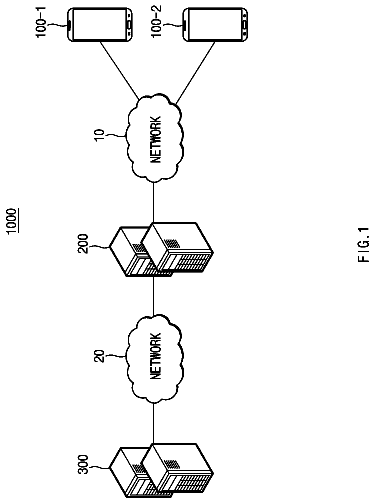
FIG. 1 shows an electronic device and display devices according to some exemplary embodiments;
FIG. 2 is a diagram illustrating an example of operation of an electronic device and display devices according to some exemplary embodiments;
FIGS. 3A and 3B show an example in which an electronic device according to some exemplary embodiments groups searched display devices D 1 to D 5 ;
FIG. 4 shows an example in which an electronic device according to some exemplary embodiments determines whether or not to deliver content information to each group when searched display devices are grouped as shown in FIGS. 3A and 3B ;
FIG. 5 is a diagram showing an example in which an electronic device determines whether or not to deliver content information to each group as shown in FIG. 4 and then delivers content information;
FIGS. 6A and 6B show an example of content information updated by an electronic device according to some exemplary embodiments;
FIGS. 7 to 9 are diagrams illustrating operation of an electronic device according to some exemplary embodiments after distributing content to display devices as shown in FIG. 5 and then updating content information as shown in FIGS. 6A and 6B ;
FIGS. 10A and 10B an example in which an electronic device according to some exemplary embodiments updates content information;
FIGS. 11, 12A-12C, 13A-13B, 14, and 15 are diagrams illustrating an example of operation of an electronic device and display devices after the electronic device distributes content to the display devices as shown in FIG. 9 and then updates content information as shown in FIGS. 10A and 10B ;
FIG. 16 shows an example of a user interface (UI) for grouping searched display devices which is output by an electronic device according to some exemplary embodiments;
FIGS. 17 to 19 show examples of a UI for grouping which is output by an electronic device according to some exemplary embodiments;
FIG. 20 shows a constitution of an electronic device according to some exemplary embodiments;
FIG. 21 shows a constitution of a display device according to some exemplary embodiments;
FIG. 22 is a block diagram showing a constitution of an electronic device according to some exemplary embodiments; and
FIG. 23 is a flowchart of an operation method of an electronic device according to some exemplary embodiments.
Detailed description
Reference will now be made in detail to exemplary embodiments, examples of which are illustrated in the accompanying drawings, wherein like reference numerals refer to like elements throughout. In this regard, the present exemplary embodiments may have different forms and should not be construed as being limited to the descriptions set forth herein. Accordingly, the exemplary embodiments are merely described below, by referring to the figures, to explain aspects. As used herein, the term “and/or” includes any and all combinations of one or more of the associated listed items. Expressions such as “at least one of,” when preceding a list of elements, modify the entire list of elements and do not modify the individual elements of the list.
FIG. 1 shows an electronic device 100 and display devices 200 according to some exemplary embodiments.
Referring to FIG. 1 , the electronic device 100 may be connected to at least one display device 200 through a short-range network 15 .
The electronic device 100 may be a smart phone, a tablet PC, a PC, a smart TV, a cellular phone, a personal digital assistant (PDA), a laptop computer, a media player, a micro server, a global positioning system (GPS) device, an electronic (e)-book terminal, a digital broadcasting terminal, a navigation device, a kiosk, an MP3 player, a digital camera, and another mobile or non-mobile computing device, but is not limited thereto.
Each of the at least one display device 200 may be a liquid crystal display (LCD), a cathode ray tube (CRT) display, a plasma display panel (PDP) display, an organic light emitting diode (OLED) display, a field emission display (FED), a light emitting diode (LED) display, a vacuum fluorescence display (VFD), a digital light processing (DLP) display, a flat panel display (FPD), a three-dimensional (3D) display, a transparent display, etc., but is not limited thereto.
In some exemplary embodiments, the at least one display device 200 may be plural in number, and may be configured to be used as one integrated display device forming one large screen.
The short-range network 15 wirelessly connects electronic equipment, such as the electronic device 100 , the at least one display device 200 , etc., a predetermined distance away from each other, thereby enabling communication with each other. Examples of the short-range network 15 may include a wireless personal area network (WPAN), a wireless local area network (WLAN), a wireless fidelity (Wi-Fi) network, a Bluetooth network, a ZigBee network, a Wi-Fi direct (WFD) network, an ultra wideband (UWB) network, an infrared data association (IrDA) network, a Bluetooth low energy (BLE) network, a near field communication (NFC) network, a Z-wave network, etc., but are not limited thereto.
The electronic device 100 may generate, change, store, or output content. The electronic device 100 may generate content by itself, or may be provided with content from an external device, such as a server, through a wired or wireless communication network. Content is digital information. Content may include moving image content (e.g., a TV program image, a video on demand (VOD), a user-created content (UCC), a music video, an YouTube image, etc.), still image content, (e.g., a photograph, a drawing, etc.), text content (e.g., an e-book (a collection of poems or a novel), a letter, or a work file), music content (e.g., a piece of music, a musical program, a radio broadcast, etc.), a web page, application execution information, etc., but is not limited thereto. Content may be intended for advertising.
Also, the electronic device 100 may set, store, or change scheduling information of content. In some exemplary embodiments, the electronic device 100 may be provided with scheduling information of content as well as the content from an external device. The scheduling information of content may include an output time, an output sequence, output rules, etc. of the content. The electronic device 100 may set, store, or change scheduling information of a plurality of pieces of content. The scheduling information may include the number, an output sequence, output rules, etc. of the plurality of pieces of content.
Throughout this specification, “content information” may include information including at least one of content and scheduling information of the content.
The electronic device 100 may deliver content information to the at least one display device 200 connected through the short-range network 15 . The at least one display device 200 may output content based on the content information received from the electronic device 100 . In some exemplary embodiments, the at least one display device 200 may output the content according to scheduling information.
FIG. 2 is a diagram illustrating an example of operation of the electronic device 100 and display devices D 1 to D 5 according to some exemplary embodiments.
Referring to FIG. 2 , the electronic device 100 may search at least one display device connected through a short-range network, for example, the first to fifth display devices D 1 to D 5 . Initially, the first to fifth display devices D 1 to D 5 may not output any content.
FIG. 2 shows the five display devices D 1 to D 5 but does not limit the number or the arrangement of a plurality of display devices.
FIGS. 3A-3B show an example in which the electronic device 100 according to some exemplary embodiments groups the searched display devices D 1 to D 5 .
Referring to FIGS. 2 and 3A , the electronic device 100 may output a user interface (UI) 10 for grouping the searched display devices D 1 to D 5 . The UI 10 may include a search list 11 showing the searched display devices D 1 to D 5 and a grouping menu 12 .
As shown in FIG. 3A , initially, none of the searched display devices D 1 to D 5 may be grouped. In other words, no group information may be set in the electronic device 100 . The electronic device 100 may group the searched display devices D 1 to D 5 into at least one group based on an input of a user.
Referring to FIG. 3B , the electronic device 100 may classify the first display device D 1 and the fifth display device D 5 into a second group G 2 , and classify the other display devices D 2 to D 4 into a first group G 1 . The user may classify display devices to which the same content information will be distributed through the electronic device 100 into the same group.
The groupings shown in FIG. 3B are just one example, and the plurality of display devices D 1 to D 5 may be grouped in various combinations.
FIG. 3B shows an example in which group names for identifying groups are “G 1 ” and “G 2 ,” but a group name may be set in various ways as at least one combination of a character, a number, a figure, a color, and so on. A group name may be set or changed by default or user input. The user may input a group name which facilitates recognition of display devices belonging to each group to the electronic device 100 . For example, based on user input, the electronic device 100 may set the group names of the first group G 1 and the second group G 2 to “Wall surface” and “Front surface,” respectively. Also, the electronic device 100 may automatically set installation positions in a store, etc. as group names so that the group names may be readily recognized by the user.
The UI 10 output through the electronic device 100 shown in FIGS. 3A-3B is one example, and the electronic device 100 may output a UI in various ways to group the searched display devices D 1 to D 5 .
FIG. 4 shows an example in which an electronic device according to some exemplary embodiments determines whether to deliver content information to each group when searched display devices are grouped as shown in FIGS. 3A-3B .
Referring to FIGS. 3A, 3B, and 4 , as groupings shown in FIGS. 3A and 3B , the second to fourth display devices D 2 to D 4 belong to the first group G 1 , and the first and fifth display devices D 1 and D 5 belong to the second group G 2 .
The electronic device 100 may determine whether to deliver content information CD 1 and CD 2 to the groups G 1 and G 2 , respectively. Then, the electronic device 100 may deliver content information of a determined group to the determined group.
Based on user input, the electronic device 100 may determine whether to deliver the content information CD 1 and CD 2 to the groups G 1 and G 2 , respectively. To this end, the electronic device 100 may output a UI for determining whether to deliver the content information CD 1 and CD 2 respectively to the groups G 1 and G 2 on the screen.
Based on the user input, the electronic device 100 may determine the group-specific (for example, G 1 and G 2 ) content information CD 1 and CD 2 . To this end, the electronic device 100 may output a UI for setting group-specific content information on the screen.
For example, the electronic device 100 may output a UI in the form of a table as shown in FIG. 4 on the screen. Based on user input, the electronic device 100 may set or change the group-specific content information CD 1 and CD 2 , and determine whether or not to deliver the content information CD 1 and CD 2 to the groups G 1 and G 2 , respectively.
In FIG. 4 , it is assumed that the electronic device 100 has determined to deliver the content information CD 1 and CD 2 to the groups G 1 and G 2 , respectively.
Group-specific members, group-specific content information, and whether to deliver content information to each of the groups G 1 and G 2 shown in FIG. 4 are examples, and group-specific members, group-specific content information, and whether or not to deliver content information to each group are not limited thereto.
FIG. 5 is a diagram showing an example in which the electronic device 100 delivers content information after determining whether or not to deliver content information to each group as shown in FIG. 4 .
Referring to FIGS. 4 and 5 , after determining to deliver the content information CD 1 and CD 2 respectively to the groups G 1 and G 2 , the electronic device 100 may deliver the first content information CD 1 which is content information of the first group G 1 to the second to fourth display devices D 2 to D 4 belonging to the first group G 1 and deliver the second content information CD 2 which is content information of the second group G 2 to the first and fifth display devices D 1 and D 5 belonging to the second group G 2 .
The second to fourth display devices D 2 to D 4 may output content based on the first content information CD 1 received from the electronic device 100 , and the first and fifth display device D 1 and D 5 may output content based on the second content information CD 2 received from the electronic device 100 . In other words, display devices belonging to the same group may output the same content.
After distributing content information to the display devices D 1 to D 5 according to groups as shown in FIG. 5 , the electronic device 100 may update the content information. For example, the electronic device 100 may generate new content information, or may change or remove the existing content information. There may be a random time difference between the distribution of content information and the update of content information. Even when the electronic device 100 is not connected to the display devices D 1 to D 5 , the electronic device 100 may update the content information. In other words, the electronic device 100 may update the content information at a random location.
FIGS. 6A and 6B show an example of content information updated by an electronic device according to some exemplary embodiments.
Referring to FIGS. 6A and 6B , the electronic device 100 may update content information shown in FIG. 6A as shown in FIG. 6B . FIG. 6A is an example of content information stored as operation results in the electronic device 100 shown in FIG. 5 .
Referring to FIG. 6A , content information of the first group G 1 including the second to fourth display devices D 2 to D 4 may be the first content information CD 1 , and content information of the second group G 2 including the first and fifth display devices D 1 and D 5 may be the second content information CD 2 .
Referring to FIG. 6B , the electronic device 100 may change the first content information CD 1 which is content information of the first group G 1 to third content information CD 3 . The third content information CD 3 may be obtained by changing at least one of content and scheduling information of the content included in the first content information CD 1 . The electronic device 100 may generate the third content information CD 3 by itself, obtain the third content information CD 3 by modifying the first content information CD 1 , or receive the third content information CD 3 from an external device connected through a wired or wireless communication network.
FIGS. 7 to 9 are diagrams illustrating operation of the electronic device 100 according to some exemplary embodiments after distributing content to the display devices D 1 to D 5 as shown in FIG. 5 and then updating content information as shown in FIGS. 6A and 6B .
Referring to FIG. 7 , the electronic device 100 may search for at least one display device connected through a short-range network, for example, the first to fifth display devices D 1 to D 5 .
Here, the second to fourth display devices D 2 to D 4 may store the first content information CD 1 received from the electronic device 100 in FIG. 5 , and the first and fifth display devices D 1 and D 5 may store the second content information CD 2 received from the electronic device 100 in FIG. 5 .
FIG. 8 shows an example in which the electronic device 100 shown in FIG. 7 according to some exemplary embodiments determines whether or not to deliver content information to the searched display devices D 1 to D 5 .
Referring to FIGS. 7 and 8 , the electronic device 100 may group the searched first to fifth display devices D 1 to D 5 . The electronic device 100 may group the first to fifth display devices D 1 to D 5 based on preset group information. The group information may include preset relationships between the groups G 1 and G 2 and the identifiers of the display devices D 1 to D 5 , that is, preset group-specific members. Because it is assumed that group information has been set in advance in the electronic device 100 as shown in FIG. 6B , the electronic device 100 may group the second to fourth display devices D 2 to D 4 into the first group G 1 and group the first and fifth display devices D 1 and D 5 into the second group G 2 .
The electronic device 100 may determine whether to deliver the content information CD 3 and CD 2 to the groups G 1 and G 2 , respectively. In FIG. 8 , it is assumed that the electronic device 100 has determined to deliver the content information CD 3 of the first group G 1 and not to deliver the content information CD 2 of the second group G 2 .
In various ways, the electronic device 100 may determine whether to deliver the content information CD 3 and CD 2 to the groups G 1 and G 2 , respectively. For example, based on user input, the electronic device 100 may determine whether or not to deliver the content information CD 3 and CD 2 . In another example, according to whether the content information CD 3 and CD 2 set according to the groups G 1 and G 2 has been changed, the electronic device 100 may determine whether or not to deliver the content information CD 3 and CD 2 to the groups G 1 and G 2 , respectively. In other words, the electronic device 100 may make a determination according to whether content information has been updated after a latest distribution. After the content information CD 1 and CD 2 has been most recently distributed as shown in FIG. 5 , content information of the first group G 1 is updated from the first content information CD 1 to the third content information CD 3 as shown in FIGS. 6A-6B . In this case, the electronic device 100 may determine to deliver only the content information CD 3 of the first group G 1 which has been updated after the latest distribution.
In still another example, the electronic device 100 may compare content information which is stored in the display devices D 1 to D 5 according to the groups G 1 and G 2 with the content information CD 3 and CD 2 which is set in the electronic device 100 according to the groups G 1 and G 2 , and determine to deliver content information to a group corresponding to set content information which is determined to be different from stored content information. In FIG. 7 , content information of the second to fourth display devices D 2 to D 4 belonging to the first group G 1 , which is the first content information CD 1 , and content information of the first group G 1 set in the electronic device 100 , which is the third content information CD 3 , differ from each other. Therefore, the electronic device 100 may determine to deliver the content information CD 3 of the first group G 1 . On the other hand, the content information CD 2 of the first and fifth display devices D 1 and D 5 belonging to the second group G 2 is the same as the content information CD 2 of the second group G 2 stored in the electronic device 100 . Therefore, the electronic device 100 may determine not to deliver the content information CD 2 of the second group G 2 . To this end, the electronic device 100 may receive the identifiers of content information stored in the respective display devices D 1 to D 5 from the display devices D 1 to D 5 . For example, the identifiers of content information may be the content information itself or the version information of the content information, but are not limited thereto.
As described above, in various ways, the electronic device 100 may determine whether or not to deliver the content information CD 3 and CD 2 respectively to the groups G 1 and G 2 , thus determining to deliver only the content information CD 3 of the first group G 1 .
FIG. 9 is a diagram showing an example in which the electronic device 100 delivers content information after determining whether or not to deliver content information to respective groups as shown in FIG. 8 .
Referring to FIG. 9 , the electronic device 100 may deliver the content information CD 3 of the first group G 1 to the first group G 1 which is a group determined as shown in FIG. 8 . The second to fourth display devices D 2 to D 4 belonging to the first group G 1 may output content based on the newly received content information CD 3 instead of the existing content information CD 1 (see FIG. 7 ). Therefore, the second to fourth display devices D 2 to D 4 may output content changed as shown in FIG. 7 and FIG. 9 , so that scenes may be changed.
As described above, the electronic device 100 according to some exemplary embodiments may group the plurality of display devices D 1 to D 5 to set group information in advance, and set group-specific content information in advance. Subsequently, when the electronic device 100 searches for the plurality of display devices D 1 to D 5 connected through a short-range network, the electronic device 100 may group the searched display devices D 1 to D 5 and automatically deliver group-specific content information to a determined group among the searched display devices D 1 to D 5 .
When the electronic device 100 according to some exemplary embodiments newly acquires content information or changes existing content information, the electronic device 100 may store the newly acquired or changed content information in conjunction with groups in order to set group-specific content information. When the user carrying the electronic device 100 visits a store, the electronic device 100 may automatically determine whether to deliver group-specific content information to preset groups, and deliver content information to a determined group. Therefore, according to some exemplary embodiments, the electronic device 100 may rapidly distribute updated content information to a plurality of display devices. According to some exemplary embodiments, the electronic device 100 manages and delivers content information according to groups, and thus may remove the inconvenience of receiving the setting of whether or not to deliver content information to each of a plurality of display devices or the setting of what kind of content information is to be delivered to each of the plurality of display devices from the user. In this way, the convenience and the satisfaction of the user of the electronic device 100 may be increased.
In other words, when the electronic device 100 according to some exemplary embodiments acquires updated content information and automatically searches for display devices which have been grouped by using a short-range communication method, the electronic device 100 may automatically distribute content information to the grouped display devices even without user input, so that the user may be provided with convenience.
Because the electronic device 100 and a plurality of display devices are connected through a short-range network, the user of the electronic device 100 and the plurality of display devices may be a short distance from each other. Therefore, the user of the electronic device 100 may see the plurality of display devices and scene changes of the plurality of display devices. In this way, the user may immediately determine whether or not desired content information has been distributed to the plurality of display devices properly.
Next, a case in which the electronic device 100 distributes content information to the display devices D 1 to D 5 as shown in FIG. 9 and then updates the content information again will be described with reference to FIGS. 10A-10 -B, 11 , 12 A- 12 C, 13 A- 13 B, and 14 .
FIGS. 10A-10B show an example in which an electronic device according to some exemplary embodiments updates content information.
Referring to FIGS. 10A-10B , as shown in FIG. 10A , the electronic device 100 may store the identifiers (for example, of members of groups) and content information of display devices belonging to respective preset groups according to the preset groups. FIG. 10A is similar FIG. 6B .
Referring to FIG. 10B , the electronic device 100 may change the second content information CD 2 which is content information of the second group G 2 to fourth content information CD 4 . The fourth content information CD 4 may be obtained by changing at least one of content and scheduling information of the content included in the second content information CD 2 . The electronic device 100 may generate the fourth content information CD 4 by itself, obtain the fourth content information CD 4 by modifying the second content information CD 2 by itself, or receive the fourth content information CD 4 from an external device connected through a wired or wireless communication network.
Also, the electronic device 100 may acquire fifth content information CD 5 . The electronic device 100 may generate the fifth content information CD 5 or receive the fifth content information CD 5 from an external device. The electronic device 100 may set no relationship between the fifth content information CD 5 and a group.
As shown in FIG. 10B , the electronic device 100 may or may not associate the newly acquired content information CD 4 and CD 5 with a group.
In brief, content information of the first group G 1 including the second to fourth display devices D 2 to D 4 may be the third content information CD 3 , content information of the second group G 2 including the first and fifth display devices D 1 and D 5 may be the fourth content information CD 4 , and no relationship may be set between the fifth content information CD 5 and a group.
FIGS. 11 . 12 A- 12 C, 13 A- 13 B, 14 , and 15 are diagrams illustrating an example of operation of the electronic device 100 and the display devices D 1 to D 5 after the electronic device 100 distributes content to the display devices D 1 to D 5 as shown in FIG. 9 and then updates content information as shown in FIGS. 10A-10B , according to some exemplary embodiments.
Referring to FIG. 11 , the electronic device 100 may search for at least one display device connected through a short-range network, for example, the first to third display devices D 1 to D 3 and fifth to seventh display devices D 5 to D 7 . In contrast to FIG. 9 , it is assumed that the electronic device 100 has not searched the fourth display device D 4 but has newly searched sixth and seventh display devices D 6 and D 7 .
Here, the second and third display devices D 2 and D 3 may store the third content information CD 3 received from the electronic device 100 in FIG. 9 , and the first and fifth display devices D 1 and D 5 may store the second content information CD 2 . Initially, the newly searched sixth and seventh display devices D 6 and D 7 may not have any content information.
FIGS. 12A-12C show examples in which the electronic device 100 of FIG. 11 according to some exemplary embodiments groups the searched display devices D 1 to D 3 and D 5 to D 7 based on preset group information.
Referring to FIGS. 11 and 12 , because it is assumed that group information is set in the electronic device 100 in advance as shown in FIG. 10B , the electronic device 100 may group the second and third display devices D 2 and D 3 into the first group G 1 and group the first and fifth display devices D 1 and D 5 into the second group G 2 .
The electronic device 100 may group the newly searched sixth and seventh display devices D 6 and D 7 in various ways as shown in FIGS. 12A, 12B , and 12 C.
Referring to FIG. 12A , the electronic device 100 does not have preset group information of the sixth and seventh display devices D 6 and D 7 , and thus may set no group for the sixth and seventh display devices D 6 and D 7 . Here, the electronic device 100 may recognize that the sixth and seventh display devices D 6 and D 7 which have not been grouped have been grouped into a preliminary group which has not been set as a specific group.
Referring to FIG. 12B , the electronic device 100 may automatically classify the sixth and seventh display devices D 6 and D 7 which have not been grouped in advance into a third group G 3 which is a new group.
Referring to FIG. 12C , the electronic device 100 may classify the sixth display device D 6 which has not been grouped in advance into the third group G 3 which is a new group and the seventh display device D 7 into a fourth group G 4 which is a new group.
As shown in FIGS. 12A-12C , a method in which the electronic device 100 automatically groups the display devices D 6 and D 7 that have not been grouped in advance may be implemented in various ways.
Although the electronic device 100 automatically groups the searched display devices D 1 to D 3 and D 5 to D 7 , the electronic device 100 may change grouping of the searched display devices D 1 to D 3 and D 5 to D 7 through user input.
FIGS. 13A-13B show an example in which the electronic device 100 according to some exemplary embodiments outputs the UI 10 for grouping the searched display devices D 1 to D 3 and D 5 to D 7 .
Referring to FIG. 13A , the electronic device 100 may output the UI 10 for grouping the searched display devices D 1 to D 3 and D 5 to D 7 . At this time, the UI 10 may show results in which the searched display devices D 1 to D 3 and D 5 to D 7 are automatically grouped based on preset group information. In FIG. 13A , it is assumed that the electronic device 100 has grouped the searched display devices D 1 to D 3 and D 5 to D 7 as show in FIG. 12A . The second and third display devices D 2 and D 3 may be grouped into the first group G 1 , the first and fifth display devices D 1 and D 5 may be grouped into the second group G 2 , and the sixth and seventh display devices D 6 and D 7 may not be grouped.
Referring to FIG. 13B , the electronic device 100 may classify the sixth and seventh display devices D 6 and D 7 into the third group G 3 based on user input.
The groupings shown in FIG. 13B are just an example. The newly searched sixth and seventh display devices D 6 and D 7 may be grouped in various ways. For example, the sixth and seventh display devices D 6 and D 7 may be included in the preset groups G 1 and G 2 ). Also, the electronic device 100 may change preset groupings (e.g., FIG. 10B ) through the UI 10 . In this way, the electronic device 100 may group the searched display devices D 1 to D 3 and D 5 to D 7 in various combinations based on at least one of preset groupings (e.g., FIG. 10B ) and user input.
FIG. 14 shows an example in which an electronic device according to some exemplary embodiments determines whether or not to deliver content information to each group.
Referring to FIG. 14 , as groupings shown in FIGS. 13A-13B , members of the first group G 1 are the second and third display devices D 2 and D 3 , members of the second group G 2 are the first and fifth display devices D 1 and D 5 , and members of the third group G 3 are the sixth and seventh display devices D 6 and D 7 .
Here, the third content information CD 3 and the fourth content information CD 4 may be respectively set for the first group G 1 and the second group G 2 which are preset groups (see FIG. 10B ). The electronic device 100 may set the fifth content information CD 5 as content information of the newly formed third group G 3 . To this end, the electronic device 100 may output a UI for setting content information of the newly formed third group G 3 on the screen. In some exemplary embodiments, the electronic device 100 may automatically set the fifth content information CD 5 which has no set relationship with a group as shown in FIG. 10B as content information of the newly set third group G 3 .
The description continues in the full USPTO document.
 Lapsed, fee not paid6 drawings