Field of the invention
The present technology relates to the field of multimedia processing. More particularly, the present technology provides techniques for an enhanced video encoding process.
Background
Today, people have many options available to view, create, edit, or otherwise access multimedia content, such as images, audio, and video. In addition to traditional cameras, sound recorders, and video recorders, many mobile devices, such as smartphones, have the capability to take pictures, record audio, and capture video. In one example, a mobile device can include a camera and video capturing software that enables the user to record or capture videos using the camera included with the mobile device. The videos can be stored at the mobile device and accessed at a later time. In another example, the user can already have access to a video that he or she previously downloaded or otherwise acquired. In some cases, an internet social networking service can provide users with the ability to share multimedia content, including videos. Members of the multimedia-sharing social networking service can upload their videos to the multimedia-sharing social networking service.
In some cases, the videos or other multimedia content can be stored at the social networking service. For example, the social networking service can provide resources to store the videos or other multimedia content. However, as the amount of stored videos or other multimedia content increases, the amount of resources available to the social networking service decreases.
Summary
To allow for realization of optimization objectives of a social networking system, embodiments of the invention include systems, methods, and computer readable media configured to provide enhanced video encoding compatible with the social networking system. In one embodiment, a source video having a source video file size is received by a computer system. A bit rate at which to encode the source video is determined. The source video is encoded at the determined bit rate to produce an encoded video that has a file size less than the source video file size. A video quality metric for the encoded video is determined. Whether or not the video quality metric for the encoded video is within an allowable deviation from a target quality metric is determined. The source video is encoded at another determined bit rate when the video quality metric for the encoded video is outside the allowable deviation from the target quality metric.
In one embodiment, encoding the source video at the other determined bit rate is performed iteratively until the video quality metric for the encoded video is determined to be within the allowable deviation from the target quality metric.
In one embodiment, the video quality metric for the encoded video is determined to be outside the allowable deviation when the video quality metric is substantially greater than the target quality metric. The other determined bit rate is selected to be lower than the bit rate at which the source video was encoded in a previous iteration.
In one embodiment, the video quality metric for the encoded video is determined to be outside the allowable deviation when the video quality metric is substantially less than the target quality metric. The other determined bit rate is selected to be higher than the bit rate at which the source video was encoded in a previous iteration.
In one embodiment, the video quality metric for the encoded video corresponds to at least one of a structural similarity (SSIM) index, a multi-scale structural similarity (MS-SSIM) index, or a peak signal-to-noise ratio (P SNR).
In one embodiment, the target quality metric corresponds to a structural similarity (SSIM) index of 0.975.
In one embodiment, determining the bit rate further comprises selecting the bit rate using, at least in part, a root finding algorithm.
In one embodiment, the root finding algorithm corresponds to at least one of Brent's method, Newton's method, a bisection method, a secant method, an interpolation method, or a combination thereof.
In one embodiment, the encoded video is stored when the video quality metric for the encoded video is within the allowable deviation from the target quality metric.
In one embodiment, access to the encoded video is provided in response to a media request.
In one embodiment, the source video is removed subsequent to the encoded video being stored.
In one embodiment, the determined bit rate at which to encode the source video is determined based on historical data.
In one embodiment, an original video is received prior to receiving the source video. A first-pass encoding process is applied to the original video to produce the source video having the source video file size.
In one embodiment, data about the original video is obtained during the first-pass encoding process.
In one embodiment, applying the first-pass encoding process to the original video includes encoding the original video at a first-pass bit rate to produce the source video having the source video file size.
In one embodiment, the determined bit rate at which to encode the source video is determined based on the first-pass bit rate.
In one embodiment, the computer system is associated with a social networking service.
In one embodiment, the source video is received from an account associated with the social networking service.
Many other features and embodiments of the invention will be apparent from the accompanying drawings and from the following detailed description.
Brief description of the drawings
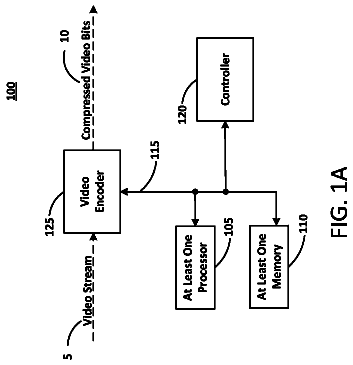
FIG. 1 illustrates an example multimedia content module configured to process or otherwise handle multimedia content, according to an embodiment of the present disclosure.
FIG. 2 illustrates an example video content module shown in FIG. 1 , according to an embodiment of the present disclosure.
FIG. 3 illustrates an example video processing module shown in FIG. 2 , according to an embodiment of the present disclosure.
FIG. 4 illustrates an example method for iteratively encoding a video, according to an embodiment of the present disclosure.
FIG. 5 illustrates an example parameter selection module shown in FIG. 3 , according to an embodiment of the present disclosure.
FIG. 6 illustrates an example method for iteratively encoding a video, according to an embodiment of the present disclosure.
FIG. 7 illustrates an example data plot showing a relationship between a video quality metric of an example video and a file size or bit rate of the example video.
FIG. 8 illustrates an example video processing module, as shown in FIG. 2 , configured to utilize historical data, according to an embodiment of the present disclosure.
FIG. 9 illustrates an example method for enhanced video encoding, according to an embodiment of the present disclosure.
FIG. 10 illustrates a network diagram of an example system that can be utilized in various embodiments for enhanced video encoding, according to an embodiment of the present disclosure.
FIG. 11 illustrates an example of a computer system that can be used to implement one or more of the embodiments described herein, according to an embodiment of the present disclosure.
The figures depict various embodiments of the disclosed technology for purposes of illustration only, wherein the figures use like reference numerals to identify like elements. One skilled in the art will readily recognize from the following discussion that alternative embodiments of the structures and methods illustrated in the figures can be employed without departing from the principles of the disclosed technology described herein.
Detailed description
Enhanced Video Encoding
Often times people can create, edit, view, access, or otherwise utilize multimedia content, such as video content. In some cases, multimedia content can be stored and utilized in an electronic or digital format. For example, multimedia content can be stored as a data file that is playable or otherwise accessible by one or more computer systems. The multimedia data file (multimedia file) can be stored at one or more data stores to be accessed or otherwise used at a subsequent time. The stored multimedia file can use an amount of space (e.g., hard disk space) on the one or more data stores at which it is stored. In some instances, the contents of a multimedia file can affect a file size of the multimedia file. In one example, a higher quality video (e.g., with higher resolution, with better audio, etc.) can take up more space than a relatively lower quality video. In another example, a longer video (e.g., playback length) can use up more space than a shorter video. It follows that as the number and/or quality of video files increase, the space required to store the video files can also increase.
In some embodiments, a video multimedia file (video file or video) can be encoded in one or more encoding processes. In general, a video encoding process can refer to a process in which a given video is organized, prepared, and/or modified in accordance with given specifications (e.g., properties, settings, parameters, etc.). Sometimes, encoding the video can convert the video from one format to another format, or from one set of specifications to another set of specifications. This can allow the video (or an encoded version of the video) to be compatible with different devices and systems. Moreover, in some cases, encoding the video can reduce the amount of space required to store the video. As such, the process of encoding videos can enable the videos to be accessible by various devices and/or systems as well as reduce the file sizes of the videos.
In one example, a video can be encoded at a particular bit rate. In general, a bit rate of a video can indicate a quantity of data used to represent the video. It follows that a bit rate at which a video is encoded can indicate the quantity of data used to represent the encoded video. When more data is used to encode a video (e.g., when the video is encoded at a higher bit rate), the quality of the video can increase but the file size of the video increases as well. Conversely, when less data is used to encode the video (e.g., when the video is encoded at a lower bit rate), the file size of the video decreases but the quality of the video can decrease as well. Therefore, videos that have better quality can cost more space to store, but videos that require less space can have poorer quality.
Various embodiments of the present disclosure can, for a given video to be encoded, produce an encoded video that has a lesser file size than prior to being encoded, while also substantially maintaining the quality of the video. Various embodiments of the present disclosure can provide an enhanced video encoding process that produces a compressed video based on the given video, without having to significantly reduce the quality of the compressed video.
FIG. 1 illustrates an example multimedia content module 102 configured to process or otherwise handle multimedia content, according to an embodiment of the present disclosure. Multimedia content can include, but is not limited to, images, audio, video, and/or any combination thereof. The example multimedia content module 102 can comprise a video content module 104 , an audio content module 106 , and an image content module 108 . The components shown in this figure and all figures herein are exemplary only, and other implementations may include additional, fewer, integrated, or different components. Some components may not be shown so as not to obscure relevant details.
The video content module 104 can, for example, be configured to process or otherwise handle video content that is received or acquired by the multimedia content module 102 . Similarly, the audio content module 106 can be configured to process or otherwise handle audio content, and the image content module 106 can be configured to process or otherwise handle image content.
In some embodiments, when the multimedia content module 102 receives or acquires a video, the video can be directed or relayed to the video content module 104 . When the multimedia content module 102 receives an audio, the audio can be directed to the audio content module 106 . Likewise, when an image is received, the image can be directed to the image content module 108 to be processed or otherwise handled.
In some embodiments, the multimedia content module 102 can be associated with a social networking service, provider, and/or system. In one example, the multimedia content module 102 can work in conjunction with one or more computer systems of the social networking service. In another example, the multimedia content module 102 can be incorporated within the one or more computer systems of the social networking service. The multimedia content module 102 in relation to the social networking service will be discussed in more detail below.
FIG. 2 illustrates an example video content module 202 , as shown in FIG. 1 (e.g., video content module 104 ), according to an embodiment of the present disclosure. The example video content module 202 can comprise a video processing module 204 and a video content data store 206 . The video processing module 204 can, for example, process, access, modify, or otherwise handle a given video. The video content data store 206 can store video content, such as one or more videos (i.e., video files).
In some embodiments, the video processing module 204 can be coupled or communicatively connected to the video content data store 206 . This can enable the video processing module 204 and the video content data store 206 to communicate with each other. In some cases, the video processing module 204 can access one or more videos that are stored at the video content data store 206 . Furthermore, in some instances, the video processing module 204 can provide one or more videos to be stored at the video content data store 206 . For example, when a given video has been modified by the video processing module 204 , resulting in a modified video (e.g., a modified copy of the video), the modified video can be stored at the video content data store 206 .
In some cases, the video content data store 206 can be configured to store multiple versions (e.g., copies) of a given video as well as to store information about how the multiple versions of the given video are related. For example, the video content data store 206 can store an original version of a given video (e.g., an original video), a version of the given video that has been encoded at a particular bit rate, another version of the given video that has been encoded at a different bit rate, and so forth. The video content data store 206 can also hold, for example, information indicating that the two latter videos are derived from the given video.
FIG. 3 illustrates an example video processing module 302 , as shown in FIG. 2 (e.g., video processing module 204 ), according to an embodiment of the present disclosure. The example video processing module 302 can comprise a video encoding module 304 , a parameter selection module 306 , and a video quality metric determination module 308 . As shown in FIG. 3 , the video encoding module 304 , the parameter selection module 306 , and the video quality metric determination module 308 can be configured to be capable of communicating with one another.
In some embodiments, the video encoding module 304 can be configured to facilitate applying or performing an encoding process with respect to a given video. For example, the video encoding module 304 can be utilized to encode the given video at a certain bit rate. In some cases, the bit rate at which to encode the given video can be determined or selected by the parameter selection module 306 . The parameter selection module 306 will be discussed in more detail below.
In one example, the determined or selected bit rate can correspond to an average bit rate for a video to be encoded in a variable bit rate encoding process. In a variable bit rate encoding process, a video can be encoded with different bit rates at different portions of the video. As such, during variable bit rate encoding, a video encoder (e.g., video encoding module 304 ) can use more data to represent portions of the video that have more detail and use less data to represent video portions that have less detail. In contrast, the process of encoding a video using one bit rate throughout the entirety of the video can be referred to as constant bit rate encoding. Compared to constant bit rate encoding, variable bit rate encoding can more efficiently allocate data used to represent the video. Referring back to the example, the video encoding module 304 can receive the determined or selected bit rate (e.g., average bit rate) and attempt to “intelligently” allocate data to represent various portions of the video while still maintaining the determined or selected bit rate (e.g., average bit rate) for the video. In other words, encoding a video at a selected bit rate can comprise performing a variable bit rate encoding process with respect to the video such that the data used to represent portions of the video is appropriately distributed while the resulting average bit rate for the encoded video still matches the selected bit rate.
The video quality metric determination module 308 can be configured to determine or calculate a video quality metric. In general, the video quality metric can be used to measure a level of similarity (e.g., pixel similarity, perceived visual similarity, frame-by-frame image quality similarity, etc.) between two (or more) videos. For example, given a first video and a second video, the quality metric can be used to determine how similar the second video is to the first video. If the quality metric for the second video (relative to the first video) is higher, then the second video is likely more similar to the first video. Conversely, if the quality metric for the second video (relative to the first video) is lower, then the second video is likely less similar to the first video.
In some instances, the quality metric can include, but is not limited to, at least one of a structural similarity (SSIM) index, a multi-scale structural similarity (MS-SSIM) index, or a peak signal-to-noise ratio (P SNR), etc. A person having ordinary skill in the art would recognize that various other metrics, evaluation methods, and/or approaches for determining similarity between two videos can be implemented with various embodiments of the present disclosure.
As discussed above, various embodiments of the present disclosure can provide for enhanced video encoding. In particular, various embodiments of the present disclosure can provide an iterative video encoding process. In one example, a source video (i.e., input video) is received or otherwise acquired. A video encoding process using a selected bit rate can be applied, by the video encoding module 304 , to the source video to produce an encoded video. The bit rate can be selected or determined, by the parameter selection module 306 . In some cases, the bit rate can be selected such that, subsequent to being encoded at the selected bit rate, the encoded video will have a smaller file size than that of the source video.
Continuing with the previous example, the quality metric for the encoded video (relative to the source video) can be determined or calculated by the video quality metric determination module 308 . If the quality metric for the encoded video (relative to the source video) is sufficiently high, then the encoded video can be considered to be sufficiently similar to the source video, even though the encoded video has a lesser file size than the source video. If, however, the quality metric for the encoded video is not sufficiently high, then the encoded video can be considered not sufficiently similar to the source video. In this case, a higher bit rate can be selected by the parameter selection module 306 and the source video can be encoded again by the video encoding module 304 using the higher bit rate. Moreover, in some embodiments, if the quality metric for the encoded video is higher than what is specified as being sufficient, then a lower bit rate can be selected and the source video can be encoded again at the lower bit rate (in order to reduce the video file size). This process of selecting a bit rate and encoding the video at the selected bit rate can repeat itself (e.g., iteratively) until an encoded video having a desire quality metric (and a desired file size) is produced.
In some embodiments, the video encoding module 304 can be configured to perform a first-pass encoding process 310 and at least one additional encoding process(es) 312 . When a video is initially received or acquired by the video processing module 302 (e.g., via the video content module 202 , via the multimedia content module 102 , etc.), the video encoding module 304 can apply or perform the first-pass encoding process 310 to the initially received or acquired video (i.e., original video). The first-pass encoding process 310 can encode the original video at a first-pass bit rate. In some instances, the first-pass bit rate can have a default value. For example, a first-pass bit rate can have a value of 120%, 150%, etc., relative to the original video.
During the first-pass encoding process 310 , the video encoding module 304 can analyze the original video and make decisions about how to use data to represent the original video. In other words, during the first-pass encoding process 310 , the video encoding module 304 can make decisions (sometimes dynamically) about where to spend bits for encoding the original video. In one example, if a first portion (e.g., frame, set of frames, etc.) of the original video is a solid background, such as if the video has a black background for a few seconds, then the video encoding module 304 can decide not to use a lot of data (e.g., can decide not to waste too many bits) to represent the solid background. If, however, a second portion of the video has substantive detail (e.g., has one or more subject matters, objects of interest, etc.), then the video encoding module 304 can decide to use more data to represent this second portion of the video.
During the first-pass encoding process 310 , the video encoding module 304 (or video processing module 302 or video content module 202 ) can obtain data about the original video. The first-pass encoding process 310 can enable the video encoding module 304 to determine how much information or detail is in the video and at which video portion(s). Continuing with the previous example, the video encoding module 304 can obtain data indicating that the first portion of the original video (as well as copies of the original video) will have less detail whereas the second portion will contain more detail. In some embodiments, the obtained data about the original video can be utilized by the video encoding module 304 when performing the at least one additional encoding process(es) 312 .
In some embodiments, the at least one additional encoding process(es) 312 can be performed by the video encoding module 304 subsequent to the first-pass encoding process 310 . For example, the first-pass encoding process 310 is applied to an original video to produce a first-pass encoded video. The additional encoding process(es) 312 can be applied to the first-pass encoded video. The first-pass encoded video can thus serve as an input video or a source video for the additional encoding 312 . In some embodiments, the additional encoding 312 can correspond to iterative encoding.
In one example, the video encoding module 304 can receive or otherwise acquire a source video (i.e., an input video). As discussed previously, the source video can correspond to a first-pass encoded video, which has been encoded at a first-pass bit rate. The parameter selection module 306 can determine or select a bit rate at which to perform additional encoding 312 for the source video. In some instances, the bit rate can be determined based on the first-pass bit rate. In some instances, the bit rate can be determined or selected such that a video produced based on encoding at the determined bit rate would have a desired file size (e.g., less than that of the source video). Upon determining the bit rate, the video encoding module 304 can perform a first iteration of additional encoding 312 on the source video using the determined bit rate. The first iteration of additional encoding 312 can produce an encoded video.
Continuing with the example, the video quality metric determination module 308 can determine a video quality metric (e.g., SSIM index) for the encoded video. If the determined video quality metric for the encoded video is within an allowable deviation from a target quality metric, then the encoded video is considered optimal (or satisfactory) (e.g., sufficiently similar to the source video but having a desired file size) and no further iterations of additional encoding 312 are needed. If, however, the video quality metric for the encoded video is outside the allowable deviation from the target quality metric, then another bit rate is determined and another iteration of the additional encoding 312 is performed with the other determined bit rate. The process can repeat (iteratively) until the encoded video is within the allowable deviation from the target quality metric. In this example, the target quality metric can correspond to an SSIM index of 0.975. As such, when the additional (iterative) encoding 312 produces an encoded video having an SSIM index that substantially matches 0.975, then the encoded video can be considered optimal and the additional (iterative) encoding 312 can cease. In other embodiments, other target quality metrics can correspond to other SSIM index values.
Moreover, in some embodiments, each iteration in the additional encoding process 312 can utilize the obtained data about the original video. The data about the original video can specify, for example, that a first portion of the video contains less detail, a second portion of the video contains more detail, and so forth. Accordingly, the video encoding module 304 can utilize the data about the original video in attempt to efficiently distribute data used to represent various portions of the video during the additional encoding process(es) 312 . For example, during additional encoding 312 , the video encoding module 304 can allocate less data to encode the first portion, more data to encode the second portion, and so forth.
FIG. 4 illustrates an example method 400 for iteratively encoding a video, according to an embodiment of the present disclosure. A person having ordinary skill in the art would recognize that there can be additional, fewer, or alternative steps performed in similar or alternative orders, or in parallel, within the scope of the various embodiments unless otherwise stated.
At block 402 , the example method 400 can receive an original video. For example, a user can provide the original video to be received at the video processing module 302 (e.g., via the video content module 202 , via the multimedia content module 102 , etc.). The original video can have an original video file size. In some cases, the original video can be uncompressed.
At block 404 , the example method 400 can perform a first-pass encoding on the original video. In other words, a first-pass encoding process can be applied to the original video, for example, by the video encoding module 304 . During the first-pass encoding process, the original video can be encoded at a first-pass bit rate. In the example method 400 , a video produced from applying the first-pass encoding process to the original video can be referred to as a source video or input video.
At block 406 , the example method 400 can determine (or select) a bit rate at which to encode the source video. The bit rate can be determined (or selected) by the parameter selection module 306 , which will be discussed in more detail below. The bit rate can be determined such that a video produced from encoding at the determined bit rate will have in a lesser file size than prior to the encoding.
At block 408 , the source video can be encoded at the determined bit rate to produce an encoded video. The encoding can be performed by the video encoding module 304 . In this example method 400 , the encoding performed at block 408 can correspond to the additional encoding process 312 discussed above.
At block 410 , the example method 400 can determine whether or not the encoded video satisfies the target video quality metric. In some instances, the video quality metric determination module 308 can determine (or calculate) a video quality metric for the encoded video relative to the source video. For example, the video quality determination module 308 can determine an SSIM index for the encoded video relative to the source video. If the determined video quality metric (e.g., the SSIM index) is within an allowable deviation from the target video quality metric (e.g., an SSIM index of 0.975), then the encoded video can be deemed to satisfy the target video quality metric. Otherwise, the method 400 iterates back to block 406 .
At block 412 , the encoded video is deemed to satisfy the target video quality metric and can be stored, for example, at the one or more data stores (e.g., video content data store 206 ). In some embodiments, the encoded video can be provided in response to a subsequent media request.
FIG. 5 illustrates an example parameter selection module 502 shown in FIG. 3 (e.g., parameter selection module 306 ), according to an embodiment of the present disclosure. In general, the parameter selection module 502 can access, process, modify, or otherwise handle one or more parameters 504 . As discussed above, the parameter selection module 502 can determine or select one or more parameters 504 to be used in an encoding process(es). For example, the parameter selection module 502 can select or determine a bit rate 508 at which a video is to be encoded. Other parameters 504 can include, but is not limited to, target file sizes 510 , time factors 512 (e.g., time constraints) for encoding, etc.
The parameter selection module 502 can also utilize one or more parameter selection algorithms 506 to determine or select a parameter(s) 504 . In some instances, at least some of the one or more parameter selection algorithms 506 can be based on a root finding algorithm. Examples of a root finding algorithm can include (but is not limited to) Brent's method 514 , Newton's method (not shown in FIG. 5 ), a bisection method 516 , a secant method 518 , an interpolation method (not shown in FIG. 5 ), and/or any combination thereof.
In some embodiments, the parameter selection module 502 can attempt to “intelligently” determine or select the bit rates to use in iterative encoding, in order to try to reduce the number of encoding iterations required. In one example, a source video is being encoded iteratively to produce an encoded video. The source video has a source video bit rate as well as a source video file size. In a first encoding iteration of the source video, a first-iteration bit rate can be selected to be less than the source video bit rate, which can result in the first-iteration encoded video having a smaller file size than the source video. In this example, the first-iteration encoded video can be determined to have a video quality metric less than the target quality metric. As such, the parameter selection module 502 can utilize a parameter selection algorithm 506 such as Brent's method 514 to take as input the source video bit rate and the first-iteration bit rate, and then determine a bit rate to use for a second iteration of encoding. As such, Brent's method 514 can determine (or select) a second-iteration bit rate that is higher than the first-iteration bit rate but lower than the source video bit rate.
Continuing with the example, if the second encoding iteration at the second-iteration bit rate produces a second-iteration encoded video having a quality metric higher than the target quality metric, then the encoding can repeat again using a selected third-iteration bit rate. Brent's method 514 can select the third-iteration bit rate to be higher than the first-iteration bit rate but lower than the second-iteration bit rate. In this example, the encoded video resulting from the third iteration can have video quality metric that satisfies (e.g., substantially matches) the target quality metric, and the iterative encoding is thus completed. However, if the quality metric for the third-iteration encoded video does not satisfy the target quality metric, then the encoding process can iterate again, such as with a fourth encoding iteration using a determined fourth-iteration bit rate.
As discussed in the previous example, bit rates 508 can be selected or set by the parameter selection module 502 . However, in some cases, a parameter 504 can be set at a default value. Moreover, in some instances, a value for a parameter 504 can be specified by a given video (e.g., a video to be encoded), such as by the metadata for the video. Furthermore, in some instances, a value for a parameter 504 can be specified by a computer system, such as a system that uploads an original video or a system of a social networking service that receives an original video.
It should be understood that the parameters 504 and algorithms 506 in FIG. 5 are shown for illustrative purposes. There can be various other parameters, algorithms, etc., that can be implemented consistent with the disclosed technology. For example, other parameters can include an expected client device buffer size, a number of different types of frames that can be used during encoding, an amount of time that can be spent for encoding, etc.
FIG. 6 illustrates an example method 600 for iteratively encoding a video, according to an embodiment of the present disclosure. As mentioned previously, it should be understood that there can be additional, fewer, or alternative steps performed in similar or alternative orders, or in parallel, within the scope of the various embodiments unless otherwise stated.
At block 602 , the example method 600 can select a bit rate at which to encode a video. The bit rate can be selected (i.e., determined), for example, by the parameter selection module (e.g., 502 ). The video can then be encoded at the selected bit rate, at block 604 , by the video encoding module (e.g., 304 ).
At block 606 , the example method 600 can check whether or not a determined video quality metric for the video, subsequent to being encoded at the selected bit rate, substantially matches a target quality metric (i.e., matches a target quality metric within an allowable deviation). For example, the method 600 can determine an SSIM index for the encoded video relative to the video prior to being encoded. If the SSIM index for the encoded video matches a target SSIM index of 0.975 (within an allowable deviation), then the encoded video can be considered optimized and the encoded video can be stored, at block 616 . In other embodiments, any suitable target SSIM index value, other than the target SSIM index value of 0.975, can be used.
If, however, the video quality metric for the encoded video does not substantially match the target quality metric, then the example method 600 can check whether or not the video quality metric for the encoded video is less than the target video quality metric, at block 608 . If so, the method 600 can select a higher bit rate at which to encode the video (block 610 ) and the method 600 can iterate back to block 604 , where the video is encoded again at the selected (higher) bit rate. If, however, the method 600 determines that the video quality metric for the video is not less than the target quality metric, then the video quality metric for the video must be greater than the target quality metric, as shown in block 612 . As such, the method 600 can select a lower bit rate at which to encode the video (block 614 ) and the method 600 can iterate back to block 604 , at which the video is encoded again at the selected (lower) bit rate. This iterative process can continue until the video quality metric for the encoded video substantially matches or satisfies the target quality metric.
FIG. 7 illustrates an example data plot 700 showing a relationship between a video quality metric of an example video and a file size or bit rate of the example video. A person having ordinary skill in the art would recognize that the example data plot 700 may only be an approximation of the relevant data, may not be drawn to scale, and is shown for illustrative purposes only.
The example data plot 700 can indicate that, in general, as a bit rate and/or file size of an example encoded video increases, the video quality metric for the encoded video (relative to a source or input video from which the encoded video was produced) can increase as well. Moreover, the example data plot 700 indicates that an iterative encoding process applied to a source video can produce an encoded video that meets a target video quality metric while still having a file size that is less than that of the source video. The encoded video that meets the target video quality metric can be considered optimized.
In some implementations, the target video quality metric can be determined or set based on testing, research, experimentation, and/or observation. In one example, the target video quality metric can correspond to an SSIM index of 0.975. Based on testing, research, experimentation, etc., it has been observed that when a video has an SSIM index of 0.975 relative to another video, the two videos are deemed to be sufficiently similar in quality. It should be appreciated that the target SSIM index of 0.975 described herein is for illustrative purposes and that a person having ordinary skill in the art would recognize many other variations with respect to the target quality metric.
In one example, a source video can (approximately) have a bit rate (e.g., average bit rate) of 4000 kilobits per second (kbps) and a file size of 500 Megabytes (MB). An encoded video, resulting from the iterative encoding process being applied to the source video, can have a video quality metric that satisfies the target video quality metric (e.g., an SSIM index of 0.975). The encoded video can (approximately) have a bit rate of 3200 kbps and a file size of 400 MB. For other suitable target video quality metrics, other examples may reflect other values for bit rates and file sizes for source videos and associated encoded videos.
FIG. 8 illustrates an example video processing module 802 , as shown in FIG. 2 (e.g., video processing module 204 ), configured to utilize historical data, according to an embodiment of the present disclosure. In some embodiments, the example video processing module 802 can comprise a historical data analyzer 804 . The video processing module 802 can utilize the historical data analyzer 804 to facilitate in further improving the performance of the enhanced video encoding described herein (e.g., iterative video encoding).
The historical data analyze 804 can receive, acquire, or otherwise access historical data about one or more videos. Historical data about videos can include, but is not limited to, information about previously acquired and/or processed videos.
The description continues in the full USPTO document.
 Lapsed, fee not paid23 drawings