Lapsed, fee not paid20 drawings
AI & Machine Learning · US 9,886,650 B2
Method and device for determining similarity between sequences
A method and a device for determining similarity between sequences are provided.
US 9,886,665 B2 · Assignee: INTERNATIONAL BUSINESS MACHINES CORPORATION · Inventors: Chen; Ying et al.
Sheet 1 of 9 from the published document. All sheets in the USPTO PDF
A method, system, and computer program product for event detection using roles and relationships of entities are provided in the illustrative embodiments. A training event and a set of entities participating in the training event are identified in a training data. For a first entity in the set of entities, a first role occupied by the entity in the event is determined. A behavior attribute is assigned to the first role. A relationship of the first role with a second role corresponding to a second entity in the set of entities is determined. An event rule is constructed to detect an event corresponding to the training event in new data and comprising a plurality of roles, behavior attributes, and the relationship. The plurality of roles includes the first role and the second role, and the plurality of behavior attributes includes the behavior attribute assigned to the first role.
A corpus (plural: corpora) is data, or a collection of data, used in linguistics and language processing. A corpus generally comprises large volume of data, usually text, stored electronically. Natural language processing (NLP) is a technique that facilitates exchange of information between humans and data processing systems. For example, one branch of NLP pertains to answering questions about a subject matter based on information available about the subject matter domain. Information about a domain can take many forms, including but not limited to knowledge repositories and ontologies. Such information can be sourced from any number of data sources. The presenter of the information generally selects the form and content of the information. Before information can be used for NLP, generally, the information has to be transformed into a form that is usable by an NLP engine. Presently, syst
8 of 9 drawing sheets so far from the published document, cropped to the drawing. Every sheet is in the USPTO PDF.
What the patent claimed, word for word. All of it is now free to use.
The present invention relates generally to a method, system, and computer program product for detecting events in a given data. More particularly, the present invention relates to a method, system, and computer program product for event detection using roles and relationships of entities.
A corpus (plural: corpora) is data, or a collection of data, used in linguistics and language processing. A corpus generally comprises large volume of data, usually text, stored electronically.
Natural language processing (NLP) is a technique that facilitates exchange of information between humans and data processing systems. For example, one branch of NLP pertains to answering questions about a subject matter based on information available about the subject matter domain.
Information about a domain can take many forms, including but not limited to knowledge repositories and ontologies. Such information can be sourced from any number of data sources. The presenter of the information generally selects the form and content of the information. Before information can be used for NLP, generally, the information has to be transformed into a form that is usable by an NLP engine.
Presently, systems and methods are available to parse unstructured data into a structured form. Presently available systems, such as information extraction systems, are adept at extracting and classifying named entities, such as people, cities, genes, proteins etc., from a given corpus. Presently available methods can also establish simple semantic relationships between the extracted entities. Of example, presently available methods can relate that an extracted person entity ‘lives in’ an extracted city entity, one extracted gene entity ‘inhibits’ another extracted gene entity, and so on.
Presently available systems and methods for information extraction construct “triples” of extracted information. A triple is an [ENTITY <VERB> ENTITY] construct, where one of the entities is a subject specified in the given corpus, and the subject entity performs an act (verb) specified in the corpus on an object entity specified in the given corpus. For example, given suitable corpus, a presently available system or method can create a triple such as [Barack Obama <president of> US].
Presently, the extracted triple artifacts can be stored, indexed, and made available for semantic processing of data and document retrieval. Existing frameworks such as Resource description Framework (RDF) and Web Ontology Language (OWL) are some examples of presently available methods for extracting such triples.
The illustrative embodiments provide a method, system, and computer program product for event detection using roles and relationships of entities. An embodiment includes a method for event detection in data. The embodiment identifies, in a training data, a training event and a set of entities participating in the training event. The embodiment determines, for a first entity in the set of entities, a first role occupied by the entity in the event. The embodiment assigns a behavior attribute to the first role. The embodiment determines a relationship of the first role with a second role corresponding to a second entity in the set of entities. The embodiment constructs an event rule, wherein the event rule is usable to detect an event in new data, the event corresponding to the training event, and wherein the event rule comprises a plurality of roles, a plurality of behavior attributes, and the relationship, wherein the plurality of roles includes the first role and the second role, and the plurality of behavior attributes includes the behavior attribute assigned to the first role.
Another embodiment includes a computer usable program product comprising a computer readable storage device including computer usable code for event detection in data.
Another embodiment includes a data processing system for event detection in data, comprising a storage device, wherein the storage device stores computer usable program code, and a processor, wherein the processor executes the computer usable program code.
The novel features believed characteristic of the invention are set forth in the appended claims. The invention itself, however, as well as a preferred mode of use, further objectives and advantages thereof, will best be understood by reference to the following detailed description of the illustrative embodiments when read in conjunction with the accompanying drawings, wherein:
FIG. 1 depicts a block diagram of a network of data processing systems in which illustrative embodiments may be implemented;
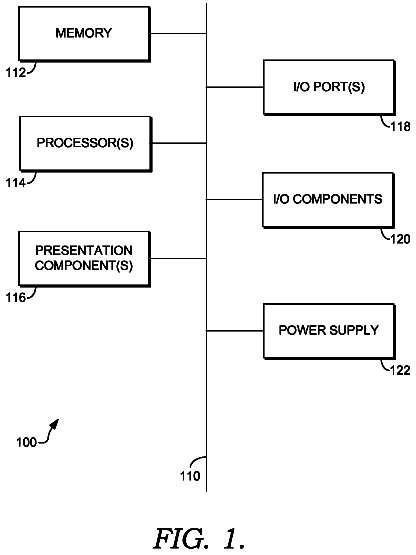
FIG. 2 depicts a block diagram of a data processing system in which illustrative embodiments may be implemented;
FIG. 3 depicts a block diagram of an example application for event detection using roles and relationships of entities in accordance with an illustrative embodiment;
FIG. 4 depicts a block diagram of an example application for event detection using roles and relationships of entities in accordance with an illustrative embodiment;
FIG. 5 depicts a table of an example training data in accordance with an illustrative embodiment;
FIG. 6 depicts an example manner of constructing an event rule from training data in accordance with an illustrative embodiment;
FIG. 7 depicts an example manner of constructing an event rule from training data in accordance with an illustrative embodiment;
FIG. 8 depicts an example process for constructing an event rule in accordance with an illustrative embodiment; and
FIG. 9 depicts a flowchart of an example process for event detection using roles and relationships of entities in accordance with an illustrative embodiment.
The illustrative embodiments recognize that often, a relationship present in a corpus is more complex than one entity acting on another entity, as the presently available information extraction methods perceive. Accordingly, the presently available methods for information extraction fail to comprehend the complex relationships between entities in a given corpus, and the resulting rules, e.g., triples, are far too simplistic for applying to data of any significant complexity.
For example, the illustrative embodiments recognize that even a reasonably simple relationship, such as the connection between a person entity and a position entity, often has a temporal aspect associated therewith. For example, the triple [Barack Obama <president of> US] is missing an attribute—the Start Term: 2009—which is associated with the information extracted into the example triple. Depending on the corpus, the Person-Position relationship of this example triple may also be missing a model or sequence information, e.g., Number: 44, because Barack Obama is the 44th President of United States.
As is evident from the simple example described above, the presently available methods of rule construction to extract information from a corpus are lacking in the ability to comprehend complex relationships. Therefore, when the rules created using presently available methods are applied to new data, only the events that match those simplistic rules closely are found in the new data. The rules fail to detect in the new data other events, which are either more complex than the training events based on which the rules were constructed, or present entities different than the entities presented in the training data, or both.
The illustrative embodiments used to describe the invention generally address and solve the above-described problems and other problems related to event detection in given data. The illustrative embodiments provide a method, system, and computer program product for event detection using roles and relationships of entities.
An event is an occurrence of information of interest in a given data. Training data or training corpus (hereinafter, “training data”) is data used to construct an event detection rule (hereinafter “event rule”). An event rule is logic to detect an event in a given data. An event rule according to the prior-art is a triple. An event rule according to the illustrative embodiments is a logical representation of a set of roles played by entities when engaged in one or more relationships with each other. Hereinafter, any reference to the term “event rule” refers to the event rule according to an embodiment, unless otherwise specified proximate to where the term is used.
New data is data that has not contributed to the event rule construction, and on which a pre-constructed event rule is applied to detect events. Process data is an example of new data, and comprises data emitted by a process operating in a real world environment. For example, records of financial transactions, data of a biological process, news information, program execution output or log, and conversations or statements, are some examples of process data in which events have to be detected.
An event rule according to an embodiment is n-ary in that the event rule can include any number of roles in the set of roles, as compared to ternary rules of the prior-art, which are limited to three elements in a triple. Furthermore, an n-ary event rule comprises one or more attributes sufficient to identify a type, necessity, or dependency of one or more roles. For example, some roles may be necessary for the event to be detected, i.e., an entity occupying that role must be specified in some form in the given data for the event to be detected as present in the given data.
As another example, some roles may be optional, i.e., an entity occupying that role need not be specified in any form in the given data for the event to be detected as present in the given data. Similarly, some roles may be implied, i.e., an entity occupying that role need not be expressly specified in any form in the given data but such a role can be implicitly present for the event to be detected as present in the given data.
An embodiment uses training data and a domain-specific knowledge repository to learn and extract logical relationships between the roles played by groups of entities in the training data. The embodiment constructs event rules using the discovered roles and relationships.
Furthermore, an event rule according to an embodiment can include attributes and/or logic based on linguistic characteristics of the given data, lexical characteristics of the given data, or a combination of these and other characteristics of the given data. For example, one embodiment identifies a role of a specific entity in a specific training data based on a grammar of a language of the training data. Similarly, an embodiment identifies a relationship between different roles in a specific training data based on the grammar of the language.
Another embodiment normalizes a specific entity in a specific training data based on a lexical reference, such as a dictionary or an ontology, applicable to the training data. Using a lexical reference, another example embodiment identifies a range of distance or separation between entities in the given data to still have the relationship exist between the roles of the entities. Within the scope of the illustrative embodiments, an embodiment can be configured to use a combination of linguistic and lexical references, or other suitable resources and combinations thereof, to construct an event rule.
Another embodiment assigns a confidence score to an event rule. The confidence score of an event rule can be assigned in any suitable manner, including but not limited to the following example manners.
As a first example, a confidence score of an event rule is related to the number of events in the training data based on which the event rule was constructed. In other words, if an event rule is constructed using a larger number of events in the training data as compared to a second event rule, the first event rule has a higher confidence score than the second event rule.
As a second example, a confidence score of an event rule is related to the number of events, which the event rule detects in new data accurately. In other words, if an event rule accurately detects a larger number of events in the new data as compared to a second event rule, the first event rule has a higher confidence score than the second event rule. The second example method of confidence scoring can be used to update a confidence score established using the first example method. From this disclosure, many other methods of assigning and updating confidence scores of event rules will be apparent to those of ordinary skill in the art and the same are contemplated within the scope of the illustrative embodiments.
In an example subject matter domain of Life Sciences, an embodiment can be used to identify logical connections between the roles played by various proteins and amino acids as they interact with each other in biological processes. The roles and relationships can be transformed into one or more event rules to detect protein interaction events in previously unseen or unused data from ongoing biological processes.
As an example, suppose the training data includes the sentence, “ATM phosphorylates p53 directly at Ser15 (Ser18 of mouse p53) and indirectly through other kinases.” An embodiment identifies at least three roles for the event “phosphorylate” in this data, for example, an agent role played by the entity “ATM”, a theme role played by protein P53, and a location role played by Ser15.
An event rule describes how the agent and the verb (phosphorylate) are related in the corpora of the given subject matter domain, i.e., the agent performs the verb. The same event rule or a different event rule describes how the theme and the verb are related in the corpora, that is, the verb is performed upon the theme. The same event rule or a different event rule describes how the location and the verb are related in the corpora, to wit, the verb is performed at the location.
Based only on the partial analysis of the sentence, an example event rule for phosphorylation event according to an embodiment is therefore as follows:
Phosphorylates: {Agent: ATM; Theme: p53; Location: Ser15}
Thus, while specific entities are specified in the training data, an embodiment has normalized the entities according to the roles they play. If a sentence in a new data omits or changes an entity, the event rule will still be able to detect the event by using this rule. For example, if the new data states a phosphorylation event without a location, the event rule implicitly comprehends the location if other roles are satisfied in the new data.
Additional analysis according to other embodiments, as will be explained with respect to certain figures elsewhere in this disclosure, can add or modify other information or otherwise manipulate this example event rule to form a more complex event rule.
A method of an embodiment described herein, when implemented to execute on a device or data processing system, comprises substantial advancement of the functionality of that device or data processing system in event detection. For example, in order to detect an event, the prior-art requires simple relationships between two entities—as defined by a triple—to exist in the given data. In contrast, an embodiment can detect an event even when more complex relationships between more numerous entities are described in the given data. Operating in a manner described herein, an embodiment uses normalized roles of the entities and their inter-relationships to identify the events in which they participate, and making detection of the event possible even with replaced or omitted entities. Such manner of event detection is unavailable in presently available devices or data processing systems. Thus, a substantial advancement of such devices or data processing systems by executing a method of an embodiment improves the accuracy and volume of the detected events.
The illustrative embodiments are described with respect to certain characteristics, attributes, entities, roles, positions, domains, data, events, event rules, structures of event rules, conditions, values, thresholds, tolerances, confidence scores, devices, data processing systems, environments, components, and applications only as examples. Any specific manifestations of these and other similar artifacts are not intended to be limiting to the invention. Any suitable manifestation of these and other similar artifacts can be selected within the scope of the illustrative embodiments.
Furthermore, the illustrative embodiments may be implemented with respect to any type of data, data source, or access to a data source over a data network. Any type of data storage device may provide the data to an embodiment of the invention, either locally at a data processing system or over a data network, within the scope of the invention. Where an embodiment is described using a mobile device, any type of data storage device suitable for use with the mobile device may provide the data to such embodiment, either locally at the mobile device or over a data network, within the scope of the illustrative embodiments.
The illustrative embodiments are described using specific code, designs, architectures, protocols, layouts, schematics, and tools only as examples and are not limiting to the illustrative embodiments. Furthermore, the illustrative embodiments are described in some instances using particular software, tools, and data processing environments only as an example for the clarity of the description. The illustrative embodiments may be used in conjunction with other comparable or similarly purposed structures, systems, applications, or architectures. For example, other comparable mobile devices, structures, systems, applications, or architectures therefor, may be used in conjunction with such embodiment of the invention within the scope of the invention. An illustrative embodiment may be implemented in hardware, software, or a combination thereof.
The examples in this disclosure are used only for the clarity of the description and are not limiting to the illustrative embodiments. Additional data, operations, actions, tasks, activities, and manipulations will be conceivable from this disclosure and the same are contemplated within the scope of the illustrative embodiments.
Any advantages listed herein are only examples and are not intended to be limiting to the illustrative embodiments. Additional or different advantages may be realized by specific illustrative embodiments. Furthermore, a particular illustrative embodiment may have some, all, or none of the advantages listed above.
With reference to the figures and in particular with reference to FIGS. 1 and 2 , these figures are example diagrams of data processing environments in which illustrative embodiments may be implemented. FIGS. 1 and 2 are only examples and are not intended to assert or imply any limitation with regard to the environments in which different embodiments may be implemented. A particular implementation may make many modifications to the depicted environments based on the following description.
FIG. 1 depicts a block diagram of a network of data processing systems in which illustrative embodiments may be implemented. Data processing environment 100 is a network of computers in which the illustrative embodiments may be implemented. Data processing environment 100 includes network 102 . Network 102 is the medium used to provide communications links between various devices and computers connected together within data processing environment 100 . Network 102 may include connections, such as wire, wireless communication links, or fiber optic cables.
Clients or servers are only example roles of certain data processing systems connected to network 102 and are not intended to exclude other configurations or roles for these data processing systems. Server 104 and server 106 couple to network 102 along with storage unit 108 . Software applications may execute on any computer in data processing environment 100 . Clients 110 , 112 , and 114 are also coupled to network 102 . A data processing system, such as server 104 or 106 , or client 110 , 112 , or 114 may contain data and may have software applications or software tools executing thereon.
Only as an example, and without implying any limitation to such architecture, FIG. 1 depicts certain components that are usable in an example implementation of an embodiment. For example, servers 104 and 106 , and clients 110 , 112 , 114 , are depicted as servers and clients only as example and not to imply a limitation to a client-server architecture. As another example, an embodiment can be distributed across several data processing systems and a data network as shown, whereas another embodiment can be implemented on a single data processing system within the scope of the illustrative embodiments. Data processing systems 104 , 106 , 110 , 112 , and 114 also represent example nodes in a cluster, partitions, and other configurations suitable for implementing an embodiment.
Device 132 is an example of a device described herein. For example, device 132 can take the form of a smartphone, a tablet computer, a laptop computer, client 110 in a stationary or a portable form, a wearable computing device, or any other suitable device. Application 105 in server 104 implements one or more embodiments described herein. Training data 109 comprises data usable in conjunction with a domain-specific knowledge repository (not shown) to construct or modify one or more event rules as described herein. Event rules 111 comprise one or more event rules constructed by application 105 using training data 109 , as described herein. Application 105 also uses one or more event rules 111 in conjunction with a domain-specific knowledge repository (not shown) on new data (not shown) to detect events therein in a manner described in this disclosure. Any data processing system, e.g., server 106 , client 112 , or device 132 , or an application executing thereon may be a source of the new data.
Servers 104 and 106 , storage unit 108 , and clients 110 , 112 , and 114 may couple to network 102 using wired connections, wireless communication protocols, or other suitable data connectivity. Clients 110 , 112 , and 114 may be, for example, personal computers or network computers.
In the depicted example, server 104 may provide data, such as boot files, operating system images, and applications to clients 110 , 112 , and 114 . Clients 110 , 112 , and 114 may be clients to server 104 in this example. Clients 110 , 112 , 114 , or some combination thereof, may include their own data, boot files, operating system images, and applications. Data processing environment 100 may include additional servers, clients, and other devices that are not shown.
In the depicted example, data processing environment 100 may be the Internet. Network 102 may represent a collection of networks and gateways that use the Transmission Control Protocol/Internet Protocol (TCP/IP) and other protocols to communicate with one another. At the heart of the Internet is a backbone of data communication links between major nodes or host computers, including thousands of commercial, governmental, educational, and other computer systems that route data and messages. Of course, data processing environment 100 also may be implemented as a number of different types of networks, such as for example, an intranet, a local area network (LAN), or a wide area network (WAN). FIG. 1 is intended as an example, and not as an architectural limitation for the different illustrative embodiments.
Among other uses, data processing environment 100 may be used for implementing a client-server environment in which the illustrative embodiments may be implemented. A client-server environment enables software applications and data to be distributed across a network such that an application functions by using the interactivity between a client data processing system and a server data processing system. Data processing environment 100 may also employ a service oriented architecture where interoperable software components distributed across a network may be packaged together as coherent business applications.
With reference to FIG. 2 , this figure depicts a block diagram of a data processing system in which illustrative embodiments may be implemented. Data processing system 200 is an example of a computer, such as servers 104 and 106 , or clients 110 , 112 , and 114 in FIG. 1 , or another type of device in which computer usable program code or instructions implementing the processes may be located for the illustrative embodiments.
Data processing system 200 is also representative of a data processing system or a configuration therein, such as data processing system 132 in FIG. 1 in which computer usable program code or instructions implementing the processes of the illustrative embodiments may be located. Data processing system 200 is described as a computer only as an example, without being limited thereto. Implementations in the form of other devices, such as device 132 in FIG. 1 , may modify data processing system 200 , modify data processing system 200 , such as by adding a touch interface, and even eliminate certain depicted components from data processing system 200 without departing from the general description of the operations and functions of data processing system 200 described herein.
In the depicted example, data processing system 200 employs a hub architecture including North Bridge and memory controller hub (NB/MCH) 202 and South Bridge and input/output (I/O) controller hub (SB/ICH) 204 . Processing unit 206 , main memory 208 , and graphics processor 210 are coupled to North Bridge and memory controller hub (NB/MCH) 202 . Processing unit 206 may contain one or more processors and may be implemented using one or more heterogeneous processor systems. Processing unit 206 may be a multi-core processor. Graphics processor 210 may be coupled to NB/MCH 202 through an accelerated graphics port (AGP) in certain implementations.
In the depicted example, local area network (LAN) adapter 212 is coupled to South Bridge and I/O controller hub (SB/ICH) 204 . Audio adapter 216 , keyboard and mouse adapter 220 , modem 222 , read only memory (ROM) 224 , universal serial bus (USB) and other ports 232 , and PCI/PCIe devices 234 are coupled to South Bridge and I/O controller hub 204 through bus 238 . Hard disk drive (HDD) or solid-state drive (SSD) 226 and CD-ROM 230 are coupled to South Bridge and I/O controller hub 204 through bus 240 . PCI/PCIe devices 234 may include, for example, Ethernet adapters, add-in cards, and PC cards for notebook computers. PCI uses a card bus controller, while PCIe does not. ROM 224 may be, for example, a flash binary input/output system (BIOS). Hard disk drive 226 and CD-ROM 230 may use, for example, an integrated drive electronics (IDE), serial advanced technology attachment (SATA) interface, or variants such as external-SATA (eSATA) and micro-SATA (mSATA). A super I/O (SIO) device 236 may be coupled to South Bridge and I/O controller hub (SB/ICH) 204 through bus 238 .
Memories, such as main memory 208 , ROM 224 , or flash memory (not shown), are some examples of computer usable storage devices. Hard disk drive or solid state drive 226 , CD-ROM 230 , and other similarly usable devices are some examples of computer usable storage devices including a computer usable storage medium.
An operating system runs on processing unit 206 . The operating system coordinates and provides control of various components within data processing system 200 in FIG. 2 . The operating system may be a commercially available operating system such as AIX® (AIX is a trademark of International Business Machines Corporation in the United States and other countries), Microsoft® Windows® (Microsoft and Windows are trademarks of Microsoft Corporation in the United States and other countries), Linux® (Linux is a trademark of Linus Torvalds in the United States and other countries), iOS™ (iOS is a trademark of Cisco Systems, Inc. licensed to Apple Inc. in the United States and in other countries), or Android™ (Android is a trademark of Google Inc., in the United States and in other countries). An object oriented programming system, such as the Java™ programming system, may run in conjunction with the operating system and provide calls to the operating system from Java™ programs or applications executing on data processing system 200 (Java and all Java-based trademarks and logos are trademarks or registered trademarks of Oracle Corporation and/or its affiliates).
Instructions for the operating system, the object-oriented programming system, and applications or programs, such as application 105 in FIG. 1 , are located on storage devices, such as hard disk drive 226 , and may be loaded into at least one of one or more memories, such as main memory 208 , for execution by processing unit 206 . The processes of the illustrative embodiments may be performed by processing unit 206 using computer implemented instructions, which may be located in a memory, such as, for example, main memory 208 , read only memory 224 , or in one or more peripheral devices.
The hardware in FIGS. 1-2 may vary depending on the implementation. Other internal hardware or peripheral devices, such as flash memory, equivalent non-volatile memory, or optical disk drives and the like, may be used in addition to or in place of the hardware depicted in FIGS. 1-2 . In addition, the processes of the illustrative embodiments may be applied to a multiprocessor data processing system.
In some illustrative examples, data processing system 200 may be a mobile computing device, which is generally configured with flash memory to provide non-volatile memory for storing operating system files and/or user-generated data. A bus system may comprise one or more buses, such as a system bus, an I/O bus, and a PCI bus. Of course, the bus system may be implemented using any type of communications fabric or architecture that provides for a transfer of data between different components or devices attached to the fabric or architecture.
A communications unit may include one or more devices used to transmit and receive data, such as a modem or a network adapter. A memory may be, for example, main memory 208 or a cache, such as the cache found in North Bridge and memory controller hub 202 . A processing unit may include one or more processors or CPUs.
The depicted examples in FIGS. 1-2 and above-described examples are not meant to imply architectural limitations. For example, data processing system 200 also may be a tablet computer, laptop computer, or telephone device in addition to taking the form of a mobile or wearable device.
With reference to FIG. 3 , this figure depicts a block diagram of an example application for event detection using roles and relationships of entities in accordance with an illustrative embodiment. Application 302 can be implemented as application 105 in FIG. 1 .
Application 302 receives training data 304 and domain-related knowledge repository, e.g., ontology 306 , as inputs. Using inputs 304 and 306 , component 308 of application 302 constructs one or more event rules 310 .
Training data 304 is an example of training data 109 in FIG. 1 . Event rules 310 are examples of event rules 111 in FIG. 1 . In an example operation, component 308 identifies portions of training data 304 , such as a sentence in a corpus comprised in training data 304 . Using ontology 306 , component 308 identifies one or more entities in the sentence. Using a linguistic resource—such as a language processing engine loaded with the grammar of a language of the sentence, a lexical resource—such as the language processing engine loaded with a lexicon and/or a lexical parser, component 308 identifies the roles occupied by the identified entities.
For example, component 308 uses a characteristic of the entity that may be available from the corpus, the linguistic resource, the lexical resource, or some combination thereof, to normalize the identified entity in to a role performed by the entity in the sentence. In other words, component 308 attributes a behavior to the role as opposed to an identity of the entity as in the prior art.
For example, if the sentence were, “a bat hits a ball”, the bat would be an entity, the role of the bat entity would be to hit or strike an another entity, to wit, the ball entity. Accordingly, a behavior of the role of the bat entity would be the ability to strike another entity. Such a normalized manner of representing entities enables the resulting event rule to identify a tennis shot as a fitting event, even if the training data never included any data about a tennis racquet.
Some prior-art methods compare entities in a triple with synonyms of the entities. However, according to an embodiment, the characterization of the bat as an object of certain proportions, shape, size, color, texture, material etc., (i.e., a normalized entity) that its usable to (i.e., performing in a role to) impart force (i.e., having a behavior) is distinct from and far more enabling than simply collecting all synonyms of the word “bat” from a dictionary with the expectation that the tennis racquet will be one of those synonyms.
Furthermore, the example event rule can be further enhanced according to another embodiment. The hitting or striking action can be qualified in many ways, and can be separated from another entity in the data by some number of words. Depending upon the linguistic and lexical resources and upon the training data, the embodiment modifies the n-ary event rule with additional attributes, such as one or more adverbs, adjectives, conjunctions, prepositions, and the like, which can optionally qualify a role represented in the event rule.
Furthermore, depending upon the linguistic and lexical resources and upon the training data, the embodiment further specifies a range of distance that can exist between the roles specified in the event rule. For example, if example sentences in the training data showed the verb of hitting or an equivalent thereof, separated from the object entity that was hit, by zero words, one word, two words, and so on up to five words, the embodiment modifies the n-ary event rule with distance specification associated with all or some of the n attributes therein.
Such an event rule, when applied to new data is far more capable of identifying events in the new data as compared to the prior-art triple. For example, suppose that a sentence in the new data were, “That was an amazing return of a fast volley.” The event rule according to an embodiment will be able to identify the presence of a tennis shot event in the sentence even if there is no expressly provided agent role, no expressly provided theme role, but a racquet can be implied from the implicit hitter role, a ball can be implied from the implicit theme role, because a variation of the verb “hit” with one or more optional qualifiers is present within the specified distance range from such implied roles according to the event rule.
In one embodiment, an event rule in event rules 310 has associated therewith a confidence score. According to the embodiment, component 308 computes the confidence score for the event rule based on the number of event instances in training data 304 that were used to configure the event rule, as described elsewhere in this disclosure. In another embodiment, component 308 modifies a confidence score of an event rule based on a feedback of the accuracy of event identification in new data using the event rule.
With reference to FIG. 4 , this figure depicts a block diagram of an example application for event detection using roles and relationships of entities in accordance with an illustrative embodiment. Application 402 can be implemented as application 105 in FIG. 1 .
Application 402 receives new data 404 , e.g., process data from a process, and domain-related knowledge repository, e.g., ontology 406 , as inputs. Using inputs 404 and 406 , component 408 of application 402 applies a subset of event rules 410 , which are accessible from application 402 . For example, event rules 410 comprise the set of event rules 310 constructed in FIG. 3 .
In an example operation, component 408 identifies portions of new data 404 , such as a sentence in a corpus comprised in new data 404 . Using a subset of event rules 410 according to ontology 406 , component 408 identifies one or more entities in the sentence that satisfy the express, implied, necessary, or optional roles in an event rule 410 . When an event rule is satisfied, application 402 outputs event 412 .
In one embodiment, event rules 410 are selected based on the confidence scores of the event rules in a larger set of event rules. For example, only those event rules whose confidence scores exceed a threshold score form set 410 of event rules. The subset of event rules 410 selected for event detection in a particular portion of new data 406 depends upon the applicability of the subset to that portion. The applicability can be determined by any suitable method, including but not limited to using an NLP engine to determine the context of the portion, linguistic characteristics of the portion, lexical characteristics of the portion, or some combination thereof.
With reference to FIG. 5 , this figure depicts a table of an example training data in accordance with an illustrative embodiment. Data in table 502 is usable as training data 304 in FIG. 3 .
The phosphorylation example described above in this disclosure is used again to illustrate the example training data in table 502 . Column 504 provides three example entities that act in an agent role in rows 1 , 2 , and 3 . Similarly, column 506 provides three example entities that operate in a location role in rows 1 - 3 . The agents and themes in rows 1 - 3 are extracted, for training application 302 , from the sample training data in the corresponding rows in column 508 .
Thus, if application 302 is to construct event rules to extract Post Translational Modifications to protein p53 events, training data in table 502 provides possible agent entities (kinase), possible location entities of the phosphorylation event (amino acid residue), any upstream/downstream biological processes associated with the event, and so on. Furthermore, training data 502 may be limited only to some columns, e.g., columns 504 and 506 , for some embodiments, and include all columns or equivalents thereof for other embodiments. Training data 502 may also provide negative examples, which an embodiment can use to create exclusions in event rules.
With reference to FIG. 6 , this figure depicts an example manner of constructing an event rule from training data in accordance with an illustrative embodiment. Application 302 in FIG. 3 constructs event rule 602 using training data 502 in FIG. 5 .
For example, rows 1 and 2 in column 508 in FIG. 5 describe training data examples for the verb “phosphorylate.” Those examples also indicate that the agent role appears as the subject entity, the theme role appears as the object entity, and a preposition “at” can optionally qualify the location role, when the data relates to the act or event “phosphorylate.” Event rule 602 depicts these relationships of the agent role, the theme role, the location role, and optional or additional attributes in an n-ary form.
The description continues in the full USPTO document.
About 6,387 words. The USPTO PDF has it with every drawing.
Fees are due 3.5, 7.5 and 11.5 years after grant. This patent expired on February 6, 2026, so the fee marked "not paid" was the one that went unpaid.
EVENT DETECTION USING ROLES AND RELATIONSHIPS OF ENTITIES
Filed Dec 2014 · published Jun 2016Event detection using roles and relationships of entities
Filed Dec 2014 · granted Feb 2018Earlier publications, parents and continuations. None of them can still be enforced, or this patent would not be listed.
Prior art cited by the examiner or applicant. Useful when you check your own idea for novelty.
Everything on this page comes from the documents linked above.