Cross-reference to related application
This application claims priority from Korean Patent Application No. 10-2015-0033246, filed on Mar. 10, 2015, in the Korean Intellectual Property Office, the disclosure of which is incorporated by reference herein in its entirety.
Background
1.
Field
Methods and apparatuses consistent with exemplary embodiments relate to determining a similarity between sequences in an image.
2. Description of the related art
As portable devices become popular and video sharing sites become more actively used, sharing of images by users has increased. Users may share images, which may be copied, edited, and thus, reproduced, with each other, and each reproduced image becomes an image that is similar, but not identical to, an original image. The similar image may include an image having a resolution that is different from that of the original image, an image to which a border is added due to a size difference from that of the original image, an image obtained by performing image processing such as an increase in a contrast ratio of the original image, an image to which a subtitle or a logo is added, or an image whose number of total frames including same frames are different from that of the original image. If the number of similar images is increased, it may be difficult to determine a similarity between an original image and a similar image, and an unnecessary search result may be provided to a user.
Summary
Exemplary embodiments may address at least the above problems and/or disadvantages and other disadvantages not described above. Also, the exemplary embodiments are not required to overcome the disadvantages described above, and may not overcome any of the problems described above.
One or more exemplary embodiments provide a method and a device for determining a similarity between sequences in an image.
According to an aspect of an exemplary embodiment, there is provided a method of determining similarity between sequences, the method including obtaining a first sequence of frames and a second sequence of frames, determining a descriptor of a first frame of the first sequence based on luma information of blocks in the first frame, the descriptor of the first frame including luma difference information that is determined based on the luma information of the blocks in the first frame, determining a descriptor of a second frame of the second sequence based on luma information of blocks in the second frame, the descriptor of the second frame including luma difference information that is determined based on the luma information of the blocks in the second frame, and determining a similarity between the first sequence and the second sequence based on the descriptor of the first frame and the descriptor of the second frame.
The determining the similarity may include matching the first frame with the second frame based on the descriptor of the first frame and the descriptor of the second frame, and determining a section in the second sequence that matches a section in the first sequence as a section similar to the section in the first sequence, based on the matched first frame and second frame.
The matching may include determining whether a Hamming distance between the descriptor of the first frame and the descriptor of the second frame is shortest, and matching the first frame with the second frame in response to the determining that the Hamming distance between the descriptor of the first frame and the descriptor of the second frame is shortest.
The determining the section in the second sequence may include obtaining a matching vector representing a matching relation between the matched first frame and second frame, determining a representative matching vector based on the obtained matching vector, and determining the section in the second sequence that matches the section in the first sequence as the section similar to the section in the first sequence, based on the representative matching vector.
The method may further include determining whether the matching vector of the first frame is not included in a range based on the representative matching vector, and re-matching the first frame with a frame in the second sequence within the range based on the representative matching vector, in response to the determining that the matching vector of the first frame is not included in the range based on the representative matching vector.
The method may further include extracting one or more first frames from the frames of the first sequence based on a frame rate, the first frame being one of the one or more first frames, and extracting one or more second frames from the frames of the second sequence based on the frame rate, the second frame being one of the one or more second frames.
The determining the descriptor of the first frame or the second frame may include determining whether a number of pixels having a same pixel value at a same location in the frames of the first sequence or the second sequence, and in a row or a column of the first frame or the second frame, is greater than or equal to a number, and determining the descriptor based on the luma information of the blocks in the first frame or the second frame other than the row or the column of the first frame or the second frame, in response to the determining that the number of pixels having the same pixel value at the same location in the frames of the first sequence or the second sequence, and in the row or the column of the first frame or the second frame, is greater than or equal to the number.
The method may further include determining a descriptor of the first sequence based on the descriptor of the first frame, and determining a descriptor of the second sequence based on the descriptor of the second frame, and the determining the similarity may include determining the similarity based on a comparison of the descriptor of the first sequence to the descriptor of the second sequence.
The determining the descriptor of the first sequence may include converting the descriptor of the first frame into the descriptor of the first sequence based on codes, and the determining the descriptor of the second sequence may include converting the descriptor of the second frame into the descriptor of the second sequence based on the codes.
A non-transitory computer-readable recording storage medium may store a program to cause a computer to perform the method.
According to an aspect of another exemplary embodiment, there is provided a device for determining similarity between sequences, the device including a sequence obtainer configured to obtain a first sequence of frames and a second sequence of frames, and a descriptor determiner configured to determine a descriptor of a first frame of the first sequence based on luma information of blocks in the first frame, the descriptor of the first frame including luma difference information that is determined based on the luma information of the blocks in the first frame, and determine a descriptor of a second frame of the second sequence based on luma information of blocks in the second frame, the descriptor of the second frame including luma difference information that is determined based on the luma information of the blocks in the second frame. The device further includes a similarity determiner configured to determine a similarity between the first sequence and the second sequence based on the descriptor of the first frame and the descriptor of the second frame.
The similarity determiner may be further configured to match the first frame with the second frame based on the descriptor of the first frame and the descriptor of the second frame, and determine a section in the second sequence that matches a section in the first sequence as a section similar to the section in the first sequence, based on the matched first frame and second frame.
The similarity determiner may be further configured to determine whether a Hamming distance between the descriptor of the first frame and the descriptor of the second frame is shortest, and match the first frame with the second frame in response to the similarity determiner determining that the Hamming distance between the descriptor of the first frame and the descriptor of the second frame is shortest.
The similarity determiner may be further configured to obtain a matching vector representing a matching relation between the matched first frame and second frame, determine a representative matching vector based on the obtained matching vector, and determine the section in the second sequence that matches the section in the first sequence as the section similar to the section in the first sequence, based on the representative matching vector.
The similarity determiner may be further configured to determine whether the matching vector of the first frame is not included in a range based on the representative matching vector, and re-match the first frame with a frame in the second sequence within the range based on the representative matching vector, in response to the similarity determiner determining that the matching vector of the first frame is not included in the range based on the representative matching vector.
The sequence obtainer may be further configured to extract one or more first frames from the frames of the first sequence based on a frame rate the first frame being one of the one or more first frames, and extract one or more second frames from the frames of the second sequence based on the frame rate, the second frame being one of the one or more second frames.
The descriptor determiner may be further configured to determine whether a number of pixels having a same pixel value at a same location in the frames of the first sequence or the second sequence, and in a row or a column of the first frame or the second frame, is greater than or equal to a number, and determine the descriptor based on the luma information of the blocks in the first frame or the second frame other than the row or the column of the first frame or the second frame, in response to the descriptor determiner determining that the number of pixels having the same pixel value at the same location in the frames of the first sequence or the second sequence, and in the row or the column of the first frame or the second frame, is greater than or equal to the number.
The descriptor determiner may be further configured to determine a descriptor of the first sequence based on the descriptor of the first frame, and determine a descriptor of the second sequence based on the descriptor of the second frame, and the similarity determiner may be further configured to determine the similarity based on a comparison of the descriptor of the first sequence to the descriptor of the second sequence.
The descriptor determiner may be further configured to convert the descriptor of the first frame into the descriptor of the first sequence based on codes, and convert the descriptor of the second frame into the descriptor of the second sequence based on the codes.
The descriptor determiner may be further configured to convert the descriptor of the first frame into an index number of a code that is most similar to the descriptor of the first frame, among the codes, and generate a histogram of index numbers based on the index number as the descriptor of the first sequence.
Brief description of the drawings
The above and/or other aspects will be more apparent by describing exemplary embodiments with reference to the accompanying drawings, in which:
FIG. 1 is a block diagram of a device for determining a similarity between sequences according to an exemplary embodiment;
FIG. 2 is a diagram illustrating a process of determining a similarity between sequences, which is performed by the device, according to an exemplary embodiment;
FIG. 3 is a diagram illustrating an overlapping section between sequences that is determined by the device, according to an exemplary embodiment;
FIGS. 4A, 4B, 4C, and 4D are diagrams illustrating a process of determining a descriptor, which is performed by the device, according to an exemplary embodiment;
FIG. 5 is a diagram illustrating a process of matching frames with each other, which is performed by the device, according to an exemplary embodiment;
FIGS. 6, 7A, 7B, 8A, 8B, and 9 are diagrams illustrating a process of determining a similarity between sequences by matching frames with each other, which is performed by the device, according to an exemplary embodiment;
FIGS. 10A, 10B, and 10C are diagrams illustrating a process of pre-processing a sequence to determine a descriptor, which is performed by the device, according to an exemplary embodiment;
FIG. 11 is a diagram illustrating a process of determining a similarity between sequences, which is performed by the device, according to another exemplary embodiment;
FIGS. 12A, 12B, 13A, and 13B are diagrams illustrating a process of determining a descriptor of a sequence, which is performed by the device, according to another exemplary embodiment;
FIGS. 14A, 14B, and 14C are diagrams illustrating a process of determining a descriptor, which is performed by the device, according to another exemplary embodiment;
FIGS. 15A, 15B, and 15C are diagrams illustrating a process of determining a descriptor, which is performed by the device, according to another exemplary embodiment;
FIG. 16 is a flowchart of a method of determining a similarity between sequences, which is performed by the device, according to an exemplary embodiment; and
FIG. 17 is a flowchart of a method of determining a similarity between sequences, which is performed by the device, according to another exemplary embodiment.
Detailed description
Exemplary embodiments are described in greater detail below with reference to the accompanying drawings.
In the following description, like drawing reference numerals are used for like elements, even in different drawings. The matters defined in the description, such as detailed construction and elements, are provided to assist in a comprehensive understanding of the exemplary embodiments. However, it is apparent that the exemplary embodiments can be practiced without those specifically defined matters. Also, well-known functions or constructions may not be described in detail because they would obscure the description with unnecessary detail.
It will be understood that the terms “comprises” and/or “comprising” used herein specify the presence of stated features or components, but do not preclude the presence or addition of one or more other features or components. In addition, the terms such as “unit,” “-er (-or),” and “module” described in the specification refer to an element for performing at least one function or operation, and may be implemented in hardware, software, or the combination of hardware and software.
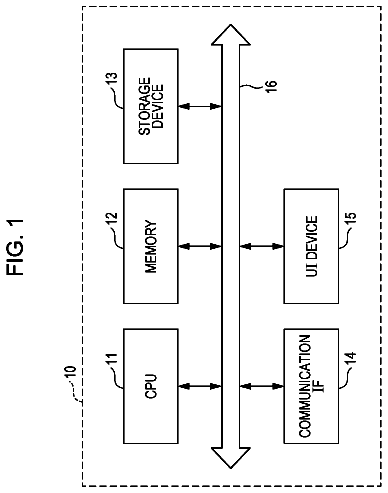
FIG. 1 is a block diagram of a device 100 for determining a similarity between sequences according to an exemplary embodiment.
According to an exemplary embodiment, the device 100 includes a sequence obtainer 110 , a descriptor determiner 120 , and a similarity determiner 130 . Each element of the device 100 will be described after an example of determining a similarity between sequences, which is performed by the device 100 , is described with reference to FIGS. 2 and 3 .
FIG. 2 is a diagram illustrating a process of determining a similarity between sequences, which is performed by the device 100 , according to an exemplary embodiment.
According to an exemplary embodiment, the device 100 may compare frames included in a sequence to frames included in another sequence with respect to a plurality of sequences, and thus, determine a similarity between the sequences.
A sequence is a part or whole of an image, and may be a group of consecutive frames that constitute a part or whole of a plurality of frames included in the image. The device 100 may obtain a plurality of sequences from an image or images that are different from each other. For example, the device 100 may obtain a first sequence that includes a first frame and a second sequence that includes a second frame.
The device 100 may determine a descriptor representing color information about a frame, with respect to frames included in the obtained plurality of sequences, and compare frames, included in sequences from each other, to each other by using the determined descriptor. Color information about a frame is information about values of pixels included in the frame, and may be information that includes intensity information, luma (luminance) information, or chroma information for each color channel.
A descriptor may be a descriptor of a frame that represents color information about the frame, or a descriptor of a sequence that represents color information about the sequence. A descriptor of a sequence may be determined by using descriptors of frames included in the sequence.
The device 100 may determine a descriptor with respect to a frame. For example, the device 10 may determine a descriptor of a first frame based on luma information about a plurality of blocks in the first frame included in the first sequence, and determine a descriptor of a second frame based on luma information about a plurality of blocks in the second frame included in the second sequence.
In detail, the device 100 may determine a luma difference between a plurality of blocks based on luma information about the plurality of blocks that constitute a frame, and determine a descriptor of a frame that includes information about the luma difference between the plurality of blocks according to a predetermined order. A detailed process of determining a descriptor will be described with reference to FIGS. 4A through 4D .
The device 100 may determine a similarity between sequences by using the determined descriptors. For example, the device 100 may determine a similarity between the first sequence and the second sequence by using the descriptor of the first frame and the descriptor of the second frame. The device 100 may detect a section in the second sequence that is determined as a section similar to a section in the first sequence, from sections that include one or more frames in the second sequence, by using the descriptor of the first frame and the descriptor of the second frame.
The device 100 may determine or detect whether sequences are similar to each other or determine sections similar to or overlapping each other between the sequences, by matching frames included in sequences different from each other by using the determined descriptors. A method of matching frames with each other will be described in detail with reference to FIGS. 5 through 9 .
FIG. 3 is a diagram illustrating an overlapping section between sequences that is determined by the device 100 , according to an exemplary embodiment.
Referring to FIG. 3 , a first sequence that includes a frame 1 and a frame 2 , and a second sequence that includes frames 1 through 4 .
The device 100 may determine descriptors of frames included in each sequence, and compare frames included in the first sequence to frames included in the second sequence by using the determined descriptors of each frame.
The device 100 may match one of the frames included in the first sequence with one of the frames included in the second sequence by comparing the frames to each other. The device 100 may determine a section in the second sequence, which matches a section in the first sequence, and thus, is a similar section with respect to the section in the first sequence, based on the matching between the frames.
For example, in FIG. 3 , the frame 1 in the first sequence may match the frame 3 in the second sequence, and the frame 2 in the second sequence may match the frame 4 in the second sequence. Accordingly, the device 100 may determine a section that includes the frames 3 and 4 in the second sequence as a section similar to a section that includes the frames 1 and 2 in the first sequence.
The device 100 may improve efficiency in data management, by quickly determining whether sequences are similar to each other or determining similar sections between sequences by using descriptors, and provide information about a similarity between images to a user. Additionally, the device 100 may synchronize sequences with each other, and thus, provide an easy and quick image editing method.
Referring back to FIG. 1 , the sequence obtainer 110 is an element for obtaining a plurality of sequences, and may obtain a plurality of sequences from an image stored in the device 100 or an external apparatus. The sequence obtainer 110 may obtain a plurality of sequences from an image or images different from each other. The sequence obtainer 110 may transmit the obtained plurality of sequences to the descriptor determiner 120 .
The sequence obtainer 110 may extract one or more frames, from a plurality of frames included in the obtained plurality of sequences, as key frames and determine a similarity between the plurality of frames by using only the key frames obtained by the extracting.
For example, if frames rates of the obtained plurality of sequences are different from each other, a matching relation between the plurality of frames may be complicated. Additionally, in a case of a sequence having a very high frame rate, too many operations may be used to match frames with each other.
Accordingly, the sequence obtainer 110 may extract key frames from the obtained sequences according to a predetermined frame rate, to easily represent a matching relation between frames and effectively increase an operation speed. In detail, the sequence obtainer 110 may extract one or more frames included in the first sequence as one or more key frames in the first sequence according to a predetermined frame rate, and extract one or more frames included in the second sequence as one or more key frames in the second sequence according to the frame rate.
The sequence obtainer 110 may transmit the extracted one or more key frames to the descriptor determiner 120 .
The descriptor determiner 120 is an element for determining a descriptor representing color information about a frame or a sequence. The descriptor determiner 120 may determine a descriptor of a frame that represents color information about the frame or a descriptor of a sequence that represents color information about the sequence. The descriptor determiner 120 may determine a descriptor of a sequence by using descriptors of frames included in the sequence.
The descriptor determiner 120 may determine a descriptor of a frame by using color information about pixels included in the frame. For example, the descriptor determiner 120 may determine a descriptor of a first frame based on luma information about pixels included in the first frame, and determine a descriptor of a second frame based on luma information about pixels included in the second frame.
For example, the descriptor determiner 120 may divide the first frame into a plurality of blocks that have a same size and include a plurality of pixels. The descriptor determiner 120 may determine luma information about each block by using luma values of pixels included each block. For example, luma information about a block may be an average luma value of the block.
The descriptor determiner 120 may compare the determined luma information about the respective blocks to each other, and thus, determine information about a luma difference between blocks. The information about the luma difference between blocks may be information obtained by numeralizing a value of a difference between average luma values of the respective blocks according to a predetermined reference section. For example, the information about the luma difference may be information expressing a value of a difference between average luma values of two blocks in a 2-bit binary code. The descriptor determiner 120 may determine a descriptor of the first frame that is expressed in a 2-bit binary code based on information about a luma difference between the determined plurality of blocks.
Additionally, the descriptor determiner 120 may also determine a descriptor of the first frame based on color information or chroma information about pixels included in the first frame.
The descriptor determiner 120 may determine a descriptor of a frame with respect to all frames or key frames in the first sequence and the second sequence received from the sequence obtainer 110 .
The descriptor determiner 120 may determine a descriptor of the first sequence based on descriptors of a plurality of frames in the first sequence including the descriptor of the first frame, and determine a descriptor of the second sequence based on descriptors of a plurality of frames in the second sequence including the descriptor of the second frame. A process of determining a descriptor of a sequence will be described in detail with reference to FIGS. 11 through 13 .
The descriptor determiner 120 may transmit the descriptor of the first frame and the descriptor of the second frame to the similarity determiner 130 . Alternately, the descriptor determiner 120 may transmit the descriptor of the first sequence and the descriptor of the second sequence to the similarity determiner 130 .
The similarity determiner 130 may determine a similarity between sequences by using the descriptors received from the descriptor determiner 120 . The similarity determiner 130 may determine a similarity between the first sequence and the second sequence by using the descriptor of the first frame and the descriptor of the second frame that are received from the descriptor determiner 120 .
In detail, the similarity determiner 130 may match the first frame with the second frame by using the descriptor of the first frame and the descriptor of the second frame. The matching of frames may include determination of two frames, which are included in sequences different from each other and are determined as being most similar to each other. For example, a first frame in the first sequence may match the second frame in the second sequence.
The similarity determiner 130 may determine frames having a shortest matching distance therebetween as most similar frames, and match the frames with each other. For example, the similarity determiner 130 may determine a matching distance between frames by calculating a Hamming distance between descriptors of the frames.
A Hamming distance is a number of different characters located in a same position in two code strings having a same number of bits. For example, because a third bit and a fourth bit are different between a first code “00011” and a second code “00101,” a Hamming distance between the first code and the second code is 2.
Equation 1 for calculating a Hamming distance between an ath frame in a first sequence and a bth frame in a second sequence is as follows:
d ( a , b ) = .Math. i | Ia ( i ) - Ib ( i ) | [ Equation 1 ]
In Equation 1, a may represent an index of a frame included in the first sequence, and b may represent an index of a frame in a second sequence. Ia(i) may represent an ith bit value of a descriptor of the ath frame, and Ib(i) may represent an ith bit value of a descriptor of the bth frame.
The similarity determiner 130 may calculate a Hamming distance between the descriptor of the first frame in the first sequence and descriptors of all frames in the second sequence and match a frame in the second sequence, which has a shortest Hamming distance from the first frame, with the first frame. For example, if a Hamming distance between the descriptor of the first frame and the descriptor of the second frame is shortest, the similarity determiner 130 may match the first frame with the second frame.
The similarity determiner 130 may represent a matching relation between frames, which is obtained by using descriptors, as a matching vector. The matching vector may be a value of a difference between an index of the first frame and an index of the second frame. For example, if the index of the first frame in the first sequence is 1 and the index of the second frame in the first sequence is 5, the matching vector may be expressed as 4(5−1=4).
The similarity determiner 130 may determine a section in the second sequence, which matches a predetermined section in the first sequence as a similar section, by using the determined matching vector. Alternately, the similarity determiner 130 may determine a representative matching vector to speed up the similarity determination. For example, the similarity determiner 130 may determine a vector having a highest frequency, among matching vectors between sequences that are different from each other, as a representative matching vector. Alternately, the similarity determiner 130 may determine a vector having an average value, among the matching vectors between the sequences that are different from each other, as a representative matching vector. However, the determining of a representative matching vector is not limited thereto, and a representative matching vector may be determined by using various methods.
The similarity determiner 130 may determine a matching having a matching vector that is not similar to the representative matching vector, among matchings, as noise, by using the determined representative matching vector, and thus, remove the matching determined as noise. The similarity determiner 130 may perform an additional matching on frames whose matching was removed. In detail, the similarity determiner 130 may perform the additional matching on frames whose matching was removed so that a matching vector of the additional matching is similar to the representative matching vector. For example, the similarity determiner 130 may match the frames with each other within a range according to the representative matching vector.
The similarity determiner 130 may determine a section in the second sequence that matches a section in the first sequence as a similar section, based on matching vectors of the additional matching.
Additionally, the similarity determiner 130 may receive a descriptor of the first sequence and a descriptor of the second sequence from the descriptor determiner 120 , and thus, determine whether the first sequence is similar to the second sequence.
FIGS. 4A, 4B, 4C, and 4D are diagrams illustrating a process of determining a descriptor, which is performed by the device 100 , according to an exemplary embodiment.
The device 100 may determine a descriptor of a frame by using luma information about frames included in an obtained sequence. For example, a descriptor of a frame may be information about a difference between luma values at locations in the frame. An example of a process of determining a descriptor of a first frame included in a first sequence is described with reference to FIGS. 4A through 4D .
Referring to FIG. 4A , the device 100 may divide the first frame into a plurality of blocks that have a same size and include a plurality of pixels. For example, the device may divide the first frame into 16 blocks having a same size. A number shown on a block refers to an index of the block.
Referring to FIG. 4B , the device 100 may determine luma information about each block by using a luma value of pixels included in each block. For example, luma information about a first block 401 may be determined as 130 , which is an average luma value of pixels included in the first block 401 . Additionally, luma information about a second block 402 may be determined as 81.
Referring to FIG. 4C , the device 100 may determine information about a luma difference between blocks, by using luma information about the blocks. For example, the device 100 may determine luma difference information 403 by using a value of a difference between an average luma value of the first block 401 and an average luma value of the second block 402 . The luma difference information may be information obtained by numeralizing a value of a difference between values of the luma information about blocks according to a predetermined reference section.
In detail, the device 100 may determine luma difference information Pij as shown in Equation 2, according to sizes of luma values included into luma information about two blocks that are to be compared to each other.
Pij = { 0 , Li - Lj < - T 1 , | Li - Lj | ≤ T 2 , Li - Lj ≥ T [ Equation 2 ]
In Equation 2, Pij represents information about a luma difference between an ith block and a jth block. Li represents luma information about the ith block, and Lj represents luma information about the jth block. T may be a predetermined constant for setting a predetermined reference section. For example, T may be 20.
Because a value of a difference between luma information about the first block 410 and the second block 402 is 49, and thus, greater than 20, the device 100 may determine the luma difference information 403 with respect to the first block 401 and the second block 402 as 2. Additionally, the device 100 may continue to compare the first block 401 to other blocks, and thus, determine information about a luma difference between blocks. The device 100 may arrange the determined information about the luma difference between the blocks according to a predetermined order. In FIG. 4C , if 16 blocks are included in a first frame, the device 100 may determine information about a luma difference with respect to the first frame that includes 120 numbers in total.
The device 100 may convert the determined luma difference information into a binary code, and thus, determine a descriptor of the first frame. For example, luma difference information 0 may be converted into 00, luma difference information 1 may be converted into 01, and luma difference information 2 may be converted into 11 as in a first block 404 of the descriptor. For example, in FIG. 4D , the device 100 may determine a 240-bit binary descriptor with respect to the first frame.
The device 100 may determine a descriptor of a frame by performing a same process on all frames in an obtained sequence. The device 100 may match frames with each other by using the determined descriptors of the frames.
FIG. 5 is a diagram illustrating a process of matching frames with each other, which is performed by the device 100 , according to an exemplary embodiment.
The device 100 may match frames by using the determined descriptors, to determine a similarity between sequences. For example, the device 100 may match the first frame in the first sequence with a frame that is most similar to the first frame among frames included in the second sequence. FIG. 5 shows a process of matching five frames included in the first sequence with five frames included in the second sequence.
The device 100 may use a descriptor of a frame to determine a frame that is most similar to the first frame.
In detail, the device 100 may determine a matching distance “Dab” between a first frame in the first sequence and all frames in the second sequence, and thus, determine frames, whose matching distance from the first frame is shortest, as similar frames. a may represent an index of a frame in the first sequence, and b may represent an index of a frame in the second sequence. The device 100 may calculate a Hamming distance between descriptors of frames, and thus, determine a matching distance between the frames.
Referring to FIG. 5 , the device 100 may calculate a matching distance between the first frame that is a frame 1 in the first sequence and a frame 1 in the second sequence as D 11 =105. Additionally, the device 100 may calculate matching distances between the first frame in the first sequence and frames 1 through 5 in the second sequence respectively as D 12 =80, D 13 =5, D 14 =40, and D 15 =53. The device 100 may match the first frame that is the frame 1 in the first sequence with the frame 3 in the second sequence that has a shortest matching distance D 13 =5 from the frame 1 in the first sequence.
The device 100 may match all frames in the first sequence respectively with a frame among frames in the second sequence by performing the same process.
FIGS. 6, 7A, 7B, 8A, and 8B are diagrams illustrating a process of determining a similarity between sequences by matching frames with each other, which is performed by the device 100 , according to an exemplary embodiment.
FIG. 6 illustrates matching of all frames in a first sequence with frames in a second sequence, according to the process of matching frames with each other that is described with reference to FIG. 5 .
Referring to FIG. 6 , the first sequence may include 15 frames, and the second sequence may include 17 frames. A frame 1 in the first sequence may match a frame 3 in the second sequence and a frame 2 in the first sequence may match a frame 4 in the second sequence, according to the process of the matching described with reference to FIG. 5 .
The device 100 may represent a matching relation between frames as a matching vector. For example, the matching vector may be a value of a difference between an index of a frame in the first sequence and an index of a frame in the second sequence. For example, the device 100 may represent a matching vector between the frame 1 in the first sequence and the frame 3 in the second sequence as 2(3−1=2), and represent a matching vector between the frame 2 in the first sequence and the frame 4 in the second sequence as 2(4−2=2).
The device 100 may determine a representative matching vector among the determined matching vectors. For example, the device 100 may determine a vector having a highest frequency, among the determined matching vectors, as a representative matching vector. Referring to FIG. 7A , matching vectors determined as a representative matching vector, among the matching vectors determined in the process described with reference to FIG. 6 , are shown in a solid line. Other matching vectors than the representative matching vector are shown in a dotted line.
The device 100 may determine matchings having a matching vector that is not similar to the representative matching vector, among matchings between frames, as noise, by using the determined representative matching vector, and thus, remove the matchings. For example, the device 100 may set a range with reference to the representative matching vector, remove matchings having a matching vector that is greater or less than the representative matching vector by 2, and extract only matchings, which have a matching vector that is equal to, or greater or less than the representative matching vector by 1, from the matchings. Referring to FIG. 7B , matching vectors included in a range according to the representative matching vector are shown.
In FIG. 7B , both frames 12 and 13 in the first sequence match a frame 14 in the second sequence. Accordingly, redundant matchings may occur. Additionally, because a matching vector of the frame 12 and a matching vector of the frame 13 in the first sequence are included in a range according to the representative matching vector, the matching vectors thereof are not removed. Accordingly, the device 100 may remove a matching from the redundant matchings. For example, the device 100 may remove a matching having a longer matching distance between frames than another matching from redundant matchings.
The device 100 may perform an additional matching on frames that are not matched as a matching thereof was removed. For example, referring to FIG. 8A , as matchings are removed, frames that are not matched with each other occur. For example, frames 3 , 4 , 5 , 9 , 10 , 13 , and 15 in the first sequence may be frames that are not matched with each other.
The device 100 may extract a non-matching section 810 , in which frames that are not matched with each other are consecutively present in the first sequence, from the first sequence, and thus, determine whether to perform an additional matching on the frames in the non-matching section 810 .
The description continues in the full USPTO document.
 Lapsed, fee not paid3 drawings