The contents of the following Japanese patent application are incorporated herein by reference:
NO. 2014-222709 filed on Oct. 31, 2014.
Background
1. Technical field
The present invention is related to an authentication system, an authentication method and a service providing system.
2. Related art
Conventionally, an authentication using inherent information such as biometric information and the like is known. For example, user authentication is performed by acquiring biometric information of an user via a biometric sensor arranged in an user terminal. Related prior art documents are described as below:
Patent Document 1 Japanese Patent Application Publication No. 2006-155547;
Patent Document 2 Japanese Patent Application Publication No. 2013-218483;
Patent Document 3 Japanese Patent Application Publication No. 2011-198317.
Summary
The acquired biometric information is sent to an authentication server and the biometric information is authenticated at the authentication server sometimes. However, in this case, since the biometric information is carried on a network and the authentication server, there is a risk of biometric information leakage. Also, the acquired biometric information is authenticated at a user terminal and an authentication result is sent to an authentication server sometimes. However, in this case, it is difficult for the authentication server to discriminate whether the authentication result is reliable or not.
Here, a purpose of one aspect of a technical innovation included in the present specification is to provide an authentication system, an authentication method and a service providing system which can solve the above-described problem. The purpose is achieved by a combination of features described in claims. In other words, a first aspect of the present invention is to provide an authentication system comprising an authentication terminal and an authentication server. In the authentication system, the authentication terminal comprises an authentication apparatus authenticating an authentication subject, an artifact operating in accordance with an input signal and a signal processing section inputting an input signal without including information of the authentication subject designated by the authentication server in the artifact and outputting an output signal in accordance with an operation result of the artifact as an authentication result when the authentication result in the authentication apparatus is passed and the authentication server authenticates the authentication subject based on the output signal.
A second aspect of the present invention provides a service providing system comprising a service providing server providing services to an user and the authentication system of the first aspect authenticating an user as an authentication subject. In the service providing system, the service providing server provides services to the user authenticated by the authentication system.
A third aspect of the present invention provides an authentication method using an authentication terminal and an authentication server. The authentication method comprises a terminal side authentication stage and a signal processing stage in the authentication terminal and a server side authentication stage in the authentication server. An authentication subject is authenticated in the terminal side authentication stage, and when the authentication result in the authentication stage is passed, an input signal without including information of the authentication subject authenticated by the authentication server is input in an artifact operating in accordance with the input signal and an output signal based on an operation result of the artifact is output as an authentication result in the signal processing stage, and the authentication subject is authenticated based on the output signal in the server side authentication stage.
Further, the above summary of invention does not necessarily describe all necessary features of the present invention and the present invention may also be a sub-combination of the features described above.
Brief description of the drawings
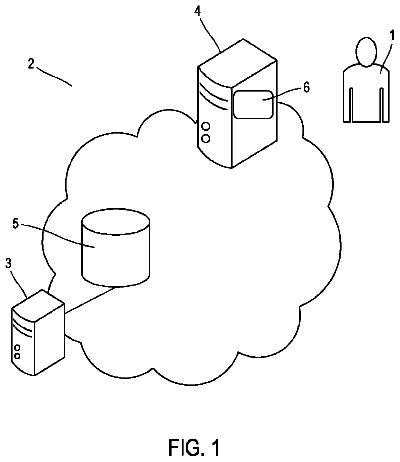
FIG. 1 is a drawing showing a configuration example of an authentication system 300 .
FIG. 2 is a drawing showing a configuration example of an authentication server 200 .
FIG. 3 is a drawing showing another example of a characteristic storage section 210 .
FIG. 4 is a drawing showing a configuration example of a signal processing section 120 .
FIG. 5 is a drawing showing an operation example of the authentication system 300 shown in FIGS. 3 and 4 .
FIG. 6 is a drawing showing another configuration example of the signal processing section 120 and the authentication server 200 .
FIG. 7 is a drawing showing another configuration example of the authentication server 200 .
FIG. 8 is a drawing showing another configuration example of the signal processing section 120 .
FIG. 9 is a drawing showing a configuration example of a service providing system 500 .
FIG. 10 is a drawing showing a configuration example of a service providing system 600 .
Description of exemplary embodiments
Hereinafter, some embodiments of the present invention will be described. The embodiments do not limit the invention according to the claims, and all the combinations of the features described in the embodiments are not necessarily essential to means provided by aspects of the invention.
FIG. 1 is a drawing showing a configuration example of an authentication system 300 . The authentication system 300 authenticates an authentication subject by using information for authentication of the authentication subject. The authentication system 300 comprises an authentication terminal 100 and an authentication server 200 . The authentication terminal 100 and the authentication server 200 communicate with each other. Although a single authentication terminal 100 is shown in FIG. 1 , the authentication server 200 can communicate with a plurality of the authentication terminals 100 .
The authentication subject is, for example, an user of the authentication terminal 100 , but is not limited to this. The authentication terminal 100 authenticates the authentication subject by using the information for authentication. The information for authentication may be inherent information of the authentication subject. The inherent information indicates information which cannot be changed or is extremely difficult to be changed and is different per individual. The inherent information is, for example, biometric information of an user. Specifically, fingerprint data, iris data, vein pattern data, voiceprint data, vital reaction data and the like are exemplified. The authentication subject may not be living creatures. For example, paper can be an authentication subject and fiber pattern of the paper can be used as information for authentication.
The authentication terminal 100 comprises an authentication apparatus 110 , a signal processing section 120 and an artifact 130 . The authentication apparatus 110 includes a sensor 112 and a collation section 114 . The sensor 112 acquires information for authentication of an authentication subject. The sensor 112 can acquire information for authentication such as fingerprint data and the like by photographing a part of the authentication subject.
The collation section 114 authenticates the authentication subject based on the information for authentication that the sensor 112 acquires. The collation section 114 stores template information for collation beforehand and authenticates the authentication subject based on a matching rate between the information for authentication and template information. The collation section 114 may store a plurality of template information corresponding to a plurality of types of information for authentication. For example, the collation section 114 stores a plurality of template information corresponding to fingerprint data of a plurality of fingers of the user. The collation section 114 notifies the signal processing section 120 of an authentication result.
The signal processing section 120 inputs an input signal in the artifact 130 based on the authentication result received from the authentication apparatus 110 . The artifact 130 is an apparatus operating in accordance with the input signal and outputting an operation result and comprises a input/output characteristic which is difficult to be duplicated physically. In other words, the artifact 130 comprises a peculiar and unique input/output characteristic in its apparatus and has a property that an individual can be identified by combinations of the input signal and the output signal.
The artifact 130 of this example comprises a device section 132 and a measurement apparatus 131 . For example, the device section 132 is a device comprising a peculiar input/output characteristic by production variation which is difficult to be reproduced. The device section 132 may be a semiconductor circuit having a production variation. The measurement apparatus 131 measures the production variation of the device section 132 and outputs the result of the measurement to the signal processing section 120 . The measurement apparatus 131 of this example inputs a prescribed input signal to the device section 132 . The device section 132 operates by the characteristic corresponding to the production variation and outputs a signal. The measurement apparatus 131 measures the signal that the device section 132 outputs. When an identical signal is input, each artifact 130 may output a different signal respectively in accordance with each characteristic. For example, when an input signal having an identical bit pattern or waveform is input, each artifact 130 can output a signal having different inclination of waveforms, delay time, amplitude of waveforms and the like respectively in accordance with the characteristic by each production variation. The measurement apparatus 131 measures analog quantity of a predetermined parameter in the signal that the device section 132 outputs. The measurement apparatus 131 outputs the result of the measurement as digital data to the signal processing section 120 . The measurement apparatus 131 may perform processes such as filtering, correction and the like and output with regards to the result of the measurement. The correction may be performed in accordance with a temperature of the device section 132 and the like.
When the authentication result in the authentication apparatus 110 is passed, the signal processing section 120 inputs input signal without including information of the authentication subject (specifically, information for authentication) to the measurement apparatus 131 of the artifact 130 . The pass of the authentication result indicates, for example, a matching rate between the information for authentication of the user and the template information is equal to or more than a prescribed value. The matching rate indicates a value, for example, such as a correlation coefficient, which is larger as a similarity of two information, is higher. Also, in the present specification, when the authentication result is passed, it sometimes simply indicates to have authenticated or to be authenticated.
The input signal to be input in the artifact 130 is designated by the authentication server 200 . The authentication server 200 may send a signal including the input signal itself to the signal processing section 120 . Also, the signal processing section 120 stores a plurality of input signals beforehand and the authentication server 200 may send a signal designating any one of the input signals. Also, the signal processing section 120 comprises a circuit which can generate an input signal based on a designated parameter and the authentication server 200 may designate the parameter. Like these, information that the authentication server 200 designates an input signal with regards to the signal processing section 120 refers to designation information. When the authentication result at the authentication apparatus 110 is failed, the signal processing section 120 may not input the input signal in the artifact 130 . The signal processing section 120 may notify the authentication server 200 of that the authentication result at the authentication apparatus 110 is failed.
The device section 132 of the artifact 130 operates in accordance with the input signal. The measurement apparatus 131 measures an operation result of the device section 132 and outputs a signal indicating the operation result. As described above, since the artifact 130 has the peculiar input/output characteristic, a signal that the artifact 130 outputs is a peculiar signal of the artifact 130 . Also, since the artifact 130 does not comprise information of the authentication subject and no information of the authentication subject is included in the input signal, the signal that the artifact 130 outputs does not include the information of the authentication subject (specifically, information for authentication).
The signal processing section 120 sends the output signal corresponding to the operation result of the artifact 130 to the authentication server 200 as the authentication result of the authentication subject. The signal processing section 120 may send at least a part of the signal that the artifact 130 outputs to the authentication server 200 as the output signal. The output signal does not include the information of the authentication subject (specifically, the information for authentication).
The authentication server 200 authenticates the authentication subject based on the output signal received from the authentication terminal 100 . The authentication server 200 acquires information of the input/output characteristic of each artifact 130 beforehand. The authentication server 200 determines an output signal expected with regards to the designated input signal from the information of the input/output characteristic, and authenticates the authentication subject when the matching rate between the expected output signal and the output signal received from the signal processing section 120 is equal to or more than a prescribed value.
For example, the authentication server 200 stores a combination of the bit pattern of the input signal to each artifact 130 and the digital data of the output signal expected with regards to the input signal as the information of the input/output characteristic. In this case, the authentication server 200 compares the digital data of the expected output signal with the digital data of the output signal received from the signal processing section 120 and authenticates the authentication subject.
Also, the authentication server 200 may store a combination of at least one parameter of the input signal to the artifact 130 and the parameter of the output signal expected with regards to the input signal as the information of the input/output characteristic. For example, the parameter is a function indicating a signal waveform, an edge timing of signal waveform, an edge inclination of signal waveform, an amplitude value of signal waveform and the like.
The authentication server 200 may store a relation between the parameters of the input signal and the expected output signal beforehand. The relation may be a table or a formula. The measurement apparatus 131 of the artifact 130 measures the parameters in the signal that the device section 132 outputs. Also, in place of the measurement apparatus 131 , the signal processing section 120 may measure the parameters in the signal that the device section 132 outputs and generate the output signal indicating the result of the measurement.
Also, the signal processing section 120 may generate an output signal including at least either of the identification information of the authentication terminal 100 and the artifact 130 . The authentication server 200 judges which of the artifacts 130 the output signal is a signal from based on the identification information and authenticates the user based on the information of the input/output characteristic of the artifact 130 .
According to the authentication system 300 of the present example, only when the authentication result in the authentication apparatus 110 is passed, the signal processing section 120 inputs the input signal in the artifact 130 and generates the output signal. Therefore, as long as the output signal that the authentication server 200 received is the expected signal, the authentication server 200 can discriminate that the authentication result in the authentication apparatus 110 is passed.
Also, according to the authentication system 300 of the present example, since the information for authentication such as biometric information and the like is not held in the network and the authentication server 200 , it can prevent the information for authentication such as biometric information and the like from leaking. Also, since the input signal designated by the authentication server 200 is input in the artifact 130 and a peculiar operation result of the artifact 130 is sent to the authentication server 200 , the authentication server 200 can confirm a reliability of the output signal from the authentication terminal 100 .
Also, data communicating between the authentication server 200 and the authentication terminal 100 is preferred to be encrypted. Also, even if the information of the input/output characteristic of the artifact 130 is leaked, it is only needed to replace the artifact 130 . Therefore, disadvantages of information leakage can be decreased if comparing with a case that biometric information is leaked.
Further, it is preferable that the authentication apparatus 110 , the signal processing section 120 and the artifact 130 send and receive information after confirming that the connecting party is a preregistered apparatus. For example, the authentication apparatus 110 , the signal processing section 120 and the artifact 130 store identification information such as series numbers of other apparatuses and the like beforehand. Each apparatus sends its own identification information to other apparatuses. Each apparatus may send and receive information with each other in a condition that the received identification information and the stored identification information are matched. Accordingly, the authentication operation can be stopped when the authentication apparatus 110 and the like are replaced fraudulently.
Also, the authentication apparatus 110 and the artifact 130 may be formed in the same semiconductor chip. In this case, sending and receiving of the identification information between the authentication apparatus 110 and the artifact 130 can be omitted. Also, the authentication apparatus 110 and the artifact 130 may be formed within an arithmetic chip of the signal processing section 120 . In this case, the signal processing section 120 may send and receive the identification information between the arithmetic chip mutually.
FIG. 2 is a drawing showing a configuration example of the authentication server 200 . The authentication server 200 of the present example comprises the characteristic storage section 210 , the signal selection section 220 and the server side authentication section 230 . The characteristic storage section 210 stores a combination table for characteristic of the input signal and characteristic of the expected output signal in each authentication terminal 100 (that is, per artifact 130 ).
The characteristic storage section 210 of the present example, stores a combination table for a plurality of bit patterns Pk of the input signal and a plurality of digital data Ok of the expected output signal. The digital data is digitalized data by measuring analog quantity of inclination of waveform, amplitude, delay amount and the like of the signal that the device section 132 outputs beforehand when each input signal is input. The measurement is performed during manufacturing examination of the artifact and the like and is stored in the authentication server 200 . The characteristic storage section 210 may store a bit pattern Pk of the same input signal and may store a bit pattern Pk of a different input signal with regards to two artifacts 130 .
The signal selection section 220 selects an input signal corresponding to the authentication terminal 100 requesting authentication. Here, the input signal corresponding to the authentication terminal 100 indicates an input signal that the characteristic storage section 210 stores corresponding to the authentication terminal 100 . The signal selection section 220 may select randomly one and more of input signals from a plurality of the input signals that the characteristic storage section 210 is storing.
The signal selection section 220 sends the designation information indicating the selected input signal to the signal processing section 120 . The designation information to be sent to the signal processing section 120 may be an input signal itself and may be a signal designating any one of a plurality of the input signals which the signal processing section 120 is storing.
The signal processing section 120 inputs the input signal in accordance with the designation information in the artifact 130 in a condition that the authentication subject is authenticated at the authentication apparatus 110 . The signal processing section 120 may request the signal selection section 220 to designate an input signal in a condition of that the authentication subject at the authentication apparatus 110 is authenticated. The signal processing section 120 generates an output signal in accordance with the operation result of the artifact 130 and sends it to the server side authentication section 230 .
The server side authentication section 230 authenticates the authentication subject based on whether the input signal designated with regards to the signal processing section 120 is conversed to the output signal in accordance with the input/output characteristic of the artifact 130 . The server side authentication section 230 of the present example receives the designation information of the input signal from the signal selection section 220 and extracts the output signal expected with regards to the input signal from the characteristic storage section 210 .
The server side authentication section 230 compares the output signal received from the signal processing section 120 with the output signal extracted from the characteristic storage section 210 and authenticates the authentication subject. For example, when the matching rate between the digital data of the output signal received from the signal processing section 120 and the digital data of the output signal extracted from the characteristic storage section 210 is equal to or more than a prescribed value, the server side authentication section 230 authenticates the authentication subject.
FIG. 3 is a drawing showing another example of the characteristic storage section 210 . The authentication server 200 of the present example allocates input signals for each purpose of the authentication result. The characteristic storage section 210 of the present example registers a plurality of the input signals as the signals allocated for a plurality of purposes beforehand in addition to the information of input/output characteristic of the combination table and the like shown in FIG. 2 . In the present example, ten input signals are registered.
FIG. 4 is a drawing showing a configuration example of the signal processing section 120 . The signal processing section 120 of the present example comprises the signal storage section 122 and the signal input/output section 128 . The signal input/output section 128 comprises the designation receiving section 124 and the signal output section 126 . The signal processing section 120 of the present example allocates different information for authentication with regards to each input signal that the authentication server 200 registered. The different information for authentication indicates information for authentication comprising different data contents.
For example, the signal processing section 120 deals with fingerprint data of one user's little finger and fingerprint data of the user's thumb as different types of information for authentication. Accordingly, the purposes of the authentication result, the input signal and the information for authentication are associated with each other. The signal storage section 122 associate the types of the information for authentication with the input signals allocated to each of the information for authentication and stores them.
For example, the authentication server 200 may allocate the input signal for each service provided after the user authentication. For example, when authenticating an user while logging in a computer application, the input signal and the information for authentication may be allocated per type of the application. Also, the input signal may be allocated for each service content in the same application. For example, when purchasing a product, the input signal may be allocated in accordance with the amount. Also, the authentication system 300 may authenticate by using more information for authentication when authenticating a settlement of a higher amount. The authentication server 200 designates the pre-allocated input signal to each service provided after the user authentication. Since the information for authentication is allocated to each input signal, the authentication terminal 100 authenticates the user by using different information for authentication per service.
FIG. 5 is a drawing showing an example operation of the authentication system 300 shown in FIGS. 3 and 4 . When a new input signal is allocated for a service, the signal selection section 220 of the authentication server 200 selects the input signal allocated to the service (S 10 ). The signal selection section 220 notifies the authentication terminal 100 of the selected input signal (S 12 ). As shown in FIG. 3 , the authentication server 200 tables and registers a set of the input signal allocated to the service and the corresponding output signal (S 14 ).
The authentication terminal 100 urges registration of the information for authentication while presenting the type of the service associated with the input signal to the user. The authentication terminal 100 may designate the type of information for authentication to be registered with regards to the user. Also, the user may input the type of the information for authentication. The sensor 112 acquires the information for authentication provided from the user (S 16 ). The signal processing section 120 tables a set of the type of the acquired information for authentication and the input signal and stores it in the signal storage section 122 (S 18 ). When the table establishment is completed in the signal storage section 122 , the authentication terminal 100 may notify the authentication server 200 of that (S 20 ).
When the allocation of the information for authentication with regards to the service and the input signal is completed, the user can request the service. When the user requests the service, the signal input/output section 128 of the authentication terminal 100 presents the type of the service to the authentication server 200 and requests authentication (S 22 ). The authentication request may be a request from a service providing server which provides the service. The signal selection section 220 of the authentication server 200 selects an input signal corresponding to the service from the characteristic storage section 210 (S 24 ). The signal selection section 220 notifies the authentication terminal 100 of the designation information of the selected input signal (S 26 ).
The designation receiving section 124 of the authentication terminal 100 extracts the information for authentication corresponding to the designated input signal from the signal storage section 122 and notifies the authentication apparatus 110 of that. The authentication apparatus 110 authenticates the user by using the notified information for authentication (S 28 ). The authentication apparatus 110 may urge the user to provide the notified information for authentication and may urge to provide the information for authentication that the user designated with regards to the service beforehand.
The authentication apparatus 110 notifies the designation receiving section 124 of the authentication result of the user. When the authentication result is passed, the designation receiving section 124 selects the input signal corresponding to the information for authentication from the signal storage section 122 and inputs it in the artifact 130 (S 30 ).
The artifact 130 outputs the operation result in accordance with the input signal. The signal output section 126 generates an output signal in accordance with the operation result and sends it to the authentication server 200 (S 32 ). The server side authentication section 230 authenticates the user by extracting the expected output signal from the characteristic storage section 210 and collating the output signal from the authentication terminal 100 (S 34 ). The server side authentication section 230 notifies the authentication terminal 100 of the authentication result (S 36 ). The notification may be performed to the service providing server providing the service.
According to an operation like this, the authentication system 300 can authenticate the user by using the prescribed information for authentication per service and the input signal. Also, the authentication server 200 may allocate a plurality of input signals with regards to one service. In this case, the authentication terminal 100 allocates one information for authentication to each input signal.
The signal selection section 220 of the authentication server 200 may randomly select two or more of the allocated input signals with regards to the service and notify the authentication terminal 100 of that. The authentication apparatus 110 of the authentication terminal 100 performs authentication sequentially with regards to two or more of the information for authentication corresponding to two or more of the notified input signals respectively.
When each information for authentication in the authentication apparatus 110 is authenticated, the authentication terminal 100 inputs the corresponding input signal in the artifact 130 sequentially and sends the output signal to the authentication server 200 sequentially. The authentication server 200 authenticates the user when the expected output signals with regards to all of the designated input signals are received. Also, the authentication system 300 may regularly change the input signal allocated to each service and the information for authentication.
In other embodiments, in processes after the step S 22 , the user may designate any one of the information for authentication to use among the information for authentication pre-registered in the signal storage section 122 . For example, in the steps S 24 and S 26 , the signal selection section 220 selects a plurality of the input signals among the input signals pre-registered in the characteristic storage section 210 shown in FIG. 3 and notifies the authentication terminal 100 of that.
In the step S 28 , the authentication apparatus 110 authenticates the user based on the information for authentication designated by the user among the plurality of the information for authentication corresponding to the plurality of the input signals that the authentication server 200 designated. The designation by the user may be performed according to the provision of the information for authentication to be designated from the user to the sensor 112 .
The authentication apparatus 110 may extract the template information corresponding to the information for authentication designated by the user and authenticate the information for authentication. In the step S 30 , when the authentication result in the authentication apparatus 110 is passed, the signal processing section 120 inputs the input signal corresponding to the information for authentication designated by the user in the artifact 130 . In the step S 32 , the signal processing section 120 sends the output signal in accordance with the operation result of the artifact 130 to the authentication server 200 .
In the step S 34 , the authentication server 200 judges which of the output signals preregistered in the characteristic storage section 210 shown in FIG. 3 the received output signal matches. The authentication server 200 specifies an instruction content of the user based on the input signal that the output signal corresponds to. For example, when the input signal corresponding to the output signal is a prescribed registration number, the authentication server 200 cancels the authentication processing. Also, for example, when the input signal corresponding to the output signal is the prescribed registration number, the authentication server 200 judges that the user is in an emergency and notifies an external organization of that.
FIG. 6 is a drawing showing another configuration example of the signal processing section 120 and the authentication server 200 . The authentication system 300 of the present example is the same as any one of the authentication systems 300 relating and described in FIGS. 1-5 , except the designation method for the input signal from the authentication server 200 to the authentication terminal 100 . In the authentication system 300 of the present example, the authentication server 200 designates the input signal by designating address in the signal storage section 122 of the signal processing section 120 .
The signal processing section 120 of the present example comprises the signal storage section 122 , the signal input/output section 128 and the base address determination section 140 . The signal input/output section 128 may comprises an identical function and configuration with the signal input/output section 128 shown in FIG. 4 . The signal storage section 122 stores a plurality of input signals corresponding to a plurality of addresses beforehand.
Also, the authentication server 200 of the present example comprises the characteristic storage section 210 , the signal selection section 220 and the server side authentication section 230 . The signal selection section 220 comprises a base address determination section 240 and an offset designation section 250 . The characteristic storage section 210 stores information of a plurality of input/output characteristics corresponding to the plurality of addresses beforehand. The characteristic storage section 210 and the signal storage section 122 comprise an address space having the same range. Also, the input signal stored in each address is the same as that in the characteristic storage section 210 and the signal storage section 122 .
The base address determination section 240 on the authentication server 200 side and the base address determination section 140 on the authentication terminal 100 side of the present example predetermine a base address which is a reference of the characteristic storage section 210 and the signal storage section 122 . Each base address determination section notifies the signal input/output section 128 of the signal processing section 120 and the server side authentication section 230 of the authentication server 200 of the determined base address.
The offset designation section 250 of the authentication server 200 determines a prescribed address offset and notifies the signal input/output section 128 of the authentication terminal 100 and the server side authentication section 230 of that. The offset designation section 250 may determine the address offset randomly.
The signal input/output section 128 extracts the input signal of the address shifted from the base address from the signal storage section 122 by an address offset that the offset designation section 250 designated. The signal input/output section 128 inputs the extracted input signal in the artifact 130 . The signal input/output section 128 sends the output signal in accordance with the operation result of the artifact 130 to the authentication server 200 .
The server side authentication section 230 extracts the expected output signal from the characteristic storage section 210 based on the base address that the base address determination section 240 determined and the address offset that the offset designation section 250 designated. The server side authentication section 230 compares the expected output signal with the output signal received from the authentication terminal 100 and authenticates the user.
According to the configuration like this, since it is not necessary to send and receive the input signal on a network, information leakage becomes less. Further, the relation between the address and the input signal in the signal storage section 122 and the characteristic storage section 210 may be changeable randomly. The signal processing section 120 and the authentication server 200 may comprise a pseudo random number generator of the same characteristic, generating a pseudo random number with regards to the input value. The authentication server 200 notifies the signal processing section 120 of the input value and generates the same random number in the authentication server 200 and the signal processing section 120 . The authentication server 200 and the signal processing section 120 may change an order of the input signal in the address space based on the random number.
FIG. 7 is a drawing showing another configuration example of the authentication server 200 . The authentication server 200 of the present example sends a set signal setting an operation condition of the artifact 130 to the authentication terminal 100 along with the designation information designating the input signal. The operation condition is a condition that influences the input/output characteristic of the artifact 130 , such as voltage to be input to a prescribed pin of a power supply voltage of the artifact 130 and the like, noise to be applied to the input signal and the like. Except a configuration and function related to an operation condition setting of the artifact 130 , the authentication system 300 of the present example comprises the same configuration and function as any one of the authentication systems 300 relating and described in FIGS. 1-6 .
The authentication server 200 of the present example further comprises an operation condition selection section 260 in addition to the configuration shown in FIG. 2 . Also, the characteristic storage section 210 of the present example stores information showing the input/output characteristic of the artifact 130 per operation condition of the artifact 130 . As shown in FIG. 7 , the characteristic storage section 210 may store a set of the input signal and the output signal per operation condition and may store a correction function correcting the input/output characteristic in accordance with the operation condition.
The operation condition selection section 260 selects any one of the operation conditions that the characteristic storage section 210 stored and notifies the signal selection section 220 . The signal selection section 220 selects the input signal corresponding to the notified operation condition from the characteristic storage section 210 . The signal selection section 220 sends the designation information designating the selected input signal along with the set signal indicating the operation condition to the authentication terminal 100 .
The description continues in the full USPTO document.
 Lapsed, fee not paid4 drawings