The present invention generally relates to authenticating at least one terminal requesting access to at least one resource, the access to the resource(s) being managed by an authentication server, a gateway device including means for routing data between the terminal(s) on one hand and, on the other hand, the authentication server and the resource(s).
Accesses to resources may be authorised to a terminal thanks to the use of an authentication server. Typically, an authentication server manages the access authorisation for plural resources.
Such resources are for example wireless communication time and/or frequency resources, which means that access control to the resources relates to a hand-over procedure or to an establishment of cooperation schemes between two radio neighbours. According to another example, such resources are computational resources of a server for cyber-foraging applications, or cloud computing. According to yet another example, the resources are data stored on a data server or information stored by another terminal, like a sensor, or may be an application executed by another terminal.
In order to allow a centralised management of such resources, a gateway device includes means for routing data between the terminal, the authentication server and the aforementioned resources. Typically, the terminal transmits to the gateway device a request for getting access to a certain resource. Once, the gateway device detects that accessing the resource by the terminal requires authentication, the gateway device requests to the authentication server whether the terminal is allowed to rightfully get access to the resource. The authentication server then performs authentication of the terminal and if the authentication of the terminal fails, the authentication server rejects the request from the gateway device, which in turn rejects the request from the terminal. Otherwise, the authentication server accepts the request from the gateway device, which in turn accepts the request from the terminal, and the access to the resource is thus granted to the terminal.
Let's consider for instance a case where the resource relates to a handover in the context of 3GPP LTE (Long-Term Evolution) specifications. UEs (User Equipments) are served by a core network via base stations, also referred to as eNodeBs. Each eNodeB manages a cell, wherein a cell is an area for which UEs located in the cell can be handled by the concerned base station, i.e. can communicate with a remote telecommunication device by accessing the core network via the base station. Each eNodeB is therefore considered as a gateway device, which includes means for routing data between the UEs, the core network entities and neighbouring eNodeBs. Handover takes place when a UE moves from one cell managed by a first base station to another managed by a second base station. The access to the cell served by the second base station may be restricted to a predefined set of subscribers (CSG for Closed Subscriber Group). In this case, the handover is performed via an authentication server, referred to as MME (Mobility Management Entity), in order to perform cell access control. The MME is therefore in charge of managing the access to the resource(s) that the cell served by the second base station represents.
However performing systematic authentication via the authentication server is time-consuming and is moreover network resources consuming, as it requires many exchanges between the gateway devices and the authentication server, especially in case of numerous parallel requests for getting access to resources managed by the authentication server. Performing systematic authentication via the authentication server is moreover processing resource consuming on the authentication server side.
It is desirable to overcome the aforementioned problems of the state of the art.
In particular, it is desirable to provide a solution that allows reducing the time needed to perform authentication of a terminal requesting access via a gateway device to at least one resource of which access is managed by an authentication server connected to the gateway device.
It is furthermore desirable to provide a solution that allows offloading processing from the authentication server, while ensuring the adequate level of access control, which may change over time, and while ensuring non-traceability of terminals, i.e. ensuring that entities other than the authentication server are not able to build an history of accesses by a given terminal to the resource(s).
It is furthermore desirable to provide a solution that is easy-to-implement and that is cost-effective.
To that end, the present invention concerns a method for authenticating at least one terminal requesting access to at least one resource, the access to the resource(s) being managed by an authentication server, a gateway device including means for routing data between the terminal(s) on one hand and, on the other hand, the authentication server and the resource(s). The method is such that the authentication server performs: obtaining for each terminal at least one piece of authentication information; transmitting to the gateway device at least one checking function, or coefficients thereof; wherein each piece of authentication information is representative of a value such that, when inputted to respective checking function(s), the checking function(s) return(s) a predefined value. The method is further such that the gateway device performs: receiving from one terminal a first request for getting access to the resource(s), said first request being received in conjunction with a piece of authentication information provided by the terminal; retrieving a checking function applicable to the received request, from amongst the checking function(s) received from the authentication server; inputting the piece of authentication information provided by the terminal into the retrieved checking function, for obtaining an authentication result; accepting the first request for getting access to the resource(s), when the authentication result equals said predefined value; and rejecting the first request for getting access to the resource(s), when the authentication result differs from said predefined value. Thus, the time needed to perform authentication of the terminal requesting access via the gateway device to the resource(s) of which access is managed by the authentication server connected to the gateway device is reduced. Moreover, the adequate level of access control is ensured.
According to a particular feature, the authentication server performs: determining, for each terminal, said piece(s) of authentication information; transmitting to each terminal the respective piece(s) of authentication information. Thus, the authentication server can perform authentication offloading in a flexible manner.
According to a particular feature, the authentication server performs: determining more than one piece of authentication information per terminal, each piece of authentication information being representative of a value such that, when inputted to each checking function determined for the terminal, said determined checking function returns the predefined value; selecting another piece of authentication information than the piece of authentication information already transmitted to the terminal; transmitting the selected piece of authentication information to the terminal. Furthermore, upon receiving the selected piece of authentication information, the terminal replaces the previously received piece of authentication information by the selected piece of authentication information. Thus, non-traceability of the accesses to the resource(s) by the terminal is ensured.
According to a particular feature, the authentication server performs: deriving, for each terminal, said piece(s) of authentication information from information received from said terminal; determining said checking function(s) on the basis of the determined respective piece(s) of authentication information. Furthermore, the terminal performs: deriving said piece(s) of authentication information from information provided by said terminal to the authentication server, identically as performed by the authentication server for said terminal. Thus, no transmission of said piece(s) of authentication information occurs, which limits the risk of one device intercepting said piece(s) of authentication information for later malicious usage of said piece(s) of authentication information.
According to a particular feature, each piece of authentication information obtained by the authentication server is a root of at least one checking function transmitted by the authentication server, and in that said predefined value is null. Thus, the method is easy-to-implement.
According to a particular feature, the authentication server transmits said checking function(s), or coefficients thereof, once the following steps of the method have been performed beforehand: receiving by the gateway device from the terminal a second request for getting access to the resource(s); requesting, by the gateway device, authentication by the authentication server for the terminal for getting access to the resource(s); granting access to the resource(s) upon successful authentication of the terminal for getting access to the resource(s). Thus, authentication offload is performed once authentication has been performed at least once by the authentication server for the terminal.
According to a particular feature, the authentication server performs: determining more than one checking function per terminal, each checking function is such that each piece of authentication information transmitted to the terminal is representative of a value such that, when inputted to each determined checking function, said determined checking function returns the predefined value; selecting another checking function than the checking function already transmitted to the gateway device; transmitting the selected checking function, or coefficients thereof, to the gateway device. Furthermore, upon receiving the selected checking function, or coefficients thereof, the gateway device replaces the previously received checking function, or coefficients thereof, by the selected checking function, or coefficients thereof. Thus, non-traceability of the accesses to the resource(s) by the terminal is reinforced.
According to a particular feature, at least first and second terminals being able to request getting access to the resource(s), the authentication server performs: determining at least one first checking function for the first terminal and a first set of any value that, when inputted to any first checking function, said first checking function returns the predefined value; determining at least one second checking function for the second terminal and a second set of any value that, when inputted to at least one of said second checking function(s), said second checking function(s) return(s) the predefined value. Furthermore, the intersection of the first and second sets is void. Thus, the risk of one terminal maliciously using a piece of authentication information of another terminal is limited or even avoided.
According to a particular feature, each checking function is in polynomial form or based on linear codes.
According to a particular feature, the authentication server transmits to the gateway device at least one checking function, or coefficients thereof, per terminal in conjunction with a temporary identifier, and the authentication server transmits to any terminal at least one piece of authentication information in conjunction with the temporary identifier. Thus, as the checking functions are applied by the gateway device per terminal, the authentication server doesn't need to update the checking functions when authentication offloading for more or less terminals has to be setup.
According to a particular feature, the gateway device allocates a first temporary identifier for identifying each terminal during communications between the gateway device and said terminal, and the authentication server transmits to the gateway device at least one checking function, or coefficients thereof, per terminal, said checking function being associated with a second temporary identifier shared by the gateway device and the authentication server, and the gateway device maintains a correspondence between the first and second temporary identifiers. Thus, malicious usage of the piece of authentication information by a non-authenticated terminal does not lead to the appropriate checking function.
According to a particular feature, the authentication server performs: determining at least one checking function per terminal; determining a global checking function per resource as a combination of said checking functions, the combination comprising at least one determined checking function per terminal; transmitting, for each resource, the global checking function, or coefficients thereof, to the gateway device. Furthermore, the gateway device performs, the first request being a request for getting access to a given resource: retrieving the global checking function for said given resource; inputting the piece of authentication information provided by the terminal into the retrieved global checking function, for obtaining the authentication result; accepting the first request for getting access to the given resource, when the authentication result equals said predefined value; and rejecting the first request for getting access to the resource(s), when the authentication result differs from said predefined value. Thus, as the checking functions are applied by the gateway device per resource, non-traceability of the accesses to the resource(s) by the terminal is reinforced.
According to a particular feature, for each resource, the global checking function is determined as a product of at least one checking function per terminal allowed to rightfully get access to said resource. Thus, the method is easy-to-implement.
According to a particular feature, for each resource, the global checking function is defined as a product of at least one checking function per terminal allowed to rightfully get access to said resource, multiplied by a supplementary function having no root. Thus, as the checking functions are applied by the gateway device per resource, non-traceability of the accesses to the resource(s) by the terminal is even more reinforced.
The present invention also concerns a system for authenticating at least one terminal requesting access to at least one resource, the system comprising an authentication server managing access to the resource(s) and a gateway device including means for routing data between the terminal(s) on one hand and, on the other hand, the authentication server and the resource(s). The system is such that the authentication server comprises: means for obtaining for each terminal at least one piece of authentication information; means for transmitting to the gateway device at least one checking function, or coefficients thereof; wherein each piece of authentication information is representative of a value such that, when inputted to respective checking function(s), the checking function(s) return(s) a predefined value. Furthermore, the system is such that the gateway device comprises: means for receiving a first request for getting access to the resource(s), said first request being received in conjunction with a piece of authentication information; means for retrieving a checking function applicable to the received request, from amongst the checking function(s) received from the authentication server; means for inputting the provided piece of authentication information into the retrieved checking function, for obtaining an authentication result; means for accepting the first request for getting access to the resource(s), implemented when the authentication result equals said predefined value; and means for rejecting the first request for getting access to the resource(s), implemented when the authentication result differs from said predefined value.
The present invention also concerns a computer program that can be downloaded from a communication network and/or stored on a medium that can be read by a processing device. This computer program comprises instructions for causing implementation of the aforementioned method, when said program is run by the processor. The present invention also concerns information storage means, storing a computer program comprising a set of instructions causing implementation of the aforementioned method, when the stored information is read from said information storage means and run by a processor.
Since the features and advantages related to the system and to the computer program are identical to those already mentioned with regard to the corresponding aforementioned method, they are not repeated here.
The characteristics of the invention will emerge more clearly from a reading of the following description of an example of embodiment, said description being produced with reference to the accompanying drawings, among which:
FIG. 1 schematically represents a wireless telecommunications system in which the present invention may be implemented;
FIG. 2 schematically represents an architecture of a gateway device of the wireless telecommunications system;
FIG. 3 schematically represents exchanges occurring in the wireless telecommunications system, when authentication is performed by an authentication server;
FIG. 4 schematically represents exchanges occurring in the wireless telecommunications system, when authentication is offloaded by the authentication server to the gateway device;
FIG. 5A schematically represents an algorithm performed by the authentication server for offloading authentication to the gateway device, according to a first embodiment;
FIG. 5B schematically represents an algorithm performed by the authentication server for offloading authentication to the gateway device, according to a second embodiment;
FIG. 6 schematically represents an algorithm performed by the authentication server for offloading authentication to the gateway device, according to a third embodiment;
FIG. 7 schematically represents sets of roots of checking functions that can be used for offloading authentication from the authentication server to the gateway device for one terminal;
FIG. 8 schematically represents sets of roots of checking functions that can be used for offloading authentication from the authentication server to the gateway device for plural terminals.
Although embodiments of the present invention are detailed hereafter with respect to a wireless telecommunications system, it shall be noted that the features of the present invention apply in a broader context of a communications system in which accesses to a resource are controlled by an authentication server via a gateway device.
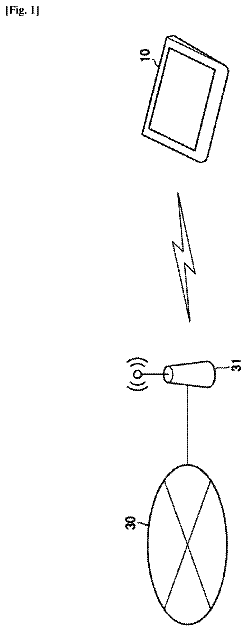
FIG. 1 schematically represents a wireless telecommunications system in which the present invention may be implemented.
The wireless telecommunications system comprises an authentication server 100 , a gateway 110 , a device managing at least one resource 120 and at least one terminal 130 . The gateway device 110 is adapted to communicate with the authentication server 100 , with the device managing the resource(s) 120 and with the terminal(s) 130 .
The authentication server 100 is in charge of authenticating devices requesting access to the resource(s) 120 . The gateway device 110 is in charge of providing access to the resource(s) 120 to authenticated terminals. More than one gateway device may provide access to the resource(s) 120 to authenticated terminals. Requests for accessing the resource(s) 120 are transmitted by the terminal(s) 130 to the gateway device 110 . The gateway device 110 requests to the authentication server 100 whether terminals are allowed to rightfully get access to the resource(s) 120 . As detailed hereinafter, the gateway device 110 might not request authentication by the authentication server 100 for all and any terminals requesting access to the resource(s) 120 .
The terminals 130 are for example mobile terminals of a radio telecommunications network, and the communications between the terminals 130 and the gateway device can be performed by using a wireless communication protocol.
The resource 120 is for example a wireless time and/or frequency resource, which means that the access control to the resource 120 relates to a hand-over procedure or to an establishment of cooperation schemes between two radio neighbours, such as CoMP (Coordinated Multipoint Transmission) in the 3GPP LTE specifications. According to another example, the resource 120 is a computational resource of a server for cyber-foraging applications, or cloud computing. Particularly suitable for M2M (Machine to Machine) communications, also referred to as MTC (Machine-Type Communications), the resource 120 may also be data stored on a data server or information stored by another terminal, like a sensor, or may be an application executed by another terminal.
In the particular case of 3GPP LTE networks, the gateway device 110 is preferably included in the eNodeB or Home eNodeB device, and the authentication server 100 is included in the MME (Mobility Management Entity) device, when the resource 120 is related to a hand-over procedure or to a connection to another terminal, i.e. UE in this case.
FIG. 2 schematically represents an architecture of the gateway device 110 . According to the shown architecture, the gateway device 110 comprises the following components interconnected by a communications bus 210 : a processor, microprocessor, microcontroller or CPU (Central Processing Unit) 200 ; a RAM (Random-Access Memory) 201 ; a ROM (Read-Only Memory) 202 ; an HDD (Hard-Disk Drive) 203 , or any other device adapted to read information stored by storage means; a first communication interface 204 ; a second communication interface 205 ; and a third communication interface 206 .
The first communication interface 204 allows the gateway device 110 to communicate with the authentication server 100 . For instance the first communication interface 204 is an S1 interface, as defined by the 3GPP specifications.
The second communication interface 205 allows the gateway device 110 to communicate with the resources 120 . For instance the second communication interface 204 is an X2 interface, as defined by the 3GPP specifications.
The third communication interface 206 allows the gateway device 110 to communicate with the terminals 130 . For instance the third communication interface 206 is a Uu interface, as defined by the 3GPP specifications.
The authentication 100 and/or the terminals 130 may be based on a similar architecture, wherein only the first communication interface 204 is necessary for the authentication server 100 to communicate with the gateway device 110 , and wherein only the third communication interface 206 is necessary for the terminals 130 to communicate with the gateway device 110 .
CPU 200 is capable of executing instructions loaded into RAM 201 from ROM 202 or from an external memory, such as an SD card or the HDD. After the gateway device 110 has been powered on, CPU 200 is capable of reading instructions from RAM 201 and executing these instructions. The instructions form one computer program that causes CPU 200 to perform the steps performed by the gateway device 110 in the algorithms described hereafter.
Any and all steps of the algorithms described hereafter may be implemented in software by execution of a set of instructions or program by a programmable computing machine, such as a PC (Personal Computer), a DSP (Digital Signal Processor) or a microcontroller; or else implemented in hardware by a machine or a dedicated component, such as an FPGA (Field-Programmable Gate Array) or an ASIC (Application-Specific Integrated Circuit).
FIG. 3 schematically represents exchanges occurring in the wireless telecommunications system, when authentication is performed by the authentication server 100 .
In a step S 301 , the terminal 130 detects a need to get access to the resource 120 . In a following step S 302 , the terminal 130 transmits to the gateway device 110 a request for getting access to the resource 120 . The request from the terminal 130 is received and processed by the gateway device 110 in a following step S 303 . The gateway device 110 detects that accessing the resource 120 by the terminal 130 requires authentication. In a following step S 304 , the gateway device 110 requests to the authentication server 100 whether the terminal 130 is allowed to rightfully get access to the resource 120 . The request from the gateway device 110 is received and processed by the authentication server 100 in a following step S 305 . The authentication server 100 performs authentication of the terminal 130 . If the authentication of the terminal 130 fails, the authentication server 100 rejects the request from the gateway device 110 , which in turn rejects the request from the terminal 130 . Let's consider the case where the authentication of the terminal 130 succeeds, i.e. the terminal 130 is allowed to rightfully get access to the resource 120 . In other words, the authentication server 100 grants access to the resource 120 . In a following step S 306 , the authentication server 100 transmits, to the gateway device 110 , a positive response to the request received in the step S 305 . The response from the authentication server 100 is received and processed by the gateway device 110 in a following step S 307 . In a following step S 308 , the gateway device 110 transmits a positive response to the terminal 130 . The response from the gateway device 110 is received and processed by the terminal 130 in a following step S 309 . The terminal 130 gets prepared for getting access to the resource 120 .
In a step S 310 , the gateway device 110 gets prepared for allowing the terminal 130 to get access to the resource 120 . The gateway device 110 transmits a first connection setup message to the terminal 130 in a step S 311 and a second connection setup message to the device managing the resource 120 in a step S 312 . The first connection setup message is received and processed by the terminal 130 in a step S 313 , and the second connection setup message is received and processed by the device managing the resource 120 in a step S 314 . The terminal 130 and the device managing the resource 120 respectively configure themselves to setup a connection. In a step S 316 , the terminal 130 and the device managing the resource 120 exchanges messages representative of the terminal 130 accessing the resource 120 . Such messages are processed by the terminal 130 and the device managing the resource 120 in respective steps S 315 and S 317 .
Other procedures for effectively allowing the terminal 130 to get access to the resource 120 may be implemented instead of the steps S 310 to S 317 . A connection may be setup directly between the terminal 130 and the device managing the resource 120 , or the gateway device 110 may act as an intermediate device in such a connection thanks to its routing functionalities. Moreover, the gateway device 110 may send a request to setup such a connection to the device managing the resource 120 , which in turn deals directly with the terminal 130 for effectively setting up the connection. Alternatively, the gateway device 110 may send a request to the device managing the resource 120 to unlock the access to the resource 120 for the terminal 130 , which can then get access to the resource 120 once the response granting such access is received from the gateway device in the step S 309 .
In a step S 318 , the authentication server 100 checks whether conditions are fulfilled for offloading authentication toward the gateway device 110 for the terminal 130 . For instance, the authentication server 100 checks whether a predetermined number of authentications has been successfully performed for the terminal 130 . In another example, the authentication server 100 decides offloading the authentication once a successful authentication has been performed for the terminal 130 .
When the conditions are fulfilled for offloading authentication toward the gateway device 110 for the terminal 130 , the authentication server 100 transmits, in a step S 319 , to the gateway device 110 at least one checking function or coefficients thereof. The authentication server 100 further obtains, at least one piece of authentication information to be later on provided by the terminal 130 to request access to the resource 120 , said piece(s) of authentication information being representative of a value such that, when inputted to the checking function(s), the checking function(s) return(s) a predefined value. The checking function allows the gateway device 110 to check on its own that the terminal 130 is allowed to rightfully get access to the resource 120 , on the basis of said piece of authentication information when provided by the terminal 130 . A first embodiment for determining the checking function and said piece of authentication information is detailed hereafter with regard to FIG. 5A , a second embodiment for determining the checking function and said piece of authentication information is detailed hereafter with regard to FIG. 5B and a third embodiment for determining the checking function and said piece of authentication information is detailed hereafter with regard to FIG. 6 . Usage of the checking function by the gateway device 110 and of said piece of authentication information by the terminal 130 is detailed hereafter with regard to FIG. 4 .
In one embodiment, the authentication server 100 determines said piece(s) of authentication information and transmits, in a step S 320 , to the terminal 130 , said piece(s) of authentication information. The checking function, or coefficients thereof, is received and stored by the gateway device 110 in a step S 321 . The piece of authentication information is received and stored by the terminal 130 in a step S 322 .
In another embodiment, the authentication server 100 determines said piece(s) of authentication information from information received from the terminal 130 . For instance, the authentication server 100 derives said piece(s) of authentication information from the International Mobile Subscriber Identity (IMSI) stored in a Subscriber Identity Module (SIM) connected to the terminal 130 , as defined by the 3GPP specifications. Identically, the terminal 130 is able to derive said piece(s) of authentication information from the IMSI. There is therefore, in this embodiment, no need to transmit said piece(s) of authentication information from the authentication server 100 to the terminal 130 . In this case, in the S 320 , the authentication server 100 transmits to the terminal 130 an information indicating that the terminal 130 shall now on transmit a piece of authentication information derived from the IMSI to the gateway device 110 when requesting to get access to the resource 120 .
In a variant, instead of deciding offloading authentication following a successful authentication of the terminal 130 , the authentication server 100 makes such a decision according to a criteria related to a processing load level of the authentication server 100 . The steps S 318 to S 322 are then performed subsequently to a detection that said criteria is fulfilled.
FIG. 4 schematically represents exchanges occurring in the wireless telecommunications system, when authentication is offloaded by the authentication server 100 to the gateway device 110 .
In a step S 401 , the terminal 130 detects a need to get access to the resource 120 . In a following step S 402 , the terminal 130 transmits to the gateway device 110 a request for getting access to the resource 120 . The request is accompanied by the piece of authentication information previously received by the terminal 130 in the step 322 . The request from the terminal 130 , as well as the accompanying piece of authentication information, are received and processed by the gateway device 110 in a following step S 403 . The gateway device 110 detects that accessing the resource 120 by the terminal 130 requires authentication. The gateway device 110 further detects that authentication, in order for at least the terminal 130 to get access to the resource 120 , has been offloaded by the authentication server 100 to the gateway device 110 . The gateway device 110 then retrieves the checking function applicable for determining whether the terminal 130 is authorised to access the resource 120 , from amongst the checking function(s) received from the authentication server 100 . The gateway device 110 then inputs, to the retrieved checking function, the piece of authentication information provided by the terminal 130 . If applying the checking function to the piece of authentication information provided by the terminal 130 results in the checking function outputting a predefined value, the authentication succeeds; otherwise, the checking function fails. As will be detailed hereafter, the predefined value is preferably null. When the authentication succeeds, the gateway device 110 accepts the request transmitted by the terminal 130 ; otherwise, the gateway device 110 rejects the request transmitted by the terminal 130 . Let's consider the case where the authentication of the terminal 130 succeeds, i.e. the terminal 130 is allowed to rightfully get access to the resource 120 . In other words, the gateway device 110 grants access to the resource 120 . In a following step S 404 , the gateway device 110 transmits, to the terminal 130 , a positive response to the request received in the step S 403 . The response from the gateway device 110 is received and processed by the terminal 130 in a following step S 405 .
In a step S 406 , the gateway device 110 gets prepared for allowing the terminal 130 to get access to the resource 120 . The gateway device 110 transmits a first connection setup message to the terminal 130 in a step S 407 and a second connection setup message to the device managing the resource 120 in a step S 408 . The first connection setup message is received and processed by the terminal 130 in a step S 410 , and the second connection setup message is received and processed by the device managing the resource 120 in a step S 411 . The terminal 130 and the device managing the resource 120 respectively configure themselves to setup a connection. In a step S 412 , the terminal 130 and the device managing the resource 120 exchange messages representative of the terminal 130 accessing the resource 120 . Such messages are processed by the terminal 130 and the device managing the resource 120 in respective steps S 411 and S 413 . As already mentioned with regard to FIG. 3 , other procedures for effectively allowing the terminal 130 to get access to the resource 120 may be implemented instead of the steps S 406 to S 413 .
FIG. 5A schematically represents an algorithm performed by the authentication server 100 for offloading authentication to the gateway device 110 , according to the first embodiment.
In a step S 501 , the authentication server 100 determines at least one checking function per terminal 130 for which authentication is expected to be offloaded toward the gateway device 110 .
In a step S 502 , for each terminal 130 , the authentication server 100 determines at least one piece of authentication information associated with the determined checking function(s). For each terminal 130 , each piece of authentication information is representative of a value such that, when inputted in any associated checking function, said associated checking function returns a predefined value.
Preferably, such predefined value is null, i.e. each piece of authentication information is representative of a root of the checking function.
In a variant, the steps S 501 and S 502 are inverted. In this case, the authentication server 100 determines at least one piece of authentication information per terminal 130 , and then determines at least one checking function associated with the piece(s) of authentication information, wherein each piece of authentication information is representative of a value such that, when inputted in any associated checking function, said associated checking function returns a predefined value.
Considering a terminal i, let's denote C.sub.i a set consisting of all the values such that, when inputted in a checking function ƒ.sub.i( ), the checking function ƒ.sub.i( ) returns a predefined value α, wherein, in a preferred embodiment, α=0. Each piece of authentication information associated with the checking function ƒ.sub.i( ) is representative of a value x that solves the following system:
{ ∀ x ∈ C i , f i ( x ) = α ∀ x ′ .Math. C i , f i ( x ′ ) ≠ α
Considering another terminal j, let's denote C.sub.j a set consisting of all the values such that, when inputted in a checking function ƒ.sub.j( ), the checking function ƒ.sub.j( ) returns the predefined value α. In order to avoid that a piece of authentication information provided to the terminal i and used maliciously by the terminal j to get access to the resource 120 leads to the terminal j getting effectively access to the resource 120 , the intersection of the sets C.sub.i and C.sub.j shall be void: ∀( i,j ), i≠j, C .sub.i ∩C .sub.j=∅
Therefore, in a step S 503 , the authentication server 100 ensures that each piece of authentication for one terminal cannot be associated with the checking function for another terminal.
In a following step S 504 , the authentication server 100 associates, per terminal 130 , a temporary identifier with the piece(s) of authentication information for said terminal 130 and the checking function(s) for said terminal 130 .
In a step S 505 , the authentication server 100 transmits at least one determined checking function, or coefficients thereof, to at least one gateway device, such as the gateway device 110 . The authentication server 100 transmits one determined checking function, or coefficients thereof, for each terminal 130 for which authentication offload is allowed. In conjunction, the authentication server 100 transmits to the gateway device(s) the temporary identifier associated with each checking function.
Moreover, in conjunction, the authentication server 100 may transmit to the gateway device(s) the predefined value α.
In a step S 506 , the authentication server 100 transmits at least one determined piece of authentication information to each terminal 130 for which authentication offload is allowed. In conjunction, the authentication server 100 transmits to the terminal(s) 130 the temporary identifier associated with each piece of authentication information.
Therefore, considering one terminal having received a temporary identifier i and another terminal having received a distinct temporary identifier j, and considering that the intersection of the sets C.sub.i and C.sub.j is void, a malicious usage of a piece of authentication information representative of a value xεC.sub.i by the terminal having received the temporary identifier j would result in the request for getting access to the resource 120 being rejected.
The description continues in the full USPTO document.
 Lapsed, fee not paid12 drawings