Lapsed, fee not paid9 drawings
Vehicles & Drones · US 9,738,300 B2
Carrying apparatus
A carrying apparatus provides a self-powered, rechargeable, technologically adaptable transport vehicle, such as a stroller.
US 9,738,307 B2 · Assignee: Mitsubishi Electric Corporation · Inventors: Endo; Masaya et al.
Sheet 1 of 8 from the published document. All sheets in the USPTO PDF
Provided are a steering control device and the like, including the steps of: calculating a steering assist torque to be applied to an actuator for applying the steering assist torque to a steering system of a vehicle in order to improve return characteristics of the steering system; determining a steering state of a driver; correcting the steering assist torque depending on a result of the steering state determination; and controlling the actuator depending on the corrected steering assist torque, in which the step of determining a steering state of a driver includes determining the steering state of the driver based on a combination of at least two of the following: a manually-operating steering state determination; an abrupt steering wheel return determination; a high-acceleration steering wheel return determination; a manual return steering determination; and an additional-steering determination.
As related-art steering control devices, there are known steering control devices for generating a steering wheel return torque by a motor in order to improve steering wheel return characteristics at the time when a driver releases a steering wheel from his/her hand at low vehicle speed (for example, Patent Literatures 1 to 3). In Patent Literature 1, polarity determination is performed to determine that a steering wheel is in a return state when a rotation direction of a motor and an input direction of a steering torque are different from each other, and whether or not to apply a return torque is selected. In order to prevent the occurrence of a phenomenon that a driver receives a force from the steering wheel in an unintended direction, namely, a so-called unintended steering of the steering wheel, which is caused even when the driver slightly returns the steering wheel in the steering
1 of 8 drawing sheets so far from the published document, cropped to the drawing. Every sheet is in the USPTO PDF.
What the patent claimed, word for word. All of it is now free to use.
This is a National Stage of International Application No. PCT/JP2013/060636 filed Apr. 8, 2013, the contents of which are incorporated herein by reference in its entirety.
The present invention relates to a steering control device for assisting steering by a driver.
As related-art steering control devices, there are known steering control devices for generating a steering wheel return torque by a motor in order to improve steering wheel return characteristics at the time when a driver releases a steering wheel from his/her hand at low vehicle speed (for example, Patent Literatures 1 to 3).
In Patent Literature 1, polarity determination is performed to determine that a steering wheel is in a return state when a rotation direction of a motor and an input direction of a steering torque are different from each other, and whether or not to apply a return torque is selected. In order to prevent the occurrence of a phenomenon that a driver receives a force from the steering wheel in an unintended direction, namely, a so-called unintended steering of the steering wheel, which is caused even when the driver slightly returns the steering wheel in the steering-holding state (in the state in which the driver does not steer the steering wheel greatly during straight travel or the like), whether or not to apply the return torque is selected based on the magnitude of the steering torque.
In Patent Literature 2, the following configuration is proposed. A target steering angle for returning a steering wheel to a neutral position is set based on a steering angle and a vehicle speed, and an ideal target steering angular speed is set depending on a deviation between the target steering angle and the steering angle and on the vehicle speed. A target converging current is set based on a deviation between the target steering angular speed and a steering angular speed. Then, when a steering torque is near 0, it is determined that a driver is lightly touching the steering wheel with his/her hand or that the driver is releasing the steering wheel from his/her hand, and the target converging current is applied.
In Patent Literature 3, it is proposed to multiply a deviation between a target steering angular speed and a steering angular speed by a steering torque multiplication coefficient value, to thereby calculate a correction current value.
As described above, in the related-art steering control devices, in a region in which the steering torque is small, it is determined that the driver is lightly touching the steering wheel with his/her hand or that the driver is releasing the steering wheel from his/her hand, and the steering wheel return torque for improving the steering wheel return characteristics is applied. In contrast, in a region in which the steering torque is large, it is determined that the driver is holding and steering the steering wheel, and the application of the steering wheel return torque is stopped or suppressed. CITATION LIST Patent Literature
[PTL 1] JP 10-278829 A (pages 2 and 3, paragraphs 0001 to 0021, and FIG. 2 and FIG. 4) [PTL 2] JP 2002-120745 A (pages 4, 5, and 8, and paragraphs 0031, 0036, and 0091 to 0093) [PTL 3] JP 2006-123827 A (page 3, paragraph 0007, and FIG. 3) SUMMARY OF INVENTION Technical Problem
In the related-art steering control devices as described above, when the steering torque becomes larger than a predetermined threshold, the return control torque becomes zero. In steering-wheel return steering involving a large steering angle, the steering torque is large, and the return control is not activated until the steering torque falls below the threshold even after the driver releases the steering wheel from his/her hand. Accordingly, there is a problem in that the steering wheel return characteristics cannot be improved.
The present invention has been made in order to solve the problem as described above, and has an object of providing a steering control device and the like, which are capable of acquiring appropriate steering wheel return characteristics even in steering involving a large steering angle. Solution to Problem
According to one embodiment of the present invention, there are provided a steering control device and the like, including: an actuator for applying a steering assist torque to a steering system of a vehicle; a steering torque detection section for detecting a steering torque acting on the steering system of the vehicle; a steering angle detection section for detecting a steering angle of the steering system of the vehicle; a steering assist torque calculation section for calculating a steering assist torque to be applied to the actuator in order to improve return characteristics of the steering system; a steering state determination section for determining a steering state of a driver; a steering assist torque correction section for correcting the steering assist torque depending on a steering state determination result of the steering state determination section; and an actuator control section for controlling the actuator depending on the corrected steering assist torque, in which the steering state determination section determines the steering state of the driver based on a combination of at least two of the following: a manually-operating steering determination section for determining a manually-operating steering state of the driver based on a result of comparing a magnitude of the steering torque to magnitudes of a plurality of steering torque thresholds; an abrupt steering wheel return determination section for determining an abrupt steering wheel return state based on a result of comparing a magnitude of a change amount of the steering torque to a magnitude of a steering torque change amount threshold; a high-acceleration steering wheel return determination section for determining a steering wheel return state involving high acceleration based on a result of comparing a magnitude of a steering acceleration of the steering system to a magnitude of a steering acceleration threshold; a manual turning-back steering determination section for determining a manual turning-back steering state of the driver based on a result of comparing a sign indicating a direction of the steering torque to a sign of the steering angle; and an additional-steering determination section for determining a steering-holding state of the steering system, storing the steering angle at a time of the determination as a steering-holding determination steering angle, and determining an additional-steering state of the driver based on a result of comparing a magnitude of the steering-holding determination steering angle to a magnitude of the steering angle, and in which the actuator control section drives the actuator depending on the steering assist torque that is corrected by the steering assist torque correction section based on the determination result of the steering state of the driver. Advantageous Effects of Invention
According to the one embodiment of the present invention, it is possible to provide the steering control device and the like, which are capable of acquiring the appropriate steering wheel return characteristics even in the steering involving a large steering angle.
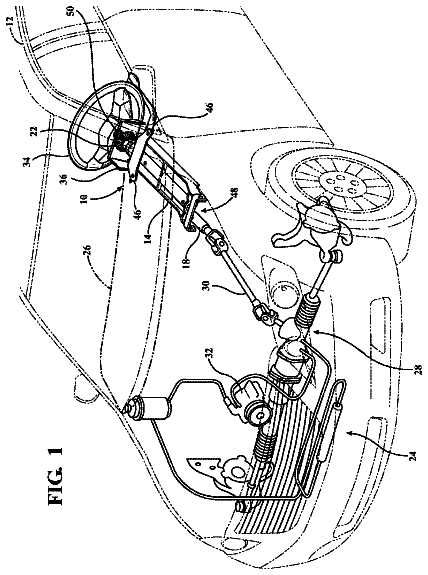
FIG. 1 is a diagram for illustrating an example of a configuration of a steering control device according to the present invention.
FIG. 2 is a block diagram for illustrating an example of a configuration of a main part of the steering control device according to a first embodiment of the present invention.
FIG. 3 is an operation flowchart for illustrating an example of an operation of the main part of the steering control device according to the first embodiment of the present invention.
FIG. 4 is a block diagram for illustrating an example of a configuration of a steering assist torque- 1 calculator according to the first embodiment of the present invention.
FIG. 5 is a graph for showing an example of an assist map according to the first embodiment of the present invention.
FIG. 6 is a block diagram for illustrating an example of a configuration of a steering state determination device according to the first embodiment of the present invention.
FIG. 7 is a block diagram for illustrating an example of a configuration of a steering assist torque corrector according to the first embodiment of the present invention.
FIG. 8 is a graph for showing an effect of the steering control device according to the present invention.
According to the present invention, a steering state of a driver is determined based on a combination of at least two of the following: a manually-operating steering determination for determining a manually-operating steering state of the driver based on a result of comparing a magnitude of a steering torque to magnitudes of a plurality of steering torque thresholds; an abrupt steering wheel return determination for determining an abrupt steering wheel return state based on a result of comparing a magnitude of a change amount of the steering torque to a magnitude of a steering torque change amount threshold; a high-acceleration steering wheel return determination for determining a steering wheel return state involving high acceleration based on a result of comparing a magnitude of a steering acceleration of a steering system to a magnitude of a steering acceleration threshold; a manual return steering determination for determining a manual return steering state of the driver based on a result of comparing a sign indicating a direction of the steering torque to a sign of a steering angle; and
an additional-steering determination for determining a steering-holding state of the steering system, storing the steering angle at a time of the determination as a steering-holding determination steering angle, and determining an additional-steering state of the driver based on a result of comparing a magnitude of the steering-holding determination steering angle to a magnitude of the steering angle. Consequently, the steering state of the driver can be determined more finely than hitherto, and a steering assist torque to be applied to an actuator in order to improve return characteristics of the steering system can be appropriately adjusted depending on the steering state. As a result, appropriate steering wheel return characteristics can be acquired even in steering involving a large steering angle.
Referring to the drawings, a steering control device and the like according to the present invention are now described by way of embodiments. Note that, the same or corresponding parts in the respective embodiments are denoted by the same reference symbols, and a repetitive description thereof is omitted.
First Embodiment
FIG. 1 is a diagram for illustrating an example of a configuration of the steering control device according to the present invention. Right and left steered wheels 3 are steered in response to rotation of a steering shaft 2 coupled to a steering wheel 1 . A steering angle sensor 4 for detecting a steering angle is mounted to the steering wheel 1 . A torque sensor 5 is mounted to the steering shaft 2 to detect a steering torque acting on the steering shaft 2 . A motor 6 is coupled to the steering shaft 2 via a speed reduction mechanism 7 , and can apply a steering assist torque generated by the motor 6 to the steering shaft 2 . A vehicle speed of a vehicle is detected by a vehicle speed sensor 8 . A current flowing through the motor 6 is detected by a current sensor 9 . An inter-terminal voltage of the motor 6 is detected by a voltage sensor 10 .
A control unit 11 calculates, for example, the steering assist torque to be generated by the motor 6 , and controls the current of the motor 6 necessary for generating the steering assist torque. The control unit 11 includes a microcomputer (CPU) constructed by memories including a ROM and a RAM to be described later, a current driver 12 for driving the motor current (causing a desired current to flow through the motor 6 ), and the like.
Next, the calculation of the steering assist torque by the control unit 11 , which is a main part, according to this embodiment is described with reference to a block diagram illustrated in FIG. 2 and a flowchart illustrated in FIG. 3 . Note that, the operation illustrated in the flowchart is repeatedly executed at a control cycle of a predetermined period.
In FIG. 2 , the control unit 11 includes the current driver 12 , a steering state determination device 21 and a steering assist torque calculator 22 , which are constructed by the microcomputer, and a memory (device) M. Then, for example, the steering angle sensor 4 , the vehicle speed sensor 8 , the torque sensor 5 , and the current sensor 9 are connected to the control unit 11 . In the memory M, various kinds of data and information used by the microcomputer are stored.
The steering assist torque calculator 22 includes a steering assist torque- 1 calculator 221 , a steering assist torque- 2 calculator 222 , a steering assist torque- 3 calculator 223 , and a steering assist torque corrector 224 .
In the operation flowchart of FIG. 3 , in Step S 1 , the steering angle sensor 4 , the torque sensor 5 , the vehicle speed sensor 8 , and the current sensor 9 are used to detect the steering angle, the steering torque, the vehicle speed of the vehicle, and the current flowing through the motor 6 , respectively.
In Step S 2 , the steering assist torque calculator 22 calculates a steering assist torque- 1 , a steering assist torque- 2 , and a steering assist torque- 3 based on the steering angle, the steering torque, and the vehicle speed. In this embodiment, the steering assist torque- 1 is a steering assist torque for generating a steering wheel return torque by the motor 6 in order to improve steering wheel return characteristics at the time when the driver releases the steering wheel from his/her hand at low vehicle speed. The configuration of the steering assist torque- 1 calculator 221 for calculating the steering assist torque- 1 is described.
A block diagram of the steering assist torque- 1 calculator 221 is illustrated in FIG. 4 . In a target steering speed setter 41 , a target steering speed corresponding to the steering angle and the vehicle speed is set as map data in advance (stored in the memory in an actual case), and the target steering speed corresponding to the detected steering angle and the detected vehicle speed is calculated. In order to improve the return of the steering wheel 1 to a neutral position, the target steering speed is set to have the sign opposite to that of the steering angle (opposite direction), and is set so that the magnitude of the target steering speed becomes larger as the vehicle speed becomes lower. Then, for example, the target steering speed has such characteristics that, under the same vehicle speed, the target steering speed first increases in the range of steering angles of from zero to, for example, a reference steering angle along with an increase in magnitude (absolute value) of the steering angle, but subsequently decreases after reaching the maximum target steering speed.
An actual steering speed calculator 42 calculates an actual steering speed, which is a steering speed of the steering wheel 1 , based on the steering angle.
A subtractor 43 subtracts the actual steering speed from the target steering speed, to thereby calculate a steering speed deviation.
A gain corrector 44 multiplies the steering speed deviation by a predetermined gain, to thereby calculate the steering assist torque- 1 .
Next, the configuration of the steering assist torque- 2 calculator 222 for calculating the steering assist torque- 2 is described. In this embodiment, the steering assist torque- 2 is a steering assist torque to be switched from the steering assist torque- 1 depending on a determination result of the steering state determination device 21 , and the steering assist torque- 2 is set to be zero. In other words, the steering assist torque- 2 is a steering assist torque to be set for stopping the application of the steering assist torque- 1 . Note that, for the above-mentioned reason, the steering assist torque- 2 is not limited to zero and only needs to be a value smaller than the steering assist torque- 1 .
The steering assist torque- 3 calculator 223 for calculating the steering assist torque- 3 calculates a steering assist torque calculated by a related-art steering control device. For example, in this embodiment, a steering assist torque for assisting the steering by the driver corresponding to the steering angle and the vehicle speed is set (stored in the memory M) in advance as map data as exemplified by an assist map shown in FIG. 5 , and the steering assist torque- 3 is calculated depending on the detected steering torque and the detected vehicle speed.
In the assist map of FIG. 5 , in a region in which the magnitude (absolute value) of the steering torque is small, the gradient of the assist map, that is, an increase amount of the value of the steering assist torque with respect to an increase in steering torque is small, and the gradient becomes gradually larger as the steering torque increases. When a predetermined steering assist torque is reached, the steering assist torque does not increase any more but becomes constant. The assist map is set so that the magnitude of the steering assist torque becomes larger as the vehicle speed becomes lower.
In Step S 3 , the steering state determination device 21 determines a steering state of the driver based on the steering angle sensor, the steering torque sensor, the vehicle speed sensor, and the current sensor.
A block diagram of the steering state determination device 21 is illustrated in FIG. 6 . The steering state determination device 21 includes six novel steering state determination sections. All of those determination sections are determination sections for determining the steering state of the driver for the purpose of acquiring appropriate steering wheel return characteristics even in steering involving a large steering angle. The steering state determination device 21 determines the steering state of the driver based on a combination of at least two of the six steering state determination sections.
A manually-operating steering determination device 85 uses the steering torque and the vehicle speed to determine whether or not the driver is holding and steering the steering wheel 1 . Then, when it is determined that the driver is holding and steering the steering wheel 1 , the manually-operating steering determination device 85 switches the steering assist torque- 1 , which is used to improve the return of the steering wheel 1 to a neutral position, to the steering assist torque- 2 of zero.
A steering torque threshold- 1 setter 61 sets a predetermined steering torque threshold 1 (ATh 1 ). A steering torque threshold- 2 setter 63 sets a predetermined steering torque threshold 2 (ATh 2 ) corresponding to the vehicle speed. The steering torque threshold 2 is set so that the magnitude thereof becomes larger as the vehicle speed becomes higher. In this case, the steering torque threshold 2 is set larger than the steering torque threshold 1 .
A magnitude comparator 62 compares an absolute value ITal of the steering torque to the steering torque threshold 1 . When the absolute value of the steering torque is equal to or smaller than the steering torque threshold 1 (|Ta|≦ATh 1 ), a selector 67 outputs the steering torque threshold 1 . When the absolute value of the steering torque is larger than the steering torque threshold 1 (|Ta|>ATh 1 ), the selector 67 outputs an output of a selector 65 .
A magnitude comparator 64 compares the absolute value of the steering torque to the steering torque threshold 2 . When the absolute value of the steering torque is equal to or smaller than the steering torque threshold 2 (|Ta|≦ATh 2 ), the selector 65 selects an output of a previous-value output device (delay device) 66 . Symbol 1/z of the previous-value output device 66 represents a delay element. In other words, the selector 65 outputs a previous value of a steering torque threshold 3 (ATh 3 ), which is the output of the selector 67 calculated based on the result of comparing the magnitude of the steering torque to the magnitude of the steering torque threshold 1 and the result of comparing the magnitude of the steering torque to the magnitude of the steering torque threshold 2 .
When the magnitude comparator 64 determines that the absolute value of the steering torque is larger than the steering torque threshold 2 (|Ta|>ATh 2 ), the steering torque threshold 2 is selected. A magnitude comparator 68 compares the absolute value of the steering torque to the output of the selector 67 , that is, the steering torque threshold 3 . When the absolute value of the steering torque is equal to or larger than the steering torque threshold 3 (|Ta|ATh 3 ), the magnitude comparator 68 determines that the driver is holding and steering the steering wheel 1 , and outputs “1” (logic value “1”; the same applies hereinafter). When the absolute value of the steering torque is smaller than the steering torque threshold 3 (|Ta|<ATh 3 ), the magnitude comparator 68 determines that the driver is not holding and steering the steering wheel 1 , and outputs “0” to an AND device 69 .
An abrupt steering wheel return determination device 86 detects, at the start of steering-wheel return steering involving a large steering angle, an abrupt decrease in steering torque caused when a transition has been made from the state in which the driver holds the steering wheel to the state in which the driver releases the steering wheel from his/her hand.
A steering torque change amount calculator 70 differentiates the steering torque to calculate a steering torque change amount Ta′. A steering torque change amount threshold setter 71 sets a predetermined steering torque change amount threshold (BTh 1 ). When an absolute value of the steering torque change amount is equal to or larger than the steering torque change amount threshold (|Ta′|≧BTh 1 ), a magnitude comparator 73 determines that, at the start of the steering-wheel return steering involving a large steering angle, a transition has been made from the state in which the driver holds the steering wheel to the state in which the driver releases the steering wheel from his/her hand, and outputs “0” to the AND device 69 . In other cases, the magnitude comparator 73 outputs “1” to the AND device 69 .
Note that, the steering torque is large in a region in which the steering angle is large and a road surface reaction torque for returning the steering wheel 1 to a neutral position is large, and hence the abrupt steering wheel return determination may be implemented in a region in which the magnitude of the steering torque is larger than a steering torque threshold 4 (ATh 4 ). Alternatively, the signs (directions; the same applies hereinafter) of the steering torque and the steering torque change amount may be compared to each other, and the abrupt steering wheel return determination device 86 may be implemented in a situation in which the signs are different from each other, that is, a situation in which the absolute value of the steering torque is decreasing. Alternatively, the sign of the steering angle and the sign of a steering angular speed may be compared to each other, and the abrupt steering wheel return determination device 86 may be implemented in a situation in which the signs are different from each other, that is, a situation in which the driver performs the return steering of steering the steering wheel toward the neutral position.
Those determinations are performed, for example, by the steering torque change amount calculator 70 based on information from a sensor or the like.
Through the addition of those conditions, the state in which a transition has been made from the state in which the driver holds the steering wheel to the state in which the driver releases the steering wheel from his/her hand can be more accurately detected at the start of the steering-wheel return steering involving a large steering angle.
The AND device 69 calculates logical AND of the output of the magnitude comparator 68 , the output of the magnitude comparator 73 , and an output of a magnitude comparator 76 to be described later. In other words, even in the situation in which the manually-operating steering determination device 85 determines that the driver is holding and steering the steering wheel 1 , it can be determined that a transition has been made from the state in which the driver holds the steering wheel to the state in which the driver releases the steering wheel from his/her hand, and the AND device 69 outputs “0” to an OR device 84 so that the steering assist torque- 1 is applied in order to prevent an abrupt increase in return speed.
A high-acceleration steering wheel return determination device 87 detects, in steering-wheel hands-free steering from a large steering angle, an abrupt increase in return speed at the time of the return of the steering wheel 1 caused by the action of a large road surface reaction torque, to thereby determine a steering wheel return state involving high acceleration.
A steering acceleration calculator 74 differentiates a steering angle θh detected by the steering angle sensor 4 to calculate a steering speed θh ′. The steering acceleration calculator 74 further differentiates the steering speed to calculate a steering acceleration θh ″. A steering acceleration threshold setter 75 sets a predetermined steering acceleration threshold CThl. A magnitude comparator 76 compares an absolute value of the steering acceleration to the steering acceleration threshold. When the absolute value of the steering acceleration is equal to or larger than the steering acceleration speed threshold (|θh″|≧CTh 1 ), the magnitude comparator 76 determines that the steering wheel 1 is in an abrupt return speed increasing state, and outputs “0” to the AND device 69 . In other cases, the magnitude comparator 76 outputs “1” to the AND device 69 .
Note that, the steering torque is large in a region in which the steering angle is large and the road surface reaction torque for returning the steering wheel 1 to the neutral position is large, and hence the high-acceleration steering wheel return determination device 87 may be implemented in a region in which the magnitude of the steering torque is larger than the steering torque threshold 4 (ATh 4 ). Alternatively, the sign of the steering angle, the sign of the steering speed, and the sign of the steering acceleration may be compared to one another, and the high-acceleration steering wheel return determination device 87 may be implemented in a situation in which the steering angle and the steering speed have different signs and the steering angle and the steering acceleration have different signs, that is, a situation in which the driver performs the return steering of steering the steering wheel toward the neutral position and the magnitude of the return speed is increasing.
Those determinations are performed, for example, by the steering acceleration calculator 74 based on information from a sensor or the like.
Through the addition of those conditions, an abrupt increase in return speed at the time of the return of the steering wheel 1 can be more accurately detected in the steering-wheel return steering involving a large steering angle.
The AND device 69 calculates logical AND of the output of the magnitude comparator 68 , the output of the magnitude comparator 73 , and the output of the magnitude comparator 76 , and hence, even in the situation in which the manually-operating steering determination device 85 determines that the driver is holding and steering the steering wheel 1 , in the steering-wheel hands-free steering from a large steering angle, it can be determined that the steering state is in the steering wheel return state involving high acceleration caused by the action of a large road surface reaction torque, and the AND device 69 outputs “0” to the OR device 84 so that the steering assist torque- 1 is applied in order to prevent an abrupt increase in return speed.
The manual return steering determination device 88 determines, in steering-wheel return steering from a large steering angle at the time when the vehicle speed is low and the road surface reaction torque for returning the steering wheel 1 to the neutral position is small, a situation in which the steering wheel 1 does not return to a neutral point unless the driver applies the steering torque on his/her own in the direction of returning the steering wheel 1 to the neutral position.
When a sign comparator 77 determines that the signs (directions) of the steering torque and the steering angle are opposite to each other, the manual return steering determination device 88 determines that the current situation is the situation in which the steering wheel 1 does not return to the neutral point unless the driver applies the steering torque on his/her own in the direction of returning the steering wheel 1 to the neutral position, and outputs “0” to the OR device 84 . In other cases, the manual return steering determination device 88 outputs “1” to the OR device 84 .
The situation in which the signs of the steering torque and the steering angle are opposite to each other is a situation in which, when the steering wheel 1 is attempted to be returned to the neutral position from the current steering angle, a resistive torque such as friction included in the steering system is larger than the road surface reaction torque acting to return the steering wheel 1 in the neutral direction. The related-art steering control devices are configured to apply the steering assist torque- 1 when the magnitude of the steering torque is small. When the driver intends to return the steering wheel 1 to the neutral position at a steering speed equal to or higher than the target steering speed, the steering assist torque- 1 may serve as an additional resistive torque with respect to the driver's return steering so that the driver's steering torque may be increased, thus leading to a feel of discomfort. Due to the provision of the manual return steering determination device 88 , in such a situation, the steering assist torque can be switched to be zero, to thereby prevent an increase in driver's steering torque.
Note that, the manual return steering determination device 88 may be implemented in a region in which the magnitude of the steering torque is larger than a steering torque threshold 5 (ATh 5 ). With this configuration, a determination can be stopped in a situation in which the steering torque is near zero and the sign of the steering torque frequently changes.
Those determinations are performed, for example, by the sign comparator 77 based on information from a sensor or the like.
An additional-steering determination device 89 determines a state in which the driver steers the steering wheel 1 from the neutral position side in a direction in which the steering angle becomes larger.
A steering-holding determination device 78 calculates the steering speed θh′ based on the steering angle θh, and determines a situation in which the magnitude of the steering speed is small and there is little movement of the steering wheel 1 as a steering-holding state. The steering-holding determination device 78 stores a steering angle at the time of this determination as a steering-holding determination steering angle (stores in the memory M). A magnitude comparator 79 compares the steering angle to a steering-holding determination steering angle Eθhth. When the magnitude of the steering angle is equal to or larger than the magnitude of the steering-holding determination steering angle (|θh|≧Eθhth), the magnitude comparator 79 determines that the additional steering is performed, and outputs “0” to the OR device 84 . In other cases, the magnitude comparator 79 outputs “1” to the OR device 84 .
Due to the provision of the additional-steering determination device 89 , in the additional steering that requires no application of the return control, the application of the steering assist torque- 1 can be stopped, and at the start of the return steering, the return control can be applied because the steering angle becomes smaller than the steering-holding determination steering angle. In addition, in the hands-free steering from a large steering angle, in a situation in which the road surface reaction torque is large and such overshoot that the steering wheel 1 excessively returns beyond the neutral position occurs, which is otherwise determined as the additional steering, a large steering angle at the time of the release of the steering wheel from the driver's hand is stored as the steering-holding determination steering angle, and the steering angle at the time of the overshoot is smaller than the steering-holding determination steering angle, and hence the steering-holding determination device 78 does not determine that the additional steering is performed, but can continue the application of the return control. Consequently, the steering assist torque for suppressing the overshoot speed can be applied to suppress the overshoot to a low level. Consequently, appropriate steering wheel return characteristics can be realized.
An abrupt turning-back steering determination device 90 detects a situation in which the magnitude of a change amount of a steering shaft reaction torque is large, and determines that abrupt turning-back steering of the steering wheel 1 is performed by the driver. As used herein, the turning-back steering means steering in which the return steering is performed continuously from the additional steering.
A steering shaft reaction torque calculator 80 calculates a steering shaft reaction torque acting on the steering shaft 2 based on the current flowing through the motor 6 detected by the current sensor 9 and the steering torque detected by the torque sensor 5 . When the steering shaft reaction torque is represented by T.sub.rtss; the steering torque, T.sub.sens; the current, I.sub.m; a torque constant of the motor 6 , K.sub.t; and a reduction gear ratio of the speed reduction mechanism 7 , G.sub.gear, the steering shaft reaction torque is calculated by calculating Expression (1). T .sub.rtss =T .sub.sens +G .sub.gear K .sub.t I .sub.m [Ex. 1]
In Expression (1), G.sub.gearK.sub.tI.sub.m represents an actual steering assist torque to be applied to the steering shaft 2 by the motor 6 .
A change amount calculator 81 differentiates the steering shaft reaction torque to calculate a change amount T.sub.rtss′ of the steering shaft reaction torque. A steering shaft reaction torque change amount threshold setter 82 sets a steering shaft reaction torque change amount threshold FTh 1 . The set value thereof is larger than a steering shaft reaction torque change amount that is generated when the driver releases the steering wheel from his/her hand from a large steering angle.
When the magnitude of the change amount of the steering shaft reaction torque is larger than the steering shaft reaction torque change amount threshold (T.sub.rtss′>FTh 1 ), a magnitude comparator 83 determines that the abrupt turning-back steering is performed by the driver, and outputs “0” to the OR device 84 in order to reduce the application of the steering assist torque- 1 . In other cases, the magnitude comparator 83 outputs “1” to the OR device 84 .
The steering shaft reaction torque represents a reaction torque acting on the steering shaft, and corresponds to the sum of friction and a road surface reaction torque that act on the steering shaft. When the value of the steering shaft reaction torque changes with a change amount larger than a change amount that is generated in the normal hands-free steering, it can be determined that the change amount is increasing because of the intervention of the steering by the driver, and it is determined that the abrupt turning-back steering of the steering wheel 1 is performed by the driver.
The related-art steering control devices are configured to apply the steering assist torque- 1 when the magnitude of the steering torque is small. According to the configuration of the present invention, however, the application of the steering assist torque- 1 can be reduced when the driver actively turns back the steering wheel, and hence an increase in driver's steering torque can be suppressed to acquire an appropriate steering feeling.
The OR device 84 calculates logical OR of the determination result of the manually-operating steering determination device 85 , the determination result of the abrupt steering wheel return determination device 86 , the determination result of the high-acceleration steering wheel return determination device 87 , the determination result of the manual return steering determination device 88 , the determination result of the additional-steering determination device 89 , and the determination result of the abrupt turning-back steering determination device 90 , or more accurately, calculates logical OR of the result of logical AND of the determination result of the manually-operating steering determination device 85 , the determination result of the abrupt steering wheel return determination device 86 , and the determination result of the high-acceleration steering wheel return determination device 87 , the determination result of the manual return steering determination device 88 , the determination result of the additional-steering determination device 89 , and the determination result of the abrupt turning-back steering determination device 90 .
When the logical OR is “0”, the current situation is determined to be a situation of applying the return torque, and the steering assist torque- 1 is applied through processing to be described later. When the logical OR is “1”, the current situation is not determined to be a situation of applying the return torque, and the application of the steering assist torque- 1 is reduced through the processing shown in Step S 4 .
Returning to FIG. 3 , in Step S 4 , the steering assist torque corrector 224 calculates, based on the steering state of the driver determined by the steering state determination device 21 , a final steering assist torque from the steering assist torque- 1 , the steering assist torque- 2 , and the steering assist torque- 3 . A block diagram for illustrating the configuration of the steering assist torque corrector 224 is illustrated in FIG. 7 .
In FIG. 7 , the steering assist torque corrector 224 includes differentiators 102 and 103 , switches 101 and 104 , a low-pass filter 110 , and an adder 109 . Then, the steering state determination device 21 , the steering assist torque- 1 calculator 221 , the steering assist torque- 2 calculator 222 , and the steering assist torque- 3 calculator 223 are connected to the steering assist torque corrector 224 . The low-pass filter 110 includes a subtractor 105 , a multiplier 106 , an adder 107 , and an integrator 108 .
The switch 101 switches an output signal depending on a determination result of the steering state determination device 21 . In this embodiment, when the steering state determination device 21 outputs “1”, the switch 101 selects the steering assist torque- 2 , and output the value of zero. When the steering state determination device 21 outputs “0”, the switch 101 selects and outputs the steering assist torque- 1 .
The differentiator 102 differentiates the steering assist torque- 1 to calculate a change amount of the steering assist torque- 1 . In FIG. 7 , symbol s represents the Laplace operator. The differentiator 103 differentiates the steering assist torque- 2 to calculate a change amount of the steering assist torque- 2 .
The description continues in the full USPTO document.
About 6,601 words. The USPTO PDF has it with every drawing.
Fees are due 3.5, 7.5 and 11.5 years after grant. This patent expired on August 22, 2025, so the fee marked "not paid" was the one that went unpaid.
STEERING CONTROL DEVICE, AND STEERING CONTROL METHOD
Filed Apr 2013 · published Jan 2016Steering control device, and steering control method
Filed Apr 2013 · granted Aug 2017Earlier publications, parents and continuations. None of them can still be enforced, or this patent would not be listed.
Prior art cited by the examiner or applicant. Useful when you check your own idea for novelty.
Everything on this page comes from the documents linked above.