Patent Yard Sign in
Lapsed, fee not paid

Photochromic compounds and compositions

US 8,545,984 B2 · Assignee: Transitions Optical, Inc. · Inventors: He; Meng et al.

USPTO PDF

Overview

Sheet 1 of 1 from the published document. All sheets in the USPTO PDF

Abstract From the patent

Described herein are compounds generally comprising an indeno[2',3':3,4]naptho[1,2-b]pyran structure. Such compounds may be useful for their photochromic properties, and be used in certain photochromic compositions. Such compositions may further comprise other photochromic compositions and/or materials. Additionally, such compounds and/or compositions may be suitable for preparing certain photochromic articles. Also described herein are methods for preparing certain photochromic compounds, compositions, and articles.

Why it's free to use

  • The USPTO Official Gazette of November 25, 2025 lists it as expired on October 1, 2025 for an unpaid maintenance fee.
  • It isn't on any reinstatement notice published since.
  • Its 1 US relative has also lapsed, expired or never issued.
  • We check US rights only. Check foreign counterparts before selling abroad.
FiledDecember 16, 2010
GrantedOctober 1, 2013
Expired (fee)October 1, 2025
Application number12/928687
Classification (CPC)G03C1/73 +7 more
Length30 claims · 63 pages

Background From the patent

The present invention relates generally to photochromic compounds and to and elements made using the photochromic compounds disclosed herein. Conventional photochromic compounds have at least two states, a first state having a first absorption spectrum and a second state having a second absorption spectrum that differs from the first absorption spectrum, and are capable of switching between the two states in response to at least actinic radiation. Further, conventional photochromic compounds can be thermally reversible. That is, conventional photochromic compounds are capable of switching between a first state and a second state in response to at least actinic radiation and reverting back to the first state in response to thermal energy. As used herein "actinic radiation" means electromagnetic radiation, such as but not limited to ultraviolet and visible radiation that is capable of caus

Drawings 1

All 1 drawing sheet from the published document, cropped to the drawing.

Claims 30 total, 1 independent

What the patent claimed, word for word. All of it is now free to use.

  1. 1
    Independent claimA compound represented by the following graphic Formula I: ##STR00051## wherein: A' is selected from optionally substituted heteroaryl and optionally substituted aryl wherein A' is optionally substituted with L.sub.2; R.sub.1 and R.sub.2 are each independently selected from hydrogen, hydroxy and chiral or achiral groups selected from optionally substituted heteroalkyl, optionally substituted alkyl, optionally substituted alkenyl, optionally substituted alkynyl, optionally substituted aryl, optionally substituted heteroaryl, optionally substituted cycloalkyl, optionally substituted heterocycloalkyl, halogen, optionally substituted amino, carboxy, alkylcarbonyl, alkoxycarbonyl, optionally substituted alkoxy, and aminocarbonyl, or R.sub.1 and R.sub.2 may be taken together with any intervening atoms to form a group selected from oxo, optionally substituted cycloalkyl, and optionally substituted heterocycloalkyl; and R.sub.3 for each occurrence, is independently selected from chiral or achiral groups selected from formyl, alkylcarbonyl, alkoxycarbonyl, aminocarbonyl, arylcarbonyl, aryloxycarbonyl, aminocarbonyloxy, alkoxycarbonylamino, aryloxycarbonylamino, boronic acid, boronic acid esters, cycloalkoxycarbonylamino, heterocycloalkyloxycarbonylamino, heteroaryloxycarbonylamino, optionally substituted alkyl, optionally substituted alkenyl, optionally substituted alkynyl, halogen, optionally substituted cycloalkyl, optionally substituted aryl, optionally substituted heteroaryl, optionally substituted alkoxy, optionally substituted heteroalkyl, optionally substituted heterocycloalkyl, and optionally substituted amino; m is an integer selected from 0 to 3; B and B' are each independently selected from L.sub.3, hydrogen, halogen, and chiral or achiral groups selected from metallocenyl, optionally substituted alkyl, optionally substituted alkenyl, optionally substituted alkynyl, optionally substituted heteroalkyl, optionally substituted alkoxy, optionally substituted aryl, optionally substituted heteroaryl, optionally substituted heterocycloalkyl, and optionally substituted cycloalkyl, or wherein B and B' are taken together with any intervening atoms to form a group selected from optionally substituted cycloalkyl and optionally substituted heterocycloalkyl; and L.sub.1, L.sub.2, and L.sub.3 for each occurrence, are independently selected from a chiral or achiral lengthening group represented by: --[S.sub.1].sub.c-[Q.sub.1-[S.sub.2].sub.d].sub.d'-[Q.sub.2-[S.sub.3].sub- .e].sub.e'-[Q.sub.3-[S.sub.4].sub.f].sub.f'--S.sub.5--P wherein: (a) Q.sub.1, Q.sub.2, and Q.sub.3 for each occurrence, are independently selected from a divalent group selected from optionally substituted aryl, optionally substituted heteroaryl, optionally substituted cycloalkyl, and optionally substituted heterocycloalkyl; wherein substituents are independently selected from P, liquid crystal mesogens, halogen, poly(C.sub.1-C.sub.18 alkoxy), C.sub.1-C.sub.18 alkoxycarbonyl, C.sub.1-C.sub.18 alkylcarbonyl, C.sub.1-C.sub.18 alkoxycarbonyloxy, aryloxycarbonyloxy, perfluoro(C.sub.1-C.sub.18)alkoxy, perfluoro(C.sub.1-C.sub.18)alkoxycarbonyl, perfluoro(C.sub.1-C.sub.18)alkylcarbonyl, perfluoro(C.sub.1-C.sub.18)alkylamino, di-(perfluoro(C.sub.1-C.sub.18)alkyl)amino, perfluoro(C.sub.1-C.sub.18)alkylthio, C.sub.1-C.sub.18 alkylthio, C.sub.1-C.sub.18 acetyl, C.sub.3-C.sub.10 cycloalkyl, C.sub.3-C.sub.10 cycloalkoxy, straight-chain C.sub.1-C.sub.18 alkyl, and branched C.sub.1-C.sub.18 alkyl; wherein said straight-chain C.sub.1-C.sub.18 alkyl and branched C.sub.1-C.sub.18 alkyl are mono-substituted with a group selected from cyano, halogen, and C.sub.1-C.sub.18 alkoxy; or wherein said straight-chain C.sub.1-C.sub.18 alkyl and branched C.sub.1-C.sub.18 alkyl are poly-substituted with at least two groups independently selected from halogen, -M(T).sub.(t-1) and -M(OT).sub.(t-1), wherein M is chosen from aluminum, antimony, tantalum, titanium, zirconium and silicon, T is chosen from organofunctional radicals, organofunctional hydrocarbon radicals, aliphatic hydrocarbon radicals and aromatic hydrocarbon radicals, and t is the valence of M; (b) c, d, e, and f are each independently chosen from an integer from 1 to 20; and each S.sub.1, S.sub.2, S.sub.3, S.sub.4, and S.sub.5 is independently chosen for each occurrence from a spacer unit selected from: (i) optionally substituted alkylene, optionally substituted haloalkylene, --Si(CH.sub.2).sub.g--, and --(Si[(CH.sub.3).sub.2]O).sub.h--, wherein g for each occurrence is independently chosen from an integer from 1 to 20; h for each occurrence is independently chosen from an integer from 1 to 16; and said substitutes for the alkylene and haloalkylene are independently selected from C.sub.1-C.sub.18 alkyl, C.sub.3-C.sub.10 cycloalkyl and aryl; (ii) --N(Z)--, --C(Z)=C(Z)--, --C(Z).dbd.N--, --C(Z').sub.2--C(Z').sub.2--, and a single bond, wherein Z for each occurrence is independently selected from hydrogen, C.sub.1-C.sub.18 alkyl, C.sub.3-C.sub.10 cycloalkyl and aryl, and Z' for each occurrence is independently selected from C.sub.1-C.sub.18 alkyl, C.sub.3-C.sub.10 cycloalkyl and aryl; and (iii) --O--, --C(.dbd.O)--, --N.dbd.N--, --S--, --S(.dbd.O)--, --(O.dbd.)S(.dbd.O)--, --(O.dbd.)S(.dbd.O)O--, --O(O.dbd.)S(.dbd.O)O-- and straight-chain or branched C.sub.1-C.sub.24 alkylene residue, said C.sub.1-C.sub.24 alkylene residue being unsubstituted, mono-substituted by cyano or halogen, or poly-substituted by halogen, provided that when two spacer units comprising heteroatoms are linked together the spacer units are linked so that heteroatoms are not directly linked to each other, each bond between S.sub.1 and the compound represented by graphic Formula I is free of two heteroatoms linked together, and the bond between S.sub.5 and P is free of two heteroatoms linked to each other; (c) P for each occurrence is independently selected from hydroxy, amino, C.sub.2-C.sub.18 alkenyl, C.sub.2-C.sub.18 alkynyl, azido, silyl, siloxy, silylhydride, (tetrahydro-2H-pyran-2-yl)oxy, thio, isocyanato, thioisocyanato, acryloyloxy, methacryloyloxy, 2-(acryloyloxy)ethylcarbamyl, 2-(methacryloyloxy)ethylcarbamyl, aziridinyl, allyloxycarbonyloxy, epoxy, carboxylic acid, carboxylic ester, acryloylamino, methacryloylamino, aminocarbonyl, C.sub.1-C.sub.18 alkyl aminocarbonyl, aminocarbonyl(C.sub.1-C.sub.18)alkyl, C.sub.1-C.sub.18 alkyloxycarbonyloxy, halocarbonyl; hydrogen, aryl, hydroxy(C.sub.1-C.sub.18)alkyl, C.sub.1-C.sub.18 alkyl, C.sub.1-C.sub.18 alkoxy, amino(C.sub.1-C.sub.18)alkyl, C.sub.1-C.sub.18 alkylamino, di-(C.sub.1-C.sub.18)alkylamino, C.sub.1-C.sub.18 alkyl(C.sub.1-C.sub.18)alkoxy, C.sub.1-C.sub.18 alkoxy(C.sub.1-C.sub.18)alkoxy, nitro, poly(C.sub.1-C.sub.18)alkyl ether, (C.sub.1-C.sub.18)alkyl(C.sub.1-C.sub.18)alkoxy(C.sub.1-C.sub.18)alkyl, polyethyleneoxy, polypropyleneoxy, ethylene, acryloyl, acryloyloxy(C.sub.1-C.sub.18)alkyl, methacryloyl, methacryloyloxy(C.sub.1-C.sub.18)alkyl, 2-chloroacryloyl, 2-phenylacryloyl, acryloyloxyphenyl, 2-chloroacryloylamino, 2-phenylacryloylaminocarbonyl, oxetanyl, glycidyl, cyano, isocyanato(C.sub.1-C.sub.18)alkyl, itaconic acid ester, vinyl ether, vinyl ester, a styrene derivative, main-chain and side-chain liquid crystal polymers, siloxane derivatives, ethyleneimine derivatives, maleic acid derivatives, maleimide derivatives, fumaric acid derivatives, unsubstituted cinnamic acid derivatives, cinnamic acid derivatives that are substituted with at least one of methyl, methoxy, cyano and halogen, and substituted or unsubstituted chiral or non-chiral monovalent or divalent groups chosen from steroid radicals, terpenoid radicals, alkaloid radicals and mixtures thereof, wherein the substituents are independently chosen from C.sub.1-C.sub.18 alkyl, C.sub.1-C.sub.18 alkoxy, amino, C.sub.3-C.sub.10 cycloalkyl, C.sub.1-C.sub.18 alkyl(C.sub.1-C.sub.18)alkoxy, fluoro(C.sub.1-C.sub.18)alkyl, cyano, cyano(C.sub.1-C.sub.18)alkyl, cyano(C.sub.1-C.sub.18)alkoxy or mixtures thereof, or P is a structure having from 2 to 4 reactive groups or P is an unsubstituted or substituted ring opening metathesis polymerization precursor or P is a substituted or unsubstituted photochromic compound; and (d) d', e' and f' are each independently chosen from 0, 1, 2, 3, and 4, provided that a sum of d'+e'+f' is at least 2.
  2. 2
    The compound of claim 1 represented by graphic Formula IA: ##STR00052## wherein R.sub.4 is selected from hydrogen, R.sub.3 and L.sub.2; and n is an integer selected from 0 to 3.
  3. 3
    The compound of claim 2, wherein R.sub.1 and R.sub.2 are each independently selected from hydrogen, hydroxy, and chiral and achiral groups selected from optionally substituted heteroalkyl, optionally substituted alkyl, optionally substituted aryl, optionally substituted heteroaryl, optionally substituted cycloalkyl, halogen, optionally substituted amino, carboxy, alkylcarbonyl, alkoxycarbonyl, optionally substituted alkoxy, and aminocarbonyl or R.sub.1 and R.sub.2 may be taken together with any intervening atoms to form a group selected from oxo, optionally substituted cycloalkyl and optionally substituted heterocycloalkyl; R.sub.3 for each occurrence, is independently selected from formyl, alkylcarbonyl, alkoxycarbonyl, aminocarbonyl, arylcarbonyl, aryloxycarbonyl, optionally substituted alkyl, boronic acid ester, halogen, optionally substituted cycloalkyl, optionally substituted aryl, optionally substituted alkoxy, optionally substituted heteroalkyl, optionally substituted heterocycloalkyl and optionally substituted amino; m and n are each independently an integer selected from 0 to 2; B and B' are each independently selected from L.sub.3 hydrogen, halogen, chiral or achiral groups selected from optionally substituted alkyl, optionally substituted alkenyl, optionally substituted heteroalkyl, optionally substituted alkoxy, optionally substituted aryl, optionally substituted heteroaryl, and optionally substituted cycloalkyl, or wherein B and B' are taken together with any intervening atoms to form a group selected from optionally substituted cycloalkyl and optionally substituted heterocycloalkyl; and L.sub.1, L.sub.2, and L.sub.3 for each occurrence, are independently selected from a chiral or achiral lengthening group represented by: --[S.sub.1].sub.c-[Q.sub.1-[S.sub.2].sub.d].sub.d'-[Q.sub.2-[S.sub.3].sub- .e].sub.e'-[Q.sub.3-[S.sub.4].sub.f].sub.f'--S.sub.5--P wherein: (a) Q.sub.1, Q.sub.2, and Q.sub.3 for each occurrence, are independently selected from a divalent group selected from optionally substituted aryl and optionally substituted heteroaryl, optionally substituted cycloalkyl and optionally optionally substituted heterocycloalkyl; wherein substituents are independently selected from P, liquid crystal mesogens, halogen, poly(C.sub.1-C.sub.12 alkoxy), C.sub.1-C.sub.12 alkoxycarbonyl, C.sub.1-C.sub.12 alkylcarbonyl, perfluoro(C.sub.1-C.sub.12)alkoxy, perfluoro(C.sub.1-C.sub.12)alkoxycarbonyl, perfluoro(C.sub.1-C.sub.12)alkylcarbonyl, C.sub.1-C.sub.18 acetyl, C.sub.3-C.sub.7 cycloalkyl, C.sub.3-C.sub.7 cycloalkoxy, straight-chain C.sub.1-C.sub.12 alkyl, and branched C.sub.1-C.sub.12 alkyl, wherein said straight-chain C.sub.1-C.sub.12 alkyl and branched C.sub.1-C.sub.12 alkyl are mono-substituted with a group selected from, halogen, C.sub.1-C.sub.12 alkoxy, or wherein said straight-chain C.sub.1-C.sub.12 alkyl and branched C.sub.1-C.sub.12 alkyl are poly-substituted with at least two groups independently selected from halogen; (b) c, d, e, and f are each independently chosen from an integer from 1 to 10; and each S.sub.1, S.sub.2, S.sub.3, S.sub.4, and S.sub.5 is independently chosen for each occurrence from a spacer unit selected from: (i) substituted or unsubstituted alkylene, substituted or unsubstituted haloalkylene, --Si(CH.sub.2).sub.g--, and --(Si[(CH.sub.3).sub.2]O).sub.h--, wherein g for each occurrence is independently chosen from an integer from 1 to 10; h for each occurrence is independently chosen from an integer from 1 to 8; and said substitutes for the alkylene and haloalkylene are independently selected from C.sub.1-C.sub.12 alkyl, C.sub.3-C.sub.7 cycloalkyl and phenyl; (ii) --N(Z)--, --C(Z).dbd.C(Z)--, and a single bond, wherein Z for each occurrence is independently selected from hydrogen, C.sub.1-C.sub.12 alkyl, C.sub.3-C.sub.7 cycloalkyl and phenyl; and (iii) --O--, --C(.dbd.O)--, --N.dbd.N--, --S--, and --S(.dbd.O)--, provided that when two spacer units comprising heteroatoms are linked together the spacer units are linked so that heteroatoms are not directly linked to each other, each bond between S.sub.1 and the compound represented by graphic Formula IA is free of two heteroatoms linked together, and the bond between S.sub.5 and P is free of two heteroatoms linked to each other; (c) P for each occurrence is selected from hydroxy, amino, C.sub.2-C.sub.12 alkenyl, C.sub.2-C.sub.12 alkenyl, silyl, siloxy, (tetrahydro-2H-pyran-2-yl)oxy, isocyanato, acryloyloxy, methacryloyloxy, epoxy, carboxylic acid, carboxylic ester, C.sub.1-C.sub.12 alkyloxycarbonyloxy, halocarbonyl, hydrogen, aryl, hydroxy(C.sub.1-C.sub.12)alkyl, C.sub.1-C.sub.12 alkyl, C.sub.1-C.sub.12 alkoxy, ethylene, acryloyl, acryloyloxy(C.sub.1-C.sub.12)alkyl, methacryloyl, methacryloyloxy(C.sub.1-C.sub.12)alkyl, oxetanyl, glycidyl, vinyl ether, siloxane derivatives, unsubstituted cinnamic acid derivatives, cinnamic acid derivatives that are substituted with at least one of methyl, methoxy, cyano and halogen, and substituted or unsubstituted chiral or non-chiral monovalent or divalent groups chosen from steroid radicals, wherein each substituent is independently chosen from C.sub.1-C.sub.12 alkyl, C.sub.1-C.sub.12 alkoxy, amino, C.sub.3-C.sub.7 cycloalkyl, C.sub.1-C.sub.12 alkyl(C.sub.1-C.sub.12)alkoxy, or fluoro(C.sub.1-C.sub.12)alkyl, or P is a structure having from 2 to 4 reactive groups; and (d) d', e' and f' are each independently chosen from 0, 1, 2, 3, and 4, provided that a sum of d'+e'+f is at least 2.
  4. 4
    The compound of claim 3 wherein: R.sub.1 and R.sub.2 are each independently selected from hydrogen, hydroxy, and chiral groups selected from optionally substituted heteroalkyl, optionally substituted alkyl, optionally substituted aryl, optionally substituted cycloalkyl, halogen, carboxy, alkylcarbonyl, alkoxycarbonyl, optionally substituted alkoxy, and aminocarbonyl or R.sub.1 and R.sub.2 may be taken together with any intervening atoms to form a group selected from oxo and optionally substituted cycloalkyl; and R.sub.3 for each occurrence, is independently selected from alkylcarbonyl, alkoxycarbonyl, aminocarbonyl, optionally substituted alkyl, boronic acid ester, halogen, optionally substituted cycloalkyl, optionally substituted aryl, optionally substituted alkoxy, optionally substituted heterocycloalkyl and optionally substituted amino; m and n are each independently an integer selected from 0 to 2; B and B' are each independently selected from L.sub.3, hydrogen, chiral groups selected from optionally substituted alkyl, optionally substituted alkenyl, optionally substituted aryl, optionally substituted heteroaryl, and optionally substituted cycloalkyl, or wherein B and B' are taken together with any intervening atoms to form a group selected from optionally substituted cycloalkyl; L.sub.1, L.sub.2, and L.sub.3 for each occurrence, are independently selected from a chiral or achiral lengthening group represented by: --[S.sub.1]-[Q.sub.1--[S.sub.2].sub.d].sub.d'-[Q.sub.2--[S.sub.3].sub.e].- sub.e'-[Q.sub.3--[S.sub.4].sub.f].sub.f'--S.sub.5--P wherein: (a) Q.sub.1, Q.sub.2, and Q.sub.3 for each occurrence, are independently selected from a divalent group selected from optionally substituted aryl and optionally substituted heteroaryl, optionally substituted cycloalkyl and optionally optionally substituted heterocycloalkyl; wherein substituents are independently selected from P, C.sub.1-C.sub.6alkoxycarbonyl, perfluoro(C.sub.1-C.sub.6)alkoxy, C.sub.3-C.sub.7 cycloalkyl, C.sub.3-C.sub.7 cycloalkoxy, straight-chain C.sub.1-C.sub.6 alkyl, and branched C.sub.1-C.sub.6 alkyl, wherein said straight-chain C.sub.1-C.sub.6 alkyl and branched C.sub.1-C.sub.6 alkyl are mono-substituted with a group selected from halogen and C.sub.1-C.sub.12 alkoxy, or wherein said straight-chain C.sub.1-C.sub.6 alkyl and branched C.sub.1-C.sub.6 alkyl are poly-substituted with at least two groups independently selected from halogen; (b) c, d, e, and f are each independently chosen from an integer from 1 to 10; and each S.sub.1, S.sub.2, S.sub.3, S.sub.4, and S.sub.5 is independently chosen for each occurrence from a spacer unit selected from: (i) substituted or unsubstituted alkylene; (ii) --N(Z)--, --C(Z).dbd.C(Z)--, and a single bond, wherein Z for each occurrence is independently selected from hydrogen and C.sub.1-C.sub.6 alkyl; and (iii) --O--, --C(.dbd.O)--, --C.ident.C--, and --N.dbd.N--, --S--; provided that when two spacer units comprising heteroatoms are linked together the spacer units are linked so that heteroatoms of the first spacer unit are not directly linked to the heteroatoms of the second spacer unit, and provided that when S.sub.1 and S.sub.5 are linked to Formula I and P, respectively, they are linked so that two heteroatoms are not directly linked to each other; (c) P for each occurrence is independently selected from hydroxy, amino, C.sub.2-C.sub.6 alkenyl, C.sub.2-C.sub.6 alkenyl, siloxy, (tetrahydro-2H-pyran-2-yl)oxy, isocyanato, acryloyloxy, methacryloyloxy, epoxy, carboxylic acid, carboxylic ester, C.sub.1-C.sub.6 alkyloxycarbonyloxy, hydrogen, aryl, hydroxy(C.sub.1-C.sub.6)alkyl, C.sub.1-C.sub.6 alkyl, ethylene, acryloyl, acryloyloxy(C.sub.1-C.sub.12)alkyl, oxetanyl, glycidyl, vinyl ether, siloxane derivatives, and substituted or unsubstituted chiral or non-chiral monovalent or divalent groups chosen from steroid radicals, wherein each substituent is independently chosen from C.sub.1-C.sub.6 alkyl, C.sub.1-C.sub.6 alkoxy, amino, C.sub.3-C.sub.7, cycloalkyl.
  5. 5
    The compound of claim 4 wherein: R.sub.1 and R.sub.2 are each independently selected from methyl, ethyl, propyl and butyl; R.sub.3 and R.sub.4 for each occurrence are independently selected from methyl, ethyl, bromo, chloro, fluoro, methoxy, ethoxy and CF.sub.3, B and B' are each independently selected from phenyl substituted with one or more groups independently selected from aryl, heteroaryl, heterocycloalkyl, alkyl, alkenyl, alkynyl, alkoxy, halogen, amino, alkylcarbonyl, carboxy, and alkoxycarbonyl; and for L.sub.1: Q.sub.1 is unsubstituted aryl; e' is 1 or 2; e each occurrence is 1; S.sub.3 for each occurrence is a single bond; Q.sub.2 for each occurrence is independently selected from optionally substituted aryl; f' is 1; f is 1; S.sub.4 is a single bond; and Q.sub.3 is optionally substituted cycloalkyl; S.sub.5 is --(CH.sub.2).sub.g--, wherein g is an integer from 1 to 20; and P is hydrogen.
  6. 6
    The compound of claim 1 wherein L.sub.1 is selected from: 4-[4-(4-butyl-cyclohexyl)-phenyl]-cyclohexyloxy; 4''-butyl-[1,1',4',1'']tercyclohexan-4-yloxy; 4-[4-(4-butyl-phenyl)-cyclohexyloxycarbonyl]-phenoxy; 4'-(4-butyl-benzoyloxy)-biphenyl-4-carbonyloxy; 4-(4-pentyl-phenylazo)-phenylcarbamoyl; 4-(4-dimethylamino-phenylazo)-phenylcarbamoyl; 4-[5-(4-propyl-benzoyloxy)-pyrimidin-2-yl]-phenyl 4-[2-(4'-methyl-biphenyl-4-carbonyloxy)-1,2-diphenyl-ethoxycarbonyl]-phen- yl; 4-(1,2-diphenyl-2-{3-[4-(4-propyl-benzoyloxy)-phenyl]-acryloyloxy}-eth- oxycarbonyl)-phenyl; 4-[4-(4-{4-[3-(6-{4-[4-(4-nonyl-benzoyloxy)-phenoxycarbonyl]-phenoxy}-hex- yloxycarbonyl)propionyloxy]-benzoyloxy}-benzoyloxy)phenyl]-piperazin-1-yl; 4-[4-(4-{4-[4-(4-nonyl-benzoyloxy)-benzoyloxy]-benzoyloxy}-benzoyloxy)-ph- enyl]-piperazin-1-yl; 4-(4'-propyl-biphenyl-4-ylethynyl)-phenyl; 4-(4-fluoro-phenoxycarbonyloxy)-piperidin-1-yl; 2-[17-(1,5-dimethyl-hexyl)-10,13-dimethyl-2,3,4,7,8,9,10,11, 12,13,14,15,16,17-tetradecahydro-1H-cyclopenta[a]phenanthren-3-yloxy]-ind- an-5-yl; 4-[17-(1,5-dimethyl-hexyl)-10,13-dimethyl-2,3,4,7,8,9,10,11, 12,13,14,15,16,17-tetradecahydro-1H-cyclopenta phenanthren-3-yloxycarbonyloxy]-piperidin-1-yl; 4-(biphenyl-4-carbonyloxy)-piperidin-1-yl; 4-(naphthalene-2-carbonyloxy)-piperidin-1-yl; 4-(4-phenylcarbamoyl-phenylcarbamoyl)-piperidin-1-yl; 4-(4-(4-phenylpiperidin-1-yl)-benzoyloxy)-piperidin-1-yl; 4-butyl-[1,1';4',1'']terphenyl-4-yl; 4-(4-pentadecafluoroheptyloxy-phenylcarbamoyl)-benzyloxy; 4-(3-piperidin-4-yl-propyl)-piperidin-1-yl; 4-(4-{4-[17-(1,5-dimethyl-hexyl)-10,13-dimethyl-2,3,4,7,8,9,10,11,12,13,1- 4,15,16,17-tetradecahydro-1H-cyclopenta[a]phenanthren-3-yloxycarbonyloxy]-- benzoyloxy}-phenoxycarbonyl)phenoxymethyl; 4-[4-(4-cyclohexyl-phenylcarbamoyl)-benzyloxy]-piperidin-1-yl; 4-[4-(4-cyclohexyl-phenylcarbamoyl)-benzoyloxy]-piperidin-1-yl; N-{4-[(4-pentyl-benzylidene)amino]-phenyl}-acetamidyl; 4-(3-piperidin-4-yl-propyl)piperidin-1-yl; 4-(4-hexyloxy-benzoyloxy)-piperidin-1-yl; 4-(4'-hexyloxy-biphenyl-4-carbonyloxy)-piperidin-1-yl; 4-(4-butyl-phenylcarbamoyl)-piperidin-1-yl; 4-[4-[4-[4-piperidinyl-4-oxy]-phenyl]phenoxy)piperidin-4-yl; 4-(4-(9-(4-butylphenyl)-2,4,8,10-tetraoxaspiro[5.5]undec-3-yl)phenyl)pipe- razin-1-yl; 4-(6-(4-butylphenyl)carbonyloxy-(4,8-dioxabicyclo[3.3.0]oct-2-yl))oxycarb- onyl)phenyl; 1-{4-[5-(4-butyl-phenyl)-[1,3]dioxan-2-yl]-phenyl}-4-methyl-piperazin-1-y- l; 4-(7-(4-propylphenylcarbonyloxy)bicyclo[3.3.0]oct-2-yl) oxycarbonyl)phenyl; 4-[17-(1,5-dimethyl-hexyl)-10,13-dimethyl-2,3,4,7,8,9,10,11, 12,13,14,15,16,17-tetradecahydro-1H-cyclopenta[a]phenanthren-3-yloxycarbo- nyloxy; (4-trans-(4-pentylcyclohexyl)benzamido)phenyl; (4-(4-trans-(4-pentylcyclohexyl)phenoxy)carbonyl)phenyl; 4-(4-(4-trans-(4-pentylcyclohexyl)phenyl)benzamido)phenyl; 4-((trans-(4'-pentyl-[1,1'-bi(cyclohexan)]-4-yl)oxy)carbonyl)phenyl; 4-(4'-(4-pentylcyclohexyl)-[1,1'-biphenyl]-4-ylcarboxamido)phenyl; 4-((4(4'-(4-pentylcyclohexyl)-[1,1'-biphenyl]-4-carbonyl)oxy)benzamido; 4-(4'-(4-pentylcyclohexyl)-[1,1'-biphenyl]-4-carbonyl)piperazin-1-yl; 4-(4-(4-(4-pentylcyclohexyl)phenyl)benzamido)-2-(trifluoromethyl)phenyl; 2-methyl-4-trans-(4-((4'-trans-(4-pentylcyclohexyl)biphenyl-4-yloxy)carbo- nyl)cyclohexanecarboxamido)phenyl; 4'-((1r,1's,4R,4'R)-4'-pentylbi(cyclohexane-4-)carbonyloxy)biphenylcarbon- yloxy; 4-(((3S,8S,9S,10R,13R,14S,17R)-10,13-dimethyl-17-(R)-6-methylheptan- -2-yl)-2,3,4,7,8,9,10,11,12,13,14,15,16,17-tetradecahydro-1H-cyclopenta[a]- phenanthren-3-yloxy)carbonyl)piperazin-1-yl; and 4-((S)-2-methylbutoxy)phenyl)-10-(4-(((3R,3aS,6S,6aS)-6-(4'-trans-(4-pent- ylcyclohexyl)biphenylcarbonyloxy)hexahydrofuro[3,2-b]furan-3-yloxy)carbony- l)phenyl.
  7. 7
    The compound of claim 1 selected from: 3,3-Bis(4-methoxyphenyl)-10-[4-(4-(trans-4-pentylcyclohexyl)benzamido)phe- nyl]-13,13-dimethyl-12-bromo-3,13-dihydro-indeno[2',3':3,4]naphtho[1,2-b]p- yran; 3,3-Bis(4-methoxyphenyl)-10-[4-((4-(trans-4-pentylcyclohexyl)phenoxy- )carbonyl)phenyl]-6,13,13-trimethyl-3,13-dihydro-indeno[2',3':3,4]naphtho[- 1,2-b]pyran; 3-(4-Fluorophenyl)-3-(4-piperidinophenyl)-10-[4-(4-(4-(trans-4-pentylcycl- ohexyl)phenyl)benzamido) phenyl]-6-trifluoromethyl-11,13,13-trimethyl-3,13-dihydro-indeno[2',3':3,- 4]naphtho[1,2-b]pyran; 3,3-Bis(4-methoxyphenyl)-10-[4-(4-(trans-4-pentylcyclohexyl)benzamido)phe- nyl]-5,7-difluoro-13,13-dimethyl-3,13-dihydro-indeno[2',3':3,4]naphtho[1,2- -b]pyran; 3-(4-Methoxyphenyl)-3-(4-piperidinophenyl)-10-[4-(4-(4-(trans-4-- pentylcyclohexyl)phenyl)benzamido) phenyl]-5,7-difluoro-13,13-dimethyl-3,13-dihydro-indeno[2',3':3,4]naphtho- [1,2-b]pyran; 3-(4-Methoxyphenyl)-3-(4-morpholinophenyl)-10-[4-(4-(4-(trans-4-pentylcyc- lohexyl)phenyl)benzamido)phenyl]-5,7-difluoro-13,13-dimethyl-3,13-dihydro-- indeno[2',3':3,4]naphtho[1,2-b]pyran; 3-(4-Fluorophenyl)-3-(4-piperidinophenyl)-10-[4-((4-(trans-4-pentylcycloh- exyl)phenoxy)carbonyl)phenyl]-12-bromo-5,7-difluoro-13,13-dimethyl-3,13-di- hydro-indeno[2',3':3,4]naphtho[1,2-b]pyran; 3-Phenyl-3-(4-piperidinophenyl)-10-[4-(4-(4-(trans-4-pentylcyclohexyl)phe- nyl)benzamido)phenyl]-12-bromo-5,7-difluoro-13,13-dimethyl-3,13-dihydro-in- deno[2',3':3,4]naphtho[1,2-b]pyran; 3-Phenyl-3-(4-piperidinophenyl)-10-[4-(4-(4-(trans-4-pentylcyclohexyl)phe- noxy)carbonyl)phenyl]-12-bromo-5,7-difluoro-13,13-dimethyl-3,13-dihydro-in- deno[2',3':3,4]naphtho[1,2-b]pyran; 3-(4-Fluorophenyl)-3-(4-piperidinophenyl)-10-[4-(4-(4-(trans-4-pentylcycl- ohexyl)phenyl)benzamido)phenyl]-12-bromo-13,13-dimethyl-3,13-dihydro-inden- o[2',3':3,4]naphtho[1,2-b]pyran; 3,3-Bis(4-methoxydinophenyl)-10-[4-(4-(4-(trans-4-pentylcyclohexyl)phenyl- )benzamido)phenyl]-12-bromo-6,7-dimethoxy-11,13,13-trimethyl-3,13-dihydro-- indeno[2',3':3,4]naphtho[1,2-b]pyran; 3,3-Bis(4-methoxyphenyl)-10-[4-(4-(4-(trans-4-pentylcyclohexyl)phenyl)ben- zamido) phenyl]-6-trifluoromethyl-12-bromo-13,13-dimethyl-3,13-dihydro-ind- eno[2',3':3,4]naphtho[1,2-b]pyran; 3,3-Bis(4-methoxyphenyl)-10,12-bis[4-(4-(4-(trans-4-pentylcyclohexyl)phen- yl)benzamido)phenyl]-6-trifluoromethyl-13,13-dimethyl-3,13-dihydro-indeno[- 2',3':3,4]naphtho[1,2-b]pyran; 3,3-Bis(4-methoxyphenyl)-10-[4-(4-(4-(trans-4-pentylcyclohexyl)phenyl)ben- zamido)phenyl]-5,7-difluoro-13,13-dimethyl-3,13-dihydro-indeno[2',3':3,4]n- aphtho[1,2-b]pyran; 3,3-Bis(4-methoxyphenyl)-10-[4-(4-(4-(trans-4-pentylcyclohexyl)phenyl)ben- zamido) phenyl]-6-trifluoromethyl-13,13-dimethyl-3,13-dihydro-indeno[2',3'- :3,4]naphtho[1,2-b]pyran; 3,3-Bis(4-methoxyphenyl)-10-[4-(4-(4-(trans-4-pentylcyclohexyl)phenyl)ben- zamido)phenyl]-5,7-difluoro-12-bromo-13,13-dimethyl-3,13-dihydro-indeno[2'- ,3':3,4]naphtho[1,2-b]pyran; 3-(4-Fluorophenyl)-3-(4-morpholinophenyl)-10-[4-(4-(4-(trans-4-pentylcycl- ohexyl)phenyl)benzamido)phenyl]-6-trifluoromethyl-13-methyl-13-butyl-3,13-- dihydro-indeno[2', 3':3,4]naphtho[1,2-b]pyran; 3-(4-Fluorophenyl)-3-(4-morpholinophenyl)-10-[4-(4-(4-(trans-4-pentylcycl- ohexyl)phenyl)benzamido)phenyl]-5,7-difluoro-12-bromo-13,13-dimethyl-3,13-- dihydro-indeno[2',3':3,4]naphtho[1,2-b]pyran; 3-Phenyl-3-(4-methoxyphenyl)-10-[4-(4-(4-(trans-4-pentylcyclohexyl)phenyl- )benzamido)phenyl]-6-trifluoromethyl-13,13-dimethyl-3,13-dihydro-indeno[2'- ,3':3,4]naphtho[1,2-b]pyran; 3-Phenyl-3-(4-morpholinophenyl)-10-[4-(4-(4-(trans-4-pentylcyclohexyl)phe- nyl)benzamido)phenyl]-6-trifluoromethyl-13,13-dimethyl-3,13-dihydro-indeno- [2',3':3,4]naphtho[1,2-b]pyran; 3,3-Bis(4-fluorophenyl)-10-[4-(4-(4-(trans-4-pentylcyclohexyl)phenyl)benz- amido)phenyl]-6-trifluoromethyl-12-bromo-13,13-dimethyl-3,13-dihydro-inden- o[2',3':3,4]naphtho[1,2-b]pyran; 3,3-Bis(4-fluorophenyl)-10-[4-(4-(4-(trans-4-pentylcyclohexyl)phenyl)benz- amido)phenyl]-6-trifluoromethyl-13,13-dimethyl-3,13-dihydro-indeno[2',3':3- ,4]naphtho[1,2-b]pyran; 3-(4-Methoxyphenyl)-3-(4-butoxyphenyl)-10-[4-(4-(4-(trans-4-pentylcyclohe- xyl)phenyl)benzamido)phenyl]-6-trifluoromethyl-13,13-dimethyl-3,13-dihydro- -indeno[2', 3':3,4]naphtho[1,2-b]pyran; 3-(4-Fluorophenyl)-13,13-dimethyl-3-(4-morpholinophenyl)-10-(4-(4'-(trans- -4-pentylcyclohexyl)-[1,1'-biphenyl]-4-ylcarboxamido)phenyl)-6-(trifluorom- ethyl)-3,13-dihydro-indeno[2',3':3,4]naphtho[1,2-b]pyran; 3-(4-Butoxyphenyl)-3-(4-fluorophenyl)-13,13-dimethyl-10-(4-(4'-(trans-4-p- entylcyclohexyl)-[1,1'-biphenyl]-4-ylcarboxamido)phenyl)-6-(trifluoromethy- l)-3,13-dihydro-indeno[2',3':3,4]naphtho[1,2-b]pyran; 3-(4-(4-(4-Methoxyphenyl)piperazin-1-yl)phenyl)-13,13-dimethyl-10-(4-(4'-- (trans-4-pentylcyclohexyl)-[1,1'-biphenyl]-4-ylcarboxamido)phenyl)-3-pheny- l-6-(trifluoromethyl)-3,13-dihydro-indeno[2',3':3,4]naphtho[1,2-b]pyran; 3-(4-Butoxyphenyl)-3-(4-fluorophenyl)-13,13-dimethyl-10-(4-(((trans,trans- -4'-pentyl-[1,1'-bi(cyclohexan)]-4-yl)oxy)carbonyl)phenyl)-6-(trifluoromet- hyl)-3,13-dihydro-indeno[2',3':3,4]naphtho[1,2-b]pyran; 3-(4-Fluorophenyl)-13,13-dimethyl-10-(4-(4'-(trans-4-pentylcyclohexyl)-[1- ,1'-biphenyl]-4-ylcarboxamido)phenyl)-3-(4-butoxyphenyl)-6-(trifluoromethy- l)-3,13-dihydro indeno[2',3':3,4]naphtho[1,2-b]pyran; 3-(4-Methoxyphenyl)-13,13-dimethyl-10-(4-(4'-(trans-4-pentylcyclohexyl)-[- 1,1'-biphenyl]-4-ylcarboxamido)phenyl)-3-(4-(trifluoromethoxy)phenyl)-6-(t- rifluoromethyl)-3,13-dihydro-indeno[2',3':3,4]naphtho[1,2-b]pyran; 3,3-Bis(4-hydroxyphenyl)-10-[4-(4-(4-(trans-4-pentylcyclohexyl)phenyl)ben- zamido) phenyl]-6-trifluoromethyl-13,13-dimethyl-3,13-dihydro-indeno[2',3'- :3,4]naphtho[1,2-b]pyran; 12-Bromo-3-(4-butoxyphenyl)-3-(4-fluorophenyl)-13,13-dimethyl-10-(4-((4'-- (trans-4-pentylcyclohexyl)-[1,1'-biphenyl]-4-carbonyl)oxy)benzamido)-6-(tr- ifluoromethyl)-3,13-dihydro-indeno[2',3':3,4]naphtho[1,2-b]pyran; 3-(4-Butoxyphenyl)-5,7-dichloro-11-methoxy-3-(4-methoxyphenyl)-13,13-dime- thyl-10-(4-(4'-(trans-4-pentylcyclohexyl)-[1,1'-biphenyl]-4-ylcarboxamido)- phenyl)-3,13-dihydro-indeno[2',3':3,4]naphtho[1,2-b]pyran; 3-(4-Butoxyphenyl)-3-(4-fluorophenyl)-13,13-dimethyl-10-(4-((4'-(trans-4-- pentylcyclohexyl)-[1,1'-biphenyl]-4-carbonyl)oxy)benzamido)-6-(trifluorome- thyl)-3,13-dihydro-indeno[2',3':3,4]naphtho[1,2-b]pyran; 5,7-Dichloro-3,3-bis(4-hydroxyphenyl)-11-methoxy-13,13-dimethyl-10-(4-(4'- -(trans-4-pentylcyclohexyl)-[1,1'-biphenyl]-4-ylcarboxamido)phenyl)-3,13-d- ihydro-indeno[2',3':3,4]naphtho[1,2-b]pyran; 6,8-Dichloro-3,3-bis(4-hydroxyphenyl)-11-methoxy-13,13-dimethyl-10-(4-(4'- -(trans-4-pentylcyclohexyl)-[1,1'-biphenyl]-4-ylcarboxamido)phenyl)-3,13-d- ihydro-indeno[2',3':3,4]naphtho[1,2-b]pyran; 3-(4-Butoxyphenyl)-5,8-difluoro-3-(4-fluorophenyl)-13,13-dimethyl-10-(4-(- 4'-(trans-4-pentylcyclohexyl)-[1,1'-biphenyl]-4-ylcarboxamido)phenyl)-3,13- -dihydro-indeno[2',3':3,4]naphtho[1,2-b]pyran; 3-(4-Butoxyphenyl)-3-(4-fluorophenyl)-13,13-dimethyl-10-(4-(4'-(trans-4-p- entylcyclohexyl)-[1,1'-biphenyl]-4-carbonyl)piperazin-1-yl)-6-(trifluorome- thyl)-3,13-dihydro-indeno[2',3':3,4]naphtho[1,2-b]pyran; 3-(4-Morpholinophenyl)-3-(4-methoxyphenyl)-10,7-bis[4-(4-(4-(trans-4-pent- ylcyclohexyl)phenyl)benzamido)phenyl]-5-fluoro-13,13-dimethyl-3,13-dihydro- -indeno[2',3':3,4]naphtho[1,2-b]pyran; 3-(4-Morpholinophenyl)-3-(4-methoxyphenyl)-10-[4-(4-(4-(trans-4-pentylcyc- lohexyl)phenyl)benzamido)-2-(trifluoromethyl)phenyl]-13,13-dimethyl-3,13-d- ihydro-indeno[2',3':3,4]naphtho[1,2-b]pyran; 3,3-Bis(4-methoxyphenyl)-10-[4-(4-(4-(trans-4-pentylcyclohexyl)phenyl)ben- zamido)-2-(trifluoromethyl)phenyl]-13,13-dimethyl-3,13-dihydro-indeno[2',3- ':3,4]naphtho[1,2-b]pyran; 3-(4-Morpholinophenyl)-3-(4-methoxyphenyl)-10-[4-(4-(4-(trans-4-pentylcyc- lohexyl)phenypbenzamido)-2-(trifluoromethyl)phenyl]-13,13-dimethyl-3,13-di- hydro-indeno[2',3':3,4]naphtho[1,2-b]pyran; 3,3-Bis(4-methoxyphenyl)-13,13-dimethyl-10-(2-methyl-4-(trans-4-((4'-((tr- ans-4-pentylcyclohexyl)biphenyl-4-yloxy)carbonyl)cyclohexanecarboxamido)ph- enyl)-3,13-dihydro-indeno[2',3':3,4]naphtho[1,2-b]pyran; 3-(4-(4-(4-Butylphenyl)piperazin-1-yl)phenyl)-3-(4-methoxyphenyl)-13,13-d- imethyl-10-(4-(4'-(trans-4-pentylcyclohexyl)biphenyl-4-ylcarboxamido)-2-(t- rifluoromethyl)phenyl)-3,13-dihydro-indeno[2',3':3,4]naphtho[1,2-b]pyran; 3-(4-(4-(4-Butylphenyl)piperazin-1-yl)phenyl)-3-(4-methoxyphenyl)-13,13-d- imethyl-10-(2-methyl-4-(4'-(trans-4-pentylcyclohexyl)biphenyl-4-ylcarboxam- ido)phenyl)-7-(4-(4-(trans-4-pentylcyclohexyl)benzamido)phenyl)-3,13-dihyd- ro-indeno[2',3':3,4]naphtho[1,2-b]pyran; 3-(4-Methoxyphenyl)-13,13-dimethyl-7,10-bis(4-(4'-(trans-4-pentylcyclohex- yl)biphenyl-4-ylcarboxamido)phenyl)-3-phenyl-3,13-dihydro-indeno[2',3':3,4- ]naphtho[1,2-b]pyran; 3-p-Tolyl-3-(4-methoxyphenyl)-6-methoxy-13,13-dimethyl-7-(4'-(trans,trans- -4'-pentylbi(cyclohexane-4-)carbonyloxy)biphenylcarbonyloxy)-10-(4-(4'-(tr- ans-4-pentylcyclohexyl)biphenyl-4-ylcarboxamido)phenyl)-3,13-dihydro-inden- o[2',3':3,4]naphtho[1,2-b]pyran; 10-(4-(((3S,8S,9S,10R,13R,14S,17R)-10,13-Dimethyl-17-(R)-6-methylheptan-2- -yl)-2,3,4,7,8,9,10,11,12,13,14,15,16,17-tetradecahydro-1H-cyclopenta[a]ph- enanthren-3-yloxy)carbonyl)piperazin-1-yl)-3-(4-methoxyphenyl)-13,13-dimet- hyl-3-(4-morpholinophenyl)-3,13-dihydro-indeno[2',3':3,4]naphtho[1,2-b]pyr- an; 6-Methoxy-3-(4-methoxyphenyl)-13,13-dimethyl-3-(4-((S)-2-methylbutoxy)- phenyl)-10-(4-(4'-(trans-4-pentylcyclohexyl)biphenyl-4-ylcarboxamido)pheny- l)-3,13-dihydro-indeno[2',3':3,4]naphtho[1,2-b]pyran; 6-Methoxy-3-(4-methoxyphenyl)-13,13-dimethyl-3-(4-((S)-2-methylbutoxy)phe- nyl)-7-(4'-(trans,trans-4'-pentylbi(cyclohexane-4-)carbonyloxy)biphenylcar- bonyloxy)-10-(4-(4'-(trans-4-pentylcyclohexyl)biphenyl-4-ylcarboxamido)phe- nyl)-3,13-dihydro-indeno[2',3':3,4]naphtho[1,2-b]pyran; and 6-Methoxy-3-(4-methoxyphenyl)-13,13-dimethyl-3-(4-((S)-2-methylbutoxy)phe- nyl)-10-(4-(((3R,3aS,6S,6aS)-6-(4'-(trans-4-pentylcyclohexyl)biphenylcarbo- nyloxy)hexahydrofuro[3,2-b]furan-3-yloxy)carbonyl)phenyl)-3,13-dihydro-ind- eno[2',3':3,4]naphtho[1,2-b]pyran.
  8. 8
    The compound of claim 1, wherein said compound is a photochromic compound.
  9. 9
    A photochromic composition comprising the compound of claim 8 and optionally at least one other photochromic compound, wherein said composition comprises: (a) a single photochromic compound; (b) a mixture of photochromic compounds; (c) a material comprising at least one photochromic compound; (d) a material to which at least one photochromic compound is chemically bonded; (e) material (c) or (d) further comprising a coating to substantially prevent contact of the at least one photochromic compound with external materials; (f) a photochromic polymer; or (g) mixtures thereof.
  10. 10
    A photochromic composition comprising at least one compound of claim 8 incorporated into at least a portion of an organic material, said organic material being a polymeric material, an oligomeric material, a monomeric material or a mixture or combination thereof.
  11. 11
    The photochromic composition of claim 10 wherein said polymeric material comprises liquid crystal materials, self-assembling materials, polycarbonate, polyamide, polyimide, poly(meth)acrylate, polycyclic alkene, polyurethane, poly(urea)urethane, polythiourethane, polythio(urea)urethane, polyol(allyl carbonate), cellulose acetate, cellulose diacetate, cellulose triacetate, cellulose acetate propionate, cellulose acetate butyrate, polyalkene, polyalkylene-vinyl acetate, poly(vinylacetate), poly(vinyl alcohol), poly(vinyl chloride), poly(vinylformal), poly(vinylacetal), poly(vinylidene chloride), polyethylene terephthalate), polyester, polysulfone, polyolefin, copolymers thereof, and/or mixtures thereof.
  12. 12
    The photochromic composition of claim 10 wherein the photochromic composition further comprises at least one additive chosen from dyes, alignment promoters, antioxidants, kinetic enhancing additives, photoinitiators, thermal initiators, polymerization inhibitors, solvents, light stabilizers, heat stabilizers, mold release agents, rheology control agents, leveling agents, free radical scavengers, gelators and adhesion promoters.
  13. 13
    The photochromic composition of claim 10 comprising a coating composition chosen from liquid crystal materials, self-assembling materials and film forming materials.
  14. 14
    A photochromic article comprising a substrate and a photochromic compound according to claim 8 connected to at least a portion of a substrate.
  15. 15
    The photochromic article of claim 14 comprising an optical element, said optical element being at least one of an ophthalmic element, a display element, a window, a mirror, packaging material and an active or passive liquid crystal cell element.
  16. 16
    The photochromic article of claim 15, wherein the ophthalmic element comprises corrective lenses, non-corrective lenses, contact lenses, intra-ocular lenses, magnifying lenses, protective lenses, or visors.
  17. 17
    The photochromic article of claim 14 wherein the substrate comprises a polymeric material and the photochromic material is incorporated into at least a portion of the polymeric material.
  18. 18
    The photochromic article of claim 17 wherein the photochromic material is blended with at least a portion of the polymeric material, bonded to at least a portion of the polymeric material, and/or imbibed into at least a portion of the polymeric material.
  19. 19
    The photochromic article of claim 14 wherein the photochromic article comprises a coating or film connected to at least a portion of the substrate, said coating or film comprising the photochromic material.
  20. 20
    The photochromic article of claim 19 wherein said substrate is formed from organic materials, inorganic materials, or combinations thereof.
  21. 21
    The photochromic article of claim 14 further comprising at least one additional at least partial coating chosen from photochromic coatings, anti-reflective coatings, linearly polarizing coatings, transitional coatings, primer coatings, adhesive coatings, reflective coatings, antifogging coatings, oxygen barrier coatings, ultraviolet light absorbing coatings, and protective coatings.
  22. 22
    A photochromic article comprising a substrate; at least a partial coating of one alignment material; at least one additional at least partial coating of a liquid crystal material; and at least one compound of claim 8.
  23. 23
    The photochromic article of claim 22 further comprising at least one additive chosen from dichroic dyes, non-dichroic dyes, alignment promoters, antioxidants, kinetic enhancing additives, photoinitiators, thermal initiators, polymerization inhibitors, solvents, light stabilizers, heat stabilizers, mold release agents, rheology control agents, leveling agents, free radical scavengers, gelators and adhesion promoters.
  24. 24
    The photochromic article of claim 22, wherein the substrate is selected from glass, quartz, and polymeric organic materials.
  25. 25
    The photochromic article of claim 22, wherein the at least one alignment material comprises a polymer network orientable by exposure to at least one of: a magnetic field, an electric field, linearly polarized infrared radiation, linearly polarized ultraviolet radiation, linearly polarized visible radiation and a shear force.
  26. 26
    The photochromic article of claim 22, wherein said liquid crystal material is a liquid crystal polymer.
  27. 27
    The photochromic article of claim 22, further comprising at least one primer coating, transitional coating, protective coating or a combination thereof.
  28. 28
    The photochromic article of claim 27, wherein the transitional coating comprises an acrylate polymer.
  29. 29
    The photochromic article of claim 27, wherein the protective coating comprises at least one siloxane derivative.
  30. 30
    The photochromic article of claim 27, wherein the at least one primer coating comprises a polyurethane.

Claim map

Independent claims stand on their own. The others add detail to the claim they name.

Description

Statement regarding federally sponsored research or development

Not applicable.

Reference to a sequence listing

Not applicable.

Background

The present invention relates generally to photochromic compounds and to and elements made using the photochromic compounds disclosed herein.

Conventional photochromic compounds have at least two states, a first state having a first absorption spectrum and a second state having a second absorption spectrum that differs from the first absorption spectrum, and are capable of switching between the two states in response to at least actinic radiation. Further, conventional photochromic compounds can be thermally reversible. That is, conventional photochromic compounds are capable of switching between a first state and a second state in response to at least actinic radiation and reverting back to the first state in response to thermal energy. As used herein "actinic radiation" means electromagnetic radiation, such as but not limited to ultraviolet and visible radiation that is capable of causing a response. More specifically, conventional photochromic compounds can undergo a transformation in response to actinic radiation from one isomer to another, with each isomer having a characteristic absorption spectrum, and can further revert back to the first isomer in response to thermal energy (i.e., be thermally reversible). For example, conventional thermally reversible photochromic compounds are generally capable of switching from a first state, for example a "clear state," to a second state, for example a "colored state," in response to actinic radiation and reverting back to the "clear" state in response to thermal energy.

Dichroic compounds are compounds that are capable of absorbing one of two orthogonal plane polarized components of transmitted radiation more strongly than the other. Thus, dichroic compounds are capable of linearly polarizing transmitted radiation. As used herein, "linearly polarize" means to confine the vibrations of the electric vector of light waves to one direction or plane. However, although dichroic materials are capable of preferentially absorbing one of two orthogonal plane polarized components of transmitted radiation, if the molecules of the dichroic compound are not suitably positioned or arranged, no net linear polarization of transmitted radiation will be achieved. That is, due to the random positioning of the molecules of the dichroic compound, selective absorption by the individual molecules will cancel each other such that no net or overall linear polarizing effect is achieved. Thus, it is generally necessary to suitably position or arrange the molecules of the dichroic compound within another material in order to form a conventional linear polarizing element, such as a linearly polarizing filter or lens for sunglasses.

In contrast to the dichroic compounds, it is generally not necessary to position or arrange the molecules of conventional photochromic compounds to form a conventional photochromic element. Thus, for example, conventional photochromic elements, such as lenses for photochromic eyewear, can be formed, for example, by spin coating a solution containing a conventional photochromic compound and a "host" material onto the surface of the lens, and suitably curing the resultant coating or layer without arranging the photochromic compound in any particular orientation. Further, even if the molecules of the conventional photochromic compound were suitably positioned or arranged as discussed above with respect to the dichroic compounds, because conventional photochromic compounds do not strongly demonstrate dichroism, elements made therefrom are generally not strongly linearly polarizing.

It would be advantageous to provide photochromic compounds, such as but not limited to thermally reversible photochromic compounds, that can exhibit useful photochromic and/or dichroic properties in at least one state, and that can be used in a variety of applications to impart photochromic and/or dichroic properties.

Brief summary of the disclosure

Described herein are compounds represented by the following graphic Formulas I and IA:

##STR00001## wherein:

A' is selected from optionally substituted aryl and optionally substituted heteroaryl; wherein A' is optionally substituted with L.sub.2,

R.sub.1 and R.sub.2 are each independently selected from hydrogen, hydroxy and chiral or achiral groups selected from optionally substituted heteroalkyl, optionally substituted alkyl, optionally substituted alkenyl, optionally substituted alkynyl, optionally substituted aryl, optionally substituted heteroaryl, optionally substituted cycloalkyl, optionally substituted heterocycloalkyl, halogen, optionally substituted amino, carboxy, alkylcarbonyl, alkoxycarbonyl, optionally substituted alkoxy, and aminocarbonyl, or R.sub.1 and R.sub.2 may be taken together with any intervening atoms to form a group selected from oxo, optionally substituted cycloalkyl, and optionally substituted heterocycloalkyl; and

R.sub.3 for each occurrence, is independently selected from chiral or achiral groups selected from formyl, alkylcarbonyl, alkoxycarbonyl, aminocarbonyl, arylcarbonyl, aryloxycarbonyl, aminocarbonyloxy, alkoxycarbonylamino, aryloxycarbonylamino, boronic acid, boronic acid esters, cycloalkoxycarbonylamino, heterocycloalkyloxycarbonylamino, heteroaryloxycarbonylamino, optionally substituted alkyl, optionally substituted alkenyl, optionally substituted alkynyl, halogen, optionally substituted cycloalkyl, optionally substituted aryl, optionally substituted heteroaryl, optionally substituted alkoxy, optionally substituted heteroalkyl, optionally substituted heterocycloalkyl, and optionally substituted amino;

R.sub.4 is selected from hydrogen, R.sub.3 and L.sub.2;

m and n are each independently an integer selected from 0 to 3;

B and B' are each independently selected from L.sub.3, hydrogen, halogen, and chiral or achiral groups selected from metallocenyl, optionally substituted alkyl, optionally substituted alkenyl, optionally substituted alkynyl, optionally substituted heteroalkyl, optionally substituted alkoxy, optionally substituted aryl, optionally substituted heteroaryl, optionally substituted heterocycloalkyl, and optionally substituted cycloalkyl, or wherein B and B' are taken together with any intervening atoms to form a group selected from optionally substituted cycloalkyl and optionally substituted heterocycloalkyl; and

L.sub.1, L.sub.2, and L.sub.3 for each occurrence, are independently selected from a chiral or achiral lengthening group represented by:

--[S.sub.1].sub.c-[Q.sub.1-[S.sub.2].sub.d].sub.d'-[Q.sub.2-[S.sub.3].sub- .e].sub.e'-[Q.sub.3 -[S.sub.4].sub.f].sub.f'--S.sub.5--P wherein:

(a) Q.sub.1, Q2, and Q.sub.3 for each occurrence, are independently selected from a divalent group selected from optionally substituted aryl, optionally substituted heteroaryl, optionally substituted cycloalkyl, and optionally substituted heterocycloalkyl;

wherein substituents are independently selected from P, liquid crystal mesogens, halogen, poly(C.sub.1-C.sub.18 alkoxy), C.sub.1-C.sub.18 alkoxycarbonyl, C.sub.1-C.sub.18 alkylcarbonyl, C.sub.1-C.sub.18 alkoxycarbonyloxy, aryloxycarbonyloxy, perfluoro(C.sub.1-C.sub.18)alkoxy, perfluoro(C.sub.1-C.sub.18)alkoxycarbonyl, perfluoro(C.sub.1-C.sub.18)alkylcarbonyl, perfluoro(C.sub.1-C.sub.18)alkylamino, di-(perfluoro(C.sub.1-C.sub.18)alkyl)amino, perfluoro(C.sub.1-C.sub.18)alkylthio, C.sub.1-C.sub.18 alkylthio, C.sub.1-C.sub.18 acetyl, C.sub.3-C.sub.10 cycloalkyl, C.sub.3-C.sub.10 cycloalkoxy, straight-chain C.sub.1-C.sub.18 alkyl, and branched C.sub.1-C.sub.18 alkyl;

wherein said straight-chain C.sub.1-C.sub.18 alkyl and branched C.sub.1-C.sub.18 alkyl are mono-substituted with a group selected from cyano, halogen, and C.sub.1-C.sub.18 alkoxy; or

wherein said straight-chain C.sub.1-C.sub.18, alkyl and branched C.sub.1-C.sub.18 alkyl are poly-substituted with at least two groups independently selected from halogen, -M(T).sub.(t-1) and -M(OT).sub.(t-1), wherein M is chosen from aluminum, antimony, tantalum, titanium, zirconium and silicon, T is chosen from organofunctional radicals, organofunctional hydrocarbon radicals, aliphatic hydrocarbon radicals and aromatic hydrocarbon radicals, and t is the valence of M;

(b) c, d, e, and f are each independently chosen from an integer from 1 to 20; and each S.sub.1, S.sub.2, S.sub.3, S.sub.4, and S.sub.5 is independently chosen for each occurrence from a spacer unit selected from: (i) optionally substituted alkylene, optionally substituted haloalkylene, --Si(CH.sub.2).sub.g--, and --(Si[(CH.sub.3).sub.2]O).sub.h--, wherein g for each occurrence is independently chosen from an integer from 1 to 20; h for each occurrence is independently chosen from an integer from 1 to 16; and said substitutes for the alkylene and haloalkylene are independently selected from C.sub.1-C.sub.18 alkyl, C.sub.3-C.sub.10 cycloalkyl and aryl; (ii)--N(Z)--, --C(Z).dbd.C(Z)--, --C(Z).dbd.N--, --C(Z').sub.2--C(Z').sub.2--, and a single bond, wherein Z for each occurrence is independently selected from hydrogen, C.sub.1-C.sub.18 alkyl, C.sub.3-C.sub.10 cycloalkyl and aryl, and Z' for each occurrence is independently selected from C.sub.1-C.sub.18 alkyl, C.sub.3-C.sub.10 cycloalkyl and aryl; and (iii) --O--, --C(.dbd.O)--, --C.ident.C--, --N.dbd.N--, --S--, --S(.dbd.O)--, --(O.dbd.)S(.dbd.O)--, --(O.dbd.)S(.dbd.O)O--, --O(O.dbd.)S(.dbd.O)O-- and straight-chain or branched C.sub.1-C.sub.24 alkylene residue, said C.sub.1-C.sub.24 alkylene residue being unsubstituted, mono-substituted by cyano or halogen, or poly-substituted by halogen, provided that when two spacer units comprising heteroatoms are linked together the spacer units are linked so that heteroatoms are not directly linked to each other, each bond between S.sub.1 and the compound represented by graphic Formula I and/or IA is free of two heteroatoms linked together, and the bond between S.sub.5 and P is free of two heteroatoms linked to each other;

(c) P for each occurrence is independently selected from hydroxy, amino, C.sub.2-C.sub.18 alkenyl, C.sub.2-C.sub.18 alkynyl, azido, silyl, siloxy, silylhydride, (tetrahydro-2H-pyran-2-yl)oxy, thio, isocyanato, thioisocyanato, acryloyloxy, methacryloyloxy, 2-(acryloyloxy)ethylcarbamyl, 2-(methacryloyloxy)ethylcarbamyl, aziridinyl, allyloxycarbonyloxy, epoxy, carboxylic acid, carboxylic ester, acryloylamino, methacryloylamino, aminocarbonyl, C.sub.1-C.sub.18 alkyl aminocarbonyl, aminocarbonyl(C.sub.1-C.sub.18)alkyl, alkyloxycarbonyloxy, halocarbonyl, hydrogen, aryl, hydroxy(C.sub.1-C.sub.18)alkyl, C.sub.1-C.sub.18 alkyl, C.sub.1-C.sub.18 alkoxy, amino(C.sub.1-C.sub.18)alkyl, alkylamino, di-(C.sub.1-C.sub.18)alkylamino, alkyl(C.sub.1-C.sub.18)alkoxy, alkoxy(C.sub.1-C.sub.18)alkoxy, nitro, poly(C.sub.1-C.sub.18)alkyl ether, (C.sub.1-C.sub.18)alkyl(C.sub.1-C.sub.18)alkoxy(C.sub.1-C.sub.18)alkyl, polyethyleneoxy, polypropyleneoxy, ethylene, acryloyl, acryloyloxy(C.sub.1-C.sub.18)alkyl, methacryloyl, methacryloyloxy(C.sub.1-C.sub.18)alkyl, 2-chloroacryloyl, 2-phenylacryloyl, acryloyloxyphenyl, 2-chloroacryloylamino, 2-phenylacryloylaminocarbonyl, oxetanyl, glycidyl, cyano, isocyanato(C.sub.1-C.sub.18)alkyl, itaconic acid ester, vinyl ether, vinyl ester, a styrene derivative, main-chain and side-chain liquid crystal polymers, siloxane derivatives, ethyleneimine derivatives, maleic acid derivatives, maleimide derivatives, fumaric acid derivatives, unsubstituted cinnamic acid derivatives, cinnamic acid derivatives that are substituted with at least one of methyl, methoxy, cyano and halogen, and substituted or unsubstituted chiral or non-chiral monovalent or divalent groups chosen from steroid radicals, terpenoid radicals, alkaloid radicals and mixtures thereof, wherein the substituents are independently chosen from C.sub.1-C.sub.18 alkyl, C.sub.1-C.sub.18 alkoxy, amino, C.sub.3-C.sub.10 cycloalkyl, C.sub.1-C.sub.18 alkyl(C.sub.1-C.sub.18)alkoxy, fluoro(C.sub.1-C.sub.18)alkyl, cyano, cyano(C.sub.1-C.sub.18)alkyl, cyano(C.sub.1-C.sub.18)alkoxy or mixtures thereof, or P is a structure having from 2 to 4 reactive groups or P is an unsubstituted or substituted ring opening metathesis polymerization precursor or P is a substituted or unsubstituted photochromic compound; and

(d) d', e' and f' are each independently chosen from 0, 1, 2, 3, and 4, provided that a sum of d'+e'+f' is at least 2.

Also provided herein are photochromic compositions and photochromic articles comprising at least one compound of Formulas I and IA.

Brief description of the several views of the drawing(s)

Various non-limiting embodiments of the present disclosure will be better understood when read in conjunction with the drawings, in which:

FIG. 1 shows two average difference absorption spectrum obtained for a photochromic compound according to various non-limiting embodiments disclosed herein using the CELL METHOD.

Detailed description

As used in the present specification, the following words, phrases and symbols are generally intended to have the meanings as set forth below, except to the extent that the context in which they are used indicates otherwise. The following abbreviations and terms have the indicated meanings throughout:

A dash ("-") that is not between two letters or symbols is used to indicate a point of attachment for a substituent. For example, --CONH.sub.2 is attached through the carbon atom.

"Alkyl" by itself or as part of another substituent refers to a saturated or unsaturated, branched, or straight-chain monovalent hydrocarbon radical derived by the removal of one hydrogen atom from a single carbon atom of a parent alkane, alkene, or alkyne. Examples of alkyl groups include, but are not limited to, methyl; ethyls such as ethanyl, ethenyl, and ethynyl; propyls such as propan-1-yl, propan-2-yl, prop-1-en-1-yl, prop-1-en-2-yl, prop-2-en-1-yl (allyl), prop-1-yn-1-yl, prop-2-yn-1-yl, etc.; butyls such as butan-1-yl, butan-2-yl, 2-methyl-propan-1-yl, 2-methyl-propan-2-yl, but-1-en-1-yl, but-1-en-2-yl, 2-methyl-prop-1-en-1-yl, but-2-en-1-yl, but-2-en-2-yl, buta-1,3-dien-1-yl, buta-1,3-dien-2-yl, but-1-yn-1-yl, but-1-yn-3-yl, but-3-yn-1-yl, etc.; and the like.

The term "alkyl" is specifically intended to include groups having any degree or level of saturation, i.e., groups having exclusively single carbon-carbon bonds, groups having one or more double carbon-carbon bonds, groups having one or more triple carbon-carbon bonds, and groups having mixtures of single, double, and triple carbon-carbon bonds. Where a specific level of saturation is intended, the terms "alkanyl," "alkenyl," and "alkynyl" are used. In certain embodiments, an alkyl group comprises from 1 to 20 carbon atoms, in certain embodiments, from 1 to 10 carbon atoms, in certain embodiments, from 1 to 8 or 1 to 6 carbon atoms, and in certain embodiments from 1 to 3 carbon atoms.

"Acyl" by itself or as part of another substituent refers to a radical --C(O)R.sup.30, where R.sup.30 is hydrogen, alkyl, heteroalkyl, cycloalkyl, heterocycloalkyl, cycloalkylalkyl, heterocycloalkylalkyl, aryl, heteroaryl, arylalkyl, or heteroarylalkyl, which can be substituted, as defined herein. Examples of acyl groups include, but are not limited to, formyl, acetyl, cyclohexylcarbonyl, cyclohexylmethylcarbonyl, benzoyl, benzylcarbonyl, and the like.

"Alkoxy" by itself or as part of another substituent refers to a radical --OR.sup.31 where R.sup.31 is alkyl, cycloalkyl, cycloalkylalkyl, aryl, or arylalkyl, which can be substituted, as defined herein. In some embodiments, alkoxy groups have from 1 to 18 carbon atoms. Examples of alkoxy groups include, but are not limited to, methoxy, ethoxy, propoxy, butoxy, cyclohexyloxy, and the like.

"Alkoxycarbonyl" by itself or as part of another substituent refers to a radical --C(O)OR.sup.31 where R.sup.31 is alkyl, cycloalkyl, cycloalkylalkyl, aryl, or arylalkyl, which can be substituted, as defined herein.

"Amino" refers to the radical --NH.sub.2.

"Aminocarbonyl" by itself or as part of another substituent refers to radical of the formula --N(R.sup.60)C(O)R.sup.60 where each R.sup.60 is independently selected from hydrogen, alkyl, substituted alkyl, alkoxy, substituted alkoxy, cycloalkyl, substituted cycloalkyl, heterocycloalkyl, substituted heterocycloalkyl, aryl, substituted aryl, heteroaryl, substituted heteroaryl, arylalkyl, substituted arylalkyl, heteroarylalkyl

"Aryl" by itself or as part of another substituent refers to a monovalent aromatic hydrocarbon radical derived by the removal of one hydrogen atom from a single carbon atom of a parent aromatic ring system. Aryl encompasses 5- and 6-membered carbocyclic aromatic rings, for example, benzene; bicyclic ring systems wherein at least one ring is carbocyclic and aromatic, for example, naphthalene, indane, and tetralin; and tricyclic ring systems wherein at least one ring is carbocyclic and aromatic, for example, fluorene. Aryl encompasses multiple ring systems having at least one carbocyclic aromatic ring fused to at least one carbocyclic aromatic ring, cycloalkyl ring, or heterocycloalkyl ring. For example, aryl includes 5- and 6-membered carbocyclic aromatic rings fused to a 5- to 7-membered heterocycloalkyl ring containing one or more heteroatoms chosen from N, O, and S. For such fused, bicyclic ring systems wherein only one of the rings is a carbocyclic aromatic ring, the point of attachment may be at the carbocyclic aromatic ring or the heterocycloalkyl ring. Examples of aryl groups include, but are not limited to, groups derived from aceanthrylene, acenaphthylene, acephenanthrylene, anthracene, azulene, benzene, chrysene, coronene, fluoranthene, fluorene, hexacene, hexaphene, hexylene, as-indacene, s-indacene, indane, indene, naphthalene, octacene, octaphene, octalene, ovalene, penta-2,4-diene, pentacene, pentalene, pentaphene, perylene, phenalene, phenanthrene, picene, pleiadene, pyrene, pyranthrene, rubicene, triphenylene, trinaphthalene, and the like. In certain embodiments, an aryl group can comprise from 5 to 20 carbon atoms, and in certain embodiments, from 5 to 12 carbon atoms. Aryl, however, does not encompass or overlap in any way with heteroaryl, separately defined herein. Hence, a multiple ring system in which one or more carbocyclic aromatic rings is fused to a heterocycloalkyl aromatic ring, is heteroaryl, not aryl, as defined herein.

"Arylalkyl" by itself or as part of another substituent refers to an acyclic alkyl radical in which one of the hydrogen atoms bonded to a carbon atom, typically a terminal or sp.sup.3 carbon atom, is replaced with an aryl group. Examples of arylalkyl groups include, but are not limited to, benzyl, 2-phenylethan-1-yl, 2-phenylethen-1-yl, naphthylmethyl, 2-naphthylethan-1-yl, 2-naphthylethen-1-yl, naphthobenzyl, 2-naphthophenylethan-1-yl, and the like. Where specific alkyl moieties are intended, the nomenclature arylalkanyl, arylalkenyl, or arylalkynyl is used. In certain embodiments, an arylalkyl group is C.sub.7-30 arylalkyl, e.g., the alkanyl, alkenyl, or alkynyl moiety of the arylalkyl group is C.sub.1-10 and the aryl moiety is C.sub.6-20, and in certain embodiments, an arylalkyl group is C.sub.7-20 arylalkyl, e.g., the alkanyl, alkenyl, or alkynyl moiety of the arylalkyl group is C.sub.1-8 and the aryl moiety is C.sub.6-12.

"Carboxamidyl" by itself or as part of another substituent refers to a radical of the formula --C(O)NR.sup.60R.sup.61 where each R.sup.60 and R.sup.61 are independently hydrogen, alkyl, substituted alkyl, alkoxy, substituted alkoxy, cycloalkyl, substituted cycloalkyl, heterocycloalkyl, substituted heterocycloalkyl, aryl, substituted aryl, heteroaryl, substituted heteroaryl, arylalkyl, substituted arylalkyl, heteroarylalkyl, or substituted heteroarylalkyl, or R.sup.60 and R.sup.61 together with the nitrogen atom to which they are bonded form a heterocycloalkyl, substituted heterocycloalkyl, heteroaryl, or substituted heteroaryl ring.

"Compounds" refers to compounds encompassed by structural Formulas I and IA herein and includes any specific compounds within these formulae whose structure is disclosed herein. Compounds may be identified either by their chemical structure and/or chemical name. When the chemical structure and chemical name conflict, the chemical structure is determinative of the identity of the compound. The compounds described herein may contain one or more chiral centers and/or double bonds and therefore may exist as stereoisomers such as double-bond isomers (i.e., geometric isomers), enantiomers, or diastereomers. Accordingly, any chemical structures within the scope of the specification depicted, in whole or in part, with a relative configuration encompass all possible enantiomers and stereoisomers of the illustrated compounds including the stereoisomerically pure form (e.g., geometrically pure, enantiomerically pure, or diastereomerically pure) and enantiomeric and stereoisomeric mixtures. Enantiomeric and stereoisomeric mixtures can be resolved into their component enantiomers or stereoisomers using separation techniques or chiral synthesis techniques well known to the skilled artisan.

For the purposes of the present disclosure, "chiral compounds" are compounds having at least one center of chirality (i.e. at least one asymmetric atom, in particular at least one asymmetric C atom), having an axis of chirality, a plane of chirality or a screw structure. "Achiral compounds" are compounds which are not chiral.

Compounds of Formulas I and IA include, but are not limited to, optical isomers of compounds of Formulas I and IA, racemates thereof, and other mixtures thereof. In such embodiments, the single enantiomers or diastereomers, i.e., optically active forms, can be obtained by asymmetric synthesis or by resolution of the racemates. Resolution of the racemates can be accomplished, for example, by conventional methods such as crystallization in the presence of a resolving agent, or chromatography, using, for example a chiral high-pressure liquid chromatography (HPLC) column. However, unless otherwise stated, it should be assumed that Formulas I and IA cover all asymmetric variants of the compounds described herein, including isomers, racemates, enantiomers, diastereomers, and other mixtures thereof. In addition, compounds of Formulas I and IA include Z- and E-forms (e.g., cis- and trans-forms) of compounds with double bonds. In embodiments in which compounds of Formulas I and IA exist in various tautomeric forms, compounds provided by the present disclosure include all tautomeric forms of the compound.

The compounds of Formulas I and IA may also exist in several tautomeric forms including the enol form, the keto form, and mixtures thereof. Accordingly, the chemical structures depicted herein encompass all possible tautomeric forms of the illustrated compounds. Compounds may exist in unsolvated forms as well as solvated forms, including hydrated forms and as N-oxides. In general, compounds may be hydrated, solvated, or N-oxides. Certain compounds may exist in single or multiple crystalline or amorphous forms. In general, all physical forms are equivalent for the uses contemplated herein and are intended to be within the scope provided by the present disclosure. Further, when partial structures of the compounds are illustrated, an asterisk (*) indicates the point of attachment of the partial structure to the rest of the molecule.

"Cycloalkyl" by itself or as part of another substituent refers to a saturated or unsaturated cyclic alkyl radical. Where a specific level of saturation is intended, the nomenclature "cycloalkanyl" or "cycloalkenyl" is used. Examples of cycloalkyl groups include, but are not limited to, groups derived from cyclopropane, cyclobutane, cyclopentane, cyclohexane, and the like. In certain embodiments, a cycloalkyl group is C.sub.3-15 cycloalkyl, and in certain embodiments, C.sub.3-12 cycloalkyl or C.sub.5-12 cycloalkyl.

"Cycloalkylalkyl" by itself or as part of another substituent refers to an acyclic alkyl radical in which one of the hydrogen atoms bonded to a carbon atom, typically a terminal or sp.sup.3 carbon atom, is replaced with a cycloalkyl group. Where specific alkyl moieties are intended, the nomenclature cycloalkylalkanyl, cycloalkylalkenyl, or cycloalkylalkynyl is used. In certain embodiments, a cycloalkylalkyl group is C.sub.7-30 cycloalkylalkyl, e.g., the alkanyl, alkenyl, or alkynyl moiety of the cycloalkylalkyl group is C.sub.1-10 and the cycloalkyl moiety is C.sub.6-20, and in certain embodiments, a cycloalkylalkyl group is C.sub.7-20 cycloalkylalkyl, e.g., the alkanyl, alkenyl, or alkynyl moiety of the cycloalkylalkyl group is C.sub.1-8 and the cycloalkyl moiety is C.sub.4-20 or C.sub.6-12.

"Halogen" refers to a fluoro, chloro, bromo, or iodo group.

"Heteroalkyl" by itself or as part of another substituent refer to an alkyl group in which one or more of the carbon atoms (and any associated hydrogen atoms) are independently replaced with the same or different heteroatomic groups. In some embodiments, heteroalkyl groups have from 1 to 8 carbon atoms. Examples of heteroatomic groups include, but are not limited to, --O--, --S--, --S--S--, --NR.sup.38--, .dbd.N--N.dbd., --N.dbd.N--, --N.dbd.N--NR.sup.39R.sup.40, --PR.sup.41--, --P(O).sub.2--, --POR.sup.42--, --O--P(O).sub.2--, --SO--, --SO.sub.2--, --SnR.sup.43R.sup.44-- and the like, where R.sup.38, R.sup.39, R.sup.40, R.sup.41, R.sup.42, R.sup.43, and R.sup.44 are independently hydrogen, alkyl, substituted alkyl, aryl, substituted aryl, arylalkyl, substituted arylalkyl, cycloalkyl, substituted cycloalkyl, heterocycloalkyl, substituted heterocycloalkyl, heteroalkyl, substituted heteroalkyl, heteroaryl, substituted heteroaryl, heteroarylalkyl, or substituted heteroarylalkyl. Where a specific level of saturation is intended, the nomenclature "heteroalkanyl," "heteroalkenyl," or "heteroalkynyl" is used. In certain embodiments, R.sup.38, R.sup.39, R.sup.40, R.sup.41, R.sup.42, R.sup.43, and R.sup.44 are independently chosen from hydrogen and C.sub.1-3 alkyl.

"Heteroaryl" by itself or as part of another substituent refers to a monovalent heteroaromatic radical derived by the removal of one hydrogen atom from a single atom of a parent heteroaromatic ring system. Heteroaryl encompasses multiple ring systems having at least one aromatic ring fused to at least one other ring, which can be aromatic or non-aromatic in which at least one ring atom is a heteroatom. Heteroaryl encompasses 5- to 12-membered aromatic, such as 5- to 7-membered, monocyclic rings containing one or more, for example, from 1 to 4, or in certain embodiments, from 1 to 3, heteroatoms chosen from N, O, and S, with the remaining ring atoms being carbon; and bicyclic heterocycloalkyl rings containing one or more, for example, from 1 to 4, or in certain embodiments, from 1 to 3, heteroatoms chosen from N, O, and S, with the remaining ring atoms being carbon and wherein at least one heteroatom is present in an aromatic ring. For example, heteroaryl includes a 5- to 7-membered heterocycloalkyl, aromatic ring fused to a 5- to 7-membered cycloalkyl ring. For such fused, bicyclic heteroaryl ring systems wherein only one of the rings contains one or more heteroatoms, the point of attachment may be at the heteroaromatic ring or the cycloalkyl ring. In certain embodiments, when the total number of N, S, and O atoms in the heteroaryl group exceeds one, the heteroatoms are not adjacent to one another. In certain embodiments, the total number of N, S, and O atoms in the heteroaryl group is not more than two. In certain embodiments, the total number of N, S, and O atoms in the aromatic heterocycle is not more than one. Heteroaryl does not encompass or overlap with aryl as defined herein.

Examples of heteroaryl groups include, but are not limited to, groups derived from acridine, arsindole, carbazole, .beta.-carboline, chromane, chromene, cinnoline, furan, imidazole, indazole, indole, indoline, indolizine, isobenzofuran, isochromene, isoindole, isoindoline, isoquinoline, isothiazole, isoxazole, naphthyridine, oxadiazole, oxazole, perimidine, phenanthridine, phenanthroline, phenazine, phthalazine, pteridine, purine, pyran, pyrazine, pyrazole, pyridazine, pyridine, pyrimidine, pyrrole, pyrrolizine, quinazoline, quinoline, quinolizine, quinoxaline, tetrazole, thiadiazole, thiazole, thiophene, triazole, xanthene, and the like. In certain embodiments, a heteroaryl group is from 5- to 20-membered heteroaryl, and in certain embodiments from 5- to 12-membered heteroaryl or from 5- to 10-membered heteroaryl. In certain embodiments heteroaryl groups are those derived from thiophene, pyrrole, benzothiophene, benzofuran, indole, pyridine, quinoline, imidazole, oxazole, and pyrazine.

"Heteroarylalkyl" by itself or as part of another substituent refers to an acyclic alkyl radical in which one of the hydrogen atoms bonded to a carbon atom, typically a terminal or sp.sup.3 carbon atom, is replaced with a heteroaryl group. Where specific alkyl moieties are intended, the nomenclature heteroarylalkanyl, heteroarylalkenyl, or heteroarylalkynyl is used. In certain embodiments, a heteroarylalkyl group is a 6- to 30-membered heteroarylalkyl, e.g., the alkanyl, alkenyl, or alkynyl moiety of the heteroarylalkyl is 1- to 10-membered and the heteroaryl moiety is a 5- to 20-membered heteroaryl, and in certain embodiments, 6- to 20-membered heteroarylalkyl, e.g., the alkanyl, alkenyl, or alkynyl moiety of the heteroarylalkyl is 1- to 8-membered and the heteroaryl moiety is a 5- to 12-membered heteroaryl.

"Heterocycloalkyl" by itself or as part of another substituent refers to a partially saturated or unsaturated cyclic alkyl radical in which one or more carbon atoms (and any associated hydrogen atoms) are independently replaced with the same or different heteroatom. Examples of heteroatoms to replace the carbon atom(s) include, but are not limited to, N, P, O, S, Si, etc. Where a specific level of saturation is intended, the nomenclature "heterocycloalkanyl" or "heterocycloalkenyl" is used. Examples of heterocycloalkyl groups include, but are not limited to, groups derived from epoxides, azirines, thiiranes, imidazolidine, morpholine, piperazine, piperidine, pyrazolidine, pyrrolidine, quinuclidine, and the like.

"Heterocycloalkylalkyl" by itself or as part of another substituent refers to an acyclic alkyl radical in which one of the hydrogen atoms bonded to a carbon atom, typically a terminal or sp.sup.3 carbon atom, is replaced with a heterocycloalkyl group. Where specific alkyl moieties are intended, the nomenclature heterocycloalkylalkanyl, heterocycloalkylalkenyl, or heterocycloalkylalkynyl is used. In certain embodiments, a heterocycloalkylalkyl group is a 6- to 30-membered heterocycloalkylalkyl, e.g., the alkanyl, alkenyl, or alkynyl moiety of the heterocycloalkylalkyl is 1- to 10-membered and the heterocycloalkyl moiety is a 5- to 20-membered heterocycloalkyl, and in certain embodiments, 6- to 20-membered heterocycloalkylalkyl, e.g., the alkanyl, alkenyl, or alkynyl moiety of the heterocycloalkylalkyl is 1- to 8-membered and the heterocycloalkyl moiety is a 5- to 12-membered heterocycloalkyl.

"Leaving group" refers to an atom or a group capable of being displaced by a nucleophile and includes halogen, such as chloro, bromo, fluoro, and iodo, alkoxycarbonyl (e.g., acetoxy), aryloxycarbonyl, mesyloxy, tosyloxy, trifluoromethanesulfonyloxy, aryloxy (e.g., 2,4-dinitrophenoxy), methoxy, N,O-dimethylhydroxylamino, and the like.

"Parent aromatic ring system" refers to an unsaturated cyclic or polycyclic ring system having a conjugated .pi. (pi) electron system. Included within the definition of "parent aromatic ring system" are fused ring systems in which one or more of the rings are aromatic and one or more of the rings are saturated or unsaturated, such as, for example, fluorene, indane, indene, phenalene, etc. Examples of parent aromatic ring systems include, but are not limited to, aceanthrylene, acenaphthylene, acephenanthrylene, anthracene, azulene, benzene, chrysene, coronene, fluoranthene, fluorene, hexacene, hexaphene, hexalene, as-indacene, s-indacene, indane, indene, naphthalene, octacene, octaphene, octalene, ovalene, penta-2,4-diene, pentacene, pentalene, pentaphene, perylene, phenalene, phenanthrene, picene, pleiadene, pyrene, pyranthrene, rubicene, triphenylene, trinaphthalene, and the like.

"Parent heteroaromatic ring system" refers to a parent aromatic ring system in which one or more carbon atoms (and any associated hydrogen atoms) are independently replaced with the same or different heteroatom. Examples of heteroatoms to replace the carbon atoms include, but are not limited to, N, P, O, S, Si, etc. Specifically included within the definition of "parent heteroaromatic ring systems" are fused ring systems in which one or more of the rings are aromatic and one or more of the rings are saturated or unsaturated, such as, for example, arsindole, benzodioxan, benzofuran, chromane, chromene, indole, indoline, xanthene, etc. Examples of parent heteroaromatic ring systems include, but are not limited to, arsindole, carbazole, p-carboline, chromane, chromene, cinnoline, furan, imidazole, indazole, indole, indoline, indolizine, isobenzofuran, isochromene, isoindole, isoindoline, isoquinoline, isothiazole, isoxazole, naphthyridine, oxadiazole, oxazole, perimidine, phenanthridine, phenanthroline, phenazine, phthalazine, pteridine, purine, pyran, pyrazine, pyrazole, pyridazine, pyridine, pyrimidine, pyrrole, pyrrolizine, quinazoline, quinoline, quinolizine, quinoxaline, tetrazole, thiadiazole, thiazole, thiophene, triazole, xanthene, and the like.

"Perhaloalkyl" is a subset of substituted alkyl wherein each hydrogen atom is replaced with the same or different halogen atom. Examples of perhaloalkyl includes, but is not limited to, --CF.sub.3, --CF.sub.2CF.sub.3, and --C(CF.sub.3).sub.3.

"Perhaloalkoxy" is a subset of substituted alkoxy wherein each hydrogen atom of R.sup.31 is replaced with the same or different halogen atom. Examples of perhaloalkoxy includes, but is not limited to, --OCF.sub.3, --OCF.sub.2CF.sub.3, and --OC(CF.sub.3).sub.3.

"Protecting group" refers to a grouping of atoms, which when attached to a reactive group in a molecule masks, reduces, or prevents that reactivity. Examples of protecting groups can be found in Wuts and Greene, "Protective Groups in Organic Synthesis," John Wiley & Sons, 4th ed. 2006; Harrison et al., "Compendium of Organic Synthetic Methods," Vols. 1-11, John Wiley & Sons 1971-2003; Larock "Comprehensive Organic Transformations," John Wiley & Sons, 2nd ed. 2000; and Paquette, "Encyclopedia of Reagents for Organic Synthesis," John Wiley & Sons, 11th ed. 2003. Examples of amino protecting groups include, but are not limited to, formyl, acetyl, trifluoroacetyl, benzyl, benzyloxycarbonyl (CBZ), tert-butoxycarbonyl (Boc), trimethylsilyl (TMS), 2-trimethylsilyl-ethanesulfonyl (SES), trityl and substituted trityl groups, allyloxycarbonyl, 9-fluorenylmethyloxycarbonyl (FMOC), nitro-veratryloxycarbonyl (NVOC), and the like. Examples of hydroxy protecting groups include, but are not limited to, those in which the hydroxy group is either acylated or alkylated such as benzyl, and trityl ethers as well as alkyl ethers, tetrahydropyranyl ethers, trialkylsilyl ethers, and allyl ethers.

"Silyl" by itself or as part of another substituent refers to a radical of the formula --SiR.sup.30R.sup.31R.sup.31 where each of R.sup.30, R.sup.31, and R.sup.31 is independently selected from alkyl, alkoxyl, and phenyl, which can each be substituted, as defined herein.

"Siloxy" by itself or as part of another substituent refers to a radical of the formula --OSiR.sup.30R.sup.31R.sup.31 where each of R.sup.30, R.sup.31, and R.sup.31 is independently selected from alkyl, alkoxyl, and phenyl, which can each be substituted, as defined herein.

"Substituted" refers to a group in which one or more hydrogen atoms are independently replaced with the same or different substituent(s). Examples of substituents include, but are not limited to, --R.sup.64, --R.sup.60, --O.sup.-, (--OH), .dbd.O, --OR.sup.60, --SR.sup.60, --S.sup.-, .dbd.S, --NR.sup.60R.sup.61, .dbd.NR.sup.60, --CX.sub.3, --CN, --CF.sub.3, --OCN, --SCN, --NO, --NO.sub.2, .dbd.N.sub.2, --N.sub.3, --S(O).sub.2O.sup.-, --S(O).sub.2OH, --S(O).sub.2R.sup.60, --OS(O.sub.2)O.sup.-, --OS(O).sub.2R.sup.60, --P(O)(O.sup.-).sub.2, --P(O)(OR.sup.60)(O.sup.-), --OP(O)(OR.sup.60)(OR.sup.61), --C(O)R.sup.60, --C(S)R.sup.60, --C(O)OR.sup.60, --C(O)NR.sup.60R.sup.61, --C(O)O.sup.-, --C(S)OR.sup.60, --NR.sup.62C(O)NR.sup.60R.sup.61, --NR.sup.62C(S)NR.sup.60R.sup.61, --NR.sup.62C(NR.sup.63)NR.sup.60R.sup.61, --C(NR.sup.62)NR.sup.60R.sup.61, --S(O).sub.2, NR.sup.60)R.sup.61, --N.sup.63S(O).sub.2R.sup.60, --NR.sup.63C(O)R.sup.60, and --S(O)R.sup.60 where each --R.sup.64 is independently a halogen; each R.sup.60 and R.sup.61 are independently hydrogen, alkyl, substituted alkyl, alkoxy, substituted alkoxy, cycloalkyl, substituted cycloalkyl, heterocycloalkyl, substituted heterocycloalkyl, aryl, substituted aryl, heteroaryl, substituted heteroaryl, arylalkyl, substituted arylalkyl, heteroarylalkyl, or substituted heteroarylalkyl, or R.sup.60 and R.sup.61 together with the nitrogen atom to which they are bonded form a heterocycloalkyl, substituted heterocycloalkyl, heteroaryl, or substituted heteroaryl ring, and R.sup.62 and R.sup.63 are independently hydrogen, alkyl, substituted alkyl, aryl, substituted aryl, arylalkyl, substituted arylalkyl, cycloalkyl, substituted cycloalkyl, heterocycloalkyl, substituted heterocycloalkyl, heteroaryl, substituted heteroaryl, heteroarylalkyl, or substituted heteroarylalkyl, or R.sup.62 and R.sup.63 together with the atom to which they are bonded form one or more heterocycloalkyl, substituted heterocycloalkyl, heteroaryl, or substituted heteroaryl rings. In certain embodiments, a tertiary amine or aromatic nitrogen may be substituted with one or more oxygen atoms to form the corresponding nitrogen oxide.

"Sulfonate" by itself or as part of another substituent refers to a sulfur radical of the formula --S(O).sub.2O.sup.-.

"Sulfonyl" by itself or as part of another substituent refers to a sulfur radical of the formula --S(O).sub.2R.sup.60 where R.sup.60 may be selected from hydrogen, alkyl, substituted alkyl, alkoxy, substituted alkoxy, cycloalkyl, substituted cycloalkyl, heterocycloalkyl, substituted heterocycloalkyl, aryl, substituted aryl, heteroaryl, substituted heteroaryl, arylalkyl, substituted arylalkyl, heteroarylalkyl, and substituted heteroarylalkyl.

In certain embodiments, substituted aryl and substituted heteroaryl include one or more of the following substitute groups: F, Cl, Br, I, C.sub.1-3 alkyl, substituted alkyl, C.sub.1-3 alkoxy, --S(O).sub.2NR.sup.50R.sup.51, --NR.sup.50R.sup.51, --CF.sub.3, --OCF.sub.3, --CN, --NR.sup.50S(O).sub.2R.sup.51, --NR.sup.50C(O)R.sup.51, C.sub.5-10 aryl, substituted C.sub.5-10 aryl, C.sub.5-10 heteroaryl, substituted C.sub.5-10 heteroaryl, --C(O)OR.sup.50, --NO.sub.2, --C(O)R.sup.50 --C(O)NR.sup.50R.sup.51, --OCHF.sub.2, C.sub.1-3 acyl, --SR.sup.50, --S(O).sub.2OH, --S(O).sub.2R.sup.50, --S(O)R.sup.50, --C(S)R.sup.50, --C(O)O.sup.-, --C(S)OR.sup.50, --NR.sup.50C(O)NR.sup.51R.sup.52, --NR.sup.50C(S)NR.sup.51R.sup.52, and --C(NR.sup.50)NR.sup.51R.sup.52, C.sub.3-8cycloalkyl, and substituted C.sub.3-8 cycloalkyl, wherein R.sup.50, R.sup.51, and R.sup.52 are each independently selected from hydrogen and C.sub.1-C.sub.4 alkyl.

As used in this specification and the appended claims, the articles "a," "an," and "the" include plural referents unless expressly and unequivocally limited to one referent.

The description continues in the full USPTO document.
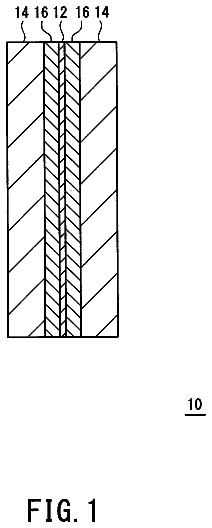
Timeline & family

Timeline From USPTO dates

20042007201020132016201920222025Earliest priority dateJuly 1, 2003Application filedDec 16, 2010Application publishedJune 2, 2011Patent grantedOct 1, 20133.5-year fee paidApril 1, 20177.5-year fee paidApril 1, 202111.5-year fee not paidApril 1, 2025Patent expiredOct 1, 2025

Maintenance fees

Fees are due 3.5, 7.5 and 11.5 years after grant. This patent expired on October 1, 2025, so the fee marked "not paid" was the one that went unpaid.

3.5-year feeDue April 1, 2017Paid
7.5-year feeDue April 1, 2021Paid
11.5-year feeDue April 1, 2025Not paid

US family 2 documents, by filing date

Published applicationUS 2011/0129678 A1

Photochromic compounds and compositions

Filed Dec 2010 · published Jun 2011
Published application
This documentUS 8,545,984 B2

Photochromic compounds and compositions

Filed Dec 2010 · granted Oct 2013
Lapsed, fee not paid

Earlier publications, parents and continuations. None of them can still be enforced, or this patent would not be listed.

Sources & verification

Verification

  • The USPTO Official Gazette of November 25, 2025 lists it as expired on October 1, 2025 for an unpaid maintenance fee.
  • It isn't on any reinstatement notice published since.
  • Its 1 US relative has also lapsed, expired or never issued.
  • Rechecked against USPTO records every day.
  • We check US rights only. Check foreign counterparts before selling abroad.

Confirm it yourself

  1. Open the file history on Patent Center.
  2. The status should read "Patent Expired Due to NonPayment of Maintenance Fees Under 37 CFR 1.362".
  3. Check the documents for any later petition to revive or reinstate.

Everything on this page comes from the documents linked above.

More in Cameras, Displays & Optics

All Cameras, Displays & Optics
Drawing from US 8,546,049 B2Lapsed, fee not paid2 drawings
Cameras, Displays & Optics · US 8,546,049 B2

Electrophotographic photoconductor and image forming apparatus using the same

An electrophotographic photoconductor comprising a charge generation layer containing a charge generation material and a charge transfer layer containing a charge transfer material laminating in this order on a…

Filed2011
LapsedOct 2025
OwnerSharp Kabushiki Kaisha