 Lapsed, fee not paid5 drawings
Telecom & Networks · US 9,998,983 B2
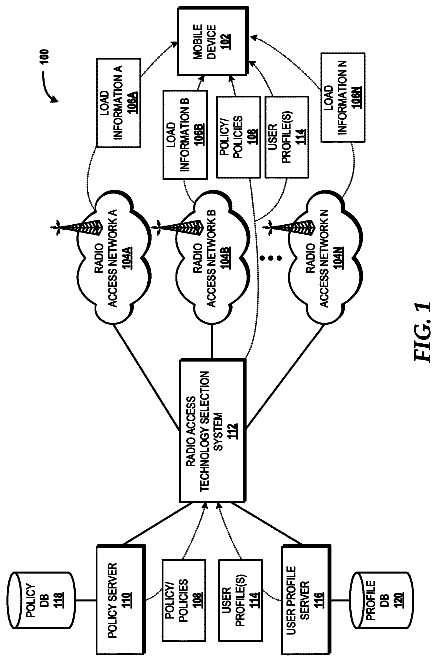
Network-assisted device-based intelligent radio access control
Concepts and technologies are described herein for a network-assisted device-based radio access control.
US 9,998,994 B2 · Assignee: Squadle, Inc. · Inventors: Zhang; Le et al.
Sheet 1 of 9 from the published document. All sheets in the USPTO PDF
A method and system for using a communication protocol over a low-powered transmission network. The communication system and protocol enables low-powered transmission devices to efficiently and reliably transmit data in challenging environments. The communication system and protocol can reduce power consumption by designating devices as either transmitter devices, repeater devices, and receiving devices, such that not all devices in the network need to be configured to transmit and receive data. Because the communication protocol does not require that all devices need to both transmit and receive data, there is a significant power usage savings relative to traditional mesh networks. Additionally, the present invention implements a combination of time-based diversity and transmission path diversity to more reliably communicate data. Devices in the system can change the manner in which they operate based on the sensor measurements, allowing the devices to intelligently respond to different conditions.
Generally, communication protocols are used to define rules to enable two or more communication devices to transmit information between one another. The communication protocols can include rules for dictating how data is formatted for data transmissions, address formats for data transmission, address mapping, routing, detection of transmission errors, acknowledgements, loss of information, direction of information for flow, sequence of control, flow control, etc. Each communication protocol is standardized to be used in the same manner over a variety of enabled communication devices in a communication system. Similarly, the devices in a communication network can agree upon a particular communication protocol to use for communications over the network. Some traditional network protocols include Transmission Control Protocol (TCP), File Transfer Protocol (FTP), SMTP, Hyper Text Transfer Pr
8 of 9 drawing sheets so far from the published document, cropped to the drawing. Every sheet is in the USPTO PDF.
What the patent claimed, word for word. All of it is now free to use.
This document relates to a low-powered redundant transmission network suitable for enabling robust transmission of data from a source to a destination in challenging environments. In particular, the present invention relates to a low-powered redundant transmission network capable of utilizing time-based redundancies and transmission path diversity to reliably transmit data over a network of low-powered node devices.
Generally, communication protocols are used to define rules to enable two or more communication devices to transmit information between one another. The communication protocols can include rules for dictating how data is formatted for data transmissions, address formats for data transmission, address mapping, routing, detection of transmission errors, acknowledgements, loss of information, direction of information for flow, sequence of control, flow control, etc. Each communication protocol is standardized to be used in the same manner over a variety of enabled communication devices in a communication system. Similarly, the devices in a communication network can agree upon a particular communication protocol to use for communications over the network. Some traditional network protocols include Transmission Control Protocol (TCP), File Transfer Protocol (FTP), SMTP, Hyper Text Transfer Protocol (HTTP), Post Office Protocol (POP), Point to Point Protocol (PPP), Bluetooth low energy (BLE) etc. These communication protocols can be used to create a network and to transmit data between devices on the network in a standardized format. As the number of devices within communication systems grows, there is a need to use communication protocols to organize network topologies to reliably transmit data between a source node and a destination node while passing the data between a number of intermediary nodes. In particular, logical network topologies are determined by network communication protocols and are designed to reliably and efficiently transmit data between a source and a destination nodes over a communication system of devices when the source and destination devices are not capable of communicating directly with one another (e.g., out of range for wireless communications, not sharing a direct wired connection, etc.).
One example of a conventional network topology is a mesh network. In a mesh network, all mesh nodes cooperate in the distribution of data in the network using a combination of a flooding technique or a routing technique. However, this methodology experiences some shortcomings. A mesh network is implemented such that each node needs to be configured to send and receive data. Having each node configured to send and receive data requires each device to have a consistent power source due to high power usage. Power usage is greater for reception than transmission because to receive data, the node has to be constantly listening for data transmissions and then receive those transmissions. The larger the number of nodes in the network, the greater the power demand for the overall communication system. Accordingly, there is a need for a robust, low-power transmission of data from a source to a destination in challenging environments.
There is a need for a communications system that enables low-powered transmission devices to efficiently and reliably transmit data in challenging environments. The present invention is directed to further solutions to address this need, in addition to having other desirable characteristics. Specifically, the present invention provides a communication system with a communication protocol to enable the communication system to utilize the devices in a unique configuration that provides redundancy and reduced power consumption. The communication system enables the devices to communicate without pairing and on their own timelines without needing to broadcast over a mesh network. The communication system can use low energy devices that only need to communicate data over short distances by using available nodes, e.g., devices, between the source device and a destination device to act as repeaters for the data transmission. The communication system can reduce power consumption by designating devices as either transmitter devices, repeater devices, and receiving devices, such that not all devices in the network need to be configured to transmit and receive data. Because the communication system does not require that all devices need to both transmit and receive data, there is a significant power usage savings relative to traditional mesh networks. Additionally, communication system of the present invention implements a combination of time-based diversity and transmission path diversity to more reliably communicate data across the communication system.
In accordance with an embodiment of the present invention, a low-powered redundant transmission network system implementing a communication protocol to manage data transmissions is provided. The system includes at least one transmitter device. The at least one transmitter device is configured to determine a rate of obtaining data from a data collection device, obtain data from the data collection device at intervals associated with the rate of obtaining the data from the data collection device, transform the obtained data into a unique payload in a data packet, identify available communication technologies available through a transmitter of the at least one transmitter device, modify the data packet based on the identified available communication technologies, determine a rate of broadcast and duration of broadcast for the data packet, and simultaneously broadcast iterations of the data packet at intervals associated with the rate of broadcast over the available communication technologies until the duration of broadcast is satisfied. The unique payload of the data packet is updated at each iteration with a unique ordered designator.
In some implementations, the system includes at least one repeater device. The at least one repeater device is configured to receive and optionally cache the data packet from the at least one transmitter device or another repeater device, determine whether the data packet includes an indicator that the data packet has been previously received by the at least one repeater device, determine a rate of rebroadcasting the data packet from the unique payload in the data packet, modify the payload to indicate that the data packet has been received by the at least one repeater device, and at least one of rebroadcast the data packet, de-duplicate the data packet, and duplicate the data packet based on the determination whether the data packet includes an indicator that the data packet has been previously received by the at least one repeater device and the determined rate of rebroadcasting the data packet.
In some implementations, the system includes at least one receiver device. The at least one receiver device is configured to receive and optionally cache the data packet from the at least one transmitter device and/or the at least one repeater device and at least one of de-duplicate the transmittable data packet, and transform the data packet into readable data of the obtained data from the data collection device.
In some implementations, the transmitter of the at least one transmitter device, the at least one repeater device, and the at least one receiver device are low-powered devices configured to communicate over wireless signals, wired signals, or both. In some implementations, the at least one repeater device selectively rebroadcasts the transmittable data packet using algorithms to increase transmission viability. In some implementations, the algorithms comprise an exponential backoff. In some implementations, the at least one transmitter device and the at least one repeater device simultaneously broadcast the data packet to all repeater devices and receiver devices within range.
In some implementations, the unique ordered designator for each iteration comprises an offset time from a time that the obtained data was originally obtained from the data collection device. In some implementations, the at least one repeater device identifies a number of hops that the transmittable data packet has been transmitted over other repeater devices. In some implementations, the at least one transmitter device periodically self-activates for broadcasting data packets for a predetermined period of time and subsequently enters a sleep mode. In some implementations, the data packet is broadcast by the at least one transmitter device at an interval greater than a rate that the obtained data is obtained from the data collection device. In some implementations, the data packet is rebroadcast by the at least one repeater device at an interval greater than the rate of broadcast of the at least one transmitter device.
In some implementations, the transmittable data packet broadcast by the at least one transmitter further comprises original collected data, a timestamp for the original collected data, a timestamp for the data packet broadcast, and metadata identifying the data collection device. In some implementations, each unique payload includes a unique key for each unique set of obtained data from the data collection device. In some implementations, the unique key can be combined with a unique identifier for the at least one transmitter device specific to that particular transmitter device.
A method of managing data transmissions includes determining a rate of obtaining data from a data collection device, obtaining data from the data collection device at intervals associated with the rate of obtaining the data from the data collection device, transforming the obtained data into a unique payload in a data packet, identifying available communication technologies available through a transmitter of the at least one transmitter device, modifying the data packet based on the identified available communication technologies, determining a rate of broadcast and duration of broadcast for the data packet, and simultaneously broadcasting iterations of the data packet at intervals associated with the rate of broadcast over the available communication technologies until the duration of broadcast is satisfied. The method can further include wherein the unique payload of the data packet is updated at each iteration with a unique ordered designator.
The method of managing data transmissions applies to many systems, such as those systems that automatically monitor the temperature of food delivered by distributors such as National DCP, Sysco, and USFoods, and those systems that monitor back-of-house equipment and food temperatures at restaurants such as Burger King, Chick-fil-A, McDonald's, Pizza Hut, Sonic Drive-In, Starbucks, Subway, Taco Bell, and Wendy's. Such systems would use temperature sensors that are available from many vendors including Cooltrax, Digi, Kelsius, Kroger, Monika, Monnit, Orbcomm, PAR Technologies, Sensitech, and TempAlert.
These and other characteristics of the present invention will be more fully understood by reference to the following detailed description in conjunction with the attached drawings.
FIGS. 1A and 1B are an illustrative environments for implementing the steps in accordance with the aspects of the invention.
FIG. 2 is an illustrative environment for implementing the steps in accordance with an example embodiment of the invention.
FIG. 3 is a flowchart depicting an example operation of a transmitter device utilizing the communications protocol.
FIG. 4 is a flowchart depicting an example operation of a repeater device utilizing the communications protocol.
FIG. 5 is a flowchart depicting an example operation of a receiver device utilizing the communications protocol.
FIG. 6 is a diagrammatic illustration of a high-level architecture for implementing processes.
FIGS. 7 and 8 are flowcharts depicting examples of processes performed by a transmitter device.
FIG. 9 is a flowchart depicting an example of a process performed by a repeater device.
An illustrative embodiment of the present invention relates to a system implementing a robust power efficient unidirectional communication protocol. The communication system and protocol implements a low-powered redundant transmission network suitable for enabling robust transmission of data from a source to a destination in challenging environments. In particular, the present invention relates to a low-powered redundant transmission network capable of utilizing time-based redundancies and transmission path diversity to reliably transmit data over a network of low-powered node devices. The communication system reduces power consumption by designating devices as one of a transmitter, repeater, or receiver and optimizing each device to conserve power while providing transmission redundancies for reliability. The communication protocol provides a standardized transmission format to be used by each of the transmitter, repeater, and/or receiving devices. Using the communication protocol, the transmission and reception functionalities for each of the devices can be optimized based on their respective designations. In particular, devices designated as transmitter devices are only responsible for the transmission of data and not receiving data. Accordingly, transmission hardware for transmitter devices needs only to be powered on during transmission periods and can be placed into a sleep mode or off-state during other periods to conserve energy. Devices designated as repeater devices are responsible for both the reception of data and the transmission of received data. Devices designated as receiver devices are only responsible for receiving data transmission. Each of the devices can be low-powered devices (e.g., battery-powered devices) and can operate on their own timelines (e.g., independently and asynchronously). As would be appreciated by one skilled in the art, the present invention can also be implemented on a high power network or a network utilizing a combination of low power and high power devices.
The transmitter devices are responsible for obtaining data from one or more data collection devices, transforming the obtained data into a unique data payload to be transmitted in a data packet to available repeater devices and/or receiver devices. Each unique data packet can be transmitted by the transmitter devices according to rules implemented by the communication protocol of the system of the present invention. The communication system, using the communication protocol, can designate the format of the unique payload, the data packet, transmission pathways, and the transmission rate of the data packet to provide both time-based diversity and transmission path diversity for the transmitted data. To provide time-based diversity, the communication protocol can dictate how many iterations of each data packet for the transmitter device to transmit and the frequency of those transmissions. To provide transmission path diversity, the communication protocol can dictate which communication pathways are available over various transmission mediums (e.g., Bluetooth® protocol, Wi-Fi® protocol, wired network, etc.) and also dictate which pathways to transmit the data packets. The communication protocol can optionally designate devices to transmit data simultaneously over multiple different transmission mediums.
Additionally, the communication protocol can designate how the system should format the data packets for each for each of the transmission mediums. The combination of the time-based diversity and the transmission path diversity create a redundant transmission network for the data packets.
Similarly, the communication system implementing the communication protocol can designate how received data packets are handled by the repeater devices and/or the receiver devices. Each receiving device can cache the data packets and either de-duplicate the data packets by removing duplicate transmissions or increase the time-based diversity of the data packets by making duplicate copies and transmitting the duplicate copies. The repeaters can selectively rebroadcast the data packets and/or broadcast duplicates based on information included in the unique payload of each data packet and the rules in the communication protocol. The rate of the rebroadcasts can be static, can be variable based on a predetermined algorithm, or can variable based upon external inputs that may change over time. Additionally, each repeater can have a unique rebroadcast rate or algorithm associated with that repeater. Additionally, the system implementing the communication protocol can dictate which communication pathways are available over various transmission mediums and which pathways for the repeater devices to transmit the data packets.
FIGS. 1A through 6 , wherein like parts are designated by like reference numerals throughout, illustrate an example embodiment or embodiments of a communication system implementing the communication protocol, according to the present invention. Although the present invention will be described with reference to the example embodiment or embodiments illustrated in the figures, it should be understood that many alternative forms can embody the present invention. One of skill in the art will additionally appreciate different ways to alter the parameters of the embodiment(s) disclosed in a manner still in keeping with the spirit and scope of the present invention.
FIGS. 1A and 1B depict illustrative environments for implementing the communication protocol in accordance with the aspects of the invention. Specifically, FIG. 1A depicts an exemplary environment including a transmitter device and a receiver device. FIG. 1B depicts an exemplary system including a transmitter device, a repeater device, and a receiver device and their respective transmission/receiving configurations. As would be appreciated by one skilled in the art, the communication systems 100 can include any combination of transmitter devices, receiver devices, and repeater devices and can be constantly changing based on the availability of devices on the network. For example, there can be instances in which there are no receiving devices and no repeater devices available on a communication system at a given time period and instances in which all the types of devices are available on the same communication system at a different time period.
Beginning with FIG. 1A , the communication system 100 can include a transmitter device 102 and a receiver device 104 . The transmitter device 102 , alone or together with the sensor 106 , can be considered a sensor device, as it receives, processes, and transmits sensor data. Any appropriate device for collecting sensor data from one or more sensors can be designated as a transmitter device 102 in the network. The transmitter device can be placed in a transmit-only mode to conserve battery power, as discussed herein. As would be appreciated by one skilled in the art, the transmitter device 102 and the receiver device 104 can include any combination of computing devices that are configured to send and/or receive data. The computing devices can be general purpose computers specifically configured to implement the system described herein, or a specialized computer system. For example, the transmitter device 102 and the receiver device 104 can include single computing devices, a collection of computing devices in a network computing system, a cloud computing infrastructure, or a combination thereof: as would be appreciated by those of skill in the art. As would be appreciated by one skilled in the art, the communication system 100 can include one or more transmitter devices 102 and one or more receiver devices 104 . In accordance with an example embodiment of the present invention, the transmitter device 102 and receiver device 104 can be specifically designed computing devices for implementing the communication protocol of the present invention.
Each transmitter device 102 can include at least a microcontroller (MCU) and a transmitter for transmitting (Tx) data transmissions. As would be appreciated by one skilled in the art, the transmitter can include any combination or hardware and software configured to transmit data from a source. For example, the transmitter can be an antenna configured to communicate wirelessly (e.g., for communicating over a Bluetooth low energy (BLE) signal, Wi-Fi, etc.) or can be an Ethernet port (e.g., for communicating over LAN, WAN, etc.).
Similarly, each receiver device 104 can include at least a microcontroller (MCU) and an antenna and/or port for receiving such communication mediums. In accordance with an example embodiment of the present invention, the transmitter device 102 can include or otherwise be in communication with a sensor 106 . The sensor 106 can include any data collection source and/or sensor that is configured to obtain data and/or take measurements. For example, the sensor 106 can be a temperature sensor configured to take temperature readings. The transmitter device 102 can be configured to periodically receive and/or obtain data from the sensor 106 . In accordance with an example embodiment of the present invention, the transmitter device can request data from the sensor 106 at a predetermined interval based on the particular sensor 106 from which the data is being requested. For example, the transmitter device 102 can request a temperature reading from sensor 106 in a freezer every 5 minutes and can request a temperature reading from sensor 106 in a deep fryer every 30 seconds. As would be appreciated by one skilled in the art, the transmitter device 102 can include or otherwise be in communication with a single sensor 106 or a plurality of sensors 106 .
Continuing with FIG. 1A and in accordance with an example embodiment of the present invention, the receiver device 104 can include or otherwise be in communication with a data storage device 108 to store data transmissions received from the transmitter device 102 . As would be appreciated by one of skill in the art, the data storage device 108 can include any combination of computing devices configured to store and organize a collection of data. For example, the data storage device 108 can be a local storage device on the receiver device 104 , a remote database facility, or a cloud computing storage environment. The data storage device 108 may also include a database management system utilizing a given database model configured to interact with a user for analyzing the database data. In accordance with an example embodiment of the present invention, the receiver device 104 can represent a gateway device which can further communicate the received data transmissions to a cloud computing system and database for later retrieval.
FIG. 1B depicts an example embodiment of the communication system 100 . The communication system 100 in FIG. 1B includes a transmitter device 102 and a receiver device 104 , as discussed with respect to FIG. 1A . Additionally, the communication system 100 in FIG. 1B includes a repeater node or repeater device 110 . In accordance with an example embodiment of the present invention, the repeater device 110 is configured to both receive and transmit data transmissions. For example, the repeater device 110 can receive data from the transmitter device 102 and re-transmit the data to the receiver device 104 . In accordance with an example embodiment of the present invention, there can be multiple repeater devices 110 and each repeater device 110 can be configured to receive and transmit data transmissions between the transmitter device 103 , the receiver device 104 , and other repeater devices 110 . As would be appreciated by one skilled in the art, the repeater devices 110 can use same the hardware configuration as transmitter devices 102 and the receiver devices 104 , but have firmware enabling the repeater devices 110 to be configured to both receive and transmit/retransmit the data transmissions. Since the repeater devices 110 are configured to transmit and receive, they need a constant supply of power, accordingly the repeater devices 110 can be placed in strategic locations for consistent power supply (e.g., plugged into a wall, or have a battery). In accordance with an example embodiment of the present invention, the repeater device 110 can selectively rebroadcast the data packets and/or broadcast duplicates based on information included in the data transmission and the rules in the communication protocol, as discussed in greater detail below.
The transmitter device 102 , the receiver device 104 , and the repeater device 110 are each configured to operate under the standardized communication protocol in accordance with the present invention. For example, the standardized communication protocol can be installed on the transmitter device 102 , the receiver device 104 , and the repeater device 110 through a combination of software and/or firmware. The standardized communication protocol provides a standardized transmission format to be used by the transmitter device 102 , the receiver device 104 , and the repeater device 110 within the communication system 100 . The communication protocol enables devices in communication with the communication system 100 to create a reliable data transmission network while reducing the overall power consumption of the system.
As would be appreciated by one skilled in the art, the communication protocol can be implemented on top of different types of nodes and/or transmission mediums, including Bluetooth®, Bluetooth® Low Energy (BLE), Wi-Fi®, Ethernet, Serial, RS-485, Websocket, etc. In accordance with an example embodiment of the present invention, the transmitter device 102 can transmit the data packet over different pathways for using different types of transmission mediums. For example, if the hardware for the transmitter device 102 is configured to transmit data over Wi-Fi® and BLE, then the transmitter device 102 can simultaneously send data transmissions over both mediums for each unique set of obtained data. As would be appreciated by one skilled in the art, the communication protocol can be designed to format data packets specifically for each transmission medium. For example, transmitting a data packet over Wi-Fi-TCP a destination address would need to be included in the data packet, while a transmission over BLE would not require a destination address. The availability for each transmitter device 102 , and subsequent transmitting devices (e.g., repeater devices 110 ) creates transmission path diversity in case one or more transmission paths lead to lost data transmissions.
In operation, the communication system 100 , as depicted in FIGS. 1A and 1B , utilizes the communication protocol to implement a low energy, and reliable data transmission network. As utilized herein, “low energy” refers to technology that is implemented using relatively lower power consumption than similar other devices. For example, BLE is said to have 10 to 100 times lower power consumption than traditional Bluetooth® technology.
Devices that are “low energy” are optimized for low energy consumption versus transmission power, processing speed, data transmission bandwidth and quantity, and the like, as would be readily appreciated by those of skill in the art. As would also be appreciated by one skilled in the art, the communication protocol of the present invention can also be implemented in a high powered network or a combination of nodes that are high-powered and low-powered while providing the same benefits in reliability and power consumption. However, it is not the case that communication protocols of high powered networks or node combinations in all instances could be implemented in accordance with the low energy parameters of the present invention. Initially, operation of the communication system 100 starts with the transmitter device 102 obtaining data from the sensor 106 . For example, the transmitter device 102 can include or otherwise communicate with a temperature sensor 106 for obtaining a temperature of a given space and/or item. Once the transmitter device 102 has obtained the data from the sensor 106 , the transmitter device 102 can follow the communication protocol to transform the data into a unique data payload for transmission within a data packet to a source device (e.g., a receiver device 104 ).
In accordance with an example embodiment, of the present invention, the transmitter devices 102 only need to be configured to transmit data, so transmitter devices 102 can turn on their radios (if wireless) for a short time (e.g., put the radios to sleep) and when the transmitter devices 102 want to transmit a data packet they can wake up the radios for data transmission.
The transmitter device 102 can format the payload according to the communication protocol to include the obtained data along with information defined in the rules of the communication protocol of the present invention. As would be appreciated by one skilled in the art, the data packets can include a single measured value, a collection of measured values from a single sensor 106 over a period of time, a collection of measured values from multiple sensors 106 , or a combination thereof. In accordance with an example embodiment of the present invention, the rules of the communication protocol can require the payload include the obtained data, a timestamp for the obtained data (e.g., a time at which a temperature reading was taken by the temperature sensor), a timestamp for the transmission, metadata identifying the transmitter device 102 and/or the sensor 106 , a firmware version, a sensor type, and battery voltage of the transmitting device. The metadata can enable a receiving node (e.g., a repeater device 110 or receiver device 104 ) to determine whether multiple data transmissions received from multiple different pathways (e.g., one over Wi-Fi® and one over BLE) include duplicate payloads for the same obtained data from a same transmitter device 102 . As would be appreciated by one skilled in the art, the metadata can include any format in which would allow another device within the communication system 100 to identify the payload a unique set of obtained data from a particular source transmitter device 102 . For example, the metadata can include a unique key for each unique set of obtained data from the sensor 106 , such as a randomly assigned unique identifier associated with a source transmitter device 102 , a media access control (MAC) address for the transmitter device 102 , or a combination thereof, etc.
After obtaining the data from the sensor 106 and formatting the payload and data packet including the obtained data, the transmitter device 102 can periodically broadcast redundant data packets including the obtained data in intervals. As would be appreciated by one skilled in the art, depending on the communication medium format (e.g., Wi-Fi®, BLE, wired, etc.) the broadcasts can be transmitted in the form of broadcast advertisements to be received by listening receiving devices (e.g., repeater devices 110 and/or receiver devices 104 ). For example, the transmitter devices 102 can wirelessly broadcast BLE broadcast advertisements to be received by devices capable of reading over air BLE advertisements. In accordance with an example embodiment, the data packets for a given set of obtained data (e.g., a particular temperature reading from a particular time from a temperature sensor) can be broadcast from the transmitter device 102 at a greater frequency than the frequency in which the data is collected (e.g., frequency that the sensor 106 takes temperature readings), to take advantage of time-based diversity. For example, a temperature sensor (sensor 106 ) can capture temperature data every five minutes, and the transmitter device 102 can broadcast the captured temperature data once every second. In accordance with an example embodiment of the present invention, a rate of obtaining data from the sensor 106 can be a fraction of the rate of the transmitter device 102 broadcasting that obtained data. As would be appreciated by one skilled in the art, the interval that the transmitter devices 102 transmit the data packets can be established and/or modified by other factors. For example, the intervals can set or adjusted based on a predetermined value, a user input value, based on a current battery level of a transmitter device 102 (e.g., a low battery transmitting at greater intervals), an anticipated degradation of the data transmission based on the transmission medium, based on anticipated interference, etc.
Similarly, the transmitter devices 102 can modify a rate of transmission of the data packets based on the obtained data from the sensor 106 . For example, if the obtained data from a sensor 106 in a refrigerator indicates a temperature above a desired threshold (e.g., a temperature greater than 41 degrees), then an error condition can be triggered that modifies the rate of transmission to be multiplied above the normal rate of transmission. As would be appreciated by one skilled in the art, modification to a rate of broadcast can be dictated by rules established in the communication protocol. In accordance with an example embodiment, the communication protocol can include rules for various criteria that trigger changing a rate of broadcast for a particular set of obtained data. These criteria can include an operating status (e.g., battery life, on/off state, etc.) of the devices within the transmission network (e.g., the transmitter device 102 or sensors 106 ), error conditions based on the obtained data (e.g., the obtained data exceeding or failing to meet a desired threshold), and/or other predetermined criteria. Based on the criteria established in the rules of the communication protocol, when an event occurs that matches one or more of the criteria, the rate of transmission can be modified accordingly (e.g., increased or decreased by a predetermined amount). As would be appreciated by one skilled in the art, the rate of rebroadcast by the repeater devices 110 can also be modified in the same manner, as discussed in greater detail below.
In accordance with an example embodiment of the present invention, the current iteration of the data transmission at a given interval can be identified in the payload using a unique ordered designator. For example, each time that a particular obtained data set is re-transmitted from the particular transmitter device 102 , the unique ordered designator in the payload is updated to reflect which iteration of the data transmission that data packet belongs to within the data transmission broadcast. As would be appreciated by one skilled in the art, the unique ordered designator can include a counter, an offset time from a time in which the original data was obtained from the sensor 106 , setting a flag, etc. As would be appreciated by one skilled in the art, the communication protocol can also include additional rules and formatting within the payload and/or data packet traditionally used in other standardized protocols. For example, the communication protocol can include rules for providing error codes identifying the error, source of an error, etc. In accordance with an example embodiment, the payload of the data transmissions can be end to end encrypted (e.g., via Advanced Encryption Standard (AES) or RSA).
As the data packets are broadcast, any available devices within range of the broadcast can be listening for broadcasts and/or receive the data transmission. As would be appreciated by one skilled in the art, both receiver devices 104 and repeater devices 110 can be configured to receive any data transmissions broadcast from the transmitter devices 102 within range. In accordance with an example embodiment of the present invention, each device capable of receiving data transmissions can cache the transmitted data and either de-duplicates the data transmission by removing duplicates, or increase the time redundancy by making multiple copies of the data transmission and broadcasting the duplicates. The devices receiving the data transmission (e.g., receiver devices 104 and repeater devices 110 ) determine whether or not the data transmission should be de-duplicated, based on the communication protocol. For example, if the receiver device 104 has already received a data transmission including the same unique payload (e.g., the same set of obtained data from the same transmitter device 102 ), then the subsequently received data packets including that unique payload can be ignored and/or discarded. The time-based diversity created by redundant duplicates is used to create reliable data transmission in difficult environments that have time-based disturbances in data signal transmission. As would be appreciated by one skilled in the art, duplicate data transmissions provide time-based redundancy when data transmissions are interfered with due to bursts of energy, electromagnetics, and/or other signals (e.g., microwave, video senders, other wireless networks, etc.) from other sources that can cause signal degradation of data transmissions during those bursts. Similarly, the redundancy allows the duplicate data transmissions to overcome non-time-based signal degradation such as concrete walls, stainless steel appliances, etc.
In accordance with an example embodiment of the present invention, the repeater devices 110 can selectively duplicate rebroadcast data using different algorithms, effectively extending a range of broadcast for the transmitter device 102 that originated the data transmission. As would be appreciated by one skilled in the art, the different algorithms can range from a simple “1 to 1” in and out transmission type algorithm (e.g., each received data transmission is subsequently rebroadcast 1:1) to complicated exponential backoff algorithms. For example, in an exponential back off algorithm, when a data packet is received, duplicate copies of the data packet can be rebroadcast at an interval of t seconds, 2*t seconds, 4*t seconds, 8*t seconds, up to a predefined number of rebroadcasts. This can be written as k/\n*t, where n goes from 1 to N. In accordance with an example embodiment of the present invention, to prevent a data transmission passing through a repeater device 110 an excessive number of times and/or causing infinite loops (e.g., in a 1 to 1 type algorithm), the data packet can be modified by the repeater device 110 to include an indication of which repeater devices 110 that the data transmission has been through or an indicator to limit the number of hops that the data transmission has traveled over.
In accordance with an example embodiment of the present invention, the modification of the data packet can include an indication that the received data transmission has been received by and rebroadcast by a particular repeater device 110 or number of times the data transmission has been rebroadcasts by repeater devices 110 . Similarly, the repeater devices 110 can be used in groups, and data in the payload of re-broadcast data packets can be modified to reflect the group of repeater devices 110 , as opposed to an individual repeater device 110 . In accordance with an example embodiment of the present invention, when duplicating the data packets, the repeater devices 110 can modify the payload to indicate how much time has passed since the original data transmission. For example, a timing field can be changed based on an amount of time, if any, since the original data transmission was transmitted by the transmitter device 102 .
The description continues in the full USPTO document.
About 6,124 words. The USPTO PDF has it with every drawing.
Fees are due 3.5, 7.5 and 11.5 years after grant. This patent expired on June 12, 2026, so the fee marked "not paid" was the one that went unpaid.
LOW POWER REDUNDANT TRANSMISSION NETWORK
Filed Sep 2016 · published Mar 2017Low power redundant transmission network
Filed Sep 2016 · granted Jun 2018Earlier publications, parents and continuations. None of them can still be enforced, or this patent would not be listed.
Prior art cited by the examiner or applicant. Useful when you check your own idea for novelty.
Everything on this page comes from the documents linked above.