Lapsed, fee not paid19 drawings
Telecom & Networks · US 9,998,438 B2
Verifying the security of a remote server
In one embodiment, a client device 110 may use an attestation service 140 to verify a secure server 120.
US 9,998,484 B1 · Assignee: EMC IP Holding Company LLC · Inventors: Buyukkayhan; Ahmet et al.
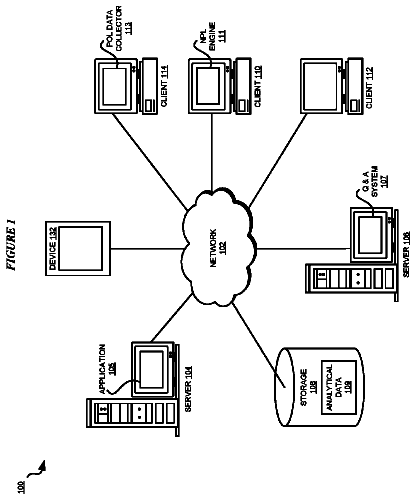
Sheet 1 of 9 from the published document. All sheets in the USPTO PDF
A method comprises obtaining at least a first software module not classified as benign or potentially malicious, extracting a set of features associated with the first software module including static, behavior and context features, computing distance metrics between the extracted feature set and feature sets of a plurality of clusters including one or more clusters of software modules previously classified as benign and exhibiting a first threshold level of similarity relative to one another and one or more clusters of software modules previously classified as potentially malicious and exhibiting a second threshold level of similarity relative to one another, classifying the first software module as belonging to a given cluster based at least in part on the computed distance metrics, and modifying access by a given client device to the first software module responsive to the given cluster being a cluster of software modules previously classified as potentially malicious.
Various entities are subject to different types of security threats. Some security threats relate to networking and computer security for client devices used by members of an entity, such as a business, organization or other enterprise. Malware is an example of such a security threat. Malware can pose a threat to an individual user and that user's devices, as well as possibly threatening an entity associated with the user. The emergence of exploit toolkits permits attackers to easily create new malware variants that can avoid current detection technologies. Users or members of an entity can become victims of malware-based attacks through a plethora of different infection vectors including but not limited to visiting suspicious web sites, connecting machines or devices to untrusted networks, using infected universal serial bus (USB) drives, etc.
8 of 9 drawing sheets so far from the published document, cropped to the drawing. Every sheet is in the USPTO PDF.
What the patent claimed, word for word. All of it is now free to use.
The field relates generally to security, and more particularly to detection of security threats.
Various entities are subject to different types of security threats. Some security threats relate to networking and computer security for client devices used by members of an entity, such as a business, organization or other enterprise. Malware is an example of such a security threat. Malware can pose a threat to an individual user and that user's devices, as well as possibly threatening an entity associated with the user. The emergence of exploit toolkits permits attackers to easily create new malware variants that can avoid current detection technologies. Users or members of an entity can become victims of malware-based attacks through a plethora of different infection vectors including but not limited to visiting suspicious web sites, connecting machines or devices to untrusted networks, using infected universal serial bus (USB) drives, etc.
Illustrative embodiments of the present invention provide techniques for the classification of software modules, including potentially malicious software modules such as malware. Such techniques in some embodiments advantageously permit for classification of unknown software modules as belonging to one or more clusters of previously classified software modules without relying solely on signature matching or binary analysis. Accordingly, a network security system used in classification of software modules, including potentially malicious software modules, can exhibit improved performance as well as enhanced security against attacks including malware attacks.
In one embodiment, a method comprises obtaining at least a first software module not classified as benign or potentially malicious, extracting a set of features associated with the first software module, the set of features comprising one or more static features, one or more behavior features and one or more context features, computing distance metrics between the extracted feature set of the first software module and feature sets of a plurality of clusters, the plurality of clusters comprising: one or more clusters of software modules previously classified as benign and exhibiting a first threshold level of similarity relative to one another; and one or more clusters of software modules previously classified as potentially malicious and exhibiting a second threshold level of similarity relative to one another, classifying the first software module as belonging to a given one of the plurality of clusters based at least in part on the computed distance metrics, and modifying access by a given client device to the first software module responsive to the given cluster being one of the one or more clusters of software modules previously classified as potentially malicious. The method is performed by at least one processing device comprising a processor coupled to a memory.
The processing device may be implemented, for example, in one or more network devices in a computer network, in a security operations center of an enterprise, or in a security analytics system or other type of network security system associated with the computer network or an enterprise.
These and other illustrative embodiments include, without limitation, methods, apparatus, networks, systems and processor-readable storage media.
FIG. 1 is a block diagram of an information processing system for classifying software modules in an illustrative embodiment of the invention.
FIG. 2 is a flow diagram of an exemplary process for classification of software modules in an illustrative embodiment.
FIG. 3 is a table showing an example feature set in an illustrative embodiment.
FIG. 4 is a table showing examples of distance metrics for different types of features in an illustrative embodiment.
FIG. 5 is a table showing examples of different clustering algorithms in an illustrative embodiment.
FIG. 6 is a table showing an example of feature values in an illustrative embodiment.
FIG. 7 is a plot showing the change in penalty for static features in an illustrative embodiment.
FIG. 8 is a plot and table showing performance using different feature sets in an illustrative embodiment.
FIG. 9 is a plot showing the effects of utilizing a feature set specific to executable software modules in an illustrative embodiment.
FIG. 10 is a plot showing the effects of utilizing a feature set specific to dynamic link library software modules in an illustrative embodiment.
FIG. 11 is a table showing a ranking of different features in an illustrative embodiment.
Illustrative embodiments of the present invention will be described herein with reference to exemplary computer networks and associated computers, servers, network devices or other types of processing devices. It is to be appreciated, however, that the invention is not restricted to use with the particular illustrative network and device configurations shown. Accordingly, the term “computer network” as used herein is intended to be broadly construed, so as to encompass, for example, any system comprising multiple networked processing devices.
FIG. 1 shows a computer network 100 configured in accordance with an illustrative embodiment of the invention. The computer network 100 comprises an enterprise security operations center (SOC) 102 and a plurality of client devices 104 - 1 , 104 - 2 , . . . 104 -M, collectively referred to herein as client devices 104 . The client devices 104 are coupled to a network 106 , where the network 106 in this embodiment is assumed to represent a sub-network or other related portion of the larger computer network 100 . Accordingly, elements 100 and 106 are both referred to herein as examples of “networks” but the latter is assumed to be a component of the former in the context of the FIG. 1 embodiment. Also coupled to the network 100 is an attack database 108 , which may store information relating to previously classified software modules including clusters of previously classified software modules exhibiting a threshold level of similarity relative to one another. In some cases, different threshold levels may be used for clustering software modules previously classified as benign and software modules previously classified as potentially malicious.
Software modules, such as executables (EXEs) and dynamic link library (DLL) modules or DLLs, may be malicious. While various embodiments are described below in the context of classifying EXEs and DLLs, embodiments are not limited solely to classifying these types of software modules. The techniques described below in the context of EXE and DLL software modules may be adapted for use with other types of software modules or more generally other types of files that are potentially malicious.
The client devices 104 may comprise, for example, mobile telephones, laptop computers, tablet computers, desktop computers or other types of devices utilized by members of an enterprise, in any combination. Such devices are examples of what are more generally referred to herein as “processing devices.” Some of these processing devices are also generally referred to herein as “computers.”
The client devices 104 in some embodiments comprise respective computers associated with a particular company, organization or other enterprise. In addition, at least portions of the computer network 100 may also be referred to herein as collectively comprising an “enterprise network.” Numerous other operating scenarios involving a wide variety of different types and arrangements of processing devices and networks are possible, as will be appreciated by those skilled in the art.
The network 106 is assumed to comprise a global computer network such as the Internet, although other types of networks can be part of the computer network 100 , including a wide area network (WAN), a local area network (LAN), a satellite network, a telephone or cable network, a cellular network, a wireless network such as a WiFi or WiMAX network, or various portions or combinations of these and other types of networks. The computer network 100 in some embodiments therefore comprises combinations of multiple different types of networks each comprising processing devices configured to communicate using IP or other related communication protocols.
The attack database 108 , as discussed above, is configured to store and record information relating to threats and attacks including information related to previously classified software modules. The attack database 108 may, in some embodiments, more particularly store a blacklist of known malicious or potentially malicious software modules or other information characterizing known malicious or potentially malicious software modules such as previous patterns of attack used by known malicious or potentially malicious software modules. In other embodiments, various additional or alternative information may be stored in attack database 108 , such as a whitelist of known benign previously classified software modules or information associated with known benign software modules.
The attack database 108 in some embodiments is implemented using one or more storage devices associated with the enterprise SOC 102 . Such storage devices may comprise, for example, storage products such as VNX® and Symmetrix VMAX®, both commercially available from EMC Corporation of Hopkinton, Mass. A variety of other storage products may be utilized to implement at least a portion of the storage devices associated with the enterprise SOC 102 .
Although not explicitly shown in FIG. 1 , one or more input-output devices such as keyboards, displays or other types of input-output devices may be used to support one or more user interfaces to the enterprise SOC 102 , as well as to support communication between the enterprise SOC 102 and other related systems and devices not explicitly shown.
In the present embodiment, alerts or notifications generated by a threat detection and remediation system 110 of the enterprise SOC 102 are provided over network 106 to client devices 104 , or to a system administrator, information technology (IT) manager, or other authorized personnel via one or more security agents. Such security agents may be implemented via the client devices 104 or by other computing or processing devices associated with a system administrator, IT manager or other authorized personnel. Such devices can illustratively comprise mobile telephones, laptop computers, tablet computers, desktop computers, or other types of computers or processing devices configured for communication over network 106 with the enterprise SOC 102 and the threat detection and remediation system 110 . For example, a given security agent may comprise a mobile telephone equipped with a mobile application configured to receive alerts from the enterprise SOC 102 or the threat detection and remediation system 110 and to provide an interface for the security agent to select particular remedial measures for responding to the alert or notification. Examples of such remedial measures may include blocking access to one or more potentially malicious software modules, removing potentially malicious software modules from one or more of the client devices 104 , requiring potentially malicious software modules to be run in a sandboxed or other protected environment on one or more of the client devices 104 , requiring user input or authentication to obtain or run potentially malicious software modules, etc.
It should be noted that a “security agent” as the term is generally used herein may comprise an automated entity, such as a software entity running on a processing device. Accordingly, a security agent need not be a human entity.
As shown in FIG. 1 , the enterprise SOC 102 comprises threat detection and remediation system 110 . As will be described in further detail below, the threat detection and remediation system 110 is configured to classify software modules, including potentially malicious software modules.
Although shown as an element of the enterprise SOC 102 in this embodiment, the threat detection and remediation system 110 in other embodiments can be implemented at least in part externally to the enterprise SOC 102 , for example, as a stand-alone server, set of servers or other type of system coupled to the network 106 . In some embodiments, the threat detection and remediation system 110 may be implemented at least in part within one or more of the client devices 104 .
The threat detection and remediation system 110 in the FIG. 1 embodiment is assumed to be implemented using at least one processing device. Each such processing device generally comprises at least one processor and an associated memory, and implements one or more functional modules for controlling certain features of the threat detection and remediation system 110 .
More particularly, the threat detection and remediation system 110 in this embodiment comprises a processor 112 coupled to a memory 114 and a network interface 116 .
The processor 112 illustratively comprises a microprocessor, a microcontroller, an application-specific integrated circuit (ASIC), a field-programmable gate array (FPGA) or other type of processing circuitry, as well as portions or combinations of such circuitry elements.
The memory 114 illustratively comprises random access memory (RAM), read-only memory (ROM) or other types of memory, in any combination. The memory 114 and other memories disclosed herein may be viewed as examples of what are more generally referred to as “processor-readable storage media” storing executable computer program code or other types of software programs.
Articles of manufacture comprising such processor-readable storage media are considered embodiments of the present invention. A given such article of manufacture may comprise, for example, a storage device such as a storage disk, a storage array or an integrated circuit containing memory, as well as a wide variety of other types of computer program products. The term “article of manufacture” as used herein should be understood to exclude transitory, propagating signals.
The network interface 116 allows the threat detection and remediation system 110 to communicate over the network 106 with the client devices 104 , and illustratively comprises one or more conventional transceivers.
The processor 112 further comprises a feature extraction module 118 and a clustering module 120 . The feature extraction module 118 is configured to obtain at least a first software module not classified as benign or potentially malicious, possibly from one of the client device 104 . The feature extraction module 118 is also configured to extract a set of features associated with the first software module, the set of features comprising one or more static features, one or more behavior features and one or more context features. The static features may be extracted from the first software module itself, while the behavior and context features may be extracted from client devices 104 .
The clustering module 120 is configured to compute distance metrics between the extracted feature set of the first software module and feature sets of a plurality of clusters. The plurality of clusters include one or more clusters of software modules previously classified as benign and exhibiting a first threshold level of similarity relative to one another, as well as one or more clusters of software modules previously classified as potentially malicious and exhibiting a second threshold level of similarity relative to one another. In some cases, the first and second threshold levels may be the same. In other cases, different threshold levels may be used for clustering benign and potentially malicious software modules. The plurality of clusters, or information associated with the plurality of clusters, may be obtained from attack database 108 .
The clustering module 120 is also configured to classify the first software module as belonging to a given one of the plurality of clusters based at least in part on the computed distance metrics, and to modify access by client devices 104 to the first software module responsive to the given cluster being one of the one or more clusters of software modules previously classified as potentially malicious. Additional details regarding the feature extraction module 118 and clustering module 120 will be described in further detail below with respect to FIGS. 2-11 .
It is to be appreciated that the particular arrangement of the enterprise SOC 102 , threat detection and remediation system 110 , feature extraction module 118 and clustering module 120 illustrated in the FIG. 1 embodiment is presented by way of example only, and alternative arrangements can be used in other embodiments. As discussed above, for example, the enterprise SOC 102 , threat detection and remediation system 110 , feature extraction module 118 and/or clustering module 120 may in some embodiments be implemented internal to one or more of the client devices 104 . As another example, the functionality associated with the feature extraction module 118 and clustering module 120 may be combined into one module, or separated across more than two modules with the multiple modules possibly being implemented with multiple distinct processors.
At least portions of the feature extraction module 118 and clustering module 120 may be implemented at least in part in the form of software that is stored in memory 114 and executed by processor 112 .
It is to be understood that the particular set of elements shown in FIG. 1 for classification of software modules is presented by way of illustrative example only, and in other embodiments additional or alternative elements may be used. Thus, another embodiment may include additional or alternative systems, devices and other network entities, as well as different arrangements of modules and other components.
By way of example, in other embodiments, the threat detection and remediation system 110 may be implemented external to enterprise SOC 102 , such that the enterprise SOC 102 can be eliminated.
In some embodiments, the threat detection and remediation system 110 may be part of or otherwise associated with a system other than the enterprise SOC 102 , such as, for example, a critical incident response center (CIRC).
Additionally or alternatively, the threat detection and remediation system 110 can be part of or incorporate an otherwise conventional security analytics system, such as the RSA Security Analytics system commercially available from RSA, The Security Division of EMC Corporation of Hopkinton, Mass.
Other embodiments can implement the threat detection and remediation system 110 as part of or in conjunction with a security information and event management (SIEM) system, such as the enVision® platform, also commercially available from RSA. Such an STEM system is also considered another possible example of a “network security system” as that term is broadly used herein.
The threat detection and remediation system 110 may be implemented at least in part using one or more processing platforms including public or private cloud infrastructure, or other distributed virtual infrastructure. Such a distributed virtual infrastructure may comprise, by way of example, a hypervisor platform and associated virtual processing and storage elements. An example of a commercially available hypervisor platform suitable for use in an embodiment of the invention is the VMware® vSphere™ which may include an associated management system such as vCenter™.
Other processing platforms may be used to implement threat detection and remediation system 110 in other embodiments, such as different types of virtualization infrastructure in place of or in addition to virtualization infrastructure comprising virtual machines. Such virtualization infrastructure illustratively includes container-based virtualization infrastructure configured to provide Docker containers or other types of Linux containers (LXCs).
As another example, portions of a given processing platform in some embodiments can comprise converged infrastructure such as VxRack™ or Vblock® converged infrastructure commercially available from VCE, the Virtual Computing Environment Company, an EMC Federation Company.
An exemplary process for classification of software modules will now be described in more detail with reference to the flow diagram of FIG. 2 . It is to be understood that this particular process is only an example, and that additional or alternative processes for classification of software modules can be carried out in other embodiments.
In this embodiment, the process includes steps 200 through 208 . These steps are assumed to be performed by the processor 112 of the threat detection and remediation system 110 utilizing feature extraction module 118 and clustering module 120 . The process begins with step 200 , obtaining at least a first software module not classified as benign or potentially malicious. While FIG. 2 and various embodiments are described herein with respect to a system having two classifications, benign or potentially malicious, embodiments are not so limited. In some embodiments more than two classifications are used, such as benign, adware or malware. Numerous other classifications may be used in other embodiments, including subclasses within one or more of benign, potentially malicious, adware, malware, etc.
In step 202 , a set of features associated with the first software module is extracted. The set of features includes one or more static features, one or more behavior features and one or more context features. Extracting the set of features in step 202 may include extracting the static features from the first software module itself and extracting the behavior and context features from client devices 104 .
Distance metrics between the extracted feature set of the first software module and feature sets of a plurality of clusters are computed in step 204 . Computing the distance metrics may include assigning weights to the features extracted in step 202 . The weights may, in some embodiments, be uniformly assigned. In other embodiments, the weights may be proportional to entropies of the extracted features in previously classified software modules in the plurality of clusters. In addition to assigning weights to the extracted features, penalty values may be assigned to distances between features missing from the extracted feature set of the first software module.
The plurality of clusters includes one or more clusters of software modules previously classified as benign and exhibiting a first threshold level of similarity relative to one another, and one or more clusters of software modules previously classified as potentially malicious and exhibiting a second threshold level of similarity to one another. In some cases, the first and second threshold levels of similarity are the same. In other cases, the threshold levels of similarity are different for benign and potentially malicious software modules. The FIG. 2 process may further include determining or creating the plurality of clusters. Determining the plurality of clusters includes, in some embodiments, computing pairwise distances for pairs of previously classified software modules utilizing a density-based spatial clustering of applications with noise (DBSCAN) clustering algorithm.
Pairwise distances may be computed by indexing the previously classified software modules based on a subset of the extracted features, where the subset of extracted features are numerical features. A range query is built based on the indexing, and the range query is utilized with a first threshold to retrieve a subset of the previously classified software modules in a neighborhood of a given one of the previously classified software modules. Pairwise distances between the given previously classified software module and respective ones of the retrieved previously classified software modules in the neighborhood are computed, and the given previously classified software module is clustered with one or more of the retrieved previously classified software modules having pairwise distances less than a second threshold, the second threshold being smaller than the first threshold.
The FIG. 2 process continues with step 206 , classifying the first software module as belonging to a given one of the plurality of clusters based at least in part on the distance metrics computed in step 204 . Classification in step 206 may proceed as follows. First, distance metrics between static features in the extracted feature set of the first software module and corresponding static features of previously classified software modules are compared. The first software module may be classified as belonging to a given benign cluster of previously classified software modules if the distance metrics between the static features in the extracted feature set of the first software module and corresponding static features of the given benign cluster is below a given threshold.
If the distance metrics between the static features in the extracted feature set of the first software module and corresponding static features of a given potentially malicious cluster of previously classified software modules is below a first threshold, then further analysis is done using an expanded feature set including behavior and context features of the first software module in addition to static features. The first software module is classified as belonging to the given potentially malicious cluster if the distance metrics between the static features, the behavior features and the context features in the extracted feature set of the first software module and corresponding features of the given potentially malicious cluster is below a second threshold. It is important to note that the first and second thresholds in this context need not be the same as the first and second thresholds used for creating or determining the plurality of clusters or the first and second threshold similarity levels. The various thresholds and threshold levels described herein may be user-defined, learned through training or machine learning, etc.
In step 208 , access by one or more of client devices 104 to the first software module is modified responsive to classifying the first software module as belonging to a cluster of software modules previously classified as potentially malicious. Modifying access by the client device to the first software module in step 208 may, in some cases, comprise removing the first software module from a memory or storage of the client device, preventing the client device from obtaining or storing the first software module in the first place, causing the first software module to be opened in a sandboxed or other protected application environment on the client device, etc.
Modifying access in step 208 may further include generating one or more notifications or alerts to send to one or more of the client devices 104 , to one or more network administrators or IT professionals associated with the enterprise, etc. Transmitting the alert or other notification to the client device may utilize one or more APIs of a client device permitting remedial or preventative actions to be taken, such as deleting or quarantining the first software module, causing a pop-up, icon or other warning to be displayed on a screen of the client device warning the user of the potentially malicious nature of the first software module, etc. Transmitting the alert or other notification to the network administrator or IT professional can allow such users to grant or deny access by the client device to the first software module, possibly after further review or analysis of the first software module.
In other embodiments, modifying access in step 208 may include requiring a user of the client device to authenticate in order to access the first software module. In this manner, certain classes of users may be permitted to access potentially malicious software modules while others cannot. As an example, a class of users including IT professionals may benefit from access to potentially malicious software module to confirm whether they are malicious, to refine thresholds for future use in classifying other software modules, etc.
Malicious activities on networks such as the Internet are increasing at a staggering pace. It is estimated that 75 million new malware samples were generated in 2014, compared with 30 million new malware samples in 2013. With the emergence of exploit toolkits, attackers can easily create new malware variants that avoid current detection schemes that rely on signature matching or simple binary analysis.
Users, such as users of client devices 104 , can become victims of malware attacks through a plethora of different infection vectors, including but not limited to visiting suspicious web sites, connecting the client devices 104 to untrusted networks, using infected USB drives, opening email or email attachments, etc. As users work remotely more often, and various entities permit or encourage bring your own device (BYOD) arrangements for corporate and other types of networks, the entities themselves become indirect victims of malware or criminal activities. In some cases, entities are the targets of more advanced attacks. As an example, certain types of malware such as malware droppers or watering hole attacks may seek to infect or attack an entity by compromising client devices or users of that entity. Undetected malicious activities, as well as malicious activities that are not detected quickly, can lead to costly data breaches for entities or users.
To complement traditional security products, such as antivirus or antimalware products, some entities such as large organizations deploy host agents to monitor the activity of corporate machines including but not limited to installed applications, running processes, services, scheduled tasks, etc. The aforementioned security agents running on client devices 104 may act as the host agents. Host agents are typically used for forensic analysis after an attack has been discovered by other means. In some embodiments, as will be described in further detail below, the use of host agents can prominently improve visibility into software configurations of client devices 104 , and has the potential to identify and counteract malicious activities early on.
Various embodiments are described below in the context of a host data set that was collected from 40,000 Windows machines in a large, geographically distributed organization. In this data set, a small fraction (117,000 out of 1,800,000) of software modules collected from the machines or client devices are labeled by security analysts as whitelisted, greylisted or blacklisted. In this example, whitelisted software modules are those classified as benign, greylisted software modules are those classified as adware, and blacklisted software modules are those classified as malware.
While certain embodiments are described herein in the context of clusters of software modules classified as either benign or potentially malicious, embodiments may use multiple other classifications or sub-classifications. For example, potentially malicious software modules may be further classified as adware or malware. In the data set, the large majority of the collected software modules are unclassified. Additionally, there are many different variants of the same software modules. The data set, for example, includes over 300 variants of the software module “java.exe” with different MD5 hashes. The data set also includes different malware variants that do not have consistent naming.
In some embodiments, similar software modules are grouped together to facilitate the profiling of benign software running on end hosts such as client devices 104 , as well as to highlight different malware variants. Unknown software modules are classified as belonging to clusters or groups of known benign or potentially malicious software modules that exhibit threshold levels of similarity relative to one another. Similar whitelisted or benign software modules are determined, and clustered together using static features which may be extracted from a header of the software module or binary analysis. Potentially malicious software modules, including malware, are evasive in nature and may be missing certain static features. Thus, potentially malicious software modules in some embodiments are clustered by analyzing static features, behavior features related to file system accesses, process creation and network connections, and context features from a large enterprise deployment. This enlarged set of features is used to more accurately cluster potentially malicious software modules.
The clusters of benign and potentially malicious software modules are used to classify unknown software modules. Unknown software modules are labeled as benign or potentially malicious according to the closest cluster. Analysts or other users associated with enterprise SOC 102 , threat detection and remediation system 110 or client devices 104 may also be provided with cluster information for use in labeling, profiling and investigating software modules.
As mentioned above, in an exemplary data set host agents were deployed on 40,000 machines or client devices. These machines are scanned periodically and the results are uploaded to a centralized server such as enterprise SOC 102 or threat detection and remediation system 110 . Detailed information on the software modules running on the machines is stored for use by the enterprise SOC 102 and/or threat detection and remediation system 110 . This information may be stored internal to enterprise SOC 102 and/or threat detection and remediation system 110 , in attack database 108 , at least partially in both, or in another data store, database or storage device.
The data set referred to herein is a snapshot of 1,800,000 software modules having different MD5 hashes, of which approximately 117,000 were manually labeled by a human analyst as whitelisted/benign (108,000), greylisted/adware (8,800) or blacklisted/malware (534). The remaining software modules are unclassified, including lesser-known software modules and variants of known software modules. In total, the data set included software modules with 301,000 distinct file names.
A relatively small set of static features extracted from the software modules themselves is used to cluster benign software modules. For potentially malicious software modules, which in this context refers to greylisted and blacklisted software modules, a large number of the static features used in clustering benign software modules are missing. In addition, potentially malicious software modules such as adware and malware can easily change such static features. Thus, an expanded set of features is utilized for clustering potentially malicious software modules, including:
an enlarged set of static features;
behavior features relating to file system access, process creation and network connections made; and
context features relating to the context of a software module on a given machine such as one of client devices 104 . Context features include, by way of example, a path of a file, a type of folder, a number of other files in the folder, file owner, context related to files accessed or created by the software module, etc. Detailed examples of static, behavior and context features will be described below.
Similarity or dissimilarity between software modules may be defined using distance functions. In some embodiments, similar software modules should have smaller distances (e.g., 0) and increase (e.g., up to 1) for dissimilar software modules. The distance between two software modules may be defined as a weighted sum of distances on every feature. The weights may sum to 1, be expressed as percentages, or some other scale. Different distance functions may be used for individual features. For example, Jaccard distance may be used for sets, edit distance may be used for strings, L1 distance may be used for numerical values, binary distance may be used for binary values, etc. Feature weights may be assigned using various techniques. In some embodiments, uniform weights are utilized. In other embodiments, weights are proportional to the amount of entropy of each feature in the data set, where high similarity on features with high variability are given higher weights in establishing overall similarity between software modules.
In some embodiments, an optimized implementation of a DBSCAN clustering algorithm is used. In a typical implementation of DBSCAN and other clustering algorithms, the pairwise distance between all points needs to be provided. Software modules, however, have small neighborhoods defined as the set of software modules at a certain threshold distance. Accordingly, embodiments do not need to compute distance between all pairs of software modules—only between those software modules that are in the same neighborhood. In the optimized DBSCAN clustering algorithm used in some embodiments, indices are maintained on several dimensions or features that permit construction of a coarse-grained, expanded neighborhood for each software module. The optimized DBSCAN clustering algorithm only considers points in the expanded neighborhood and computes distances from a software module to those points to determine the neighborhood. The optimized DBSCAN clustering algorithm can scale for use with hundreds of thousands of software modules.
An optimal set of parameters or features for use in clustering is determined based on ground truths of manually clustered software modules. Unknown software modules can then be classified as belonging to a cluster of similar previously classified software modules. Unknown software modules that are similar to a cluster of software modules previously classified as potentially malicious may be further investigated, possibly by an expert human security analyst.
Feature selection will now be described in further detail. Each software module may be represented as a multi-dimensional feature vector, with individual features denoting different static, behavior or context attributes of a software module.
In some embodiments, a small number of static features extracted from the module's portable executable (PE) header are used for whitelisted modules. This limited set of static features may include, by way of example, file description, company name, signature, file size, set of imported DLLs, a set of section names, etc. File name itself may also be used in some embodiments.
The description continues in the full USPTO document.
About 5,945 words. The USPTO PDF has it with every drawing.
Fees are due 3.5, 7.5 and 11.5 years after grant. This patent expired on June 12, 2026, so the fee marked "not paid" was the one that went unpaid.
Classifying potentially malicious and benign software modules through similarity analysis
Filed Mar 2016 · granted Jun 2018Earlier publications, parents and continuations. None of them can still be enforced, or this patent would not be listed.
Prior art cited by the examiner or applicant. Useful when you check your own idea for novelty.
Everything on this page comes from the documents linked above.