Lapsed, fee not paid7 drawings
Consumer Products · US 9,982,872 B1
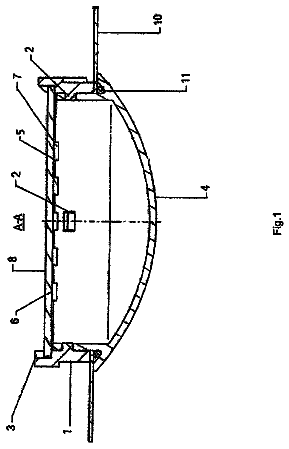
Translucent end cap for luminaire
A translucent end cap for an elongated luminaire having an upper metal housing and a lower translucent lens.
US 9,983,528 B2 · Assignee: Canon Kabushiki Kaisha · Inventors: Harano; Yuzo
Sheet 1 of 16 from the published document. All sheets in the USPTO PDF
A printing system obtains a print job, analyzes the obtained print job, and imposes print pages to a total of four surfaces of a print target sheet including two surfaces on each of front and back in accordance with a bookbinding format of the analyzed print job. As for an imposition method, if the bookbinding format of the print job is particular two fold bookbinding for which processing of two-folding a sheet and bonding a plurality of two-folded sheets is performed, imposition is performed while reserving a glue surface not to print out of the four surfaces of the print target sheet.
Field of the Invention The present invention relates to a printing system that performs imposition for printing for a print job instructed to do particular two fold bookbinding, a method of controlling the same, and a storage medium. Description of the Related Art A printing system conventionally has functions of executing various kinds of processing for a print job. For example, Japanese Patent Laid-Open No. 2012-000773 proposes a bookbinding imposition function of imposing submitted print data to each print sheet according to a consistent page order upon bookbinding in RIP processing of a printing system so as to bind a print product as a final product. Bookbinding imposition means imposing all pages of submitted print data as sets of two pages and generating a series of print data for the front and back surfaces of print sheets from the imposed print data. A printing apparatus prints
1 of 16 drawing sheets so far from the published document, cropped to the drawing. Every sheet is in the USPTO PDF.
What the patent claimed, word for word. All of it is now free to use.
Field of the Invention
The present invention relates to a printing system that performs imposition for printing for a print job instructed to do particular two fold bookbinding, a method of controlling the same, and a storage medium.
Description of the Related Art
A printing system conventionally has functions of executing various kinds of processing for a print job. For example, Japanese Patent Laid-Open No. 2012-000773 proposes a bookbinding imposition function of imposing submitted print data to each print sheet according to a consistent page order upon bookbinding in RIP processing of a printing system so as to bind a print product as a final product. Bookbinding imposition means imposing all pages of submitted print data as sets of two pages and generating a series of print data for the front and back surfaces of print sheets from the imposed print data. A printing apparatus prints the series of print data on both surfaces of print sheets in the same top/bottom orientation, and the bundle of printed print sheets is bound at the center by stapling or the like. Then, the bundle is two-folded to complete bookbinding.
However, this conventional technique has problems to be described below. For example, there are various styles of bookbinding, and one is particular two fold bookbinding. For this bookbinding style, any other conventional bookbinding format cannot be applied because of its features. Particular two fold bookbinding is one of bookbinding styles for two-folding all printed print sheets and bonding one outer surface of a two-folded print sheet to one outer surface of another two-folded print sheet by glue such that one spread is formed by turning a page. This bookbinding is also called glue back binding or simply two folding. The particular two fold bookbinding ensures easy browsing of a spread and is often used to print, for example, a CAD drawing or a construction drawing. In addition, since print sheets are bonded to each other, the thickness and strength of pages after bonding increase. Hence, the method is also used to make, for example, a picture book for children.
When the conventional bookbinding imposition technique is used in the particular two fold bookbinding, all pages of submitted print data are imposed as sets of two pages, and print data of four pages are imposed in total to the front and back surfaces of one print sheet. Hence, if the outer surfaces of two adjacent two-folded print sheets are bonded by glue when performing particular two fold bookbinding, the printed surfaces of the two bonded pages are invisibly hidden. Hence, this method is inappropriate as bookbinding of a final product.
To avoid this, it is necessary to correctly grasp the number of pages of print data, an imposition logic unique to the bookbinding, and a paper conveyance operation and a printing operation unique to the printing apparatus and create print data at the time of job data generation. However, since creation of such print data is complex and time-consuming, the printing system is difficult to use, and the print productivity is low.
The present invention enables realization of a mechanism that, in a case in which imposition processing for particular two fold bookbinding is executed, sets the particular two fold bookbinding without awareness of the number of pages of print data, an imposition logic unique to the particular two fold bookbinding, and a paper conveyance operation and a printing operation unique to a printing apparatus at the time of job data creation, like another bookbinding format.
One aspect of the present invention provides a printing system comprising: an obtaining unit configured to obtain a print job; an analysis unit configured to analyze the print job obtained by the obtaining unit; and an imposition unit configured to impose print pages to a total of four surfaces of a print target sheet including two surfaces on each of front and back in accordance with a bookbinding format designated in the print job analyzed by the analysis unit, wherein if the bookbinding format is particular two fold bookbinding for which processing of two-folding a sheet and bonding a plurality of two-folded sheets is performed, the imposition unit performs imposition while reserving a glue surface not to print out of the four surfaces of the print target sheet.
Another aspect of the present invention provides a method of controlling a printing system, comprising: obtaining a print job; analyzing the print job obtained in the obtaining; and imposing print pages to a total of four surfaces of a print target sheet including two surfaces on each of front and back in accordance with a bookbinding format designated in the print job analyzed in the analyzing, wherein in the imposing, if the bookbinding format is particular two fold bookbinding for which processing of two-folding a sheet and bonding a plurality of two-folded sheets is performed, imposition is performed while reserving a glue surface not to print out of the four surfaces of the print target sheet.
Still another aspect of the present invention provides a non-transitory computer-readable storage medium storing a computer program that causes a computer to execute steps of a control method of an apparatus, the control method comprising: obtaining a print job; analyzing the print job obtained in the obtaining; and imposing print pages to a total of four surfaces of a print target sheet including two surfaces on each of front and back in accordance with a bookbinding format designated in the print job analyzed in the analyzing, wherein in the imposing, if the bookbinding format is particular two fold bookbinding for which processing of two-folding a sheet and bonding a plurality of two-folded sheets is performed, imposition is performed while reserving a glue surface not to print out of the four surfaces of the print target sheet.
Further features of the present invention will be apparent from the following description of exemplary embodiments with reference to the attached drawings.
FIG. 1 is a block diagram showing the overall arrangement of a printing system;
FIG. 2 is a view showing the arrangement of a printing apparatus;
FIG. 3 is a view for explaining a print job;
FIG. 4 is a view for explaining imposition;
FIG. 5 is a view for explaining imposition of saddle stitching;
FIG. 6 is a view for explaining saddle stitching;
FIG. 7 is a view for explaining imposition of two fold bookbinding;
FIG. 8 is a view for explaining two fold bookbinding;
FIG. 9 is a view for explaining imposition of particular two fold bookbinding;
FIG. 10 is a view for explaining particular two fold bookbinding;
FIG. 11 is a flowchart showing a processing procedure;
FIG. 12 is a view for explaining imposition of particular two fold bookbinding;
FIG. 13 is a view for explaining particular two fold bookbinding;
FIG. 14 is a view for explaining imposition of particular two fold bookbinding;
FIG. 15 is a view for explaining particular two fold bookbinding;
FIG. 16 is a view for explaining imposition of particular two fold bookbinding; and
FIG. 17 is a view for explaining particular two fold bookbinding.
Embodiments of the present invention will now be described in detail with reference to the drawings. It should be noted that the relative arrangement of the components, the numerical expressions and numerical values set forth in these embodiments do not limit the scope of the present invention unless it is specifically stated otherwise. First Embodiment
<Arrangement of Printing Apparatus>
The first embodiment of the present invention will now be described in detail with reference to the accompanying drawings. The overall arrangement of a printing system including an image processing apparatus and a printing apparatus according to the first embodiment of the present invention will be described first with reference to FIG. 1 . Note that either a single device or a system formed from a plurality of devices is usable as long as it executes a function such as print processing according to the present invention. The system may be connected via a network such as a LAN (Local Area Network) or WAN (Wide Area Network) to perform processing. That is, a system arrangement to be described in the following embodiment to which various kinds of terminals are connected is merely an example, and there are various arrangement examples according to the application purpose and object, as a matter of course.
The printing system includes a client computer 101 , an image processing apparatus 102 , a printing apparatus 103 , and networks 104 and 105 . The client computer 101 is an apparatus in which a printer driver 106 is installed, and is connected to the network 104 via a network I/F 107 . In this embodiment, the client computer 101 will be described as an information processing apparatus. The printer driver 106 is software that operates on an OS (Operating System) configured to control the client computer 101 . The printer driver 106 also expresses print data in PDL (Page Description Language) based on a print instruction from an application, and transmits it to the image processing apparatus 102 as a print job. The network I/F 107 is connected to and communicates with an external device via the network 104 , and executes communication control processing on the network. The network I/F 107 can perform Internet communication using, for example, TCP/IP (Transmission Control Protocol/Internet Protocol) or data transmission/reception to/from the image processing apparatus 102 . Note that the information processing apparatus generally includes, for example, a CPU (Central Processing Unit), an HDD (Hard Disk Drive), a RAM (Random Access Memory), and various kinds of input/output devices. However, these are general-purpose components, and a description thereof will be omitted in this embodiment.
The image processing apparatus 102 includes a network I/F 108 , a CPU 109 , a RAM 110 , a network I/F 111 , a print job analysis unit 112 , an image processing unit 113 , a storage unit 114 , and a print job processing unit 115 . They are connected by a system bus 116 so as to be communicable with each other. Note that in this embodiment, the image processing apparatus 102 will be described as a printer controller. The printer controller is an information processing apparatus for mainly performing image processing of receiving drawing data described in PDL, which is generated by the printer driver 106 or the like, interpreting the PDL, converting it into print image data, and outputting it to the printing apparatus 103 to be described later. Note that this information processing apparatus is generally configured by adding a hardware electronic circuit board on which an integrated circuit dedicated to image processing is mounted to a computer that is a general-purpose information processing apparatus. However, the image processing may be performed only by a software program.
The network I/F 108 is connected to and communicates with an external device via the network 104 , and executes communication control processing on the network. The network I/F 108 can perform Internet communication using, for example, TCP/IP or data transmission/reception to/from the client computer 101 . The CPU 109 performs various kinds of arithmetic processing, information processing, and device control by various kinds of programs stored in the storage unit 114 of the image processing apparatus 102 and loaded to the RAM 110 . The RAM 110 is a kind of general volatile storage device directly accessible from the CPU 109 , and is used as the work area of the CPU 109 or a temporary data storage area.
The network I/F 111 is connected to and communicates with an external device via the network 105 , and executes communication control processing on the network. The network I/F 111 can perform Internet communication using, for example, TCP/IP or data transmission/reception to/from the printing apparatus 103 . The print job analysis unit 112 analyzes a print job received by the network I/F 108 , and obtains print image information and print attribute information. Note that print image information is drawing data described in PDL, and print attribute information is information about various kinds of print settings such as a page setting, imposition instruction, sheet feeding, and finishing instruction, and also includes information associated with the job.
The image processing unit 113 interprets PDL included in a print job, performs RIP (Raster Image Processor) processing using print image information and print attribute information, and generates print image data rasterized on a page basis. Note that PDL is a language used to describe an instruction to control a page printer, represented by, for example, PS (Post Script) or PCL (Printer Control Language). The print image data generated by the image processing unit 113 is transferred to the printing apparatus 103 via the network I/F 111 as print job data together with the print attribute information under the control of the print job processing unit 115 to be described later. The storage unit 114 has a function of temporarily or permanently spooling and storing a print job received from the client computer 101 , and will be explained as an HDD in this embodiment. The print job processing unit 115 controls the entire image processing apparatus 102 and also performs control of the main processing of the image processing apparatus 102 such as processing of a print job to be described later with reference to FIG. 3 .
The printing apparatus 103 includes a network I/F 117 , a CPU 118 , a RAM 119 , a storage unit 120 , a reading unit 121 , an image forming unit 122 , an operation unit 123 , a sheet feeding unit 124 , a discharge unit 125 , and a print job data processing unit 126 . They are connected by a system bus 127 so as to be communicable with each other. Note that in this embodiment, the printing apparatus 103 will be explained as an MFP (Multi Function Peripheral) including a copying function, a printer engine function, a FAX (Facsimile) function, and the like. The network I/F 117 is connected to and communicates with an external device via the network 105 , and executes communication control processing on the network. The network I/F 117 can perform Internet communication using, for example, TCP/IP or data transmission/reception to/from the image processing apparatus 102 .
The CPU 118 performs various kinds of arithmetic processing, information processing, and device control by various kinds of programs stored in the storage unit 120 of the printing apparatus 103 and loaded to the RAM 119 . The RAM 119 is a kind of general volatile storage device directly accessible from the CPU 118 , and is used as the work area of the CPU 118 or a temporary data storage area. The storage unit 121 has a function of temporarily or permanently spooling and storing print job data received from the image processing apparatus 102 , and will be explained as an HDD in this embodiment.
The reading unit 121 reads a paper document by an optical method, and will be explained as a scanner in this embodiment. The scanner includes a document illumination lamp and a scanning mirror, and is configured to optically scan a document placed on a platen glass. Light reflected by the document is guided to a lens by the scanning mirror and a reflecting mirror. The optical signal transmitted through the lens is guided to a solid-state image sensor. The optical signal is converted into an electrical signal by the solid-state image sensor and recognized as an image signal. Note that the solid-state image sensor indicates, for example, a CCD (Charge Coupled Device) or CMOS (Complementary Metal Oxide Semiconductor) image sensor.
The CPU 118 functions as an authentication unit, and determines using authentication information included in print job data received by the network I/F 117 whether to perform print processing of the print job data. That is, under the control of the print job data processing unit 126 to be described later, only when authentication information set for the printing apparatus 103 matches that included in the print job data, print processing is continued. On the other hand, if they do not match, print processing is stopped.
The image forming unit 122 is a print process of forming an image using raster data that is print image data generated by the image processing apparatus 102 and included in print job data, and will be explained as a printer engine in this embodiment. That is, the image forming unit 122 forms an image on a print sheet based on raster data generated by the image processing unit 113 by RIP processing to obtain a print product. Note that in this embodiment, image formation is done by electrophotography using toner. However, another means using, for example, ink in place of toner may be used.
The operation unit 123 is a user interface configured to operate or set the printing system, and will be explained as a device using an LCD (Liquid Crystal Display) touch panel in this embodiment. The sheet feeding unit 124 stores print sheets used in the MFP, and is generally called a sheet cassette, sheet drawer, or sheet deck. In general, a plurality of sheet cassettes are provided. Which one of the plurality of sheet cassettes feeds print sheets changes depending on the attribute of print job data concerning the print sheet or sheet cassette or the settings and state of the MFP, and is decided by the print job data processing unit 126 to be described later.
A fed print sheet is conveyed to the image forming unit 122 and undergoes image formation to form a print product. According to the attribute of the print job data, the discharge unit 125 performs post processing for the print product with the image formed by the image forming unit 122 , and discharges it to the outside of the printing apparatus 103 , and will be explained as a finisher in this embodiment. The discharge unit 125 represented by a finisher or a stacker generally has post processing functions such as a stapling function, a punching function, a folding function such as two folding, and a saddle stitching function. The discharge unit 125 also has several discharge destinations such as a stack tray. The post processing functions and the discharge destination are determined in accordance with the attribute of print job data. The instruction, post processing control, and discharge control are performed by the print job data processing unit 126 to be described later. The print job data processing unit 126 controls the entire printing apparatus 103 and processing of print job data, and will be explained as an MFP controller in this embodiment.
The network 104 is a global or local network represented by the Internet or LAN, and serves as a medium that connects the client computer 101 and the image processing apparatus 102 . A network communication technology represented by TCP/IP is used for the connection. The network 105 is a global or local network represented by the Internet or LAN, and serves as a medium that connects the image processing apparatus 102 and the printing apparatus 103 . A network communication technology represented by TCP/IP is used for the connection. Note that in this embodiment, connection and the communication method between the network I/F 111 and the network I/F 117 will be explained as peer to peer.
The print job processing unit 115 and the image processing unit 113 according to this embodiment will be described in more detail. The print job processing unit 115 not only controls the entire image processing apparatus 102 and print job processing but also determines based on print attribute information obtained by the print job analysis unit 112 whether the received print job is instructed to do imposition for particular two fold bookbinding. Upon determining that the print job is instructed to do imposition for particular two fold bookbinding, the print job processing unit 115 instructs the image processing unit 113 to generate print image data by imposition for particular two fold bookbinding. The image processing unit 113 divides each print sheet of the print target into a total of four surfaces, that is, two, left and right surfaces on each of the front and back surfaces, and imposes three pages at maximum to a total of three surfaces of a first sheet that is the first print sheet in particular two fold bookbinding. In addition, for an intermediate sheet as an intermediate print sheet, two pages are imposed at maximum to a total of two surfaces. For a final sheet as the last print sheet, three pages are imposed at maximum to a total of three surfaces. However, out of the total of four surfaces in any of the first sheet, the intermediate sheet, and the final sheet, page imposition is not performed for each surface to be glued at the time of particular two fold bookbinding, and the print image data is generated such that the print product can have pages in a proper order. Details of control will be described later.
In this embodiment, the networks 104 and 105 are independent network arrangements. However, one network arrangement including the client computer 101 , the image processing apparatus 102 , and the printing apparatus 103 may be formed. In this embodiment, the image processing apparatus 102 and the printing apparatus 103 are independent apparatus arrangements. However, one apparatus arrangement having the functions of the respective apparatuses, that is, one apparatus arrangement containing the means of all apparatuses may be formed.
<Arrangement of Printing Apparatus>
An example of the arrangement of the printing apparatus according to this embodiment will be described next with reference to FIG. 2 . As described above, the printing apparatus 103 includes the storage unit 120 , the reading unit 121 , the print job data processing unit 126 , the image forming unit 122 , the operation unit 123 , the sheet feeding unit 124 , and the discharge unit 125 . Note that a description of the components explained with reference to FIG. 1 will be omitted.
The sheet feeding unit 124 is formed from a plurality of sheet cassettes or sheet decks for sheet feeding, including a sheet feeding unit A 201 , a sheet feeding unit B 202 , a sheet feeding unit C 203 , a sheet feeding unit D 204 , and a sheet feeding unit E 205 . The discharge unit 125 is formed from a plurality of stack trays for discharge, including a stack unit A 206 , a stack unit B 207 , and a stack unit C 208 . In particular, a print product that has undergone post processing by two folding or saddle stitching is conveyed to a dedicated stack unit such as the stack unit C 208 . A sheet conveyance path 209 shown in FIG. 2 indicates a conveyance path of a print sheet that is fed from one of the sheet feeding unit A 201 to the sheet feeding unit E 205 after the start of print control by the print job data processing unit 126 and reaches one of the stack unit A 206 to the stack unit C 208 via the image forming unit 122 .
<Print Job>
A print job according to this embodiment will be described next with reference to FIG. 3 . A print job that the image processing apparatus 102 receives from the client computer 101 includes one or a plurality of print pages, as shown in FIG. 3 , and generally has a PDL data format. The job data 301 includes print attribute information including information about various kinds of print settings such as a page setting, imposition instruction, sheet feeding, and finishing instruction and information associated with the job in addition to print image information that is drawing data of each page.
More specifically, the job data 301 is received by the network I/F 108 of the image processing apparatus 102 via the network I/F 107 of the client computer 101 and the network 104 . Each of the above-described pieces of information of the received job data 301 is analyzed by the print job analysis unit 112 .
<Imposition>
Imposition according to this embodiment will be described next with reference to FIG. 4 . As described above with reference to FIG. 3 , the job data 301 includes print attribute information including information about various kinds of print settings such as a page setting, imposition instruction, sheet feeding, and finishing instruction and information associated with the job in addition to print image information that is drawing data of each print page. Concerning the imposition instruction, for example, if a bookbinding format such as saddle stitching, two fold bookbinding, or particular two fold bookbinding is instructed, as shown in FIG. 4 , each print sheet is distinguished into a sheet front surface 401 and a sheet back surface 402 for convenience's sake. For example, the sheet front surface 401 is distinguished into a first surface 403 and a second surface 404 so that a print page can be laid out on each surface. The sheet back surface 402 is distinguished into a third surface 405 and a fourth surface 406 so that a print page can be laid out on each surface.
Note that in this embodiment, each print sheet is distinguished into the front surface and the back surface. Either surface of the print sheet can be the front surface or the back surface. One of the surfaces is distinguished as the front surface, and the other is distinguished as the back surface for convenience's sake. Each of the sheet front surface 401 and the sheet back surface 402 has print pages laid out on two, left and right surfaces. However, each surface may be divided into more surfaces to enable layout of more print pages, that is, imposition of more print pages. On the other hand, the sheet front surface 401 or the sheet back surface 402 need not always be distinguished into a plurality of surfaces and, depending on a sheet, a single page may be laid out on one surface, that is, on an entire print sheet surface. At any rate, layout can be done flexibly in accordance with the print job.
<Saddle Stitching>
Saddle stitching will be described next with reference to FIGS. 5 and 6 as a comparison example to the present invention. Imposition of saddle stitching will be described with reference to FIG. 5 .
Assume that out of the print attribute information of a print job, an imposition instruction instructs saddle stitching for job data including, for example, a total of 16 pages. In this case, each print sheet is distinguished into a sheet front surface and a sheet back surface for convenience's sake, as described with reference to FIG. 4 . That is, as shown in FIG. 5 , the print sheets are distinguished into a first sheet front surface 501 , a first sheet back surface 502 , a second sheet front surface 503 , a second sheet back surface 504 , a third sheet front surface 505 , a third sheet back surface 506 , a fourth sheet front surface 507 , and a fourth sheet back surface 508 . Note that in this embodiment, the job data includes a total of 16 pages. However, any number of pages that can be handled by the printing system can be set.
Next, as described with reference to FIG. 4 , each print sheet is distinguished such that print pages can be laid out on two, left and right surfaces of each of the front surface and the back surface of the print sheet. That is, as shown in FIG. 5 , the first sheet front surface 501 is distinguished into a first sheet first surface 509 on the left side of the front surface and a first sheet second surface 510 on the right side of the front surface, and the first sheet back surface 502 is distinguished into a first sheet third surface 511 on the left side of the back surface and a first sheet fourth surface 512 on the right side of the back surface. The second sheet front surface 503 is distinguished into a second sheet first surface 513 and a second sheet second surface 514 , and the second sheet back surface 504 is distinguished into a second sheet third surface 515 and a second sheet fourth surface 516 . The third sheet front surface 505 is distinguished into a third sheet first surface 517 and a third sheet second surface 518 , and the third sheet back surface 506 is distinguished into a third sheet third surface 519 and a third sheet fourth surface 520 . The fourth sheet front surface 507 is distinguished into a fourth sheet first surface 521 and a fourth sheet second surface 522 , and the fourth sheet back surface 508 is distinguished into a fourth sheet third surface 523 and a fourth sheet fourth surface 524 .
Next, the total of 16 pages of the job data are laid out on the surfaces of the sheets in accordance with the style of saddle stitching. In the style of saddle stitching, two pages are printed on each surface of a print sheet in the same top/bottom orientation, and the bundle of printed print sheets is bound at the center by stapling or the like. Then, the bundle is two-folded to complete bookbinding. More specifically, as shown in FIG. 5 , the eighth page is laid out on the first sheet first surface 509 , the ninth page is laid out on the first sheet second surface 510 , the 10th page is laid out on the first sheet third surface 511 , and the seventh page is laid out on the first sheet fourth surface 512 . The sixth page is laid out on the second sheet first surface 513 , the 11th page is laid out on the second sheet second surface 514 , the 12th page is laid out on the second sheet third surface 515 , and the fifth page is laid out on the second sheet fourth surface 516 . The fourth page is laid out on the third sheet first surface 517 , the 13th page is laid out on the third sheet second surface 518 , the 14th page is laid out on the third sheet third surface 519 , and the third page is laid out on the third sheet fourth surface 520 . The second page is laid out on the fourth sheet first surface 521 , the 15th page is laid out on the fourth sheet second surface 522 , the 16th page is laid out on the fourth sheet third surface 523 , and the first page is laid out on the fourth sheet fourth surface 524 .
In imposition of saddle stitching, the image processing unit 113 lays out each print page on one of the surfaces of the first to fourth sheets, as shown in FIG. 6 . After that, the image forming unit 122 forms images on both surfaces of each sheet in the order from the fourth sheet to the first sheet. The print sheets are conveyed in the printing apparatus 103 in accordance with the sheet conveyance path 209 and discharged to the discharge unit 125 . The bundle of print products stacked with the sheet front surfaces facing up in the order from the fourth sheet to the first sheet is bound by stapling manually or using a device such as a finisher. Then, the bundle is two-folded, thereby completing saddle stitching 601 as a final product whose pages are turned from the left side. The print page layout method of the image processing unit 113 , the image forming order of the image forming unit 122 , and the stack order or stack surface of the print products to the discharge unit 125 are not limited to those of the embodiment, and can be changed as long as the saddle stitching as the final product has a consistent page order.
<Two Fold Bookbinding>
Two fold bookbinding will be described next with reference to FIGS. 7 and 8 as a comparison example to the present invention. Imposition of two fold bookbinding will be described with reference to FIG. 7 .
Assume that out of the print attribute information of a print job, an imposition instruction instructs two fold bookbinding for job data including, for example, a total of 16 pages. In this case, each print sheet is distinguished into a sheet front surface and a sheet back surface for convenience's sake, as described with reference to FIG. 4 . That is, as shown in FIG. 7 , the print sheets are distinguished into a first sheet front surface 701 , a first sheet back surface 702 , a second sheet front surface 703 , a second sheet back surface 704 , a third sheet front surface 705 , a third sheet back surface 706 , a fourth sheet front surface 707 , and a fourth sheet back surface 708 . Note that in this embodiment, the job data includes a total of 16 pages. However, any number of pages that can be handled by the printing system can be set.
Next, as described with reference to FIG. 4 , each print sheet is distinguished such that print pages can be laid out on two, left and right surfaces of each of the front surface and the back surface of the print sheet. That is, as shown in FIG. 7 , the first sheet front surface 701 is distinguished into a first sheet first surface 709 and a first sheet second surface 710 , and the first sheet back surface 702 is distinguished into a first sheet third surface 711 and a first sheet fourth surface 712 . The second sheet front surface 703 is distinguished into a second sheet first surface 713 and a second sheet second surface 714 , and the second sheet back surface 704 is distinguished into a second sheet third surface 715 and a second sheet fourth surface 716 . The third sheet front surface 705 is distinguished into a third sheet first surface 717 and a third sheet second surface 718 , and the third sheet back surface 706 is distinguished into a third sheet third surface 719 and a third sheet fourth surface 720 . The fourth sheet front surface 707 is distinguished into a fourth sheet first surface 721 and a fourth sheet second surface 722 , and the fourth sheet back surface 708 is distinguished into a fourth sheet third surface 723 and a fourth sheet fourth surface 724 .
Next, the total of 16 pages of the job data are laid out on the surfaces of the sheets in accordance with the style of two fold bookbinding. In the style of two fold bookbinding, two pages are printed on each surface of a print sheet in the same top/bottom orientation, each printed print sheet is two-folded, and the plurality of two-folded sheets are overlaid and bound at the back (folds) by gluing or stapling, thereby completing bookbinding. More specifically, as shown in FIG. 7 , the second page is laid out on the first sheet first surface 709 , the third page is laid out on the first sheet second surface 710 , the fourth page is laid out on the first sheet third surface 711 , and the first page is laid out on the first sheet fourth surface 712 . The sixth page is laid out on the second sheet first surface 713 , the seventh page is laid out on the second sheet second surface 714 , the eighth page is laid out on the second sheet third surface 715 , and the fifth page is laid out on the second sheet fourth surface 716 . The 10th page is laid out on the third sheet first surface 717 , the 11th page is laid out on the third sheet second surface 718 , the 12th page is laid out on the third sheet third surface 719 , and the ninth page is laid out on the third sheet fourth surface 720 . The 14th page is laid out on the fourth sheet first surface 721 , the 15th page is laid out on the fourth sheet second surface 722 , the 16th page is laid out on the fourth sheet third surface 723 , and the 13th page is laid out on the fourth sheet fourth surface 724 .
In imposition of two fold bookbinding, the image processing unit 113 lays out each page on one of the surfaces of the first to fourth sheets, as shown in FIG. 8 . After that, the image forming unit 122 forms images on both surfaces in the order from the first sheet to the fourth sheet. The print sheets are conveyed in the printing apparatus 103 in accordance with the sheet conveyance path 209 and discharged to the discharge unit 125 . The sheets of print products stacked with the sheet front surfaces facing up in the order from the first sheet to the fourth sheet are two-folded to make a valley fold manually or using a device such as a finisher, and the plurality of two-folded sheets are overlaid and bound at the back by gluing or stapling. Two fold bookbinding 801 as a final product whose pages are turned from the left side is thus completed. The print page layout method of the image processing unit 113 , the image forming order of the image forming unit 122 , and the stack order or stack surface of the print products to the discharge unit 125 are not limited to those of the embodiment, and can be changed as long as the two fold bookbinding as the final product has a consistent page order.
<Particular Two Fold Bookbinding>
Particular two fold bookbinding according to the first embodiment of the present invention will be described next with reference to FIGS. 9 and 10 . Imposition of particular two fold bookbinding will be described with reference to FIG. 9 .
Assume that out of the print attribute information of a print job, an imposition instruction instructs particular two fold bookbinding for job data including, for example, a total of 10 pages. In this case, each print sheet is distinguished into a sheet front surface and a sheet back surface for convenience's sake, as described with reference to FIG. 4 . That is, as shown in FIG. 9 , the print sheets are distinguished into a first sheet front surface 901 , a first sheet back surface 902 , a second sheet front surface 903 , a second sheet back surface 904 , a third sheet front surface 905 , a third sheet back surface 906 , a fourth sheet front surface 907 , and a fourth sheet back surface 908 . Note that in this embodiment, the job data includes a total of 10 pages. However, any number of pages that can be handled by the printing system can be set.
Next, as described with reference to FIG. 4 , each print sheet is distinguished such that print pages can be laid out on two, left and right surfaces of each of the front surface and the back surface of the print sheet. That is, as shown in FIG. 9 , the first sheet front surface 901 is distinguished into a first sheet first surface 909 and a first sheet second surface 910 , and the first sheet back surface 902 is distinguished into a first sheet third surface 911 and a first sheet fourth surface 912 . The second sheet front surface 903 is distinguished into a second sheet first surface 913 and a second sheet second surface 914 , and the second sheet back surface 904 is distinguished into a second sheet third surface 915 and a second sheet fourth surface 916 . The third sheet front surface 905 is distinguished into a third sheet first surface 917 and a third sheet second surface 918 , and the third sheet back surface 906 is distinguished into a third sheet third surface 919 and a third sheet fourth surface 920 . The fourth sheet front surface 907 is distinguished into a fourth sheet first surface 921 and a fourth sheet second surface 922 , and the fourth sheet back surface 908 is distinguished into a fourth sheet third surface 923 and a fourth sheet fourth surface 924 .
The description continues in the full USPTO document.
About 6,790 words. The USPTO PDF has it with every drawing.
Fees are due 3.5, 7.5 and 11.5 years after grant. This patent expired on May 29, 2026, so the fee marked "not paid" was the one that went unpaid.
PRINTING SYSTEM, METHOD OF CONTROLLING THE SAME, AND STORAGE MEDIUM
Filed Jul 2016 · published Jan 2017Printing system, method of controlling the same, and storage medium
Filed Jul 2016 · granted May 2018Earlier publications, parents and continuations. None of them can still be enforced, or this patent would not be listed.
Prior art cited by the examiner or applicant. Useful when you check your own idea for novelty.
Everything on this page comes from the documents linked above.