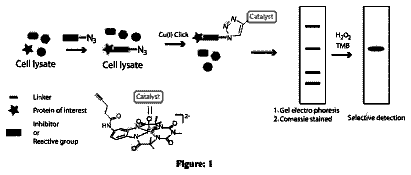
Background of the invention
Bromodomain-containing proteins are of substantial biological interest, as components of transcription factor complexes and determinants of epigenetic memory. For example, the bromo and extra terminal protein (BET) family (e.g., bromodomain-containing protein 2 (BRD2), bromodomain-containing protein 3 (BRD3), bromodomain-containing protein 4 (BRD4), and bromodomain testis-specific protein (BRDT)) shares a common domain architecture featuring two amino-terminal bromodomains that exhibit high levels of sequence conservation, and a more divergent carboxy-terminal recruitment domain (Filippakopoulos et al., Nature 2010, 468, 1067-1073). BRD2 and BRD3 are reported to associate with histones along actively transcribed genes and may be involved in facilitating transcriptional elongation (Leroy et al., Mol. Cell. 2008, 30, 51-60). It has also been reported that BRD4 or BRD3 may fuse with nuclear protein in testis (NUT), forming novel fusion oncogenes BRD4-NUT or BRD3-NUT, in a highly malignant form of epithelial neoplasia (French et al., Cancer Res., 2003, 63, 304-307; French et al., J. Clin. Oncol. 2004, 22, 4135-4139). Data suggests that BRD-NUT fusion proteins contribute to carcinogenesis (French et al., Oncogene 2008, 27, 2237-2242). BRDT is uniquely expressed in the testes and ovary. All family members of BET have been reported to have some function in controlling or executing aspects of the cell cycle and have been shown to remain in complex with chromosomes during cell division, suggesting a role in the maintenance of epigenetic memory. In addition, some viruses make use of BET proteins to tether their genomes to the host cell chromatin, as part of the process of viral replication (You et al., Cell 2004, 117, 349-360). BRD4 appears to be involved in the recruitment of the pTEF-b complex to inducible genes, resulting in phosphorylation of RNA polymerase and increased transcriptional output (Hargreaves et al., Cell 2009, 138, 129-145). In humans, BRD2, BRD3, BRD4, and BRDT exhibit similar gene arrangements, domain organizations, and some functional properties (Wu et al., J. Biol. Chem. 2007, 282, 13141-13145).
Recently, some compounds have been reported to be bromodomain binding agents, e.g., WO 2012/075383, WO 2011/054553, WO 2011/054841, WO 2011/054844, WO 2011/054845, WO 2011/054846, WO 2011/054848, WO 2011/143669, and WO 2011/161031. Moreover, Japanese patent application publication JP 2008/156311 discloses a benzimidazole derivative which is said to be a BRD2 bromodomain binding agent which has utility with respect to virus infection and/or proliferation. International PCT publication WO 2009/084693 discloses a series of thienotriazolodiazepine derivatives that are said to inhibit the binding between an acetylated histone and a bromodomain-containing protein which are said to be useful as anti-cancer agents. International PCT publication WO 2011/054843 suggests compounds which inhibit the binding of a bromodomain with its cognate acetylated proteins may have utility in the treatment of a range of autoimmune and inflammatory diseases or conditions.
BET proteins, however, are just one branch of the bromodomain containing protein family. There are dozens of undrugged bromodomains, and novel probe molecules against these targets would be invaluable tools both for improved biological studies and potential leads for drug development. Transcription initiation factor TFIID subunit 1 (TAF1) and TAF1L are two such proteins. As a part of the STAGA complex containing TRRAP, GCN5, TFIID, CBP/P300, mediator (Liu et al., Molecular Cell Biology 2008, 28, 108), and Sp1 (Schroder et al., J. Biol. Chem. 2012, 287, 1090), TAF1 is susceptible to oncogenic activation by MYC. Moreover, TAF1 has been shown to block p53 activity (Li et al., Molecular Cell. 2004, 13, 867), and inactivation of TAF1 triggers a DNA damage response (Buchmann et al., Molecular Cell Biology 2004, 24, 5332). In addition, the TFIID complex, of which TAF1 is a significant member, is vital to stem cell reprogramming (Pijnappel et al., Nature 2013, 495, 516). Inhibitors of TAF1 may help further elucidate its biological role and potentially be an inhibitor of cancer cell growth. With such promising studies related to drugging the epigenome, it is of the utmost importance to develop new chemistry capable of reaching these targets.
Summary of the invention
Compound JQ1 (e.g., (+)-JQ1, (−)-JQ1, or a mixture thereof; below) and certain compounds related to JQ1 have been reported as inhibitors of bromodomain-containing proteins (e.g., BET proteins). See, e.g., international PCT patent application publication, WO 2011/143669. It has been demonstrated that JQ1 may bind to the acetyl-lysine binding cavity of a bromodomain-containing protein (e.g., BRD4). Binding of JQ1 to the tandem bromodomains of BRD4 has been shown to be acetyl-lysine competitive and able to displace BRD4 from chromatin in human cells. It is expected that JQ1 may be useful in treating a disease associated with bromodomain-containing proteins, such as cancer (e.g., human squamous cell carcinoma). Similar properties of compound I-BET (below), another bromodomain inhibitor, have also been reported (Nicodeme et al., Nature 2010, 468, 1119-1123).
##str00002##
The present invention provides novel compounds of Formulae (I)-(IV). The inventive compounds are thought to be inhibitors of transcription factors, such as bromodomain-containing proteins (e.g., BET proteins) and may be useful in treating diseases associated with bromodomain-containing proteins, such as proliferative diseases (e.g., cancers, benign neoplasms, angiogenesis, inflammatory diseases, and autoimmune diseases). Also provided in the present invention are pharmaceutical compositions, kits, methods, and uses involving a compound of the invention.
In one aspect, the present invention provides compounds of Formula (I):
##STR00003## and pharmaceutically acceptable salts, solvates, hydrates, polymorphs, co-crystals, tautomers, stereoisomers, isotopically labeled derivatives, and prodrugs thereof, wherein X.sup.A, X.sup.B, X.sup.C, Ring A, L, R.sup.B, R.sup.C, R.sup.D, and d are as described herein.
Exemplary compounds of Formula (I) include, but are not limited to:
##STR00004## ##STR00005## ##STR00006## ##STR00007## ##STR00008## ##STR00009## ##STR00010## ##STR00011## and pharmaceutically acceptable salts, solvates, hydrates, polymorphs, co-crystals, tautomers, stereoisomers, isotopically labeled derivatives, and prodrugs thereof.
The compounds of the invention are thought to be able to bind bromodomain-containing proteins. In certain embodiments, the compounds of the invention bind to a bromodomain of the bromodomain-containing proteins. The compounds of the invention may inhibit the activity of the bromodomain-containing proteins. The compounds of the invention may also inhibit the function of a bromodomain of the bromodomain-containing proteins.
In another aspect, the present invention provides the compound of Formula (II):
##STR00012## and pharmaceutically acceptable salts, solvates, hydrates, polymorphs, co-crystals, tautomers, stereoisomers, isotopically labeled derivatives, and prodrugs thereof. The compound of Formula (II) is also referred to as compound UMB17.
In yet another aspect, the present invention provides the compound of Formula (III):
##STR00013## and pharmaceutically acceptable salts, solvates, hydrates, polymorphs, co-crystals, tautomers, stereoisomers, isotopically labeled derivatives, and prodrugs thereof. The compound of Formula (III) is also referred to as compound UMB18.
In still another aspect, the present invention provides the compound of Formula (IV):
##STR00014## and pharmaceutically acceptable salts, solvates, hydrates, polymorphs, co-crystals, tautomers, stereoisomers, isotopically labeled derivatives, and prodrugs thereof. The compound of Formula (IV) is also referred to as compound UMB27.
In still another aspect, the present invention provides pharmaceutical compositions including a compound of the invention, and optionally a pharmaceutically acceptable excipient. In certain embodiments, the pharmaceutical compositions described herein include a therapeutically or prophylactically effective amount of a compound of the invention. The pharmaceutical composition may be useful for treating and/or preventing a disease associated with a bromodomain-containing protein in a subject in need thereof. The pharmaceutical composition may also be useful in inhibiting the activity of a bromodomain-containing protein, in inhibiting the binding of a bromodomain of a bromodomain-containing protein to an acetyl-lysine residue of a histone, and/or in modulating (e.g., down-regulating) the transcription of a gene that is regulated by a bromodomain-containing protein in a subject or cell.
In certain embodiments, the disease associated with a bromodomain-containing protein is a disease associated with the activity of the bromodomain-containing protein. In certain embodiments, the disease associated with a bromodomain-containing protein is a disease associated with the function of a bromodomain of the bromodomain-containing protein. In certain embodiments, the disease associated with a bromodomain-containing protein is a proliferative disease (e.g., cancer, benign neoplasm, angiogenesis, an inflammatory disease, or an autoimmune disease).
In certain embodiments, the subject is a human. In certain embodiments, the subject is a non-human mammal. In certain embodiments, the cell is an in vitro cell.
Another aspect of the present invention relates to methods of treating a disease associated with a bromodomain-containing protein in a subject in need thereof. In another aspect, the present invention provides methods of preventing a disease associated with a bromodomain-containing protein in a subject in need thereof.
Another aspect of the present invention relates to methods of reducing the risk of having a disease associated with a bromodomain-containing protein in a subject in need thereof.
In another aspect, the present invention provides methods of inhibiting the activity of a bromodomain-containing protein in a subject or cell.
In yet another aspect, the present invention provides methods of inhibiting the binding of a bromodomain of a bromodomain-containing protein to an acetyl-lysine residue of a histone in a subject or cell.
In still another aspect, the present invention provides methods of modulating the transcription of a gene that is regulated by a bromodomain-containing protein in a subject or cell. In certain embodiments, the methods of modulating the transcription of a gene are methods of down-regulating the transcription of the gene.
The methods of the present invention include administering to the subject an effective amount of a compound or pharmaceutical composition of the invention. In certain embodiments, the effective amount is a therapeutically effective amount. In certain embodiments, the effective amount is a prophylactically effective amount.
Another aspect of the invention relates to methods of screening a library of compounds to identify a compound that is useful in the methods of the invention (e.g., useful for inhibiting the activity of a bromodomain-containing protein).
Another aspect of the present invention relates to kits comprising a container with a compound or pharmaceutical composition of the invention. The kits of the invention may include a single dose or multiple doses of the inventive compound, or pharmaceutical compositions thereof. The provided kits may be useful in treating and/or preventing a disease associated with a bromodomain-containing protein in a subject in need thereof. The kits may also be useful in inhibiting the activity of a bromodomain-containing protein, in inhibiting the binding of a bromodomain of a bromodomain-containing protein to an acetyl-lysine residue of a histone, and/or in modulating (e.g., down-regulating) the transcription of a gene that is regulated by a bromodomain-containing protein in a subject or cell. In certain embodiments, the kit further includes instructions for administering the compound, or pharmaceutical composition, to the subject.
In yet another aspect, the present invention provides compounds and pharmaceutical compositions of the invention for use in the treatment of a disease associated with a bromodomain-containing protein in a subject in need thereof.
In still another aspect, the present invention provides compounds and pharmaceutical compositions of the invention for use in the prevention of a disease associated with a bromodomain-containing protein in a subject in need thereof.
In still another aspect, the present invention provides compounds and pharmaceutical compositions of the invention for use in reducing the risk of having a disease associated with a bromodomain-containing protein in a subject in need thereof.
The present application refers to various issued patent, published patent applications, journal articles, and other publications, all of which are incorporated herein by reference. The details of one or more embodiments of the invention are set forth herein. Other features, objects, and advantages of the invention will be apparent from the Detailed Description, the Figures, the Examples, and the Claims.
Definitions
Definitions of specific functional groups and chemical terms are described in more detail below. The chemical elements are identified in accordance with the Periodic Table of the Elements, CAS version, Handbook of Chemistry and Physics , 75.sup.th Ed., inside cover, and specific functional groups are generally defined as described therein. Additionally, general principles of organic chemistry, as well as specific functional moieties and reactivity, are described in Thomas Sorrell, Organic Chemistry , University Science Books, Sausalito, 1999; Smith and March, March's Advanced Organic Chemistry, 5.sup.th Edition, John Wiley & Sons, Inc., New York, 2001; Larock, Comprehensive Organic Transformations , VCH Publishers, Inc., New York, 1989; and Carruthers, Some Modern Methods of Organic Synthesis, 3.sup.rd Edition, Cambridge University Press, Cambridge, 1987.
Compounds described herein can comprise one or more asymmetric centers, and thus can exist in various isomeric forms, e.g., enantiomers and/or diastereomers. For example, the compounds described herein can be in the form of an individual enantiomer, diastereomer or geometric isomer, or can be in the form of a mixture of stereoisomers, including racemic mixtures and mixtures enriched in one or more stereoisomer. Isomers can be isolated from mixtures by methods known to those skilled in the art, including chiral high pressure liquid chromatography (HPLC) and the formation and crystallization of chiral salts; or preferred isomers can be prepared by asymmetric syntheses. See, for example, Jacques et al., Enantiomers, Racemates and Resolutions (Wiley Interscience, New York, 1981); Wilen et al., Tetrahedron 33:2725 (1977); Eliel, Stereochemistry of Carbon Compounds (McGraw-Hill, N Y, 1962); and Wilen, Tables of Resolving Agents and Optical Resolutions p. 268 (E.L. Eliel, Ed., Univ. of Notre Dame Press, Notre Dame, Ind. 1972). The invention additionally encompasses compounds described herein as individual isomers substantially free of other isomers, and alternatively, as mixtures of various isomers.
When a range of values is listed, it is intended to encompass each value and sub-range within the range. For example “C.sub.1-6” is intended to encompass, C.sub.1, C.sub.2, C.sub.3, C.sub.4, C.sub.5, C.sub.6, C.sub.1-6, C.sub.1-5, C.sub.1-4, C.sub.1-3, C.sub.1-2, C.sub.2-6, C.sub.2-5, C.sub.2-4, C.sub.2-3, C.sub.3-6, C.sub.3-5, C.sub.3-4, C.sub.4-6, C.sub.4-5, and C.sub.5-6.
The term “aliphatic” includes both saturated and unsaturated, straight chain (i.e., unbranched), branched, acyclic, cyclic, or polycyclic aliphatic hydrocarbons, which are optionally substituted with one or more functional groups. As will be appreciated by one of ordinary skill in the art, “aliphatic” is intended herein to include, but is not limited to, alkyl, alkenyl, alkynyl, cycloalkyl, cycloalkenyl, and cycloalkynyl moieties. Thus, the term “alkyl” includes straight, branched and cyclic alkyl groups. An analogous convention applies to other generic terms such as “alkenyl”, “alkynyl”, and the like. Furthermore, the terms “alkyl”, “alkenyl”, “alkynyl”, and the like encompass both substituted and unsubstituted groups. In certain embodiments, “lower alkyl” is used to indicate those alkyl groups (cyclic, acyclic, substituted, unsubstituted, branched or unbranched) having 1-6 carbon atoms.
In certain embodiments, the alkyl, alkenyl, and alkynyl groups employed in the invention contain 1-20 aliphatic carbon atoms. In certain other embodiments, the alkyl, alkenyl, and alkynyl groups employed in the invention contain 1-10 aliphatic carbon atoms. In yet other embodiments, the alkyl, alkenyl, and alkynyl groups employed in the invention contain 1-8 aliphatic carbon atoms. In still other embodiments, the alkyl, alkenyl, and alkynyl groups employed in the invention contain 1-6 aliphatic carbon atoms. In yet other embodiments, the alkyl, alkenyl, and alkynyl groups employed in the invention contain 1-4 carbon atoms. Illustrative aliphatic groups thus include, but are not limited to, for example, methyl, ethyl, n-propyl, isopropyl, cyclopropyl, —CH.sub.2-cyclopropyl, vinyl, allyl, n-butyl, sec-butyl, isobutyl, tert-butyl, cyclobutyl, —CH.sub.2-cyclobutyl, n-pentyl, sec-pentyl, isopentyl, tert-pentyl, cyclopentyl, —CH.sub.2-cyclopentyl, n-hexyl, sec-hexyl, cyclohexyl, —CH.sub.2-cyclohexyl moieties and the like, which again, may bear one or more substituents. Alkenyl groups include, but are not limited to, for example, ethenyl, propenyl, butenyl, 1-methyl-2-buten-1-yl, and the like. Representative alkynyl groups include, but are not limited to, ethynyl, 2-propynyl (propargyl), 1-propynyl, and the like.
“Alkenyl” refers to a radical of a straight-chain or branched hydrocarbon group having from 2 to 20 carbon atoms, one or more carbon-carbon double bonds, and no triple bonds (“C.sub.2-20 alkenyl”). In some embodiments, an alkenyl group has 2 to 10 carbon atoms (“C.sub.2-10 alkenyl”). In some embodiments, an alkenyl group has 2 to 9 carbon atoms (“C.sub.2-9 alkenyl”). In some embodiments, an alkenyl group has 2 to 8 carbon atoms (“C.sub.2-8 alkenyl”). In some embodiments, an alkenyl group has 2 to 7 carbon atoms (“C.sub.2-7 alkenyl”). In some embodiments, an alkenyl group has 2 to 6 carbon atoms (“C.sub.2-6 alkenyl”). In some embodiments, an alkenyl group has 2 to 5 carbon atoms (“C.sub.2-5 alkenyl”). In some embodiments, an alkenyl group has 2 to 4 carbon atoms (“C.sub.2-4 alkenyl”). In some embodiments, an alkenyl group has 2 to 3 carbon atoms (“C.sub.2-3 alkenyl”). In some embodiments, an alkenyl group has 2 carbon atoms (“C.sub.2 alkenyl”). The one or more carbon carbon double bonds can be internal (such as in 2-butenyl) or terminal (such as in 1-butenyl). Examples of C.sub.2-4 alkenyl groups include ethenyl (C.sub.2), 1-propenyl (C.sub.3), 2-propenyl (C.sub.3), 1 (C.sub.4), 2-butenyl (C.sub.4), butadienyl (C.sub.4), and the like. Examples of C.sub.2-6 alkenyl groups include the aforementioned C.sub.2-4 alkenyl groups as well as pentenyl (C.sub.5), pentadienyl (C.sub.5), hexenyl (C.sub.6), and the like. Additional examples of alkenyl include heptenyl (C.sub.7), octenyl (C.sub.8), octatrienyl (C.sub.8), and the like. Unless otherwise specified, each instance of an alkenyl group is independently optionally substituted, i.e., unsubstituted (an “unsubstituted alkenyl”) or substituted (a “substituted alkenyl”) with one or more substituents. In certain embodiments, the alkenyl group is unsubstituted C.sub.2-10 alkenyl. In certain embodiments, the alkenyl group is substituted C.sub.2-10 alkenyl.
“Alkynyl” refers to a radical of a straight-chain or branched hydrocarbon group having from 2 to 20 carbon atoms, one or more carbon-carbon triple bonds, and optionally one or more double bonds (“C.sub.2-20 alkynyl”). In some embodiments, an alkynyl group has 2 to 10 carbon atoms (“C.sub.2-10 alkynyl”). In some embodiments, an alkynyl group has 2 to 9 carbon atoms (“C.sub.2-9 alkynyl”). In some embodiments, an alkynyl group has 2 to 8 carbon atoms (“C.sub.2-8 alkynyl”). In some embodiments, an alkynyl group has 2 to 7 carbon atoms (“C.sub.2-7 alkynyl”). In some embodiments, an alkynyl group has 2 to 6 carbon atoms (“C.sub.2-6 alkynyl”). In some embodiments, an alkynyl group has 2 to 5 carbon atoms (“C.sub.2-5 alkynyl”). In some embodiments, an alkynyl group has 2 to 4 carbon atoms (“C.sub.2-4 alkynyl”). In some embodiments, an alkynyl group has 2 to 3 carbon atoms (“C.sub.2-3 alkynyl”). In some embodiments, an alkynyl group has 2 carbon atoms (“C.sub.2 alkynyl”). The one or more carbon-carbon triple bonds can be internal (such as in 2-butynyl) or terminal (such as in 1-butynyl). Examples of C.sub.2-4 alkynyl groups include, without limitation, ethynyl (C.sub.2), 1-propynyl (C.sub.3), 2-propynyl (C.sub.3), 1-butynyl (C.sub.4), 2-butynyl (C.sub.4), and the like. Examples of C.sub.2-6 alkenyl groups include the aforementioned C.sub.2-4 alkynyl groups as well as pentynyl (C.sub.5), hexynyl (C.sub.6), and the like. Additional examples of alkynyl include heptynyl (C.sub.7), octynyl (C.sub.8), and the like. Unless otherwise specified, each instance of an alkynyl group is independently optionally substituted, i.e., unsubstituted (an “unsubstituted alkynyl”) or substituted (a “substituted alkynyl”) with one or more substituents. In certain embodiments, the alkynyl group is unsubstituted C.sub.2-10 alkynyl. In certain embodiments, the alkynyl group is substituted C.sub.2-10 alkynyl.
“Carbocyclyl” or “carbocyclic” refers to a radical of a non-aromatic cyclic hydrocarbon group having from 3 to 10 ring carbon atoms (“C.sub.3-10 carbocyclyl”) and zero heteroatoms in the non-aromatic ring system. In some embodiments, a carbocyclyl group has 3 to 8 ring carbon atoms (“C.sub.3-8 carbocyclyl”). In some embodiments, a carbocyclyl group has 3 to 6 ring carbon atoms (“C.sub.3-6 carbocyclyl”). In some embodiments, a carbocyclyl group has 3 to 6 ring carbon atoms (“C.sub.3-6 carbocyclyl”). In some embodiments, a carbocyclyl group has 5 to 10 ring carbon atoms (“C.sub.5-10 carbocyclyl”). Exemplary C.sub.3-6 carbocyclyl groups include, without limitation, cyclopropyl (C.sub.3), cyclopropenyl (C.sub.3), cyclobutyl (C.sub.4), cyclobutenyl (C.sub.4), cyclopentyl (C.sub.5), cyclopentenyl (C.sub.5), cyclohexyl (C.sub.6), cyclohexenyl (C.sub.6), cyclohexadienyl (C.sub.6), and the like. Exemplary C.sub.3-8 carbocyclyl groups include, without limitation, the aforementioned C.sub.3-6 carbocyclyl groups as well as cycloheptyl (C.sub.7), cycloheptenyl (C.sub.7), cycloheptadienyl (C.sub.7), cycloheptatrienyl (C.sub.7), cyclooctyl (C.sub.8), cyclooctenyl (C.sub.8), bicyclo[2.2.1]heptanyl (C.sub.7), bicyclo[2.2.2]octanyl (C.sub.8), and the like. Exemplary C.sub.3-10 carbocyclyl groups include, without limitation, the aforementioned C.sub.3-8 carbocyclyl groups as well as cyclononyl (C.sub.9), cyclononenyl (C.sub.9), cyclodecyl (C.sub.10), cyclodecenyl (C.sub.10), octahydro-1H-indenyl (C.sub.9), decahydronaphthalenyl (C.sub.10), spiro[4.5]decanyl (C.sub.10), and the like. As the foregoing examples illustrate, in certain embodiments, the carbocyclyl group is either monocyclic (“monocyclic carbocyclyl”) or contain a fused, bridged or Spiro ring system such as a bicyclic system (“bicyclic carbocyclyl”) and can be saturated or can be partially unsaturated. “Carbocyclyl” also includes ring systems wherein the carbocyclic ring, as defined above, is fused with one or more aryl or heteroaryl groups wherein the point of attachment is on the carbocyclic ring, and in such instances, the number of carbons continue to designate the number of carbons in the carbocyclic ring system. Unless otherwise specified, each instance of a carbocyclyl group is independently optionally substituted, i.e., unsubstituted (an “unsubstituted carbocyclyl”) or substituted (a “substituted carbocyclyl”) with one or more substituents. In certain embodiments, the carbocyclyl group is unsubstituted C.sub.3-10 carbocyclyl. In certain embodiments, the carbocyclyl group is substituted C.sub.3-10 carbocyclyl.
In some embodiments, “carbocyclyl” is a monocyclic, saturated carbocyclyl group having from 3 to 10 ring carbon atoms (“C.sub.3-10 cycloalkyl”). In some embodiments, a cycloalkyl group has 3 to 8 ring carbon atoms (“C.sub.3-8 cycloalkyl”). In some embodiments, a cycloalkyl group has 3 to 6 ring carbon atoms (“C.sub.3-6 cycloalkyl”). In some embodiments, a cycloalkyl group has 5 to 6 ring carbon atoms (“C.sub.5-6 cycloalkyl”). In some embodiments, a cycloalkyl group has 5 to 10 ring carbon atoms (“C.sub.5-10 cycloalkyl”). Examples of C.sub.5-6 cycloalkyl groups include cyclopentyl (C.sub.5) and cyclohexyl (C.sub.5). Examples of C.sub.3-6 cycloalkyl groups include the aforementioned C.sub.5-6 cycloalkyl groups as well as cyclopropyl (C.sub.3) and cyclobutyl (C.sub.4). Examples of C.sub.3-8 cycloalkyl groups include the aforementioned C.sub.3-6 cycloalkyl groups as well as cycloheptyl (C.sub.7) and cyclooctyl (C.sub.8). Unless otherwise specified, each instance of a cycloalkyl group is independently unsubstituted (an “unsubstituted cycloalkyl”) or substituted (a “substituted cycloalkyl”) with one or more substituents. In certain embodiments, the cycloalkyl group is unsubstituted C.sub.3-10 cycloalkyl. In certain embodiments, the cycloalkyl group is substituted C.sub.3-10 cycloalkyl.
“Heterocyclyl” or “heterocyclic” refers to a radical of a 3- to 10-membered non-romatic ring system having ring carbon atoms and 1 to 4 ring heteroatoms, wherein each heteroatom is independently selected from nitrogen, oxygen, sulfur, boron, phosphorus, and silicon (“3-10 membered heterocyclyl”). In heterocyclyl groups that contain one or more nitrogen atoms, the point of attachment can be a carbon or nitrogen atom, as valency permits. A heterocyclyl group can either be monocyclic (“monocyclic heterocyclyl”) or a fused, bridged, or spiro ring system, such as a bicyclic system (“bicyclic heterocyclyl”), and can be saturated or can be partially unsaturated. Heterocyclyl bicyclic ring systems can include one or more heteroatoms in one or both rings. “Heterocyclyl” also includes ring systems wherein the heterocyclic ring, as defined above, is fused with one or more carbocyclyl groups wherein the point of attachment is either on the carbocyclyl or heterocyclic ring, or ring systems wherein the heterocyclic ring, as defined above, is fused with one or more aryl or heteroaryl groups, wherein the point of attachment is on the heterocyclic ring, and in such instances, the number of ring members continue to designate the number of ring members in the heterocyclic ring system. Unless otherwise specified, each instance of heterocyclyl is independently optionally substituted, i.e., unsubstituted (an “unsubstituted heterocyclyl”) or substituted (a “substituted heterocyclyl”) with one or more substituents. In certain embodiments, the heterocyclyl group is unsubstituted 3-10 membered heterocyclyl. In certain embodiments, the heterocyclyl group is substituted 3-10 membered heterocyclyl.
In some embodiments, a heterocyclyl group is a 5-10 membered non-aromatic ring system having ring carbon atoms and 1-4 ring heteroatoms, wherein each heteroatom is independently selected from nitrogen, oxygen, sulfur, boron, phosphorus, and silicon (“5-10 membered heterocyclyl”). In some embodiments, a heterocyclyl group is a 5-8 membered non-aromatic ring system having ring carbon atoms and 1-4 ring heteroatoms, wherein each heteroatom is independently selected from nitrogen, oxygen, and sulfur (“5-8 membered heterocyclyl”). In some embodiments, a heterocyclyl group is a 5-6 membered non-aromatic ring system having ring carbon atoms and 1-4 ring heteroatoms, wherein each heteroatom is independently selected from nitrogen, oxygen, and sulfur (“5-6 membered heterocyclyl”). In some embodiments, the 5-6 membered heterocyclyl has 1-3 ring heteroatoms selected from nitrogen, oxygen, and sulfur. In some embodiments, the 5-6 membered heterocyclyl has 1-2 ring heteroatoms selected from nitrogen, oxygen, and sulfur. In some embodiments, the 5-6 membered heterocyclyl has one ring heteroatom selected from nitrogen, oxygen, and sulfur.
Exemplary 3-membered heterocyclyl groups containing one heteroatom include, without limitation, azirdinyl, oxiranyl, thiorenyl. Exemplary 4-membered heterocyclyl groups containing one heteroatom include, without limitation, azetidinyl, oxetanyl and thietanyl. Exemplary 5-membered heterocyclyl groups containing one heteroatom include, without limitation, tetrahydrofuranyl, dihydrofuranyl, tetrahydrothiophenyl, dihydrothiophenyl, pyrrolidinyl, dihydropyrrolyl and pyrrolyl-2,5dione. Exemplary 5 -heterocyclyl groups containing two heteroatoms include, without limitation, dioxolanyl, oxasulfuranyl, disulfuranyl, and oxazolidin-2-one. Exemplary 5-membered heterocyclyl groups containing three heteroatoms include, without limitation, triazolinyl, oxadiazolinyl, and thiadiazolinyl. Exemplary 6-membered heterocyclyl groups containing one heteroatom include, without limitation, piperidinyl, tetrahydropyranyl, dihydropyridinyl, and thianyl. Exemplary 6-membered heterocyclyl groups containing two heteroatoms include, without limitation, piperazinyl, morpholinyl, dithianyl, dioxanyl. Exemplary 6 -heterocyclyl groups containing two heteroatoms include, without limitation, triazinanyl. Exemplary 7-membered heterocyclyl groups containing one heteroatom include, without limitation, azepanyl, oxepanyl and thiepanyl. Exemplary 8-membered heterocyclyl groups containing one heteroatom include, without limitation, azocanyl, oxecanyl and thiocanyl. Exemplary 5-membered heterocyclyl groups fused to a C.sub.6 aryl ring (also referred to herein as a 5,6-bicyclic heterocyclic ring) include, without limitation, indolinyl, isoindolinyl, dihydrobenzofuranyl, dihydrobenzothienyl, benzoxazolinonyl, and the like. Exemplary 6-membered heterocyclyl groups fused to an aryl ring (also referred to herein as a 6,6-bicyclic heterocyclic ring) include, without limitation, tetrahydroquinolinyl, tetrahydroisoquinolinyl, and the like.
“Aryl” refers to a radical of a monocyclic or polycyclic (e.g., bicyclic or tricyclic) 4n+2 aromatic ring system (e.g., having 6, 10, or 14 pi electrons shared in a cyclic array) having 6-14 ring carbon atoms and zero heteroatoms provided in the aromatic ring system (“C.sub.6-14 aryl”). In some embodiments, an aryl group has six ring carbon atoms (“C.sub.6 aryl”; e.g., phenyl). In some embodiments, an aryl group has ten ring carbon atoms (“C.sub.10 aryl”; e.g., naphthyl such as 1-naphthyl and 2-naphthyl). In some embodiments, an aryl group has fourteen ring carbon atoms (“C.sub.14 aryl”; e.g., anthracyl). “Aryl” also includes ring systems wherein the aryl ring, as defined above, is fused with one or more carbocyclyl or heterocyclyl groups wherein the radical or point of attachment is on the aryl ring, and in such instances, the number of carbon atoms continue to designate the number of carbon atoms in the aryl ring system. Unless otherwise specified, each instance of an aryl group is independently optionally substituted, i.e., unsubstituted (an “unsubstituted aryl”) or substituted (a “substituted aryl”) with one or more substituents. In certain embodiments, the aryl group is unsubstituted C.sub.6-14 aryl. In certain embodiments, the aryl group is substituted C.sub.6-14 aryl.
“Aralkyl” is a subset of alkyl and aryl and refers to an optionally substituted alkyl group substituted by an optionally substituted aryl group. In certain embodiments, the aralkyl is optionally substituted benzyl. In certain embodiments, the aralkyl is benzyl. In certain embodiments, the aralkyl is optionally substituted phenethyl. In certain embodiments, the aralkyl is phenethyl.
“Heteroaryl” refers to a radical of a 5-10 membered monocyclic or bicyclic 4n+2 aromatic ring system (e.g., having 6 or 10 pi electrons shared in a cyclic array) having ring carbon atoms and 1-4 ring heteroatoms provided in the aromatic ring system, wherein each heteroatom is independently selected from nitrogen, oxygen and sulfur (“5-10 membered heteroaryl”). In heteroaryl groups that contain one or more nitrogen atoms, the point of attachment can be a carbon or nitrogen atom, as valency permits. Heteroaryl bicyclic ring systems can include one or more heteroatoms in one or both rings. “Heteroaryl” includes ring systems wherein the heteroaryl ring, as defined above, is fused with one or more carbocyclyl or heterocyclyl groups wherein the point of attachment is on the heteroaryl ring, and in such instances, the number of ring members continue to designate the number of ring members in the heteroaryl ring system. “Heteroaryl” also includes ring systems wherein the heteroaryl ring, as defined above, is fused with one or more aryl groups wherein the point of attachment is either on the aryl or heteroaryl ring, and in such instances, the number of ring members designates the number of ring members in the fused (aryl/heteroaryl) ring system. Bicyclic heteroaryl groups wherein one ring does not contain a heteroatom (e.g., indolyl, quinolinyl, carbazolyl, and the like) the point of attachment can be on either ring, i.e., either the ring bearing a heteroatom (e.g., 2-indolyl) or the ring that does not contain a heteroatom (e.g., 5 -indolyl).
In some embodiments, a heteroaryl group is a 5-10 membered aromatic ring system having ring carbon atoms and 1-4 ring heteroatoms provided in the aromatic ring system, wherein each heteroatom is independently selected from nitrogen, oxygen, and sulfur (“5-10 membered heteroaryl”). In some embodiments, a heteroaryl group is a 5-8 membered aromatic ring system having ring carbon atoms and 1-4 ring heteroatoms provided in the aromatic ring system, wherein each heteroatom is independently selected from nitrogen, oxygen, and sulfur (“5-8 membered heteroaryl”). In some embodiments, a heteroaryl group is a 5-6 membered aromatic ring system having ring carbon atoms and 1-4 ring heteroatoms provided in the aromatic ring system, wherein each heteroatom is independently selected from nitrogen, oxygen, and sulfur (“5-6 membered heteroaryl”). In some embodiments, the 5-6 membered heteroaryl has 1-3 ring heteroatoms selected from nitrogen, oxygen, and sulfur. In some embodiments, the 5-6 membered heteroaryl has 1-2 ring heteroatoms selected from nitrogen, oxygen, and sulfur. In some embodiments, the 5-6 membered heteroaryl has 1 ring heteroatom selected from nitrogen, oxygen, and sulfur. Unless otherwise specified, each instance of a heteroaryl group is independently optionally substituted, i.e., unsubstituted (an “unsubstituted heteroaryl”) or substituted (a “substituted heteroaryl”) with one or more substituents. In certain embodiments, the heteroaryl group is unsubstituted 5-14 membered heteroaryl. In certain embodiments, the heteroaryl group is substituted 5-14 membered heteroaryl.
Exemplary 5-membered heteroaryl groups containing one heteroatom include, without limitation, pyrrolyl, furanyl and thiophenyl. Exemplary 5-membered heteroaryl groups containing two heteroatoms include, without limitation, imidazolyl, pyrazolyl, oxazolyl, isoxazolyl, thiazolyl, and isothiazolyl. Exemplary 5-membered heteroaryl groups containing three heteroatoms include, without limitation, triazolyl, oxadiazolyl, and thiadiazolyl. Exemplary 5-membered heteroaryl groups containing four heteroatoms include, without limitation, tetrazolyl. Exemplary 6-membered heteroaryl groups containing one heteroatom include, without limitation, pyridinyl. Exemplary 6-membered heteroaryl groups containing two heteroatoms include, without limitation, pyridazinyl, pyrimidinyl, and pyrazinyl. Exemplary 6-membered heteroaryl groups containing three or four heteroatoms include, without limitation, triazinyl and tetrazinyl, respectively. Exemplary 7-membered heteroaryl groups containing one heteroatom include, without limitation, azepinyl, oxepinyl, and thiepinyl. Exemplary 5,6-bicyclic heteroaryl groups include, without limitation, indolyl, isoindolyl, indazolyl, benzotriazolyl, benzothiophenyl, isobenzothiophenyl, benzofuranyl, benzoisofuranyl, benzimidazolyl, benzoxazolyl, benzisoxazolyl, benzoxadiazolyl, benzthiazolyl, benzisothiazolyl, benzthiadiazolyl, indolizinyl, and purinyl. Exemplary 6,6-heteroaryl groups include, without limitation, naphthyridinyl, pteridinyl, quinolinyl, isoquinolinyl, cinnolinyl, quinoxalinyl, phthalazinyl, and quinazolinyl.
“Heteroaralkyl” is a subset of alkyl and heteroaryl and refers to an optionally substituted alkyl group substituted by an optionally substituted heteroaryl group.
“Unsaturated” or “partially unsaturated” refers to a group that includes at least one double or triple bond. A “partially unsaturated” ring system is further intended to encompass rings having multiple sites of unsaturation, but is not intended to include aromatic groups (e.g., aryl or heteroaryl groups) as herein defined. Likewise, “saturated” refers to a group that does not contain a double or triple bond, i.e., contains all single bonds.
Alkyl, alkenyl, alkynyl, carbocyclyl, heterocyclyl, aryl, and heteroaryl groups, which are divalent bridging groups, are further referred to using the suffix ene, e.g., alkylene, alkenylene, alkynylene, carbocyclylene, heterocyclylene, arylene, and heteroarylene.
An atom, moiety, or group described herein may be unsubstituted or substituted, as valency permits, unless otherwise provided expressly. The term “optionally substituted” refers to substituted or unsubstituted.
Alkyl, alkenyl, alkynyl, carbocyclyl, heterocyclyl, aryl, and heteroaryl groups are optionally substituted (e.g., “substituted” or “unsubstituted” alkyl, “substituted” or “unsubstituted” alkenyl, “substituted” or “unsubstituted” alkynyl, “substituted” or “unsubstituted” carbocyclyl, “substituted” or “unsubstituted” heterocyclyl, “substituted” or “unsubstituted” aryl or “substituted” or “unsubstituted” heteroaryl group). In general, the term “substituted”, whether preceded by the term “optionally” or not, means that at least one hydrogen present on a group (e.g., a carbon or nitrogen atom) is replaced with a permissible substituent, e.g., a substituent which upon substitution results in a stable compound, e.g., a compound which does not spontaneously undergo transformation such as by rearrangement, cyclization, elimination, or other reaction. Unless otherwise indicated, a “substituted” group has a substituent at one or more substitutable positions of the group, and when more than one position in any given structure is substituted, the substituent is either the same or different at each position. The term “substituted” is contemplated to include substitution with all permissible substituents of organic compounds, any of the substituents described herein that results in the formation of a stable compound. The present invention contemplates any and all such combinations in order to arrive at a stable compound. For purposes of this invention, heteroatoms such as nitrogen may have hydrogen substituents and/or any suitable substituent as described herein which satisfy the valencies of the heteroatoms and results in the formation of a stable moiety. In certain embodiments, the substituent is a carbon atom substituent. In certain embodiments, the substituent is a nitrogen atom substituent. In certain embodiments, the substituent is an oxygen atom substituent. In certain embodiments, the substituent is a sulfur atom substituent.
The description continues in the full USPTO document.