The present application is a National Stage application of PCT international application PCT/CN2014/071292 filed on Jan. 23, 2014, the entire of which is incorporated herein by reference.
Field
The present disclosure relates to the field of terminal technology, and particularly to a communication system, a terminal and a communication method.
Background
A multi-mode single-standby phone can support multiple network communications such as LTE, TD, WCDMA, GSM. However, the multi-mode single-standby phone can operate at only one network standard at the same time and CSFB (Circuit Switched Fallback) is supported. In a case that a network of the multi-mode single-standby phone is selected according to default priority, the 4G network is preferential, and the network of the multi-mode single-standby phone will reside in the 4G network.
There is a problem in the conventional technology that, a busy line is prompted for an incoming call in a case that the network of the multi-mode single-standby phone resides in the 4G network in an area where the CSFB is not supported, which results in missing the incoming call.
Therefore, a new technical solution is required, to prevent a user from missing the incoming call in the area where the CSFB is not supported.
Summary
Based on the problem described above, a new technical solution is provided in the present disclosure, to prevent a user from missing an incoming call in an area where the CSFB is not supported.
In view of this, it is provided a communication system applied to a terminal according to the present disclosure, the communication system includes: a first communication module; a second communication module; a first determination unit configured to determine whether the terminal currently supports circuit switched fallback based on a real-time state of the terminal; and a processing unit configured to establish a connection between the first communication module and a first network in a case that the first determination unit determines that the terminal currently supports the circuit switched fallback, or establish a connection between the second communication module and a second network in a case that the first determination unit determines that the terminal does not currently support the circuit switched fallback.
In the technical solution, the first communication module supports only a data service, and the second communication module supports at least a voice service. The connection between the second communication module and the second network is established in a case that the terminal does not support the circuit switched fallback, or the connection between the first communication module and the first network is established in a case that the terminal supports the circuit switched fallback. In this way, network of the terminal resides in the second network in which the voice service can be performed in a case that the terminal does not support the circuit switched fallback, to guarantee the priority of the voice service, thereby preventing a user from missing an incoming call.
Specifically, the first network may be the 4G network, and the second network may be the 2G/3G network. A terminal selects to reside in the 4G network preferably in general. In a case that the network of the terminal resides in the 4G network and the terminal does not support the circuit switched fallback, after the terminal receives a voice service, the terminal can not process the received voice service, and a busy line is prompted, which results in the user missing an incoming call. In the present disclosure, the network of the terminal resides in a network such as the 2G/3G network which supports the voice service in a case that it is detected that the terminal does not support the circuit switched fallback, thereby preventing a user from missing an incoming call and improving usage experience of the user.
In the technical solution described above, preferably, the communication system further includes: a second determination unit configured to detect current network setting of the terminal, and determine whether the current network setting is to preferably establish the connection between the first communication module and the first network; and a control unit configured to control the first determination unit to determine whether the terminal currently supports the circuit switched fallback based on the real-time state of the terminal in a case that the second determination unit determines that the current network setting is to preferably establish the connection between the first communication module and the first network.
In the technical solution, in a case that the current network setting is not to preferably select the first network (for example, the 4G network), and for example is to preferably select the second network (for example, the 2G/3G network), the terminal can continue residing in the second network, and it is not required to determine whether the terminal supports the circuit switched fallback. In a case that the terminal preferably selects the first network, it is determined whether the terminal supports the circuit switched fallback. In this way, different operations are performed depending on different situations of the terminal, to avoid a waste of resources.
In the technical solution described above, preferably, the real-time state includes a network registration state of the terminal and a real-time operation state of the terminal.
In the technical solution, it is determined whether the terminal supports the circuit switched fallback based on the network registration state of the terminal and the operation state of the terminal, for example, whether a network into which the terminal already registers is the first network and/or the second network, and whether the terminal can currently process the voice service and/or the data service. It can be understood by those skilled in the art that a way of determining whether the terminal supports the circuit switched fallback includes but not limited to the way based on the network registration state of the terminal and the way based on the real-time operation state of the terminal described above.
In the technical solution described above, preferably, the first determination unit includes: a result acquisition sub-unit configured to acquire a registration result in a case that the first communication module and the second communication module start registering into the first network and the second network, respectively; and a first determination sub-unit configured to determine that the terminal does not currently support the circuit switched fallback in a case that the registration result indicates that the first communication module succeeds in registering into the first network and the second communication module fails to register into the second network, or determine that the terminal currently supports the circuit switched fallback in a case that the registration result indicates that the first communication module succeeds in registering into the first network and the second communication module succeeds in registering into the second network.
In the technical solution, it is determined whether the terminal supports the circuit switched fallback by determining a united registration result of the terminal. The terminal initiates united registration when the terminal starts up, that is, the terminal starts registering into the first network and the second network simultaneously, for example, the terminal starts registering into the 4G network and the 2G/3G network simultaneously. In a case that the registration result indicates that the terminal succeeds in registering into both the 4G network and the 2G/3G network, it is determined that the terminal supports the circuit switched fallback. In a case that the registration result indicates that the terminal succeeds in registering into only the 4G network, that is, information of EPS only is returned, it is determined that the terminal does not support the circuit switched fallback.
In the technical solution described above, preferably, the first determination unit includes an information determination sub-unit configured to determine whether a tracking area update message received by the terminal includes information in a specified type; and a second determination sub-unit configured to determine that the terminal currently supports the circuit switched fallback in a case that it is determined that the tracking area update message received by the terminal does not include the information in the specified type, or determine that the terminal does not currently support the circuit switched fallback in a case that it is determined that the tracking area update message received by the terminal includes the information in the specified type.
In the technical solution, in a case that the terminal does not initiate the united registration when the terminal starts up and the terminal is already connected to the first network, for example, the 4G network, it is determined whether the tracking area update message returned from the network includes the information in the specified type. Specifically, the information in the specified type includes an Additional update result option. It is determined that the terminal supports the circuit switched fallback in a case that the tracking area update message does not include the Additional update result option or content of the Additional update result option is not 0001. And it is determined that the terminal does not support the circuit switched fallback in a case that the tracking area update message includes the Additional update result option or the content of the Additional update result option is 0001.
In the technical solution described above, preferably, the communication system further includes: a third determination unit configured to determine whether the first communication module and the first network are currently in a connection state in a case that the first determination unit determines that the terminal does not currently support the circuit switched fallback; and a fourth determination unit configured to determine whether the first communication module and the first network currently perform a data service in a case that the third determination unit determines that the first communication module and the first network are currently in the connection state. The processing unit is further configured to prompt a user of the terminal to determine whether to disconnect the connection between the first communication module and the first network and establish the connection between the second communication module and the second network in a case that the fourth determination unit determines that the first communication module and the first network currently perform the data service, or disconnect the connection between the first communication module and the first network and establish the connection between the second communication module and the second network in a case that the fourth determination unit determines that the first communication module and the first network do not currently perform the data service.
In the technical solution, in a case that it is determined that the terminal does not support the circuit switched fallback, it is determined whether the terminal currently processes the data service. In a case that the terminal currently processes the data service, the usage experience of the user is affected in a case that the data service is interrupted and the network of the terminal resides in the second network. Therefore, the user is prompted to select whether to interrupt the data service and whether the network of the terminal resides in the second network in which the voice service can be processed in a case that it is determined that the terminal currently processes the data service, thereby not only ensuring that the data service is not affected, but also ensuring normal running of the voice service, and further improving the usage experience of the user.
In the technical solution described above, preferably, the communication system further includes a function control unit configured to start and/or stop determining whether the terminal currently supports the circuit switched fallback based on the real-time state of the terminal based on a received function-on command and/or a received function-off command.
In the technical solution, the user can select to turn on or turn off a function of voice service preference described above of the present disclosure based on personal needs. In a case that the function of voice service preference is turned on, the terminal resides in the second network in which the voice service can be processed in a case that the terminal does not support the circuit switched fallback. In a case that the function of voice service preference is turned off, an operation described above of the terminal residing in the second network in a case that the terminal does not support the circuit switched fallback is not performed by the terminal, thereby facilitating the user to select different functions depending on different situations and different needs.
According to another aspect of the present disclosure, it is provided a terminal including the communication system according to any one of the technical solutions described above.
According to yet another aspect of the present disclosure, it is provided a communication method including: determining whether a terminal currently supports circuit switched fallback based on a real-time state of the terminal; and establishing a connection between a first communication module and a first network in a case that it is determined that the terminal currently supports the circuit switched fallback, or establishing a connection between a second communication module and a second network in a case that a determination unit determines that the terminal does not currently support the circuit switched fallback.
In the technical solution, the first communication module supports only a data service, and the second communication module supports at least a voice service. The connection between the second communication module and the second network is established in a case that the terminal does not support the circuit switched fallback, or the connection between the first communication module and the first network is established in a case that the terminal supports the circuit switched fallback. In this way, network of the terminal resides in the second network in which the voice service can be performed in a case that the terminal does not support the circuit switched fallback, to guarantee the priority of the voice service, thereby preventing a user from missing an incoming call.
Specifically, the first network may be the 4G network, and the second network may be the 2G/3G network. A terminal selects to reside in the 4G network preferably in general. In a case that the network of the terminal resides in the 4G network and the terminal does not support the circuit switched fallback, after the terminal receives a voice service, the terminal can not process the received voice service, and a busy line is prompted, which results in the user missing an incoming call. In the present disclosure, the network of the terminal resides in a network such as the 2G/3G network which supports the voice service in a case that it is detected that the terminal does not support the circuit switched fallback, thereby preventing a user from missing an incoming call and improving usage experience of the user.
In the technical solution described above, preferably, the communication method further includes: detecting current network setting of the terminal, and determining whether the current network setting is to preferably establish the connection between the first communication module and the first network; and determining whether the terminal currently supports the circuit switched fallback based on the real-time state of the terminal in a case that it is determined that the current network setting is to preferably establish the connection between the first communication module and the first network.
In the technical solution, in a case that the current network setting is not to preferably select the first network (for example, the 4G network), and for example is to preferably select the second network (for example, the 2G/3G network), the terminal can continue residing in the second network, and it is not required to determine whether the terminal supports the circuit switched fallback. In a case that the terminal preferably selects the first network, it is determined whether the terminal supports the circuit switched fallback. In this way, different operations are performed depending on different situations of the terminal, to avoid a waste of resources.
In the technical solution described above, preferably, the real-time state includes a network registration state of the terminal and a real-time operation state of the terminal.
In the technical solution, it is determined whether the terminal supports the circuit switched fallback based on the network registration state of the terminal and the operation state of the terminal, for example, whether a network into which the terminal already registers is the first network and/or the second network, and whether the terminal can currently process the voice service and/or the data service. It can be understood by those skilled in the art that a way of determining whether the terminal supports the circuit switched fallback includes but not limited to the way based on the network registration state of the terminal and the way based on the real-time operation state of the terminal described above.
In the technical solution described above, preferably, the determining whether the terminal currently supports the circuit switched fallback based on the real-time state of the terminal includes: acquiring a registration result in a case that the first communication module and the second communication module start registering into the first network and the second network, respectively; and determining that the terminal does not currently support the circuit switched fallback in a case that the registration result indicates that the first communication module succeeds in registering into the first network and the second communication module fails to register into the second network, or determining that the terminal currently supports the circuit switched fallback in a case that the registration result indicates that the first communication module succeeds in registering into the first network and the second communication module succeeds in registering into the second network.
In the technical solution, it is determined whether the terminal supports the circuit switched fallback by determining a united registration result of the terminal. The terminal initiates united registration when the terminal starts up, that is, the terminal starts registering into the first network and the second network simultaneously, for example, the terminal starts registering into the 4G network and the 2G/3G network simultaneously. In a case that the registration result indicates that the terminal succeeds in registering into both the 4G network and the 2G/3G network, it is determined that the terminal supports the circuit switched fallback. In a case that the registration result indicates that the terminal succeeds in registering into only the 4G network, that is, information of EPS (Evolved Packet System) only is returned, it is determined that the terminal does not support the circuit switched fallback.
In the technical solution described above, preferably, the determining whether the terminal currently supports the circuit switched fallback based on the real-time state of the terminal includes: determining whether a tracking area update message received by the terminal includes information in a specified type; and determining that the terminal currently supports the circuit switched fallback in a case that it is determined that the tracking area update message received by the terminal does not include the information in the specified type, or determining that the terminal does not currently support the circuit switched fallback in a case that it is determined that the tracking area update message received by the terminal includes the information in the specified type.
In the technical solution, in a case that the terminal does not initiate the united registration when the terminal starts up and the terminal is already connected to the first network, for example, the 4G network, it is determined whether the tracking area update message returned from the network includes the information in the specified type. Specifically, the information in the specified type includes an Additional update result option. It is determined that the terminal supports the circuit switched fallback in a case that the tracking area update message does not include the Additional update result option or content of the Additional update result option is not 0001. And it is determined that the terminal does not support the circuit switched fallback in a case that the tracking area update message includes the Additional update result option or the content of the Additional update result option is 0001.
In the technical solution described above, preferably, the communication method further includes: determining whether the first communication module and the first network are currently in a connection state in a case that the terminal does not currently supports the circuit switched fallback; determining whether the first communication module and the first network currently perform a data service in a case that the first communication module and the first network are currently in the connection state; and prompting a user of the terminal to determine whether to disconnect the connection between the first communication module and the first network and establish the connection between the second communication module and the second network in a case that the first communication module and the first network currently perform the data service, or disconnecting the connection between the first communication module and the first network and establishing the connection between the second communication module and the second network in a case that the first communication module and the first network do not currently perform the data service.
In the technical solution, in a case that it is determined that the terminal does not support the circuit switched fallback, it is determined whether the terminal currently processes the data service. In a case that the terminal currently processes the data service, the usage experience of the user is affected in a case that the data service is interrupted and the network of the terminal resides in the second network. Therefore, the user is prompted to select whether to interrupt the data service and whether the network of the terminal resides in the second network in which the voice service can be processed in a case that it is determined that the terminal currently processes the data service, thereby not only ensuring that the data service is not affected, but also ensuring normal running of the voice service, and further improving the usage experience of the user.
In the technical solution described above, preferably, the communication method further includes starting and/or stopping determining whether the terminal currently supports the circuit switched fallback based on the real-time state of the terminal based on a received function-on command and/or a received function-off command.
In the technical solution, the user can select to turn on or turn off a function of voice service preference described above of the present disclosure based on personal needs. In a case that the function of voice service preference is turned on, the terminal resides in the second network in which the voice service can be processed in a case that the terminal does not support the circuit switched fallback. In a case that the function of voice service preference is turned off, an operation described above of the terminal residing in the second network in a case that the terminal does not support the circuit switched fallback is not performed by the terminal, thereby facilitating the user to select different functions depending on different situations and different needs.
According to an embodiment of the present disclosure, it is further provided a program product stored in a non-volatile machine-readable medium. The program product is applied to terminal communication and includes a machine-executable instruction for causing a computer system to: determine whether a terminal currently supports circuit switched fallback based on a real-time state of the terminal; and establish a connection between a first communication module and a first network in a case that it is determined that the terminal currently supports the circuit switched fallback, or establish a connection between a second communication module and a second network in a case that a determination unit determines that the terminal does not currently support the circuit switched fallback.
According to an embodiment of the present disclosure, it is further provided a non-volatile machine-readable medium in which a program product applied to terminal communication is stored. The program product includes a machine-executable instruction for causing a computer system to: determine whether a terminal currently supports circuit switched fallback based on a real-time state of the terminal; and establish a connection between a first communication module and a first network in a case that it is determined that the terminal currently supports the circuit switched fallback, or establish a connection between a second communication module and a second network in a case that a determination unit determines that the terminal does not currently support the circuit switched fallback.
According to an embodiment of the present disclosure, it is further provided a machine-readable program for causing a machine to execute the communication method according to any one of the technical solutions described above.
According to an embodiment of the present disclosure, it is further provided a storage medium in which a machine-readable program is stored. Specifically, the machine-readable program causes a machine to execute the communication method according to any one of the technical solutions described above.
In the technical solutions above, the network of the terminal resides in the second network in which the voice service can be performed in a case that the terminal does not support the circuit switched fallback, to guarantee the priority of the voice service, thereby preventing the user from missing an incoming call.
Brief description of the drawings
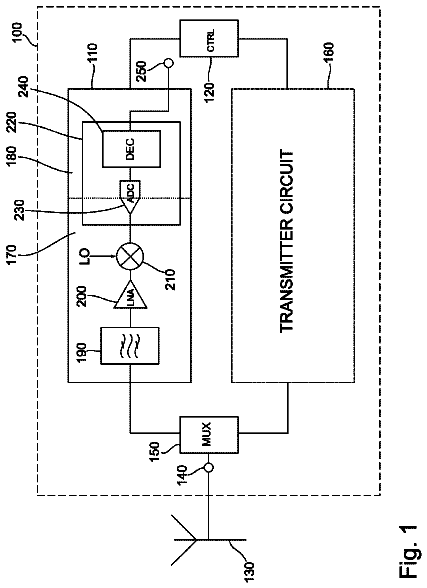
FIG. 1 is a block diagram of a communication system according to an embodiment of the present disclosure;
FIG. 2 is a flow diagram of a communication method according to an embodiment of the present disclosure;
FIG. 3 is a specific flow diagram of a communication method according to an embodiment of the present disclosure;
FIG. 4 is a specific flow diagram of determining circuit switched fallback according to an embodiment of the present disclosure; and
FIG. 5 is a flow diagram of a communication method according to an embodiment of the present disclosure.
Detailed description of the embodiments
The present disclosure is described in detail below in conjunction with drawings and the embodiments, so that the objectives, features and advantages of the present disclosure described above can be understood more clearly. It should be illustrated that the embodiments of the present disclosure and the features of the embodiments can be combined with each other without conflicting with each other.
Specific details are described below to fully understand the present disclosure, however, the present disclosure can also implemented in other way different from the way described here. Therefore, the protection scope of the present disclosure is not limited to the embodiments disclosed below.
FIG. 1 is a block diagram of a communication system according to an embodiment of the present disclosure.
As shown in FIG. 1 , the communication system 100 according to the embodiment of the present disclosure is applied to a terminal and the communication system 100 includes: a first communication module; a second communication module; a first determination unit 102 configured to determine whether the terminal currently supports circuit switched fallback based on a real-time state of the terminal; and a processing unit 104 configured to establish a connection between the first communication module and a first network in a case that the first determination unit 102 determines that the terminal currently supports the circuit switched fallback, or establish a connection between the second communication module and a second network in a case that the first determination unit 102 determines that the terminal does not currently support the circuit switched fallback.
In the technical solution, the first communication module supports only a data service, and the second communication module supports at least a voice service. The connection between the second communication module and the second network is established in a case that the terminal does not support the circuit switched fallback, or the connection between the first communication module and the first network is established in a case that the terminal supports the circuit switched fallback. In this way, network of the terminal resides in the second network in which the voice service can be performed in a case that the terminal does not support the circuit switched fallback, to guarantee the priority of the voice service, thereby preventing a user from missing an incoming call.
Specifically, the first network may be the 4G network, and the second network may be the 2G/3G network. A terminal selects to reside in the 4G network preferably in general. In a case that the network of the terminal resides in the 4G network and the terminal does not support the circuit switched fallback, after the terminal receives a voice service, the terminal can not process the received voice service, and a busy line is prompted, which results in the user missing an incoming call. In the present disclosure, the network of the terminal resides in a network such as the 2G/3G network which supports the voice service in a case that it is detected that the terminal does not support the circuit switched fallback, thereby preventing a user from missing an incoming call and improving usage experience of the user.
In the technical solution described above, preferably, the communication system further includes: a second determination unit 106 configured to detect current network setting of the terminal, and determine whether the current network setting is to preferably establish the connection between the first communication module and the first network; and a control unit 108 configured to control the first determination unit 102 to determine whether the terminal currently supports the circuit switched fallback based on the real-time state of the terminal in a case that the second determination unit 106 determines that the current network setting is to preferably establish the connection between the first communication module and the first network.
In the technical solution, in a case that the current network setting is not to preferably select the first network (for example, the 4G network), and for example is to preferably select the second network (for example, the 2G/3G network), the terminal can continue residing in the second network, and it is not required to determine whether the terminal supports the circuit switched fallback. In a case that the terminal preferably selects the first network, it is determined whether the terminal supports the circuit switched fallback. In this way, different operations are performed depending on different situations of the terminal, to avoid a waste of resources.
In the technical solution described above, preferably, the real-time state includes a network registration state of the terminal and a real-time operation state of the terminal.
In the technical solution, it is determined whether the terminal supports the circuit switched fallback based on the network registration state of the terminal and the operation state of the terminal, for example, whether a network into which the terminal already registers is the first network and/or the second network, and whether the terminal can currently process the voice service and/or the data service. It can be understood by those skilled in the art that a way of determining whether the terminal supports the circuit switched fallback includes but not limited to the way based on the network registration state of the terminal and the way based on the real-time operation state of the terminal described above.
In the technical solution described above, preferably, the first determination unit 102 includes: a result acquisition sub-unit 1022 configured to acquire a registration result in a case that the first communication module and the second communication module start registering into the first network and the second network, respectively; and a first determination sub-unit 1024 configured to determine that the terminal does not currently support the circuit switched fallback in a case that the registration result indicates that the first communication module succeeds in registering into the first network and the second communication module fails to register into the second network, or determine that the terminal currently supports the circuit switched fallback in a case that the registration result indicates that the first communication module succeeds in registering into the first network and the second communication module succeeds in registering into the second network.
In the technical solution, it is determined whether the terminal supports the circuit switched fallback by determining a united registration result of the terminal. The terminal initiates united registration when the terminal starts up, that is, the terminal starts registering into the first network and the second network simultaneously, for example, the terminal starts registering into the 4G network and the 2G/3G network simultaneously. In a case that the registration result indicates that the terminal succeeds in registering into both the 4G network and the 2G/3G network, it is determined that the terminal supports the circuit switched fallback. In a case that the registration result indicates that the terminal succeeds in registering into only the 4G network, that is, information of EPS only is returned, it is determined that the terminal does not support the circuit switched fallback.
In the technical solution described above, preferably, the first determination unit 102 includes an information determination sub-unit 1026 configured to determine whether a tracking area update message received by the terminal includes information in a specified type; and a second determination sub-unit 1028 configured to determine that the terminal currently supports the circuit switched fallback in a case that it is determined that the tracking area update message received by the terminal does not include the information in the specified type, or determine that the terminal does not currently support the circuit switched fallback in a case that it is determined that the tracking area update message received by the terminal includes the information in the specified type.
In the technical solution, in a case that the terminal does not initiate the united registration when the terminal starts up and the terminal is already connected to the first network, for example, the 4G network, it is determined whether the tracking area update message returned from the network includes the information in the specified type. Specifically, the information in the specified type includes an Additional update result option. It is determined that the terminal supports the circuit switched fallback in a case that the tracking area update message does not include the Additional update result option or content of the Additional update result option is not 0001. And it is determined that the terminal does not support the circuit switched fallback in a case that the tracking area update message includes the Additional update result option or the content of the Additional update result option is 0001.
In the technical solution described above, preferably, the communication system further includes: a third determination unit 110 configured to determine whether the first communication module and the first network are currently in a connection state in a case that the first determination unit 102 determines that the terminal does not currently support the circuit switched fallback; and a fourth determination unit 112 configured to determine whether the first communication module and the first network currently perform a data service in a case that the third determination unit 110 determines that the first communication module and the first network are currently in the connection state. The processing unit 104 is further configured to prompt a user of the terminal to determine whether to disconnect the connection between the first communication module and the first network and establish the connection between the second communication module and the second network in a case that the fourth determination unit 112 determines that the first communication module and the first network currently perform the data service, or disconnect the connection between the first communication module and the first network and establish the connection between the second communication module and the second network in a case that the fourth determination unit determines that the first communication module and the first network do not currently perform the data service.
In the technical solution, in a case that it is determined that the terminal does not support the circuit switched fallback, it is determined whether the terminal currently processes the data service. In a case that the terminal currently processes the data service, the usage experience of the user is affected in a case that the data service is interrupted and the network of the terminal resides in the second network. Therefore, the user is prompted to select whether to interrupt the data service and whether the network of the terminal resides in the second network in which the voice service can be processed in a case that it is determined that the terminal currently processes the data service, thereby not only ensuring that the data service is not affected, but also ensuring normal running of the voice service, and further improving the usage experience of the user.
In the technical solution described above, preferably, the communication system further includes a function control unit 114 configured to start and/or stop determining whether the terminal currently supports the circuit switched fallback based on the real-time state of the terminal based on a received function-on command and/or a received function-off command.
The description continues in the full USPTO document.
 Lapsed, fee not paid9 drawings