 Lapsed, fee not paid8 drawings
Industrial Equipment · US 9,968,890 B2
Method for producing filter molded article
A filter molded article using a graphene with water passage holes having a desired size is produced in a simple step.
US 9,968,909 B2 · Assignee: MITSUI MINING & SMELTING CO., LTD. · Inventors: Elangovan; Shanmugam Palani et al.
Sheet 1 of 7 from the published document. All sheets in the USPTO PDF
Provided are: a M.sup.n+-exchanged beta zeolite which is useful for the catalytic removal of nitrogen monoxide contained in a gas to be purified even when oxygen is contained in the gas at a high concentration or when the gas has a low temperature; and a method for producing the M.sup.n+-exchanged beta zeolite. The M.sup.n+-exchanged beta zeolite according to the present invention has a SiO.sub.2/Al.sub.2O.sub.3 ratio of 7 to 18, and is ion-exchanged by a M.sup.n+ ion (wherein M.sup.n+ represents a n-valent metal cation; n represents a numeral value of 1 to 3; and M represents an element selected from the group consisting of Ni, Co, Cu, Mn, Zn, Sn, Ag, Li, K, Cs, Au, Ca, Mg, Pt, Pd, Rh and Ir). The amount of the M.sup.n+ ion carried on the M.sup.n+-exchanged beta zeolite is preferably from 0.01 to 2.5 mmol/g relative to the amount of the M.sup.n+-exchanged beta zeolite.
It has been proposed that a beta zeolite which has been ion-exchanged with a metal ion is used as a catalyst for purifying an automobile exhaust gas. In Patent Document 1, for example, a denitration catalyst comprising of a carrier that comprises of a beta zeolite having an SiO.sub.2/Al.sub.2O.sub.3 molar ratio of 15 to 300, which has been ion-exchanged with 0.1 to 15% by mass of Fe.sup.3+ ions, and ferric oxide supported on the carrier is described. In Patent Document 2, it is described that a beta zeolite is made to carry Fe.sup.3+ by subjecting the beta zeolite to ion-exchange, wherein the beta zeolite has a framework structure of which the content of Si attributed to Q.sup.4 species observed by .sup.29Si MAS NMR spectrum ranges from 35 to 47% by mass, and wherein SiO.sub.2/Al.sub.2O.sub.3 molar ratio is equal to or more than 20 but less than 100, and that the beta zeolite is brought
1 of 7 drawing sheets so far from the published document, cropped to the drawing. Every sheet is in the USPTO PDF.
What the patent claimed, word for word. All of it is now free to use.
The present invention relates to an M.sup.n+-exchanged beta zeolite, a gas adsorbent including the same and a production method therefor. The present invention also relates to an adsorbent for adsorbing and removing nitrogen monoxide gas in a gas phase such as an exhaust gas from an internal combustion engine, and to a method for removing nitrogen monoxide gas from the gas phase.
It has been proposed that a beta zeolite which has been ion-exchanged with a metal ion is used as a catalyst for purifying an automobile exhaust gas. In Patent Document 1, for example, a denitration catalyst comprising of a carrier that comprises of a beta zeolite having an SiO.sub.2/Al.sub.2O.sub.3 molar ratio of 15 to 300, which has been ion-exchanged with 0.1 to 15% by mass of Fe.sup.3+ ions, and ferric oxide supported on the carrier is described.
In Patent Document 2, it is described that a beta zeolite is made to carry Fe.sup.3+ by subjecting the beta zeolite to ion-exchange, wherein the beta zeolite has a framework structure of which the content of Si attributed to Q.sup.4 species observed by .sup.29Si MAS NMR spectrum ranges from 35 to 47% by mass, and wherein SiO.sub.2/Al.sub.2O.sub.3 molar ratio is equal to or more than 20 but less than 100, and that the beta zeolite is brought into contact with an exhaust gas containing nitrogen oxides.
Patent Document 3 describes a method for reducing nitrogen oxides (NO.sub.x) to N.sub.2 in a flowing combustion exhaust gas, which comprises of oxidizing nitrogen monoxide to nitrogen dioxide on a transition metal/zeolite catalyst at catalyst bed temperatures below 50° C. and reducing NO.sub.x with the catalyst using a hydrocarbon (HC) reductant at catalyst bed temperatures below 150° C. Patent Literature 3 describes that examples of the transition metal include, cobalt, manganese, cerium, copper, iron, chromium and a mixture of two or more kinds of them, and the examples of the zeolite catalyst include a beta zeolite catalyst.
Patent Document 4 describes the reduction of nitrogen oxides by using a metal-doped zeolite which has been doped with a metal such as Fe, Co, Ni, Ag, Cu, V, Rh, Pd, Pt and Ir. According to this Document, it is described that an SiO.sub.2/Al.sub.2O.sub.3 ratio ranges from 20 to 40, and a commercially available beta zeolite is used as the zeolite in Examples.
Patent Document 1: PCT International Publication No.
WO2006/011575
Patent Document 2: Japanese Unexamined Patent Application, Publication No. 2007-076990
Patent Document 3: Japanese Unexamined Patent Application (Translation of PCT Application), Publication No. 2010-502418
Patent Document 4: Japanese Unexamined Patent Application (Translation of PCT Application), Publication No. 2010-527877 DISCLOSURE OF THE INVENTION Problems to be Solved by the Invention
As described above, though methods for the catalytic removal of nitrogen monoxide by making a zeolite doped with a metal ion have been conventionally known, such methods have been insufficient for removing nitrogen monoxide more efficiently. As a reason for this, the fact that there has been a limitation on the amount of exchange with a metal ion because of the use of a silica-rich zeolite with a high SiO.sub.2/Al.sub.2O.sub.3 ratio can be pointed out. Means for Solving the Problems
As a result of keen examination, the present inventors have found that the above-described problems can be solved by conducting ion-exchange of a beta zeolite having specific physical properties with an n-valent metal such that an M.sup.n+-exchanged beta zeolite having specific physical properties is obtained.
That is, the present invention provides an M.sup.n+-exchanged beta zeolite which has been ion-exchanged with an M.sup.n+ ion (wherein M.sup.n+ represents an n-valent metal cation; n represents a numerical value of 1 to 3; and M represents an element selected from the group consisting of Ni, Co, Cu, Mn, Zn, Sn, Ag, Li, K, Cs, Au, Ca, Mg, Pt, Pd, Rh and Ir), in which:
SiO.sub.2/Al.sub.2O.sub.3 ratio ranges from 7 to 18; a BET specific surface area ranges from 400 to 700 m.sup.2/g; a micropore specific surface area ranges from 290 to 500 m.sup.2/g; and a micropore volume ranges from 0.15 to 0.25 m.sup.3/g.
In addition, the present invention provides a gas adsorbent comprising the above-described M.sup.n+-exchanged beta zeolite.
Further, the present invention provides a method for producing an M.sup.n+-exchanged beta zeolite, which comprises the steps of dispersing a beta zeolite, in which an SiO.sub.2/Al.sub.2O.sub.3 ratio ranges from 7 to 18, a BET specific surface area that is measured in the form of a sodium-type beta zeolite ranges from 400 to 700 m.sup.2/g, a micropore specific surface area that is measured in the form of a sodium-type beta zeolite ranges from 250 to 500 m.sup.2/g and a micropore volume that is measured in the form of a sodium-type beta zeolite ranges from 0.15 to 0.25 cm.sup.3/g, in an aqueous solution of a water-soluble compound of an n-valent metal and then mixing the dispersion under stirring to cause the beta zeolite ion-exchanged with an M.sup.n+ ion (wherein M.sup.n+ represents an n-valent metal cation; n represents a numerical value of 1 to 3; and M represents an element selected from the group consisting of Ni, Co, Cu, Mn, Zn, Sn, Ag, Li, K, Cs, Au, Ca, Mg, Pt, Pd, Rh and Ir).
Furthermore, the present invention provides a method for removing nitrogen monoxide, which comprises of: bringing an M.sup.n+-exchanged beta zeolite into contact with nitrogen monoxide or a nitrogen monoxide-containing gas to cause nitrogen monoxide to be adsorbed on the M.sup.n+-exchanged beta zeolite, wherein, the M.sup.n+-exchanged beta zeolite has been ion-exchanged with an M.sup.n+ ion (wherein M.sup.n+ represents an n-valent metal cation; n represents a numerical value of 1 to 3; and M represents an element selected from the group consisting of Ni, Co, Cu, Mn, Zn, Sn, Ag, Li, K, Cs, Au, Ca, Mg, Pt, Pd, Rh and Ir),
and wherein, SiO.sub.2/Al.sub.2O.sub.3 ratio ranges from 7 to 18, a BET specific surface area ranges from 400 to 700 m.sup.2/g, a micropore specific surface area ranges from 290 to 500 m.sup.2/g, and a micropore volume ranges from 0.15 to 0.25 m.sup.2/g, in the M.sup.n+-exchanged beta zeolite. Effects of the Invention
According to the present invention, an M.sup.n+-exchanged beta zeolite which is useful for the catalytic removal of nitrogen monoxide and a production method therefor are provided. In particular, according to the present invention, when conducting the catalytic removal of nitrogen monoxide, nitrogen monoxide contained in a gas can be adsorbed and removed more effectively than conventionally known methods.
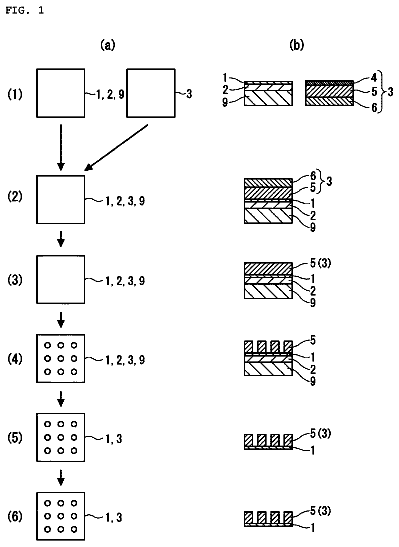
FIG. 1 is a chart of a process for producing a beta zeolite, before M.sup.n+ exchange that is used in the present invention.
FIG. 2 is an X-ray diffraction diagram of a beta zeolite before M.sup.n+ exchange that was obtained in Example 1.
FIG. 3 is an X-ray diffraction diagram of a Ni.sup.2+-exchanged beta zeolite that was obtained in Example 1.
FIG. 4 is a spectrum of a Ni.sup.2+ beta zeolite that was obtained in Example 1 as a function of Kubelka-Munk.
FIG. 5 shows hydrogen uptake of a Ni.sup.2+ beta zeolite that was obtained in Example 1.
FIG. 6 is an X-ray diffraction diagram of a Co.sup.2+-exchanged beta zeolite that was obtained in Example 2.
FIG. 7 is a spectrum of a Co.sup.2+ beta zeolite that was obtained in Example 2 as a function of Kubelka-Munk.
FIG. 8 is an X-ray diffraction diagram of a Ni.sup.2+ beta zeolite that was obtained in Comparative Example 1.
FIG. 9 is an X-ray diffraction diagram of a Co.sup.2+ beta zeolite that was obtained in Comparative Example 2.
FIG. 10 is a spectrum of a Co.sup.2+ beta zeolite that was obtained in Comparative Example 2 as a function of Kubelka-Munk.
FIG. 11 is a spectrum of a Ni.sup.2+ beta zeolite that was obtained in Comparative Example 3 as a function of Kubelka-Munk.
FIG. 12 shows hydrogen uptake of a Ni.sup.2+ beta zeolite that was obtained in Comparative Example 3.
Hereinafter, the present invention will be described based on preferable embodiments. The present invention relates to an M.sup.n+-exchanged beta zeolite obtained by subjecting a beta zeolite to ion-exchange with an M.sup.n+ ion. The present invention also relates to a gas adsorbent comprising of the M.sup.n+-exchanged beta zeolite. The M.sup.n+ ion is carried on the beta zeolite by being subjected to ion-exchange with a cation present in an [AlO.sub.2].sup.− site in the beta zeolite. Meanwhile, an M.sup.n+ ion represents an n-valent metal cation and n represents a numerical value of 1 to 3. In addition, M represents an element selected from the group consisting of Ni, Co, Cu, Mn, Zn, Sn, Ag, Li, K, Cs, Au, Ca, Mg, Pt, Pd, Rh and Ir.
The amount of the M.sup.+ contained in the M.sup.n+-exchanged beta zeolite, that is, the amount of the M.sup.n+ carried on the M.sup.n+-exchanged beta zeolite preferably ranges from 0.01 to 2.5 mmol/g, more preferably ranges from 0.05 to 2.3 mmol/g, and even more preferably ranges from 0.1 to 2.0 mmol/g, relative to the amount of the M.sup.n+-exchanged beta zeolite. When the amount of M.sup.n+ carried on the M.sup.n+-exchanged beta zeolite is set within these ranges, the adsorption efficiency of nitrogen monoxide can be effectively improved.
The amount of M.sup.n+ exchanged, that is, contained in the M.sup.n+-exchanged beta zeolite is measured by the following method. First, the M.sup.n+-exchanged beta zeolite to be measured is weighed. The M.sup.n+-exchanged beta zeolite is dissolved in hydrogen fluoride (HF), and the amount of an n-valent metal in the solution is determined using an inductively coupled plasma emission spectrophotometer. The determined mass of the n-valent metal is divided by the mass of the M.sup.n+-exchanged beta zeolite, and then further divided by the atomic weight of the n-valent metal, and then multiplied by 1,000 to calculate the amount of M.sup.n+ carried on (mmol/g), that is, contained in the M.sup.n+-exchanged beta zeolite.
For the exchange of an M.sup.n+ ion on a beta zeolite, for example, the following method can be employed. A beta zeolite is dispersed in an aqueous solution of a water-soluble compound of an n-valent metal, followed by mixing under stirring. It is preferable that the beta zeolite is mixed in a proportion of 0.5 to 7 parts by mass based on 100 parts by mass of the above-described aqueous solution. Though the amount of the water-soluble compound of the n-valent metal added may be appropriately set according to the extent of ion-exchange, the amount is preferably from 0.01 to 1.0 mol/L, and is more preferably from 0.1 to 0.5 mol/L, as an aqueous solution of a water-soluble compound of an n-valent metal. Examples of the above-described water-soluble compound include, nitrate, sulfate, phosphate, acetate, chloride, oxide and the like of each of the above-described elements represented by M.
The mixing under stirring may be performed at room temperature or under heating. When the mixing under stirring is performed under heating, it is preferable to set the solution temperature to 10 to 80° C. and is more preferable to set the solution temperature to 10 to 50° C. In addition, the mixing under stirring may be performed under an air atmosphere or under an inert gas atmosphere such as a nitrogen atmosphere.
During the mixing under stirring, a compound which prevents an n-valent metal from being oxidized may be added in water. As such a compound, ascorbic acid, which is a compound that does not hinder the ion-exchange with an M.sup.n+ ion and can prevent the M.sup.n+ ion from being oxidized, is preferable. The amount of ascorbic acid added is preferably 0.1 to 3 times, particularly preferably 0.2 to 2 times the amount by mole of the n-valent metal added, in view of effectively preventing oxidization of the n-valent metal.
The time for mixing under stirring may be set such that the M.sup.n+ ion is stably carried, and it is preferable, for example, that the time is from 2 to 48 hours, and is more preferable that the time is from 5 to 30 hours.
After mixing under stirring is performed for a predetermined time, solid contents are filtered by suction filtration, followed by washing with water and drying, whereby a target M.sup.n+-exchanged beta zeolite is obtained. The X-ray diffraction diagram of the M.sup.n+-exchanged beta zeolite is almost the same as the X-ray diffraction diagram of the beta zeolite before an M.sup.n+ ion-exchange. That is, the crystal structure of the zeolite does not change by the ion-exchange.
In the M.sup.n+-exchange beta zeolite used in the present invention, SiO.sub.2/Al.sub.2O.sub.3 ratio ranges from 7 to 18, and preferably ranges from 7 to 17. In addition, in the M.sup.n+-exchanged beta zeolite used in the present invention, a BET specific surface area ranges from 400 to 700 m.sup.2/g, preferably ranges from 400 to 600 m.sup.2/g, and more preferably ranges from 400 to 520 m.sup.2/g. Further, in the M.sup.n+-exchanged beta zeolite used in the present invention, a micropore specific surface area ranges from 290 to 500 m.sup.2/g, and preferably ranges from 300 to 480 m.sup.2/g. Furthermore, in the M.sup.n+-exchanged beta zeolite used in the present invention, a micropore volume ranges from 0.15 to 0.25 cm.sup.3/g, and preferably ranges from 0.16 to 0.24 cm.sup.3/g. The use of the M.sup.n+-exchanged beta zeolite having these values of physical properties improves adsorption characteristics of nitrogen monoxide. Though the reason is not clear, the present inventors think that the beta zeolite used in the present invention can carry a larger amount of the M.sup.n+ ion than conventionally used beta zeolites because more exchangeable cations present in the beta zeolite, as it has more number of [AlO.sub.2].sup.−site, are ion-exchanged with M.sup.n+ ions due to the use of an aluminum-rich beta zeolite having SiO.sub.2/Al.sub.2O.sub.3 ratio ranging from 7 to 18, and preferably ranging from 7 to 17. Meanwhile, as will be described below, these values of physical properties are not greatly different from the corresponding values of physical properties of the beta zeolite before having been ion-exchanged with the M.sup.n+ ion.
Features of the M.sup.n+-exchanged beta zeolite used in the present invention include that its spectrum of the intensity of the Kubelka-Munk function f (R∞) obtained by Ultraviolet-visible spectroscopy shows specific peaks, in addition to that it has the above-described specific values of the SiO.sub.2/Al.sub.2O.sub.3 ratio, the BET specific surface area, the micropore specific surface area and the micropore volume. Specifically, the M.sup.n+-exchanged beta zeolite used in the present invention is characterized in that the intensity of the Kubelka-Munk function f (R∞) obtained by Ultraviolet-visible spectroscopy shows the maximal intensity in the wavelength range from 300 to 600 nm which is larger than the maximal intensity in the wavelength range from 200 to 250 nm. On the contrary, conventional M.sup.n+-exchanged beta zeolites are inverse thereto, that is, the conventional M.sup.n+-exchanged beta zeolites show the maximal intensity in the wavelength range from 300 to 600 nm which is smaller than the maximal intensity in the wavelength range from 200 to 250 nm.
The intensity of the Kubelka-Munk function f (R∞) can be calculated by performing the Kubelka-Munk conversion to convert the diffuse reflectance (r∞) of an M.sup.n+-exchanged beta zeolite to the intensity of the Kubelka-Munk function f (R∞) according to the following equation. f ( R ∞)=(1− r ∞).sup.2/2 r∞
The present inventors think that the state of an element M in an M.sup.n+-exchanged beta zeolite can be speculated based on the spectrum of the intensity of the Kubelka-Munk function f (R∞). In addition, the present inventors speculate that the fact that the M.sup.n+-exchanged beta zeolite according to the present invention shows the maximal intensity in the wavelength range from 300 to 600 nm which is larger than the maximal intensity in the wavelength range from 200 to 250 nm reflects the state in which the amount of the element M present as an aggregate in the M.sup.n+-exchanged beta zeolite is equal to or larger than a certain amount. The aggregate is supposed to be present, for example, on the surface of the zeolite, as agglomerated elements M which are not exchanged with a cation present in an [AlO.sub.2].sup.−site in the zeolite structure. In general, it is thought to be better that the amount of the element M present in such a form of an aggregate is smaller, from the point of view of the adsorption efficiency of nitrogen monoxide by a beta zeolite. However, the M.sup.n+-exchanged beta zeolite according to the present invention is characterized by a high adsorption efficiency of nitrogen monoxide, in spite of having the above-described properties. Specifically, a spectrum of the intensity of the Kubelka-Munk function f (R∞) can be obtained by a method used in Examples described hereinafter.
Further, another feature of the M.sup.n+-exchanged beta zeolite used in the present invention is that it tends to react more easily with hydrogen than conventional M.sup.n+-exchanged beta zeolites, at a low temperature. Specifically, when raising the temperature of the M.sup.n+-exchanged beta zeolite used in the present invention at the rate of 10° C./min under the mixed gas atmosphere consisting of 5 vol % of hydrogen and 95 vol % of helium, the hydrogen consumption amount by the M.sup.n+-exchanged beta zeolite preferably has a peak at a temperature of 400° C. or less, and more preferably has a peak at a temperature of 390° C. or less.
The above-described method for evaluating the hydrogen consumption amount is also referred to as an H.sub.2-TPR (Temperature programmed Reduction) method. The reasons for the tendency of the M.sup.n+-exchanged beta zeolite used in the present invention to react easily with hydrogen at a low temperature are thought to be correlated with the fact that the M.sup.n+-exchanged beta zeolite has a lower SiO.sub.2/Al.sub.2O.sub.3 ratio than conventional M.sup.n+-exchanged beta zeolites such that the locations of [AlO.sub.2].sup.−sites in the beta zeolite are different from those of conventional beta zeolites, the fact that the amount of the M.sup.n+ ion carried on the M.sup.n+-exchanged beta zeolite is different from those of conventional beta zeolites, and the like. Specifically, the above-described hydrogen consumption amount can be measured by the measurement method used in Examples described hereinafter.
The M.sup.n+-exchanged beta zeolite used in the present invention is particularly excellent in the trap performance of nitrogen monoxide discharged at cold start of an internal-combustion engine. Since the temperature of a three-way catalyst is not sufficiently high at cold start of a gasoline engine or a diesel engine, it is difficult to effectively purify an exhaust gas by the three-way catalyst. However, in addition to the three-way catalyst, by using an adsorbent (catalyst) containing the M.sup.n+-substituted beta zeolite used in the present invention, it is possible to trap nitrogen monoxide contained in the exhaust gas that is at a relatively low temperature at the time of cold start, whereby the exhaust gas can be purified. When several minutes elapses from the cold start, and the temperature reaches the vicinity of the operating temperature of the three-way catalyst, nitrogen monoxide that has been trapped in the M.sup.n+-substituted beta zeolite used in the present invention is released, and the released nitrogen monoxide is purified by the three-way catalyst which has reached the operating temperature.
In addition, the M.sup.n+-exchanged beta zeolite used in the present invention can effectively adsorb and remove nitrogen monoxide even when oxygen is contained in a gas to be purified at a high concentration.
In the present invention, it is preferable to use a beta zeolite having specific values of physical properties for the beta zeolite that is a zeolite which is to be ion-exchanged with an M.sup.n+ ion. In detail, one of the characteristics of the beta zeolite used in the present invention (hereinafter, this zeolite will be referred to as “a beta zeolite before M.sup.n+-exchange” so as to be compared with the M.sup.n+-exchanged beta zeolite) is that though it has a low SiO.sub.2/Al.sub.2O.sub.3 ratio and is rich in aluminum, the beta zeolite before M.sup.n+-exchange has a large BET specific surface area, a large micropore specific surface area and a high micropore volume. Beta zeolites having a low SiO.sub.2/Al.sub.2O.sub.3 ratio are known so far, but a BET specific surface area, a micropore specific surface area or a micropore volume of these beta zeolites is not large. In order to increase the BET specific surface area, the micropore specific surface area and the micropore volume of conventionally known beta zeolites, the SiO.sub.2/Al.sub.2O.sub.3 ratio must be increased.
In the beta zeolite before M.sup.n+-exchange, the SiO.sub.2/Al.sub.2O.sub.3 ratio ranges from 7 to 18, and preferably ranges from 7 to 17, so the zeolite is rich in aluminum. In such an aluminum-rich beta zeolite before M.sup.n+-exchange, a BET specific surface area that is measured in the form of a sodium-type beta zeolite ranges from 400 to 700 m.sup.2/g, and preferably ranges from 450 to 700 m.sup.2/g, which are high values. In addition, in such an aluminum-rich beta zeolite before M.sup.n+-exchange, a micropore specific surface area that is measured in the form of a sodium-type beta zeolite ranges from 250 to 500 m.sup.2/g, and preferably ranges from 300 to 500 m.sup.2/g, which are high values. Further, in such an aluminum-rich beta zeolite before M.sup.n+-exchange, a micropore volume that is measured in the form of a sodium-type beta zeolite ranges from 0.15 to 0.25 cm.sup.3/g, and preferably ranges from 0.16 to 0.25 cm.sup.3/g, which are high values.
As described above, the SiO.sub.2/Al.sub.2O.sub.3 ratio, the values of the BET specific surface area, the micropore specific surface area and the micropore volume in the beta zeolite before M.sup.n+-exchange are not greatly different from the corresponding values in the M.sup.n+-exchanged beta zeolite.
The beta zeolite before M.sup.n+-exchange encompasses a sodium-type zeolite and further encompasses one that becomes an H.sup.+-type zeolite by ion-exchange of sodium ions with protons. When the beta zeolite is an H.sup.+-type, the above-described specific surface area and the like are measured after protons are exchanged with sodium ions. In order to convert the sodium-type beta zeolite to the H.sup.+-type, for example, the sodium-type beta zeolite is dispersed in an aqueous solution of an ammonium salt such as ammonium nitrate to substitute sodium ions in the zeolite with ammonium ions. The ammonium-type beta zeolite is calcined, and thereby the H.sup.+-type beta zeolite is obtained.
The above-described specific surface area and volume are measured using a BET specific surface area measuring device as described in the following Examples.
The aluminum-rich beta zeolite before M.sup.n+-exchange having the above-described physical properties is suitably produced by a production method described below. In the present invention, the reason why the beta zeolite before M.sup.n+-exchange could achieve the above-described physical properties is because it was presumed to have been able to suppress the occurrence of defects that may occur in the crystal structure of the beta zeolite before M.sup.n+-exchange obtained by using the production method, but the detail thereof is not clear.
Next, a preferable method for producing the beta zeolite before M.sup.n+-exchange will be described with reference to FIG. 1 . In FIG. 1 , a conventional synthesis method of a beta zeolite that uses an organic SDA is performed in the order of <1>, <2>, and <3>. In addition, a method performed in the order of <1>, <2>, <3>, <4>, <5>, <6>, and <9> is also known (for example, the specification of Chinese Patent Application No. 101249968A (hereinafter, also referred to as a “the conventional method”)). In the conventional method, the use of a seed crystal is essential, and for producing the seed crystal, tetraethylammonium ion which is an organic compound is essentially used as a structure directing agent (hereinafter, also referred to as “SDA”). In addition, in order to use the beta zeolite obtained by the conventional method as a seed crystal, it is required to remove tetraethylammonium ion by calcining the zeolite at a high temperature.
In contrast to this method, a beta zeolite before M.sup.n+-exchange can be produced in six different ways of method in the present invention. The first method is a method that is performed in the order of <1>, <2>, <3>, <4>, <5>, <6>, and <9> just like the conventional method. Here, this method differs from the conventional method, in terms of the SiO.sub.2/Al.sub.2O.sub.3 ratio of the seed crystal and the composition of the reaction mixture. Therefore, according to the present invention, it is possible to produce a beta zeolite before M.sup.n+-exchange having a wide range of SiO.sub.2/Al.sub.2O.sub.3 ratios. The second method is a method that is performed in the order of <1>, <2>, <3>, <4>, <5>, <7>, <6>, and <9>. In this method, after aging is performed, heating is conducted in a static state, whereby a seed crystal having a low SiO.sub.2/Al.sub.2O.sub.3 ratio can be effectively used.
The third method is a method that is performed in the order of <1>, <2>, <3>, <4>, <5>, <7>, <8>, and <9>. This method differs from the conventional method, in terms of the SiO.sub.2/Al.sub.2O.sub.3 ratio of the seed crystal and the composition of the reaction mixture.
The present production method can also be performed in the following three types of orders. <10>, <5>, <6>, <9> <10>, <5>, <7>, <6>, <9> <10>, <5>, <7>, <8>, <9>
The SiO.sub.2/Al.sub.2O.sub.3 ratio of the seed crystal and the composition of the reaction mixture in these cases are also different from those of the conventional method. In addition, in these three methods, the beta zeolite before M.sup.n+-exchange obtained by the method of the present invention is used as a seed crystal. That is, in these three production methods, a seed crystal can be repeatedly used, and therefore, an organic SDA is fundamentally not used. To summarize, these three production methods can be said to be methods for producing a beta zeolite which are performed by a green process resulting in the ultimately small burden on the environment.
The method for producing a beta zeolite before M.sup.n+-exchange used in the present invention will be described in more detail. The method performed in the order of <1>, <2>, and <3> in FIG. 1 is the same as the conventional method that uses an organic SDA. Regarding the seed crystal of <4> in FIG. 1 , in the conventional method, the range of the SiO.sub.2/Al.sub.2O.sub.3 ratio of the seed crystal is limited within a narrow range such as a range from 22 to 25. On the other hand, one of the characteristics of the present production method is the SiO.sub.2/Al.sub.2O.sub.3 ratio of the seed crystal shown in <4> in FIG. 1 . In the present production method, it is possible to use a seed crystal having a SiO.sub.2/Al.sub.2O.sub.3 ratio within a range from 8 to 30. It is extremely difficult to synthesize a beta zeolite in which SiO.sub.2/Al.sub.2O.sub.3 ratio of a seed crystal is less than 8, so such a seed crystal is not used in general. Further, when the SiO.sub.2/Al.sub.2O.sub.3 ratio of a seed crystal exceeds 30, the product tends to become ZSM-5 easily without depending on the composition of the reaction mixture. Furthermore, in the present production method, the amount of the seed crystal added is within a range from 0.1 to 20% by mass, based on the amount of the silica component contained in the reaction mixture. It is preferable that the amount of the seed crystal added is small, but the amount of the seed crystal added is determined considering the reaction rate, the effect of suppressing impurities, and the like. The amount of the seed crystal added is preferably 1 to 20% by mass, and is more preferably 1 to 10% by mass.
The average particle size of the seed crystal of the beta zeolite used in the present production method is 150 nm or larger, preferably ranges from 150 nm to 1,000 nm, and even more preferably ranges from 200 nm to 600 nm. The size of the crystal of a beta zeolite before M.sup.n+-exchange obtained by synthesis is not uniform in general, and has a certain degree of particle size distribution. It is not difficult to determine a crystal particle size having the maximum frequency in the particle size distribution. The average particle size refers to a particle diameter of a crystal having the maximum frequency when being observed by a scanning electron microscope. The average particle size of the beta zeolite obtained by using an organic SDA is generally small and is within a range from 100 nm to 1,000 nm in general. However, there are also particles of which particle sizes are unclear and those of which particle sizes are larger than 1,000 nm, since small particles are aggregated together. In addition, in order to synthesize a crystal having a particle size equal to or smaller than 100 nm, a special device might be required, and it might cost a lot. Accordingly, in the present production method, a beta zeolite having an average particle size of 150 nm or larger is used as a seed crystal. The average particle size of the beta zeolite before M.sup.n+-exchange obtained by the present production method is also within this range, and therefore, the beta zeolite can be suitably used as a seed crystal.
The reaction mixture to which a seed crystal is added is obtained, for example, by mixing a silica source, an alumina source, an alkali source and water, such that the mixture has the composition represented by the following molar ratio. When the composition of the reaction mixture is out of this range, an intended beta zeolite before M.sup.n+ exchange cannot be easily obtained. SiO.sub.2/Al.sub.2O.sub.3=6 to 40 Na.sub.2O/SiO.sub.2=0.05 to 0.25 Li.sub.2O/SiO.sub.2=0.005 to 0.25 H.sub.2O/SiO.sub.2=5 to 50
A more preferable range of the composition of the reaction mixture is as follows. SiO.sub.2/Al.sub.2O.sub.3=10 to 40 Na.sub.2O/SiO.sub.2=0.1 to 0.25 Li.sub.2O/SiO.sub.2=0.01 to 0.15 H.sub.2O/SiO.sub.2=10 to 25
Examples of the silica source used for obtaining the reaction mixture having the above-described molar ratio include silica itself and a silicon-containing compound which can generate a silicate ion in water. Specific examples thereof include wet-process silica, dry-process silica, colloidal silica, sodium silicate, an aluminosilicate gel, and the like. One kind of these silica sources can be used alone, or two or more kinds thereof can be used in combination. It is preferable to use silica (silicon dioxide) among these silica sources, since it is possible to obtain a zeolite without producing unwanted by-products.
As the alumina source, for example, a water-soluble aluminum-containing compound can be used. Specific examples thereof include sodium aluminate, aluminum nitrate, aluminum sulfate, and the like. In addition, aluminum hydroxide is also one of the preferable alumina sources. One kind of these alumina sources can be used alone, or two or more kinds thereof can be used in combination. It is preferable to use sodium aluminate or aluminum hydroxide among these alumina sources, since it is possible to obtain a zeolite without producing unwanted by-products (for example, sulfate or nitrate and the like).
As the alkali source, in the case of sodium, for example, sodium hydroxide can be used. As the alkali source, in the case of lithium, a lithium halide such as lithium chloride and lithium bromide as well as lithium salts such as lithium acetate can be used, or lithium hydroxide can be used. Meanwhile, when sodium silicate is used as the silica source or when sodium aluminate is used as the alumina source, sodium as an alkali metal component contained therein is considered at the same time as NaOH as well and it is also an alkaline component. Accordingly, the amount of the above-described Na.sub.2O is calculated as the sum of the amounts of all alkaline components in the reaction mixture.
When a reaction mixture having the following composition is used, it is possible to obtain an intended beta zeolite before M.sup.n+-exchange even though the reaction mixture does not contain a lithium ion. SiO.sub.2/Al.sub.2O.sub.3=40 to 200 Na.sub.2O/SiO.sub.2=0.22 to 0.4 H.sub.2O/SiO.sub.2=10 to 50
An even more preferable range of the composition of the reaction mixture is as follows. SiO.sub.2/Al.sub.2O.sub.3=44 to 200 Na.sub.2O/SiO.sub.2=0.24 to 0.35 H.sub.2O/SiO.sub.2=15 to 25
It is also preferable to employ the following range for the composition of the reaction mixture. SiO.sub.2/Al.sub.2O.sub.3=10 to 40 Na.sub.2O/SiO.sub.2=0.05 to 0.25 H.sub.2O/SiO.sub.2=5 to 50
An even more preferable range of the composition of the reaction mixture is as follows. SiO.sub.2/Al.sub.2O.sub.3=12 to 40 Na.sub.2O/SiO.sub.2=0.1 to 0.25 H.sub.2O/SiO.sub.2=10 to 25
With regard to the order of the addition of each raw material in a method for preparing the reaction mixture, a method by which a uniform reaction mixture is easily obtained may be employed. For example, an alumina source is added and dissolved in an aqueous solution of sodium hydroxide at room temperature, and then a silica source is added thereto, followed by mixing under stirring, whereby a uniform reaction mixture can be obtained. In particular, when lithium is used in a reaction mixture, a lithium source may be added and dissolved together with an alumina source into an aqueous solution of sodium hydroxide, and then a silica source may be added thereto, followed by mixing under stirring, whereby a uniform reaction mixture can be obtained. A seed crystal is added thereto while being mixed with the silica source or after the silica source is added. Thereafter, the solution is stirred and mixed such that the seed crystal is uniformly dispersed. The temperature for preparing the reaction mixture is not particularly limited, and in general, the preparation may be performed at room temperature (20 to 25° C.)
The reaction mixture containing the seed crystal is put into a sealed container and the reaction is performed by heating, whereby a beta zeolite is crystallized. No organic SDA is contained in the reaction mixture. As a method for performing crystallization, the reaction mixture is heated in a static state, that is, by a static method, without conducting aging, as shown in the conventional method (the order of <4>, <5>, <6>, and <9>).
On the other hand, when a seed crystal having a low SiO.sub.2/Al.sub.2O.sub.3 ratio is used, the crystallization tends to occur easily when the reaction mixture is heated without being stirred, after conducting aging (the order of <4>, <5>, <7>, <6>, and <9>). Aging refers to an operation of holding the reaction mixture at a temperature lower than the reaction temperature for a certain period of time. During aging, in general, the reaction mixture is allowed to be in a static state without being stirred. It is known that by conducting aging, effects of preventing production of impurities as by-products, make it possible to perform heating under stirring without producing impurities as by-products, by increasing the reaction rate, and the like are exerted, but the mechanisms of action thereof are not necessarily clear. The temperature and time of aging are set such that the above-described effects are exerted to the maximum extent. In the present production method, aging is conducted preferably at 20 to 80° C. and more preferably at 40 to 80° C., preferably in the range from 2 hours to 1 day.
When the reaction mixture is stirred so as to achieve the uniform temperature of the reaction mixture during heating, it is possible to prevent impurities from being produced as by-products by performing heating under stirring after conducting aging (the order of <4>, <5>, <7>, <8>, and <9>). Stirring is performed in order to achieve the uniform composition and the uniform temperature of the reaction mixture, and examples of the stirring operation include mixing performed by a stirring blade, or mixing by the rotation of the container, and the like. The stirring strength or the rotation speed may be adjusted according to the uniformity of the temperature, to the degree of the production of impurities as by-products, and the like. Stirring may be performed intermittently but not continuously. By combining aging and stirring in this way, industrial mass production can be realized.
The following three methods are methods for producing a beta zeolite before M.sup.n+-exchange which are performed by a green process that is a characteristic of the present production method. According to these three methods, the beta zeolite before M.sup.n+-exchange obtained by the present production method can be reproduced infinitely by using itself as a seed crystal, and a production process not using an organic SDA at all can be realized. That is, the methods include a method performed in the order of <10>, <5>, <6>, and <9>, a method performed in the order of <10>, <5>, <7>, <6>, and <9>, as well as a method performed in the order of <10>, <5>, <7>, <8>, and <9>. The characteristics of the respective steps are as described above. The SiO.sub.2/Al.sub.2O.sub.3 ratio of the beta zeolite before M.sup.n+-exchange obtained by the present production method preferably ranges from 8 to 30. When the beta zeolite before M.sup.n+-exchange obtained by the present production method is used as a seed crystal, the beta zeolite can be crystallized without conducting the aging operation in the case where the zeolite is synthesized in a static state, even though the SiO.sub.2/Al.sub.2O.sub.3 ratio thereof is low. When a beta zeolite synthesized using the organic SDA is used as a seed crystal, the zeolite is used after being calcined, but when the beta zeolite before M.sup.n+-exchange obtained by the present production method is used as a seed crystal, it does not need to be calcined. Presumably, this difference may make a difference in the effect of the zeolite as a seed crystal, but the detail thereof is unclear. However, when heating under stirring is performed, it is preferable to conduct aging.
In both the static method and stirring method, the heating temperature ranges from 100 to 200° C., preferably ranges from 120 to 180° C., and the heating is conducted at autogenous pressure. When the temperature is lower than 100° C., the crystallization rate becomes extremely low, and therefore, the efficiency in generating the beta zeolite tends to become poor. On the other hand, when the temperature exceeds 200° C., an autoclave having a high degree of pressure resistance is required, and therefore, not only the economic efficiency tends to become deficient, but also impurities tend to be generated at a high rate. The heating time is not critical in the present production method, and heating may be performed until a beta zeolite having a sufficiently high degree of crystallinity is generated. In general, a beta zeolite before M.sup.n+-exchange that has satisfactory crystallinity is obtained by conducting heating for about 5 to 150 hours.
The description continues in the full USPTO document.
About 6,341 words. The USPTO PDF has it with every drawing.
Fees are due 3.5, 7.5 and 11.5 years after grant. This patent expired on May 15, 2026, so the fee marked "not paid" was the one that went unpaid.
Mn+-EXCHANGED BETA ZEOLITE, GAS ADSORBENT COMPRISING SAME, METHOD FOR PRODUCING SAME, AND METHOD FOR REMOVING NITROGEN MONOXIDE
Filed Jun 2014 · published May 2016Mn+-exchanged beta zeolite, gas adsorbent comprising same, method for producing same, and method for removing nitrogen monoxide
Filed Jun 2014 · granted May 2018Earlier publications, parents and continuations. None of them can still be enforced, or this patent would not be listed.
Prior art cited by the examiner or applicant. Useful when you check your own idea for novelty.
Everything on this page comes from the documents linked above.
