Background
Many restaurants, retail establishments, and other commercial enterprises establish labor budgets as a percentage of revenue. For example, a restaurant may establish a labor budget for a particular day as 25% of its expected sales that day, so that if the restaurant is expected to earn $10,000 in sales, its labor budget for that day is $2,500. The way that this labor budget is “spent” may, for example, be influenced by characteristics of the restaurant. For example, a restaurant with a drive-through window may dedicate an employee to assisting drive-up customers throughout the day, while a restaurant without a drive-through window may not. Other roles for restaurant employees may include, but are not limited to, cashier roles, food preparation (“production line”) roles, “expediter” roles (e.g., responsible for completing final assembly of customer orders, checking that orders are accurately fulfilled, ensuring that food preparation staff prepared orders in accordance with customer specifications, etc.) and cleaner roles.
Often, commercial enterprises that establish a labor budget based on expected sales employ a static, predefined employee deployment model, meaning that employees are assigned particular roles throughout their shifts. One problem with static employee deployment models is that they may not appropriately satisfy changing demand for various functions performed by employees throughout a typical day. For example, many restaurants experience busy periods during common meal times, and so the need for employees in specific roles, and the number of employees needed overall, may be different during busy periods and slow periods. As such, some commercial enterprises employ peak period employee deployment models and slow period employee deployment models to manage staffing levels and workforce composition over the course of a day.
Employee deployment models may define when additional staff are called into work, such as if actual sales exceed expected sales by a threshold amount. For example, an employee deployment model for a restaurant may provide for, if it appears during the course of a given day that the restaurant will exceed its $10,000 expected sales by ten percent, calling certain employees into work to satisfy customer demand, and assigning those employees to certain roles if they are called. Some employee deployment models employ theoretical “floors” and/or “ceilings” which specify a minimum and maximum number of employees, respectively, to be working at any one time regardless of sales amount.
Some restaurants use employee certification procedures or the like to assess and identify the employees which are best suited to particular roles. As a result, if an employee deployment model for a restaurant provides for a total of ten employees working at a particular time, information on each employee's expertise and prior experience may be used to determine which employee is assigned which role. This information may be used to determine not only the roles in which employees are initially deployed, but also the roles to which employees are redeployed if the composition of the workforce or circumstances in the restaurant change.
Summary
Conventionally, some commercial enterprises use quantitative data (e.g., measures of employee throughput) to evaluate employee performance. Some commercial enterprises also employ quantitative data to determine whether and how particular employees should be redeployed to different roles throughout a work day. For example, a restaurant may base a decision whether to keep an employee assigned to a cashier station or redeploy her at least in part on quantitative data like the number of orders she handled in a given time period, the average amount of time per order, etc. Even if the employee is not the most experienced or skilled cashier working in the restaurant that day, favorable quantitative data may influence a decision to keep her in that role, even if other, more experienced cashiers are reassigned to other roles. Additionally, some commercial enterprises may direct certain tasks, or more tasks, to employees based on quantitative data. For example, if there are two employees assigned to food preparation stations in a restaurant, more orders may be directed to the employee which, according to quantitative data, completes more orders in a given time period.
The Assignee has appreciated that assigning roles and/or tasks to employees based on quantitative data may not ensure that the needs of the employee's internal and external customers are entirely satisfied. Using the example of the two employees assigned to food preparation roles given above to illustrate, the first of the two employees may be faster at preparing customer orders than the second of the two employees, but may be more prone to errors, so that the net effect of her completing customer orders faster is that more orders are prepared incorrectly. Using the example of the cashier given above to illustrate further, the employee assigned to that role may be capable of taking more orders than other employees, but may be less effective than those other employees at engendering warmth with customers, accurately conveying what the customer ordered to food preparation staff, etc., so that the effect of the employee taking more orders is that a greater number of customers are left feeling dissatisfied with their experience with the restaurant.
As such, the Assignee has recognized that the conventional practice of evaluating employee performance and basing employee deployment decisions on quantitative data may in certain circumstances have a negative effect on restaurant operations and/or customer satisfaction. Accordingly, some embodiments of the invention may involve evaluating employee performance and/or basing employee deployment decisions at least in part on qualitative assessments of an employee's performance in a particular role. Such qualitative assessments may take any of numerous forms, and may be performed in any of numerous ways. In some examples, qualitative assessments may relate to evaluating the employee's success in promoting customer satisfaction. For example, an employee's performance in a cashier role may be evaluated based at least in part on the warmth with which she greets customers, whether she engages customers in something other than talk about an order, suggests side dishes or drinks to the customer, informs the customer what to do next after submitting an order, and otherwise engenders a feeling on the customer's part of satisfaction with the transaction. In other examples, qualitative assessments may be used to verify the accuracy of quantitative data which is collected to evaluate employee performance. For example, if a restaurant captures quantitative data relating to customer order progress through different preparation stages, then qualitative assessments may help to determine whether employees' indications that certain preparation steps have been completed are accurate, or whether those indications are premature, and therefore skew performance indicators.
Some embodiments of the invention provide techniques for analyzing the deployment of employees in a restaurant. In this respect, the Assignee has recognized that a number of conventional tools may enable the location of individual employees in a restaurant to be tracked over time, and allow the area defining an employee's assigned station to be defined, so that various conventional tools could be used to determine when an employee has left his/her assigned station. The Assignee has also recognized that when employees are not working in the stations to which they have been assigned, the speed at which customer orders are fulfilled and the overall throughput of the restaurant may be significantly diminished. The Assignee has further recognized, however, that in some circumstances it may be appropriate for an employee to leave his/her assigned station, for a number of reasons. As such, some embodiments of the invention are directed to determining whether an employee who has left his/her assigned station acted appropriately in doing so, and if not, causing the employee to be redirected to his/her assigned station. In some embodiments, determining whether an employee acted appropriately in leaving his/her assigned station may involve analyzing video recordings of the restaurant at or around the time the employee left his/her station, operational data describing events occurring in the restaurant at or around the time the employee left his/her station, and/or other information. In this respect, the Assignee has recognized that such video recordings, operational data and/or other information may supply valuable context in determining whether or not an employee acted improperly in leaving his/her assigned station in the restaurant. If the employee acted improperly, he/she may be redirected to his/her assigned station using automated, semi-automated and/or manual techniques.
Accordingly, some embodiments of the invention are directed to a system for use in analyzing deployment of employees in a restaurant. The system comprises: at least one employee location data source; at least one recording device configured to capture video recordings of occurrences in the restaurant; at least one computer-readable storage medium having instructions recorded thereon; and at least one processor, programmed via the instructions to: determine, based at least in part on data generated by the at least one employee location data source, that an employee vacated a station in the restaurant to which the employee is assigned during a particular time period; determine, based at least in part on a video recording depicting the restaurant during the particular time period, whether the employee improperly vacated the station to which the employee is assigned; if it is determined that the employee improperly vacated the station, causing the employee to be redirected back to the station.
The foregoing summary is a non-limiting overview of only some aspects of the invention. Some embodiments of the invention are described below and defined in the attached claims.
Brief description of drawings
The accompanying drawings are not intended to be drawn to scale. In the drawings, each identical or nearly identical component illustrated in the various figures is represented by a like numeral. For purposes of clarity, not every component may be labeled in every drawing. In the drawings:
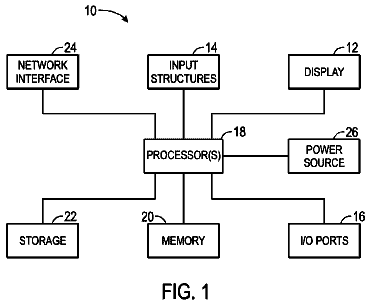
FIG. 1 is a block diagram depicting a representative system for analyzing restaurant operations, in accordance with some embodiments of the invention;
FIG. 2 is a flowchart of a representative process for assessing an employee's performance in a role in a restaurant, in accordance with some embodiments of the invention;
FIG. 3 is a flowchart of a representative process for determining which of a plurality of employees should perform a given role in a restaurant at a given time, in accordance with some embodiments of the invention; and
FIG. 4 depicts a representative process for analyzing the deployment of employees in a restaurant; and
FIG. 5 is a block diagram depicting a representative computer system with which some aspects of the invention may be implemented.
Detailed description
Some embodiments of the invention are directed to systems for analyzing the operations of a restaurant. In some embodiments, such systems may analyze audio and/or video recordings of occurrences in the restaurant to generate a qualitative assessment of an employee's performance in a role in the restaurant during a particular time period. Quantitative data, such as may be generated by one or more operational systems deployed in the restaurant, may provide an indication of the employee's performance in the role during the same time period. In some embodiments of the invention, an overall assessment of the employee's performance in the role during the time period may be based at least in part on the qualitative assessment and the quantitative data.
Some embodiments of the invention may be directed to managing the deployment of employees in a restaurant. For example, some embodiments may analyze audio and/or video recordings of occurrences in a restaurant to generate a qualitative assessment of the performance by each of multiple employees in a corresponding role during a time period. Quantitative data may provide an indication of the employees' performance in corresponding roles during the time period. The qualitative assessments and the quantitative data may be used, for example, to determine which of the multiple employees should be assigned to a particular role in the restaurant in a future time period.
Some embodiments are directed to analyzing the deployment of employees in a restaurant. In this respect, the Assignee has recognized that a number of conventional tools may allow the location of individual restaurant employees to be monitored over time, and that these tools allow the area defining an employee's assigned station to be defined. As such, various conventional tools could be used to determine when an employee has left his/her assigned station. The Assignee has also recognized that when employees are not working in the stations to which they have been assigned, the speed at which customer orders are fulfilled, and the overall throughput of the restaurant, may be significantly diminished. The Assignee has further recognized, however, that in some circumstances it may be appropriate for an employee to leave his/her assigned station, for a number of reasons. As such, some embodiments of the invention are directed to determining whether an employee who has left his/her assigned station acted appropriately in doing so, such as by analyzing video recordings of the restaurant at or around the time the employee left his/her station, operational data describing events occurring in the restaurant at or around the time the employee left his/her station, and/or other information. In this respect, the Assignee has recognized that such video recordings, operational data and/or other information may supply valuable context in determining whether or not an employee acted properly or improperly in leaving his/her assigned station in the restaurant. In some embodiments, if it is determined that the employee acted improperly in leaving his/her assigned station, then the employee may be redirected back to his/her assigned station, using automated, semi-automated and/or manual techniques.
It should be appreciated that, as used herein, the term “employee” means any person who performs work for another person or entity. As such, an employee, as the term is used herein, may or may not be someone who satisfies the definition of the term “employee” under federal, state and/or local law in that he/she is a person in the service of another under a contract of hire in which the employer has the power or right to control and direct the employee in the material details of how the work is to be performed. For example, an employee, as the term is used herein, may be someone whom federal, state and/or local law would term an independent contractor, an agent, and/or someone who performs work for another person or entity in any other capacity.
I. Overview Of Representative System Infrastructure
FIG. 1 depicts a representative system 100 comprising various components for analyzing the operations of a restaurant. Representative system 100 includes operational systems 105 a , 105 b, 105 c and 105 n, which capture various data relating to restaurant operations and the customer's experience. Operational systems 105 a - 105 n may include, for example, systems for monitoring and/or facilitating kitchen operations, for managing staff, for conducting point of sale transactions, and/or for facilitating any of numerous aspects of restaurant operations. Any suitable type of system, for monitoring any suitable aspect(s) of a restaurant's operations, may comprise an operational system 105 . Although only four operational systems 105 are shown in FIG. 1 , it should be understood that any suitable number of operational systems may be used in a system 100 which is implemented in accordance with aspects of the invention.
Operational data store (ODS) 108 receives and stores data produced by operational systems 105 a - 105 n. ODS 108 may store any suitable information. As an example, ODS 108 may store the date and time of individual occurrences relating to a transaction (e.g., measured by transaction start, time stored at tender, time sent to line, time worked at line, time sent to expediter, time delivered to customer, and/or the time of any other suitable occurrence relating to a transaction), item information associated with a transaction (e.g., including item codes for items included in each transaction, modifiers, additions to or subtractions from an item requested by a customer, and/or any other suitable item information), employee information associated with a transaction (e.g., the employee code(s) for the cashier or associate who received the customer's order, the code(s) for production, expediter, and/or backer employees who handled a transaction during preparation, and/or any other suitable employee information), and/or any other suitable information relating to occurrences in a restaurant. Although ODS 108 is depicted in FIG. 1 as comprising only a single repository, the data included in ODS 108 may be physically and/or logically distributed across any suitable number of data stores. Further, data may be stored in ODS 108 using any suitable tool(s) and/or technique(s).
Event engine 110 shown in FIG. 1 also receives data produced by operational systems 105 a - 105 n. In accordance with some embodiments of the invention, event engine 110 executes queries on data produced by operational systems 105 a - 105 n to identify and summarize business metrics. (In the description that follows, business metrics may also be referred to as “events,” although it is to be understood that an “event” may relate to more than one occurrence or transaction, or to no specific occurrence at all. The terms “event” and “metric” are used interchangeably herein.) Such metrics may be predefined, or defined dynamically based upon any one or more characteristics of data produced by operational systems 105 a - 105 n. In some embodiments, event engine 110 may execute predefined queries on data produced by operational systems 105 a - 105 n, so that queries need not be executed on ODS 108 to support later analysis. In this respect, it should be appreciated that ODS 108 may store large amounts of data, so that query execution may be time-consuming.
Event engine 110 may identify and/or summarize any suitable business metric(s) represented in the data produced by operational systems 105 a - 105 n. Some basic examples include “speed of service” quantitative measures for specific intervals relating to a transaction (e.g., the amount of time between an order being opened and tender occurring, the amount of time between a make line position receiving the order and the order being “bumped” to the next position, the amount of time between an expediter receiving the order and the order being “bumped” to the next position, the amount of time between the order being received and customer delivery occurring, the total service time, the amount of time between a drive through order being received and pickup occurring, the amount of time between an order being ready and delivery occurring to the customer's table, home, or business, and/or any other suitable intervals), quantitative measures relating to “bump” activity for various food preparation stations (e.g., total preparation times for salads, Panini, sandwiches, and/or any other suitable “bump” measures), and quantitative measures relating to labor shifts (e.g., current and trending labor burn rate, current and trending production velocity, current and trending transaction counts, manager on duty, number of employees currently in training, and/or any other suitable labor shift metrics). In representative system 100 , the results generated via the filtering and pre-analysis performed by event engine 110 are stored in event data 115 . As with ODS 108 , although event data 115 is depicted in FIG. 1 as comprising a single repository, the data stored thereby may be distributed, logically and/or physically, across any suitable number of data stores, and may be stored using any suitable tools and/or techniques.
In some embodiments of the invention, queries which are executed by event engine 110 may be defined using event interface 112 . In this respect, in some embodiments of the invention, event interface 112 may enable a user (e.g., an analyst, executive, restaurant manager, and/or any other suitable human resource) to define constructs representing metrics to be captured by event engine 110 . These constructs may be defined in any suitable way(s). Further, event interface 112 may be implemented using any suitable collection of hardware and/or software components. For example, event interface 112 may comprise a standalone application suitable for execution on a desktop computer (e.g., sitting in a restaurant manager's office), a web-based application running on a computer (e.g., server computer) accessible over a network (e.g., the Internet, a local area network, a wide area network, or some combination thereof), an “app” suitable for execution on a mobile device (e.g., a smartphone, tablet computer, and/or other mobile device), and/or any other suitable collection comprising hardware and/or software components. Embodiments of the invention are not limited to any particular manner of implementation.
In representative system 100 , event data 115 is accessed by alert engine 120 to identify “alert conditions” represented in event data 115 . An alert condition may, for example, be any condition which indicates an operational issue. In representative system 100 , alert engine 120 executes queries on event data 115 to identify alert conditions. In some embodiments of the invention, the queries executed by alert engine 120 may be defined using alert interface 122 . For example, alert interface 122 may enable a user (e.g., an analyst, executive, restaurant manager, and/or any other suitable human resource) to define constructs representing alert conditions to be captured by alert engine 125 . As with event interface 112 , alert interface 122 may be implemented using any suitable collection of hardware and/or software components, as embodiments of the invention are not limited in this respect.
Representative system 100 also includes video capture system 140 , which may include one or more video capture devices (e.g., video surveillance cameras) for capturing video footage relating to occurrences in the restaurant, and audio capture system 150 , which may include one or more video capture devices (e.g., microphones) for capturing audio relating to occurrences in the restaurant. For example, video capture system 140 may capture video recordings, and audio capture system 150 may capture audio recordings, of point of sale transactions, order preparation processes, dining areas, and/or any other suitable occurrences. Video capture system 140 stores video recordings in video repository 145 , and audio capture system 150 stores audio recordings in audio repository 155 . Video repository 145 and audio repository 155 may each comprise any suitable storage component(s), and employ any suitable storage technique(s), as the invention is not limited in this respect.
Representative system 100 also includes employee location data sources 160 configured to collect and provide data regarding the location of employees in the restaurant over time. Employee location data sources 160 may include, as examples, one or more RFID readers and tags (e.g., so-called “broad spectrum” RFID tags which emit unique frequencies and are designed to be read from a distance, tags which are designed to be read from shorter distances, a combination of the two types, and/or other types of tags), location-aware devices of location-based services configured for geo-fencing, workstations at which employees log in to perform assigned tasks, contact-based key and/or wand readers, Wi-Fi network access points, and/or any other suitable component(s). In some embodiments which are described in more detail below, one or more video capture devices (e.g., devices which form part of video capture system 140 ) may also collect and provide employee location data. In representative system 100 , location data repository 165 stores employee location data collected by employee location data source(s) 160 . Location data repository 165 may comprise any suitable storage component(s), and employ any suitable storage technique(s), as the invention is not limited in this respect.
In representative system 100 , the video and audio recordings captured by video capture system 140 and audio capture system 150 , and the employee location data captured by employee location data source(s) 160 , may relate to events reflected in event data 115 . In representative system 100 , inference engine 130 is configured to correlate video recordings stored in video repository 145 , audio recordings stored in audio repository 155 , employee location data stored in location data repository 165 , and/or event data 115 . Correlation of video and/or audio recordings, employee location data, and/or event data may be performed for any of numerous reasons, such as to enable qualitative assessments of employee performance in certain roles, and/or to analyze the deployment of employees in the restaurant, as described further below.
II. Evaluating Employee Performance
A representative process 200 for evaluating employee performance using qualitative assessments (e.g., enabled by correlating video and/or audio recordings with event data 115 ) and/or quantitative data (e.g., provided by analyzing event data 115 ) is shown in FIG. 2 . Representative process 200 may be performed to evaluate an individual employee's performance in a particular role in a restaurant during a particular time period. At the start of representative process 200 , quantitative data relating to the employee's performance in the role during the time period is accessed in the act 210 . Such quantitative data may comprise any suitable measure(s) relating to any suitable number and type(s) of occurrence(s) in the restaurant, and may directly provide an indication of the employee's performance in the role during the time period, or indirectly provide such an indication. As examples, the quantitative data accessed in act 210 may comprise “speed of service” measures (such as the amount of time between an order being opened and tender occurring, the amount of time between a make line position receiving the order and the order being “bumped” to the next position, the amount of time between an expediter receiving the order and the order being “bumped” to the next position, the amount of time between a verbal order being received and delivery or pickup occurring, the total service time, the amount of time between a drive-through order being received and delivery or pickup occurring, the amount of time between a kiosk order being received and delivery or pickup occurring, the amount of time between an order being ready and delivery occurring to the customer's table, home, or business, the amount of time a cash register is open, and/or any other suitable intervals), measures relating to queues (e.g., the length of a line at a register, kiosk, drive-through station, etc.), measures relating to “bump” activity for various food preparation stations (e.g., preparation times for salads, Panini, sandwiches, and/or any other suitable “bump” measures), measures relating to labor shifts (e.g., current and trending labor burn rate, current and trending production velocity, current and trending transaction counts, manager on duty, number of employees currently in training, employee certifications, employee shift preferences, pay rates, break periods, availability, and/or any other suitable labor shift metrics), and/or any other suitable quantitative measure(s). Quantitative data may relate to individual occurrences within the restaurant, or be produced via statistical analysis of information on multiple occurrences (e.g., quantitative data may comprise a median, mean, minimum, maximum, standard deviation, and/or other interpretation of measures relating to multiple individual occurrences). Any suitable quantitative data may be accessed and/or analyzed, in any suitable way(s). In the representative system 100 shown in FIG. 1 , inference engine 130 may access quantitative data stored in event data 115 , generated by event engine 110 based on data produced by operational systems 105 a - 105 n.
Representative process 200 ( FIG. 2 ) then proceeds to act 220 , wherein one or more audio and/or video recordings which relate to the employee's performance in the role during the time period are identified and accessed. In some embodiments, these audio and/or video recordings may be identified using techniques like those described in commonly assigned U.S. patent application Ser. No. 13/837,940, filed Mar. 15, 2013, entitled USE OF VIDEO TO
MANAGE PROCESS QUALITY, which is incorporated herein by reference in its entirety. Some aspects of these techniques are summarized below.
In some embodiments, at least some of the records stored in event data 115 include date and time stamps. A date and time stamp for a record may indicate, for example, when the record was first produced and/or when it was stored in a repository. In some embodiments, the video recordings stored in video repository 145 and the audio recordings stored in audio repository 155 also include date and time stamps. As a result, the date and time stamp for an event record or an alert record may be correlated with corresponding video and/or audio recordings having corresponding date and time stamps.
Of course, a date and time stamp for video and/or audio recordings need not exactly match a date and time stamp for a correlated event record. For example, it may be desirable to retrieve video and/or audio recordings captured just before and/or just after an event was recorded or an alert was noted. For example, if the date and time stamp for an event record indicates that the event was recorded at a particular time, then video and/or audio recordings having a date and time stamp indicating they were captured starting thirty seconds prior to that time, and/or ending thirty seconds after that time, may be retrieved. The date and time stamps for an event and/or alert record and for corresponding video and/or audio recordings may have any suitable relationship and/or correspondence, as embodiments of the invention are not limited in this respect.
Information other than date and time stamps may also, or alternatively, be used to retrieve video and/or audio recordings which correspond to an event record. For example, if the data included in an event record to be analyzed indicates that it originated from a particular point of sale terminal, then this information may be used to identify the video and/or audio recordings which are to be retrieved (e.g., video footage depicting the terminal, audio recordings produced by a microphone at the terminal, etc.). Similarly, if the data included in an event record indicates that it originated from a kitchen management system, then this information may be used to identify the video and/or audio recordings to be retrieved (e.g., video and/or audio recordings of the restaurant's food preparation area). Any suitable information may be used to retrieve video recordings from video repository 145 and/or audio recordings from audio repository 155 .
Representative process 200 then proceeds to act 230 , wherein the audio and/or video recording(s) identified and accessed in the act 220 are analyzed to generate a qualitative assessment of the employee's performance in the first role in the restaurant during the time period. A qualitative assessment may be performed in any of numerous ways, and the result of a qualitative assessment may take any of numerous forms. In some embodiments of the invention, a qualitative assessment may be one which involves evaluating the quality with which the employee performs a function defined by the role. As such, it may involve appraising the employee's performance of the function at least in part through observation, as opposed to by objectively measuring his/her performance solely via data which is expressed numerically (as might be done to, for example, determine how quickly the function was completed, the extent to which it was completed, etc.). In this respect, a qualitative assessment may involve an estimation of the employee's performance of the function which is subjective, at least to some extent, such as a consideration of the employee's performance in relation to one or more preconceived notions of how the function should be performed. As such, in some embodiments, a qualitative assessment may be performed, at least in part, by a human actor, who may compare the employee's performance of the function to a mental model of how the function is to be carried out.
Of course, although a qualitative assessment is not performed using only quantitative data, it should be appreciated that the result of a qualitative assessment may be expressed numerically. For example, the result of a qualitative assessment may be a score which represents a level of quality with which the employee performed the function, and/or other information which is expressed numerically. It should also be appreciated that performing a qualitative assessment may involve taking into consideration information which is or can be expressed numerically. For example, qualitatively assessing the performance of a food preparation worker in making a salad may involve taking into consideration the amount of dressing the worker placed on the salad.
It should further be appreciated that, although a human may be involved in qualitatively assessing an employee's performance in some embodiments, the invention is not limited to being implemented in this manner. Moreover, if a human is involved in a qualitative assessment, that involvement may be at any suitable level, for any suitable purpose(s), and any other suitable component(s) (e.g., one or more computing components, which may execute programmed instructions) may also be involved in performing the qualitative assessment.
As noted above, a qualitative assessment may relate to evaluating an employee's performance of any of numerous functions in any of numerous roles. Some representative qualitative assessments may relate generally to food preparation accuracy (e.g., evaluating whether employees used specified ingredients in food items, used portioning tools correctly, assembled food items with ingredients added in the correct sequence, etc.), engendering warmth with customers (e.g., evaluating the manner in which a cashier greeted a customer, smiled at the customer, asked whether the customer is a member of a loyalty program, engaged the customer in conversation about something other than the transaction at hand, offered the customer a drink with his/her order, said “thank you” to the customer, etc.), cleanliness (e.g., evaluating the extent to which staff keep areas in the restaurant clean, such as dining room tables and chairs, dining room floors, trash containers and bus bins, drink stations, patio areas, washrooms, etc.), and/or other considerations. Any of numerous types of assessments may be performed to evaluate the quality with which an employee performs a particular function, and so the foregoing list should not be construed as exhaustive.
In some embodiments of the invention, the quality with which an employee performs a function may be defined, at least in part, by the business objectives of the enterprise and how performing the function supports the fulfillment of those objectives. For example, if a business objective of a restaurant is to encourage repeat customers and referrals by training employees in “customer-facing” roles to engender a feeling of warmth and satisfaction on the customer's part in every customer interaction, then the quality with which a cashier performs the function of interacting with customers may be evaluated, at least in part, upon his ability to engender such warmth and satisfaction. To measure the quality with which the employee performs this function, video and/or audio recordings of the employee at the cashier station which have been correlated with customer interaction events may be analyzed to determine whether the employee greeted each customer properly, engaged him/her in conversation about something other than the transaction (such as asking about his/her day, mentioning something about the weather, etc.), offered the customer side dishes, offered a drink upgrade, and/or otherwise followed one or more guidelines (e.g., cues in a script provided by restaurant management) to make the customer feel good about the interaction. Video and/or audio recordings may also be analyzed to determine whether the employee assigned to a cashier station thanked the customer for his/her business, provided him/her a beverage cup and directed her to the beverage machines, informed the customer what to do while waiting for his/her order to be prepared, etc.
The analysis of video and/or audio recordings may be performed in any of numerous ways. For example, as noted above, in some embodiments, recordings may be analyzed, at least in part, by a human actor. Alternatively or additionally, audio recordings may be processed using speech recognition tools. Such analysis and/or processing may be performed to identify words or phrases used by an employee and/or customer during an interaction, determine the presence or absence of specific words or phrases, evaluate the customer's and/or employee's tone, volume, pitch and/or speech rate before, during and/or after the interaction, and/or assess any other suitable sound or characteristic(s) thereof relating to an employee's performance in a role. Video recordings may be processed, for example, using image analysis tools to evaluate the number, characteristics and/or identify of people or other objects in a location at a particular time, facial expressions or mannerisms used by an employee and/or customer before, during and/or after an interaction, actions taken by an employee and/or customer before, during and/or after an interaction, and/or assess any other suitable characteristic(s) of moving images and/or accompanying audio which relates to an employee's performance in a role. Any suitable tool(s) and/or technique(s) may be used for this purpose, whether now known or later developed.
The description continues in the full USPTO document.
 Lapsed, fee not paid8 drawings