 Lapsed, fee not paid41 drawings
Biotech & Lab · US 9,963,492 B2
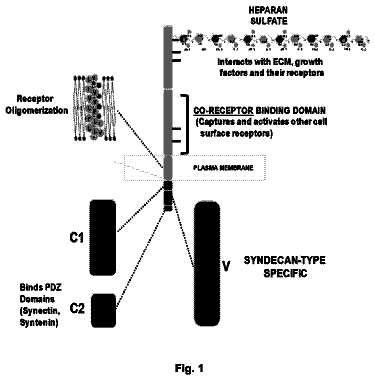
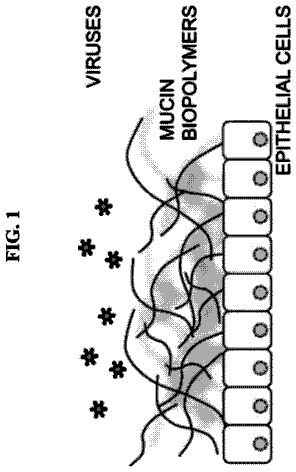
High molecular weight, post-translationally modified protein brushes
Disclosed are protein brushes that mimic mucin in physical and functional characteristics.
US 9,963,509 B2 · Assignee: Full Spectrum Genetics, Inc. · Inventors: DuBridge; Robert et al.
Sheet 1 of 5 from the published document. All sheets in the USPTO PDF
The invention is directed to novel antibody binding compounds specific for the human B7H3 and uses of such compounds for diagnostic and therapeutic purposes.
B7H3 is a member of the B7 family of immune cell modulating molecules. It is expressed on the surface of a wide variety of tumor cells and tumor vasculature including neuroblastoma, melanoma, renal cell cancer, prostate cancer, colorectal cancer, pancreatic cancer, gastric cancer, breast cancer, ovarian cancer and small cell lung cancer[Cancer Res 61:4048-4054 (2001)]. Its expression on normal cells is inhibited by the microRNA, mi R-29, [Cancer Res 69(15):6275-81 (2009)]. In humans the B7H3 protein is expressed in two forms, 21 g and 41 g. B7H3 expression has been correlated with poor prognosis in ovarian, RCC, NSCLC, pancreatic cancer, prostate cancer and colon cancer [Clin. Dev Immunol. 2010(683875): 1-7]. This finding and additional in vitro data have led to the hypothesis that B7H3 expression may inhibit cytotoxic lymphocyte activity [Structure 21(5):707-17 (2013)]. The mouse antibo
1 of 5 drawing sheets so far from the published document, cropped to the drawing. Every sheet is in the USPTO PDF.
What the patent claimed, word for word. All of it is now free to use.
This is an application filed under 35 USC 1.371(f) based on International Application serial number PCT/US2015/065645 filed 14 Dec. 2015, which claims priority from U.S. provisional applications Ser. No. 62/095,969 filed 14 Dec. 2014 and Ser. No. 62/105,135 filed 19 Jan. 2015. Each of the foregoing applications is incorporated herein by reference in its entirety.
B7H3 is a member of the B7 family of immune cell modulating molecules. It is expressed on the surface of a wide variety of tumor cells and tumor vasculature including neuroblastoma, melanoma, renal cell cancer, prostate cancer, colorectal cancer, pancreatic cancer, gastric cancer, breast cancer, ovarian cancer and small cell lung cancer[Cancer Res 61:4048-4054 (2001)]. Its expression on normal cells is inhibited by the microRNA, mi R-29, [Cancer Res 69(15):6275-81 (2009)]. In humans the B7H3 protein is expressed in two forms, 21 g and 41 g. B7H3 expression has been correlated with poor prognosis in ovarian, RCC, NSCLC, pancreatic cancer, prostate cancer and colon cancer [Clin. Dev Immunol. 2010(683875): 1-7]. This finding and additional in vitro data have led to the hypothesis that B7H3 expression may inhibit cytotoxic lymphocyte activity [Structure 21(5):707-17 (2013)].
The mouse antibody, 8H9, binds to both the 21 g and 41 g forms of the protein. 1.sup.131 radio-conjugates of this antibody have been shown to be effective in reducing the size of neuroblastomas when administered intrathecally in limited human trials [J Neurooncol 97(3):409-18 (2010]. Fusion of a scFv from this antibody to the cytotoxic protein PE38 resulted in a molecule that was effective in eliminating B7H3-express xenografts in mice [Cancer Res 64:1419-24 (2004)]. Other anti-B7H3 antibodies have been developed with an Fc-enhanced component and has shown good reduction of human tumor xenografts in mouse oncology models [Clin Cancer Res 18-(4):3834-45 (2013)]. Given these results and the expression of B7H3 on a wide variety of solid tumors in humans, it would be highly desirable to engineer additional forms of this molecule which are more suitable for use as a human therapeutic. In particular, additional anti-B7H3 antibody binding compounds with decreased dissociation rates from its antibody-antigen complex would lead to better therapeutic compounds.
The present invention is directed to novel anti-B7H3 antibody binding compounds and methods of using the same. Aspects and embodiments of the present invention are exemplified in a number of implementations and applications, some of which are summarized below and throughout the specification.
In one aspect, the invention is directed to novel antibody binding compounds specific for the human B7H3 target molecule, wherein such antibody binding compounds comprise complementary determining regions defined by the following amino acid sequences:
TABLE-US-00001 TABLE 1 CDR Sequence SEQ ID NO HC1 N-Y-D-I-N 1 HC2 W-I-F-P-G-D-G-S-T-Q-Y-N-X.sub.1-X.sub.2-F-K-G 2 HC3 Q-T-T-X.sub.3-T-W-F-A-Y 3 LC1 R-A-S-Q-X.sub.4-I-S-X.sub.5-X.sub.6-L-H 4 LC2 X.sub.7-A-X.sub.8-Q-X.sub.9-X.sub.10-X.sub.11 5 LC3 Q-N-G-H-S-F-P-L-T 6 wherein: X.sub.1 is E, G or P; X.sub.2 is K or T; X.sub.3 is G, S, M or N; X.sub.4 is S or I, X.sub.5 is E, P, V, H, K or D; X.sub.6 is Y or W; X.sub.7 is H, Y, N or E; X.sub.8 is S or N; X.sub.9 is S or L: X.sub.10 is I, W or L; X.sub.11 is S or R;
The standard IUPAC single-letter codes for amino acids are used. In some embodiments, such antibody binding compounds have an affinity for the B7H3 target molecule that is characterized by an equilibrium binding constant of 100 nM or less, as measured by conventional techniques
In some embodiments, where the framework residues f.sub.1, f.sub.2, f.sub.3 and f.sub.4 are those of SEQ ID NO: 7, or at least eighty percent identical thereto in the aggregate, compounds of the invention comprise the polypeptide of SEQ ID NO: 7 with one or more of the amino acid substitutions selected from the group consisting of: E62G, E62P, K63T, G102S, G102M and G102N. As used herein, reference to “percent identical in the aggregate” means a percent identical value is determined based on a comparison of all sequences simultaneously, as if they were a single contiguous sequence, in contrast to a comparison on a sequence-by-sequence basis. In other embodiments, where the framework residues f.sub.1, f.sub.2, f.sub.3 and f.sub.4 are those of SEQ ID NO: 7, or at least eighty percent identical thereto in the aggregate, compounds of the invention comprise the polypeptide of SEQ ID NO: 7 with at least two amino acid substitutions selected from the group consisting of: E62G, E62P, K63T, G102S, G102M and G102N. In some embodiments, where the framework residues g.sub.1, g.sub.2, g.sub.3 and g.sub.4 are those of SEQ ID NO: 8, or at least eighty percent identical thereto in the aggregate, compounds of the invention comprise the polypeptide of SEQ ID NO: 8 with one or more of the amino acid substitutions selected from the group consisting of: S28I, E31P, E31V, E31H, E31T, E31K, E31D, Y32W, H50Y, H50N, H50N, H50E, S52N, S54L, I55W, I55L, and S56R. In other embodiments, where the framework residues g.sub.1, g.sub.2, g.sub.3 and g.sub.4 are those of SEQ ID NO: 8, or at least eighty percent identical thereto in the aggregate, compounds of the invention comprise the polypeptide of SEQ ID NO: 8 with at least two amino acid substitutions selected from the group consisting of: S28I, E31P, E31V, E31H, E31T, E31K, E31D, Y32H, H50Y, H50N, H50E, S52N, S54L, I55W, I55L, and S56R. In some embodiments, the antibody binding compounds of the invention comprising a heavy chain and light chain as described in this paragraph which have an affinity for the human B7H3 target molecule that is characterized by an equilibrium binding constant of 100 nM or less, as measured by conventional techniques.
In another aspect, the invention is directed a new composition of matter comprising any one or more of the antibody binding compounds comprising a heavy chain and a light chain defined by the formulas (I) and (II): Heavy chain: f .sub.1-HC1- f .sub.2-HC2- f .sub.3-HC3- f .sub.4 (I) Light chain: g .sub.1-LC1- g .sub.2-LC2- g .sub.3-LC3- g .sub.4 (II) wherein HC1, HC2, HC3, LC1, LC2 and LC3 are as described above in Table 1 (that is, SEQ ID NO: 1 through SEQ ID NO: 6), f.sub.1, f.sub.2, f.sub.3 and f.sub.4 are heavy chain framework residues, and g.sub.1, g.sub.2, g.sub.3 and g.sub.4 are light chain framework residues. In some embodiments, f.sub.1, f.sub.2, f.sub.3 and f.sub.4 are human heavy chain framework residues, and g.sub.1, g.sub.2, g.sub.3 and g.sub.4 are human light chain framework residues. In some embodiments f4 may include constant regions, CH1, CH2, CH3 and a hinge region. In some embodiments, antibody binding compounds comprise pairs of polypeptide chains of formula (I) and (II) assembled in an IgG format. In some embodiments, antibody binding compounds comprise pairs of polypeptide chains of formulas (I) and (II) assembled in a Fab format. In some of the foregoing embodiments, antibody binding compounds comprising heavy chains and light chains of formulas (I) and (II), respectively, are assembled by the formation of disulfide bonds therebetween. In some of the foregoing embodiments, each antibody binding compound of the invention has an affinity for the B7H3 target molecule that is characterized by an equilibrium binding constant of 100 nM or less, as measured by conventional techniques.
In another aspect, the invention is directed to novel antibody binding compounds specific for the human B7H3 target molecule, wherein such antibody binding compounds comprise complementary determining regions defined by the following amino acid sequences:
TABLE-US-00002 TABLE 2 CDR Sequence SEQ ID NO HC1 N-Y-D-I-N 1 HC2 W-I-F-P-G-D-G-S-T-Q-Y-N-G-K-F-K-G 9 HC3 Q-T-T-G-T-W-F-A-Y 10 LC1 R-A-S-Q-S-I-S-P-Y-L-H 11 LC2 Y-A-S-Q-S-W-S 12 LC3 Q-N-G-H-S-F-P-L-T 6 In some embodiments of this aspect, antibody binding compounds have heavy and light chains defined by formulas (I) and (II), respectively, wherein f.sub.1, f.sub.2, f.sub.3 and f.sub.4 are heavy chain framework residues, and g.sub.1, g.sub.2, g.sub.3 and g.sub.4 are light chain framework residues. In further embodiments, f.sub.1, f.sub.2, f.sub.3 and f.sub.4 are human heavy chain framework residues, and g.sub.1, g.sub.2, g.sub.3 and g.sub.4 are human light chain framework residues. In some embodiments f4 may include constant regions, CH1, CH2, CH3 and a hinge region. In some embodiments, antibody binding compounds comprise pairs of polypeptide chains of formulas (I) and (II) assembled in an IgG format. In some embodiments, antibody binding compounds comprise pairs of polypeptide chains of formulas (I) and (II) assembled in a Fab format. In some of the foregoing embodiments, antibody binding compounds comprising heavy chains and light chains of formulas (I) and (II), respectively, are assembled by the formation of disulfide bonds therebetween. In some of the foregoing embodiments, each antibody binding compound of the invention has an affinity for the B7H3 target molecule that is characterized by an equilibrium binding constant of 100 nM or less, as measured by conventional techniques. In some embodiments, framework residues f.sub.1, f.sub.2, f.sub.3 and f.sub.4 are those of SEQ ID NO: 7, or at least eighty percent identical thereto in the aggregate, and framework residues g.sub.1, g.sub.2, g.sub.3 and g.sub.4 are those of SEQ ID NO: 8, or at least eighty percent identical thereto in the aggregate. In particular, embodiments of this aspect include an antibody binding compound comprising heavy chain polypeptide of SEQ ID NO: 13 and light chain polypeptide of SEQ ID NO: 14.
In another aspect, the invention is directed to novel antibody binding compounds specific for the human B7H3 target molecule, wherein such antibody binding compounds comprise complementary determining regions defined by the following amino acid sequences:
TABLE-US-00003 TABLE 3 CDR Sequence SEQ ID NO HC1 N-Y-D-I-N 1 HC2 W-I-F-P-G-D-G-S-T-Q-Y-N-E-T--F-K-G 15 HC3 Q-T-T-G-T-W-F-A-Y 10 LC1 R-A-S-Q-S-I-S-K-Y-L-H 16 LC2 Y-A-N-Q-S-I-R 17 LC3 Q-N-G-H-S-F-P-L-T 6 In some embodiments of this aspect, antibody binding compounds have heavy and light chains defined by formulas (I) and (II), respectively wherein f.sub.1, f.sub.2, f.sub.3 and f.sub.4 are heavy chain framework residues, and g.sub.1, g.sub.2, g.sub.3 and g.sub.4 are light chain framework residues. In further embodiments f.sub.1, f.sub.2, f.sub.3 and f.sub.4 are human heavy chain framework residues, and g.sub.1, g.sub.2, g.sub.3 and g.sub.4 are human light chain framework residues. In some embodiments f4 may include constant regions, CH1, CH2, CH3 and a hinge region. In some embodiments, antibody binding compounds comprise pairs of polypeptide chains of formulas (I) and (II) assembled in an IgG format. In some embodiments, antibody binding compounds comprise pairs of polypeptide chains of formulas (I) and (II) assembled in an Fab format. In some of the foregoing embodiments, antibody binding compounds comprising heavy chains and light chains of formulas (I) and (II), respectively, are assembled by the formation of disulfide bonds therebetween. In some of the foregoing embodiments, each antibody binding compound of the invention has an affinity for the B7H3 target molecule that is characterized by an equilibrium binding constant of 100 nM or less, as measured by conventional techniques. In some embodiments, framework residues f.sub.1, f.sub.2, f.sub.3 and f.sub.4 are those of SEQ ID NO: 7, or at least eighty percent identical thereto in the aggregate, and framework residues g.sub.1, g.sub.2, and g.sub.3 and g.sub.4 those of SEQ ID NO: 8, or at least eighty percent identical thereto in the aggregate. In particular, embodiments of this aspect include an antibody binding compound comprising heavy chain polypeptide of SEQ ID NO: 18 and light chain polypeptide of SEQ ID NO: 19.
In another aspect, the invention is directed to novel antibody binding compounds specific for the human B7H3 target molecule, wherein such antibody binding compounds comprise complementary determining regions defined by the following amino acid sequences:
TABLE-US-00004 TABLE 4 CDR Sequence SEQ ID NO HC1 N-Y-D-I-N 1 HC2 W-I-F-P-G-D-G-S-T-Q-Y-N-P-K-F-K-G 20 HC3 Q-T-T-G-T-W-F-A-Y 10 LC1 R-A-S-Q-S-I-S-T-Y-L-H 21 LC2 E-A-S-Q-S-I-S 22 LC3 Q-N-G-H-S-F-P-L-T 6 In some embodiments of this aspect, antibody binding compounds have heavy and light chains defined by formulas (I) and (II), respectively, wherein f.sub.1, f.sub.2, f.sub.3 and f.sub.4 are heavy chain framework residues, and g.sub.1, g.sub.2, g.sub.3 and g.sub.4 are light chain framework residues. In further embodiments, f.sub.1, f.sub.2, f.sub.3 and f.sub.4 are human heavy chain framework residues, and g.sub.1, g.sub.2, g.sub.3 and g.sub.4 are human light chain framework residues. In some embodiments f4 may include constant regions, CH1, CH2, CH3 and a hinge region. In some embodiments, antibody binding compounds comprise pairs of polypeptide chains of formulas (I) and (II) assembled in an IgG format. In some embodiments, antibody binding compounds comprise pairs of polypeptide chains of formulas (I) and (II) assembled in an Fab format. In some of the foregoing embodiments, antibody binding compounds comprising heavy chains and light chains of formulas (I) and (II), respectively, are assembled by the formation of disulfide bonds therebetween. In some of the foregoing embodiments, each antibody binding compound of the invention has an affinity for the B7H3 target molecule that is characterized by an equilibrium binding constant of 100 nM or less, as measured by conventional techniques. In some embodiments, framework residues f.sub.1, f.sub.2, f.sub.3 and f.sub.4 are those of SEQ ID NO: 7, or at least eighty percent identical thereto in the aggregate, and framework residues g.sub.1, g.sub.2, g.sub.3 and g.sub.4 are those of SEQ ID NO: 8, or at least eighty percent identical thereto in the aggregate. In particular, embodiments of this aspect include an antibody binding compound comprising heavy chain polypeptide of SEQ ID NO: 23 and light chain polypeptide of SEQ ID NO: 24.
In another aspect, the invention is directed to novel antibody binding compounds specific for the human B7H3 target molecule, wherein such antibody binding compounds comprise complementary determining regions defined by the following amino acid sequences:
TABLE-US-00005 TABLE 5 CDR Sequence SEQ ID NO HC1 N-Y-D-I-N 1 HC2 W-I-F-P-G-D-G-S-T-Q-Y-N-E-K-F-K-G 25 HC3 Q-T-T-G-T-W-F-A-Y 10 LC1 R-A-S-Q-S-I-S-H-Y-L-H 26 LC2 Y-A-S-Q-S-L-S 27 LC3 Q-N-G-H-S-F-P-L-T 6 In some embodiments of this aspect, antibody binding compounds have heavy and light chains defined by formulas (I) and (II), respectively, wherein f.sub.1, f.sub.2, f.sub.3 and f.sub.4 are heavy chain framework residues, and g.sub.1, g.sub.2, g.sub.3 and g.sub.4 are light chain framework residues. In further embodiments, f.sub.1, f.sub.2, f.sub.3 and f.sub.4 are human heavy chain framework residues, and g.sub.1, g.sub.2, g.sub.3 and g.sub.4 are human light chain framework residues. In some embodiments f4 may include constant regions, CH1, CH2, CH3 and a hinge region. In some embodiments antibody binding compounds comprise pairs of polypeptide chains of formulas (I) and (II) assembled in an IgG format. In some embodiments, antibody binding compounds comprise pairs of polypeptide chains of formulas (I) and (II) assembled in an Fab format. In some of the foregoing embodiments, antibody binding compounds comprising heavy chains and light chains of formulas (I) and (II), respectively, are assembled by the formation of disulfide bonds therebetween. In some of the foregoing embodiments, each antibody binding compound of the invention has an affinity tm the B7H3 target molecule that is characterized by an equilibrium binding constant of 100 nM or less, as measured by conventional techniques. In some embodiments, framework residues f.sub.1, f.sub.2, f.sub.3 and f.sub.4 are those of SEQ ID NO: 7, or at least eighty percent identical thereto in the aggregate, and framework residues g.sub.1, g.sub.2, g.sub.3 and g.sub.4 are those of SEQ ID NO: 8, or at least eighty percent identical thereto in the aggregate. In particular, embodiments of this aspect include an antibody binding compound comprising heavy chain polypeptide of SEQ ID NO: 28 and light chain polypeptide of SEQ ID NO: 29.
In another aspect, the invention is directed to novel antibody binding compounds specific for the human B7H3 target molecule, wherein such antibody binding compounds comprise complementary determining regions defined by the following amino acid sequences:
TABLE-US-00006 TABLE 6 CDR Sequence SEQ ID NO HC1 N-Y-D-I-N 1 HC2 W-I-F-P-G-D-G-S-T-Q-Y-N-E-K-F-K-G 25 HC3 Q-T-T-G-T-W-F-A-Y 10 LC1 R-A-S-Q-S-I-S-P-Y-L-H 11 LC2 H-A-S-Q-S-I-S 30 LC3 Q-N-G-H-S-F-P-L-T 6 In some embodiments of this aspect, antibody binding compounds have heavy and light chains defined by formulas (I) and (II), respectively, wherein f.sub.1, f.sub.2, f.sub.3 and f.sub.4 and are heavy chain framework residues, and g.sub.1, g.sub.2, g.sub.3 and g.sub.4 are light chain framework residues. In further embodiments, f.sub.1, f.sub.2, f.sub.3 and f.sub.4 are human heavy chain framework residues, and g.sub.1, g.sub.2, g.sub.3 and g.sub.4 are human light chain framework residues. In some embodiments f4 may include constant regions, CH1, CH2, CH3 and a hinge region. In some embodiments, antibody binding compounds comprise pairs of polypeptide chains of formulas (I) and (II) assembled in an IgG format. In some embodiments, antibody binding compounds comprise pairs of polypeptide chains of formulas (I) and (II) assembled in an Fab format. In some of the foregoing embodiment, antibody binding compounds composing heavy chains and light chains of formulas (I) and (II), respectively, are assembled by the formation of disulfide bonds therebetween. In some of the foregoing embodiment, each antibody binding compound of the invention has an affinity for the B7H3 target molecule that is characterized by an equilibrium binding constant of 100 nM or less, as measured by conventional techniques. In some embodiments, framework residues f.sub.1, f.sub.2, f.sub.3 and f.sub.4 are those of SEQ ID NO: 7, or at least eighty percent identical thereto in the aggregate, and framework residues g.sub.1, g.sub.2, g.sub.3 and g.sub.4 are those of SEQ ID NO: 8, or at least eighty percent identical thereto in the aggregate. In particular, embodiments of this aspect include an antibody binding compound comprising heavy chain polypeptide of SEQ ID NO: 31 and light chain polypeptide of SEQ ID NO: 32.
In another aspect, the invention is directed to novel antibody binding compounds specific for the human B7H3 target molecule, wherein such antibody binding compounds comprise complementary determining regions defined by the following amino acid sequences:
TABLE-US-00007 TABLE 7 CDR Sequence SEQ ID NO HC1 N-Y-D-I-N 1 HC2 W-I-F-P-G-D-G-S-T-Q-Y-N-E-K-F-K-G 25 HC3 Q-T-T-S-T-W-F-A-Y 33 LC1 R-A-S-Q-I-I-S-D-Y-L-H 34 LC2 Y-A-S-Q-L-I-S 35 LC3 Q-N-G-H-S-F-P-L-T 6 In some embodiments of this aspect, antibody binding compounds have heavy and light chains defined by formulas (I) and (II), respectively, wherein f.sub.1, f.sub.2, f.sub.3 and f.sub.4 are heavy chain framework residues, and g.sub.1,g.sub.2, g.sub.3 and g.sub.4 are light chain framework residues. In further embodiments, f.sub.1, f.sub.2, f.sub.3 and f.sub.4 are human heavy chain framework residues, and g.sub.1,g.sub.2, g.sub.3 and g.sub.4 are human light chain framework residues. In some embodiments f4 may include constant regions, CH1, CH2, CH3 and a hinge region. In some embodiments, antibody binding compounds comprise pairs of polypeptide chains of formulas (I) and (II) assembled in an IgG format. In some embodiments, antibody binding compounds comprise pairs of polypeptide chains of formulas (I) and (II) assembled in an Fab format. In some of the foregoing embodiments, antibody binding compounds comprising heavy chains and light chains of formulas (I) and (II), respectively, are assembled by the formation of disulfide bonds therebetween. In some of the foregoing embodiments, each antibody binding compound of the invention has an affinity for the B7H3 target molecule that is characterized by an equilibrium binding constant of 100 nM of less, as measured by conventional techniques. In some embodiments, framework residues f.sub.1, f.sub.2, f.sub.3 and f.sub.4 are those of SEQ ID NO: 7, or at least eighty percent identical thereto in the aggregate, and framework residues g.sub.1, g.sub.2, g.sub.3 and g.sub.4 are those of SEQ ID NO: 8, or at least eighty percent identical thereto in the aggregate. In particular, embodiments of this aspect include an antibody binding compound comprising heavy chain polypeptide of SEQ ID NO: 36 and light chain polypeptide of SEQ ID NO: 37.
In another aspect, the invention is directed to novel antibody binding compounds specific for the human B7H3 target molecule, wherein such antibody binding compounds comprise complementary determining regions defined by the following amino acid sequences:
TABLE-US-00008 TABLE 8 CDR Sequnce SEQ ID NO HC1 N-Y-D-I-N 1 HC2 W-I-F-P-G-D-G-S-T-Q-Y-N-E-K-F-K-G 25 HC3 Q-T-T-G-T-W-F-A-Y 10 LC1 R-A-S-Q-S-I-S-E-Y-L-H 38 LC2 H-A-S-Q-S-I-S 30 LC3 Q-N-G-H-S-F-P-L-T 6 In some embodiments of this aspect, antibody binding compounds have heavy and light chains defined by formulas (I) and (II), respectively, wherein f.sub.1, f.sub.2, f.sub.3 and f.sub.4 are heavy chain framework residues, and g.sub.1, g.sub.2, g.sub.3 and g.sub.4 are light chain framework residues. In further embodiments, f.sub.1, f.sub.2, f.sub.3 and f.sub.4 are human heavy chain framework residues, and g.sub.1, g.sub.2, g.sub.3 and g.sub.4 are human light chain framework residues. In some embodiments f4 may include constant regions, CH1, CH2, CH3 and a hinge region. In some embodiments, antibody binding compounds comprise pairs of polypeptide chains of formulas (I) and (II) assembled in an IgG format. In some embodiments, antibody binding compounds comprise pairs of polypeptide chains of formulas (I) and (II) assembled in an Fab format. In some of the foregoing embodiments, antibody binding compounds comprising heavy chains and light chains of formulas (I) and (II), respectively, are assembled by the formation of disulfide bonds therebetween. In some of the foregoing embodiments, each antibody binding compound of the invention has an affinity for the B7H3 target molecule that is characterized by an equilibrium binding constant of 100 nM or less, as measured by conventional techniques. In some embodiments, framework residues f.sub.1, f.sub.2, f.sub.3 and f.sub.4 are those of SEQ ID NO: 7, or at least eighty percent identical thereto in the aggregate, and framework residues g.sub.1, g.sub.2, g.sub.3 and g.sub.4 are those of SEQ ID NO: 8, or at least eighty percent identical thereto in the aggregate. In particular, embodiments of this aspect include an antibody binding compound comprising heavy chain polypeptide of SEQ ID NO: 7 and light chain polypeptide of SEQ ID NO: 8.
In some embodiments, the above antibody binding compounds of the invention are each selected with an affinity for the B7H3 target molecule that is characterized by an equilibrium binding contain of 100 nM or less; as measured by conventional techniques; or 10 nM or less, as measured by conventional techniques; or 1 nM or less, as measured by conventional techniques.
In some embodiments, the invention also includes pharmaceutical compositions comprising at least one of the foregoing antibody binding compounds. The invention further provides the use of an antibody binding compound of the invention in the preparation of a medicament for the therapeutic and/or prophylactic treatment of a disorder, such as a cancer, a tumor, and/or a cell proliferative disorder. In some embodiments, pharmaceutical compositions of the invention comprise one or more antibody binding compounds of the invention and a carrier. In some embodiments, the carrier is pharmaceutically acceptable.
In another aspect, the invention provides nucleic acids encoding antibody binding compounds of the invention.
In yet another aspect, the invention provides vectors comprising a nucleic acid of the invention.
In one aspect, the invention provides host cells comprising a nucleic acid or a vector of the invention. A vector can be of any type, for example, a recombinant vector such as an expression vector. Any of a variety of host cells can be used. In one embodiment, a host cell is a prokaryotic cell, for example, E. coli . In another embodiment, a host cell is a eukaryotic cell, for example a mammalian cell such as Chinese Hamster Ovary (CHO) cell.
In a further aspect, the invention provides methods of making an antibody binding compound of the invention. For example, the invention provides methods of making an antibody binding compound of the invention (which, as defined herein includes without limitation full length antibody and fragments thereof), said method comprising expressing in a suitable host cell a recombinant vector of the invention encoding the antibody (or fragment thereof), and recovering the antibody or fragment.
In one aspect, the invention provides an article of manufacture comprising a container; and a composition contained within the container, wherein the composition comprises one or more antibody binding compounds of the invention. In one embodiment, the composition comprises a nucleic acid of the invention. In another embodiment, a composition comprising an antibody binding compound further comprises a carrier, which in some embodiments is pharmaceutically acceptable. In one embodiment, an article of manufacture of the invention further comprises instructions for administering the composition (e.g., an antibody) to an individual (such as instructions for any of the methods described herein).
In another aspect, the invention provides a kit comprising a first container computing a composition comprising one or more antibody binding compounds of the invention; and a second container comprising a buffer. In one embodiment, the buffer is pharmaceutically acceptable. In one embodiment, a composition comprising an antibody further comprises a carrier, which in some embodiments is pharmaceutically acceptable. In another embodiment, a kit further comprises instructions for administering the composition (e.g., the antibody) to an individual.
In a further aspect, the invention provides use of an antibody binding compound of the invention in the preparation of a medicament for the therapeutic and/or prophylactic treatment of a disorder, such as a cancer, a tumor, and/or a cell proliferative disorder.
These above-characterized aspects and embodiments, as well as other aspects and embodiments, of the present invention are exemplified in a number of illustrated implementations and applications, some of which are shown in the figures and characterized in the claims section that follows. However, the above summary is not intended to describe each illustrated embodiment or every implementation of the present invention.
FIG. 1A illustrates competitive binding data for an antibody binding compound of the invention.
FIG. 1B is a table giving parameter values related to competitive binding of a antibody binding compound of the invention.
FIG. 1C is a table giving dissociation or off-rate data of an antibody binding compound of the invention.
FIG. 1D shows competition ELISA data for invention compounds 2 - 5 and 2 - 8 .
FIG. 1E is a table showing competition ELISA data for invention compounds 2 - 5 and 2 - 8 .
FIG. 1F is a table showing ELISA off-rate data for invention compounds 2 - 5 and 2 - 8 .
FIG. 2A shows Qctet binding data for invention compound 2 - 8 .
FIG. 2B is a table giving numerical values of binding data for invention compound 2 - 8 .
The practice of the present invention may employ, unless otherwise indicated, conventional techniques of organic chemistry, molecular biology, cell biology, biochemistry, and therapeutic antibody development, which are within the skill of the art. Specific illustrations of suitable techniques can be had by reference to the examples below, with the understanding that other equivalent techniques and procedures can be used. Conventional techniques and guidance related to making and using the invention may be found in standard treatises and laboratory manuals, such as Genome Analysis: A Laboratory Manual Series (Vols. I-IV); PCR Primer: A Laboratory Manual; Phage Display: A Laboratory Manual ; and Molecular Cloning: A Laboratory Manual (all from Cold Spring Harbor Laboratory Press); Sidhu, editor, Phage Display in Biotechnology and Drug Discovery (CRC Press, 2005); Lutz and Bornscheuer, Editors, Protein Engineering Handbook (Wiley-VCH, 2009); Hermanson, Bioconjugate Techniques, Second Edition (Academic Press, 2008); Dubel (Editor), Handbook of Therapeutic Antibodies (Wiley-VCH, 2007); Al-Rubeai (Editor), Antibody Expression and Production (Springer, 2011); An (Editor), Therapeutic Monoclonal Antibodies: From Bench to Clinic (Wiley, 2009); and the like. Further teaching and guidance for developing and using antibody binding compounds are found in the following U.S. Pats. which are incorporated herein by reference U.S. Pat. Nos. 6,627,196; 8,710,189; 8,846,871; 7,524,502; and the like. Antibody Binding Compound Formats
An antibody binding compound of the invention may be produced and or used in a variety of formats, including but not limited to, a monoclonal antibody, a monoclonal antibody of a selected isotype, an antibody fragment, a humanized monoclonal antibody, a glycosylated monoclonal antibody, an antibody conjugated to another moiety that imparts an added functionality, e.g. cytotoxicity, to the resulting conjugate, and the like. Selection of a particular format may depend on a variety of factors, including but not limited to, tissue accessibility, whether ADCC is desired, solubility, whether bi-specificity is desired, ease of manufacture, and the like.
The present invention encompasses antibody fragments. In certain circumstances there are advantages of using antibody fragments, rather than whole antibodies. The smaller size of the fragments allows for rapid clearance, and may lead to improved access to solid tumors. Various techniques are available for the production of antibody fragments. Antibody fragments may be derived via proteolytic digestion of intact antibodies (see, e.g., Morimoto et al., Journal of Biochemical and Biophysical Methods 24:107-117 (1992); and Brennan et al., Science, 229:81 (1985)). Antibody fragments may also be produced directly by recombinant host cells. Fab, Fv and ScFv antibody fragments can all be expressed in and secreted from E. coli , thus allowing the facile production of large amounts of these fragments. Antibody fragments can be isolated from the antibody phage libraries discussed above. Alternatively, Fab′-SH fragments can be directly recovered from E. coli and chemically coupled to form F(ab′)2 fragments (Carter et al., Bio/Technology 10:163-167 (1992)). According to another approach, F(ab′)2 fragments can be isolated directly from recombinant host cell culture. Fab and F(ab′)2 fragment with increased in vivo half-life composing a salvage receptor binding epitope residues are described in U.S. Pat. No. 5,869,046. Other techniques for the production of antibody fragments will be apparent to the skilled practitioner. In other embodiments, the antibody of choice is a single chain Fv fragment (scFv) (see, e.g., WO 93/16185; U.S. Pat. Nos. 5,571,894 and 5,587,458). Fv and sFv are the only species with intact combining sites that are devoid of constant regions; thus, they are suitable for reduced nonspecific binding during in vivo use. sFv fusion proteins may be constructed to yield fusion of an effector protein at either the amino or the carboxy terminus of an sFv. See Antibody Engineering. ed. Borrebaeck, supra. The antibody fragment may also be a “linear antibody,” e.g., as described, for example, in U.S. Pat. No. 5,641,870. Such linear antibody fragments may be monospecific or bispecific.
The present invention encompasses humanized antibodies. Various methods for humanizing non-human antibodies are known in the art. For example, a humanized antibody can have one or more amino acid residues introduced into it from a source which is non-human. These non-human amino acid residues are often referred to as “import” residues, which are typically taken from an “import” variable domain. Humanization can be essentially performed following the method of Winter and co-workers (Jones et al.
Nature 321:522-525; Riechmann et al.
Nature 332:3237-327; Verhoeyen et al.
Science 239:1534-1536), by substituting hypervariable region sequences for the corresponding sequences of a human antibody. Accordingly, such “humanized” antibodies are chimeric antibodies (U.S. Pat. No. 4,816,567) wherein substantially less than an intact human variable domain has been substituted by the corresponding sequence from a non-human species. In practice, humanized antibodies are typically human antibodies in which some hypervariable region residues and possibly some FR residues are substituted by residues from analogous sites in rodent antibodies.
Humanized antibodies of the invention include those that have amino acid substitutions in the framework region (FR) and affinity maturation variants with changes in the grafted CDRs. In some embodiments, the antibodies of the invention further comprise changes in amino acid residues in the Fc region that lead to improved effector function including enhanced complement dependent cytotoxicity (CDC) and/or antibody dependent cellular cytotoxicity (ADCC) function and B-cell killing. Other antibodies of the invention include those having specific changes that improve stability. In some embodiments, the antibodies of the invention are of the IgG class (e.g., IgG1 or IgG4).
The invention includes bispecific antibodies wherein one of the specificities is determined by a compound of the invention. Bispecific antibodies are monoclonal, preferably human or humanized, antibodies that have binding specificities for at least two different antigens. In the present case, one of the binding specificities is for antigen of the inventive compounds and the other is for any other antigen. Bispecific antibodies may also be used to localize cytotoxic agents to cells which express the antigen of the inventive compounds. These antibodies possess an arm binding to the inventive compound antigen and an arm which binds the cytotoxic agent (e.g., saporin, anti-interferon-α, vinca alkaloid, ricin A chain, methotrexate or radioactive isotope hapten). Bispecific antibodies may also be used to localize cytotoxic cells to cells which express the antigen of the inventive compound (anti-CD3, anti-CD16, etc). Bispecific antibodies can be prepared as full length antibodies or antibody fragments (e.g., F(ab′)2 bispecific antibodies, scFv fusions or the like). Methods for making bispecific antibodies are known in the art. Traditionally, the recombinant production of bispecific antibodies is based on the co-expression of two immunoglobulin heavy chain-light chain pairs, where the two heavy chains have different specificities (Milstein and Cuello, Nature, 305: 537 (1983)). Similar procedures are disclosed in WO 93/08829 published May 13, 1993, and in Traunecker et al., EMBO J., 10: 3655 (1991).
In some embodiments, antibody variable domains with the desired binding specificities (antibody-antigen combining sites) are fused to immunoglobulin constant domain sequences. The fusion preferably is with an immunoglobulin heavy chain constant domain, comprising at least part of the hinge, CH2, and CH3 regions. It is preferred to have the first heavy-chain constant region (CH1), containing the site necessary for light chain binding, present in at least one of the fusions. DNAs encoding the immunoglobulin heavy chain fusions and, if desired, the immunoglobulin light chain, are inserted into separate expression vectors, and are co-transfected into a suitable host organism. This provides for great flexibility in adjusting the mutual proportions of the three polypeptide fragments in embodiments when unequal ratios of the three polypeptide chains used in the construction provide the optimum yields. It is, however, possible to insert the coding sequences for two or all three polypeptide chains in one expression vector when the expression of at least two polypeptide chains in equal ratios results in high yields or when the ratios are of no particular significance.
In some embodiments, the bispecific antibodies are composed of a hybrid immunoglobulin heavy chain with a first binding specificity in one arm, and a hybrid immunoglobulin heavy chain-light chain pair (providing a second binding specificity) in the other arm. It was found that this asymmetric structure facilitates the separation of the desired bispecific compound from unwanted immunoglobulin chain combinations, as the presence of an immunoglobulin light chain in only one half of the bispecific molecule provides for a facile way of separation. This approach is disclosed in WO 94/04690. For further details of generating bispecific antibodies see, for example, Suresh et al., Methods in Enzymology, 121:210 (1986).
Antibody binding compounds of the invention may be glycosylated. Addition of glycosylation sites to an antibody binding compound is conveniently accomplished by altering the amino acid sequence such that it contains one or more of the tripeptide sequences for N-linked glycosylation sites, or so that it contains one or more serine or threonine residues to the sequence of the original antibody tor O-linked glycosylation sites.
Where the antibody comprises an Fc region, the carbohydrate attached thereto may be altered. For example, antibodies with a mature carbohydrate structure that lacks fucose attached to an Fc region of the antibody are described in US Pat Appl No US 2003/0157108 (Presta, L.). See also US 2004/0093621 (Kyowa Hakko Kogyo Co., Ltd). Antibodies, with a bisecting N-acetylglucosamine (GlcNAc) in the carbohydrate attached to an Fc region of the antibody are referenced in WO 2003/011878, Jean-Mairet et al. and U.S. Pat. No. 6,602,684, Umana et al. Antibodies with at least one galactose residue in the oligosaccharide attached to an Fc region of the antibody are reported in WO 1997/30087, Patel et al. See, also, WO 1998/58964 (Raju, S.) and WO 1999/22764 (Raju, S.) concerning antibodies with altered carbohydrate attached to the Fc region thereof. See also US 2005/0123546 (Umana et al.) on antigen-binding molecules with modified glycosylation.
The description continues in the full USPTO document.
About 5,907 words. The USPTO PDF has it with every drawing.
Fees are due 3.5, 7.5 and 11.5 years after grant. This patent expired on May 8, 2026, so the fee marked "not paid" was the one that went unpaid.
NOVEL ANTI-B7H3 BINDING COMPOUNDS AND USES THEREOF
Filed Dec 2015 · published Dec 2017Anti-B7H3 binding compounds and uses thereof
Filed Dec 2015 · granted May 2018Earlier publications, parents and continuations. None of them can still be enforced, or this patent would not be listed.
Prior art cited by the examiner or applicant. Useful when you check your own idea for novelty.
Everything on this page comes from the documents linked above.