Technical field
This invention relates to an aqueous liquid composition having low environmental load. More specifically, the present invention is concerned with an aqueous liquid composition and aqueous coating formulation, which can form functional coating films useful in various industrial fields, and also with a functional coating film formed with the aqueous coating formulation, a composite material with the functional coating film and a base material integrated together, and the like.
Background art
In recent years, attempts have been made to use various functions of coating films formed by providing liquid compositions—such as solutions, slurries or pastes, which are equipped with various functions, respectively, and may hereinafter also be collectively referred to as “slurries”—as functional coating formulations and applying the functional coating formulations. Such attempts are under way in various fields such as paints, inks, coating agents, magnetic materials, ceramics, building materials, adhesives, liquid crystal color filters, pharmaceuticals, electronic materials, and electricity storage devices.
For example, a paste-form, conductive coating formulation composed of a conductive material, binder resin, curing agent, solvent and the like is used as a conductive adhesive, conductive paint, conductive ink or the like (Non-patent Document 1). A coated, magnetic recording medium such as an audio tape, video tape or flexible disk is manufactured by applying, onto a base film of a polyester or the like, a magnetic coating formulation with magnetic particles of submicron size evenly dispersed in a polymer solution. Further, electrodes for a lithium ion secondary cell are each prepared by mixing an active material, conductive material and binder to prepare a slurry, coating the slurry onto a collector, and then drying it (Non-patent Document 2).
To allow each of such various functional coating formulations as described above to fully exhibit its functionality, the coating film to be formed is required to be equipped with durability and high adhesiveness to a base material. In other words, it is essential conditions that the coating formulation is in a state appropriate for the exhibition of the functionality and can form a coating film having high adhesiveness to the base material and durability. As solvents (dispersion media) for such coating formulations, nonaqueous (organic solvent-based) solvents, which exhibit high compatibility with base materials and can be readily dried, are overwhelmingly advantageous, and as a matter of fact, have been used widely.
However, organic solvents are generally high in volatility. Accordingly, they are not only high in environmental load but also required to take genotoxicity into consideration, and therefore, still involve problems in safety and workability. In recent years, there is an increasing concern about the protection of environment and the prevention of health hazards in many industrial fields. There is, hence, an increasing demand toward VOC reductions, solventless coating and the like in connection with the use of organic solvents involving such problems as described above, leading to an outstanding requirement to switch to products that are friendly to the environment and people.
As products friendly to the environment and people, water-based products or products made from raw materials of biological origin are drawing attention. These products are expected to become part of solventless or post-petroleum products. Various problems, however, arise if water is used as a solvent in place of an organic solvent. For example, a water-based coating formulation involves a problem in that it is inferior in film-forming ability to an organic solvent-based coating formulation. Further, a slurry-form, water-based coating formulation with a filler contained therein is accompanied by a problem in that the filler tends to agglomerate in the slurry when it is in a charged state, and moreover, the filler is prone to settling due to a large difference in specific gravity between the solvent and the filler, thereby raising another problem in that its even dispersion is difficult. In addition, it is not easy to find raw materials of biological origin, which exhibit film-forming ability and dispersing ability and can replace conventional raw materials of petroleum origin.
Upon attempting the dispersion and stabilization of a filler in a water-based slurry, various methods may be contemplated including the use of a dispersant, the surface treatment, microencapsulation and ultrasonic treatment of the filler, and the introduction of polar groups into a polymer. Among these methods, the use of the dispersant is advantageous when the simplification of the production method and coating system and the cost matter are taken into account. As the dispersant for use in the water-based slurry, a polycarboxylate salt or phosphate amine salt used in the field of paints (Non-patent Document 3), a polyacrylamide as a high-molecular dispersant (Non-patent Document 4), or the like is conceivable. When a reduction in environmental load is taken into consideration, however, the dispersant may preferably be a substance of natural origin, which is friendly to the environment. A proposal has been made about the use of carboxymethylcellulose as a water-based dispersant upon production of each electrode for a nonaqueous electrolyte secondary cell (Patent Document 1). Concerning carboxymethylcellulose, however, there is still a room for an improvement in its dispersing effect. On the other hand, the use of a petroleum-based binder resin is needed to form a strong coating film. There is, accordingly, an outstanding desire for a utilization technology of a natural polymer that, although it is a substance of biological origin, can exhibit adhesiveness which is by no means inferior to that available from the use of a petroleum-based binder resin.
As an expected application of the water-based slurry, a coating formulation for electrode plates in electricity storage devices such as secondary cells or capacitors is considered. The demand for these electricity storage devices has been significantly growing in recent years. Each electrode plate is a member that includes unit members such as an electrode layer (active material layer) and collector integrated therein and gives significant effects on the performance of an electricity storage device. Proposals have been made to permit the production of an electrode plate in the form of a thinner film with larger area such that an electricity storage device can be provided with an extended charge-discharge cycle life and an increased energy density. For example, Patent Document 2 discloses a positive electrode plate, which is obtained by dispersing or dissolving a powder of a positive-electrode active material such as a metal oxide, sulfide or halogenide, a conductive material and a binder in an appropriate solvent to prepare a paste-form coating formulation, and then applying the coating formulation onto a surface of a collector formed of a foil of a metal such as aluminum to form an active material layer.
A negative electrode plate for a cell or a polarizable electrode plate for a capacitor is obtained by mixing an active material such as a carbonaceous material with a solution of a binder in a suitable solvent to obtain a paste-form coating formulation and then applying the coating formulation onto a collector to form a coating film layer. The binder employed to prepare the coating formulation is required inter alia to be electrochemically stable to a nonaqueous electrolyte and to be free from dissolution into the electrolyte for the cell or capacitor, to remain free from substantial swelling by the electrolyte, and further to be soluble in a certain solvent.
On the other hand, it is practiced to form a protective film on a surface of a metal material such as aluminum, as a base metal material of a collector, by coating a solution of one of various resins. The resulting protective film is excellent in the adhesiveness to the metal surface, but is accompanied by a problem in that its durability to an organic solvent is insufficient.
The coating film layer (undercoat layer) of the electrode plate for the cell or capacitor, said coating film layer having been obtained by applying the above-described paste-form coating formulation onto a collector, is accompanied by problems in that its adhesiveness to the collector and its flexibility are insufficient. In addition, such an undercoat layer has a high contact resistance to the collector, and may undergo delamination, flaking, cracking and/or the like upon assembly of the cell or capacitor or upon charging and discharging the same.
As described above, the conventional cell or capacitor is accompanied by the problems of the poor adhesion between the electrode layer and the collector (substrate) and the high resistance between the active material layer and the collector. A variety of coating formulations have been proposed to solve these problems. By undercoat layers formed with the various coating formulations so proposed, the problem of poor adhesiveness has been increasingly lessened. However, still higher resistance is produced between the active material layer and the collector, so that none of these coating formulations have led to a solution to the problems yet. In recent years, there is also a demand for a manufacturing method, which has paid due consideration to the environment, for the above-mentioned electricity storage devices and their related products. There is hence a demand for a coating formulation making use of components, which are low in environmental load. PRIOR ART DOCUMENTS Patent Documents
Patent Document 1: JP-A-2009-238720 Patent Document 2: JP-A-3-285262 Non-Patent Documents
Non-patent Document 1: FUJIYAMA, Mitsuyoshi: “Chapter I, Causes of Mixing and Dispersion Failures for Conductive Fillers”, “New Mixing and Dispersion Technology for Conductive Fillers and Measures for Mixing and Dispersion Failures” in Japanese, Technical Information Institute Co., Ltd. p. 20
Non-patent Document 2: TACHIBANA, Kazuhiro: “Preparation, Coating and Drying of Positive Electrode Slurry for Lithium Ion Secondary Cells, and Understanding of Electrode Operations” in Japanese, Material Stage, Technical Information Institute Co., Ltd., 8(12), pp. 72-75
Non-patent Document 3: JOU, Kiyokazu: “Technological Development of Dispersing Agents for Water Borne Coating Materials” in Japanese, JETI, 44(10), pp. 110-112
Non-patent Document 4: KAMIYA, Hidehiro: “Evaluation and Control of Agglomeration/Dispersion Behavior of Microparticles in Water System” in Japanese, Material Stage, 2(1), pp. 54-60
DISCLOSURE OF THE INVENTION Problem to be Solved by the Invention
Objects of the present invention are to provide an aqueous liquid composition, which contains low-cost materials having low environmental load, can retain adequate viscosity even when stored over a long term, and can form a functional coating film having excellent adhesiveness to a base material and superb durability, solvent resistance and waterproofness and capable of exhibiting various functions led by electrical conductivity and hydrophilicity, and also an aqueous coating formulation.
Further objects of the present invention are to provide a functional coating film having excellent adhesiveness to a base material and superb durability, solvent resistance and waterproofness and capable of exhibiting various functions led by electrical conductivity and hydrophilicity, and also a method for forming the functional coating film.
A still further object of the present invention is to provide a composite material with a functional coating film, which has superb durability, solvent resistance and waterproofness and is capable of exhibiting various functions led by electrical conductivity and hydrophilicity, adhered on a base material.
Even still further objects of the present invention are to provide an electrode plate member and electrode plate with a conductive coating film having excellent durability and solvent resistance and good conductivity and adhered on a collector, and an electricity storage device provided with the electrode plate and having a characteristic such as large discharge capacity or low internal resistance. Means for Solving the Problem
The above-described objects can be achieved by the present invention to be described hereinafter. Described specifically, the present invention provides the following aqueous liquid compositions and aqueous coating formulations.
[1] An aqueous liquid composition comprising a water-based medium containing water, a polymer having at least one type of groups selected from hydroxyl groups and amino groups, and phosphonobutanetricarboxylic acid, wherein the polymer is at least one polymer selected from the group consisting of a polysaccharide, polyamino acid, polyvinyl alcohol, polyallylamine, polyvinylamine, a polyamidine, a polyethylenimine, and derivatives thereof.
[2] The aqueous liquid composition as described above in [1], further comprising a polyhydric alcohol having a molecular weight of smaller than 190.
[3] The aqueous liquid composition as described above in [2], wherein the polyhydric alcohol is at least one polyhydric alcohol selected from the group consisting of ethylene glycol, diethylene glycol, triethylene glycol, propylene glycol, dipropylene glycol, 2-methyl-1,3-propanediol, 2-amino-2-methyl-1,3-propanediol, 1,2-propanediol, 1,3-propanediol, 1,3-butyleneglycol, 1,2-butanediol, 1,3-butanediol, 1,4-butanediol, isopentanediol, pentylene glycol, hexylene glycol, 1,2-pentanediol, 1,3-pentanediol, 1,4-pentanediol, 1,5-pentanediol, 1,2,3-pentanetriol, 2,3,4-pentanetriol, 1,3,4-pentanetriol, 1,3,5-pentanetriol, 1,2-hexanediol, 1,3-hexanediol, 1,4-hexanediol, 1,5-hexanediol, 1,6-hexanediol, 1,2,3-hexanetriol, 1,3,4-hexanetriol, 1,3,5-hexanetriol, 1,2,6-hexanetriol, 1,4,6-hexanetriol, 2-ethyl-1,3-hexanediol, glycerin, erythritol, pentaerythritol, threitol, arabitol, xylitol, ribitol, galactitol, sorbitol, mannitol, inositol, valienamine, validamine, validatol, trimethylolpropane, triethanolamine, and trihydroxymethylaminomethane.
[4] The aqueous liquid composition as described above in any one of [1]-[3], wherein the polymer (A) and the phosphonobutanetricarboxylic acid (B) are at a mass ratio (A/B) of 1/5 to 5/1.
[5] The aqueous liquid composition as described above in any one of [1]-[4], wherein the polysaccharide is at least one polysaccharide selected from the group consisting of alginic acid, starch, cellulose, chitin, chitosan, pectin, and derivatives thereof.
[6] The aqueous liquid composition as described above in any one of [1]-[4], wherein the polysaccharide is a hydroxyalkylchitosan.
[7] The aqueous liquid composition as described above in [6], wherein the hydroxyalkylchitosan is at least one hydroxyalkylchitosan selected from the group consisting of hydroxyethylchitosan, hydroxypropylchitosan, hydroxybutylchitosan, and dihydroxypropylchitosan.
[8] The aqueous liquid composition as described above in [6] or [7], wherein the hydroxyalkylchitosan is a reaction product of chitosan and an alkylene oxide, and a degree of substitution with the alkylene oxide per mole of pyranose rings constituting the chitosan is at least 0.5 mole.
[9] The aqueous liquid composition as described above in any one of [6]-[8], wherein the phosphonobutanetricarboxylic acid is at a content of 15 to 140 parts by mass per 100 parts by mass of the hydroxyalkylchitosan.
[10] The aqueous liquid composition as described above in any one of [1]-[9], further comprising a polymeric acid, wherein the polymeric acid is at least one of a homopolymer of a carboxyl-containing vinyl monomer and a copolymer of a carboxyl-containing vinyl monomer and a carboxyl-free vinyl monomer.
[11] The aqueous liquid composition as described above in [10], wherein the polymeric acid is at least one polymeric acid selected from the group consisting of polyacrylic acid, polymaleic acid, and polyitaconic acid.
[12] The aqueous liquid composition as described above in any one of [1]-[11], wherein the polyamino acid is at least one polyamino acid selected from the group consisting of polylysine, polyornithine, polyarginine, polyhistidine, protamine, gelatin and collagen.
[13] The aqueous liquid composition as described above in any one of [1]-[12], further comprising at least one of a polyalkylene glycol and a polyalkylene oxide.
[14] The aqueous liquid composition as described above in any one of [1]-[13], wherein the polymer has a weight average molecular weight of 5,000 to 2,000,000.
[15] The aqueous liquid composition as described above in any one of [1]-[14], wherein the polymer and the phosphonobutanetricarboxylic acid are at a total solids concentration of 0.1 to 40 mass %.
[16] An aqueous coating formulation comprising the aqueous liquid composition as described above in any one of [1]-[15].
The present invention also provides the following functional coating film, method for forming a functional coating film, and composite materials.
[17] A functional coating film formed with the aqueous coating formulation as described above in [16].
[18] A method for forming a functional coating film, comprising a step of subjecting, to heat treatment, the aqueous coating formulation as described above in [16].
[19] A composite material comprising a base material and the functional coating film as described above in [17] arranged integrally on the base material.
[20] The composite material as described above in [19], wherein the base material is at least one base material selected from metal, glass, natural resin, synthetic resin, ceramics, wood, paper, fibers, non-woven fabric, woven fabric, and leather.
[21] The composite material as described above in [20], wherein the metal is at least one metal selected from the group consisting of aluminum, copper, nickel, titanium and stainless steel.
The present invention further provides the following undercoating agents, electrode plate members, electrode plate, and electricity storage devices.
[22] An undercoating agent for fabrication of an electrode plate, comprising the aqueous liquid composition as described above in any one of [1]-[15], and a conductive material.
[23] The undercoating agent as described above in [22], wherein the conductive material is at least one conductive material selected from the group consisting of acetylene black, Ketjenblack, graphite, furnace black, monolayer and multilayer carbon nanofibers, and monolayer and multilayer carbon nanotubes.
[24] An electrode plate member comprising a collector, and an undercoat layer arranged on a surface of the collector, said undercoat layer having been formed by subjecting, to heat treatment, the undercoating agent as described above in [22] or [23] applied on the surface of the collector.
[25] The electrode plate member as described above in [24], wherein the undercoat layer has a surface resistivity of not higher than 3,000Ω/□ as measured following JIS K 7194.
[26] An electrode plate comprising the electrode plate member as described above in [24] or [25], and an active material layer arranged on a surface of the undercoat layer constituting the electrode plate member.
[27] An electricity storage device comprising the electrode plate as described above in [26].
[28] The electricity storage device as described above in [27], which is a nonaqueous electrolyte secondary cell, electric double-layer capacitor or lithium ion capacitor. Advantageous Effects of the Invention
The aqueous liquid composition and aqueous coating formulation according to the present invention contain low-cost materials having low environmental load, and can retain adequate viscosity even when stored over a long term. Further, they can form a functional coating film having excellent adhesiveness to a base material and superb durability, solvent resistance and waterproofness, and are capable of exhibiting functions such as electrical conductivity, hydrophilicity, antifouling properties, antimold and antibacterial activities, anti-odor properties and workability.
Even when a filler such as a conductive material is contained in the aqueous liquid composition and aqueous coating formulation according to the present invention, the filler is dispersed well and hardly undergoes setting-out. In addition, the aqueous liquid composition and aqueous coating formulation according to the present invention are expected to find utility in many fields such as cells, paints of electronic materials, inks, toners, rubbers and plastics, ceramics, magnetic materials, adhesives and liquid crystal color filters.
The functional coating film according to the present invention has excellent adhesiveness to the base material and superb durability, solvent resistance and waterproofness, and is capable of exhibiting functions such as electrical conductivity, hydrophilicity, antifouling properties, antimold and antibacterial activities, anti-odor properties and workability. Further, the functional coating film according to the present invention can be provided as a conductive coating film, which is high in the adhesiveness to a collector and electrode layer, is superb in electrolyte resistance, and is improved in the contact resistance with the collector. Furthermore, the electrode plate member and electrode plate according to the present invention are excellent in durability and solvent resistance, and moreover, include the conductive coating film having good conductivity and closely adhered on the collector. The use of the electrode plate member and electrode plate according to the present invention can, therefore, provide a high-performance, electricity storage device, such as a nonaqueous electrolyte secondary cell, electric double-layer capacitor or lithium ion capacitor, having a characteristic such as large discharge capacity or low internal resistance.
Brief description of the drawing
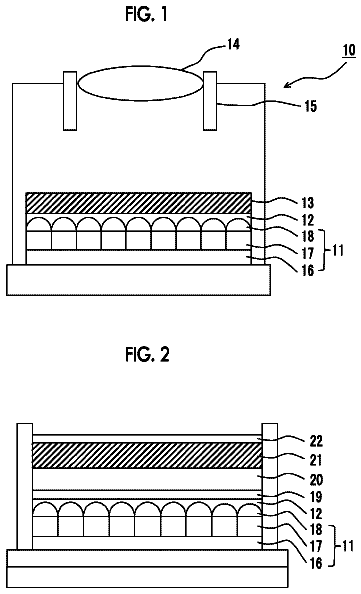
FIG. 1 is a cross-sectional view schematically illustrating the layer construction of one embodiment of the electrode plate member or electrode plate according to the present invention.
Modes for carrying out the invention
The present invention will next be described in further detail based on modes for carrying out the invention. The aqueous liquid composition according to the present invention contains a water-based medium containing water, a polymer which has at least one type of groups selected from hydroxyl groups and amino groups and may hereinafter be also referred to as “the OH/NH.sub.2 polymer”, and phosphonobutanetricarboxylic acid which may hereinafter be also referred to as “PBTC”. This OH/NH.sub.2 polymer is at least one polymer selected from the group consisting of a polysaccharide, polyamino acid, polyvinyl alcohol, polyallylamine, polyvinylamine, a polyamidine, a polyethylenimine, and derivatives thereof. Owing to the inclusion of these components, the aqueous liquid composition according to the present invention can inhibit the settling-out of a filler such as a conductive material, which may be contained further, and can also assure high hydrophilicity.
Owing to the inclusion of the OH/NH.sub.2 polymer and PBTC equipped with binding ability and dispersing ability for a filler such as a conductive material, hydrophilicity and the like, the aqueous liquid composition according to the present invention is also excellent in environmental performance while retaining binding properties and dispersion properties for the filler and functionality such as hydrophilicity. Further, owing to the inclusion of an appropriate amount of water, preferably a water-based medium containing water and an organic solvent such as a water-soluble alcohol as a solvent or dispersion medium, the OH/NH.sub.2 polymer and PBTC are prevented from precipitation and adequate viscosity is retained. Hence, the aqueous liquid composition according to the present invention assures a pot life upon coating, prevents the settling-out of the filler, and realizes coatability and dispersion stability.
The term “aqueous liquid composition” as used in the present invention means one containing fine solid particles such as a filler dispersed at a high concentration in a water-based medium and having a slurry form or paste form.
Water-Based Medium
A water-based medium is contained in the aqueous liquid composition according to the present invention. This water-based medium is a component that functions as a solvent or a dispersion medium. The water-based medium can be water alone or a mixed solvent of water and an organic solvent. Water may preferably be distilled water, but depending on the application, may also be ordinary tap water.
The organic solvent may preferably be a solvent that is miscible with water. Specific examples of such an organic solvent include alcohols such as methyl alcohol, ethyl alcohol, n-propyl alcohol, isopropyl alcohol (IPA), n-butyl alcohol, s-butyl alcohol, isobutyl alcohol and t-butyl alcohol; esters such as methyl acetate, ethyl acetate, n-propyl acetate, isopropyl acetate, n-butyl acetate, isobutyl acetate, methoxybutyl acetate, cellosolve acetate, amyl acetate, methyl lactate, ethyl lactate and butyl lactate; ketones such as acetone, methyl ethyl ketone, methyl isobutyl ketone, diisobutyl ketone and cyclohexanone; amides such as N-methyl-2-pyrrolidone, N,N-dimethylacetamide and N,N-dimethylformamide; and sulfoxides such as dimethyl sulfoxide. Among these, the alcohols are preferred with IPA being more preferred. These organic solvents may be used either singly or as a combination of two or more.
The pH of the water-based medium may preferably be 7 or lower, because the crosslinking of OH/NH.sub.2 polymer may hardly proceed in some instances if the pH of the water-based medium is higher than 7.
When a mixed solvent of water and an organic solvent is used as the water-based medium, the proportion of the organic solvent contained in the mixed solvent may be preferably 1 to 70 mass %, with 5 to 60 mass % being more preferred. When a mixed solvent of IPA and water is used, for example, the proportion of IPA contained in the mixed solvent may be preferably 1 to 40 mass %, with 5 to 40 mass % being more preferred.
OH/NH.sub.2 Polymer
When heated, the OH/NH.sub.2 polymer contained in the aqueous liquid composition according to the present invention reacts with PBTC and undergoes crosslinking. It is, therefore, preferable from the standpoint of reaction efficiency that in a state before heating, the OH/NH.sub.2 polymer and PBTC are evenly mixed together. For this purpose, the OH/NH.sub.2 polymer may preferably be soluble at 100° C. or lower in water or in a water-based medium containing water and an organic solvent, the pH of which is 1 to 14.
The OH/NH.sub.2 polymer is at least one polymer selected from the group consisting of a polysaccharide, polyamino acid, polyvinyl alcohol, polyallylamine, polyvinylamine, a polyamidine, a polyethylenimine, and derivatives thereof.
Specific examples of the above-described derivatives include the carboxylation products, glycolization products, tosylation products, sulfated products, phosphated products, etherified products, alkylated products, hydroxyalkylated (glycerylated) products, salts thereof, and the like. These derivatives can be synthesized by conventionally-known methods. The introduction rate of substituent groups in each polymer may preferably be 0.1 to 6 groups per monomer unit that makes up the polymer. Less than 0.1 group may hardly manifest the characteristics of the substituent groups, while more than 6 groups may result in insufficient crosslinking of the polymer.
Among the above-described specific examples of the OH/NH.sub.2 polymer, the polysaccharides are advantageous in that they are natural materials or those derived from natural materials. Of the polysaccharides, alginic acid, starch, cellulose, chitin, chitosan and pectin are preferred for their availability in large quantities. The polysaccharides may be natural materials or synthetic materials. As naturally-occurring polysaccharides, seaweed alginic acid, potato starch, cotton cellulose, crustacean chitosan and the like can be exemplified.
Among such OH/NH.sub.2 polymers, preferred are chitin, chitosan, cellulose and derivatives thereof, and more preferred are chitosan, chitosan derivatives, cationized chitosan, and their salts, which may hereinafter also be referred to simply as “chitosans” or “a chitosan”. Chitosans are particularly preferred as (i) they by themselves have various unique characteristics such as antibacterial activities, (ii) their crosslinkability with PBTC is good, and (iii) they tend to interact with base materials formed of fibers, metals, glass or the like and have high adhesiveness to the base materials.
Chitosan can be obtained, for example, by deacetylating chitin that exists in the exoskeletons of crustaceans such as crabs, shrimps or lobsters, and is a known material per se. Chitosans of various deacetylation degrees and various molecular weights can be produced, and are readily available from the market.
Among the specific examples of the OH/NH.sub.2 polymer, the polysaccharide may preferably be a hydroxyalkylchitosan that is a reaction product of chitosan and an alkylene oxide. This hydroxyalkylchitosan has high solubility in the water-based medium compared, for example, with chitosan and, therefore, can be readily dissolved in the water-based medium even when the content of PBTC is lowered. Specifically, the content of PBTC per 100 parts by mass of the hydroxyalkylchitosan can be set preferably at 15 to 140 parts by mass, more preferably at 20 to 120 parts by mass. Described specifically, the use of such a hydroxyalkylchitosan as the OH/NH.sub.2 polymer can lower the content of PBTC and, therefore, can inhibit the resulting aqueous liquid composition (and an aqueous coating formulation using the same) from being excessively lowered in pH. Therefore, the handling of the aqueous liquid composition can be facilitated, and moreover, the risk of corrosion of a coater can be reduced.
When a water-containing IPA solvent is used as the water-based medium, the use of such a hydroxyalkylchitosan as the OH/NH.sub.2 polymer also makes it possible to use the water-containing IPA solvent at a high IPA concentration. Described specifically, even when a water-containing IPA solvent the IPA concentration of which is higher than 10 mass % (preferably 15 mass % or higher, more preferably 20 mass % or higher) is used, the hydroxylalkylchitosan can be still dissolved although its dissolution depends on the degree of substitution of the hydroxyalkylchitosan. When a water-containing IPA solvent the IPA concentration of which is high is used as the water-based medium, the resulting aqueous liquid composition (and an aqueous coating formulation using the same) are provided with a lowered surface tension. It is, therefore, possible to provide them with improved dispersibility for a conductive material and also with improved applicability to a collector made of a metal material (for example, an aluminum foil or the like).
Specific examples of the hydroxyalkylchitosan include hydroxyethylchitosan, hydroxypropylchitosan, hydroxybutylchitosan, and dihydroxypropylchitosan. These hydroxyalkylchitosans can be used either singly or as a combination of two or more thereof. In the hydroxyalkylchitosan, the degree of substitution with the alkylene oxide may be preferably 0.5 mole or greater, more preferably 1 to 3 moles per mole of pyranose rings constituting the chitosan. If this degree of substitution is smaller than 0.5 mole, the hydroxyalkylchitosan tends to have insufficient solubility in the water-based medium, thereby possibly making it difficult to form a homogeneous coating film. On the other hand, a degree of substitution in excess of 3 moles may lead to a disadvantage from the standpoint of cost.
As polyvinyl alcohol which may hereinafter also be referred to simply as “PVA”, those produced by conventionally-known processes are all usable, and no limitation is imposed on its polymerization degree, saponification degree and the like. Further, copolymerization products with other monomers can also be used. As polyallylamine, polyvinylamine, polyethylenimines and polyamidines, those produced by conventionally-known processes can all be used, and no limitation is imposed on their polymerization degrees and the like. Further, copolymerization products with other monomers can also be used.
The polyamino acid may be a natural material or synthetic material. Specific examples of the polyamino acid include polylysine, polyornithine, polyarginine, polyhistidine, protamine, gelatin, collagen, and the like.
When a polymer having amino groups in its molecule, such as polyvinylamine, a polyamidine, chitosan or a cellulose derivative, is used, improvements can be made in antibacterial activities and water solubility by adding an acid to the polymer and subjecting the acid to a salt-forming reaction with the amino groups. Salts of the polymer can also be used in the present invention.
Any acid can be used in the above-described salt-forming reaction insofar as it dissolves to some extent in the water-based medium. Specific examples include hydrochloric acid; and organic acids such as formic acid, acetic acid, propionic acid, butyric acid, taurine, pyrrolidone carboxylic acid, citric acid, malic acid, lactic acid, hydroxymalonic acid, malonic acid, succinic acid, adipic acid, benzoic acid, salicylic acid, aminobenzoic acid, phthalic acid, and vitamin C. Among these, naturally-occurring organic acids such as lactic acid, malic acid and citric acid are preferred.
The amount of such an acid to be used cannot be definitely specified as it varies depending on the deacetylation degree of chitosan, the basicity of polyvinylamine or a polyamidine, and the equivalent of the acid. It is, however, preferred to use the acid in an amount such that the resulting salt can retain water solubility. The amount of the acid to be used may preferably be in a range of about 0.8 to 2 moles per amino group in polyvinylamine, a polyamidine, chitosan or a cellulose derivative.
The weight average molecular weight of the OH/NH.sub.2 polymer may preferably be 5,000 to 2,000,000. A weight average molecular weight of lower than 5,000 tends to result in a brittle crosslinked product. On the other hand, a weight average molecular weight of the OH/NH.sub.2 polymer, which is higher than 2,000,000, may make it difficult to form a uniform coating film when the aqueous liquid composition is used as a coating formulation.
When the OH/NH.sub.2 polymer is a chitosan, the weight average molecular weight of the chitosan may preferably be 5,000 or higher, with 30,000 to 1,000,000 being more preferred. A weight average molecular weight of lower than 5,000 may provide the resulting film with insufficient strength. Such an excessively low weight average molecular weight may also lead to insufficient dispersion of a conductive material when the conductive material is contained. When the weight average molecular weight of the chitosan exceeds 1,000,000, on the other hand, the resulting aqueous liquid composition may be provided with an excessively high viscosity so that the chitosan has to be limited to a low concentration. Such an unduly high weight average molecular weight is not preferred either, because it may provide the resulting slurry with an increased viscosity, thereby making it difficult to increase the solids concentration of the conductive material.
The content of the OH/NH.sub.2 polymer in the aqueous liquid composition according to the present invention may be preferably 0.1 to 40 parts by mass, more preferably 0.5 to 20 parts by mass per 100 parts by mass of the aqueous liquid composition.
Pbtc
PBTC is contained in the aqueous liquid composition according to the present invention. PBTC functions as a crosslinking agent for the OH/NH.sub.2 polymer. PBTC, therefore, contributes to improvements in the rigidity of the resulting coating film when the aqueous liquid composition according to the present invention is used as a coating formulation. In addition to the function as a crosslinking agent, PBTC also contributes to the expression of hydrophilicity, antibacterial and antimold activities, anti-odor properties and like by the resulting coating film. PBTC is a known substance, and is generally used for applications as a chelating agent, scale inhibitor, detergent, bleach, preservative, disinfectant, dopant and the like. It is to be noted that PBTC is available from the market under a trade name such as “bequest 7000” (product of Thermophos International B.V.).
The content of PBTC in the aqueous liquid composition according to the present invention may be preferably 1 to 40 parts by mass, more preferably 1 to 20 parts by mass per 100 parts by mass of the aqueous liquid composition.
The mass ratio (A/B) of the OH/NH.sub.2 polymer (A) to PBTC (B) in the aqueous liquid composition according to the present invention may preferably be 1/5 to 5/1. An A/B value of smaller than 1/5 tends to result in insufficient crosslinking of the OH/NH.sub.2 polymer, while an A/B value of greater than 5/1 may lead to a disadvantage in cost performance.
In the aqueous liquid composition according to the present invention, the total solids concentration of the OH/NH.sub.2 polymer and PBTC may preferably be 0.1 to 40 mass %. When the weight average molecular weight of the OH/NH.sub.2 polymer is high and the solution viscosity is high, it may be required to set the above-described solids concentration at 0.1 mass % or so. A solids concentration of lower than 0.1 mass % may lead to difficulty in stably forming a coating film, while a solids concentration of higher than 40 mass % may lead to difficulty in obtaining a homogeneous aqueous liquid composition.
Polyhydric Alcohol
Preferably, the aqueous liquid composition according to the present invention may further contain a polyhydric alcohol containing two or more hydroxyl groups in the molecule and having a molecular weight of smaller than 190. The use of the aqueous liquid composition, which contains the polyhydric alcohol having the molecular weight of smaller than 190, makes the resulting coating film resistant to delamination from a base material (easier to adhere to the base material), and also imparts still higher flexibility and durability to the resulting coating film. Described specifically, the polyhydric alcohol having the molecular weight of smaller than 190 is presumably a component that functions as a so-called plasticizer. The aqueous liquid composition, which contains the polyhydric alcohol having the molecular weight of smaller than 190, and the aqueous coating formulation using the same are, therefore, especially useful as materials (undercoating agents) for producing electrode plates that constitute electricity storage devices such as nonaqueous electrolyte secondary cells, electric double-layer capacitors and lithium ion capacitors.
The description continues in the full USPTO document.
 Lapsed, fee not paid2 drawings

