Field of the disclosure
Aspects of the disclosure are related generally to prioritizing the funding of a plurality of projects competing for funding.
Background of the disclosure
In organizations, such as companies or government agencies, multiple potential projects may be proposed for evaluation and/or executions. Often times the resources available for evaluation and/or execution of projects by a particular organization may be limited such that all of the proposed projects for evaluation and/or execution may not be resourced or funded. Further, at times, the resources available for funding projects within a particular organization may change over time, such as due to changes in the organization's budget, and the organization may have to dynamically determine how to execute projects in light of the imposed changes in resources. This may entail the organization adding or subtracting projects that it evaluates and/or executes responsive to changes in the organization's budget.
Organizations may implement a variety of mechanisms to select projects to evaluate and/or execute from a larger set of proposed projects in a resource and/or funding constrained environment. Often times, the stake holders associated with each of the projects, such as the project managers and/or project team members, may discuss various aspects of the proposed projects, such as expected benefits, risks associated with the project, cost estimates, time to completion, importance and/or linkages to other projects, other intangibles, or the like. The decisions of which projects to fund or priorities associated with the funding of competing projects may be swayed by influential stake holders or by other considerations that may not fully optimize the expected value or expected regret resulting from the selection from the competing projects.
Portfolio selection and optimization methods generally assume the same or similar levels of confidence in the information about the costs, benefits, and risks of potential candidate projects under consideration for funding. However, in reality, the level of confidence in the information associated with candidate projects, understanding of potential program alternatives, and proposed new development projects may vary relatively significantly from project to project. Some projects may be well understood, with relatively high confidence in their cost estimates, development risks, and benefits assessments and/or estimates. On the other hand, competing projects that involve new concepts or technologies, which may in fact, in some cases, have significant advantages over current or more established (and better understood) approaches yet may have relatively less confidence in the projections and/or estimations of information associated therewith. Imbalance in the levels of confidence among different projects competing for funding may result in regrets that could have been avoided if due diligence resources had been more optimally allocated, to increase the confidence in promising but less well understood candidates projects. Often due diligence resources are spent refining already well established candidates that are either almost certain to be selected for funding or almost certain not to be selected because their selection would violate a selection constraint.
Brief description of the drawings
Reference will now be made to the accompanying drawings, which are not necessarily drawn to scale, and wherein:
FIG. 1 illustrates an example ecosystem for prioritizing the funding of projects, in accordance with embodiments of the disclosure.
FIG. 2 illustrates an example project funding system for prioritizing the funding of projects, in accordance with embodiments of the disclosure.
FIG. 3A illustrates an example evolutionary algorithm system, in accordance with example embodiments of the disclosure.
FIG. 3B illustrates an example master processor timing chart, according to an example embodiment of the disclosure.
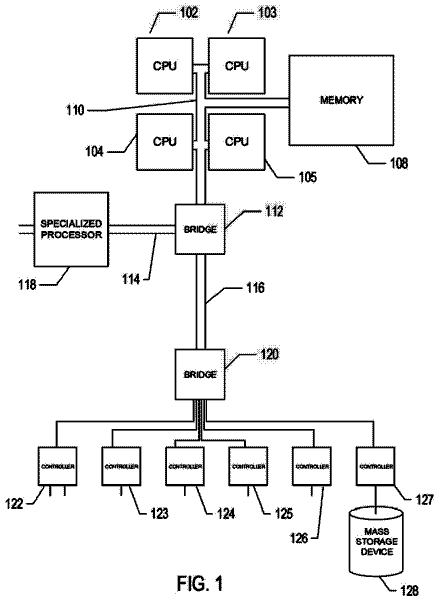
FIG. 3C illustrates an example computer for implementing one or more of the processors in FIG. 1A , according to an example embodiment of the disclosure.
FIG. 4 illustrates an example parallel processing system that executes an evolutionary algorithm in accordance with an example embodiment of the disclosure.
FIG. 5 illustrates an example flow diagram for an asynchronous evolution and automated chromosome bundling process, in accordance with example embodiment of the disclosure.
FIG. 6 illustrates example flow diagram for slave processor and timing operations, in accordance with example embodiments of the disclosure.
FIGS. 7A-7F illustrate visual representations of an operation of box fitness termination criteria, in accordance with example embodiments of the disclosure.
FIG. 8 illustrates an example flow diagram generating a priority score associated with a candidate project, according to an example embodiment of the disclosure.
FIG. 9A illustrates an example chart of the appearance of various projects in non-dominated solutions of an evolutionary algorithm to illustrate the prioritization of funding projects, in accordance with example embodiments of the disclosure.
FIG. 9B illustrates an example chart of the confidence level of estimated project values of the various projects of FIG. 9A to illustrate the prioritization of funding projects, in accordance with example embodiments of the disclosure.
FIG. 9C illustrates an example chart of the priority score of the various projects of FIG. 9A to illustrate the prioritization of funding projects, in accordance with example embodiments of the disclosure.
FIG. 10 illustrates an example flow diagram of an iterative method for prioritizing funding of projects, in accordance with example embodiments of the disclosure.
Detailed description
Embodiments of the disclosure now will be described more fully hereinafter with reference to the accompanying drawings, in which embodiments of the disclosure are shown. This disclosure may, however, be embodied in many different forms and should not be construed as limited to the embodiments set forth herein; rather, these embodiments are provided so that this disclosure will be thorough and complete, and will fully convey the scope of the disclosure to those skilled in the art. Like numbers refer to like elements throughout.
The systems and methods disclosed herein may provide for efficiently allocating scarce analysis resources (such as concept exploration, preliminary design efforts and cost estimation) to optimize the relevance and value of due diligence information obtained about projects competing for limited portfolio funding. The systems and methods may involve applying evolutionary algorithms in the decision making process of allocating funding to projects. Embodiments of the disclosure may, therefore, relate to the use of evolutionary algorithms in prioritizing the funding of projects.
Evolutionary algorithms have been described in a variety of other publications including commonly owned U.S. patent application Ser. No. 12/550,858, filed on May 12, 2010 and titled “Systems and Methods for Generating Feasible Solutions form Two Parents for an Evolutionary Process”, the contents of which, in its entirety, is incorporated herein by reference.
Additionally, the systems and methods disclosed herein may consider that information and/or estimates related to a variety of candidate projects for funding and used in assessing the variety of candidate projects may not have the same level of detail and/or certainty in the information and/or estimates. These estimates may pertain to evaluation metrics and/or elements that may be applied to a value model to determine an optimal set and/or portfolio of projects based on a particular set of estimates. The metrics may include, for example, expected and potential benefits, risks associated with the project, cost estimates, time to completion, importance and/or linkages to other projects, and/or other intangibles. Conventional non-quantitative methods of deciding the allocation of due diligence resources to candidate projects with asymmetric confidence in estimates associated with those candidate projects may introduce a variety of inefficiencies and/or other issues. For example, without a big-picture portfolio view of the initial estimates of the feasibility and utility of the candidate projects, a great deal of effort may be inefficiently spent trying to normalize the confidence in costs, benefits, and risks (to try and achieve “apples-to-apples” confidence levels) prior to applying portfolio-selection and optimization tools. In the same or other cases, due diligence analyses resources or the time available may be too limited to study attractive but immature project options to the extent required to achieve “decision-quality” assessment of their costs, benefits, and risks, and as a possible consequence, less attractive, but well established project options may be prioritized above potentially more attractive but immature projects.
The mechanisms, as disclosed, may formulaically and methodologically reduce regret and/or buyer's remorse in funding particular ones of a larger set of candidate projects. The mechanism may involve determining a confidence factor associated with the current understanding and information, such as the expected benefits and/or other metrics, of each of the projects under consideration for funding. The mechanism may further involve determining a number of non-dominated solutions based on a variety of objectives using any variety of optimization algorithm, such as an evolutionary algorithm, and identifying the percentage of those non-dominated solutions in which each project appears.
In certain embodiments, a score or metric, such as one that ranges from 0 to 100, may be generated and used to prioritize or rank candidate projects for consideration in receiving additional attention and analysis resources for relatively in-depth study, such as studies that may lead to improved understanding and confidence in the projects' costs, benefits, and risks. This metric may be referred to as a due diligence priority score (referred to henceforth simply as “priority score”). In general, the embodiments disclosed may adhere to the logic that a project that appears in many feasible non-dominated portfolios and yet at the current time has low confidence of understanding and/or low confidence in estimates is a better candidate for more due diligence study than a project that either has high confidence understanding and/or only appears in a few or none of the non-dominated portfolios. The priority metric may be a function of a confidence factor associated with the current level of understanding and/or estimates of a project and the percentage of feasible non-dominated portfolio solutions that contain each proposed candidate project. In certain embodiments, the priority metric may be a product of 1 minus a 0 to 1 confidence factor associated with the current level of understanding and/or estimates of a project and the fraction of feasible non-dominated portfolio solutions that contain each proposed candidate project.
I. Ecosystem Overview
FIG. 1 illustrates an example ecosystem 100 for prioritizing the funding of projects, in accordance with embodiments of the disclosure. In an organization or across organizations, there may be a plurality of projects 110 that may be candidates for funding to achieve the overall goals of the organization. One or more of the projects 110 may have one or more project advocates and/or stake holders 120 ( 1 ), 120 ( 2 ), 120 (N), hereinafter referred to individually or collectively as stake holders 120 . The stake holders 120 may provide estimates associated with the projects 130 and, in certain embodiments, confidence levels 140 associated with the estimates. The estimates 130 associated with the candidate projects, and the confidence levels 140 of those estimates may be provided to a project funding system 150 . Additional parameters 160 , such as epsilon square/box sizes, constraints, or the like, may be provided to the project funding system 150 . The project funding system 150 may then be configured to provide a variety of priority metrics 180 associated with the candidate projects 110 . These priority metrics 180 may include the percentage 198 of each of the projects found as part of the totality of non-dominated (ND) solutions found as a result of executing an optimization algorithm by an optimization algorithm system, such as an evolutionary algorithm system. The project funding system 150 may further provide the confidence of level 194 of the estimates associated with the projects. The project funding system 150 may further still provide a priority score 190 associated with the candidate projects.
The organization with which the candidate projects 110 are associated may be any suitable organization including, but not limited to, a corporation, a for-profit organization, a non-profit organization, an individual, a government organization, a government agency, a domestic organization, a foreign organization, a multi-national organization, or combinations thereof. The candidate projects 110 may be activities, alternative activities, and/or a series of actions, in the form of a project, that may be considered by one or more of the stake holders 120 to further one or more goals and/or assumed goals of the organization. The stake holders 120 may be individuals within or external to the organization and may be an advocate of one or more of the projects 110 . The stake holder 120 may include, but not be limited to, a project manager, a project lead, a project engineer, a project worker, a contractor, a beneficiary from the execution of one or more of the projects 110 , an individual that may promote one or more of the projects 110 , or combinations thereof. It will be appreciated that in some cases, a single stake holder 120 may decide between, propose, advocate, and/or promote more than on project 110 . Indeed, in some cases, there may be a single stake holder 120 that decides between more than one project using the systems and methods as disclosed herein. The estimates 130 associated with projects as depicted here may include estimates and/or projections of potential and expected benefits, risks, cost estimates, time to completion, importance and/or linkages to other projects, other intangibles, or the like.
As depicted, the project funding system 150 may receive one or more confidence level information 140 of estimate values 130 . In some cases, the project funding system 150 may be configured to determine a confidence level 194 of a particular project from the received confidence level information 140 at an estimate level. For example, the project funding system 150 may receive a variety of certainty levels associated with estimates made by one or more stake holders 120 . From these confidence level information 140 of estimates related to a single project 110 , the project funding system 150 may determine the confidence level 194 of the estimates associated with the project 110 , such as by taking an average of the confidence level of the received information of the project 110 . In alternative cases, the project funding system 150 may perform a variety of mathematical functions on the received confidence level information 140 of estimated values related to a project, such as a weighted average, to determine the confidence level 194 of the estimates associated with the project 110 . Therefore, it will be appreciated that in some embodiments, the current confidence level 104 of the estimates associated with a project 110 may be an aggregate of the individual confidence levels associated with each of the estimates provided by each of the stake holders 120 . It should further be noted that in some cases, the confidence level information 140 of estimated values may be correlated to and/or based on one or more established methods of providing confidence levels for project planning and/or funding. For example, technology readiness level (TRL) or similar assessments and/or methodology may be implemented by the stake holders 120 to provide confidence level information 140 of estimated values.
The inputs/parameters 160 , in certain embodiments may include parameters associated with one or more objective functions for performing multi-objective optimization, such as by applying the evolutionary algorithms as described herein. The objective functions may be used by the evolutionary algorithms to determine an objective value and/or objective performance associated with a particular chromosome data structure of the evolutionary algorithm. In this case, a chromosome data structure may represent a potential solution to a multi-objective evolutionary algorithm. Additionally or alternatively, the inputs/parameters 160 may include parameters associated with constraint functions used in the evolutionary algorithms for determining if a particular chromosome data structure is a viable solution within the constraints of the optimization problem. For example, the constraint functions may be used to determine if a particular chromosome data structure of the evolutionary algorithm represents a solution that is bound by funding constraints imposed on the selection of candidate projects 110 .
In certain embodiments, the inputs/parameters 160 may include information related to providing parameters for epsilon non-dominated sorting, such as epsilon values. Epsilon non-domination sorting may include plotting or mapping the solutions to a first epsilon value for objective function f.sub.1 and a second epsilon value for objective function f.sub.2, with a particular step size ϵ.sub.1 and ϵ.sub.2, respectively. The first epsilon value may be associated with a first epsilon spacing or step size ϵ.sub.1 associated with objective function f.sub.1, and a second epsilon value may be associated with second epsilon spacing or step size ϵ.sub.2 associated with objective function f.sub.2. It will be appreciated that while two objective functions are discussed, there may be any number of objective functions and associated epsilon values. It will further be appreciated that the number of non-dominated solutions to the multi-objective optimization problem and the time it takes to achieve a solution may vary with the epsilon values as specified and/or used. Therefore, in certain embodiments, the number of non-dominated solutions generated may be based, at least in part, on both the number of sets of estimates provided by the stake holders 120 and the epsilon values provided to the evolutionary algorithm system.
II. Project Funding System
Referring now to FIG. 2 , an example project funding system 150 for prioritizing the funding of projects, in accordance with embodiments of the disclosure, is described. As described in conjunction with the ecosystem 100 described in FIG. 1 , the inputs to the project funding system 150 may include, without limitation, indication of one or more projects 110 , one or more confidence levels of information and/or estimates associated with the projects 110 , constraint parameters 210 associated with the evolutionary algorithms, and/or goal parameters 220 associated with the evolutionary algorithms.
The due diligence resource allocation and/or funding system 150 may include a priority generator component 230 , an evolutionary algorithm system 240 , and a confidence level manager component 250 . The system 150 may further communicate with, store, and/or retrieve information and/or data from a project database 260 . The project database may include a store of information and/or estimates associated with the various projects 110 . As indicated, the system 150 may further be configured to provide output, such as percentage of non-dominated solutions 194 in which a particular project appears, confidence level 194 associated with a project, and/or priority score 190 associated with a project. Additionally, the system 150 may be configured to provide a ranking of the priority of the candidate projects 110 . This ranking may be based, at least in part, on the priority score associated with each of the projects 110 .
In certain embodiments, the priority score may be determined based on the confidence level (C) of the project and the percentage appearance in the non-dominated solutions of the evolutionary algorithm (P). In these embodiments, the priority score may be calculated as Priority=(1−C)P. In this case, C may be a number between 0 and 1 and P may be a number between 0 and 1. It will be appreciated that either or both of C or P may scaled by a constant factor, in certain embodiments of the disclosure.
III. Evolutionary Algorithm—Core Management System
FIG. 3A illustrates an example core management system 300 that supports parallel processing utilized for one or more evolutionary algorithms associated with multi-objective optimization, as described herein, according to an example embodiment of the invention. As shown in FIG. 3A , an example evolutionary algorithm component 240 in which processing associated with one or more evolutionary algorithms is managed and performed is depicted. The processing environment may include one or more manager processor computers 304 (also referred to as “manager processors”), master processor computers 306 a - n (also referred to as “master processors”), and slave processor computers 308 a - n (also referred to as “slave processors”).
The manager processor 304 may be operative to dynamically configure and reconfigure the evolutionary algorithm component 240 . In general, the manager processor 304 may make a dynamic determination of how many master processors 306 a - n are needed, and how many slave processor(s) 308 a - n are needed for each master processor 306 a - n . The determination of the number of slave processor(s) 308 a - n per master processor 306 a - n can be based upon a master calibration algorithm, as will be discussed in further detail herein.
During initial set-up or configuration of the evolutionary algorithm component 240 , the manager processor 304 may identify a number of available arriving processor(s) 310 having processing capacity. These arriving processor(s) 310 may be available for utilization, perhaps as a result of another application processing being completed. The manager processor 304 may configure one or more of the arriving processor(s) 310 as master processors 306 a - n . Each master processor 306 a - n may be responsible for one or more operations associated with a particular portion of the evolutionary algorithm. The manager processor 304 may also configure and assign one or more of the arriving processor(s) 310 as the respective one or more slave processors 308 a - n of the respective master processor 306 a - n . The slave processors 308 a - n may likewise carry out one or more operations as instructed by the respective master processor 306 a - n.
Subsequent to the initial-setup or configuration, the manager processor 304 may also be operative to dynamically reconfigure the evolutionary algorithm component 240 . As an example of such reconfiguration, additional arriving processor(s) 310 may be identified by the manager processor 304 as being available while the evolutionary algorithm component 240 is in operation. Accordingly, the manager processor 304 may assign roles to the additional arriving processor(s) 310 . For example, an additional arriving processor 310 may be assigned to a role as a manager processor 304 , a master processor 306 a - n , or a slave processor(s) 308 a - n . On the other hand, one or more master processors 306 a - n or slave processor(s) 308 a - n in the evolutionary algorithm component 240 may become exhausted (e.g., allocated processing time has been reached), and may need to be removed from the evolutionary algorithm component 240 as a departing processor(s) 330 . The departing processor(s) 330 may be a manager processor 304 , a master processor 306 a - n , or a slave processor 308 a - n that has experienced a processing failure or that has otherwise been requested by a higher priority application.
In an example embodiment of the invention, a manager processor 304 that is exhausted may remove itself from the evolutionary algorithm component 240 . The departing manager processor 304 may be operative to nominate its replacement, perhaps from an arriving processor 310 , an existing master processor 306 a - n , or an existing slave processor 308 a - n . According to another example embodiment, a master processor 306 a - n that is exhausted may need to be removed from the evolutionary algorithm component 240 . The removed master processor 306 a - n may likewise nominate its replacement, perhaps from another master processor 306 a - n or an existing slave processor 308 a - n . Alternatively, the manager processor 304 may determine the replacement for the removed master processor 306 a - n . In addition, a slave processor(s) 308 a - n that is exhausted may need to be removed from the evolutionary algorithm component 240 , according to an example embodiment of the invention. The master processor 306 a - n may replace the removed slave processor(s) 308 a - n with an arriving processor(s) 310 when possible and needed, according to an example embodiment of the invention. The master processor 306 a - n may inform the manager processor 304 of the removal of a slave processor(s) 308 a - n and/or its replacement.
As introduced above, the manager processor 304 may determine the number of master processors 306 a - n needed, and/or the number of slave processor(s) 308 a - n needed per master processor 306 a - n in accordance with an example master calibration algorithm. It will be appreciated that a manager processor 304 may utilize an example master calibration algorithm in a variety of instances, e.g., based upon arriving processor(s) 310 or departing processor(s) 330 , or when one or more master processor processors 306 a - n report that it has too many or too few slave processors(s) 308 a - n.
In an example embodiment of the invention, a goal of a master processor 306 a - n may be to keep the associated slave processors 308 a - n fed with work as efficiently as possible. When a slave processor 308 a - n requests work from the master processor 306 a - n (e.g., sends a packet with results from evaluating the previously received chromosome data structure), the master processor 306 a - n is most efficient in responding to the slave processor 308 a - n when it is waiting for the packet (e.g., the master processor 306 a - n is not busy doing other things).
One or more of the processors, in certain embodiments, may further execute the functions of the priority generator component 230 and/or the confidence level manager component 250 . For example, the manager processor 304 may both be part of the evolutionary algorithm system 240 and execute the evolutionary algorithm in cooperation with the slave processors 308 and be part of one or both of the priority generator component 230 or the confidence level manager component 250 to execute the priority scores or the confidence levels, respectively.
As shown by the master processor timing chart in FIG. 3B , the “Reserve Time” is the time that the master processor 306 a - n is waiting for work. If there is too much Reserve Time, then the master processor 306 a - n has capacity to handle more slave processors 308 a - n . As the number of slave processors 308 a - n increases for a particular master processor 306 a - n , the total time spent by a master processor 306 a - n performing processing (e.g., evolutionary duties) increases, as does the total time spent communicating with slave processors 308 a - n . Therefore, the master calibration algorithm may use the current timing data to estimate how many slave processors 306 a - n would bring the Reserve Time into compliance with a Reserve_Time_Percentage threshold, as described below.
For purposes of utilizing the master calibration algorithm, each master processor 306 a - n may maintain timing data associated with available processing resources at the master processor 306 a - n . In an example embodiment of the invention, the timing data maintained by each master processor 306 a - n may include the following data:
A total elapsed time in which the particular master processor 306 a - n has been in operation (Total_Elapsed_Time);
A total time that the particular master processor 306 a - n spends communicating with associated slave processor(s) 308 a - n to send work and receive results (Total_Time_Communicating_with_Slaves); and
A total time spent by a master processor 306 a - n performing processing (e.g., evolutionary duties or operations) in accordance with one or more evolutionary algorithms (Total_Time_Spent_Performing_Processing_Duties).
Using the timing data, the manager processor 304 or each master processor 306 a - n may be able to calculate a target number of slave processor(s) 308 a - n that it can handle in accordance with the master calibration algorithm. In an example embodiment of the invention, the target number of slave processor(s) 308 a - n (“Target_Number_of_Slaves”) for a particular master processor 306 a - n can be determined according to the following calculations:
Target_Reserve_Time=Reserve_Time_Percentage*Total_Elapsed_Time. In an example embodiment of the invention, the Reserve_Time_Percentage may be set between 10% (0.10)-20% (0.20), perhaps at 15% (0.15), so that the particular master processor 306 a - n may retain some reserve processing capability. However, it will be appreciated that other values may be utilized for the Reserve_Time_Percentage without departing from example embodiments of the invention. Average_Time_Communicating_With_Slaves=Total_Time_Communicating_with_Slaves/Number_Chromosomes_processed, where the Number_Chromosomes_processed represents the number of chromosomes processed within the Total_Elapsed_Time. Average_Time_Spent_On_Processing_Duties=Total_Time_Spent_Performing_Processing_Duties/Number_Chromosomes_processed. Target_Number_of_Slaves=((Total_Elapsed_Time−Target_Reserve_Time)/(Average_Time_Communicating_with_Slaves+Average_Time_Spent_On_Processing_Duties))*(Current_Number_of_Slaves/Number_Chromosomes_processed), where the Current_Number_of_Slaves represents the current number of slave processor(s) 308 a - n assigned to the particular master processor 306 a - n.
If any master processor 306 a - n does not have the calculated Target_Number_of_Slaves, then an example reallocation algorithm may be invoked by the manager processor 304 . An example reallocation algorithm may initiate with a manager processor 304 requesting that each master processor 306 a - n provide the manager processor 304 with its respective calculated Target_Number_of_Slaves and its respective actual number of slave processor(s) 308 a - n that has been assigned to the respective master processor 306 a - n . The manager processor 304 may then determine whether any master processor 306 a - n is underweighted or overweighted with respect to calculated Target_Number_of_Slaves. In particular, a master processor 306 a - n is underweighted with respect to slave processor(s) 308 a - n if the actual number of slave processor(s) 308 a - n is less than the calculated Target_Number_of_Slaves. Likewise, a master processor 306 a - n is overweighted with respect to slave processor(s) 308 a - n if the actual number of slave processors is more than the calculated Target_Number_of_Slaves.
If one or more master processors 306 a - n are overweighted with respect to the calculated Target_Number_of_Slaves, then slave processor(s) 308 a - n associated with the overweighted master processors 306 a - n may be reallocated to underweighted master processors 306 a - n . Likewise, underweighted master processors 306 a - n may also be provided one or more arriving processor(s) 310 for use as slave processors(s) 308 a - n . Once all the master processors 306 a - n meet their respective Target_Number_of_Slaves, then the manager processor 304 may designate a portion of any remaining arriving processor(s) 310 as new master processors 306 a - n , where each new master processor 306 a - n receives a default number of arriving processor(s) 310 for use as slave processor(s) 308 a - n.
It will be appreciated that the evolutionary algorithm component 240 described herein may accommodate a large number of processors. Indeed, the processing environment may easily utilize over 25,000 processors without any significant loss in processing efficiency, according to an example embodiment of the invention.
The processors described in FIG. 3A , including the processors 304 , 306 a - n , 308 a - n , 310 , and 330 , may implemented and/or as a part of the computer 350 , or a variation thereof, illustrated in FIG. 3C . The computer 350 may be any processor-driven device, such as, but not limited to, a personal computer, laptop computer, server computer, cluster computer, and the like. In addition to having one or more computer processor(s) 364 , the computer 350 may further include a memory 352 , input/output (“I/O”) interface(s) 366 , and network interface(s) 368 . The memory 352 may be any computer-readable medium, coupled to the computer processor(s) 364 , such as RAM, ROM, and/or a removable storage device for storing data files 362 and a database management system (“DBMS”) 358 to facilitate management of data files 362 and other data stored in the memory 352 and/or stored in separate databases. The memory 352 may also store various program modules, such as an operating system (“OS”) 360 and software 356 . The software 356 may comprise one or more software programs for managing, configuring, or performing one or more operations of a project funding algorithm including, but not limited to, a confidence level management algorithm, a priority score algorithm, and an evolutionary algorithm, according to an example embodiment of the invention.
The I/O interface(s) 366 may facilitate communication between the computer processor(s) 364 and various I/O devices, such as a keyboard, mouse, printer, microphone, speaker, monitor, bar code readers/scanners, RFID readers, and the like. Likewise, the network interface(s) described herein may take any of a number of forms, such as a network interface card, a modem, a wireless network card, and the like.
Numerous other operating environments, system architectures, and device configurations are possible, beyond those illustrated in FIGS. 3A and 3C . Other system embodiments can include fewer or greater numbers of components and may incorporate some or all of the functionality described with respect to FIGS. 3A and 3C . Accordingly, embodiments of the invention should not be construed as being limited to any particular operating environment, system architecture, or device configuration.
II. Parallel Processing Optimization without Infeasible Space Management
A. System Overview
FIG. 4 illustrates an example evolutionary algorithm component in the form of a parallel processing system 240 that executes an evolutionary algorithm, according to an example embodiment of the invention. The evolutionary algorithm, as performed by the parallel processing system 240 may produce one or more non-dominated solutions to an optimization problem involving the optimization of the selection of one or more candidate projects 110 . As shown in FIG. 4 , a first portion of the evolutionary algorithm may be performed by a master processor 306 while a second portion of the evolutionary algorithm may be performed by one or more slave processors 108 , as discussed herein.
In an example embodiment of the invention, an executed job of the evolutionary algorithm may comprise a plurality of connected runs 422 that occur in a sequence to form a time continuation. Each run 422 may comprise one or more evolutionary operations performed during one or more generations/iterations 421 . It will be appreciated that a run may be connected to a prior run in that at least some of the same parents are shared in the “initial population” utilized for initiating respective runs, according to an example embodiment of the invention.
Example processing by an executed job of the evolutionary algorithm will now be discussed in further detail. Referring now to block 404 , the master processor 306 may receive or obtain an initial population of parent chromosome data structures. In an example embodiment of the invention, each parent chromosome data structure may include the chromosome, where the chromosome may include one or more parameters (which may also be referred to as “genes”), which may include:
Static (Fixed Value/Constant) Variables: Once assigned, the values of the static variables remain constant and are not changed by any evolutionary operations of an evolutionary algorithm;
Evolved Variables: The values of the evolved variables may be changed by one or more evolutionary operations of an evolutionary algorithm; and
Derived Variables: The values of the derived variables are derived based upon a combination of one or more static variables, evolved variables, and other derived variables in accordance with one or more functions.
Still referring to block 404 , the initial population of parent chromosome data structures may be obtained by one or more sources. It will be appreciated that in certain embodiments, the parent chromosome data structures may represent a known solution to funding projects, such as a known good or pretty good solution. In an example embodiment of the invention, the initial population of parent chromosome data structures may be obtained from a combination of the archive checkpoint 402 and random generation of new chromosome data structures. For example, 25% of the initial population of parent chromosome data structures may be obtained from the archive checkpoint 402 while 75% of the initial population may be randomly generated. The chromosomes obtained from the archive checkpoint 402 may have previously been evaluated in accordance with the objective functions. On the other hand, the randomly generated chromosomes may not have been evaluated in accordance with the objective functions, and thus, they may be delivered to block 414 , which allocates the chromosomes to the slave processors 308 for objective function evaluation by block 415 .
The archive checkpoint 402 may include an elite set of chromosome data structures (i.e., elite solutions) obtained from one or more prior generations/iterations 421 , according to an example embodiment of the invention. The archive checkpoint 402 may take the form of a data file or database stored in a computer memory, computer disk, network storage, or other non-volatile memory. As the archived chromosome data structures were previously evaluated in a prior generation/iteration 421 , these chromosome data structures may be associated with a plurality of objective function values corresponding to a respective plurality of objective functions. Each objective function may be associated with any predefined objective to be optimized by the executed job of the evolutionary algorithm. As a non-limiting example, an objective function may be associated with a particular military objective, achieved by a selection of candidate projects 110 . As another non-limiting example, an objective function may be associated with expected profit from the selection of the candidate projects 110 in the form of financial transactions.
The description continues in the full USPTO document.
 Lapsed, fee not paid12 drawings