Background
Generally, telecommunication systems include network components (e.g., server computing devices) that implement various features, functions, technologies, or solutions to process, route, and/or otherwise manage the voice, data, and control signals that are sent to and from user equipment devices. As part of these operations, these network components frequently access, use and update telecommunication data stored in one or more database systems. In doing so, the network components and/or database systems are often required to perform a large number of simple yet time-consuming database operations (e.g., insert, read, delete, update, etc.). These database operations may have a direct and significant impact on the performance characteristics of the services, applications, and components of the telecommunication system. As such, improving the performance characteristics of the database systems will improve the performance characteristics of the services, applications, and components in the telecommunication system. This will be beneficial to telecommunication network operators and to the consumers of their services.
Summary
The various embodiments include methods of restoring a database system, which may include determining in a processor of a server computing device a recovery time interval, periodically reviewing database records to identify a database record that has not been updated within a most recent recovery time interval, adding the identified database record to a journaling log, updating the identified database record to include information identifying a time at which the database record was last added to the journaling log, and using the journaling log to restore the database system.
In an embodiment, using the journaling log to restore the database system may include restoring empty database tables, and performing database operations described in the journaling log that occurred within the most recent recovery time interval. In a further embodiment, the method may include determining a priority value for a database operation associated with the identified database record, and performing the database operations described in the journaling log that occurred within the most recent recovery time interval may include applying the database operation to an empty database table based on the determined priority value. In a further embodiment, determining the priority value for the database operation associated with the identified database record may include determining the priority value based on a roaming status. In a further embodiment, using the journaling log to restore the database system may include restoring a database system that stores session information.
In a further embodiment, determining the recovery time interval may include determining the recovery time interval so that ninety percent of sessions start and finish within the recovery time interval. In a further embodiment, periodically reviewing the database records to identify the database record that has not been updated within the most recent recovery time interval may include determining time periods in which there is a high probability that the server computing device will experience a heavy load, determining a regular time interval for reviewing database records that is less than the recovery time interval and which does not overlap with the determined periods of heavy load, and scheduling a process to execute at the regular time interval.
In a further embodiment, the method may include dynamically adjusting the regular time interval based on changes in operating load. In a further embodiment, adding the identified database record to the journaling log may include adding the identified database record to the journaling log during a period of system inactivity. In a further embodiment, the method may include determining a priority value for the database record, and adding the database record to the journaling log based on the determined priority value.
Further embodiments may include a server computing device, including a processor configured with processor-executable instructions to perform operations including determining a recovery time interval, periodically reviewing database records to identify a database record that has not been updated within a most recent recovery time interval, adding the identified database record to a journaling log, updating the identified database record to include information identifying a time at which the database record was last added to the journaling log, and using the journaling log to restore the database system.
In an embodiment, the processor may be configured with processor-executable instructions to perform operations such that using the journaling log to restore the database system includes restoring empty database tables, and performing database operations described in the journaling log that occurred within the most recent recovery time interval. In a further embodiment, the processor may be configured with processor-executable instructions to perform operations that further include determining a priority value for a database operation associated with the identified database record, and processor may be configured with processor-executable instructions to perform operations such that performing the database operations described in the journaling log that occurred within the most recent recovery time interval includes applying the database operation to an empty database table based on the determined priority value.
In a further embodiment, the processor may be configured with processor-executable instructions to perform operations such that using the journaling log to restore the database system includes restoring a database system that stores session information. In a further embodiment, the processor may be configured with processor-executable instructions to perform operations such that determining the recovery time interval includes determining the recovery time interval so that ninety percent of sessions start and finish within the recovery time interval.
In a further embodiment, the processor may be configured with processor-executable instructions to perform operations such that periodically reviewing database records to identify the database record that has not been updated within the most recent recovery time interval includes determining time periods in which there is a high probability that the server computing device will experience a heavy load, determining a regular time interval for reviewing database records that is less than the recovery time interval and which does not overlap with the determined periods of heavy load, and scheduling a process to execute at the regular time interval.
In a further embodiment, the processor may be configured with processor-executable instructions to perform operations that further include dynamically adjusting the regular time interval based on changes in operating load. In a further embodiment, the processor may be configured with processor-executable instructions to perform operations such that adding the identified database record to the journaling log includes adding the identified database record to the journaling log during a period of system inactivity. In a further embodiment, the processor may be configured with processor-executable instructions to perform operations that further include determining a priority value for the database record, and adding the database record to the journaling log based on the determined priority value.
Further embodiments include a non-transitory computer readable storage medium having stored thereon processor-executable software instructions configured to cause a processor to perform operations for restoring a database system, the operations including determining in a processor of a server computing device a recovery time interval, periodically reviewing database records to identify a database record that has not been updated within a most recent recovery time interval, adding the identified database record to a journaling log, updating the identified database record to include information identifying a time at which the database record was last added to the journaling log, and using the journaling log to restore the database system. In an embodiment, the stored processor-executable software instructions may be configured to cause a processor to perform operations such that using the journaling log to restore the database system includes restoring empty database tables, and performing database operations described in the journaling log that occurred within the most recent recovery time interval.
In a further embodiment, the stored processor-executable software instructions may be configured to cause a processor to perform operations that further include determining a priority value for a database operation associated with the identified database record, and the stored processor-executable software instructions may be configured to cause a processor to perform operations such that performing the database operations described in the journaling log that occurred within the most recent recovery time interval include applying the database operation to an empty database table based on the determined priority value. In a further embodiment, the stored processor-executable software instructions may be configured to cause a processor to perform operations such that determining the priority value for the database operation associated with the identified database record includes determining the priority value based on a roaming status. In a further embodiment, the stored processor-executable software instructions may be configured to cause a processor to perform operations such that using the journaling log to restore the database system includes restoring a database system that stores session information. In a further embodiment, the stored processor-executable software instructions may be configured to cause a processor to perform operations such that determining the recovery time interval includes determining the recovery time interval so that ninety percent of sessions start and finish within the recovery time interval.
In a further embodiment, the stored processor-executable software instructions may be configured to cause a processor to perform operations such that periodically reviewing database records to identify the database record that has not been updated within the most recent recovery time interval includes determining time periods in which there is a high probability that the server computing device will experience a heavy load, determining a regular time interval for reviewing database records that is less than the recovery time interval and which does not overlap with the determined periods of heavy load, and scheduling a process to execute at the regular time interval.
In a further embodiment, the stored processor-executable software instructions may be configured to cause a processor to perform operations that further include dynamically adjusting the regular time interval based on changes in operating load. In a further embodiment, the stored processor-executable software instructions may be configured to cause a processor to perform operations such that adding the identified database record to the journaling log includes adding the identified database record to the journaling log during a period of system inactivity. In a further embodiment, the stored processor-executable software instructions may be configured to cause a processor to perform operations that further include determining a priority value for the database record, and adding the database record to the journaling log based on the determined priority value.
Brief description of the drawings
The accompanying drawings, which are incorporated herein and constitute part of this specification, illustrate exemplary embodiments of the invention, and together with the general description given above and the detailed description given below, serve to explain the features of the invention.
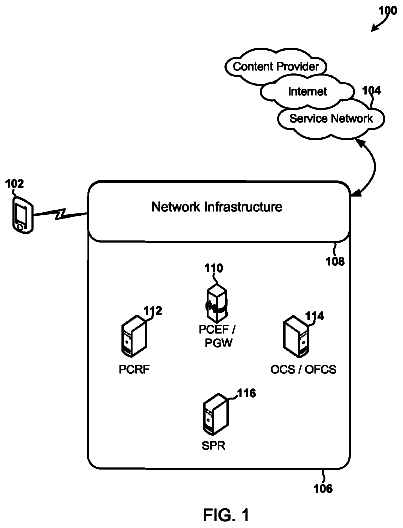
FIG. 1 is a system block diagram illustrating a telecommunication system suitable for implementing various embodiments.
FIG. 2 is an illustration of an example sequence of database transactions that may be detected by an embodiment component and example values that may be computed for various attributes of the database transactions.
FIG. 3 is a process flow diagram illustrating a method for adding database transactions to a journaling log in accordance with an embodiment.
FIG. 4 is a process flow diagram illustrating a method for adding database transactions to a journaling log in accordance with another embodiment.
FIG. 5 is a process flow diagram illustrating a method for using a threshold value to determine whether to add a database operation to a journaling log in accordance with an embodiment.
FIG. 6 is a process flow diagram illustrating a method for generating a journaling log suitable for use in recovering a database in accordance with the various embodiments.
FIG. 7 is chart diagram illustrating that the flush times may be selected based on system load.
FIG. 8 is a process flow diagram illustrating a method for restoring a database in accordance with an embodiment.
FIG. 9 is a process flow diagram illustrating a method for restoring a database in accordance with another embodiment.
FIG. 10 is a component diagram of server suitable for implementing various embodiments.
Description
The various embodiments will be described in detail with reference to the accompanying drawings. Wherever possible, the same reference numbers will be used throughout the drawings to refer to the same or like parts. References made to particular examples and implementations are for illustrative purposes, and are not intended to limit the scope of the invention or the claims.
The word “exemplary” is used herein to mean “serving as an example, instance, or illustration.” Any implementation described herein as “exemplary” is not necessarily to be construed as preferred or advantageous over other implementations.
In overview, the various embodiments include methods, and server computing devices configured to implement the methods, of storing database information in a journaling log and using the information in the journaling log to recover or restore a database system after a failure event, such as an unexpected shutdown. A server computing device may be configured to determine a recovery time interval, periodically review database records (e.g., the records that are stored in volatile main-memory) to identify a database record that has not been updated within the most recent recovery time interval, and add the identified database record to a journaling log. The server computing device may also update the identified database record to include information identifying a time at which the database record was last added to the journaling log. These operations eliminate the need to use backups or checkpoints to restore a database because, after a failure event, the server computing device may use the journaling log (and only the journaling log) to restore all of the relevant information to the database.
The terms “mobile device,” “wireless device” “user device,” and “user equipment (UE)” may be used interchangeably and refer to any one of various cellular telephones, smart-phones (e.g., iPhone®), personal data assistants (PDA's), palm-top computers, tablet computers, laptop computers, wireless electronic mail receivers (e.g., Blackberry®), VoIP phones, wire-line devices, devices implementing Machine-to-Machine (M2M) technologies, multimedia/Internet enabled cellular telephones, and similar electronic devices capable of sending and receiving wireless communication signals. A wireless device may include a programmable processor and memory. In a preferred embodiment, the wireless device is a cellular handheld device (e.g., a mobile device), which may communicate via a cellular telephone communications network.
A number of different wireline and wireless communication services and standards are available or contemplated in the future, all of which may implement and benefit from the various embodiments. Such services and standards include, e.g., third generation partnership project (3GPP), long term evolution (LTE) systems, third generation wireless mobile communication technology (3G), fourth generation wireless mobile communication technology (4G), global system for mobile communications (GSM), universal mobile telecommunications system (UMTS), 3GSM, general packet radio service (GPRS), code division multiple access (CDMA) systems (e.g., cdmaOne, CDMA2000™), enhanced data rates for GSM evolution (EDGE), advanced mobile phone system (AMPS), digital AMPS (IS-136/TDMA), evolution-data optimized (EV-DO), digital enhanced cordless telecommunications (DECT), Worldwide Interoperability for Microwave Access (WiMAX), wireless local area network (WLAN), Wi-Fi Protected Access I & II (WPA, WPA2), and integrated digital enhanced network (iden). References to terminology and/or technical details related to an individual standard or technology are for illustrative purposes only, and are not intended to limit the scope of the claims to a particular communication system or technology unless specifically recited in the claim language.
As used in this application, the terms “component,” “module,” “node,” and the like are intended to include a computer-related entity, such as, but not limited to, hardware, firmware, a combination of hardware and software, software, or software in execution, that is configured to perform particular operations or functions. For example, a component may be, but is not limited to, a process running on a processor, a processor, an object, an executable, a thread of execution, a program, a computing device and/or a computing system.
Generally, improving the accuracy, speed, latency, responsiveness, resilience, and availability characteristics (herein collectively “performance characteristics”) of the services, applications, and components of a telecommunication system are important design criteria for network engineers, telecommunication network operators, and designers of telecommunication systems. Yet, such improvements are often limited by the characteristics and operations of the underlying databases and information management solutions (e.g., persistent storage solutions, etc.) that are used by the network components in the telecommunication system. By improving the characteristics and operations of the underlying database system and information management solutions, the various embodiment components improve the functioning, efficiency, and performance characteristics of the services, applications, and components of the telecommunication system.
A database system may include a database management system (DBMS). Examples of database management systems include MySQL, PostgreSQL, Microsoft SQL Server, Oracle, VoltDB, SAP, IBM DB2, and Openet DB. The database system (or DBMS) may be responsible for creating, querying and administrating the database and for inserting, deleting and updating the information stored by the database. The database may also be responsible for ensuring the integrity of the data in the event that there is a failure, such as a system failure or an unexpected shutdown. Said another way, the database system is responsible for ensuring resilience in the event of failure. In this context, a database's “resiliency” refers its ability to recover data and/or return to a previous operating or data state after the occurrence of an event or condition (e.g., an unexpected shutdown, etc.). Improving the resiliency of a database system is an important and challenging design criterion of database engineers.
A database system may include, access, or use different types of memories, including a volatile “main memory” and a non-volatile “disk memory.” The memories may include or use any number of different types of memory technologies, including phase change memory (PCM), dynamic random-access memory (DRAM), static random-access memory (SRAM), non-volatile random-access memory (NVRAM), pseudostatic random-access memory (PSRAM), double data rate synchronous dynamic random-access memory (DDR SDRAM), and other random-access memory (RAM) and read-only memory (ROM) technologies known in the art. Each of the different memories types/parts may have different performance characteristics relating to persistence, writing speed (e.g., time required to write data to the memory), latency, access times (e.g., read access time), security, reliability, etc. These characteristics can significantly impact the performance of the database system in terms of its responsiveness, data access times, execution speed, etc.
Most conventional database systems store data in non-volatile disk memory. An in-memory database (IMDB) is a database management system that primarily relies on volatile main memory for the storage of data. Due to the performance characteristics of volatile memories, in-memory databases are typically faster than conventional databases. However, volatile memories require continuous (or near continuous) power in order to store data. As a result, in-memory databases that rely entirely on a volatile main memory for the storage of data are not as resilient as databases that use disk-memory.
A database system may be configured to use any of a variety of well-known fault tolerance, backup, and recovery solutions. Checkpointing is a well-known fault tolerance technique that includes taking a snapshot of the data stored in a database memory at various times (or in response to time triggers), and storing the snapshot for later use (e.g., after a failure, etc.). A database system may use checkpointing to capture and record data stored in disk memory so that it may be used to restore the database to a previous operating state or condition.
An in-memory database system may also use checkpointing (or a similar technique) to store a subset of data in main memory, and a more definitive copy of the data on disk memories. For example, rather than updating the information stored in disk memory every time there is a change, a database system may store the changes in main memory as checkpoints, and periodically (e.g., once a day, etc.) update the disk memory with the checkpoint information. These operations allow the database system to use a combination of volatile and non-volatile memories, and as a result, improve (or better balance) resiliency and performance characteristics of the database.
A “backup” or “checkpoint” may be a file or information structure that stores information suitable for updating the database. By frequently capturing checkpoints and updating the disk memory with checkpoints (via checkpointing operations), the database system may further improve its resiliency characteristics and ensure that the data stored in disk-memory is current or up-to-date. However, to capture and store checkpoints, existing solutions require that the system perform relatively complex and time-consuming operations. Existing solutions also require suspending all database operations/transactions, or generating additional journaling data, while the database is updated with the backup/checkpoint information. As such, capturing too many checkpoints or updating the disk memory too frequently may reduce or negate the performance benefits of using the in-memory database (i.e., the improvements gained by storing a subset of the data in main memory). On the other hand, not capturing checkpoints frequently enough may result in the loss of a significant amount of data (e.g., in the event of a failure). To balance these tradeoffs, a database system may be configured to use a combination of checkpointing and journaling techniques.
Journaling is a well-known technique that includes recording all database operations and/or changes to the tables, indices or other objects stored by the database in a journaling log (e.g., a redo log, undo log, etc.). The journaling log may be stored on disk-memory so that it can survive failures (i.e., so that the data is not erased in the event of a failure). The database system may be configured to use the information included in the journaling log to restore the database to previous operating state or condition. For example, a database system may be configured use the information included in a redo log file to replay or re-perform all the database operations or changes that occurred since the last time the disk memory was updated with checkpoint information. This allows the system to capture checkpoints less frequently without a significant increase in the risk of loss (i.e., without degrading resilience).
Thus, by implementing and using a combination of checkpointing and journaling techniques, a database system may improve its performance and resilience characteristics. Yet, existing journaling and checkpointing solutions were not designed for use in telecommunication systems. As a result, existing solutions do not adequately meet the requirements of high-speed telecommunication systems, do not adequately balance tradeoffs between the performance and resiliency characteristics of the database, implement features that are not useful for the telecommunication system, or perform operations that have a significant negative impact on the performance of the components in the system. For all these reasons, existing database solutions (e.g., existing journaling and checkpointing solutions) do not adequately improve the resiliency or performance characteristics of the services, applications, and components of a telecommunication system.
The various embodiments include components (e.g., database systems on server computing devices, etc.) configured to implement and use improved data management solutions that address the specific needs of a high-speed telecommunication system. The components may be configured to perform intelligent journaling operations that exploit the unique characteristics of telecommunication data and/or which account for the specific features and characteristics of high-speed telecommunication systems. The components may be configured to perform the journaling operations so as to significantly reduce the size and complexity of the journaling logs and/or to eliminate the need to generate backups or checkpoints. For these and other reasons, the components may improve the performance characteristics of the services, applications, and components of a telecommunication system.
Often, information that is generated, stored, accessed or used in a telecommunication system (telecommunication data) is highly volatile and has a short lifetime (e.g., a few minutes, hours, etc.). Due to these characteristics, it is common for the entire contents of a telecommunications database to change several times over the course of a single day. Yet, many of these changes are not significant, important, useful or valuable to the components in the telecommunication network. As such, many of these changes may be discarded or ignored with little or no consequence to the users, telecommunication network operators, or the proper functioning of the services provided by the telecommunication network. Yet, existing database solutions do not intelligently identify, categorize, label, prioritize, or select the database operations (or changes/updates to be information) that should be recorded in a journaling log. Rather, existing solutions require that all database operations be recorded and used as part of the journaling operations. As a result, existing solutions often generate journaling log files that store large amounts of information and/or which require that the system perform a large number of time-consuming operations after a failure event (e.g., to capture, record, or replay all the changes in a checkpoint or journaling log, etc.).
Since much of the telecommunication data is not significant, performing these complex and time database operations to ensure that all the information is properly recovered is an inefficient use of memory, processing, power, and bandwidth resources. These operations may slow or render the database inaccessible for a significant period of time or otherwise have a significant negative impact on the performance characteristics of the applications and services provided by the high-speed telecommunication network.
The various embodiments include components that are configured to intelligently identify, categorize, group, prioritize, label and/or select the database operations (or the updates/changes to the telecommunication data) that are to be added to a journaling log (e.g., redo log, undo log, etc.). By identifying the most important or significant database operations and adding only the most important or significant database operations to the journaling log, the components may reduce the size of the journaling log and the number of operations that are performed when replaying the journaling log. This, in turn, improves the performance characteristics of the telecommunication system.
Further, the speed in which the database transactions are processed and recorded may have a significant impact on the system's performance characteristics. However, due to I/O capacity limits, only a limited number of transactions may be added to a journaling log over any given period of time. By reducing the number of transactions added to the journaling logs, the components may improve the speed in which the database transactions are processed and recorded without requiring increases in the system's I/O capacity limit. In addition, these operations may reduce the demands on the telecommunication system's I/O capacity to the point where an expensive storage area network (SAN) is no longer required.
In an embodiment, a component may be configured to monitor database operations, determine the relative importance of the database operations, and generate a journaling log that includes only the most important database operations. In another embodiment, the component may be configured to receive a database transaction request (e.g., a message, call, query, etc.) that identifies a database operation (e.g., an insert operation, a delete operation, an update operation, etc.), determine whether the database operation is significant, add the database operation to the journaling log in response to determining that the database operation is significant, and ignore the database operation (e.g., by excluding the database operation from the journaling log) in response to determining that the database operation is not significant. After a failure event (e.g., an unexpected shutdown, system failure, etc.), the component may perform the database operations in the journaling log to restore the important information.
In an embodiment, the component may be configured to compute a priority value, and determine whether to add the database operation to the journaling log based on the priority value. The priority value may be a Boolean or binary value that indicates whether the database operation is a significant operation that should be added to the journaling log. The priority value may also be a number or symbol that identifies the relative importance or significance of the database operation.
In an embodiment, the priority value may be a number that may be compared to a threshold value to determine whether the database operation should be added to the journaling log. For example, the priority value of a first transaction/operation may be “50,” the priority value of a second transaction/operation may be “150,” and the threshold value may be “100,” in which case the component may add the second transaction to the journaling log but not the first transaction (or vice versa). In an embodiment, the component may be configured to dynamically vary the threshold value based on the system load (or other contextual information). For example, the component may raise or lower the threshold while the database system is operating based on congestion or how busy the database system is at the time of processing the transactions.
In an embodiment, the component may be configured to determine the priority value based on whether the database operation is a critical operation. The component may determine that the database operation is a critical operation based on whether the failure to perform the database operation would interrupt service delivery, cause the telecommunication system to malfunction, or otherwise have a negative impact on the proper functioning of the telecommunication system. The component may be configured to assign high priority values to database operations that are critical operations so as to ensure that these operations will be added to the journaling log and performed after a failure event (e.g., an unexpected shutdown, system failure, etc.).
In an embodiment, the component may be configured to determine the priority value for the database operation/transaction based on its transaction type (e.g., insert, delete, update, etc.). For example, the component may assign high priority values to all “insert” and “delete” operations to ensure that they are included in the journaling log and performed after a failure event.
In an embodiment, the component may be configured to determine the priority value based on transaction information. For example, to reduce the size of the journaling log, the component may assign low priority values to “update” transactions that deduct a small or relatively insignificant amount of access units from a customer's account balance. On the other hand, the component may assign a high priority value to update transactions that add funds, credits, access units, or service unit allowances (herein collectively “access units”) to a customer's account balance to ensure that, in the event of a failure, customer deposits are still honored. The component may also assign a high priority value to update transactions that deduct a large or significant amount of access units from the customer's account balance to help ensure that a failure will not cause the telecommunication network operator to lose a significant amount of revenue.
In an embodiment, the component may be configured to determine the priority value based on contextual information. The component may be configured to request and receive the contextual information from a subscriber manager (e.g., an SPR), a charging system (e.g., an OCS or OFCS), an analytics system, or any other network component in the telecommunication system. The component may also be configured to collect or generate the contextual information on the device.
In an embodiment, the component may be configured to determine the priority value based on contextual information that identifies one or more conditions, events, or circumstances. Examples of such conditions include a balance threshold being reached, a certain number of prior transactions being assigned a low priority, the aggregate value of low priority transactions exceeding a threshold value (e.g., when the cumulative summation of transactions exceeds 100 access units). The component may be configured to use any or all such information to determine the priority value for a database operation/transaction. For example, the component may be configured to assign a high priority value to an update operation that would otherwise be assigned a low priority value (e.g., a transaction that deducts a small amount of access unit from the customer's account balance) in response to determining that the preceding ninety-nine update operations were assigned a low priority. That is, the component may assign a high priority to every hundredth update transaction to ensure that at least some of these transactions are recorded in the journaling log.
In an embodiment, the component may be configured to determine the priority value based on subscriber information, such as the user's subscription status or level (e.g., gold, silver, bronze, etc.). For example, the component may determine that a gold subscriber's transaction is too valuable to lose and/or that it is acceptable to lose transactions associated with bronze subscribers. As such, the component may assign a higher priority to operations associated with a gold subscriber than similar operations that are associated with a bronze subscriber.
In an embodiment, the component may be configured to determine the priority value based on the probability that a user will contact customer services (and hence causing the network operator to have increased costs) or complain on social media (and hence creating bad publicity for the network operator). For example, the component may use the contextual information to determine whether a customer has a history of contacting customer services, has recently contacted customer support, actively monitors the account balance, etc. The component may then use this information to compute a probability value that indicates the likelihood that the user will engage in actions that are likely to generate additional costs for the telecommunication network (e.g., contact customer service, complain, etc.).
In an embodiment, the component may be configured to determine the priority value based on the customer's roaming status. For example, if a user is roaming on a foreign network, then the home network operator may have to pay the foreign network operator for providing services to the roaming user. These services may be of low value when the user is on the home network, but they may be significantly more expensive on the foreign network. If the transactions/operations associated with roaming on the foreign network are not recorded in the journaling log, they may be lost in the event of failure. This may cause the home network operator to lose a significant amount of revenue since it will not be able to charge the user for the services used on the foreign network (due to the transaction being lost) but will still be required to pay the foreign network operator for the use of those services. As such, the component may be configured to assign a high priority value to a transaction that would otherwise be assigned a low priority value (i.e., an update transaction that consumes 10 access units) in response to determining that the customer is currently roaming (i.e., based on the customer's roaming status).
In an embodiment, the component may be configured to evaluate many database operations/transactions to identify a pattern of database interaction. For example, the component may be configured to analyze the relationships between all the database operations stored in main-memory and the operations previously added to the journaling log to identify patterns or trends. The component may also be configured to receive pattern, trend, or analysis information from other components in the network (e.g., an analytics system, etc.).
The description continues in the full USPTO document.
 Lapsed, fee not paid18 drawings