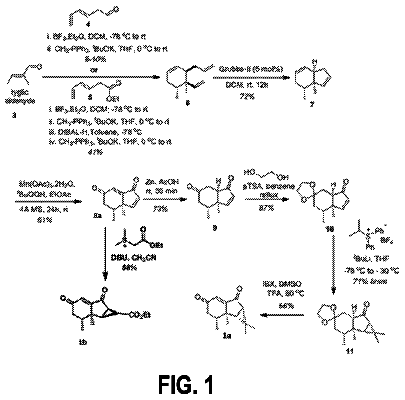
Lapsed, fee not paid1 drawing
Biotech & Lab · US 9,950,275 B1
Extraction of cannabidiol
The invention is methodology of producing a variety of cannabis derivatives such as THC, CBD, Delta-11, and budder.
US 9,950,993 B2 · Assignee: Rutgers, The State University of New Jersey · Inventors: LaVoie; Edmond J. et al.
Sheet 1 of 2 from the published document. All sheets in the USPTO PDF
Disclosed herein are compounds of formula I: ##STR00001## and salts thereof. Also disclosed are compositions comprising of compounds of formula I and methods using compounds of formula I.
Antibiotics have been effective tools in the treatment of infectious diseases. However, bacteria have developed several different mechanisms to overcome the action of antibiotics. These mechanisms of resistance can be specific such as for a molecule or a family of antibiotics, or the mechanisms can be non-specific. Several mechanisms of resistance can exist in a single bacterial strain, and those mechanisms may act independently or they may act synergistically to overcome the action of an antibiotic or a combination of antibiotics. Specific mechanisms include, for example, degradation of the drug, inactivation of the drug by enzymatic modification, and alteration of the drug target. Additional mechanisms of drug resistance include mechanisms in which access of the antibiotic to the target is prevented or reduced by decreasing the transport of the antibiotic into the cell or by increasing
1 of 2 drawing sheets so far from the published document, cropped to the drawing. Every sheet is in the USPTO PDF.
What the patent claimed, word for word. All of it is now free to use.
Antibiotics have been effective tools in the treatment of infectious diseases. However, bacteria have developed several different mechanisms to overcome the action of antibiotics. These mechanisms of resistance can be specific such as for a molecule or a family of antibiotics, or the mechanisms can be non-specific. Several mechanisms of resistance can exist in a single bacterial strain, and those mechanisms may act independently or they may act synergistically to overcome the action of an antibiotic or a combination of antibiotics. Specific mechanisms include, for example, degradation of the drug, inactivation of the drug by enzymatic modification, and alteration of the drug target. Additional mechanisms of drug resistance include mechanisms in which access of the antibiotic to the target is prevented or reduced by decreasing the transport of the antibiotic into the cell or by increasing the efflux of the drug from the cell to the outside medium. Both of these mechanisms can lower the concentration of drug at the target site and allow bacterial survival in the presence of one or more antibiotics that would otherwise inhibit or kill the bacterial cells. Some bacteria utilize both mechanisms, combining low permeability of the cell wall (including membranes) with an active efflux of antibiotics. It has been shown that efflux of antibiotics can be mediated by more than one pump in a single organism and that almost all antibiotics are subject to resistance by this mechanism.
These multiple resistance mechanisms have become widespread and threaten the clinical utility of antibacterial therapy. The increase in antibiotic resistant strains has been particularly noted in major hospitals and care centers. The consequences of the increase in resistant strains include, for example higher morbidity and mortality, longer patient hospitalization, and an increase in treatment costs. Accordingly, there is a need for agents and methods for inhibiting one or more of these mechanisms of bacterial resistance.
Compounds disclose herein, when tested in combination with a known antibiotic, lower the minimum inhibitory concentration of the known antibiotic to inhibit bacterial cell growth. Not to be bound by theory the compounds are believed to exert this effect by the inhibition of a bacterial efflux pump(s).
Accordingly, one embodiment provides a compound of formula I:
R.sup.1 is (C.sub.3-C.sub.8)alkyl substituted with two or more (e.g., 2, 3 or 4) groups selected from —NR.sup.b1R.sup.c1, —NHNH.sub.2, —C(═NR.sup.a1)(NR.sup.b1R.sup.c1), —NR.sup.a1C(═NR.sup.a1)(R.sup.d1) and —NR.sup.a1C(═NR.sup.a1)(NR.sup.b1R.sup.c1);
R.sup.2 is hydrogen or (C.sub.1-C.sub.3)alkyl;
each R.sup.3 is independently hydrogen, halo or (C.sub.1-C.sub.4)alkyl;
R.sup.4 is aryl, heteroaryl, aryl(C.sub.1-C.sub.6)alkyl- or heteroaryl(C.sub.1-C.sub.6)alkyl- wherein any aryl, heteroaryl, aryl(C.sub.1-C.sub.6)alkyl- or heteroaryl(C.sub.1-C.sub.6)alkyl- of R.sup.4 is optionally substituted with one or more (e.g., 1, 2, 3, 4 or 5) groups independently selected from halo, (C.sub.1-C.sub.4)alkyl, (C.sub.1-C.sub.4)haloalkyl, (C.sub.1-C.sub.4)alkoxy and (C.sub.1-C.sub.4)haloalkoxy;
R.sup.5 is hydrogen, (C.sub.1-C.sub.3)alkyl, aryl, heteroaryl, aryl(C.sub.1-C.sub.6)alkyl- or heteroaryl(C.sub.1-C.sub.6)alkyl- wherein any aryl, heteroaryl, aryl(C.sub.1-C.sub.6)alkyl- or heteroaryl(C.sub.1-C.sub.6)alkyl- of R.sup.5 is optionally substituted with one or more (e.g., 1, 2, 3, 4 or 5) groups independently selected from halo, (C.sub.1-C.sub.4)alkyl, (C.sub.1-C.sub.4)haloalkyl, (C.sub.1-C.sub.4)alkoxy and (C.sub.1-C.sub.4)haloalkoxy;
each R.sup.a1 is independently hydrogen or (C.sub.1-C.sub.4)alkyl;
each R.sup.b1 and R.sup.c1 is independently hydrogen or (C.sub.1-C.sub.4)alkyl;
R.sup.d1 is (C.sub.1-C.sub.3)alkyl and
n is 0 or 1;
or a salt thereof.
One embodiment provides a compound of formula I:
R.sup.1 is (C.sub.3-C.sub.8)alkyl substituted with two or more (e.g., 2, 3 or 4) groups selected from —NR.sup.b1R.sup.c1, —NHNH.sub.2, —C(═NR.sup.a1)(NR.sup.b1R.sup.c1), —NR.sup.a1C(═NR.sup.a1)(R.sup.d1) and —NR.sup.a1C(═NR.sup.a1)(NR.sup.b1R.sup.c1);
R.sup.2 is hydrogen or (C.sub.1-C.sub.3)alkyl;
each R.sup.3 is independently hydrogen, halo or (C.sub.1-C.sub.4)alkyl;
R.sup.4 is aryl, heteroaryl, aryl(C.sub.1-C.sub.6)alkyl- or heteroaryl(C.sub.1-C.sub.6)alkyl- wherein any aryl, heteroaryl, aryl(C.sub.1-C.sub.6)alkyl- or heteroaryl(C.sub.1-C.sub.6)alkyl- of R.sup.4 is optionally substituted with one or more (e.g., 1, 2, 3, 4 or 5) groups independently selected from halo, (C.sub.1-C.sub.4)alkyl, (C.sub.1-C.sub.4)haloalkyl, (C.sub.1-C.sub.4)alkoxy and (C.sub.1-C.sub.4)haloalkoxy;
R.sup.5 is hydrogen, (C.sub.1-C.sub.3)alkyl, aryl, heteroaryl, aryl(C.sub.1-C.sub.6)alkyl- or heteroaryl(C.sub.1-C.sub.6)alkyl- wherein any aryl, heteroaryl, aryl(C.sub.1-C.sub.6)alkyl- or heteroaryl(C.sub.1-C.sub.6)alkyl- of R.sup.5 is optionally substituted with one or more (e.g., 1, 2, 3, 4 or 5) groups independently selected from halo, (C.sub.1-C.sub.4)alkyl, (C.sub.1-C.sub.4)haloalkyl, (C.sub.1-C.sub.4)alkoxy and (C.sub.1-C.sub.4)haloalkoxy, provided that when R.sup.5 is hydrogen or (C.sub.1-C.sub.3)alkyl, and R.sup.4 is optionally substituted phenyl, then n is not 0;
each R.sup.a1 is independently hydrogen or (C.sub.1-C.sub.4)alkyl;
each R.sup.b1 and R.sup.c1 is independently hydrogen or (C.sub.1-C.sub.4)alkyl;
R.sup.d1 is (C.sub.1-C.sub.3)alkyl and
n is 0 or 1;
or a salt thereof.
One embodiment provides a pharmaceutical composition comprising a compound of formula I as described herein or a pharmaceutically acceptable salt thereof, and a pharmaceutically acceptable vehicle.
One embodiment provides pharmaceutical composition comprising a compound of formula I as described herein or a pharmaceutically acceptable salt thereof, one or more antibacterial agents and a pharmaceutically acceptable vehicle.
One embodiment provides a method of inhibiting a bacterial efflux pump in an animal (e.g., a mammal such as a human) comprising administering to the animal a compound of formula I as described herein, or a pharmaceutically acceptable salt thereof.
One embodiment provides a method of inhibiting a bacterial efflux pump in an animal (e.g., a mammal such as a human) comprising administering to the animal in need thereof a compound of formula I as described herein, or a pharmaceutically acceptable salt thereof.
One embodiment provides method of treating or preventing a bacterial infection in an animal (e.g., a mammal such as a human) comprising co-administering to the animal a compound as described herein, or a pharmaceutically acceptable salt thereof and one or more antibacterial agents.
One embodiment provides method of treating or preventing a bacterial infection in an animal (e.g., a mammal such as a human) comprising co-administering to the animal in need thereof a compound as described herein, or a pharmaceutically acceptable salt thereof and one or more antibacterial agents.
One embodiment provides a method of inhibiting a bacterial efflux pump in an animal (e.g., a mammal such as a human) with a bacterial infection comprising administering to the animal a compound of formula I as described herein, or a pharmaceutically acceptable salt thereof.
One embodiment provides method of treating or preventing a bacterial infection in an animal (e.g., a mammal such as a human) infected with bacteria comprising co-administering to the animal a compound of formula I as described herein, or a pharmaceutically acceptable salt thereof and one or more antibacterial agents.
One embodiment provides a compound of formula I as described herein, or a pharmaceutically acceptable salt thereof for use in medical treatment.
One embodiment provides a compound of formula I as described herein or a pharmaceutically acceptable salt thereof for the prophylactic or therapeutic inhibition of a bacterial efflux pump for the treatment of a bacterial infection.
One embodiment provides a compound of formula I as described herein or a pharmaceutically acceptable salt thereof which is used in combination with one or more antibacterial agents for the prophylactic or therapeutic treatment of a bacterial infection.
One embodiment provides the use of a compound of formula I as described herein or a pharmaceutically acceptable salt thereof for the preparation of a medicament for inhibiting a bacterial efflux pump.
One embodiment provides the use of a compound of formula I as described herein or a pharmaceutically acceptable salt thereof for the preparation of a medicament for treating a bacterial infection in an animal (e.g., a mammal such as a human).
One embodiment provides the use of a compound of formula I as described herein or a pharmaceutically acceptable salt thereof for the preparation of a medicament which is used in combination with one or more antibacterial agents for treating a bacterial infection in an animal (e.g., a mammal such as a human).
One embodiment provides processes and intermediates disclosed herein that are useful for preparing compounds of formula I or salts thereof.
FIG. 1 illustrates representative fluorescence profiles for a number of compounds with activity as efflux pump inhibitors (EPIs of the Examples). The compounds cause increased accumulation of Hoechst 33342 dye inside the bacteria, where the dye binds to the bacterial DNA. This binding reaction results in a substantial increase in fluorescence emission relative to vehicle (DMSO) control.
FIG. 2 illustrates the ratio of Hoechst 33342 fluorescence in the presence of an efflux pump inhibitors (EPIs of the Examples) to that in the presence of DMSO vehicle (FlEPI/FlDMSO). A FlEPI/FlDMSO ratio of 1 (the horizontal line the graph) indicates insignificant EPI-induced increase in Hoechst fluorescence (i.e., no EPI activity). By contrast, a FlEPI/FlDMSO ratio >1 reflects an EPI-induced increase in Hoechst 33342 fluorescence, and thus an EPI-induced increase in the accumulation of Hoechst 33342 inside the bacteria.
The following definitions are used, unless otherwise described. Halo or halogen is fluoro, chloro, bromo, or iodo. Alkyl and alkoxy, etc. denote both straight and branched groups but reference to an individual radical such as propyl embraces only the straight chain radical (a branched chain isomer such as isopropyl being specifically referred to).
As used herein, the term “(C.sub.a-C.sub.b)alkyl” wherein a and b are integers refers to a straight or branched chain alkyl (hydrocarbon) radical having from a to b carbon atoms. Thus when a is 1 and b is 6, for example, the term includes methyl, ethyl, n-propyl, isopropyl, n-butyl, isobutyl, sec-butyl, t-butyl, n-pentyl and n-hexyl.
The term “aryl” as used herein refers to a single aromatic ring or a multiple condensed ring system wherein the ring atoms are carbon. For example, an aryl group can have 6 to 10 carbon atoms, or 6 to 12 carbon atoms. Aryl includes a phenyl radical. Aryl also includes multiple condensed ring systems (e.g., ring systems comprising 2 rings) having about 9 to 12 carbon atoms or 9 to 10 carbon atoms in which at least one ring is aromatic. Such multiple condensed ring systems may be optionally substituted with one or more (e.g., 1 or 2) oxo groups on any cycloalkyl portion of the multiple condensed ring system. It is to be understood that the point of attachment of a multiple condensed ring system, as defined above, can be at any position of the ring system including an aryl or a cycloalkyl portion of the ring. Typical aryl groups include, but are not limited to, phenyl, indenyl, naphthyl, 1, 2, 3, 4-tetrahydronaphthyl, anthracenyl, and the like.
The term “heteroaryl” as used herein refers to a single aromatic ring or a multiple condensed ring system. The term includes single aromatic rings of from about 1 to 6 carbon atoms and about 1-4 heteroatoms selected from the group consisting of oxygen, nitrogen and sulfur in the rings. The sulfur and nitrogen atoms may also be present in an oxidized form provided the ring is aromatic. Such rings include but are not limited to pyridyl, pyrimidinyl, oxazolyl or furyl. The term also includes multiple condensed ring systems (e.g. ring systems comprising 2 rings) wherein a heteroaryl group, as defined above, can be condensed with one or more heteroaryls (e.g., naphthyridinyl), heterocycles, (e.g., 1, 2, 3, 4-tetrahydronaphthyridinyl), cycloalkyls (e.g., 5,6,7,8-tetrahydroquinolyl) or aryls (e.g. indazolyl) to form a multiple condensed ring system. Such multiple condensed ring systems may be optionally substituted with one or more (e.g., 1 or 2) oxo groups on the cycloalkyl or heterocycle portions of the condensed ring. In one embodiment a monocyclic or bicyclic heteroaryl has 5 to 10 ring atoms comprising 1 to 9 carbon atoms and 1 to 4 heteroatoms. It is to be understood that the point of attachment of a multiple condensed ring system (as defined above for a heteroaryl) can be at any position of the multiple condensed ring system including a heteroaryl, heterocycle, aryl or cycloalkyl portion of the multiple condensed ring system and at any suitable atom of the multiple condensed ring system including a carbon atom and heteroatom (e.g., a nitrogen). Exemplary heteroaryls include but are not limited to pyridyl, pyrrolyl, pyrazinyl, pyrimidinyl, pyridazinyl, pyrazolyl, thienyl, indolyl, imidazolyl, oxazolyl, thiazolyl, furyl, oxadiazolyl, thiadiazolyl, quinolyl, isoquinolyl, benzothiazolyl, benzoxazolyl, indazolyl, quinoxalyl, quinazolyl, 5,6,7,8-tetrahydroisoquinolinyl, benzofuranyl, benzimidazolyl and thianaphthenyl.
The term “heterocyclyl” or “heterocycle” as used herein refers to a single saturated or partially unsaturated ring or a multiple condensed ring system. The term includes single saturated or partially unsaturated rings (e.g., 3, 4, 5, 6 or 7-membered rings) from about 1 to 6 carbon atoms and from about 1 to 3 heteroatoms selected from the group consisting of oxygen, nitrogen and sulfur in the ring. The ring may be substituted with one or more (e.g., 1, 2 or 3) oxo groups and the sulfur and nitrogen atoms may also be present in their oxidized forms. Such rings include but are not limited to azetidinyl, tetrahydrofuranyl or piperidinyl. It is to be understood that the point of attachment for a heterocycle can be at any suitable atom of the heterocycle Exemplary heterocycles include, but are not limited to aziridinyl, azetidinyl, pyrrolidinyl, piperidinyl, homopiperidinyl, morpholinyl, thiomorpholinyl, piperazinyl, tetrahydrofuranyl, dihydrooxazolyl, tetrahydropyranyl and tetrahydrothiopyranyl.
The term “haloalkyl” includes an alkyl group as defined herein that is substituted with one or more (e.g., 1, 2, 3, or 4) halo. One specific halo alkyl is a “(C.sub.1-C.sub.6)haloalkyl”.
The term “alkoxy” refers to —O(alkyl) and the term “haloalkoxy” refers to an alkoxy that is substituted with one or more (e.g., 1, 2, 3, or 4) halo.
The term cycloalkyl includes saturated and partially unsaturated carbocyclic ring systems. In one embodiment the cycloalkyl is a monocyclic carbocyclic ring. One such cycloalkyl is a “(C.sub.3-C.sub.8)cycloalkyl”.
Specific values listed below for radicals, substituents, and ranges, are for illustration only; they do not exclude other defined values or other values within defined ranges for the radicals and substituents.
Specifically, (C.sub.1-C.sub.6)alkyl can be methyl, ethyl, propyl, isopropyl, butyl, iso-butyl, sec-butyl, pentyl, 3-pentyl, or hexyl; (C.sub.1-C.sub.6)alkoxy can be methoxy, ethoxy, propoxy, isopropoxy, butoxy, iso-butoxy, sec-butoxy, pentoxy, 3-pentoxy, or hexyloxy; (C.sub.3-C.sub.8)cycloalkyl can be cyclopropyl, cyclobutyl, cyclopentyl, or cyclohexyl; (C.sub.1-C.sub.6)haloalkyl can be iodomethyl, bromomethyl, chloromethyl, fluoromethyl, trifluoromethyl, 2-chloroethyl, 2-fluoroethyl, 2,2,2-trifluoroethyl, or pentafluoroethyl; aryl can be phenyl, indenyl, or naphthyl; and heteroaryl can be furyl, imidazolyl, triazolyl, triazinyl, oxazolyl, isoxazolyl, thiazolyl, isothiazoyl, pyrazolyl, pyrrolyl, pyrazinyl, tetrazolyl, pyridyl, (or its N-oxide), thienyl, pyrimidinyl (or its N-oxide), indolyl, isoquinolyl (or its N-oxide) or quinolyl (or its N-oxide).
It is to understood that the embodiments provided below are for compounds of formula I and all sub-formulas thereof (e.g., formulas Ia, Ib, Ic). It is to be understood the two or more embodiments may be combined.
In one embodiment R.sup.2 is hydrogen.
In one embodiment each R.sup.3 is hydrogen.
One embodiment provides a compound of formula Ia:
##STR00004## or a salt thereof.
In one embodiment n is 0.
In one embodiment n is 1.
One embodiment provides a compound of formula Ib:
##STR00005## or a salt thereof.
One embodiment provides a compound of formula Ic:
##STR00006## or a salt thereof.
In one embodiment R.sup.4 is aryl or aryl(C.sub.1-C.sub.6)alkyl- wherein any aryl or aryl(C.sub.1-C.sub.6)alkyl- of R.sup.4 is optionally substituted with one or more (e.g., 1, 2, 3, 4 or 5) groups independently selected from halo, (C.sub.1-C.sub.4)alkyl, (C.sub.1-C.sub.4)haloalkyl, (C.sub.1-C.sub.4)alkoxy and (C.sub.1-C.sub.4)haloalkoxy.
In one embodiment R.sup.4 is aryl or aryl(C.sub.1-C.sub.3)alkyl- wherein any aryl or aryl(C.sub.1-C.sub.3)alkyl- of R.sup.4 is optionally substituted with one or more (e.g., 1, 2, 3, 4 or 5) groups independently selected from halo, (C.sub.1-C.sub.4)alkyl, (C.sub.1-C.sub.4)haloalkyl, (C.sub.1-C.sub.4)alkoxy and (C.sub.1-C.sub.4)haloalkoxy.
In one embodiment R.sup.4 is phenyl or phenyl(C.sub.1-C.sub.3)alkyl- wherein any phenyl or phenyl(C.sub.1-C.sub.3)alkyl- of R.sup.4 is optionally substituted with one or more (e.g., 1, 2, 3, 4 or 5) groups independently selected from halo, (C.sub.1-C.sub.4)alkyl, (C.sub.1-C.sub.4)haloalkyl, (C.sub.1-C.sub.4)alkoxy and (C.sub.1-C.sub.4)haloalkoxy.
In one embodiment R.sup.4 is phenyl or phenyl(C.sub.1-C.sub.3)alkyl- wherein any phenyl or phenyl(C.sub.1-C.sub.3)alkyl- of R.sup.4 is optionally substituted with one or more (C.sub.1-C.sub.4)alkoxy.
In one embodiment R.sup.4 is:
In one embodiment R.sup.4 is:
In one embodiment R.sup.5 is hydrogen, (C.sub.1-C.sub.3)alkyl, aryl, heteroaryl, aryl(C.sub.1-C.sub.6)alkyl- or heteroaryl(C.sub.1-C.sub.6)alkyl- wherein any aryl, heteroaryl, aryl(C.sub.1-C.sub.6)alkyl- or heteroaryl(C.sub.1-C.sub.6)alkyl- of R.sup.5 is optionally substituted with one or more (e.g., 1, 2, 3, 4 or 5) groups independently selected from halo, (C.sub.1-C.sub.4)alkyl, (C.sub.1-C.sub.4)haloalkyl, (C.sub.1-C.sub.4)alkoxy and (C.sub.1-C.sub.4)haloalkoxy, provided that when R.sup.5 is hydrogen or (C.sub.1-C.sub.3)alkyl, then n is not 0.
In one embodiment R.sup.5 is hydrogen, (C.sub.1-C.sub.3)alkyl, aryl, heteroaryl, aryl(C.sub.1-C.sub.6)alkyl- or heteroaryl(C.sub.1-C.sub.6)alkyl- wherein any aryl, heteroaryl, aryl(C.sub.1-C.sub.6)alkyl- or heteroaryl(C.sub.1-C.sub.6)alkyl- of R.sup.5 is optionally substituted with one or more (e.g., 1, 2, 3, 4 or 5) groups independently selected from halo, (C.sub.1-C.sub.4)alkyl, (C.sub.1-C.sub.4)haloalkyl, (C.sub.1-C.sub.4)alkoxy and (C.sub.1-C.sub.4)haloalkoxy, provided that when R.sup.5 is hydrogen or (C.sub.1-C.sub.3)alkyl, then n is 1.
In one embodiment R.sup.5 is hydrogen, aryl or aryl(C.sub.1-C.sub.6)alkyl- wherein any aryl or aryl(C.sub.1-C.sub.6)alkyl- of R.sup.5 is optionally substituted with one or more (e.g., 1, 2, 3, 4 or 5) groups independently selected from halo, (C.sub.1-C.sub.4)alkyl, (C.sub.1-C.sub.4)haloalkyl, (C.sub.1-C.sub.4)alkoxy and (C.sub.1-C.sub.4)haloalkoxy.
In one embodiment R.sup.5 is hydrogen, phenyl or phenyl(C.sub.1-C.sub.6)alkyl- wherein any phenyl or phenyl(C.sub.1-C.sub.6)alkyl- of R.sup.5 is optionally substituted with one or more (e.g., 1, 2, 3, 4 or 5) groups independently selected from halo, (C.sub.1-C.sub.4)alkyl, (C.sub.1-C.sub.4)haloalkyl, (C.sub.1-C.sub.4)alkoxy and (C.sub.1-C.sub.4)haloalkoxy.
In one embodiment R.sup.5 is hydrogen, phenyl or phenyl(C.sub.1-C.sub.2)alkyl- wherein any phenyl or phenyl(C.sub.1-C.sub.2)alkyl- of R.sup.5 is optionally substituted with one or more (e.g., 1, 2, 3, 4 or 5) groups independently selected from halo, (C.sub.1-C.sub.4)alkyl, (C.sub.1-C.sub.4)haloalkyl, (C.sub.1-C.sub.4)alkoxy and (C.sub.1-C.sub.4)haloalkoxy.
In one embodiment R.sup.5 is hydrogen, aryl or aryl(C.sub.1-C.sub.6)alkyl- wherein any aryl or aryl(C.sub.1-C.sub.6)alkyl- of R.sup.5 is optionally substituted with one or more (e.g., 1, 2, 3, 4 or 5) groups independently selected from halo, (C.sub.1-C.sub.4)alkyl, (C.sub.1-C.sub.4)haloalkyl, (C.sub.1-C.sub.4)alkoxy and (C.sub.1-C.sub.4)haloalkoxy, provided that when R.sup.5 is hydrogen, then n is not 0.
In one embodiment R.sup.5 is hydrogen, phenyl or phenyl(C.sub.1-C.sub.6)alkyl- wherein any phenyl or phenyl(C.sub.1-C.sub.6)alkyl- of R.sup.5 is optionally substituted with one or more (e.g., 1, 2, 3, 4 or 5) groups independently selected from halo, (C.sub.1-C.sub.4)alkyl, (C.sub.1-C.sub.4)haloalkyl, (C.sub.1-C.sub.4)alkoxy and (C.sub.1-C.sub.4)haloalkoxy, provided that when R.sup.5 is hydrogen, then n is not 0.
In one embodiment R.sup.5 is hydrogen, phenyl or phenyl(C.sub.1-C.sub.2)alkyl- wherein any phenyl or phenyl(C.sub.1-C.sub.2)alkyl- of R.sup.5 is optionally substituted with one or more (e.g., 1, 2, 3, 4 or 5) groups independently selected from halo, (C.sub.1-C.sub.4)alkyl, (C.sub.1-C.sub.4)haloalkyl, (C.sub.1-C.sub.4)alkoxy and (C.sub.1-C.sub.4)haloalkoxy provided that when R.sup.5 is hydrogen, then n is not 0.
In one embodiment R.sup.5 is aryl or aryl(C.sub.1-C.sub.6)alkyl- wherein any aryl or aryl(C.sub.1-C.sub.6)alkyl- of R.sup.5 is optionally substituted with one or more (e.g., 1, 2, 3, 4 or 5) groups independently selected from halo, (C.sub.1-C.sub.4)alkyl, (C.sub.1-C.sub.4)haloalkyl, (C.sub.1-C.sub.4)alkoxy and (C.sub.1-C.sub.4)haloalkoxy.
In one embodiment R.sup.5 is phenyl or phenyl(C.sub.1-C.sub.6)alkyl- wherein any phenyl or phenyl(C.sub.1-C.sub.6)alkyl- of R.sup.5 is optionally substituted with one or more (e.g., 1, 2, 3, 4 or 5) groups independently selected from halo, (C.sub.1-C.sub.4)alkyl, (C.sub.1-C.sub.4)haloalkyl, (C.sub.1-C.sub.4)alkoxy and (C.sub.1-C.sub.4)haloalkoxy.
In one embodiment R.sup.5 is phenyl or phenyl(C.sub.1-C.sub.2)alkyl- wherein any phenyl or phenyl(C.sub.1-C.sub.2)alkyl- of R.sup.5 is optionally substituted with one or more (e.g., 1, 2, 3, 4 or 5) groups independently selected from halo, (C.sub.1-C.sub.4)alkyl, (C.sub.1-C.sub.4)haloalkyl, (C.sub.1-C.sub.4)alkoxy and (C.sub.1-C.sub.4)haloalkoxy.
In one embodiment R.sup.5 is hydrogen,
In one embodiment R.sup.5 is:
In one embodiment the moiety —(C(R.sup.3).sub.2).sub.nCHR.sup.4R.sup.5 of the compound of formula I is:
In one embodiment R.sup.1 is (C.sub.3-C.sub.8)alkyl substituted with two or more groups independently selected from —NR.sup.b1R.sup.c1.
In one embodiment R.sup.1 is (C.sub.3-C.sub.8)alkyl substituted with two groups independently selected from —NR.sup.b1R.sup.c1.
In one embodiment R.sup.1 is (C.sub.4-C.sub.5)alkyl substituted with two groups independently selected from —NR.sup.b1R.sup.c1.
In one embodiment R.sup.b1 and R.sup.c1 are each hydrogen.
In one embodiment R.sup.1 is:
In one embodiment the compound of formula I is:
##STR00013## ##STR00014## ##STR00015## ##STR00016## or a salt thereof.
In one embodiment the compound of formula I is:
Generally, compounds of formula I as well as synthetic intermediates that can be used for preparing compounds of formula I can be prepared as illustrated in the following General Methods and Schemes. It is understood that variable groups shown below (e.g., R.sup.1, R.sup.2, R.sup.3, R.sup.4, n) can represent the final corresponding groups present in a compound of formula I or that these groups can represent groups that can be converted to the final corresponding groups present in a compound of formula I at a convenient point in a synthetic sequence. For example, the variable groups can contain one or more protecting groups that can be removed at a convenient point in a synthetic sequence to provide the final corresponding groups in the compound of formula I.
Reaction of the amine A with carboxylic acid B under standard coupling conditions provides intermediate C. Intermediate C can be deprotected to provide the compound of formula I. For instance, when R.sup.1 of intermediate C includes a Cbz protected amine the Cbz group can be removed under hydrogenation conditions (e.g., Pd/C, H.sub.2).
A particular protected intermediate useful in Scheme 1 is protected intermediate A which is:
##STR00019## wherein R.sup.2 has the values described herein for formula I and R.sup.1p is (C.sub.3-C.sub.8)alkyl substituted with two or more (e.g., 2, 3 or 4) —NR.sup.b1R.sup.c1 groups; each R.sup.b1 and R.sup.c1 is independently hydrogen or (C.sub.1-C.sub.4)alkyl wherein at least one of each R.sup.b1 or R.sup.c1 is a protecting group. In one embodiment the protecting group is a carbonyl benzyloxy (Cbz) group. In another embodiment one or more of the protecting groups can be benzyl (Bn) or t-butoxycarbonyl (Boc). Several known methods are available for the preparation of the desired protected amine intermediates.
One possible synthetic route to the formation of such intermediates is illustrated in the following general synthetic Scheme 2. In one embodiment each R is independently hydrogen or methyl.
Scheme 3 illustrates a method that can be used for the formation of a general intermediate that can be employed in a wide variety of transformations, as illustrated in Scheme 4 to provide compounds of Formula 1.
The flexibility in the chemistry that can be used to prepare compounds of Formula I is illustrated in Schemes 5a-d. The preparations depicted in these schemes use the intermediate shown in Scheme 3 with the structure:
##STR00023## and related compounds with the structure:
##STR00024## Schemes 5a to 5d Examples of the Use of the Intermediate in Scheme 3 that can be Used for the Preparation of Compounds of Formula 1
In one embodiment m is 0, 1, 2, 3, 4 or 5 (Scheme 5a). In one embodiment m is 1 (Scheme 5a).
In one embodiment m is 0, 1, 2, 3 or 4 and R is methyl (Scheme 5b). In one embodiment m is 0 and R is methyl (Scheme 5b). In one embodiment m is 1 and R is methyl (Scheme 5b).
Methods for the preparation of a guanidine substituent from amine are well established. Synthetic Scheme 6 provides a method that employs one of the intermediates used in the listed examples which can be used to prepare additional compounds of formula I.
Similarly, one can prepare analogs that have the hydrazine moiety. Methods that can be used for the preparation of such analogs are illustrated in Scheme 7.
The preparation of amidine derivatives on the N-alkyl portion of the amides of Formula I are also readily accessible using standard chemistry that is well known in the art.
An example of such an approach is outlined in Scheme 8.
In a similar manner, the reversed amidine derivative of various structurally-related carboxamides can also be prepared as illustrated in Scheme 9.
It is also well known in the art that primary amines can be converted to secondary amines by well-established methods and that both primary and secondary amines can be converted to their tertiary amines by standard methods as illustrated in Scheme 10.
In one embodiment m is 0, 1, 2, 3, 4 or 5 (Scheme 10).
The compounds disclosed herein are bacterial efflux pump inhibitors. An efflux pump inhibitor is a compound that interferes with the ability of an efflux pump to export a substrate. The inhibitor may have intrinsic antibacterial properties of its own. The compounds disclosed herein may be useful for treating bacterial infections (e.g., gram negative and gram positive) when administered with an antibacterial agent.
In one embodiment the bacterial infection being treated is a Gram-negative bacterial strain infection. In one embodiment the Gram-negative bacterial strain is selected from the group consisting of Acinetobacter baumannii, Acinetobacter calcoaceticus, Acinetobacter haemolyticus, Acinetobacter lwoffi, Actinobacillus actinomycetemcomitans, Aeromonas hydrophilia, Aggregatibacter actinomycetemcomitans, Agrobacterium tumefaciens, Bacteroides distasonis, Bacteroides eggerthii, Bacteroidesforsythus, Bacteroides fragilis, Bacteroides ovalus, Bacteroides splanchnicus, Bacteroides thetaiotaomicron, Bacteroides uniformis, Bacteroides vulgatus, Bordetella bronchiseptica, Bordetella parapertussis, Bordetella pertussis, Borrelia burgdorferi, Branhamella catarrhalis, Burkholderia cepacia, Campylobacter coli, Campylobacter fetus, Campylobacterjejuni, Caulobacter crescentus, Chlamydia trachomatis, Citrobacter diversus, Citrobacter freundii, Enterobacter aerogenes, Enterobacter asburiae, Enterobacter cloacae, Enterobacter sakazakii, Escherchia coli, Francisella tularensis, Fusobacterium nucleatum, Gardnerella vaginalis, Haemophilus ducreyi, Haemophilus haemolyticus, Haemophilus influenzae, Haemophilus parahaemolyticus, Haemophilus parainfluenzae, Helicobacter pylori, Kingella denitrificans, Kingella indologenes, Kingella kingae, Kingella oralis, Klebsiella oxytoca, Klebsiella pneumoniae, Klebsiella rhinoscleromatis, Legionella pneumophila, Listeria monocytogenes, Moraxella bovis, Moraxella catarrhalis, Moraxella lacunata, Morganella morganii, Neisseria gonorrhoeae, Neisseria meningitidis, Pantoea agglomerans, Pasteurella canis, Pasteurella haemolytica, Pasteurella multocida, Pasteurella tularensis, Porphyromonas gingivalis, Proteus mirabilis, Proteus vulgaris, Providencia alcalifaciens, Providencia rettgeri, Providencia stuartii, Pseudomonas acidovorans, Pseudomonas aeruginosa, Pseudomonas alcaligenes, Pseudomonas fluorescens, Pseudomonas putida, Salmonella enteriditis, Salmonella paratyphi, Salmonella typhi, Salmonella typhimurium, Serratia marcescens, Shigella dysenteriae, Shigella jlexneri, Shigella sonnei, Stenotrophomonas maltophilla, Veillonella parvula, Vibrio cholerae, Vibrio parahaemolyticus, Yersinia enterocolitica, Yersinia intermedia, Yersinia pestis and Yersinia pseudotuberculosis.
In one embodiment the bacterial infection being treated is a Gram-positive bacterial strain infection. In one embodiment the Gram-positive bacterial strain is selected from the group consisting of Actinomyces naeslundii, Actinomyces viscosus, Bacillus anthracis, Bacillus cereus, Bacillus subtilis, Clostridium difficile, Corynebacterium diphtheriae, Corynebacterium ulcerans, Enterococcusfaecalis, Enterococcus faecium, Micrococcus luteus, Mycobacterium avium, Mycobacterium intracellulare, Mycobacterium leprae, Mycobacterium tuberculosis, Propionibacterium acnes, Staphylococcus aureus, Staphylococcus epidermidis, Staphylococcus haemolyticus, Staphylococcus hominis, Staphylococcus hyicus, Staphylococcus intermedius, Staphylococcus saccharolyticus, Staphylococcus saprophyticus, Streptococcus agalactiae, Streptococcus mutans, Streptococcus pneumoniae, Streptococcus pyogenes, Streptococcus salivarius and Streptococcus sanguis.
The compositions can, if desired, also contain other active therapeutic agents, such as a narcotic, a non-steroid anti-inflammatory drug (NSAID), an analgesic, an anesthetic, a sedative, a local anesthetic, a neuromuscular blocker, an anti-cancer, other antimicrobial (for example, an aminoglycoside, an antifungal, an antiparasitic, an antiviral, a carbapenem, a cephalosporin, a fluoroquinolone, a macrolide, a penicillin, a sulfonamide, a tetracycline, another antimicrobial), an anti-psoriatic, a corticosteriod, an anabolic steroid, a diabetes-related agent, a mineral, a nutritional, a thyroid agent, a vitamin, a calcium-related hormone, an antidiarrheal, an anti-tussive, an anti-emetic, an anti-ulcer, a laxative, an anticoagulant, an erythropoietin (for example, epoetin alpha), a filgrastim (for example, G-CSF, Neupogen), a sargramostim (GM-CSF, Leukine), an immunization, an immunoglobulin, an immunosuppressive (for example, basiliximab, cyclosporine, daclizumab), a growth hormone, a hormone replacement drug, an estrogen receptor modulator, a mydriatic, a cycloplegic, an alkylating agent, an anti-metabolite, a mitotic inhibitor, a radiopharmaceutical, an anti-depressant, an anti-manic agent, an anti-psychotic, an anxiolytic, a hypnotic, a sympathomimetic, a stimulant, donepezil, tacrine, an asthma medication, a beta agonist, an inhaled steroid, a leukotriene inhibitor, a methylxanthine, a cromolyn, an epinephrine or analog thereof, dornase alpha (Pulmozyme), a cytokine, or any combination thereof.
In one embodiment the antibacterial agent is selected from quinolones, tetracyclines, glycopeptides, aminoglycosides, β-lactams, rifamycins, macrolides, ketolides, oxazolidinones, coumermycins, and chloramphenicol.
It will be appreciated that compounds of the invention having a chiral center may exist in and be isolated in optically active and racemic forms. Some compounds may exhibit polymorphism. It is to be understood that the present invention encompasses any racemic, optically-active, polymorphic, or stereoisomeric form, or mixtures thereof, of a compound of the invention, which possess the useful properties described herein, it being well known in the art how to prepare optically active forms (for example, by resolution of the racemic form by recrystallization techniques, by synthesis from optically-active starting materials, by chiral synthesis, or by chromatographic separation using a chiral stationary phase.
When a bond in a compound formula herein is drawn in a non-stereochemical manner (e.g. flat), the atom to which the bond is attached includes all stereochemical possibilities. When a bond in a compound formula herein is drawn in a defined stereochemical manner (e.g. bold, bold-wedge, dashed or dashed-wedge), it is to be understood that the atom to which the stereochemical bond is attached is enriched in the absolute stereoisomer depicted unless otherwise noted. In one embodiment, the compound may be at least 51% the absolute stereoisomer depicted. In another embodiment, the compound may be at least 60% the absolute stereoisomer depicted. In another embodiment, the compound may be at least 80% the absolute stereoisomer depicted. In another embodiment, the compound may be at least 90% the absolute stereoisomer depicted. In another embodiment, the compound may be at least 95 the absolute stereoisomer depicted. In another embodiment, the compound may be at least 99% the absolute stereoisomer depicted.
It will also be appreciated by those skilled in the art that certain compounds of the invention can exist in more than one tautomeric form. For example, a substituent of formula —NH—C(═O)H in a compound of formula (I) could exist in tautomeric form as —N═C(OH)H. The present invention encompasses all tautomeric forms of a compound of formula I as well as mixtures thereof that can exist in equilibrium with non-charged and charged entities depending upon pH, which possess the useful properties described herein.
In cases where compounds are sufficiently basic or acidic, a salt of a compound of formula I can be useful as an intermediate for isolating or purifying a compound of formula I. Additionally, administration of a compound of formula I as a pharmaceutically acceptable acid or base salt may be appropriate. Examples of pharmaceutically acceptable salts are organic acid addition salts formed with acids which form a physiological acceptable anion, for example, tosylate, methanesulfonate, acetate, citrate, malonate, tartrate, succinate, fumarate, benzoate, ascorbate, α-ketoglutarate, and α-glycerophosphate. Suitable inorganic salts may also be formed, including hydrochloride, sulfate, nitrate, bicarbonate, and carbonate salts. Salts may be obtained using standard procedures well known in the art, for example by reacting a sufficiently basic compound such as an amine with a suitable acid affording the corresponding anion. Alkali metal (for example, sodium, potassium or lithium) or alkaline earth metal (for example calcium) salts of carboxylic acids can also be made.
Pharmaceutically suitable counterions include pharmaceutically suitable cations and pharmaceutically suitable anions that are well known in the art. Examples of pharmaceutically suitable anions include, but are not limited to those described above (e.g. physiologically acceptable anions) including Cl.sup.−, Br.sup.−, I.sup.−, CH.sub.3SO.sub.3.sup.−, H.sub.2PO.sub.4.sup.−, CF.sub.3SO.sub.3.sup.−, p-CH.sub.3C.sub.6H.sub.4SO.sub.3.sup.−, citrate, tartrate, phosphate, malate, fumarate, formate, or acetate.
It will be appreciated by those skilled in the art that a compound of the invention comprising a counterion can be converted to a compound of the invention comprising a different counterion. Such a conversion can be accomplished using a variety of well-known techniques and materials including but not limited to ion exchange resins, ion exchange chromatography and selective crystallization.
The compounds of formula I can be formulated as pharmaceutical compositions and administered to a mammalian host, such as a human patient in a variety of forms adapted to the chosen route of administration, i.e., orally or parenterally, by intravenous, intramuscular, topical or subcutaneous routes. For oral administration the compounds can be formulated as a solid dosage form with or without an enteric coating.
Thus, the present compounds may be systemically administered, e.g., orally, in combination with a pharmaceutically acceptable vehicle such as an inert diluent, excipient or an assimilable edible carrier. They may be enclosed in hard or soft shell gelatin capsules, may be compressed into tablets, or may be incorporated directly with the food of the patient's diet. For oral therapeutic administration, the active compound may be combined with one or more excipients and used in the form of ingestible tablets, buccal tablets, troches, capsules, elixirs, suspensions, syrups, wafers, and the like. Such compositions and preparations should contain at least 0.1% of active compound. The percentage of the compositions and preparations may, of course, be varied and may conveniently be between about 2 to about 90% of the weight of a given unit dosage form. The amount of active compound in such therapeutically useful compositions is such that an effective dosage level will be obtained.
The description continues in the full USPTO document.
About 5,277 words. The USPTO PDF has it with every drawing.
Fees are due 3.5, 7.5 and 11.5 years after grant. This patent expired on April 24, 2026, so the fee marked "not paid" was the one that went unpaid.
BACTERIAL EFFLUX PUMP INHIBITORS
Filed Mar 2016 · published Sep 2016Bacterial efflux pump inhibitors
Filed Mar 2016 · granted Apr 2018Earlier publications, parents and continuations. None of them can still be enforced, or this patent would not be listed.
Prior art cited by the examiner or applicant. Useful when you check your own idea for novelty.
Everything on this page comes from the documents linked above.