Cross reference to related application
This application is a conversion application of U.S. Provisional Patent Application Ser. No. 61/941,216, filed Feb. 18, 2014 the entire content and disclosure of which is incorporated herein by reference as if fully set forth herein.
Background
In the era of information, more and more content is generated each day. Daily news, blogs, topics of interest, conversations with friends, are examples of content people strive to keep up to date to—content generated from several sources, and sometimes requiring different tools to access them. There is also a growing trend of content sharing, to broadcast personal content or a personalized selection of public content to an audience through blogs or other social media tools. The input of this information is often done by a single individual, mostly done on a chronological fashion, and may touch on a variety of unrelated and unorganized topics.
Currently, there is no adequate way for a user to specify who has access to the content.
While some current publicly available systems and services may exhibit an assortment of desired features for socially aggregating content: e.g., Google Wave [discontinued] (dynamic threads), Google+ (circle-specific conversations), Stack Exchange (doesn't link to old answers, however), Yahoo! Answers (voted discussions), Quora (topics of interest), Reddit (ranked discussions), Wikipedia (sequence neutral content), Twitter (chronological UI, feeds and notification), Eddi [twitter client] (clustering of topics), Yahoo! Pipes (fetching and filtering criteria and programmability), among others, no one system captures a full range of functionality for aggregating, organizing, and curating content.
For example, in some limited-access environments, controlled content publishing is critical where distinct work roles and confidentiality restrictions apply. Simultaneously, a focus on technical assistance and conversations rather than status updates leads to a need for mechanisms that enable efficient search, grouping, and filtering of large amounts of content.
Summary
There is provided a system and method for converging and organizing content for facilitated content management, for content curation, and controlled access to be flexibly defined by a user in a visual and unobtrusive way.
In one aspect, there is provided a tool for curating electronic content. The tool comprises: a memory storage device for storing content previously created by one or more users of a social network, the content including at least one container having a plurality of content elements. A processor device associated with the memory storage device is provided, wherein the processor device is configured to perform a method to: receive, via commands communicated over a network from a computer device, a user selection of a container having the plurality of content elements; respond to the commands communicated from the computer device to aggregate select elements from the container; respond to the commands communicated from the computer device to filter out select elements from the container; respond to the commands communicated from the computer device to rearrange an order of select elements in the container; create a new container having the aggregated elements in the rearranged order with select elements filtered out to prevent access by other users; and publish, for access by select user devices over the network, the new container.
In a further aspect, a method for curating electronic content comprises: storing, in a memory storage device, content previously created by one or more users of a social network, the content including at least one container having a plurality of content elements; receiving, at a processor device associated with the memory storage device, commands communicated over a network from a computer device of a user, to select a container having the plurality of content elements; aggregating, by the processor device, responsive to the commands communicated from the computer device, select elements from the container; filtering out, by the processor device, responsive to the commands communicated from the computer device, select elements from the container; rearranging, by the processor device, responsive to the commands communicated from the computer device, an order of select elements in the container; creating a new container having the aggregated elements in the rearranged order with select elements filtered out to prevent access by other users; and publishing, for access by select user devices over the network, the new container.
A computer program product is provided for performing operations. The computer program product includes a storage medium readable by a processing circuit and storing instructions run by the processing circuit for running a method(s). The method(s) are the same as listed above.
Brief description of the drawings
These and other objects, features and advantages of the present invention will become apparent from the following detailed description of illustrative embodiments thereof, which is to be read in connection with the accompanying drawings, in which:
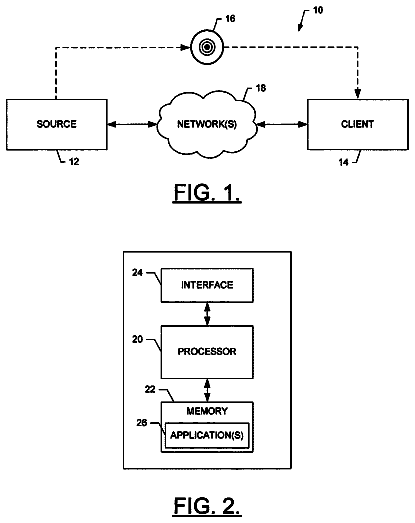
FIG. 1 shows an exemplary environment for aggregating and curating web based content for specifying a collection or a board;
FIG. 2 depicts a block diagram of an exemplary content processing engine shown in FIG. 1 ;
FIG. 3 is an exemplary home page screen shot 75 presented via the GUI 15 of FIG. 1 ;
FIG. 3A depicts a more detailed view of the listings 90 depicting specific functionality for hiding posts of an existing or newly created collection;
FIG. 3B shows an example interface display 65 showing example search results found responsive to a user name search entered via the exemplary interface 75 of FIG. 3 ;
FIG. 4 shows a full screen display shot 105 of boards responsive to user selection of the boards selection button 79 of interface 75 of FIG. 3 ;
FIG. 5 shows a detailed view of two collections from the listings 80 of collections from the home screen 75 , one being a public collection, and the other, a private collection;
FIG. 6 shows a detailed view of an embodiment of the collections setting menu 95 providing the curation filtering capabilities to configure a collection in one embodiment;
FIG. 7A depicts conceptually a moderator selecting of a post to be hidden from a curated collection, and an example result of dragging and dropping selected posts from a collection of posts in a designated order, to a different designated order in the curated collection;
FIG. 7B depicts conceptually the moderator selecting four different collections to be replicated for a curated board in one example embodiment;
FIGS. 8A-8C illustrate a flow diagram of an exemplary process for collection curation for members of a web-based social network in one embodiment; and
FIG. 9 depicts an exemplary hardware configuration for performing methods such as described in FIGS. 8A-8C in one embodiment.
Detailed description
A system, method and computer program product for aggregating online content, where a moderator curates data from multiple internal or external sources and selects the way this collection of information can be published and accessed by other users, so that they can contribute further. Thus, a moderator (defined as one who is an owner of a collection) also produces content (e.g., posts can also be generated from within the system, either by the owner of a collection as well as other users/moderators). Specifically, in one embodiment, a moderator (defined as one who is an owner of content) or a user is permitted to aggregate content and subsequently organizes content created by a user and/or other users, such as posted and linked content, and/or sources into collections, and select sharing and moderating criteria for publishing these collections.
In one embodiment, the system provides means to enable aggregating the user-provided content in ways defined by a moderator. In one embodiment, users having a role of moderator can check the facts contained in posted and linked content and analyze the veracity of statements, i.e., essentially curating the data. As an example, a user who owns a collection would be a moderator of that collection.
In one embodiment, the system and methods implemented enable explicit content curation by users (e.g., a moderator) to be consumed by other users, and the publishing rules of this content as specified by the user. Methods may be invoked to provide for content publishing and sharing, including provision of whole social network and access control components. Any means for access control are defined by the content curator (hereinafter “moderator”).
As will be referred to herein, the following definitions are provided:
Content element: a unit of content to be displayed. Can be user-generated, or fetched from other sources (e.g., social network posts, online news, SMS messages). Can be any kind of media content—images, video, sound, text, etc.
Filter: criteria for selecting content—usually related to a central topic or common goal.
Collection: a group of content elements that may be aggregated according to automatic or manual filters.
Board: a group of collections, to be displayed simultaneously.
Community: a group of users that can be given access to a board, and/or a collection.
Sharing Criteria: define access policies for reading content. They can be applied to collections and/or boards. Possible statuses are “public” (anyone can access), “selected” (user specifies a set of communities that can access the content), or “private” (only the creator can access the content).
Moderating Criteria: define access policies for contributing with content. They can be applied to collections and/or boards. Possible statuses are “public” (anyone can contribute), “selected” (only specific communities can contribute), or “private” (only the creator can contribute).
Gateway: an optional external entry point for a board.
FIG. 1 shows an exemplary environment 10 for aggregating and curating web based content for specifying a collection or a board in one embodiment. As shown, there is provided a user device 12 , e.g., referred to herein as a content curator or moderator device 12 , shown coupled to a social network 98 , e.g., via a communications network 99 , over which the device 12 communicates (sends and receives) signals 45 . The social network 98 may be web-based and provides social networking and communication services as known in the art. In one embodiment, the network 98 may be a private enterprise social network, e.g., a social network administered by a corporation or enterprise, e.g., Yammer®, Jive®, IBM Connections. The stored content may include, but is not limited to: chat or communicated messages, links, electronically stored textual media or other types of media content, stored or published by and associated with members of the social network 98 , or other web-based content not necessarily associated with social network members.
As further shown in FIG. 1 , in one embodiment, associated with the enterprise network or social network 98 , and in electronic communication therewith, is a processing engine 50 that may be provided as a web-based tool 51 to provide features for managing the aggregating and curating social or enterprise network content by a moderator. Specifically, content that may be aggregated and curated may be stored in one or more data storage devices 35 . A data storage device 35 may include a database such as a relational database having the content to be aggregated and/or curated and made accessible by the processing engine 50 . In one example embodiment, the data storage device 35 may include two or more databases, a first database 35 a including stored collections previously created by users of the network, a second database 35 b including stored boards of collections previously created by users of the network, and a third database 35 c containing the posted content for all registered users and non-registered users. Content of these databases may be consolidated in a single or multiple storage devices 35 .
In one embodiment, as shown in FIG. 1 , in accordance with functionality described herein, the moderator may grant to one or multiple other users of the social network site or enterprise network 98 selected content access rights, to enable access to and/or view specific aggregated and curated content stored in data storage devices 35 remotely, e.g., via their wired or wireless communication connections from user devices 12 a , . . . , 12 n , which may comprise, for example, a Smartphone, laptop, mobile or desktop computer, over the network 99 . It is understood that processing engine may encompass a web-server, configured as a web-based tool 51 and accessible via the moderator device 12 or other users via devices 12 a , . . . , 12 n , e.g., via the public Internet in accordance with standard TCP/IP protocols and/or optionally, over a secure communications link, e.g., implementing secure sockets layer, or similar protocol. It is understood that users via devices 12 , 12 a , . . . , 12 n may access the Web/Internet via a personal computer/computing device, personal digital assistant, or like device implementing web-browser functionality, e.g., Google®, Chrome®, Safari®, Internet Explorer®, or other browsing technology that may be compatible.
In this context, FIG. 1 shows coupled to the web-based social network 98 a tool 51 comprising processing engine 50 that is programmed with software to implement functionality (i.e., stored routines, algorithms and methods) to personalize social media content aggregating and/or content curating, e.g., of the content stored in devices 35 , as described herein. The user, e.g., a moderator or content curator, via a graphical user interface 15 presented on his/her computing device 12 , is specifically enabled by a program running on device 12 to specify content aggregating and curating actions via the interface 15 . The program running on the user device responds to selected user actions via interface 15 and causes the processing elements of device 12 to communicate control signals 45 over the networks 98 , 99 to effect the desired aggregating and/or content curation in the content curation processing engine 50 .
FIG. 2 depicts a block diagram of an exemplary content processing engine 50 of web-based tool 51 . The processing engine 50 is particularly an apparatus including a computer system, e.g., a desktop or laptop computer, a mobile device, a server, etc. having at least a memory storage device 52 , e.g., main memory and/or a cache, and a hardware processor or like programmable control device 55 coupled to the memory device, e.g., via a data and address bus 56 , wherein the hardware processor device 55 is configured to execute computer program code to perform the methodologies for content aggregating and curating as described herein. In one aspect, an associated memory storage device 52 receives and stores program code 54 embodying the functions and procedures for content management and curation that are accessed by the hardware processor device 55 to map specified commands received in signals 46 from the moderator device (not shown), to perform aggregating, curating and content management actions at the engine 50 .
That is, responsive to the tool 51 receiving from the moderator any aggregating, curating or other content management commands via signals 46 received via a network input/output 40 interface, the hardware processor device 55 invokes program code 54 including processes that embody content management functionality to access, receive, store, and/or output any aggregated and/or curated data in the one or more memory storage devices 35 making up a database. This curated content may be subsequently accessed via a local network, e.g., private or public network 99 (e.g., the internet) for users having access rights, via their devices 12 a , . . . , 12 n . As part of the curation process, program code 54 configures processor 55 to receive and/or process Really Simple Syndication (RSS) web feeds 28 and/or Twitter feeds (tweets) 29 to aggregate for presentation to the moderator device from one or more external sources via the network 99 .
Thus, for example, program code 54 when run by processor 55 , may cause processing engine 50 to associate moderator selections received in signals 46 to specific action commands regarding members data content, e.g., aggregating. Such commands may include commands to identify one or more specific data contents associated with selected enterprise users or social network members, add, aggregate, rearrange or hide (curate) the data content identified to produce aggregated data in the manner as discussed herein. Storage devices embodied as a database 35 may store the aggregated content as personalized by the moderator for the users or members of the web-based social network 98 .
As further shown in FIG. 2 , associated memory storage device 52 receives and stores further program code 57 including functions and procedures that are accessed by the hardware processor device 55 for configuring the hardware processor device 55 to perform other content management features such as the granting of access rights to particular users. For instance, this functionality includes the setting of parameters to set access rights for users or communities of users to read or contribute content. Aggregated content may be stored as relational data associated with the enterprise or social network users in the data storage device(s) 35 , e.g., configured as a relational database. Members of the web-based social network or enterprise network 98 include an associated member profile (not shown) that may be generated for the member. As known, a member can specify a relationship(s), e.g., friend or follower, with one or more other members via the member profile, or by any other means.
Further, associated memory storage device 52 receives and stores further program code 58 including functions and procedures that are accessed by the hardware processor device 55 for configuring the hardware processor device 55 to publish aggregated and curated content, so as to make the aggregated and curated content available as output to requesting users via their devices 12 a , . . . , 12 n having been granted access rights to the content, and communicate that content for output as wired or wireless signals 46 to a user device, e.g., via the user's interface display device. Publication program code 58 may be provided to enable publishing of the aggregated and curated content personalized by the moderator for the users/members of the web-based social or enterprise network 98 . According to one embodiment, processor device 55 may be configured by program code 58 to access and provide the aggregated and/or curated content when requested by a member(s) for whom the content has been personalized. In a further embodiment, processor device 55 may be configured by program code 58 to format aggregated and curated content in a predetermined arrangement style for presentation to a member or user of the web-based social or enterprise network 98 .
Although the exemplary processing engine 50 is described as storing program code 52 comprised of various components (the content management processing code 54 for aggregating and curating, the user access control and rights granting and processing code 57 , and publication code processing code 58 ), fewer or more components may comprise the content processing engine 50 and still fall within the scope of various embodiments.
In operation, for content aggregation and curation, the hardware processor 55 of tool 51 is configured to receive the inputs including, but not limited to, the following: specification of a user, specification of content to be aggregated, and specification of usage or access rights for particular user(s).
FIG. 3 is an exemplary home page screen display 75 presented via the GUI 15 of FIG. 1 that provides the system's main management features, and particularly shows, in one embodiment, functional items presented to a moderator for personalizing, i.e., aggregating and curating content, via a moderator device 12 .
For non-limiting, exemplary purposes, the screen shot 75 is oriented to a specific example of curated “microblogging” within a corporate environment. In this embodiment, the processing engine 50 is a web-based tool featuring content organization, curation and access control for an organization or corporate enterprise, for example. A content management feature is provided that builds on top of user's posts (e.g., text-only, unlimited size), and specifies two types of containers: collections and boards.
The exemplary screen shot 75 of FIG. 3 depicts the functionality specified by a user, in the example embodiment, a moderator 12 having user profile information 76 exhibited. Via the graphical user interface 15 presented via screen shot 50 , the moderator invokes functionality by selecting a collections link 78 for accessing, from content storage devices 35 , a list 80 of prior created/named collections 81 ; although not shown, alternately, via the graphical user interface 15 presented via screen shot 50 , the moderator invokes functionality by selecting a collections link 79 for accessing, from content storage devices 35 , a listing of boards (not shown). Additionally depicted via the screen shot 50 is the presentation of all the “posts” 91 , e.g., messages that may or may not include media content, pertaining to the selected collection. For example, upon selection of a specific collection 85 , the processing engine will provide the interface screen 75 with a column listing 90 of all the posts 91 in that selected collection 85 . In one embodiment, all the collections or boards from the user and the people that the user follows are presented in the lists 80 , with elements that were updated more recently appearing on top.
Additionally depicted via the graphical user interface 15 presented via screen shot 75 is the presentation of a “collections setting” menu portion 95 providing various user-selectable functions (e.g., buttons) for invoking various aggregation or curation filters pertaining to a collection's or board's contents. That is, menu portion 95 provides users with functionality to curate their posts, collections, and boards, as well as to configure access control to collections.
For example, upon selection of a specific collection “My Updates” collection 85 , the processing engine will provide the interface screen 75 with a listing 90 of all the posts 91 in that selected collection 85 . A further column 96 displayed via the interface presented by screen shot 75 may be configured to present real-time notifications 97 to user 76 , e.g., from other users, and/or real-time events notifications data for the user, via known social networking functions. In one embodiment, these events are not necessarily associated to any selected collection. This column 96 obtains and indicates for the current user 76 any event notifications 97 including, but not limited to: indications of any new followers, and/or indications of any new collections and boards created by followers and followed users.
In one embodiment, a collection 81 can be arbitrarily created by the user or moderator, and are used to aggregate posts 91 . Via specific functionality, invoked upon user selection of function button 88 , users are allowed to freely filter, e.g., hide, selected messages (posts) in their collections.
In a further embodiment, by on-screen cursor drag & drop functionality, the moderator may change the default chronological (temporal) order of posts within the curated collection. For example, as reordering is one of the means for content curation, via further specific functionality invoked upon user selection of function button 89 , users are enabled to reorder posts in a given collection 81 or in a newly created collection by, e.g. via drag and drop functionality via interface 75 . Thus, as posts are aggregated into collections, via functionality herein, owners can select and hide certain posts from public view and change the default chronological order by freely rearranging them.
FIG. 7A depicts conceptually the moderator selecting of a post 91 a to be hidden from a curated collection 100 B of posts; and further shows the re-arranging 100 of selected posts in a curated collection 100 B wherein posts of a user's prior created collection 100 A are shown in a default temporal order, and moderator selected posts 91 b and 91 c , 91 d and 91 e are shown being dragged and dropped in a different presentation order in the corresponding curated collection 100 B.
FIG. 3A depicts a more detailed view of the listings 90 depicting specific filtering functionality to hide posts of an existing or newly curated collection. As shown, responsive to a moderator selecting and clicking one or more “hide” icons 62 for selected posts 91 a and 91 b using a cursor 60 , the selected posts will be filtered out, i.e., become hidden, from the current collection, and not readable by users. In one embodiment, upon each selection of each specific post to be hidden in a collection, the moderator interface screen 75 will cause the selected posts to be differentiated, e.g., via a color or a hatched overlay 64 , for example, as shown. As further shown in FIG. 3A , if not selected, a default icon 63 is provided at each of the posts 91 that indicate selection for inclusion in a newly curated collection. It is understood that these posts 91 a , 91 b will be subsequently displayable to the owner of the collection, upon selecting a view/hide button 88 from the collections setting menu 95 as the owner has original access rights to the original collection.
Via the social or enterprise network 98 , users are enabled to follow others and to receive notifications, have access to their content, and posts on their collections. In one embodiment, contributions to public collections appear immediately; however in moderated collections, the owner must approve them first. Thus, a collection features both reading permissions (i.e., public or private) and writing permissions (i.e., moderated or non-moderated).
In one embodiment, responsive to moderator selections via setting menu 95 , the tool's processing engine 50 implements processes embodying access management functionality, such as for instance, defining and/or modifying existing access policies for a particular collection, and/or board, that is created. For example, this functionality may include the setting parameters (e.g., sharing criteria) to indicate statuses for curated collections such as “public” (anyone can access), “selected” (moderator manually specifies a set of communities or list of individuals that can access the content), or “private” (only the creator can access the content). For example, via collections setting menu 95 of interface 75 , FIG. 6 , a button 73 , when selected, is configured to present for display a window (not shown) in which users can be located through a keyword search and then added one by one. In a further embodiment, communities may be also listed and located through the keyword search (i.e. search for the community's name, add the community to the list, and thus all users in that community are given access to the collection).
FIG. 5 shows a detailed view of two collections from the listings 80 of collections from the home screen 75 . One collection 81 a is depicted with an indication as being a public collection, with an active indicator 83 a to indicate the collection as being public; and the other collection 81 b is indicated as being a private collection, with an active indicator 83 b to indicate the collection as being a private collection. Private collections are seen only by users specified by the owner, while public collections can be seen by everyone following the content or their owner.
FIG. 5 further shows in the detailed view of two collections 81 a , 81 b from the listings 80 of collections from the home screen 75 with one collection 81 a is depicted with an indicator 84 a that the write permission for this collection is moderated, and the other collection 81 b is provided with an indicator 84 b as indicating that the write permission for this collection is non-moderated. The write permission moderated or non-moderated icons additionally indicate a number of posts forming the respective collection, e.g., the icon 84 a shown for the moderated collection indicates 3 posts in the collection 81 a , and the icon 84 b shown for the non-moderated collection indicates 4 posts in the collection 81 b . In one embodiment, followers can post in any collection to which they have access, but their messages will only be made available in moderated collections if the owner decides to have them published; in non-moderated collections, posts appear immediately.
The curation filtering capabilities to designate collections as public or private, moderated or non-moderated are provided from the collections setting menu 95 shown in FIG. 6 .
FIG. 6 particularly shows a detailed view of an embodiment of the collections setting menu 95 providing the curation filtering capabilities to configure a collection, e.g., designate a collection as public or private, moderated or non-moderated. In one embodiment, access control is set by highlighting toggle buttons, which are translated to changes in the access policy for the collection. For example, highlighting moderated/non-moderated toggle button 71 will indicate write permission access control that enables users to add posts to a curated collection upon obtaining write permission from the owner (if moderated is toggled), or not (if not moderated is toggled). More specifically, in a moderated collection, users posts will come up as “hidden” first, and will only be visible to the owner (moderator). However, moderators can specify “write” permissions, and can also block external contributions completely, or specify which users are able to post (and whether those users are granted direct posting, or moderated posting), thus providing a few more levels of write-access flexibility.
Additionally, highlighting public/private toggle button 72 will indicate the contents of the curated collection as being public (available for following by any user) or private, indicating that curated collection as being private (and not accessible to certain users). For example, this functionality is used for filtering out users who would not be truly interested in a certain topic (e.g., work-related collections are irrelevant for friends and family), or for defining personal facets (corporate and personal content can be different). Further filtering functionality includes configuring restricted access to confidential content (e.g., in the case of enterprise communities).
In one embodiment, responsive to moderator selections via setting menu 95 , the tool's processing engine 50 implements processes embodying access management functionality, such as for instance, defining and/or modifying existing policies to allow specific users or communities of users to contribute content to a particular collection, and/or board that is created. For example, this functionality may include the setting parameters (e.g., moderating criteria) to indicate statuses are “public” (anyone can contribute), “selected” (only specific communities can contribute), or “private” (only the creator can contribute).
As further shown in FIG. 6 , the screen interface “collections setting” menu portion 95 further includes filters providing ability to additionally import into a collection Really Simple Syndication (RSS) web feeds and/or tweets associated to an input search term to aggregate from one or more websites. That is, a moderator selecting the RSS interface button 68 will responsively trigger presentation of a reader functionality (not shown) to import and present RSS feed data to the moderator that can be selected for inclusion into a collection being curated. Likewise, a moderator selecting the Twitter® interface button 69 will responsively trigger presentation of a functionality (not shown) to import and present Twitter message posts to the moderator that can be selected for inclusion into a collection being curated. Generally, users can import content that they have access to, including but not limited to: external content (i.e., content not generated by themselves) by importing web content (RSS feeds or Twitter posts), and content present in other collections accessible by that user. That is, the interface 75 includes further functionality to import/integrate a post from another user's collection into one the moderator's collection (or a collection of another user), which includes the maintaining of a link to the original collection and author. “Accessible” in this context means: either public collections (accessible to everybody), or “selected” collections in which that user1 was included. The filters 68 , 69 are applied for automation of content feed from an external source (not shown).
In one embodiment, the content of the feeds comes from the user's established friend relationships with other users, and not organized around topics of interest. Thus, returning to FIG. 3 , via a box 66 located in the upper right corner of the presented interface 75 as depicted, users are enabled to enter a search and eventually follow others by name. FIG. 3B shows an example interface display 65 showing example search results, wherein a searched user (“M. Green”) is found responsive to a user name search (e.g., entered via search box 66 ), and that user's public profile 67 is presented that indicates a number of users that follow the searched user, and those collections or boards that the searched user follows. That is, the interface presented in FIG. 3B , responsive to a user search, shows the list of collections 67 b and list of boards 67 a that the user owns. That is, the presented interface 65 provides that users found by search can be followed from their public profile view.
In one embodiment, for example, when a user1 follows a user2, all user2's collections accessible to user1 appear in user1's collections list, and that is the only way one can get access to other user's content. Users may further use a “search” functionality (e.g., a keyword search, or perhaps through an automated suggestion engine), to search among all users as well as all accessible collections from users (not necessarily the ones that user follows). Users could still follow other users (and thus all of their content), but is further given the freedom to subscribe to specific parts of another user's content as opposed to all of it, if desired.
In one embodiment, boards are used to aggregate collections and provide a second degree of content arrangement for the curator (moderator). In one embodiment, a moderator may aggregate up to four
collections (e.g., to avoid clutter) but the amount of collections is configurable. FIG. 4 shows a full screen display shot 105 of a board responsive to user selection of the boards selection button 79 of interface 75 of FIG. 3 and configured to simultaneously display a board having collections content 81 a , 81 b , 81 c , 81 d in a way that is optimized for a full-screen layout. Of these, collection 81 d of the board is indicated as a private collection, and collection 81 b is indicated as a moderated collection.
FIG. 7B depicts conceptually the moderator selecting the four
different collections to be replicated for a curated board, wherein in the example shown, a moderator selects via interface 75 existing collections 81 a and 81 b owned by a user, and further selects collections 81 c and 81 d owned by other people followed by that user and links these together to a curated board 101 .
Overall, content organization and filtering tools provided in the described system employ methods herein that are important for content management and awareness.
FIGS. 8A-8C depict a method 200 employed by the processing tool 51 for generating, curating and presenting personalized content for members of a web-based social or enterprise network in one embodiment, and particularly the methods to employ resources for grouping related information together through collections, as well as organizing posts in any desired order for publishing, disseminating the content, and selectively restricting access as defined by the user. While the method is depicted in terms of processing collections, it is understood that similar method steps would be employed for curating a board from multiple collections.
In FIG. 8A , at step 202 , there is indicated the first step of the processing engine 50 receiving a request from a user to access or personalize content. Responsive to this, the processing engine 50 establishes who the moderator(s) is of the collection being curated. For example, the moderator could be the owner of the collection (the user that created the collection) or any other designated user (or users), who has (have) permission to personalize content. Thus, responsive to the received user request, at 205 , the processing engine 50 verifies the user as the moderator and grants the access to particular collection(s) the moderator has rights to, and provides moderator access to a listing of a user(s) collections(s) or board(s) and/or collections that the user has access to via the interface. Generally, any request to access content to curate may require identifying the user and his/her access control rights, e.g., by identifying settings of any associated database content access control parameters for the requested content (e.g., “public”, “selected”, or “private”) applied to collections or boards, activating any control parameters for the particular collections of the content (e.g., collections, boards) that the user is enabled access to for personalization, and activating any control parameters for any content (collections, boards) of other users that the user has access to. By the processing engine activating access control parameters, the moderator or user is thus provided with the access permission to remotely access the requested collections/boards data from the databases 35 that populate the user interface 75 for aggregation and curation via the user interface 75 as described herein. It is understood that in one embodiment, a moderator/user may just want to access content for viewing, and not modify anything.
Thus, via the interface, the moderator/user is now enabled to select or create a collection for personalization, and aggregate (select) relevant posts within the collection, hide posts, and/or rearrange the order of posts within the retrieved collection to curate the collection, and/or additionally render the collection as private or public, and/or indicate the granting of user rights to write to (e.g., add posts to) the collection. In one example, the owner of the existing collection is granted access rights to the original collection (i.e., a collection before changes) and the curated one (i.e., the collection after changes). It should be understood that “original” collections may have been curated before, i.e., curation is not a one-time action, it is an effort that happens and may evolve over time. Alternately, or in addition, the moderator/user may further select a collection(s), and/or select different collections from a variety of followed users to curate a board. Once the personalization is complete the user will submit the curated collection/board as a new collection or have it replace the existing collection with the user rights as curated.
The description continues in the full USPTO document.
 Lapsed, fee not paid11 drawings