Cross-reference to related applications
This application is based on and claims priority under 35 USC 119 from Japanese Patent Application No. 2016-024122 filed Feb. 10, 2016.
Background
(i) Technical Field
The present invention relates to a toner for electrostatic image development, an electrostatic image developer, a toner cartridge, a process cartridge, an image forming apparatus, and an image forming method.
(ii) Related Art
A method for visualizing image information through electrostatic images by an electrophotographic method is currently used in various fields. The electrophotographic method includes forming, by charging and exposure, an electrostatic image of image information on the surface of an image holding member and developing a toner image on the surface of the photoreceptor with a developer containing a toner, transferring the toner image to a recording medium such as paper, and further fixing the toner image to the surface of the recording medium to visualize as an image.
Summary
In an electrophotographic process, an external additive is dammed at the end (the downstream part in the rotational direction) of a contact part (hereinafter referred to as a “cleaning part”) between a cleaning blade and an image holding member (hereinafter referred to as a “photoreceptor”). Thus, an aggregate (hereinafter referred to as an “external additive mass”) is formed due to aggregation by the pressure applied from the cleaning blade. Polytetrafluoroethylene (PTFE) particles used as an external additive are easily crushed and adhered to other additives and have lubricity. The PTFE particles are crushed in the external additive mass by the nip pressure of the cleaning blade in the cleaning part, and thus there is the effect of increasing dam strength and increasing lubricity due to adhesion of external additives contained in the external additive mass. This is important for suppressing wearing of the cleaning blade.
However, the PTFE particles easily adhere to the surface of the photoreceptor, and particularly when a solid image is formed by consuming a large amount of toner, there is the problem of causing image deletion and an image defects due to the image deletion.
According to an aspect of the present invention, there is provided a toner for electrostatic image development including toner particles and an external additive containing silica particles and polytetrafluoroethylene particles, the silica particles having a compression-aggregation degree of 60% or more and 95% or less and a particle compression ratio of 0.20 or more and 0.40 or less.
Brief description of the drawings
Exemplary embodiments of the present invention will be described in detail based on the following figures, wherein:
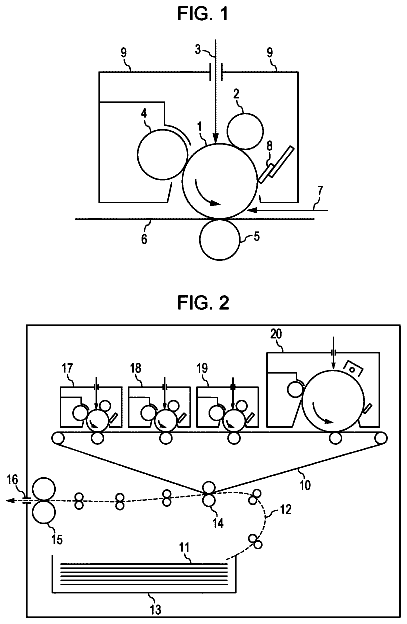
FIG. 1 is a schematic configuration diagram showing an example of an image forming apparatus according to an exemplary embodiment of the present invention; and
FIG. 2 is a schematic configuration diagram showing an example of a process cartridge according to an exemplary embodiment of the present invention.
Detailed description
Exemplary embodiments of the present invention are described below.
<Toner for Electrostatic Image Development>
A toner for electrostatic image development (hereinafter referred to as a “toner”) according to an exemplary embodiment of the present invention includes toner particles and an external additive containing silica particles (hereinafter also referred to as “specific silica particles”) and PTFE particles, the silica particles having a compression-aggregation degree of 60% or more and 95% or less and a particle compression ratio of 0.20 or more and 0.40 or less.
In general, the flowability of a toner containing toner particles and silica particles externally added thereto may be decreased by a change in an external addition structure of the silica particles (the state of adhesion of the silica particles to toner particles) in the toner, thereby decreasing charge retentivity. An example of the cause of a change in the external addition structure is that the silica particles are moved and localized on the toner particles and the silica particles are separated from the toner particles. In particular, in the use of the toner particles having an average circularity of as high as 0.98 or more and 1.00 or less and a shape close to a spherical shape, the silica particles are easily moved on the toner particles and separated from the toner particles, and thus a change in external addition structure easily occurs.
Also, when the toner particles having an average circularity of as high as 0.98 or more and 1.00 or less and a shape close to a spherical shape are used, the toner particles easily slip through a cleaning blade during repeated formation of the same image. The toner particles having a shape close to a spherical shape have a nearly smooth surface and are hardly scraped by a cleaning part (a contact part between the cleaning blade and the photoreceptor (image holding member)). Therefore, when a large amount of the toner particles reach the same region of the cleaning part during repeated formation of the same image, the toner particles easily slip through the cleaning blade.
Meanwhile, the silica particles externally added to the toner particles may be separated from the toner particles by the mechanical load due to stirring in a development unit, scraping by the cleaning part, or the like. When the separated silica particles reach the cleaning part, the silica particles are dammed at the end (the downstream part of the contact part between the cleaning blade and the image holding member in the rotational direction) of the cleaning part, and an aggregate (hereinafter referred to as an “external additive mass”) is formed due to aggregation by the pressure applied from the cleaning blade. The external additive mass contributes to an improvement in cleaning properties.
Also, when PTFE particles are used as an external additive in combination with the silica particles, the PTFE particles may be separated from the silica particles. Also, when the separated PTFE particles reach the cleaning part, the PTFE particles may be dammed at the end of the cleaning part and may partially constitute the external additive mass. The PTFE particles are easily crushed and adhered as compared with the silica particles, and thus the silica particles are bonded to each other by the PTFE particles, thereby increasing the strength of the external additive mass. Therefore, the cleaning properties are improved, and wearing of the cleaning blade is suppressed due to excellent lubricity of the PTFE particles.
However, the PTFE particles easily adhere to the surface of the photoreceptor, and particularly when a solid image is formed by consuming a large amount of toner, the PTFE particles easily adhere to the surface of the photoreceptor, and an image defect may occur due to image deletion. The occurrence of image deletion is supposed to be due to the adhesion of a discharge product to the PTFE particles adhering to the surface of the photoreceptor.
Further, when the toner particles slip through, a large amount of the silica particles (silica particles in the external additive mass) dammed by the cleaning part may also slip through, and thus claw may occur on the photoreceptor due to the silica particles. The claw on the photoreceptor is considered to be due to rubbing of the photoreceptor when the silica particles slip through the cleaning blade.
When the toner according to the exemplary embodiment contains the specific silica particles and PTFE particles external added to the toner particles, the occurrence of image deletion is suppressed. Although the reason for this is unclear, the reason is supposed as follows.
The specific silica particles satisfying the compression-aggregation degree and the particle compression ratio within the ranges described above are silica particles having the properties of high flowability, high dispersibility in the toner particles, high aggregation property, and high adhesion to the toner particles.
Silica particles generally have high flowability but a low bulk density, and thus have low adhesion and the low aggregation property.
Meanwhile, for the purpose of enhancing the flowability of silica particles and dispersibility in the toner particles, there is known a technique of treating the surfaces of the silica particles with a hydrophobizing agent. The technique improves the flowability of the silica particles and dispersibility in the toner particles, but the aggregation property remains low.
There is also known a technique of treating the surfaces of the silica particles with both the hydrophobizing agent and silicone oil. This technique improves the adhesion to the toner particles and improves the aggregation property. However, conversely, the flowability and dispersibility in the toner particles are easily decreased.
That is, it is said that the flowability of the silica particles and the dispersibility in the toner particles have a contrary relationship to the aggregation property and the adhesion to the toner particles.
However, as described above, the specific silica particles satisfying the compression-aggregation degree and the particle compression ratio within the ranges described above are improved in four properties, such as flowability, dispersibility in the toner particles, the aggregation property, and adhesion to the toner particles.
Next, the meanings for controlling the compression-aggregation degree and the particle compression ratio of the specific silica particles within the ranges described above are described in order.
First, the meaning for controlling the compression-aggregation degree of the specific silica particles to 60% or more and 95% or less is described.
The compression-aggregation degree is an index which indicates the aggregation property of the silica particles and the adhesion to the toner particles. The index is shown by the degree of difficulty of disintegration of a silica particle compact when the silica particle compact is formed by compressing silica particles and is then dropped.
Therefore, there is a tendency that as the compression-aggregation degree increases, the bulk density of the silica particles easily increases and cohesive force (intermolecular force) increases, and the adhesion to the toner particles increases. A method for calculating the compression-aggregation degree is described in detail later.
Thus, the specific silica particles with the compression-aggregation degree controlled to be as high as 60% or more and 95% or less have good adhesion to the toner particles and good aggregation property. However, the upper limit of the compression-aggregation degree is 95% from the viewpoint of securing flowability and dispersibility in the toner particles while maintaining good adhesion to the toner particles and good aggregation property.
Next the meaning for controlling the particle compression ratio of the specific silica particles to 0.20 or more and 0.40 or less is described.
The particle compression ratio is an index indicating the flowability of the silica particles. Specifically, the particle compression ratio is shown by a ratio of a difference between the packed apparent specific gravity and loose apparent specific gravity of the silica particles to the packed apparent specific gravity ((packed apparent specific gravity−loose apparent specific gravity)/(packed apparent specific gravity)).
Thus, it is shown that the lower the particle compression ratio, the higher the flowability of the silica particles. Also, there is a tendency that as the flowability increases, the dispersibility in the toner particles also increases. A method for calculating the particle compression ratio is described in detail later.
Thus, the specific silica particles with the particle compression ratio controlled to be as low as 0.20 or more and 0.40 or less have good flowability and good dispersibility in the toner particles. However, the lower limit of the particle compression ratio is 0.20 from the viewpoint of improving the adhesion to the toner particles and the aggregation property while maintaining good flowability and dispersibility in the toner particles.
According to the above, the specific silica particles have the peculiar properties of high flowability, high dispersibility in the toner particles, the high cohesive force, and high adhesion to the toner particles. Therefore, the specific silica particles satisfying the compression-aggregation degree and particle compression ratio within the ranges described above have the properties of high flowability, high dispersibility in the toner particles, the high aggregation property, and high adhesion to the toner particles.
Next, the estimated function of the specific silica particles and the PTFE particles externally added to the toner particles is described.
First, the specific silica particles have high flowability and high dispersibility in the toner particles, and thus when externally added to the toner particles, the specific silica particles easily adhere in a nearly uniform state to the surfaces of the toner particles. Thus, once the specific silica particles have adhered to the toner particles, the specific silica particles are hardly moved on the toner particles and separated from the toner particles by the mechanical load due to stirring or the like in the development unit because of the high adhesion to the toner particles. That is, a change in the external addition structure little occurs. Therefore, the flowability of the toner particles is increased, and the high flowability is easily maintained. Consequently, a change in the external addition structure easily occurs, and a decrease in charge retentivity is suppressed even when the toner particles close to spherical toner particles are used.
Meanwhile, the specific silica particles which are separated from the toner particles by mechanical load due to scraping by the cleaning part and are supplied to the end of the cleaning part have the high aggregation property and thus form a strong external additive mass due to aggregation by the pressure applied from the cleaning blade. Further, when the specific silica particles are externally added in combination with the PTFE particles, the strength of the strong external additive mass formed by the specific silica particles is further improved. Therefore, the cleaning properties by the strong external additive mass are further increased, and the PTFE particles adhering to the surface of the photoreceptor are easily removed. Consequently, the occurrence of image deletion is suppressed.
Further, the cleaning properties are further improved due to the strong external additive mass, and even when a large amount of nearly spherical toner particles reach the same region of the cleaning part during repeated formation of the same image, slipping of the toner particles is suppressed. Consequently, slipping of a large amount of the silica particles (silica particles of the external additive mass), which is caused by slipping of the toner particles, is also suppressed, and thus the occurrence of claw on the photoreceptor is suppressed.
Therefore, the toner according to the exemplary embodiment is supposed to suppress the occurrence of image deletion. Further, when the same image is repeatedly formed, the occurrence of claw on the photoreceptor is supposed to be suppressed.
In the toner according to the exemplary embodiment of the present invention, the specific silica particles preferably further have a degree of particle dispersion of 90% or more and 100% or less.
The meaning for controlling the degree of particle dispersion of the specific silica particles to 90% or more and 90% or less is described.
The degree of particle dispersion is an index indicating the dispersibility of silica particles. The index is shown by the degree of ease of dispersion of the silica particles in a primary particle state in the toner particles. Specifically, the degree of particle dispersion is shown by a ratio (measured coverage C/calculated coverage C.sub.o) of measured coverage C of an adhesion object to calculated coverage C.sub.o wherein C.sub.o is the calculated coverage of toner particle surfaces with the silica particles, and C is the measured coverage.
Therefore, it is shown that the higher the degree of particle dispersion is, the more hardly the silica particles are aggregated, and the more easily the silica particles in the primary particle state are dispersed in the toner particles. A method for calculating the degree of particle dispersion is described in detail later.
The dispersibility of the specific silica particles in the toner particles is further improved by controlling the degree of particle dispersion to be as high as 90% or more and 100% or less while controlling the compression-aggregation degree and the particle compression ratio within the ranges described above. Thus, the flowability of the toner particles is further enhanced, and the high flowability is easily maintained. Consequently, the specific silica particles easily adhere in a nearly uniform state to the surfaces of the toner particles, and a decrease in charge retentivity is easily suppressed.
In the toner according to the exemplary embodiment of the present invention, as described above, the specific silica particles having the properties of high flowability, high dispersibility in the toner particles, the high aggregation property, and high adhesion to the toner particles are preferably silica particles with surfaces to which a siloxane compound having a relatively high weight-average molecular weight adheres. Specifically, the specific silica particles preferably have surfaces to which a siloxane compound having a viscosity of 1,000 cSt or more and 50,000 cSt or less adheres (the amount of surface adhesion is preferably 0.01% by mass or more and 5% by mass or less). The specific silica particles are produced by a method of surface-treating the surfaces of the silica particles with a siloxane compound having a viscosity of 1,000 cSt or more and 50,000 cSt or less so that the amount of surface adhesion is 0.01% by mass or more and 5% by mass or less.
The amount of surface adhesion is shown by a ratio to the silica particles (untreated silica particles) before the surface treatment of the surfaces of the silica particles. Hereinafter, the silica particles (that is, untreated silica particles) before the surface treatment are simply referred to as “silica particles”.
The specific silica particles surface-treated with a siloxane compound having a viscosity of 1,000 cSt or more and 50,000 cSt or less so that the amount of surface adhesion is 0.01% by mass or more and 5% by mass or less are increased in flowability and dispersibility in the toner particles and also in the aggregation property and adhesion to the toner particles, and thus the compression-aggregation degree and the particle compression ratio easily satisfy the requirements described above. In addition, a decrease in charge retentivity and the occurrence of image deletion are easily suppressed. The reason for this is not clear, but the conceivable reason is as follows.
When a siloxane compound having relatively high viscosity within the range described above is adhered in a small amount within the range described above to the surfaces of the silica particles, the function derived from the characteristics of the siloxane compound on the surfaces of the silica particles is exhibited. Although the mechanism of this is not clear, when the silica particles flow, the mold releasability due to the siloxane compound is easily exhibited by adhesion of the siloxane compound with relatively high viscosity in a small amount within the range. Alternatively, the force between particles is decreased due to the steric hindrance of the siloxane compound, and thus adhesion between the silica particles is decreased. Therefore, flowability of the silica particles and the dispersibility in the toner particles are further increased.
Meanwhile, when the silica particles are pressed, long chains of the siloxane compound on the surfaces of the silica particles are entangled, and the closest packing property of the silica particles is increased, thereby increasing aggregation of the silica particles. In addition, the cohesive force of the silica particles due to entanglement of the long chains of the siloxane compound is considered to be released by flowing the silica particles. In addition, the adhesion to the toner particles is also increased by the long chains of the siloxane compound on the surfaces of the silica particles.
According the above, the specific silica particles with surfaces to which the siloxane compound having viscosity within the range described above adheres in a small amount within the range described above easily satisfy the requirements of the compression-aggregation degree and the particle compression ratio and easily satisfy the requirement of the degree of particle dispersion.
The configuration of the toner is described in detail below.
(Toner Particles)
The toner particles contain, for example, a binder resin. If required, the toner particles may contain a coloring agent, a mold release agent, other additives, etc.
—Binder Resin—
Examples of the binder resin include vinyl resins containing homopolymers of monomers or copolymers of combination of two or more of the monomers, such as styrenes (for example, styrene, para-chlorostyrene, α-methyl styrene, and the like), (meth)acrylic acid esters (for example, methyl acrylate, ethyl acrylate, n-propyl acrylate, n-butyl acrylate, lauryl acrylate, 2-ethylhexyl acrylate, methyl methacrylate, ethyl methacrylate, n-propyl methacrylate, lauryl methacrylate, 2-ethylhexyl methacrylate, and the like), ethylenically unsaturated nitriles (for example, acrylonitrile, methacrylonitrile, and the like), vinyl ethers (for example, vinyl methyl ether, vinyl isobutyl ether, and the like), vinyl ketones (for example, vinyl methyl ketone, vinyl ethyl ketone, vinyl isopropenyl ketone, and the like), olefins (for example, ethylene, propylene, butadiene, and the like).
Other examples of the binder resin include non-vinyl resins such as epoxy resins, polyester resins, polyurethane resins, polyamide resins, cellulose resins, polyether resins, modified rosin, and the like, a mixture of the non-vinyl resin and the vinyl resin, graft polymers produced by polymerizing the vinyl monomers in coexistence with any one of the non-vinyl resins.
These binder resins may be used alone or in combination of two or more.
The binder resin is preferably a polyester resin.
Examples of the polyester resin include known polyester resins.
The polyester resin is, for example, a condensation polymer of a polyhydric carboxylic acid and a polyhydric alcohol. The polyester resin used may be a commercial product or a synthesized product.
Examples of the polyhydric carboxylic acid include aliphatic dicarboxylic acids (for example, oxalic acid, malonic acid, maleic acid, fumaric acid, citraconic acid, itaconic acid, glutaconic acid, succinic acid, alkenyl succinic acid, adipic acid, sebacic acid, and the like), alicyclic dicarboxylic acids (for example, cyclohexane dicarboxylic acid and the like), aromatic dicarboxylic acids (for example, terephthalic acid, isophthalic acid, phthalic acid, naphthalene dicarboxylic acid, the like), acid anhydrides thereof, and lower (for example, 1 to 5 carbon atoms) alkyl esters thereof. Among these, for example, aromatic dicarboxylic acids are preferred as the polyhydric carboxylic acid.
The polyhydric carboxylic acid may be a combination of dicarboxylic acid and a tri- or higher-hydric carboxylic acid having a crosslinked structure or branched structure. Examples of the tri- or higher-hydric carboxylic acid include trimellitic acid, pyromellitic acid, anhydrides thereof, lower (for example, 1 to 5 carbon atoms) alkyl esters thereof, and the like.
The polyhydric carboxylic acids may be used alone or in combination of two or more.
Examples of polyhydric alcohol include aliphatic diols (for example, ethylene glycol, diethylene glycol, triethylene glycol, propylene glycol, butanediol, hexanediol, neopentyl glycol, and the like), alicyclic diols (for example, cyclohexanediol, cyclohexane dimethanol, hydrogenated bisphenol A, and the like), aromatic diols (for example, bisphenol A ethylene oxide adduct, bisphenol A propylene oxide adduct, and the like). Among these, for example, aromatic diols and alicyclic diols are preferred as the polyhydric alcohol, and the aromatic diols are more preferred.
The polyhydric alcohol may be a combination of diol and a tri- or higher-hydric alcohol having a crosslinked structure or branched structure. Examples of the tri- or higher-hydric alcohol include glycerin, trimethylolpropane, and pentaerythritol.
The polyhydric alcohols may be used alone or in combination of two or more.
The polyester resin preferably has a glass transition temperature (Tg) of 50° C. or more and 80° C. or less, and more preferably 50° C. or more and 65° C. or less.
The glass transition temperature is determined from a DSC curve obtained by differential scanning calorimetry (DSC). More specifically, the glass transition temperature is determined by “Extrapolation Glass Transition Onset Temperature” described in “Determination of Glass Transition Temperature” in JIS K 7121-1987 “Testing Methods for Transition Temperatures of Plastics”.
The weight-average molecular weight (Mw) of the polyester resin is preferably 5,000 or more and 1,000,000 or less and more preferably 7,000 or more and 500,000 or less.
The number-average molecular weight (Mn) of the polyester resin is preferably 2,000 or more and 100,000 or less.
The molecular weight distribution Mw/Mn of the polyester resin is preferably 1.5 or more and 100 or less and more preferably 2 or more and 60 or less.
The weight-average molecular weight and number-average molecular weight are measured by gel permeation chromatography (GPC). The molecular weight is measured by GPC using GPC HLC-8120GPC manufactured by Tosoh Corporation as a measurement apparatus and a column TSK gel Super HM-M (15 cm) manufactured by Tosoh Corporation, and a THF solvent. The weight-average molecular weight and number-average molecular weight are calculated from the measurement results by using a molecular weight calibration curve formed by using monodisperse polystyrene standard samples.
The polyester resin can be produced by a known production method. Specifically, the polyester resin can be produced by, for example, a method in which reaction is performed at a polymerization temperature of 180° C. or more and 230° C. or less and, if required, in a reaction system under reduced pressure, the reaction is performed while the water and alcohol produced during condensation are removed.
When a monomer used as a raw material is insoluble or incompatible at the reaction temperature, a solvent having a high boiling point may be added as a solubilizing agent for dissolution. In this case, polycondensation reaction is performed while the solubilizing agent is distilled off. When a monomer having low compatibility is present, the monomer having low compatibility may be previously condensed with an acid or alcohol which is expected to be polycondensed with the monomer having low compatibility, and then polycondensed with a principal component.
The content of the binder resin is, for example, preferably 40% by mass or more 95% by mass or less, more preferably 50% by mass or more and 90% by mass or less, and still more preferably 60% by mass or more and 85% by mass or less relative to the total of toner particles.
—Coring Agent—
Examples of the coloring agent include various pigments such as carbon black, chrome yellow, hansa yellow, benzidine yellow, threne yellow, quinoline yellow, pigment yellow, permanent orange GTR, pyrazolone orange, Vulcan orange, watch young red, permanent red, brilliant carmine 3B, brilliant carmine 6B, DuPont oil red, pyrazolone red, lithol red, rhodamine B late, lake red C, pigment red, rose Bengal, aniline blue, ultramarine blue, calco oil blue, methylene blue chloride, phthalocyanine blue, pigment blue, phthalocyanine green, malachite green oxalate, and the like; various dyes such as acridine dyes, xanthene dyes, azo dyes, benzoquinone dyes, azine dyes, anthraquinone dyes, thioindigo dyes, dioxazine dyes, thiazine dyes, azomethine dyes, indigo dyes, phthalocyanine dyes, aniline black dyes, polymethine dyes, triphenylmethane dyes, diphenylmethane dyes, thiazole dyes, and the like.
The coloring agents may be used alone or in combination of two or more.
If required, the coloring agent may be surface-treated or used in combination with a dispersant. Also, plural types of coloring agents may be used.
The content of the coloring agent is, for example, preferably 1% by mass or more 30% by mass or less and more preferably 3% by mass or more and 15% by mass or less relative to the total of toner particles.
—Mold Release Agent—
Examples of the mold release agent include hydrocarbon wax, natural wax such as carnauba wax, rice bran wax, candelilla wax, and the like, synthetic or mineral/petroleum wax such as montan wax and the like, ester-based wax such as fatty acid esters, montanic acid esters, and the like, and the like. The mold release agent is not limited to these.
The melting temperature of the mold release agent is preferably 50° C. or more and 110° C. or less and more preferably 60° C. or more and 100° C. or less.
The melting temperature is determined from a DSC curve obtained by differential scanning calorimetry (DSC) according to “Melting Peak Temperature” described in “Determination of Melting Temperature” in JIS K 7121-1987 “Testing Methods for Transition Temperatures of Plastics”.
The content of the mold release agent is, for example, preferably 1% by mass or more 20% by mass or less and more preferably 5% by mass or more and 15% by mass or less relative to the total of toner particles.
—Other Additives—
Examples of other additives include known additives such as a magnetic material, a charging control agent, an inorganic power, and the like. These additives are contained as internal additives in the toner particles.
—Characteristics Etc. of Toner Particles—
The toner particles may be toner particles with a single-layer structure or a so-called core-shell structure including a core part (core particle) and a coating layer (shell layer) coating the core part.
The toner particles with a core-shell structure may include, for example, a core part containing the binder resin and, if required, other additives such as the coloring agent, the mold release agent, and the like, and a coating layer containing the binder resin.
The volume-average particle diameter (D50v) of the toner particles is preferably 2 μm or more and 10 μm or less and more preferably 4 μm or more and 8 μm or less.
Various average particle diameters and various particle size distribution indexes of the toner particles are measured by using Coulter Multisizer II (manufacture by Beckman Coulter Inc.) and ISOTON-II (manufactured by Beckman Coulter Inc.) as an electrolyte.
In measurement, 0.5 mg or more and 50 mg or less of a measurement sample is added to 2 ml of a 5% aqueous solution of a surfactant (sodium alkylbenzenesulfonate) used as a dispersant. The resultant mixture is added to 100 ml or more and 150 ml or less of the electrolyte.
The electrolyte in which the sample is suspended is dispersed by an ultrasonic disperser for 1 minute and a particle size distribution of particles having particle diameters within a range of 2 μm or more and 60 μm or less is measured by Coulter Multisizer II using an aperture having an aperture diameter of 100 μm. The number of particles sampled is 50,000.
The measured particle size distribution is divided into particle size ranges (channels), and volume- and number-based cumulative distributions from the small-diameter side are formed. The cumulative 16% particle diameter is defined as volume particle diameter D16v and number particle diameter D16p, the cumulative 50% particle diameter is defined as volume-average particle diameter D50v and number-average particle diameter D50p, and the cumulative 84% particle diameter is defined as volume particle diameter D84v and number particle diameter D84p.
By using these values, the volume-average particle size distribution index (GSDv) is calculated as (D84v/D16v).sup.1/2, and the number-average particle size distribution index (GSDp) is calculated as (D84p/D16p).sup.1/2.
The average circularity of the toner particles is preferably 0.95 or more and 1.00 or less and more preferably 0.98 or more and 1.0 or less. That is, the shape of the toner particles is preferably close to a spherical shape. The average circularity of the toner particles is measured by FPIA-3000 manufactured by Sysmex Corporation. The apparatus uses a system in which particles dispersed in water or the like are measured by a flow-type image analysis method, and a sucked particle dispersion is introduced into a flat sheath flow cell and forms a flat sample flow by a sheath liquid. The sample flow is irradiated with strobe light and the particles which are passing are imaged as a still image by a charge coupled device (CCD) camera through an objective lens. The imaged particle image is subjected to two-dimensional image processing and the equivalent circle diameter and circularity are calculated from a projected area and circumferential length. With respect to the equivalent circle diameter, the diameter of a circle having the same area as each of the particles photographed is calculated as the equivalent circle diameter from the area in the two-dimensional image. With respect to the circularity, the average circularity is determined by image analysis and statistical process of at least 4,000 particles. Circularity=equivalent circle diameter circumference/circumference=[2×( A π).sup.1/2]/PM
In the formula, A represents a projected area, and PM represents the circumference.
In the measurement, a PHF mode (high resolution mode) is used, and the dilution factor is 1.0.
In data analysis, for the purpose of eliminating measurement noise, the range of number particle diameter analysis is 2.0 μm or more and 30.1 μm or less, and the range of circularity analysis is 0.40 or more and 1.00 or less.
(External Additive)
The external additive includes the specific silica particles and the PTFE particles. The external additive may another additive other than the specific silica particles and the PTFE particles. That is, the specific silica particles and the PTFE particles may be externally added to the toner particles, or the specific silica particles, the PTFE particles, and another external additive may be externally added to the toner particles.
[Specific Silica Particles]
—Compression-Aggregation Degree—
The compression-aggregation degree of the specific silica particles is 60% or more and 95% or less. However, the compression-aggregation degree is preferably 65% or more and 95% or less and more preferably 70% or more and 95% or less from the viewpoint of securing flowability and dispersibility in the toner particles (particularly, from the viewpoint of suppressing image deletion) while maintaining the good aggregation property of the specific silica particles and good adhesion to the toner particles.
The compression-aggregation degree is calculated by a method described below.
A disk-shaped mold having a diameter of 6 cm is filled with 6.0 g of the specific silica particles. Next, the mold is compressed under a pressure of 5.0 t/cm.sup.2 for 60 seconds by using a compression molding machine (manufactured by Maekawa Testing Machine Mfg Co., Ltd.) to produce a compressed disk-shaped compact (hereinafter a “compact before dropping”) of the specific silica particles. Then, the mass of the compact before dropping is measured.
Next, the compact before dropping is placed on a sieving screen having an opening of 600 μm and dropped by using a vibration sieving machine (manufactured by Tsutsui Scientific Instruments Co., Ltd., part No. VIBRATING MVB-1) under the conditions including an amplitude of 1 mm and a vibration time of 1 minute. Consequently, the specific silica particles are dropped from the compact before dropping through the sieving screen, leaving the compact of the specific silica particles on the sieving screen. Then, the mass of the remaining compact of the specific silica particles (hereinafter referred to as a “compact after dropping”) is measured.
The compression-aggregation degree is calculated from a ratio of the mass of the compact after dropping to the mass of the compact before dropping according a formula
below. Compression-aggregation degree=(mass of compact after dropping/mass of compact before dropping)×100 Formula (1): —Particle Compression Ratio—
The particle compression ratio of the specific silica particles is 0.20 or more and 0.40 or less. However, the particle compression ratio is preferably 0.24 or more and 0.38 or less and more preferably 0.28 or more and 0.36 or less from the viewpoint of securing flowability and dispersibility in the toner particles (particularly, from the viewpoint of suppressing image deletion) while maintaining the good aggregation property of the specific silica particles and good adhesion to the toner particles.
The particle compression ratio is calculated by a method described below.
The loose apparent specific gravity and packed apparent specific gravity of the silica particles are measured by using a powder tester (manufactured by Hosokawa Micron Ltd., part No. PT-S model). The particle compression ratio is calculated from a ratio of a difference between the packed apparent specific gravity and the loose apparent specific gravity of the silica particles to the packed apparent specific gravity according to formula
below. Particle compression ratio=(packed apparent specific gravity−loose apparent specific gravity)/(packed apparent specific gravity) Formula (2):
The loose apparent specific gravity is a measured value derived by filling a container having a volume of 100 cm.sup.3 with silica particles and weighing the container and represents a packing specific gravity in a state in which the specific silica particles are naturally dropped in the container. The packed apparent specific gravity represents an apparent specific gravity in a deaerated state in which the specific silica particles in the loose apparent specific gravity state are re-arranged and more closely packed by repeatedly applying impact (tapping) 180 times to the bottom of the container with a stroke length of 18 mm and a tapping rate of 50 times/min.
—Particle Dispersion Degree—
The particle dispersion degree of the specific silica particles is preferably 90% or more and 100% or less, more preferably 95% or more and 100% or less, and still more preferably 100% from the viewpoint of further improving dispersibility in the toner particles (particularly, from the viewpoint of suppressing image deletion).
The particle dispersion degree is shown by a ratio of measured coverage C of the toner particles to calculated coverage C.sub.0 and is calculated by using formula
below. Particle dispersion degree=measured coverage C /calculated coverage C .sub.0 Formula (3):
The description continues in the full USPTO document.
 Lapsed, fee not paid12 drawings