Lapsed, fee not paid24 drawings
Industrial Equipment · US 9,944,047 B2
Enhanced co-formed/meltblown fibrous web structure
An enhanced, co-formed fibrous web structure is disclosed.
US 9,944,053 B2 · Assignee: Lotte Advanced Materials Co., Ltd. · Inventors: Kim; Young-Sin et al.
Sheet 1 of 3 from the published document. All sheets in the USPTO PDF
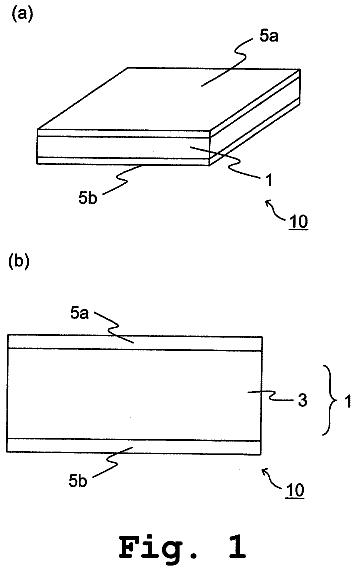
A laminate sheet includes at least one base layer including a first thermoplastic resin; and at least one metallic resin layer disposed on one side or both sides of the base layer and including a second thermoplastic resin and a metal-resin composite particles, wherein the first thermoplastic resin and the second thermoplastic resin are the same or different from each other, the metal-resin composite particles includes a metal deposition layer, a first coating layer positioned on one side of the metal deposition layer, and a second coating layer positioned on the other side of the metal deposition layer, and each of the first coating layer and the second coating layer includes a thermosetting resin. A method of manufacturing the laminate sheet, an article using the laminate sheet and a method of manufacturing the article are also provided.
Recently, plastic exterior products having diverse colors are winning popularity for electronic parts, automobile parts and the like, and plastic exterior products with high quality sense of touch. The plastic exterior products usually include a plastic resin and a metal particle and give metal-like texture to the resin appearance. This is disclosed in Japanese Patent Laid-Open Publication Nos. 2001-262003 and 2007-137963. Japanese Patent Laid-Open Publication No. 2001-262003 discloses a use of a flake-shaped metal particulate, and Japanese Patent Laid-Open Publication No. 2007-137963 discloses resin composition including a glass fiber and a metal particle. Accordingly, a conventional article formed by adding a metal particle and the like to a plastic resin may realize only a metal-mixing texture but a metal-like texture and thus, be unable to replace a painted article. DISCLOSURE Techni
1 of 3 drawing sheets so far from the published document, cropped to the drawing. Every sheet is in the USPTO PDF.
What the patent claimed, word for word. All of it is now free to use.
This application claims priority to and the benefit of International Application No. PCT/KR2013/001291, filed Feb. 19, 2013, which published as WO 2014/065472 on May 1, 2014, and Korean Patent Application No. 10-2012-0118496, filed in the Korean Intellectual Property Office on Oct. 24, 2012, the entire disclosure of each of which is incorporated herein by reference.
A laminate sheet, a method of manufacturing the laminate sheet, and an article using the laminate sheet are disclosed.
Recently, plastic exterior products having diverse colors are winning popularity for electronic parts, automobile parts and the like, and plastic exterior products with high quality sense of touch.
The plastic exterior products usually include a plastic resin and a metal particle and give metal-like texture to the resin appearance. This is disclosed in Japanese Patent Laid-Open Publication Nos. 2001-262003 and 2007-137963.
Japanese Patent Laid-Open Publication No. 2001-262003 discloses a use of a flake-shaped metal particulate, and Japanese Patent Laid-Open Publication No. 2007-137963 discloses resin composition including a glass fiber and a metal particle.
Accordingly, a conventional article formed by adding a metal particle and the like to a plastic resin may realize only a metal-mixing texture but a metal-like texture and thus, be unable to replace a painted article. DISCLOSURE Technical Problem
One embodiment provides a laminate sheet having a metal-like texture near to that of a painted article while not being painted and excellent luminance, a method of manufacturing the laminate sheet, and an article using the laminate sheet. Technical Solution
One embodiment provides a laminate sheet. The laminate sheet includes at least one base layer including a first thermoplastic resin; and at least one metallic resin layer disposed on one side or both sides of the base layer and including a second thermoplastic resin and a metal-resin composite particle, wherein the first thermoplastic resin and the second thermoplastic resin are the same or different from each other, the metal-resin composite particle includes a metal deposition layer, a first coating layer positioned on one side of the metal deposition layer, and a second coating layer positioned on the other side of the metal deposition layer, and each of the first coating layer and the second coating layer includes a thermosetting resin.
The metal deposition layer may be an aluminum deposition layer.
The metal deposition layer may have a thickness of 0.01 to 1.0 μm.
The thermosetting resin may include a phenolic resin, an epoxy resin, an unsaturated polyester resin, an urethane resin, an urea resin, a melamine resin, an alkyd resin, a silicone resin, or a combination thereof.
The thermosetting resin may have a refractive index of 1.45 to 1.55.
Each of the first coating layer and the second coating layer may be transparent or translucent.
The metal-resin composite particle may further include a thermoplastic resin layer, and the thermoplastic resin layer may be positioned on at least one of the external surfaces of the first and second coating layers.
The metal-resin composite particle may have a thickness of 1.01 to 100 μm.
The metal-resin composite particle may have an average particle diameter of 2 to 2,000 μm.
The metal-resin composite particle may be included in an amount of 0.5 to 5.0 parts by weight based on 100 parts by weight of the second thermoplastic resin.
The first thermoplastic resin and the second thermoplastic resin may be the same or different from each other, and independently include a polycarbonate resin, a rubber modified vinyl-based copolymer resin, a polyester resin, a polyalkyl(meth)acrylate resin, a styrene-based polymer, a polyolefin resin, or a combination thereof.
The second thermoplastic resin may have a refractive index of 1.45 to 1.55.
The second thermoplastic resin may be transparent or translucent.
The laminate sheet may further include a skin layer, the skin layer may include a third thermoplastic resin, may be transparent or translucent, and may be positioned on the external surface of the metallic resin layer.
In another embodiment, a method of manufacturing a laminate sheet is provided. The manufacturing method may include coextruding at least one composition for forming a base layer and at least one composition for forming a metallic resin layer. The composition for forming a base layer may include a first thermoplastic resin, the composition for forming a metallic resin layer may include a second thermoplastic resin and a metal-resin composite particle, the first thermoplastic resin and the second thermoplastic resin may be the same or different from each other, the metal-resin composite particle includes a metal deposition layer, a first coating layer positioned on one side of the metal deposition layer, and a second coating layer positioned on the other side of the metal deposition layer, and each of the first coating layer and the second coating layer may include a thermosetting resin.
The metal deposition layer may be an aluminum deposition layer.
The thermosetting resin may include a phenolic resin, an epoxy resin, an unsaturated polyester resin, an urethane resin, an urea resin, a melamine resin, an alkyd resin, a silicone resin, or a combination thereof.
The metal-resin composite particle may be included in an amount of 0.5 to 5.0 parts by weight based on 100 parts by weight of the second thermoplastic resin.
The first thermoplastic resin and the second thermoplastic resin may be the same or different from each other, and independently include a polycarbonate resin, a rubber modified vinyl-based copolymer resin, a polyester resin, a polyalkyl(meth)acrylate resin, a styrene-based polymer, a polyolefin resin, or a combination thereof.
The coextruding may include coextruding the at least one composition for forming a base layer, the at least one composition for forming a metallic resin layer, and at least one composition for forming a skin layer, wherein the composition for forming a skin layer may include a third thermoplastic resin and may be transparent or translucent, and the skin layer may be positioned on the external surface of the metallic resin layer in the manufactured laminate sheet.
In yet another embodiment, an article manufactured using the laminate sheet is provided.
The article may be manufactured by vacuum-molding the laminate sheet.
The article may be a refrigerator inner liner.
The article may have a flop index of 11 to 25, a sparkle intensity of 8 to 20, and luminance of 70 to 100% measured based on a gloss level at an angle of 60°. Advantageous Effects
The laminate sheet manufactured according to one embodiment, the laminate sheet manufactured according to the manufacturing method of one embodiment, the article according to one embodiment, and the article manufactured according to the manufacturing method of one embodiment may have a similar metal-like texture to that of a painted article while not being painted and excellent luminance.
FIG. 1 is a scanning electron microscope (SEM) photograph showing one side of a metal-resin composite particle according to one embodiment.
FIG. 2 is a schematic view showing a method of measuring a metal particle texture of one embodiment.
FIG. 3 is a photograph showing an article according to one embodiment.
FIGS. 4A, 4B, 4C, and 4D are reference photographs for evaluating the appearance of the articles of the Examples and Comparative Examples with regard to flow mark or weld line, wherein FIG. 4A depicts an article with a different color of greater than or equal to 70% to less than or equal to 100% in the flow mark or weld line; FIG. 4B depicts an article with a different color of greater than or equal to 50% to less than or equal to 70% in the flow mark or weld line flow mark; FIG. 4C depicts an article with a different color of greater than or equal to 10% to less than or equal to 50% in the flow mark or weld line flow mark; and FIG. 4D depicts an article with a different color of less than or equal to 10% in the flow mark or weld line flow mark.
Hereinafter, embodiments are described in detail. However, the embodiments are exemplary and do not limit one embodiment and one embodiment may be defined by the scope of the following claims.
In the present specification, when specific definition is not otherwise provided, “(meth)acrylate” refers to both “acrylate” and “methacrylate”. “(Meth)acrylic acid alkyl ester” refers to both “acrylic acid alkyl ester” and “methacrylic acid alkyl ester”, and “(meth)acrylic acid ester” refers to both “acrylic acid ester” and “methacrylic acid ester”.
In the present specification, when specific definition is not otherwise provided, “copolymerization” may refer to block copolymerization, random copolymerization, graft copolymerization, or alternate copolymerization, and “copolymer” may refer to a block copolymer, a random copolymer, a graft copolymer, or an alternate copolymer.
In the present specification, when specific definition is not otherwise provided, the average particle diameter and thickness of an article are respectively obtained by sampling a part of the article and measuring particle diameters and thicknesses of greater than or equal to 50 particles and calculating arithmetic means of the particle diameter and thickness measurements of the rest of the particles except for top 10% and bottom 10 of the particles based on the SEM image through an analysis of the cross section of the article based on a scanning electron microscope (SEM, S4800, Hitachi Inc.).
In one embodiment, a laminate sheet includes at least one base layer including a first thermoplastic resin; and at least one metallic resin layer disposed on one side or both sides of the base layer and including a second thermoplastic resin and a metal-resin composite particle. The first thermoplastic resin and the second thermoplastic resin may be the same or different from each other, the metal-resin composite particle includes a metal deposition layer 103 , a first coating layer positioned on one side of the metal deposition layer 101 and a second coating layer positioned on the other side of the metal deposition layer 102 , and each of the first coating layer and the second coating layer includes a thermosetting resin.
The laminate sheet may be manufactured through coextrusion. Specifically, the laminate sheet may be manufactured by coextruding at least one composition for forming a base layer and at least one composition for forming a metallic resin layer.
When the laminate sheet is manufactured through coextrusion, a flow mark and a weld line that may be generated during an injection molding are not generated at all, and thus, appearance characteristics of the laminate sheet are remarkably improved.
The laminate sheet may have a multi-layer structure having greater than or equal to two layers.
The base layer may be a monolayer or a multi-layer having greater than or equal to two layers.
In another embodiment, an article manufactured using the laminate sheet is provided.
First Thermoplastic Resin
The first thermoplastic resin may be any generally-used thermoplastic resin in the field of one embodiment without limitation.
The first thermoplastic resin may include a polycarbonate resin, a rubber modified vinyl-based copolymer resin, a polyester resin, a polyalkyl(meth)acrylate resin, a styrene-based polymer, a polyolefin resin, or a combination thereof.
The first thermoplastic resin may be transparent, translucent, or opaque.
The first thermoplastic resin may provide basic properties such as impact resistance, heat resistance, flexural characteristics, tensile characteristics, and the like, to the laminate sheet.
The polycarbonate resin may be prepared by reacting diphenols with a compound of a phosgene, halogen formate, carbonate ester, or a combination thereof.
Examples of the diphenols include hydroquinone, resorcinol, 4,4′-dihydroxydiphenyl, 2,2-bis(4-hydroxyphenyl)propane (‘bisphenol-A’), 2,4-bis(4-hydroxyphenyl)-2-methylbutane, bis(4-hydroxyphenyl)methane, 1,1-bis(4-hydroxyphenyl)cyclohexane, 2,2-bis(3-chloro-4-hydroxyphenyl)propane, 2,2-bis (3,5-dimethyl-4-hydroxyphenyl)propane, 2,2-bis(3,5-dichloro-4-hydroxyphenyl)propane, 2,2-bis(3,5-dibromo-4-hydroxyphenyl)propane, bis(4-hydroxyphenyl)sulfoxide, bis(4-hydroxyphenyl)ketone, bis(4-hydroxyphenyl)ether, and the like. Of the diphenols, 2,2-bis(4-hydroxyphenyl)propane, 2,2-bis(3,5-dichloro-4-hydroxyphenyl)propane, or 1,1-bis(4-hydroxyphenyl)cyclohexane may be preferably used, and 2,2-bis(4-hydroxyphenyl)propane may be more preferably used.
The polycarbonate resin may have a weight average molecular weight of 10,000 g/mol to 200,000 g/mol, and specifically 15,000 g/mol to 80,000 g/mol, without limitation.
The polycarbonate resin may be a mixture of copolymers obtained using two or more dipenols that differ from each other. The polycarbonate resin may include a linear polycarbonate resin, a branched polycarbonate resin, a polyestercarbonate copolymer resin, and the like.
The linear polycarbonate resin may include a bisphenol-A-based polycarbonate resin. The branched polycarbonate resin may be produced by reacting a multi-functional aromatic compound such as trimellitic anhydride, trimellitic acid, and the like, with diphenols and a carbonate. The multi-functional aromatic compound may be included in an amount of 0.05 to 2.0 mol % based on the total amount of the branched polycarbonate resin. The polyester carbonate copolymer resin may be produced by reacting difunctional carboxylic acid with diphenols and a carbonate. The carbonate may include a diaryl carbonate such as diphenyl carbonate, ethylene carbonate, and the like.
The rubber modified vinyl-based graft copolymer resin is a copolymer where 5 to 95 wt % of a vinyl-based polymer is grafted on 5 to 95 wt % of a rubbery polymer.
The rubbery polymer may include a butadiene rubber, an acrylic rubber, an ethylene/propylene rubber, a styrene/butadiene rubber, an acrylonitrile/butadiene rubber, an isoprene rubber, an ethylene-propylene-diene terpolymer (EPDM) rubber, a polyorganosiloxane/polyalkyl(meth)acrylate rubber composite, or a combination thereof.
The vinyl-based polymer may be a polymer of 50 to 95 wt % of a first vinyl-based monomer of an aromatic vinyl monomer, an acryl-based monomer, a heterocyclic monomer, or a combination thereof; and 5 to 50 wt % of a second vinyl-based monomer of an unsaturated nitrile monomer, an acryl-based monomer, a heterocyclic monomer, or a combination thereof.
The aromatic vinyl monomer may be styrene, C1 to C10 alkyl-substituted styrene, halogen-substituted styrene, or a combination thereof. The alkyl-substituted styrene may include o-ethyl styrene, m-ethyl styrene, p-ethyl styrene, α-methyl styrene, and the like.
The acryl-based monomer may include (meth)acrylic acid alkyl ester, (meth)acrylic acid ester, or a combination thereof. Herein, the alkyl may be a C1 to C10 alkyl. The (meth)acrylic acid alkyl ester may include methyl(meth)acrylate, ethyl(meth)acrylate, propyl(meth)acrylate, butyl(meth)acrylate, and the like, and among them, methyl(meth)acrylate may be preferable. Examples of the (meth)acrylic acid ester may be (meth)acrylate, and the like.
The heterocyclic monomer may be maleic anhydride, alkyl- or phenyl N-substituted maleimide, or a combination thereof.
The unsaturated nitrile monomer may include acrylonitrile, methacrylonitrile, ethacrylonitrile, or a combination thereof.
When the rubber modified vinyl-based graft copolymer resin is prepared, a rubber particle may have a particle diameter of 0.1 to 1 μm in order to improve the impact resistance of the resin and surface characteristics of an article using the same, and when the rubbery polymer particle has an average particle diameter of 0.1 to 1.0 μm, excellent impact strength may be ensured.
The rubber modified vinyl-based graft copolymer resin may be used singularly or as a mixture of two or more.
Examples of the rubber modified vinyl-based copolymer resin may be resin including a copolymer that styrene, acrylonitrile, and optionally methyl(meth)acrylate are graft-copolymerized on a butadiene rubber, an acrylic rubber, or a styrene/butadiene rubber.
Specific examples of the rubber modified vinyl-based graft copolymer resin may be resin including a copolymer where methyl(meth)acrylate is graft-copolymerized to a butadiene rubber, an acrylic rubber or a styrene/butadiene rubber.
The method of preparing the rubber modified vinyl-based copolymer resin is widely known to a person skilled in the art, and may be an emulsion polymerization, suspension polymerization, solution polymerization, or massive polymerization method.
The polyester resin is an aromatic polyester resin, and it may be a condensation-polymerized resin obtained from melt polymerization of terephthalic acid or alkylester terephthalate, and a C2 to C10 glycol component. Herein, the alkyl may be a C1 to C10 alkyl.
Examples of the aromatic polyester resin may include a polyethylene terephthalate resin, a polytrimethylene terephthalate resin, a polybutylene terephthalate resin, a polyhexamethylene terephthalate resin, a polycyclohexane dimethylene terephthalate resin, or a polyester resin modified into a non-crystalline resin by mixing the resins with another monomer, and among them, a polyethylene terephthalate resin, a polytrimethylene terephthalate resin, a polybutylene terephthalate resin, and non-crystalline polyethylene terephthalate resin may be preferably used, and a polybutylene terephthalate resin and polyethylene terephthalate resin may be more preferably used.
The polyethylene terephthalate resin is a condensation-polymerized polymer obtained through a direct ester reaction or an ester exchange reaction of ethylene glycol monomer, and terephthalic acid or dimethyl terephthalate monomer.
Also, in order to increase the impact strength of the polyethylene terephthalate resin, the polyethylene terephthalate resin may be copolymerized with copolytetramethylene glycol (PTMG), polyethylene glycol (PEG), polypropylene glycol (PPG), a low molecular-weight aliphatic polyester or aliphatic polyamide, and may be used in the form of a modified polyethylene terephthalate resin obtained by blending with a component improving an impact strength.
The polyalkyl(meth)acrylate resin may be obtained by polymerizing a raw monomer including an alkyl(meth)acrylate through a known polymerization method, such as a suspension polymerization method, a massive polymerization method, an emulsion method and the like.
The alkyl(meth)acrylate may have a substituted or unsubstituted C1 to C10 alkyl group, and may include methyl(meth)acrylate, ethyl(meth)acrylate, butyl(meth)acrylate, glycidyl(meth)acrylate, hydroxyethyl(meth)acrylate, and the like.
The polyalkyl(meth)acrylate may have a weight average molecular weight of 10,000 to 200,000 g/mol, and specifically 15,000 to 150,000 g/mol. When the polyalkyl(meth)acrylate has a weight average molecular weight within the above range, hydrolysis resistance, scratch resistance, workability, and the like, may be improved.
The styrene-based polymer may be a polymer including 20 to 100 wt % of a styrene-based monomer; and 0 to 80 wt % of a vinyl-based monomer selected from an acryl-based monomer, a heterocyclic monomer, an unsaturated nitrile monomer, or a combination thereof. The styrene-based polymer may be for example a rubber modified styrene-based polymer such as a rubber-reinforced polystyrene resin (HIPS).
The styrene-based monomer may be styrene, C1 to C10 alkyl-substituted styrene, halogen-substituted styrene, or a combination thereof. The alkyl-substituted styrene may include o-ethyl styrene, m-ethyl styrene, p-ethyl styrene, α-methyl styrene, and the like.
The acryl-based monomer may include (meth)acrylic acid alkyl ester, (meth)acrylic acid ester, or a combination thereof. Herein, the alkyl may be a C1 to C10 alkyl. The (meth)acrylic acid alkyl ester may include methyl(meth)acrylate, ethyl(meth)acrylate, propyl(meth)acrylate, butyl(meth)acrylate, and the like, and among them, methyl(meth)acrylate may be preferable. Examples of the (meth)acrylic acid ester may be (meth)acrylate, and the like.
The heterocyclic monomer may be maleic anhydride, alkyl- or phenyl N-substituted maleimide, or a combination thereof.
The unsaturated nitrile monomer may include acrylonitrile, methacrylonitrile, ethacrylonitrile, or a combination thereof.
Specific examples of the styrene-based polymer may be selected from a copolymer of a styrene-based monomer and an unsaturated nitrile monomer, a copolymer of a styrene-based monomer and an acryl-based monomer, a copolymer of a styrene-based monomer, an unsaturated nitrile monomer, and an acryl-based monomer, a styrene-based homopolymer of a styrene-based monomer, and a combination thereof.
The styrene-based polymer may have a weight average molecular weight of 40,000 to 500,000 g/mol.
The styrene-based polymer may be prepared using emulsion polymerization, suspension polymerization, solution polymerization, massive polymerization, and the like.
The polyolefin resin may be a polyethylene resin (PE), a polypropylene resin (PP) or a copolymer thereof.
The thermoplastic resin may be an alloy including two or more kinds of resins.
Metal-Resin Composite Particle
The metal-resin composite particle includes a metal deposition layer having high smoothness and thus, may realize high luminance and excellent metal-like texture. The laminate sheet including the metallic resin layer including such a metal-resin composite particle and an article using the same may realize similar metal-like texture and luminance to those of a painted article while not being painted.
The metal deposition layer may be an aluminum deposition layer. Accordingly, the article including the aluminum deposition layer may have an excellent metal-like texture, which may be similar to a silver gloss.
The metal deposition layer may have a thickness of 0.01 to 1.0 μm, specifically 0.01 to 0.9 μm, 0.01 to 0.8 μm, 0.01 to 0.7 μm, 0.01 to 0.6 μm, 0.01 to 0.5 μm, 0.05 to 1.0 μm, 0.1 to 1.0 μm, 0.2 to 1.0 μm, 0.3 to 1.0 μm, or 0.4 to 1.0 μm.
The metal deposition layer may be thinner than conventional metal particles prepared by grinding a metal foil and the like.
When the metal deposition layer has a thickness within the range, a metal-resin composite particle having the metal deposition layer may have very excellent smoothness. The laminate sheet including the metallic resin layer including such a metal-resin composite particle and the article using the same may have similar metal-like texture to that of a painted article while not being painted and also, very excellent luminance.
The metal-resin composite particle includes the first and second coating layers and may be uniformly dispersed in the metallic resin layer.
Each of the first and second coating layers includes a thermosetting resin. Herein, when the metal-resin composite particle is melt/knead with the second thermoplastic resin at a high process temperature, the first coating layer and the second coating layer are not melt nor separated but cause a chemical reaction with the second thermoplastic resin. Accordingly, the metal-resin composite particle is not modified but maintains a shape and property at a high process temperature.
The thermosetting resin may include a phenolic resin, an epoxy resin, an unsaturated polyester resin, an urethane resin, an urea resin, a melamine resin, an alkyd resin, a silicone resin, or a combination thereof.
At least one of the first and second coating layers may further include an additive, and the additive may include polyvinyl butyral (PVB).
When at least one of the first and second coating layers further includes the additive, adherence between the metal deposition layer and the first coating layers or between the metal deposition layer and the second coating layer are improved. In addition, transparency of the first coating layer or the second coating layer is improved, and luminance and the like of the metal-resin composite particle is also improved. Furthermore, the laminate sheet including the metallic resin layer including such a metal-resin composite particle and the article using the same has very excellent luminance, and the metal-resin composite particle is well dispersed in the metallic resin layer of the laminate sheet.
The thermosetting resin in the first coating layer and the second coating layer may have a refractive index of 1.45 to 1.55.
When the thermosetting resin included in the first and second coating layers has a refractive index within the range, the laminate sheet including the metallic resin layer including such a metal-resin composite particle and the article using the same has very excellent metal-like texture and luminance.
In particular, when the thermosetting resin included in the first coating layer, the thermosetting resin included in the second coating layer, and the second thermoplastic resin have a similar refractive index to each other, the laminate sheet and the article using the same may have similar metal-like texture to that of a painted one while not being painted and has very excellent luminance.
The first and second coating layers may have each thickness that is the same or different from each other and independently ranges from 0.5 to 10 μm, and specifically, 0.5 to 9 μm, 0.5 to 8 μm, 0.5 to 7 μm, 0.5 to 6 μm, 0.5 to 5 μm, 1 to 10 μm, 2 to 10 μm, 3 to 10 μm, 4 to 10 μm.
When the first and second coating layers have a thickness within the range, the metal-resin composite particle has very excellent smoothness. The laminate sheet including the metallic resin layer including such a metal-resin composite particle and the article using the same may have a similar metal-like texture to that of a painted one while not being painted and very excellent luminance.
Each of the first coating layer and second coating layer may be transparent or translucent. That is, the first coating layer and second coating layer may have a haze that may be the same or different from each other, and may have independently a haze of 0.5 to 40%. Specifically, it may be 0.5 to 35%, 0.5 to 30%, 0.5 to 25%, 0.5 to 20%, or 0.5 to 15%.
The transparency of the first and second coating layers indicates that the layers transmit all the incident lights, and the translucence thereof indicates that the layers partially transmit all the incident lights.
The haze indicates a degree of opaqueness or cloudiness.
The haze is calculated according to the following equation 1 in the present specification. Haze (%)={diffused light/(diffused and transmitted light+parallel transmitted light)}×100 [Calculation Equation 1]
When the first and second coating layers are transparent or translucent, that is, the first and second coating layers have a haze within the range, the metal-resin composite particle may realize high luminance and excellent metal-like texture. The laminate sheet including the metallic resin layer including such a metal-resin composite particle and the article may have a similar metal-like texture and luminance to that of a painted one while not being painted.
The metal-resin composite particle may have a multi-layer structure.
The metal-resin composite particle may have a sandwich laminated structure.
The metal-resin composite particle may have a multi-layer structure having three or more layers.
The metal-resin composite particle may further include at least one thermoplastic resin layer.
The thermoplastic resin layer may be positioned on at least one selected from the external surfaces of the first and second coating layers.
When the metal-resin composite particle further include the thermoplastic resin layer, the first and/or second coating layer may be more uniformly thick, and the metal deposition layer may be more improved flat. Accordingly, the metal-resin composite particle may have very excellent smoothness.
The thermoplastic resin layer may include a polycarbonate resin, a rubber modified vinyl-based copolymer resin, a polyester resin, a polyalkyl(meth)acrylate resin, a styrene-based polymer, a polyolefin resin, or a combination thereof.
The thermoplastic resin layer may include a different material from the first coating layer. The thermoplastic resin layer may also include a different material from the second coating layer.
The metal-resin composite particle may have a thickness of 1.01 to 100 μm. Specifically, it may be 1.01 to 90 μm, 1.01 to 80 μm, 1.01 to 70 μm, 1.01 to 60 μm, 1.01 to 50 μm, 2.0 to 100 μm, 3.0 to 100 μm, 4.0 to 100 μm, 5.0 to 100 μm, 10 to 100 μm, 20 to 100 μm, 30 to 100 μm, or 40 to 100 μm.
When the metal-resin composite particle has a thickness within the range, the metal-resin composite particle may realize high luminance and excellent metal-like texture. The laminate sheet including the metallic resin layer including such a metal-resin composite particle and using the same article may have a similar metal-like texture to that of a painted one while not being painted, and may have very excellent luminance.
The metal-resin composite particle may have an average particle diameter of 2 to 2,000 μm. Specifically, it may be 2 to 1,500 μm, 2 to 1,000 μm, 2 to 900 μm, 2 to 800 μm, 2 to 700 μm, 2 to 600 μm, 2 to 500 μm, 10 to 1,000 μm, 20 to 1,000 μm, 30 to 1,000 μm, 40 to 1,000 μm, or 50 to 1,000 μm.
When the metal-resin composite particle has an average particle diameter within the range, the metal-resin composite particle may realize high luminance and excellent metal-like texture. The laminate sheet including the metallic resin layer including such a metal-resin composite particle and using the same article may have similar metal-like texture to that of a painted one while not being painted, and may have very excellent luminance.
In addition, when the metal-resin composite particle has an average particle diameter within the range, the metal-resin composite particle is uniformly dispersed in the metallic resin layer of the laminate sheet and thus, improves metal-like texture and luminance of the article.
The metal-resin composite particle may be included in an amount of 0.5 to 5.0 parts by weight based on 100 parts by weight of the second thermoplastic resin.
Specifically, it may be 0.5 to 4.5 parts by weight, 0.5 to 4.0 parts by weight, 0.5 to 3.5 parts by weight, 0.5 to 3.0 parts by weight, 0.5 to 2.5 parts by weight, 1.0 to 5.0 parts by weight, 1.5 to 5.0 parts by weight, 2.0 to 5.0 parts by weight, or 2.5 to 5.0 parts by weight.
When the metal-resin composite particle has an average particle diameter within the range, the laminate sheet including the metallic resin layer including such a metal-resin composite particle and the article using the same may have a similar metal-like texture to that of a painted one while not being painted, and very excellent luminance.
The metal-resin composite particle may be dispersed in the metallic resin layer, uniformly.
In general, since metal particles have a higher density than a thermoplastic resin, the metal particles are densely distributed in a center layer with a reference to cross section of the article, when an article is manufactured using resin composition including the metal particles. Accordingly, the metal particles are distributed in the center layer of the article, when the metal particles are added to the thermoplastic resin to prepare a conventional resin composition and into the article. The article has no excellent metal-like texture and luminance, which appears different from appearance of a painted article.
On the contrary, in the case of the laminate sheet according to one embodiment, the metal-resin composite particle is not distributed in the center layer of the metallic resin layer, but dispersed in the metallic resin layer, uniformly.
On the other hand, the metal-resin composite particles may be prepared by specifically depositing a metal on one surface of a first coating layer as a base to form a metal deposition layer and then, a second coating layer on the external surface of the metal deposition layer.
The first and second coating layers may be respectively formed by respectively coating a thermosetting resin composition and curing the thermosetting resin composition by a conventional curing method such as thermal curing or UV curing.
The method of depositing a metal may include a conventional deposition method without a particular limit and specifically, sputtering, E-beam evaporation, thermal evaporation, laser molecular beam epitaxy (L-MBE), pulsed laser deposition (PLD), metal-organic chemical vapor deposition (MOCVD), hydride vapor phase epitaxy (HVPE), and the like.
Another method of forming the metal-resin composite particle may include forming a first coating layer on one side of a thermoplastic resin layer, depositing a metal to form a metal deposition layer, and forming a second coating layer on the external surface of the metal deposition layer. In addition, a third coating layer may be formed on the other side of the thermoplastic resin layer having the first coating layer, the metal deposition layer, and the second coating layer, and then after a metal deposition layer is formed thereon, a fourth coating layer is formed on an on the external surface of the metal deposition layer.
The metal-resin composite particle may be prepared singularly or in a mixture of the manufacturing methods, and the method may be more than one time repetitively applied to form multi-layered metal-resin composite particles.
Second Thermoplastic Resin
The second thermoplastic resin may be a polycarbonate resin, a rubber modified vinyl-based copolymer resin, a polyester resin, a polyalkyl(meth)acrylate resin, a styrene-based polymer, a polyolefin resin, or a combination thereof.
The second thermoplastic resin may have a refractive index of 1.45 to 1.55.
When the second thermoplastic resin has a refractive index within the range, the laminate sheet including the metallic resin layer including the second thermoplastic resin and the article using the same may have excellent metal-like texture and very excellent luminance.
Particularly, when the first coating layer, the second coating layer and the second thermoplastic resin have a similar refractive index, the laminate sheet and using the same article may have a similar metal-like texture to that of a painted one while not being painted, and very excellent luminance.
The second thermoplastic resin may be transparent or translucent. That is, the second thermoplastic resin may have a haze of 0.5 to 40%. Specifically, the haze may be 0.5 to 35%, 0.5 to 30%, 0.5 to 25%, 0.5 to 20%, or 0.5 to 15%.
The transparency of the first and second coating layers indicates that the layers transmit all the incident lights and the translucence thereof indicates that the layers partially transmit all the incident lights.
When the second thermoplastic resin has a haze within the range, the laminate sheet and the article including the metallic resin layer including the second thermoplastic resin may have a similar metal-like texture and luminance to that of a painted one without being painted.
The second thermoplastic resin may be transparent or translucent, and may be any generally-used thermoplastic resin in the field of one embodiment, without limitation.
For example, as described, the second thermoplastic resin may be a polycarbonate resin, a rubber modified vinyl-based copolymer resin, a polyester resin, a polyalkyl(meth)acrylate resin, a styrene-based polymer, a polyolefin resin, or a combination thereof.
The polycarbonate resin may be prepared by reacting diphenols with a compound of a phosgene, halogen formate, carbonate ester, or a combination thereof.
Examples of the diphenols include hydroquinone, resorcinol, 4,4′-dihydroxydiphenyl, 2,2-bis(4-hydroxyphenyl)propane (referred to as bisphenol-A′), 2,4-bis(4-hydroxyphenyl)-2-methylbutane, bis(4-hydroxyphenyl)methane, 1,1-bis(4-hydroxyphenyl)cyclohexane, 2,2-bis(3-chloro-4-hydroxyphenyl)propane, 2,2-bis(3,5-dimethyl-4-hydroxyphenyl)propane, 2,2-bis(3,5-dichloro-4-hydroxyphenyl)propane, 2,2-bis(3,5-dibromo-4-hydroxyphenyl)propane, bis(4-hydroxyphenyl)sulfoxide, bis(4-hydroxyphenyl)ketone, bis(4-hydroxyphenyl)ether, and the like. Of the diphenols, 2,2-bis(4-hydroxyphenyl)propane, 2,2-bis(3,5-dichloro-4-hydroxyphenyl)propane or 1,1-bis(4-hydroxyphenyl)cyclohexane may be preferably used, and 2,2-bis(4-hydroxyphenyl)propane may be more preferably used.
The polycarbonate resin may have a weight average molecular weight of 10,000 to 200,000 g/mol, and specifically 15,000 to 80,000 g/mol, without limitation.
The polycarbonate resin may be a mixture of copolymers obtained using two or more dipenols that differ from each other. The polycarbonate resin may include a linear polycarbonate resin, a branched polycarbonate resin, a polyestercarbonate copolymer resin, and the like.
The linear polycarbonate resin may include a bisphenol-A-based polycarbonate resin. The branched polycarbonate resin may be produced by reacting a multi-functional aromatic compound such as trimellitic anhydride, trimellitic acid, and the like with diphenols and a carbonate. The multi-functional aromatic compound may be included in an amount of 0.05 to 2.0 mol % based on the total weight of the branched polycarbonate resin. The polyester carbonate copolymer resin may be produced by reacting difunctional carboxylic acid with diphenols and a carbonate. The carbonate may include diaryl carbonate such as diphenyl carbonate, ethylene carbonate, and the like.
The rubber modified vinyl-based copolymer resin may include 5 to 95 wt % of a vinyl-based polymer and 5 to 95 wt % of a rubbery polymer.
The rubbery polymer may include a butadiene rubber, an acrylic rubber, an ethylene/propylene rubber, a styrene/butadiene rubber, an acrylonitrile/butadiene rubber, an isoprene rubber, an ethylene-propylene-diene terpolymer (EPDM) rubber, a polyorganosiloxane/polyalkyl(meth)acrylate rubber composite, or a combination thereof.
The vinyl-based polymer may be a polymer of 50 to 95 wt % of a first vinyl-based monomer of an aromatic vinyl monomer, an acryl-based monomer, a heterocyclic monomer, or a combination thereof; and 5 to 50 wt % of a second vinyl-based monomer of an unsaturated nitrile monomer, an acryl-based monomer, a heterocyclic monomer, or a combination thereof.
The aromatic vinyl monomer may be styrene, C1 to C10 alkyl-substituted styrene, halogen-substituted styrene, or a combination thereof. The alkyl-substituted styrene may include o-ethyl styrene, m-ethyl styrene, p-ethyl styrene, α-methyl styrene, and the like.
The acryl-based monomer may include (meth)acrylic acid alkyl ester, (meth)acrylic acid ester, or a combination thereof. Herein, the alkyl may be a C1 to C10 alkyl. The (meth)acrylic acid alkyl ester may include methyl(meth)acrylate, ethyl(meth)acrylate, propyl(meth)acrylate, butyl(meth)acrylate, and the like, and among them, methyl(meth)acrylate may be preferable. Examples of the (meth)acrylic acid ester may be (meth)acrylate and the like.
The heterocyclic monomer may be maleic anhydride, alkyl- or phenyl N-substituted maleimide, or a combination thereof.
The unsaturated nitrile monomer may include acrylonitrile, methacrylonitrile, ethacrylonitrile, or a combination thereof.
When the rubber modified vinyl-based graft copolymer resin is prepared, a rubber particle may have a particle diameter of 0.1 to 1 μm to improve the impact resistance and surface characteristics of an article, and when the particle diameter of the rubber particle ranges from 0.1 to 1 μm, excellent impact strength may be secured.
The rubber modified vinyl-based copolymer resin may be used singularly or as a mixture of two or more.
The description continues in the full USPTO document.
About 5,997 words. The USPTO PDF has it with every drawing.
Fees are due 3.5, 7.5 and 11.5 years after grant. This patent expired on April 17, 2026, so the fee marked "not paid" was the one that went unpaid.
Laminate Sheet, Method of Manufacturing the Laminate Sheet, and Article Using the Laminate Sheet
Filed Feb 2013 · published Oct 2015Laminate sheet, method of manufacturing the laminate sheet, and article using the laminate sheet
Filed Feb 2013 · granted Apr 2018Earlier publications, parents and continuations. None of them can still be enforced, or this patent would not be listed.
Prior art cited by the examiner or applicant. Useful when you check your own idea for novelty.
Everything on this page comes from the documents linked above.