Field of invention
The invention is related to the field of delivery of therapeutic agents for the treatment of diseases, and specifically to the treatment of cancer by the delivery of anticancer drugs and siRNAs to tumor cells using dendritic polypeptide-based nanocarriers.
Background of the invention
In recent years, significant effort has been devoted to develop nanotechnology-based approaches for drug delivery since it offers a suitable means of delivering small molecular weight drugs, as well as macromolecules such as proteins, peptides or genes by either localized or targeted delivery to the tissue of interest. Several engineered nanomaterials such as dendrimers, liposomes, and metallic nanoparticles have been developed to deliver anticancer drugs to cancer cells. These systems in general can be used to provide targeted (cellular/tissue) delivery of drugs, to improve bioavailability, to sustain the effects of the drug/gene in target tissues, to solubilize drugs, and to improve the stability of therapeutic agents against enzymatic degradation (nucleases and proteases), especially of proteins, peptides and nucleic acids drugs. However, considering the molecular heterogeneity of diseases such as cancer, there continues to be a tremendous interest in the development of drug delivery systems capable of loading and delivering multiple therapeutic agents in order to achieve a synergistic therapeutic effect against aggressive diseases such as brain and breast cancers.
There is a continuing need in the medical arts for new carriers for therapeutic agents, particularly multiple agents, in order to deliver these agents simultaneously in a therapeutically effective dose and in a site-specific manner.
Summary of the invention
The dendritic polypeptides of the present invention are uniquely suited to meet these needs.
One aspect of the invention is directed to a dendritic polypeptide nanocarrier. The dendritic polypeptide nanocarrier includes a core atom and three or more arms. Each of the arms independently includes a spacer and a plurality of amino acids. The spacer covalently links the core atom with the plurality of amino acids. The plurality of amino acids comprises a plurality of cysteines, a plurality of lysines, and a plurality of histidines. The plurality of histidines are located at the terminal position of said three or more arms.
In some embodiments, the core atom is nitrogen and the spacer is an optionally substituted C.sub.2-8 alkyl.
In some embodiments, the dendritic polypeptide nanocarrier has the following formula: [(Histidine).sub.l(Lysine).sub.m(Cysteine).sub.n-L].sub.p-X, wherein l, m, and n are each an integer independently selected from 3, 4, 5, 6, 7, 8, 9, and 10; p is an integer selected from 3, 4, and 5; X is N, P or C; and L is a spacer.
In some embodiments of the above formula, l and n are each 3, m is 7, p is 3, and X is N.
Another aspect of the invention is direct to a conjugate comprising the polypeptide dendritic nanocarrier of the present invention and an agent selected from the group consisting of drug, targeting agent, small RNA, sensitizing agent, and diagnostic agent.
In some embodiments, the agent is an anticancer drug selected from taxol, erlotinib, camptothecin, carboplatin, doxorubicin (DOX), paclitaxel, and bleomycin. In some embodiments, the agent of the conjugate is anticancer Doxorubicin (DOX).
In some embodiments, the conjugate further includes a sensitizing agent or a second anticancer drug.
In some embodiments, the sensitizing agent or the second anticancer drug is a histone deacetylase (HDAC) inhibitor or a histone acetyltransferase (HAT) activator, or derivative thereof. In some embodiments, the HDAC inhibitor is suberoylanilide hydroxamic acid (SAHA) or derivative thereof.
In some embodiments, the conjugate further includes a small RNA. In some embodiments, the small RNA is siRNA. In some embodiments, the conjugate further includes a targeting agent.
In some embodiments, the agent in the conjugate is a small RNA. In some embodiments, the small RNA is siRNA. In some embodiments, the conjugate further includes a targeting agent.
Another aspect of the invention is direct to a pharmaceutical composition comprising the conjugate of the present invention and an inert carrier
Yet another aspect of the invention is directed to a method of delivering an agent to a target cell, comprising conjugating the agent with the disclosed dendritic polypeptide nanocarrier.
Still another aspect of the invention is directed to a method of treating a disease comprising administering to a subject in need thereof a pharmaceutical composition of the present invention.
Yet another aspect of the invention is directed to a method of diagnosing a disease in a mammal, preferably, human, by administering the pharmaceutical composition of the present invention, wherein the conjugate provides a sufficient amount of an agent to diagnose the disease wherein said agent is a diagnostic agent.
Brief description of the drawings
FIG. 1 displays a scheme depicting the synthesis of a dendritic polypeptide of the invention and subsequent conjugation of therapeutic agents to it. The synthesis of the polypeptide backbone was carried out by the sequential ring opening polymerimation using the corresponding amino-acid NCAs and Tris-(aminoethyl) amine as the initiator followed by the conjugation of DOX and HDACi to the cysteine thiol residues using an acid-labile hydrazone linkage and disulfide linkage respectively. The siRNA was complexed to the lysine residues via electrostatic interaction.
FIG. 2 shows a graph of the effect of the dendritic polypeptide-mediated co-delivery of multiple small molecule drugs (DOX and DACi) on the synergistic inhibition of brain tumor cells. (A) Comparison of cell viability of brain cancer cells by delivery of the HDACi in DMSO or conjugated to the polypeptide and (B) Synergistic inhibition of cell viability as determined using the MTS assay by co-delivery of DOX and HDACi conjugated to the same polypeptide as compared to delivery of DOX alone or combination of DOX and HDACi in DMSO or on different peptide molecules. Cell viability of untreated cells was used as control. The results are presented as means±SE from three independent experiments. Student's unpaired t-test was used for evaluating the statistical significance of the cytotoxicities (*=P<0.01, **=P<0.05).
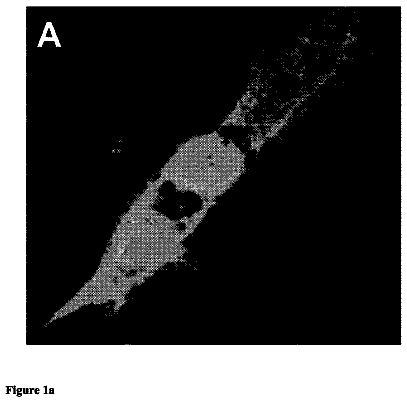
FIG. 3 shows in-vitro testing of the polypeptide-mediated uptake and release of siRNA and synergistic inhibition of brain tumor cell proliferation by codelivery of siRNA and DOX using the polypeptide nanocarrier. (A) Cellular uptake and release of the dye-labeled siRNA in U87-EGFRvIII cells as seen using fluorescence microscopy. (A1) represents the phase contrast image, and (A2) is the corresponding fluorescence image The siRNA is clearly seen in cellular cytoplasm (as evidenced by the diffused red fluorescence). (B) Silencing efficiency of the Polypetide-siGFP in stably transfected U87-EGFP glioblastoma cells (bottom) as compared to the control U87-EGFP cells (top) with polypeptide-scrambled siRNA; (B1) and (B3) represents the phase contrast image while (B2) and (B4) are the corresponding fluorescence images. Fluorescence images clearly show the knockdown of EGFP in the polypeptide-siEGFP transfected cells after 72 h. Scale bar is 50 μm. (C) Enhanced cell death by delivery of polypeptide-DOX-EGFRvIII siRNA conjugates as compared to delivery of polypeptide-DOX alone or polypeptide-EGFRvIII siRNA. The results are presented as means±SD (n=3). Student's unpaired t-test was used for evaluating the statistical significance of the cytotoxicities of the polypeptide-DOX-siRNA codelivery as compared to polypeptide-DOX or polypeptide-siRNA alone (*=P<0.01, **=P<0.05).
Detailed description of the invention
It has now been discovered that peptide-based dendrimer systems are amenable for the covalent conjugation of multiple small molecule anticancer drugs and also for the complexation of negatively charged therapeutic small interfering RNA (siRNA). Dendrimers have unique characteristics including monodispersity, modifiable surface functionality, highly defined size and structure with a very high positive surface charge. These attributes allow for the efficient conjugation and delivery of therapeutic agents such as small molecule drugs, siRNA, aptamers and plasmid DNA into cells. In addition, the multivalency of dendritic structures further enhances their interaction with the cellular microenvironment, thereby facilitating drug delivery applications. However, the use of dendrimers is limited by their inherent toxicity; most of the amine-terminated dendrimers bind to negatively charged membranes of cells in a non-specific manner and can cause toxicity in vitro and in vivo. The present invention provides polypeptide-based dendrimers, which are essentially poly-amino acids linked by amide bonds, are biodegradable and biocompatible synthetic polymers with the availability of many side-chain functional groups to conjugate therapeutic molecules. Combing the multivalency of dendrimers with the biocompatibility of polypeptides provides a dendritic polypeptide-based drug delivery platform which enables the conjugation of multiple anticancer drugs and siRNA, and also allows for their efficient delivery to tumor cells in a controlled manner, thereby leading to a synergistic effect. Provided herein is the synthesis of a dendritic polypeptide-based carrier for the controlled delivery of multiple anticancer drugs and siRNA in order to elicit a synergistic inhibition of brain tumor cell proliferation.
While the following text may reference or exemplify specific nanocarriers or conjugates, it is not intended to limit the scope of the invention to such particular reference or examples. Various modifications may be made by those skilled in the art, in view of practical and economic considerations, such as the specific amino acids of the nanocarrier and the agents conjugated to the nanocarrier. All patents, patent applications and publications cited herein are hereby incorporated by reference in their entirety. The disclosures of these publications in their entireties are hereby incorporated by reference into this application in order to more fully describe the state of the art as known to those skilled therein as of the date of the invention described and claimed herein. In order to more clearly and concisely describe the subject matter of the claims, the following definitions are intended to provide guidance as to the meaning of terms used herein.
“Conjugate” includes compounds formed via covalent bonding or electrostatic interactions between two chemical entities. Covalent bonding may involve a linker or spacer. A complex can be formed via electrostatic interactions, for example, between lysine residues of a nanocarrier and negatively charged small interfering RNA.
“Agent loading efficiency” is defined as the ratio of the amount of an agent conjugated to the polypeptide nanocarrier to the initial feed amount of the agent used for conjugation.
“Nanocarrier” includes two or more amino acids having one or more functional groups for attaching an agent or complexing to an agent. Each individual amino acid of the nanocarrier backbone can be linked together in tandem or separated by, for example, one or more linkers or non-reactive amino acid spacers. The functional side groups of the amino acids can be reacted with PEGs, or agents or bioactive agents, such as, for example, imaging agents, drugs, radioisotopes, targeting ligands or other peptide monomer backbones. Non-limiting examples of functional amino acids are Lys, which has a primary amino group, Glu or Asp which have a carboxylate group and Cys which has a thiol group. The list of suitable functional amino acids is not limited to those naturally occurring in proteins. For example, diaminobutyric acid having an amino moiety in its side chain can also be used.
“Agent” includes without limitation any diagnostic, therapeutic, palliative, cosmetic and/or prophylactic compositions, including without limitation small molecules, drugs, biologicals, recombinant peptides, proteins and nucleic acids and immunochemicals, as well as diagnostic and imaging compositions, as may be further indicated by the context. In some uses, the term can relate to other types of compositions, as indicated by the context. An agent can be connected either directly on the nanocarrier backbone or through the distal ends of a difuncation linker.
“Linkers” include unsubstituted or substituted straight or branched chemical structures, such as those having thiol or other functional groups suitable for attachment of an agent and/or for crosslinking.
“Spacers” provide additional distance between two chemical moieties. Spacers are generally non-cleavable. However, depending on the specific groups at the linkage point and the environmental conditions, the linkage between the spacer and the chemical moiety may be cleavable.
“Therapeutically effective amount” means an amount sufficient to produce a selected effect, such as alleviating symptoms of a disease or disorder. In the context of administering compounds in the form of a combination, such as multiple compounds, the amount of each compound, when administered in combination with another compound(s), may be different from when that compound is administered alone. Thus, an effective amount of a combination of compounds refers collectively to the combination as a whole, although the actual amounts of each compound may vary.
Dendritic Polypeptide Nanocarrier
One aspect of the invention provides a dendritic polypeptide nanocarrier including a core atom and three or more arms. Each of the arms independently includes a spacer and a plurality of amino acids. The spacer covalently links the core atom with the plurality of amino acids. The plurality of amino acids comprises a plurality of cysteines, a plurality of lysines, and a plurality of histidines. The plurality of histidines are located at the terminal position of the arms. Of course, nanocarriers containing other types of functional atoms such as carbon or phosphorous as the core atom may also be used in the delivery of an agent according to the present invention.
In some embodiments, the core atom is nitrogen and the spacer is an optionally substituted C.sub.2-8 alkyl. Exemplary alkyl spacers includes a carbon chain having 2, 3, 4, 5, 6, 7, or 8 carbons. The carbon chain can be optionally inserted with one or more heteroatoms such as N, O, and S, or one or more functional groups including for example, amide, ester, and carbamate.
The presence of multiple cysteines and lysines allow for high loading of various agents through covalent bonding or complexing between the agent and the nanocarrier. In some embodiments, each arm of the nanocarrier may independently include 2, 3, 4, 5, 6, 7, 8, 9, 10 or more cysteines or derivatives thereof. In some embodiments, each arm of the nanocarrier may independently include 2, 3, 4, 5, 6, 7, 8, 9, 10 or more lysines or derivatives thereof. In some embodiments, each arm of the nanocarrier may independently include 2, 3, 4, 5, 6, 7, 8, 9, 10 or more histindines or derivatives thereof. In an exemplary embodiments, the dendritic polypeptide nanocarrier of the present invention include 3 or more cysteines or derivatives thereof, 7 or more lysines or derivatives thereof, and 3 or more histidines or derivatives thereof. A derivative of an amino acid may have, for example, a modified functional side chain or a linker or spacer extending from the functional group of the amino acid.
Various components of the nanocarrier can be directly bonded to each other or inter-connected to each other via a linker or spacer. In some embodiments, the cysteins and the core atom are connected via a spacer. In some embodiments, the lysines and the core atom are connected via a spacer. Different types of chemical linkages including for example amide, carbamate, carbonate, ether, disulfide and ester can be utilized at the point of connection. For example, the linkage between the spacer and the cysteine moiety can be an amide. Other types of linkages such as carbamate and ester are also expressly contemplated in the present invention. An additional linker may also be employed between the spacer and the amino acid to allow for control of the degradation of the nanocarrier backbone.
The individual functional amino acids can be bonded to each other in tandem or separated by one or more spacers or linkers. The presence or absence of such spacers or linkers can play an important role including for example modifying the conformation of the peptide monomers, fine tuning the degradation rate of the nanocarrier, or minimizing potential steric hindrance to the agent that the nanocarrier components are designed to interact with.
In some embodiments, a plurality of cysteines may be bonded to each other in tandem. In some embodiments, individual cysteines can be connected to each other via one or more linkers or spacers. In some embodiments, a plurality lysines may be bonded to each other in tandem. In some embodiments, individual lysines can be connected to each other via one or more linkers or spacers. Similarly, individual cysteines at the terminal position of the nanocarrier can be connected to each other directly via one or more linkers or spacers.
In some embodiments, the cysteine section (comprising two or more cysteines) and the lysine section (comprising two or more lysines) are bonded directly via a chemical linkage (e.g. an amide). In some embodiments, the cysteine section and the lysine section may also be connected via a linker or spacer. In some embodiments, the cysteine section of an arm can be inter-woven with the lysine section of the arm. For example, the cysteine section may include one or more lysines, with or without spacers or linkers in between individual amino acids. Likewise, the lysine section may contain one or more cysteines.
Linkers connecting two chemical moieties can be cleavable or non-cleavable. Preparations and applications of linkers are readily available to one of ordinary skill in the art [Goldmacher et al., Antibody-drug Conjugates and Immunotoxins: From Pre-clinical Development to Therapeutic Applications, Chapter 7, in Linker Technology and Impact of Linker Design on ADC properties, Edited by Phillips GL; Ed. Springer Science and Business Media, New York (2013)]. Various linkers are also disclosed in issued U.S. patents (see, for example, U.S. Pat. No. 8,198,417, U.S. Pat. No. 8,012,485, U.S. Pat. No. 7,989,434, U.S. Pat. No. 6,333,410, U.S. Pat. No. 5,416,064, and U.S. Pat. No. 5,208,020). The entire disclosures of the above references are expressly incorporated herein by reference. The linkage connecting a linker with a chemical moiety (e.g. amino acid or agent) includes for example, amide, ester, carbamate, ether, thioether, disulfide, hydrazone, oxime, semicarbazide, and carbodiimide (see for example U.S. Pat. Nos. 5,208,020; 5,475,092; 6,441,163; 6,716,821; 6,913,748; 7,276,497; 7,276,499; 7,368,565; 7,388,026 and 7,414,073). A linker may include one or more functional amino acids.
Cleavable linkers are linkers that can be cleaved under mild conditions. For example, disulfide containing linkers are linkers cleavable through disulfide exchange, which can occur under physiological conditions. Acid-labile linkers are linkers cleavable at acid pH. For example, certain intracellular compartments, such as endosomes and lysosomes, have an acidic pH (pH 4-5), and provide conditions suitable to cleave acid-labile linkers. Linkers that are photo-labile are useful at the body surface and in many body cavities that are accessible to light. Furthermore, infrared light can penetrate tissue. Some linkers can be cleaved by peptidases. Only certain peptides are readily cleaved inside or outside cells, see e.g. Trouet et al., 79 Proc. Natl. Acad. Sci.
Usa, 626-629
and Umemoto et al. 43 Int. J. Cancer, 677-684 (1989). Furthermore, peptides are composed of α-amino acids and peptidic bonds, which chemically are amide bonds between the carboxylate of one amino acid and the α-amino group of a second amino acid. Other amide bonds, such as the bond between a carboxylate and the ε-amino group of lysine, are understood not to be peptidic bonds and are considered non-cleavable. Some linkers can be cleaved by esterases. Again only certain esters can be cleaved by esterases present inside or outside cells. Esters are formed by the condensation of a carboxylic acid and an alcohol. Simple esters are esters produced with simple alcohols, such as aliphatic alcohols, and small cyclic and small aromatic alcohols.
Each arm of the dendritic polypeptide nanocarrier can be the same or different. For example, one arm of the nanocarrier may be different from other arms in terms of amino acids, length, linkers, or functional groups. Further, the same amino acid may present itself as different analogs or derivatives in the same arm or different arms. The variations of amino acids, length, or configurations for the nanocarrier arms provide the flexibility of bonding or complexing various agents to the nanocarrier.
In some embodiments, the nanocarrier of the present invention has the following formula: [(Histidine).sub.l(Lysine).sub.m(Cysteine).sub.n-L].sub.p-X. X is a core atom of the nanocarrier and can be nitrogen, carbon or phosphorous. L represents is a substituted or unsubstituted spacer linking the core atom with the amino acids. In some embodiments, L is an optionally substituted straight or branched C2-C8 carbon chain, optionally inserted with one or more heteroatoms in the chain. C.sub.2-8 carbon chains includes a chain with 2, 3, 4, 5, 6, 7, and 8 carbons in the backbone. Heteroatoms that can be optionally inserted into the backbone, in the middle or at the terminal position of the chain, include for example nitrogen, oxygen and sulfur. Various functional groups such as esters and amides can also be inserted in the carbon chain. Each subscript of l, m, and n on each arm is independently 1, 2, 3, 4, 5, 6, 7, 8, 9 or 10. The subscript of p on each arm independently represents an integer of 2, 3, 4, or 5. In some embodiments, X is nitrogen. In some embodiments, l and n are independently selected from 3, 4, 5, 6, 7, or 8. In some embodiments, m is 5, 6, 7, 8, or 9. In some embodiments, L is ethyl, propyl, n-buty, or n-pentyl. For nanocarriers prepared from tris-(2-aminoethyl)amine, L represents a spacer derived from 2-aminoethyl group, X represents nitrogen, and p is 3. The linkage point between the spacer and cysteine is an amide group.
Various synthetic approaches may be employed for the preparation of the nanocarrier of the present invention. For example, the preparation of a nanocarrier may start with a core having a core atom and three or more attached spacers, followed by sequential introduction of amino acids, linkers, spacers, or combinations thereof.
The introduction of amino acids onto each arm of the nanocarrier may entail standard coupling reactions between a carboxylic acid and an amine. Alternatively, as illustrated in the example section of the present invention, the coupling between the N-carboxy anhydride (NCA) of an amino acid and an amine proves to be an efficient and high-yield approach. Various Lewis acids may also be employed to promote the NCA coupling reaction. An added benefit with Lewis acids is the configuration retention of chiral amino acid substrates.
Nanocarrier-Agent Conjugate
Another aspect of the invention provides a polypeptide dendritic nanocarrier-agent conjugate comprising the above described dendritic polypeptide nanocarrier and an agent. The agent is conjugated to one or more of the cysteines or lysines of the nanocarrier.
The agent may be conjugated to one or more (e.g. 1, 2, 3, 4, 5, 6, 7, 8, 9, or 10) cysteines or lysines in one or more arms (e.g. 1, 2, or 3) of the nanocarrier. Any arm of the nanocarrier may independently have 1, 2, 3, 4, or 5 different agents attached thereon. Further, different arms may have different agents attached thereon. Various linkers or linkages as described above can be employed for conjugating an agent to the dendritic polypeptide nanocarrier.
An agent can be conjugated to one or more arms of the polypeptide dendritic nanocarrier. In some embodiments, the agent is a drug and may be selected from the group consisting of anti-inflammatory drugs including: non-steroidal anti-inflammatory drugs (NSAID) and NSAID analogs, indomethacin, sancycline and sancycline analogs, olvanil and olvanil analogs, retro-olvanil and retro-olvanil analogs, olvanil carbamate, NSAID-ache, budesonide and budesonide analogs, methylprednisolone and methylprednisolone analogs and dexamethasone and dexamethasone analogs. Also envisioned is the use of anticancer drugs for conjugation such as camptothecin, carboplatin, doxorubicin (DOX), paclitaxel, bleomycin; anti-HIV drugs including protease inhibitors (non-limiting examples: saquinavir, amprenavir, ritonavir, indinavir, nelfinavir, tipranavir, darunavir and atazanavir) reverse-transcriptase inhibitors, integrase inhibitors viral entry inhibitors (e.g. enfuvirtide) and monoclonal antibodies.
In some embodiments, the agent is an anticancer drug. Non-limiting examples of anticancer drugs include alkylating agents such as thiotepa and cyclosphosphamide (CYTOXAN)™; alkyl sulfonates such as busulfan, improsulfan and piposulfan; aziridines such as benzodopa, carboquone, meturedopa, and uredopa; ethylenimines and methylamelamines including altretamine, triethylenemelamine, trietylenephosphoramide, triethylenethiophosphaoramide and trimethylolo-melamine; nitrogen mustards such as chlorambucil, chlomaphazine, cholophosphamide, estramustine, ifosfamide, mechlorethamine, mechlorethamine oxide hydrochloride, meiphalan, novembichin, phenesterine, prednimustine, trofosfamide, uracil mustard; nitrosureas such as carmustine, chiorozotocin, fotemustine, lomustine, nimustine, ranimustine; antibiotics such as aclacinomycins, actinomycin, authramycin, azaserine, bleomycins, cactinomycin, calicheamicin, carabicin, carminomycin, carzinophilin, chromomycins, dactinomycin, daunorubicin, detorubicin, 6-diazo-5-oxo-L-norleucine, doxorubicin, epirubicin, esorubicin, idarubicin, marcellomycin, mitomycins, mycophenolic acid, nogalamycin, olivomycins, peplomycin, porfiromycins, puromycin, quelamycin, rodorubicin, streptonigrin, streptozocin, tubercidin, ubenimex, zinostatin, zorubicin; anti-metabolites such as methotrexate and 5-fluorouracil (5-FU); folic acid analogues such as denopterin, methotrexate, pteropterin, trimetrexate; purine analogs such as fludarabine, 6-mercaptopurine, thiamiprine, thioguanine; pyrimidine analogs such as ancitabine, azacitidine, 6-azauridine, carmofur, cytarabine, dideoxyuridine, doxifluridine, enocitabine, floxuridine; androgens such as calusterone, dromostanolone propionate, epitiostanol, mepitiostane, testolactone; anti-adrenals such as aminoglutethimide, mitotane, trilostane; folic acid replenisher such as frolinic acid; aceglatone; aldophosphamide glycoside; aminolevulinic acid; amsacrine; bestrabucil; bisantrene; edatraxate; defofamine; demecolcine; diaziquone; elfornithine; elliptinium acetate; etoglucid; gallium nitrate; hydroxyurea; lentinan; lonidamine; mitoguazone; mitoxantrone; mopidamol; nitracrine; pentostatin; phenamet; pirarubicin; podophyllinic acid; 2-ethylhydrazide; procarbazine; PSK™; razoxane; sizofiran; spirogermanium; tenuazonic acid; triaziquone; 2,2′2,″-trichlorotriethylamine; urethan; vindesine; dacarbazine; mannomustine; mitobronitol; mitolactol; pipobroman; gacytosine; arabinoside (“Ara-C”); cyclophosphamide; thiotepa; taxanes, e.g. paclitaxel (TAXOL™, Bristol-Myers Squibb Oncology, Princeton, N.J.) and docetaxel (TOXOTERE™; Aventis Antony, France); chlorambucil; gemcitabine; 6-thioguanine; mercaptopurine; methotrexate; platinum analogs such as cisplatin and carboplatin; vinblastine; platinum; etoposide (VP-16); ifosfamide; mitomycin C; mitoxantrone; vincristine; vinorelbine; navelbine; novantrone; teniposide; daunomycin; aminopterin; xeloda; ibandronate; CPT-11; topoisomerase inhibitor RFS 2000; difluoromethylornithine (DMFO); retinoic acid; esperamicins; capecitabine; and pharmaceutically acceptable salts, acids or derivatives of any of the above. Also included in this definition are anti-hormonal agents that act to regulate or inhibit hormone action on tumors such as anti-estrogens including for example tamoxifen, raloxifene, aromatase inhibiting 4(5)-imidazoles, 4-hydroxytamoxifen, trioxifene, keoxifene, LY 117018, onapristone, and toremifene (FARESTON™); and anti-androgens such as flutamide, nilutamide, bicalutamide, leuprolide, and goserelin; and pharmaceutically acceptable salts, acids or derivatives of any of the above. In some embodiments, the anticancer drug is DOX.
In some embodiments, the agent is an imaging agent. Suitable non-limiting examples of imaging agents include coloring dyes like FD and C dyes, or visible/near infrared fluorescence dyes like fluorescein, methylene blue, rhodamine, dansyl, Alexa, cyanine dyes, Hilyte, Texas Red, indocyanine green and the like.
In some embodiments, the agent is a cell uptake promoter, transporter, receptor, binding or targeting ligand. Suitable examples of these agents include, without limitations, a vitamin such as, but not limited to, biotin, pantothenate, vitamin B6, or vitamin B12, or analogs thereof. It may also be a carbohydrate for which a transporter exists, such as for glucose and glucose derivatives. It may also be a chemotactic peptide such as a formyl-methionyl peptide. Examples of other peptide targeting agents with a range of size and amino acid order includes the peptide formyl-methionyl-leucyl-phenylalanine (fMLF) peptide and variants thereof which serves as a transport enhancing moiety and increases drug delivery into cells expressing the receptor for that peptide. fMLF is only one example of the class of formyl-methionyl peptides that binds to this receptor. Other examples include other formyl-methionyl peptides and proteins capable of binding to the formyl peptide receptor on the surface of phagocytic cells, which also has been reported to bind to certain other, unrelated peptides lacking the formyl-methionyl moiety, and these latter peptides unrelated to formyl-methionyl peptides but capable of binding to the receptor are fully embraced herein. Other transport enhancing moieties may include Tat-biotin, retro-inverso (RI)-Tat, and RI-TAT-biotin. It may be a chemokine, such as RANTES, SDF-1α, or IL-2. It may also be a peptide such as Tat, penetratin or VEGF, or a membrane fusion peptide such as gp41. It may also be an enzyme such as neuramimidase. It may be an antibody or an antibody fragment with specific affinity for lymphocyte subpopulations, neurons or other cell types. Examples of such antibodies include antibodies to CD4, which may target helper T-cells, or CD44, which may target ovarian cancer cells. It may also be an antigen or epitope such as influenza virus hemagglutinin. It may also be a hormone such as estrogen, progesterone, or growth hormone. It may also be an adhesion molecule such as ICAM, NCAM or a lectin. It may also be a lipid, such as myristic acid or stearic acid. It may be an oligonucleotide or an antisense oligonucleotide such as aptamers containing 5-(1-pentyl)-2′-deoxyuridine. These are merely non-limiting examples. Any of the cell uptake promoters embraced herein may be provided as a form which is capable of being covalently attached to a polymer or therapeutic agent as described above, such as through a functional or reactive group on the cell uptake promoter or by a chemical modification to provide one.
In some embodiments, the agent is a diagnostically useful compound that may be bound via a functional group thereon to the nanocarrier of the invention. Diagnostic moieties having reporter molecules that can be detected by imaging equipment may include radioactive, paramagnetic, fluorescent or radiopaque chemical entities. Specific examples include iodinated sugars that are used as radiopaque agents, and can be appended to linker backbones using ester or other linkages as described above. Additional diagnostic examples include the use of radioactive metal complexes such as Technetium-99m in coordination compounds such as types of, e.g. .sup.99mTc-Tetrofosmin or .sup.99mTc-Sestamibi, which are used in various types of scintigraphic imaging.
In some embodiments, the agent is an anticancer drug co-existing with a sensitizing agent or a second anticancer drug in the conjugate. Certain sensitizing agents or a second co-existing anticancer drug are able to potentiate the ability of an anticancer drug described above to inhibit cancer-cell growth. Accordingly, the combination of an anticancer drug and a suitable sensitizing agent will produce a synergistic effect when both agents are incorporated into the nanocarrier of the present invention. Specifically, the level of inhibition of cancer-cell proliferation produced by exposing the cells to both the anticancer drug and sensitizer is supraadditive relative to the sum of the inhibitions of cancer-cell proliferation observed by exposing the cells to the anticancer drug alone and to the sensitizer alone.
Various sensitizing agents, which may also be an anticancer drug, can be incorporated into the conjugate of the present invention. For example, HDAC inhibitors can act as sensitizing agents for DNA-damaging drugs such as DOX thereby increasing its potency. HDAC inhibitors include compounds of various structural types such as hydroxamic acids, cyclic tetrapeptides, benzamides, electrophilic ketones, and alihpatic acids. Non-limiting examples of HDAC inhibitors include vorinostat (SAHA), belinostat (PXD101), LAQ824, and panobinostat (LBH589); entinostat (MS-275), CI994, mocetinostat (MGCD0103), Vorinostat, Romidepsin, Panobinostat (LBH589), Valproic acid, and Belinostat. The exact dose will depend on the purpose of the treatment, and will be ascertainable by one skilled in the art using known techniques. In some embodiment, the sensitizing agent is SAHA.
Other exemplary embodiments of an anticancer drug co-existing with a sensitizing agent or a second anticancer drug in a conjugate include a topoisomerase II inhibitor (e.g. DOX) with a epigenetic modulators (e.g. HDACi), a topoisomerase I inhibitor (e.g. Camptothecin (CPT)) or other anticancer drug (e.g. taxol, erlotinib) with a epigenetic modulators (e.g. HDACi), a topoisomerase II inhibitor (e.g. DOX) or other anticancer drug (e.g. taxol, erlotinib) with a HAT (histone acetyltransferase) activator, and a topoisomerase I inhibitor (e.g. CPT) with a HAT activator. Various histone acetyltransferase activators are known in the art, including those disclosed in, for example, U.S. Pat. Application 20130121919.
The ratio between the anticancer drug and the sensitizing agent may vary depending on factors including the specific combination, the type of cancer to be treated, and pharmacological profiles of individual agents. Non-limiting examples of the ratio between the anticancer drug and the sensitizing agent include about 4:1, 3:1, 2:1, 1:1, 1:2, 1:3, 1:4, and 1:5.
In some embodiments, the agent of the conjugate is an anticancer drug and the conjugate further includes a small RNA. Examples of small RNA include RNA molecules of about 18-25 nucleotides in length which can be cleaved out with Dicer, an RNase specific to double-stranded RNA. Small RNA is mainly classified into siRNA (small interfering RNA) and miRNA (microRNA, hereinafter abbreviated as “miRNA”). Small RNAs are known to function as guide molecules for finding target sequences in processes such as translational suppression, mRNA degradation, or alteration of chromatin structure. Small RNAs function via RNA interference (RNAi) or miRNA molecular mechanisms. In addition, small RNAs are also known to play an important role in the regulation of developmental processes (for example, as general remarks, refer to Jikken Igaku (Experimental Medicine), 24, pp. 814-819, 2006; and microRNA Jikken Purotokoru (microRNA Experimental Protocol), pp. 20-35, 2008, YODOSHA CO., LTD., herein incorporated by reference in their entireties).
The co-existence of an anticancer drug and a siRNA or miRNA in the conjugate of the present invention provides a synergistic anticancer result. Various siRNAs against oncogenes can be incorporated into the conjugate. For example, a siRNA against EGFRvIII oncogene can be co-delivered with an anticancer drug via the nanocarrier of the present invention into the highly invasive U87-EGFRvIII brain tumor cells.
A small RNA can be incorporated to the anticancer drug-containing conjugate, for example, via electrostatic interaction between lysine residues on the nanocarrier arm and the negatively charged RNA. Alternatively, various chemical modifications on the small RNA can be performed to allow for covalent bonding between small RNA and suitable functional amino acids of the nanocarrier. If necessarily, a bifunctional linker as described above can be employed to connect a siRNA with an amino acid of the nanocarrier. Chemical modifications of small RNAs are known in the field for connecting a small RNA to another chemical moiety (see, for example, U.S. Pat. No. 8,779,114). The ratio between the anticancer drug and the small RNA may vary, depending on factors including the specific combination, the type of cancer to be treated, and pharmacological profiles of individual agents. Non-limiting examples of the ratio between the anticancer drug and the small include about 4:1, 3:1, 2:1, 1:1, 1:2, 1:3, 1:4, 1:5, 1:6, and 1:7.
In some embodiments, the conjugate of the present invention further includes a targeting agent. In some embodiments, the targeting agent is a peptide. In some embodiments, the peptide is an RGD peptide. Exemplary targeting peptides include kidney-specific targeting moieties (amino acid sequence CLPVASC (SEQ ID NO: 1) and CGAREMC (SEQ ID NO: 2)) and brain-specific targeting moieties (sequences CNSRLHLRC (SEQ ID NO: 3), CENWWGDVC (SEQ ID NO: 4), WRCVLREGPAGGCAWFNRHRL (SEQ ID NO: 5)) are brain-specific targeting moieties (see, for example, U.S. Patent Pub. 20050037417). Examples of other peptide targeting agents with a range of size and amino acid order includes the peptide formyl-methionyl-leucyl-phenylalanine (fMLF) peptide and variants thereof which serves as a transport enhancing moiety and increases drug delivery into cells expressing the receptor for that peptide. In some embodiments, an anticancer drug and a targeting agent are both conjugated to the nanocarrier of the present invention.
In order to conjugate various agents to the nanocarrier, chemical modifications of the agent may be required to introduce a particular functional group or a linker. For example, the anticancer drug Dox can be activated with and β-maleimidopropionic hydrazide. The resulting compound then forms a thio-ether linkage with the thiol group of the cysteine in the nanocarrier backbone. An HDAC inhibitor analog can be prepared bearing a terminal thiol group, which reacts with the thiol-containing cysteine to form a di-sulfide linkage.
The description continues in the full USPTO document.
 Lapsed, fee not paid33 drawings