Lapsed, fee not paid2 drawings
Industrial Equipment · US 9,938,988 B2
Exhaust gas turbocharger
An exhaust turbocharger comprises a turbine having a turbine wheel and a compressor having a compressor wheel.
US 9,939,048 B2 · Assignee: Hyundai Motor Company · Inventors: Kwon; Hyun Sik et al.
Sheet 1 of 2 from the published document. All sheets in the USPTO PDF
At least nine forward speeds and at least one reverse speed are achieved by a planetary gear train of an automatic transmission for a vehicle including an input shaft, an output shaft, four planetary gear sets respectively having three rotational elements, and six control elements for selectively interconnecting the rotational elements and a transmission housing.
1 of 2 drawing sheets so far from the published document, cropped to the drawing. Every sheet is in the USPTO PDF.
What the patent claimed, word for word. All of it is now free to use.
This application claims under 35 U.S.C. § 119(a) the benefit of Korean Patent Application No. 10-2016-0031670 filed in the Korean Intellectual Property Office on Mar. 16, 2016, the entire contents of which are incorporated herein by reference. BACKGROUND (a) Field of the Invention
The present invention relates to an automatic transmission for a vehicle, more particularly, to a planetary gear train of the automatic transmission capable of realizing at least nine forward speeds, thereby improving power delivery performance and fuel consumption due to multi-stages, and improving driving stability by utilizing a low rotation speed of an engine. (b) Description of the Related Art
Generally, in automatic transmissions, achieving more shift stages can maximize fuel consumption and driving efficiency.
In particular, engine research has been undertaken to achieve weight reduction and to enhance fuel consumption by so-called downsizing, and research on an automatic transmission has been performed to simultaneously provide better drivability and fuel consumption by achieving more shift stages.
In order to achieve more shift stages for an automatic transmission, the number of parts, particularly the number of planetary gear sets is typically increased and installability, production cost, weight, and/or power flow efficiency according to total length of transmission may be increased.
Therefore, in order to maximize fuel consumption of an automatic transmission having more shift stages, it is important for better efficiency to be derived by a smaller number of parts.
In this respect, an eight-speed automatic transmission has been recently introduced, and a planetary gear train for an automatic transmission enabling more shift stages is continuously required.
However, the majority of general automatic transmissions having more than eight speeds include three to four planetary gear sets and five to six control elements (friction elements), such that total length is increased, which has drawbacks of deteriorating installability.
As a result, plural rows structures of planetary gear sets have been adopted, or a dog clutch is applied in place of wet control elements. However, in this case, applicable structure is restricted and shift feel is deteriorated by applying the dog clutch.
The above information disclosed in this Background section is only for enhancement of understanding of the background of the invention and therefore it may contain information that does not form the prior art that is already known in this country to a person of ordinary skill in the art.
The present invention provides a planetary gear train of an automatic transmission for a vehicle having advantages of obtaining shift-stages of at least nine forward speeds and at least one reverse speed by use of a minimal number of parts, improving power delivery performance and fuel consumption by multi-stages of an automatic transmission, and improving driving stability of a vehicle by utilizing a low rotation speed of an engine.
A planetary gear train according to an exemplary embodiment of the present invention includes an input shaft for receiving an engine torque; an output shaft for outputting a shifted torque; a first planetary gear set having first, second, and third rotational elements; a second planetary gear set having fourth, fifth, and sixth rotational elements; a third planetary gear set having seventh, eighth, and ninth rotational elements; a fourth planetary gear set having tenth, eleventh, and twelfth rotational elements; a first shaft connected with the first rotational element; a second shaft interconnecting the second rotational element, the sixth rotational element and the seventh rotational element, and directly connected with the input shaft; a third shaft interconnecting the third rotational element and the eleventh rotational element; a fourth shaft interconnecting the fourth rotational element and the tenth rotational element; a fifth shaft connected with the fifth rotational element and selectively connected with the third shaft; a sixth shaft connected with the eighth rotational element and selectively connected with the fifth shaft; a seventh shaft connected with the ninth rotational element and selectively connected with the fourth shaft; and an eighth shaft connected with the twelfth rotational element and directly connected with the output shaft.
The first, third and seventh shafts are selectively connected with the transmission housing respectively.
The first, second, and third rotational elements of the first planetary gear set may be respectively a first sun gear, a first planet carrier, and a first ring gear of the first planetary gear set. The fourth, fifth, and sixth rotational elements of the second planetary gear set may be respectively a second sun gear, a second planet carrier, and a second ring gear of the second planetary gear set. The seventh, eighth, and ninth rotational elements of the third planetary gear set may be respectively a third sun gear, a third planet carrier, and a third ring gear of the third planetary gear set. The tenth, eleventh, and twelfth rotational elements of the fourth planetary gear set may be respectively a fourth sun gear, a fourth planet carrier, and a fourth ring gear of the fourth planetary gear set.
A planetary gear train according to an exemplary embodiment of the present invention may further include a first clutch selectively connecting the third shaft and the fifth shaft; a second clutch selectively connecting the fifth shaft and the sixth shaft; a third clutch selectively connecting the fourth shaft and the seventh shaft; a first brake selectively connecting the first shaft and the transmission housing; a second brake selectively connecting the third shaft and the transmission housing and a third brake selectively connecting the seventh shaft and the transmission housing.
According to an exemplary embodiment of the present invention, shift-stages of at least nine forward speeds and at least one reverse speed may be realized by combination of four planetary gear sets of simple planetary gear sets and six control elements.
In addition, a planetary gear train according to an exemplary embodiment of the present invention may realize shift stages appropriate for rotation speed of an engine due to multi-stages of an automatic transmission and improve driving stability of a vehicle by utilizing a low rotation speed of an engine.
In addition, a planetary gear train according to an exemplary embodiment of the present invention maximize engine driving efficiency by multi-stages of an automatic transmission, and may improve power delivery performance and fuel consumption.
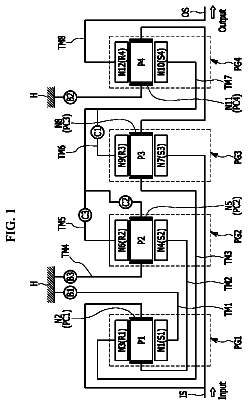
FIG. 1 is a schematic diagram of a planetary gear train according to an exemplary embodiment of the present invention.
FIG. 2 is an operational chart for respective control elements at respective shift stages in a planetary gear train according to an exemplary embodiment of the present invention.
It is understood that the term “vehicle” or “vehicular” or other similar term as used herein is inclusive of motor vehicles in general such as passenger automobiles including sports utility vehicles (SUV), buses, trucks, various commercial vehicles, watercraft including a variety of boats and ships, aircraft, and the like, and includes hybrid vehicles, electric vehicles, plug-in hybrid electric vehicles, hydrogen-powered vehicles and other alternative fuel vehicles (e.g. fuels derived from resources other than petroleum). As referred to herein, a hybrid vehicle is a vehicle that has two or more sources of power, for example both gasoline-powered and electric-powered vehicles.
The terminology used herein is for the purpose of describing particular embodiments only and is not intended to be limiting of the invention. As used herein, the singular forms “a,” “an” and “the” are intended to include the plural forms as well, unless the context clearly indicates otherwise. It will be further understood that the terms “comprises” and/or “comprising,” when used in this specification, specify the presence of stated features, integers, steps, operations, elements, and/or components, but do not preclude the presence or addition of one or more other features, integers, steps, operations, elements, components, and/or groups thereof. As used herein, the term “and/or” includes any and all combinations of one or more of the associated listed items. Throughout the specification, unless explicitly described to the contrary, the word “comprise” and variations such as “comprises” or “comprising” will be understood to imply the inclusion of stated elements but not the exclusion of any other elements. In addition, the terms “unit”, “-er”, “-or”, and “module” described in the specification mean units for processing at least one function and operation, and can be implemented by hardware components or software components and combinations thereof.
Further, the control logic of the present invention may be embodied as non-transitory computer readable media on a computer readable medium containing executable program instructions executed by a processor, controller or the like. Examples of computer readable media include, but are not limited to, ROM, RAM, compact disc (CD)-ROMs, magnetic tapes, floppy disks, flash drives, smart cards and optical data storage devices. The computer readable medium can also be distributed in network coupled computer systems so that the computer readable media is stored and executed in a distributed fashion, e.g., by a telematics server or a Controller Area Network (CAN).
Hereinafter, an exemplary embodiment of the present invention will be described in detail with reference to drawings.
The drawings and description are to be regarded as illustrative in nature and not restrictive, and like reference numerals designate like elements throughout the specification.
In the following description, dividing names of components into first, second, and the like is to divide the names because the names of the components are the same as each other and an order thereof is not particularly limited.
FIG. 1 is a schematic diagram of a planetary gear train according to an exemplary embodiment of the present invention.
Referring to FIG. 1 , a planetary gear train according to an exemplary embodiment of the present invention includes first, second, third, and fourth planetary gear sets PG 1 , PG 2 , PG 3 , and PG 4 arranged on a same axis, an input shaft IS, an output shaft OS, eight shafts TM 1 to TM 8 interconnecting rotational elements of the first, second, third, and fourth planetary gear sets PG 1 , PG 2 , PG 3 , and PG 4 , three clutches C 1 , C 2 and C 3 and three brakes B 1 , B 2 and B 3 as control elements, and a transmission housing H.
Torque input from the input shaft IS is shifted by cooperative operation of the first, second, third, and fourth planetary gear sets PG 1 , PG 2 , PG 3 , and PG 4 , and then output through the output shaft OS.
The simple planetary gear sets are arranged in the order of first, second, third and fourth planetary gear sets PG 1 , PG 2 , PG 3 and PG 4 , from an engine side.
The input shaft IS is an input member and the torque from a crankshaft of an engine, after being torque-converted through a torque converter, is input into the input shaft IS.
The output shaft OS is an output member, and being arranged on a same axis with the input shaft IS, delivers a shifted torque to a drive shaft through a differential apparatus.
The first planetary gear set PG 1 is a double pinion planetary gear set, and includes a first sun gear S 1 , a first planet carrier PC 1 that supports a first pinion P 1 externally engaged with the first sun gear S 1 , and a first ring gear R 1 internally engaged with the first pinion P 1 . The first sun gear S 1 acts as a first rotational element N 1 , the first planet carrier PC 1 acts as a second rotational element N 2 , and the first ring gear R 1 acts as a third rotational element N 3 .
The second planetary gear set PG 2 is a single pinion planetary gear set, and includes a second sun gear S 2 , a second planet carrier PC 2 that supports a second pinion P 2 externally engaged with the second sun gear S 2 , and a second ring gear R 2 internally engaged with the second pinion P 2 . The second sun gear S 2 acts as a fourth rotational element N 4 , the second planet carrier PC 2 acts as a fifth rotational element N 5 , and the second ring gear R 2 acts as a sixth rotational element N 6 .
The third planetary gear set PG 3 is a single pinion planetary gear set, and includes a third sun gear S 3 , a third planet carrier PC 3 that supports a third pinion P 3 externally engaged with the third sun gear S 3 , and a third ring gear R 3 internally engaged with the third pinion P 3 . The third sun gear S 3 acts as a seventh rotational element N 7 , the third planet carrier PC 3 acts as a eighth rotational element N 8 , and the third ring gear R 3 acts as a ninth rotational element N 9 .
The fourth planetary gear set PG 4 is a single pinion planetary gear set, and includes a fourth sun gear S 4 , a fourth planet carrier PC 4 that supports a fourth pinion P 4 externally engaged with the fourth sun gear S 4 , and a fourth ring gear R 4 internally engaged with the fourth pinion P 4 . The fourth sun gear S 4 acts as a tenth rotational element N 10 , the fourth planet carrier PC 4 acts as a eleventh rotational element N 11 , and the fourth ring gear R 4 acts as a twelfth rotational element N 12 .
In the arrangement of the first, second, third, and fourth planetary gear sets PG 1 , PG 2 , PG 3 , and PG 4 , the second rotational element N 2 is directly connected with the sixth rotational element N 6 and the seventh rotational element N 7 , the third rotational element N 3 is directly connected with the eleventh rotational element N 11 and the fourth rotational element N 4 is directly connected with the tenth rotational element N 10 by eight shafts TM 1 to TM 8 .
The eight shafts TM 1 to TM 8 are arranged as follows.
Each of the eight shafts TM 1 to TM 8 may be a rotational member that interconnects the input and output shafts and rotational elements of the planetary gear sets PG 1 , PG 2 , PG 3 , and PG 4 , or may be a fixed member fixed to the transmission housing H.
The first shaft TM 1 directly connects the first rotational element N 1 (the first sun gear S 1 ), and is directly connected with the transmission housing H, thereby always acting as a fixed element.
The second shaft TM 2 is connected with the second rotational element N 2 (the first planet carrier PC 1 ), the sixth rotational element N 6 (the second ring gear R 2 ) and the seventh rotational element N 7 (the third sun gear S 3 ), and directly connected with the input shaft IS, thereby always acting as an input element.
The third shaft TM 3 directly connects the third rotational element N 3 (the first ring gear R 1 ) and the eleventh rotational element N 11 (the fourth planet carrier PC 4 ), and directly connected with the transmission housing H, thereby always acting as a fixed element.
The fourth shaft TM 4 directly connects the fourth rotational element N 4 (the second sun gear S 2 ) and the tenth rotational element N 10 (the fourth sun gear S 4 ).
The fifth shaft TM 5 is connected with the fifth rotational element N 5 (the second planet carrier PC 2 ) and selectively connected with the third shaft TM 3 .
The sixth shaft TM 6 is connected with the eighth rotational element N 8 (the third planet carrier PC 3 ) and selectively connected with the fifth shaft TM 5 .
The seventh shaft TM 7 is directly connected with the ninth rotational element N 9 (the third ring gear R 3 ) and selectively connected with the fourth shaft TM 4 , and is selectively connected with the transmission housing H, thereby acting as a selective fixed element.
The eighth shaft TM 8 is directly connected with the twelfth rotational element N 12 (the fourth ring gear R 4 ), and directly connected with the output shaft OS, thereby always acting as an output element.
The eight shafts TM 1 to TM 8 , the input shaft IS, and the output shaft OS may be selectively interconnected with one another by control elements of three clutches C 1 , C 2 and C 3 .
The shafts TM 1 to TM 8 may be selectively connected with the transmission housing H, by control elements of three brakes B 1 , B 2 and B 3 .
The three clutches C 1 to C 3 and the three brakes B 1 , B 2 and B 3 are arranged as follows.
The first clutch C 1 is arranged between the third shaft TM 3 and the fifth shaft TM 5 , so as to selectively connecting the third shaft TM 3 and the fifth shaft TM 5 for power delivery.
The second clutch C 2 is arranged between the fifth shaft TM 5 and the sixth shaft TM 6 , so as to selectively connecting the fifth shaft TM 5 and the sixth shaft TM 6 for power delivery.
The third clutch C 3 is arranged between the fourth shaft TM 4 and the seventh shaft TM 7 , so as to selectively connecting the fourth shaft TM 4 and the seventh shaft TM 7 for power delivery.
The first brake B 1 is arranged between the first shaft TM 1 and the transmission housing H, such that the first shaft TM 1 may be selectively connected with the transmission housing H and act as a fixed element.
The second brake B 2 is arranged between the third shaft TM 3 and the transmission housing H, such that the third shaft TM 3 may be selectively connected with the transmission housing H and act as a fixed element.
The third brake B 3 is arranged between the seventh shaft TM 7 and the transmission housing H, such that the seventh shaft TM 7 may be selectively connected with the transmission housing H and act as a fixed element.
The control elements of the first, second, and third clutches C 1 , C 2 , and C 3 and the first, second, and third brakes B 1 , B 2 , and B 3 may be realized as multi-plate hydraulic pressure friction devices that are frictionally engaged by hydraulic pressure.
FIG. 2 is an operational chart for respective control elements at respective shift stages in a planetary gear train according to an exemplary embodiment of the present invention.
Referring to FIG. 2 , a planetary gear train according to an exemplary embodiment of the present invention realizes nine forward speeds and at least one reverse speed by operating three control elements among the first, second, and third clutches C 1 , C 2 , and C 3 and the first, second, and third brakes B 1 , B 2 , and B 3 at respective shift-stages.
In the forward first speed shift-stage D 1 , the second and third brakes B 2 and B 3 and the second clutch C 2 are simultaneously operated.
As a result, the fifth shaft TM 5 is interconnected with the sixth shaft TM 6 by the operation of the second clutch C 2 . In this state, torque of the input shaft IS is input to the second shaft TM 2 , and the third and seventh shafts TM 3 and TM 7 act as fixed elements by the operation of the second and third brakes B 2 and B 3 , thereby realizing the forward first speed and outputting a shifted torque through the output shaft OS connected with the eighth shaft TM 8 .
In the forward second speed shift-stage D 2 , the second and third brakes B 2 and B 3 and the first clutch C 1 are simultaneously operated.
As a result, the third shaft TM 3 is interconnected with the fifth shaft TM 5 by the operation of the first clutch C 1 . In this state, torque of the input shaft IS is input to the second shaft TM 2 , and the third and seventh shafts TM 3 and TM 7 act as fixed elements by the operation of the second and third brakes B 2 and B 3 , thereby realizing the forward second speed and outputting a shifted torque through the output shaft OS connected with the eighth shaft TM 8 .
In the forward third speed shift-stage D 3 , the third brake B 3 , the first and second clutches C 1 and C 2 are simultaneously operated.
As a result, the third shaft TM 3 is interconnected with the fifth shaft TM 5 by the operation of the first clutch C 1 , and the fifth shaft TM 5 is interconnected with the sixth shaft TM 6 by the operation of the second clutch C 2 . In this state, torque of the input shaft IS is input to the second shaft TM 2 , and the seventh shaft TM 7 acts as a fixed element by the operation of the third brake B 3 , thereby realizing the forward third speed and outputting a shifted torque through the output shaft OS connected with the eighth shaft TM 8 .
In the forward fourth speed shift-stage D 4 , the third brake B 3 , the first and third clutches C 1 and C 3 are simultaneously operated.
As a result, the third shaft TM 3 is interconnected with the fifth shaft TM 5 by the operation of the first clutch C 1 , and the fourth shaft TM 4 is interconnected with the seventh shaft TM 7 by the operation of the third clutch C 3 . In this state, torque of the input shaft IS is input to the second shaft TM 2 , and the seventh shaft TM 7 acts as a fixed element by the operation of the third brake B 3 , thereby realizing the forward fourth speed and outputting a shifted torque through the output shaft OS connected with the eighth shaft TM 8 .
In the forward fifth speed shift-stage D 5 , the first, second and third clutches C 1 , C 2 and C 3 are simultaneously operated.
As a result, the third shaft TM 3 is interconnected with the fifth shaft TM 5 by the operation of the first clutch C 1 , the fifth shaft TM 5 is interconnected with the sixth shaft TM 6 by the operation of the second clutch C 2 , and the fourth shaft TM 4 is interconnected with the seventh shaft TM 7 by the operation of the third clutch C 3 . In this case, total planetary gear sets PG 1 , PG 2 , PG 3 , and PG 4 integrally rotates, and a torque inputted through the second shaft TM 2 is outputted as inputted, thereby forming the forward fifth speed and outputting the inputted torque to the output shaft OS connected with the eighth shaft TM 8 .
In the forward sixth speed shift-stage D 6 , the first brake B 1 , the first and second clutches C 1 and C 2 are simultaneously operated.
As a result, the third shaft TM 3 is interconnected with the fifth shaft TM 5 by the operation of the first clutch C 1 , and the fifth shaft TM 5 is interconnected with the sixth shaft TM 6 by the operation of the second clutch C 2 . In this state, torque of the input shaft IS is input to the second shaft TM 2 , and the first shaft TM 1 acts as a fixed element by the operation of the first brake B 1 , thereby realizing the forward sixth speed and outputting a shifted torque through the output shaft OS connected with the eighth shaft TM 8 .
In the forward seventh speed shift-stage D 7 , the first brake B 1 , the second and third clutches C 2 and C 3 are simultaneously operated.
As a result, the fifth shaft TM 5 is interconnected with the sixth shaft TM 6 by the operation of the second clutch C 2 , and the fourth shaft TM 4 is interconnected with the seventh shaft TM 7 by the operation of the third clutch C 3 . In this state, torque of the input shaft IS is input to the second shaft TM 2 , and the first shaft TM 1 acts as a fixed element by the operation of the first brake B 1 , thereby realizing the forward seventh speed and outputting a shifted torque through the output shaft OS connected with the eighth shaft TM 8 .
In the forward eighth speed shift-stage D 8 , the first and second brakes B 1 and B 2 and the third clutch C 3 are simultaneously operated.
As a result, the fourth shaft TM 4 is interconnected with the seventh shaft TM 7 by the operation of the third clutch C 3 . In this state, torque of the input shaft IS is input to the second shaft TM 2 , and the first and seventh shafts TM 1 and TM 7 act as fixed elements by the operation of the first and third brakes B 1 and B 3 , thereby realizing the forward eighth speed and outputting a shifted torque through the output shaft OS connected with the eighth shaft TM 8 .
In the forward ninth speed shift-stage D 9 , the first and third brakes B 1 and B 3 and the second clutch C 2 are simultaneously operated.
As a result, the fifth shaft TM 5 is interconnected with the sixth shaft TM 6 by the operation of the second clutch C 2 . In this state, torque of the input shaft IS is input to the second shaft TM 2 , and the first and seventh shafts TM 1 and TM 7 act as fixed elements by the operation of the first and third brakes B 1 and B 3 , thereby realizing the forward ninth speed and outputting a shifted torque through the output shaft OS connected with the eighth shaft TM 8 .
In the reverse speed REV, the second brake B 2 , the second and third clutches C 1 and C 3 are simultaneously operated.
As a result, the fifth shaft TM 5 is interconnected with the sixth shaft TM 6 by the operation of the second clutch C 2 , and the fourth shaft TM 4 is interconnected with the seventh shaft TM 7 by the operation of the third clutch C 3 . In this state, torque of the input shaft IS is input to the second shaft TM 2 , and the third shaft TM 3 acts as a fixed element by the operation of the second brake B 2 , thereby realizing the reverse speed and outputting a shifted torque through the output shaft OS connected with the eighth shaft TM 8 .
As described above, a planetary gear train according to an exemplary embodiment of the present invention may realize at least nine forward speeds and at least one reverse speed formed by operating four planetary gear sets PG 1 , PG 2 , PG 3 , and PG 4 by controlling the three clutches C 1 , C 2 , and C 3 and the three brakes B 1 , B 2 and B 3 .
In addition, a planetary gear train according to an exemplary embodiment of the present invention may realize shift stages appropriate for rotation speed of an engine due to multi-stages of an automatic transmission and improve driving stability of a vehicle by utilizing a low rotation speed of an engine.
In addition, a planetary gear train according to an exemplary embodiment of the present invention may maximize engine driving efficiency by multi-stages of an automatic transmission, and may improve power delivery performance and fuel consumption.
While this invention has been described in connection with what is presently considered to be practical exemplary embodiments, it is to be understood that the invention is not limited to the disclosed embodiments, but, on the contrary, is intended to cover various modifications and equivalent arrangements included within the spirit and scope of the appended claims.
About 4,813 words. The USPTO PDF has it with every drawing.
Fees are due 3.5, 7.5 and 11.5 years after grant. This patent expired on April 10, 2026, so the fee marked "not paid" was the one that went unpaid.
PLANETARY GEAR TRAIN OF AUTOMATIC TRANSMISSION FOR VEHICLES
Filed Sep 2016 · published Sep 2017Planetary gear train of automatic transmission for vehicles
Filed Sep 2016 · granted Apr 2018Earlier publications, parents and continuations. None of them can still be enforced, or this patent would not be listed.
Prior art cited by the examiner or applicant. Useful when you check your own idea for novelty.
Everything on this page comes from the documents linked above.