Technical field
This invention relates generally to the wireless communication field, and more specifically to a new and useful method and system for providing content in the wireless communication field.
Brief description of the figures
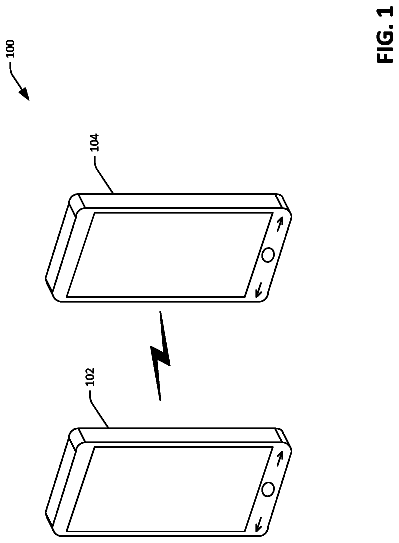
FIG. 1 is a schematic representation of a variation of the method.
FIG. 2 is a schematic representation of a variation of the method.
FIG. 3 is a schematic representation of a variation of the method.
FIG. 4 is a schematic representation of a variation of generating beacon analytics.
FIG. 5 is a schematic representation of a variation of the method.
Description of the preferred embodiments
The following description of the preferred embodiments of the invention is not intended to limit the invention to these preferred embodiments, but rather to enable any person skilled in the art to make and use this invention.
1. Overview.
As shown in FIGS. 1-3 and 5 , embodiments of a method 100 for delivery of content to a user device can include: determining a resource identifier including beacon data associated with a beacon, where the resource identifier is associated with a content identifier identifying the content S 110 ; broadcasting the resource identifier from the beacon to the user device S 120 ; processing a resource request from a verifying entity, the resource request associated with the resource identifier S 130 ; and transmitting a response to the resource request based on the first content identifier S 140 . Embodiments of the method 100 can additionally or alternatively include generating beacon analytics S 150 , providing an interface to an entity, and/or other suitable processes.
The method 100 functions to leverage beacon technology to facilitate centralized control (e.g., at a remote beacon control system) of content (e.g., contextualized content) delivered to user devices. The method 100 can additionally or alternatively function to dynamically modify resource identifiers (e.g., broadcasted by a beacon) to collect beacon data (e.g., sensor data, traffic data) for generating beacon analytics, to increase security, and/or for other suitable purposes. Further, the method 100 can optionally function to enable a first party (e.g. a beacon manufacturer, an entity developing software executable by a beacon, etc.) to centrally manage content deliverable to user devices in order to ensure compliance with verifying entities (e.g., an entity that verifies the legitimacy of content before delivery to the user, a web browser, a network administrator, an internet service provider, etc.).
An example of a first party includes Estimote™, or any other suitable entity associated with a system that the content requests are routed through, and/or other suitable entities. An example of a verifying entity is Google™, accessible through Google's Physical Web™. As such, beacon owners (e.g., an entity controlling a beacon, beacon permissions, etc.) can confidently manage deployed beacons and delivered content remotely, such as at a beacon owner interface. For example, merchants (e.g., Target™) can be a beacon owner and own one or more sets of beacons. Content providers can create and dynamically manage beacon campaigns (e.g., for delivering content) remotely, such as at a content provider interface and/or content provider device. Content providers can include any of: an entity providing content to be served to a user, a beacon owner, a secondary entity (e.g., an entity associated with the beacon owner and serving content by leveraging beacons of the beacon owner), a content provider device, an entity associated with the physical space, merchant, and/or product, and/or any other suitable entity. For example, content providers can include advertising entities, product companies (e.g., Coke™), or other entities. Further, users (e.g., an individual associated with a user device communicating with beacons, a customer interfacing with beacons located at a retail store, etc.) can receive content (e.g., associated with a beacon) at a user device without the user device needing to download any particular application.
The method 100 is preferably implemented with systems described in U.S. application Ser. No. 15/253,376, filed 31 Aug. 2016, and U.S. application Ser. No. 14/463,582, filed 19 Aug. 2014, which are incorporated in their entireties by this reference, but can be additionally or alternatively implemented with one or more: beacons, processing systems (e.g., remote systems) associated with first parties, beacon owners, content providers, verifying entities, and/or other suitable entities, and/or any other suitable components. The method 100 and system 200 can optionally be applied to applications independent of beacon technology.
One or more instances and/or portions of the method 100 and/or processes described herein can be performed asynchronously (e.g., sequentially), concurrently (e.g., in parallel; concurrently on different threads for parallel computing to improve system processing ability; etc.), in temporal relation to a condition, and/or in any other suitable order at any suitable time and frequency by and/or using one or more instances of the system 200 , elements, and/or entities described herein. However, the method 100 and/or system 200 can be configured in any suitable manner.
2. Benefits.
The technology can confer several benefits over conventional systems. First, the technology can include processes necessarily rooted in computer technology for overcoming problems specifically arising in the realm of computer networks (e.g., Internet technology). In an example, the technology can enable dynamic generation of resource identifiers (e.g., URLS associated with a first party Internet domain, etc.) based on content identifiers (e.g., URLS associated with a content provider Internet domain, etc.) using identifier generation rules configured to improve extraction and analysis of contextual data (e.g., beacon data, user device data, etc.) to overcome issues with tracking and/or personalizing content delivery through a beacon network (e.g., operating in the Physical Web).
Second, the technology can confer an improvement to the functioning of computer-related technology. For example, the technology can amount to an inventive distribution of functionality across a network of one or more: beacon control systems (e.g., acting as a centralized system including a content database with sets of content identifiers associated with sets of beacons identifiers; determining identifier generation rules for generating resource identifiers enabling dynamic selection of content to be delivered based on contextual data such as beacon sensor data; etc.), beacons (e.g., generating and/or broadcasting a resource identifiers associated with content identifiers for content provided by content providers; supplying contextual data to improve personalized content delivery; etc.), user devices (e.g., acting as a communication intermediary between a beacon, a verifying entity, and a beacon control system; acting as a device where content can be presented; etc.), verifying entities (e.g., acting as a verification intermediary between broadcast of a resource identifier to a user device and presentation of content at the user device; etc.), and/or other suitable components.
Third, the technology can facilitate performance of functions not previously performable (e.g., improving upon processes). For example, the technology can apply computer-implemented rules (e.g., identifier generation rules; resource request processing rules such as data extraction rules for beacon data extraction from resource identifiers, content identifier selection rules for selecting a content identifier from a set of content identifiers for generating a response to a resource request; user preference rules; storage and retrieval rules in relation to beacon data, identifiers, and/or other suitable data; etc.) to confer improvements in beacon technology (e.g., beacons, beacon control systems, etc.) for delivering content.
Fourth, the technology can improve beacon network security, such as through applying identifier generation rules to generate resource identifiers including an HTTPS URL to be communicated across a beacon control system, beacons, user devices, verifying entities, and/or other suitable components. In another example, beacons can be associated with beacon communication protocols with enterprise-grade encryption and security algorithms, where the beacon communication protocol associated with communication of a resource identifier can be identified through the resource identifier (e.g., through a protocol identifier included in the resource identifier) for verification.
Fifth, the technology can improve digital privacy associated with delivering content with a beacon (e.g., operating with the Physical Web), such as by filtering content delivered to a user device based on permission-based user preferences for types of content, type of content identifiers, types of content presentation, and/or through other suitable means.
Sixth, the technology can transform a particular article to another state or thing. For example, the technology can transform one or more of: beacons (e.g., controlling beacons through wireless digital commands generated and transmitted by a beacon control system; controlling the beacon to disable or activate broadcasts of resource identifiers; controlling the beacon to update firmware and/or software; controlling resource identifier generation, sensor sampling, and/or other beacon processes; managing a set of beacons; controlling a beacon to operate between master and slave modes in different contexts, such as based on beacon data extracted from a resource request; etc.), a user device (e.g., activating the user device to present content, as facilitated by transmission of a corresponding resource identifier from a beacon to the user device; etc.), and/or other suitable components.
Seventh, the technology can leverage specialized computing devices (e.g., beacons including sensors, wireless communication systems configured to communicate with other beacons and/or a centralized beacon control system, and/or other suitable components) in facilitating improvements in content delivery. However, the technology can provide any other suitable benefits in the context of using non-generalized systems for delivering content.
3. Method.
Determining a resource identifier including beacon data associated with a beacon S 110 functions to determine an identifier to be broadcasted by one or more beacons. A resource identifier is preferably associated with (e.g., redirects to; includes; stored in association with, such as for later retrieval and/or selection amongst a set of a content identifiers; based upon, such as through modifying the content identifier URL; etc.) one or more content identifiers identifying content provided by content providers (e.g., a single content provider; multiple content providers; etc.) and/or other suitable entity. Content identifiers are preferably stored in association with beacon identifiers (e.g., to enable retrieval of the relevant content identifier in response to extracting a beacon identifier from a resource request; etc.), but can be otherwise associated.
Resource identifiers can include any of a: uniform resource identifier (URI) (e.g., uniform resource locator, universal resource name, etc.), IP address, codes (e.g., bar code, QR code, datamatrix code, UPC code, etc.), titles, descriptions, associated media (e.g., favicons, images, video, audio, etc.), and/or any suitable resource identifying information. Resource identifiers can be used as: a website locator (e.g., for linking to a website), application locator (e.g., for launching an application), a database access resource, a file transfer resource, an email resource, a pointer to content, and/or for any suitable purpose. In variations, the resource identifier can include beacon data (e.g., beacon identifiers, sensor data, traffic data), user device data (e.g., data sampled at a sensor of a user device), random characters, and/or any suitable data. Sensor data (e.g., sampled at beacon sensors, at user device sensors, etc.) can include data from any of: motion sensors (e.g., gyroscopes, accelerometers, magnetometers, etc.), temperature sensors, optical sensors (e.g., image sensors, light sensors, etc.), location sensors, audio sensors, volatile compound sensors, humidity sensors, depth sensors, touch sensors, impedance sensors, biometric sensors (e.g., fingerprint sensors, etc.), power sensors, and/or any other suitable sensors. Resource identifiers can be static or dynamic. Additionally or alternatively, resource identifiers can be configured in any manner analogous to content identifiers and/or other suitable identifiers, and vice versa. In a first specific example, the content identifier can include a first URI associated with a content provider domain, and the resource identifier can include a second URI associated with a first party domain. In a second specific example, a resource identifier URI can be generated for media content submitted through an interface (e.g., where a content provider uploads the media content directly from their desktop). However, identifiers can be associated with any suitable domains and/or entities, and can be configured in any suitable manner.
Resource identifiers are preferably generated using one or more rules (e.g., generation rules for identifiers, for other suitable data, etc.) based on one or more of: a temporal indicator (e.g., generating resource identifiers at a time interval, during a time period, etc.), beacon data (e.g., generating a resource identifier in response to sampling a threshold size of sensor data; generating a resource identifier including a beacon identifier, sensor data, associated beacon protocol identifiers, associated identifiers such as user accounts and/or content identifiers, and/or other suitable data; etc.), user device data, identifiers (e.g., beacon identifier, application identifier, content provider identifier, beacon owner identifier, etc.), encryption parameters (e.g., for encrypting portions of the resource identifier), random generators (e.g., for appending random strings), and/or any suitable criteria.
Different rules can be applied to different beacons, content, user devices, and/or other suitable entities, which can confer improvements to the system 200 by improving content delivery (e.g., through improved personalization of content to users; through improved management of content delivery campaigns with beacons by content providers; etc.), and/or other suitable aspects. For example, a first sensor data encoding rule can be used to determine resource identifiers for a beacon including a plurality of sensor types, and a second sensor data encoding rule can be used to determine resource identifiers for a beacon including a single sensor type (e.g., where different encoding mechanisms can be applied to include and/or select sensor data while complying with a URL size requirement, etc.). The rules can be determined (e.g., obtained, retrieved, generated, executed, etc.), stored (e.g., in association with identifiers, contextual data, etc.), and/or otherwise processed by any suitable component of the system 200 .
In a first variation, the method 100 can include determining a resource identifier including beacon data based on the beacon identifier (e.g., where the resource identifier includes the beacon identifier; where a identifier generation rule associated with the beacon identifier is retrieved based on the beacon identifier and utilized to determine the resource identifier; etc.). In a first specific example, the resource identifier includes a URI (e.g., web address) including: a first party host (e.g., linking to a first party server system, such as http://estimote.com) and a path including a beacon identifier (associated with a beacon on the first party server system). The path, path parameters, and/or path fragment (e.g., named anchor) can optionally include encoded beacon data, such as sensor data, location data, traffic data, or other data. In a specific example, resource identifiers can be generated in a URL form of: “https://example.info/vvxxxyyyzzz”, where vv includes a beacon communication identifier (e.g., version, type, associated operating system, etc.), xxx includes a beacon identifier, yyy includes beacon data (e.g., encoded sensor data, traffic data, etc.), and zzz includes random characters, where the number of characters associated with a data type can vary, and/or other suitable aspects of the URL can vary. In a second specific example, the beacon can be associated with a beacon communication protocol identified by a protocol identifier, and determining a resource identifier can include: determining an identifier generation rule based on a resource identifier condition (e.g., a URL restriction limiting URL size to 17 byes; requiring public URLs; requiring HTIPS URLS; etc.) defined by the beacon communication protocol; generating a resource identifier including the protocol identifier (e.g., based on an identifier generation rule) and/or other suitable beacon data, according to the resource identifier condition. However, determining resource identifiers including beacon data can be performed in any suitable manner.
In a second variation, resource identifiers can be modified to distinguish from other broadcasted resource identifiers (e.g., to facilitate downstream resource identifier processing). In a specific example, the method 100 can include storing a beacon data rule at a first beacon identified by a first beacon identifier, and applying the beacon data rule to modify the beacon identifier portion of a first resource identifier broadcasted by the first beacon, such as in response to receiving, from a second beacon, a second broadcasted resource identifier including a second beacon identifier matching the first beacon identifier. However, resource identifiers can be generated based on other resource identifiers in any suitable manner.
In a third variation, a resource identifier can be associated with a content provider domain. For example, determining a resource identifier can include appending and/or otherwise including beacon data, user data, real-time analytics, and/or other suitable data to a content identifier associated with a content provider host (e.g., where the content provider can extract the data in response to a user accessing the content associated with the resource identifier; etc.). In a specific example, the identifier generation rules can be selected based on content provider preferences for data types to be tracked. However, resource identifiers can be associated with any suitable entity in any suitable manner.
In a fourth variation, generation rules can include temporal rules controlling the timing (e.g., at noon, during night time, during periods of high user traffic, etc.), frequency (e.g., generate resource identifier and/or append characters every N seconds, etc.), and/or other temporal parameters associated with resource identifier generation.
Identifier generation rules applied by a beacon and/or beacon control system can be updated by the beacon control system, beacon, and/or other suitable component. In a first example, the method 100 can include: determining a second identifier generation rule at the beacon control system based on beacon data extracted from a resource request associated with a resource identifier generated with a first identifier generation rule; and transmitting the second identifier generation rule to a beacon, where the second identifier generation rule can be applied in any suitable processes (e.g., resource identifier generation for subsequent broadcasting and resource request processing; etc.) of the method 100 . In a second example, the method 100 can include, selecting a mode of a set of modes (e.g., selecting a mode where motion sensor data is included in the resource identifier versus temperature sensor data; etc.) for applying an identifier generation rule to determine resource identifiers at the beacon, where selection of a mode can be based on any suitable data, such as data used for determining resource identifiers (e.g., selecting a state of charge data transfer mode in response to the beacon's processing system detecting a state of charge falling below a threshold; etc.). However, updating identifier generation rules can be performed in any suitable manner.
Generation rules are preferably stored at a beacon (e.g., to generate resource identifiers) and a beacon control system associated with a first party (e.g. to facilitate resolution of beacon data from a resource request comprising the resource identifier; etc.), but can additionally or alternatively be stored at any suitable component. In an example, generation rules can be transmitted to the beacon from a beacon owner device, user device (e.g., through an application in communication with a first party processing system), directly from a beacon control system (e.g., associated with a first party), and/or any component. Generating a resource identifier is preferably performed by a beacon, but can additionally or alternatively be performed by a beacon control system (e.g., where the beacon control system can transmit resource identifiers directly and/or indirectly to beacons), and/or any suitable component. In an example, a first and second identifier generation rule can be determined by the beacon control system, where the beacon control system can generate a resource identifier using the first identifier generation rule (e.g., https://example.info/[broadcast preferences]), and the beacon can update the resource identifier using the second identifier generation rule (e.g., https://example.info/[broadcast preferences] [beacon ID][sensor data]), where the data types in parenthesis are filled during the resource identifier generation and/or update. However, storage and application of generation rules can be performed by any suitable entity.
Determining a resource identifier can be performed at predetermined time intervals (e.g., according to a temporal-based generation rule; every second; every minute; every hour; etc.), in temporal relation (e.g., in parallel, serially, substantially concurrently, etc.) to a generation condition (e.g., dynamically determining resource identifiers based on collected beacon data, such as determining a new resource identifier in response to motion data detecting movement of the beacon and/or surrounding entities; determining a resource identifier in response to receiving a content identifier and/or content; determining a new resource identifier in response to a receiving resource request associated with a broadcasted resource identifier; in response to analytics data satisfying a condition, such as an impression or clickthrough associated with a broadcasted resource identifier; etc.) and/or other suitable conditions, and/or at any suitable time and frequency. In an example, different broadcasting beacons can generate resource identifiers corresponding to the same content. In a specific example, the method 100 can include, extracting beacon data for a first beacon from a resource request for a first resource identifier (e.g., https://example1.info/[beacon id1][sensor data1]) associated with a first content identifier; in response to the beacon data satisfying a threshold condition (e.g., a state of charge below a threshold; user movement, such as in a particular direction towards a section of a merchant store; temperature above a threshold; etc.), determining a second resource identifier (e.g., https://example1.info/[beacon id2][sensor data2]) for broadcast by a second beacon based on the first content identifier (e.g., where the second beacon broadcasts a resource identifier leading to presentation of first content identified by the first content identifier) and a second beacon identifier (e.g., where the second beacon identifier is associated with the first beacon identifier; where the second beacon is at a distance below a threshold distance from the first beacon; where the first and second beacons are owned by the same beacon owner; where the beacon profiles for the first and the second beacons share historic delivery of content similar to the content identified by the first content identifier; etc.). In this specific example or other examples, the method 100 can optionally include: associating the second beacon identifier with a second content identifier identifying second content (e.g., related to the first content; independent from the first content; default content associated with the second beacon; etc.); determining a supplementary resource identifier based on the second content identifier and the second beacon identifier; and broadcasting the second resource identifier and the supplementary resource identifier (e.g., in alternation; concurrently; serially; at scheduled time periods; based on beacon data; etc.) at the second beacon. However, determining resource identifiers can be performed in any suitable manner.
As shown in FIGS. 1-3 , broadcasting a resource identifier with one or more beacons S 120 can function to disseminate one or more resource identifiers associated with content to be verified (e.g., by a verifying entity), and/or presented to a user at a user device. For example, broadcasting can including broadcasting a resource identifier from a beacon to a user device associated with a user proximal the beacon, where the user device is configured to transmit the resource identifier to a verifying entity. Additionally or alternatively, the method 100 can include broadcasting content directly (e.g., without the intermediary of a resource identifier), and/or any other suitable data.
Broadcasted resource identifiers are preferably transmitted to a user device (e.g., a user device within a threshold distance to the beacon; a user device that subsequently transmits a broadcasted resource identifier to a verifying entity, etc.), but can be directly transmitted to a verifying entity (e.g., a verifying entity device), a beacon control system (e.g., a remote computing system, etc.) associated with a first party and/or third party, and/or to any suitable component. Broadcasting is preferably wireless (e.g., through Bluetooth Low Energy, Bluetooth Long Range, etc.), but can be through any suitable communication means. Broadcasting resource identifiers is preferably continuously performed during operation of a beacon, but can additionally or alternatively be performed in response to satisfaction of broadcasting conditions. Broadcasting conditions can include any one or more of: user device data (e.g., detection of a user device that has opted in to receive broadcasted resource identifiers, detection of a particular user device type, user device location in relation to beacons, etc.), temporal conditions (e.g., broadcasting resource identifiers during specific time periods, at time intervals, etc.), beacon conditions (e.g., based on beacon sensor data, traffic data, state of charge, etc.) and/or any suitable conditions.
Any number of resource identifiers can be broadcasted by any number of beacons (e.g., different resource identifiers generated based on different beacon communication protocols, etc.). In a variation, the method 100 can include coordinating the broadcasting of one or more resource identifiers amongst a set of beacons. In an example, coordinating can include communicating a priority resource identifier between beacons for each beacon to broadcast. In another example, coordinating can include disabling broadcasting for a beacon (e.g., to restrict the number and/or type of resource identifiers broadcasted in an area). In a specific example, the method 100 can include disabling a beacon (e.g., through a command transmitted by a beacon control system; through a rule stored at the beacon; etc.) from broadcasting a resource identifier in response to beacon data (e.g., extracted from a resource request; sampled at a beacon sensor) satisfying a threshold condition (e.g., a state of charge below a threshold). In examples, disabling or activating broadcasting can be based on other sensor data, time of day, scheduling of communications (e.g., scheduling communications based on beacon data collected from resource identifiers; scheduling broadcasting in temporal relation with dissemination of firmware updates across the network of beacons; etc.), and/or other suitable data. However, broadcasting resource identifiers can be performed in any suitable manner.
As shown in FIG. 1-3 , the method 100 can optionally include receiving the resource identifier at a processing system (e.g., remote system) associated with a verifying entity, which can function to facilitate verification of content associated with received resource identifiers. The received resource identifier is preferably a broadcasted resource identifier (e.g., originating at one or more beacons), but can additionally or alternatively be any suitable resource identifier (e.g., a resource identifier transmitted from a first party beacon control system; a different form of the resource identifier; etc.). In variations, the method 100 can include one or more of: transmitting a resource identifier from a beacon to a receiving device (e.g., user device, another beacon, first party processing system, etc.); transmitting the resource identifier to a client on the receiving device (e.g., an executing application); and/or transmitting the resource identifier to a processing system associated with a verifying entity. In one example, the resource identifier broadcast by the beacon is received by a client (e.g., browser application, operating system application, third party application, etc.) running on a user device, where the client forwards the resource identifier to the verifying entity.
The method 100 can additionally or alternatively include transmitting a resource request (e.g., an HTTP request from a verifying entity) to access content associated with the resource identifier. Resource requests are preferably transmitted to a first party processing system (e.g., a beacon control system at which content is stored), but can optionally be transmitted to processing systems associated with third parties and/or any entity. In a variation, transmitting a resource request can be based on comparisons with historic resource identifiers. For example, the method 100 can include receiving a resource identifier; comparing the resource identifier with historic resource identifiers (e.g., received from one or more user devices); transmitting a resource request in response to the resource identifier failing to match a historic resource identifier; and returning stored content in response to the resource identifier matching a historic resource identifier. Additionally or alternatively, transmitting resource requests can be based on temporal parameters, user device data (e.g., location, operating system, device type, etc.), and/or other suitable parameters. However, receiving the resource identifier at a processing system associated with a verifying entity can be performed in any suitable manner.
As shown in FIGS. 1-3 and 4 , processing a resource request S 130 can function to receive a resource request; resolve a beacon identifier (e.g., based on extracted beacon data); extract beacon data from the resource request; select a content identifier; and/or perform other suitable processes for facilitating content delivery. A resource request preferably includes and/or is associated with one or more resource identifiers (e.g., where the resource request includes passing the resource identifier through a proxy; where the resource request includes data extracted from the resource identifier; etc.), but can additionally or alternatively include: user device information (e.g., user device type, IP address, location, operating system, applications, etc.) for a user device associated with the resource request, user data (e.g., profile information; user account information; preferences, demographic, location history, purchase history, shopping patterns, temporal patterns, etc.), and/or any suitable information.
Processing the resource request can be based on: resource identifier generation rules (e.g., used by a beacon control system to resolve beacon data from a resource identifier generated by the rule; etc.), beacon data (e.g., historic beacon data, beacon data across a set of beacons, beacon data extracted from the resource request and/or other requests, such as for selecting a relevant content identifier, etc.), user data (e.g., user profiles stored by the beacon control system and identified based on user device data extracted from the resource request; user account information associated with user devices receiving resource requests; etc.), user device data (e.g., included in the resource request; etc.), and/or any other suitable data. For example, processing can include textually parsing the characters of the resource identifier (e.g., to extract a beacon identifier) based on textual patterns defined by a generation rule (e.g., stored at a beacon and a first party beacon control system). However, processing the resource request can be based on any suitable techniques including natural language processing, machine learning, decryption (e.g., with a private key paired to a public key stored at the beacon associated with the resource request), and/or other suitable approaches.
Processing a resource request preferably includes receiving the resource request. Subsequent processing operations are preferably performed in response to receiving the resource request, such as in real-time, but can additionally or alternatively be batched, processed at a predetermined frequency (e.g., processing a resource request every N seconds), in response to satisfaction of conditions (e.g., receiving confirmation from a content provider, confirming legitimacy of associated content, etc.), and/or at any suitable time. In a variation, processing a set of resource requests (e.g., associated with multiple user devices, associated with a single user device, etc.) can include generating a resource request ranking (e.g., prioritizing resource requests to process, to deny; temporally sequencing processing operations to perform on resource requests; etc.), which can be based on any one or more of: resource request time (e.g., broadcasting time of the associated resource identifier, receipt time at the processing system associated with the entity processing the resource request, etc.), beacon owner identifier (e.g., associated with beacon owner preferences for content delivery), verifying entity identifier (e.g., prioritizing resource requests from a first verifying entity over a second verifying entity), content provider identifier (e.g., prioritizing a resource request associated with content from a beacon campaign with the highest bid) user device information (e.g., prioritizing resource requests for content scheduled to be immediately delivered based on user device information; prioritizing based on user device location proximity to the beacons associated with the resource requests; etc.), and/or any suitable criteria. However, receiving and/or ranking resource requests can be performed in any suitable manner.
Processing a resource request can include resolving a beacon identifier, which can facilitate retrieval of content (e.g., stored in association with the beacon identifier), association of beacon data (e.g., with the beacon identifier), and/or generation of beacon-specific beacon analytics (e.g., based on data associated with the beacon identifier). The resolved beacon identifier is preferably for the beacon that broadcasted the resource identifier associated with the resource request, but a resource request can include any number of beacon identifiers identifying any suitable beacon. In examples, resolving a beacon identifier can include resolving a non-unique beacon identifier (e.g., a beacon identifier associated with and/or broadcasted by multiple beacons; a beacon identifier selected by a beacon owner; a shortened beacon identifier included in a resource identifier compliant with URL restrictions; etc.). Resolving a beacon identifier (e.g., mapping the shared beacon identifier to a manufacturer beacon identifier for the beacon associated with the resource request) is preferably based on one or more identifier generation rules (e.g., used to generate the resource identifier from which the beacon identifier is resolved; etc.) but can additionally or alternatively be based on any one or more of: beacon data (e.g., sensor data, traffic data, etc.), user device information (e.g., location, user device type, associated user account, etc.), beacon communication protocol, and/or any other suitable information.
In a first example, the method 100 can include: transforming a manufacturer beacon identifier into a shortened beacon identifier based on an identifier generation rule; including the shortened beacon identifier in the resource identifier; receiving a resource request including the resource identifier; extracting the shortened beacon identifier from the resource request; transforming the shortened beacon identifier back into the manufacturer beacon identifier based on the operations used by the identifier generation rule. In examples, resolving a beacon identifier based on identifier generation rules can include extracting contextual data (e.g., beacon data, user device data) from the resource request based on the identifier generation rules (e.g., used to include the contextual data in the resource identifier); and resolving the beacon identifier based on the contextual data (and/or the non-unique beacon identifier included in the resource identifier). In a second example, resolving a beacon identifier can include comparing extracted beacon data (e.g., from the resource request) to historical beacon data corresponding to the manufacturer beacon identifiers associated with the beacon identifier; and resolving the beacon identifier into the manufacturer beacon identifier corresponding to the historical beacon data with greatest similarity (e.g., in relation to data patterns such as sensor data patterns, values, etc.) to the extracted beacon data. In a specific example, the extracted beacon data can include the beacon location, where the beacon can include a location system (e.g., GPS system). In a third example, resolving a beacon identifier can include determining a location of a user device (e.g., based on location data sampled at the user device and included in the resource request, based on IP address, etc.) associated with the resource request; and resolving the beacon identifier into the manufacturer beacon identifier identifying a beacon (e.g., identified by the beacon identifier) in closest locational proximity to the location of the user device. In a fourth example, resolving a beacon identifier can include resolving a user device identifier (e.g., by receipt in the resource request, by analyzing the resource request, etc.); retrieving a user pattern (e.g., interactions with beacons, location, motion, shopping, user device information, etc.) associated with the user device identifier; and filtering manufacturing beacon identifiers based on the user pattern. However, resolving a beacon identifier can be otherwise performed.
The description continues in the full USPTO document.
 Lapsed, fee not paid11 drawings

