This application is a national stage application of International Application No. PCT/JP2009/070575, filed 02 Dec. 2009, which claims priority to Japanese Application No. 2008-308968, filed 03 Dec. 2008, which is incorporated by reference in its entirety.
Technical field
The present invention relates to a coated metal material having a high total light reflectance and formability and a method of production of the same.
Background art
Lighting apparatuses, AV equipment, electronic equipment, mobile devices, liquid crystal televisions, plasma displays, etc. emit visible light so as to brighten the surroundings, transmit light signals, display optical images, and perform other functions. In these equipment, a reflector is provided around or behind the light source and light is reflected at this reflector so as to improve the luminance of the light, change the direction of the light, etc. For this reason, to avoid a drop in the amount of light when the reflector reflects light, the reflector surface is required to have a high visible light reflectance.
In the past, as means for improving the reflectance of the reflector surface, the practice has been to polish the metal to a mirror surface, coat a white coating with a high reflectance, etc.
PLT 1 discloses the art of a light reflecting film superior as a reflector of a liquid crystal display device obtained by successively laminating a metal thin film layer and a resin layer containing inorganic microparticles on one surface of a base material film wherein that metal thin film layer is comprised of aluminum and wherein the resin layer containing inorganic microparticles has inorganic microparticles with a refractive index of and a resin forming the layer with a refractive index nb of nf-nb≥0.4.
PLT 2 discloses the art of a high diffuse reflection coated metal sheet for a back panel of a liquid crystal display comprised of an aluminum sheet for a back panel of a liquid crystal display on which is formed a primer layer of a thickness of 50 to 100 μm containing a titanium oxide pigment in 150 to 300 parts by mass with respect to a resin as 100 parts by mass and, on the primer layer, a top layer of a thickness of 10 to 30 μm containing a titanium oxide pigment in 100 to 250 parts by mass with respect to a resin as 100 parts by mass and having a luster of 15 or less.
PLT 3 discloses the art of a coating material having a high diffuse reflectance having at least one layer of a high pigment concentration layer containing 150 parts by volume to less than 1500 parts by volume of a white pigment with respect to a binder as 100 parts by volume or a low density layer containing a binder and white pigment and further having a porosity of a coating layer of 5 vol % to less than 35 vol %.
PLT 4 discloses the art of a coating material having a high diffuse reflectance having a visible light reflection layer comprised of a binder, rutile-type titanium oxide, and particles of a lower refractive index than rutile-type titanium oxide and having a concentration of rutile-type titanium oxide of 35 vol % to 65 vol %. CITATION LIST Patent Literature
Ptl 1:
Jp 10-730 a
Ptl 2:
Jp 2002-172735 a
Ptl 3:
Jp 2006-192660 a
PTL 4: JP 2008-145942 A SUMMARY OF INVENTION Technical Problem
However, in recent years, lighting apparatus reflectors and the reflectors used for liquid crystal displays and other electrical products are being used in electrical products of increasingly complicated structures and designs. Along with this, the reflectors are also increasingly being required to be used formed in various shapes. Simultaneous with this, stronger, more uniform reflection of light is being demanded. In this regard, as in the art described in PLT 1, when using a film on a base material, it is difficult to form a film laminated in advance on a thin metal coating film layer or a resin layer containing inorganic microparticles into the targeted shape. It is necessary to form the film into the targeted shape in advance, then laminate it onto the thin metal coating film layer or resin layer containing inorganic microparticles. However, when the shape of the reflector is complicated, it is difficult to form a coating film at the worked parts to a uniform thickness.
In the art described in PLT 2, it is possible to coat the primer layer and top layer on an aluminum sheet in advance, then shape it, but with coating by a general precoat coating line, it is extremely difficult to coat that thickness of a primer layer (50 to 100 μm) by a single pass. Two or more passes of overlaid coating are required, so there are the defects of a low productivity etc.
In the arts described in PLT 3 and PLT 4, even if the coating layer is thin, a high diffuse reflectance is obtained. Even with a single pass of coating on a general precoat coating line, a precoated metal sheet having a high diffuse reflectance can be fabricated, but since there is too little binder in the coating layer, there are the defects of poor workability and adhesion. As opposed to this, the art of forming a low pigment concentration layer above and below the high pigment concentration layer, low density layer, and visible light reflection layer so as to improve the workability and adhesion is also disclosed, but this was insufficient for dealing with the formation of the various shapes demanded by customers.
Considering the fact that due to structural and design reasons of electrical products, it is necessary to work reflectors into different shapes. Further, considering the productivity of reflectors and the formability of reflectors, it was difficult to use the reflectors described in PLT 1 to 4 etc.
The present invention, in view of the above situation, has as its object the provision of a coated metal material having a high total light reflectance and superior in formability, a method of production of the same, and a coated metal article. Solution to Problem
The inventors engaged in in-depth studies to solve the above problem and as a result discovered that by providing at least three coating layers of a primer layer, a middle coat layer, and a top layer, making said middle coat layer include rutile-type titanium oxide, and using a high molecular weight polyester resin as the binder resin for said coating layers, it is possible to fabricate a reflector having a high total light reflectance and formability. They completed the present invention based on this finding. Further, they discovered that by increasing the roughness of the interface between the middle coat layer and the top layer, both a high total light reflectance and a superior formability can be achieved. This finding is also reflected in the present invention. The present invention has the following as its gist.
A coated metal material having at least three coating layers of a primer layer, middle coat layer, and top layer at least at part of a surface of the metal material,
wherein said middle coat layer contains rutile-type titanium oxide in a solid volume concentration of 35 to 70%, said middle coat layer uses as a binder resin ingredient a polyester resin A with a number average molecular weight of 19000 to 28000, and a concentration of the polyester resin A in said binder resin ingredient is 20 mass % or more.
A coated metal material as set forth in the above (1), wherein the binder resin ingredient of said middle coat layer contains said polyester resin A and, further, a polyester resin B with a number average molecular weight of 2000 to 6000 and a hydroxyl value of 20 or more and the polyester resin A and the polyester resin B has a mass ratio of 0.25≤polyester resin B/polyester resin A≤4.
A coated metal material as set forth in the above
or (2), wherein said rutile-type titanium oxide has a solid volume concentration of 55 to 65%.
A coated metal material as set forth in any one of the above
to (3), wherein said rutile-type titanium oxide has an average particle size of 200 to 400 nm.
A coated metal material as set forth in the above (4), wherein said rutile-type titanium oxide has an average particle size of 250 to 350 nm.
A coated metal material as set forth in any one of the above
to (5), wherein said polyester resin A has a number average molecular weight of 20000 to 23000.
A coated metal material as set forth in any one of the above
to (6), wherein said concentration of the polyester resin A in the binder resin ingredient of the middle coat layer is 40 to 60 mass %.
A coated metal material as set forth in any one of the above
to (7), wherein said number average molecular weight of the polyester resin B in the binder resin ingredient of the middle coat layer is 3000 to 4500.
A coated metal material as set forth in any one of the above
to (8), wherein said hydroxyl value of the polyester resin B in the binder resin ingredient of the middle coat layer is 40 to 200.
A coated metal material as set forth in any one of the above
to (9), wherein said mass ratio of the polyester resin A and the polyester resin B is 0.65≤polyester resin B/polyester resin A≤1.5.
A coated metal material as set forth in any one of the above
to (10), wherein said middle coat layer contains, in addition to the rutile-type titanium oxide, particles of a larger particle size and lower refractive index than the rutile-type titanium oxide.
A coated metal material as set forth in the above (11), wherein said particle size of the particles of a lower refractive index is 1 to 10 μm.
A coated metal material as set forth in the above (12), wherein said particle size of the particles of a lower refractive index is 4 to 7 μm.
A coated metal material as set forth in any one of the above
to (13), wherein a refractive index difference of said particles of a lower refractive index and said rutile-type titanium oxide is 0.5 or more.
A coated metal material as set forth in the above (14), wherein said refractive index difference is 1 or more.
A coated metal material as set forth in any one of the above
to (15), wherein said middle coat layer contains pores of a volume ratio in 0.02 to 1.1 times the solid content.
A coated metal material as set forth in the above (16), wherein said middle coat layer contains pores in a volume ratio of 0.5 to 0.95 time the solid content.
A coated metal material as set forth in any one of the above
to (17), wherein said primer layer uses as a binder resin ingredient the polyester resin A with a number average molecular weight of 19000 to 28000 and a concentration of the polyester resin A in said binder resin ingredient is 80 mass % or more.
A coated metal material as set forth in the above (18), wherein the number average molecular weight of the polyester resin A in the binder resin ingredient of said primer layer is 20000 to 23000.
A coated metal material as set forth in the above
or (19), wherein the concentration of the polyester resin A in said binder resin ingredient of said primer layer is 90 to 100 mass %.
A coated metal material as set forth in any one of the above
to (20), wherein said primer layer contains the rutile-type titanium oxide in a solid volume concentration of 20 to 35%.
A coated metal material as set forth in the above (21), wherein said solid volume concentration of the rutile-type titanium oxide of the primer layer is 22 to 28%.
A coated metal material as set forth in any one of the above
to (22), wherein said top layer uses as a binder resin ingredient the polyester resin A with a number average molecular weight of 19000 to 28000 and the concentration of the polyester resin A in said binder resin ingredient is 80 mass % or more.
A coated metal material as set forth in the above (23), wherein the number average molecular weight of the polyester resin A in the binder resin ingredient of said top layer is 20000 to 23000.
A coated metal material as set forth in the above
or (24), wherein the concentration of the polyester resin A in said binder resin ingredient of said top layer is 90 to 100 mass %.
A coated metal material as set forth in any one of the above
to (25), wherein said top layer contains the rutile-type titanium oxide in a solid volume concentration of 20 to 35%.
A coated metal material as set forth in the above (26), wherein the solid volume concentration of the rutile-type titanium oxide of said top layer is 22 to 28%.
A coated metal material as set forth in any one of the above
to (27), wherein said top layer contains a matting agent in a solid volume concentration of 3 to 15%.
A coated metal material as set forth in the above (28), wherein the solid volume concentration of said matting agent is 5 to 12%.
A coated metal material as set forth in the above
or (29), wherein said matting agent is silica of a particle size of 3 to 9 μm.
A coated metal material as set forth in the above (30), wherein the particle size of said silica is 4 to 7 μm.
A coated metal material as set forth in any one of the above
to (31), wherein a centerline average roughness Ra of an interface of said middle coat layer and said top layer is 0.8 μm or more.
A coated metal material as set forth in any one of the above
to (32), wherein a boundary part of said middle coat layer and said top layer has a mixed layer of ingredients in said middle coat layer and ingredients in said top layer mixed together and said mixed layer has a thickness of 3 to 12 μm.
A coated metal material as set forth in the above (33), wherein the thickness of said mixed layer is 6 to 12 μm.
A coated metal material as set forth in any one of the above
to (34), wherein a filtered-center line waviness W.sub.CA of outermost surface of said coating layer is 2 μm or less.
A coated metal material as set forth in the above (35), wherein said W.sub.CA is 0.5 μm or less.
A coated metal material as set forth in any one of the above
to (36), wherein an outermost coating film layer of said coating layers contains a silicone resin or fluorocarbon resin.
A coated metal material as set forth in any, one of the above
to (37), wherein an outermost coating film layer of said coating layers has a —Si—O—Si— bond in a resin skeleton forming the coating film.
A coated metal material as set forth in any one of the above
to (38), wherein said middle coat layer has a thickness of 10 to 110 μm.
A coated metal material as set forth in the above (39), wherein said middle coat layer has a thickness of 60 to 100 μm.
A coated metal material as set forth in the above (40), wherein said middle coat layer has a thickness of 10 to 15 μm.
A coated metal material as set forth in any one of the above
to (41), where said top layer has a thickness of 5 to 30 μm.
A coated metal material as set forth in the above (42), wherein said top layer has a thickness of 12 to 22 μm.
A coated metal material as set forth in any one of the above
to (43), wherein said primer layer has a thickness of 5 to 30 μm.
A coated metal material as set forth in the above ('44), wherein said primer layer has a thickness of 12 to 22 μm.
A coated metal material as set forth in any one of the above
to (45), wherein said coated metal material is a precoated metal sheet.
A method of production of a coated metal material as set forth in any one of the above
to (46), wherein at least two layers of said primer layer, said middle coat layer, and said top layer are coated by a multilayer simultaneous coating or wet-on-wet process.
A lighting apparatus using a coated metal material as set forth in any one of the above
to
for a lighting reflector.
An electronic apparatus using a coated metal material as set forth in any one of the above
to
for a reflector of a light emitting part or a reflector of an image display part.
Advantageous effects of invention
According to the present invention, a coated metal material having a high total light reflectance and superior in formability, a method of production of the same, and a coated metal article can be provided.
Brief description of drawings
Below, while referring to the attached drawings, preferred embodiments of the present invention will be explained in detail.
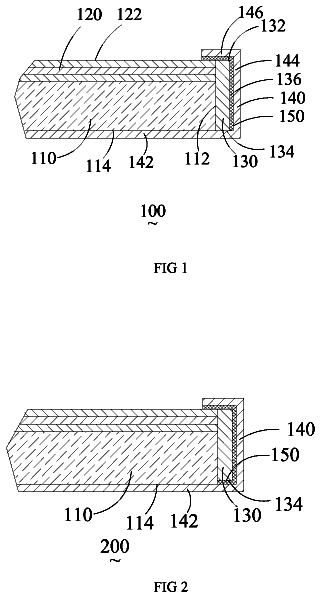
FIG. 1 is a cross-sectional schematic view showing an example of a luminance measurement system used in the examples.
FIG. 2 is a schematic view of the luminance measurement system of FIG. 1 seen from above.
FIG. 3 is a view showing an example of the state of relief at the coating film interface.
Description of embodiments
The present invention forms three or more coating layers on a base material and uses these layers to complement the total light reflectance and formability. In particular, it includes rutile-type titanium oxide in the middle coat layer in a high concentration and uses a high molecular weight polyester resin as a binder resin of the coating layers to thereby achieve both a high total light reflectance and formability.
(Basic Constitution of Invention)
The coated metal material of the present invention is a coated metal material comprised of a base material of a metal material on at least part of the surface of which at least three coating layers of a primer layer, a middle coat layer, and a top layer are provided, characterized in that the middle coat layer contains rutile-type titanium oxide in a solid volume concentration of 35 to 70% and in that the middle coat layer contains a polyester resin A with a number average molecular weight of 19000 to 28000.
The “solid volume concentration” in the present invention is the concentration with respect to the volume of the resin ingredient and pigment in the coating film and excludes pores.
(Definition of Layers)
The “primer layer” in the present invention indicates the coating layer at the side closest to the metal material. However, even with a layer at the side closest from the metal material, a coating layer of a thickness of less than 1 μm provided for the purpose of improving the adhesion of the metal material and coating film or improving the corrosion resistance is not considered the “primer layer”. The coating layer on top of that is made the “primer layer”.
The “top layer” generally indicates the layer exposed at the surface farthest from the base material. However, in the present invention, if the top layer is directly laminated on the surface side of the middle coat layer, it does not necessarily have to be positioned at the outermost layer. A separate coating layer may also be laminated on the surface side of the top layer.
The “middle coat layer”, in the case of a three-layer structure, corresponds to the part contiguous with and sandwiched between the primer layer and top layer, but in a four-layer or higher multi-layer structure, all of the layers arranged between the top layer and the primer layer having solid volume concentrations of the rutile-type titanium oxide of 35% to 70% are deemed the “middle coat layer”. Further, even if the concentration of rutile-type titanium oxide continuously changes and the boundaries of the layers are indefinite, the entire range satisfying the condition of having a solid volume concentration of the rutile-type titanium oxide of 35% to 70% is defined as the “middle coat layer”.
(Constitution of Layers)
Below, the constitutions of the layers will be explained in the order of the primer layer, middle coat layer, and top layer.
(Middle Coat Layer)
First, the constitution of the middle coat layer will be explained.
The essential constituent elements of the middle coat layer are the binder resin comprised of the high molecular weight polyester resin and the added pigment comprised of rutile-type titanium oxide.
Resin
The binder resin requires use of the polyester resin A with a number average molecular weight of 19000 to 28000, as explained above.
The present invention has as its object obtaining a high total light reflectance, so it is necessary to make the concentration of the reflection pigment added to the middle coat layer a solid volume concentration of 35 to 70%, that is, a high pigment concentration. For this reason, with the usually used binder resins, the binder ability connecting pigment particles to each other is insufficient, so there was the problem of a drop in workability. The inventors engaged in in-depth studies of the constitution of a coating layer for securing workability with less binder resin and as a result discovered that a polyester resin, which is superior in adhesion of the pigment and base material, is optimum and further that by making the number average molecular weight 19000 to 28000, a performance superior in balance of ductility and strength is expressed, so by using a polyester resin A with a number average molecular weight of 19000 to 28000, a good workability can be obtained. Usually, a coating using a high molecular weight polyester resin A with a molecular weight of 19000 or more easily becomes higher in viscosity, so to secure a viscosity suited for coating, it is necessary to keep the solid concentration in the coating low. With applications of thick coating as in the present invention, popping easily occurred and application was believed difficult. However, in the present invention, a large amount of rutile-type titanium oxide is added as a reflection pigment, so the concentration of the binder resin becomes relatively low. Therefore, even without lowering the solid concentration in the coating too much, a viscosity suitable for coating can be secured. For this reason, it was discovered that even if using the high molecular weight polyester resin A, popping will not occur, thick coating becomes possible, and both coatability and workability can be achieved.
With a number average molecular weight of the polyester resin A of less than 19000, securing the formability becomes difficult, so this is made the lower limit value. If the number average molecular weight exceeds 28000, the coating film surface becomes too soft and the scratching resistance deteriorates, so this is made the upper limit value. The number average molecular weight of the polyester resin A is preferably 19000 to 26000, most preferably 20000 to 23000.
Note that, the effect is exhibited with a concentration of the polyester resin A with a number average molecular weight of 19000 to 28000 in the binder of 20 mass % or more. The upper limit is 100 mass %. The concentration of the polyester resin A in the binder is preferably 30 to 80 mass %, most preferably 40 to 60 mass %.
Further, the inventors discovered that by having the binder resin of the middle coat layer contain, in addition to the polyester resin A, further a polyester resin B with a number average molecular weight of 2000 to 6000 and a hydroxyl value of 20 or more and by having the polyester resin A and the polyester resin B in a mass ratio of 0.25≤polyester resin B/polyester resin A≤4, further superior formability can be obtained.
The polyester resin A with a number average molecular weight of 19000 to 28000, that is, a high molecular weight, is superior in workability, but the middle coat layer of the present invention has a high pigment concentration, so it is believed that the binder is dispersed between the pigment particles in the structure. In such a structure, even with a high molecular weight polyester resin, the workability tends to become lower compared with the low pigment concentration coating layer, and a further improvement in workability is demanded, so the inventors engaged in in-depth studies and as a result discovered that by combining the high molecular weight polyester resin A and the low molecular weight polyester resin B, a workability can be obtained superior to that of the high molecular weight polyester resin A alone. This is believed because with the high molecular weight polyester resin A alone, the resin cannot sufficiently enter the spaces between particles of the pigment present in the high concentration, the function as a binder becomes insufficient, and the workability may drop, but by combining the high molecular weight polyester resin A and the low molecular weight polyester resin B, the low molecular weight polyester resin B enters between particles of pigment where the high molecular weight polyester resin A cannot enter, functions as a binder between pigment particles or between pigment and high molecular weight polyester resin A, and improves the strength and adhesion of the coating layer as a whole, so superior workability is obtained.
Further, the higher the low molecular weight polyester resin B in hydroxyl value, the greater the number of cross-linking points and the higher the adhesion obtained. This low molecular weight polyester resin B preferably has a number average molecular weight of 2000 to 6000 and a hydroxyl value of 20 or more. If the number average molecular weight is smaller than 2000, the coating film strength is liable to become insufficient and the workability to fall, while if exceeding 6000, the polyester resin has difficulty entering between pigment and pigment, so the effect of improvement of adhesion is liable to fall. The number average molecular weight of the polyester resin B is preferably 2500 to 5000, most preferably 3000 to 4500. Further, if the hydroxyl value is lower than 20, the cross-linking points between pigment particles become fewer and again the effect of improvement of adhesion is liable to fall. From the viewpoint of the coating performance, there is no particular need to set an upper limit value for the hydroxyl value of the polyester resin B, but from the viewpoint of the availability of the resin and the stability of the coating, 200 or less is preferable. The hydroxyl value of the polyester resin B is preferably 30 to 200, most preferably 40 to 200.
If the ratio of mixture of the polyester resin A and polyester resin B is, by mass ratio, 0.25≤polyester resin B/polyester resin A≤4, superior adhesion and workability are obtained.
If said polyester resin B/polyester resin A is smaller than 0.25, the function of the polyester resin B is insufficiently expressed and the adhesion is liable to fall, while if the polyester resin B/polyester resin A is larger than 4, the function of the polyester resin A is insufficiently expressed and the workability is liable to fall. Preferably, the ratio of mixture of the polyester resin A and polyester resin B is 0.4≤polyester resin B/polyester resin A≤2.5, most preferably 0.65≤polyester resin B/polyester resin A≤1.5.
Rutile-Type Titanium Oxide
As the pigment added to the middle coat layer, rutile-type titanium oxide is used. This is because rutile-type titanium oxide has a refractive index higher than that of other pigments and the difference of refractive index from the resin used as a binder and the air can be made larger, so the reflectance at the interface of the pigment and resin and between the pigment and air can be raised. Anatase-type titanium oxide also has a relatively high refractive index, but the photocatalyst ability is high, so when receiving light from a fluorescent lamp or the like, the binder resin ends up being decomposed, so this is not preferable.
The coated metal material having a high total light reflectance of the present invention mainly has as its object the reflection of visible light, so a high total light reflectance in the wavelength band to which the human eye is considered high in sensitivity is important. The human eye, while there are personal differences, can detect 380 to 780 nm wavelength light. This sensitivity peaks near 555 nm. For this reason, it is necessary to strongly reflect light of a wavelength centered around 555 nm, so the particle size of the pigment used has to be selected considering this point.
If the average particle size of the rutile-type titanium oxide used as a pigment is small, the surface area per volume increases and the reflection interfaces become wider, so the total light reflectance also becomes higher, but if the particle size of the pigment becomes too small, light of a long wavelength is passed, so the total light reflectance ends up falling. It is known that when there is a so-called Mie scattering region with large scattering of light in the range of particle size of the same level as the wavelength, and the particle size is about ½ of the wavelength, the light scattering becomes maximum. For this reason, it is preferable to make the average particle size of the rutile-type titanium oxide half of the visible light wavelength, that is, 200 to 400 nm, more preferably 250 to 350 nm.
The “average particle size” of the rutile-type titanium oxide in the present invention is the arithmetical average of the size of remaining particles of rutile-type titanium oxide when observing a portion of the coating film desired to be confirmed under an electron microscope at 10,000× and eliminating the 20% smallest sized particles of the rutile-type titanium oxide shown in the field and the 5% largest sized ones.
The rutile-type titanium oxide particles used in the present invention can be used without particular limitation so long as satisfying the above conditions. Further, the rutile-type titanium oxide particles used in the present invention may be particles of rutile-type titanium oxide alone or may be particles of rutile-type titanium oxide coated with silica, alumina, zirconia, zinc oxide, antimony oxide, organic material, etc. The organic material used for coating rutile-type titanium oxide is not particularly limited, but a polyol-type material, such as pentaerythritol or trimethylolpropane, an alkanolanine-type material, such as triethanolamine or an organic acid salt of triethanolamine, or a silicon-type material, such as a silicone resin or an alkylchlorosilane, may also be used for treatment.
The rutile-type titanium oxide used may be a commercially available one. Specifically, the “Tipaque®” series made by Ishihara Sangyo Kaisha Ltd., the “TA” series made by Fuji Titanium, the “TITANIX®” series made by Tayca, etc. may be used.
The rutile-type titanium oxide in the middle coat layer is made a solid volume concentration of 35% or more. This is because it was discovered that if the solid volume concentration of the rutile-type titanium oxide with an average particle size of 200 to 400 nm exceeds 35%, the volume of the pores formed between the particles will become larger than the volume of the binder resin even if the particles become the closest packed state, so the pores can be included in the coating layer accordingly and a high total light reflectance can be obtained. In other words, air has a refractive index lower than resin, so the interface of the pigment and pores has a larger difference of refractive index than the interface between the pigment and resin and gives a higher reflectance. Further, the interface between the resin and pores can also reflect light, so a high total light reflectance is obtained. When seeking a higher reflection performance, if making the rutile-type titanium oxide with an average particle size of 200 to 400 nm a solid volume concentration of 50% or more, the interface between the rutile-type titanium oxide and pores in the coating film, the interface between the rutile-type titanium oxide and resin and the interface between the resin and pores will efficiently contribute to the total light reflectance and give a high total reflectance, so this is preferred. However, if the solid volume concentration of the rutile-type titanium oxide in the coating film exceeds 70%, the percentages of the rutile-type titanium oxide and pores in the coating film will become too great, securing a continuous coating film by the binder resin will become difficult, and the middle coat layer itself will become brittle, so the solid volume concentration of the rutile-type titanium oxide of the middle coat layer is made 70% or less. The solid volume concentration of the rutile-type titanium oxide more preferable for securing the stable coating film strength is 65% or less. As explained above, in the middle coat layer of the present invention, it is preferable to use rutile-type titanium oxide with an average particle size 200 to 400 nm in a 50 to 65% solid volume concentration. The most preferable solid volume concentration of rutile-type titanium oxide with an average particle size of 200 to 400 nm is 55 to 65%.
Low Refractive Index Particles
If jointly adding low refractive index particles of a larger particle size than rutile-type titanium oxide, the total light reflectance can be efficiently raised, so this is preferable. This is because by adding particles of a further larger particle size than rutile-type titanium oxide, the pores between particles become larger and a greater number of pores can be included. Along with the effect of improvement of the total light reflectance, since the particles of the larger particle size are low refractive index particles, light can be reflected also at the contact interfaces of the contacting sites of the low refractive index particles and titanium oxide and therefore an improvement of the total light reflectance can be contributed to.
The particle size of the low refractive index particles with a larger particle size than rutile-type titanium oxide is preferably 1 μm to 10 μm so as to efficiently include pores in the middle coat layer and further efficiently obtain reflection at the contact interface between the low refractive index particles and titanium oxide and since even if made excessively larger than the particle size of rutile-type titanium oxide, these effects are difficult to obtain. More preferably, the size is 3 μm to 8 μm, most preferably 4 μm to 7 μm.
The low refractive index particles with a larger particle size than the rutile-type titanium oxide included together with the rutile-type titanium oxide so as to further improve the total light reflectance are not particularly limited so long as the particles are of a lower refractive index than rutile-type titanium oxide. Ones with a difference of refractive index with rutile-type titanium oxide of 0.5 or more are preferred and ones with a difference of 1 or more are particularly preferred. Further, ones with no strong absorption of visible light and exhibiting a white color in the powder state are preferred. Specifically, silica, calcium carbonate, barium sulfate, zinc oxide, and other inorganic particles may be used. Further, in addition to them, it is possible to use a resin powder etc. The type of the resin powder is not particularly limited, but use of acrylic, polyester, PTFE powder, etc. is possible.
As explained above, the role of the low refractive index particles with a larger particle size than the rutile-type titanium oxide is to efficiently include pores in the middle coat layer and, further, reflect light at the contact interface between the low refractive index particles and the titanium oxide to give a high reflection, so even in a small amount, an effect commensurate with that amount included can be exhibited. Therefore, there is no need to set a lower limit concentration, but if the (volume of low refractive index particles÷volume of rutile-type titanium oxide) is less than 0.05, the effect of improvement of the total light reflectance due to the addition of the low refractive index particles is small, so a (volume of low refractive index particles÷volume of rutile-type titanium oxide) of 0.05 or more is preferable.
Regarding the upper limit concentration of the low refractive index particles, up to a (volume of low refractive index particles÷volume of rutile-type titanium oxide) of 0.2, along with a rise in the amount of addition, the light reflectance rises and an effect of addition is recognized, but if added over this, it is observed that the performance other than the light reflectance (workability, corrosion resistance, etc.) tends to fall, so a (volume of low refractive index particles÷volume of rutile-type titanium oxide) of 0.2 is made the upper limit concentration of the low refractive index particles.
The (volume of low refractive index particles÷volume of rutile-type titanium oxide) is preferably 0.06 to 0.17, most preferably 0.07 to 0.15.
Further, the low refractive index particles have, in addition to the role of improving the total light reflectance, the role of controlling the roughness of the interface of the middle coat layer and top layer. Details will be explained later.
The preferable range of content of the pores in the middle coat layer is 0.02 to 1.1 times the solid volume since if the content of the pores is less than 0.02 time the solid volume, there will be little effect of improvement of the total light reflectance due to the inclusion of air and since if exceeding 1.1 times the solid volume, the middle coat layer may become brittle and the workability and adhesion may degrade. The ratio of content of pores with respect to the solid volume is more preferably 0.3 to 1.0 times, most preferably 0.5 to 0.95 times.
The size of the pores in the middle coat layer is not particularly limited, but if there are extremely large sized pores, they will result in coating defects. This is not preferable since these will lower the workability, corrosion resistance, and other coating performance. Further, the surface area per volume will become smaller, so this is not preferable from the viewpoint of the light reflectance either. Further, if the size of the pores is small, the surface area per pore volume will become larger and the reflection interface will become broader, so the total light reflectance will also become higher, but if becoming extremely small, long wavelength light will pass, so the total light reflectance will end up falling. From the viewpoint of reflection of light, half of the visible light wavelength, that is, 200 to 400 nm, is preferable. More preferably, pores of 250 to 350 nm are preferable. However, controlling the size of the pores, in particular matching sizes, is difficult, so as long as there is no above-mentioned problem of coating defects etc. or extreme effects on the reflectance, the size of the pores is not particularly made an issue.
The content of the pores in the middle coat layer can be controlled not only by the concentration of the above pigment contained therein, but also for example by controlling the method of dispersion of coating materials. In other words, the better the state of dispersion of the pigment in the coating (the more uniform), the more the pigment adsorbs the resin and the more efficiently pores between the particles are buried, so the smaller the content of pores.
Therefore, to obtain a higher light reflectance, it is preferable to keep the dispersion at the minimum extent not causing problems in coatability or coating stability.
Thickness
The thickness of the middle coat layer is preferably 10 μm or more to obtain a high total light reflectance. When seeking a higher total light reflectance, 40 μm or more is more preferable. On the other hand, if the thickness of the middle coat layer exceeds 80 μm, the coating film is liable to drop in workability. Further, if exceeding 100 μm, there is a possibility of the adhesion also dropping. Therefore, the thickness of the middle coat layer is preferably 110 μm or less, more preferably 100 μm or less. When seeking a higher workability, 15 μm or less is preferable. Due to these, the thickness of the middle coat layer is preferably in the range of 10 to 110 μm. 10 to 100 μm is more preferable. As the thickness of the middle coat layer, from the viewpoint of the reflectance, 40 to 100 μm is more preferable, 60 to 100 μm is further preferable, and 60 to 80 μm is most preferable. On the other hand, from the viewpoint of the workability, 10 to 15 μm is most preferable.
The description continues in the full USPTO document.