Background of the invention
1. Field of the invention
The present disclosure relates to a decorative illumination ink jet recording material, a decorative illumination image, a method of forming the decorative illumination image, and a decorative illumination signboard.
2. Description of the related art
Many printers use an ink jet system that discharges an ink in a dropwise manner from an ink discharge port since the system is small and inexpensive and can form an image on a recording medium in a non-contact manner. Among ink jet systems, piezo ink jet systems that discharge an ink using deformation of a piezoelectric element, and thermal ink jet systems that discharge an ink in a dropwise manner using a boiling phenomenon of the ink that is caused by thermal energy have advantages in that a high-resolution image is obtained and these have excellent high-speed printing properties.
Recently, ink jet systems have been used not only to print photographs or documents for home or office use, but also to perform printing for commercial or industrial use. For example, demand for an image forming method for producing an image that is used for a large decorative illumination signboard to be attached to a store window, a station passage, a wall of a building, or the like by an ink jet system is raised.
A decorative illumination signboard is a signboard that is observed as a transmission image by light from a backlight source in the night without sunshine. In a case where a decorative illumination signboard is made by an ink jet system, a transparent ink jet recording material is used as a recording medium. Furthermore, since the decorative illumination signboard is installed outdoors, an ink jet recording material in which an ink accepting layer is disposed on a resin base having excellent water resistance is used.
An ink jet recording material including a resin base for forming a transparent image has been known.
For example, in JP 1997-20069A (JP-H09-20069A), an ink jet recording material having a light transmittance of 60% or greater in which an ink accepting layer is provided on one surface of a base film such as a polyester film is described. In Example 4 in JP1997-20069A (JP-H09-20069A), an ink jet recording material having: an ink accepting layer containing a fluorine-based surfactant on one surface of a polyester film; and a layer containing a water-soluble copolyester resin, silica particles, and sodium diphenyl ether sulfonate (TB702 manufactured by Matsumoto Yushi-Seiyaku Co., Ltd.) as an antistatic agent on the other surface is described. The ink jet recording material described in JP1997-20069A (JP-H09-20069A) is used to produce a print for an overhead projector (OHP), a decorative illumination advertisement, or the like.
In JP1997-66665A (JP-H09-66665A), an ink jet recording material having a light transmittance of 60% or greater in which an ink accepting layer containing an ink-absorbable resin, a curing agent, and a surfactant is provided on one surface of a base film such as a polyester film is described. JP1997-66665A (JP-H09-66665A) describes that an easily slidable layer is provided on the base film on a side opposite to a side having the ink accepting layer, and may contain an antistatic agent and the like. In the specific examples of JP1997-66665A (JP-H09-66665A), an ink jet recording material in which a layer containing a copolyester resin, a polyurethane resin, and an acrylic resin as an antistatic agent is provided as an easily slidable layer is described. The ink jet recording material described in JP1997-66665A (JP-H09-66665A) is used to produce a print for an OHP, a decorative illumination advertisement, or the like.
Summary of the invention
As described above, since a decorative illumination ink jet recording material used to form an image that is used for a decorative illumination signboard is used outdoors, a resin base such as a polyester film is included therein. An operation of installing, on a decorative illumination signboard frame, an image formed through an ink jet system on the decorative illumination ink jet recording material is performed in a place where a decorative illumination signboard is installed.
However, since the ink jet recording material described in JP1997-20069A (JP-H09-20069A) and JP1997-66665A (JP-H09-66665A) includes the resin base such as a polyester resin, the ink jet recording material itself is easily charged. Therefore, when a decorative illumination image in which an image is formed on the ink jet recording material is installed on the decorative illumination signboard frame, dust adheres to the decorative illumination image, and thus the image quality as a decorative illumination signboard may be deteriorated. In addition, in a case where an image is formed through an ink jet system on the ink jet recording material described in JP1997-20069A (JP-H09-20069A) and JP1997-66665A (JP-H09-66665A), malfunction occurs at the time of ink jet recording, and thus image density unevenness may occur, and in extreme cases, color loss may occur.
Embodiments of the invention are contrived in order to solve the above-described problems. An object thereof is to provide a decorative illumination ink jet recording material with which malfunction is unlikely to occur at the time of ink jet recording and a decorative illumination image is obtained with rare adhesion of dust thereto.
Another object of embodiments of the invention is to provide a decorative illumination image having excellent image quality with rare adhesion of dust thereto, a method of forming the decorative illumination image, and a decorative illumination signboard.
Means for achieving the object includes the following embodiments.
<1> A decorative illumination ink jet recording material comprising: a resin base; an ink accepting layer that contains a resin; a layer that contains a metal oxide; and a white layer that contains white particles and a resin, in which the ink accepting layer is disposed as an outermost layer of the decorative illumination ink jet recording material.
<2> The decorative illumination ink jet recording material according to <1>, in which the ink accepting layer is disposed on one surface of the resin base, and the layer that contains a metal oxide is disposed on the other surface.
<3> The decorative illumination ink jet recording material according to <2>, in which the white layer is disposed between the resin base and the ink accepting layer.
<4> The decorative illumination ink jet recording material according to any one of <1> to <3>, in which a surface resistivity of the resin base on a side having the layer that contains a metal oxide at a temperature of 23° C. with a relative humidity of 30% is 1.0×10.sup.12 Ω/sq or less.
<5> The decorative illumination ink jet recording material according to any one of <1> to <4>, in which the metal oxide is a tin oxide.
<6> The decorative illumination ink jet recording material according to any one of <1> to <5>, in which the white particles contained in the white layer include at least one selected from titanium oxide, silica, calcium carbonate, talc, zeolite, alumina, barium sulfate, and kaolinite.
<7> The decorative illumination ink jet recording material according to any one of <1> to <6>, in which the resin contained in the white layer includes at least one selected from a polyolefin resin, an acrylic resin, a polyester resin, and a polyurethane resin.
<8> The decorative illumination ink jet recording material according to any one of <1> to <7>, in which the resin contained in the white layer has a crosslinked structure crosslinked with at least one crosslinking agent selected from an oxazoline compound, a carbodiimide compound, an epoxy compound, an isocyanate compound, and a melamine compound.
<9> The decorative illumination ink jet recording material according to any one of <1> to <8>, in which the white layer has a thickness of 0.5 μm to 10 μm.
<10> The decorative illumination ink jet recording material according to any one of <2> to <9>, further comprising: a protective layer that contains particles and a resin as an outermost layer of the decorative illumination ink jet recording material on a side opposite to a surface having the ink accepting layer.
<11> The decorative illumination ink jet recording material according to <10>, in which an average primary particle diameter of the particles contained in the protective layer is larger than the average thickness of the protective layer.
<12> The decorative illumination ink jet recording material according to <10> or <11>, in which the average primary particle diameter of the particles contained in the protective layer is 0.4 μm to 3 μm.
<13> The decorative illumination ink jet recording material according to any one of <10> to <12>, in which the resin contained in the protective layer includes a silicon-containing resin.
<14> The decorative illumination ink jet recording material according to any one of <1> to <13>, in which the resin contained in the ink accepting layer includes at least one selected from a polyester resin, a polyurethane resin, an acrylic resin, a styrene-butadiene copolymer resin, and a polyolefin resin.
<15> The decorative illumination ink jet recording material according to any one of <1> to <14>, in which the ink accepting layer has a thickness of 0.01 μm to 5 μm.
<16> A method of forming a decorative illumination image comprising: discharging a radiation-curable ink composition on the decorative illumination ink jet recording material according to any one of <1> to <15> through an ink jet system; and curing the radiation-curable ink composition by irradiating the discharged radiation-curable ink composition with radiation.
<17> A decorative illumination image that is formed by the method of forming a decorative illumination image according to <16>.
<18> A decorative illumination signboard comprising: a light source; and the decorative illumination image according to <17>.
According to an embodiment of the invention, a decorative illumination ink jet recording material with which malfunction is unlikely to occur at the time of ink jet recording and a decorative illumination image is obtained with rare adhesion of dust thereto is provided.
According to an embodiment of the invention, a decorative illumination image having excellent image quality with rare adhesion of dust thereto, a method of forming the decorative illumination image, and a decorative illumination signboard are further provided.
Brief description of the drawings
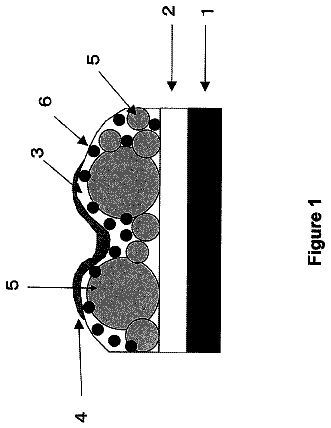
FIG. 1 is a schematic cross-sectional view showing an example of a decorative illumination ink jet recording material of the invention.
Description of the preferred embodiments
The content of embodiments of the invention will be described in detail hereinbelow. The following description will be given based on a representative embodiment of the invention, but the invention is not limited to the embodiment. In the present specification, the range expressed using “ . . . to . . . ” means a range including the numerical values described before and after “ . . . to . . . ”.
<Decorative Illumination Ink Jet Recording Material>
A decorative illumination ink jet recording material according to an embodiment of the invention has a resin base, an ink accepting layer that is disposed as an outermost layer of the decorative illumination ink jet recording material and contains a resin, a layer that contains a metal oxide, and a white layer that contains white particles and a resin.
The decorative illumination ink jet recording material according to the embodiment of the invention is not particularly limited as long as ink jet recording can be performed thereon, and preferably has a form of a decorative illumination ink jet recording sheet, a decorative illumination ink jet recording film, or the like depending on the shape of the resin base to be used.
The “layer that contains a metal oxide” in the decorative illumination ink jet recording material according to the embodiment of the invention may be disposed at any position on the resin base. For example, the layer that contains a metal oxide may be disposed between the resin base and the ink accepting layer, or may be disposed on the resin base on a side opposite to the side having the ink accepting layer.
The reason why malfunction rarely occurs at the time of ink jet recording and an image with rare adhesion of dust thereto is obtained using the decorative illumination ink jet recording material according to the embodiment of the invention is not necessarily clear, but presumed as follows.
The decorative illumination ink jet recording material uses the resin base in order to maintain, for example, water resistance and the like that are required for a decorative illumination signboard. Since the decorative illumination ink jet recording material having the resin base is easily charged, a layer containing an antistatic agent is disposed on a surface of the resin base on a side opposite to the side having the ink accepting layer, as disclosed in the above-described JP1997-20069A (JP-H09-20069A) and JP1997-66665A (JP-H09-66665A).
However, in a case where an image is formed through an ink jet system using the ink jet recording material described in JP1997-20069A (JP-H09-20069A) or JP1997-66665A (JP-H09-66665A), malfunction may occur at the time of ink jet recording. Furthermore, when an operation of installing a decorative illumination image produced using the ink jet recording material described in JP1997-20069A (JP-H09-20069A) or JP1997-66665A (JP-H09-66665A) on a decorative illumination signboard frame is performed, dust may adhere to the decorative illumination image by charging, and image quality as a decorative illumination signboard may be deteriorated. It is found that malfunction at the time of ink jet recording and a phenomenon in which dust adheres to the image frequently occur as the humidity of the environment therearound is low.
In the related arts including JP1997-20069A (JP-H09-20069A) and JP1997-66665A (JP-H09-66665A), as the antistatic agent, an anionic surfactant such as sodium diphenyl ether sulfonate, or a cationic polymer is used. An organic electrolyte such as an anionic surfactant and a cationic polymer initially exhibits a function as an antistatic agent under the presence of water. Accordingly, the ink jet recording material placed under a low-humidity environment has a low moisture content, and thus the organic electrolyte does not easily exhibit a function as an antistatic agent.
The decorative illumination ink jet recording material according to the embodiment of the invention has a layer that contains a metal oxide. The layer that contains a metal oxide functions as a conductive layer regardless of the moisture content. As a result, with the decorative illumination ink jet recording material according to the embodiment of the invention, malfunction is unlikely to occur at the time of ink jet recording, and the occurrence of density unevenness, and in extreme cases, color loss is suppressed. Regarding an image formed using the decorative illumination ink jet recording material according to the embodiment of the invention, dust rarely adheres to the image even when an operation of installing the image on a decorative illumination signboard frame is performed, and image quality as a decorative illumination signboard is also rarely deteriorated.
In a particularly preferred aspect of the decorative illumination ink jet recording material, a white layer 23 containing white particles and a resin and an ink accepting layer 21 are disposed in order on one surface of a resin base 11 , and a layer 31 that contains a metal oxide and a protective layer 33 containing particles and a resin are disposed in order on the other surface as shown in FIG. 1 .
Hereinafter, the decorative illumination ink jet recording material according to the embodiment of the invention will be described in detail, centering on the preferred aspect shown in FIG. 1 .
<Resin Base>
As the resin base 11 , a sheet-shaped resin base provided with one surface (also called a front surface) and the other surface (also called a back surface or a rear surface) is used.
The resin base is preferably a plastic film, and may contain additives such as a pigment and a plasticizer.
Regarding the type of the resin included in the resin base, a polyester resin having excellent weather resistance is preferred.
The polyester resin is not particularly limited, and examples thereof include polyethylene terephthalate, polyethylene naphthalate, polybutylene terephthalate, and polybutylene naphthalate. Among these, polyethylene terephthalate is particularly preferred from the viewpoint of cost and mechanical strength.
A sheet-shaped resin base manufactured through a process including stretching is preferred, and a biaxially-stretched sheet-shaped resin base is particularly preferred from the viewpoint of mechanical strength as the resin base 11 . The stretching ratio is not particularly limited, and is preferably in a range of 1.5 times to 7 times. In a case where the stretching ratio is less than 1.5 times, the mechanical strength may become insufficient, and in a case where the stretching ratio is greater than 7 times, the resin base may lack thickness uniformity. The stretching ratio is more preferably in a range of 2 times to 5 times. Two directions perpendicular to each other are particularly preferred as stretch directions, and the range of 2 times to 5 times is particularly preferred as the stretching ratio.
The thickness of the resin base 11 is preferably constant in a range of, for example, 30 μm to 500 μm, and more preferably constant in a range of 50 μm to 300 μm. As the thickness of the resin base 11 becomes smaller than 30 μm, the repulsion against bending is reduced, and handling properties deteriorate. As the thickness of the resin base 11 becomes larger than 500 μm, the display device has difficulty in downsizing and weight reduction, and the cost occupied in the manufacturing cost is also increased.
One surface and the other surface of the resin base 11 are preferably subjected to a surface treatment such as a corona discharge treatment, a vacuum glow discharge treatment, or a flame treatment since adhesion to a layer disposed on each surface is increased.
<Layer that Contains Metal Oxide>
The layer that contains a metal oxide (hereinafter, also referred to as “AS layer”) contains at least a metal oxide. For example, the AS layer 31 shown in FIG. 1 is a layer containing a metal oxide and a resin, and may be disposed on a surface of the resin base 11 .
Examples of the metal oxide include oxides of metals such as tin, zinc, titanium, aluminum, indium, magnesium, barium, and molybdenum. Specific examples thereof include metal oxides such as tin oxide (SnO.sub.2), zinc oxide (ZnO), TiO.sub.2, Al.sub.2O.sub.3, In.sub.2O.sub.3, MgO, BaO, and MoO.sub.3, and metal composite oxides including two or more types of metals. The metal oxide may be a dissimilar metal composite metal oxide in which a metal oxide or a metal composite oxide contains a dissimilar atom.
As the metal oxide, SnO.sub.2, ZnO, TiO.sub.2, Al.sub.2O.sub.3, In.sub.2O.sub.3, or MgO is preferred, and SnO.sub.2 is particularly preferred. As SnO.sub.2, SnO.sub.2 doped with antimony is preferred, and SnO.sub.2 doped with 0.2 mol % to 2.0 mol % of antimony is particularly preferred.
The metal oxide are formed as particles. The shape thereof is not particularly limited, and includes shapes such as a spherical shape, a cube shape, an octahedron shape, a needle shape, and a spindle shape. The average primary particle diameter of the metal oxide is preferably 0.4 μm to 3.0 μm. In a case where the average primary particle diameter of the metal oxide is within the above-described range, it is possible to easily obtain a decorative illumination ink jet recording material with which malfunction rarely occurs at the time of ink jet recording and an image with rare adhesion of dust thereto is obtained.
In the embodiment of the invention, the average particle diameter of the metal oxide is a value of the average primary particle diameter calculated by observing particles with a scanning electron microscope (SEM) and obtaining projected area equivalent circle diameters of 50 particles from the obtained photograph.
The appropriate amount of the metal oxide contained in the AS layer 31 is 10 mass % to 80 mass % with respect to the mass of the total solid content of the AS layer 31 . In a case where the amount of the metal oxide is within the above-described range, it is possible to easily obtain a decorative illumination ink jet recording material with which malfunction rarely occurs at the time of ink jet recording according to the embodiment of the invention and an image with rare adhesion of dust thereto is obtained. The lower limit of the amount of the metal oxide contained in the AS layer 31 is more preferably 30 mass % or greater with respect to the mass of the total solid content of the AS layer 31 . The upper limit of the amount of the metal oxide contained in the AS layer 31 is more preferably 60 mass % or less with respect to the mass of the total solid content of the AS layer 31 .
[Resin Contained in AS Layer]
The resin contained in the AS layer 31 functions as a binder that uniformly disperses the metal oxide and attaches the metal oxide to the other surface of the resin base. The resin contained in the AS layer 31 may be any one of a water-insoluble resin, a water-soluble resin, and a water-dispersible resin. In view of less environmental load, the resin is preferably a water-soluble or water-dispersible resin.
The resin contained in the AS layer 31 preferably includes at least one selected from a polyester resin, a polyurethane resin, and an acrylic resin.
[Polyester Resin]
A polyester resin is a general term for polymers whose main chain has an ester bond and can be generally obtained by a reaction between a dicarboxylic acid and a polyol. Examples of the dicarboxylic acid include fumaric acid, itaconic acid, adipic acid, sebacic acid, terephthalic acid, isophthalic acid, sulfoisophthalic acid, and naphthalene dicarboxylic acid. Examples of the polyol include ethylene glycol, propylene glycol, glycerin, hexanetriol, butanediol, hexanediol, and 1,4-cyclohexanedimethanol. A polyester resin and the raw material thereof are described in “Handbook of Polyester Resin” (written by Eiichiro Takiyama, NIKKAN KOGYO SHIMBUN, LTD., published in 1988), and the description can be applied to the embodiments of the invention.
Examples of the polyester resin include polyhydroxy butyrate (PHB)-based, polycaprolactone (PCL)-based, polycaprolactone butylene succinate-based, polybutylene succinate (PBS)-based, polybutylene succinate adipate (PBSA)-based, polybutylene succinate carbonate-based, polyethylene terephthalate succinate-based, polybutylene adipate terephthalate-based, polytetramethylene adipate terephthalate-based, polybutylene adipate terephthalate-based, polyethylene succinate (PES)-based, polyglycolic acid (PGA)-based, and polylactic acid (PLA)-based polyesters, a carbonate copolymer of aliphatic polyester, and a copolymer of aliphatic polyester and polyamide. As the polyester resin, a commercially available product such as FINETEX (registered trademark) ES650, ES2200 (manufactured by DIC Corporation), VYLONAL (registered trademark) MD1245, MD1400, MD1480 (manufactured by TOYOBO CO., LTD.), PESUREJIN (registered trademark) A-110, A-124GP, A-520, A-640 (manufactured by TAKAMATSU OIL & FAT CO., LTD.), PLASCOAT (registered trademark) Z561, Z730, Z687, and Z592 (manufactured by GOO CHEMICAL CO., LTD.) is also available.
[Polyurethane Resin]
Polyurethane is a general term for polymers whose main chain has a urethane bond and can be generally obtained by a reaction between a diisocyanate and a polyol. Examples of the diisocyanate include toluene diisocyanate (TDI), diphenylmethane diisocyanate (MDI), naphthalene diisocyanate (NDI), tolidine diisocyanate (TODI), hexamethylene diisocyanate (HDI), and isophorone diisocyanate (IPDI).
Examples of the polyol include ethylene glycol, propylene glycol, glycerin, and hexanetriol. Furthermore, as the isocyanate, a polymer whose molecular weight is increased by performing a chain extension treatment on the polyurethane polymer obtained by the reaction between a diisocyanate and a polyol can also be used. The above-described diisocyanates, polyols, and chain extension treatment are described in, for example, “Handbook of Polyurethane” (edited by Keiji Iwata, NIKKAN KOGYO SHIMBUN, LTD., published in 1987). As the polyurethane-based resin, a commercially available product such as SUPERFLEX (registered trademark) 470, 210, 150HS, ELASTRON (registered trademark) H-3 (all manufactured by DKS Co., Ltd.), HYDRAN (registered trademark) AP-20, AP-40F, WLS-210 (manufactured by DIC Corporation), TAKELAC (registered trademark) W-6061 (manufactured by Mitsui Chemicals, Inc.), and OLESTER (registered trademark) UD-350 (manufactured by Mitsui Chemicals, Inc.) is also available.
[Acrylic Resin]
An acrylic resin is a polymer formed of a polymerizable monomer having a carbon-carbon double bond, that is represented by an acrylic monomer and a methacrylic monomer. The acrylic resin may be a homopolymer or a copolymer. In addition, the acrylic resin also includes copolymers of homopolymers or copolymers and other polymers (for example, polyester, polyurethane, and the like). Examples thereof include a block copolymer and a graft copolymer. The acrylic resin also includes polymers (mixtures of polymers in some cases) obtained by polymerizing polymerizable monomers having a carbon-carbon double bond in a polyester solution or a polyester dispersion liquid, and polymers (mixtures of polymers in some cases) obtained by polymerizing polymerizable monomers having a carbon-carbon double bond in a polyurethane solution or a polyurethane dispersion liquid. Similarly, the acrylic resin also includes polymers (polymer mixtures in some cases) obtained by polymerizing polymerizable monomers having a carbon-carbon double bond in another polymer solution or dispersion liquid. In order to further improve adhesion, a hydroxy group or an amino group may be included. The polymerizable monomer having a carbon-carbon double bond is not particularly limited, and examples of the monomer as a particularly representative compound include various carboxyl group-containing monomers such as acrylic acid, methacrylic acid, crotonic acid, itaconic acid, fumaric acid, maleic acid, and citraconic acid and salts thereof; various hydroxyl group-containing monomers such as 2-hydroxyethyl (meth)acrylate, 2-hydroxypropyl (meth)acrylate, 4-hydroxybutyl (meth)acrylate, monobutyl hydroxy fumarate, and monobutyl hydroxy itaconate; various (meth)acrylic acid esters such as methyl (meth)acrylate, ethyl (meth)acrylate, propyl (meth)acrylate, butyl (meth)acrylate, and lauryl (meth)acrylate; various nitrogen-containing compounds such as (meth)acrylamide, diacetone acrylamide, N-methylol acrylamide, and (meth)acrylonitrile; various styrene derivatives such as styrene, α-methylstyrene, divinyl benzene, and vinyl toluene; various vinyl esters such as vinyl propionate; various silicon-containing polymerizable monomers such as γ-methacryloxy propyl trimethoxysilane and vinyl trimethoxysilane; phosphorus-containing vinyl-based monomers; various halogenated vinyls such as vinyl chloride and vinylidene chloride; and various conjugated dienes such as butadiene. JURYMER ET-410 (manufactured by TOAGOSEI CO., LTD.) and EM-48D (manufactured by Daicel Corporation), that are acrylic acid ester copolymers, are preferably used as a commercially available product.
The AS layer 31 may contain a resin other than the above-described resins.
Examples of other resins include a polystyrene resin, a polyolefin resin, and a polyamide resin.
The appropriate amount of the resin contained in the AS layer 31 is 30 mass % to 80 mass % with respect to the mass of the total solid content of the AS layer 31 . In a case where the amount of the resin is within the above-described range, it is possible to easily obtain a decorative illumination ink jet recording material with which malfunction rarely occurs at the time of ink jet recording and an image with rare adhesion of dust thereto is obtained. The lower limit of the amount of the resin contained in the AS layer 31 is more preferably 40 mass % or greater with respect to the mass of the total solid content of the AS layer 31 . The upper limit of the amount of the resin contained in the AS layer 31 is more preferably 60 mass % or less with respect to the mass of the total solid content of the AS layer 31 .
The AS layer 31 may contain, for example, a surfactant other than the metal oxide and the resin.
Examples of the surfactant include known anionic surfactants, nonionic surfactants, cationic surfactants, fluorine-based surfactants, and silicone-based surfactants. The surfactant is described in, for example, “Handbook of Surfactants” (edited by Ichiro Nishi, Ichiro Imai, and Masatake Kasai, Sangyo-Tosho Publishing Co., Ltd., published in 1960).
Examples of the anionic surfactants include higher fatty acid salts such as potassium stearate and potassium behenate, alkyl ether carboxylates such as sodium polyoxyethylene (hereinafter, abbreviated as POE) lauryl ether carboxylate, N-acyl-L-glutamates such as N-stearoyl-L-glutamic acid monosodium salt, higher alkyl sulfate ester salts such as sodium lauryl sulfate and potassium lauryl sulfate, alkyl ether sulfate ester salts such as POE lauryl sulfate triethanolamine and sodium POE lauryl sulfate, N-acyl sarcosinates such as sodium lauryl sarcosine, higher fatty acid amide sulfonates such as sodium N-myristoyl-N-methyl taurine, alkyl phosphates such as sodium stearyl phosphate; alkyl ether phosphates such as sodium POE oleyl ether phosphate and sodium POE stearyl ether phosphate, sulfosuccinates such as sodium di-2-ethylhexyl sulfosuccinate, sodium monolauroyl monoethanolamide polyoxyethylene sulfosuccinate, and sodium lauryl polypropylene glycol sulfosuccinate, alkyl benzene sulfonates such as sodium linear dodecyl benzene sulfonate, linear dodecyl benzene, sulfonic acid triethanolamine, linear dodecyl benzene sulfonate, and dodecyl diphenyl ether disulfonate, and higher fatty acid ester sulfate ester salts such as hardened coconut oil fatty acid sodium glycerin sulfate.
Examples of commercially available anionic surfactants include RAPISOL (registered trademark) A-90, RAPISOL RAPISOL A-80, RAPISOL BW-30, RAPISOL B-90, RAPISOL C-70 (trade name: manufactured by NOF CORPORATION), NIKKOL OTP-100 (trade name: manufactured by NIKKO CHEMICALS CO., LTD.), KOHAKURU ON, KORAKURU L-40, PHOSPHANOL 702 (trade name: manufactured by Toho Chemical Industry Co., Ltd.), BEAULIGHT A-5000, BEAULIGHT SSS, and SANDEDDO BL (trade name: manufactured by Sanyo Chemical Industries, Ltd.).
Examples of the cationic surfactants include alkyl trimethyl ammonium salts such as stearyl trimethyl ammonium chloride and lauryl trimethyl ammonium chloride, dialkyl dimethyl ammonium salts such as distearyl dimethyl ammonium chloride, alkyl pyridinium salts such as poly(N,N-dimethyl-3,5-methylene piperidinium) chloride and cetyl pyridinium chloride, alkyl quaternary ammonium salts, alkyl dimethyl benzyl ammonium salts, alkyl isoquinolinium salts, dialkyl morpholinium salts, POE alkylamines, alkylamine salts, polyamine fatty acid derivatives, amyl alcohol fatty acid derivatives, benzalkonium chlorides, and benzethonium chloride. It is possible to suppress aggregation of particles during drying of a coating film and to form uniform unevenness on the surface using the above-described surfactant.
Examples of commercially available cationic surfactants include a phthalocyanine derivative (trade name: EFKA-745 manufactured by MORISHITA & CO., LTD.), organosiloxane polymer KP341 (manufactured by Shin-Etsu Chemical Co., Ltd.), (meth)acrylic acid-based (co)polymer polyflow No. 75, No. 90, No. 95 (manufactured by KYOEISHA CHEMICAL Co., LTD.), and W001 (manufactured by Yusho Co., Ltd.).
Examples of commercially available nonionic surfactants include NAROACTY (registered trademark) CL-95, HN-100 (trade name; manufactured by Sanyo Chemical Industries, Ltd.), LITHO REX (registered trademark) BW400 (trade name: KOKYU ALCOHOL KOGYO CO., LTD.), EMALEX (registered trademark) ET-2020 (trade name: manufactured by Nihon Emulsion Co., Ltd.), UNILUBE (registered trademark) 50MB-26, and NONION IS-4 (trade name: NOF CORPORATION).
The AS layer 31 preferably contains an anionic surfactant and/or a nonionic surfactant.
In a case where the AS layer 31 contains a surfactant, the amount of the surfactant is preferably 0.5 mass % to 5.0 mass %, and more preferably 0.5 mass % to 3.0 mass % with respect to the mass of the total solid content of the AS layer 31 .
The thickness of the AS layer 31 is preferably in a range of 0.05 μm to 5.0 μm since it is possible to easily obtain a decorative illumination ink jet recording material with which malfunction rarely occurs at the time of ink jet recording according to the embodiment of the invention and an image with rare adhesion of dust thereto is obtained. The lower limit of the thickness of the AS layer 31 is more preferably 0.07 μm or greater. The upper limit of the thickness of the AS layer 31 is more preferably 3.0 μm or less.
A surface of the decorative illumination ink jet recording material according to the embodiment of the invention on the side having the AS layer preferably has a surface resistivity of 1.0×10.sup.12 Ω/sq or less at a temperature of 23° C. with a relative humidity of 30%. In a case where the surface has a surface resistivity within the above-described range, it is possible to easily obtain a decorative illumination ink jet recording material with which malfunction rarely occurs at the time of ink jet recording and an image with rare adhesion of dust thereto is obtained. The surface resistivity of the decorative illumination ink jet recording material according to the embodiment of the invention on the side having the AS layer is more preferably 1.0×10.sup.11 Ω/sq or less.
The surface resistivity can be adjusted by the type and the content of the metal oxide contained in the AS layer 31 .
The “surface of the decorative illumination ink jet recording material on the side having the AS layer” means a surface of the outermost layer of the resin base on the side having the AS layer. For example, in a case where the AS layer and a protective layer to be described later are provided in order on the other surface of the resin base, the “surface of the decorative illumination ink jet recording material on the side having the AS layer” means a surface of the protective layer.
In the embodiment of the invention, the surface resistivity means a value measured based on JIS-K-6911-1995.
In regard to the AS layer according to the embodiment of the invention, the decorative illumination ink jet recording material shown in FIG. 1 has been mainly described as above, but the AS layer may be disposed between the resin base and the ink accepting layer. In a case where the white layer and the ink accepting layer are provided in order on one surface of the resin base, the AS layer may be disposed between the resin base and the white layer. Details of the AS layer for a case where the AS layer is disposed at the above-described position are as described above.
<Ink Accepting Layer>
The ink accepting layer contains at least a resin. The ink accepting layer functions to increase an adhesive force to an ink composition for ink jet recording (hereinafter, may be abbreviated as “ink”) and to suppress the ink discharged from the ink jet recording device from bleeding, thereby obtaining a clear image. For example, the ink accepting layer 21 shown in FIG. 1 may be disposed as an outermost layer on one surface of the resin base 11 .
In general, the ink accepting layer preferably contains a resin and a curing agent.
The resin contained in the ink accepting layer 21 is not particularly limited. At least one selected from a polyester resin, a polyurethane resin, an acrylic resin, a styrene-butadiene copolymer resin, and a polyolefin resin is preferably contained. The resin contained in the ink accepting layer 21 is particularly preferably water-soluble or water-dispersible in view of less environmental load.
Regarding the polyester resin, the polyurethane resin, and the acrylic resin, the resins described as the resin contained in the above-described AS layer can be applied, and preferred resins are also the same as above.
[Polyolefin Resin]
A polyolefin resin is a polymer obtained by polymerizing, as a starting material, an alkene such as ethylene, butylene, and propylene, and also includes a copolymer obtained by copolymerizing an alkene with a polymerizable monomer other than the alkene as starting materials.
Specific examples of the polyolefin resin are as follows.
A copolymer composed of ethylene or propylene and an acrylic monomer other than an acrylic acid or a methacrylic monomer other than a methacrylic acid
A copolymer composed of ethylene or propylene and an unsaturated carboxylic acid (including anhydride)
A copolymer composed of ethylene or propylene, an acrylic monomer other than an acrylic acid or a methacrylic monomer other than a methacrylic acid, and an unsaturated carboxylic acid (including anhydride)
Specific preferred examples of the acrylic monomer other than an acrylic acid and the methacrylic monomer other than a methacrylic acid include methyl methacrylate, ethyl acrylate, butyl acrylate, and 2-hydroxyethyl acrylate.
Specific preferred examples of the unsaturated carboxylic acid include acrylic acid, methacrylic acid, itaconic acid, maleic acid, and maleic acid anhydride.
Each of the alkene, the acrylic monomer other than an acrylic acid, the methacrylic monomer other than a methacrylic acid, and the unsaturated carboxylic acid may be used alone or in combination of two or more types thereof.
The polyolefin resin may have a form of an aqueous polymer dispersion called latex. Specific examples of commercially available products thereof include BONDINE (registered trademark) HX-8210, HX-8290, TL-8030, LX-4110 (all manufactured by Sumitomo Chemical Co., Ltd.), ARROWBASE (registered trademark) SA-1200, SB-1010, SE-1013N, SE-1200 (all manufactured by UNITIKA LTD.), and Nipol (registered trademark) UFN1008 (manufactured by ZEON Corporation).
The resin of the ink accepting layer 31 preferably includes a polyester resin and a polyurethane resin. The content ratio between the polyester resin and the polyurethane resin is preferably 0.1:0.9 to 0.9:0.1, more preferably 0.3:0.7 to 0.7:0.3, and particularly preferably 0.4:0.6 to 0.6:0.4 in terms of a mass ratio of polyester resin:polyurethane resin.
The ink accepting layer may contain a crosslinking agent, and may have a structure in which the resin contained in the ink accepting layer is crosslinked with a crosslinking agent.
The crosslinking agent preferably includes at least one selected from an oxazoline compound and a carbodiimide compound.
[Oxazoline Compound]
An oxazoline compound is a compound having two or more oxazoline groups in a molecule.
The description continues in the full USPTO document.
 Lapsed, fee not paid3 drawings