Background
In recent years, mobile messaging has increased as a form of communication between mobile device users. Messaging applications are typically provided as part of a suite of software applications by the mobile device manufacturer, but there are also third-party messaging applications available from on-line app stores. The messaging applications may execute according to messaging protocols that allow for exchanging not only text messages, but multimedia messages as well. The multimedia messages can include images, videos, audio, graphics, and similar forms of media content.
In order to incorporate the media content into a mobile message using known messaging applications, the user must leave the messaging application. From the messaging application, the user can either exit the messaging application and launch another application (e.g., data search or file management), or the user might press an attach control input (i.e., a button) in the messaging application to launch a menu of applications containing data available for incorporation into the mobile message. In either case, the user must leave the mobile messaging application to find content to incorporate into a message the user is composing.
After leaving the mobile messaging application, the user may be required to make additional inputs and selections in multiple screens presented on the mobile device in order to obtain the media content desired for inclusion in the mobile message being composed. This is not only time consuming, but also may be distracting and/or frustrating to the user.
Hence a need exists for an alternative to leaving the mobile messaging application in order to incorporate media content into a mobile message.
Brief description of the drawings
The drawing figures depict one or more implementations in accord with the present teachings, by way of example only, not by way of limitation. In the figures, like reference numerals refer to the same or similar elements.
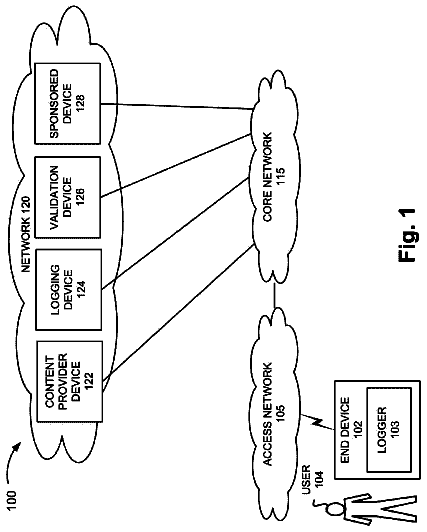
FIG. 1 is a high-level functional block diagram of an example of a system of networks/devices that provide various communications for mobile devices and support an example of the messaging application search service.
FIG. 2 is a flowchart of an example of a messaging application search process.
FIG. 3A is an example of a screen presentation generated by an example of the messaging application search service described herein.
FIG. 3B is another example of a screen presentation generated by an example of the messaging application search service described herein.
FIG. 3C is yet another example of a screen presentation generated by an example of the messaging application search service described herein.
FIG. 3D is an example of a key on a virtual keyboard for implementing an example of the messaging application search service described herein.
FIG. 3E is another example of a screen presentation generated by an example of the messaging application search service described herein.
FIG. 4 is a high-level functional block diagram of an exemplary touch screen type mobile device as may utilize the messaging search service through a network/system like that shown in FIG. 1 .
Detailed description of examples
In the following detailed description, numerous specific details are set forth by way of examples in order to provide a thorough understanding of the relevant teachings. However, it should be apparent that the present teachings may be practiced without such details. In other instances, well known methods, procedures, components, and/or circuitry have been described at a relatively high-level, without detail, in order to avoid unnecessarily obscuring aspects of the present teachings.
The various examples disclosed herein relate to a messaging application search function or service that facilitates simpler and more efficient searching for content and incorporating search results containing content into a message that is composed and sent using to messaging application on a mobile device. Examples of messages that may be sent by a messaging application include short messaging service (SMS) messages, enhanced messaging service (EMS) messages and/or multimedia message service (MMS) messages. The disclosed examples provide a messaging application that allows input of search terms into a dialogue box converted to a search bar for subsequent search and retrieval of search results based on the text input into the dialogue box, all from within the user interface presented by the messaging application. For example, a user may be composing a message, and may wish to incorporate some form of content, such as, for example, a quote, a video clip, an image, a website link (i.e., uniform resource locator (URL)), a photo or the like, in the body of the message.
Reference now is made in detail to the examples illustrated in the accompanying drawings and discussed below.
FIG. 1 is a high-level functional block diagram of an example of a system 100 of networks/devices that provide various communications for mobile devices and support an example of the messaging search service. The system 100 of FIG. 1 shows a mobile device (MD) 105 communicatively coupled to mobile communication network 140 . The MD 105 may be a laptop, a personal digital assistant (“PDA”), a smartphone, a tablet PC, a portable game or media player with wireless communication elements or other portable device designed to communicate via one or more wireless networks. The mobile communication network 140 is communicatively coupled to a data server 150 , a data storage device 155 , a data communication network 160 and a data server 165 .
The mobile communication network 140 may operate under control of a mobile network operator, or, said differently, a cellular communications carrier. The user 103 may subscribe to the MNO for voice and data communications services. For example, the mobile device 105 may be configured to receive voice and data communications services via the mobile communication network 140 , and the mobile device 105 may deliver the voice and data communications services to the user 103 . As a subscriber to services from the mobile communication network 140 , the user 103 may be able to store and access data on the data storage device 155 or one or more servers 150 or 165 via the mobile device 105 .
The data storage device 155 may be provided by the MNO, and is connected to the mobile communication network 140 , and may store information, such as audio, video, images, documents, e-mails, voicemails, text messages, purchased digital media items and other forms of data. For example, as part of the subscription to voice and data communication services, the MNO may provide the user 103 with a limited amount of data storage capacity. The user 103 (i.e., a subscriber) may access any of the stored information via the mobile device 105 and/or other devices (e.g., a tablet, laptop or personal computer).
The data server 150 may be provided by the MNO, and is shown connected to the mobile communication network 140 . The mobile device 105 may also be able to obtain digital media content from the data server 150 via the mobile communication network 140 . For example, the
MNO may also be a content provider, and the user 103 , as a subscriber, may access digital media content from the MNO's data server 150 via the mobile device 105 . While the data storage device 155 provides data storage specific to the subscribing user 103 , the data server 150 may, depending upon the user's subscription, provide data services, such as access to the Internet, document services, or the like, and/or digital content, such as e-books, videos, audio, streaming media and the like.
The user 103 may also subscribe to third-party service providers (e.g., digital media content providers that may provide digital media content (e.g., e-books, blogs, articles, music or video services), data providers (e.g., news sources, investment sources and the like), and the like. Data may be obtained from the third-party service providers from one or more data servers 165 via the data communication network 160 . For example, the data communication network 160 be implemented as a digital communications network such as that of a cable television/Internet provider that supports wireless connectivity, e.g. via Wi-Fi access points 163 , such as the Internet, or similar network. The data communication network 160 also provides the mobile device 105 with access to websites that provide data to the mobile device 105 .
For example, the mobile device 105 (the details of which are described in more detail with reference to FIG. 4 ) may include a processor (not shown in this example) that provides a messaging application (app) 110 that includes a search function 115 , a mobile device search application (app) 120 and a mobile device memory 130 . The search application 120 may be used separately from the messaging app 110 , and vice versa. For example, the user 103 may launch the search app 120 to search for data in the morning, and may launch the messaging app 110 to communicate with a family member in the evening later in the same day. Said differently, the use of either application does not preclude the use of the other application. As shown in FIG. 1 , the messaging app 110 may receive user inputs via a graphical user interface (not shown) presented on the mobile device 105 . The mobile device search application 120 may be any one or more of search engines/applications suitable for use on a mobile device. The search engine/application may be a mobile device manufacturer-provided search engine, a third-party search engine, a mobile network operator provided or approved search engine, or the like.
The messaging app 110 and/or the search app 120 may be written in software languages such as Java, Objective C++, C#, C++, Boo or the like. The messaging app 110 and/or the search app 120 may also be native to the operating system (OS) of the mobile device 105 , and/or may run in cooperation with the mobile device OS. In addition, an application programming interface (API) may be provided that facilitates the interaction between the messaging app 110 and the search app 120 by making available respective specifications and routines for the control and the exchange of data between the apps. In the example of FIG. 1 , the mobile device search app 120 is shown communicating with mobile communications network 140 . The communication between the search app 120 and the mobile communications network 140 may be direct or may be through other applications that are not shown in the example. For example, the search app 120 may use a web browser application (not shown) or other application suitable for communicating with the mobile communication network 140 or other network. In addition, the mobile device 105 may include a radio transceiver, such as a Wi-Fi transceiver (shown in FIG. 4 ), in addition to a radio transceiver capable of communicating with the mobile communication network 140 . For example, in some instances, the mobile device search app 120 may communicate via the Wi-Fi transceiver directly with the data communication network 160 without having to communicate through the mobile communication network 140 .
Some of the user inputs may be requests for searches to be performed by the mobile device search app 120 from within the messaging app 110 . A search request may include a search function indicator and a search term(s). A search indicator may be input characters, such “$S”, “??”, or a specialty key provided for use with the messaging app 110 , that signals the users desire to have a search performed, which are input via a keyboard or other input device, such as a microphone (both of which are described in more detail in another example). The search function indicator may cause the messaging app 110 to call the search function 115 to which the messaging app 110 passes the search term(s). The search function 115 passes the search term(s) to the mobile device search app 120 . The mobile device search app 120 may receive the inputted search term(s) from the search function 115 . The mobile device search app 120 may be configured to access one or more data sources based on default settings of the search app 120 or user preference settings made to the search app 120 . A data source may be a memory location within the memory of the mobile device or may be a data source external to the mobile device, such as a website, a server, a cloud memory location, or the like. The order in which the search app 120 accesses the data sources may be prioritized based on default settings, by user preferences, or manner of selecting search. For example, the search app 120 may first access a memory location within the mobile device memory 130 . The mobile memory (not shown in this example) location may store search results that were selected by the user 103 from previous searches. In addition, the mobile device memory 130 stores images and documents obtained from various sources, such as a camera, as an attachment in an e-mail from an e-mail application, or the like. After searching the mobile device memory, whether search results were returned or not, the search app 120 may search a data source external to the mobile device. In another example, the manner of selection of the search prioritizes the data source. For example, if the user begins a search query with “?cam” a search of images may be performed, if “?doc” is input a search of documents may be performed or different character or soft key selection (as opposed to character selection) may indicate different sources or order of search of the data sources. Similarly, or in another example, the user, when setting up the messaging application search service, may be provided with a user preferences selection menu from which the user may select or input custom inputs for performing a number of different functions associated with the messaging application search service. For example, the user may set specific character sets or symbol sets for initiating the search (e.g., “$S”, “??” as mentioned above), but may select “ZZ” or other combinations of characters. Or, the user may record a voice command that is used during a voice input to the messaging application. For example, while dictating a message to the messaging application, the user may have a search-initiation voice command of “present search bar” or just “search bar”, and the search bar will be presented to the user and any subsequent voice inputs will be considered search terms. To signal to the application that the search term is complete, the voice command to commence the search may be set as “go fetch,” “now search,” or the like. In this example, the user preference settings include a custom textual search initiation command, a custom voice search initiation command and a custom voice search commencement command. Of course, other user preferences may be selected, such as the data source selection discussed above, but also the number of search results to return and so on.
The messaging application search service may also be pre-configured to respond to gestures input to the mobile device user interface or other input device (e.g., camera or microphone), or may allow user preference settings to customize the gestures. For example, when the messaging application is active, shaking the device may cause the search function to initiate, moving the device in the shape of the letter “S” or the like. In the example, when the messaging application is active, the touch screen may interpret a single (double) touch with motion in the shape of a letter “S” as a command for initiation of a search. Of course, other inputs may be used to initiate, halt or terminate the search functionality.
Using the search term(s), the mobile device search app 120 may first, before attempting to search an external source, access the mobile device memory 130 for data related to the search term(s). After attempting to, but failing to identify data related to the search term(s), or after identifying data in the mobile device memory 130 matching the search terms, the mobile device search app 120 may access the mobile communication network 140 to obtain information from the data server 150 or to gain access to the data communication network 160 and data servers 165 . Based on the search terms and search algorithm of the search app 120 , the search app 120 returns search results to the search function 115 . The search results are presented to the user 103 on a display device (not shown) of mobile device 105 . The search request, search process and interaction of different components of the system 100 will be described in more detail with reference to FIGS. 2-4 .
FIG. 2 is a flowchart of an example of a search process executed from a dialogue box of a messaging application. The process 200 is described with respect to a mobile device, but may also be provided in a device with a chat dialogue box, such as a device may be a laptop computer, tablet or the like. In addition to the flowchart of FIG. 2 , the examples of FIGS. 3A and 3B will be referenced to provide examples of the concepts discussed in certain steps of the process 200 .
However, before discussing the flowchart of FIG. 2 , it may be appropriate to provide a context for the search process example by discussing the presentation of the messaging application to the user shown in FIG. 3A . FIG. 3A is an example of a user interface that is a screen presentation generated by an example of the messaging application search service that illustrates an example of an on-going chat between a user 103 and another person, Caraline. In the example, the user interface as described herein is the portion of the display 310 that is shown above the keyboard 370 regardless of whether keyboard 370 is a physical keyboard on the mobile device 300 or a virtual keyboard presented on a touchscreen display (as described in more detail with reference to FIG. 4 ). The user inputs characters and symbols into the messaging application or the respective input spaces (e.g., search bar) of the user interface using the keyboard 370 . The mobile device 300 of FIG. 3A includes a display screen 310 that is presenting the user interface of a messaging application. The messaging application user interface includes a number of information areas.
For example, at the top of the messaging application user interface is a menu bar 320 . The menu bar 320 identifies the person or entity (i.e., the contact) with whom the messaging application is messaging, or preparing to message. The menu bar also includes control buttons 324 (labeled “MSGS”) and 322 (labeled “Edit”) for respectively returning to messages from other persons or entities and for editing information related to the listed person or entity (i.e., contact). Individual messages, such as messages 341 , 342 and 343 , may also be presented on the display device 310 in a thread portion 340 of the user interface. When a user wants to send a message, via the messaging application, the user enters characters (e.g., letters, numbers, symbols, punctuation marks, and the like) by interacting with an input device, such as keyboard 370 , which may be presented in a display device 310 (e.g., when implemented as via a touchscreen), or via a microphone 375 .
The microphone 375 may be activated as the input device in lieu of the keyboard 370 by user interaction with keyboard button 374 . In response to the selection of the keyboard button 374 , the mobile device 300 may activate a voice recognition function (not shown) that recognizes the voice inputs and populates the dialogue box 350 with text that corresponds to the voice recognition application's recognition of the voice inputs. The keyboard 370 may also be implemented as a keypad, which has hard keys that substantially resembles the keyboard 370 and performs similar functions. The results of the user interaction with the input device are presented in a dialogue box 350 . The dialogue box 350 is an area of the display device 310 in which the inputted characters are presented to the user indicating that the messaging application has received the presented characters as inputs. Characters may be, for example, letters (of any language supported by the mobile device 300 ), numbers, symbols, punctuation marks, mathematical symbols, alphanumeric, and the like.
As an initial step, the messaging application is launched, and based on user navigation within the messaging application one or more messages from a contact are presented, at 205 , with a dialogue box for inputting text to the messaging application as shown in FIG. 3A . The input text (shown, for example, as “$Sgo ah” in FIG. 3A ) may be obtained from a user input device, such as a keyboard or a microphone, and presented in the dialogue box 350 . The dialogue box 350 receives the input from the input device ( 210 ). The messaging application may parse the received input to determine whether the input is an indicator that the user is requesting a search function. The search function indicator may be a combination of characters, such as a “$S”, “*S”, some other combination of special character and another character, or the like. Or, if voice input, the search function indicator may be the spoken term “Search [Search Engine Name],” “dollar sign search”, or some other phrase or combination of terms. The user may, for example, set the search function indicator(s) via user preference settings for the messaging application. Alternatively, the messaging application may have a default search function indicator. At 215 , the messaging application determines whether the dialogue box contains a search function indicator. Referring again to the example of FIG. 3A , the dialogue box 350 contains the inputted characters “$Sgo ah,” which, for the sake of continuing the example, the messaging application receives the inputted character string, parses the character string, and determines that the combination of input characters “$S” is a search function indicator, and further determines that the letters following (i.e., “go ah”) the search indicator “$S” is the requested search term. At this time, it should be noted that the search term does not have to immediately follow the search indicator as shown in FIG. 3A , but may be after the messaging app determines that user is requesting a search to be performed from within the messaging application or, in other words, the search term may be added subsequent to the entry of the search function indicator. The input character string may be an American Standard Code for Information Interchange (ASCII) character string. The messaging application may further parse the input characters to identify the search term(s), which may appear immediately after the search function indicator.
Alternatively, the search terms may include additional information that is input by the user to assist the search application by narrowing the types of content to search. For example, after identifying the search function indicator, the messaging application may present a prompt for more information about the search term, such as a content type identifier, which may be represented by predefined identifiers, such as GIF (for images), VIDEO (for video), TEXT (for text), and the like, or a particular search domain(s), such as a specific website, a specific data location (e.g., a user's cloud storage), a file in the mobile device memory, or the like.
Returning to the discussion of FIG. 2 , the received input is interpreted by the messaging app to identify a search function indicator (e.g., in the present example, $S), the presence of which is further interpreted as a user request for performing a search. Upon determining that a search is requested at 215 , the messaging application may invoke a search function (e.g., search function 115 ), or some other operation, to facilitate the launch of the search application and to facilitate messaging application communications with the mobile device search application ( 220 ). For example, the search function 115 may be a process or service executing on the mobile device processor that calls the mobile device search application, establishes a connection with the mobile device search application 120 , and passes the search terms to the mobile device search application ( 222 ). In response to an input device selection, such as selection of the search button 399 in FIG. 3B , the search terms are passed to the search application. For example, the messaging application may detect a predetermined period of time during which no inputs are received via an input device, and, based on the lack of inputs determines that the search term is complete. In another example, a prompt may be presented on a display device requesting confirmation that the search term is completed. The search application may also provide suggested search terms based on prior user searches (which may be stored in the mobile device memory) or based on data received from the networks 140 or 160 .
In response, the mobile device search application processes the search terms based on a search algorithm ( 224 ). For example, the search application may use a preselected search engine (e.g., Google®, Bing® or Yahoo®) to search the Internet using the selected or inputted search term. In another example, a particular web site (i.e., one type of data source) may be indicated by the user via a specific selection of the web site (or specific type of data source), or by predetermined user preferences, for searching. In yet another example, a specific data source, such as a file(s) on the mobile device or cloud storage may be indicated as a location(s) for performing a search. When setting up the messaging application search service, a user, for example, may be presented with a menu of data sources from which the user may a specific data source (e.g., a specific web site), a file in the mobile device (e.g., images or sounds), or the like.
Upon completion of the search or while the search is on-going, search results are returned (explained in more detail with respect to FIG. 3C ) from the search for presentation in the dialogue box ( 226 ) in the form of a menu.
Note that the search terms may be updated so long as the messaging application continues to receive inputs from the input device. As shown in FIG. 3B , suggested search searches are presented in search bar 351 . The received inputs are passed by the search function to the search application, and presented in the dialogue box. So, for example, the search terms “go ah” of FIG. 3A are initially input via the input device, but the user continues to add characters to the search term, such as “go ahea,” in which case, the search function passes the updated search term to the search function. As a result, the process 200 checks to see if the search terms have been updated at 228 . For example, the messaging app may monitor the input devices for further inputs. If the determination is “Yes,” there are further inputs, steps 224 and 226 are repeated until no further updates are identified at 228 . After which, the process 200 proceeds to 240 , where a determination is made whether the user has selected a search result from the search results presented at 226 . If the determination at 240 is “YES,” which indicates the user selected a search result, the search result is incorporated into a message being composed by the messaging application ( 250 ). The presentation of search results and subsequent selection/non-selection of a search result will be described in more detail with reference to FIG. 3C . After the search result is incorporated into the message, a determination is made at 230 whether the send button, which instructs the messaging application to send the message to the contact, has been selected. If the response to the determination, at 230 , is “YES,” the process 200 proceeds to send the message ( 260 ) to the contact.
A number of alternative determinations may occur in the described example of messaging application search function. As shown in the process 200 , for example, at 215 , the determination may be that a search indicator was not input into the input device and received by the messaging application. In this case, the determination at 215 is “NO,” and the process 200 proceeds to 230 , where a determination of whether the send button was selected by the user is made. If the determination at 230 is “NO”, the process 200 proceeds back to 210 to receive an input from the input device.
Another alternative determination may be made at 240 , where the process steps that occur when a user selects a search result for incorporation into a message (i.e., a “YES” determination) was previously described. If at 240 , the determination is “NO,” a user has not selected a search result, the process 200 may proceed to 210 , and the messaging app waits for an input from the input device.
In the event that a user decides to discontinue initiation of the search or abandon the search (for any reason), a button may be presented on a user interface, such as with the search bar 351 , or the mobile device may respond to a gesture, such as a shake of the mobile device or some form of a swipe/touch gesture, to cancel the search function and return to the message.
The foregoing described an example of a messaging application incorporating a search function. The advantageous example allows a user to quickly perform a search without leaving the messaging application. The benefits provided by such a feature is the saving of time, not having to interact in two different applications (i.e., messaging application and search application), or quickly being able to add further content to a message, which, for example, increases the entertainment value of the message or also provides additional information useful to the contact, such as directions to a business meeting or restaurant.
As mentioned above, after the messaging application parses the characters input (i.e., input character string) via the input device, determines that a search function indicator was input, and performs the search as described at steps 215 , 220 , 222 , and 224 of FIG. 2 , the search application may generate suggested searches based on history (stored in the mobile device memory) or obtained from the network. The suggested search terms are presented by the messaging application on the display device. FIG. 3B illustrates an example of a screen of the messaging application presenting suggested search terms based on the input of search terms in the example illustrated in FIG. 3A . In the example of FIG. 3B , the mobile device 300 includes the display 310 , the thread portion 340 , and a search bar 351 . The search bar 351 replaces the dialogue box 350 when a search function indicator is detected in the dialogue box 350 by the messaging application.
As search terms are entered in the search bar 351 , a list of suggested searches is presented in a menu that drops down in front of the keyboard 370 . If after a predetermined amount of time, one of the suggested search terms is not selected the menu may no longer be presented, and a user will have access to the keyboard 370 to allow for additional inputs. Conversely, if one of the suggested search terms is selected by the user, the selected search term may be provided to the search application. A user may select a suggested search term for search by touching or scrolling to (e.g., using hard keys (not shown) on the mobile device or some other feature of the mobile device) the particular suggested search term. In response to the selection, the messaging application may pass the selected search term to the search application, or may present the selected search term alone in the search bar 351 in which case the user sends the search term to the search application by selecting the search button 399 .
In addition to the dialogue box 350 changing function, the “Send” button 354 shown adjacent to the dialogue box 350 in FIG. 3A may transition, functionally and in appearance, into a “SEARCH” button 399 . For example, when the SEARCH button 399 is selected, the messaging application forwards selected search terms or, as a default the search terms that appear in the search bar 351 location, to the search application 120 .
The messaging application upon receipt of the search results from the search application may populate a search results menu with, for example, the top 10-15 search results, or all of the search results if less than 10 search results. The number of search results may be set by the user as a user preference of the messaging app. As shown in search results box 351 , the search results may be presented as a menu with the most relevant shown at the top of the search results box 351 and with the least relevant of the top 10-15 search results shown at the bottom of the menu. In the touchscreen display, the user may touch a particular search result. In response to the touch, additional information related to the search result may be shown, such as a file location, a uniform resource locator (URL), file type (e.g., .jpeg, .gif, .docx, or the like), file size, or some other information related to the search result.
Upon completion of the search, the search application returns search results to the messaging application, or directly to the search bar 351 , and similar to the suggested search terms, presents a drop down menu of search results from which the user may select for incorporation into the body of the message being composed by the user. The user may be able to scroll through the menu of search results by swiping at the list, or using some other gesture or input to the mobile device (e.g., pressing a hard key, or using a voice command (e.g., “next”)). A user may select one of the search results for incorporation into the message by selecting (e.g., by touching, placing a cursor over, scrolling to, or the like) the search result, or by highlighting and then selecting the “Add” button 394 . For example, as shown in FIG. 3C , the “go ah” Search Result 2 is shown as highlighted and encircled.
As mentioned above, the user may select the highlighted Search Result 2 a subsequent time indicating the user's desire to incorporate the search result in the text message, or the user may select the Add button 394 . In another example, multiple search results may be selected by using a combination of inputs, such as holding a hard button (e.g., a volume up/down button or the like (not shown in this example)) of the mobile device, and selecting additional search results. Or, in a different functional mode, a selection remains highlighted until deselected by a subsequent touch, and only by selecting the Add button 394 are the selected search result(s). Upon selection of a search result(s), the search bar 351 is replaced with the dialogue box 350 , the
Search button 399 replaced with the Send button 354 , and the keyboard 370 is uncovered by the search results menu allowing the user to either input more characters or send the message to the contact (i.e., intended recipient(s)) by selection of the Send button 354 .
Other examples of implementations for producing a search request are envisioned. FIG. 3D illustrates another example of a screen presentation generated by an example of the messaging search service described herein. In FIG. 3D , the mobile device 301 includes components similar to those available in mobile device 300 , such as display device 310 , thread portion 340 , dialogue box 350 , and microphone 375 . The mobile device 301 of FIG. 3D differs from the mobile device 300 of FIGS. 3A and 3B by providing a keyboard 379 that includes an optional search “SRCH” key 388 . The keyboard 379 still enables voice input via selection of key 374 , but allows the user to input a search request with a selection of a key 388 . In the operation of the example FIG. 3D , a user selects may begin composing a message to the intended message recipient (i.e., contact) and upon selection of the key 388 any characters in the dialogue box 350 will be used as a search term, or, alternatively, any characters added after the selection of the search key 388 will be used as the search term. Upon receipt of the search results, the dialog box 350 may transition into a search results menu 351 in a similar manner as discussed with respect to FIGS. 3A and 3B .
In yet another example, the messaging application may be configured to provide access directly to default or user preferred searched web sites or data storage locations. For example, a user may set in a user preferences menu associated with the messaging application a list of web sites or data storage locations, such as memory locations on the mobile device or in a cloud storage the user prefers to search or use to search. The cloud storage may be provided by a third-party cloud storage provider (e.g., Dropbox®) or a storage maintained by the MNO that is providing communications service to the user and the mobile device.
FIG. 3E is an example of yet another implementation of messaging search service described herein. The example of FIG. 3E provides a mobile device 302 that has a display screen 311 that is initially configured in the same manner as the display 310 in FIG. 3A . However, when the search “SRCH” key is selected, which is interpreted as the user is requesting to search for content to use in a messaging conversation, the messaging application automatically subdivides the display screen 311 . Or, said differently, when a specified key ((e.g., the search button or key 387 ) is selected, the messaging application responds by splitting the screen and calling a list of sites or locations to search. Although shown in FIG. 3D , as vertically oriented, the display may be subdivided in any direction (i.e., horizontal) or manner and a list of sites or locations, or group of icons representing the sites or locations, or the like is presented adjacent to the messaging application. For example, a first subdivision 313 of the display screen 311 provides the same information and functionality as the display 310 of FIG. 3C albeit on a reduced scale, and the other, or the second, subdivision 312 of the display screen provides a listing of suggested, or recommended, data sources through which the search application may be instructed to search. The second subdivision 312 allows the user to select from a number of web sites (such as suggested search sites 1 - 4 ), cloud storage sites (e.g., Suggested Cloud Storage 1 ), and/or mobile device memory locations, such as file locations (e.g., Suggested Mobile Device Memory Location 1 ), that may be used when a search is performed.
For example, one or more of the suggested search options, such as suggested search sites 1 - 4 , may be presented based on user preference settings, or by frequency of use (e.g., the user frequently goes to a specific web site for news, weather, sports scores or the like. As a result, the particular web site may be suggested as a suggested search site. Alternatively, the suggested search site may be suggested based on the specific type of content that the web site provides. For example, specific web sites may be suggested that provide video content (e.g., Youtube®), images (e.g., known search engines), articles (e.g., an electronic encyclopedia or subscription-based subject matter database), or trending articles (e.g., news outlets, news aggregators, blogs and the like). Of course, a default selection of suggested search sites may be provided by the MNO or the mobile device manufacturer.
The description continues in the full USPTO document.
 Lapsed, fee not paid14 drawings