Cross reference to related applications
This application is a National Stage of International Application No. PCT/JP2011/067267 filed Jul. 28, 2011, claiming priority based on Japanese Patent Application No. 2010-179274, filed Aug. 10, 2010, the contents of all of which are incorporated herein by reference in their entirety.
Technical field
The present invention relates to an organic electroluminescent element (also referred to as an “organic EL element”) and a method for manufacturing the same.
Background art
The organic EL element comprises a pair of electrodes consisting of an anode and a cathode, and a light-emitting layer provided between these electrodes. An organic EL element in which one layer of light-emitting layer is provided is called a “single photon-type organic EL element” and an organic EL element in which a plurality of light-emitting layers are provided is called a “multi-photon-type organic EL element”.
When a voltage is applied to the organic EL element, a hole is injected from the anode and an electron is injected from the cathode. Then, the injected hole and the injected electron are coupled with each other in the light-emitting layer to generate light emission.
In the multi-photon-type organic EL element, for the purpose of lengthening the life of the element or enhancing the brightness of the element, a plurality of light-emitting layers are provided and usually, between the light-emitting layers, a charge generation layer is provided. As a material for the charge generation layer, an alkali metal, an alkaline earth metal, an inorganic semiconductor material, a charge transporting organic material, and the like are used mainly from the viewpoint of electric characteristics. The charge generation layer is made up, for example, by layering an electron generation layer made of an inorganic semiconductor material having electron injection characteristic and a hole generation layer having hole injection characteristic. The electron generation layer or the hole generation layer is formed by co-depositing the above-described materials or by depositing the above-described material individually (see Patent Document 1). RELATED ART DOCUMENTS Patent Document
Patent Document 1: JP 2007-59848 A DISCLOSURE OF INVENTION Problem to be Solved by the Invention
An alkali metal, an alkaline earth metal, an alkali metal fluoride, and the like used for the charge generation layer is easily reacted with the moisture and oxygen in the atmosphere and is rapidly oxidized. When the charge generation layer is oxidized, the function thereof is degraded. As a result, the characteristics of the organic EL element lower, for example, the brightness lowers and the life of the element is shortened.
In the conventional technology, all layers comprising the charge generation layer are formed in a vacuum atmosphere and then, the organic EL element itself is sealed airtight, so that the organic EL element is manufactured without exposing the charge generation layer to the atmosphere. Therefore, the degradation of the charge generation layer and the lowering of the characteristics of the organic EL element caused by the degradation of the charge generation layer are prevented.
When the light-emitting layer or the like is formed by a coating method, an ink is rapidly vaporized in an atmosphere having high vacuum degree, so that it is necessary to form the light-emitting layer or the like in an atmosphere at around normal atmospheric pressure or in an atmosphere having low vacuum degree. In this case, by forming the charge generation layer with the above-described materials, the charge generation layer is degraded when the light-emitting layer or the like is formed and the above-described problem caused by the degradation of the charge generation layer is manifested.
Accordingly, it is an object of the present invention to provide a multi-photon-type organic EL element comprising a charge generation layer using a material that is difficult to be degraded even in an atmosphere at around normal atmospheric pressure, and further to provide a simple method for manufacturing the organic EL element. Means for Solving Problem
As a result of assiduous research on ionic polymers and organic EL elements using them, the inventors of the present invention have found that by using an ionic polymer that is difficult to be degraded in an atmosphere at around normal atmospheric pressure and further, in the atmosphere, the above-described problems may be solved, and have completed the present invention.
That is, the present invention provides [1] to [4] below:
[1] An organic electroluminescent element comprising:
a pair of electrodes comprising an anode and a cathode;
a plurality of light-emitting layers provided between the electrodes; and
a charge generation layer provided between the light-emitting layers that are adjacent to each other, wherein the charge generation layer comprises an ionic polymer that generates electrons and holes respectively or together.
[2] The organic electroluminescent element according to above [1], wherein the charge generation layer is formed of a single layer.
[3] The organic electroluminescent element according to above [1] or [2], further comprising: an electron injection layer provided between the cathode and one of the light-emitting layers that is arranged closest to the cathode, wherein the electron injection layer comprises an ionic polymer. [4] A method for manufacturing an organic electroluminescent element that comprises a pair of electrodes comprising an anode and a cathode, a plurality of light-emitting layers provided between the electrodes, and a charge generation layer provided between the light-emitting layers that are adjacent to each other, the method comprising the step of:
forming the charge generation layer by an applying method using a coating liquid comprising an ionic polymer. Effect of the Invention
The organic EL element of the present invention uses as a material for the charge generation layer, the ionic polymer capable of maintaining charge generation characteristics in an atmosphere at around normal atmospheric pressure and further, even in the atmosphere. Therefore, the organic EL element of the present invention is excellent in characteristics such as having a long life.
Through the method for manufacturing the organic EL element of the present invention, a material that is difficult to be degraded in an atmosphere at around normal atmospheric pressure and further, even in the atmosphere is used as a material for the charge generation layer. Therefore, a step of forming the charge generation layer, the light-emitting layer, or the like may be performed in an atmosphere at around normal atmospheric pressure and further, in the atmosphere, so that the manufacturing step may be simplified and the manufacturing cost may be remarkably reduced.
Brief description of drawings
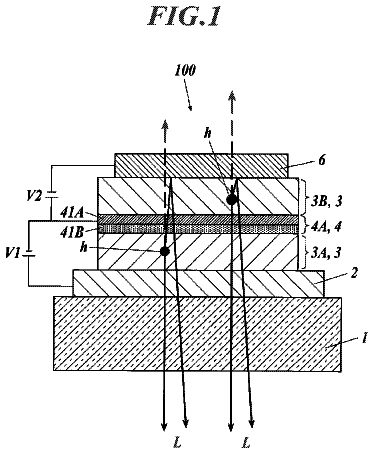
FIG. 1 is a cross-sectional view schematically illustrating one example of the configuration of an organic EL element.
Description of embodiments
Referring to the drawings, an embodiment of the present invention will now be described. Here, it is no more than that in each drawing, the shape, the size, and the disposition of each constituent are schematically illustrated to a degree by which the present invention may be comprehended. The present invention is not limited by the descriptions below and each constituent may vary as appropriate so long as the variation does not depart from the gist of the present invention. Here, in each drawing used for the descriptions below, the same constituent is indicated with the same symbol and an overlapped description may be omitted. The organic EL element of the present invention is not necessarily manufactured or used, for example, in the disposition illustrated in the drawings. In the descriptions below, particularly, one direction of the thickness direction of the substrate may be called “upper” and another direction of the thickness direction may be called “lower”.
<Configuration Example of Organic EL Element>
Referring to FIG. 1 , the configuration example of an organic EL element of the present invention is described. FIG. 1 is a cross-sectional view schematically illustrating one example of the configuration of the organic EL element.
As illustrated in FIG. 1 , an organic EL element 10 of the present invention comprises as the basic configuration, a pair of electrodes consisting of an anode 32 and a cathode 34 , a plurality of light-emitting layers 50 provided between the pair of electrodes ( 32 , 34 ), and a charge generation layer 70 provided between the light-emitting layers 50 adjacent to each other. The charge generation layer 70 contains one or more types of ionic polymers generating at least any one of an electron and a hole.
In the organic EL element 10 , in addition to the light-emitting layer 50 and the charge generation layer 70 , a prescribed layer may be provided. For example, as the prescribed layer, a hole injection layer, a hole transport layer, an electron transport layer, an electron injection layer, and the like are provided between the pair of electrodes ( 32 , 34 ).
Each member of
to
below may be called a “light-emitting unit 80 ”. In the thickness direction of the charge generation layer 70 ,
a member sandwiched between a pair of charge generation layers 70 adjacent to each other,
a member placed between a charge generation layer 70 arranged closest to the anode 32 among a plurality of charge generation layers 70 and the anode 32 , and
a member sandwiched between a charge generation layer 70 arranged closest to the cathode 34 among the charge generation layers 70 and the anode 34 . A direction corresponding to the thickness direction of the charge generation layer 70 may be merely called “thickness direction Z”.
Each of the light-emitting units 80 comprises at least one light-emitting layer 50 . In each light-emitting unit 80 , in addition to one light-emitting layer 50 , the above-described prescribed layer may be provided.
In the present embodiment, the organic EL element 10 comprises x (the symbol “x” represents an integer of 2 or more) light-emitting units 80 .
Between a pair of light-emitting units 80 adjacent to each other in the thickness direction Z, the charge generation layer 70 is provided. The number of the charge generation layers 70 provided in one organic EL element 70 is less than the number of the light-emitting units 80 by one, that is, (x−1). Accordingly, when x is “2”, one charge generation layer 70 is provided and when x is 3 or more, a plurality of charge generation layers 70 are provided. The charge generation layer 70 is placed so that one surface of the charge generation layer 70 in the thickness direction Z and another surface of the charge generation layer 70 in the thickness direction Z are in contact with the light-emitting units 80 that sandwich the charge generation layer 70 therebetween.
Each light-emitting unit 80 and each charge generation layer 70 are placed with the thickness directions Z thereof substantially conforming to each other and are layered alternately along the thickness direction Z.
Numbers are assigned to the individual light-emitting units 80 in such a manner that, from the light-emitting unit 80 arranged closest to the anode 32 in order, the light-emitting units 80 are named the first light-emitting unit 80 , the second light-emitting unit 80 , . . . , and the xth light-emitting unit 80 . For example, the light-emitting unit 80 arranged closest to the anode 32 among a plurality of light-emitting units 80 is named the first light-emitting unit 80 and the light-emitting unit 80 arranged closest to the cathode 34 is named the xth light-emitting unit 80 . A light-emitting layer 50 comprised in the nth (the symbol “n” represents an integer of 1 or more and x or less) light-emitting unit 80 is named the nth light-emitting layer 50 corresponding to the number of light-emitting units 80 .
In each light-emitting unit 80 , among the above-described prescribed layers, the hole injection layer and the hole transport layer are arranged closer to the anode 32 than the light-emitting layer 50 and the electron injection layer and the electron transport layer are arranged closer to the cathode 34 than the light-emitting layer 50 .
Each charge generation layer 70 is made up of
a single layer body consisting of a single layer or
a layered body formed by stacking a plurality of layers. In the embodiment illustrated in FIG. 1 , each charge generation layer 70 is made up by stacking a hole generation layer 74 and an electron generation layer 72 . In each charge generation layer 70 , between the hole generation layer 74 and the electron generation layer 72 , the hole generation layer 74 is arranged closer to the cathode 34 and the electron generation layer 72 is arranged closer to the anode 32 .
The charge generation layer 70 is provided between the light-emitting units 80 , so that the light-emitting units 80 are arranged at the terminal closest to the anode 32 and at the terminal closest to the cathode 34 in a layered body consisting of the light-emitting unit 80 and the charge generation layer 70 . Specifically, the first light-emitting unit 80 is arranged at the terminal closest to the anode 32 , whereas the xth light-emitting unit 80 is arranged at the terminal closest to the cathode 34 . Accordingly, the first light-emitting unit 80 is arranged so as to come into contact with the anode 32 and the xth light-emitting unit 80 is arranged so as to come into contact with the cathode 34 .
In the present embodiment, the organic EL element 10 is provided on a first substrate 22 . Moreover, the anode 32 of the organic EL element 10 is provided so as to come into contact with one of two main surfaces of the first substrate 22 opposite to each other in the thickness direction of the first substrate 22 .
The first light-emitting unit 80 of the present embodiment illustrated in FIG. 1 is arranged so as to come into contact with the anode 32 . This first light-emitting unit 80 consists of a hole injection layer 42 a , a hole transport layer 42 b , and the first light-emitting layer 50 and is made up by stacking the hole injection layer 42 a , the hole transport layer 42 b , and the first light-emitting layer 50 in this order from the anode 32 side.
In the embodiment illustrated in FIG. 1 , among all the light-emitting units 80 , the light-emitting units 80 remaining after excluding the first and xth light-emitting units 80 are made up of the light-emitting layer 50 alone. As described above, each light-emitting unit 80 may comprise, in addition to the light-emitting layer 50 , prescribed layers.
The xth light-emitting unit 80 of the present embodiment illustrated in FIG. 1 consists of the xth light-emitting layer 50 and an electron injection layer 44 and is made up by stacking the xth light-emitting layer 50 and the electron injection layer 44 in this order from the anode 32 side.
The cathode 34 is provided so as to come into contact with the electron injection layer 44 of the xth light-emitting unit 80 .
In the embodiment illustrated in FIG. 1 , a second substrate 24 is provided on the cathode 34 . The second substrate 24 is laminated to the first substrate 22 through an adhesive member. The organic EL element 10 is enclosed with the first substrate 22 , the second substrate 24 , and the adhesive member to be sealed airtight.
The organic EL element 10 of the present invention is characterized by the ionic polymers comprised in the electron injection layer 44 and the charge generation layer 70 . The ionic polymer will be described first, followed by the electron injection layer 44 and the charge generation layer 70 using the ionic polymers.
(Ionic Polymers)
Examples of the ionic polymers applicable to the present invention may include polymers having a structural unit containing one or more types of groups selected from the group consisting of groups represented by Formula
below and groups represented by Formula
below. A form of the ionic polymer include a polymer having a structural unit containing one or more types of groups selected from the group consisting of groups represented by Formula
and groups represented by Formula
in a content of 15% by mole to 100% by mole based on the number of moles of all structural units. -(Q.sup.1).sub.n1-Y.sup.1(M.sup.1).sub.a1(Z.sup.1).sub.b1
(In Formula (1), Q.sup.1 is a divalent organic group; Y.sup.1 represents —CO.sub.2.sup.−, —SO.sub.3.sup.−, —SO.sub.2.sup.−, —PO.sub.3.sup.2, or —B(R.sup.a).sub.3.sup.−; M.sup.1 is a metal cation or an ammonium cation optionally having a substituent; Z.sup.1 represents F.sup.−, Cl.sup.−, Br.sup.−, I.sup.−, OH.sup.−, R.sup.aSO.sub.3.sup.−, R.sub.aCOO.sup.−, ClO.sup.−, ClO.sub.2.sup.−, ClO.sub.3.sup.−, ClO.sub.4.sup.−, SCN.sup.−, CN.sup.−, NO.sub.3.sup.−, SO.sub.4.sup.2−, HSO.sub.4.sup.−, PO.sub.4.sup.3−, HPO.sub.4.sup.2−, H.sub.2PO.sub.4.sup.−, BF.sub.4.sup.−, or PF.sub.6.sup.−; n1 represents an integer of 0 or more; a1 represents an integer of 1 or more and b1 represents an integer of 0 or more, provided that a1 and b1 are selected so that the electric charge of the group represented by Formula
becomes 0. R.sup.a represents an alkyl group having 1 to 30 carbon atoms that may have a substituent or an aryl group having 6 to 50 carbon atoms that may have a substituent. When each of Q.sup.1, M.sup.1, and Z.sup.1 are plurally present, a plurality of each Q.sup.1, M.sup.1, or Z.sup.1 may be the same as or different from each other). -(Q.sup.2).sub.n2-Y.sup.2(M.sup.2).sub.a2(Z.sup.2).sub.b2
(In Formula (2), Q.sup.2 represents a divalent organic group; Y.sup.2 represents a carbo cation, an ammonium cation, a phosphonyl cation or a sulfonyl cation or an iodonium cation; M.sup.2 represents F.sup.−, Cl.sup.−, Br.sup.−, I.sup.−, OH.sup.−, R.sup.bSO.sub.3.sup.−, R.sup.bCOO.sup.−, ClO.sup.−, ClO.sub.2.sup.−, ClO.sub.3.sup.−, ClO.sub.4.sup.−, SCN.sup.−, CN.sup.−, NO.sub.3.sup.−, SO.sub.4.sup.2−, HSO.sub.4.sup.−, PO.sub.4.sup.3−, HPO.sub.4.sup.2−, H.sub.2PO.sub.4.sup.−, BF.sub.4.sup.−, or PF.sub.6.sup.−; Z.sup.2 represents a metal cation or an ammonium cation optionally having a substituent; n2 represents an integer of 0 or more. a2 represents an integer of 1 or more and b2 represents an integer of 0 or more, provided that a2 and b2 are selected so that the electric charge of the group represented by Formula
becomes 0. R.sup.b represents an alkyl group having 1 to 30 carbon atoms that may have a substituent or an aryl group having 6 to 50 carbon atoms that may have a substituent. When each of Q.sup.2, M.sup.2, and Z.sup.2 are plurally present, a plurality of each Q.sup.2, M.sup.2, or Z.sup.2 may be the same as or different from each other).
One embodiment of the ionic polymer used in the present invention further may be a polymer having a group represented by Formula
below. When the ionic polymer has the group represented by Formula (3), the group represented by Formula
may be contained in a structural unit of the ionic polymer, may be contained in the same structural unit as the structural unit containing one or more types of groups selected from the group consisting of groups represented by Formula
and groups represented by Formula (2), or may be contained in other different structural units. Furthermore, one embodiment of the ionic polymer may be a polymer having a structural unit containing at least one type among groups represented by Formula (1), groups represented by Formula (2), or groups represented by Formula
in a content of 15% by mole to 100% by mole based on the number of moles of all structural units. -(Q.sup.3).sub.n3-Y.sup.3
(In Formula (3), Q.sup.3 represents a divalent organic group; Y.sup.3 represents —CN or a group represented by any one of Formula
to Formula (12); and n3 represents an integer of 0 or more. —O—(R′O).sub.a3—R″
##STR00001## —S—(R′S).sub.a4—R″
—C(═O)—(R′—C(═O)).sub.a4—R″
—C(═S)—(R′—C(═S)).sub.a4—R″
—N{(R′).sub.a4R″}.sub.2
—C(═O)O—(R′—C(═O)O).sub.a4—R″
—C(═O)O—(R′O).sub.a4—R″
—NHC(═O)—(R′NHC(═O)).sub.a4—R″
(in Formulae
to (12), R′ represents a divalent hydrocarbon group optionally having a substituent; R″ represents a hydrogen atom, a monovalent hydrocarbon group optionally having a substituent, —COOH, —SO.sub.3H, —OH, —SH, —NR.sup.c.sub.2, —CN, or —C(═O)NR.sup.c.sub.2; R′″ represents a trivalent hydrocarbon group optionally having a substituent; a3 represents an integer of 1 or more; a4 represents an integer of 0 or more; R.sup.c represents an alkyl group having 1 to 30 carbon atoms that may have a substituent or an aryl group having 6 to 50 carbon atoms that may have a substituent; and when each of R′, R″, and R′″ are plurally present, a plurality of each R′, R″, or R′″ may be the same as or different from each other).
The ionic polymer contains preferably one or more types of structural units selected from the group consisting of a structural unit represented by Formula (13), a structural unit represented by Formula (15), a structural unit represented by Formula (17), and a structural unit represented by Formula
in a content of 15% by mole to 100% by mole based on the number of moles of all structural units.
##str00002##
(In Formula (13), R.sup.1 is a monovalent group containing a group represented by Formula (14); Ar.sup.1 represents a (2+n4) valent aromatic group optionally having a substituent besides R.sup.1; n4 represents an integer of 1 or more. When R.sup.1 is plurally present, each R.sup.1 may be the same as or different from each other.
##str00003##
(In Formula (14), R.sup.2 is a (1+m1+m2) valent organic group; Q.sup.1, Q.sup.3, Y.sup.1, M.sup.1, Z.sup.1, Y.sup.3, n1, a1, b1, and n3 represent the same as defined above; m1 and m2 each independently represent an integer of 1 or more; and when each of Q.sup.1, Q.sup.3, Y.sup.1, M.sup.1, Z.sup.−, Y.sup.3, n1, a1, b1, and n3 is plurally present, a plurality of each Q.sup.1, Q.sup.3, Y.sup.1, M.sup.1, Z.sup.1, Y.sup.3, n1, a1, b1, or n3 may be the same as or different from each other).
##str00004##
(In Formula (15), R.sup.3 is a monovalent group containing a group represented by Formula (16); Ar.sup.2 represents a (2+n5) valent aromatic group optionally having a substituent besides R.sup.3; n5 represents an integer of 1 or more. When R.sup.3 is plurally present, each R.sup.3 may be the same as or different from each other,
##str00005##
(In Formula (16), R.sup.4 represents a (1+m3+m4) valent organic group; Q.sup.2, Q.sup.3, Y.sup.2, M.sup.2, Z.sup.2, Y.sup.3, n2, a2, b2, and n3 represent the same meanings as described above; and m3 and m4 each independently represent an integer of 1 or more. When each of Q.sup.2, Q.sup.3, Y.sup.2, M.sup.2, Z.sup.2, Y.sup.3, n2, a2, b2, and n3 is plurally present, a plurality of each Q.sup.2, Q.sup.3, Y.sup.2, M.sup.2, Z.sup.2, Y.sup.3, n2, a2, b2, or n3 may be the same as or different from each other).
##str00006##
(In Formula (17), R.sup.5 is a monovalent group comprising a group represented by Formula (18); R.sup.6 is a monovalent group comprising a group represented by Formula (19); Ar.sup.3 represents a (2+n6+n7) valent aromatic group optionally having a substituent besides R.sup.5 and R.sup.6; and n6 and n7 represent independently an integer of 1 or more. When each of R.sup.5 and R.sup.6 is plurally present, a plurality of each R.sup.5 or R.sup.6 may be the same as or different from each other, —R.sup.7—{(Q.sup.1).sub.n1-Y.sup.1(M.sup.1).sub.a1(Z.sup.1).sub.b1}.sub.m5
(in Formula (18), R.sup.7 represents a direct bond or a (1+m5) valent organic group; Q.sup.1, Y.sup.1, M.sup.1, Z.sup.1, n1, a1, and b1 represent the same as defined above; m5 represents an integer of 1 or more. Each of Q.sup.1, Y.sup.1, M.sup.1, Z.sup.1, n1, a1, and b1 is plurally present, a plurality of each Q.sup.1, Y.sup.1, M.sup.1, Z.sup.1, n1, a1, or b1 may be the same as or different from each other), —R.sup.8—{(Q.sup.3).sub.n3-Y.sup.3}.sub.m6
(in Formula (19), R.sup.8 represents a single bond or a (1+m6) valent organic group; Y.sup.3 and n3 represent the same as defined above. m6 represents an integer of 1 or more, provided that when R.sup.8 is a single bond, m6 represents 1. When each of Q.sup.3, Y.sup.3, and n3 is plurally present, a plurality of each Q.sup.3, Y.sup.3, or n3 may be the same as or different from each other).
##str00007##
(In Formula (20), R.sup.9 is a monovalent group containing a group represented by Formula (21); R.sup.10 is a monovalent group containing a group represented by Formula (22); Ar.sup.4 represents a (2+n8+n9) valent aromatic group optionally having a substituent besides R.sup.9 and R.sup.10; and n8 and n9 each independently represent an integer of 1 or more. When each of R.sup.9 and R.sup.10 is plurally present, a plurality of each R.sup.9 or R.sup.10 may be the same as or different from each other, —R.sup.11—{(Q.sup.2).sub.n2-Y.sup.2(M.sup.2).sub.a2(Z.sup.2).sub.b2}.sub.m7
(in Formula (21), R.sup.11 represents a single bond or a (1+m7) valent organic group; Q.sup.2, Y.sup.2, M.sup.2, Z.sup.2, n2, a2, and b2 represent the same meanings as described above. m7 represents an integer of 1 or more, provided that when R.sup.11 is a single bond, m7 represents 1. When each of Q.sup.2, Y.sup.2, M.sup.2, Z.sup.2, n2, a2, and b2 is plurally present, a plurality of each Q.sup.2, Y.sup.2, M.sup.2, Z.sup.2, n2, a2, or b2 may be the same as or different from each other), —R.sup.12—{(Q.sup.3).sub.n3-Y.sup.3}.sub.m8
(in Formula (22), R.sup.12 represents a single bond or a (1+m8) valent organic group; Y.sup.3 and n3 represent the same as defined above. m8 represents an integer of 1 or more, provided that when R.sup.12 is a single bond, m8 represents 1. When each of Q.sup.3, Y.sup.3, and n3 is plurally present, a plurality of each Q.sup.3, Y.sup.3, or n3 may be the same as or different from each other).
The structural unit in the ionic polymer may comprise two or more types of groups represented by Formula (1), may comprise two or more types of groups represented by Formula (2), or may comprise two or more types of groups represented by Formula (3).
Group Represented by Formula
In Formula (1), examples of the divalent organic group represented by Q.sup.1 may include: a divalent saturated hydrocarbon group having 1 to 50 carbon atoms that may have a substituent such as a methylene group, an ethylene group, a 1,2-propylene group, a 1,3-propylene group, a 1,2-butylene group, a 1,3-butylene group, a 1,4-butylene group, a 1,5-pentylene group, a 1,6-hexylene group, a 1,9-nonylene group, a 1,12-dodecylene group, and a group in which at least one hydrogen atom in these groups is substituted with a substituent; a divalent unsaturated hydrocarbon group having 2 to 50 carbon atoms that may have a substituent that includes an alkenylene group having 2 to 50 carbon atoms that may have a substituent such as an ethenylene group, a propenylene group, a 3-butenylene group, a 2-butenylene group, a 2-pentenylene group, a 2-hexenylene group, a 2-nonenylene group, a 2-dodecenylene group, and a group in which at least one hydrogen atom in these groups is substituted with a substituent, and an ethynylene group; a divalent saturated cyclic hydrocarbon group having 3 to 50 carbon atoms that may have a substituent such as a cyclopropylene group, a cyclobutylene group, a cyclopentylene group, a cyclohexylene group, a cyclononylene group, a cyclododecylene group, a norbornylene group, an adamantylene group, and a group in which at least one hydrogen atom in these groups is substituted with a substituent; an arylene group having 6 to 50 carbon atoms that may have a substituent such as a 1,3-phenylene group, a 1,4-phenylene group, a 1,4-naphthylene group, a 1,5-naphthylene group, a 2,6-naphthylene group, a biphenyl-4,4′-diyl group, and a group in which at least one hydrogen atom in these groups is substituted with a substituent; an alkyleneoxy group having 1 to 50 carbon atoms that may have a substituent such as a methyleneoxy group, an ethyleneoxy group, a propyleneoxy group, a butyleneoxy group, a pentyleneoxy group, hexyleneoxy group, and a group in which at least one hydrogen atom in these groups is substituted with a substituent; an imino group having a substituent containing a carbon atom; and a silylene group having a substituent containing a carbon atom. From the viewpoint of easy synthesis of monomers that are the raw material of the ionic polymer (hereinafter, called “raw material monomers”), a divalent saturated hydrocarbon group, an arylene group, and an alkyleneoxy group are preferred.
The above-described substituent may be an alkyl group, an alkoxy group, an alkylthio group, an aryl group, an aryloxy group, an arylthio group, an arylalkyl group, an arylalkoxy group, an arylalkylthio group, an arylalkenyl group, an arylalkynyl group, an amino group, a substituted amino group, a silyl group, a substituted silyl group, a halogen atom, an acyl group, an acyloxy group, an imine residue, an amido group, an acid imido group, a monovalent heterocyclic group, a hydroxy group, a carboxy group, a substituted carboxy group, a cyano group, and a nitro group, and when the substituent is plurally present, the substituents may be the same as or different from each other. Among these, substituents besides an amino group, a silyl group, a halogen atom, a hydroxy group, and a nitro group contain a carbon atom.
The substituent will now be described. The term “C.sub.m-n” (m and n each are a positive integer satisfying m<n) means that the number of carbon atoms of the organic group expressed together with this term is m to n. For example, a C.sub.m-n alkyl group means that the number of carbon atoms of the alkyl group is m to n; a C.sub.m-n alkylaryl group means that the number of carbon atoms of the alkyl group in the C.sub.m-n alkylaryl group is m to n; and an aryl-C.sub.m-n alkyl group means that the number of carbon atoms of the alkyl group in the aryl-C.sub.m-n alkyl group is m to n.
The alkyl group as the substituent may be straight chain or branched chain, and may also be a cycloalkyl group. The alkyl group has the number of carbon atoms of usually 1 to 20, and preferably 1 to 10. Examples of the alkyl group may include a methyl group, an ethyl group, a propyl group, an isopropyl group, a butyl group, an isobutyl group, a sec-butyl group, a tert-butyl group, a pentyl group, a hexyl group, a cyclohexyl group, a heptyl group, an octyl group, a nonyl group, a decyl group, and a lauryl group. The hydrogen atom in the alkyl group may be substituted with a fluorine atom. Examples of the relevant fluorine atom-substituted alkyl group may include a trifluoromethyl group, a pentafluoroethyl group, a perfluorobutyl group, a perfluorohexyl group, and a perfluorooctyl group. Examples of the C.sub.1-12 alkyl group may include a methyl group, an ethyl group, a propyl group, an isopropyl group, a butyl group, an isobutyl group, a sec-butyl group, a tert-butyl group, a pentyl group, an isoamyl group, a hexyl group, a cyclohexyl group, a heptyl group, an octyl group, a nonyl group, a decyl group, and a lauryl group.
The alkoxy group as the substituent may be straight chain or branched chain, may also be a cycloalkyloxy group, and may further have a substituent. The alkoxy group as the substituent has the number of carbon atoms of usually 1 to 20, and preferably 1 to 10. Examples of the alkoxy group as the substituent may include a methoxy group, an ethoxy group, a propyloxy group, an isopropyloxy group, a butoxy group, an isobutoxy group, a sec-butoxy group, a tert-butoxy group, a pentyloxy group, a hexyloxy group, a cyclohexyloxy group, a heptyloxy group, an octyloxy group, a nonyloxy group, a decyloxy group, and a lauryloxy group. The hydrogen atom in the alkoxy group may be substituted with a fluorine atom. Examples of the relevant fluorine atom-substituted alkoxy group may include a trifluoromethoxy group, a pentafluoroethoxy group, a perfluorobutoxy group, a perfluorohexyloxy group, and a perfluorooctyloxy group. The alkoxy group may also include a methoxymethyloxy group and a 2-methoxyethyloxy group. Examples of the C.sub.1-12 alkoxy group may include a methoxy group, an ethoxy group, a propyloxy group, an isopropyloxy group, a butoxy group, an isobutoxy group, a sec-butoxy group, a tert-butoxy group, a pentyloxy group, a hexyloxy group, a cyclohexyloxy group, a heptyloxy group, an octyloxy group, a 2-ethylhexyloxy group, a nonyloxy group, a decyloxy group, a 3,7-dimethyloctyloxy group, and a lauryloxy group.
The alkylthio group as the substituent may be straight chain or branched chain, may also be a cycloalkylthio group, and may further have a substituent. The alkylthio group as the substituent has the number of carbon atoms of usually 1 to 20, and preferably 1 to 10. Examples of the alkylthio group as the substituent may include a methylthio group, an ethylthio group, a propylthio group, an isopropylthio group, a butylthio group, an isobutylthio group, a sec-butylthio group, a tert-butylthio group, a pentylthio group, a hexylthio group, a cyclohexylthio group, a heptylthio group, an octylthio group, a nonylthio group, a decylthio group, and a laurylthio group. The hydrogen atom in the alkylthio group may be substituted with a fluorine atom. Examples of the relevant fluorine atom-substituted alkylthio group may include a trifluoromethylthio group.
The aryl group as the substituent is an atomic group remaining after eliminating one hydrogen atom bonded to a carbon atom making-up an aromatic ring from an aromatic hydrocarbon, and examples of the aryl group as the substituent may include a group having a benzene ring, a group having a fused ring, and a group in which two or more independent benzene rings or fused rings are bonded through a single bond or a divalent organic group, for example, an alkenylene group such as a vinylene group. The aryl group as the substituent has the number of carbon atoms of usually 6 to 60, and preferably 7 to 48. Examples of the aryl group as the substituent may include a phenyl group, a C.sub.1-12 alkoxyphenyl group, a C.sub.1-12 alkylphenyl group, a 1-naphthyl group, a 2-naphthyl group, a 1-anthryl group, a 2-anthryl group, and a 9-anthryl group. The hydrogen atom in the aryl group may be substituted with a fluorine atom. Examples of the relevant fluorine atom-substituted aryl group may include a pentafluorophenyl group. Among the aryl groups, a C.sub.1-12 alkoxyphenyl group and a C.sub.1-12 alkylphenyl group are preferred.
Among the aryl groups, examples of the C.sub.1-12 alkoxyphenyl group may include a methoxyphenyl group, an ethoxyphenyl group, a propyloxyphenyl group, an isopropyloxyphenyl group, a butoxyphenyl group, an isobutoxyphenyl group, a sec-butoxyphenyl group, a tert-butoxyphenyl group, a pentyloxyphenyl group, a hexyloxyphenyl group, a cyclohexyloxyphenyl group, a heptyloxyphenyl group, an octyloxyphenyl group, a 2-ethylhexyloxyphenyl group, a nonyloxyphenyl group, a decyloxyphenyl group, a 3,7-dimethyloctyloxyphenyl group, and a lauryloxyphenyl group.
Among the aryl groups, examples of the C.sub.1-12 alkylphenyl group may include a methylphenyl group, an ethylphenyl group, a dimethylphenyl group, a propylphenyl group, a mesityl group, a methylethylphenyl group, an isopropylphenyl group, a butylphenyl group, an isobutylphenyl group, a tert-butylphenyl group, a pentylphenyl group, an isoamylphenyl group, a hexylphenyl group, a heptylphenyl group, an octylphenyl group, a nonylphenyl group, a decylphenyl group, and a dodecylphenyl group.
The aryloxy group as the substituent has the number of carbon atoms of usually 6 to 60, and preferably 7 to 48. Examples of the aryloxy group may include a phenoxy group, a C.sub.1-12 alkoxyphenoxy group, a C.sub.1-12 alkylphenoxy group, a 1-naphthyloxy group, a 2-naphthyloxy group, and a pentafluorophenyloxy group. Among the aryloxy groups as the substituent, a C.sub.1-12 alkoxyphenoxy group and a C.sub.1-12 alkylphenoxy group are preferred.
Among the aryloxy groups, examples of the C.sub.1-12 alkoxyphenoxy group may include a methoxyphenoxy group, an ethoxyphenoxy group, a propyloxyphenoxy group, an isopropyloxyphenoxy group, a butoxyphenoxy group, an isobutoxyphenoxy group, a sec-butoxyphenoxy group, a tert-butoxyphenoxy group, a pentyloxyphenoxy group, a hexyloxyphenoxy group, a cyclohexyloxyphenoxy group, a heptyloxyphenoxy group, an octyloxyphenoxy group, a 2-ethylhexyloxyphenoxy group, a nonyloxyphenoxy group, a decyloxyphenoxy group, a 3,7-dimethyloctyloxyphenoxy group, and a lauryloxyphenoxy group.
Among the aryloxy groups, examples of the C.sub.1-12 alkylphenoxy group may include a methylphenoxy group, an ethylphenoxy group, a dimethylphenoxy group, a propylphenoxy group, a 1,3,5-trimethylphenoxy group, a methylethylphenoxy group, an isopropylphenoxy group, a butylphenoxy group, an isobutylphenoxy group, a sec-butylphenoxy group, a tert-butylphenoxy group, a pentylphenoxy group, an isoamylphenoxy group, a hexylphenoxy group, a heptylphenoxy group, an octylphenoxy group, a nonylphenoxy group, a decylphenoxy group, and a dodecylphenoxy group.
The arylthio group as the substituent may be, for example, a group in which a sulfur atom is bonded to the aryl group. The arylthio group as the substituent may have a substituent on an aromatic ring of the aryl group. The arylthio group has the number of carbon atoms of usually 6 to 60, and preferably 6 to 30. Examples of the arylthio group as the substituent may include a phenylthio group, a C.sub.1-12 alkoxyphenylthio group, a C.sub.1-12 alkylphenylthio group, a 1-naphthylthio group, a 2-naphthylthio group, and a pentafluorophenylthio group.
The arylalkyl group as the substituent may be, for example, a group in which the alkyl group is bonded to the aryl group. The arylalkyl group as the substituent may have a substituent. The arylalkyl group as the substituent has the number of carbon atoms of usually 7 to 60, and preferably 7 to 30. Examples of the arylalkyl group as the substituent may include a phenyl-C.sub.1-12 alkyl group, a C.sub.1-12 alkoxyphenyl-C.sub.1-12 alkyl group, a C.sub.1-12 alkylphenyl-C.sub.1-12 alkyl group, a 1-naphthyl-C.sub.1-12 alkyl group, and a 2-naphthyl-C.sub.1-12 alkyl group.
The arylalkoxy group as the substituent may be, for example, a group in which the alkoxy group is bonded to the aryl group. The arylalkoxy group as the substituent may further have a substituent. The arylalkoxy group as the substituent has the number of carbon atoms of usually 7 to 60, and preferably 7 to 30. Examples of the arylalkoxy group as the substituent may include a phenyl-C.sub.1-12 alkoxy group, a C.sub.1-12 alkoxyphenyl-C.sub.1-12 alkoxy group, a C.sub.1-12 alkylphenyl-C.sub.1-12 alkoxy group, a 1-naphthyl-C.sub.1-12 alkoxy group, and a 2-naphthyl-C.sub.1-12 alkoxy group.
The arylalkylthio group as the substituent may be, for example, a group in which the alkylthio group is bonded to the aryl group. The arylalkylthio group as the substituent may further have a substituent. The arylalkylthio group as the substituent has the number of carbon atoms of usually 7 to 60, and preferably 7 to 30. Examples of the arylalkylthio group as the substituent may include a phenyl-C.sub.1-12 alkylthio group, a C.sub.1-12 alkoxyphenyl-C.sub.1-12 alkylthio group, a C.sub.1-12 alkylphenyl-C.sub.1-12 alkylthio group, a 1-naphthyl-C.sub.1-12 alkylthio group, and a 2-naphthyl-C.sub.1-12 alkylthio group.
The description continues in the full USPTO document.
 Lapsed, fee not paid13 drawings