Technical field
The present invention relates generally to wireless network operations and in particular to wireless network optimization and remote control of mobile handset devices.
Background
With the ever changing wireless cellular technology to offer the end consumer more advanced and flexible services, new radio technologies emerge frequently to meet that demand. Whether it is higher bandwidth requirement or additional applications and services, the mobile handset is becoming more and more complex in its functionality and its operation. It is crucial for a wireless service provider to keep the user experience and quality of service at the highest possible level, and avoid high churn factors that lead to loss of revenue and lower valuation. Maintaining the end consumer relationship with the network operator is key to the business success.
With such advancement, Mobile operators are faced with new challenges in supporting the mobile device and the cellular network as faster networks are deployed and as more capable devices are introduced. Such challenges include controlling and monitoring third party applications installed on the handset, managing radio coverage across different technologies in the same network and the same handset, and tracking consumer activities and specialized events. With the capability of installing applications, tools and other software on the mobile handset, proliferation of the mobile devices with these sophisticated capabilities increases the complexity of managing the devices, services and applications that reside on them. The cost of customer care of smart phones is rising as more support becomes necessary in configuring settings, setting of data, upgrading applications and programs. In addition, it is becoming more and more difficult to the network to control which applications are installed on the mobile device and what problem they may cause to the Operating System (OS), and eventually propagate the damage to other mobile devices, hence escalating the problem that may lead to unsolvable disasters. This problem is presently addressed by having the end consumer call customer service. A major drawback of this solution is the customer service representative does not have visibility on what applications are running on the mobile handset, and in most cases cannot resolve the problem over the phone. This requires the consumer to go to a local store where further investigation may be done, and in most cases lead to replacing the handset with a new one without solving the problem or narrowing down the source of the problem. This resolution process has been proven to be very long and requiring a long interaction with the end consumer whom then is impacted with bad quality of experience. What is needed is a method and system to facilitate the cellular network operations, drive operational cost down, and optimize the network in a dynamic, highly accurate and cost efficient way.
In addition, another problem is present in the wireless networks today when it comes to monitoring the performance of applications, especially the real-time applications such as voice and video calling, running on the mobile headsets in the field, and creating an association of that performance with the location of the mobile and the radio technology used at the time of running the application. This includes session setup delay, application crash rate, packet loss ratio and overall service quality. This is desperately needed for network and service performance optimizing that directly impacts the user experience and satisfaction leading to higher revenue and lower customer churn rates. There is no known solution that resolves this problem today for applications running on the handset.
Furthermore, with new radio technologies being deployed, constantly changing geography in cities while adding building, bridges and more, variation in mobile geographical population, and new cell site deployments, the cellular radio coverage quality and accuracy is regularly changing before, during and after a radio access technology is deployed. This causes a critical problem to the operator as where there is lack or weakness of radio coverage, there is a lack of service or at best a very bad quality service. This is one of main reasons end consumers may cancel a service subscription with the current operator, hence leading to loss of revenue to that operator. This problem is addressed today with a radio drive test service that network operators utilize. The radio drive test requires vehicles equipped with radio strength detectors to drive on the road and capture the radio strength in various areas of the network. The vehicles must drive and cover as much area as possible to make sure they gather enough data. This solution is extremely expensive and time consuming given that it requires owning, operating and servicing hundreds of fuel operated vehicles to drive long distances for multiple days, and in case of covering nation-wide networks, the cost becomes much higher. In addition, this solution does not cover inside buildings, private properties and areas where roads are not available, hence making the radio coverage map not accurate.
What is needed at the network operator is a method and solution for the network to get awareness of what applications are running on a specific mobile handset, and a capability to remotely control that mobile handset in order to resolve a specific problem or pro-actively prevent a problem from spreading to other applications and modules within the mobile handset, or spreading to other mobile handset devices within the network. This method should also allow the network operator to control a single mobile device as well as multiple mobile devices during a single session. In other words, sending a request or command from the network server to the mobile device must be allowed to be done on a single mobile handset, or automatically populated to multiple mobile handsets.
What is also needed is a method and system for the mobile handset to transmit data reports regularly, as well as upon request from the network, to a network entity server where the network operator may process the information and intelligently derive a solution to specific problems.
What is also needed is a method and solution to accurately capture the radio coverage and status in the complete network and optimize the network in its operation and design of radio coverage at a much lower cost and much faster turn-around than existing solutions used today.
What is also needed is a solution and method that may monitor and report performance information for applications running on the handset and an association of those statistics with the radio technology, location of the mobile handset and other handset parameters.
A need exists, therefore, for a solution to the many problems that the network operator is facing today with the ever evolving wireless service technology, and a solution that reduces the network operational cost dramatically. The solution described in the current disclosure addresses all the problems and offers an end to end solution in a cost effective implementation while meeting all the needs described above.
All references cited herein are incorporated by reference to the maximum extent allowable by law. To the extent a reference may not be fully incorporated herein, it is incorporated by reference for background purposes and indicative of the knowledge of one of ordinary skill in the art.
Summary
The problems presented in present systems and methods are solved by the systems and methods described herein. The methods and systems described herein enable wireless network operators to accurately optimize the wireless network operation and maintenance, and to manage and control activities on the mobile handset devices. Mobile handsets are enabled to capture a set of operational information from the field, and transfer associated reports to a remote network server where post processing and analysis may take place. Reporting from the mobile handsets includes Radio Signal strength captured in any location at any time. This information is collected and reported with all the details to the network entity, effectively eliminating the radio drive test activities and all costs associated with it. In addition, mobile handsets report the utilized radio transceiver identity along with the radio signal strength allowing the network to accurately identify the handset elevation such as in cases where Wi-Fi is used. Furthermore, the network is enabled with the capability of using different command groups for different applications such as Customer care, Test automation, Emergency, Location, and Law Enforcement. The Command Group concept allows the network operator to issue single or multiple commands to a single or multiple handsets at one time.
An Intelligent Agent (IA or “intelli-agent”) client is installed on the mobile handset and another agent is installed on the network server. The IA client on the mobile handset interacts with the appropriate modules and entities on the mobile handset to control the functions of the mobile handset and gather necessary information and operational statistics such as Radio Signal strength which is then included in a report created by the IA which in turn sends it to the network entity for analysis. The IA on the server side interacts with the appropriate modules on the server to communicate with the IA on the mobile client side. This method allows a network operator agent to use the IA on the server side to communicate with the mobile handset and effectively remotely control the handset operation, and issue commands such as to dial 911. In addition, the means to benchmark different entities used in the cellular technology such as Hardware, Firmware, operating system, common applications and more is enabled.
Accordingly a set of needs have arisen for Mobile Network Operators which may be stated as follows: a) cost-effective mobile device management (MDM) which provides remote capabilities for device support and configuration of smart phones remotely. MDM features allow monitoring and recording of operational status of devices, configuring devices for voice, data and application (email) settings, provisioning over the air (OTA) updates to firmware, operating systems and operator-provided applications, and remote troubleshooting of smart phone devices; b) automated testing capabilities which are invoked remotely against selected devices which enable benchmarking of device performance along multiple dimensions, comparison of handset models in terms of conformance with accepted industry thresholds and benchmarks; and c) network signal measurements to facilitate optimization of the RF network, from the perspective of devices and their locations, which enable identification of conditions and locations causing abnormal events, identification of geographic locations causing devices to lose coverage or enter roaming, and the identification of areas where devices thrash between access technologies.
The multi-platform Intelligent Agent (IA) meets all the needs described above, with set of features covering but not limited to Mobile Device Management (MOM) for Customer Care, Radio Frequency (RF) Measurement for Network Optimization, and Remotely Initiated Testing and Benchmarking Automation.
Additionally the IA facilitates and organizes collection of handset configuration data, handset service and usage characteristics, RF strength information and benchmark performance data as well as other operational information. Over time, as the repository of data collected grows, it may provide network operators with unique capabilities in drawing critical insights of the network dynamic status, enabling business growth, innovation and end-user customer satisfaction.
The IA is positioned as an open platform for the development of additional plug-ins to provide additional services useful to the mobile network operators and their smart mobile handset customers. Additional plug-ins may be developed and integrated in the overall end to end solution.
Other objects, features, and advantages of the method and system may become apparent with reference to the drawings and detailed description that follow.
Brief description of the drawings
For a more complete understanding, reference is now made to the following description taken in conjunction with the accompanying Drawings in which:
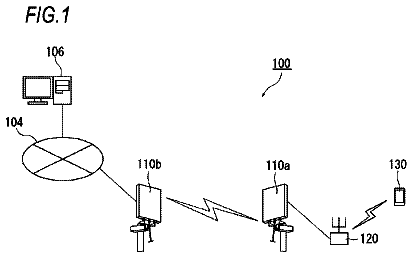
FIG. 1 illustrates a pictorial representation of one embodiment of a system in accordance with an embodiment of the present invention;
FIG. 2 illustrates a flowchart of an exemplary method in accordance with an embodiment of the present invention;
FIG. 3 illustrates a diagram of an exemplary system and method in accordance with an embodiment of the present invention;
FIG. 4 illustrates one embodiment of a network level correlation and troubleshooting system;
FIG. 5 illustrates one embodiment of a layer decoding system;
FIG. 6A illustrates a perspective view of one embodiment of a SmartKIT device in a close state;
FIG. 6B illustrates a perspective view of the SmartKIT device of FIG. 6A in an open state;
FIG. 7A illustrates a perspective view of one embodiment of a SmartKIT device in a close state;
FIG. 7B illustrates a perspective view of the SmartKIT device of FIG. 7A in an open state;
FIG. 8 illustrates one embodiment of a SmartKIT device report;
FIG. 9A illustrates a flowchart of one embodiment of a YouTube™ customer experience test method;
FIG. 9B illustrates one embodiment of a YouTube™ customer experience report;
FIG. 10A illustrates a flowchart of one embodiment of a customer service video test method;
FIG. 10B illustrates one embodiment of an “average time to playback comparison” report;
FIG. 11A illustrates a flowchart of one embodiment of a video quality test method;
FIG. 11B illustrates one embodiment of a video quality test report;
FIG. 11C illustrates one embodiment of a video quality test report;
FIG. 12 illustrates one embodiment of a voice quality test system;
FIG. 13A illustrates a flowchart of one embodiment of a voice quality test method;
FIG. 13B illustrates one embodiment of a voice quality test report;
FIG. 13C illustrates one embodiment of a handover between VoWiFi and VoLTE voice quality score report;
FIG. 14 illustrates one embodiment of a multi-technology voice quality testing system;
FIG. 15 illustrates a flowchart of one embodiment of a voice quality testing method;
FIG. 16 illustrates a flowchart of one embodiment of a walk-testing method for a WiFi network;
FIG. 17 illustrates one embodiment of a WiFi heat map report;
FIG. 18 illustrates one embodiment of a VoWiFi call performance testing system;
FIG. 19 illustrates one embodiment of a WiFi hotspot testing system;
FIG. 20 illustrates one embodiment of a system for providing analysis of small cells and RF chambers;
FIG. 21 illustrates one embodiment of an automated IRAT handover system;
FIG. 22 illustrates a flowchart of one embodiment of a customer device troubleshooting and resolution method;
FIG. 23 illustrates one embodiment of a parallel device lab testing system;
FIG. 24 illustrates one embodiment of a WiFi end-to-end testing system;
FIG. 25 illustrates a flowchart of one embodiment of a drive test IRAT automation test method; and
FIG. 26 illustrates a diagram of one embodiment of an IA development environment.
Detailed description
Referring now to the drawings, wherein like reference numbers are used herein to designate like elements throughout, the various views and embodiments of a method and system for wireless network optimization and remote control of mobile handset operation are illustrated and described, and other possible embodiments are described. The figures are not necessarily drawn to scale, and in some instances the drawings have been exaggerated and/or simplified in places for illustrative purposes only. One of ordinary skill in the art will appreciate the many possible applications and variations based on the following examples of possible embodiments.
In the following detailed description of the invention, reference is made to the accompanying drawings which form a part hereof, and in which is shown by way of illustration of specific embodiments in which the invention may be practiced. These embodiments are described in sufficient detail to enable those skilled in the art to practice the invention, and it is understood that other embodiments may be utilized and that logical changes may be made without departing from the spirit or scope of the invention. To avoid detail not necessary to enable those skilled in the art to practice the invention, the description may omit certain information known to those skilled in the art. The following detailed description is, therefore, not to be taken in a limiting sense, and the scope of the present invention is defined only by the appended claims.
Referring now to FIG. 1 , there is illustrated a system 100 for capturing, transferring, and processing the mobile handset operational activities in a dynamic fashion, as well as dynamically controlling the mobile handset from a remote location in the wireless network operated by the wireless network operator. System 100 includes a client device 102 connected to a cloud server 104 via a network 106 . There may be any number of client devices 102 connected to server 104 . Communications between the client devices 102 and the server 104 are encrypted. Communications from the client device 102 are transmitted through a firewall 108 and received by a portal 110 . The server 104 has associated therewith a database 112 containing encrypted information. The server 104 further includes a plurality of applications such an app manager 114 , a notifier 116 , a CMD manager 118 , a data manager 120 , and a report manager 122 .
The system 100 is one embodiment of a cellular wireless network disclosed herein, and more particularly, a system and method for capturing, transferring and processing the mobile handset operational activities in a dynamic fashion, as well as dynamically controlling the mobile handset from a remote location in the wireless network operated by the wireless network operator is illustrated. It is understood, however, that the following disclosure provides many different embodiments, or examples, for implementing different features of the invention. Specific examples of components and arrangements are described below to simplify the disclosed embodiments. These are, of course, merely examples and are not intended to be limiting.
According to one embodiment, the system includes the following components. 1) Client on Mobile Devices (phones), or otherwise referred to as IA Client: The client component runs in the background and may be activated through various triggers and mechanisms. The client's user interface (UI) may be invoked by triggers in the programming code and is not accessible to the consumer end user of the mobile handset. The client component receives commands from a central server, executes commands, and sends resulting data and reports back to the central server. The IA client may utilize its own Graphical User Interface (“GUI”) which may be controlled by the user or the operator or the server. 2) Central Servers otherwise referred to as IA Server, or simply “the server,” may communicate with IA clients on mobile devices in terms of establishing a connection, pushing commands or data to it, receiving data from it, and recording data to a database while performing pre-analysis and post-processing. 3) Reporting and Applications Servers which provide powerful reporting on data tables and geographic information system (GIS). The servers integrate multiple services and OSS/BSS to application server while providing access to its functionality through a web-based US to users and administrators.
According to one embodiment, the system also includes a Server Application. The Server Application may communicate with the Intelligent Agent (IA) Client on a smart phone, may send “command” to Client, and may receive data/information from Client. The server application has a basic user interface (UI) and is designed to reside on a web server. The server application may report data/information in table and GIS. The server application would basically provide the functions to: a. register new devices having the Client Application by storing its pin, model info and other manufacture information; b. manage devices registered with the system and monitor and view their status, manufacturer and other requested info; c. send commands to devices including tasks to modify device data, refer feature lists for detailed info, interface to schedule these command and modification tasks for a device or multiple devices, users may select flexible commands on the server UI and may select devices with a different filter; d. configure the scheduling and other client application activities like device status logging, message logging, command execution logging and reporting time intervals at server; e. generating reports based on commands executed, data modified, device models, and/or operating system versions on a daily, weekly and monthly basis, as well as letting the user export these reports as CSV; f. generating GIS reports based on data/information collected (Location and Signal Level), as well as letting the user export these reports as CSV; g. reference Wi-Fi access point (AP) to Floor Mapping DB and show a height component; h. provide a window that lets customer care issue advanced commands to debug everything using CLI in that window; i. collect 3.sup.rd party application version information from Client (phone), compare application version with master store (i.e. Android Application Store), and send command to Client for Application updates; and j. ensure the security audit for accessing to web server, communication between Server and Client.
The network server is the central intelligent node of the IA end-to-end solution. It has many capabilities that control the end IA client on the handset. Its function however extends beyond that to offer new services and more control to the wireless service provider, as well parties outside the wireless operator, standardization committees and third party developers. In effect, the network server functionality layers may be expressed as follows:
Layer 1—Communication Link. This layer includes the communication link between the server and the IA client on the handset and defines the interface protocol to extract the IA uplink reports from the handset population.
Layer 2—Commands and Data. This layer covers the commands and IA uplink reports content exchanged between the IA server and IA client on the handset.
Layer 3—Intelligence. This layer includes a build on top of Layer 2 where a richer suite of commands and command groups are treated. This layer scope also covers services and tools such as Test Automation, Customer Care, Radio Frequency Measurements mapping, Bench marking, BI/Reports and more.
Layer 4—API. This layer employs the capability of offering the IA services to external organizations that may benefit from its functionality, and apply its capabilities to different domains.
Layer 5—External Applications. This layer covers the external world, writing more Applications that may run on the IA solution framework and hence expand the IA capability.
From the network side, the IA may be controlled remotely to perform additional tasks including:
Turning ON/OFF certain devices on the mobile handset such as Wi-Fi radio;
Perform remote test of certain software or any type of application on the handset;
Perform test automation and troubleshooting on any application, hardware or firmware entity running on the mobile handset; and
Initiate IA client activation on a per mobile device basis that are treated as specific targets. A different timer frequency may be associated with this to track the mobile location. The IA configuration may be different for target mobiles than normal mobiles, and may include different packages. This capability enables facilities to track the specific mobile handset exact location for different services and purposes such as: (i) operator/police wants to track a specific mobile number; (ii) identify the mobile location to the network operator when only the cell site is known and the phone location is not; (iii) lawfully, intercept and push the client to the open source mobile platform.
In addition, the IA network server offers another concept known as the Command Group Concept (CGC). CGC is a facility that resides on the IA network entity server, and may be used to combine commands for various usages such as regulatory, emergency, customer support, debugging, troubleshooting and many others such as call drop real-time analysis where the mobile user or test engineer uses the handset to call customer support and diagnose call drop issues in specific geographical areas. The CGC facility is different from the regular reporting in the sense that it has target specific commands and enables the IA to respond to these commands only, rather than generating a default report containing values of a pre-determined list of parameters. Note that CGC commands may be sent to specific mobile handsets, or collectively to multiple ones simultaneously.
The CGC utility commands include, but are not limited to, the following commands:
Get Location;
Get picture;
Get video;
Make a loud sound from phone;
Originate a 911 call; and
Originate call to specific predefined emergency family contact.
Each CGC command results in the corresponding action taken by the IA residing on the mobile handset to trigger the device and necessary accessories to perform the task required. For the CGC command “Get picture” for instance, the IA may interact with the handset camera device and snaps a picture, then IA may receive and forward the picture to the network entity that requested it. For “Originate a 911 call”, the IA client may interact with the call initiation module on the handset and request it to initiate a call on behalf of the user to 911.
Other command groups are related to location. Such CGC commands include the following:
Get current location;
Turn on/off GPS;
Turn on/off Network Triangulation method;
Check distance from position ‘X’;
Find closest service station for ATM, Gas Station, Hospital, Post Office;
Find direction of movement—used for navigation and tracking purposes;
Is Device Moving—used for tracking user; and
Is Device Stationary—used for tracking user.
Other command groups are related to CALEA. Relatively, the IA network entity may interface with the Law Enforcement Agency server, commonly known as CALEA Office, which implements court or government agencies orders that mandate the network owner and service provider to track and report all activates of a specific targeted user. The CALEA specifications and interfaces are standardized and are implemented in networks that are deployed and offer telecommunication services in the United States.
The CALEA related commands include, but are not limited to, the following:
Track Location periodically;
Record voice and send recording to LEA via OT-Server;
Copy texts and send to LEA via OT-Server;
Enable/Disable Tapping; and
Any or all of the location related CGC commands listed above.
The IA client may then perform the command as requested, and report the results back to the IA network server, which in turn feeds this information back to the CALEA Office server.
Furthermore, the following activities may also be performed at the network server:
applying a unique 3-D coverage mapping against reports received from the IA on mobile handsets. This provides the operator visibility for in-building coverage and status information and helps in macro cellular faults and diagnosis;
layer-1 signal quality comparison analysis among different mobile chip sets;
take thousands of readings related to different applications and modules that are running on the handset devices and use statistical methods to benchmark and rate modules and applications. This information may then be populated to the public or research institutes or any organization that may help improve the design and quality of operations of the application or module. This is applicable to all elements in the Benchmarking scope described in pervious sections;
Diagnose and identify lost mobiles that otherwise, without using the IA report information, the following would be performed: (i) Apply individual messaging and singularity tracking in the end-to-end network traffic to identify and track the mobile; (ii) Force disable un-authorized mobile; (iii) Apply harsh security measures; and (iv) Employ Law enforcement activity which has a long turn around and is not allowed to be used for network operator tracking purposes.
Also, the IA Server may make use of gathered information from the handsets related to the application service performance such as packet delay, packet loss, session setup delay, and associate those with the technology being used, location and time of day to generate a Quality of Service mapping against network technology (example Voice call over IP in IMS versus voice call in Circuit switched network), locations and time of day. This effectively defines the network performance at various levels and helps the network operator apply optimization exactly where it is needed.
In addition, the IA Server offers interfaces to existing servers in the wireless operator network to send and extract or receive information about the subscriber or services offered. Some of these servers include Billing Server, Performance Statistics Server, Alarms server, Logging server.
The IA Server may also connect to other servers and network entities deployed in the wireless operator network in order to be able to use certain services and send and connect to the IA Client residing on the mobile handset, or even communicate with the human user of the mobile handset. Such connections and services include but are not limited to:
Email server—the IA server may connect to the email server to send email notices to the user of the handset on behalf of the wireless network operator;
Short Message Server—the IA server may connect to the SMS Server to send and receive SMS messages to and from and to IA client as well to the handset in general as notification to the user on behalf the network operator; and
Multimedia Messaging Server (MMS).
In one embodiment, the client application resides on Android OS 2.1 or OS 2.2 platform. In addition the IA works on Android OS device models and OS versions. A mapping layer to Android APIs may also be integrated for ease in portability to other OS platforms.
In one embodiment, the IA is a background application with little to no user interface except for popup messages from the human user perspective. However, a user interface is available for administrative users. One example is a UI that shows the stored values in UE DB/Log to access the configuration information and changes that may impact the UE functions for RF measurements. UI is able to show that collection timestamp changes based on server commands, may also be able to show RF Measurements, LAT/LONG of last N readings that are in the UE DB/Log. It may also able to show RAW data to share how compact and efficient the storage is.
The IA may register the device after it is installed and launched the first time. The IA may be cleanly and completely uninstalled using standard techniques. The IA may be invoked periodically, at set time intervals which may be preset into the application by default and reconfigured from server, to send device reports, fetch command lists to be executed and other tasks expected of it or the IA may be invoked when prompted by the server. The timestamp may be recorded for measurement, configuration or other commands.
The IA may, periodically or after command from the server, list, install, or uninstall other third-party software and third-party applications, list all network settings including SMSC address, list or modify roaming lists. The IA may collect third-party applications versions, send version information to the server, and update third-party applications per command from server. The IA may also list Wi-Fi APs in close proximity to the mobile device.
The IA may periodically pull configuration updates from the server or upon command from the server. Alternatively, the server may also send the configuration updates to the IA periodically or upon need.
The IA may interact with the appropriate mobile handset existing devices and modules to measure RF signal levels and collect location information (Latitude/Longitude) periodically or upon command from the server and record the collected information on a database (“DB”) on the device along with timestamp of measurement. The IA may also use event trigger for measurement, such as abnormal call drop, abnormal data link down, location update as roaming, handoff and others.
The IA may send a measurement report (DB of RF signal level and location, and other log) and device information (application utilization stats) to network server periodically or per command from server. Application utilization statistics may also be included in the reports, among other information as listed herein.
The IA may also collect and modify the mobile handset device configuration settings (including the default address book, calendar, default email configuration). The IA may also send a message, turn Wi-Fi or Bluetooth on and off, take a photograph, and upload a photograph to the cloud or a website per command from the server. This activity may be focused on specific problems as per customer care reports and perspective. Additional commands may easily be added to the IA scope and capabilities. In addition, useful facilities and tools may also be integrated in the IA to provide backup of configuration and other useful information, and then send those to a remote server for storage and safe keeping. Such information includes latest working system software configuration, address book, calendar, emails and more.
The following paragraphs provide a more detailed description of one embodiment of Intelligent Agent functions and capabilities disclosed herein. The Mobile Device Management (MOM) includes functions available on the IA Client installed on the mobile handset device and the IA Server deployed in the network. Note that ‘Client’ and ‘IA Client’ refer to the same entity, and such is true for ‘Server and ‘IA Server’ terms.
Functions of the MDM on the client side on the mobile handset include, but are not limited to, the following:
Collect device status and operational information comprehensively and set configuration details—Report basic network and device status information, collect settings information for device features such as data link, Wi-Fi, email, PRL, collect operating statistics for operating system and applications, respond to server commands to alter or set configuration settings for operating system and applications, backup and restore key repositories of information such as address book, emails, calendar, and record status changes to the IA Server databases;
Update operating environment and firmware based on server commands—Distinguish OS, System Software, embedded applications, third-party applications, assess and report on compatibility between operating environment (including firmware revisions) and installed applications, update operating environment based on server commands, backup and restore firmware;
Software management—Allowing installation, de-installation and update of device application software including logging of activity and reporting of activity to server databases, activating/deactivating applications, collect and report software version information, and set or modify application configurations based on policies; and
Run Diagnostics and capture results or logs and send to server database—Periodic performance monitoring, periodic monitoring and disposition of specific events, collections/reporting error information, and alerting servers based on pre-set thresholds and conditions.
Functions of the MDM on the server side include, but are not limited to, the following:
Mobile Device Management—Send configuration data or commands to clients, manage device repository of device model, features and operating environment, compare firmware and software version with predefined master images, send update commands to client, and initiate diagnostics on client for trouble shooting; and
Customer Care—Integrate customer tickets with MDM for trouble shooting, report historical data and statistics for better customer support.
RF Measurement entity includes functions available on the IA client as well as the Server side. Functions of the RF Measurement entity on the client side include, but are not limited to, the following:
2G, 3G, or 4G RF Measurement—Measure RF signal and record GPS location or network location periodically or based on server commands, measure RF signal of neighboring cells, record MNC+MCC, LAC Cell ID, Network type, timestamps, and accumulate and upload measurements data to server;
Call Events Measurement—Measure RF signal and record location based on triggering events, i.e. voice call failure, data link down, handover and roaming, record specific call, call duration, call terminal code based on server triggers, record data usage of applications and connection/session information, upload measurements;
Wi-Fi or DAS Measurement—Measure Wi-Fi signal and record Wi-Fi access point ID, record all Wi-Fi AP ID with signal threshold, record Wi-Fi-based location and timestamp, measure and record RF signal, unit ID and location of DAS; and
LTE RF Measurement—Measure LTE Channel Spectrum (Channel Power, Adjacent Channel Power) and record GPS or network location, record Cell ID, Sector ID, Group ID from Sync Signal, measure and record average DL throughput, and provide support LTE dongles.
Functions of the RF Measurement entity on the server side include, but are not limited to, the following:
RF Reporting—Display Signal coverage on GIS, report Signal to database based on different filter criteria, trigger RF measurement to a batch of mobile devices based on different filter criteria, analyze roaming and handover statistics; and
Support for RF Optimization—Improve coverage based on measurement, adjust roaming and handover based on roaming analysis, and integrate measurement results to existed NPO tools.
Testing and Benchmarking entity include functions available on the IA client as well as the IA server. Functions of the Testing and Benchmarking entity on the client side include, but are not limited to, the following:
Run testing and report log to the server;
Collect Benchmark on CPU, memory, I/O, battery, graphics and other entities;
Basic functional test and supplement services test; and
Inter-operation test with live networks.
Functions of the Testing and Benchmarking entity on the server side include, but are not limited to, the following:
Test Automation Services—Develop automated test scripts, manage test process, schedule test and trigger test, collect test results from client, store test results to DB, analyze and report test results per different OEMs, OS or Platforms, functions, and benchmarking according to test result; and
Integrate Third-party Test automation tools—Interface with “TestQuest Countdown” tool, run test scripts designed by TestQuest.
The IA system described herein offers Intelligent method to measure signal strength by controlling the IA on the mobile handsets from a central node in the network regardless of the radio technology and mobile handset type used such as CDMA, GSM, GPRS, EDGE, UMTS, HSPA+, LTE and Advanced-LTE and more. The method and collected data may be used for many purposes, including but not limited to:
Display Signal coverage across the measured geography;
Identify the areas where the signal conditions are causing abnormal events;
The description continues in the full USPTO document.
 Lapsed, fee not paid10 drawings