Background
Within computing systems, clients and servers communicate with each other over a communications network, which may include the Internet, one or more cellular networks that provide wireless connectivity to the Internet, and other access networks. Communications transmitted over a network may traverse intermediate networking equipment owned or operated by various third-party entities. Network communications may be encrypted to increase the security and privacy of information contained within the communications.
Summary
An enhanced services network provides enhanced privacy and/or security over public networks to client subscribers of the service. Client devices access the enhanced services network over a public communications network (e.g., the Internet, cellular network, etc.) via a client-side edge server of the enhanced services network. The enhanced services network interfaces with client-requested network resources hosted by third-party server devices via a resource-side edge server. The particular client-side edge server and/or resource-side edge server that is utilized for a particular client session may be selected by the enhanced services network according to a rule set. The rule set may seek to achieve one or more target goals, such as:
limit discoverability of the enhanced services network,
minimize or reduce geographic and/or network distance between an edge server and a target computing device, and/or
establish connections that are more secure than the connections originally requested by the client.
It will be appreciated that this Summary describes only some of the concepts covered in greater detail by the following detailed description and associated drawings. As such, claimed subject matter is not limited to the contents of this Summary.
Brief description of drawings
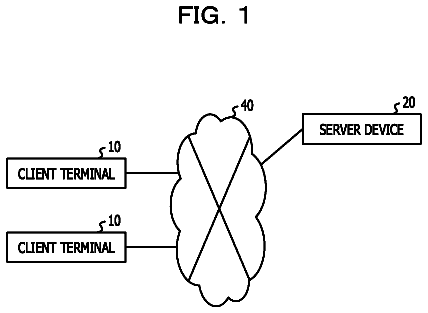
FIG. 1 is a schematic diagram depicting a first view of an example computing system.
FIG. 2 is a schematic diagram depicting a second view of an example computing system.
FIG. 3 is a flow diagram depicting a first example method.
FIG. 4 is a schematic diagram depicting a third view of an example computing system.
FIG. 5 is a flow diagram depicting a second example method.
FIG. 6 is a flow diagram depicting a third example method.
FIG. 7 is a schematic diagram depicting an example computing device.
FIG. 8 is a schematic diagram depicting example instructions and data store of a computing device or computing system.
Detailed description
An enhanced services network is disclosed. The enhanced services network may take the form of a privacy service that provides enhanced privacy and/or security over public networks to client subscribers of the service. Client devices may access the enhanced services network over a public communications network (e.g., the Internet, cellular network, etc.) via an edge server of the enhanced services network. A particular edge server through which a client device accesses the enhanced services network may be selected from a plurality of available edge servers.
In an example embodiment, edge servers may be selected according to a rule set that limits discoverability of an enhanced services network. Discoverability within this context may refer to the ability for an individual, a group of individuals, or other entity to discover that a particular edge server or group of edge servers form part of the enhanced services network, or the ability to discover the enhanced services network's entire domain of edge servers. For example, a rule set may limit a quantity or proportion of the available edge servers that are selected or otherwise available for use by a particular client device or a group of associated client devices, over one or more sessions. In at least some implementations, edge server selection may be performed by a selection module of the enhanced services network in which individual client devices are redirected to selected edge servers by the selection module.
In another example embodiment, a resource-side edge server forming an edge of an enhanced services network is selected by a coordinating server of the enhanced services network. Selection of the resource-side edge server from a plurality of available edge servers may seek to minimize or reduce a geographic and/or network distance between the resource-side edge server and a server hosting a network resource. Selection of edge servers may be in accordance with a rule set applied by the enhanced services network.
In yet another example embodiment, redirection of client requests by a resource-side edge server to a more secure connection type is disclosed. A resource-side edge server receives a request for a network resource originating from a client device. The resource-side edge server judges whether a server system hosting the network resource supports a more secure connection type than requested by the client device. If the more secure connection type is supported by the server system, the resource-side edge server establishes a connection of the more secure connection type, and facilitates communications between the server system and the client device over the more secure connection.
The following disclosure provides several examples of how a rule set may be implemented to achieve one or more target goals, including:
limit discoverability of the enhanced services network,
minimize or reduce a geographic and/or network distance between an edge server and a target computing device, such as a client device or a server hosting a network resource, and/or
establish connections or communications sessions that are more secure than the connections or sessions originally requested by a client device. A rule set implemented by an enhanced services network may prioritize, balance, or utilize some or all of these target goals to provide an integrated enhanced services experience to its clients. The particular target goals that are implemented by the enhanced services network and/or the prioritization and/or balancing of these target goals may be defined, at least in part, by a client user, an administrator of the enhanced services network, and/or other suitable entity.
Edge server selection may be performed by a selection module of the enhanced services network that implements the rule set. The selection module may reside at a coordinating server, or multiple instances may be deployed to a plurality of servers, including edge servers, for example. In one example, the rule set may limit a quantity or proportion of the available edge servers (e.g., client-side edge servers and/or resource-side edge servers) that are selected or otherwise available for use by a particular client device or a group of associated client devices. Individual client devices may be redirected to selected edge servers by the selection module of the enhanced services network. Here, the rule set limits or reduces discoverability of edge servers of the enhanced services network.
The uncoordinated selection and/or use of edge servers for client access to an enhanced services network may enable an undesired level of discovery of the various network devices that form the enhanced services network or otherwise permit client entities or third-party entities to reverse engineer aspects of the enhanced services network. For example, in the context of edge servers that serve as proxy servers or provide a proxy server function, an unrestrained and broad discovery of the edge servers may be used by network administrators and operators of intermediate network components and/or network resources to:
block client devices from accessing the edge servers over their network components and/or block client devices from accessing their network resources;
provide reduced quality of service over their intermediate network components and/or by their network resources; and
publish a list or blacklist of the discovered edge servers which may be used by other entities associated with intermediate network components and/or network resources to block or reduce the quality of service for client devices connecting to or attempting to connect to the discovered edge servers. Accordingly, the methods, processes, and techniques disclosed herein for limiting the discovery of edge servers of an enhanced services network may reduce the scope and/or severity of third-party interference with client access to the enhanced services and/or network resources that are accessed by client devices through the enhanced services network.
FIG. 1 is a schematic diagram depicting a view of an example computing system 100 . Computing system 100 includes an example client device 110 that may communicate with other computing devices via a communications network. For example, client device 110 may access network resource 120 over the communications network, as indicated by communications 152 . A network resource may include any suitable content item, collection of content items, service, collection of services, or other form of information having an identity. A network resource may be hosted by one or more server devices, or one or more client devices, and may be identified and addressable within computing system 100 by a uniform resource locator (URL), IP address, or other suitable identifier.
Communications 152 may traverse portions of a communications network, including a wired or wireless interface, a wired or wireless access point, a local area network (e.g., an intranet, a cellular edge network, etc.), and a wide area network (e.g., the Internet, a cellular backhaul and/or core network, etc.). As another example, client device 110 may access enhanced services 140 over the communications network via an edge server 130 , as indicated by communications 154 and 156 . Communications 154 and/or 156 may also traverse portions of the communications network.
In at least some implementations, edge server 130 and/or other network devices hosting aspects of enhanced services 140 may collectively form an enhanced services network (e.g., a privacy network) through which client device 110 may access third-party resources, such as previously discussed network resource 120 . For example, client device 110 may direct a request for network resource 120 to edge server 130 , which may process the request on behalf of client device 110 by directing communications to network resource 120 and/or to network devices hosting aspects of enhanced services 140 .
Non-limiting examples of enhanced services 140 that may be provided by edge server 130 and/or other network devices hosting aspects of enhanced services 140 may include one or more of:
proxy services (e.g., anonymization) in which edge server 130 and/or other network devices terminate connections and establish new connections between the client device and third-party resources;
establishment of secure connections (e.g., VPN connections, encrypted connections, tunneled connections, etc.) between the client device and the edge server and/or other related network devices;
secure connection (e.g., SSL) redirection or establishment to higher security connections supported by third-party resources than the connections originally requested by the client device;
analysis and/or filtering of communications between the client device and third-party resources, including anti-virus, parental controls, etc.;
access to client profile information hosted by the enhanced services network that may be used to implement policy with respect to a particular user and/or client device across multiple sessions; and
client authentication, among other enhanced services.
FIG. 2 is a schematic diagram depicting a view of an example computing system 200 . Computing system 200 of FIG. 2 may form a non-limiting example of previously described computing system 100 of FIG. 1 .
In FIG. 2 , client device 210 includes a browser program 212 which may be operated by a human user to access or otherwise interact with network resources, such as network resource 220 over network 270 , for example. In one example, browser program 212 may include a general-purpose web browser. However, browser program 212 may refer to any suitable application program or operating system component that enables a client device to access or otherwise interact with network resources. For example, browser program 212 may instead take the form of a special-purpose application that interfaces with an application programming interface (API) of a coordinated service of a network resource.
As previously discussed with respect to computing system 100 of FIG. 1 , a client device, such as client device 210 , may access network resources via an edge server, such as edge server 230 . FIG. 2 further depicts a plurality of client devices 211 , which include example client device 210 . It will be understood that computing system 100 may include hundreds, thousands, millions, billions, or more client devices.
FIG. 2 further depicts a server system 240 that cooperates with edge server 230 to provide enhanced services to client device 210 . Server system 240 may take the form of a coordinating server system in some examples. Edge server 230 may be one of a plurality of edge servers distributed across a range of geographic and/or network locations, and/or that reside at the same or similar geographic and/or network location. An example plurality of edge servers is represented in FIG. 2 as edge servers 261 - 269 . Edge servers 230 , and 261 - 269 , as well as server system 240 may collectively form an enhanced services network. The enhanced services network may be operated by a common entity or a group of associated entities, in contrast to network resource 220 and/or intermediate network devices (not shown) that may be operated by unrelated third-party entities. It will be understood that the enhanced services network may include any suitable number of edge servers, including tens, hundreds, thousands, millions, or more edge server devices.
Server system 240 may include one or more server devices that reside at the same or similar geographic and/or network location, and/or one or more server devices that are distributed across a range of geographic and/or network locations. The enhanced services network may include server system 240 and the edge servers disclosed herein, including edge servers 230 , and 261 - 269 . While server system 240 is depicted as a separate entity from one or more of the edge servers, in at least some implementations, server system 240 may be distributed across and may be formed exclusively by edge servers. In still other implementations, certain aspects of server system 240 described herein may reside at and/or may be distributed across edge servers, while other aspects of server system 240 reside at and/or may be distributed across server devices that do not serve as edge servers.
Server system 240 (and/or the edge servers) of the enhanced services network may execute instructions that define one or more modules. For example, server system 240 may include an authentication module 242 that authenticates client devices by receiving or otherwise exchanging authentication credentials from or with client devices over network 270 . In one example, a human operator (i.e., user) of client device 210 may subscribe to the enhanced services network by establishing an account and/or by paying a subscription fee. Use of the enhanced services network or portions thereof may be limited to subscribers in some examples. Authentication of client devices may be used to limit use of the enhanced services network or portions thereof to users that have subscribed to the enhanced service network, to distinguish subscribers from non-subscribers, and to identify and distinguish client devices and/or their respective users from each other. Any suitable form of authentication and state maintenance of client devices across one or more sessions may be supported by the enhanced services network.
Server system 240 may include a selection module 244 that selects a particular edge server through which a client device connects to and accesses the enhanced services network. The selection module may additionally or alternatively select a particular edge server through which server devices hosting network resource requested by a client device connect to resource-side edge servers of the enhanced services network, as will be described in further detail with reference to FIGS. 4-6 , for example.
Within FIG. 2 , a client device may initially connect or attempt to connect to an unselected, inappropriate, or default edge server, or other server of the enhanced service network, including servers forming server system 240 . The client device may be redirected to the selected edge server by the device to which the client device initially connected or attempted to connect. In some examples, selection module 244 may transmit redirection information to the client device or to another device of the enhanced services network to which the client device has initially connected or attempted to connect. The redirection information may be used to redirect the client device to the selected edge server.
Server system 240 may further include enhanced services module 246 that performs or otherwise supports one or more of the enhanced services described herein with respect to the enhanced services network. Server system 240 may further include a data store 248 in which client data 250 and/or selection information 252 may be stored and/or accessed. Client data 250 may include client profile or account information. Selection information 252 may include information defining or otherwise describing the various edge servers that are available to or that form part of the enhanced services network, their respective identifiers, geographic locations, network locations, and associations with one or more groups of edge servers.
FIG. 2 further depicts how edge servers may be associated with one or more groups of edge servers. As will be described in greater detail with reference to FIG. 3 , edge server groupings may facilitate the selection and assignment of edge servers to client devices and/or client groups. For example, in FIG. 2 , edge servers 261 - 263 form a first group, edge servers 264 - 266 form a second group, and edge servers 267 - 269 form a third group. Edge servers may be associated with one or more groups with respect to a particular client device or client group, or such groups may be global with respect to a client devices or client groups. The enhanced services network may include any suitable number of groups of edge servers, including two, three, four or more, tens, hundreds, thousands, millions, or more groups. Each group may include any suitable number of edge servers, including two, three four or more, tens, hundreds, thousands, millions, or more edge servers. In some examples, each edge server may be associated with a single group. In another example, one or more edge servers may be associated with two or more groups. Hence, groups of edges servers may be partially overlapping in terms of their edge server membership and/or may have edge servers that are exclusive to only that group.
FIG. 3 is a flow diagram depicting an example method 300 for a computing system. In at least some implementations, method 300 may be performed by an enhanced services network, such as previously described enhanced services networks of FIGS. 1 and 2 . Aspects of method 300 may be performed by one or more edge servers of the enhanced services network and/or by a centralized or distributed server system, such as server system 240 of FIG. 2 . In at least some implementations, method 300 of FIG. 3 may be performed for each client device that subscribes to the enhanced services network for each session initiated by the client device.
At 310 , the method may include receiving a request from a client device and/or authenticating the client device over a communications network. In one example, the request may be received by authentication module 242 or forwarded to authentication module 242 by another device of the enhanced services network, such as an edge server. The client device may be authenticated by exchanging authentication information with the client device over the communications network, such as via an API, for example. A client device may be authenticated for one or more sessions based on authentication information received from or exchanged with the client device.
At 312 , the method may include selecting an edge server for the client device from a plurality of available edge servers. The selection performed at 312 may be in accordance with a rule set. The rule set may be implemented at or by edge servers and/or a server system of the enhanced services network. The rule set may be defined, at least in part, by selection information 252 and/or 232 in FIG. 2 , for example. Portions of selection information 252 residing in a data store at a coordinating server system, such as server system 240 , may be deployed to edge servers in the form of selection information 232 at edge server 230 in FIG. 2 . Client data may also be deployed to edge servers. Selection information 232 may enable edge server 230 to redirect client devices to other edge servers, which may include edge servers of a group with which edge server 230 is a member.
The selection module may transmit or otherwise output an identity of the selected edge server. A group of edge servers available to the client over the one or more sessions of a domain of edge servers may be maintained in a data store. The group of edge servers may be client-specific (i.e., for that client) and/or client-group-specific (i.e., for a group of associated clients). The group of edge servers may include and be limited to a predefined quantity (e.g., number value) and/or proportion (e.g., as a %) of the domain of edge servers.
In one example, a rule set employed by the enhanced services network for edge server selection may include:
a first rule that states that an individual client may not learn of or connect to more than the predefined quantity or proportion of a domain of available edge servers; and
a second rule that states that two or more clients within a given client-side subdomain (e.g., based on IP addresses, geo-location, etc.) will be given a diverse range of edge servers such that there is a minimum (e.g., predefined as a quantity or proportion) and/or maximum overlap (e.g., predefined as a quantity or proportion) among selected edge servers between two or more clients of that subdomain. These rules may be used in combination with each other. Selection can be based on a number of factors, including past edge server selection for that client or other clients of a client group, load on each edge server, the client's geographic proximity to the edge server, connection speed/latency of the network in relation to the client and the edge server, IP address of the client, etc.
At 314 , the method may include redirecting the client device to the selected edge server. For example, the device to which the client device initially connected for purposes of authentication performed at 310 , may be redirected to the selected edge server by that device responsive to the selection obtain at 312 from the selection module. The client device may transmit a new request for a network resource to the selected edge server, which may be received and processed by that edge server.
For example, responsive to a first authentication of the client for a session, a browser program of the client may be redirected from the initially connected device to a first edge server of a client-specific group of edge servers. The first edge server facilitates at least a portion of the session between the client and one or more network resources and/or enhanced services of the enhanced services network. Responsive to a second authentication of the client for a subsequent session, for example, the browser program of the client may be redirected from an initially connected device to a second edge server of the client-specific group of edge servers. The second edge server facilitates at least a portion of the subsequent session between the client and one or more network resources.
In another example, the client is redirected from the first edge server to the second edge server or alternatively to a third edge server of the client-specific group during a session. The second edge server or the third edge server may further facilitate the same session between the client and the one or more network resources. In at least some implementations, edge server transitions may be performed as the client device navigates to a different network resource, different web domain, or a subdomain within a particular web domain. In such case, the currently connected edge server may redirect the client device to another selected edge server.
The client may be a first client of a plurality of clients, and the client-specific group may be a first client-specific group of a plurality of client-specific groups of edge servers. A second client may be authenticated at the coordinating server for one or more sessions based on authentication information received from the second client via a browser program over the communications network. In one example, the first client and the second client are located within a geographic proximity to each other or each utilizes an IP address that is related within a subdomain of IP addresses. A second client-specific group of edge servers available to the second client over the one or more sessions of the domain of edge servers may be maintained in a data store of the enhanced service network. The second client-specific group of edge servers may include a predefined quantity or proportion of the domain of edge servers, and further may include one or more different edge servers than the first client-specific group.
Selection information transmitted from a selection module to the edge servers of a group may indicate a client identifier for the client, and may further indicate at least some edge servers of the group of edge servers for the client. The selection information enables the first edge server and the second edge server to redirect the client from one of the first edge server and the second edge server to another edge server of the client-specific group during a session.
Continuing with the above example, a third client may be authenticated at the coordinating server for one or more sessions based on authentication information received from the third client via a browser program over the communications network. A third client-specific group of edge servers available to the third client for one or more sessions of the domain of edge servers may be maintained in a data store of the enhanced services network. The third client-specific group of edge servers may include a predefined quantity or proportion of the domain of edge servers, and may further include one or more different edge servers than at least one of the first client-specific group and/or the second client-specific group.
The third-client specific group of edge servers may include the same edge servers as one of the first client-specific group or the second client specific group, for example, if the third client is located outside of the geographic proximity to one of the first client or second client or utilizes an IP address that is unrelated to the subdomain of IP addresses. As previously discussed, a domain of edge servers may be divided into three or more groups of edge servers, and the three or more groups of edge servers may each include one or more different edge servers relative to each other. Two or more groups of edge servers may each include one or more of the same edge servers relative to each other.
At 316 , the method may include, at the selected edge server, facilitating enhanced services for the client device. For example, the edge server may direct client communications to a requested third-party network resource or to an entity of the enhanced services network, such as enhanced services module 246 . As previously discussed, enhanced services may include proxy services, anonymization, establishment of secure connections, secure connection redirection to third-party resources, analysis and/or filtering of client communications, including anti-virus, parental controls, etc., access to client profile information hosted by the enhanced services network, client authentication, among other enhanced services.
Groupings of clients and/or edge servers may be adjusted or redistributed over time. In one example, edge servers may be added or removed from the enhanced services network as edge servers are blocked or blacklisted. Client devices formerly associated with a particular geographic region or IP address range may be relocated. In such case, the client devices may be dissociated from a group attributed to the geographic region or IP address range. In other examples, client device groupings may persist even in light of a change to the geographic location and/or IP address range of the client device.
Edge server selection for an enhanced services network is disclosed. In one example, a resource-side edge server forming an edge of the enhanced services network is selected by a coordinating server of the enhanced services network. Selection of the resource-side edge server may be in accordance with a rule set that includes one or more rules. An example rule of the rule set may seek to minimize or reduce a geographic distance and/or network distance between the resource-side edge server and a server system hosting an instance of the network resource. The network distance may be with reference to network latency, round-trip time, and/or the number of intermediate network devices between the resource-side edge server and a server hosting an instance of the network resource. Another example rule of the rule set may include limiting use and/or discoverability of the resource-side edge server with respect to one or more network entities, including a client, a domain of clients, server system hosting a network resource or a domain of network resources; and one or more performance criteria, such as server load at the resource-side edge server.
Redirection of client requests by a resource-side edge server to a more secure connection type is also disclosed. In one example, a resource-side edge server receives a request for a network resource originating from a client. The resource-side edge server judges whether a server system hosting the network resource supports a more secure connection type than requested by the client. If the more secure connection type is supported by the server system, the resource-side edge server establishes a connection of the more secure connection type, and facilitates communications between the client and the server system over the connection. The resource-side edge server may obtain an indication of whether a more secure connection type is supported by the server system from a coordinating server of the enhanced services network. Public, third-party, and/or proprietary directories may be referenced to determine whether a particular connection type is supported by a server system hosting a particular network resource. Testing of the server system hosting the network resource may be used to determine whether a connection type is supported by the server system.
FIG. 4 a schematic diagram depicting an example computing system 400 . Computing system 400 may take the form of a non-limiting example of previously described computing system 100 of FIG. 1 and/or computing system 200 of FIG. 2 . Computing system 400 includes a client device 410 (a client) accessing a network resource 440 over a communications network via an enhanced services network 420 . Client 410 may be one of a plurality of clients 412 , and network resource 440 may be one of a plurality of network resources 442 . As one example, client 410 may be a subscriber of enhanced services network 420 , which provides enhanced services 432 to subscribers over an otherwise public communications network by which network resources 440 / 442 are operated by various third-party publishers and are accessible to both subscriber and non-subscriber clients.
Enhanced services network 420 may include a plurality of network devices, such as one or more servers. As one example, one or more available and assignable edge servers may be assigned to the client-side of the enhanced services network 420 , such as example client-side edge server 422 ; and one or more edge servers may be assigned to the resource-side of the enhanced services network 420 , such as example resource-side edge server 424 . Edge servers 422 and 424 are members of a plurality of available and assignable edge servers 426 . Enhanced services network may include one or more coordinating servers forming a server system 430 . Server system 430 implements aspects of enhanced services 432 . The servers forming server system 430 may include one or more dedicated coordinating servers and/or one or more edge servers that also operate as coordinating servers. Server system 430 may form a non-limiting example of previously described server system 240 of FIG. 2 .
Enhanced services 432 may include the previously described assignment/selection of edge servers, and may further include other suitable services. Other non-limiting examples of enhanced services 432 supported by enhanced services network 420 include one or more of:
proxy services (e.g., anonymization) in which edge servers and/or other network devices of the enhanced services network terminate connections and establish new connections between the client device and third-party resources;
establishment of secure connections (e.g., VPN connections, encrypted connections, tunneled connections, etc.) between the client device, the enhanced services network, and/or server systems hosting network resources requested by the client;
secure connection (e.g., SSL) redirection or establishment to higher security connections supported by third-party resources than the connections originally requested by the client device (e.g., see method 600 of FIG. 6 );
analysis and/or filtering of communications between the client device and third-party resources, including anti-virus, parental controls, etc.;
access to client profile information hosted by the enhanced services network that may be used to implement policy with respect to a particular user and/or client device across an individual session or multiple sessions; and
client authentication, among other enhanced services.
A client-side edge server forms an edge of the enhanced services network in relation to one or more clients, and may additionally form a resource-side edge server in relation to one or more network resources for one or more other clients. A resource-side edge server forms an edge of the enhanced services network in relation to one or more network resources for one or more client devices requesting those network resources, and may additionally form a client-side edge server in relation to one or more other client devices. In some implementations, an edge server may operate as either a client-side edge server or a resource-side edge server. In other implementations, an edge server may operate as both a client-side edge server and a resource-side edge server.
Communications between clients and server systems hosting network resources may traverse one or more of a client-side edge server and a server-side edge server of the enhanced services network. In FIG. 4 , for example, communications originating from client 410 are received at client-side edge server 422 over a communications network as indicated at 450 . Communications received at client-side edge server 422 or other node of enhanced services network 420 may be terminated, inspected, processed, re-written, and/or forwarded or transmitted by client-side edge server 422 over the communications network to another node of enhanced services network 420 . This node may include a resource-side edge server (e.g., resource-side edge server 424 ) or other suitable network device of enhanced services network 420 , such as one or more servers of server system 430 .
Communications initiated at client 410 are subsequently received at resource-side edge server 424 over the communications network as indicated at 452 , for example, after traversing client-side edge server 422 and potentially one or more other nodes of enhanced services network 420 . Communication paths 456 and 458 depict example communications between edge servers and server system 430 . Communication path 460 depicts example communications between server system 430 and assignable edge servers 426 , for example, to communicate edge server assignment information. It will be understood that the enhanced services network may include any suitable number of assignable edge servers, including tens, hundreds, thousands, millions, or more edge servers.
Communications received at resource-side edge server 424 may be may be terminated, inspected, processed, re-written, and/or forwarded or transmitted by resource-side edge server 424 over the communications network, as indicated at 454 , to a server system hosting network resource 440 . The server system hosting the network resource receives communications transmitted by resource-side edge server 424 over the communications network, as indicated at 454 .
The communication flow from a servers system hosting a network resource directed at a client may follow the reverse path. FIG. 4 further depicts how other clients (e.g., one or more of clients 412 may communicate with other network resources (e.g., one or more of network resources 442 ) via the enhanced services network, as indicated at 462 and 464 , for example. However, in some examples, communications between clients and server systems hosting network resources may bypass enhanced services network 420 .
It will be understood that communications between the client, the client-side edge server, the resource-side edge server, and the server system hosting the network resource may traverse one or more intermediate network devices along one or more of paths 450 , 452 , 454 , 456 , 458 , etc. At least some of these intermediate network devices may be owned or operated by a different entity than the entity that owns or operates the enhanced services network. For example, the enhanced services network may be operated by a common entity or a group of associated entities, in contrast to server systems hosting network resources and/or intermediate network devices (not shown) that may be operated by unrelated or unaffiliated third-party entities.
A network resource, such as example network resource 440 , may be hosted at one or more server devices of a server system. Separate instances of the network resource may be hosted at two or more servers of a server system. A network resource may be distributed across two or more server devices of a server system. A server system may take the form of a geographically co-located server farm containing two or more geographically co-located servers, and/or a geographically distributed server farm containing two or more geographically distributed servers. A server system may include one or more network devices that balance communication loads and/or distribute communications across or among numerous servers of the server system. Other network resources, such as one or more of network resources 442 , may be hosted at one or more other server devices of one or more other server systems.
The description continues in the full USPTO document.
 Lapsed, fee not paid9 drawings