Lapsed, fee not paid7 drawings
Software & Apps · US 9,912,760 B2
Dynamically generating solution stacks
Embodiments of the present disclosure dynamically generate solution stacks.
US 9,912,773 B2 · Assignee: New Asia Technology Development Limited · Inventors: Cheung; Chi Leung Alex et al.
Sheet 1 of 16 from the published document. All sheets in the USPTO PDF
Disclosed are a system, apparatus, and method for prioritizing and scheduling of notifications to a user on a user device based on the user's behavior profile and user state. The method includes collecting user related data by a plurality of data collectors. The data may be collected by the user's device and a server connected to the user's device. The data collected by the user's device and the server may be different. The collected data is analyzed to generate user states data and user behavior data. The prioritizing and scheduling of the messages is done based on the user states data and the behavior data.
Mobile notifications are being used by on every platform. With the advent of smartphone and the notifications feature, user can have various types of notifications triggered by various conditions. Developers use mobile notifications to provide important information based on user's interests and activities. Notifications may be based on user's body condition, user's calendar, or user's news reading interests. Mobile push notifications are delivered to user without wise control. Most of the times the notifications interrupt user from focusing on current task. Distraction caused by push notifications could create serious consequences, such as, when the user is driving, distraction may lead to road accident. There have been solutions created to take care of the disturbance caused to the user. In a solution, the user may utilize a do not disturb criteria, which the user may define for certain
1 of 16 drawing sheets so far from the published document, cropped to the drawing. Every sheet is in the USPTO PDF.
What the patent claimed, word for word. All of it is now free to use.
The disclosed subject matter relates to a system and method to prioritizing and scheduling notifications, more particularly the disclosed subject matter relates to a system and method to prioritize and scheduling notifications to a user on a user device based on user behavior and contextual data analysis.
Mobile notifications are being used by on every platform. With the advent of smartphone and the notifications feature, user can have various types of notifications triggered by various conditions. Developers use mobile notifications to provide important information based on user's interests and activities. Notifications may be based on user's body condition, user's calendar, or user's news reading interests. Mobile push notifications are delivered to user without wise control. Most of the times the notifications interrupt user from focusing on current task. Distraction caused by push notifications could create serious consequences, such as, when the user is driving, distraction may lead to road accident.
There have been solutions created to take care of the disturbance caused to the user. In a solution, the user may utilize a do not disturb criteria, which the user may define for certain time, or location etc. The user may also define what kind of notifications the user may want to receive.
However, since the user may be only able to define certain types of notifications or senders of notifications, other urgent notifications that may require user's attention immediately may be missed.
Therefore, there exists a need for a solution to prioritize and schedule notifications efficiently.
This summary is provided to introduce concepts related to system and method for prioritizing and scheduling notifications to a user on user's device and the concepts are further described in the detailed description. This summary is not intended to identify essential features of the claimed subject matter nor is it intended for use in determining or limiting the scope of the claimed subject matter.
In an implementation, a system for prioritizing and scheduling notifications is disclosed. The system may comprise a plurality of user devices corresponding to a user. Each user device may further comprise a plurality of user service adaptors that help in regularly collecting a first user contextual data corresponding to the user. The user device may further comprise a user device analysis engine that analyzes the first user contextual data and generates a first user states data. The user device may further comprise a memory that may have a plurality of databases and stores the first user contextual data and the first user states data separately. The user device, also may comprise a data push module that transmits the first user contextual data and the first user states data. The system, further may comprise a server that is connected to the plurality of user devices through a network. The server, may comprise a plurality of server adaptors. The server adaptors help in gathering or collecting a second user contextual data from server side corresponding to the user. The server, may further comprise a server analysis engine to analyze the second user contextual data and generate a second user states data and a user behavior data. The server may also comprise a server memory having a plurality of databases to store second user contextual data and the user behavior data separately. Further, the server may comprise a synchronizer module that receives and adds the first contextual data and the first user states data to the second contextual data and the second user states data and updates the second user contextual and states data. Server, further may comprise a notification module, to determine priority and scheduling of notifications based on the user behavior data and the user states data.
In another implementation, a method for prioritizing and scheduling is disclosed. The method may comprise collecting a first user contextual data from a plurality of user devices corresponding to a user wherein each of the plurality of user devices may comprise a plurality of user device adaptors and a second user contextual data from a plurality of server adaptors. Both the adaptors are configured to regularly collect user contextual data. The method, further may comprise combining the first user contextual data and the second user contextual data. The method may comprise step of analyzing the combined user contextual data to generate a user behavior and a user states data. Further, the method may comprise storing the combined user contextual data, the user behavior data and the user states data. Further, method may comprise of updating regularly, the combined user contextual data, the user behavior data and the user states data based on updated first contextual data and updated second contextual data and prioritizing and scheduling the notifications to the plurality of user devices based on the updated user behavior data and the user states data.
Other and further aspects and features of the disclosure will be evident from reading the following detailed description of the embodiments, which are intended to illustrate, not limit, the present disclosure.
The illustrated embodiments of the subject matter will be best understood by reference to the drawings, wherein like parts are designated by like numerals throughout. The following description is intended only by way of example, and simply illustrates certain selected embodiments of devices, systems, and processes that are consistent with the subject matter as claimed herein.
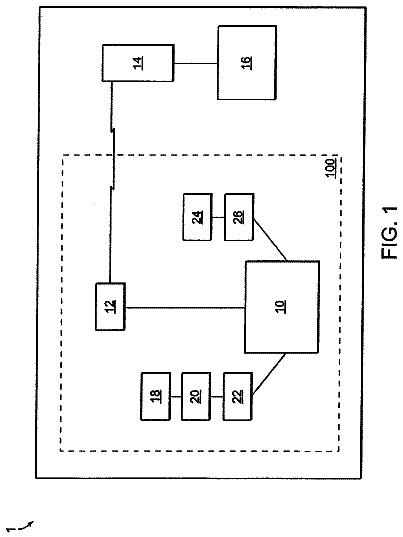
FIG. 1 illustrates a system, in accordance with aspects of the embodiments;
FIG. 2 is a diagram illustrating components within a user device 104 , in accordance with aspects of the embodiments;
FIG. 3 is a diagram illustrating components within a server, in accordance with aspects of the embodiments;
FIG. 4 a is a diagram illustrating a first user states data generation in a user device, in accordance with an aspect of the embodiments;
FIG. 4 b is a diagram illustrating transmission of a first user contextual data by the user device, in accordance with an aspect of the embodiments;
FIG. 5 a is a diagram illustrating generation of second user states data and user behavior data by server, in accordance with an aspect of the embodiments;
FIG. 5 b is a diagram illustrating notification scheduling by the server, in accordance with an aspect of the embodiments;
FIG. 6 a is a diagram illustrating scheduler adaptor gathering calendar data from user schedule, in accordance with an aspect of the embodiments;
FIG. 6 b is a diagram illustrating GPS Adaptor gathering location data from GPS sensor, in accordance with an aspect of the embodiments;
FIG. 6 c is a diagram illustrating Notification Scheduler gathering different user profiles and processing scheduling, in accordance with an aspect of the embodiments;
FIG. 6 d is a diagram illustrating Notification Rescheduler adapting to changes in user states data and rescheduling notifications, in accordance with an aspect of the embodiments;
FIG. 7 a is a flow chart diagram 900 depicting overall method of rescheduling of notifications to the user, in accordance with an aspect of the embodiments;
FIG. 7 b is a flow chart diagram 920 depicting processing of a first user contextual data in the user device 104 , in accordance with an aspect of the embodiments;
FIG. 7 c is a flow chart diagram 940 depicting server side processing and rescheduling of notifications to the user, in accordance with an aspect of the embodiments;
FIG. 7 d is a flow chart diagram 960 depicting decision making with respect to prioritizing notifications in a notification scheduler, in accordance with an aspect of the embodiments;
FIG. 7 e is a flow chart diagram 990 depicting decision making with respect to device to deliver notifications in a notification scheduler, in accordance with an aspect of the embodiments.
A few inventive aspects of the disclosed embodiments are explained in detail below with reference to the various figures. Embodiments are described to illustrate the disclosed subject matter, not to limit its scope, which is defined by the claims. Those of ordinary skill in the art will recognize a number of equivalent variations of the various features provided in the description that follows.
Reference throughout the specification to “various embodiments,” “some embodiments,” “one embodiment,” or “an embodiment” means that a particular feature, structure, or characteristic described in connection with the embodiment is included in at least one embodiment. Thus, appearances of the phrases “in various embodiments,” “in some embodiments,” “in one embodiment,” or “in an embodiment” in places throughout the specification are not necessarily all referring to the same embodiment. Furthermore, the particular features, structures or characteristics may be combined in any suitable manner in one or more embodiments.
FIG. 1 illustrates a system 100 , in accordance with aspects of the embodiments. a block diagram of a system 100 for highlighting one or more parts of communication segments between a plurality of participants in a communication network, is illustrated in accordance with an embodiment. The system 100 may include one or more of a processor, memory which includes a temporary transient (volatile) memory such as Random-Access Memory (RAM) and a computer readable medium or article (not shown in FIG. 1 ).
The system 100 includes a plurality of data collectors 102 a - 102 n (collectively referred to as 102 ) corresponding to a plurality of user devices 104 a - 104 d (collectively referred to as 104 ). Each user device 104 may obtain data from at least one of the plurality of data collectors 102 . The plurality of user devices 104 may correspond to a user. Details of internal components and parts required for further processing will be disclosed in conjunction with FIG. 2 . The plurality of user devices 104 collects a first user contextual data 106 which when analyzed by each of the plurality of user devices, generate a first user states data. The first user contextual data 106 and the first user states data 108 is transmitted to a server 110 over a network 112 . The server 110 , receives the first contextual data 106 and the first user states data 108 . The server 110 , also collects a second user contextual data that may be analyzed by the server 110 to generate a second user states data. The first user contextual data 106 and the second user contextual data may be merged together to update the second user contextual data. Similarly, the first user states data 108 may be merged with the second user states data to update the second user states data. The second user states data may be further updated when the server 110 again analyzes the updates second user states data. Details of internal components and parts required for further processing will be disclosed in conjunction with FIG. 3 . This updated second user states data may be utilized by the server 110 to prioritize and reschedule the notifications to a user device, out of the plurality of user devices 104 , as per the updated second user's states data.
In an implementation, the data collectors 102 may be various data sensors like gyroscope, accelerometer, calendar data collectors, organizer data collectors, body condition sensors like heartbeat sensors, blood pressure sensors, blood glucose sensors, location sensors like GPS collectors, LBS collectors, IPS collectors, Geolocation handler collectors, automobile data collectors like car telemetry sensors, OBD sensors, Non-OBD sensors, etc. The plurality of data collectors 102 may communicate with corresponding adaptors for transmitting the data collected for storage.
In another implementation, the plurality of user devices 104 may be a smartphone, a smart watch, a tablet computer, and in-car consoles capable of gathering multitude of user related of data.
In another implementation, the network 112 may be a wireless network, a wired network, or a combination thereof. The network 112 can be implemented as one of the different types of networks, such as intranet, local area network (LAN), wide area network (WAN), the internet, and the like. The network 112 may either be a dedicated network or a shared network. The shared network represents an association of the different types of networks that use a variety of protocols, for example, Hypertext Transfer Protocol (HTTP), Transmission Control Protocol/Internet Protocol (TCP/IP), Wireless Application Protocol (WAP), and the like, to communicate with one another. Further the network 112 may include a variety of network devices, including routers, bridges, servers, computing devices, storage devices, and the like.
The server 110 may include at least one processor, an input/output (I/O) interface and a memory (not shown in FIG. 1 ). The at least one processor may be implemented as one or more microprocessors, microcomputers, microcontrollers, digital signal processors, central processing units, state machines, logic circuitries, and/or any devices that manipulate signals based on operational instructions. Among other capabilities, the at least one processor is configured to fetch and execute computer-readable instructions stored in the memory.
In another implementation, the user contextual data 106 may refer to elements of situational information (who, what, when, where, how, why, etc.) associated with a user directly or indirectly.
Referring now to FIG. 2 , a diagram illustrating internal components or modules within a user device 104 . The user device 104 may include a data collection module 200 , a data analysis module 206 , a data push module 208 , and a memory (not shown in the Figure) operably connected to each other. The memory may include a provisioning of a plurality of databases. One of the plurality of databases may include a client user contextual profile 602 and a client user states profile. The client user contextual profile 602 stores all data being stored within it as a first user contextual data.
The memory may either be a primary memory or a secondary memory. For example, but not restricted to, random access memory (RAM), cache memory, hard disk drive (HDD), solid state drive (SSD), compact disk (CD), portable memories, and like.
Data collection module 200 , may further include various types of data collection modules. Various data collection modules may include location data collection block 202 a , user movement collection block 202 b , body condition collection block 202 c , scheduler/organizer data collection block 202 d , automobile data collection block 202 e , and third-party adaptors block 202 f . Data collected from the data collection block 200 within the client user contextual profile 602 .
Location data block 202 a includes a plurality of adaptors namely Global Positioning System (GPS) adaptors 2022 a , Indoor Positioning System (IPS) adaptors 2022 b , and Geo-Location adaptors 2022 c . The GPS adaptor 2022 a gathers location data from a GPS data collector out of the plurality of data collectors 102 (as described in FIG. 1 ) transmitter. The location data may be gathered at regular time intervals, to have current data available for analysis. The time intervals may be user defined, server defined, or a condition triggered. User defined time intervals may be set by the user itself. The user may set the time intervals through some input interface on the user device 104 . The server 110 , may also define the time intervals. The time intervals may be fixed time intervals, or may be configured by the server 110 on the go, that is based on the variation in user related data being collected at fixed time intervals otherwise defined as condition triggered. Hence for condition triggered, if the variation in the user related data is frequent, the server 110 may decrease the time interval itself or in a scenario wherein, the user related data is similar at subsequent fixed time intervals the server 110 , may increase the time interval automatically. Therefore, it may be a self-learning process. Data collected by the location data collection block 2022 a may be stored within the client user contextual profile 602 . Furthermore, the IPS adaptors 2022 b helps in gathering the indoor positioning data about the user, in case, the user is in an enclosed area like a mall, a building, home, office, etc. IPS adaptors 2022 b gathers information from IPS data collectors out of the plurality of data collectors 102 (as described in FIG. 1 ) transmitter. As also described earlier, the IPS data may be collected regularly at regular intervals of time wherein the intervals of time may be user defined, server defined, or a condition triggered (details of which have been described above). The user movement collection block 202 b , may further include a body movement adaptor(s) 2042 . The body movement adaptor(s) 2042 gathers data from wearable devices. Wearable devices may include smart watches, or smart bands etc. The wearable devices may include data collectors like gyroscope, accelerometer etc. The body movement adaptor(s) 2042 retrieves orientation information from the gyroscope and acceleration information from the accelerometer. Thereafter, the body movement adaptor(s) analyzes the collected orientation and acceleration data to calculate body movement of the user and stores normalized result of the analyzed user movement data to the client user contextual profile 602 . The time intervals may be user defined, server defined, or a condition triggered.
The body condition collection block 202 c , may further include body condition adaptor(s) 2044 . The body condition adaptor(s) 2044 may gather data from body condition sensors like heartbeat sensors, blood pressure sensors, or blood glucose sensors. The raw data collected from the sensors (mentioned above) is normalized and stored within the client user contextual profile 602 . The raw data as reported by the sensors may be a single key-value pair or a summary generated from a health reporting software installed on the user device 104 . The time intervals may be user defined, server defined, or a condition triggered. Data collection block 200 , further includes a scheduler/organizer data collection block 202 d . The scheduler/organizer block 202 d may further include scheduler adaptor(s) 2046 and organizer adaptor(s) 2048 . The scheduler adaptor(s) 2046 collects data about user's calendar items from calendar software in the user device 104 . The scheduler adaptor(s) 2046 may be a plug-in software or included within the operating software layer of the user device 104 . The calendar data collected is organized and normalized and stored within the client user contextual profile 602 .
The automobile data collection block 202 e may include in-car console data adaptors like cat telemetry adaptor(s) 2050 , On-Board Diagnostic (OBD) adaptor(s) 2052 and Non-OBD adaptors 2054 . The car telemetry adaptor(s) 2052 , gathers information received from a car telemetry system. The data may be collected regularly or at fixed intervals of time and stored, each time data is collected, to the client user contextual profile 602 . The OBD adaptor(s) 2054 , may collect data from car's On-Board diagnostic system regularly. The data is stored in a normalized format within the client user contextual profile 602 each time it is being collected. Further, the Non-OBD adaptor(s) 2054 , may receive data from car's other sensors that are not integrated yet with the car's OBD system. The data may be collected regularly, normalized and stored within the client user contextual profile 602 . Data collected from automobile data collection block 202 e may include speed of the user, whether the car is stalled or not, fuel level of the car, etc. The third-party adaptors block 202 f may include other kinds of data adaptors that may gather some other user related contextual data or any third-party source and stores such data within the client user contextual profile 602 .
Data analysis module 206 may be operably connected to the memory to fetch collected user-related data stored within the user contextual profile 602 at regular intervals. It further includes a user state analyzer block 2062 . The user state analyzer block 2062 performs analysis on user related data collected by the data collection block 200 . In an implementation, the user state analyzer block 2062 may be a processor functioning to read and analyze data and generate processed result. The user state analyzer block 2062 generates user states and stores the same within the client user states profile 606 as a first user states data, of the memory (not shown in the figure). The user state analyzer block 2062 keeps user states up-to-date. It regularly fetches new data that is being stored within the client user contextual profile 606 .
Data push module 208 , may further include a user state profile scheduler block 2082 , a user contextual profile push scheduler block 2084 , a user states profile synchronizer block 2086 , and a user contextual profile synchronizer 2088 .
The data collection module 200 collects the first user contextual data that may include information like location, body movement, body condition, automobile status, scheduler/organizer information and stores the first user contextual data in a normalized form, after processing it, within the client user contextual profile 602 . The first user contextual data may be collected at regular intervals of time which may be user defined, server defined or condition triggered as has been described above in the description. The data analysis block 206 , fetches the first user contextual data, regularly, and analyzes the user related data to generate a user states data that may be stored within the client user states profile 606 , a database within the memory (not shown in the figure). The data analysis may be regularly performed to update the user states regularly based on the updated first contextual data. The data push module 208 , prepares a push schedule of the first user contextual profile and the user states data. The user state profile scheduler 2082 schedules pushing or the first user states data to the server 110 from the user device 104 . In a similar manner, the user contextual profile push scheduler block 2084 is responsible for determining push schedule of the first user contextual data to the server 110 form the user device 104 . The user states profile synchronizer block 2086 , and the user contextual profile synchronizer 2088 are components that perform pushing of the user states data and the first user contextual data from the user device 104 to the server 110 .
Now referring to FIG. 3 , a diagram illustrating internal components or modules within the server 110 , in accordance with aspects of the embodiments. The server 110 may include a data collection block 302 , a data analysis block 304 and a smart notification module 306 and a memory (not shown in the Figure) operably connected to each other. The memory may include a provisioning of plurality of databases. The plurality of databases may include a server user contextual profile 630 , a server user states profile 616 , a notification source 684 , a user device 104 profile 682 , a user behavior profile 666 and, a notification push schedule 688 .
Data collection module 688 may include a mail data collection block 3022 , an organizer data collection block 3024 , a calendar data collection block 3026 , and a profile collection block 3028 . Data collection module 688 collects a second user contextual data which may be the data being collected by the server 110 using a plurality of adaptors (not shown in Figure). The second user contextual data may be then stored within the server user contextual profile 630 .
The mail data collection block 3022 includes a plurality of server side adaptors that may be an IMAP adaptor 30222 , and a mail provider API adaptor 30224 . These adaptors collect information from mail profile of the user. Information may include information data like meeting venue, upcoming conferences, upcoming projects, new projects, etc. The IMAP adaptor 30222 retrieves mail data via Inter Message Access Protocol (IMAP). This is a protocol that stores email messages on a server and allows end user to manipulate and view the email messages. The Mail Provider API adaptors 30224 retrieves mail data by leveraging specific mail provides application program interfaces (APIs). The data collected from the both the adaptors is normalized and stored within the server user contextual profile 630 . Further, the organizer data collection block 3024 may include organizer provider API adaptors 30242 that retrieve organizer data by leveraging specific organizer provider APIs. Data collected by the organizer provider API adaptors 30242 may include information like appointments, free time, important meeting schedules etc. the calendar data collection block 30262 includes a plurality of calendar adaptors. The calendar adaptors may include a CalDAV adaptor 30262 that retrieves calendar data via a CalDAV protocol. CalDAV, is an Internet standard allowing a client to access scheduling information on a remote server. It extends WebDAV (HTTP-based protocol for data manipulation) specification and uses iCalendar format for the information. Furthermore, the calendar adaptors may include a calendar provider API adaptor(s) 30264 . The calendar provider API adaptor(s) 30264 retrieves calendar data by leveraging specific calendar provider APIs. The calendar data may include specific information about the user like trip dates, meeting timings, project delivery dates etc. Data collected by the mail data collection block 3022 , the organizer data collection block 3024 , and the calendar data collection block 3026 may be stored within the server user contextual profile 630 . This second user contextual data may be analyzed (to be described later) to generate a second user states data stored within the server user states profile 616 .
The profile collection block 3028 includes a user states profile service adaptor 30282 and a user contextual profile service adaptor 30284 . Both these adaptors, receive the first user states data and the first user states data from the user device 104 . The first user states data may be stored and merged with the second user states data stored within the server user states profile 616 . Similarly, the first user contextual data may be stored and merged with the first user contextual data stored within the server user contextual profile 630 . Data collection module 302 collects data at regular intervals of time and the server user contextual profile 630 and the server user states profile is kept up-to date. The regular intervals of time can be either user defined, server defined or condition triggered as has been described above in conjunction with FIG. 2 .
The data analysis module 304 , operably connected to the memory, fetches the second user contextual data from the server user contextual profile to analyze and generate user behavior data by the user behavior analyzer 3042 . The user behavior may be analyzed to generate a user behavior profile that may be stored within the user behavior profile database 666 . It regularly gets new data from the server user contextual profile 630 and creates new user behavior profiles. The data analysis module 304 , may further include a user states analyzer 3044 that may analyze the second user contextual data that may be updated when the first user contextual data is merged to it, and may generate corresponding user states profile. Whenever, there are user states overlaps with time, the user states analyzer 3044 may converge them as a new state and update the server user states profile 616 . Hence, the second user states profile may be updated from time to time with adding or merging the first user states data and by analyzing the updated second user contextual data, which may be updated by merging newly acquired and pushed first user contextual data.
In an implementation, the user behavior data may include a notification reading behavior of the user. The notification reading behavior of the user may be based on anyone of a topics of messages that the user is likely to read in a specific time, location and device, senders of messages that the user is likely to read in a specific time, location and device, topics of messages that the user is likely to ignore in a specific time, location and device, senders of messages that the user is likely to ignore in a specific time, location and device, topics of messages that the user is likely to respond in a specific time, location and device, and senders of messages that the user is likely to respond in a specific time, location and device or a combination thereof.
The smart notification module 306 may include a notification scheduler block 3062 . The notification scheduler 3062 prioritizes and schedules notifications to the user on the user device 104 of his choice according to the updated user behavior profile and the updated user states data stored within the user behavior profile 666 , and the server user states profile 616 . The notification scheduler block 3062 may determine the appropriate timing, location and the user device 104 to deliver notifications to the user. The notifications may be stored within the notification push schedule 688 as will be described later in the description.
The notification rescheduler block 3064 , may fetch the notifications that are stored within the notification push schedule 688 . It may then analyze, review and update the priority and schedule of the existing notifications. The notification rescheduler block 3064 , based on the changes in user states, may adapt and reschedule notifications accordingly. It may also decide the delivery to a specific user device 104 which the user is more likely to notice. The preferences of the user devices by the user may be stored within the user device 104 profile 682 . The preferences may be based on an analysis of the user behavior with his user devices. This helps to identify what notification may be delivered to what device and at what time. The notification push block 3066 , is a component that may perform actual pushing of the notifications to the user device 104 as per the determined schedule.
The data collection module 302 may collect the second user contextual data that may include information from user's organizer, user's calendar, user's mail IDs and data from the user device 104 i.e. the first user contextual data and the first user states data. The second user contextual data may be then stored in the server user contextual profile 630 whereas the first user contextual data is also merged to the second user contextual data. Also, the second user contextual data may be then analyzed by the user behavior analyzer block to generate user behavior profiles that may be stored within the user behavior profile 666 . Further, the user state analyzer 3044 may analyze the second user contextual data and generate the second user states data that may be stored within the server user states profile 616 . The server user states profile 616 may also store the first user states profile received from the user device 104 and update the second user states data. The data analysis block 304 may fetch updated data at regular intervals as user contextual data may be updated at regular intervals of time that is being stored within the server user contextual profile 630 regularly. The smart notification module 306 may prepare a push schedule for notifications to be delivered to the user device 104 . The notification scheduler 3062 prioritizes and schedules notifications to the user device 104 of user's choice and preference in accordance with the updated user behavior profile and the updated user states data stored within the user behavior profile 666 , and the server user states profile 616 . The notification rescheduler block 3064 , may fetch the notifications that may be stored within the notification push schedule 688 . It may analyze, review and update the priority and schedule of the existing notifications. The notification rescheduler block 3064 , based on the changes in user states, may adapt and reschedule the notifications accordingly. The notifications may be then pushed to the user device 104 by the notification push block 3066 through the network 112 .
Now referring to FIG. 4 a , a diagram illustrating generation of the first user states data and transmission to the server 110 . The user state analyzer 2062 within the user device 104 may scan the client user contextual profile 602 for any recent user contextual data that may be collected by the data collection module 200 . The user state analyzer 2062 may work according to a schedule for scanning of new data. The schedule may be dependent on the time intervals at which new data is collected by the data collection module 200 . By analyzing new first user contextual data, new user states data is generated and stored within the client user states profile 606 as the first user states data. The first user states data may be then accessed by the user state profile push scheduler 2082 and may determine push schedule of the first user states data as per its importance and urgency. The user state profile push scheduler may store it in a user states profile push schedule database 610 , as user states push profile schedule, that may be one of the plurality of databases within the memory of the user device. The user states profile push schedule may be accessed by the user states profile synchronizer 2086 that may push the first user states data to the server 110 .
Still referring to FIG. 4 a , the first user states data may be received by the user state profile service block 30282 , within the server, which may append the first user states data to the second user states data stored within the server user states profile 616 .
Now referring to FIG. 4 b , a diagram illustrating transmission of the first user contextual data by the user device 104 , in accordance with an aspect of the embodiments. The user contextual profile push scheduler 2084 , may schedule itself, as per the time intervals at which the data collection module 200 collects data, to scan the client user contextual profile 602 . The time intervals may be fixed time intervals for e.g. 15 minutes. It may save a batch of the first user contextual data with a scheduled time to the user contextual profile push scheduler 624 . The user contextual profile synchronizer 2088 , may then scan for new schedule and sends the first user contextual data to the server 110 . The user contextual profile service 30284 may receive the first user contextual service and may append and update the second user contextual data stored within the server user contextual profile 630 .
Now referring to FIG. 5 a , a diagram illustrating generation of the second user states data and the user behavior by the server 110 , in accordance with an aspect of the embodiments. the second user states data and the user behavior may be utilized for delivering of notifications to the user on the user device 104 of his choice or as per his user device profile (to be discussed later). The user behavior analyzer 3042 , within the server 110 , may scan for new data within the server user contextual profile 630 . The data may be analyzed for changes and new patterns within the second user contextual data. User contextual data may be a source of some specific action of the user and together with the observed contextual data pattern, the user behavior analyzer 3042 generates a user behavior profile. For e.g. from calendar schedule of the user, the user behavior analyzer 3042 knows that the user is attending a bowling game gathering with his/her friends. The patterns of heartbeat rate and angular movements within game period could be useful to determine a similar user activity in future. The observed patterns may be saved to the user behavior profile 666 . The user state analyzer 3044 scans for new data within the server user contextual profile 630 . In case there is an updated second user contextual data, the updated data may be analyzed by the user state analyzer 3044 and a new user states data may be generated which may be appended to the second user states data, stored within the server user states profile 616 , and is also updated. With the observed patterns in user behavior profile, the user state analyzer 3044 may also predict user states from experience. For example, a user is very likely to be driving when his recent locations from GPS keep moving fast while his angular movement of his wearable device matches a rather static clockwise and anti-clockwise pattern. The identified user state is saved to the server user states profile 616 .
Now referring to FIG. 5 b , a diagram illustrating scheduling of notifications by the server 110 . The notifications are scheduled by the server 110 based on the user behavior and user states data. The notification scheduler 3062 gathers notification messages from a notification source 684 . The notification source may be either built within the server 110 , or the user device 104 or a remote database. Based on the user behavior data stored within the user behavior profile 666 and the second user states data stored within the server user states profile 616 , the priority of a notification is determined. Furthermore, the notification scheduler 3062 may also obtain the user device preference data stored within the user device profile 682 to determine the user's preference of the user device 104 that user may have for that specific time. In an example, the user at his office may have a preference of using or getting his notification on his smart phone rather than a tablet placed at his home. The notification push module 3066 accesses the notification push schedule 688 that stores the updated priority notifications and pushes the scheduled notification to the user devices 104 .
As described earlier, the user behavior data is a source of user behavior patterns. The notification scheduler 3062 may initially be without any data and thereby classify unknown events to be of a medium priority. When enough user contextual data may be collected over time, the user behavior profile may be generated. This may help the server 110 to figure out which events the user reacts to most as well as how often and how quickly the user responds to those events. In an implementation, a scoring mechanism may also be utilized. An event that the user frequently responds to is given a higher score on importance, whereas an event that the user never attends to is given a lower score on importance. With enough data, the server 110 may figure out the user device 104 that the user pays most attention to.
Examples:
When it may be detected that the user is driving, “trip package advertisement” sent from travel agent may not be important and it may be given a low importance score.
When it may be detected that the user is driving at a normal speed and is near a convenient store, the reminder to “purchase soya sauce today” is given a high importance score and the notification is delivered to the user's car console.
When it may be detected that the user is at office and he is not in a meeting, an event invitation from his friend is given a medium importance score and the notification is delivered to his smartphone but not his idle tablet at home.
In some cases, a contextual data pattern may be observer and a notification may be created itself.
The description continues in the full USPTO document.
About 6,568 words. The USPTO PDF has it with every drawing.
Fees are due 3.5, 7.5 and 11.5 years after grant. This patent expired on March 6, 2026, so the fee marked "not paid" was the one that went unpaid.
SYSTEMS AND METHODS TO PRIORITIZE AND SCHEDULE NOTIFICATIONS WITH USER BEHAVIOUR AND CONTEXTUAL DATA ANALYSIS
Filed May 2017 · published Nov 2017Systems and methods to prioritize and schedule notifications with user behaviour and contextual data analysis
Filed May 2017 · granted Mar 2018Earlier publications, parents and continuations. None of them can still be enforced, or this patent would not be listed.
Prior art cited by the examiner or applicant. Useful when you check your own idea for novelty.
Everything on this page comes from the documents linked above.