Background of the invention
Field of the Invention
The present invention relates to a heat sealable printing sheet including a sheet-shaped base member, an ink receiving layer having a heat sealability, and a heat sealable layer.
Description of the Related Art
Heretofore, wrapped articles have been widely sold, such as beverages, confectioneries, foods, cigarettes, cassette tapes, and disks. In these articles, packaged objects containing contents are wrapped with a transparent wrapping film. Such packaged objects are provided with such a variety of prints as to bring highly sophisticated preferences and values; for example, a print of a natural sight, seasonable event, or the like in each season to make one feel the season; and a print to add a value as a special gist for a ceremonial occasion or the like. In producing highly value-added wrapped articles, a printed matter has to be altered for each wrapped article.
For example, printing modifications are made as follows. For instance, a fixed part of a printed matter is printed on a packaged object, while only a to-be-altered part of the printed matter is printed on a wrapping film. Then, these two parts are correctly aligned with each other to form a wrapped article. However, since a wrapping film is often printed by gravure printing, the cost per article is high if the number of articles to be printed is small.
Under such a background, inkjet printing has attracted attention as a technique that can be employed for printing of a small number of copies, to which the application of gravure printing is not reasonable. Nevertheless, when a wrapping film is printed by the inkjet process, an ink receiving layer for absorbing an ink needs to be provided in the wrapping film. Further, the ink receiving layer needs to adhere to a heat sealable layer provided on a back surface of the ink receiving layer. Furthermore, the ink receiving layer and the heat sealable layer should be controlled to be kept from adhering to a packaged object during thermal pressure bonding. Japanese Patent Laid-Open No.
H10-244749
discloses a technique related to an ink receiving layer to which a heat sealability is imparted: a printing sheet including an ink receiving layer blended with particulate resin particles obtained from a resin containing an amino group.
However, in the printing sheet disclosed in Japanese Patent Laid-Open No. H10-244749 (1998), since the ink receiving layer is formed of resin particles, it has been difficult to sufficiently ensure the ink absorbability.
Meanwhile, it is also necessary to make a wrapping film less likely to cause a trouble in unwrapping, for example, the film can be torn with a favorable cross section in unwrapping. In general, some wrapping films are provided with a pinch portion which serves as such an opening point for unwrapping as to open the wrapping films surely and easily. However, a wrapping film provided with an ink receiving layer for absorbing an ink has an additional thickness attributed to the ink receiving layer, so that the ink receiving layer may remain as a burr at the torn portion in unwrapping, or the ink receiving layer may peel off from a base member constituting the wrapping film.
Further, a wrapped article as shown in FIG. 3 has to be controlled such that even when a wrapping film is folded at an acute angle, an ink receiving layer needs to be prevented from cracking and peeling off from a base member at the folded portion. However, since the wrapping film provided with the ink receiving layer for absorbing an ink has an additional thickness attributed to the ink receiving layer, the heat sealable printing sheet becomes hard as a whole, and folding may cause the ink receiving layer to peel off from the base member.
Summary of the invention
The present invention provides a heat sealable printing sheet having an ink receiving layer not sticky but excellent in printing characteristics, the heat sealable printing sheet having excellent adhesiveness between the ink receiving layer and a heat sealable layer and adhesiveness of the heat sealable layer in itself, having favorable unwrapping characteristics even in a case of unwrapping with a pinch portion provided as an opening point for unwrapping, and being useful as a wrapping film and so forth. Further, the present invention provides a heat sealable printing sheet having favorable foldability even when the sheet is folded at an acute angle, and being useful as a wrapping film and so forth.
The present invention provides heat sealable printing sheets described below. [1] A heat sealable printing sheet comprising: a sheet-shaped base member; an ink receiving layer disposed on a first surface of the base member and having a heat sealability; and a heat sealable layer disposed on a second surface of the base member and made of a heat sealable resin material, wherein the ink receiving layer contains inorganic fine particles, a water soluble resin, and a water dispersible resin, and the water dispersible resin has a glass transition temperature Tg satisfying the following expression (1): −35° C.≦Tg≦35° C.
[2] The heat sealable printing sheet according to [1], further comprising an adhesive layer disposed between the base member and the ink receiving layer. [3] The heat sealable printing sheet according to [1] or [2], wherein the water dispersible resin differs from the heat sealable resin material in SP value by 0 or more but less than 2. [4] The heat sealable printing sheet according to any one of [1] to [3], wherein a content P (g) of the inorganic fine particles, a content A (g) of the water soluble resin, and a content B (g) of the water dispersible resin in the ink receiving layer simultaneously satisfy relations of the following expressions
and (3): ( A+B )/ P= 0.08 to 0.70,
and B/A= 0.1 to 2.0.
[5] The heat sealable printing sheet according to any one of [1] to [4], wherein the inorganic fine particles have an average particle diameter of 140 to 200 nm. [6] The heat sealable printing sheet according to any one of [1] to [5], wherein the heat sealable resin material is at least one of polyethylenes and polypropylenes. [7] The heat sealable printing sheet according to any one of [1] to [6], wherein the ink receiving layer and the heat sealable layer are capable of adhering to each other by thermal pressure bonding.
The present invention makes it possible to provide a heat sealable printing sheet having an ink receiving layer not sticky and excellent in printing characteristics, the heat sealable printing sheet having excellent adhesiveness between the ink receiving layer and a heat sealable layer and adhesiveness of the heat sealable layer in itself, and having favorable unwrapping characteristics even in a case of unwrapping with a pinch portion provided as an opening point for unwrapping. Moreover, the present invention further makes it possible to provide a heat sealable printing sheet having favorable foldability even when the sheet is folded at an acute angle, and being useful as a wrapping film and so forth.
Further features of the present invention will become apparent from the following description of exemplary embodiments (with reference to the attached drawings).
Brief description of the drawings
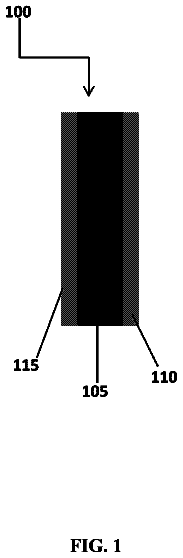
FIG. 1 is a cross-sectional view schematically showing one embodiment of a heat sealable printing sheet of the present invention;
FIG. 2 is a perspective view schematically showing the embodiment where an inverted image is printed on the heat sealable printing sheet of the present invention;
FIG. 3 is a perspective view schematically showing one example of a wrapped article;
FIG. 4 is a perspective view schematically showing the embodiment where a normal image is printed on the heat sealable printing sheet of the present invention;
FIG. 5 is a perspective view schematically showing another example of the wrapped article;
FIG. 6 is a cross-sectional view showing a state where a pigment ink is fixed to the heat sealable printing sheet of the present invention;
FIG. 7 is a cross-sectional view showing a state where a dye ink is fixed to the heat sealable printing sheet of the present invention;
FIG. 8 is a top view showing a state where a marking is printed on the heat sealable printing sheet of the present invention;
FIG. 9 is a top view showing a state where a pasting guide is printed on the heat sealable printing sheet of the present invention;
FIG. 10 is a perspective view schematically showing one example of a wrapped article;
FIG. 11 is a top view schematically showing another example of the wrapped article;
FIG. 12 is a perspective view schematically showing a process of unwrapping of the wrapped article;
FIG. 13 is aside view schematically showing a first configuration example of a production apparatus for preparing a wrapped article using the heat sealable printing sheet of the present invention;
FIG. 14 is a block diagram showing a connection state between the first production apparatus and a controller;
FIG. 15 is a block diagram showing a configuration of a control system provided in a printer shown in FIG. 13 ;
FIG. 16A is a flowchart for describing processes on the heat sealable printing sheet in the first production apparatus;
FIG. 16B is a flowchart for describing processes on a packaged object in the first production apparatus;
FIG. 17 is a side view schematically showing the first configuration example of the production apparatus for preparing a wrapped article using the heat sealable printing sheet of the present invention;
FIG. 18 is a side view schematically showing a second configuration example of the production apparatus for preparing a wrapped article using the heat sealable printing sheet of the present invention;
FIG. 19 is a perspective view schematically showing one example of a printing device for printing of the heat sealable printing sheet of the present invention;
FIG. 20 is a perspective view schematically showing a conveyor in FIG. 19 ;
FIG. 21 is a side view schematically showing a configuration example of a conveyance mechanism of a line head printer;
FIG. 22 is a perspective view schematically showing one embodiment of the heat sealable printing sheet of the present invention;
FIG. 23 is a perspective view schematically showing another embodiment of the heat sealable printing sheet of the present invention;
FIG. 24 is a side view schematically showing a configuration example of the conveyance mechanism of the line head printer using the heat sealable printing sheet of the present invention;
FIG. 25 is a side view schematically showing a configuration example of the conveyance mechanism of the line head printer using the heat sealable printing sheet of the present invention;
FIG. 26 is a perspective view showing one example of a printer for printing of the heat sealable printing sheet and the wrapped article;
FIG. 27 is a side view schematically showing a configuration example of the conveyance mechanism of the line head printer;
FIG. 28 is a perspective view schematically showing one example of a caramel-wrapping formation process;
FIG. 29 is a perspective view schematically showing another example of the caramel-wrapping formation process;
FIG. 30 is a perspective view schematically showing the another example of the wrapped article;
FIG. 31 is a cross-sectional view schematically showing still another embodiment of the heat sealable printing sheet of the present invention;
FIG. 32 is a perspective view schematically showing another embodiment in which an inverted image is printed on the heat sealable printing sheet of the present invention; and
FIG. 33 is a schematically showing another embodiment in which a normal image is printed on the heat sealable printing sheet of the present invention.
Description of the embodiments
Hereinafter, the present invention will be described in detail with reference to the drawings. However, the present invention is not limited to embodiments described below, and includes all objects having matters specifying the invention. Note that, in the drawings, the same reference signs denote members having the same structure, and the descriptions thereof will be omitted in some cases.
The present inventors have earnestly studied in order to solve the above-described problems. As a result, the inventors have found out a heat sealable printing sheet excellent in printing characteristics, adhesiveness between an ink receiving layer and a heat sealable layer, unwrapping characteristics, and foldability.
The heat sealable printing sheet of the present invention is suitably applicable to an inkjet process. To achieve a sufficient image density by the inkjet process, an ink receiving layer has to absorb a large amount of inks. For this reason, an ink receiving layer on a heat sealable printing sheet needs to have a slightly large thickness, which also brings about the inkjet-specific problem.
For example, it is necessary to satisfy the adhesiveness between an ink receiving layer and a heat sealable layer and the adhesiveness of the heat sealable layer in itself, while ensuring the transparency and ink absorbability of the ink receiving layer. However, when a porous ink receiving layer containing inorganic fine particles is used to satisfy the ink absorbability, the ink receiving layer is whitened, impairing the transparency of the film, and decreasing the adhesiveness between the ink receiving layer containing inorganic fine particles and the heat sealable layer in some cases. Hence, in the heat sealable printing sheet of the present invention, a water dispersible resin is added to the ink receiving layer, and the glass transition temperature (Tg) of the water dispersible resin is precisely set to increase the heat sealing characteristics of the ink receiving layer. Thus, the above-described problem has been overcome. Moreover, by focusing on a water soluble resin and the water dispersible resin constituting the ink receiving layer, and added amounts of these are set. Thereby, a heat sealability is imparted to the ink receiving layer, and the adhesiveness between the water dispersible resin component of the ink receiving layer having a heat sealability and the heat-sealable-layer constituting material component is increased by a strong intermolecular force. Thus, the above-described problem has been overcome. Further, the particle diameter of the inorganic fine particles is reduced to prevent decreases of the ink absorbability and the film transparency due to the whitening of the ink receiving layer, and the surface roughness of the ink receiving layer is set to increase the number of fine asperities. These increase the contact area between the ink receiving layer and the heat sealable layer, and increase an anchor effect. As a result, it has been found out that the above problem can be further solved. Further, the materials and added amounts of the water soluble resin and the water dispersible resin constituting the ink receiving layer are set in such a manner that these resins exhibit SP values close to the SP value of the heat sealable material. Thereby, a heat sealability is imparted to the ink receiving layer, and the adhesiveness between the ink receiving layer having a heat sealability and the heat sealable layer is increased by a strong intermolecular force. As a result, it has also been found out that the above-described problem can be further solved.
On the other hand, in a case where a heat sealable printing sheet is used as a wrapping film, an ink receiving layer having a larger thickness may cause a burr at a torn portion in unwrapping, or the ink receiving layer may peel off from a base member. Moreover, in a case where a heat sealable printing sheet is folded at an acute angle for wrapping, an ink receiving layer may crack, or the ink receiving layer may peel off from a base member. Hence, the present invention precisely sets the glass transition temperature (Tg) of the water dispersible resin, forms a film by using the water dispersible resin in the ink receiving layer, and increases the adhesion between the ink receiving layer and a base member to overcome the above-described problem. Further, by focusing on the water soluble resin and the water dispersible resin in the ink receiving layer, the added amounts of these resins are set. This maintains the film strength of the ink receiving layer sufficiently as a binder function just to immobilize the inorganic fine particles, thus overcoming the problems that the ink receiving layer cracks, and that the ink receiving layer peels off from the base member. Furthermore, it has been found out that the water dispersible resin in the ink receiving layer is capable of increasing the adhesion between the base member and the ink receiving layer, and can solve the above-described problem. Specifically, as the water soluble resin and the water dispersible resin in the ink receiving layer, ones having SP values close to the SP value of the base member are selected. As a result, it has been found out that these increase the adhesiveness between the base member and the ink receiving layer, and can further solve the above-described problem. Additionally, providing an adhesive layer between the base member and the ink receiving layer not only increases the adhesion between the base member and the ink receiving layer, but also makes it possible to set the heat sealable printing sheet in a flexible form. As a result, it has found out that the above-described problem can be further solved.
Now, the SP value will be described. An SP value means a solubility parameter, and is also called the Hildebrand parameter. According to the regular solution theory, it is hypothesized that the force acting between a solvent and a solute is only an intermolecular force. Hence, the solubility parameter is used as a scale representing an intermolecular force. Although actual solutions are not always regular solutions, it is empirically known that the smaller a difference in SP value between two components, the greater the solubility.
According to the regular solution theory, only an intermolecular force is modeled as a force acting between a solvent and a solute. Accordingly, it can be assumed that the interaction uniting liquid molecules is only an intermolecular force. A cohesive energy ΔE of a liquid and an entropy of vaporization have a relation of ΔH=ΔE+PΔV. From a molar heat of vaporization ΔH and a molar volume V, a solubility parameter is defined by the following equation. To put it differently, a solubility parameter is calculated from (cal/cm.sup.3).sup.1/2: the square root of heat of vaporization required to vaporize 1 cm.sup.3 of a liquid. δ=√{square root over ((Δ H−RT )/ V )}
An actual solution is rarely a regular solution, and a force other than an intermolecular force such as hydrogen bond also acts between solvent and solute molecules. Whether two components are mixed together or phrase-separated is thermodynamically determined by a different between the enthalpy of mixing and the entropy of mixing of these components. However, empirically, substances having close solubility parameters to each other tend to be mixed well. Hence, an SP value also serves as an indicator for determining mixing tendency of a solute and a solvent. Nevertheless, the compatibility of plastic materials constituting the heat sealable printing sheet of the present invention is influenced by polarities of the materials used. The higher the polarities, the higher the compatibility, and the closer the SP values represented by the square root of CED (cohesive energy density) indicating a molecular bonding force, the higher the compatibility.
In the present invention, an SP value is represented by the following equation. Table 1 shows representative SP values. The SP values shown in Table 1 are posted from SP values of various plastics shown in Table 3.20 on page 1474 of “ Purasuchikku Kakougijyutsu Handobukku (plastic processing technique handbook)”, Jun. 12, 1995, edited by the Society of Polymer Science, Japan, published by Nikkan Kogyo Shimbun Ltd. ( SP ).sup.2 =CEO=ΔE/V =(Δ H−RT )/ V=d ( CE )/ M [ΔE: vaporization energy (kcal/mol), V: molar volume (cm/mol), ΔH: vaporization energy (kcal/mol), R: gas constant, M: gram-molecular weight (g/mol), T: absolute temperature (K), d: density (g/cm.sup.3), CE: cohesive energy (kcal/mol)]
TABLE-US-00001 TABLE 1 SP (theoretical Abbreviation Polymer name value) PTFE polytetrafluoroethylene 6.2 PE polyethylene 8.1 PP polypropylene 8.1 PS polystyrene 9.12 PMMA polymethyl methacrylate 9.25 PVAC polyvinyl acetate 9.4 PVC polyvinyl chloride 9.6 PC polycarbonate 9.8 PET polyethylene 10.7 terephthalate EP epoxy resin 11.0 POM polyacetal 11.2 PAN polyacrylonitrile 12.75 PA polyamide (Nylon 66) 13.6
The closer the SP values, the higher the compatibility, and the higher the adhesiveness is exhibited. In the present invention, a water dispersible resin and a heat sealable resin material having close SP values to each other are selected for use, and a water soluble resin and a heat sealable resin material having close SP values to each other are selected for use. More specifically, the water dispersible resin in the ink receiving layer differs from the heat sealable resin material in SP value by 0 or more but less than 2. This makes it possible to achieve a favorable adhesiveness between the ink receiving layer and the heat sealable layer, and to prevent the ink receiving layer from forming a burr or peeling off from the base member at a torn portion in unwrapping. Moreover, it is possible to prevent the ink receiving layer from cracking or peeling off from the base member when being folded.
[1] Configuration of Heat Sealable Printing Sheet
The heat sealable printing sheet of the present invention, like a heat sealable printing sheet 1 shown in FIG. 1 , includes a sheet-shaped base member 50 , an ink receiving layer 53 disposed on a first surface of the base member 50 and having a heat sealability, and a heat sealable layer 52 disposed on a second surface of the base member 50 . The ink receiving layer 53 having a heat sealability and the heat sealable layer 52 having thermal welding characteristics are disposed with the base member 50 in between. With this arrangement, the ink receiving layer 53 and the heat sealable layer 52 are capable of adhering to each other by thermal pressure bonding in the heat sealable printing sheet of the present invention. In addition, the heat sealable printing sheet of the present invention may further include an adhesive layer 55 disposed between the base member 50 and the ink receiving layer 53 having a heat sealability, as shown in FIG. 31 .
[1-1] Base Member
The material and the like of the base member are not particularly limited. Nevertheless, the base member preferably has an SP value close to the SP values of a water soluble resin and a water dispersible resin contained in the ink receiving layer, from the viewpoint of preventing the ink receiving layer forming a burr or peeling off from the base member at a torn portion of the wrapping film in unwrapping, and from the viewpoint of preventing the ink receiving layer from cracking or peeling off from the base member when being folded. Specifically, the base member preferably differs from the water soluble resin and the water dispersible resin contained in the ink receiving layer in SP value by 0 or more but less than 2. Such a base member is preferably a polyolefin-based resin.
The base member is preferably, for example, a resin film made of a resin such as polyester (PET or the like), nylon (aliphatic polyamide), polyimide, cellulose acetate, cellophane, polyethylene, polypropylene, polystyrene, polycarbonate, polyvinyl alcohol, polyvinyl chloride, polyvinylidene chloride, chlorinated rubber, fluororesin, or ionomer; paper, nonwoven fabric, or the like.
Above all, a resin film made of a polypropylene-based resin is preferably used as the base member. The polypropylene-based resin has an SP value close to those of the water soluble resin (for example, polyvinyl alcohol) and the water dispersible resin (for example, acrylic resin) contained in the ink receiving layer. Hence, the use of a resin film made of a polypropylene-based resin as the base member makes it possible to further increase the adhesiveness between the base member and the ink receiving layer. As the polypropylene-based resin, besides crystalline polypropylene (homopolypropylene), even a copolymer obtained by copolymerizing ethylene, butene, pentene, hexane, or the like, and a terpolymer can be used, as long as the stiffness can be ensured to some extent.
The thickness of the base member should be determined as appropriate only in consideration of the material strength and the like, and is not particularly limited. Nevertheless, the thickness of the base member is preferably 5 μm or more but 200 μm or less, furthermore preferably 10 μm or more but 200 μm or less. Setting the base member having a thickness of 5 μm or more makes it possible to prevent curling of a laminate obtained by stacking the ink receiving layer. In a case where the heat sealable printing sheet is formed in a roll shape, the base member preferably has a thickness of 15 μm or more in order to enhance the conveyance performance of the heat sealable printing sheet on a production apparatus. Moreover, in a case where the heat sealable printing sheet is formed in the shape of cut sheet, the base member preferably has a thickness of 30 μm or more from the viewpoint of preventing curling of the cut sheet. Further, the thickness of the base member is furthermore preferably 60 μm or less, and particularly preferably 50 μm or less. This can make the thermal conductivity favorable when the ink receiving layer and the heat sealable layer adhere to each other by thermal pressure bonding, and when the heat sealable layer adhere to itself by thermal pressure bonding.
In addition, the base member is preferably a transparent film having a total luminous transmittance of 50% or more, which is measured according to JIS K7375, and is furthermore preferably a transparent film having a total luminous transmittance of 90% or more. The use of the transparent film having a total luminous transmittance within the above-described range as the base member is advantageous when a wrapped article is prepared including the heat sealable layer 52 functioning as a protective layer for an image by printing an inverted image on the ink receiving layer 53 and wrapping a packaged object 20 with the heat sealable layer 52 located on an outer side as shown in FIGS. 2 and 3 . To put it differently, the transparent film enhances the visibility of an image when the image is viewed from the heat sealable layer 52 side, and can prevent a deterioration of the quality of an image pre-printed on the packaged object 20 in advance. Moreover, a position adjustment in a manner that an image-printed part of the ink receiving layer 53 overlaps with a white or pale part of a box design of the packaged object 20 makes it possible to further enhance the visibility of the image. As a result, a wrapped article can be easily provided with various images to bring a sophisticated preference or value, such as an image of a natural sight, event, or the like in each season to make one feel the season, an image for adding a value as a special gist for a ceremonial occasion or the like, and other images. Note that in a case where an image is printed on the ink receiving layer using a dye ink, a base agent containing a UV cut agent is preferably used to prevent ultraviolet radiation from degrading the dye (optical degradation). Examples of the UV cut agent include ultraviolet absorbers such as benzotriazole-based compound and benzophenone-based compounds; ultraviolet scattering agents such as titanium oxide and zinc oxide; and the like.
[2] Ink Receiving Layer
[2-1] Ink Receiving Layer
The ink receiving layer having a heat sealability is a layer for receiving inks. The type of the ink receiving layer normally includes a swelling absorption type for receiving a coloring material in a network structure of a water soluble polymer and a gap absorption type for receiving a coloring material in gaps formed by inorganic fine particles. The ink receiving layer constituting the heat sealable printing sheet of the present invention is an ink receiving layer of the gap absorption type, and made of a composition containing inorganic fine particles, a water soluble resin, and a water dispersible resin. The ink receiving layer of the gap absorption type is capable of quickly absorbing a coloring material with gaps formed by the inorganic fine particles.
When the ink receiving layer is formed, it is preferable to precisely set the average particle diameter of the inorganic fine particles, the weight-average polymerization degree and saponification degree of the water soluble resin, and the material and added amount of the water dispersible resin. This makes it possible to further enhance the transparency (transmittance) of the ink receiving layer and the adhesion between the ink receiving layer and the base member. Moreover, the ink receiving layer has a heat sealability to incorporate the water soluble resin and the water dispersible resin. Hence, it is possible to enhance the adhesiveness between the ink receiving layer and the heat sealable layer.
[2-2] Inorganic Fine particles
The inorganic fine particles are fine particles made of an inorganic material. The inorganic fine particles have a function to form gaps which allows the ink receiving layer to receive a coloring material.
The type of the inorganic material constituting the inorganic fine particles is not particularly limited. Nevertheless, preferable is an inorganic material having a high ink absorbing ability, excellent in color developability, and capable of forming a high-quality image. Specific examples of the inorganic material include calcium carbonate, magnesium carbonate, kaolin, clay, talc, hydrotalcite, aluminium silicate, calcium silicate, magnesium silicate, diatomaceous earth, alumina, colloidal alumina, aluminum hydroxide, a hydrated alumina having a boehmite structure, a hydrated alumina having a pseudoboehmite structure, lithopone (a mixture of barium sulfate and zinc sulfide), zeolite, and the like.
The inorganic fine particles are preferably alumina fine particles made of at least one of alumina and hydrated alumina. Examples of the hydrated alumina include a hydrated alumina having a boehmite structure, a hydrated alumina having a pseudoboehmite structure, and the like. Alumina, a hydrated alumina having a boehmite structure, and a hydrated alumina having a pseudoboehmite structure are preferable because these can enhance the transparency of the ink receiving layer and the printing density of an image.
A hydrated alumina having a boehmite structure can be obtained by adding an acid to a long-chain aluminum alkoxide to carry out hydrolysis and peptization (see Japanese Patent Laid-Open No. Sho 56-120508). For the peptization, any one of organic acids and inorganic acids may be used. Among these, nitric acid is preferably used. The peptization using nitric acid enhances the reaction efficiency of the hydrolysis, and can obtain a hydrated alumina having a set shape. Thus, a dispersion liquid having a favorable dispersibility can be obtained.
The inorganic fine particles have an average particle diameter of preferably 120 to 200 nm, furthermore preferably 140 nm to 200 nm. The use of the inorganic fine particles having an average particle diameter of 120 nm or more makes it possible to enhance the ink absorbability of the ink receiving layer and suppress the bleeding and beading of an ink in an image after the printing. On the other hand, the use of the inorganic fine particles having an average particle diameter of 200 nm or less suppresses light scattering by the inorganic fine particles and makes it possible to enhance the glossiness and transparency of the ink receiving layer. Hence, the visibility of an image from the heat sealable layer side can be enhanced. Further, even in a case where an image is printed using a pigment ink which hardly permeates the ink receiving layer, it is no longer necessary to increase the thickness of the ink receiving layer in order to increase the ink density or receive a large amount of inks. Thus, the ink receiving layer and the entire heat sealable printing sheet can be made thin. Moreover, the use of the inorganic fine particles having an average particle diameter within the above-described range makes it possible to set the surface roughness of the ink receiving layer to increase the number of fine asperities. Hence, it is possible to increase the contact area between the ink receiving layer and the heat sealable layer, and exhibit an anchor effect to further increase the adhesiveness between the ink receiving layer and the heat sealable layer. Furthermore, the number of the inorganic fine particles per unit area of the ink receiving layer can be increased to enhance the ink absorbability. This enhances the printing density of an image, and can suppress the lack of luster of the image after the printing.
As the inorganic fine particles, known inorganic fine particles may be used without any modification, or known inorganic fine particles whose average particle diameter and polydispersity index have been adjusted using a pulverization dispersing machine may be used. The type of the pulverization dispersing machine is not particularly limited. For example, conventionally known pulverization dispersing machines can be used such as a high-pressure homogenizer, an ultrasonic homogenizer, a wet-medium type pulverizer (a sand mill or a ball mill), a continuous high-speed stirring type dispersion machine, and an ultrasonic dispersion machine.
More specific examples of the pulverization dispersing machine include: Manton-Gaulin homogenizer and Sonolator (these are manufactured by Doyei Shoji Co., LTD.); Microfluidizer (manufactured by MIZUHO INDUSTRIAL CO., LTD.); Nanomizer (manufactured by TSUKISHIMA KIKAI CO., LTD.); Ultimaizer (manufactured by ITOCHU MACHINE-TECHNOS CORPORATION); PEARL MILL, GRAIN MILL, and TORNADO (these are manufactured by ASADA IRON WORKS CO., LTD.); Visco Mill (manufactured by AIMEX CO., Ltd.); MIGHTY MILL, RS MILL, and SΓ MILL (these are manufactured by INOUE MFG., INC.); Ebara Milder (manufactured by EBARA CORPORATION); and FINE FLOW MILL and CAVITRON (these are manufactured by Pacific Machinery & Engineering Co., Ltd.), all of which are product names.
In addition, the inorganic fine particles used have a polydispersity index (μ/<Γ>.sup.2) of preferably 0.01 or more but 0.20 or less, furthermore preferably 0.01 or more but 0.18 or less, while satisfying the above-described range of the average particle diameter. Setting the polydispersity index within the aforementioned range makes it possible to keep the size of the inorganic fine particles constant. Thereby, the glossiness and transparency of the ink receiving layer can be enhanced. Thus, it is possible to enhance the printing density of an image, and suppress the lack of luster of the image after the printing.
Note that the average particle diameter and polydispersity index in the present specification can be determined by analyzing values measured by a dynamic light scattering method according to the cumulant method described in “ Koubunshi no Kouzou (2), Sanranjikkenn to Keitaikansatu, Dai 1 Shou Hikarisanran (Structure of Polymer (2), Scattering Experiment and Morphological Observation, Chapter 1 Light Scattering)” (published by KYORITSU SHUPPAN CO., LTD., edited by the Society of Polymer Science, Japan) or J. Chem. Phys., 70 (B), 15 Apl., 3965 (1979). According to the theory of the dynamic light scattering, when fine particles having different particle diameters are mixed, the attenuation of a time correlation function from scattered light has a distribution. The average (<Γ>) and variance (μ) of an attenuation rate are determined by analyzing the time correlation function by the cumulant method. Since the attenuation rate (Γ) is represented by a function of the diffusion coefficient and scattering vector of particles, a hydrodynamic average particle diameter can be determined by using Stokes-Einstein equation. Thus, the polydispersity index (μ/<Γ>.sup.2) obtained by dividing the variance (μ) of the attenuation rate by the square of the average (<Γ>.sup.2) represents the extent to which the particle diameters vary, and means that the distribution of the particle diameters is narrowed as the value approaches 0. The average particle diameter and polydispersity index defined in the present specification can be easily measured by using, for example, a laser particle diameter analyzer PARIII (manufactured by Otsuka Electronics Co., Ltd.).
One type of the inorganic fine particles can be used alone, or two or more types thereof can be used in combination. The phrase “two or more types” means to include, besides inorganic fine particles having different materials per se, inorganic fine particles having different characteristics such as average particle diameter and polydispersity index.
[2-3] Water Soluble Resin
The water soluble resin is a resin which completely mixes with water at 25° C., or a resin having a solubility in water at 25° C. of 1 (g/100 g) or more. The water soluble resin functions as a binder for binding the inorganic fine particles. Further, incorporating the water soluble resin into the ink receiving layer makes it possible to impart thermal adhesive characteristics to the ink receiving layer.
Examples of the water soluble resin include: starch, gelatin, casein, and modified products thereof; cellulose derivatives such as methyl cellulose, carboxymethyl cellulose, and hydroxyethyl cellulose; polyvinyl alcohols (completely saponified, partially saponified, low saponified polyvinyl alcohols) and modified products thereof (cationically modified products, anionically modified products, and silanol modified products); and the like.
The water soluble resin is preferably polyvinyl alcohol, furthermore preferably a saponified polyvinyl alcohol obtained by hydrolyzing (saponifying) polyvinyl acetate. The polyvinyl alcohol has an SP value close to the SP value of the aforementioned base member and the SP value of a polypropylene-based material that can constitute the heat sealable layer. Thus, the use of the polyvinyl alcohol as the water soluble resin makes it possible to further enhance the adhesiveness between the base member and the ink receiving layer and the adhesion between the heat sealable layer and the ink receiving layer.
The polyvinyl alcohol preferably has a saponification degree of 70% by mole or more but 100% by mole or less. The saponification degree of the polyvinyl alcohol means a percentage of the number of moles of hydroxyl groups of the polyvinyl alcohol relative to a total number of moles of the hydroxyl groups and acetic acid groups of the polyvinyl alcohol.
The description continues in the full USPTO document.
 Lapsed, fee not paid2 drawings