Patent Yard Sign in
Lapsed, fee not paid

Method and apparatus for recording information from a plurality of mobile devices in an area

US 9,877,295 B2 · Assignee: Ruckus Wireless, Inc. · Inventors: Han; Yang et al.

USPTO PDF

Overview

Sheet 1 of 19 from the published document. All sheets in the USPTO PDF

Abstract From the patent

A method and apparatus for recording information from a plurality of mobile devices in an area, the method comprising listening for data packets from the plurality of mobile devices in a predetermined time period, creating a record for containing addresses and signal strength readings associated with the plurality of mobile devices, determining whether a data packet received during the predetermined time period is from a mobile device of the plurality of mobile devices, determining whether an address associated with the mobile device is recorded in the record, updating the record with the address and a signal strength reading associated with the mobile device, and updating the signal strength reading associated with the mobile device updating the record depending upon the number of times the record has been updated with a signal strength reading associated with the mobile device during the predetermined time period.

Why it's free to use

  • The USPTO Official Gazette of March 24, 2026 lists it as expired on January 23, 2026 for an unpaid maintenance fee.
  • It isn't on any reinstatement notice published since.
  • Its 1 US relative has also lapsed, expired or never issued.
  • We check US rights only. Check foreign counterparts before selling abroad.
FiledMay 20, 2013
GrantedJanuary 23, 2018
Expired (fee)January 23, 2026
Application number14/892825
Classification (CPC)G01S5/02526 +7 more
Length62 claims · 40 pages

Background From the patent

In recent years, high usage of mobile devices with Internet services has sparked an increase in wireless computing services providing real-time, contextual, and personalized applications. One of the key technologies contributing to this increase is positioning technology, which is capable of providing accurate location contexts relating to such mobile devices. Location-based services (LBS) based on Global Positioning System (GPS) in mobile devices, especially in smart phones, have been gaining popularity over the last decade. However, accurate positioning via GPS is lost once a mobile device is moved indoors, or into dense urban areas. When indoors, GPS signals between the mobile device and satellite would lose line-of-sight and the GPS would cease to operate. In the case of urban areas, signal attenuation and multi-path effects caused by physical obstacles (mainly tall buildings) can ma

Drawings 19

1 of 19 drawing sheets so far from the published document, cropped to the drawing. Every sheet is in the USPTO PDF.

Figures as described

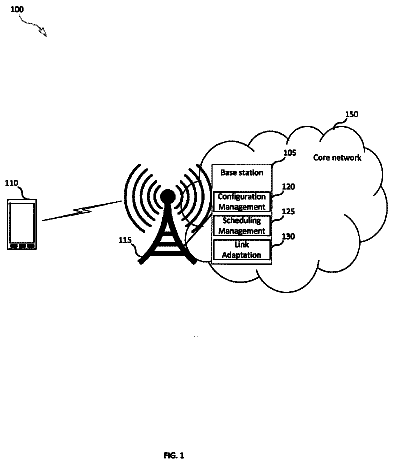
  • FIG. 1 illustrates system architecture of an example of the present invention
  • FIG. 2 illustrates system architecture of a second example of the present invention
  • FIG. 3 is a diagram illustrating steps for performing calibration by the second example
  • FIG. 4 is a diagram illustrating steps for performing Footfall Tracking by the second example
  • FIG. 5 is a diagram illustrating steps performed for Real Time Location Service (RTLS) by the second example
  • FIG. 6 is a diagram illustrating the workflow of a scanner of the second example
  • FIG. 7 is a flowchart for a footfall scanning process of an example of the present invention
  • FIG. 8 shows an example of a Temporary Footfall Record of an example of the present invention
  • FIG. 9 is a flowchart for processing a Footfall Report of an example of the present invention
  • FIG. 10 illustrates calculation of a truncated mean value required in an example of the present invention
  • FIG. 11 shows an example of a Footfall Report of an example of the present invention
  • FIG. 12 is a flowchart for a Calibration/RTLS scanning process of an example of the present invention

Claims 62 total, 6 independent

What the patent claimed, word for word. All of it is now free to use.

  1. 1
    Independent claimA method for recording information from a plurality of mobile devices in an area, the method comprising: listening for data packets from the plurality of mobile devices in a predetermined time period using a wireless device; creating a record for containing addresses and signal strength readings associated with the plurality of mobile devices, the addresses and signal strength readings of the mobile devices being retrieved from data packets received by the wireless device when the wireless device is listening; determining whether a data packet received by the wireless device during the predetermined time period is from a mobile device of the plurality of mobile devices; when the data packet received by the wireless device during the predetermined time period is from the mobile device, determining whether an address associated with the mobile device is recorded in the record; updating the record with the address associated with the mobile device and a signal strength reading associated with the mobile device if the address has not been previously recorded in the record during the predetermined time period; updating, based on the number of times the record has been updated with a signal strength reading associated with the mobile device during the predetermined time period, the record with a signal strength reading associated with the mobile device the address of the mobile device was previously updated in the record, wherein the predetermined time period comprises: a first time period for recording received addresses and signal strength readings associated with one or more of the plurality of mobile devices in the record for tracking footfall of the plurality of mobile devices in the area; and a second time period for recording received addresses and signal strength readings associated with one or more of the plurality of mobile devices in a second record created and updated in same manner as the record for estimating location of one or more of the plurality of mobile devices in the area; and estimating a location of the mobile device based on the record for tracking footfall of the plurality of mobile devices in the area without initiation by the mobile device and estimating a location of the mobile device based on the second record upon initiation by the mobile device, wherein number of times of recording signal strength readings in the record for tracking footfall of the plurality of mobile devices in the area is lesser than number of times of recording signal strength readings in the second record.
  2. 2
    The method as claimed in claim 1, the method comprising: increasing a count associated with the address of the mobile device each time the record is updated as a result of the wireless device receiving a data packet from the mobile device during the predetermined time period, the count being reset at beginning of the predetermined time period.
  3. 3
    The method as claimed in claim 2, wherein updating of the record with a signal strength reading associated with the mobile device during the predetermined time period stops when the count reaches a predetermined number.
  4. 4
    The method as claimed in claim 1, wherein the wireless device communicates with the plurality of mobile devices based on Wireless Fidelity (WiFi) technology.
  5. 5
    The method as claimed in claim 1, the method comprising: updating the record with a null signal strength reading if the address of the mobile device was previously updated in the record, and if a data packet is not received from the mobile device before a predetermined sampling time within the predetermined time period expires.
  6. 6
    The method as claimed in claim 1, the method comprising: generating a report by extracting all signal strength readings of the mobile device in the record; discarding null signal strength reading, if any is present in the record; and calculating a truncated mean value from the extracted and non-discarded signal strength readings of the mobile device.
  7. 7
    The method as claimed in claim 6, the method further comprising: transmitting from the wireless device one or more data packets associated with the report to a collating application of a server for collating a collated report for the mobile device based on data of reports received by the server from the wireless device.
  8. 8
    The method as claimed in claim 7, wherein estimating of the location of the mobile device comprises: formatting the collated report; forwarding the collated report to a processor for calculating the estimated location of the mobile device based on data in the collated report; and storing the estimated location in a database accessible by the mobile device via a network.
  9. 9
    The method as claimed in claim 8, the method further comprising: generating footfall tracking analytics based on estimated locations of more than one of the plurality of mobile devices; and storing the generated footfall tracking analytics in a footfall tracking database accessible by networked devices.
  10. 10
    The method as claimed in claim 1, the method further comprising: transmitting the address of the mobile device to a data management application of a server via a data communication protocol requiring no acknowledgment from a receiver upon receiving a data message from a sender; and updating the address received by the data management application in a server record, the server record residing in a memory accessible to the server.
  11. 11
    The method as claimed in claim 10, the operation of creating the record for containing addresses and signal strength readings associated with the plurality of mobile devices further comprising: appending the address received by the data management application to a data message at the server; sending the data message from the server to an agent application associated with the wireless device; and adding the address retrieved from the data message received by the agent application in a third record residing in a memory accessible to the wireless device.
  12. 12
    Independent claimAn apparatus for recording information from a plurality of mobile devices in an area, the apparatus comprising: a wireless device configured to listen for data packets from the plurality of mobile devices in a predetermined time period; and a processing unit configured to: create a record for containing addresses and signal strength readings associated with the plurality of mobile devices, the addresses and signal strength readings of the mobile devices being retrieved from data packets received by the wireless device when the wireless device is listening; determine whether a data packet received by the wireless device during the predetermined time period is from a mobile device of the plurality of mobile devices; when the data packet received by the wireless device during the predetermined time period is from the mobile device, determine whether an address associated with the mobile device is recorded in the record; update the record with the address associated with the mobile device and a signal strength reading associated with the mobile device if the address has not been previously recorded in the record during the predetermined time period; update, based on the number of time the record has been updated with a signal strength reading associated with the mobile device during the predetermined time period, the record with a signal strength reading associated with the mobile device if the address of the mobile device was previously updated in the record, wherein the predetermined time period comprises: a first time period for recording received addresses and signal strength readings associated with one or more of the plurality of mobile devices in the record for tracking footfall of the plurality of mobile devices in the area; and a second time period for recording received addresses and signal strength readings associated with one or more of the plurality of mobile devices in a second record created and updated in same manner as the record for estimating location of one or more of the plurality of mobile devices in the area; and estimate a location of the mobile device based on the record for tracking footfall of the plurality of mobile devices in the area without initiation by the mobile device and estimating a location of the mobile device based on the second record upon initiation by the mobile device, wherein number of times of recording signal strength readings in the record for tracking footfall of the plurality of mobile devices in the area is lesser than number of times of recording signal strength readings in the second record.
  13. 13
    The apparatus as claimed in claim 12, wherein the processing unit is configured to: increase a count associated with the address of the mobile device each time the record is updated as a result of the wireless device receiving a data packet from the mobile device during the predetermined time period, the count being reset at beginning of the predetermined time period.
  14. 14
    The apparatus as claimed in claim 13, wherein updating of the record with a signal strength reading associated with the mobile device during the predetermined time period stops when the count reaches a predetermined number.
  15. 15
    The apparatus as claimed in claim 12, wherein the wireless device communicates with the plurality of mobile devices based on Wireless Fidelity (WiFi) technology.
  16. 16
    The apparatus as claimed in claim 12, wherein the processing unit is configured to update the record with a null signal strength reading if the address of the mobile device was previously updated in the record, and if a data packet is not received from the mobile device before a predetermined sampling time within the predetermined time period expires.
  17. 17
    The apparatus as claimed in claim 12, wherein the processing unit is configured to generate a report by: extracting all signal strength readings of the mobile device in the record; discarding null signal strength readings, if any are present in the record; and calculating a truncated mean value from the extracted and non-discarded signal strength readings of the mobile device.
  18. 18
    The apparatus as claimed in claim 17, the apparatus further comprising a server and the wireless device is configured to: transmit one or more data packets associated with the report to a collating application of the server for collating a collated report for the mobile device based on data of reports received by the server from the wireless device.
  19. 19
    The apparatus as claimed in claim 18, wherein the server is configured to estimate the location of the mobile device by: formatting the collated report; forwarding the collated report to a processor for calculating the estimated location of the mobile device based on data in the collated report; and storing the estimated location in a database accessible to the mobile device via a network.
  20. 20
    The apparatus as claimed in claim 19, wherein the server is configured to: generate footfall tracking analytics based on estimated locations of more than one of the plurality of mobile devices; and store the generated footfall tracking analytics in a footfall tracking database accessible to networked devices.
  21. 21
    The apparatus as claimed in claim 12, wherein the mobile device is configured to: transmit its address to a data management application run by a server, and wherein the server is configured to: update a server record with the address received by the data management application, the server record residing in a memory accessible to the server running the data management application.
  22. 22
    The apparatus as claimed in claim 21, wherein the server running the data management application is configured to: append the address received by the data management application to a data message; send the data message to an agent application associated with the wireless device; and update the address retrieved from the data message received by the agent application in a third record residing in a memory accessible to the wireless device.
  23. 23
    Independent claimA method for recording information from a plurality of mobile devices in an area, the method comprising: listening for data packets from the plurality of mobile devices in a predetermined time period using a wireless device; creating a record for containing addresses and signal strength readings associated with the plurality of mobile devices, the addresses and signal strength readings of the mobile devices being retrieved from data packets received by the wireless device when the wireless device is listening; determining whether a data packet received by the wireless device during the predetermined time period is from a mobile device of the plurality of mobile devices; when the data packet received by the wireless device during the predetermined time period is from the mobile device, determining whether an address associated with the mobile device is recorded in the record; updating the record with the address associated with the mobile device and a signal strength reading associated with the mobile device if the address has not been previously recorded in the record during the predetermined time period; updating, based on the number of times the record has been updated with a signal strength reading associated with the mobile device during the predetermined time period, the record with a signal strength reading associated with the mobile device if the address of the mobile device was previously updated in the record; and increasing a count associated with the address of the mobile device each time the record is updated as a result of the wireless device receiving a data packet from the mobile device during the predetermined time period, the count being reset at beginning of the predetermined time period, wherein updating of the record with a signal strength reading associated with the mobile device during the predetermined time period stops when the count reaches a predetermined number.
  24. 24
    The method as claimed in claim 23, wherein the wireless device communicates with the plurality of mobile devices based on Wireless Fidelity (WiFi) technology.
  25. 25
    The method as claimed in claim 23, wherein the predetermined time period comprises: a first time period for recording received addresses and signal strength readings associated with one or more of the plurality of mobile devices in the record for tracking footfall of the plurality of mobile devices in the area; and a second time period for recording received addresses and signal strength readings associated with one or more of the plurality of mobile devices in a second record created and updated in same manner as the record for estimating location of one or more of the plurality of mobile devices in the area.
  26. 26
    The method as claimed in claim 23, the method comprising: updating the record with a null signal strength reading if the address of the mobile device was previously updated in the record, and if a data packet is not received from the mobile device before a predetermined sampling time within the predetermined time period expires.
  27. 27
    The method as claimed in claim 23, the method comprising: generating a report by extracting all signal strength readings of the mobile device in the record; discarding null signal strength readings, if any is present in the record; and calculating a truncated mean value from the extracted and non-discarded signal strength readings of the mobile device.
  28. 28
    The method as claimed in claim 27, the method further comprising: transmitting from the wireless device one or more data packets associated with the report to a collating application of a server for collating a collated report for the mobile device based on data of reports received by the server from the wireless device.
  29. 29
    The method as claimed in claim 28, wherein estimating of the location of the mobile device comprises: formatting the collated report; forwarding the collated report to a processor for calculating the estimated location of the mobile device based on data in the collated report; and storing the estimated location in a database accessible by the mobile device via a network.
  30. 30
    The method as claimed in claim 29, the method further comprising: generating footfall tracking analytics based on estimated locations of more than one of the plurality of mobile devices; and storing the generated footfall tracking analytics in a footfall tracking database accessible by networked devices.
  31. 31
    The method as claimed in claim 23, the method further comprising: transmitting the address of the mobile device to a data management application of a server via a data communication protocol requiring no acknowledgment from a receiver upon receiving a data message from a sender; and updating the address received by the data management application in a server record, the server record residing in a memory accessible to the server.
  32. 32
    The method as claimed in claim 31, the operation of creating the record for containing addresses and signal strength readings associated with the plurality of mobile devices further comprising: appending the address received by the data management application to a data message at the server; sending the data message from the server to an agent application associated with the wireless device; and adding the address retrieved from the data message received by the agent application in a third record residing in a memory accessible to the wireless device.
  33. 33
    Independent claimAn apparatus that records information from a plurality of mobile devices in an area, the apparatus comprising: a wireless device configured to listen for data packets from the plurality of mobile devices in a predetermined time period; and a processing unit configured to: create a record for containing addresses and signal strength readings associated with the plurality of mobile devices, the addresses and signal strength readings of the mobile devices being retrieved from data packets received by the wireless device when the wireless device is listening; determine whether a data packet received by the wireless device during the predetermined time period is from a mobile device of the plurality of mobile devices; when the data packet received by the wireless device during the predetermined time period is from the mobile device, determine whether an address associated with the mobile device is recorded in the record; update the record with the address associated with the mobile device and a signal strength reading associated with the mobile device if the address has not been previously recorded in the record during the predetermined time period; update, based on the number of times the record has been updated with a signal strength reading associated with the mobile device during the predetermined time period, the record with a signal strength reading associated with the mobile device if the address of the mobile device was previously updated in the record; and— increase a count associated with the address of the mobile device each time the record is updated as a result of the wireless device receiving a data packet from the mobile device during the predetermined time period, the count being reset at beginning of the predetermined time period, wherein updating of the record with a signal strength reading associated with the mobile device during the predetermined time period stops when the count reaches a predetermined number.
  34. 34
    The apparatus as claimed in claim 33, wherein the wireless device communicates with the plurality of mobile devices based on Wireless Fidelity (WiFi) technology.
  35. 35
    The apparatus as claimed in claim 33, wherein the predetermined time period comprises a first time period for recording received addresses and signal strength readings associated with one or more of the plurality of mobile devices in the record for tracking footfall of the plurality of mobile devices in the area, and a second time period for recording received addresses and signal strength readings associated with one or more of the plurality of mobile devices in a second record created and updated in same manner as the record for estimating location of one or more of the plurality of mobile devices in the area.
  36. 36
    The apparatus as claimed in claim 33, wherein the processing unit is configured to update the record with a null signal strength reading if the address of the mobile device was previously updated in the record, and if a data packet is not received from the mobile device before a predetermined sampling time within the predetermined time period expires.
  37. 37
    The apparatus as claimed in claim 33, wherein the processing unit is configured to generate a report by: extracting all signal strength readings of the mobile device in the record; discarding null signal strength readings, if any are present in the record; and calculating a truncated mean value from the extracted and non-discarded signal strength readings of the mobile device.
  38. 38
    The apparatus as claimed in claim 37, the apparatus further comprising a server and the wireless device is configured to: transmit one or more data packets associated with the report to a collating application of the server for collating a collated report for the mobile device based on data of reports received by the server from the wireless device.
  39. 39
    The apparatus as claimed in claim 38, wherein the server is configured to estimate the location of the mobile device by: formatting the collated report; forwarding the collated report to a processor for calculating the estimated location of the mobile device based on data in the collated report; and storing the estimated location in a database accessible to the mobile device via a network.
  40. 40
    The apparatus as claimed in claim 39, wherein the server is configured to: generate footfall tracking analytics based on estimated locations of more than one of the plurality of mobile devices; and store the generated footfall tracking analytics in a footfall tracking database accessible to networked devices.
  41. 41
    The apparatus as claimed in claim 33, wherein the mobile device is configured to: transmit its address to a data management application run by a server, and wherein the server is configured to: update a server record with the address received by the data management application, the server record residing in a memory accessible to the server running the data management application.
  42. 42
    The apparatus as claimed in claim 41, wherein the server running the data management application is configured to: append the address received by the data management application to a data message; send the data message to an agent application associated with the wireless device; and update the address retrieved from the data message received by the agent application in a third record residing in a memory accessible to the wireless device.
  43. 43
    Independent claimA method for recording information from a plurality of mobile devices in an area, the method comprising: listening for data packets from the plurality of mobile devices in a predetermined time period using a wireless device; creating a record for containing addresses and signal strength readings associated with the plurality of mobile devices, the addresses and signal strength readings of the mobile devices being retrieved from data packets received by the wireless device when the wireless device is listening; determining whether a data packet received by the wireless device during the predetermined time period is from a mobile device of the plurality of mobile devices; and when the data packet received by the wireless device during the predetermined time period is from the mobile device: determining whether an address associated with the mobile device is recorded in the record; updating the record with the address associated with the mobile device and a signal strength reading associated with the mobile device if the address has not been previously recorded in the record during the predetermined time period; updating, based on the number of times the record has been updated with a signal strength reading associated with the mobile device during the predetermined time period, the record with a signal strength reading associated with the mobile device if the address of the mobile device was previously updated in the record; and updating the record with a null signal strength reading if the address of the mobile device was previously updated in the record, and if a data packet is not received from the mobile device before a predetermined sampling time within the predetermined time period expires.
  44. 44
    The method as claimed in claim 43, the method comprising: increasing a count associated with the address of the mobile device each time the record is updated as a result of the wireless device receiving a data packet from the mobile device during the predetermined time period, the count being reset at beginning of the predetermined time period.
  45. 45
    The method as claimed in claim 43, wherein the wireless device communicates with the plurality of mobile devices based on Wireless Fidelity (WiFi) technology.
  46. 46
    The method as claimed in claim 43, wherein the predetermined time period comprises: a first time period for recording received addresses and signal strength readings associated with one or more of the plurality of mobile devices in the record for tracking footfall of the plurality of mobile devices in the area; and a second time period for recording received addresses and signal strength readings associated with one or more of the plurality of mobile devices in a second record created and updated in same manner as the record for estimating location of one or more of the plurality of mobile devices in the area.
  47. 47
    The method as claimed in claim 43, the method comprising: generating a report by extracting all signal strength readings of the mobile device in the record; discarding null signal strength readings, if any is present in the record; and calculating a truncated mean value from the extracted and non-discarded signal strength readings of the mobile device.
  48. 48
    The method as claimed in claim 43, the method further comprising: transmitting from the wireless device one or more data packets associated with the report to a collating application of a server for collating a collated report for the mobile device based on data of reports received by the server from the wireless device.
  49. 49
    The method as claimed in claim 48, wherein estimating the location of the mobile device comprises: formatting the collated report; forwarding the collated report to a processor for calculating the estimated location of the mobile device based on data in the collated report; and storing the estimated location in a database accessible by the mobile device via a network.
  50. 50
    The method as claimed in claim 49, the method further comprising: generating footfall tracking analytics based on estimated locations of more than one of the plurality of mobile devices; and storing the generated footfall tracking analytics in a footfall tracking database accessible by networked devices.
  51. 51
    The method as claimed in claim 43, the method further comprising: transmitting the address of the mobile device to a data management application of a server via a data communication protocol requiring no acknowledgment from a receiver upon receiving a data message from a sender; and updating the address received by the data management application in a server record, the server record residing in a memory accessible to the server.
  52. 52
    The method as claimed in claim 51, the operation of creating the record for containing addresses and signal strength readings associated with the plurality of mobile devices further comprising: appending the address received by the data management application to a data message at the server; sending the data message from the server to an agent application associated with the wireless device; and adding the address retrieved from the data message received by the agent application in a third record residing in a memory accessible to the wireless device.
  53. 53
    Independent claimAn apparatus that records information from a plurality of mobile devices in an area, the apparatus comprising: a wireless device configured to listen for data packets from the plurality of mobile devices in a predetermined time period; and a processing unit configured to: create a record for containing addresses and signal strength readings associated with the plurality of mobile devices, the addresses and signal strength readings of the mobile devices being retrieved from data packets received by the wireless device when the wireless device is listening; determine whether a data packet received by the wireless device during the predetermined time period is from a mobile device of the plurality of mobile devices; and when the data packet received by the wireless device during the predetermined time period is from the mobile device: determine whether an address associated with the mobile device is recorded in the record; update the record with the address associated with the mobile device and a signal strength reading associated with the mobile device if the address has not been previously recorded in the record during the predetermined time period; update, based on the number of times the record has been updated with a signal strength reading associated with the mobile device during the predetermined time period, the record with a signal strength reading associated with the mobile device if the address of the mobile device was previously updated in the record; and update the record with a null signal strength reading if the address of the mobile device was previously updated in the record, and if a data packet is not received from the mobile device before a predetermined sampling time within the predetermined time period expires.
  54. 54
    The apparatus as claimed in claim 53, wherein the processing unit is configured to: increase a count associated with the address of the mobile device each time the record is updated as a result of the wireless device receiving a data packet from the mobile device during the predetermined time period, the count being reset at beginning of the predetermined time period.
  55. 55
    The apparatus as claimed in claim 53, wherein the wireless device communicates with the plurality of mobile devices based on Wireless Fidelity (WiFi) technology.
  56. 56
    The apparatus as claimed in claim 53, wherein the predetermined time period comprises a first time period for recording received addresses and signal strength readings associated with one or more of the plurality of mobile devices in the record for tracking footfall of the plurality of mobile devices in the area, and a second time period for recording received addresses and signal strength readings associated with one or more of the plurality of mobile devices in a second record created and updated in same manner as the record for estimating location of one or more of the plurality of mobile devices in the area.
  57. 57
    The apparatus as claimed in claim 53, wherein the processing unit is configured to generate a report by: extracting all signal strength readings of the mobile device in the record; discarding null signal strength readings, if any are present in the record; and calculating a truncated mean value from the extracted and non-discarded signal strength readings of the mobile device.
  58. 58
    The apparatus as claimed in claim 57, the apparatus further comprising a server and the wireless device is configured to: transmit one or more data packets associated with the report to a collating application of the server for collating a collated report for the mobile device based on data of reports received by the server from the wireless device.
  59. 59
    The apparatus as claimed in claim 58, wherein the server is configured to estimate the location of the mobile device by: formatting the collated report; forwarding the collated report to a processor for calculating the estimated location of the mobile device based on data in the collated report; and storing the estimated location in a database accessible to the mobile device via a network.
  60. 60
    The apparatus as claimed in claim 59, wherein the server is configured to: generate footfall tracking analytics based on estimated locations of more than one of the plurality of mobile devices; and store the generated footfall tracking analytics in a footfall tracking database accessible to networked devices.
  61. 61
    The apparatus as claimed in claim 53, wherein the mobile device is configured to: transmit its address to a data management application run by a server, and wherein the server is configured to: update a server record with the address received by the data management application, the server record residing in a memory accessible to the server running the data management application.
  62. 62
    The apparatus as claimed in claim 61, wherein the server running the data management application is configured to: append the address received by the data management application to a data message; send the data message to an agent application associated with the wireless device; and update the address retrieved from the data message received by the agent application in a third record residing in a memory accessible to the wireless device.

Claim map

Independent claims stand on their own. The others add detail to the claim they name.

Claim 110 claims build on it
Claim 1210 claims build on it
Claim 239 claims build on it
Claim 339 claims build on it
Claim 439 claims build on it
Claim 539 claims build on it

Description

Priority claim to related applications

This application is a U.S. national stage application filed under 35 U.S.C. § 371 from International Application Serial No. PCT/SG2013/000206, which was filed 20 May 2013, and published as WO2014/189462 on 27 Nov. 2014, which application and publication are incorporated by reference as if reproduced herein and made a part hereof in their entirety, and the benefit of priority of which is claimed herein.

Field of the invention

The present invention generally relates to a method and apparatus for recording information from a plurality of mobile devices in an area, in particular, a method and apparatus of a WiFi positioning system (WPS) for recording information from WiFi-enabled devices in an area.

Background

In recent years, high usage of mobile devices with Internet services has sparked an increase in wireless computing services providing real-time, contextual, and personalized applications. One of the key technologies contributing to this increase is positioning technology, which is capable of providing accurate location contexts relating to such mobile devices.

Location-based services (LBS) based on Global Positioning System (GPS) in mobile devices, especially in smart phones, have been gaining popularity over the last decade. However, accurate positioning via GPS is lost once a mobile device is moved indoors, or into dense urban areas. When indoors, GPS signals between the mobile device and satellite would lose line-of-sight and the GPS would cease to operate. In the case of urban areas, signal attenuation and multi-path effects caused by physical obstacles (mainly tall buildings) can make GPS signals undetectable.

Numerous techniques have been proposed to deal with situations where GPS service is not available. A cellular tower triangulation method serves as a solution for mobile devices with connectivity to cellular networks (e.g. GSM, UMTS, etc.). In this method, cellular towers whose geographical locations are known are used as reference points to calculate location of a mobile device communicating with them. While the method has an advantage of not requiring users to provide dedicated equipment in addition to those existing in a cellular network, cellular tower triangulation suffers from low positioning accuracy, which could, for instance, provide location readings that are above 50-100 meters off from the actual location.

Positioning technology based on Wireless Local Area Network (WLAN), in particular Wireless Fidelity (Wi-Fi) systems, has attracted research attention in both academic and industry communities. This is probably due to a fact that Wi-Fi systems are operating on a relatively high radio frequency and they have a much smaller coverage compared to cellular based systems. Both of these features contribute to higher positioning accuracy. Most Wi-Fi positioning solutions currently available are designed to track people or asset in a certain controlled premise, e.g. a hospital or a warehouse. However, most of such solutions require dedicated equipment, e.g. a Wi-Fi tag, to be attached to the person or asset in order for its location to be tracked. Furthermore, a data connection is usually required between the dedicated equipment and Wi-Fi access points for exchanging synchronization information before tracking takes place. Hence, currently available Wi-Fi positioning solutions are not workable without such dedicated equipment and conscious effort put in by a user to operate the system to track a person or asset.

Summary

According to one aspect of the present invention, there is provided a method for recording information from a plurality of mobile devices in an area, the method comprising: listening for data packets from the plurality of mobile devices in a predetermined time period using a wireless device; creating a record for containing addresses and signal strength readings associated with the plurality of mobile devices, the addresses and signal strength readings of the mobile devices being retrieved from data packets received by the wireless device when the wireless device is listening; determining whether a data packet received by the wireless device during the predetermined time period is from a mobile device of the plurality of mobile devices; determining whether an address associated with the mobile device is recorded in the record if the data packet received by the wireless device during the predetermined time period is from the mobile device; updating the record with the address associated with the mobile device and a signal strength reading associated with the mobile device if the data packet received is from the mobile device and the address has not been previously recorded into the record during the predetermined time period; and updating the record with a signal strength reading associated with the mobile device if the data packet is from the mobile device and the address of the mobile device is previously updated into the record, and updating the record depending upon the number of times the record has been updated with a signal strength reading associated with the mobile device during the predetermined time period.

The method may comprise increasing a count associated with the address of the mobile device each time the record is updated as a result of the wireless device receiving a data packet from the mobile device during the predetermined time period, the count being reset at beginning of the predetermined time period.

Updating of the record with a signal strength reading associated with the mobile device during the predetermined time period may stop when the count reaches a predetermined number.

The wireless device may communicate with the plurality of mobile devices based on Wireless Fidelity (WiFi) technology.

The predetermined time period may comprise a first time period for recording received addresses and signal strength readings associated with one or more of the plurality of mobile devices into the record for tracking footfall of the plurality of mobile devices in the area; and a second time period for recording received addresses and signal strength readings associated with one or more of the plurality of mobile devices into a second record created and updated in same manner as the record for estimating location of one or more of the plurality of mobile devices in the area.

Signal strength readings associated with the mobile device may be updated into the record lesser times than signal strength readings associated with the mobile device that are recorded into the second record.

The method may comprise updating the record with a null signal strength reading if the address of the mobile device is previously updated into the record, and if a data packet is not received from the mobile device before a predetermined sampling time within the predetermined time period expires.

The method may comprise generating a report by extracting all signal strength readings of the mobile device in the record; discarding null signal strength reading, if any is present in the record; and calculating a truncated mean value from the extracted and non-discarded signal strength readings of the mobile device.

The method may further comprise transmitting from the wireless device one or more data packets associated with the report to a collating application of a server for collating a collated report for the mobile device based on data of reports received by the server from the wireless device.

The method may further comprise formatting the collated report; forwarding the collated report to a processor for calculating an estimated location of the mobile device based on data in the collated report; and storing the estimated location in a database accessible by the mobile device via a network.

The method may further comprise generating footfall tracking analytics based on estimated locations of more than one of the plurality of mobile devices; storing the generated footfall tracking analytics in a footfall tracking database accessible by networked devices.

The method may further comprise transmitting the address of the mobile device to a data management application of a server via a data communication protocol requiring no acknowledgement from a receiver upon receiving a data message from a sender; and updating the address received by the data management application into a server record, the server record residing in a memory accessible to the server.

The step of creating the record for containing addresses and signal strength readings associated with the plurality of mobile devices may further comprise appending the address received by the data management application to a data message at the server; sending the data message from the server to an agent application associated with the wireless device; and adding the address retrieved from the data message received by the agent application into a third record residing in a memory accessible to the wireless device.

According to another aspect of the present invention, there is provided an apparatus for recording information from a plurality of mobile devices in an area, the apparatus comprising: a wireless device configured for listening for data packets from the plurality of mobile devices in a predetermined time period; a processing unit configured for creating a record for containing addresses and signal strength readings associated with the plurality of mobile devices, the addresses and signal strength readings of the mobile devices being retrieved from data packets received by the wireless device when the wireless device is listening; determining whether a data packet received by the wireless device during the predetermined time period is from a mobile device of the plurality of mobile devices; determining whether an address associated with the mobile device is recorded in the record if the data packet received by the wireless device during the predetermined time period is from the mobile device; updating the record with the address associated with the mobile device and a signal strength reading associated with the mobile device if the data packet received is from the mobile device and the address has not been previously recorded into the record during the predetermined time period; and updating the record with a signal strength reading associated with the mobile device if the data packet is from the mobile device and the address of the mobile device is previously updated into the record, and updating the record depending upon the number of times the record has been updated with a signal strength reading associated with the mobile device during the predetermined time period.

The processing unit may be configured for increasing a count associated with the address of the mobile device each time the record is updated as a result of the wireless device receiving a data packet from the mobile device during the predetermined time period, the count being reset at beginning of the predetermined time period.

Updating of the record with a signal strength reading associated with the mobile device during the predetermined time period may stop when the count reaches a predetermined number.

The wireless device may communicate with the plurality of mobile devices based on Wireless Fidelity (WiFi) technology.

The predetermined time period may comprise a first time period for recording received addresses and signal strength readings associated with one or more of the plurality of mobile devices into the record for tracking footfall of the plurality of mobile devices in the area, and a second time period for recording received addresses and signal strength readings associated with one or more of the plurality of mobile devices into a second record created and updated in same manner as the record for estimating location of one or more of the plurality of mobile devices in the area.

Signal strength readings associated with the mobile device may be updated into the record lesser times than signal strength readings associated with the mobile device that are recorded into the second record.

The processing unit may be configured for updating the record with a null signal strength reading if the address of the mobile device is previously updated into the record, and if a data packet is not received from the mobile device before a predetermined sampling time within the predetermined time period expires.

The processing unit may be configured for generating a report by extracting all signal strength readings of the mobile device in the record; discarding null signal strength readings, if any are present in the record; and calculating a truncated mean value from the extracted and non-discarded signal strength readings of the mobile device.

The apparatus may further comprise a server and the wireless device being configured for transmitting one or more data packets associated with the report to a collating application of the server for collating a collated report for the mobile device based on data of reports received by the server from the wireless device.

The server may be configured for formatting the collated report; forwarding the collated report to a processor for calculating an estimated location of the mobile device based on data in the collated report; and storing the estimated location in a database accessible to the mobile device via a network.

The server may be configured for generating footfall tracking analytics based on estimated locations of more than one of the plurality of mobile devices; storing the generated footfall tracking analytics in a footfall tracking database accessible to networked devices.

The mobile device may be configured for transmitting its address to a data management application run by a server, the server being configured for updating a server record with the address received by the data management application, the server record residing in a memory accessible to the server running the data management application.

The server running the data management application may be configured for appending the address received by the data management application to a data message; sending the data message to an agent application associated with the wireless device; and updating the address retrieved from the data message received by the agent application into a third record residing in a memory accessible to the wireless device.

According to another aspect of the present invention, there is provided a machine-readable medium, having stored thereon machine-readable instructions for executing, in a machine, a method for creating a record, the method comprising: listening for data packets from the plurality of mobile devices in a predetermined time period using a wireless device; creating a record for containing addresses and signal strength readings associated with the plurality of mobile devices, the addresses and signal strength readings of the mobile devices being retrieved from data packets received by the wireless device when the wireless device is listening; determining whether a data packet received by the wireless device during the predetermined time period is from a mobile device of the plurality of mobile devices; determining whether an address associated with the mobile device is recorded in the record if the data packet received by the wireless device during the predetermined time period is from the mobile device; updating the record with the address associated with the mobile device and a signal strength reading associated with the mobile device if the data packet received is from the mobile device and the address has not been previously recorded into the record during the predetermined time period; and updating the record with a signal strength reading associated with the mobile device if the data packet is from the mobile device and the address of the mobile device is previously updated into the record, and updating the record depending upon the number of times the record has been updated with a signal strength reading associated with the mobile device during the predetermined time period.

Brief description of the drawings

Embodiments of the invention will be better understood and readily apparent to one sufficiently skill in the art from the following written description, by way of example only and in conjunction with the drawings, in which:

FIG. 1 illustrates system architecture of an example of the present invention.

FIG. 2 illustrates system architecture of a second example of the present invention.

FIG. 3 is a diagram illustrating steps for performing calibration by the second example.

FIG. 4 is a diagram illustrating steps for performing Footfall Tracking by the second example.

FIG. 5 is a diagram illustrating steps performed for Real Time Location Service (RTLS) by the second example.

FIG. 6 is a diagram illustrating the workflow of a scanner of the second example.

FIG. 7 is a flowchart for a footfall scanning process of an example of the present invention.

FIG. 8 shows an example of a Temporary Footfall Record of an example of the present invention.

FIG. 9 is a flowchart for processing a Footfall Report of an example of the present invention.

FIG. 10 illustrates calculation of a truncated mean value required in an example of the present invention.

FIG. 11 shows an example of a Footfall Report of an example of the present invention.

FIG. 12 is a flowchart for a Calibration/RTLS scanning process of an example of the present invention.

FIG. 13 shows an example of a Temporary Calibration/RTLS Record of an example of the present invention.

FIG. 14 is a flowchart for processing a Calibration/RTLS Report of an example of the present invention.

FIG. 15 shows an example of a Calibration/RTLS Report of an example of the present invention.

FIG. 16 illustrates communications between a Heartbeat Agent and a Heartbeat Manager of an example of the present invention.

FIG. 17 is a flowchart showing a workflow of the Heartbeat Agent of an example of the present invention.

FIG. 18 is a flowchart showing a workflow of the Heartbeat Manager of an example of the present invention.

FIG. 19 shows an example of a Heartbeat (HB) Request (Req) Message communicated between the Heartbeat Agent and the Heartbeat Manager.

FIG. 20 shows an example of a Heartbeat (HB) Repeat (Rep) Message communicated between the Heartbeat Agent and the Heartbeat Manager.

FIG. 21 shows a schematic diagram of a computer system according to an example of the present invention.

Detailed description

In FIG. 1 , there is shown an apparatus 100 for recording information from a plurality of mobile devices 104 in an area 106 . The apparatus 100 comprises a wireless device 102 configured to listen for data packets from the plurality of mobile devices 104 in a predetermined time period. The apparatus further comprises a processing unit 108 configured to create a record for containing addresses and signal strength readings associated with the plurality of mobile devices 104 . The addresses and signal strength readings of the mobile devices 104 are retrieved from the data packets received by the wireless device 102 when the wireless device 102 is listening.

In the example shown in FIG. 1 , the processing unit 108 resides in the wireless device 102 and the record resides in a memory 112 accessible to the wireless device 102 . Communication, if any, between the wireless device 102 and the plurality of mobile devices 104 is based on Wireless Fidelity (WiFi) Technology 126 and the wireless device includes a wireless communication transceiver 118 for communicating with the plurality of mobile devices 104 when it is required. Each of the plurality of mobile devices 104 could be a WiFi enabled smart phone, touchscreen tablet, computer netbook, and the like, and it is identifiable by an address that is a unique Media Access Control (MAC) address. In this case, the signal strength readings could be Received Signal Strength Information (RSSI) values associated with the respective mobile device.

Certain services could be provided by a WiFi positioning system having features of the apparatus 100 and components such as a server, memory accessible to the server, a data management application and an agent application.

In the implementation of some services employing the WiFi positioning system, a client based software in the form of a mobile application is required to be downloaded and installed onto one of the plurality of mobile devices 104 , e.g. the mobile device 110 , from the Internet 128 via a telecommunication network 122 such as Fourth/Third/Second Generation (4G/3G/3.5G/2G) telecommunication network 122 , a General Packet Radio Service (GPRS) data link, and the like. For the present example, whether a mobile application is required depends on whether RTLS i.e. real time location service is required or not. If RTLS is required, a mobile application would be required.

With WiFi function switched on, the mobile device 110 transmits WiFi data packets wirelessly according to WiFi communication protocols with neighbouring wireless devices 114 that are WiFi enabled and activated (e.g. a wireless access point) in the area 106 . The wireless device 102 may be one of the neighbouring wireless devices. More than one of the wireless device 102 (hereinafter known collectively as “the deployed wireless devices 114 ”) may be deployed in the area 106 .

The WiFi data packets include information such as MAC address of the mobile device 110 and received signal strength of the mobile device 110 . The WiFi data packets may include probing packets, control packets, and data packets. Based on the WiFi communication protocols, even when there is no active data transmission in a WiFi network, probing packets and control packets are still being transmitted periodically.

When a mobile device such as mobile device 110 is present at any location within the area covered by the range of the WiFi positioning system, the one or more of the deployed wireless devices 114 is constantly listening and receiving WiFi data packets transmitted by the mobile device 110 . Each of the deployed wireless devices 114 , e.g. wireless device 102 , follows a record updating procedure to update information relating to MAC addresses and Received Signal Strength Information (RSSI) values retrieved from the WiFi data packets transmitted by the mobile device 110 to the record in the memory 112 . The record updating procedure is as follows.

Firstly, the processing unit 108 determines whether a WiFi data packet received by the wireless device 102 during the predetermined time period is from a mobile device of the plurality of mobile devices 104 . For illustration, the WiFi data packet is taken to be sent by the mobile device 110 . The processing unit 108 further determines whether the MAC address associated with the mobile device 110 is recorded in the record in the memory 112 if the data packet received by the wireless device 102 during the predetermined time period determined to be from the mobile device 110 .

The processing unit 108 updates the record with the MAC address associated with the mobile device 110 and a signal strength reading associated with the mobile device 110 if the data packet received is found to be from the mobile device 110 and the address of the mobile device 110 has not been previously recorded into the record during the predetermined time period. Furthermore, the processing unit 108 updates the record with a signal strength reading associated with the mobile device 110 if the data packet is found to be from the mobile device 110 and the address of the mobile device is previously updated into the record, and updates the record depending upon the number of times the record has been updated with a signal strength reading associated with the mobile device 110 during the predetermined time period. Updating the record depending upon the number of times the record has been updated with a signal strength reading associated with the mobile device 110 is helpful as a form of control to reduce unnecessary updating, which increases precious processing time, and to adjust accuracy of calculations that may follow, which rely on number of entries of signal strength readings associated with the mobile device 110 in the record.

When the processing unit 108 is updating the record, the processing unit 108 may be further configured for increasing a count associated with the MAC address of the mobile device 110 each time the record is updated as a result of the wireless device 102 receiving a data packet from the mobile device 110 during the predetermined time period and the count is reset at beginning of the predetermined time period. This count is helpful as the execution of further procedures can be configured depending upon the value of the count. For instance, a procedure may be added to stop the updating of the record with a signal strength reading associated with the mobile device 110 during the predetermined time period when the count reaches a predetermined number. Limiting the number of times to update the record with a signal strength reading associated with the mobile device 110 based on the count helps to reduce unnecessary processing and determines a level of accuracy of calculations relying on the number of entries in the updated record. For instance, the calculation of a mean RSSI value corresponding to a particular mobile device is regarded as having higher accuracy if the mean RSSI value is calculated from a higher number of signal strength readings of the particular mobile device in the record.

The predetermined time period may comprise a first time period for recording received addresses and signal strength readings associated with one or more of the plurality of mobile devices 104 into the record for purposes of tracking footfall of the plurality of mobile devices 104 in the area 106 . The predetermined time period may further comprise a second time period for recording received MAC addresses and signal strength readings associated with one or more of the plurality of mobile devices 104 into a second record created and updated in same manner as the record for purposes of estimating location of one or more of the plurality of mobile devices 104 in the area 106 . In this manner, the apparatus 100 provides two separate records for two different purposes, one of which would be used for calculations required for tracking footfall of the plurality of mobile devices 104 in the area 106 , and the other would be used for calculations required for estimating location of one or more of the plurality of mobile devices 104 in the area 106 . Each of the two records can be forwarded accordingly to respective processors for carrying out the calculations for the two different purposes. In this manner, separate resources can be allocated for different purposes, which may reduce processing time.

In the example of FIG. 1 , the signal strength readings associated with the mobile device 110 may be updated into the record lesser times than signal strength readings associated with the mobile device 110 that are recorded into the second record. The reason for doing so is that higher accuracy is preferred for the purposes of estimating location of one or more of the plurality of mobile devices 104 in the area 106 compared to that required for tracking footfall of the plurality of mobile devices 104 in the area 106 . For instance, for estimating location of one or more of the plurality of mobile devices 104 in the area 106 , a mean RSSI value corresponding to a particular mobile device should be calculated from a higher number of signal strength readings of the particular mobile device recorded in the second record compared to the number of signal strength readings of the particular mobile device recorded into the record.

Furthermore, the processing unit 108 may be configured for updating the record with a null signal strength reading if the MAC address of the mobile device 110 is previously updated into the record, and if a data packet is not received from the mobile device 110 before a predetermined sampling time within the predetermined time period expires. This feature ensures that the processing unit 108 still continue with other processes when no signal strength reading associated with the mobile device 110 is received after a reasonable amount of time. The predetermined sampling time is set with the reasonable amount of time.

After updating of the record by the processing unit 108 , the processing unit 108 may generate a report by extracting all signal strength readings of the mobile device 110 in the record, discarding null signal strength reading, if any such null signal strength reading is present in the record, and calculating a truncated mean value from the extracted and non-discarded signal strength readings of the mobile device 110 . A null signal strength reading may be updated into the record when no signal strength reading is obtained for the corresponding mobile device address from WiFi data packets received by the wireless device 102 in a predetermined time frame.

After generation of the report by the processing unit 108 , in the example of FIG. 1 , the wireless device 102 is configured for transmitting one or more data packets associated with the generated report to a collating application of a server 116 for collating a collated report for the mobile device 110 based on data of reports received by the server from the wireless device 102 (or similarly from any one of the wireless devices 114 ). The one or more data packets associated with the generated report includes MAC addresses and corresponding RSSI values obtained by the wireless device 102 (or similarly from any one of the wireless devices 114 ) over a selected time period. The server 116 may be a component of the apparatus 100 and the collated report could be a report containing only RSSI values associated with the MAC address of the mobile device 110 that have been obtained by one or more of the deployed wireless devices 114 , including wireless device 102 . In the example of FIG. 1 , the deployed wireless devices 114 communicates with the server 116 via Ethernet 124 and the server 116 is connected to the Internet 128 via an Ethernet 124 connection. It is appreciated that there could be more than one server instead of just the server 116 .

Furthermore, in the example of FIG. 1 , the server 116 is configured for formatting the collated report, forwarding the collated report to a processor (not shown in FIG. 1 ) for calculating an estimated location of the mobile device 110 based on data in the collated report, and storing the estimated location of the mobile device 110 in a database 120 accessible to the mobile device 110 or the plurality of mobile devices 104 via a network such as that formed by the telecommunication network 122 , the Internet 128 and the Ethernet connection 124 between the server 116 and the Internet 128 . In this case, the database 120 is connected to the server 116 and the server 116 is configured to make the database 120 available to the mobile device 110 or the plurality of mobile devices 104 via the network. It is appreciated that there could be more than one of the database 120 for different purposes.

If the service implemented by the WiFi positioning system is to provide system calibration to, for instance, generate a Radio Map of the area 106 , the collated reports are sent from the server 116 to a Calibration (CA) processor for generating the Radio Map. The Radio Map is then saved into the database 120 or a dedicated database for storing system calibration data such as the Radio Map for further use. A Radio Map contains a list of calibration points and data that are useful for calculations to estimate the locations of each of the plurality of mobile devices 104 in the area 106 . Each calibration point (CP) may be characterized by the following information:

1) XY co-ordinates with respect to horizontal (X) and vertical (Y) axes defined for the area 106 and indicating the physical location of a CP in the form (x, y).

2) A list of MAC addresses of the deployed wireless devices 114 detected during onsite measurements occurring in the area 106 at the location of a CP.

3) A list of mean Received Signal Strength values, mRSS, associated with the MAC addresses of the plurality of mobile devices 104 that have responded to each of the deployed wireless devices 114 during the respective record updating procedure carried out by each of the deployed wireless devices 114 . These mRSS values can be calculated based on data in the collated reports. Each MAC address associated to a mobile device would only have one corresponding mRSS value. Each of the mRSS values can be calculated by averaging a few measurements of RSSI values corresponding to a MAC address of a particular mobile device in the collated reports.

For services providing or requiring positioning or location information of the plurality of mobile devices 104 , including services providing footfall information of the plurality of mobile devices 104 in the area 106 , the collated reports can be sent from the server 116 to a Real Time (RT) processor and/or a Footfall (FF) processor for calculating estimated locations of one or more of the plurality of mobile devices 104 . Data of the estimated locations are then saved into the database 120 or dedicated databases for Real Time processing required by certain applications or Footfall analysis for further use. In the case where the locations of the plurality of mobile devices 104 are within a building, the estimated location of each mobile device may include information of a storey of the building that it is on and a position estimate of the mobile device on the storey.

It is appreciated that the Calibration (CA) processor, Real Time (RT) processor and Footfall (FF) processor are logically/functionally separate processors but physically they could be realized by the same piece of hardware.

In the case where the WiFi positioning system provides a service for providing footfall information of the plurality of mobile devices 104 in the area 106 , the server 116 can be further configured for generating footfall tracking analytics based on the estimated locations of more than one of the plurality of mobile devices 104 and for storing the generated footfall tracking analytics in the database 120 or a dedicated footfall tracking database accessible to networked devices. Networked devices cover all types of electronic devices with wired or wireless access to an Intranet or the Internet 128 , for instance, a networked enabled desktop computer, laptop, tablet device, smartphone, and the like. Access to data of the footfall tracking analytics or to footfall information derived from the footfall tracking analytics can be made available to the networked devices by way of presentation of the footfall information on a webpage in the Internet 128 .

If the service implemented by the WiFi positioning system is to provide system calibration to, for instance, generate a Radio Map of the area 106 , or to provide positioning or location information of the plurality of mobile devices 104 , one of the plurality of mobile devices 104 , in this case taking the mobile device 110 as an example, may be configured by a downloaded mobile application to transmit the MAC address of the mobile device 110 to a data management application run by a server, which in this case is the server 116 . The server 116 may be configured for updating a server record with the MAC address received by the data management application. The server record may be residing in a memory accessible to the server running the data management application. This memory may for instance be located in the database 120 . Receipt of the MAC address by the server 116 can be taken as a request by the user of the mobile device 110 for service to activate system calibration or to provide positioning or location information of the mobile device 110 . Receipt of the MAC address by the server 116 can also be taken as a trigger for certain actions. Examples of such actions are activation push/pull services such as transmission of advertisements and the like to the mobile device 110 from the wireless device 102 via WiFi or from the server 116 via the Internet 128 and/or the telecommunication network 122 , or activation of the server 116 to track the location of the mobile device 110 for footfall analysis or other purposes.

The server 116 running the data management application may be further configured for appending the MAC address received by the data management application to a data message, sending the data message to an agent application associated with the wireless device 102 , and updating the MAC address retrieved from the data message received by the agent application into a third record residing in a memory accessible to the wireless device 102 . As such, once the wireless device 102 has access to the MAC address, it can be taken a trigger for certain actions. Example of such actions are activation of the wireless device 102 to listen for data packets from the mobile device 110 for recording information relating to the mobile device 110 , or to provide services to the mobile device 110 for whatever predetermined intention.

FIGS. 2 to 15 illustrate with more details a WiFi positioning system 200 having features of the apparatus 100 in FIG. 1 and components such as the server 116 , database accessible to the server 116 , a data management application and an agent application. Although the components of the WiFi positioning system 200 are named differently from the similar components in FIG. 1 , it is appreciated that the operation and features of the components would remain substantially the same.

FIG. 2 includes a WiFi Positioning System (WPS) 200 comprising a few system components, namely a plurality of YBoxes 214 (similar to the plurality of wireless devices 114 in FIG. 1 ), a plurality of venue servers 216 and their corresponding venue instances (similar to the server 116 in FIG. 1 ), and a System Manager 201 (similar to the data management application described with reference to FIG. 1 ) for supporting a plurality of mobile devices 204 (similar to the plurality of mobile devices 104 ).

Each of the YBoxes 214 is a WiFi router (also known herein as an access point) installed within the vicinity of a site or area 206 (similar to area 106 ) where location-based services (LBS) are provided by the WiFi positioning system 200 .

Furthermore, each of the plurality of venue servers 216 could be a single venue server hosted on one Linux-based server hardware. It is appreciated that the venue servers 216 could also be Unix-based, Windows based and the like. Each venue server can host up to ‘N’ number (an arbitrary number) of venue instances. Each venue instance can connect up to a batch having ‘X’ number (an arbitrary number) of the YBoxes 214 that are installed in the vicinity of a single LBS site, e.g. area 206 . A venue instance is a software object programmed to perform a set of functions with data inputs coming from one or more of the ‘X’ number (an arbitrary number) of the YBoxes 214 that are connected to the venue instance.

All the YBoxes 214 are sorted into batches and each of the YBoxes 204 , for example YBox 208 , which belongs to a Batch 1 , has the following features.

The description continues in the full USPTO document.

Timeline & family

Timeline From USPTO dates

2014201620182020202220242026Application filedMay 20, 2013Application publishedApril 14, 2016Patent grantedJan 23, 20183.5-year fee paidJuly 23, 20217.5-year fee not paidJuly 23, 2025Patent expiredJan 23, 2026

Maintenance fees

Fees are due 3.5, 7.5 and 11.5 years after grant. This patent expired on January 23, 2026, so the fee marked "not paid" was the one that went unpaid.

3.5-year feeDue July 23, 2021Paid
7.5-year feeDue July 23, 2025Not paid
11.5-year feeDue July 23, 2029Never came due

US family 2 documents, by filing date

Published applicationUS 2016/0105866 A1

A METHOD AND APPARATUS FOR RECORDING INFORMATION FROM A PLURALITY OF MOBILE DEVICES IN AN AREA

Filed May 2013 · published Apr 2016
Published application
This documentUS 9,877,295 B2

Method and apparatus for recording information from a plurality of mobile devices in an area

Filed May 2013 · granted Jan 2018
Lapsed, fee not paid

Earlier publications, parents and continuations. None of them can still be enforced, or this patent would not be listed.

US patents it cites 12

Prior art cited by the examiner or applicant. Useful when you check your own idea for novelty.

Sources & verification

Verification

  • The USPTO Official Gazette of March 24, 2026 lists it as expired on January 23, 2026 for an unpaid maintenance fee.
  • It isn't on any reinstatement notice published since.
  • Its 1 US relative has also lapsed, expired or never issued.
  • Rechecked against USPTO records every day.
  • We check US rights only. Check foreign counterparts before selling abroad.

Confirm it yourself

  1. Open the file history on Patent Center.
  2. The status should read "Patent Expired Due to NonPayment of Maintenance Fees Under 37 CFR 1.362".
  3. Check the documents for any later petition to revive or reinstate.

Everything on this page comes from the documents linked above.

More in Hardware & Electronics

All Hardware & Electronics
Drawing from US 9,877,196 B2Lapsed, fee not paid11 drawings
Hardware & Electronics · US 9,877,196 B2

User authentication systems and methods

An exemplary method includes a user authentication system detecting a touch input on a lock screen of a mobile device while the lock screen displays a notification of an incoming voice call, determining that the touch…

Filed2015
LapsedJan 2026
OwnerVerizon Patent and Licensing Inc.
Drawing from US 9,877,257 B2Lapsed, fee not paid11 drawings
Hardware & Electronics · US 9,877,257 B2

Performance improvements for high gain devices

Wireless communication is disclosed using a wireless communication device, such as a user equipment (UE) having a high-gain antenna.

Filed2015
LapsedJan 2026
OwnerQUALCOMM Incorporated
Drawing from US 9,877,296 B2Lapsed, fee not paid5 drawings
Hardware & Electronics · US 9,877,296 B2

Electronic tag with cellular communication module

An electronic tag, e.g. for use as a tracker tag or combined tracker and data tag, with a cellular communication module is disclosed.

Filed2014
LapsedJan 2026
OwnerEC SOLUTION GROUP B.V.
Drawing from US 9,877,336 B2Lapsed, fee not paid6 drawings
Hardware & Electronics · US 9,877,336 B2

Methods and systems for link adaptation

A base station that implements an improved link adaptation process that takes into account the fact that a certain reference signal (e.g., CSI-RS) may be seen as interference by certain wireless communication devices…

Filed2015
LapsedJan 2026
OwnerTELEFONAKTIEBOLAGET LM ERICSSON (PUBL)