Technical field
The present invention relates generally to beacon-based technologies and, more particularly, to a beacon service provision method and apparatus capable of offering specific service content associated with a registered beacon service to a user.
Background
Details disclosed in this section merely offers background information regarding embodiments of the present invention. No determination has been made, and no assertion is made, as to whether any of the below might be applicable as prior art with regard to the present invention.
With the remarkable development of a mobile communication network and related technologies, today's mobile communication devices have outgrown a typical category of simple communication devices or information providing devices and are now evolving into total entertainment devices.
Such a mobile communication device often has a function of short range communication such as NFC (Near Field Communication) or Bluetooth as well as a traditional communication function using a mobile communication network.
By the way, NFC covers a relatively narrower communication range and needs an additional wireless chip, whereas Bluetooth covers a relatively wider communication range and is inherently applied to most of recent mobile communication devices. In addition, a great variety of communication services using Bluetooth are developed and launched.
Meanwhile, a new service for offering various kinds of information to a user's mobile device by utilizing a beacon based on Bluetooth communication is being developed and studied.
For example, a beacon-based content provision service is used. This service is based on a beacon device installed in a store. The beacon device emits a periodic signal by using an electromagnetic wave or sound and thereby triggers a specific application of a neighboring mobile communication device. Using this service, content providers may provide a great variety of contents associated with publicity, advertisement, finance, banking, payment, game, and the like.
However, in this beacon-based service, a user's terminal device (i.e., a mobile communication device) offers particular service contents corresponding to a beacon signal to a user regardless of user's intention whenever recognizing the beacon signal. Namely, undesired notifications regarding a beacon service are frequently offered to a user by means of a push message, and this may often draw a user's unwelcome attention to a beacon service.
In order to obviate such inconvenience, a user can enter a setting menu or page of an application for providing a beacon service and then set the beacon service unavailable. However, in this case, a user will not receive any content, even desired content, any more.
Accordingly, required is a technique to selectively provide only user's desired content in a beacon service when a user's terminal device detects a beacon signal.
Summary
In order to address the aforesaid or any other issue, the present invention provides a method in which a user's terminal device registers a beacon service and transmits information about the registered beacon service to a service management server, in which the service management server extracts first beacon identification information corresponding to the registered beacon service and sends the extracted information to the terminal device, and in which the terminal device receives a beacon signal containing second beacon identification information from a beacon device, and if the second beacon identification information is identical with the first beacon identification information, provides specific service content corresponding to the second identification information to a user.
Additionally, the present invention provides another method in which the service management server finds a specific place corresponding to the registered beacon service around the terminal device, calculates a distance and direction from a current location of the terminal device to the specific place, and offers a calculation result to the terminal device such that a user of the terminal device can use a desired beacon service conveniently.
Also, the present invention provides still another method for managing a user's schedule based on the registered beacon service.
The present invention is not limited to the above object, and any other object, even though not mentioned herein, may be well understood from the following description.
According to an embodiment of the present invention, a beacon service provision method implemented by a terminal device may include steps of registering at least one beacon service at a user's request; receiving, from a service management server, first beacon identification information corresponding to the registered beacon service; storing the first beacon identification information; receiving, from a beacon device, a beacon signal containing second beacon identification information; comparing the second beacon identification information with the first beacon identification information; and if the second beacon identification information is identical with the first beacon identification information, offering service content corresponding to the second identification information.
In this method, the storing step may include further storing service content corresponding to the first beacon identification information, and the offering step may include offering the stored service content.
Additionally, in this method, the offering step may include steps of transmitting the second beacon identification information to the service management server; receiving, from the service management server, the service content corresponding to the second beacon identification information; and outputting the received service content.
Additionally, this method may further include steps of checking a length of stay at a specific place corresponding to the second beacon identification information by using strength of the received beacon signal; and offering service content according to the length of stay.
Additionally, this method may further include steps of determining whether at least one store corresponding to the first beacon identification information is located within a predetermined range; if there is at least one store within the predetermined range, calculating a direction and distance to the at least one store from a location corresponding to the second beacon identification information; and offering the calculated direction and distance.
Additionally, this method may further include steps of, if the registered beacon service is a scheduler service, transmitting, to the service management server, schedule information including the first beacon identification information; and receiving, from the service management server, rescheduling information created based on the schedule information.
According to another embodiment of the present invention, a beacon service provision method implemented by a service management server may include steps of registering first beacon identification information at a user's request; receiving, from a terminal device, second beacon identification information offered by a beacon device; comparing the second beacon identification information with the first beacon identification information; and if the second beacon identification information is identical with the first beacon identification information, transmitting, to the terminal device, one of service content corresponding to the second identification information and rescheduling information created from a user's schedule in view of predetermined event information.
This method may further include steps of checking a length of stay of the terminal device at a specific place corresponding to the second beacon identification information; and transmitting service content according to the length of stay to the terminal device.
Additionally, this method may further include steps of determining a current location of the terminal device by using triangulation based on the second beacon identification information; and calculating a direction and distance to at least one store from the determined current location.
Additionally, this method may further include steps of extracting at least one store corresponding to the first beacon identification information and located within a predetermined range from the terminal device; calculating a direction and distance to the at least one store from a location corresponding to the second beacon identification information; and offering the calculated direction and distance.
Additionally, in this method, the transmitting step may include step of transmitting a direction and distance to a specific store for offering specific service content having the highest priority selected from among service contents corresponding to the first beacon identification information.
Additionally, in this method, the transmitting step may include step of transmitting a direction and distance to a specific store having the nearest location from the terminal device.
Additionally, in this method, if a beacon service corresponding to the first beacon identification information is a scheduler service, the step of registering the first beacon identification information may include steps of receiving schedule information from the terminal device; identifying a current location and destination of the terminal device, based on the received schedule information; establishing a travel path from the current location to the destination, based on the received schedule information; extracting at least one beacon device located on the travel path; and registering the first beacon identification information of the extracted at least one beacon device.
Additionally, in this method, the step of registering the first beacon identification information may further include steps of checking predetermined event information corresponding to the extracted beacon device; extracting a first beacon device based on the event information; determining whether there is other beacon device being similar with the first beacon device within a predetermined range from the first beacon device; if there is the similar beacon device, selecting a second beacon device from among the similar beacon devices in view of event information; and creating rescheduling information by resetting the travel path to pass the selected second beacon device.
Additionally, in this method, the step of registering the first beacon identification information may further include step of, in case of failing to extract the first beacon device based on the event information, extracting the first beacon device in view of user information of the terminal device.
Additionally, in this method, the user information may include information about a payment method, a purchase history, favorites, or a customer point.
Additionally, in this method, the transmitting step may include step of transmitting a push notification message to the terminal device or reestablishing the rescheduling information, based on a result of comparison between the second beacon identification information received from the terminal device and the first beacon identification information contained in the rescheduling information.
According to still another embodiment of the present invention, a service management server may include a communication module configured to transmit or receive data to or from a terminal device through a communication network; and a control module configured to receive information about at least one beacon service registered in the terminal device through the communication module, to extract first beacon identification information corresponding to the beacon service, to receive second beacon identification information from the terminal device through the communication module, and to transmit, if the second beacon identification information is identical with the first beacon identification information, service content corresponding to the second identification information to the terminal device through the communication module.
In the service management server, the control module may be further configured to determine, based on the second beacon identification information, whether there is a specific place corresponding to the extracted first beacon identification information within a predetermined range, and to calculate a direction and distance from the terminal device to the specific place corresponding to the extracted first beacon identification information.
Also, in the service management server, if the registered beacon service is a scheduler service, the control module may be further configured to receive schedule information from the terminal device through the communication module, to extract at least one beacon device based on the received schedule information, to create rescheduling information by resetting the received schedule information in view of event information of the extracted at least one beacon device, and to transmit the rescheduling information to the terminal device through the communication module.
According to this invention, the terminal device can provide user's desired service content only by receiving, from the service management server, the first beacon identification information corresponding to the registered beacon service and then offering specific content service only when the second beacon identification information contained in a received beacon signal is identical with the received first beacon identification information.
This may prevent service contents from being provided unconditionally to a user regardless of user's intention.
Further, according to this invention, the service management server can offer, to a user, information about a specific place corresponding to the registered beacon service around the terminal device and information about a distance and direction from a current location of the terminal device to the specific place, thus allowing the user to use a desired beacon service conveniently.
Still further, according to this invention, the service management server can offer, to a user, information optimally rescheduled in view of a user's current location, a user's schedule, event information of stores, geographical locations of such stores, and the like.
Other various advantages and effects will be disclosed explicitly or implicitly in embodiments of this invention to be described below in detail.
Brief description of the drawings
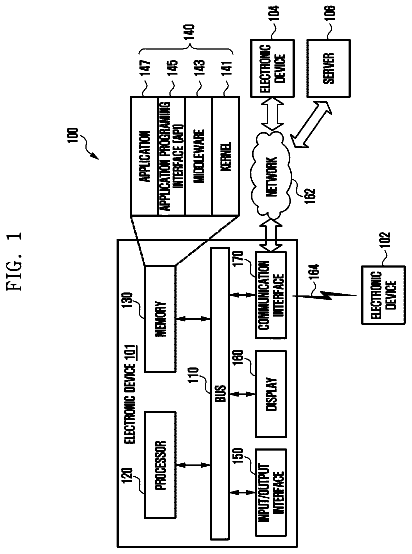
FIG. 1 is a diagram illustrating a system for providing a beacon service according to an embodiment of the present invention.
FIG. 2 is a block diagram illustrating a terminal device according to an embodiment of the present invention.
FIGS. 3 and 4 are flow diagrams illustrating an operating process of a terminal device according to an embodiment of the present invention.
FIG. 5 is a block diagram illustrating a service management server according to an embodiment of the present invention.
FIGS. 6 and 7 are flow diagrams illustrating an operating process of a service management server according to an embodiment of the present invention.
FIGS. 8 and 9 are flow diagrams illustrating a method for providing a beacon service according to an embodiment of the present invention.
FIGS. 10 to 12 are exemplary diagrams illustrating a method for providing a beacon service according to an embodiment of the present invention.
FIG. 13 is a flow diagram illustrating a method for providing a beacon service according to another embodiment of the present invention.
FIGS. 14 to 17 are exemplary diagrams illustrating a method for providing a beacon service according to another embodiment of the present invention.
FIGS. 18 and 19 are flow diagrams illustrating a method for providing a beacon service according to still another embodiment of the present invention.
FIGS. 20 to 24 are exemplary diagrams illustrating a method for providing a beacon service according to still another embodiment of the present invention.
FIG. 25 is a block diagram illustrating an operating environment of an apparatus for providing a beacon service according to an embodiment of the present invention.
Detailed description
Now, embodiments of the present invention will be described with reference to the accompanying drawings.
In the following description and the accompanying drawings, however, well known techniques may not be described or illustrated in detail to avoid obscuring the subject matter of the present invention. Through the drawings, the same or similar reference numerals denote corresponding features consistently.
The terms and words used in the following description, drawings and claims are not limited to the bibliographical meanings and are merely used by the inventor to enable a clear and consistent understanding of the invention. Accordingly, it should be apparent to those skilled in the art that the following description of exemplary embodiments of the present invention is provided for illustration purpose only and not for the purpose of limiting the invention as defined by the appended claims and their equivalents.
The expression “1”, “2”, “first”, or “second” used in various embodiments of this disclosure may modify various elements of such embodiments but does not limit the corresponding elements. The above expressions do not limit the sequence and/or importance of the elements but may be used for distinguishing one element from other elements. For example, a first device and a second device indicate different devices although both of them are devices. Meanwhile, without departing from the scope of the present disclosure, a first structural element may be referred to as a second structural element. Similarly, the second structural element also may be referred to as the first structural element.
When it is stated that a certain element is “coupled to” or “connected to” another element, the element may be directly coupled or connected to another element, or a new element may exist between both elements. In contrast, when it is stated that a certain element is “directly coupled to” or “directly connected to” another element, a new element does not exist between both elements.
The terms used in describing various embodiments of this disclosure are only examples for describing a specific embodiment but do not limit such embodiments. Singular forms are intended to include plural forms unless the context clearly indicates otherwise. Unless defined differently, all terms used herein, which include technical terminologies or scientific terminologies, have the same meaning as that understood by a person skilled in the art to which the present disclosure belongs. The terms “include”, “comprise”, and “have” as well as derivatives thereof, mean inclusion without limitation.
Embodiments within the scope of the present invention include computer-readable media for carrying or having computer-executable instructions or data structures stored thereon. Such computer-readable media may be any available media, which is accessible by a general-purpose or special-purpose computer system.
By way of example, and not limitation, such computer-readable media can comprise physical storage media such as RAM, ROM, EPROM, CD-ROM or other optical disk storage, magnetic disk storage or other magnetic storage devices, or any other media which can be used to carry or store desired program code means in the form of computer-executable instructions, computer-readable instructions, or data structures and which may be accessed by a general-purpose or special-purpose computer system.
In this description and in the following claims, a “network” is defined as one or more data links (of possibly different speeds) that enable the transport of electronic data between computer systems and/or modules (e.g., hardware and/or software modules). When information is transferred or provided over a network or another communications connection (either hardwired, wireless, or a combination of hardwired or wireless) to a computer system, the connection is properly viewed as a computer-readable medium. Computer-executable instructions include, for example, instructions and data which cause a general-purpose computer system or special-purpose computer system to perform a certain function or group of functions. The computer executable instructions may be, for example, binaries, intermediate format instructions such as assembly language, or even source code.
Although not required, the invention is described in the general context of computer-executable instructions, such as program modules, being executed by a computer, such as a client workstation or a server. Generally, program modules include routines, programs, objects, components, data structures and the like that perform particular tasks or implement particular abstract data types. Moreover, it should be appreciated that the invention and/or portions thereof may be practiced with other computer system configurations, including hand-held devices, multi-processor systems, microprocessor-based or programmable consumer electronics, network PCs, minicomputers, mainframe computers and the like. The invention may also be practiced in distributed computing environments where tasks are performed by remote processing devices that are linked through a communications network. In a distributed computing environment, program modules may be located in both local and remote memory storage devices.
Hereinafter, a service using beacon technology according to this invention will be described on the basis of data communication technology using Bluetooth low energy (BLE) technique.
While near field communication (NFC) technique is available only within several centimeters, Bluetooth technique is available within the range of several meters and is thus widely utilized in various fields. Further, unlike NFC, Bluetooth technique requires no tagging onto a reader and allows the delivery of data in response to a mere approach or passage to or through a beacon device. In addition, Bluetooth technique is helpful in reading indoor locations and delivering customized data.
This invention is, however, not limited to Bluetooth or BLE only and may further or alternatively employ any other short range communication technique, based on a personal area network (PAN), such as Zigbee, ultra wideband (UWB), ANT, Wi-Fi, NFC, or the like.
In this disclosure, the term ‘first beacon identification information’ refers to beacon identification information extracted by a service management server with regard to a specific beacon service registered in a terminal device. Additionally, the term ‘second beacon identification information’ refers to beacon identification information contained in a beacon signal emitted by a beacon device and received by a terminal device.
Now, several apparatuses for providing a beacon service in a beacon service system according to an embodiment of the present invention will be described with reference to the accompanying drawings.
At the outset, a system for providing a beacon service according to an embodiment of the present invention will be described in detail.
FIG. 1 is a diagram illustrating a system for providing a beacon service according to an embodiment of the present invention.
Referring to FIG. 1 , the beacon service provision system may include a communication network 100 , one or more beacon devices 200 , a terminal device 300 , and a service management server 400 .
Although the terminal device 300 transmits or receives data to or from the beacon devices 200 through BLE communication technique, this is exemplary only and not to be construed as a limitation. As mentioned above, any other short range communication technique may be alternatively applied.
The terminal device 300 is connected to and interworks with the service management server 400 through the communication network 100 .
Hereinafter, each element will be described in detail with reference to FIG. 1 .
The communication network 100 performs a function to deliver data for transmission and reception of data between the terminal device 300 and the service management server 400 . The communication network 100 may use wireless communication technique such as, but not limited to, WLAN (Wireless Local Access Network), Wi-Fi, Wibro, Wimax, HSDPA (High Speed Downlink Packet Access), LTE (Long Term Evolution), LTE-A (LTE-Advanced), or the like. Alternatively or additionally, depending on system types, the communication network 100 may use wired communication technique such as Ethernet, xDSL (ADSL, VDSL), HFC (Hybrid Fiber Coaxial cable), FTTC (Fiber To The Curb), FTTH (Fiber To The Home), or the like.
Additionally, the communication network 100 includes a plurality of access networks (not shown) and a core network (not shown), and may further include an external network, e.g., Internet (not shown). Here, the access network is to perform wired/wireless communication with the terminal device 300 and may be formed of a plurality of base stations, also referred to as BTS (Base Transceiver Station), NodeB, or eNB (eNodeB or evolved Node B), and controllers such as BSC (Base Station Controller) and RNC (Radio Network Controller). Additionally, instead of such a base station that includes a digital signal processor and a radio signal processor, a plurality of radio units (not shown) corresponding to the radio signal processor may be disposed respectively at a plurality of regions and connected to a centralized digital unit (not shown) corresponding to the digital signal processor.
The core network which forms a mobile network together with the access network performs a function to connect the access network and the external network such as Internet.
The core network is a network system that performs main functions for a mobile communication service such as mobility control and switching between the access networks. Namely, the core network performs circuit switching or packet switching and further manages and controls a packet flow in the mobile network.
In addition, the core network may manage mobility between frequencies, control traffic therein and in the access network, and control interworking with other network such as Internet. The core network may be formed of SGW (Serving GateWay), PGW (PDN GateWay), MSC (Mobile Switching Center), HLR (Home Location Register), MME (Mobile Mobility Entity), HSS (Home Subscriber Server), and/or the like.
The Internet is a world common network through which information is exchanged according to TCP/IP protocol. The Internet is connected to the terminal device 300 and may deliver information, offered from the terminal device 300 , to the service management server 400 through the core network and the access network. Similarly, the Internet may deliver information, offered from the service management server 400 , to the terminal device 300 through the core network and the access network. This is, however, exemplary only and not to be construed as a limitation. Alternatively, the service management server 400 may be integrated with the core network.
In addition to the above-discussed communication technique, any other communication technique well known in the art or to be developed may be used for this invention.
The beacon device 200 refers to an apparatus that periodically emits a beacon signal for a typical beacon service. This beacon signal may contain beacon identification information, such as device information or location information, allocated to the beacon device 200 . Such beacon identification information is the basis used for the terminal device 300 to be offered a beacon service.
The beacon device 200 performs a function to emit a beacon signal through short range communication and to offer a particular service to the terminal device 300 connected by means of beacon scanning. The beacon device 200 may emit a beacon signal according to a BLE (Bluetooth Low Energy) communication protocol. Emitting a beacon signal within a certain range from 5 cm to 49 m, the beacon device 200 may be installed at indoor places such as a store. The beacon device 200 has a firmware program for processing and managing information about services (e.g., an advertisement, a location based service, etc.). This firmware program has essential information required for operating the beacon device 200 and may be managed and updated by the service management server 400 .
Additionally, the beacon device 200 may be classified into a master beacon and a slave beacon. The master beacon has both a communication module for emitting a beacon signal to the terminal device 300 located within specific service coverage and a communication module for connecting to the service management server 400 . The slave beacon emits a beacon signal within specific service coverage and is capable of being connected to the master beacon. For access to the service management server 400 , the slave beacon may be connected under the control of the master beacon. Depending on system circumstances or requests, the master beacon for connection may be changed. Meanwhile, the master beacon may be connected to the communication network 100 through an access point device (not shown) and transmit or receive information to or from the service management server 400 through the communication network 100 .
The terminal device 300 refers to a user's device capable of transmitting and receiving various data through the communication network 100 in response to user's manipulations. The terminal device 300 may perform voice or data communication through the communication network 100 , transmit or receive information to or from the service management server 400 through the communication network 100 , and receive information from the beacon device 200 by means of beacon-based communication. For this, the terminal device 300 may have a memory for storing programs and protocols for transmitting, receiving and processing a beacon signal, a microprocessor for executing and controlling various programs, and the like.
The terminal device 300 may perform the access to any application provider (not shown) such as App Store on the communication network 100 , receive a beacon service application from the application provider, and install the beacon service application for receiving a beacon signal and showing content corresponding to the beacon signal. The terminal device 300 may execute the beacon service application, extract beacon identification information from the beacon signal, transmit the extracted information to the service management server 400 , receive specific content (e.g., a discount coupon, a membership card benefit, etc.) mapped to the beacon identification information from the service management server 400 , and offer the received content to a user.
Particularly, according to an embodiment of this invention, when one or more beacon services are registered in response to a user's request, the terminal device 300 transmits information about the registered beacon services to the service management server 400 . Then the terminal device 300 receives first beacon identification information associated with the registered beacon services from the service management server 400 and stores the received information.
In this case, the terminal device 300 may receive and store service content, together with the first beacon identification information, corresponding to the first beacon identification information from the service management server 400 . Also, the first beacon identification information and corresponding service contents may be received sequentially depending on locations of the terminal device 300 .
The location of the terminal device 300 may be measured using a GPS sensor. Additionally or alternatively, the location of the terminal device 300 may be measured by means of triangulation using the beacon devices 200 , base stations and/or AP devices which are adjacent to the terminal device 300 .
The reason of sequential reception is as follows. If the first beacon identification information and corresponding service contents offered to the terminal device 300 by the service management server 400 are too much, this may cause a shortage of memory in the terminal device 300 . It is desirable to receive sequentially such information and contents according to locations of the terminal device 300 .
For example, if the terminal device 300 is currently located in ‘Region A’, the service management server 400 transmits, to the terminal device 300 , the first beacon identification information and service contents only available for ‘Region A’. Namely, in ‘Region A’, the terminal device 300 needs not receive any information and contents available for other regions.
In this case, a regional scope for sequential reception may be adjusted on the basis of administrative districts. Instead, a certain physical range may be used for such sequential reception.
After the first beacon identification information and service content are received from the service management server 400 , the terminal device 300 may receive the second beacon identification information from the beacon device 200 . Then the terminal device 300 may compare the received second beacon identification information with the stored first beacon identification information. If the received identification information is identical with the stored identification information, the terminal device 300 may offer, to a user, specific service content corresponding to the second beacon identification information.
In this case, if such service content, together with the first beacon identification information, has been already received from the service management server 400 and stored in the terminal device 300 , the terminal device 300 may offer the stored service content to a user. If the first beacon identification information only has been received and stored, the terminal device 300 may transmit the second beacon identification information to the service management server 400 and then receive corresponding service content from the service management server 400 .
Additionally, the terminal device 300 may check a length of stay at a specific place corresponding to the second beacon identification information and then offer specific service content depending on the checked length of stay. This length of stay may be calculated on the basis of the number of continuously receiving the second beacon identification information at signal strength greater than predetermined received signal strength.
Namely, if a beacon signal is received at signal strength greater than predetermined received signal strength, it is determined that the terminal device 300 enters a place (e.g., a store) corresponding to the beacon device 200 that emits the received beacon signal. Since the beacon device 200 emits periodically a beacon signal, the length of stay of the terminal device 30 may be obtained from the number of continuously received signals.
When the length of stay is longer, service content offered to the terminal device 300 may have a higher-level benefit. This may arouse a great interest of a user having the terminal device 300 .
Meanwhile, according to another embodiment of this invention, when a beacon service is registered in response to a user's request, the terminal device 300 transmits information about the registered beacon service to the service management server 400 .
Thereafter, when a beacon signal is received from the beacon device 200 , the terminal device 300 transmits second beacon identification information contained in the received beacon signal to the service management server 400 and then may receive specific service content corresponding to the second beacon identification information.
For example, in case a beacon service to be registered is a scheduler service, the terminal device 300 transmits schedule information to the service management server 400 through the communication network 100 . The schedule information may be things to do, places to visit, etc. on a day-to-day basis. In this case, the terminal device 300 may create user's schedule information based on a specific period, e.g., day, by interworking with a scheduler program, and deliver the created schedule information to the service management server 400 . For example, if a user enters a future plan, appointment or event, e.g., ‘Dec. 24, 7:00 p.m., Restaurant AA’ through the scheduler program, the terminal device 300 may create schedule information having the entered plan, appointment or event at the corresponding date and then transmit the created schedule information to the service management server 400 . This is, however, exemplary only. Alternatively, schedule information may be transmitted to the service management server 400 as soon as a user enters such information. Thereafter, the terminal device 300 may receive, from the service management server 400 , rescheduling information created using the schedule information by the service management server 400 .
The terminal device 300 may be implemented in various forms. For example, the terminal device 300 disclosed herein may be a mobile device such as a smart phone, a tablet PC, a PDA (Personal Digital Assistant), a PMP (Portable Multimedia Player), an MP3 player, and the like, or a stationary device such as a smart TV, a desktop computer, and the like.
Additionally, according to a recent trend of convergence in digital devices, a great variety of mobile devices or their equivalences may be used as the terminal device 300 in the present invention. Furthermore, any device that allows a beacon service application to be downloaded and installed may be used as the terminal device 300 in embodiments of this invention.
The service management server 400 may manage a plurality of beacon devices 200 , receive a service request from the terminal device 300 , and provide information corresponding to the requested service.
Particularly, when information about a beacon service registered in the terminal device 300 is received from the terminal device 300 , the service management server 400 may extract the first beacon identification information associated with the received beacon service information, i.e., indicating a store available for the registered beacon service, together with corresponding service content.
Then the service management server 400 may transmit the extracted first beacon identification information to the terminal device 300 together with the extracted service content.
If the first beacon identification information only is transmitted to the terminal device 300 , the service management server 400 may receive the second beacon identification information from the terminal device 300 and then transmit the service content corresponding to the second beacon identification information to the terminal device 300 .
Additionally, the service management server 400 may sequentially extract the first beacon identification information and service contents depending on locations of the terminal device 300 . In this case, the service management server 400 may extract all kinds of the first beacon identification information and service contents associated with the registered beacon service and then transmit sequentially them depending on locations of the terminal device 300 .
Meanwhile, when information about one or more beacon services registered in the terminal device 300 is received from the terminal device 300 , the service management server 400 extracts and stores one or more kinds of the first beacon identification information associated with the received beacon service information.
The description continues in the full USPTO document.
 Lapsed, fee not paid18 drawings