 Lapsed, fee not paid10 drawings
Medical Devices · US 9,872,806 B2
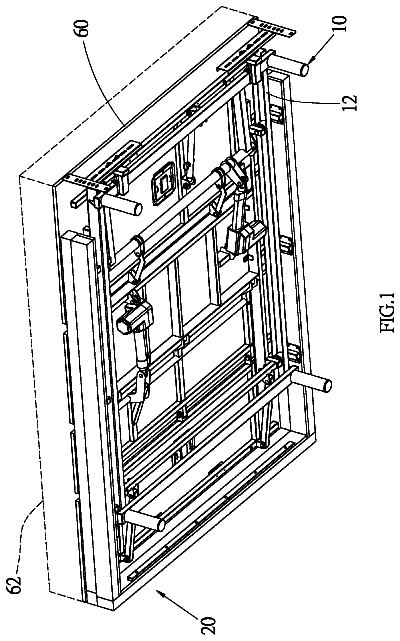
Bed for patient
A bed includes a base, a mattress-supporting device, two driving units and a limiting unit.
US 9,872,935 B2 · Assignee: Covidien LP · Inventors: Bennett; Steven et al.
Sheet 1 of 11 from the published document. All sheets in the USPTO PDF
The present disclosure relates to a hydrogel composition and methods of using the same. The hydrogel composition may include precursors that react with each other upon contact as well as precursors that react upon contact with an initiator. In embodiments, the resulting hydrogels may have varying levels of crosslinking with both denser and less dense regions.
Hydrogels may be used in the body for many different purposes. For example, hydrogels may be used as adhesives or sealants. Hydrogels may also be used in the formation of coatings or implants. Such implants or coatings may also include drugs for local administration. Hydrogels may be formed from precursor components. These components may be reactive, i.e., the components react with one another upon contact, or they may be caused to react by exposure to external initiators, such as ultraviolet (UV) light, ions, heat, visible light, gamma ray, electron beam, combinations thereof, and the like. Characteristics of the resulting hydrogel may be limited to the characteristics of the particular type of precursor. It would be advantageous to form a hydrogel that exhibits the properties of both reactive and initiated hydrogel precursors.
1 of 11 drawing sheets so far from the published document, cropped to the drawing. Every sheet is in the USPTO PDF.
What the patent claimed, word for word. All of it is now free to use.
Hydrogels may be used in the body for many different purposes. For example, hydrogels may be used as adhesives or sealants. Hydrogels may also be used in the formation of coatings or implants. Such implants or coatings may also include drugs for local administration.
Hydrogels may be formed from precursor components. These components may be reactive, i.e., the components react with one another upon contact, or they may be caused to react by exposure to external initiators, such as ultraviolet (UV) light, ions, heat, visible light, gamma ray, electron beam, combinations thereof, and the like. Characteristics of the resulting hydrogel may be limited to the characteristics of the particular type of precursor.
It would be advantageous to form a hydrogel that exhibits the properties of both reactive and initiated hydrogel precursors.
The present disclosure provides hydrogels and methods for making and using same. Devices including these hydrogels are also provided. For example, in embodiments, a hydrogel of the present disclosure may be utilized to attach a medical device to tissue.
In embodiments, the present disclosure provides a mesh implant including a filamentous substrate; and a film coating on at least a portion of the filamentous substrate, the film coating including a freeze-dried composition including an initiated precursor including at least one vinyl group, in combination with a first hydrogel comprising a first reactive precursor comprising a multi-arm polyether possessing electrophilic groups, and a second reactive precursor including nucleophilic groups, wherein the first hydrogel can be re-hydrated to releasably attach the mesh to tissue, and the initiated precursor can be exposed to an initiator to form a second hydrogel securely affixing the mesh to tissue.
Methods of the present disclosure include, in embodiments, a method of attaching mesh to tissue including contacting a mesh including an initiated precursor including at least one vinyl group with a first reactive precursor comprising a multi-arm polyether possessing electrophilic groups, and a second reactive precursor including nucleophilic groups; contacting the mesh to tissue; allowing the first reactive precursor and the second reactive precursor to react to form a first hydrogel; and contacting the initiated precursor with an initiator to form a second hydrogel, wherein the second hydrogel secures the mesh to the tissue.
Various embodiments of the present disclosure will be described herein below with reference to the figures, in which:
FIG. 1A is a side view of a hydrogel implant in accordance with the present disclosure;
FIG. 1B is a cross-sectional view of the hydrogel of FIG. 1A depicting exposure to an initiator;
FIG. 1C is a cross-sectional view of the hydrogel of FIG. 1A following exposure to an initiator;
FIG. 2A is a perspective view of a hydrogel implant in accordance with the present disclosure;
FIG. 2B is a side view of the hydrogel of FIG. 2A depicting exposure to an initiator;
FIG. 2C is a cross-sectional view of the hydrogel of FIG. 2A following exposure to an initiator;
FIG. 3A is a side view of a template used during formation of a hydrogel of the present disclosure;
FIG. 3B is an elevated view of a blocking device or screen for use with a template in accordance with the present disclosure;
FIG. 3C is a side view of a template and blocking device used in accordance with the present disclosure;
FIG. 3D is a side view of a hydrogel implant of the present disclosure;
FIG. 4 is a graph depicting the modulus of a hydrogel implant of the present disclosure prior to and following cross-linking of an initiated precursor;
FIG. 5A is an elevated view of a mesh implant having a coating including the hydrogel of the present disclosure;
FIG. 5B is an elevated view of the implant of FIG. 5A following degradation of a portion of the hydrogel of the disclosure;
FIG. 6A is a cross-sectional view of a suture anchor formed using the hydrogel of the present disclosure;
FIG. 6B is a cross-sectional view of the suture anchor of FIG. 6A depicting cross-linking of the initiated precursor;
FIG. 6C is a cross-sectional view of the suture anchor of FIG. 6A after cross-linking of the initiated precursor;
FIG. 7A is an elevated view of an implant for adherence to tissue using the hydrogel of the present disclosure;
FIG. 7B is an elevated view of the implant of FIG. 7A prior to cross-linking of the initiated precursor;
FIG. 7C is an elevated view of the implant of FIG. 7A following cross-linking of the initiated precursor;
FIG. 8 is a graph of the data presented in Table 2;
FIG. 9 is a graph comparing force applied and amount of compression for an initiated hydrogel and an uninitiated hydrogel;
FIG. 10 is a graph depicting the elastic modulus of different tissues and other materials, including collagen and gelatin;
FIG. 11 is a depiction of a use of a composition of the present disclosure to repair a defect in tissue;
FIG. 12A is a view of an implant including a composition of the present disclosure, having a disperse region formed of one hydrogel within a second hydrogel; and
FIG. 12B is an alternate view of an implant including a composition of the present disclosure, having disperse regions formed of one hydrogel within a second hydrogel.
Hydrogels are described herein that may be formed from crosslinking reactive precursors, which do not require the use of an initiator, in combination with precursors that require external initiation, i.e., initiated precursors. The precursor may be, e.g., a monomer or a macromer. As used herein the terms “hydrogel precursor(s)”, “first hydrogel precursor”, and “second hydrogel precursor” may be used to refer to components that may be combined to form a hydrogel, either with or without the use of an initiator. Thus, these precursors may, in embodiments, include combinations of reactive precursors and initiated precursors. As used herein the terms “reactive precursor(s)”, “first reactive hydrogel precursor(s)”, and “second reactive hydrogel precursor(s)” include precursors that may crosslink upon exposure to each other to form a hydrogel. As used herein the term “initiated precursor(s)”, “first initiated hydrogel precursor(s)” and “second initiated hydrogel precursor(s)” may be used to describe hydrogel precursors that crosslink upon exposure to an external source, sometimes referred to herein as an “initiator”. Initiators include, for example, ions, UV light, redox-reaction components, combinations thereof, as well as other initiators within the purview of those skilled in the art.
The hydrogel precursors, whether reactive precursors or initiated precursors, may have biologically inert and water soluble cores. When the core is a polymeric region that is water soluble, suitable polymers that may be used include: polyethers, for example, polyalkylene oxides such as polyethylene glycol (“PEG”), polyethylene oxide (“PEO”), polyethylene oxide-co-polypropylene oxide (“PPO”), co-polyethylene oxide block or random copolymers, and polyvinyl alcohol (“PVA”); poly(vinyl pyrrolidinone) (“PVP”); poly(amino acids); poly(saccharides), such as dextran, chitosan, alginates, carboxymethylcellulose, oxidized cellulose, hydroxyethylcellulose and/or hydroxymethylcellulose; hyaluronic acid; and proteins such as albumin, collagen, casein, and gelatin. In embodiments, combinations of the foregoing polymeric materials may be utilized to form a core. The polyethers, and more particularly poly(oxyalkylenes) or poly(ethylene glycol) or polyethylene glycol (“PEG”), may be utilized in some embodiments.
When the core is small in molecular nature, any of a variety of hydrophilic functionalities may be used to make the hydrogel precursors water soluble. In embodiments, functional groups like hydroxyl, amine, sulfonate and carboxylate, which are water soluble, may be used to make a precursor water soluble. For example, the N-hydroxysuccinimide (“NETS”) ester of subaric acid is insoluble in water, but by adding a sulfonate group to the succinimide ring, the NHS ester of subaric acid may be made water soluble, without affecting its ability to be used as a reactive group due to its reactivity towards amine groups.
In embodiments, a hydrogel may be formed from reactive precursors through covalent, ionic, or hydrophobic bonds. Physical (non-covalent) crosslinks may result from complexation, hydrogen bonding, desolvation, Van der Waals interactions, ionic bonding, combinations thereof, and the like, and may be initiated by mixing two precursors that are physically separated until combined in situ or as a consequence of a prevalent condition in the physiological environment, including temperature, pH, ionic strength, combinations thereof, and the like. Chemical (covalent) crosslinking may be accomplished by any of a number of mechanisms including, but not limited to, free radical polymerization, condensation polymerization, anionic or cationic polymerization, step growth polymerization, electrophile-nucleophile reactions, combinations thereof, and the like.
In embodiments, the reactive precursor portion of the hydrogel may be formed from a single type of reactive precursor or multiple types of reactive precursors. In other embodiments, where the hydrogel is formed from multiple types of reactive precursors, for example two reactive precursors, the reactive precursors may be referred to as a first and second reactive precursor. Where more than one reactive precursor is utilized, in embodiments, at least one of the reactive hydrogel precursors may be a crosslinker, and at least one other reactive hydrogel precursor may be a macromolecule, and may be referred to herein as a “functional polymer”.
In some embodiments, reactive precursors may include biocompatible multi-precursor systems that spontaneously crosslink when the precursors are mixed, but wherein the two or more precursors are individually stable for the duration of the deposition process. When the reactive precursors are mixed in an environment that permits reaction (e.g., as relating to pH or solvent), the functional groups react with each other to form covalent bonds. Reactive precursors become crosslinked when at least some of the reactive precursors can react with more than one other precursor. For instance, a precursor with two functional groups of a first type may be reacted with a crosslinking precursor that has at least three functional groups of a second type capable of reacting with the first type of functional groups.
Such reactive components include, for example, first reactive precursors possessing electrophilic groups and second reactive precursors possessing nucleophilic groups. Electrophiles react with nucleophiles to form covalent bonds. Covalent crosslinks or bonds refer to chemical groups formed by reaction of functional groups on different polymers that serve to covalently bind the different polymers to each other. In certain embodiments, a first set of electrophilic functional groups on a first reactive precursor may react with a second set of nucleophilic functional groups on a second reactive precursor. In embodiments, such systems include a first reactive precursor including di- or multifunctional alkylene oxide containing moieties, and a second reactive precursor including macromers that are di- or multifunctional amines.
In embodiments the reactive hydrogel precursors may be multifunctional, meaning that they may include two or more electrophilic or nucleophilic functional groups, such that, for example, an electrophilic functional group on the first reactive hydrogel precursor may react with a nucleophilic functional group on the second reactive hydrogel precursor to form a covalent bond. At least one of the first or second reactive hydrogel precursors includes more than two functional groups, so that, as a result of electrophilic-nucleophilic reactions, the precursors combine to form crosslinked polymeric products.
In embodiments, each of the first and second reactive hydrogel precursors include only one category of functional groups, either only nucleophilic groups or only electrophilic functional groups, so long as both nucleophilic and electrophilic reactive precursors are used in the crosslinking reaction. Thus, for example, if the first reactive hydrogel precursor has electrophilic functional groups such as N-hydroxysuccinimides, the second reactive hydrogel precursor may have nucleophilic functional groups such as amines. On the other hand, if the first reactive hydrogel precursor has electrophilic functional groups such as sulfosuccinimides, then the second reactive hydrogel precursor may have nucleophilic functional groups such as amines or thiols.
In embodiments, a multifunctional electrophilic polymer such as a multi-arm PEG functionalized with multiple NHS groups may be used as a first reactive hydrogel precursor and a multifunctional nucleophilic polymer such as trilysine may be used as a second reactive hydrogel precursor. The multi-arm PEG functionalized with multiple NHS groups may, for example, have four, six or eight arms and a molecular weight of from about 5,000 to about 25,000. Other examples of suitable first and second reactive hydrogel precursors are described in U.S. Pat. Nos. 6,152,943; 6,165,201; 6,179,862; 6,514,534; 6,566,406; 6,605,294; 6,673,093; 6,703,047; 6,818,018; 7,009,034; and 7,347,850, the entire disclosures of each of which are incorporated by reference herein.
Certain properties of a hydrogel precursor may be useful, including, for example, adhesion to a variety of tissues, desirable setting times to enable a surgeon to accurately and conveniently place the in situ forming hydrogel precursors, high water content for biocompatibility, mechanical strength for use in sealants, and/or toughness to resist destruction after placement. Synthetic materials that are readily sterilized and avoid the dangers of disease transmission that may accompany the use of natural materials may thus be used. Indeed, certain polymerizable hydrogels made using synthetic precursors are within the purview of those skilled in the art, e.g., as used in commercially available products such as FOCALSEAL® (Genzyme, Inc.), COSEAL® (Angiotech Pharmaceuticals), and DURASEAL® (Confluent Surgical, Inc). Other known hydrogels include, for example, those disclosed in U.S. Pat. Nos. 6,656,200; 5,874,500; 5,543,441; 5,514,379; 5,410,016; 5,162,430; 5,324,775; 5,752,974; and 5,550,187.
The reaction conditions for forming crosslinked polymeric hydrogels from reactive precursors may depend on the nature of the reactive precursor used. In embodiments, reactions are conducted in buffered aqueous solutions at a pH of about 5 to about 12. Buffers include, for example, sodium borate buffer (pH 10) and triethanol amine buffer (pH 7). In some embodiments, organic solvents such as ethanol or isopropanol may be added to improve the reaction speed or to adjust the viscosity of a given formulation.
When the hydrogel precursors are synthetic (for example, when they are based on polyalkylene oxide), it may be desirable to use molar equivalent quantities of the reactants. In some cases, molar excess of a crosslinker may be added to compensate for side reactions such as reactions due to hydrolysis of the functional group.
When choosing the reactive precursors, in embodiments a crosslinker and crosslinkable polymer, at least one of the polymers may have more than two functional groups per molecule and, if it is desired that the resultant hydrogel be biodegradable, at least one degradable region. In embodiments, each reactive polymer precursor may have more than two functional groups, and in embodiments, more than four functional groups.
The crosslinking density of the resultant biocompatible, crosslinked polymer formed from the reactive precursors may be controlled by the overall molecular weight of the precursors, in embodiments a crosslinker and functional polymer, and the number of functional groups available per molecule. A lower molecular weight between crosslinks, such as 600 Da, will give much higher crosslinking density as compared to a higher molecular weight, such as 10,000 Da. Elastic gels may be obtained with higher molecular weight functional polymers with molecular weights of more than 3000 Da.
The crosslinking density may also be controlled by the overall percent solids of the precursors, in embodiments crosslinker and functional polymer, in solutions. Increasing the percent solids increases the number of crosslinkable groups per unit volume and potential crosslinking density. Yet another method to control crosslink density is by adjusting the stoichiometry of nucleophilic groups to electrophilic groups. A one to one ratio may lead to the highest crosslink density, however, other ratios of reactive functional groups (e.g., electrophile:nucleophile) are envisioned to suit a desired formulation.
In embodiments, a first reactive precursor may be a multi-arm PEG and may be functionalized by ring opening anhydrides containing a vinyl group and end capped with NHS. The second reactive precursor may be a multifunctional amine component. The hydrogel of the disclosure may thus be formed from at least two precursors.
In some embodiments, as noted above, hydrogel precursors may include initiated precursors. Initiated precursors for use in accordance with the present disclosure may have a functional group that is ethylenically unsaturated. Such precursors possessing such ethylenically unsaturated functional groups may have biologically inert and water soluble cores as described above. Such cores may be functionalized by any means within the purview of those skilled in the art.
An ethylenically unsaturated functional group, in embodiments a vinyl group, may be polymerized using an initiator to start the polymerization reaction. Precursors with at least two ethylenically unsaturated functional groups may form crosslinked polymers. Some compositions have certain precursors with only one such functional group and additional crosslinked precursors with a plurality of functional groups for crosslinking the precursors. Ethylenically unsaturated functional groups may be polymerized by various techniques, e.g., free radical, condensation, or addition polymerization. Exemplary initiated precursors that may be used in accordance with the present disclosure include acrylates; anhydrides containing vinyl groups such as, for example, itaconic anhydride, maleic anhydride, citraconic anhydride, combinations thereof, and the like. Other exemplary initiated precursors include, for example, acrylic acid, methacrylic acid, phosphorylcholine containing monomers, furanone functional vinyl monomers, potassium sulfopropyl acrylate, potassium sulfopropyl methacrylate, n-vinyl pyrrolidone, hydroxyethyl methacrylate, vinyl monomers having a high refractive index, siloxane functional vinyl compounds, polyethylene glycol-silicone co-monomers having vinyl groups, tris acrylate, pyrrole, liquid crystalline vinyl monomers, liquid crystalline vinyl polymers, combinations thereof, and the like.
Suitable initiators utilized to polymerize initiated precursors include, but are not limited to, thermal initiators, photoactivatable initiators, oxidation-reduction (redox) systems, free radical initiators, radiation, thermal initiating systems, combinations thereof, and the like. In embodiments, suitable sources of radiation include heat, visible light, ultraviolet (UV) light, gamma ray, electron beam, combinations thereof, and the like. In embodiments, photointiators may also be used. Such photoinitiators include, but are not limited to, free radical initiators, redox initiators such as ferrous-bromate, ammonium persulfate/acetic acid, ammonium persulfate-tetramethyl diamine, potassium persulfate/VA 044 (Wako Chemicals Inc., Richmond Va.), and the like. UV light may also be used with dye mediated photooxidation, glutaraldehyde crosslinking, dexamethylene diisocyanate crosslinking, carbodiimide crosslinking, combinations thereof, and the like.
In embodiments, one or more hydrogel precursors having biodegradable linkages present in between functional groups may be included to make the hydrogel biodegradable or absorbable. In some embodiments, these linkages may be, for example, esters, which may be hydrolytically degraded in physiological solution. The use of such linkages is in contrast to protein linkages that may be degraded by proteolytic action. A biodegradable linkage may also form part of a water soluble core of one or more of the hydrogel precursors. Alternatively, or in addition, functional groups of hydrogel precursors may be chosen such that the product of the reaction between them results in a biodegradable linkage. For each approach, biodegradable linkages may be chosen such that the resulting biodegradable, biocompatible, crosslinked polymer degrades or is absorbed in a desired period of time. Generally, biodegradable linkages may be selected that degrade the hydrogel under physiological conditions into non-toxic or low toxicity products.
Biodegradable crosslinkers or small molecules as described above may be reacted with proteins, such as albumin, other serum proteins, and/or serum concentrates, to generate crosslinked polymeric networks. Generally, aqueous solutions of crosslinkers may be mixed with concentrated solutions of proteins to produce a crosslinked hydrogel. The reaction may be accelerated by adding a buffering agent, e.g., a borate buffer or triethanol amine, during the crosslinking step.
The crosslinking reaction leading to gelation may occur, in embodiments, within from about 1 second to about 5 minutes, in embodiments from about 3 seconds to about 1 minute. Persons of ordinary skill in these arts will immediately appreciate that all ranges and values within these explicitly stated ranges are contemplated. In some cases gelation may occur in less than 10 seconds.
Degradation of a crosslinked hydrogel may depend upon the biodegradable segment in the crosslinker as well as any enzymes to which the hydrogel is exposed. In the absence of any degrading enzymes, the crosslinked polymer may degrade solely by hydrolysis of the biodegradable segment. The rate of degradation may depend upon the polymer forming the water soluble core and more specifically on the structure and location of any ester linkages formed. For example, an ester linkage may be formed in a ring opening polymerization. The ring opening polymerization may occur, for example, between a PEG and a cyclic ester or an anhydride including, for example, furan-2,5-dione, 1,4-dioxane-2,5-dione, glutaric anhydride, succinic acid anhydride, maleic anhydride, itaconic anhydride, methyl succinic anhydride, 2,2-dimethyl succinic anhydride, 2 dodecen-1-yl succinic anhydride, cis-1,2,3,6-tetrahydrophthalic anhydride, citraconic anhydride, 2,3-dimethyl maleic anhydride, 1-cyclopentene-1,2-dicarboxylic anhydride, 3,4,5,6-tetrahydrophthalic anhydride, 3 ethyl-3-methyl glutaric anhydride, 3,3-dimethyl glutaric anhydride, 3-methyl glutaric anhydride, combinations thereof, and the like. The resulting polymer may then be functionalized, in embodiments with a succinimide group, and then may be utilized as a reactive precursor to form a hydrogel of the present disclosure (for example, by combining with a crosslinker such as an amine). The monomer combined with PEG for the ring opening polymerization, and thus the resulting degradable ester group, will influence the persistence of the hydrogel in vivo. The percent solids and arm length of monomers used to form this reactive precursor may also influence its degradation rate.
For example, in embodiments, the product may be the ring opening polymerization between PEG and a second component including an anhydride such as glutaric anhydride, itaconic anhydride, methyl succinic anhydride, 2,2-dimethyl succinic anhydride, 2 dodecen-1-yl succinic anhydride, cis-1,2,3,6-tetrahydrophthalic anhydride, citraconic anhydride, 2,3-dimethyl maleic anhydride, 1-cyclopentene-1,2-dicarboxylic anhydride, 3,4,5,6-tetrahydrophthalic anhydride, 3 ethyl-3-methyl glutaric anhydride, 3,3-dimethyl glutaric anhydride, 3-methyl glutaric anhydride, combinations thereof, and the like. The resulting product may form a hydrogel that degrades over a period of from about 6 weeks to about 8 weeks.
In other embodiments, the product of the ring opening polymerization between PEG and succinic acid anhydride may degrade over a period of from about 2 days to about 7 days. In embodiments where PEG and maleic anhydride are used, the product may degrade over a period of about six months. The vinyl group in the ring opened maleic anhydride may be involved in a secondary vinyl polymerization. Thus, in embodiments, the vinyl group of the ring opened maleic anhydride may serve as an initiated precursor.
The hydrophobicity generated by biodegradable blocks such as oligohydroxy acid blocks or the hydrophobicity of PPO blocks in PLURONIC or TETRONIC polymers may be helpful in dissolving small organic drug molecules. Other properties which will be affected by incorporation of biodegradable or hydrophobic blocks include: water absorption; mechanical properties; and thermosensitivity.
Synthetic crosslinked gels degrade due to hydrolysis of the biodegradable region. The degradation of gels containing synthetic peptide sequences may depend on the specific enzyme necessary for degradation of the sequence and its concentration. In some cases, a specific enzyme may be added during the crosslinking reaction to accelerate the degradation process.
The hydrogel precursors may be placed into solution prior to use, with the solution being delivered to tissue. Where two solutions are employed, each solution may contain one or more precursors that may react with one another upon contact. The solutions may be separately stored and mixed when delivered to tissue.
Any solutions utilized as part of an in situ forming material system should not contain harmful or toxic solvents. In embodiments, the precursor(s) may be substantially soluble in a solvent such as water to allow application in a physiologically-compatible solution, such as buffered isotonic saline. Water-soluble coatings may form thin films, but in embodiments may also form three-dimensional gels of controlled thickness. The gel may also be biodegradable, so that it does not have to be retrieved from the body. The term “biodegradable” as used herein is defined to include both bioabsorbable and bioresorbable materials. By biodegradable, it is meant that the materials decompose, or lose structural integrity under body conditions (e.g., enzymatic degradation or hydrolysis) or are broken down (physically or chemically) under physiologic conditions in the body such that the degradation products are excretable or absorbable by the body.
Various applications may require different characteristics of the hydrogel. Generally, the hydrogel precursors should be selected on the basis of exhibited biocompatibility and lack of toxicity.
In embodiments, a hydrogel may be formed from at least one reactive precursor (capable of crosslinking, for example, by free radical polymerization), and at least one initiated precursor, or made with three or more precursors, with one or more of the precursors participating in crosslinking to form the in situ forming material.
Prior to hydrogel formation, the initiated precursor, in embodiments a linear PEG acrylate, may be reconstituted in a high pH buffer, for example sodium borate, having a pH from about 7 to about 11, in embodiments from about 8 to about 10. The initiated precursor, in embodiments a multi-arm PEG having electrophilic functional groups, may be reconstituted with a low pH buffer, such as, sodium phosphate, having a pH from about 3 to about 6, in embodiments from about 4 to about 5.
In embodiments, a linear PEG acrylate may be used as the initiated precursor. In embodiments, a hydrogel may thus be formed by contacting a first reactive hydrogel precursor, a second reactive hydrogel precursor, and the initiated precursor. The hydrogel may form upon reaction of the first reactive precursor and the second reactive precursor. The components may also be exposed to an initiator to crosslink the initiated precursor thereby creating a denser hydrogel.
In embodiments, the resulting hydrogel may form an interpenetrating network. In embodiments, an interpenetrating network may be formed from two hydrogel networks, i.e., a hydrogel formed by at least two reactive precursors in combination with an initiated precursor. In other embodiments, the interpenetrating network could be formed from an initiated precursor that also possesses reactive groups. Such a precursor can both react with another reactive precursor and be initiated upon exposure to an initiator.
For example, in embodiments, a first hydrogel may form between a multi-arm PEG and trilysine. A second hydrogel may be formed by exposing an ethylenically unsaturated monomer to an initiator. These two hydrogels may be combined prior to exposure to the initiator. Exposure of these hydrogels, to the initiator results in an interpenetrating network of hydrogels, each of which may have separate properties such as varying degradation rates. Additionally, varying the amount of reactive precursors and initiated precursors may result in different properties of the resulting composition.
In other embodiments, a multi-arm PEG may be functionalized with vinyl groups and reacted with trilysine to form a first hydrogel. By initiating the PEG functionalized with vinyl groups with an initiator, the crosslinking of the hydrogel may be increased due to the crosslinking of the vinyl groups, thereby forming an interpenetrating network. In other embodiments, a multi-arm PEG functionalized with vinyl groups may react to a limited extent with amines, followed by the addition of an initiator to increase crosslinking of the vinyl groups.
Where the reactive precursors from a first hydrogel, the initiated precursor forms a second hydrogel, and the two hydrogels together form an interpenetrating network, in embodiments the first hydrogel formed from the reactive precursors may degrade more quickly than the second hydrogel formed from the initiated precursor, thereby forming spaces permitting healing by means of, for example, tissue in-growth, vascularization, combinations thereof, and the like.
In embodiments, the hydrogel of the present disclosure, having an interpretation network with varying degrees of degradation, may act as a tissue scaffold, thereby providing a means for tissue integration/ingrowth. Tissue scaffolds also are capable of providing cells with growth and development components. Thus, where the hydrogel of the present disclosure is utilized as a tissue scaffold, it may assist in native tissue regrowth by providing the surrounding tissue with needed nutrients and bioactive agents. In some embodiments, as discussed herein, the hydrogel itself may include a natural component, such as collagen, gelatin, hyaluronic acid, combinations thereof, and the like, and thus the natural component may be released or otherwise degrade at the site of implantation as the tissue scaffold degrades.
In other embodiments, a hydrogel composition of the present disclosure may possess two hydrogels, with one dispersed within the other. For example, in embodiments, a composition of the present disclosure may include the first hydrogel formed from reactive precursors, with at least one disperse region within the first hydrogel, the disperse region formed of a second hydrogel formed from an initiated precursor. In other embodiments, a first hydrogel formed of reactive precursors may form at least one disperse region within a second hydrogel formed from an initiated precursor. The disperse region formed by one hydrogel may form one region, e.g., a central region or core, within a second hydrogel, or the disperse region formed by one hydrogel may form many small regions within a second hydrogel.
Varying the concentrations of the reactive and initiated precursors may result in differing properties of the resulting hydrogel. For example, in embodiments, a solution may contain an acrylate having a molecular weight from about 200 g/mole to about 50,000 g/mole, in embodiments from about 500 g/mole to about 35,000 g/mole, at a concentration of from about 5 g/ml to about 40 g/ml, in embodiments about 10 g/ml to about 20 g/ml. The solution may also contain a photoinitiator at a concentration of from about 5 mg/ml to about 100 mg/ml, in embodiments from about 10 mg/ml to about 20 mg/ml. The photoinitiator may be, for example, 4,4′-Bis(diethyl amino)benzophenone, 2,2-dimethoxy-2-phenyl acetophenone, camphorquinone/4-dimethyl amino benzoic acid, eosin, azobisisobutyronitrile (AIBN), dimethoxy benzophenone, combinations thereof, and the like. The acrylate/photoinitiator solution may have a concentration from about 4.25% to about 17%, in embodiments from about 6% to about 14%, in embodiments about 8.5%. In embodiments the acrylate/photoinitiator solution may be combined with a multi-arm PEG may be in a sodium phosphate buffer at a concentration of from about 0.05 g/ml to about 2 g/ml, in embodiments about 0.1 g/ml to about 1 g/ml, in embodiments about 0.26 g/ml. These solutions may react to form a hydrogel of the present disclosure.
As stated above, addition of the initiated precursor to the reactive precursors and subsequent exposure to an initiator may alter properties of the resulting hydrogel. Additionally, the ratio of initiated precursor to reactive precursors may influence mechanical properties. As depicted graphically in FIG. 4 and listed in Table 1 below, the percentage of initiated precursor present in the mixture of reactive and initiated precursors greatly impacts the strength of the hydrogel following cross-linking of the reactive hydrogels.
TABLE-US-00001 TABLE 1 Hydrogel 10% 20% 10% 20% initiated initiated initiated initiated (uncross- (uncross- (cross- (cross- linked):90% linked):80% linked):90% linked):80% reactive reactive reactive reactive Modulus (KPa) ~80 Kpa ~40 KPa ~100 KPa ~720 KPa
Thus, in accordance with the present disclosure, a hydrogel may be formed by two different mechanisms: the reaction of the reactive precursors; and the initiation of the initiated precursors. The resulting hydrogel may, in turn, thus be made of two different hydrogels. For example, a first hydrogel may be formed from the reactive precursors, while a second hydrogel may be formed from the initiated precursors.
The first hydrogel may include the first reactive precursor in an amount from about 10% to about 30%, in embodiments from about 15% to about 25%, and the second reactive precursor in an amount from about 70% to about 90%, in embodiments from about 75% to about 85%. In other embodiments, the first hydrogel may include the first reactive precursor in an amount from about 70% to about 90%, in embodiments from about 75% to about 85%, and the second reactive precursor in an amount from about 10% to about 30%, in embodiments from about 15% to about 25%.
The modulus of the materials utilized to form a composition of the present disclosure may depend upon the end use of the composition. For example, a composition applied to tissue for use as a tissue scaffold may have a much lower modulus than a composition intended for use to attach a medical device to tissue.
In embodiments, the first hydrogel formed from the reactive precursors may have a modulus from about 5 kilopascal (kPa) to about 90 kPa, in embodiments from about 10 kPa to about 50 kPa, and the second hydrogel formed from the initiated precursor may have a modulus from about 50 kPa to about 5,000 kPa, in embodiments from about 100 kPa to about 4,000 kPa.
Depending on the degradation rates of the resulting hydrogels, the portion of the hydrogel formed by the reactive precursors may degrade more quickly than the portion of the hydrogel formed by the initiated precursor, thereby forming spaces in the hydrogel which may permit tissue in-growth, visualization, and the like. In embodiments, the first hydrogel formed from reactive precursors may degrade over a period of time from about 1 week to about 12 weeks, in embodiments from about 4 weeks to about 10 weeks, while the second hydrogel formed from initiated precursors may degrade over a period of at least about 2 weeks, in embodiments it may not degrade, i.e., it remains permanently in the body. In some embodiments the second hydrogel may degrade over a period of at least about 6 months. In some embodiments, the second hydrogel may degrade over a period from about 6 weeks to about 6 months.
Where the second hydrogel forms a barrier layer over the first hydrogel, the first hydrogel may have a modulus from about 5 kPa to about 60 kPa, in embodiments from about 10 kPa to about 50 kPa, and the second hydrogel forming the barrier layer may have a modulus from about 100 kPa to about 1,000 kPa, in embodiments from about 200 kPa to about 900 kPa. The first hydrogel may thus degrade over a period from about 1 day to about 7 days, in embodiments from about 2 days to about 6 days, and the barrier layer may degrade over a period of at least about 6 months, in embodiments from about 6 months to about 12 months.
Where the hydrogels form an interpenetrating network, the first hydrogel may have a modulus from about 5 kPa to about 20 kPa, in embodiments from about 8 kPa to about 17 kPa, and the second hydrogel may have a modulus from about 50 kPa to about 500 kPa, in embodiments from about 75 kPa to about 400 kPa.
Where the hydrogel is used to form an attachment device for attaching a medical device to tissue, the first precursor may have a modulus from about 10 kPa to about 50 kPa, in embodiments from about 15 kPa to about 45 kPa, and the second hydrogel may have a modulus from about 60 kPa to about 200 kPa, in embodiments from about 75 kPa to about 175 kPa. The initiated precursor forming the second hydrogel may be present in an amount from about 40% to about 90% by weight of the attachment device, in embodiments from about 50% to about 75% by weight of the attachment devices. The first hydrogel may degrade over a period from about 1 day to about 7 days, in embodiments from about 2 days to about 6 days, and the second hydrogel may degrade over a period of at least about 6 months, in embodiments from about 6 months to about 12 months.
Where the composition of the present disclosure is used to deliver a bioactive agent, the first hydrogel may have a modulus from about 5 kPa to about 50 kPa, in embodiments from about 10 kPa to about 40 kPa, and the second hydrogel may have a modulus from about 10 kPa to about 100 kPa, in embodiments from about 20 kPa to about 80 kPa.
In embodiments, one reactive precursor and one initiated precursor may be placed in a first solution, and a second reactive precursor with an optional initiated precursor may be placed in a second solution. Upon the mixture of these solutions, the reactive precursors may crosslink to form a base hydrogel, while the initiated precursors may not crosslink until exposed to an initiator. In other embodiments, one reactive precursor and one or more initiated precursor(s) may be placed in a first solution, and a second reactive precursor may be placed in a second solution.
The description continues in the full USPTO document.
About 5,976 words. The USPTO PDF has it with every drawing.
Fees are due 3.5, 7.5 and 11.5 years after grant. This patent expired on January 23, 2026, so the fee marked "not paid" was the one that went unpaid.
HYDROGEL IMPLANTS WITH VARYING DEGREES OF CROSSLINKING
Filed May 2011 · published Dec 2011Hydrogel implants with varying degrees of crosslinking
Filed May 2011 · granted May 2014HYDROGEL IMPLANTS WITH VARYING DEGREES OF CROSSLINKING
Filed Apr 2014 · published Aug 2014HYDROGEL IMPLANTS WITH VARYING DEGREES OF CROSSLINKING
Filed Dec 2015 · published Mar 2016Hydrogel implants with varying degrees of crosslinking
Filed Dec 2015 · granted Jan 2018Earlier publications, parents and continuations. None of them can still be enforced, or this patent would not be listed.
Prior art cited by the examiner or applicant. Useful when you check your own idea for novelty.
Everything on this page comes from the documents linked above.


