Field
The embodiments discussed herein relate to a wireless access system and a fixed terminal control apparatus.
Background
According to a conventional position registration method, a terminal uses a beacon signal to detect a neighbor terminal, creates list data for terminals of the same type for a terminal count n, and gives notification of a position on a network side for a rate of 1/n (for example, refer to Japanese Laid-Open Patent Publication No. 2013-247588). According to a conventional access method, load information history of a network is used to notify terminals of an interval of an access permitted period and when an access request is received outside an access permitted period, network attachment is denied (for example, refer to Japanese Laid-Open Patent Publication No. 2013-258704). Further, according to a conventional communications node, an existing node notifies a new node of the next connection time so that the new node can connect after the connection of the existing node by obtaining from the existing node, configuration information for operation by the newly added node (for example, refer to International Publication No. 2011/121921).
Summary
According to an aspect of an embodiment, a wireless access system includes a terminal; and a fixed terminal control apparatus configured to identify based on position information of the terminal, whether the terminal is a fixed terminal having no change in position for a predetermined period of time, the fixed terminal control apparatus identifying whether the terminal is the fixed terminal, when the fixed terminal control apparatus receives from the terminal, a connection request requesting connection to a network of the terminal, the fixed terminal control apparatus further configured to deny the connection request according to a predetermined probability, when identifying the terminal to be the fixed terminal.
The object and advantages of the invention will be realized and attained by means of the elements and combinations particularly pointed out in the claims.
It is to be understood that both the foregoing general description and the following detailed description are exemplary and explanatory and are not restrictive of the invention.
Brief description of drawings
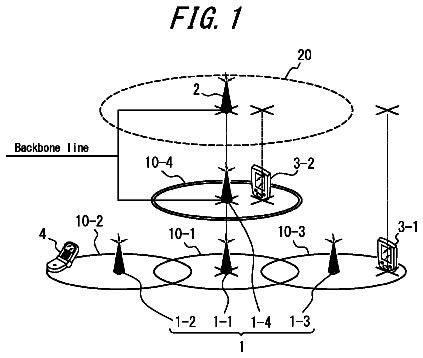
FIG. 1 is a diagram depicting one example of a wireless access system and a fixed terminal control apparatus according to an embodiment;
FIG. 2 is a diagram depicting one example of a wireless access system 100 ;
FIG. 3 is an explanatory diagram depicting a configuration example of an HSS;
FIG. 4 is an explanatory diagram depicting a configuration example of an MME;
FIG. 5 is an explanatory diagram depicting a configuration example of a position registration determining unit;
FIG. 6 is a diagram depicting one example of hardware configuration of a computer apparatus;
FIG. 7A is an explanatory diagram depicting an example of registration information stored in a position registration information storage unit;
FIG. 7B is an explanatory diagram depicting an example registration information stored by a determination information storage unit;
FIG. 8A is a sequence diagram (part 1 ) depicting an example of position registration performed by the wireless access system;
FIG. 8B is a sequence diagram (part 2 ) of the example of the position registration performed by the wireless access system;
FIG. 9A is a flowchart (part 1 ) of an example of a position registration determination process performed by the position registration determining unit;
FIG. 9B is a flowchart (part 2 ) of the example of the position registration determination process performed by the position registration determining unit;
FIG. 10A is a sequence diagram (part 1 ) of a modification example of the position registration performed by the wireless access system; and
FIG. 10B is a sequence diagram (part 2 ) of the modification example of the position registration performed by the wireless access system.
Description of the invention
Embodiments of the disclosed technique will be described in detail with reference to the accompanying drawings.
FIG. 1 is a diagram depicting one example of a wireless access system and a fixed terminal control apparatus according to an embodiment. In FIG. 1 , a wireless access system 100 has terminals 110 and a fixed terminal control apparatus 120 . The terminals 110 include mobile terminals and fixed terminals.
Among the terminals 110 , for example, a device having a communications function of autonomously transmitting and receiving information (data) without human operation is called a machine-to-machine (M2M) device. M2M devices have increased in number in recent years and are predicted to reach enormous numbers in the future. M2M devices may be classified into mobile terminals and fixed terminals.
A mobile terminal, for example, is a communications device provided on a mobile object such as a vehicle or person. A fixed terminal, for example, is a communications device provided on a device (for example, a device arranged in a fixed manner) having a low level of mobility such as a vending machine, video surveillance camera, a smartmeter, and the like. Such fixed terminals may be devices attached in a fixed manner to a predetermined plot of land/building or the like, or may be devices placed in mobile state without being attached a predetermined plot of land/building or the like.
These M2M devices use wireless lines, not wired lines. For example, in the case of a wired line, construction to connect the devices by a wired line is necessary whereas in the case of a wireless line, such construction is not necessary. Furthermore, with respect to wireless lines, existing 3rd generation (3G) or 4G mobile communications systems, Wireless Fidelity (Wi-Fi) (Wi-Fi is a registered trademark), and the like are used. Therefore, under the 3rd Generation Partnership Project (3GPP) as well, the incorporation of M2M devices is under investigation.
Under 3GPP, M2M devices are defined as machine type communication (MTC). Currently under 3GPP, MTC has been newly defined by Release 11, as an identification of the terminals 110 and there are methods for giving notification of notification information such as by System Information Blocks (SIBs) 14 .
On the other hand, fixed terminals are not currently defined under 3GPP, i.e., fixed terminals cannot be identified. Thus, in the present embodiment, position information of the terminals is used and a fixed terminal is identified as a terminal having no change in position for a certain period of time.
Further, a fixed terminal, for example, does not have an internal power source such as a battery and is supplied with power from an external source. Therefore, for example, during a power outage, power supply from the external source cannot be received and the power supply decreases. Furthermore, when the power outage is resolved, the fixed terminals in the concerned area startup all at once and thus, connection requests for connecting to the network are transmitted all at once to a core apparatus from the fixed terminals. Therefore, sequences for connecting the fixed terminals to the network concentrate, causing congestion of the network to occur.
Thus, in the present embodiment, the fixed terminal control apparatus 120 of the wireless access system 100 regards the terminals 110 having no change in position for a certain period of time as fixed terminals that use an external power source and denies connection requests from the fixed terminals to a network 130 according to a predetermined probability. As a result, when the external power source is restored after a power outage, processing of connecting the terminals 110 to the network 130 is distributed, enabling congestion of the network 130 to be suppressed.
The terminal 110 depicted in FIG. 1 , for example, at the time of startup or the like, makes a request to the fixed terminal control apparatus 120 , for connection to the network 130 . Further, without limitation to the time of startup, the terminal 110 , for example, makes a request to the fixed terminal control apparatus 120 , for connection to the network 130 , based on user operation input.
The fixed terminal control apparatus 120 has an identifying unit 121 and a control unit 122 . The identifying unit 121 , when a connection request is received from a terminal 110 , identifies based on position information of the terminal 110 , whether the terminal 110 is a fixed terminal having no change in position for a predetermined period. Although position information is, for example, information indicating a position registration area of the base station accommodating the terminal 110 , without limitation hereto, the position information may be information indicating coordinates or a geographical point where the terminal 110 is located, information indicating an area different from the position registration area, information indicating a cell, or the like.
The identifying unit 121 , when there is no change in the information indicating the position registration area of the terminal 110 for a predetermined period, identifies the terminal 110 to be a fixed terminal. Therefore, even if the terminal 110 is a mobile terminal, when there is no change in the information indicating the position registration area of the terminal 110 , the mobile terminal is identified as a fixed terminal. An n period may be configured to be an arbitrary period. The longer the predetermined period is configured to be, the higher the accuracy is in identifying a mobile terminal as a fixed terminal.
The control unit 122 , when the terminal 110 is identified to be a fixed terminal by the identifying unit 121 , denies the connection request according to the predetermined probability. Denial of a connection request is an instance in which connection of the terminal 110 to the network 130 is not performed, for example, the connection request is ignored. The predetermined probability is an arbitrary probability. As a result, when the external power source is restored after a power outage, processing of connecting the terminals 110 to the network 130 is distributed, enabling congestion of the network 130 to be suppressed.
Further, the terminal 110 , when the connection request thereof has been denied by the fixed terminal control apparatus 120 , again makes a connection request to the fixed terminal control apparatus 120 . Further, the control unit 122 , when having denied the connection request, may transmit to the terminal 110 , a signal indicating denial of the connection request. For example, assuming a configuration in which the fixed terminal control apparatus 120 transmits a signal indicating denial of a connection request when denying the connection request, the terminal 110 , after receiving the signal from the fixed terminal control apparatus 120 , may again make a connection request. “After receiving the signal”, for example, may mean immediately after the signal is received, or may mean after a predetermined period has elapsed after the signal is received.
Further, assuming a configuration in which the control unit 122 does not transmit a signal indicating denial of a connection request when denying the connection request, the terminal 110 , when being unable to connect to the network 130 for a predetermined period after the connection request, may again make a connection request. In this manner, by again making a connection request, a terminal 110 that is denied connection to the network 130 may connect to the network 130 .
Further, when the control unit 122 receives a connection request from one or more of the terminals 110 within a predetermined period (the connection request requesting connection to the network 130 ) and the number of times a connection request was not denied is less than a predetermined count, the control unit 122 does not deny the connection request from a terminal 110 identified to be a fixed terminal. For example, the fixed terminal control apparatus 120 may receive plural connection requests from a single terminal 110 within the predetermined period.
Not denying a connection request is allowing the terminal 110 to connect to the network 130 . An instance in which the number of times a connection request was not denied is less than the predetermined count, for example, is an instance in which sequences for connecting fixed terminals to the network 130 do not concentrate. Therefore, when sequences for connecting fixed terminals to the network 130 do not concentrate, the control unit 122 does not deny the connection request from a terminal 110 identified to be a fixed terminal by the identifying unit 121 .
On the other hand, when the number of times that a connection request was not denied is the predetermined count or greater, the control unit 122 denies a connection request from a terminal 110 identified to be a fixed terminal by the identifying unit 121 . An instance in which the number of times that a connection request was not denied is the predetermined count or greater is an instance in which sequences for connecting fixed terminals to the network 130 are concentrating.
Therefore, when the sequences for connecting fixed terminals to the network 130 are concentrating, the fixed terminal control apparatus 120 may deny the connection request from a terminal 110 identified to be a fixed terminal by the identifying unit 121 .
Further, the control unit 122 receives connection requests from one or more of the terminals 110 within the predetermined period (the connection requests requesting connection to the network 130 ) and according to a predetermined probability corresponding to the number of times that a connection request was not denied, denies a connection request from a terminal 110 identified to be a fixed terminal. For example, the control unit 122 may set the probability of connection request denial to be higher, the greater the number of times a connection request was not denied is.
For example, when the number times that a connection request was not denied is 100 times, the probability of denying a connection request (predetermined probability) may be 10%; in the case of 200 times, the probability of denying a connection request may be 20%; and in the case of 500 times, the probability of denying a connection request may be 50%. As a result, the control unit 122 may deny a connection request from a terminal 110 identified to be a fixed terminal by the identifying unit 121 , according to a probability corresponding to the extent that sequences for connecting fixed terminals to the network 130 are concentrating.
Further, when the number of times that a connection request requesting connection to the network 130 is received from one or more of the terminals 110 within a predetermined period is less than a predetermined count, the control unit 122 does not deny a connection request from a terminal 110 identified to be a fixed terminal by the identifying unit 121 . An instance in which the number of times that a connection request is received within the predetermined period is less than the predetermined count is, for example, an instance in which connection requests are few such as during a normal state excluding times when the power source is restored after a power outage. Therefore, during a normal state when the connection requests are few, the control unit 122 does not deny a connection request from a terminal 110 identified to be a fixed terminal by the identifying unit 121 .
On the other hand, when the number of times that a connection request requesting connection to the network 130 is received from one or more of the terminals 110 within a predetermined period is the predetermined count or greater, the control unit 122 denies a connection request from a terminal 110 identified to be a fixed terminal by the identifying unit 121 . An instance in which the number of times that a connection request is received within the predetermined period is the predetermined count or greater is an instance in which the connection requests are numerous such as when the power source is restored after a power outage.
Therefore, when the connection requests are numerous at the time of restoration of the power source after a power outage, the fixed terminal control apparatus 120 may deny a connection request of a terminal 110 identified to be a fixed terminal by the identifying unit 121 .
Further, the control unit 122 may deny a connection request from a terminal 110 identified to be a fixed terminal by the identifying unit 121 , according to a predetermined probability corresponding to the number of times that a connection request requesting connection to the network 130 is received from one or more of the terminals 110 within the predetermined period. For example, the control unit 122 may set the probability of connection request denial higher, the greater the number of times a connection request is received within the predetermined period is.
For example, when the number of times that a connection request is received within the predetermined period is 100 times, the probability of denying a connection request may be 10%; in the case of 200 times, the probability of denying a connection request may be 20%; in the case of 500 times, the probability of denying a connection request may be 50%. As a result, the control unit 122 may deny a connection request from a terminal 110 identified to be a fixed terminal by the identifying unit 121 , according to a probability corresponding to the number of connection requests at the time of power source restoration after a power outage.
FIG. 2 is a diagram depicting one example of the wireless access system 100 . As depicted in FIG. 2 , the wireless access system 100 has evolved Nodes B (eNodeBs) 201 , NodeBs 202 , and a mobile management entity (MME) 203 . The wireless access system 100 further has a home subscriber server (HSS) 204 and a radio network controller (RNC) 205 .
The wireless access system 100 further has a SGSN (Serving GPRS (General Packet Radio Service) Support Node) 206 and a Serving-Gate Way (S-GW) 207 . The wireless access system 100 further has a Policy and Charging Rule Function (PCRF) 208 , a Packet Data Network-GW (P-GW) 209 , and terminal apparatuses 220 .
As depicted in FIG. 2 , the terminal apparatuses 220 include mobile terminals such as a smartphone, and provided fixed terminals such as a vending machine and a smartmeter. The terminal apparatuses 220 , for example, correspond to the terminal 110 depicted in FIG. 1 . For example, the terminal apparatus 220 , when the power source is turned ON, transmits to the MME 203 , an attach request signal for requesting connection to a network of the terminal apparatus 220 .
The eNodeBs 201 are wireless base stations supporting Long Term Evolution (LTE) scheme wireless signals and accommodate the terminal apparatuses 220 . The eNodeBs 201 transmit control data to and receive control data from the MME 203 and transmit user data to and receive user data from the S-GW 207 .
The NodeBs 202 are Wideband Code Division Multiple Access (W-CDMA) wireless base stations and accommodate the terminal apparatuses 220 . The NodeBs 202 transmit control data and user data to and receive control data and user data from the RNC 205 .
The MME 203 accommodates the eNodeBs 201 and performs authentication (security control) and movement management of the terminal apparatuses 220 , and configures user data transfer paths. For example, the MME 203 performs management of handover between the eNodeBs 201 , calling, and position registration of the terminal apparatuses 220 . The MME 203 transmits control data to and receives control data from the eNodeBs 201 , the HSS 204 , and the S-GW 207 .
Further, for example, the MME 203 performs user authentication based on authentication information received from the HSS 204 , and receives and manages contract information from the HSS 204 , the contract information being necessary in bearer configuration. Based on information of a connection destination transmitted from the terminal apparatuses 220 , the MME 203 , selects by Domain Name System (DNS), bearer configuration destinations: the S-GW 207 and the P-GW 209 . The MME 203 transmits a bearer configuration request signal to the selected the S-GW 207 .
The HSS 204 has a server that manages subscriber information. The HSS 204 performs management of service activation states, authentication, management of user position information (position registration area), and the like. For example, the HSS 204 manages user information such as authentication information, the terminal identification numbers, the telephone numbers of the terminal apparatuses 220 , and the like. The HSS 204 transmits control data to and receives control data from the MME 203 and the SGSN 206 . User of the MME 203 and the HSS 204 enables 3.9G or 4G communication to be performed.
The RNC 205 is a 3G wireless facility apparatus and controls the NodeBs 202 . The RNC 205 transmits control data and user data to and receives control data and user data from the NodeB 202 and the SGSN 206 .
The SGSN 206 performs authentication (security control), movement management, and the like of the terminal apparatuses 220 in 3G wireless access. The SGSN 206 , for example, controls information such as protocol information, Internet Protocol (IP) addresses, and the like. The SGSN 206 transmits control data and user data to and receives control data and user data from the RNC 205 ; transmits control data to and receives control data from the HSS 204 ; and transmits user data to and receives user data from the S-GW 207 . Use of the RNC 205 and the SGSN 206 enables 3G communication to be performed.
The S-GW 207 is a node that relays user data. The S-GW 207 is an apparatus that transmits user data. For example, the S-GW 207 transmits user data to and receives user data from the eNodeBs 201 , the SGSN 206 , and the P-GW 209 ; and transmits control data to and receives control data from the MME 203 and the PCRF 208 .
Further, the S-GW 207 carries out a bearer configuration process with respect to the P-GW 209 configured in the bearer configuration request signal. The S-GW 207 , when completing configuration of the bearer between the S-GW 207 and the P-GW 209 , notifies the MME 203 of transmission information to the eNodeBs 201 .
The PCRF 208 sets rules for billing and priority control according to service. The PCRF 208 transmits control data to and receives control data from the S-GW 207 , the P-GW 209 , and a Packet Data Network (PDN) 210 .
The P-GW 209 is a gateway connected to an external network. Further, the P-GW 209 transmits user data to and receives user data from the S-GW 207 and the PDN 210 ; and transmits control data to and receives control data from the PCRF 208 . For example, the P-GW 209 coordinates with the PCRF 208 and obtains billing information to be applied and further carries out a process of connecting to the PDN 210 .
In the wireless access system 100 , when the power source of the terminal apparatus 220 is turned ON, the terminal apparatus 220 transmits an attach request signal to the MME 203 and configures a bearer between the S-GW 207 and the P-GW 209 , to perform the minimum processes for operation such as authentication and position registration. As a result, at the time of startup and the like, the terminal apparatuses 220 may connect to the PDN 210 .
At the time of connection to the network by the terminal apparatuses 220 , for example, storage of position information (position registration area) of the terminal apparatuses 220 and sequences with the core apparatus (the HSS 204 , the S-GW 207 , etc.) for connecting to the network are performed at the HSS 204 . In the description hereinafter, connection to the network by the terminal apparatuses 220 will be called “position registration” including storage of position information of a terminal 110 and sequences with the core apparatus. Further, a connection request will be called a “position registration request”. Sequences with the core apparatus will be called “position registration sequences”.
Furthermore, in the description hereinafter, 3.9G or 4G by the MME 203 and the HSS 204 will be described.
FIG. 3 is an explanatory diagram depicting a configuration example of the HSS. As depicted in FIG. 3 , the HSS 204 has an interface managing unit 301 , a received data processing unit 302 , an information processing unit 303 , a user information managing unit 304 , an authenticating unit 305 , a service control unit 306 , a transmission data processing unit 307 , and a user information storage unit 308 .
The interface managing unit 301 manages an interface that transmits data to and receives data from the MME 203 and a position registration determining unit 320 . The position registration determining unit 320 regards the terminal apparatus 220 whose position does not change for a certain period of time to be a fixed terminal and denies a position registration request to the network from a fixed terminal according to a predetermined probability. The fixed terminal control apparatus 120 depicted in FIG. 1 , for example, may be realized by the position registration determining unit 320 .
For example, the position registration determining unit 320 is included in the HSS 204 . Therefore, functions of the HSS 204 depicted in FIG. 3 represent functions excluding functions of the position registration determining unit 320 . However, the position registration determining unit 320 , without being included in the HSS 204 , may be a separate apparatus and as shown in a modification example described hereinafter, may be included in the MME 203 .
The interface managing unit 301 outputs to the received data processing unit 302 , a signal received from the MME 203 or the position registration determining unit 320 . The received data processing unit 302 performs a reception process for the signal input from the interface managing unit 301 and outputs the signal subjected to the reception process to the information processing unit 303 . The information processing unit 303 , for example, performs various processes using the signal input from the received data processing unit 302 and outputs signals related to the various processes to the user information managing unit 304 , the authenticating unit 305 , and the service control unit 306 .
The user information storage unit 308 stores user information such as the telephone numbers, the terminal identification numbers, the contract information, the authentication information, the position information, and the like of the terminal apparatuses 220 . The user information managing unit 304 , for example, uses information of the terminal apparatus 220 indicated by the signal output from the information processing unit 303 and user information stored in the user information storage unit 308 to confirm user registration contents according to the terminal apparatuses 220 . The user information managing unit 304 , for example, outputs the confirmed contents to the information processing unit 303 .
The authenticating unit 305 , for example, uses information of the terminal apparatus 220 indicated by the signal output from the information processing unit 303 and user information stored in the user information storage unit 308 to perform authentication of the terminal apparatus 220 . The authenticating unit 305 outputs an authentication result to the information processing unit 303 .
The service control unit 306 , for example, uses information of the terminal apparatus 220 indicated by the signal output from the information processing unit 303 to obtain from the user information stored in the user information storage unit 308 , contract information and the like necessary for bearer configuration for the terminal apparatus 220 . Further, the service control unit 306 , for example, outputs the contract information necessary for bearer configuration for the terminal apparatus 220 to the information processing unit 303 .
The information processing unit 303 performs various processes based on the information output from the user information managing unit 304 , the authenticating unit 305 , and the service control unit 306 , and outputs signals related to the various processes to the transmission data processing unit 307 . The transmission data processing unit 307 performs a transmission process for transmitting the signals input from the information processing unit 303 and outputs the signals subjected to the transmission process to the interface managing unit 301 . The interface managing unit 301 outputs to the MME 203 and the position registration determining unit 320 , the signals output from the transmission data processing unit 307 .
FIG. 4 is an explanatory diagram depicting a configuration example of the MME. As depicted in FIG. 4 , the MME 203 has an interface managing unit 401 , a received data processing unit 402 , an information processing unit 403 , a mobility information control unit 404 , and a universal terrestrial radio access network (eUTRAN) control unit 405 . The MME 203 further has a handover processing unit 406 , a voice service supporting unit 407 , an authenticating/concealing unit 408 , a transmission data processing unit 409 , a mobility information storage unit 410 , a base station management information storage unit 411 , and an authentication/concealment information storage unit 412 .
The interface managing unit 401 manages an interface that transmits data to and receives data from the HSS 204 . The interface managing unit 401 outputs a signal received from the HSS 204 to the received data processing unit 402 . The received data processing unit 402 performs a reception process for the signal input from the interface managing unit 401 and outputs the signal subjected to the reception process to the information processing unit 403 .
The information processing unit 403 performs various processes using the signal input from the received data processing unit 402 and outputs signals related to the various processes to the mobility information control unit 404 , the handover processing unit 406 , the eUTRAN control unit 405 , and the voice service supporting unit 407 .
The mobility information storage unit 410 , for example, stores mobility information for performing seamless movement of the terminal apparatuses 220 between the eNodeBs 201 . Even when a terminal apparatus 220 moves, the mobility information control unit 404 , for example, is able to continue communication based on the contract information necessary for bearer configuration indicated by the signal output from the information processing unit 403 and the information stored by the mobility information control unit 404 .
The base station management information storage unit 411 , for example, stores information of the eNodeBs 201 . The information of the eNodeBs 201 may be, for example, the ID numbers of the eNodeBs 201 such as the EUTRAN Cell Global ID (Identification) (ECGI) or the like. The eUTRAN control unit 405 , for example, uses information indicated by the signal output from the information processing unit 403 and the information stored in the base station management information storage unit 411 to control LTE connection. The eUTRAN control unit 405 outputs to the handover processing unit 406 , information controlling LTE connection.
The handover processing unit 406 , for example, uses information indicated by the signal output from the information processing unit 403 , the information stored in the mobility information storage unit 410 , and the information from the eUTRAN control unit 405 to perform a handover process.
Further, the voice service supporting unit 407 , for example, uses information indicated by the signal output from the information processing unit 403 and the information stored in the base station management information storage unit 411 to perform a voice service. The authentication/concealment information storage unit 412 stores authentication/concealment information. Further, the authenticating/concealing unit 408 , for example, uses authentication information from the HSS 204 indicated by the signal output from the information processing unit 403 and the authentication/concealment information stored in the authentication/concealment information storage unit 412 to control security such as user authentication and the like.
The information processing unit 403 , for example, based on the information output from the units 404 to 408 , performs various process and outputs signals related to the various processes to the transmission data processing unit 409 . The transmission data processing unit 409 performs a transmission process for transmitting the signals input from the information processing unit 403 and outputs the signals subjected to the transmission process to the interface managing unit 401 . The interface managing unit 401 outputs to the HSS 204 , the signals output from the transmission data processing unit 409 .
FIG. 5 is an explanatory diagram depicting a configuration example of the position registration determining unit. As depicted in FIG. 5 , the position registration determining unit 320 has an interface managing unit 501 , a received data processing unit 502 , a time management processing unit 503 , a position registration determination processing unit 504 , a threshold managing unit 506 , a position registration history information processing unit 505 , and a transmission data processing unit 507 . The position registration determining unit 320 further has a position registration information storage unit 511 , a determination information storage unit 512 , a threshold storage unit 513 , and a clock 514 .
The position registration determining unit 320 , for example, is included in the HSS 204 . Therefore, the HSS 204 depicted in FIG. 5 represents actual functional units (referred to as “HSS functional units” in the description of FIG. 5 ) of the HSS 204 , excluding the functions of the position registration determining unit 320 of the HSS 204 . The interface managing unit 501 manages an interface that transmits data to and receives data from the HSS functional units. The interface managing unit 501 outputs signals received from the HSS functional units to the received data processing unit 502 . For example, the interface managing unit 501 receives an attach request from a terminal apparatus 220 , via the HSS functional units.
The received data processing unit 502 performs a reception process for the signals input from the interface managing unit 501 . For example, the received data processing unit 502 performs a reception process of extracting the terminal number of the terminal apparatus 220 and position information (a position number indicating the position registration area) of the terminal apparatus 220 included in the attach request. The received data processing unit 502 outputs to the position registration determination processing unit 504 , the signals subjected to the reception processes. The time management processing unit 503 obtains from the clock 514 , a signal indicating the current time and outputs the obtained signal to the position registration determination processing unit 504 .
The position registration determination processing unit 504 uses the signals received from the received data processing unit 502 and the signal received from the time management processing unit 503 to determine whether to perform position registration. As described above, the position registration, for example, includes the storage of position information of the terminal apparatus 220 at the HSS 204 and position registration sequences with the core apparatus (with the HSS 204 , the S-GW 207 , etc.).
In the determination concerning position registration, other than the terminal number and/or the position information from the received data processing unit 502 and the current time from the time management processing unit 503 , information stored in the determination information storage unit 512 , information from the position registration history information processing unit 505 and the threshold managing unit 506 , etc. are used.
For example, the information stored in the determination information storage unit 512 has a position registration count 521 per unit time (predetermined period) and a current denial determination value 522 . The position registration count 521 , for example, is the number of position registrations within the unit time. The current denial determination value 522 , for example, is the probability of position registration being denied within the predetermined period.
Further, the information output by the position registration history information processing unit 505 to the position registration determination processing unit 504 includes position registration information stored in the position registration information storage unit 511 . The position registration information includes the terminal number of the terminal apparatus 220 , the position number indicating the area in which the terminal apparatus 220 is located, the latest registration date and time, the oldest registration date and time, etc. The position registration history information processing unit 505 writes to and reads out from the position registration information storage unit 511 , the position registration information and outputs read out information to the position registration determination processing unit 504 .
The information output by threshold managing unit 506 to the position registration determination processing unit 504 includes information (a threshold) stored in the threshold storage unit 513 . The threshold storage unit 513 stores a no-movement determination threshold 531 , a prescribed position registration count per unit time 532 , and a denial determination threshold 533 .
The no-movement determination threshold 531 is, for example, a threshold indicating a predetermined period for determining whether a fixed terminal having no change for the predetermined period is at the position indicated by the position information of a terminal apparatus 220 . The prescribed position registration count per unit time 532 is, for example, a threshold indicating a predetermined count for determining if the number of times a position registration request is received within a predetermined period is the predetermined count or greater. The denial determination threshold 533 is, for example, a probability of a position registration request from a terminal apparatus 220 being denied.
Determinations made when determination of whether position registration is to be performed by the position registration determination processing unit 504 will be described. First, registration of a terminal apparatus 220 that made a position registration request will be described, the terminal apparatus 220 being registered to the position registration information storage unit 511 . The position registration determination processing unit 504 makes an inquiry to the position registration history information processing unit 505 for the position registration information of the terminal apparatus 220 that made a position registration request.
The position registration history information processing unit 505 searches the position registration information stored in the position registration information storage unit 511 for the targeted terminal apparatus 220 . If the targeted terminal apparatus 220 is not found, for example, when a fixed terminal such as a vending machine is newly installed, the position registration history information processing unit 505 outputs unregistered information to the position registration determination processing unit 504 . The unregistered information is information indicating that the targeted terminal apparatus 220 is not registered in the position registration information storage unit 511 .
The description continues in the full USPTO document.
 Lapsed, fee not paid6 drawings