Background
Embodiments of the inventive subject matter generally relate to the field of communication networks and, more particularly, to a Bluetooth® low energy (LE) mechanism for automatic connection of a Bluetooth human interface device (HID).
The Bluetooth wireless communication standard is typically employed for exchanging communications between fixed or mobile Bluetooth-enabled devices over relatively short distances. When a destination Bluetooth device is within range of an initiating Bluetooth device, the initiating Bluetooth device can cryptographically authenticate the destination Bluetooth device (also known as pairing) to validate the destination Bluetooth device. A Bluetooth communication link for exchanging communications can then be established between the initiating Bluetooth device and the destination Bluetooth device.
Summary
In some embodiments, a method comprises: executing, at a Bluetooth controller associated with a host device, background scan operations to detect at least one Bluetooth device to connect the at least one Bluetooth device to the host device; receiving one or more Bluetooth packets at the Bluetooth controller in response to said executing the background scan operations to detect at least one Bluetooth device; analyzing each received Bluetooth packet to determine whether the received Bluetooth packet is a predefined Bluetooth LE HID packet type transmitted by the Bluetooth device; in response to determining that the received Bluetooth packet is a predefined Bluetooth LE HID packet type transmitted by the Bluetooth device, providing the received Bluetooth packet to a Bluetooth low energy (LE) human interface device (HID) module of the Bluetooth controller; and, in response to determining that the received Bluetooth packet is not a predefined Bluetooth LE HID packet type transmitted by the Bluetooth device, providing the received Bluetooth packet to a Bluetooth host controller interface (HCI) module of the Bluetooth controller.
In some embodiments, the method further comprises, in response to determining that the received Bluetooth packet is a predefined Bluetooth LE HID packet type transmitted by the Bluetooth device, determining whether the Bluetooth device is within a predetermined threshold distance of the Bluetooth controller; and, in response to determining that the Bluetooth device is within the predetermined threshold distance of the Bluetooth controller, executing one or more connection operations to pair and connect the Bluetooth device with the host device.
In some embodiments, said executing one or more connection operations to pair and connect the Bluetooth device with the host device further comprises mapping the Bluetooth device to a corresponding USB device through a USB interface to connect the Bluetooth device with the host device.
In some embodiments, the method further comprises storing configuration information associated with the Bluetooth device for subsequent reconnection between the Bluetooth device and the host device.
In some embodiments, said determining whether the Bluetooth device is within the predetermined threshold distance of the Bluetooth controller is based on analyzing at least one of a received signal strength indicator (RSSI) associated with the received Bluetooth packet, a radio signal path loss, and near field communication (NFC) signal detection.
In some embodiments, said determining whether the Bluetooth device is within the predetermined threshold distance of the Bluetooth controller comprises calculating a radio signal path loss value associated with the Bluetooth device based, at least in part, on a transmit power associated with the Bluetooth device, a radio signal loss value associated with an antenna of the Bluetooth controller, and a radio signal loss value associated with an antenna of the Bluetooth device; comparing the radio signal path loss value associated with the Bluetooth device against a threshold path loss; determining whether the Bluetooth device is within the predetermined threshold distance of the Bluetooth controller based on said comparing the radio signal path loss value associated with the Bluetooth device against a threshold path loss; determining that the Bluetooth device is within the predetermined threshold distance of the Bluetooth controller, in response to determining that the radio signal path loss value associated with the Bluetooth device is less than the threshold path loss; and determining that the Bluetooth device is not within the predetermined threshold distance of the Bluetooth controller, in response to determining that the radio signal path loss value associated with the Bluetooth device exceeds the threshold path loss.
In some embodiments, the method further comprises determining the transmit power associated with the Bluetooth device and the radio signal loss value associated with the antenna of the Bluetooth device from the received Bluetooth packet.
In some embodiments, in response to determining that the Bluetooth device is not within the predetermined threshold distance of the Bluetooth controller, the method further comprises discarding the received Bluetooth packet at the Bluetooth controller; and monitoring subsequent transmissions from the Bluetooth device to determine whether the Bluetooth device is within the predetermined threshold distance of the Bluetooth controller.
In some embodiments, said providing the received Bluetooth packet to the Bluetooth LE HID module of the Bluetooth controller is in response to determining that the Bluetooth device is within the predetermined threshold distance of the Bluetooth controller.
In some embodiments, said analyzing each received Bluetooth packet to determine whether the received Bluetooth packet is a predefined Bluetooth LE HID packet type transmitted by the Bluetooth device comprises determining a device type associated with a Bluetooth device that transmitted the received Bluetooth packet, based at least in part, on one or more fields of the received Bluetooth packet; and determining whether the Bluetooth device is a Bluetooth device based on the device type associated with a second Bluetooth device.
In some embodiments, the one or more fields of the received Bluetooth packet comprise at least a service universally unique identifier (UUID) of the received Bluetooth packet.
In some embodiments, a method comprises: executing, at a Bluetooth controller associated with a host device, background scan operations to detect at least one Bluetooth device to connect the at least one Bluetooth device to the host device; receiving one or more Bluetooth packets at the Bluetooth controller in response to said executing the background scan operations to detect at least one Bluetooth device; analyzing each received Bluetooth packet to determine whether the received Bluetooth packet is a predefined Bluetooth LE HID packet type transmitted by the Bluetooth device; in response to determining that the received Bluetooth packet is a predefined Bluetooth LE HID packet type transmitted by the Bluetooth device, determining whether the Bluetooth device is within a predetermined threshold distance of the Bluetooth controller; in response to determining that the Bluetooth device is within the predetermined threshold distance of the Bluetooth controller, executing one or more connection operations to pair and connect the Bluetooth device with the host device; in response to determining that the received Bluetooth packet is a predefined Bluetooth LE HID packet type transmitted by the Bluetooth device and in response to determining that the Bluetooth device is within the predetermined threshold distance of the Bluetooth controller, providing the received Bluetooth packet to a Bluetooth low energy (LE) human interface device (HID) module of the Bluetooth controller; and, in response to determining that the received Bluetooth packet is not a predefined Bluetooth LE HID packet type transmitted by the Bluetooth device, providing the received Bluetooth packet to a Bluetooth host controller interface (HCI) module of the Bluetooth controller.
In some embodiments, said executing one or more connection operations to pair and connect the Bluetooth device with the host device further comprises mapping the Bluetooth device to a corresponding USB HID through a USB interface to connect the Bluetooth device with the host device.
In some embodiments, in response to determining that the Bluetooth device is not within the predetermined threshold distance of the Bluetooth controller, the method further comprises discarding the received Bluetooth packet at the Bluetooth controller; and monitoring subsequent transmissions from the Bluetooth device to determine whether the Bluetooth device is within the predetermined threshold distance of the Bluetooth controller.
In some embodiments, the method further comprises storing configuration information associated with the Bluetooth device for subsequent reconnection between the Bluetooth device and the host device.
In some embodiments, a method comprises: receiving one or more Bluetooth packets at a Bluetooth controller associated with a host device; analyzing each received Bluetooth packet to determine whether the received Bluetooth packet is a predefined Bluetooth LE HID packet type transmitted by a Bluetooth device; in response to determining that the received Bluetooth packet is a predefined Bluetooth LE HID packet type transmitted by the Bluetooth device, determining whether the Bluetooth device is within a predetermined threshold distance of the Bluetooth controller; and, in response to determining that the Bluetooth device is within the predetermined threshold distance of the Bluetooth controller, executing one or more connection operations to pair and connect the Bluetooth device with the host device; and mapping the Bluetooth device to a corresponding USB HID through a USB interface to connect the Bluetooth device with the host device.
In some embodiments, the method further comprises executing, at the Bluetooth controller, background scan operations to detect at least one Bluetooth device, wherein said receiving the one or more Bluetooth packets at the Bluetooth controller is in response to said executing, at the Bluetooth controller, background scan operations to detect at least one Bluetooth device.
In some embodiments, in response to determining that the received Bluetooth packet is a predefined Bluetooth LE HID packet type transmitted by the Bluetooth device, providing the received Bluetooth packet to a Bluetooth low energy (LE) human interface device (HID) module of the Bluetooth controller; and, in response to determining that the received Bluetooth packet is not a predefined Bluetooth LE HID packet type transmitted by the Bluetooth device, providing the received Bluetooth packet to a Bluetooth host controller interface (HCI) module of the Bluetooth controller.
In some embodiments, the method further comprises storing configuration information associated with the Bluetooth device for subsequent reconnection between the Bluetooth device and the host device.
In some embodiments, a Bluetooth controller comprises: a Bluetooth low energy (LE) human interface device (HID) module operable to execute background scan operations to detect at least one Bluetooth device to connect the at least one Bluetooth device to a host device associated with the Bluetooth controller; and an LE HID filter operable to receive one or more Bluetooth packets at the Bluetooth controller in response to the Bluetooth LE HID module executing the background scan operations to detect at least one Bluetooth device; analyze each received Bluetooth packet to determine whether the received Bluetooth packet is a predefined Bluetooth LE HID packet type transmitted by the Bluetooth device; in response to the LE HID filter determining that the received Bluetooth packet is a predefined Bluetooth LE HID packet type transmitted by the Bluetooth device, provide the received Bluetooth packet to the Bluetooth LE HID module of the Bluetooth controller; and, in response to the LE HID filter determining that the received Bluetooth packet is not a predefined Bluetooth LE HID packet type transmitted by the Bluetooth device, provide the received Bluetooth packet to a Bluetooth host controller interface (HCI) module of the Bluetooth controller.
In some embodiments, the LE HID filter is further operable to, in response to the LE HID filter determining that the received Bluetooth packet is a predefined Bluetooth LE HID packet type transmitted by the Bluetooth device, determine whether the Bluetooth device is within a predetermined threshold distance of the Bluetooth controller; and, in response to the LE HID filter determining that the Bluetooth device is within the predetermined threshold distance of the Bluetooth controller, cause the Bluetooth LE HID module to execute one or more connection operations to pair and connect the Bluetooth device with the host device.
In some embodiments, the LE HID filter operable to cause the Bluetooth LE HID module to execute one or more connection operations to pair and connect the Bluetooth device with the host device further comprises the LE HID filter operable to map the Bluetooth device to a corresponding USB device through a USB interface to connect the Bluetooth device with the host device.
In some embodiments, the LE HID filter operable to determine whether the Bluetooth device is within the predetermined threshold distance of the Bluetooth controller comprises the LE HID filter operable to calculate a radio signal path loss value associated with the Bluetooth device based, at least in part, on a transmit power associated with the Bluetooth device, a radio signal loss value associated with an antenna of the Bluetooth controller, and a radio signal loss value associated with an antenna of the Bluetooth device; compare the radio signal path loss value associated with the Bluetooth device against a threshold path loss; determine whether the Bluetooth device is within the predetermined threshold distance of the Bluetooth controller based on the LE HID filter comparing the radio signal path loss value associated with the Bluetooth device against a threshold path loss; determine that the Bluetooth device is within the predetermined threshold distance of the Bluetooth controller, in response to the LE HID filter determining that the radio signal path loss value associated with the Bluetooth device is less than the threshold path loss; and determine that the Bluetooth device is not within the predetermined threshold distance of the Bluetooth controller, in response to the LE HID filter determining that the radio signal path loss value associated with the Bluetooth device exceeds the threshold path loss.
In some embodiments, in response to the LE HID filter determining that the Bluetooth device is not within the predetermined threshold distance of the Bluetooth controller, the LE HID filter is further operable to discard the received Bluetooth packet; and monitor subsequent transmissions from the Bluetooth device to determine whether the Bluetooth device is within the predetermined threshold distance of the Bluetooth controller.
In some embodiments, the LE HID filter operable to provide the received Bluetooth packet to the Bluetooth LE HID module of the Bluetooth controller is in response to the LE HID filter determining that the Bluetooth device is within the predetermined threshold distance of the Bluetooth controller.
In some embodiments, one or more machine-readable storage media having instructions stored therein, which when executed by one or more processors causes the one or more processors to perform operations that comprise: executing, at a Bluetooth controller associated with a host device, background scan operations to detect at least one Bluetooth device to connect the at least one Bluetooth device to the host device; receiving one or more Bluetooth packets at the Bluetooth controller in response to said operation of executing the background scan operations to detect at least one Bluetooth device; analyzing each received Bluetooth packet to determine whether the received Bluetooth packet is a predefined Bluetooth LE HID packet type transmitted by the Bluetooth device; in response to determining that the received Bluetooth packet is a predefined Bluetooth LE HID packet type transmitted by the Bluetooth device, providing the received Bluetooth packet to a Bluetooth low energy (LE) human interface device (HID) module of the Bluetooth controller; and, in response to determining that the received Bluetooth packet is not a predefined Bluetooth LE HID packet type transmitted by the Bluetooth device, providing the received Bluetooth packet to a Bluetooth host controller interface (HCI) module of the Bluetooth controller.
In some embodiments, the operations further comprise, in response to determining that the received Bluetooth packet is a predefined Bluetooth LE HID packet type transmitted by the Bluetooth device, determining whether the Bluetooth device is within a predetermined threshold distance of the Bluetooth controller; and, in response to determining that the Bluetooth device is within the predetermined threshold distance of the Bluetooth controller, executing one or more connection operations to pair and connect the Bluetooth device with the host device.
In some embodiments, said operation of executing one or more connection operations to pair and connect the Bluetooth device with the host device further comprises mapping the Bluetooth device to a corresponding USB device through a USB interface to connect the Bluetooth device with the host device.
In some embodiments, said operation of determining whether the Bluetooth device is within the predetermined threshold distance of the Bluetooth controller comprises calculating a radio signal path loss value associated with the Bluetooth device based, at least in part, on a transmit power associated with the Bluetooth device, a radio signal loss value associated with an antenna of the Bluetooth controller, and a radio signal loss value associated with an antenna of the Bluetooth device; comparing the radio signal path loss value associated with the Bluetooth device against a threshold path loss; determining whether the Bluetooth device is within the predetermined threshold distance of the Bluetooth controller based on said operation of comparing the radio signal path loss value associated with the Bluetooth device against a threshold path loss; determining that the Bluetooth device is within the predetermined threshold distance of the Bluetooth controller, in response to determining that the radio signal path loss value associated with the Bluetooth device is less than the threshold path loss; and determining that the Bluetooth device is not within the predetermined threshold distance of the Bluetooth controller, in response to determining that the radio signal path loss value associated with the Bluetooth device exceeds the threshold path loss.
Brief description of the drawings
The present embodiments may be better understood, and numerous objects, features, and advantages made apparent to those skilled in the art by referencing the accompanying drawings.
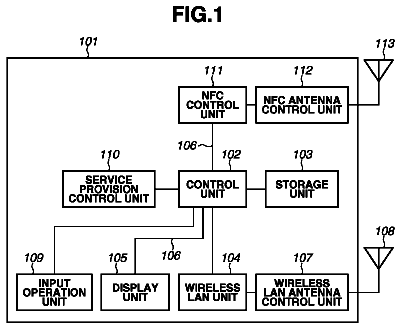
FIG. 1 is a block diagram illustrating a Bluetooth LE mechanism for automatic connection of Bluetooth LE HIDs;
FIG. 2 is a block diagram illustrating example architecture of a Bluetooth device for automatic pairing/configuration of Bluetooth LE HIDs;
FIG. 3 is a block diagram illustrating another example architecture of a Bluetooth device for automatic pairing/configuration of Bluetooth LE HIDs;
FIG. 4 is a flow diagram illustrating example operations of a Bluetooth controller for automatic pairing/configuration of Bluetooth LE HIDs; and
FIG. 5 is a block diagram of one embodiment of an electronic device including a mechanism for automatic pairing/configuration of Bluetooth LE HIDs.
Description of embodiment(s)
The description that follows includes exemplary systems, methods, techniques, instruction sequences, and computer program products that embody techniques of the present inventive subject matter. However, it is understood that the described embodiments may be practiced without these specific details. For instance, although examples refer to a low energy mechanism for automatically establishing a communication link with Bluetooth LE HIDs; in other embodiments, the operations described herein can be employed to automatically establish a communication link with devices that implement other suitable communication standards (e.g., Bluetooth host controller interface (HCI) devices). In other instances, well-known instruction instances, protocols, structures, and techniques have not been shown in detail in order not to obfuscate the description.
Configuration of a Bluetooth HID (e.g., a Bluetooth-enabled keyboard, a Bluetooth-enabled mouse) typically relies on a Bluetooth HID layer and Bluetooth driver software, both of which may be implemented by a host device's operating system. Because different host devices can implement different types of (and versions of) operating systems, this can make it difficult to standardize operations for configuring the Bluetooth HID across the different operating systems. Furthermore, to connect the Bluetooth HID to a host electronic device (e.g., to connect a Bluetooth-enabled mouse to a computer system), a user typically goes through a series of connection steps and clicks though various options on a menu. However, to use this menu, the user may utilize another input device (e.g., a universal serial bus (USB) enabled keyboard or a USB mouse) that is already configured to operate with the host electronic device. Problems can arise if there are no previously configured input devices that can be used to connect the Bluetooth HID (e.g., the Bluetooth-enabled keyboard or Bluetooth-enabled mouse) to the host electronic device. For example, the user may encounter a problem if he/she has not paired the Bluetooth-enabled keyboard in host operating system, but the host operating system requires the user to provide an input using a keyboard at a login window. Some existing techniques incorporate the Bluetooth basic rate (BR) or extended data rate (EDR) HID layer into Bluetooth controller. The Bluetooth controller operates in a Bluetooth HID mode before the host device's operating system boots and loads the Bluetooth host drivers (e.g., in a pre-boot mode). After the host device's operating system loads the Bluetooth host drivers, the Bluetooth controller can be switched to a standard Bluetooth HCI mode. The Bluetooth host drivers and Bluetooth HID layer in the host device take over the Bluetooth HID connection. However, these techniques for switching between Bluetooth operating modes typically require the Bluetooth drivers on the host device to implement special functionality to operate in conjunction with the Bluetooth controller and to handle the switch between Bluetooth operating modes. Implementing special functionality for multiple operating systems can be difficult and costly. Moreover, the Bluetooth HIDs may not be automatically paired with the host device and may rely on user input. Some existing techniques can employ a push button mechanism to configure/pair the Bluetooth-enabled keyboard with the host device by pushing a button on the Bluetooth-enabled keyboard and/or the host device. However, the push button configuration process can be difficult, may be susceptible to security and privacy issues, and may not be user-friendly. Furthermore, implementing a push button mechanism can increase the cost and complexity of the Bluetooth devices.
Various embodiments can be employed to automatically configure and setup a Bluetooth LE HID (e.g., a Bluetooth-enabled keyboard, mouse, joystick, or another suitable Bluetooth HID) without the use of hidden menus or other setup options requiring multiple steps (or other input devices). In some embodiments, a Bluetooth controller (associated with a host device) can be configured to include a Bluetooth LE HID processing layer, a Bluetooth LE HID filter, and a USB interface as depicted in FIG. 2 . The Bluetooth LE HID connections (e.g., with the Bluetooth-enabled keyboard, etc.) can be mapped to a standard USB HID, thus precluding the need for Bluetooth driver support at the host device, precluding the need for changes to the host device's operating system, and enabling compatibility with different operating systems. The Bluetooth controller can then scan for Bluetooth devices in the vicinity of the host device. In response to receiving a packet at the Bluetooth controller, an LE HID filter of the Bluetooth controller can automatically determine whether the detected Bluetooth device is a Bluetooth LE HID. If so, the LE HID filter can determine whether the Bluetooth LE HID is within a threshold distance of the predetermined distance. If the Bluetooth LE HID is within a threshold distance of the predetermined distance, the LE HID filter can prompt an LE HID processing layer of the Bluetooth controller to establish an LE HID connection between the host device and the Bluetooth LE HID. Otherwise, the LE HID filter can provide the packet to an HCI processing layer of the Bluetooth controller. Such a technique for automatic connection and pairing of Bluetooth LE HIDs can be low cost, preclude the need for using cable (or USB) HIDs (e.g., a USB keyboard) for setting up the Bluetooth LE HIDs, power efficient, and intuitive and easy to use for the users.
FIG. 1 is a block diagram illustrating a Bluetooth LE mechanism for automatic connection of Bluetooth LE HIDs. FIG. 1 depicts a wireless communication network 100 including Bluetooth devices 102 and 104 . The Bluetooth device 102 comprises a communication unit 106 . The communication unit 106 comprises a low energy (LE) human interface device (HID) filter unit 108 , a LE HID processing unit 110 , and a HCI processing unit 112 . The communication unit 106 can implement protocols and functionality to enable Bluetooth communication in the wireless communication network 100 . In some embodiments, in addition to Bluetooth communication protocols, the communication unit 106 can implement other protocols and functionality to enable other types of communications (e.g., wireless local area network (WLAN), Ethernet, WiMAX, powerline communications, etc.). As will be described below, the Bluetooth device 102 initiates establishment of the communication link and is herein referred to as a “scanning Bluetooth device.” The Bluetooth device 104 with which the communication link is established is herein referred to as a “target Bluetooth device.” In some embodiments, the scanning Bluetooth device 102 can be an electronic device with Bluetooth communication capabilities, such as a laptop computer, a tablet computer, a mobile phone, a smart appliance, a gaming console, a desktop computer, an access point, or other suitable electronic devices. The scanning Bluetooth device 102 can execute operations for establishing a communication link with the target Bluetooth device 104 depending on the type of the Bluetooth device 104 , as will be described below in stages A-F and further in FIG. 4 .
At stage A, the Bluetooth device 104 transmits one or more packets to indicate the presence and services of the Bluetooth device 104 . For example, a communication unit (not shown) of the Bluetooth device 104 can broadcast one or more advertising packets to indicate the presence of the Bluetooth device 104 in the wireless communication network 100 and to advertise services and capabilities of the Bluetooth device 104 .
At stage B, the scanning Bluetooth device 102 initiates scanning procedures and detects the target Bluetooth device 104 . For example, the communication unit 106 of the scanning Bluetooth device 102 can scan for advertising packets to determine whether there are any Bluetooth devices in the wireless communication network 100 with which the scanning Bluetooth device 102 can establish a communication link. The communication unit 106 can detect the one or more advertising packets (transmitted by the Bluetooth device 104 at stage A) and can accordingly detect the Bluetooth device 104 .
At stage C, the LE HID filter unit 108 of the scanning Bluetooth device 102 can determine whether the target Bluetooth device 104 is a Bluetooth LE HID, based on the one or more received packets. As will be further described in FIG. 4 , the LE HID filter unit 108 can analyze one or more fields in the received packets to determine whether the Bluetooth device 104 that transmitted the packets is a Bluetooth LE HID. As described above, a Bluetooth LE HID can be a suitable user input device (e.g., a Bluetooth-enabled keyboard, a Bluetooth-enabled mouse, a Bluetooth-enabled joystick, and other suitable Bluetooth controller/device/remote/etc.) that implements the Bluetooth communication protocol.
At stage D, in response to determining that the target Bluetooth device 104 is a Bluetooth LE HID, the LE HID filter unit 108 can determine whether the target Bluetooth device 104 is within a threshold distance of the scanning Bluetooth device 102 . As will further be described in FIG. 4 , the LE HID filter unit 108 can employ a suitable mechanism to determine whether the target Bluetooth device 104 is within the predetermined threshold distance of the communication unit 106 (and the scanning Bluetooth device 102 ).
At stage E, the LE HID processing unit 110 of the Bluetooth device 102 establishes a communication link with the target Bluetooth device 104 in response to determining that the target Bluetooth device 104 is a Bluetooth LE HID and in response to determining that the target Bluetooth device 104 is within the threshold distance of the scanning Bluetooth device 102 . In one example as will be described in FIG. 4 , after the LE HID filter unit 108 determines that the target Bluetooth device 104 is a Bluetooth LE HID and that the target Bluetooth device 104 is within the threshold distance of the communication unit 106 , the LE HID filter unit 108 can provide the received packets to the LE HID processing unit 110 . The LE HID processing unit 110 can then execute suitable operations for pairing the scanning Bluetooth device 102 with the target Bluetooth device 104 and for establishing a communication link between the scanning Bluetooth device 102 and the target Bluetooth device 104 . However, if the LE HID filter unit 108 determines that the target Bluetooth device 104 is a Bluetooth LE HID but that the target Bluetooth device 104 is not within the threshold distance of the communication unit 106 , the LE HID filter unit 108 can discard the received packet and can continue to determine whether the target Bluetooth device 104 is within the threshold distance of the communication unit 106 .
At stage F, the LE HID filter unit 108 provides the packet to the HCI processing unit 112 for subsequent processing, in response to determining that the target Bluetooth device 104 is not a Bluetooth LE HID. In some embodiments, if the target Bluetooth device 104 is not a Bluetooth LE HID, the Bluetooth device 104 can be deemed to be a Bluetooth HCI device. Some examples of Bluetooth HCI devices can include a Bluetooth-enabled mobile phone, Bluetooth-enabled smart appliances, a Bluetooth-enabled headset, etc. The HCI processing unit 112 can then execute suitable operations for processing the received packets from the Bluetooth HCI device 104 .
To enable automatic pairing and connection of the Bluetooth LE HIDs, a Bluetooth controller (not depicted in FIG. 1 ) of the Bluetooth device 102 can be modified to include the LE HID filter unit 108 , the LE HID processing unit 110 , and a USB interface (that couples to USB devices associated with the host device). In some embodiments, the Bluetooth LE connections can be mapped from the Bluetooth controller to the USB HID interface of the host device via a USB composite interface implemented on the Bluetooth controller, as depicted in FIG. 2 . In other embodiments, the Bluetooth LE connections can be mapped from the Bluetooth controller to the USB HID interface of the host device via a USB hub implemented on the Bluetooth controller, as will be further depicted in FIG. 3 .
FIG. 2 is a block diagram illustrating example architecture of a Bluetooth device 200 for automatic pairing/configuration of Bluetooth LE HIDs. The Bluetooth device 200 comprises a host device 230 and a Bluetooth controller 202 . The protocol stack for the Bluetooth controller 202 comprises a link controller (LC) and low energy (LE) radio layer, depicted as LC/LE radio 204 . A link management protocol (LMP), link layer (LL), and baseband (BB) layer (depicted in FIG. 2 as LMP/LL/BB 206 ) is implemented across the LC/LE Radio layer 204 . A host controller interface (HCI) layer 208 is implemented across the LMP/LL/BB layer 206 . Additionally, the LE HID layer 212 is implemented across a part of the HCI layer 208 . A keyboard layer 216 and a mouse layer 214 are implemented across the LE HID layer 212 . A USB interface 218 is implemented across the keyboard layer 216 and the mouse layer 214 ; while a USB HCI interface 220 is implemented across the HCI layer 208 . The HCI layer 208 also comprises an LE HID filter 210 . The protocol stack for the host device 230 comprises a Bluetooth host stack 232 , a USB keyboard layer 234 , and a USB mouse layer 236 . In some embodiments, the LE HID layer 212 , the USB HCI interface 220 , and the USB interface 218 can be integrated into the Bluetooth controller 202 as depicted by the Bluetooth controller architecture of FIG. 2 . The LE HID connections can be mapped to standard USB HID endpoints 222 and 224 (e.g., a keyboard, a mouse, a joystick, and/or other suitable types of endpoints depending on the configuration of the host device 230 ). In some embodiments, as depicted in FIG. 2 , the number of USB HID endpoints 222 and 224 implemented on the Bluetooth controller 202 can be equal to the number of USB devices supported by the host device 230 . In other embodiments, the number of USB HID endpoints implemented on the Bluetooth controller 202 can be different from the number of USB devices supported by the host device 230 . In some embodiments, the Bluetooth controller 202 can be implemented as part of the host device 230 (e.g., as part of the same circuit board, integrated circuit, or system as the host device). For example, the Bluetooth controller 202 can be implemented on a module (e.g., a system on a chip (SoC), integrated circuit (IC), a circuit board, etc.) that is integrated or coupled with the host device 230 within a system. In another embodiment, the Bluetooth controller 202 can be implemented on a circuit board or integrated circuit that is separate from the host device 230 . For example, the Bluetooth controller 202 can be implemented on a pluggable module (e.g., a dongle, a pluggable circuit board, a pluggable IC, etc.) that can be connected to or disconnected from the host device 230 by the user.
In some embodiments, the Bluetooth controller 202 and the Bluetooth host stack 232 can comprise standard Bluetooth functionality for processing Bluetooth events. In some embodiments, the LE HID filter 210 of the Bluetooth controller 202 can be implemented as part of the HCI layer 208 , as depicted in FIG. 2 . In other embodiments, however, the LE HID filter 210 can be implemented across (and separate from) the HCI layer 208 in the Bluetooth controller 202 . The LE HID filter 210 can parse LE HID related data, events and commands. If a received LE data packet comprises data associated with LE HIDs (e.g., Bluetooth-enabled keyboard, Bluetooth-enabled mouse), the LE data packet can be intercepted and can be forwarded only to the LE HID layer 212 . All other data packets can be provided to the HCI layer 208 and to the host operating system (e.g., the Bluetooth host stack 232 in the host device 230 ). In some embodiments as depicted in FIG. 2 , only the protocol stack of the Bluetooth controller 202 may be modified to include the LE HID filter 210 and the USB interface 218 to map to corresponding USB devices of the host device 230 . The host device 230 itself may not be modified. This can ensure that the user experience is always the same and can preclude the need for updating the operating system of the host device 230 .
As depicted in FIG. 2 , the LE HID layer 212 can be incorporated into the Bluetooth controller 202 and the HID connections can be mapped to standard USB HIDs. When the Bluetooth controller 202 comprises the LE HID layer 212 in conjunction with the HCI layer 208 , the Bluetooth controller 202 can simultaneously operate in an HCI operating mode and in an HID operating mode. This can preclude the need for Bluetooth driver support at the host device 230 , thus enabling compatibility with various host device operating systems, since most operating systems support standard USB HID connections and operations. In some embodiments, the LE HID layer 212 (instead of a Bluetooth basic rate (BR) or extended data rate (EDR) HID layer) may be incorporated into the Bluetooth controller 202 for improved power conservation, minimal interference with other wireless communication devices and protocols, minimal interference with other Bluetooth communication protocols (e.g., BR/EDR data communication), ease of implementation, lower resource consumption, etc. Furthermore, because Bluetooth low energy (LE) layers typically have a lighter data load link as compared to Bluetooth BR/EDR layers, incorporating the LE HID layer 212 (instead of the Bluetooth BR/EDR HID layer) into the Bluetooth controller 202 may be easier. Once the LE HID layer 212 is incorporated into the Bluetooth controller 202 , the Bluetooth controller 202 can execute operations described in FIGS. 1 and 3 for automatically identifying, pairing, and connecting the Bluetooth LE HID with the host device 230 , without any user intervention or user input. Thus, users can connect the Bluetooth LE HID (e.g., Bluetooth-enabled keyboard, Bluetooth-enabled mouse, etc.) with the host device 230 irrespective of the operating mode of the host device (e.g., BIOS mode, at log-in window, in OS safe mode or in OS normal mode, etc.) and irrespective of the operating system executing on the host device 230 .
The description continues in the full USPTO document.
 Lapsed, fee not paid8 drawings