 Lapsed, fee not paid23 drawings
Biotech & Lab · US 9,856,448 B2
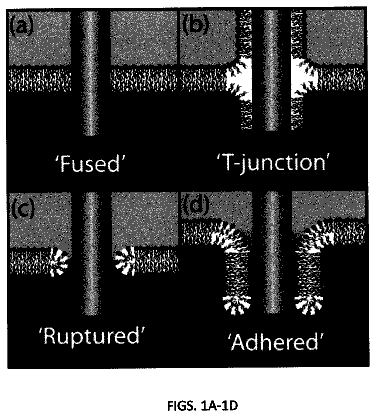
Devices and methods for long-term intracellular access
Nanoscale probes for forming stable, non-destructive seals with cell membranes.
US 9,856,461 B2 · Assignee: The Regents of the University of California · Inventors: Fortman; Jeffrey L. et al.
Sheet 1 of 19 from the published document. All sheets in the USPTO PDF
The present invention provides for a polyketide synthase (PKS) capable of synthesizing an α-olefin, such as 1-hexene or butadiene. The present invention also provides for a host cell comprising the PKS and when cultured produces the α-olefin.
Type I polyketide synthases (PKSs) are programmable, multifunctional enzymes capable of possessing all of the catalytic capacity of fatty-acid synthases (FASs). However, unlike the FAS enzyme, which iteratively extends and fully reduces the β-carbonyl generated with each extension of the hydrocarbon backbone, PKS systems utilize discrete sets of enzymatic domains for each extension and reduction of the nascent chain. These sets, commonly referred to as modules, can incorporate a variety of extenders units resulting in different side chains. They also can encode between zero and three of the reducing domains associated with FASs, respectively leading to a ketone, hydroxy, double bond, or fully saturated carbon at the beta position of the growing polyketide chain (Hopwood and Sherman. 1990. Annual Review of Genetics 24:37-66). Due to their modularity, PKS systems have been extensively expl
1 of 19 drawing sheets so far from the published document, cropped to the drawing. Every sheet is in the USPTO PDF.
What the patent claimed, word for word. All of it is now free to use.
The Sequence Listing written in file SEQTXT_77429-011110US-0958337.TXT, created on Sep. 14, 2015, 237,019 bytes, machine format IBM-PC, MS-Windows operating system, is hereby incorporated by reference.
This invention relates generally to α-olefin production using polyketide synthases and so relates to the fields of chemistry, microbiology, and molecular biology.
Type I polyketide synthases (PKSs) are programmable, multifunctional enzymes capable of possessing all of the catalytic capacity of fatty-acid synthases (FASs). However, unlike the FAS enzyme, which iteratively extends and fully reduces the β-carbonyl generated with each extension of the hydrocarbon backbone, PKS systems utilize discrete sets of enzymatic domains for each extension and reduction of the nascent chain. These sets, commonly referred to as modules, can incorporate a variety of extenders units resulting in different side chains. They also can encode between zero and three of the reducing domains associated with FASs, respectively leading to a ketone, hydroxy, double bond, or fully saturated carbon at the beta position of the growing polyketide chain (Hopwood and Sherman. 1990. Annual Review of Genetics 24:37-66).
Due to their modularity, PKS systems have been extensively explored for production of “unnatural” natural products (Weissman and Leadlay. 2005. Nature Reviews Microbiology 3:925-936). Hundreds of these molecules have been produced, ranging from basic lactones to modified versions of drugs and drug-like compounds.
The present invention provides polyketide synthases (PKSs) capable of synthesizing α-olefins, recombinant expression vectors for producing them, recombinant host cells that express them and produce the desired alpha olefin, methods for making alpha olefins, and alpha olefins produced by the methods. The PKSs of the invention are not naturally occurring and so are referred to as “recombinant” PKS enzymes. In some embodiments of the invention, the α-olefin is not a compound synthesized by a naturally occurring PKS. In some embodiments of the invention, the PKS is a hybrid PKS comprising modules and/or portions thereof, from two, three, four or more naturally occurring PKSs. A hybrid PKS can contain naturally occurring modules from two or more naturally occurring PKSs and/or it can contain one or more modules composed of portions, including intact domains, of two or more modules from the same naturally occurring PKS or from two or more naturally occurring PKS, or both. In some embodiments of the invention, a recombinant nucleic acid comprising a CurM module or portion thereof, which may be either naturally occurring or recombinant, is employed.
The present invention provides recombinant nucleic acids that encode PKSs of the invention. The recombinant nucleic acids include nucleic acids that include a portion or all of a PKS of the invention, nucleic acids that further include regulatory sequences, such as promoter and translation initiation and termination sequences, and can further include sequences that facilitate stable maintenance in a host cell, i.e., sequences that provide the function of an origin of replication or facilitate integration into host cell chromosomal or other DNA by homologous recombination. In some embodiments, the recombinant nucleic acid is stably integrated into a chromosome of a host cell. In some embodiments, the recombinant nucleic acid is a plasmid. Thus, the present invention also provides vectors, including expression vectors, comprising a recombinant nucleic acid of the present invention. The present invention also provides host cells comprising any of the recombinant nucleic acid and/or PKS of the present invention. In some embodiments, the host cell, when cultured under suitable conditions, is capable of producing the α-olefin. These host cells include, for example and without limitation, prokaryotes such as E. coli species, Bacillus species, Streptomyces species, Myxobacterial species, as well as eukaryotes including but not limited to yeast and fungal strains.
Thus, the present invention provides a wide variety of host cell comprising one or more of the recombinant nucleic acids and/or PKSs of the present invention. In some embodiments, the host cell, when cultured, is capable of producing an α-olefin that it otherwise does not produce, or produces at a lower level, in the absence of a nucleic acid of the invention.
The present invention provides methods for producing α-olefins, said methods generally comprising: providing a host cell of the present invention, and culturing said host cell in a suitable culture medium under suitable conditions such that the α-olefin is produced.
The present invention also provides compositions comprising an α-olefin from a host cell in which the α-olefin was produced, and in some embodiments may include trace residues and/or other components of the host cell. Such trace residues and/or other components may include, for example, cellular material produced by the lysis of the host cell. The present invention also provides methods of purifying α-olefins and methods for converting them to other useful products.
The foregoing aspects and embodiments of the invention as well as others will be readily appreciated by the skilled artisan from the following detailed description of illustrative embodiments when read in conjunction with the accompanying drawings.
FIG. 1 shows an illustrative example of the modular organization of a biosynthetic pathway suitable for synthesizing 1-hexene in accordance with the invention. In this illustration, the proposed modules are sourced from the loading module of DEBS1 from the erythromycin PKS, module 5 from the nystatin PKS NysC, and CurM the terminal module of the curacin PKS. In another embodiment of the invention, the nystatin PKS module 5 is replaced with portions of modules 9 and 10 from the indanomycin PKS; this alternative embodiment has actually been used to produce 1-hexene.
FIG. 2 shows types of modules employed and corresponding precursors utilized for incorporation into polyketide chains. The loading module is designated S. While any suitable loading domain can be used (such as those loading acetate and benzoic acid), only two examples are illustrated in this figure. The remaining compounds represent the structures incorporated into the growing polyketide chain employing extender modules A-P. The dashed line indicates the C—C bond formed through Claisen condensation; atoms to the right of the bond and the C atom at the left of the dashed line represent the structures determined by the module employed. The R group represents the existing acyl chain prior to incorporation determined by the module.
FIGS. 3A-C show: ( FIG. 3A ) a PKS system that can be used to produce 1-hexene in accordance with the invention, ( FIG. 3B ) how additional modules can be added to yield longer, even-chain α-olefins, and ( FIG. 3C ) how changing the loading module to incorporate acetate (from malonyl-CoA) will allow access to the saturated, linear, odd-chain α-olefins in accordance with the methods of the invention.
FIG. 4A shows an embodiment of the invention that illustrates utilization of the avermectin PKS loading module. The side chains illustrated ( FIG. 4B ) are merely examples and do not constitute the entire pool of side chains that can be incorporated using the avermectin loading module (or similar loading modules) in accordance with the methods and teaching of the invention.
FIGS. 5A-B show, in part ( FIG. 5A ), an example of an illustrative pathway to 3-methylenepent-4-enoic acid, an example of the carboxylated butadiene derivatives accessible using PKSs in accordance with the methods of the invention and how the distance between the diene and carboxylate moieties can be increased via the use of additional PKS modules. FIG. 5B shows the proposed mechanism of the exomethylene biosynthesis from the jamaicamide pathway (see Edwards et al. 2004. Chem Biol. 11(6):817-33; incorporated herein by reference).
FIG. 6 shows a PKS for producing butadiene in accordance with the methods of the invention. While this invention is not to be limited in any manner by any proposed mechanism of action recited or shown herein, this figure, for simplicity, illustrates loss of the hydroxyl group as a water molecule, the enzymatic mechanism utilizes sulfate as a leaving group.
FIGS. 7A-G show a PKS for producing butadiene in accordance with the methods of the invention. FIG. 7A and FIG. 7B show the loading of the acrylyl-CoA using the DEBS propionyl-CoA specific loading domain modified to accept acrylyl-CoA. FIG. 7C shows the thiotransfer of the acrylate moiety to KS domain. FIG. 7D shows the binding of the malonyl-CoA and transfer to ACP domain. FIG. 7E shows KS catalyzing the condensation of the moiety with release of CO.sub.2. FIG. 7F shows KR catalyzing the reduction of the β-carbonyl group. FIG. 7G shows the final step and the release of the butadiene, CO.sub.2, and water (as in FIG. 6 , the loss of the hydroxyl group is illustrated with a water molecule, but the enzymatic mechanism utilizes sulfate as a leaving group).
FIG. 8 shows an enzymatic pathway accessible by the methods and materials of the invention to produce acrylyl-CoA comprising exogenously supplying propionate, and expressing PrpE and acyl-CoA dehydrogenase activities. A host cell comprising this system would be provided with propionate, which could be exogenously fed to, if not produced endogenously by, the host cell selected for production.
FIG. 9 shows an enzymatic pathway accessible by the methods and materials of the invention to produce acrylyl-CoA comprising exogenously supplying propionate and glucose. A host cell comprising this system would be provided with propionate, either through exogenous feeding or the introduction of propionate biosynthesis pathway, as above, and a suitable organic molecule that the host cell can directly or indirectly convert into a pyruvate. For example, if the host cell is E. coli , the suitable organic molecule can be glucose. This pathway utilizes the central metabolic intermediate pyruvate to produce lactate via a lactate dehydrogenase. Lactate is then converted to lacoyl-CoA by a lactate CoA trnasferase, utilizing propionyl-CoA as a cofactor and releasing propionate. Lactoyl-CoA is then dehydrated using a lactoyl-CoA dehydratase to yield acrylyl-CoA. One embodiment of this invention includes the lactate dehydrogenase, LdhA, from E. coli , the lactate CoA transferase, Pct, from Clostridium proponicum , and the lactoyl-CoA dehydratase enzymes, EI and EII, from C. proponicum . The introduction of this pathway into E. coli or yeast for diene (such as butadiene) production represents a novel application of these enzymes. An embodiment of this invention is use of this pathway for PKS-based acrylate production.
FIG. 10 shows an enzymatic pathway accessible by the methods and materials of the invention to produce acrylyl-CoA starting from the common metabolic precursor malonyl-CoA. This pathway generates malonyl-CoA using an acetyl-CoA carboxylase, acetyl-CoA and CO.sub.2. Malonyl-CoA is then reduced by a malonyl-CoA reductase releasing malonyl semialdehyde. Malony semialdehyde is converted to 3-hydroxypropionate using a substrate specific oxidoreductase. A 3-hydroxypropionate CoA ligase catalyzes the formation of 3-hydroxypropionyl-CoA. This intermediate is then dehydrated to acryalyl-CoA by the reverse reaction of 3-hydroxypropionyl-CoA hydratase. In one embodiment of the invention, these enzymes are the acetyl-CoA carboxylase complex (AccA/AccD) from E. coli , the malonyl-CoA reductase (The introduction of this pathway into E. coli or yeast for diene (e.g. butadiene) production represents a novel application of these enzymes and is a unique embodiment of this invention. An embodiment of this invention is use of this pathway for PKS-based acrylate production.
FIG. 11 shows an enzymatic pathway accessible by the methods and materials of the invention to produce isoprene via the mevalonate pathway.
FIGS. 12A-F show an example of an illustrative pathway accessible by a PKS provided by the invention for producing isoprene. FIG. 12A shows the loading of the acrylyl-CoA using the DEBS propionyl-CoA specific loading domain modified to accept acrylyl-CoA, and extension with malonyl-CoA to form the beta-keto ACP bound intermediate. FIG. 12B through FIG. 12F show the HMG-CoA-like mechanism involved in the replacement of the β-carbonyl group with a methyl group using PKS enzymes from the PKSX (Bacillaene) cluster from Bacillus subtilis (Butcher, et al. 2007. Proc Natl Acad Sci USA. 104(5):1506-9; incorporated herein by reference). This invention is not to be limited by any proposed mechanism shown herein. In this embodiment, the penultimate product is released as the free acid and subsequently decarboxylated to isoprene in accordance with the methods of the invention by either a decarboxylase, or extracellular chemical catalysis/pyrolysis.
FIG. 13 shows a PKS provided by the invention for producing (E)-penta-1,3-diene. This figure illustrates loss of the hydroxyl group as a water molecule, but the enzymatic mechanism utilizes sulfate as a leaving group.
FIG. 14 shows precursor supply pathways in E. coli for producing acrylyl-CoA, as described in previous figures, and [2S]-methylmalonyl-CoA. Each enzymes depicted can be expressed in a host cell wherein each enzyme can be independently either endogenous or native to the host cell, or introduced into recombinant
FIG. 15 shows methods and materials provided by the invention for maximizing precursor supply pathways in E. coli . The means to maximizing acrylyl-CoA can comprise one or more of “knocking out” (eliminating or reducing the expression of) PrpC activity, knocking out YgfH activity, exogenously feeding propionate (or producing propionate endogenously), overexpressing PrpE activity to increase cytosolic pools of propionyl-CoA. From this intermediate, the introduction of the propionyl-CoA carboxylase complex (AccA/PccB) will yield methylmalonyl-CoA (Pfeifer, et al. Science. 2001 Mar. 2; 291(5509):1790-2; incorporated herein by reference). This pool of propionyl-CoA can also be utilized in the pathways described in FIGS. 8 and 9 .
FIG. 16 shows an illustrative PKS provided by the invention to produce 3-hydroxy-1-octene. The PKS comprises the following elements: (i) Load module and KS1 from PikA1 (pikromycin), followed by (ii) Module 1 and KS2: AT-ACP segment from Module 5 and KS6 domain from the Nystatin PKS, (iii) Module 2: the hydroxymalonate-specifc AT and contiguous ACP domains from ZmaA (zwittermicin PKS) from Bacillus cereus , DH, ER and KR domains from nanchangmycin PKS Module 2, and (iv) Module 3: AT-TE segment of the CurM module (curacin PKS). For the production of the precursor hydroxymalonyl-ACP, enzymes ZmaD, ZmaG, and ZmaE are also produced by or provided to the host strain. This figure illustrates loss of the hydroxyl group as a water molecule, however, it should be noted that the enzymatic mechanism utilizes sulfate as a leaving group.
FIG. 17 shows an illustrative PKS provided by the invention to produce 1-decene. The PKS comprises the following elements: (i) Load module and KS1 from PikA1, followed by (ii) Module 1 and KS2: AT-ACP segment from Module 5 and KS6 domain from the nystatin PKS, (iii) Module 2 and KS3: AT-ACP segment from Module 15 and KS16 domain from the nystatin PKS, (iv) Module 3 and KS4: AT-ACP segment from Module 3 and K4 domain from the oligomycin PKS, and (v) Module 4: AT-TE segment from CurM. This figure illustrates loss of the hydroxyl group as a water molecule, however, it should be noted that the enzymatic mechanism utilizes sulfate as a leaving group.
FIG. 18 shows an illustrative PKS provided by the invention to produce 1-octene. The PKS comprises the following elements: (i) Loading Module and KS1 from PikA1, followed by (ii) Module 1 and KS2: AT-ACP segment from Module 5 and KS6 domain from the nystatin PKS Module 2, (iii) and KS3: AT-ACP segment from Module 15 and KS16 domain from the nystatin PKS, and then (iv) Module 3: AT-ST segment from the CurM module. This figure illustrates loss of the hydroxyl group as a water molecule, however, it should be noted that the enzymatic mechanism utilizes sulfate as a leaving group.
This invention is not limited to particular embodiments described, as such may, of course, vary. The terminology used herein is for the purpose of describing particular embodiments only, and is not intended to be limiting, because the scope of the present invention will be limited only by the appended claims.
Where a range of values is provided, each intervening value, to the tenth of the unit of the lower limit unless the context clearly dictates otherwise, between the upper and lower limits of that range is also specifically disclosed. Each smaller range between any stated value or intervening value in a stated range and any other stated or intervening value in that stated range is encompassed within the invention.
Unless defined otherwise, all technical and scientific terms used herein have the meaning commonly understood by one of ordinary skill in the art to which this invention belongs. Although any methods and materials similar or equivalent to those described herein can be used in practicing the present invention, suitable methods and materials are now described. All publications cited are incorporated herein by reference to disclose and describe the methods and/or materials and/or results therein.
As used herein and in the appended claims, the singular forms “a”, “and”, and “the” include plural referents unless the context clearly dictates otherwise. Thus, for example, reference to “an α-olefin” includes a plurality of such α-olefins, and so forth.
The term “even-chain α-olefin” refers to an α-olefin with a carbon backbone, which, disregarding any functional groups or substituents, has an even number of carbon atoms.
The term “odd-chain α-olefin” refers to an α-olefin with a carbon backbone, which, disregarding any functional groups or substituents, has an odd number of carbon atoms.
The term “functional variant” describes an enzyme that has a polypeptide sequence that is at least 70%, 75%, 80%, 85%, 90%, 95% or 99% identical to an enzyme described herein. A “functional variant” enzyme may retain amino acids residues recognized as conserved for the enzyme in nature, and/or may have non-conserved amino acid residues. Amino acids can be, relative to the native enzyme, substituted (different), inserted, or deleted, but the variant has generally similar enzymatic activity as compared to an enzyme described herein. A “functional variant” enzyme may be found in nature or be an engineered mutant (recombinant) thereof.
The objects, advantages, and features of the invention will become more apparent to those persons skilled in the art upon reading the details of the invention as more fully described below.
Polyketide Synthases (PKS)
The present invention provides recombinant polyketide synthase (PKS) enzymes capable of synthesizing an α-olefin. The PKS enzymes of the invention are not naturally occurring PKS. In some embodiments of the invention, the α-olefin is not a compound synthesized by a naturally occurring PKS. In some embodiments of the invention, the PKS is a hybrid PKS comprising modules, domains, and/or portions thereof, or functional variants thereof, from two or more PKSs. Such α-olefins include the diketides and triketides, and polyketides of more than three ketide units, such as 4, 5, or 6 or more ketide units. The α-olefin can further include one or more functional groups in additional to the double bond that characterizes them. Such functional groups include, but are not limited to, ethyl, methyl and hydroxy side chains, internal olefins, and ketones.
In some embodiments of the invention, the α-olefin is an even-chain α-olefin having the following chemical structure:
##STR00001## wherein each R.sub.1 is independently —H or —CH.sub.3, each R.sub.2 is independently —H or —OH, n is an integer, and αβ is a single or double bond, with the proviso that when an αβ is a double bond then the corresponding R.sub.2 is H. In some embodiments of the invention, n is an integer from 1 to 10. n indicates the number of two-carbon-chain subunits in the carbon backbone of the α-olefin. The R.sub.1, R.sub.2, and αβ within each two-carbon-subunit of a multiple subunit α-olefin is independent of the R.sub.1, R.sub.2, and αβ of any other two-carbon-subunit in the molecule. In some embodiments, however, one or more, up to all, subunits have identical R.sub.1, R.sub.2, and αβ.
In some embodiments of the invention, the α-olefin has the following chemical structure:
##STR00002## wherein n is an integer from 0 to 10.
In one embodiment, the invention provides methods, host cells, and nucleic acids for making the C3-alpha olefins propylene (propene) and polymers and products derived therefrom, including but not limited to: polypropylene, acylonitrile, propylene oxide, alcohols, cumene, acrylic acid, injection molded plastics, electronics, electrical appliances, housewares, bottle caps, toys, luggage, films, fibers, carpets, clothing, ropes, pipes, conduit, wire, cable, elastomeric polymers, acrylic fibers, nitrile rubber, acrylonitrile-butadiene-styrene (ABS) resins, styrene-acrylonitrile (SAN) resins, acrylamide, adiponitrile, polyether polyols, polyurethanes, flexible foams, rigid foams, insulation, propylene glycol, polyester resins, antifreeze, de-icing fluids, propylene glycol ethers, paints, coatings, inks, resins, cleaners, isopropanol, cosmetics, pharmaceuticals, food, ink, adhesives, 2-ethylhexanol, phthalate plasticizers, phenol, acetone, polycarbonate, phenolic resins, epoxy resins, methyl methacrylate (MMA), and acrylic esters.
In one embodiment, the invention provides methods, host cells, and nucleic acids for making the C4-alpha olefin butene and polymers and products derived therefrom, including but not limited to: polybutylene, copolymers with ethylene and/or propene, hot-melt adhesives, synthetic rubber, diesel fuel, and jet fuel.
In one embodiment, the invention provides methods, host cells, and nucleic acids for making the C4 diolefin butadiene and polymers and products derived therefrom, including but not limited to: styrene butadiene rubber (SBR), polybutadiene rubber, acrylonitrile butadiene styrene (ABS), styrene butadiene (SB) copolymer latex, nitrile rubber, adiponitrile, chloroprene, butanediol, tetrahydrofuran, tires, adhesives, coatings, high impact polystyrene, thermoplastic resins, engineering nylons (from C12 lactam), paper coating, gaskets and seals, hoses, gloves, nylon fibers, polymers, wet suits, electrical insulation, polybutylene terephthalate, spandex, and binders. Butadiene has the following chemical structure:
In one embodiment, the invention provides methods, host cells, and nucleic acids for making the C5 α olefin: 1-pentene and polymers and products derived therefrom, including but not limited to: gasoline, polymers, adhesives, sealants, diesel fuel, and jet fuel.
In one embodiment, the invention provides methods, host cells, and nucleic acids for making the C6 α-olefin (see FIG. 1 , example): 1-hexene and polymers and products derived therefrom, including but not limited to comonomer, polyethylene, polymer, high density polyethylene (HDPE), linear low density polyethene (LLDPE), 1-heptanal, heptanoic acid, resin, film, plastic pipe, containers, diesel fuel, and jet fuel. 1-hexene has the following chemical structure:
##STR00004## and an illustration of a 1-hexene producing PKS is provided in FIG. 1 .
In one embodiment, the invention provides methods, host cells, and nucleic acids for making the C10 α-olefin: 1-decene and polymers and products derived therefrom, including but not limited to: detergent formulations, linear alkyl benzene (LAB), linear alkyl benzene sulfonate (LABS), polyalphaolefin synthetic lubricant basestocks (PAO), heatshrink materials, electrical insulation sleeves, rash guards in clothing, polyolefin elastomers (POE), flexible foams, footwear, seat cushions, armrests, pillows, radar coolants, strings, polyol esters, detergent alcohols, plasticizer alcohols, specialty chemicals, epoxides, derivatives thereof, comonomer, intermediate in production of epoxides, amines, oxo alcohols, synthetic lubricants, synthetic fatty acids, alkylated aromatics, emulsifiers, performance waxes, cosmetic formulations, viscosity controller, solvent, decene butene copolymer, binder, film forming, decene/PVP copolymer, food additives, glazing agent, anti-foaming agent, anti-dusting agent, white mineral oil substitute, polishing agent, well fluids, alpha olefin oligomers, and the like. 1-decene has the following chemical structure:
In one embodiment, the invention provides methods, host cells, and nucleic acids for making the C8 aromatic α-olefin: styrene and polymers and products derived therefrom, including but not limited to: homopolymers, copolymers, polystyrene, expandable polystyrene (EPS), acrylonitrile-butadiene-styrene (ABS), resins, styrene-acrylonitrile (SAN), acrylonitrile-styrene-acrylate (ASA), styrene butadiene, styrene butadiene rubber, copolymer with maleic anhydride, terephthalate, unsaturated polyester resins, containers, closures, lids and vending cups, construction; electrical and electronic parts; domestic appliances and housings; household goods and home furnishings; and toys, sporting goods and recreational articles, packaging, thermoplastics, cutlery, CDs, insulating materials, polymer bonded explosives, consumer products, renewable plastics, renewable products, hardhats, tires, etc. In some embodiments of the invention, the aromatic α-olefin has the following chemical structure:
##STR00006## wherein R.sub.3 is —H, —OH, —NH.sub.3, or —NO.sub.2.
Alpha olefins are commonly used in the cosmetics and skin care industry, and the present invention therefore provides useful starting materials for making cosmetics and skin care products. For example, alpha olefin sulfonate, sulfate free personal cleaners, soap, copolymer maleic acid, and the like are all used in these industries and provided by the invention. Alpha olefins provide by the invention can also be used in the flavor and fragrance industry. For example, 3-hydroxy-1-octene and 3-oxo-1-octene can be made using the methods and materials of the invention and are used in applications where a mushroom flavor/fragrance is desired.
The present invention can also be used to generate intermediates useful in the synthesis of pharmaceuticals. These olefins can be coupled via olefin metathesis to one another or other olefin intermediates obtained via traditional chemical syntheses to yield bioactive molecules useful as drugs.
In some embodiments, the α-olefin produced in accordance with the invention is (E)-deca-1,5-diene, which has the following chemical structure:
In some embodiments, the α-olefin produced in accordance with the invention has the following chemical structure:
##STR00008## wherein R is one of the following structures:
In some embodiments, the α-olefin produced in accordance with the invention is a polyolefin having chemical structure (I) and comprising at least two, three, four, five, or more C—C double bonds. Such α-olefins include, but are not limited to, diolefins, such as diolefins with two C—C double bonds on the carbon backbone. Such diolefins include, but are not limited to, butadiene, isoprene, and penta-1,3-diene. Butadiene has the chemical structure shown in [0043], above.
In some embodiments, the α-olefin produced in accordance with the invention is isoprene, which has the following chemical structure:
In some embodiments, the α-olefin produced in accordance with the invention is penta-1,3-diene, which has the following chemical structure:
Complex polyketides comprise a large class of natural products that are synthesized in bacteria (mainly members of the actinomycete family; e.g. Streptomyces ), fungi and plants. Polyketides form the macrolactone component of a large number of clinically important drugs, such as antibiotics (e.g. erythromycin, tylosin), antifungal agents (e.g. nystatin), anticancer agents (e.g. epothilone), immunosuppressives (e.g. rapamycin), etc. Though these compounds do not resemble each other either in their structure or their mode of action, they share a common basis for their biosynthesis, which is carried out by a group of enzymes designated polyketide synthases.
Polyketide synthases (PKS) employ short chain fatty acyl CoAs in Claisen condensation reactions to produce polyketides. Unlike fatty acid synthases that utilize acetyl CoA as the starter and malonyl CoA as the extender units, and use a single module iteratively to produce the nascent acyl chains, PKSs are composed of discrete modules, each catalyzing the chain growth of a single step. Modules can differ from each other in composition, so that, overall, a number of different starters (e.g. acetyl CoA, propionyl CoA) and extenders, some of which contain stereospecific methyl (or ethyl) side chains can be incorporated into a polyketide. In addition, PKS modules do not always reduce the 3-carbonyl formed from condensation but may leave it either unreduced (ketone), partially reduced (hydroxyl, 2,3-ene), or fully reduced (3-methylene). Many PKSs employ malonyl CoA or [S]-2-methylmalonyl CoA as the starter for polyketide synthesis. In such cases, the terminal carboxyl group is usually removed by a decarboxylase domain present at the N-terminus of the loading domain of the PKS. Thus, the structure (and chirality) of the α-carbon and β-carbonyl is determined by the module of the PKS employed in the synthesis of the growing chain at each particular step. Because of the correspondence between the modules used in the synthesis and the structure of the polyketide produced, it is possible to program PKS synthesis to produce a compound of desired structure by selection and genetic manipulation of polyketide synthases.
FIG. 2 shows the various modules and the precursor utilized by each module for incorporation into the corresponding nascent acyl (polyketide) chain to give rise to a range of compounds of interest. Table 1, below, provides illustrative PKS sources for each module in FIG. 2 . Each PKS source (amino acid sequence and corresponding coding sequence) is well-known to one skilled in the art and readily available. In addition, for each module in Table 1, there are other modules from other PKS (or from recombinant DNA technology) that can be used. In addition, other structures can be incorporated in the ketide or polyketide that are not shown in Table 1 and FIG. 2 . For example, useful loading modules includer the benzoate loading module of soraphen PKS, the isobutyrate loading module of the lipomycin PKS and bafilomycin PKS, and the acrylate loading module from the dificidin pathway. The acrylate loading module from the dificidin PKS loads and dehydrates a hydroxypropionate molecule by the use of enzymes difA-E to yield a PKS with an arylyl-ACP (Chen, 2006, J. Bact. 188:4024-4036; incorporated herein by reference).
The present invention also contemplates the use of functional variants of PKS modules, domains, and portions thereof. In one important embodiment, the invention provides a variety of recombinant modules that carry out the same enzymatic reactions conducted by the CurM module.
TABLE-US-00001 TABLE 1 PKS sources of the various modules. Module PKS Source S1 Spiramycin PKS Loading Domain (with and without inactivation or deletion of the KS.sup.Q domain) S2 Pikromycin PKS Loading Domain (with and without inactivation or deletion of the KS.sup.Q domain) S3 Spiramycin PKS Loading Domain S4 Erythromycin PKS Loading Domain A Rifamycin PKS Module 2 B Oligomycin PKS Module 1 C Spiramycin PKS Module 1 D Pikromycin PKS Module 2 E Oligomycin PKS Module 3 F Erythromycin PKS Module 3 G Oligomycin PKS Module 5 H Primaricin PKS Module 7 I Tylosin PKS Module 1 J Erythromycin PKS Module 1 K Avermectin PKS Module 7 L Rapamycin PKS Module 1 M Erythromycin PKS Module 4 N Pederin Module 2 O Ascomycin Module 4 P FK506 Module 4 Q Curacin A Chain Termination Module (CurM)
All extender modules carry the β-acyl ACP synthase (commonly called the ketosynthase or KS) domain, which conducts the decarboxylative condensation step between the extender and the growing polyketide chain, and the acyl carrier protein (ACP) domain that carries the growing acyl chain and presents it to any cognate reductive domains for reduction of the β-carbonyl. Modules can differ from each other in composition so that a number of different starter and extender units, some of which contain stereospecific side chains (e.g. methyl, ethyl, propylene) can be incorporated. The acyltransferase (AT) domain of each module determines the extender unit (e.g. malonyl CoA, methylmalonyl CoA, and the like) incorporated. In addition, PKS modules do not always reduce the β-carbonyl formed from condensation but may leave it either unreduced (ketone), partially reduced (hydroxyl, 2,3-ene) or fully reduced (3-methylene), as shown in FIG. 2 . The ketoreductase (KR) domain reduces the ketone to the OH function (stereospecifically); the dehydratase (DH) domain removes water from the α and β carbons leaving an α,β trans-double bond; the enoylreductase (ER) domain reduces the double bond to a β-methylene center; the reductive state of the β-carbonyl, therefore, is determined by the presence of functional reductive domains in the corresponding module. Less commonly, modules may contain an additional C-methylation domain (yielding an additional α-methyl side chain, as in epothilone).
The Curacin A Chain Termination Module is annotated as CurM. CurM catalyzes an extension of the nascent polyketide molecule with acetate (from malonyl-CoA). The resulting beta carbonyl is reduced to a hydroxyl group by a KR domain. The resulting beta hydroxyl group is then sulfonated by the ST domain (from the common metabolic precursor 3′-phosphoadenosine-5′-phosphosulfate). The TE domain releases the 3-sulfo polyketide which then undergoes loss of sulfate and a decarboxylation to form a terminal olefin moiety. The chain termination module of the PKS of the present invention can comprise the ST and TE domains of the CurM Chain Termination Module and variants thereof with similar activity. Additional PKS modules carrying the combination of a sulfotransferase (pfam00685)/thioesterase have been identified in nature and can be used in additional embodiments of the invention. One such olefination module (Ols) has been characterized from Synechococcus sp. strain PCC 7002 (Mendez-Perez et al. 2011. Appl. Env. Microbiol. 77:4264-4267 2011). Others include, but are not limited to, PKS enzymes from Cyanothece sp. PCC 7424, Cyanothece sp. PCC 7822, Prochloron didemni P1-Palau, Pseudomonas entomophila L48, and Haliangium ochraceum DSM 14365. The present invention also provides consensus sequences that differ from these naturally occurring sequences but encode similar enzymatic activities.
The makeup of the PKS, therefore, determines the choice of starter and extender acyl units incorporated, the extent of reduction at each condensation step, and the total number of units added to the chain. The wide diversity of structures of polyketides seen in nature is thus attributable to the diversity in PKS enzymes.
A partial list of PKS amino acid and corresponding nucleic acid coding sequences that can be used in the PKSs of the present invention includes, for illustration and not limitation, Ambruticin (U.S. Pat. No. 7,332,576); Avermectin (U.S. Pat. No. 5,252,474; MacNeil et al., 1993, Industrial Microorganisms: Basic and Applied Molecular Genetics, Baltz, Hegeman, & Skatrud, eds. (ASM), pp. 245-256; MacNeil et al., 1992, Gene 115: 119-25); Candicidin (FRO008) (Hu et al., 1994, Mol. Microbiol. 14: 163-72); Curacin A (Chang et al., 2004, J. Nat. Prod., 67 (8), pp 1356-1367; Gu et al., 2009, J. Am. Chem. Soc., 131 (44), pp 16033-16035); Epothilone (U.S. Pat. No. 6,303,342); Erythromycin (WO 93/13663; U.S. Pat. No. 5,824,513; Donadio et al., 1991, Science 252:675-79; Cortes et al., 1990, Nature 348:176-8); FK506 (Motamedi et al., 1998, Eur. J. Biochem. 256:528-34; Motamedi et al., 1997, Eur. J. Biochem. 244:74-80); FK520 or ascomycin (U.S. Pat. No. 6,503,737; see also Nielsen et al., 1991, Biochem. 30:5789-96); Jerangolid (U.S. Pat. No. 7,285,405); Leptomycin (U.S. Pat. No. 7,288,396); Lovastatin (U.S. Pat. No. 5,744,350); Nemadectin (MacNeil et al., 1993, supra); Niddamycin (Kakavas et al., 1997, J. Bacteriol. 179:7515-22); Oleandomycin (Swan et al., 1994, Mol. Gen. Genet. 242:358-62; U.S. Pat. No. 6,388,099; Olano et al., 1998, Mol. Gen. Genet. 259:299-308); Pederin (PCT publication no. WO 2003/044186); Pikromycin (Xue et al., 2000, Gene 245:203-211); Pimaricin (PCT publication no. WO 2000/077222); Platenolide (EP Pat. App. 791,656); Rapamycin (Schwecke et al., 1995, Proc. Natl. Acad. Sci. USA 92:7839-43); Aparicio et al., 1996, Gene 169:9-16); Rifamycin (August et al., 1998, Chemistry & Biology, 5: 69-79); Soraphen (U.S. Pat. No. 5,716,849; Schupp et al., 1995, J. Bacteriology 177: 3673-79); Spiramycin (U.S. Pat. No. 5,098,837); and Tylosin (EP 0 791,655; Kuhstoss et al., 1996, Gene 183:231-36; U.S. Pat. No. 5,876,991); each of the foregoing references is incorporated herein by reference. Additional suitable PKS coding are readily available to one skilled in the art (e.g., by cloning and sequencing of DNA from polyketide producing organisms or by reference to GenBank).
Of the more than one hundred PKSs studies and reported on in the scientific literature, the correspondence between the modules used in the biosynthesis of, and the structure of, the polyketide produced is understood both at the level of the protein sequence of the PKS and the DNA sequence of the corresponding genes. The organization of modules and correspondence with polyketide structure can be identified by amino acid and/or nucleic acid sequence determination. One can thus clone (or synthesize) DNA sequences corresponding to desired modules and transfer them as fully functioning units to heterologous hosts, including otherwise non-polyketide producing hosts such as E. coli (Pfeifer, et al., Science 291, 1790 (2001); incorporated herein by reference), and polyketide-producing hosts, such as Streptomyces (Kao et al., Science 265, 509 (1994); incorporated herein by reference).
Additional genes employed in polyketide biosynthesis have also been identified. Genes that determine phosphopantetheine:protein transferase (PPTase) that transfer the 4-phosphopantetheine co-factor of the ACP domains, commonly present in polyketide producing hosts, have been cloned in E. coli and other hosts (Weissman et al., Chembiochem 5, 116 (2004); incorporated herein by reference). While it is possible to re-program polyketide biosynthesis to produce a compound of desired structure by either genetic manipulation of a single PKS or by construction of a hybrid PKS composed of modules from two or more sources (see Weissman et al., supra), the present invention provides the first means for making an alpha-olefin by a recombinant PKS.
The description continues in the full USPTO document.
About 5,919 words. The USPTO PDF has it with every drawing.
Fees are due 3.5, 7.5 and 11.5 years after grant. This patent expired on January 2, 2026, so the fee marked "not paid" was the one that went unpaid.
PRODUCING ALPHA-OLEFINS USING POLYKETIDE SYNTHASES
Filed Sep 2011 · published Oct 2013PRODUCING ALPHA-OLEFINS USING POLYKETIDE SYNTHASES
Filed Sep 2015 · published Mar 2016Producing alpha-olefins using polyketide synthases
Filed Sep 2015 · granted Jan 2018Earlier publications, parents and continuations. None of them can still be enforced, or this patent would not be listed.
Prior art cited by the examiner or applicant. Useful when you check your own idea for novelty.
Everything on this page comes from the documents linked above.


