Technical field
This document relates to content retrieval and presentation.
Background
The Internet enables users to access a great amount of information. A user with a web browser, messaging application, or other proprietary application may retrieve information from large libraries to access great amounts of information. Navigating the great amount of information can challenge some users.
Summary
In one general sense, information may be presented to a user by using a first application to receive a character stream of one or more non-completion characters that indicate that additional characters may be received, exchanging the character stream with a host to analyze the character stream to generate results that are responsive to the user's predicted interest, receiving the results, and displaying the results so that the user may select one of the results to launch a code segment related to a selected result.
For example, a web browser may receive the character stream in an address line and exchange the character stream with a host that generates mapping results that are responsive to the user's predictive interest. The web browser receives the mapping results and displays the mapping results with an overview map so that the user may select one of the overview maps to display more detailed mapping information.
Implementations may include one or more of the following features. For example, the first application may receive one or more updates to the character stream, and may exchange the updates to the character stream with the host to permit the host to analyze the character stream using the updates to generate updated results that are responsive to the user's predicted interest. The updated results may be received and displayed so that the user may select one of the updated results to launch a code segment related to a selected result.
Exchanging the updates may include exchanging all of the characters in the character stream, or exchanging one or more characters in the character stream that have been received since the character stream was last exchanged.
Exchanging the character stream may include determining whether a sufficient amount of data in the character stream exists to generate accurate results, and, if so, analyzing the character stream to display the results.
Analyzing the character stream may be delayed when there is an insufficient amount of data in the character stream to generate accurate results. Determining whether the sufficient amount of data exists in the character stream may include waiting until a predetermined number of characters has been entered, waiting until a predetermined amount of time has elapsed since the user last entered a character in the character stream, or waiting until the predetermined number of characters has been entered, unless the predetermined amount of time has elapsed since a last character in the character stream has been entered.
Analyzing the character stream may include identifying results that are more responsive to the predicted interest of the user. Displaying the results may include displaying the results that are more responsive to the predicted interest of the user.
Displaying the results so that the user may select one of the results to launch a code segment may include enabling the user to launch a second application that is different from the first application that receives the character stream. Exchanging the character stream with a host may include polling multiple databases to identify results from each of the multiple databases.
The user may be enabled to configure the first application to control an operating mode of the first application. For example, the user may be enabled to select one or more databases to be accessed, to control a format with which the results are displayed, or to control a configuration for a drop down menu used to display results.
The character stream may be analyzed to determine a user profile, which may be stored and used to analyze subsequent character streams from the first application.
Displaying the results may include displaying a map related to the character stream. Using the first application to receive the character stream may include analyzing the character stream before exchanging the character stream to identify that map information is related to the character stream. Analyzing the character stream may include recognizing that a commonly used address term, such as a zip code, a state identifier or a city identifier, is present in the character stream.
Using the first application to receive the character stream may include analyzing the character stream before exchanging the character stream to identify that vendor information is related to the character stream, and instructing the host to return vendor information in the results. Identifying vendor information may include identifying yellow page information related to the character stream or a category and a location appearing in the character stream.
The character stream may be analyzed for a messaging label appearing in the character stream. Analyzing the character stream for the messaging label and displaying the results may include presenting a messaging code segment that enables the user to communicate with another user.
Analyzing the character stream may include determining that a user identifier appears in the character stream. When such a user identifier appears, an online status of a user associated with the user identifier may be determined. Determining the online status and displaying the results may include enabling the user to exchange an instant message with the user associated with the user identifier. Analyzing the character stream for the messaging label may include recognizing that an ‘@’ character appears in the character stream as an indication that an electronic mail message will be exchanged.
The results may be stored for subsequent access. Storing the results includes storing the results the user has selected. A first application may be used to receive a second stream of one or more non-completion characters where the non-completion characters indicate that additional characters may be received. The stored results may be accessed and related to the second stream.
The stored results may be displayed when the second stream indicates that the user is requesting information related to the stored results. The second stream may be exchanged with the host to analyze the second stream. Second stream results may be received and displayed so that the user may select one of the second stream results to launch a code segment related to the second stream result, when the stored results do not relate to the second stream. The operations described previously may be performed on a client or a host system.
The details of one or more implementations are set forth in the accompanying drawings and the description below. Other features will be apparent from the description and drawings, and from the claims.
Description of drawings
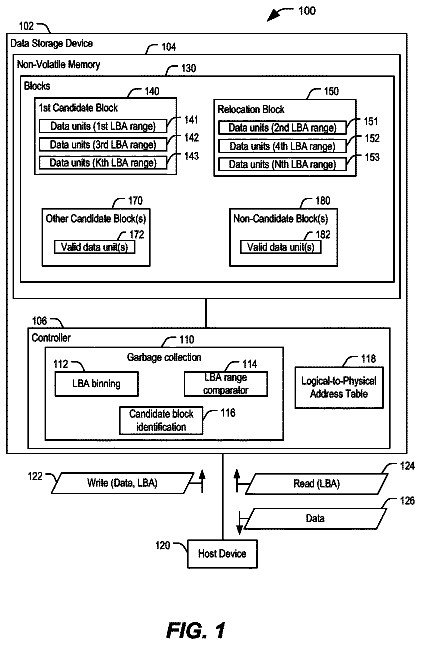
FIG. 1 illustrates a communications system that may be used to intelligently present results related to a character stream analyzed by a host.
FIG. 2 is a flow chart showing how a client may use a host to intelligently present results related to a character stream.
FIG. 3 is a flow chart showing how a client exchanges a character stream with a host and receives mapping information related to the character stream.
FIG. 4 is a flow chart showing how the client display may be modified based on updates to the character stream.
FIGS. 5-10 are exemplary graphical user interfaces (GUIs) illustrating how real-time results related to a character stream may be presented.
Detailed description
The Internet enables access to large volumes of content. A key challenge in providing a better access experience for users is enabling the users to access information most relevant to their interests with the least amount of effort in retrieving the results.
To assist users, an application enables users to enter a character stream into an application such as a web browser. The character stream includes noncompletion characters, which are characters that the user types in a field or form before entering a completion character such as a carriage return (e.g., the ‘Enter’ key). The application may exchange this character stream with a host so that the host may analyze the character stream. The host analyzes the character stream, and generates results predicted to be of interest to the user. For example, when the character stream includes the string “plumbe”, the host may generate access to a yellow page database and retrieve a list of plumbers available to support the user. Note that the results may be identified without waiting to receive the completed character stream for “plumber” or “plumber (carriage return)”.
In another example, the user may enter “20005” as a character stream. The host may retrieve maps and business references located in the area of Washington, D.C. that lies within zip code 20005. Note that in this example, the user did not identify a mapping label or include the words “zip code” to retrieve the results for zip code 20005. Rather, the character stream is analyzed so that potential mapping results may be considered and/or displayed.
In any event, regardless of the results that are identified on the host, the results are returned to the client, which then may display all or a portion of the results. The results are displayed in such a manner that the user may select one of the results to launch a code segment related to the selected item. For example, if the displayed results include a list of plumbers available to support the user, selecting one of the entries may launch a web page operated by a particular plumber. In another example, a phone call, an electronic mail message or an instant message may be transmitted to the plumber whose entry was selected from the list of results.
The user may continue to enter one or more characters in the character stream, and the results may be modified based on recently received characters. For example, when a character stream is analyzed initially after entering “spring”, results related to the season of spring and products using the term “spring” may be returned. When the user types an “f” character, the “f” character may be transmitted to the host, which in turn generates results related to “springf”. In one example, the previous results related to “spring” are filtered to generate a new list that only includes content related to “springf”. In another example, a new query is run identifying terms related to “springf”.
Regardless of how the query is structured, the host identifies results related to “springf”, which may include one or more selections related to cities and towns named Springfield. Results for multiple towns may be presented in a portion of the application that the user is accessing. In one example, the user may be allowed to select one of the results to generate a map related to the selected Springfield. In another example, the user may be presented with entries for “Springfield, Mass.” and “Springfield, Ill.” The user may continue typing characters in the character stream. When the user types in an “I” character after “Springfield” has been identified, the “Springfield, Mass.” entry may be removed. The user then may select the “Springfield, Ill.” entry to retrieve a map of Springfield, Ill.
FIG. 1 shows a communications system 100 that enables intelligent presentation of results related to a character stream. Generally, a client 110 exchanges communications relating to a character stream of noncompletion character with a host 130 using network 120 . The host 130 analyzes the character stream to generate results related to the character stream using, for example, a database 140 (e.g., a yellow pages directory or a mapping system). The host 130 provides one or more results to the client 110 , which in turn displays the results.
Generally, the client 110 includes a computing device that enables a user to exchange information over a communications network. The client 110 may include one or more devices capable of accessing content on the host 130 . The client 110 also may include a controller (not shown) that processes instructions received from or generated by a software application, a program, a piece of code, a device, a computer, a computer system, or a combination thereof, which independently or collectively direct operations of the client 110 . The instructions may be embodied permanently or temporarily in any type of machine, component, equipment, storage medium, or propagated signal that is capable of being delivered to the client 110 or that may reside with the controller at client 110 . Client 110 may include a general-purpose computer (e.g., a personal computer (PC)) capable of responding to and executing instructions in a defined manner, a workstation, a notebook computer, a PDA (“Personal Digital Assistant”), a wireless phone, a component, other equipment, or some combination of these items that is capable of responding to and executing instructions.
In one implementation, the client 110 includes one or more information retrieval software applications (e.g., a browser, a mail application, an instant messaging client, an Internet service provider client, or an AOL TV or other integrated client) capable of receiving one or more data units. The information retrieval applications may run on a general-purpose operating system and a hardware platform that includes a general-purpose processor and specialized hardware for graphics, communications and/or other capabilities. In another implementation, client 110 may include a wireless telephone running a micro-browser application on a reduced operating system with general purpose and specialized hardware capable of operating in mobile environments.
The client 110 includes one or more character stream code segments that analyze a character stream input to an information retrieval application. The character stream code segment receives the stream and structures the exchange of the character stream with other software applications on the client 110 and/or host 130 . For example, the character stream code segment may wait initially wait until X initial characters are received before sending a transmission to the host 130 . The character stream code segment then may send updates to the host every Y subsequent characters. Alternatively, the character stream code segment may include a delay feature set that transmits an update to the character stream if there are Z seconds of user inactivity. Thus, when X is 5 (“five”) characters, Y is 2 (“two”) characters, and Z is 1 (“one”) second, the character stream code segment for a user who types in “DULLES GAS STAT.” would request results 1 ) after “DULLE” 2) after “DULLES”, “DULLES GA”, “DULLES GAS”, “DULLES GAS ST”, and “DULLES GAS STAT”. In the same example, if the user typed “DULLES GAS S” and paused for more than a second (when Z=1 second and the delay feature set is being used), the character stream code segment would send the “DULLES GAS S” string to the host for analysis.
The client 110 may include a preliminary analysis code segment to analyze the character stream and send periodic updates. The preliminary analysis code segment screens the character stream to enhance the efficacy of the results generated for the character stream. In one example, the preliminary analysis code segment identifies one or more databases or segments likely to be associated with the predicted interest of a consumer. Thus, when “20005” is entered, the preliminary analysis code segment may instruct an instruction in the transmission to the host 130 to poll geographic information related to zip code 20005. Other examples may include the preliminary analysis code segment identifying a service industry (e.g., plumbers), a segment (e.g., online music), or a combination of factors (e.g., plumbers in zip code 20005) as relevant to the results that are sought by the user. With the preliminary factors identified, the transmission may be sent to an appropriate database, or a query may be modified as a result of performing the preliminary analysis.
In another example, the preliminary analysis code segment also may correlate information that has been learned about a user with the character stream. If the client is believed to be operating in a particular area (e.g., based on billing information for the user), the character stream can be modified to instruct the host 130 that results should be responsive to the user's address of record. Similarly, the preliminary analysis code segment may interface with a cache or user history to better identify results for the user. Thus, if a history of user activity indicates that the user is interested in National Football League sporting events, the preliminary analysis code segment may tailor results based on the relationship of the results to American Football rather than International Football (soccer). The preliminary analysis code segment also may retrieve and display locally stored results before the host 130 is accessed.
The client 110 may include a communications code segment that interfaces with the information retrieval code segment (e.g., browser or key word tool) to modify the character stream results to reflect the network environment of the client. For example, when the client 110 includes a wireless phone with limited bandwidth, the communications code segment may structure the communications exchange to limit the amount of data in results that are returned so as not to overwhelm the network 120 . This may include filtering the results so that no more than a specified number of results are returned. Similarly, the format of the results may be modified to reduce the bandwidth of results. For example, results transmitted to the client 110 may have the graphics or images removed from the application.
The client may include a display code segment that tailors the results to a display device (e.g., a monitor or a LCD (“Liquid Crystal Display”)). The display code segment may manage the presentation of results so that only the most likely results are presented. The display code segment may interface with the host 130 so that the number of results does not overwhelm the memory or display capabilities of the client. In one example, the display code segment may instruct the host 130 to transmit no more than a specified number of results. In another example, the display code segment may instruct the host 130 to not return any result items larger than a specified size.
The client 110 may include one or more media applications. For example, the client 110 may include a software application that enables the client 110 to receive and display an audio or video data stream. The media applications may include controls that enable a user to configure the user's media environment. For example, if the media application is receiving an Internet radio station, the media application may include controls that enable the user to select an Internet radio station, for example, through the use of “preset” icons indicating the station genre (e.g., country) or a favorite.
The network 120 may include hardware and/or software capable of enabling direct or indirect communications between the client 110 and the host 130 . As such, the network 120 may include a direct link between the client 110 and the host 130 , or it may include one or more networks or subnetworks between them (not shown). Each network or subnetwork may include, for example, a wired or wireless data pathway capable of carrying and receiving data. Examples of networks include the Internet, the World Wide Web, a WAN (“Wide Area Network”), a LAN (“Local Area Network”), analog or digital wired and wireless telephone networks, radio, television, cable, satellite, and/or any other delivery mechanism for carrying data.
The host 130 is generally capable of executing instructions under the command of a host controller (not shown). The host 130 may include one or more hardware components and/or software components. An example of a host 130 is a general-purpose computer (e.g., a server or a mainframe computer) capable of responding to and executing instructions in a defined manner. Other examples include a special-purpose computer, a workstation, a PC, a device, a component, other physical or virtual equipment, or some combination thereof capable of responding to and executing instructions.
The controller is a software application loaded on the host 130 for commanding and directing communications exchanged with the client 110 . Other examples include a program, a piece of code, an instruction, a device, a computer, a computer system, or a combination thereof, for independently or collectively instructing the client 110 or the host 130 to interact and operate as described. The host 130 may be embodied permanently or temporarily in any type of machine, component, physical or virtual equipment, storage medium, or propagated signal capable of providing instructions to the client 110 or the host 130 .
The controller may include one or more information providing applications to support information retrieval requests sent from the client 110 . The information providing applications may include a results code segment that receives a character stream from the client 110 and generates results responsive to a predicted interest by an individual user. Thus, the results code segment may generate one or more results based on the exchange of a character stream received from a client 110 .
The results code segment also may receive character stream modifiers received from the preliminary analysis code segment, the communications code segment, the display code segment, and/or other code segments that modify a character stream transmission from the client. The results code segment may process the character stream in accordance with these modifiers. The host 130 also may operate code segments that perform operations similar to the feature sets in the preliminary analysis code segment, the communications code segment, and the display code segment. These host-oriented versions of these code segments may interface with the results code segment to modify the analysis performed and/or the results that are returned. For example, the host 130 may initially access a cache of content previously requested by the user. The previously-returned results may be analyzed for relevancy before additional analysis is performed or additional systems are polled.
The host 130 may interface with a database 140 to analyze the character stream. Generally, the database 140 includes storage for a volume of data and a processing engine that enables the data to be sorted, searched, and analyzed. The database may be organized along functional criteria. For example, a mapping database may be organized by geographical region, while a yellow pages database may be organized by business as well as geographic criteria. In one example, the database may be structured to perform a more detailed analysis on a character stream provided by a host 130 . For example, a host 130 may receive a character stream from a client and redirect queries to one or more databases 140 . Each of the redirected queries may be modified to further refine the redirected query. For example, a query redirected to a yellow pages directory may have the zip code added as a selection term. Similarly, a query directed to a database that provides stock quotes may include a reference describing which stocks are of interest to the user (e.g., stocks owned by the user).
Referring to FIG. 2 , a flow chart 200 illustrates how a client 110 may use a host to intelligently present results related to a character stream of noncompletion characters. Generally, the systems in flow chart 200 relate to the systems described in FIG. 1 . Flow chart 200 illustrates how the client 110 receives a character stream (step 210 ) and exchanges the character stream with the host (step 220 ). The host 130 receives the character stream (step 230 ), analyzes the character stream (step 240 ), and exchanges the results with the client 110 (step 250 ). The client 110 receives the results (step 260 ), displays the results (step 270 ), receives a user selection (step 280 ), and launches a code segment related to the selected result (step 290 ).
Initially, the client 110 receives a character stream of one or more noncompletion characters (step 210 ). Generally, receiving a character stream of one or more noncompletion characters includes receiving and organizing a user's keystrokes that are entered into a user application. For example, a user may be typing an entry into an address form for a web browser, or a key word entry field in a key word utility. Receiving the character stream may include structuring the character stream into transmissions to be exchanged with a host 130 . For example, the client application may organize the transmission into a first message after a predetermined number of characters has been entered. The client application may structure additional messages to be created after a predetermined number of additional characters has been entered or a predetermined time period has elapsed between the user-entered characters. The noncompletion label indicates that the user has not indicated that the character entry process has been completed. In other words, a character stream with noncompletion characters indicates that additional characters may be received to modify the search results that are displayed in response to the predicted interest of the user. In contrast, the carriage return or “Enter” key is typically used as a completion character that enables the user to expressly generate results based on the completed character stream. Additionally, the carriage return is a completion character in that additional characters do not cause the results to be modified.
Regardless of how the transmissions between the client 110 and the host 130 are structured, the client 110 sends the character stream with the host (step 220 ), which receives the character stream (step 230 ). The host 130 then analyzes the character stream (step 240 ). Typically, analyzing the character stream includes relating the received character stream to one or more results that are responsive to a predicted interest by the user. In one example, the character stream may be compared with metadata labels used to describe content accessible to the host 130 . For example, when the character stream includes “Nashvill”, the host 130 may anticipate that “Nashvill” will eventually be completed to “Nashville, Tenn.” and identify web pages that feature Nashville, Tenn. in the web page and/or are summarized by Metadata labels with “Nashville, Tenn.”. However, the host 130 need not find identical character matches. For example, the host 130 may predict that a user entering “Nashvill” is predictive of an interest in country music. Accordingly, when the host 130 analyzes the results, the host 130 may also identify results related to country music, even if the results are not related to Nashville, Tenn. In another example that illustrates how the character stream may be analyzed using supplemental information, the results may be translated to include country music only when the host determines that the user is not from Tennessee.
Analyzing the character stream may include ranking the relative relevancy of results. For example, widely visited Nashville web sites (e.g., the Nashville Board of Tourism) may be scored as more relevant to a non-Nashville resident than a web site that includes a Nashville resident's personal web log (“blog”). The results may be generated in such a manner that the more relevant results are returned before the less relevant results.
With the character stream analyzed and the results identified, the host 130 exchanges results with the client 110 . The results may be controlled so as to comply with the network or display constraints of the client. For example, if the network has limited bandwidth or the client has limited display capabilities, the host 130 may structure the transmission to avoid network congestion or may modify the results so as provide more suitable results (e.g., by removing images from the results that are returned).
The client 110 receives the results (step 260 ). The client 110 may perform additional processing to review the results to increase the efficacy of the display. For example, the client 110 may relate the returned results to a user profile and tailor the results to be displayed accordingly. In another example, the client may analyze the results to better develop the user profile and interests to increase the efficacy of subsequent character stream operations. Regardless of whether the results undergo intermediary processing, the client 110 displays the results (step 270 ). The results are presented in a manner that enables the user to select one of the results instead of completing their intended sequence of characters. For example, as a user types in an entry in a key word retrieval application, a drop down window may appear in the key word retrieval application with one or more likely results. As the user continues typing, the results appearing in the drop down window may be tailored to reflect the latest analysis of the character stream. When the user sees a result of interest, the user may select the result (step 280 ). Selection of a result causes the application to launch a code segment related to the selected result (step 290 ). For example, when the user selects a result describing a map of an area, a web browser accessing a mapping web site may be launched to display a map related to the inputted character stream.
FIG. 3 shows a flow chart 300 illustrating how a client 110 exchanges a character stream with a host 130 to retrieve mapping information residing on a database 140 . Generally, the systems and operations described in FIG. 3 relate to the systems and operations described previously with respect to FIGS. 1 and 2 . However, FIG. 3 illustrates how the host 130 may interface with the database 140 to retrieve results for the client 110 . The client 110 exchanges the character stream with the host 130 . The host, in turn, uses the database 140 in its analysis of the character stream to produce results. The host provides the results to the client 110 , which, in turn, presents the results and launches the appropriate code segment when the user selects the result of interest.
Initially, the user of client 110 enters the character stream “Dulles” (step 305 ). The client exchanges the character stream with the host 130 (step 310 ), which receives the character stream “Dulles” (step 315 ). The host 130 analyzes the character stream “Dulles” (step 320 ). The host 130 may perform a local analysis of a character stream to compare the character stream against popular results that are cached on the host 130 , while distributing customized queries to specialized databases to identify results of greater relevance. For example, in flow chart 300 , analyzing the character stream includes polling a mapping database related to “Dulles” (step 325 ). Although flow chart 300 depicts one database 140 being accessed, multiple databases may be polled. Examples of other databases that may be polled include, but are not limited to, messaging databases, directory services, yellow pages, and financial databases.
The database 140 receives the poll with “Dulles” (step 330 ). “Dulles” is then analyzed (step 335 ), and results are retrieved. For example, multiple maps related to Dulles, Va., could be identified and/or retrieved. This may include a map of Dulles Township, directions to Dulles International Airport, and directions to various corporate offices located in Dulles, Va. The results are then returned to the host 130 (step 340 ).
Upon receiving the results (step 345 ), the host 130 exchanges the “Dulles” results with the client (step 350 ). Exchanging the results with the client may include synchronizing results received from multiple databases and identifying the results of the greatest relevance. For example, multiple databases may be polled to analyze the character stream. The overall number of results returned from the client 110 may be too large for the client 110 to process and/or display. Accordingly, the host 130 may filter and identify only those results relevant to the host. In one example, the most relevant results are returned to the client 110 , while the pool of results remains available for analysis in light of subsequently received characters in the character stream. In another example, the results from the databases are received at different times. For example, a query that precisely develops and then matches a user demographic may take longer than a query that compares the results against the most commonly retrieved results. Exchanging the results may include initially presenting the most commonly retrieved results and then subsequently presenting the results of the longer query when the results of the longer query become available.
The client receives the “Dulles” results (step 355 ) and displays them (step 360 ). As shown, when the client 110 receives a user selection to launch a mapping application related to “Dulles” (step 365 ), the client 110 launches a mapping application for the selected “Dulles” results (step 370 ).
FIG. 4 illustrates a flow chart 400 showing how the client display may be modified based on updates to the character stream. Generally, the systems and operations shown in FIG. 4 relate to the systems and operations described previously with respect to FIGS. 1-3 . However, flow chart 400 illustrates how updates to the character stream may generate different results with which the user may interact. In particular, subsequently received characters in the character stream may generate a different set of results for display by the client. In this manner, the user may modify the character stream and observe in real-time new results based on the modifications.
Initially, the client receives the character stream “Spring” (step 405 ), and exchanges the character stream 410 with the host 130 (step 410 ). The host 130 receives the character stream “Spring” (step 415 ) and analyzes the character stream “Spring” (step 420 ). The host 130 and/or the database 140 identifies mapping results for the character stream “Spring” (step 425 ), and returns these results to the client 110 (step 430 ). The client receives the results related to “Spring” (step 435 ) and displays them (step 440 ).
The client then receives and exchanges additional characters in the character stream (step 445 ). For example, although the string “Spring” may likely identify information related to the several cities of Springfield, the user may enter additional information to confirm that Springfield is what the user has in mind and to identify the Springfield of interest to the user. Thus, the user may enter a field “I” as the next characters to express interest in Springfield, Ill. The host 130 and/or the database 140 receives and analyzes the additional characters (step 450 ). The host 130 and/or the database 140 generates a new set of results related to the update, which is exchanged with the client 110 (step 455 ). In the example using Springfield, Ill., mapping and yellow page information related to the town of Springfield, Ill. may be exchanged.
The client 110 receives the updates (step 460 ) and enables the user interaction based on the updates (step 465 ). For example, a list of maps, services, and other information related to Springfield, Ill. may be displayed.
Referring to FIG. 5 , exemplary results related to a character stream with noncompletion characters are shown in GUI 500 . Generally, GUI 500 may be displayed on a client 110 that was primarily described with respect to FIG. 1 using the operations described with respect to FIGS. 2-4 . GUI 500 illustrates code segments that may be invoked in a results page as a character stream is entered in a user application such as a web browser. Specifically, text entry field 510 has received the character stream “aol” without a carriage return as is indicated by the cursor “|”. GUI 500 includes a result 520 that enables a search to be launched for the string “aol”, a result 530 that enables a code segment to be launched for the AOL Keyword “aol”, and a result 540 that enables a code segment that retrieves a stock quote for “AOL”, which is shown trading at 15.32 US Dollars on a stock market exchange.
Referring to FIG. 6 , exemplary results for the character stream “Arlington, Va. 22209” are shown in GUI 600 . Generally, GUI 600 relates to systems, operations, and displays described previously with respect to FIGS. 1-5 . However, GUI 600 illustrates the different databases and/or applications that may be accessed from a user application. For example, when “Arlington, Va. 22209” is inserted in text entry field 610 , a searching code segment can be launched using result 620 and a mapping code segment can be launched using a result 630 .
In one example, the displays related to results 620 and 630 have already been retrieved by the client 110 . Alternatively, content in the displays related to results 620 and 630 may need to be downloaded (e.g., from the host 130 and/or the databases 140 ).
FIG. 7 illustrates a GUI 700 that is related to the character stream “dentist”. Generally, GUI 700 relates to the systems, operations, and displays described previously with respect to FIGS. 1-6 . However, GUI 700 illustrates how the character stream can be analyzed to identify a yellow page entry related to the character stream.
GUI 700 includes result 710 enabling the user to launch a code segment to search on the character stream “dentist”. Note that, although in GUI 700 the character stream includes the complete text for dentist, shorter strings, such as “dentis” or “denti” also may be analyzed and used to generate a result that launches a search on the character strings “denti” or “dentist”. Result 720 enables the user to launch a code segment so that the client can “Go to” the AOL keyword “Dentist”.
Result 730 enables the user to launch a code segment to search the AOL Yellow Pages for “Dentist”. Note that, although result 730 features a result to launch a search of the yellow pages for “dentist”, other GUIs may include a list of available dentists. For example, if the user's location is known, a list of dentists in the user's zip code may be presented, with the dentists sorted and presented by specialties. A result from the GUI may be selected to launch the dentist's web page, launch a messaging application to exchange communications with the dentist, or launch a calendaring application to create a dentist appointment.
The description continues in the full USPTO document.
 Lapsed, fee not paid6 drawings