 Lapsed, fee not paid7 drawings
Telecom & Networks · US 9,848,089 B2
Methods and apparatus to generate an overall performance index
Methods, apparatus, systems and articles of manufacture are disclosed to generate an overall performance index.
US 9,848,325 B2 · Assignee: Sony Corporation · Inventors: Mellqvist; Anders et al.
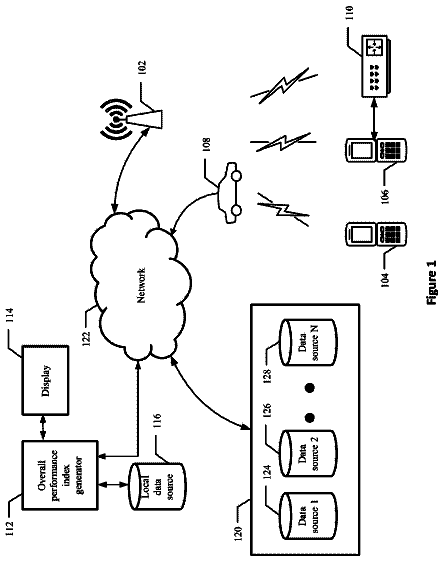
Sheet 1 of 7 from the published document. All sheets in the USPTO PDF
The present disclosure provides for methods and devices for enabling distribution of a first security application comprised in the first wireless device to the second wireless device. One method comprises the steps of receiving, in the first wireless device, using a short distance communication technology, a hardware identifier of the second wireless device, sending, from the first wireless device, the hardware identifier and information identifying the first security application to the network node, receiving, in the network node, from the first wireless device, the hardware identifier of the second wireless device and the information identifying the security application and authorizing, in the network node, the second wireless device to receive and/or activate a second security application associated with the first security application of the first wireless device.
Today there is an increased focus in Internet of things, loT, and wireless and wearable devices. A single user may have several devices which uses wireless connections and applications and it can be a hazzle for users to handle all different kinds of accounts for the different devices. The Universal Integrated Circuit Card, UICC, is a smart card used in mobile devices in Global System for Mobile Communications, GSM, and Universal Mobile Telecommunications System, UMTS, networks. In a GSM network, the UICC comprises a Subscriber Identity Module, SIM, application, and in a UMTS network, the UICC comprises a Universal Subscriber Identity Module, USIM, application. In some embodiments, the UICC comprises more than one application (e.g., a communication application), thereby enabling a mobile device comprising a UICC to access both GSM and UMTS networks. Additionally, the UICC ensures the int
All 7 drawing sheets from the published document, cropped to the drawing.
What the patent claimed, word for word. All of it is now free to use.
Priority is claimed from European patent application No. 14176921.6, filed Jul. 14, 2014, the entire disclosure of which hereby is incorporated by reference.
The disclosure pertains to the field of enabling distribution of a first security application comprised in the first wireless device to a second wireless device. The disclosure further pertains to methods and devices for the enabling.
Today there is an increased focus in Internet of things, loT, and wireless and wearable devices. A single user may have several devices which uses wireless connections and applications and it can be a hazzle for users to handle all different kinds of accounts for the different devices.
The Universal Integrated Circuit Card, UICC, is a smart card used in mobile devices in Global System for Mobile Communications, GSM, and Universal Mobile Telecommunications System, UMTS, networks. In a GSM network, the UICC comprises a Subscriber Identity Module, SIM, application, and in a UMTS network, the UICC comprises a Universal Subscriber Identity Module, USIM, application. In some embodiments, the UICC comprises more than one application (e.g., a communication application), thereby enabling a mobile device comprising a UICC to access both GSM and UMTS networks. Additionally, the UICC ensures the integrity and security of all kinds of personal data and may contain security information associated with security applications. The current environment with removable UICCs in devices does not scale to a situation where there will be billions of connected devices. It is not possible to put physical UICCs in all these devices or individually configure electronic UICCs for these devices.
Furthermore, although reasonably convenient for individual consumers, the SIM card approach to provisioning may be impractical for a machine type application where a single entity may deploy hundreds of wireless devices across a large geographical area. For instance, in some cases a wireless device may be factory installed in a larger piece of equipment (e.g., an automobile), making later insertion of a SIM card impractical or impossible. In other instances, devices may be deployed over a wide geographical area, such that no single wireless operator can provide the needed coverage. Although the embedded SIM has become a hot topic within the machine-to-machine, M2M, domain it is progressing much slower when it comes to mobile devices such as smartphones. Phone operators are still much attached to the SIM card as it is today but the trend shows that the SIM card becomes smaller and smaller and it might one day be replaced by an embedded secure element.
In summary, problems arise for users with several wireless devices with regards to handling of accounts in different devices. Manufacturers also have a problem with devices which are integrated in other machines or machines that are too small or compact for insertion of SIM cards with regards to handling accounts.
European patent application EP 2 461 613 A1 proposes a solution for managing subscriptions using secure elements being installed, fixedly or not, in terminals. In EP 2 461 613 A1 a subscription may be downloaded from an operator platform 90 to the UICC 91, if the device is authorized. This is also referred to as OTA SIM application transfer.
An aspect of the present disclosure is to provide a solution which seeks to mitigate, alleviate, or eliminate one or more of the above and below identified deficiencies in the art and disadvantages singly or in any combination. The present disclosure proposes method and devices for enabling distribution of security applications.
More specifically, the disclosure provides for methods and devices for enabling distribution of a first security application comprised in the first wireless device to a second wireless device.
The present disclosure is defined by the appended claims. Various advantageous embodiments of the disclosure are set forth by the appended claims as well as by the following description and the accompanying drawings.
According to some aspects the disclosure provides for a method performed in a system comprising a first wireless device, a second wireless device and a network node, for enabling distribution of a first security application comprised in the first wireless device to the second wireless device, the method comprising: receiving, in the first wireless device, using a short distance communication technology, a hardware identifier of the second wireless device; sending, from the first wireless device, the hardware identifier and information identifying the first security application to the network node; receiving, in the network node, from the first wireless device, the hardware identifier of the second wireless device and the information identifying the security application; and authorising, in the network node, the second wireless device to receive and/or activate a second security application associated with a security application of the first wireless device.
In other words, the method is used to distribute security applications to one or several devices owned by the same user as the first wireless device.
According to some aspects, the method comprises the steps of displaying, in the first wireless device, security applications available for distribution in the first wireless device and receiving, in the first wireless device, user input on which security application to distribute to the second wireless device, the selected security application is the first security application.
According to some aspects, the authorizing, in the network node, comprises requesting authorizing information from a Service provider.
According to some aspects, the authorizing, in the network node, comprises that the network node communicates with an external server wherein the external server is a service provider server such as a Mobile Network Operator, MNO, server, a server provided by a bank, a server provided by a car manufacturer or a server from an application company offering services comprising security solutions.
According to some aspects, the method comprises the steps of sending, from the network node to the first wireless device, a first confirmation that the hardware identifier is received in the network node and/or that it is a correct hardware identifier and receiving, in the first wireless device, a first confirmation from the network node that the hardware identifier is received in the network node and/or that it is a correct hardware identifier.
According to some aspects, the method comprises the steps of sending, from the network node, the second security application associated with the first security application of the first wireless device, to the second wireless device.
According to some aspects, the method comprises the steps of sending, from the network node, a second confirmation to the first wireless device that the second security application associated with the first security application is authorized in the second wireless device and receiving, in the first wireless device, a second confirmation that the second security application associated with the first security application is authorized in the second wireless device.
According to some aspects, the method comprises the steps of receiving, in the first wireless device, user input to cancel the authorization to access the second security application, associated with the first security application, in the second wireless device, sending, from the first wireless device, instructions to the network node to cancel the authorization to the second wireless device, receiving, in the network node, instructions from the first wireless device to cancel the authorization to the second wireless device to access the second security application associated with the first security application and canceling, in the network node, the authorization to the second wireless device.
According to some aspects the disclosure provides for a method, performed in a first wireless device, of enabling distribution of a first security application comprised in the first wireless device to a second wireless device. In other words, the method is used to distribute security applications to one or several devices owned by the same user as the first wireless device.
According to some aspects, the method comprises the steps of receiving, using a short distance communication technology, a hardware identifier of the second wireless device and sending the hardware identifier and information identifying the first security application to a network node. Thereby enabling the network node to authorise the second wireless device to receive and/or activate a second security application associated with the first security application of the first wireless device. Since the first wireless device receives identification of the second wireless device it may communicate the identification to a network node and thus inform the node that the second wireless device should be authorised to use a security application present in the first wireless device, or a corresponding other security application as the one present in the first wireless device.
According to some aspects of the disclosure, the method comprises the steps of displaying security applications available for distribution in the first wireless device and receiving user input on which security application to distribute to the second wireless device, the selected security application is the first security application. The user can thereby select which security application to distribute if there are several on the first wireless device.
According to some aspects of the disclosure, the method comprises the step of receiving a first confirmation from the network node that the hardware identifier is received in the network node and/or that it is a correct hardware identifier.
According to some aspects of the disclosure, the method comprises the step of receiving a second confirmation that the second security application associated with the first security application is authorized in the second wireless device. The information of which security applications are distributed is thus collected in the first wireless device.
According to some aspects of the disclosure, the method comprises the steps of receiving user input to cancel the authorization to access the second security application, associated with the first security application, in the second wireless device and sending instructions to the network node to cancel the authorization to the second wireless device. If a user wants to for example sell a second wireless device she/he will want to cancel the authorization to the device.
According to some aspects of the disclosure, the method comprises that the first and second security applications comprises an application for enabling access to external services. For example bank services, music services, network services, etc.
According to some aspects of the disclosure, the method comprises that the first and second security application comprises a Subscriber Identity Module, SIM. In other words, the first wireless device can be used to provide a SIM to the second wireless device that is associated to the SIM of the first wireless device. The user may thereby add one or several devices that are connected to the same account as the first wireless device.
According to some aspects of the disclosure, the method comprises that the short distance communication technology is short distance radio technology. The technology is for example Bluetooth or Near Field Communication, NFC, technology.
According to some aspects of the disclosure, the method comprises that the short distance communication technology is Body Coupled Communication, BCC, technology. In other words, the information sent between the first wireless device and the second wireless device is performed over a Body Area Network, BAN.
According to some aspects the disclosure provides for a method, performed in a network node, of enabling distribution of a first security application comprised in a first wireless device to a second wireless device.
According to some aspects of the disclosure, the method comprises the steps of receiving, from the first wireless device, a hardware identifier of the second wireless device and information identifying the security application and authorising the second wireless device to receive and/or activate a second security application associated with a security application of the first wireless device. Since the identification is sent to the network node it is informed that the second wireless device should be authorised to use a security application present in the first wireless device, or a corresponding other security application as the one present in the first wireless device.
According to some aspects of the disclosure, the method comprises that authorizing comprises requesting authorizing information from a Service provider.
According to some aspects of the disclosure, the method comprises that authorizing comprises that the network node communicates with an external server.
According to some aspects of the disclosure, the method comprises that the external server is a service provider server such as a Mobile Network Operator, MNO, server, a server provided by a bank, a server provided by a car manufacturer or a server from an application company offering services comprising security solutions. The network node thus receives information from a supplier regarding the authentication of the second wireless device.
According to some aspects of the disclosure, the method comprises the step of sending the second security application associated with the first security application of the first wireless device, to the second wireless device.
According to some aspects of the disclosure, the method comprises the step of sending, to the first wireless device, a first confirmation that the hardware identifier is received in the network node and/or that it is a correct hardware identifier.
According to some aspects of the disclosure, the method comprises the step of sending a second confirmation to the first wireless device that the second security application associated with the first security application is authorized in the second wireless device.
According to some aspects of the disclosure, the method comprises the steps of receiving instructions from the first wireless device to cancel the authorization to the second wireless device to access the second security application associated with the first security application and canceling the authorization to the second wireless device.
According to some aspects of the disclosure, the method comprises that the first and second security application comprises an application for enabling access to external services.
According to some aspects of the disclosure, the method comprises that the first and second security application comprises a Subscriber Identity Module, SIM received from a SIM server.
According to some aspects of the disclosure, the method comprises that the sending comprises pushing SIM to the second wireless device using SMS or another connectivity protocol such as IP.
According to some aspects the disclosure provides for method, performed in a second wireless device ( 2 ), of enabling distribution of a first security application comprised in a first wireless device ( 1 ) to the second wireless device.
According to some aspects of the disclosure, the method comprises the steps of receiving, using a short distance communication technology, information identifying the first security application of the first wireless device and sending a hardware identifier of the second wireless device and information identifying the first security application to a network node, thereby enabling the network node to authorise the second wireless device to receive and/or activate a second security application associated with the first security application of the first wireless device.
According to some aspects the disclosure provides for a system, comprising a first wireless device, a second wireless device and a network node, for enabling distribution of a first security application comprised in the first wireless device to the second wireless device, comprising: a first wireless device, comprising: communication circuitry for short distance communication; processing circuitry configured to: i. receive, using the communication circuitry, a hardware identifier of the second wireless device; and ii. send, using the communication circuitry, the hardware identifier and information identifying the security application to a network node, thereby enabling the network node to authorise the second wireless device to get access to a second security application associated with the security application of the first wireless device; and a network node, comprising: communication circuitry for short distance communication; processing circuitry configured to: i. receive, using the communication circuitry, from the first wireless device, a hardware identifier of the second wireless device and information identifying the security application; and ii. authorise the second wireless device to access a security application associated with a second security application of the first wireless device; and a second wireless device.
According to some aspects the disclosure provides for a first wireless device, for enabling distribution of a first security application comprised in the first wireless device to a second wireless device.
According to some aspects of the disclosure, the first wireless device comprises communication circuitry for short distance communication and processing circuitry configured to receive, using the communication circuitry, a hardware identifier of the second wireless device and send, using the communication circuitry, the hardware identifier and information identifying the security application to a network node, thereby enabling the network node to authorise the second wireless device to get access to a second security application associated with the security application of the first wireless device.
According to some aspects of the disclosure, the first wireless device comprises that the first and second security application comprises an application for enabling access to external services.
According to some aspects of the disclosure, the first wireless device comprises that the first and second security application comprises a Subscriber Identity Module, SIM.
According to some aspects of the disclosure, the first wireless device comprises that the short distance communication technology is short distance radio technology.
According to some aspects of the disclosure, the first wireless device comprises that the short distance communication technology is Body Coupled Communication, BCC, technology.
According to some aspects the disclosure provides for a network node, for enabling distribution of a first security application comprised in a first wireless device to a second wireless device.
According to some aspects of the disclosure, the network node comprises communication circuitry for short distance communication and processing circuitry configured to receive, using the communication circuitry, from the first wireless device, a hardware identifier of the second wireless device and information identifying the security application and authorise the second wireless device to access a security application associated with a second security application of the first wireless device.
According to some aspects of the disclosure, the network node comprises that the first and second security application comprises an application for enabling access to external services.
According to some aspects of the disclosure, the network node comprises that the first and second security application comprises a Subscriber Identity Module, SIM received from a SIM server.
According to some aspects of the disclosure, the network node comprises that the authorizing comprises pushing SIM to the second wireless device using SMS or another connectivity protocol such as IP.
A second wireless device, for enabling distribution of a first security application comprised in a first wireless device to the second wireless device, comprising: communication circuitry for short distance communication; processing circuitry configured to: receive, using a short distance communication technology, information identifying the first security application of the first wireless device; and send a hardware identifier of the second wireless device and information identifying the first security application to a network node, thereby enabling the network node to authorise the second wireless device to receive and/or activate a second security application associated with the first security application of the first wireless device.
With the above description in mind, aspects of the present disclosure overcome at least some of the disadvantages of known technology as previously described.
The foregoing will be apparent from the following more particular description of the example embodiments, as illustrated in the accompanying drawings in which like reference characters refer to the same parts throughout the different views. The drawings are not necessarily to scale, emphasis instead being placed upon illustrating the example embodiments.
FIG. 1 illustrates different devices belonging to one user, and possibly using the same security applications.
FIG. 2 illustrates downloading a subscription from an operator platform to a UICC.
FIG. 3 illustrates an example of a wireless device according to some of the example embodiments;
FIG. 4 illustrates an example of a network node according to some of the example embodiments;
FIGS. 5 a and 5 b illustrates two example embodiment of the proposed method of security application distribution.
FIG. 6 is a flowchart illustrating embodiments of method steps of the first wireless device.
FIG. 7 is a flowchart illustrating embodiments of method steps in a network node.
Aspects of the present disclosure will be described more fully hereinafter with reference to the accompanying drawings. The devices and methods disclosed herein can, however, be realized in many different forms and should not be construed as being limited to the aspects set forth herein. Like numbers in the drawings refer to like elements throughout.
The terminology used herein is for the purpose of describing particular aspects of the disclosure only, and is not intended to limit the invention. As used herein, the singular forms “a”, “an” and “the” are intended to include the plural forms as well, unless the context clearly indicates otherwise.
Unless otherwise defined, all terms (including technical and scientific terms) used herein have the same meaning as commonly understood by one of ordinary skill in the art to which this disclosure belongs. It will be further understood that terms used herein should be interpreted as having a meaning that is consistent with their meaning in the context of this specification and the relevant art and will not be interpreted in an idealized or overly formal sense unless expressly so defined herein.
As used herein, the term “wireless device” includes portable communication device, portable radio communication equipment and wearables. A portable communication device or a portable radio communication device may be referred to below as a Smartphone or a Smartphone and includes all electronic equipment, including, but not limited to, capable of being used for voice and/or data communication. As will be appreciated, the disclosure may be used with Smartphones, other phones, personal digital assistants (PDAs), computers, other communication devices, etc. For brevity, the disclosure will be described by way of examples with respect to Smartphones, but it will be appreciated that the disclosure may be used with other communication devices. The term wearable and wearable device are used interchangeably and is referring to a wireless device which is worn somewhere on the body of a user. Examples of wearables are watches, wristbands, headsets, headbands, rings etc.
The term Universal Integrated Circuit Card, UICC, is used in a generic manner and includes all kinds of variants of UICC, such as embedded UICC, eUICC. Throughout the documents UICC is used interchangeably with (e)UICC, eUICC and also includes any kind of hardware that has a certain level of trust embedded.
The example embodiments presented herein are directed towards security application distribution using over-the-air, OTA, transfer. A security application as an application that protects a method or sensitive data and that executes in a secured environment such as the UICC. For better understanding of the proposed technique, OTA SIM transfer is now described in more detail.
FIG. 1 illustrates an example environment where the proposed methods are implemented. In FIG. 1 different M2M enabled devices belonging to one user are illustrated. A typical scenario is that the user wants to connect the devices to a cellular network using the same subscription that is used in the Smartphone. Each M2M enabled device then comprises a SIM module, which is typically a (e)UICC.
FIG. 2 discloses an OTA SIM transfer overview. In this example a new subscription request 21 is sent from the mobile device 1 , via a network node 3 to a subscription center using dedicated application and service. This is typically done using the cellular network or the local area network.
The request is received and handled by the SIM subscription center. An authorization request 25 is sent from the subscription center to the service provider (Mobile network Operator). Upon approval, the subscription center issues a request 22 to the distribution center to create/transfer a SIM profile to the mobile device using radio techniques (SMS or IP connection or any sufficient secure protocol or technique). The SIM transfer other-the-air is then sent to the device 24 and the status is communicated 23 to the device by the subscription center.
The idea primary aims to further develop the OTA concept in the M2M world. According to some aspects the proposed methods use NFC technology as a bridge for SIM installation on mobile devices such as tablets, clocks, computers, cameras or even phones. A common scenario is that a user already has a basic subscription (typically in their phone) and then wants to connect his or her other devices permanently or temporarily to a communication network. To share authentication information using NFC is one solution. However, such a solution puts high requirements on the initial connection of the M2M enabled devices and is also considered insecure.
The proposed solution, that will now be described referring to FIGS. 3 to 7 , provides an improved solution for security application distribution. More specifically, the disclosure provides for methods and devices for enabling distribution of a first security application comprised in the first wireless device 1 to a second wireless device 2 . The proposed solution allows e.g. a consumer to use a short distance communication technology to trigger the distribution of a security application onto another device and possibly associate this new security application with the existing one for subscription and billing purpose. By using short distance communication technology the master device already equipped with a security application will compute necessary information and initiate an OTA transfer of a new security application onto another slave device. Note that this implies that the security application is still downloaded OTA from the server, as described in FIG. 2 . Security application data is not transferred over the short distance communication technology, but it is used as a trigger and enabler. Also note that the security application used in the second wireless device does not have to be the exact same security application as the on in the first wireless device but one associated with the security application of the first wireless device.
FIG. 3 shows an example of a first wireless device, here being shown as a Smartphone, for enabling distribution of a first security application comprised in the first wireless device to a second wireless device. The first wireless device comprises communication circuitry 4 for short distance communication and processing circuitry 5 . As shown in the figure, the first wireless device may comprise communication circuitry 4 configured to receive and transmit any form of communications or control signals within a network. It should be appreciated that the communication circuitry may be comprised as any number of transceiving, receiving, and/or transmitting units or circuitry a, b. It should further be appreciated that the communication circuitry may be in the form of any input/output communications port known in the art. The communication circuitry may comprise RF circuitry and baseband processing circuitry (not shown). An advantage of the present invention is providing, for users, a “One touch” user experience using short distance technologies, such as NFC, to integrate security applications present in a first wireless device of a user to other wireless devices of the same user.
The first wireless device 1 may further comprise at least one memory unit or circuitry 6 that may be in communication with the communication circuitry 4 . The memory may be configured to store received or transmitted data and/or executable program instructions. The memory may also be configured to store any form of beamforming information, reference signals, and/or feedback data or information. The memory may be any suitable type of computer readable memory and may be of volatile and/or non-volatile type.
The first wireless device 1 may further comprise processing circuitry 5 which may be configured to perform the proposed methods. The processing circuitry may be any suitable type of computation unit, e.g. a microprocessor, digital signal processor (DSP), field programmable gate array (FPGA), or application specific integrated circuit (ASIC) or any other form of circuitry. It should be appreciated that the processing circuitry need not be provided as a single unit but may be provided as any number of units or circuitry.
FIG. 4 shows an example of a network node 3 , for enabling distribution of a first security application comprised in a first wireless device 1 to a second wireless device 2 . The network node comprises communication circuitry 7 for short distance communication and processing circuitry 8 . As shown in FIG. 4 , the network node 3 may comprise a communication circuitry 7 configured to receive and transmit data over a communication network. It should further be appreciated that the communication circuitry may be in the form of any input/output communications port known in the art. The communication circuitry may comprise RF circuitry and baseband processing circuitry (not shown).
The network node 3 may further comprise at least one memory unit or circuitry 9 that may be in communication with the communication circuitry 7 . The memory may be configured to store received or transmitted data and/or executable program instructions. The memory may be any suitable type of computer readable memory and may be of volatile and/or non-volatile type.
The processing circuitry 8 of the network node 3 may be any suitable type of computation unit, e.g. a microprocessor, digital signal processor (DSP), field programmable gate array (FPGA), or application specific integrated circuit (ASIC) or any other form of circuitry. It should be appreciated that the processing circuitry need not be provided as a single unit but may be provided as any number of units or circuitry.
FIG. 6 is a flow diagram depicting example operations which may be taken by the wireless device of FIG. 3 and FIG. 7 is a flow diagram depicting example operations which may be taken by the network node of FIG. 4 .
It should be appreciated that FIGS. 6 and 7 comprise some operations which are illustrated with a solid border and some operations which are illustrated with a dashed border. The operations which are comprised in a solid border are operations which are comprised in the broadest example embodiment. The operations which are comprised in a dashed line are example embodiments which may be comprised in, or a part of, or are further operations which may be taken in addition to the operations of the broader example embodiments. It should be appreciated that the operations need not be performed in order. Furthermore, it should be appreciated that not all of the operations need to be performed.
According to some aspects the disclosure provides for a method, performed in the first wireless device 1 , of enabling distribution of a first security application comprised in the first wireless device to a second wireless device 2 . In other words, the method is used to distribute security applications to one or several devices owned by the same user as the first wireless device.
The proposed method comprises the step of receiving S 1 , using a short distance communication technology, a hardware identifier of the second wireless device. The processing circuitry 5 of the wireless device is configured to receive S 1 , using the communication circuitry 4 , a hardware identifier of the second wireless device. According to some aspects the processing circuitry comprises an identifier receiver module 51 for receiving the hardware identifier. In the case where a UICC is used for storing the security application on the second wireless device, this step implies that the master device, which is the first wireless device 1 , reads e.g. the eUICC identifier from a slave device, which is the second wireless device, using e.g. NFC. According to some aspects the hardware identifier is a hardware identifier of the UICC. According to some aspects, the hardware identifier is meant to identify the hardware entity that receives the Security application.
The method further comprises the step of sending S 4 the hardware identifier and information identifying the first security application to a network node 3 thereby enabling the network node to authorise the second wireless device to receive and/or activate a second security application associated with the first security application of the first wireless device. The processing circuitry 5 of the wireless device is configured to send S 4 , using the communication circuitry 4 , the hardware identifier and information identifying the security application to the network node 3 . According to some aspects the processing circuitry comprises a sending module 52 for sending the hardware identifier and security application identifying information. Both the hardware identifier and security application identifying information are public data and can be retrieved and broadcasted without inducing any security risks. In other words, the second wireless device is authorized to perform one of, or both, of: receiving a second security application associated with the first security application or activating a second security application associated with the first security application. Since the first wireless device receives identification of the second wireless device it may communicate the identification to a network node and thus inform the node that the second wireless device should be authorised to use a security application present in the first wireless device, or a corresponding other security application as the one present in the first wireless device. In other words, the network node receives the hardware identifier from the first wireless device and is informed that the first wireless device wants to provide the second wireless device access to a security application, or to download and utilize a security application. Other information may of course also be exchanged between the devices; such as identifying information of the first wireless device. Thereby, the first wireless device provides the identity of the second device to the network node and enables the network node to authorise the second wireless device to receive and/or activate a security application associated with the security application of the first wireless device, from the network node. The first wireless device is already authorised to use the security application so the first wireless device is then considered by the network node to be authorised to indicate other devices that should be authorised to use the same security applications. In order to establish a certain level of trust in between the first wireless device and the network node, mandatory credentials are needed by the first wireless device to access the network node. Any request coming from a wireless device to the network node can only be validated by the network node when by a combination of device credentials and user authorization. In order to establish a level of trust in between wireless devices and the network node, it is mandatory that any applications communicating with the network node directly or through the UICC can provide credentials for identification and that they are signed with a certificate issued by the network node. The second device may have or may not have credentials to perform a request but the first device have credentials since it already has a subscription.
According to some aspects, the UICC or a trusted application of the first wireless device sends the hardware identifier and the information identifying the security application to the network node via communication circuitry.
The second security application is an application in the second wireless device corresponding to the first security application of the first wireless device. The method may be used to move a security application from the first wireless device to the second wireless device by first performing the claimed method and then cancelling the authorisation to use the security application in the first wireless device.
The proposed technique provides a high level of security by allowing the device is already registered to advise the id of the new unit to be set up. Furthermore, the requirements can be lower at the initial connection which the new device need to have. It may be enough that it can receive any SMS containing the new security application while it is already connected device can use its data connection to download the info about subscription types, costs, etc.
According to some aspects of the disclosure, the method in the first wireless device further comprises the step of displaying S 2 security applications available for distribution in the first wireless device. The processing circuitry 5 of the first wireless device is configured to display S 2 , using a display of the first wireless device, security applications available for distribution in the first wireless device. According to some aspects the processing circuitry comprises a displaying module 53 displaying the security applications. According to some aspects of the disclosure, the method further comprises the step of receiving S 3 user input on which security application to distribute to the second wireless device, the selected security application is the first security application. The processing circuitry 5 of the wireless device is configured to receive S 3 the user input. According to some aspects the processing circuitry comprises a receiving module 54 for receiving the user input. User input is for example inputted by the user on a touch screen of the wireless device. The user can thereby select which security application to distribute if there are several on the first wireless device.
The description continues in the full USPTO document.
About 6,152 words. The USPTO PDF has it with every drawing.
Fees are due 3.5, 7.5 and 11.5 years after grant. This patent expired on December 19, 2025, so the fee marked "not paid" was the one that went unpaid.
ENABLING SECURE APPLICATION DISTRIBUTION ON A (E)UICC USING SHORT DISTANCE COMMUNICATION TECHNIQUES
Filed Nov 2014 · published Jan 2016Enabling secure application distribution on a (E)UICC using short distance communication techniques
Filed Nov 2014 · granted Dec 2017Earlier publications, parents and continuations. None of them can still be enforced, or this patent would not be listed.
Prior art cited by the examiner or applicant. Useful when you check your own idea for novelty.
Everything on this page comes from the documents linked above.


