Field of the invention
The invention concerns novel 1,3-dihydro-2H-benzimidazol-2-one derivatives substituted with heterocycles having antiviral activity, in particular, having an inhibitory activity on the replication of the respiratory syncytial virus (RSV). The invention further concerns the preparation of such novel compounds, compositions comprising these compounds, and the compounds for use in the treatment of respiratory syncytial virus infection.
Background
Human RSV or Respiratory Syncytial Virus is a large RNA virus, member of the family of Paramyxoviridae, subfamily pneumoviridae together with bovine RSV virus. Human RSV is responsible for a spectrum of respiratory tract diseases in people of all ages throughout the world. It is the major cause of lower respiratory tract illness during infancy and childhood. Over half of all infants encounter RSV in their first year of life, and almost all within their first two years. The infection in young children can cause lung damage that persists for years and may contribute to chronic lung disease in later life (chronic wheezing, asthma). Older children and adults often suffer from a (bad) common cold upon RSV infection. In old age, susceptibility again increases, and RSV has been implicated in a number of outbreaks of pneumonia in the aged resulting in significant mortality.
Infection with a virus from a given subgroup does not protect against a subsequent infection with an RSV isolate from the same subgroup in the following winter season. Re-infection with RSV is thus common, despite the existence of only two subtypes, A and B.
Today only three drugs have been approved for use against RSV infection. A first one is ribavirin, a nucleoside analogue that provides an aerosol treatment for serious RSV infection in hospitalized children. The aerosol route of administration, the toxicity (risk of teratogenicity), the cost and the highly variable efficacy limit its use. The other two drugs, RespiGam® (RSV-IG) and Synagis® (palivizumab), polyclonal and monoclonal antibody immunostimulants, are intended to be used in a preventive way. Both are very expensive, and require parenteral administration.
Other attempts to develop a safe and effective RSV vaccine have all met with failure thus far. Inactivated vaccines failed to protect against disease, and in fact in some cases enhanced disease during subsequent infection. Life attenuated vaccines have been tried with limited success. Clearly there is a need for an efficacious non-toxic and easy to administer drug against RSV replication. It would be particularly preferred to provide drugs against RSV replication that could be administered perorally.
A reference on benzimidazole antiviral agents is WO-01/95910. Herein compounds are presented to have antiviral activity, yet with EC.sub.50 values over a wide range of from 0.001 μm to as high as 50 μM (which does not normally represent the desired biological activity). Another reference, relating to substituted 2-methyl-benzimidazole RSV antiviral agents, in the same range of activities is WO-03/053344. Another related background reference on compounds in the same range of activities, is WO-02/26228 regarding benzimidazolone antiviral agents. A reference on structure-activity relations, in respect of RSV inhibition, of 5-substituted benzimidazole compounds is Kuo-Long Yu et al., Bioorganic and Medicinal Chemistry Letters 14
1133-1137, Kuo-Long Yu et al., Bioorganic and Medicinal Chemistry Letters 17
895-901, and X. A. Wang et al., Bioorganic and Medicinal Chemistry Letters 17
4592-4598.
WO-2004/069256 discloses 2-cyanopyrrolopyrimidines as capthepsin K or S inhibitors useful in the treatment of various pain disorders. WO-2008/147697 discloses benzimidazole derivatives as chymase inhibitors.
WO-2012/080446, WO-2012/080447, WO-2012/080449, WO-2012/080450 and WO-2012/080481 all filed on 16 Dec. 2011 and published on 21 Jun. 2012 disclose benzimidazole derivatives having antiviral activity against respiratory syncytial virus.
It is desired to provide new drugs that have antiviral activity. Particularly, it would be desired to provide new drugs that have RSV replication inhibitory activity. Further, it would be desired to retrieve compound structures that allow obtaining antiviral biological activities of the order of magnitude in the stronger regions of the prior art (i.e. at the bottom of the above-mentioned range of up to 50 μM), and preferably at a level of about the most active, more preferably of even stronger activity, than the compounds disclosed in the art. A further desire is to find compounds having oral antiviral activity.
Summary of the invention
In order to better address one or more of the foregoing desires, the invention, in one aspect, presents antiviral compounds represented by formula (I),
##STR00002## and stereoisomeric forms thereof, wherein Het is a heterocycle having formula (b), (c), (d) or (e)
##STR00003## each X independently is C or N; provided that at least one X is N; R.sup.1b is present when Het has formula (b) and X is C; each R.sup.1b is selected independently from the group consisting of H, halogen, C.sub.1-C.sub.6alkyl, C.sub.3-C.sub.7cycloalkyl, C.sub.1-C.sub.6alkyloxy, N(R.sup.6).sub.2, CO(R.sup.7), CH.sub.2NH.sub.2, CH.sub.2OH, CN, C(═NOH)NH.sub.2, C(═NOCH.sub.3)NH.sub.2, C(═NH)NH.sub.2, CF.sub.3, OCF.sub.3, B(OH).sub.2 and B(O—C.sub.1-C.sub.6alkyl).sub.2; R.sup.1b is absent when the X to which it is bound is N; R.sup.2b is —(CR.sup.8R.sup.9).sub.m—R.sup.10b; each R.sup.6 is independently selected from the group consisting of H, C.sub.1-C.sub.6alkyl, COOCH.sub.3 and CONHSO.sub.2CH.sub.3; each R.sup.7 is independently selected from the group consisting of OH, C.sub.1-C.sub.6alkyloxy, NH.sub.2, NHSO.sub.2N(C.sub.1-C.sub.6alkyl).sub.2, NHSO.sub.2NHCH.sub.3, NHSO.sub.2(C.sub.1-C.sub.6alkyl), NHSO.sub.2(C.sub.3-C.sub.7cycloalkyl) and N(C.sub.1-C.sub.6-alkyl).sub.2; each R.sup.8 and R.sup.9 are independently chosen from the group consisting of H, C.sub.1-C.sub.10alkyl and C.sub.3-C.sub.7cycloalkyl; or R.sup.8 and R.sup.9 taken together form a 4 to 6 membered aliphatic ring that optionally contains one or more heteroatoms selected from the group consisting of N, S and O; R.sup.10b is selected from the group consisting of H, R.sup.11, OH, CN, F, CF.sub.2H, CF.sub.3, CONR.sup.8R.sup.9, COOR.sup.8, CON(R.sup.8)SO.sub.2R.sup.9, CON(R.sup.8)SO.sub.2N(R.sup.8R.sup.9), NR.sup.8R.sup.9, NR.sup.8COOR.sup.9, OCOR.sup.8, O-Benzyl, NR.sup.8SO.sub.2R.sup.9, SO.sub.2NR.sup.8R.sup.9, SO.sub.2R.sup.8, OCONR.sup.8R.sup.9, OCONR.sup.8R.sup.12, N(R.sup.8)CON(R.sup.8R.sup.9), N(R.sup.8)COOR.sup.12, and a 4 to 6 membered saturated ring containing one oxygen atom; m is an integer from 2 to 6; R.sup.11 is selected from the group consisting of C.sub.1-C.sub.6 alkyl, C.sub.3-C.sub.7cycloalkyl, phenyl, pyridinyl and pyrazolyl; each optionally substituted with one or more substituents each independently selected from the group consisting of CF.sub.3, CH.sub.3, OCH.sub.3, OCF.sub.3 and halogen; R.sup.12 is selected from the group consisting of phenyl, pyridinyl and pyrazolyl; each optionally substituted with one or more substituents each independently selected from the group consisting of CF.sub.3, CH.sub.3, OCH.sub.3, OCF.sub.3 and halogen; or R.sup.12 is C.sub.1-C.sub.6 alkyl or C.sub.3-C.sub.7cycloalkyl; each substituted with one or more substituents each independently selected from the group consisting of CF.sub.3, CH.sub.3, OCH.sub.3, OCF.sub.3 and halogen; R.sup.1c is present when Het has formula (c); each R.sup.1c is selected independently from the group consisting of H, halogen, C.sub.1-C.sub.6alkyl, C.sub.3-C.sub.7cycloalkyl, C.sub.1-C.sub.6alkyloxy, N(R.sup.6).sub.2, CO(R.sup.7c), CH.sub.2NH.sub.2, CH.sub.2OH, CN, C(═NOH)NH.sub.2, C(═NOCH.sub.3)NH.sub.2, C(═NH)NH.sub.2, CF.sub.3, OCF.sub.3, B(OH).sub.2 and B(O—C.sub.1-C.sub.6alkyl).sub.2; R.sup.3c is selected from the group consisting of H, halogen, C.sub.1-C.sub.6alkyl, C.sub.3-C.sub.7cycloalkyl, C.sub.1-C.sub.6alkyloxy and CO(R.sup.7c); R.sup.2c is (CR.sup.8R.sup.9).sub.m—R.sup.10c; R.sup.7c is selected from the group consisting of OH, O(C.sub.1-C.sub.6alkyl), NH.sub.2, NHSO.sub.2N(C.sub.1-C.sub.6alkyl).sub.2, NHSO.sub.2NHCH.sub.3, NHSO.sub.2(C.sub.1-C.sub.6alkyl), NHSO.sub.2(C.sub.3-C.sub.7cycloalkyl), N(C.sub.1-C.sub.6-alkyl).sub.2, NR.sup.8R.sup.9 and NR.sup.9R.sup.10c; R.sup.10c is selected from the group consisting of H, R.sup.11, OH, CN, F, CF.sub.2H, CF.sub.3, C(═NOH)NH.sub.2, CONR.sup.8R.sup.9, COOR.sup.8, CONR.sup.8SO.sub.2R.sup.9, CON(R.sup.8)SO.sub.2N(R.sup.8R.sup.9), NR.sup.8R.sup.9, NR.sup.8COOR.sup.9, OCOR.sup.8, NR.sup.8SO.sub.2R.sup.9, SO.sub.2NR.sup.8R.sup.9, SO.sub.2R.sup.8 and a 4 to 6 membered saturated ring containing one oxygen atom; R.sup.1d is present when Het has formula (d) and X is C; each R.sup.1d is selected independently from the group consisting of H, OH, halogen, C.sub.1-C.sub.6alkyl, C.sub.3-C.sub.7cycloalkyl, C.sub.1-C.sub.6alkyloxy, N(R.sup.6).sub.2, CO(R.sup.7), CH.sub.2NH.sub.2, CH.sub.2OH, C(═NOH)NH.sub.2, C(═NOCH.sub.3)NH.sub.2, C(═NH)NH.sub.2, CF.sub.3, OCF.sub.3, B(OH).sub.2 and B(O—C.sub.1-C.sub.6alkyl).sub.2; R.sup.1d is absent when the X to which it is bound is N; R.sup.3d is selected from the group consisting of H, halogen, C.sub.1-C.sub.6alkyl, C.sub.3-C.sub.7cycloalkyl, C.sub.1-C.sub.6alkyloxy, and CO(R.sup.7); R.sup.2d is —(CR.sup.8R.sup.9).sub.m—R.sup.10d; R.sup.10d is selected from the group consisting of H, R.sup.11, OH, CN, F, CF.sub.2H, CF.sub.3, CONR.sup.8R.sup.9, COOR.sup.8, CONR.sup.8SO.sub.2R.sup.9, CON(R.sup.8)SO.sub.2N(R.sup.8R.sup.9), NR.sup.8R.sup.9, NR.sup.8COOR.sub.9, OCOR.sup.8, NR.sup.8SO.sub.2R.sup.9, SO.sub.2NR.sup.8R.sup.9, SO.sub.2R.sup.8 and a 4 to 6 membered saturated ring containing one oxygen atom; each Y independently is C or N; R.sup.1e is present when Het has formula (e) and Y is C; each R.sup.1e is selected independently from the group consisting of H, halogen, C.sub.1-C.sub.6alkyl, C.sub.3-C.sub.7cycloalkyl, C.sub.1-C.sub.6alkyloxy, N(R.sup.6).sub.2, CO(R.sup.7), CH.sub.2NH.sub.2, CH.sub.2OH, CN, C(═NOH)NH.sub.2, C(═NOCH.sub.3)NH.sub.2, C(═NH)NH.sub.2, CF.sub.3, OCF.sub.3, B(OH).sub.2 and B(O—C.sub.1-C.sub.6alkyl).sub.2; R.sup.1e is absent when the Y to which it is bound is N; R.sup.3e is selected from the group consisting of H, halogen, —(CR.sup.8R.sup.9).sub.m—R.sup.10e, C≡C—CH.sub.2—R.sup.10e, C≡C—R.sup.10e and C═C—R.sup.10e; R.sup.10e is selected from the group consisting of H, R.sup.11, C.sub.1-C.sub.6alkyloxy, OH, CN, F, CF.sub.2H, CF.sub.3, CONR.sup.8R.sup.9, COOR.sup.8, CON(R.sup.8)SO.sub.2R.sup.9, CON(R.sup.8)SO.sub.2N(R.sup.8R.sup.9), NR.sup.8R.sup.9, NR.sup.8COOR.sup.9, OCOR.sup.8, NR.sup.8SO.sub.2R.sup.9, SO.sub.2NR.sup.8R.sup.9, SO.sub.2R.sup.8 and a 4 to 6 membered saturated ring containing one oxygen atom; R.sup.4 is selected from the group consisting of tert-butyl, Het.sup.1, aryl, Het.sup.2, CH(CH.sub.3)(CF.sub.3), and C.sub.3-C.sub.7cycloalkyl substituted with one or more substituents selected from the group consisting of halo and C.sub.1-C.sub.4alkyl; aryl represents phenyl or naphthalenyl; said aryl optionally being substituted with one or more substituents each independently selected from the group consisting of halo, C.sub.1-C.sub.4alkyloxy, C.sub.1-C.sub.4alkyl, OH, CN, CF.sub.2H, CF.sub.3, CF.sub.3O, CONR.sup.8R.sup.9, COOR.sup.8, CON(R.sup.8)SO.sub.2R.sup.9, CON(R.sup.8)SO.sub.2N(R.sup.8R.sup.9), NR.sup.8R.sup.9, NR.sup.8COOR.sup.9, OCOR.sup.8, NR.sup.8SO.sub.2R.sup.9, SO.sub.2NR.sup.8R.sup.9, SO.sub.2R.sup.8, OCONR.sup.8R.sup.9, OCONR.sup.8R.sup.12, N(R.sup.8)CON(R.sup.8R.sup.9), N(R.sup.8)COOR.sup.12, or C.sub.1-4alkyloxy, C.sub.1-4alkyloxy; Het.sup.1 represents a 4 to 6 membered saturated ring containing one N atom, optionally being substituted with one or more substituents each independently selected from the group consisting of halo, C.sub.1-C.sub.4alkyloxy, SO.sub.2R.sup.8, C.sub.1-C.sub.4alkylcarbonyl, CO(aryl), COHet.sup.2, C.sub.1-C.sub.4alkyloxycarbonyl, pyridinyl, CF.sub.3, SO.sub.2N(C.sub.1-C.sub.4alkyl).sub.2, SO.sub.2NH(C.sub.1-C.sub.4alkyl), (C═O)NH(C.sub.1-4alkyl), (C═S)NH(C.sub.1-4alkyl), C.sub.1-C.sub.4alkyl and C.sub.1-C.sub.4alkyl substituted with one hydroxy; or Het.sup.1 represents a 4 to 6 membered saturated ring containing one O atom, substituted with one or more substituents each independently selected from the group consisting of halo, C.sub.1-C.sub.4alkyloxy, CF.sub.3, NH(C═O)(C.sub.1-4alkyl), (C═O)NH(C.sub.1-4alkyl) and C.sub.1-C.sub.4alkyl; or Het.sup.1 represents a bicyclic 7 to 11 membered non-aromatic heterocycle containing one or two heteroatoms each independently selected from the group consisting of O, S and N, optionally substituted with one or more substituents each independently selected from the group consisting of halo, C.sub.1-C.sub.4alkyloxy, SO.sub.2R.sup.8, C.sub.1-C.sub.4alkylcarbonyl, CO(aryl), COHet.sup.2, C.sub.1-C.sub.4alkyloxycarbonyl, pyridinyl, CF.sub.3, SO.sub.2N(C.sub.1-C.sub.4alkyl).sub.2, SO.sub.2NH(C.sub.1-C.sub.4alkyl), (C═O)NH(C.sub.1-4alkyl), (C═S)NH(C.sub.1-4alkyl), C.sub.1-C.sub.4alkyl and C.sub.1-C.sub.4alkyl substituted with one hydroxy; Het.sup.2 represents a monocyclic 5 to 6 membered aromatic heterocycle containing one or more heteroatoms each independently selected from the group consisting of O, S and N; or a bicyclic 8 to 12 membered aromatic heterocycle containing one or more heteroatoms each independently selected from the group consisting of O, S and N; said Het.sup.2 optionally being substituted with one or more substituents each independently selected from the group consisting of halo, C.sub.1-C.sub.4alkyloxy, C.sub.1-C.sub.4alkyl, OH, CN, CF.sub.2H, CF.sub.3, CONR.sup.8R.sup.9, COOR.sup.8, CON(R.sup.8)SO.sub.2R.sup.9, CON(R.sup.8)SO.sub.2N(R.sup.8R.sup.9), NR.sup.8R.sup.9, NR.sup.8COOR.sup.9, OCOR.sup.8, NR.sup.8SO.sub.2R.sup.9, SO.sub.2NR.sup.8R.sup.9, SO.sub.2R.sup.8, OCONR.sup.8R.sup.9, OCONR.sup.8R.sup.12, N(R.sup.8)CON(R.sup.8R.sup.9), N(R.sup.8)COOR.sup.12; Z is C or N; R.sup.5 is present where Z is C, whereby R.sup.5 is selected form the group consisting of hydrogen, CF.sub.3 and halogen; R.sup.5 is absent where Z is N; and the pharmaceutically acceptable addition salts, and the solvates thereof.
In another aspect, the invention relates to the foregoing compounds for use in the treatment of RSV infections in warm-blooded animals, preferably humans. In yet another aspect, the invention presents a method of treatment of viral RSV infections in a subject in need thereof, comprising administering to said subject an effective amount of a compound as defined above. In still another aspect, the invention resides in the use of a compound as defined above, for the manufacture of a medicament in the treatment of RSV infections.
In a further aspect, the invention relates to a pharmaceutical composition comprising a compound as defined above, and a pharmaceutically acceptable excipient.
In a still further aspect, the invention provides methods for preparing the compounds defined above.
Detailed description of the invention
The invention, in a broad sense, is based on the judicious recognition that the compounds of Formula (I) generally possess an interesting RSV inhibitory activity. Moreover, these compounds enable access to anti-RSV activities at the higher regions (lower end of the EC.sub.50 values) of the range available in the aforementioned references. Particularly, on the basis of these compounds, molecular structures can be uncovered that even outperform the reference compounds in terms of biological activities.
The present invention will further be described with respect to particular embodiments and with reference to certain examples but the invention is not limited thereto but only by the claims. Where the term “comprising” is used in the present description and claims, it does not exclude other elements or steps. Where an indefinite or definite article is used when referring to a singular noun e.g. “a” or “an”, “the”, this includes a plural of that noun unless something else is specifically stated.
Whenever the term “substituted” is used in the present invention, it is meant, unless otherwise is indicated or is clear from the context, to indicate that one or more hydrogens, in particular from 1 to 4 hydrogens, preferably from 1 to 3 hydrogens, more preferably 1 hydrogen, on the atom or radical indicated in the expression using “substituted” are replaced with a selection from the indicated group, provided that the normal valency is not exceeded, and that the substitution results in a chemically stable compound, i.e. a compound that is sufficiently robust to survive isolation to a useful degree of purity from a reaction mixture, and formulation into a therapeutic agent.
As used herein “C.sub.1-C.sub.4alkyl” or “C.sub.1-4alkyl” as a group or part of a group defines straight or branched chain saturated hydrocarbon radicals having from 1 to 4 carbon atoms such as methyl, ethyl, propyl, 1-methylethyl, butyl and the like.
As used herein “C.sub.1-C.sub.6alkyl” as a group or part of a group defines straight or branched chain saturated hydrocarbon radicals having from 1 to 6 carbon atoms such as methyl, ethyl, propyl, 1-methylethyl, butyl, pentyl, hexyl, 2-methylbutyl and the like.
“C.sub.1-C.sub.10alkyl” as a group or part of a group defines straight or branched chain saturated hydrocarbon radicals having from 1 to 10 carbon atoms such as the groups defined for C.sub.1-C.sub.6alkyl and heptyl, octyl, nonyl, 2-methylhexyl, 2-methylheptyl, decyl, 2-methylnonyl, and the like.
The term “C.sub.2-C.sub.10alkenyl” used herein as a group or part of a group is meant to comprise straight or branched chain unsaturated hydrocarbon radicals having at least one double bond, and preferably having one double bond, and from 2 to 10 carbon atoms such as ethenyl, propenyl, buten-1-yl, buten-2-yl, penten-1-yl, penten-2-yl, hexen-1-yl, hexen-2-yl, hexen-3-yl, 2-methylbuten-1-yl, hepten-1-yl, hepten-2-yl, hepten-3-yl, hepten-4-yl, 2-methylhexen-1-yl, octen-1-yl, octen-2-yl, octen-3-yl, octen-4-yl, 2-methylhepten-1-yl, nonen-1-yl, nonen-2-yl, nonen-3-yl, nonen-4-yl, nonen-5-yl, 2-methylocten-1-yl, decen-1-yl, decen-2-yl, decen-3-yl, decen-4-yl, decen-5-yl, 2-methylnonen-1-yl, and the like.
Whenever a “C.sub.2-C.sub.10alkenyl” group is linked to a heteroatom it preferably is linked via a saturated carbon atom.
“C.sub.1-C.sub.4alkyloxy” or “C.sub.1-C.sub.4alkoxy”, as a group or part of a group defines an O—C.sub.1-C.sub.4alkyl radical, wherein C.sub.1-C.sub.4alkyl has, independently, the meaning given above.
“C.sub.1-C.sub.6alkyloxy” or “C.sub.1-C.sub.6alkoxy”, as a group or part of a group defines an O—C.sub.1-C.sub.6alkyl radical, wherein C.sub.1-C.sub.6alkyl has, independently, the meaning given above.
The term “C.sub.3-C.sub.7cycloalkyl” alone or in combination, refers to a cyclic saturated hydrocarbon radical having from 3 to 7 carbon atoms. Non-limiting examples of suitable C.sub.3-C.sub.7cycloalkyl include cyclopropyl, cyclobutyl, cyclopentyl, cyclohexyl and cycloheptyl.
The term “—(CR.sup.8R.sup.9).sub.m—” used herein defines m repetitions of the CR.sup.8R.sup.9 subgroup, wherein each of these subgroups is independently defined.
The term “halo” or “halogen” as a group or part of a group is generic for fluoro, chloro, bromo, iodo unless otherwise is indicated or is clear from the context.
A term of the form NRCOOR is identical to N(R)COOR.
Examples of (but not limited to) a 4 to 6 membered aliphatic ring optionally containing one or more heteroatoms selected from the group consisting of N, S and O, as used in the definitions of R.sup.8 and R.sup.9, are cyclobutyl, cyclopentyl, cyclohexyl, piperidinyl, oxetanyl, tetrahydrofuranyl, tetrahydropyranyl, piperidinyl, azetidinyl, thiolanyl, piperazinyl, pyrrolidinyl.
An example of (but not limited to) Het.sup.2 is thiazolyl or quinolinyl.
An example of (but not limited to) Het.sup.1 is azetidinyl.
It should be noted that the radical positions on any molecular moiety used in the definitions may be anywhere on such moiety as long as it is chemically stable. Radicals used in the definitions of the variables include all possible isomers unless otherwise indicated. For instance pentyl includes 1-pentyl, 2-pentyl and 3-pentyl.
When any variable occurs more than one time in any constituent, each definition is independent.
Hereinbefore and hereinafter, the term “compound of formula (I)” or “compounds of formula (I)” is meant to include the stereoisomeric forms thereof, and the pharmaceutically acceptable addition salts, and the solvates thereof.
The terms “stereoisomers”, “stereoisomeric forms” or “stereochemically isomeric forms” hereinbefore or hereinafter are used interchangeably.
The term “stereochemically isomeric forms” as used hereinbefore defines all the possible compounds made up of the same atoms bonded by the same sequence of bonds but having different three-dimensional structures which are not interchangeable, which the compounds of formula (I) may possess.
It will be appreciated that some of the compounds of formula (I) may contain one or more centers of chirality and exist as stereochemically isomeric forms.
The invention includes all stereoisomers of the compound of Formula (I), either as a pure stereoisomer or as a mixture of two or more stereoisomers.
Enantiomers are stereoisomers that are non-superimposable mirror images of each other. A 1:1 mixture of a pair of enantiomers is a racemate or racemic mixture. Diastereomers (or diastereoisomers) are stereoisomers that are not enantiomers, i.e. they are not related as mirror images. If a compound contains a double bond, the substituents may be in the E or the Z configuration. Substituents on bivalent cyclic (partially) saturated radicals may have either the cis- or trans-configuration; for example if a compound contains a disubstituted cycloalkyl group, the substituents may be in the cis or trans configuration. Therefore, the invention includes enantiomers, diastereomers, racemates, E isomers, Z isomers, cis isomers, trans isomers and mixtures thereof, whenever chemically possible.
The absolute configuration is specified according to the Cahn-Ingold-Prelog system. The configuration at an asymmetric atom is specified by either R or S. Resolved compounds whose absolute configuration is not known can be designated by (+) or (−) depending on the direction in which they rotate plane polarized light.
When a specific stereoisomer is identified, this means that said stereoisomer is substantially free, i.e. associated with less than 50%, preferably less than 20%, more preferably less than 10%, even more preferably less than 5%, in particular less than 2% and most preferably less than 1%, of the other isomers. Thus, when a compound of formula (I) is for instance specified as (R), this means that the compound is substantially free of the (S) isomer; when a compound of formula (I) is for instance specified as E, this means that the compound is substantially free of the Z isomer; when a compound of formula (I) is for instance specified as cis, this means that the compound is substantially free of the trans isomer.
Some of the compounds according to formula (I) may also exist in their tautomeric form. Such forms although not explicitly indicated in the above formula are intended to be included within the scope of the present invention.
Unless otherwise mentioned or indicated, the chemical designation of a compound encompasses the mixture of all possible stereochemically isomeric forms which said compound may possess. Said mixture may contain all diastereomers and/or enantiomers of the basic molecular structure of said compound. All stereochemically isomeric forms of the compounds of the present invention both in pure form or in admixture with each other are intended to be embraced within the scope of the present invention.
Pure stereoisomeric forms of the compounds and intermediates of this invention may be obtained by the application of art-known procedures. For instance, enantiomers may be separated from each other by the selective crystallization of their diastereomeric salts with optically active acids or bases. Examples thereof are tartaric acid, dibenzoyl-tartaric acid, ditoluoyltartaric acid and camphosulfonic acid. Alternatively, enantiomers may be separated by chromatographic techniques using chiral stationary phases. Said pure stereochemically isomeric forms may also be derived from the corresponding pure stereochemically isomeric forms of the appropriate starting materials, provided that the reaction occurs stereospecifically. Preferably, if a specific stereoisomer is desired, said compound will be synthesized by stereospecific methods of preparation. These methods will advantageously employ enantiomerically pure starting materials.
The diastereomeric racemates of formula (I) can be obtained separately by conventional methods. Appropriate physical separation methods that may advantageously be employed are, for example, selective crystallization and chromatography, e.g. column chromatography.
For some of the compounds of formula (I) and stereoisomeric forms thereof, and the pharmaceutically acceptable addition salts, and the solvates thereof; and intermediates used in the preparation thereof, the absolute stereochemical configuration was not experimentally determined. A person skilled in the art is able to determine the absolute configuration of such compounds using art-known methods such as, for example, X-ray diffraction.
The present invention is also intended to include all isotopes of atoms occurring on the present compounds. Isotopes include those atoms having the same atomic number but different mass numbers. By way of general example and without limitation, isotopes of hydrogen include tritium and deuterium. Isotopes of carbon include C-13 and C-14.
For therapeutic use, salts of the compounds of formula (I) are those wherein the counterion is pharmaceutically acceptable. However, salts of acids and bases which are non-pharmaceutically acceptable may also find use, for example, in the preparation or purification of a pharmaceutically acceptable compound. All salts, whether pharmaceutically acceptable or not are included within the ambit of the present invention.
The pharmaceutically acceptable acid and base addition salts as mentioned hereinabove are meant to comprise the therapeutically active non-toxic acid and base addition salt forms which the compounds of formula (I) are able to form. The pharmaceutically acceptable acid addition salts can conveniently be obtained by treating the base form with such appropriate acid. Appropriate acids comprise, for example, inorganic acids such as hydrohalic acids, e.g. hydrochloric or hydrobromic acid, sulfuric, nitric, phosphoric and the like acids; or organic acids such as, for example, acetic, propanoic, hydroxyacetic, lactic, pyruvic, oxalic (i.e. ethanedioic), malonic, succinic (i.e. butane-dioic acid), maleic, fumaric, malic (i.e. hydroxybutanedioic acid), tartaric, citric, methanesulfonic, ethanesulfonic, benzenesulfonic, p-toluenesulfonic, cyclamic, salicylic, p-aminosalicylic, pamoic and the like acids.
Conversely said salt forms can be converted by treatment with an appropriate base into the free base form.
The compounds of formula (I) containing an acidic proton may also be converted into their non-toxic metal or amine addition salt forms by treatment with appropriate organic and inorganic bases. Appropriate base salt forms comprise, for example, the ammonium salts, the alkali and earth alkaline metal salts, e.g. the lithium, sodium, potassium, magnesium, calcium salts and the like, salts with organic bases, e.g. the benzathine, N-methyl-D-glucamine, hydrabamine salts, and salts with amino acids such as, for example, arginine, lysine and the like.
The term solvate comprises the hydrates and solvent addition forms which the compounds of Formula (I) are able to form, as well as the salts thereof. Examples of such forms are e.g. hydrates, alcoholates and the like.
It will be appreciated that the compounds of the invention, with reference to the aforementioned left- and right-hand parts of formula I, present a wide variety of modification.
Without detracting from the overall scope of the invention, certain embodiments are discussed in more detail below.
A compound according to the invention therefore inherently comprises a compound with one or more isotopes of one or more element, and mixtures thereof, including a radioactive compound, also called radiolabelled compound, wherein one or more non-radioactive atoms has been replaced by one of its radioactive isotopes. By the term “radiolabelled compound” is meant any compound according to Formula (I) which contains at least one radioactive atom. For example, a compound can be labelled with positron or with gamma emitting radioactive isotopes. For radioligand-binding techniques, the .sup.3H-atom or the .sup.125I-atom is the atom of choice to be replaced. For imaging, the most commonly used positron emitting (PET) radioactive isotopes are .sup.11C, .sup.18F, .sup.15O and .sup.13N, all of which are accelerator produced and have half-lives of 20, 100, 2 and 10 minutes (min) respectively. Since the half-lives of these radioactive isotopes are so short, it is only feasible to use them at institutions which have an accelerator on site for their production, thus limiting their use. The most widely used of these are .sup.18F, .sup.99mTc, .sup.201Tl and .sup.123I. The handling of these radioactive isotopes, their production, isolation and incorporation in a molecule are known to the skilled person.
In particular, the radioactive atom is selected from the group of hydrogen, carbon, nitrogen, sulfur, oxygen and halogen. In particular, the radioactive isotope is selected from the group of .sup.3H, .sup.11C, .sup.18F, .sup.122I, .sup.123I, .sup.125I, .sup.131I, .sup.75Br, .sup.76Br, .sup.77Br and .sup.82Br.
The terms described above and others used in the specification are well understood to those in the art.
Preferred features of the compounds of this invention are now set forth.
In an embodiment, the present invention concerns novel compounds of Formula (I) and stereoisomeric forms thereof, wherein Het is a heterocycle having formula (b), (c), (d) or (e); each X independently is C or N; provided that at least one X is N; R.sup.1b is present when Het has formula (b) and X is C; each R.sup.1b is selected independently from the group consisting of H, halogen, C.sub.1-C.sub.6alkyl, C.sub.3-C.sub.7cycloalkyl, C.sub.1-C.sub.6alkyloxy, N(R.sup.6).sub.2, CO(R.sup.7), CH.sub.2NH.sub.2, CH.sub.2OH, CN, C(═NOH)NH.sub.2, C(═NOCH.sub.3)NH.sub.2, C(═NH)NH.sub.2, CF.sub.3, OCF.sub.3, B(OH).sub.2 and B(O—C.sub.1-C.sub.6alkyl).sub.2; R.sup.1b is absent when the X to which it is bound is N; R.sup.2b is —(CR.sup.8R.sup.9).sub.m—R.sup.10b, each R.sup.6 is independently selected from the group consisting of H, C.sub.1-C.sub.6alkyl, COOCH.sub.3 and CONHSO.sub.2CH.sub.3; each R.sup.7 is independently selected from the group consisting of OH, C.sub.1-C.sub.6alkyloxy, NH.sub.2, NHSO.sub.2N(C.sub.1-C.sub.6alkyl).sub.2, NHSO.sub.2NHCH.sub.3, NHSO.sub.2(C.sub.1-C.sub.6alkyl), NHSO.sub.2(C.sub.3-C.sub.7cycloalkyl) and N(C.sub.1-C.sub.6-alkyl).sub.2; each R.sup.8 and R.sup.9 are independently chosen from the group consisting of H, C.sub.1-C.sub.10alkyl and C.sub.3-C.sub.7cycloalkyl; or R.sup.8 and R.sup.9 taken together form a 4 to 6 membered aliphatic ring that optionally contains one or more heteroatoms selected from the group consisting of N, S and O; R.sup.10b is selected from the group consisting of H, R.sup.11, OH, CN, F, CF.sub.2H, CF.sub.3, CONR.sup.8R.sup.9, COOR.sup.8, CON(R.sup.8)SO.sub.2R.sup.9, CON(R.sup.8)SO.sub.2N(R.sup.8R.sup.9), NR.sup.8R.sup.9, NR.sup.8COOR.sup.9, OCOR.sup.8, O-Benzyl, NR.sup.8SO.sub.2R.sup.9, SO.sub.2NR.sup.8R.sup.9, SO.sub.2R.sup.8, OCONR.sup.8R.sup.9, OCONR.sup.8R.sup.12, N(R.sup.8)CON(R.sup.8R.sup.9), N(R.sup.8)COOR.sup.12, and a 4 to 6 membered saturated ring containing one oxygen atom; m is an integer from 2 to 6; R.sup.11 is selected from the group consisting of C.sub.1-C.sub.6 alkyl, C.sub.3-C.sub.7cycloalkyl, phenyl, pyridinyl and pyrazolyl; each optionally substituted with one or more substituents each independently selected from the group consisting of CF.sub.3, CH.sub.3, OCH.sub.3, OCF.sub.3 and halogen; R.sup.12 is selected from the group consisting of phenyl, pyridinyl and pyrazolyl; each optionally substituted with one or more substituents each independently selected from the group consisting of CF.sub.3, CH.sub.3, OCH.sub.3, OCF.sub.3 and halogen; or R.sup.12 is C.sub.1-C.sub.6 alkyl or C.sub.3-C.sub.7cycloalkyl; each substituted with one or more substituents each independently selected from the group consisting of CF.sub.3, CH.sub.3, OCH.sub.3, OCF.sub.3 and halogen; R.sup.1c is present when Het has formula (c); each R.sup.1c is selected independently from the group consisting of H, halogen, C.sub.1-C.sub.6alkyl, C.sub.3-C.sub.7cycloalkyl, C.sub.1-C.sub.6alkyloxy, N(R.sup.6).sub.2, CO(R.sup.7c), CH.sub.2NH.sub.2, CH.sub.2OH, CN, C(═NOH)NH.sub.2, C(═NOCH.sub.3)NH.sub.2, C(═NH)NH.sub.2, CF.sub.3, OCF.sub.3, B(OH).sub.2 and B(O—C.sub.1-C.sub.6alkyl).sub.2; R.sup.3c is selected from the group consisting of H, halogen, C.sub.1-C.sub.6alkyl, C.sub.3-C.sub.7cycloalkyl, C.sub.1-C.sub.6alkyloxy and CO(R.sup.7c); R.sup.2c is —(CR.sup.8R.sup.9).sub.m—R.sup.10c; R.sup.7c is selected from the group consisting of OH, O(C.sub.1-C.sub.6alkyl), NH.sub.2, NHSO.sub.2N(C.sub.1-C.sub.6alkyl).sub.2, NHSO.sub.2NHCH.sub.3, NHSO.sub.2(C.sub.1-C.sub.6alkyl), NHSO.sub.2(C.sub.3-C.sub.7cycloalkyl), N(C.sub.1-C.sub.6-alkyl).sub.2, NR.sup.8R.sup.9 and NR.sup.9R.sup.10c; R.sup.10c is selected from the group consisting of H, C.sub.1-C.sub.6alkyl, OH, CN, F, CF.sub.2H, CF.sub.3, C(═NOH)NH.sub.2, CONR.sup.8R.sup.9, COOR.sup.8, CONR.sup.8SO.sub.2R.sup.9, CON(R.sup.8)SO.sub.2N(R.sup.8R.sup.9), NR.sup.8R.sup.9, NR.sup.8COOR.sup.9, OCOR.sup.8, NR.sup.8SO.sub.2R.sup.9, SO.sub.2NR.sup.8R.sup.9, SO.sub.2R.sup.8 and a 4 to 6 membered saturated ring containing one oxygen atom; R.sup.1d is present when Het has formula (d) and X is C; each R.sup.1d is selected independently from the group consisting of H, OH, halogen, C.sub.1-C.sub.6alkyl, C.sub.3-C.sub.7cycloalkyl, C.sub.1-C.sub.6alkyloxy, N(R.sup.6).sub.2, CO(R.sup.7), CH.sub.2NH.sub.2, CH.sub.2OH, CN, C(═NOH)NH.sub.2, C(═NOCH.sub.3)NH.sub.2, C(═NH)NH.sub.2, CF.sub.3, OCF.sub.3, B(OH).sub.2 and B(O—C.sub.1-C.sub.6alkyl).sub.2; R.sup.1d is absent when the X to which it is bound is N; R.sup.3d is selected from the group consisting of H, halogen, C.sub.1-C.sub.6alkyl, C.sub.3-C.sub.7cycloalkyl, C.sub.1-C.sub.6alkyloxy, and CO(R.sup.7); R.sup.2d is —(CR.sup.8R.sup.9).sub.m—R.sup.10d; R.sup.10d is selected from the group consisting of H, C.sub.1-C.sub.6alkyl, OH, CN, F, CF.sub.2H, CF.sub.3, CONR.sup.8R.sup.9, COOR.sup.8, CONR.sup.8SO.sub.2R.sup.9, CON(R.sup.8)SO.sub.2N(R.sup.8R.sup.9), NR.sup.8R.sup.9, NR.sup.8COOR.sub.9, OCOR.sup.8, NR.sup.8SO.sub.2R.sup.9, SO.sub.2NR.sup.8R.sup.9, SO.sub.2R.sup.8 and a 4 to 6 membered saturated ring containing one oxygen atom; each Y independently is C or N; R.sup.1e is present when Het has formula (e) and Y is C; each R.sup.1e is selected independently from the group consisting of H, halogen, C.sub.1-C.sub.6alkyl, C.sub.3-C.sub.7cycloalkyl, C.sub.1-C.sub.6alkyloxy, N(R.sup.6).sub.2, CO(R.sup.7), CH.sub.2NH.sub.2, CH.sub.2OH, CN, C(═NOH)NH.sub.2, C(═NOCH.sub.3)NH.sub.2, C(═NH)NH.sub.2, CF.sub.3, OCF.sub.3, B(OH).sub.2 and B(O—C.sub.1-C.sub.6alkyl).sub.2; R.sup.1e is absent when the Y to which it is bound is N; R.sup.3e is selected from the group consisting of H, halogen, —(CR.sup.8R.sup.9).sub.m—R.sup.10e C≡C—CH.sub.2—R.sup.10e, C≡C—R.sup.10e and C═C—R.sup.10e; R.sup.10e is selected from the group consisting of H, C.sub.1-C.sub.6alkyl, C.sub.1-C.sub.6alkyloxy, C.sub.3-C.sub.7cycloalkyl, OH, CN, F, CF.sub.2H, CF.sub.3, CONR.sup.8R.sup.9, COOR.sup.8, CON(R.sup.8)SO.sub.2R.sup.9, CON(R.sup.8)SO.sub.2N(R.sup.8R.sup.9), NR.sup.8R.sup.9, NR.sup.8COOR.sup.9, OCOR.sup.8, NR.sup.8SO.sub.2R.sup.9, SO.sub.2NR.sup.8R.sup.9, SO.sub.2R.sup.8 and a 4 to 6 membered saturated ring containing one oxygen atom; R.sup.4 is selected from the group consisting of tert-butyl, Het.sup.1, aryl, Het.sup.2, CH(CH.sub.3)(CF.sub.3), and C.sub.3-C.sub.7cycloalkyl substituted with one or more substituents selected from the group consisting of halo and C.sub.1-C.sub.4alkyl; aryl represents phenyl or naphthalenyl; said aryl optionally being substituted with one or more substituents each independently selected from the group consisting of halo, C.sub.1-C.sub.4alkyloxy, C.sub.1-C.sub.4alkyl, OH, CN, CF.sub.2H, CF.sub.3, CONR.sup.8R.sup.9, COOR.sup.8, CON(R.sup.8)SO.sub.2R.sup.9, CON(R.sup.8)SO.sub.2N(R.sup.8R.sup.9), NR.sup.8R.sup.9, NR.sup.8COOR.sup.9, OCOR.sup.8, NR.sup.8SO.sub.2R.sup.9, SO.sub.2NR.sup.8R.sup.9, SO.sub.2R.sup.8, OCONR.sup.8R.sup.9, OCONR.sup.8R.sup.12, N(R.sup.8)CON(R.sup.8R.sup.9), N(R.sup.8)COOR.sup.12; Het.sup.1 represents a 4 to 6 membered saturated ring containing one N atom, optionally being substituted with one or more substituents each independently selected from the group consisting of halo, C.sub.1-C.sub.4alkyloxy, SO.sub.2R.sup.8, C.sub.1-C.sub.4alkylcarbonyl, CO(aryl), COHet.sup.2, C.sub.1-C.sub.4alkyloxycarbonyl, pyridinyl, CF.sub.3, SO.sub.2N(C.sub.1-C.sub.4alkyl).sub.2, SO.sub.2NH(C.sub.1-C.sub.4alkyl), (C═O)NH(C.sub.1-4alkyl), (C═S)NH(C.sub.1-4alkyl), C.sub.1-C.sub.4alkyl and C.sub.1-C.sub.4alkyl substituted with one hydroxy; or Het.sup.1 represents a 4 to 6 membered saturated ring containing one O atom, substituted with one or more substituents each independently selected from the group consisting of halo, C.sub.1-C.sub.4alkyloxy, CF.sub.3, NH(C═O)(C.sub.1-4alkyl), (C═O)NH(C.sub.1-4alkyl) and C.sub.1-C.sub.4alkyl; or Het.sup.1 represents a bicyclic 7 to 11 membered non-aromatic heterocycle containing one or two heteroatoms each independently selected from the group consisting of O, S and N, optionally substituted with one or more substituents each independently selected from the group consisting of halo, C.sub.1-C.sub.4alkyloxy, SO.sub.2R.sup.8, C.sub.1-C.sub.4alkylcarbonyl, CO(aryl), COHet.sup.2, C.sub.1-C.sub.4alkyloxycarbonyl, pyridinyl, CF.sub.3, SO.sub.2N(C.sub.1-C.sub.4alkyl).sub.2, SO.sub.2NH(C.sub.1-C.sub.4alkyl), (C═O)NH(C.sub.1-4alkyl), (C═S)NH(C.sub.1-4alkyl), C.sub.1-C.sub.4alkyl and C.sub.1-C.sub.4alkyl substituted with one hydroxy; Het.sup.2 represents a monocyclic 5 to 6 membered aromatic heterocycle containing one or more heteroatoms each independently selected from the group consisting of O, S and N; or a bicyclic 8 to 12 membered aromatic heterocycle containing one or more heteroatoms each independently selected from the group consisting of O, S and N; said Het.sup.2 optionally being substituted with one or more substituents each independently selected from the group consisting of halo, C.sub.1-C.sub.4alkyloxy, C.sub.1-C.sub.4alkyl, OH, CN, CF.sub.2H, CF.sub.3, CONR.sup.8R.sup.9, COOR.sup.8, CON(R.sup.8)SO.sub.2R.sup.9, CON(R.sup.8)SO.sub.2N(R.sup.8R.sup.9), NR.sup.8R.sup.9, NR.sup.8COOR.sup.9, OCOR.sup.8, NR.sup.8SO.sub.2R.sup.9, SO.sub.2NR.sup.8R.sup.9, SO.sub.2R.sup.8, OCONR.sup.8R.sup.9, OCONR.sup.8R.sup.12, N(R.sup.8)CON(R.sup.8R.sup.9), N(R.sup.8)COOR.sup.12; Z is C or N; R.sup.5 is present where Z is C, whereby R.sup.5 is selected form the group consisting of hydrogen, CF.sub.3 and halogen; R.sup.5 is absent where Z is N; and the pharmaceutically acceptable addition salts, and the solvates thereof.
The description continues in the full USPTO document.
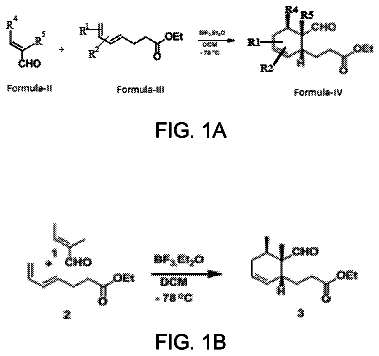 Lapsed, fee not paid4 drawings