 Lapsed, fee not paid8 drawings
Hardware & Electronics · US 9,836,950 B2
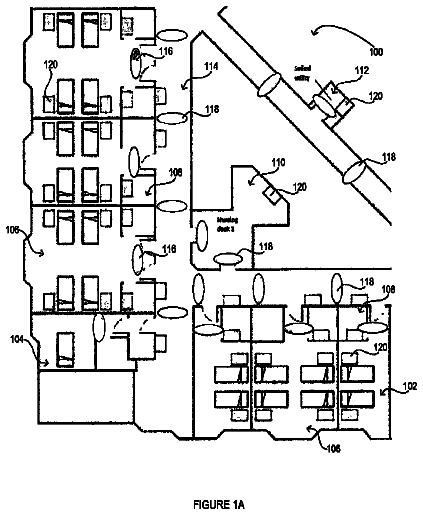
Hand hygiene compliance
Disclosed herein are different embodiments of a hand hygiene compliance system, beacon, wearable monitor and kit.
US 9,836,974 B2 · Assignee: TOYOTA JIDOSHA KABUSHIKI KAISHA · Inventors: Kawamoto; Masayuki et al.
Sheet 1 of 8 from the published document. All sheets in the USPTO PDF
An operation management center divides an operation area in which an on-demand bus operates into a plurality of predetermined sub-areas, and searches for candidate routes on which the on-demand bus travels for each divided sub-area. The center sets one of the retrieved routes as a basic route, and sets, as adjustment time for each divided sub-area, time required when the bus passes through a location separated from the basic route. Thus, by setting such adjustment time for each sub-area, and by using the adjustment time set for each sub-area, the center can determine an operation plan that takes into account an additional request while reducing an impact on the determined operation plan.
Up to now, there are known, for example, an on-demand bus operation scheduling system and a method therefor, which make use of an operation track record as disclosed in Patent Literature 1. The related-art on-demand bus operation scheduling system or the like includes: a database for storing the operation track record regarding a reservation and a track record in terms of getting on/off of a passenger; means for extracting characteristic information relating to the getting on/off of the passenger in advance from the operation track record stored in the database, and storing the extracted characteristic information and reservation information indicating the reservation included in the operation track record corresponding to the extracted characteristic information in the database in association with each other; and means for determining, when a current situation that determines an operati
1 of 8 drawing sheets so far from the published document, cropped to the drawing. Every sheet is in the USPTO PDF.
What the patent claimed, word for word. All of it is now free to use.
The present invention relates to an on-demand vehicle operation management device, an on-demand vehicle operation management method, and an on-demand vehicle operation management system, for determining an operation plan of an on-demand vehicle based on requests received from a plurality of users and managing an operation of the on-demand vehicle in accordance with the determined operation plan.
Up to now, there are known, for example, an on-demand bus operation scheduling system and a method therefor, which make use of an operation track record as disclosed in Patent Literature 1. The related-art on-demand bus operation scheduling system or the like includes: a database for storing the operation track record regarding a reservation and a track record in terms of getting on/off of a passenger; means for extracting characteristic information relating to the getting on/off of the passenger in advance from the operation track record stored in the database, and storing the extracted characteristic information and reservation information indicating the reservation included in the operation track record corresponding to the extracted characteristic information in the database in association with each other; and means for determining, when a current situation that determines an operation schedule is consistent with a situation indicated by the characteristic information, the operation schedule of an on-demand bus based on reservation information included in the operation track record corresponding to the consistent characteristic information.
Further, up to now, there is also known, for example, a vehicle operation system disclosed in Patent Literature 2. In this related-art vehicle operation system, a new reservation combination, that is, a new combination of a demand content currently registered in a reservation list and a new demand content, is created when a new operation plan candidate is created. In regard to the new reservation combination, calculation of a zone dispatch level index and a primary assessment thereof based on a zone dispatch level reference index for each pre-defined zone (urban area, old urban area, or mountain area) are performed, while calculation of a service index and an operation index and a primary assessment thereof are performed. Accordingly, the new reservation combination that has passed both the primary assessments is put in an overall rank, based on which a new operation plan is determined. CITATION LIST Patent Literature
Incidentally, in the related-art systems and the like disclosed in Patent Literatures 1 and 2, when a user wishing to use the on-demand bus (on-demand vehicle) newly emerges after the operation schedule (operation plan) has been determined, in order to satisfy the newly emerged user's request, there may arise a situation where the determined operation schedule (operation plan) needs to be greatly changed. In other words, in the operation schedule (operation plan) determined by the related-art systems and the like disclosed in Patent Literatures 1 and 2, a degree of freedom for changes and adjustments is low. This increases the impact of the request addition on the entire operation schedule (operation plan). Thus, in such a case, time may be required for changing or adjusting the determined operation schedule (operation plan), and no operation schedule (operation plan) satisfying the newly emerged user's request may not be determined until an operation start of the on-demand bus.
The present invention has been made in order to solve the above-mentioned problem, and it is an object thereof to provide an on-demand vehicle operation management device, an on-demand vehicle operation management method, and an on-demand vehicle operation management system, for determining an operation plan of an on-demand vehicle while securing a suitable degree of freedom.
In order to achieve the above-mentioned object, the present invention aims to improve an on-demand vehicle operation management device including operation management means for determining an operation plan of an on-demand vehicle based on requests received from a plurality of users and managing an operation of the on-demand vehicle in accordance with the determined operation plan. Further, the present invention aims to improve: an on-demand vehicle operation management method for determining, through inclusion of a computer device, an operation plan of an on-demand vehicle based on requests received from a plurality of users and managing an operation of the on-demand vehicle in accordance with the determined operation plan; and an on-demand vehicle operation management system including: an on-demand vehicle to be boarded by a plurality of users; an operation management center for determining an operation plan of the on-demand vehicle based on requests received from the plurality of users, and managing an operation of the on-demand vehicle in accordance with the determined operation plan; and an information terminal device to be operated by each of the plurality of users to supply the request to the operation management center.
A feature of the present invention resides in that the operation management means (the operation management center) has an adjustment function of: dividing an operation area in which the on-demand vehicle operates into a plurality of predetermined sub-areas; and searching for a route on which the on-demand vehicle travels for each divided sub-area, and adjusting the retrieved route. In addition, a feature of the present invention resides in that the computer device has an adjustment function of: dividing an operation area in which the on-demand vehicle operates into a plurality of predetermined sub-areas; and searching for a route on which the on-demand vehicle travels for each divided sub-area, and adjusting the retrieved route. In this case, the operation management means (the operation management center) can include dividing means for dividing the operation area in which the on-demand vehicle operates into the plurality of predetermined sub-areas.
In this case, the adjustment function of the operation management means (the operation management center) can be a function of setting, for each divided sub-area, adjustment time for adjusting time required when the on-demand vehicle travels on the retrieved route in the each divided sub-area. The computer device can set, for each divided sub-area, adjustment time for adjusting time required when the on-demand vehicle travels on the retrieved route in the each divided sub-area.
Further, in this case, the operation management means (the operation management center) can determine one of the routes retrieved for each divided sub-area as a basic route, and the adjustment time set for the each divided sub-area by the adjustment function of the operation management means can be adjustment time for adjusting time required when the on-demand vehicle traveling on the basic route passes through a location separated from the basic route. Further, the computer device can determine one of the routes retrieved for each divided sub-area as a basic route, and set, for the each divided sub-area, adjustment time for adjusting time required when the on-demand vehicle traveling on the basic route passes through a location separated from the basic route.
Further, in those cases, the operation management means can determine, when a request is added by a new user after the operation plan has been determined, an operation plan that takes into account the additional request made by the new user by using the adjustment time set for each divided sub-area. Further, the computer device can determine, when a request is added by a new user after the operation plan has been determined, an operation plan that takes into account the additional request made by the new user by using the adjustment time set for each divided sub-area. Further, the operation management center can determine, when a request is added by a new user through the information terminal device after the operation plan has been determined, an operation plan that takes into account the additional request made by the new user by using the adjustment time set for each divided sub-area.
Further, another feature of the present invention resides in that the operation management means is configured to: divide an operation area in which the on-demand vehicle operates into a plurality of predetermined sub-areas; determine, for a reservation received from each of the plurality of users before the operation plan of the on-demand vehicle is determined, a candidate route that is included in the reservation, passes through a desired boarding/drop-off location requested by the each of the plurality of users, and allows the on-demand vehicle to operate at desired time, and determine that the each of the plurality of users is allowed to board the on-demand vehicle when the candidate route is present; calculate, before the operation plan of the on-demand vehicle is determined, a predetermined evaluation expression for all the determined candidate routes to select a candidate route having an optimal solution as an operation route, and determine an operation plan of the on-demand vehicle that takes into account adjustment time for adjusting time required when the on-demand vehicle travels on the operation route; and use, for an additional reservation received from each of the plurality of users after the operation plan of the on-demand vehicle is determined, the adjustment time taken into account on the operation route in the determined operation plan of the on-demand vehicle to change and determine the operation route so as to allow the operation route to pass through a desired boarding/drop-off location requested by the each of the plurality of users and to allow the on-demand vehicle to operate at desired time.
In addition, in this case, the operation management means can be configured to: compare a request included in the reservation received from the each of the plurality of users before the operation plan of the on-demand vehicle is determined with a past request included in a reservation received in the past and at the same time slot and in the same sub-area as a time slot and a sub-area of the request; and take into account the adjustment time in accordance with a time slot and a sub-area higher in frequency in the past request. Further, in those cases, the operation management means can be configured to: search for a route for each of the plurality of predetermined sub-areas; determine one of the retrieved routes as a basic route; and take into account the adjustment time as adjustment time for adjusting time required when the on-demand vehicle traveling on the basic route passes through a location separated from the basic route.
According to those, the operation management means (computer device or operation management center) can be provided with the adjustment function of dividing the operation area in which the on-demand vehicle operates into the plurality of predetermined sub-areas, and adjusting the retrieved route for each divided sub-area, that is, the function of setting, for each sub-area, the adjustment time for adjusting the time required when the on-demand vehicle travels on the retrieved route. Then, by using the adjustment time set for each sub-area, the operation management means (computer device or operation management center) can determine the operation plan that takes into account the additional request made by the new user after the operation plan has been determined.
Thus, for example, as compared with a case where the operation of the on-demand vehicle is managed by uniformly adding time in order to prepare for occurrence of uncertainties that may hinder the operation from a point of departure to a destination, time wasted in operation can be further suppressed by setting sufficient adjustment time necessary for each sub-area. Moreover, by setting the sufficient adjustment time necessary for each sub-area, an operation plan with a high degree of freedom can be determined by using the adjustment time.
In other words, the adjustment time is set for each sub-area, and is different from time that is set after a location is specified, such as time required when the vehicle passes through each specific location in the sub-area. Thus, by determining an operation plan that takes the adjustment time into account, for example, even when the new user adds a request, as long as time required when the on-demand vehicle passes through a route to a boarding/drop-off location desired by the user is within the adjustment time set for each sub-area where the boarding/drop-off location is present, the impact on the other users' use of the on-demand vehicle can be reduced very greatly. In other words, by enabling setting of the adjustment time for each sub-area, the degree of freedom in the determined operation plan can be increased. Even when another request is added to the operation plan that has been determined once, this request can be added while reducing the impact on the entire operation plan. As a result, a new operation plan can be quickly determined.
Further, in those cases, the operation management means (computer device or operation management center) can determine the operation plan, for example, so as to allow break time to be secured for a driver of the on-demand vehicle. Thus, the driver of the on-demand vehicle can get an adequate break to appropriately operate the on-demand vehicle.
FIG. 1 is a schematic diagram of an on-demand vehicle operation management system to which an on-demand vehicle operation management device according to an embodiment of the present invention can be applied.
FIG. 2 is a block diagram schematically illustrating a configuration of an operation information terminal device mounted to a vehicle illustrated in FIG. 1 .
FIG. 3 is a block diagram schematically illustrating a configuration of an operation management center illustrated in FIG. 1 .
FIG. 4 is a block diagram schematically illustrating a configuration of an information terminal device illustrated in FIG. 1 .
FIG. 5 is a functional block diagram functionally illustrating computer program processing executed by a server (computer) illustrated in FIG. 3 .
FIG. 6 is a schematic diagram illustrating determination of a candidate route, required time, and adjustment time by a route data creation section illustrated in FIG. 5 .
FIG. 7 is a schematic diagram illustrating an information table of the candidate route, the required time, and the adjustment time determined and stored by the route data creation section illustrated in FIG. 5 .
FIG. 8 is a flowchart of an operation plan candidate creation program executed by an operation plan candidate creation section (CPU) of a reservation reception processing section illustrated in FIG. 5 .
FIG. 9 is a flowchart of an operation plan determination processing program executed by an adjustment time setting/plan determination section (CPU) of an operation plan determination processing section illustrated in FIG. 5 .
FIG. 10 is a flowchart of a processing program for dealing with reservation addition executed by a demand addition processing section (CPU) of an additional reservation reception processing section illustrated in FIG. 5 .
Now, an on-demand vehicle operation management device according to an embodiment of the present invention (hereinafter referred to as “this device”) is described with reference to the accompanying drawings.
FIG. 1 illustrates a schematic configuration of an on-demand vehicle operation management system for managing an operation of an on-demand vehicle to which this device can be applied. The on-demand vehicle operation management system according to this embodiment includes: on-demand buses 10 , which correspond to a plurality of on-demand vehicles operated in response to requests (demands) received from a plurality of users; an operation management center 20 including this device, for determining operation plans of the respective on-demand buses 10 and managing operations thereof; and an information terminal device 30 owned by each user. Further, in this on-demand vehicle operation management system, the respective on-demand buses 10 (more specifically, operation information terminal devices 11 described later), the operation management center 20 , and the information terminal devices 30 are communicably connected to each other by a network 40 such as an Internet line network or a mobile phone line network.
The on-demand bus 10 is a motor-omnibus in which, as well known, an operation route, operation time, and the like (hereinafter also referred to collectively as “operation plan”) are not defined in advance and which travels within a specific region in accordance with the operation plan determined appropriately in response to the user's request (demand) by the operation management center 20 described later. For this reason, the operation information terminal device 11 for transmitting and receiving various kinds of information including operation plan information indicating the operation plan through communications to/from the operation management center 20 is mounted to the on-demand bus 10 . As illustrated in FIG. 2 , the operation information terminal device 11 includes an electronic control unit 11 a , a communication unit 11 b , a storage unit 11 c , an informing unit 11 d , and a GPS unit 11 e.
The electronic control unit 11 a is a microcomputer including a CPU, a ROM, a RAM, and the like as its main component parts, and centrally controls an operation of the operation information terminal device 11 mounted to the on-demand bus 10 . The communication unit 11 b is configured to realize communications to/from the operation management center 20 through radio communications performed via the network 40 . The storage unit 11 c includes a storage medium such as a hard disk or a semiconductor memory and a drive for driving the storage medium. Further, the storage unit 11 c stores a program necessary for the electronic control unit 11 a to centrally control the operation of the operation information terminal device 11 and various kinds of data including the operation plan information provided by the operation management center 20 as described later, in advance or in an updatable manner. The informing unit 11 d is formed of a display, a speaker, or the like. Further, the informing unit 11 d is configured to inform of the operation plan information by displaying a character, a graphic form, or the like on a screen of the display or outputting voice from the speaker under control of the electronic control unit 11 a . The GPS unit 11 e is configured to receive a radio wave from a global positioning system (GPS) satellite, to detect a location of the on-demand bus 10 to which the operation information terminal device 11 is mounted.
The operation management center 20 is configured to manage the operation of the on-demand bus 10 by determining the operation plan of the on-demand bus 10 corresponding to the user's request (demand) and providing the on-demand bus 10 with the operation plan information. Further, the operation management center 20 is configured to provide the user with the operation plan information and provide the user with various kinds of information on the operation of the on-demand bus 10 . For this reason, as illustrated in FIG. 3 , the operation management center 20 includes a server 21 and a communication device 22 .
The server 21 includes a control device 21 a , a storage device 21 b , and a communication interface 21 c . The control device 21 a includes a microcomputer formed of a CPU, a ROM, a RAM, and the like as its main component part, and centrally controls an operation of the server 21 relating to the determination of the operation plan and the management of the operation for each on-demand bus 10 (or each service for operating the on-demand bus 10 ). The storage device 21 b includes a storage medium such as a hard disk or a semiconductor memory and a drive for driving the storage medium, and stores various programs and various kinds of data. The communication interface 21 c is an interface for connection to a communication line (for example, LAN line) built within the operation management center 20 . The storage device 21 b has built therein a demand database 21 d for accumulating and storing demand information (hereinafter also referred to as user's “reservation information”) on a demand (that is, request) of each on-demand bus 10 in a searchable manner, and an operation database 21 e for accumulating and storing operation information including operation plan information of each on-demand bus 10 in a searchable manner.
The demand database 21 d accumulates and stores, in a searchable manner, demand information on the user's use of the on-demand bus 10 , specifically, desired boarding/drop-off location information indicating a desired boarding/drop-off location, desired time information indicating desired departure or arrival time, boarding/drop-off status information indicating added time acceptable by the user with respect to the desired departure or arrival time, and user identification information for identifying the user in association with one another. The operation database 21 e accumulates and stores, in a searchable manner, operation information on the operation of the on-demand bus 10 in accordance with the user's demand (request), specifically, in addition to the operation plan information indicating an operation route or operation time, passenger number information indicating the number of passengers wishing to board the on-demand bus 10 , that is, wishing to use the operation service of the on-demand bus 10 in accordance with the operation plan, and bus identification information for identifying the on-demand bus 10 in association with each other.
The communication device 22 is connected to the server 21 via the communication line built within the operation management center 20 . Then, the communication device 22 is configured to realize communications to/from the operation information terminal device 11 and the information terminal device 30 by being connected to the network 40 . Accordingly, the communication device 22 transmits and receives the bus identification information and the operation information (in particular, the operation plan information) to and from the operation information terminal device 11 . Further, the communication device 22 transmits and receives the user identification information and the reservation information (demand information) to and from the information terminal device 30 , and transmits thereto the determined operation plan information and decline information indicating that the user's request (demand) cannot be satisfied in regard to the use of the on-demand bus 10 .
The information terminal device 30 is configured to be operated by the user to transmit the demand information (reservation information) to the operation management center 20 , and receive the operation plan information and the decline information from the operation management center 20 in the form of, for example, character data using electronic mail or a voice call. For this reason, as illustrated in FIG. 4 , the information terminal device 30 includes an input unit 31 , a display unit 32 , an electronic control unit 33 , a storage unit 34 , and a communication unit 35 that are communicably connected to one another. The input unit 31 is formed of, for example, a keyboard, a touch panel keyboard built in the display unit 32 to detect a touch operation on a display panel of the display unit 32 , or a speech input device capable of a call to/from an outside (specifically, operator resident in the operation management center 20 ). The display unit 32 is formed of, for example, a liquid crystal display, and is configured to display a character, a graphic form, or the like on the display panel.
The electronic control unit 33 includes a microcomputer formed of a CPU, a ROM, a RAM, and the like as its main component part, and centrally controls operations of the input unit 31 , the display unit 32 , the storage unit 34 , and the communication unit 35 by executing various application programs. The storage unit 34 stores the various application programs and various kinds of data used by the electronic control unit 33 to centrally control the operation of the information terminal device 30 , and stores the user identification information (specifically, user ID, password, and the like) necessary to access the operation management center 20 when transmitting the reservation information (demand information). The communication unit 35 is connected to the network 40 to implement a function of transmitting and receiving the user identification information, the reservation information (demand information), the operation plan information, the decline information, speech data, and the like to and from the operation management center 20 .
Here, specific examples that can be employed as the information terminal device 30 include a mobile phone such as a smartphone, a tablet information terminal, and a laptop personal computer. Note that, it should be understood in this case that, for example, a desktop personal computer placed at home or the like and a fixed-line phone placed at home or the like can be used irrespective of inferior portability thereof.
Next, the operation of this embodiment configured as described above is described with reference to a functional block diagram. As illustrated in FIG. 5 , the server 21 (more specifically, control device 21 a ) of the operation management center 20 according to this embodiment includes a route data creation section 50 , a reservation reception processing section 60 , an operation plan determination processing section 70 , and an additional reservation reception processing section 80 . Note that, although not being described in detail, the server 21 of the operation management center 20 is configured to collect map information indicating roads, topography, and the like, congestion information (such as congestion degree or driving time required in the road segment or a predetermined segment) on a road segment indicated by a segment between nodes on each road such as intersections, weather conditions, the current location of the on-demand bus 10 , and the like as current information on an operation region (operation zone), which is an operation area within which the on-demand bus 10 is being operated, and to store the current information in a predetermined storage location of an operation database 21 e . Further, the number of on-demand buses 10 to be operated is appropriately determined based on a size of the operation region (operation zone) as the operation area and the number of users, and is further determined based on shopping streets, hospitals, public facilities, topographic features (such as presence/absence of a slope), a time slot, and the like. Note that, in this case, by preparing the on-demand bus 10 that is not assigned to the operation region (operation zone), it is possible to carry out the operation so as to specially assign the prepared on-demand bus 10 to the operation region (operation zone) that has a small number of users who desire a ride in accordance with the request (demand) received from the user.
The route data creation section 50 includes a data input section 51 . The data input section 51 acquires, from the operation database 21 e , the map information (map data), the congestion information, the weather information, or the like stored in the predetermined storage location of the database 21 e in an updatable manner to input the information. The data input section 51 supplies each input information to a candidate route/time creation section 52 .
The candidate route/time creation section 52 divides the operation region (operation zone) as the operation area in which the on-demand bus 10 to be managed in operation travels into predetermined sub-areas (blocks), and for each sub-area, searches for a route on which the on-demand bus 10 can travel to determine the route as a candidate route. The candidate route/time creation section 52 determines time required when the on-demand bus 10 travels between locations (between nodes) on the retrieved candidate route (hereinafter referred to as “required time”).
Further, the candidate route/time creation section 52 determines one of the retrieved candidate routes as a route to be a base (hereinafter referred to as “basic route”) for operating the on-demand bus 10 . The candidate route/time creation section 52 exhibits a function of, when a route that takes into account a route branching toward a location (node) separated from the basic route (hereinafter referred to as “route other than basic route”) is retrieved, determining time required when the on-demand bus 10 stops at (passes through) the location (node) (hereinafter referred to as “adjustment time”). Now, the determination of the candidate route, the required time, and the adjustment time carried out by the candidate route/time creation section 52 is described in detail referring to FIG. 6 .
The candidate route/time creation section 52 searches for the route on which the on-demand bus 10 can travel by using the map information (map data) acquired from the operation database 21 e via the data input section 51 . At this time, the candidate route/time creation section 52 divides the operation area in which the on-demand bus 10 travels into sub-areas (blocks) of predetermined sizes based on, for example, the user's demand for the on-demand bus 10 or land use (residential area, dense zone, altitude, or the like), and searches for a basic route and a route other than the basic route for each sub-area. An example of this search is described referring to FIG. 6 . The candidate route/time creation section 52 divides the operation area in which the on-demand bus 10 travels into sub-areas A, B, C, . . . . In FIG. 6 , for easier understanding, the divided sub-areas A, B, C, . . . are formed into similar rectangular shapes. Needless to say, however, the division of the sub-areas is not limited to the rectangular shapes and any shape and size can be employed for the divided sub-areas (blocks).
The candidate route/time creation section 52 specifies nodes 1 to 3 present in the sub-area A based on the map information (map data), specifies a node 1001 present at a boundary with the sub-area B, and searches for a route passing through those nodes 1 to 3 and 1001 . Specifically, the candidate route/time creation section 52 determines a route directly connecting the node 1 that is a point of departure in the sub-area A to the node 3 , and directly connecting the node 3 to the node 1001 as a basic route A 100 . In the sub-area A, the node 2 separated from the basic route A 100 is present, and thus the candidate route/time creation section 52 searches for a route passing through the node 2 as a route A 110 other than the basic route. In other words, the candidate route/time creation section 52 searches for a route connecting the node 1 through the node 2 to the node 3 and reaching the node 1001 as the route A 110 other than the basic route.
Similarly, the candidate route/time creation section 52 specifies nodes 4 and 5 present in the sub-area B based on the map information (map data), specifies the node 1001 present at the boundary with the sub-area A and a node 1002 present at a boundary with the sub-area C, and searches for a route passing through those nodes 1001 , 4 , 5 , and 1002 . Specifically, the candidate route/time creation section 52 determines a route connecting the node 1001 that is a point of departure in the sub-area B through the nodes 4 and 5 to the node 1002 as a basic route B 100 .
In the above description, to facilitate understanding, the nodes are simply numbered. In this case, more specifically, for example, each node can be represented by coordinates using longitude and latitude as known, needless to say. This enables representation of a space between the nodes by using longitude and latitude.
In this manner, the candidate route/time creation section 52 divides the operation area in which the on-demand bus 10 operates into the plurality of sub-areas, and searches for the routes passing through the plurality of nodes present in each sub-area. Then, the candidate route/time creation section 52 determines the basic route and the route other than the basic route among the retrieved routes. The candidate route/time creation section 52 outputs the basic route and the route other than the basic route determined for each sub-area as route data Ri (i=0, . . . , N) to a data output section 53 .
The candidate route/time creation section 52 determines time required when the on-demand bus 10 travels on each determined basic route, and adjustment time required when the on-demand bus 10 travels on each determined route other than the basic route. In this case, the candidate route/time creation section 52 determines required time and (or) adjustment time for each divided sub-area (block). Now, this processing is specifically described referring to FIG. 6 .
First, determination of required time is described. The candidate route/time creation section 52 determines, by using the map information (map data), the congestion information, and the weather information acquired from the operation database 21 e via the data input section 51 , time required when the on-demand bus 10 travels on the basic route determined for each sub-area. In other words, the candidate route/time creation section 52 determines required time changeable depending on a day of the week, a time slot, or a weather and based on the magnitude of the demand and a land use situation that are varied from one sub-area to another (that is, features of each sub-area).
To specifically describe the exemplary case illustrated in FIG. 6 , first, in the sub-area A, the candidate route/time creation section 52 determines, based on the map information (i.e., land use situation), the congestion information, and the weather information, time required from the node 1 that is a point of departure of the basic route A 100 to the node 3 to be 10 minutes, and time required from the node 3 to the node 1001 to be 7 minutes. Similarly, in the sub-area B, the candidate route/time creation section 52 determines time required from the node 1001 that is a point of departure of the basic route B 100 to the node 4 to be 8 minutes, time required from the node 4 to the node 5 to be 7 minutes, and time required from the node 5 to the node 1002 to be 2 minutes.
On the other hand, when a route other than the basic route is retrieved, the candidate route/time creation section 52 determines adjustment time for each sub-area. In other words, the candidate route/time creation section 52 determines, with respect to the time required when the on-demand bus 10 travels on the basic route, adjustment time required for the on-demand bus 10 to pass through a via point on the route other than the basic route for each sub-area.
To specifically describe the exemplary case illustrated in FIG. 6 , as described above, in the sub-area A, with respect to the basic route A 100 , the route A 110 other than the basic route, which branches from the basic route A 100 to pass through the node 2 , has been retrieved. In this case, the candidate route/time creation section 52 determines, based on the map information (i.e., land use situation), the congestion information, and the weather information, time required from the node 1 that is the point of departure of the basic route A 100 (route A 110 other than basic route) to the node 2 to be 10 minutes, and determines, as adjustment time for the sub-area A, 5 minutes required for the on-demand bus 10 to make a round trip to the node 2 when the on-demand bus 10 travels from the basic route A 100 through the node 2 to the node 3 . In other words, the candidate route/time creation section 52 determines, without specifying the node 2 that is a location branching from the basic route A 100 , time required for (added to) the required time to pass through the branch location (5 minutes required for the round trip to the node 2 in the example illustrated in FIG. 6 ) as adjustment time for the sub-area A.
On the other hand, in FIG. 6 , as described above, no route other than the basic route has been determined in the sub-area B. Accordingly, the candidate route/time creation section 52 does not determine any adjustment time for the sub-area B. Thus, after the required time and (or) the adjustment time have been determined for each sub-area, the candidate route/time creation section 52 outputs required time Tj (j=0, M) from the node that is the point of departure to each node in each sub-area and the adjustment time corresponding to each sub-area to the data output section 53 .
The data output section 53 acquires route data Ri (i=0, N) determined for each sub-area, the required time Tj (j=0, M), and the adjustment time of each sub-area output from the candidate route/time creation section 52 . Then, the data output section 53 outputs the route data Ri (i=0, N), the required time Tj (j=0, M), and the adjustment time of each sub-area that have been acquired to the operation database 21 e . Accordingly, at a predetermined storage location of the operation database 21 e , the required time and the adjustment time for the basic route and the route other than the basic route of each sub-area are stored as a searchable information table. To describe a specific example, as illustrated in FIG. 7 , the operation database 21 e stores, for the basic route A 100 of the sub-area A and the basic route B 100 of the sub-area B, each node No. and required time in a corresponding manner. For the route A 100 other than the basic route of the sub-area A, the operation database 21 e stores each node No. and required time in a corresponding manner, and stores the adjustment time (5 minutes) of the sub-area A as indicated by the boldface.
In the sub-area A, 5 minutes have been determined as the adjustment time. Thus, needless to say, in accordance with a user's demand (request) or based on past track record, for example, when the on-demand bus 10 passes through the node 2 , the required time to the node 3 is 15 minutes after addition of 5 minutes, and the required time to the node 1001 is 22 minutes after addition of 5 minutes.
Next, the reservation reception processing section 60 is described. As illustrated in FIG. 5 , the reservation reception processing section 60 includes a data input section 61 . The data input section 61 acquires, from the demand database 21 d , reservation information (demand information) stored in a predetermined storage location of the database 21 d in an updatable manner to input the information. The data input section 61 supplies the input reservation information (demand information) to an operation plan candidate creation section 62 . Further, the data input section 61 acquires and inputs, from the operation database 21 e , the route data Ri, the required time Tj, and the adjustment time stored in the predetermined storage location of the operation database 21 e . Then, the data input section 61 supplies the route data Ri, the required time Tj, and the adjustment time to the operation plan candidate creation section 62 .
The description continues in the full USPTO document.
About 6,466 words. The USPTO PDF has it with every drawing.
Fees are due 3.5, 7.5 and 11.5 years after grant. This patent expired on December 5, 2025, so the fee marked "not paid" was the one that went unpaid.
ON-DEMAND VEHICLE OPERATION MANAGEMENT DEVICE, ON-DEMAND VEHICLE OPERATION MANAGEMENT METHOD, AND ON-DEMAND VEHICLE OPERATION MANAGEMENT SYSTEM
Filed Sep 2012 · published Aug 2015On-demand vehicle operation management device, on-demand vehicle operation management method, and on-demand vehicle operation management system
Filed Sep 2012 · granted Dec 2017Earlier publications, parents and continuations. None of them can still be enforced, or this patent would not be listed.
Prior art cited by the examiner or applicant. Useful when you check your own idea for novelty.
Everything on this page comes from the documents linked above.