Lapsed, fee not paid7 drawings
Industrial Equipment · US 9,834,009 B2
Rotating handling carousel having collision avoidance control
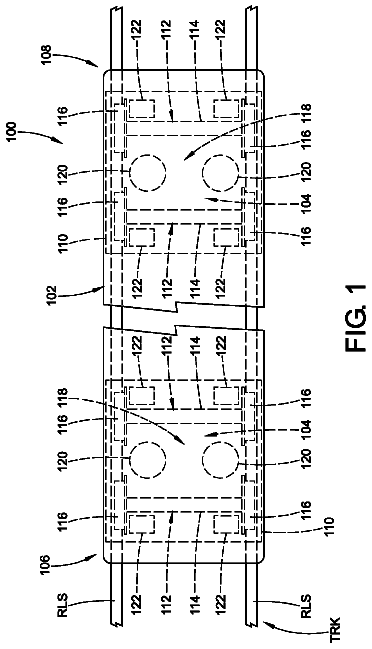
A rotating handling carousel includes a transfer device arranged on the outer circumference of the handling carousel.
US 9,834,022 B2 · Assignee: MITSUBISHI PAPER MILLS LIMITED · Inventors: Morita; Kunio
Claude can sketch it from the patent text.
An object of the present invention is to provide a thermal recording material which is excellent in all of the following characteristics: plasticizer resistance, image stability against moisture and heat, the resistance to background fogging under moisture and heat, and the retention of color developing ability. Provided is a thermal recording material having, on a paper support, a heat-sensitive recording layer containing a colorless or light-colored dye precursor and a developer which reacts with the dye precursor on heating and converts the dye precursor to its colored form, the paper support containing 0.25 to 1.0% by mass of a neutral rosin sizing agent relative to the pulp solid content in combination with calcium carbonate and aluminum sulfate, the developer having a phenylureido moiety in its molecule.
Generally, thermal recording materials have, on a support, a heat-sensitive recording layer containing an electron-donating dye precursor (hereinafter referred to as a dye precursor) and an electron-accepting developer (hereinafter referred to as a developer). By application of heat to such thermal recording materials with a thermal print head, a thermal stylus, laser beam, etc., an instant reaction between the dye precursor and the developer occurs and thereby a recorded image is produced thereon. Such thermal recording materials have several advantages, for example, that recorded images are produced thereon with a relatively simple device ensuring easy maintenance and no noise generation, and therefore are widely used for measuring recorders, facsimiles, printers, computer terminals, label printers, ticket machines for passenger tickets or other tickets, and the like. Particularly in r
Ask Claude for concept sketches based only on the patent's text. They are not part of the patent.
What the patent claimed, word for word. All of it is now free to use.
This application is a National Phase of PCT Application No. PCT/JP2015/051093 filed Jan. 16, 2015, which in turn claims benefit of Japanese Application No. 2014-012517 filed Jan. 27, 2014.
The present invention relates to a thermal recording material which is excellent in plasticizer resistance, image stability against moisture and heat, the resistance to background fogging under moisture and heat, the retention of color developing ability, etc.
Generally, thermal recording materials have, on a support, a heat-sensitive recording layer containing an electron-donating dye precursor (hereinafter referred to as a dye precursor) and an electron-accepting developer (hereinafter referred to as a developer). By application of heat to such thermal recording materials with a thermal print head, a thermal stylus, laser beam, etc., an instant reaction between the dye precursor and the developer occurs and thereby a recorded image is produced thereon. Such thermal recording materials have several advantages, for example, that recorded images are produced thereon with a relatively simple device ensuring easy maintenance and no noise generation, and therefore are widely used for measuring recorders, facsimiles, printers, computer terminals, label printers, ticket machines for passenger tickets or other tickets, and the like. Particularly in recent years, thermal recording materials are used as financial record slips such as receipts of gas, water, electricity and other bill payments, account statements issued from ATMs at financial institutions and various receipts, thermal recording labels or tags for point of sales (POS) system, etc. Thus, the application of thermal recording materials is rapidly expanding.
However, thermal recording materials used for the above-mentioned purposes have a problem. That is, when an image area printed on a thermal recording material comes into contact with plastics such as polyvinyl chloride, a plasticizer or other additives contained in the plastics will permeate the image area, which results in the reduction of the image density to an unreadable level. Therefore, there is a demand for thermal recording materials which are excellent in the stability of an image area against plasticizers (hereinafter referred to as plasticizer resistance). Moreover, recording devices used for the above-mentioned purposes are recently used in severer conditions, and accordingly, there is a strong demand for thermal recording materials which are excellent in the stability of an image area against hot and humid conditions after printing (hereinafter referred to as image stability against moisture and heat), in the stability of a non-image area (background area) against hot and humid conditions (hereinafter referred to as resistance to background fogging under moisture and heat), and in color developing ability at the time of printing after long-term storage (hereinafter referred to as retention of color developing ability), in particular, in the retention of color developing ability under hot and humid conditions.
Known thermal recording materials which are excellent in plasticizer resistance include, for example, thermal recording materials of Patent Literature 1 to 6, in which specific compounds having a phenylureido moiety in the molecule are used as a developer. These thermal recording materials are excellent in plasticizer resistance and image stability against moisture and heat, but are unsatisfactory in terms of the resistance to background fogging under moisture and heat. A known method for the improvement of the resistance to background fogging under moisture and heat is the use of acid-free paper as a paper support, but this method deteriorates the retention of color developing ability, in particular, the retention of color developing ability under hot and humid conditions. This is because the use of acid-free paper causes a developer having a phenylureido moiety in its molecule in the heat-sensitive recording layer to easily dissolve under hot and humid conditions and to spread into the paper support.
A thermal recording material having a waterproof heat-sensitive recording layer is described in, for example, Patent Literature 7, in which the waterproofing is achieved by the use of a hydrophobic resin emulsion in the heat-sensitive recording layer. However, this thermal recording material is inadequate in terms of the resistance to background fogging under moisture and heat, and unsatisfactory in terms of retention of color developing ability, in particular, the retention of color developing ability under hot and humid conditions.
Known methods for the improvement of the retention of color developing ability include a method using a high-melting-point alkyl ketene dimer as a sizing agent in the paper support, which is described in, for example, Patent Literature 8. However, alkyl ketene dimers, alkenyl succinic anhydrides, etc. may adversely affect the retention of color developing ability under hot and humid conditions, and there is a need for further improvement of such a method. CITATION LIST Patent Literature
Patent Literature 1: JP-A 2000-143611 Patent Literature 2: WO 00/35679 Patent Literature 3: JP-A 2002-160459 Patent Literature 4: JP-A 2002-160461 Patent Literature 5: JP-A 2002-160462 Patent Literature 6: JP-A 2003-291542 Patent literature 7: JP-A 2001-341433 Patent literature 8: JP-A 7-68932 SUMMARY OF INVENTION Technical Problem
An object of the present invention is to provide a thermal recording material which is excellent in all of the following characteristics: plasticizer resistance, image stability against moisture and heat, the resistance to background fogging under moisture and heat, and the retention of color developing ability. Solution to Problem
The above-mentioned object can basically be achieved by a thermal recording material having, on a paper support, a heat-sensitive recording layer containing a colorless or light-colored dye precursor and a developer which reacts with the dye precursor on heating and converts the dye precursor to its colored form, the paper support containing 0.25 to 1.0% by mass of a neutral rosin sizing agent relative to the pulp solid content in combination with calcium carbonate and aluminum sulfate, the developer having a phenylureido moiety in its molecule.
The phenylureido moiety is preferably a moiety represented by the following general formula (1).
In the formula, R1 and R3 are hydrogen atoms, R2 is an oxygen atom, R4 is selected from a hydrogen atom and a group that can be a substituent on the benzene ring, and n is an integer of 1 to 5.
The developer is preferably a compound represented by the following general formula (2).
In the formula, X.sub.1 is —NHCONH—, X.sub.2 is —NHSO.sub.2—, and each of the three benzene rings may have a substituent(s).
More preferably, the developer is N-[2-(3-phenylureido)phenyl]benzenesulfonamide.
The paper support preferably further contains polyacrylamide, and more preferably, the polyacrylamide is an amphoteric polyacrylamide in which the ratio of cationic groups to anionic groups is 50 to 200%.
The thermal recording material preferably has a backcoat layer containing a hydrophobic resin on the opposite side of the paper support from the heat-sensitive recording layer. Advantageous Effects of Invention
The present invention can provide a thermal recording material which is excellent in all of the following characteristics: plasticizer resistance, image stability against moisture and heat, the resistance to background fogging under moisture and heat, and the retention of color developing ability.
Hereinafter, the present invention will be described in detail.
As described above, it has been known that specific compounds having a phenylureido moiety in the molecule are used as a developer in a heat-sensitive recording layer. Such thermal recording materials are excellent in plasticizer resistance and image stability against moisture and heat, but are unsatisfactory in terms of the resistance to background fogging under moisture and at, and the retention of color developing ability. The present inventor conducted extensive research to solve the above-described problems. As a result, the present inventor found that, in the production of a thermal recording material having, on a paper support, a heat-sensitive recording layer containing an ordinarily colorless or light-colored electron-donating dye precursor and a developer which reacts with the dye precursor on heating and converts the dye precursor to its colored form, the use of a compound having a phenylureido moiety in its molecule as the developer (hereinafter, a developer compound having a phenylureido moiety in its molecule is referred to also as a phenylureido developer), and the use of, as the support, a paper support containing 0.25 to 1.0% by mass of a neutral rosin sizing agent relative to the pulp solid content in combination with calcium carbonate and aluminum sulfate give a thermal recording material which is excellent in the resistance to background fogging under moisture and heat, and the retention of color developing ability, in addition to plasticizer resistance and image stability against moisture and heat. Based on this finding, the present inventor completed the present invention.
The neutral rosin sizing agent contained in the paper support of the present invention is specifically an emulsion-type rosin sizing agent. The emulsion-type rosin sizing agent is prepared by emulsification of a rosin substance by a surfactant, a water-soluble high-molecular compound or the like, which allows the use of the rosin substance in a neutral pH of 6 to 9. Examples of the rosin substance include rosins such as gum rosin, wood rosin, tall oil rosin, hydrogenated rosin, disproportionated rosin, polymerized rosin, aldehyde-modified rosin and esterified rosin; and heat-reaction products of any of the rosins with an α,β-unsaturated carboxylic acid such as acrylic acid, maleic acid, fumaric acid and itaconic acid. The emulsion-type rosin sizing agent may have been subjected to insolubilizing treatment, such as polymerization and waterproofing, which prevents the rosin substance from dissolving in a neutral pH region. The neutral rosin sizing agent used in the present invention may be a commercial product, and for example, products commercially available under the trade names of CC-1404, CC-1401, etc. from SEIKO PMC CORPORATION can be used. One of the above-mentioned neutral rosin sizing agents or two or more of them may be used as needed.
The amount of the neutral rosin sizing agent contained in the paper support of the present invention is 0.25 to 1.0% by mass relative to the pulp solid content of the paper support. When the neutral rosin sizing agent is used in an amount within this range in combination with calcium carbonate and aluminum sulfate in the paper support, a thermal recording material which is excellent in plasticizer resistance, image stability against moisture and heat, the resistance to background fogging under moisture and heat, and the retention of color developing ability can be obtained. More preferably, the amount of the neutral rosin sizing agent is 0.4 to 1.0% by mass relative to the pulp solid content. When the amount of the neutral rosin sizing agent is adjusted to this range, a thermal recording material which is particularly excellent in the retention of color developing ability can be obtained.
When the amount of the neutral rosin sizing agent is less than 0.25% by mass relative to the pulp solid content of the paper support, a sufficient level of the retention of color developing ability cannot be achieved. When the amount of the neutral rosin sizing agent is more than 1.0% by mass relative to the pulp solid content of the paper support, the retention of color developing ability may be reduced and troubles due to pitch in the neutral rosin sizing agent may occur. The neutral rosin sizing agent contained in the paper support may be an internal sizing agent or a surface sizing agent, and is preferably an internal sizing agent.
Aluminum sulfate contained in the paper support according to the present invention ensures a sufficient level of the retention of color developing ability, a sufficient level of image stability against moisture and heat, and a sufficient level of the resistance to background fogging under moisture and heat in the thermal recording material. The amount of aluminum sulfate is preferably 0.2 to 2.0% by mass relative to the pulp solid content of the paper support. When the amount of the aluminum sulfate used is in this range, a higher level of the retention of color developing ability, a higher level of image stability against moisture and heat, and a higher level of the resistance to background fogging under moisture and heat can be achieved. When the amount of aluminum sulfate is less than 0.2% by mass relative to the pulp solid content, the effect of enhancing image stability against moisture and heat and the effect of enhancing the retention of color developing ability may be reduced. When the amount of aluminum sulfate is more than 2.0% by mass relative to the pulp solid content, the effect of enhancing the resistance to background fogging under moisture and heat may be reduced.
The calcium carbonate contained in the paper support according to the present invention is, for example, precipitated calcium carbonate, wet ground calcium carbonate, dry ground calcium carbonate or the like, and any of them may be used as appropriate. Two or more of them may be used in combination. The amount of calcium carbonate is preferably 2 to 20% by mass relative to the pulp solid content of the paper support. When the amount of the calcium carbonate used is in this range, a thermal recording material in which image stability against moisture and heat, the resistance to background fogging under moisture and heat and the retention of color developing ability are at a higher level can be obtained. When the amount of calcium carbonate is less than 2% by mass relative to the pulp solid content, the effect of enhancing the resistance to background fogging under moisture and heat may be reduced. When the amount of calcium carbonate is more than 20% by mass relative to the pulp solid content, the effect of enhancing image stability against moisture and heat, the effect of enhancing the resistance to background fogging under moisture and heat, and the effect of enhancing the retention of color developing ability may be reduced.
In the present invention, it is preferable that the paper support further contains polyacrylamide because polyacrylamide provides a thermal recording material with a higher level of the retention of color developing ability. The amount of the polyacrylamide used is preferably 0.001 to 1.50% by mass relative to the pulp solid content.
The polyacrylamide used in the present invention may be a nonionic, cationic, anionic or amphoteric polyacrylamide, but preferred is an amphoteric polyacrylamide in which the ratio of cationic groups to anionic groups as represented by the following formula is 50 to 200%.
The ratio of cationic groups/anionic groups (I)=(amount of cationic Groups/amount of anionic groups)×100 Amount of cationic groups:
Mol % of cationic monomers relative to all the monomer components of the polyacrylamide Amount of anionic groups:
Mol % of anionic monomers relative to all the monomer components of the polyacrylamide
The acrylamide used for the production of the polyacrylamide is, for example, acrylamide or methacrylamide, and other examples include N-substituted lower alkyl acrylamides such as N-ethylacrylamide, N-methylacrylamide, N,N-dimethylacrylamide and N-isopropylacrylamide. The acrylamide is not limited to these examples. One of these compounds or two or more of them may be used. In combination with the acrylamide, nonionic monomers such as acrylonitrile, methyl (meth)acrylate and ethyl (meth)acrylate can be used in an amount that does not adversely affect the water solubility of the acrylamide.
The cationic monomer used for the production of the polyacrylamide is, for example, a vinyl monomer having a tertiary, secondary or primary amino group, such as dimethylamino ethyl (meth) acrylate, diethylaminoethyl (meth) acrylate, dimethylaminopropyl (meth) acrylate, diethylaminopropyl (meth) acrylate, dimethylaminopropyl (meth) acrylamide, diethylaminopropvl (meth) acrylamide, alkyl diallylamine, dialkyl allylamine, diallylamine and allylamine; a salt of such a vinyl monomer with an inorganic acid such as hydrochloric acid, sulfuric acid, formic acid and acetic acid, or an organic acid; or a compound obtainable by a reaction of such a vinyl monomer with a quaternizing agent (e.g., an alkyl halide (e.g., methyl chloride, methyl bromide, etc.), an aralkyl halide (e.g., benzyl chloride, benzyl bromide, etc.), dimethyl sulfate, diethyl sulfate, epichlorohydrin, 3-chloro-2-hydroxypropy trimethyl ammonium chloride, glycidyl trialkyl ammonium chloride, etc.), for example, 2-hydroxy-N,N,N,N′,N′-pentamethyl-N′-{3-[(1-oxo-2-propenyl) amino]propyl}-1,3-propane diammonium dichloride, N-ethyl-N, N-dimethyl-(2-methacryloyloxyethyl)ammonium bromide, N-benzyl-N,N-dimethyl-(2-methacryloyloxyethyl)ammonium chloride, etc. The cationic monomer is not limited to these examples. One of these compounds or two or more of them may be used. The cationic monomer accounts for preferably 0.2 to 20 mol %, and more preferably 0.2 to 10 mol % of all the monomers.
The anionic monomer used for the production of the polyacrylamide is, for example, an α,β-unsaturated monocarboxylic acid such as acrylic acid and methacrylic acid; an α,β-unsaturated dicarboxylic acid such as maleic acid, fumaric acid, itaconic acid and citraconic acid; or an unsaturated sulfonic acid such as styrene sulfonic acid and vinyl sulfonic acid, or a salt thereof (e.g., a sodium salt, a potassium salt, an ammonium salt, etc.). The anionic monomer is not limited to these examples. One of these compounds or two or more of them may be used. The anionic monomer accounts for preferably 0.2 to 20 mol %, and more preferably 0.2 to 10 mold of all the monomers.
The polyacrylamide used in the present invention may have been subjected to the Mannich reaction with formaldehyde and an amine. The degree of modification in the Mannich reaction (the molar percentage (mol %) of the formaldehyde and the amine used relative to the amide groups in the polyacrylamide) is preferably 1 to 50 mol %. In the production of polyacrylamide, the monomers may be reacted with an appropriate quaternizing agent in advance and then used for the polymerization reaction. Alternatively, a quaternization reaction using an appropriate quaternizing agent may be performed during or after the polymerization reaction of the acrylamide, the nonionic monomer, and the cationic monomer and the anionic monomer.
The polyacrylamide used in the present invention may be a branched, crosslinked or grafted polyacrylamide. The number average molecular weight of the polyacrylamide is preferably 500,000 to 4,000,000.
The polyacrylamide used in the present invention can be produced by a usual protocol. For example, the monomers as described above and water are fed into a specified reaction container, a radical polymerization initiator is added, and the mixture is heated with stirring to give a polyacrylamide of interest. The reaction temperature is usually about 50 to 100° C., and the reaction time is about 1 to 5 hours. The way of feeding the monomers depends on the type of the polymerization process employed, which can be a conventionally known one such as simultaneous polymerization and continuous addition polymerization. The radical polymerization initiator used can be a commonly used radical polymerization initiator, and is, for example, a persulfate such as potassium persulfate and ammonium persulfate, or a redox polymerization initiator, which is a combination of such a persulfate and a reductant such as sodium hydrogen sulfite. In addition, an azo initiator can also be used as the radical polymerization initiator. The amount of the radical polymerization initiator used is about 0.05 to by mass relative to the total amount of the monomers. For the adjustment of the polymerization degree of the polyacrylamide, known chain transfer agents such as thiols, thiolic acids, secondary alcohols and phosphinates may be used.
Examples of the pulp used for the production of the paper support in the present invention include various types of pulp such as nadelholz bleached kraft pulp (NBKP), laubholz bleached kraft pulp (LBKP), nadelholz bleached sulfite pulp (NBSP), laubholz bleached sulfite pulp (LBSP), thermomechanical pulp (TMP), chemi-thermomechanical pulp (CTMP), bleached chemi-thermomechanical pulp (BCTMP), ground pulp (GP), refiner ground pulp (RGP), chemical ground pulp (CGP) and cotton pulp; various types of recycled pulp such as deinked pulp (DIP); and non-wood fibers such as kenaf. One of these materials or two or more of them may be used as needed.
The paper support in the present invention can contain a filler, and for example, the above-mentioned calcium carbonate can be used as the filler. Other known fillers can also be used as appropriate unless the effects of the present invention are hindered. Examples of such fillers include inorganic fillers such as talc, kaolin, calcined kaolin, amorphous silica, illite, clay and titanium dioxide; and organic fillers such as plastic pigments, but highly basic fillers, such as calcium hydroxide, are not preferred. The filler contained in the paper support in the present invention is preferably a combination of calcium carbonate with at least one kind selected from talc, kaolin and calcined kaolin. In this embodiment, a thermal recording material which is particularly excellent in the retention of color developing ability can be obtained. The percentage of calcium carbonate in the filler as a whole is preferably 20 to 70% by mass.
The ash content of the paper support in the present invention is preferably 5 to 25% by mass, and more preferably 7 to 20% by mass. When the ash content of the paper support is less than 5% by mass, good formation and sufficient smoothness can hardly be achieved. When the ash content of the paper support exceeds 25% by mass, the smoothness stays at a maximum level, but the sizing degree and the surface strength of the paper support is reduced, which results in easy occurrence of paper breaks during the coating for the formation of an undercoat layer and a heat-sensitive recording layer.
According to the present invention, the paper support can further contain various types of internal sizing agents such as alkyl ketene dimers, alkenyl succinic anhydrides and higher fatty acids in addition to the neutral rosin sizing agent. In this embodiment, the total amount of the internal sizing agents other than the neutral rosin sizing agent is preferably 50% by mass or less, and more preferably 30% by mass or less relative to the solid content of the neutral rosin sizing agent. Moreover, in the paper support, in addition to the above-mentioned neutral rosin sizing agent, aluminum sulfate, calcium carbonate, polyacrylamide, pulp and filler, various kinds of internal additives for papermaking can be used if needed. Examples of such internal additives include nonionic, cationic, anionic or amphoteric retention aids, drainage aids and strengthening agents. Specific examples of the retention aids, the drainage aids and the strengthening agents include polyvalent metal compounds such as aluminum (specifically, aluminum chloride, sodium aluminate, basic aluminum compounds, etc.), amorphous silica, various kinds of starch, urea resin, polyamide-polyamine resin, polyethyleneimine, polyamine, polyvinyl alcohol and polyethylene oxide. The polyacrylamide used in the present invention can serve as a retention aid, a drainage aid, a strengthening agent and/or the like as well. Moreover, the total amount of the water-soluble high-molecular compounds in the paper support, as typified by the above-mentioned various types of starch, polyvinyl alcohol and polyacrylamide, is preferably 0.1 to 1.5% by mass relative to the pulp solid content. In this embodiment, a thermal recording material which is excellent in the retention of color developing ability can be obtained.
The basis weight of the paper support in the thermal recording material of the present invention is preferably 30 to 180 g/m.sup.2, and can be adjusted to this range as appropriate. The papermaking conditions for the production of the paper support are not particularly limited. The paper machine to be used for the production of the paper support can be selected as appropriate for the desired purpose from commercial-scale paper machines such as a Fourdrinier paper machine, a gap former-type paper machine, a cylinder paper machine, and a short wire-type paper machine. The paper support may have been subjected to surface sizing treatment with a known natural adhesive such as starch, a known synthetic adhesive such as polyvinyl alcohol or a known sizing agent. For the surface sizing treatment, a size press, a roll coater, etc. can be used.
In the present invention, calendering is preferably performed using a machine calender, a soft nip calender, a super calender or the like. In this embodiment, a smooth paper support can be obtained. More preferably, thermal calendering is performed. In this embodiment, a thermal recording material which is excellent in the retention of color developing ability can be obtained.
For the improvement of the smoothness, heat-insulating property and other properties of the paper support, or for the prevention of the components contained in the paper support from adversely affecting the heat-sensitive recording layer, it is preferable that the thermal recording material of the present invention contains an undercoat layer between the paper support and the heat-sensitive recording layer. The undercoat layer contains a binder and an inorganic or organic pigment, and hollow particles can also be contained in the undercoat layer. The undercoat layer can contain other components, which are exemplified by known surfactants, coloring dyes, fluorescent dyes, lubricants, ultraviolet absorbers, etc.
Examples of the pigment contained in the undercoat layer of the present invention include inorganic pigments such as talc, kaolin, calcined kaolin, ground calcium carbonate, precipitated calcium carbonate, magnesium carbonate, zinc oxide, aluminum oxide, aluminum hydroxide, magnesium hydroxide, titanium dioxide, barium sulfate, zinc sulfate, amorphous silica, calcium silicate and colloidal silica; and organic pigments such as melamine resin, urea-formalin resin, polyethylene, polystyrene and an ethylene-vinyl acetate copolymer. One of these pigments or a combination of two or more of them may be used. Particularly preferred are silicate minerals such as talc, kaolin and calcined kaolin. The amount of the silicate mineral in the undercoat layer is preferably 20% by mass or more, and more preferably 60 to 90% by mass relative to the total solid content of the undercoat layer, which ensures a sufficient level of image stability against moisture and heat and a sufficient level of the retention of color developing ability. Considering that basic pigments such as calcium hydroxide may deteriorate image stability against moisture and heat and the retention of color developing ability, the basic pigment content is preferably limited to 20% by mass or less relative to the total solid content of the undercoat layer.
As the binder in the undercoat layer, various water-soluble or water-dispersible high-molecular compounds used for conventional coating can be used. Specific examples of such compounds include, but are not limited to, water-soluble high-molecular compounds such as starch, hydroxymethyl cellulose, methyl cellulose, ethyl cellulose, carboxymethyl cellulose, gelatin, casein, fully-saponified polyvinyl alcohol, partially-saponified polyvinyl alcohol, modified polyvinyl alcohol, sodium alginate, polyvinyl pyrrolidone, polyacrylamide, an acrylamide/acrylic acid ester copolymer, an acrylamide/acrylic acid ester/methacrylic acid terpolymer, an alkali salt of polyacrylic acid, an alkali salt of polymaleic acid, an alkali salt of a styrene/maleic anhydride copolymer, an alkali salt of an ethylene/maleic anhydride copolymer and an alkali salt of an isobutylene/maleic anhydride copolymer; and water-dispersible high-molecular compounds such as a styrene/butadiene copolymer, an acrylonitrile/butadiene copolymer, a methyl acrylate/butadiene copolymer, an acrylonitrile/butadiene/styrene terpolymer, polyvinyl acetate, a vinyl acetate/acrylic acid ester copolymer, an ethylene/vinyl acetate copolymer, polyacrylic acid ester, a styrene/acrylic acid ester copolymer and polyurethane. The binder used may be of one kind or a combination of two kinds or more. The amount of the binder used is preferably 10 to 30% by mass relative to the total solid content of the undercoat layer. In this embodiment, a thermal recording material which is excellent in the retention of color developing ability can be obtained.
For the formation of the undercoat layer in the present invention, a coating liquid for undercoat layer formation is prepared by stirring a mixture of a medium such as water and a pigment, and if needed a binder and other auxiliary agents, then applied onto a paper support in such an amount that the coating weight after drying will be preferably to 30 g/m.sup.2, more preferably 4 to 20 g/m.sup.2, and finally dried.
According to the present invention, when the mixture of a medium such as water and the components to be contained in the undercoat layer is stirred, a dispersant can be used to enhance the dispersibility of the components. Examples of the dispersant include water-soluble high-molecular compounds such as polyvinyl alcohols (e.g., fully-saponified polyvinyl alcohol, partially-saponified polyvinyl alcohol, modified polyvinyl alcohol, etc.), starch or its derivatives, cellulose derivatives (e.g., hydroxyethyl cellulose, methyl cellulose, hydroxypropyl cellulose, ethyl cellulose, carboxymethyl cellulose, etc.), proteins (e.g., gelatin, casein, etc.), acid neutralizers for chitosan, sodium alginate, polyvinyl pyrrolidone, salts of a diisobutylene/maleic anhydride copolymer, salts of a styrene/isobutylene/maleic anhydride copolymer, salts of a styrene/maleic anhydride copolymer, salts of an ethylene/acrylic acid copolymer, salts of a styrene/acrylic acid copolymer, polyacrylates and polyacrylic sulfonates; low-molecular anionic surfactants such as dodecylbenzene sulfonates, dialkyl sulfosuccinates, alkylnaphthalene sulfonates, alkyl diphenyl ether disulfonates and fatty acid metal salts; nonionic surfactants such as acetylene glycol; and sodium hexametaphosphate. The dispersant is not limited to these examples. One of these compounds or two or more of them may be used as needed. The amount of the dispersant is preferably 0.1 to 30% by mass relative to the total amount of the components of the undercoat layer.
The heat-sensitive recording layer in the thermal recording material of the present invention contains a phenylureido developer. A combination of a heat-sensitive recording layer containing such a developer with the paper support of the present invention can provide a thermal recording material which is excellent in plasticizer resistance, image stability against moisture and heat, the resistance to background fogging under moisture and heat, and the retention of color developing ability.
The phenylureido developer used in the present invention is a compound having a phenylureido moiety in its molecule. The phenylureido moiety is preferably represented by the above general formula (1). R1, R3 and R4 in the general formula
are, for example, a hydrogen atom; a group that can be a substituent at the nitrogen atoms or a substituent on the benzene ring in the general formula (1), which includes an alkyl group, an alkenyl group, an alkynyl group, an aralkyl group, an aryl group, a carboxyl group, a carbonyl group, a hydroxy group, an acyl group, an acyloxy group, an alkoxycarbonyl group, a mercapto group, an amino group, a carbamide group, a nitro group, a cyano group, a formyl group, a sulfo group, a sulfonyl group, a sulfinyl group, a tosyl group, an azo group, a halogen atom, an alkoxy group, an alkenyloxy group, an aryloxy group and a group having an ester bond, such as a carboxyl ester, a thioester, a sulfate ester, a phosphate ester and a carbonate ester; or a group formed by binding of any two or more of the above-listed groups and atoms. R1, R3 and R4 may be groups or atoms which are different from each other. R1 and R3 are preferably hydrogen atoms. R4 is preferably a hydrogen atom, an alkyl group, an aryl group, a carbonyl group, a carbamide group, a hydroxy group, an amino group, a tosyl group, a sulfonyl group, or a group formed by binding of any two or more of the foregoing groups. R2 is, for example, an oxygen atom, a sulfur atom or the like, and preferably an oxygen atom. n in the general formula
represents an integer of 1 to 5.
The phenylureido developer used in the present invention is preferably a compound not having a phenolic moiety in its molecule. Examples of such a compound include 4,4′-bis[(4-methyl-3-phenoxycarbonylaminophenyl)ureido]diphenylsulfone, 3-(3-tosylureido)phenyl p-toluenesulfonate, N-[2-(3-phenylureido)phenyl]benzenesulfonamide, N-(2-{[(4-methylphenyl)carbamoyl]amino}phenyl)benzenesulfonamide, 4-methyl-N-{2-[(phenylcarbamoyl)amino]phenyl}benzenesulfonamide, 4-methyl-N-(2-{[(4-methylphenyl)carbamoyl]amino}phenyl)benzenesulfonamide, n-butyl-4-[3-(p-toluenesulfonyl)ureido]benzoate, 3,3′-(4,4′-methylenediphenyl)bis(ureido p-trissulfone), bis{3-[3′-(p-toluenesulfonyl)ureido]benzoate}, 1,5-(3-oxopentylene)bis{3′-[3′-(p-toluenesulfonyl)ureido]benzoate} and derivatives of N-phenylsulfonyl-N′-phenylurea. The phenylureido developer is not limited to these examples. One of these compounds or a combination of two or more of them may be used. Commercial products of such a phenylureido developer can also be used, and for example, the product commercially available under the trade name of PERGAFAST 201 from BASF Japan Ltd. and the product commercially available under the trade name of UU from Chemipro Kasei Kaisha, Ltd. can be used.
Among the above-listed phenylureido developers, 4,4′-bis[(4-methyl-3-phenoxycarbonylaminophenyl)ureido]diphenylsulfone, 3-(3-tosylureido)phenyl p-toluenesulfonate and a compound represented by the above general formula
are preferably used for a higher level of plasticizer resistance. In the general formula (2), X.sub.1 is —NHCONH—, and X.sub.2 is, for example, —NHCO—, —CONH—, —NHCONH—, —CONHNHCO—, —NHCOCONH—, —SO.sub.2NH—, —NHSO.sub.2— or the like. Particularly preferred is a compound of the general formula
in which X.sub.2 is —NHSO.sub.2—. Each of the three benzene rings in the compound represented by the general formula
may have a substituent(s).
Examples of the compound of the general formula
in which X.sub.1 is —NHCONH— and X.sub.2 is —NHSO.sub.2— include N-[2-(3-phenylureido)phenyl]benzenesulfonamide, N-(2-{[(4-methylphenyl)carbamoyl]amino}phenyl)benzenesulfonamide, 4-methyl-N-{2-[(phenylcarbamoyl)amino]phenyl}benzenesulfonamide and 4-methyl-N-(2-{[(4-methylphenyl)carbamoyl]amino}phenyl)benzenesulfonamide. Particularly preferred is N-[2-(3-phenylureido)phenyl]benzenesulfonamide. In the case where N-[2-(3-phenylureido)phenyl]benzenesulfonamide is used, a thermal recording material which is particularly excellent in the resistance to background fogging under moisture and heat, and the retention of color developing ability in addition to plasticizer resistance can be obtained.
According to the present invention, in order to ensure a sufficient level of plasticizer resistance, a sufficient level of image stability against moisture and heat, a sufficient level of the resistance to background fogging under moisture and heat, and a sufficient level of the retention of color developing ability, the total amount of the phenylureido developers is preferably 0.1 to 50% by mass, and more preferably 1 to 30% by mass relative to the total solid content of the heat-sensitive recording layer.
As the colorless or light-colored dye precursor in the heat-sensitive recording layer, electron-donating compounds generally used in pressure-sensitive recording materials and thermal recording materials may be used without limitation One of such compounds or a combination of two or more of them may be used as needed. Specific examples of the dye precursor include the following compounds, but are not limited thereto.
Exemplary black dye precursors include 3-di-n-butylamino-6-methyl-7-anilinofluoran, 3-di-n-pentylamino-6-methyl-7-anilinofluoran, 3-diethylamino-6-methyl-7-anilinofluoran, 3-di-n-butylamino-7-(2-chloroanilino)fluoran, 3-diethylamino-7-(2-chloroanilino)fluoran, 3-diethylamino-6-methyl-7-xylidinofluoran, 3-diethylamino-7-(2-carbomethoxyphenylamino)fluoran, 3-(N-cyclohexyl-N-methyl)amino-6-methyl-7-anilinofluoran, 3-(N-cyclopentyl-N-ethyl)amino-6-methyl-7-anilinofluoran, 3-(N-isoamyl-N-ethyl)amino-6-methyl-7-anilinofluoran, 3-(N-ethyl-4-toluidino)-6-meth 7-anilinofluoran, 3-(N-ethyl-4-toluidino)-6-methyl-7-(4-toluidino)fluoran, 3-(N-methyl-N-tetrahydrofurfuryl)amino-6-methyl-7-anilinofluoran, 3-pyrrolidino-6-methyl-7-anilinofluoran, 3-pyrrolidino-6-methyl-7-(4-n-butylphenylamino)fluoran and 3-piperidino-6-methyl-7-anilinofluoran. One of these dye precursors or a mixture of two or more of them may be used.
The description continues in the full USPTO document.
About 5,534 words. The USPTO PDF has it with every drawing.
Fees are due 3.5, 7.5 and 11.5 years after grant. This patent expired on December 5, 2025, so the fee marked "not paid" was the one that went unpaid.
THERMAL RECORDING MATERIAL
Filed Jan 2015 · published Nov 2016Thermal recording material
Filed Jan 2015 · granted Dec 2017Earlier publications, parents and continuations. None of them can still be enforced, or this patent would not be listed.
Prior art cited by the examiner or applicant. Useful when you check your own idea for novelty.
Everything on this page comes from the documents linked above.