Lapsed, fee not paid3 drawings
Lapsed, fee not paid
System and method for presenting a virtual counterpart of an action figure based on action figure state information
US 9,833,695 B2 · Assignee: Jumo, Inc. · Inventors: Yano; Keiichi
Overview
Sheet 1 of 10 from the published document. All sheets in the USPTO PDF
Abstract From the patent
In certain implementations, a presentation of a virtual counterpart of an action figure may be provided based on action figure state information obtained via wireless communication with the action figure. As an example, an action figure may be detected within a short wireless communication range of a computer system. A wireless connection between the computer system and the action figure may be established based on the detection. Action figure state information identifying a position of a moveable part of the action figure relative to another part of the action figure may be received at the computer system from the action figure via the wireless connection. The relative position may be related to a pose exhibited by the action figure. A virtual counterpart of the action figure may be presented based on the relative position such that the virtual counterpart exhibits the same pose as the action figure.
Why it's free to use
- The USPTO Official Gazette of February 3, 2026 lists it as expired on December 5, 2025 for an unpaid maintenance fee.
- It isn't on any reinstatement notice published since.
- Its 1 US relative has also lapsed, expired or never issued.
- We check US rights only. Check foreign counterparts before selling abroad.
FiledFebruary 13, 2015
GrantedDecember 5, 2017
Expired (fee)December 5, 2025
Application number14/622287
Classification (CPC)A63F13/235 +6 more
Length16 claims · 28 pages
Background From the patent
In recent years, a number of video game/toy hybrid systems have emerged where figurines of movie, comic, or story characters can “come to life” in a video game. As an example, typical video game/toy hybrid systems enable a player to “import” a character represented by a figurine into the video game by placing the figurine on a portal device attached to a game console. Each game session may require the player to import the character (via the placement of the figurine) to utilize the character to accomplish various tasks in the game during the session. From the perspective of the player, the figurine and the character may become “synonymous” with one another as the player continues to use the figurine to access the character in the video game. As the character grows in-game (e.g., levels up) and obtains new abilities and special powers, the value of the figurine to the player may also incr
Drawings 10
8 of 10 drawing sheets so far from the published document, cropped to the drawing. Every sheet is in the USPTO PDF.
Figures as described
- FIG. 10 is an exemplary illustration of a flowchart of a method of providing relevant notifications via an action figure, in accordance with an aspect of the invention
- FIG. 106 is used during gameplay, one or more action FIG. 106 may act as intermediaries and establish wireless connections with user device 104 and other action FIG. 106
- FIG. 106 are arranged in a particular way with respect to the virtual counterpart of the first action FIG
Claims 16 total, 2 independent
What the patent claimed, word for word. All of it is now free to use.
- 1Independent claimA method of providing a presentation of a virtual counterpart of an action figure based on action figure state information obtained via wireless communication with the action figure, the method being implemented on a computer system that includes one or more physical processors executing computer program instructions which, when executed, perform the method, the method comprising: detecting, by the computer system, an action figure within a wireless communication range, wherein the wireless communication range comprises at least one of a Near Field Communication (NFC) range, Bluetooth communication range, or a Wi-Fi communication range; establishing, by the computer system, based on the detection, a wireless connection between the computer system and the action figure; receiving, at the computer system, from the action figure via the established wireless connection, action figure state information identifying: (i) a position of a moveable part of the action figure relative to another part of the action figure, wherein the relative position of the moveable part is related to a pose exhibited by the action figure; and (ii) an environment-related state of the action figure related to a real-world environment of the action figure based on ambient temperature sensor data acquired by an action figure sensor; presenting, by the computer system, a virtual environment, wherein the virtual environment exhibits scenery having one or more aspects corresponding to, and based on, the ambient temperature sensor data; and presenting, by the computer system, based on the relative position of the moveable part and the environment-related state, a virtual counterpart of the action figure in the virtual environment, the virtual counterpart having at least one physical or behavioral attribute corresponding to the environment-related state.
- 2The method of claim 1, further comprising: receiving, at the computer system, action figure state information identifying an orientation of the moveable part of the action figure relative to the other part of the action figure, wherein the relative orientation of the moveable part is related to the pose exhibited by the action figure, and wherein presenting the virtual counterpart of the action figure comprises presenting, based on the relative position and the relative orientation, the virtual counterpart of the action figure in the virtual environment having the same pose as the action figure.
- 3The method of claim 1, further comprising: receiving, at the computer system, from the action figure via the established wireless connection, action figure state information identifying a state of the action figure related to a physical impact on the action figure based on impact sensor data; and wherein presenting the virtual counterpart of the action figure comprises presenting, based on the impact-related state, the virtual counterpart of the action figure in the virtual environment.
- 4The method of claim 1, further comprising: receiving, at the computer system, from the action figure via the established wireless connection, action figure state information identifying a state of the action figure related to an accessory of the action figure, wherein presenting the virtual counterpart of the action figure comprises presenting, based on the relative position and the accessory-related state, the virtual counterpart of the action figure with a virtual counterpart of the accessory in the virtual environment.
- 5The method of claim 4, wherein the virtual counterpart of the action figure comprises a virtual character entity that represents the action figure in the virtual environment, the virtual counterpart of the accessory comprises a virtual accessory of the virtual character entity, and the accessory-related state of the action figure comprises the action figure being in proximity to the accessory of the action figure, the method further comprising: updating, by the computer system, based on the action figure being in proximity of the accessory of the action figure, profile information associated with the virtual character entity to indicate that the virtual character entity has the virtual accessory, wherein presenting the virtual counterpart of the action figure comprises presenting, based on the updated profile information, the virtual character entity with the virtual accessory in the virtual environment.
- 6The method of claim 4, wherein the accessory-related state comprises one or more of a position of the accessory relative to the action figure or an orientation of the accessory relative to the action figure, and wherein presenting the virtual counterpart of the action figure with the virtual counterpart of the accessory comprises presenting, based on the relative position of the moveable part and one or more of the relative position of accessory or the relative orientation of the accessory, the virtual counterpart of the action figure with the virtual counterpart of the accessory in the virtual environment.
- 7The method of claim 6, wherein presenting the virtual counterpart of the action figure with the virtual counterpart of the accessory comprises presenting one or more of: (i) the virtual counterpart of the action figure such that the virtual counterpart of the action figure exhibits one or more characteristics selected based on one or more of the relative position of accessory or the relative orientation of the accessory; or (ii) the virtual counterpart of the accessory such that the virtual counterpart of the accessory exhibits one or more characteristics selected based on one or more of the relative position of accessory or the relative orientation of the accessory.
- 8The method of claim 1, further comprising: receiving, at the computer system, from the action figure via the established wireless connection, action figure state information identifying a position of the action figure relative to one or more other action figures; and wherein presenting the virtual counterpart of the action figure comprises presenting, based on the relative position of the moveable part and the relative position of the action figure, the virtual counterpart of the action figure with one or more virtual counterparts of the one or more other action figures in the virtual environment.
- 9The method of claim 1, further comprising: receiving, at the computer system, from the action figure via the established wireless connection, action figure state information identifying an orientation of the action figure relative to one or more other action figures; and wherein presenting the virtual counterpart of the action figure comprises presenting, based on the relative position of the moveable part and the relative orientation of the action figure, the virtual counterpart of the action figure with one or more virtual counterparts of the one or more other action figures in the virtual environment.
- 10The method of claim 1, further comprising: receiving, at the computer system, from the action figure via the established wireless connection, action figure state information identifying a state of another action figure, wherein presenting the virtual counterpart of the action figure comprises presenting, based on the relative position of the moveable part and the state of the other action figure, the virtual counterpart of the action figure with a virtual counterpart of the other action figure in the virtual environment.
- 11The method of claim 1, wherein the computer system comprises a server and a router.
- 12The method of claim 1, wherein the computer system comprises a user device, the method further comprising: providing, by the user device, the action figure state information to a host of the virtual environment; receiving, at the user device, the presentation of the virtual counterpart of the action figure and the virtual environment, wherein presenting the virtual counterpart of the action figure comprises providing the presentation of the virtual counterpart of the action figure and the virtual environment via an output device electronically coupled to the user device.
- 13The method of claim 1, further comprising: receiving, at the computer system, from the action figure via the established wireless connection, action figure behavior information identifying a behavior of the action figure; and presenting, by the computer system, based on the behavior of the action figure, the virtual counterpart exhibiting one or more actions in the virtual environment that correspond to the behavior of the action figure.
- 14The method of claim 1, wherein the virtual counterpart of the action figure comprises a virtual character entity that represents the action figure in the virtual environment.
- 15Independent claimA system for providing a presentation of a virtual counterpart of an action figure based on action figure state information obtained via wireless communication with the action figure, the system comprising: one or more physical processors programmed to execute computer program instructions which, when executed, cause the one or more physical processors to: detect an action figure within a wireless communication range, wherein the wireless communication range comprises at least one of a Near Field Communication (NFC) range, Bluetooth communication range, or a Wi-Fi communication range; establish, based on the detection, a wireless connection between the computer system and the action figure; receive, from the action figure via the established wireless connection, action figure state information identifying: (i) a position of a moveable part of the action figure relative to another part of the action figure, wherein the relative position of the moveable part is related to a pose exhibited by the action figure; and (ii) an environment-related state of the action figure related to a real-world environment of the action figure based on ambient temperature sensor data acquired by an action figure sensor; present a virtual environment, wherein the virtual environment exhibits scenery having one or more aspects corresponding to, and based on, the ambient temperature sensor data; and present, based on the relative position of the moveable part and the environment-related state, a virtual counterpart of the action figure in the virtual environment, the virtual counterpart having at least one physical or behavioral attribute corresponding to the environment-related state.
- 16The system of claim 15, wherein the one more physical processors are further caused to: receive action figure state information identifying an orientation of the moveable part of the action figure relative to the other part of the action figure, wherein the relative orientation of the moveable part is related to the pose exhibited by the action figure, and wherein presenting the virtual counterpart of the action figure comprises presenting, based on the relative position and the relative orientation, the virtual counterpart of the action figure in the virtual environment having the same pose as the action figure.
Description
Cross-reference to related applications
This application is related to following, co-pending U.S. utility patent applications, filed on even date herewith:
U.S. patent application Ser. No. 14/622,321, entitled “SYSTEM AND METHOD FOR PROVIDING STATE INFORMATION OF AN ACTION FIGURE,”
U.S. patent application Ser. No. 14/622,354, entitled “SYSTEM AND METHOD FOR PROVIDING AN ENHANCED MARKETING, SALE, OR ORDER FULFILLMENT EXPERIENCE RELATED TO ACTION FIGURES OR ACTION FIGURE ACCESSORIES HAVING CORRESPONDING VIRTUAL COUNTERPARTS,” and
U.S. patent application Ser. No. 14/622,386, entitled “SYSTEM AND METHOD FOR PROVIDING RELEVANT NOTIFICATIONS VIA AN ACTION FIGURE,” each of which is hereby incorporated by reference herein in its entirety.
Field of the invention
The invention relates to providing interactive action figures or action figure accessories that have corresponding virtual counterparts in a virtual environment, and more particularly to a system and method of providing a presentation of a virtual counterpart of an action figure in a virtual environment based on action figure state information (or other information).
Background of the invention
In recent years, a number of video game/toy hybrid systems have emerged where figurines of movie, comic, or story characters can “come to life” in a video game. As an example, typical video game/toy hybrid systems enable a player to “import” a character represented by a figurine into the video game by placing the figurine on a portal device attached to a game console. Each game session may require the player to import the character (via the placement of the figurine) to utilize the character to accomplish various tasks in the game during the session. From the perspective of the player, the figurine and the character may become “synonymous” with one another as the player continues to use the figurine to access the character in the video game. As the character grows in-game (e.g., levels up) and obtains new abilities and special powers, the value of the figurine to the player may also increase—further adding to the collectability value of the figurine.
Typical video game/toy hybrid systems are, however, limited with respect to the interactions between the player and the figurine. For example, during gameplay, figurines are used by a player to select one or more characters to use in a game by placing the figurines corresponding to the characters on a portal device. All other user interactions with the game generally do not involve the figurines. These and other drawbacks exist.
Summary of the invention
The invention addressing these and other drawbacks relates to methods, apparatuses, or systems for providing interactive action figures or action figure accessories that have corresponding virtual counterparts in a virtual environment. As used herein, an action figure may comprise a figurine, made of plastic or other materials, having one or more moveable parts (e.g., moveable appendages or other moveable parts) that allow the action figure to exhibit various poses. An action figure accessory may comprise one or more physical objects that modify or supplement the functionality or appearance of an action figure (e.g., to make the action figure more useful, versatile, or attractive, to change the appearance of the action figure, etc.). A virtual environment may comprise a virtual space, a game space, a virtual universe, or other virtual environment. A host of the virtual environment may comprise one or more virtual universe servers, game servers, or other components that host the virtual environment.
In accordance with one aspect of the invention, a user may interact with a virtual environment or control a virtual counterpart of an action figure in the virtual environment by manipulating an action figure or its moveable parts, such as manipulating the positions and orientations of the action figure's moveable parts. As an example, sensors located on different parts of the action figure (e.g., sensors located on in the body and appendages of the action figure) may obtain sensor information that reflects the user manipulation of the action figure or its moveable parts. The sensor information may be utilized to generate action figure state information that identifies the current positions and orientations of the action figure's moveable parts relative to other parts of the action figure. The relative positions and orientations of the action figure's moveable parts may then be utilized to cause the action figure's virtual counterpart to exhibit a pose in the virtual environment that reflects the relative positions and orientations of the action figure's moveable parts. A presentation of the virtual counterpart exhibiting the corresponding pose in the virtual environment may be generated and provided to a user of the virtual environment. In this way, the user may interact with the virtual environment or control the virtual counterpart by interacting with the action figure in the real-world environment.
In an implementation, one or more of the moveable parts of an action figure may each be equipped with one or more magnetic field sensors, accelerators, gyroscopes, or other sensors (e.g., proximity sensors, global positioning system (GPS) sensors, impact sensors, water sensors, temperature sensors, cameras, etc.) so that sensor information related to the moveable parts may be obtained and utilized to generate state information identifying the positions and orientations of the moveable parts (or other state of the action figure). One or more magnetic field sensors, accelerators, gyroscopes, or other sensors may also be located on other parts of the action figure (e.g., a non-moveable part, a body of the action figure, etc.) that can be used as a reference when accessing the relative positions or orientations of the moveable parts. Additionally, or alternatively, one or more moveable parts may be utilized as a reference when accessing the relative positions or orientations of one or more other moveable parts.
In an implementation, an action figure may obtain sensor information via its sensors and utilize the sensor information to generate state information identifying a state of the action figure, such as (i) the positions, orientations, or other aspects of moveable parts of the action figure relative to one another or other parts of the action figure, (ii) a position, orientation, or other aspect of the action figure relative to other action figures, accessories, or an environment of the action figure, or (iii) other state. The action figure may then provide the state information to a host of a virtual environment that utilizes the state information to manipulate a virtual counterpart of the action figure, other virtual counterparts, or the virtual environment. A virtual environment host may, for example, comprise one or more virtual universe servers, game servers, or other components that host the virtual environment (e.g., a virtual space, a game space, a virtual universe, or other virtual environment).
In an implementation, state information generated at an action figure may be provided from the action figure to a host of a virtual environment via a wireless connection established between the action figure and a user device that communicates with the virtual environment host. As an example, when the action figure and/or the user device are detected within one another's short wireless communication range (e.g., WiFi, Bluetooth, Near Field Communication (NFC), etc.), a wireless connection may be established between the action figure and the user device based on the detection. Upon establishment, the action figure may transmit its generated state information to the user device via the wireless connection. The user device may then transmit the state information to a host of a virtual environment that utilizes the state information to manipulate a virtual counterpart of the action figure, other virtual counterparts, or the virtual environment. In this way, the user device may act as an intermediary between the action figure and the virtual environment host. Additionally, or alternatively, the action figure may transmit the state information to the virtual environment host without the need for the user device as an intermediary (e.g., the action figure may establish a direct WiFi or other wireless connection with a network router that enables the action figure to communicate with the virtual environment host via the Internet).
In an implementation, sensor information that reflects user manipulation of an action figure or its moveable parts may be obtained and utilized to generate action figure behavior information. The generated behavior information may, for example, identify a behavior of the action figure, such as (i) movements of the action figure's moveable parts relative to one another or other parts of the action figure (e.g., a direction, a distance, velocity, acceleration, etc., in which a moveable part of the action figure is moved, an orientation of the moveable part during a movement of the moveable part, or other aspect of the movement), (ii) movements of the action figure relative to other action figures, accessories, or an environment of the action figure, or (iii) or other behavior. The behavior information may then be provided to a host of a virtual environment that utilizes the behavior information to manipulate a virtual counterpart of the action figure, other virtual counterparts, or the virtual environment. As an example, behavior information identifying one or more movements of the action figure's moveable parts relative to one another or other parts of the action figure may be utilized to cause the virtual counterpart to exhibit one or more actions in the virtual environment that correspond to the relative movements of the action figure's moveable parts. A presentation of the virtual counterpart exhibiting the corresponding actions in the virtual environment may be generated and provided to a user of the virtual environment.
It should be noted that, although implementations described herein are with respect to action figures and action figure accessories, it is understood that (to the extent possible) other objects may be used in place of action figures and/or action figure accessories. As an example, in an implementation, state or behavior information identifying a state or behavior of a real-world object may be utilized to cause a corresponding virtual object to exhibit a state or behavior in a virtual environment that corresponds to the identified state or behavior of the real-world object. Additionally, or alternatively, a presentation of the corresponding virtual object in or exhibiting the corresponding state or behavior in the virtual environment may be provided to a user of the virtual environment.
Various other aspects, features, and advantages of the invention will be apparent through the detailed description of the invention and the drawings attached hereto. It is also to be understood that both the foregoing general description and the following detailed description are exemplary and not restrictive of the scope of the invention. As used in the specification and in the claims, the singular forms of “a”, “an”, and “the” include plural referents unless the context clearly dictates otherwise. In addition, as used in the specification and the claims, the term “or” means “and/or” unless the context clearly dictates otherwise.
Brief description of the drawings
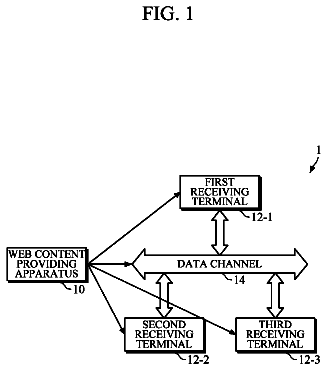
FIG. 1 is an exemplary illustration of a system for providing interactive action figures or action figure accessories that have corresponding virtual counterparts in a virtual environment, in accordance with an aspect of the invention.
FIGS. 2A and 2B are exemplary illustrations of scenarios in which user devices, action figures, or action figure accessories communicate with one another via a short-range wireless connection, in accordance with aspects of the invention.
FIGS. 3A and 3B are exemplary illustrations of an action figure in or exhibiting a state or behavior, and a virtual counterpart of the action figure in or exhibiting a corresponding state or behavior in a virtual environment, respectively, in accordance with aspects of the invention.
FIGS. 4A and 4B are exemplary illustrations of an action figure and the action figure equipped with action figure accessories, respectively, in accordance with aspects of the invention.
FIG. 5 is an exemplary illustration of a virtual character entity that represents an action figure in a virtual environment getting ready for battle with another virtual character entity, in accordance with an aspect of the invention.
FIGS. 6A and 6B are exemplary illustrations of a virtual counterpart of an action figure in or exhibiting a state or behavior in a virtual environment, and the action figure in or exhibiting a corresponding state or behavior, respectively, in accordance with aspects of the invention.
FIG. 7 is an exemplary illustration of a data flow related to providing interactive action figures or action figure accessories that have corresponding virtual counterparts in a virtual environment, in accordance with an aspect of the invention.
FIG. 8 is an exemplary illustration of a flowchart of a method of providing a presentation of a virtual counterpart of an action figure in a virtual environment based on action figure state information, in accordance with an aspect of the invention.
FIG. 9 is an exemplary illustration of a flowchart of a method of providing state information of an action figure via wireless communication, in accordance with an aspect of the invention.
FIG. 10 is an exemplary illustration of a flowchart of a method of providing relevant notifications via an action figure, in accordance with an aspect of the invention.
Detailed description of the invention
In the following description, for the purposes of explanation, numerous specific details are set forth in order to provide a thorough understanding of the implementations of the invention. It will be appreciated, however, by those having skill in the art that the implementations of the invention may be practiced without these specific details or with an equivalent arrangement. In other instances, well-known structures and devices are shown in block diagram form in order to avoid unnecessarily obscuring the implementations of the invention.
Exemplary System Description
FIG. 1 is an exemplary illustration of a system 100 for providing interactive action figures or action figure accessories that have corresponding virtual counterparts in a virtual environment, in accordance with an aspect of the invention. As shown in FIG. 1 , system 100 may comprise server 102 (or multiple servers 102 ). Server 102 may comprise host communication subsystem 110 , virtual environment subsystem 112 , virtual counterpart management subsystem 114 , virtual action management subsystem 116 , or other components.
System 100 may further comprise a user device 104 (or multiple user devices 104 ). User device 104 may comprise any type of mobile terminal, fixed terminal, or other device. By way of example, user device 104 may comprise a desktop computer, a notebook computer, a netbook computer, a tablet computer, a smartphone, a navigation device, an electronic book device, a gaming device, or other user device. Users may, for instance, utilize one or more user devices 104 to interact with server 102 , other user devices 104 , action FIG. 106 , action figure accessories 108 , or other components of system 100 .
User device 104 may comprise interface communication subsystem 130 , virtual interface subsystem 132 , or other components. It should be noted that, while one or more operations are described herein as being performed by components of one of server 102 or user device 104 , those operations may, in some implementations, be performed by components of the other one of service 102 or user device 104 .
Action FIG. 106 may comprise action figure communication subsystem 140 , sensor subsystem 142 , state/behavior management subsystem 144 , presentation subsystem 146 , or other components. Action figure accessory 108 may comprise accessory communication subsystem 150 , sensor subsystem 152 , state/behavior management subsystem 154 , presentation subsystem 156 , or other components. It should be noted that, while one or more operations are described herein as being performed by components of one of action FIG. 106 or action figure accessory 108 , those operations may, in some implementations, be performed by components of the other one of action FIG. 106 or action figure accessory 108 .
In some implementations, user device 104 may act as an intermediary between server 102 , action FIG. 106 , and/or accessory 108 . As an example, information may be provided from server 102 to action FIG. 106 or accessory 108 via virtual interface subsystem 132 of user device 104 , and information may be provided from action FIG. 106 or accessory 108 to server 102 via virtual interface subsystem 132 of user device 104 . In other implementations, server 102 , action FIG. 106 , and/or accessory 108 may receive information from or transmit information to one another without the need for user device 104 through one or more wired or wireless means. As such, although some implementations are described herein with respect to the use of user device 104 (or virtual interface subsystem 132 ) as an intermediary between server 102 , action FIG. 106 , and/or accessory 108 , it is understood that (to the extent possible) receipt and transmission of information between server 102 , action FIG. 106 , and/or accessory 108 may be performed without the need for user device 104 as an intermediary.
In some implementations, the various computers and subsystems illustrated in FIG. 1 may comprise one or more computing devices that are programmed to perform the functions described herein. The computing devices may include one or more electronic storages (e.g., electronic storage 160 , or other electric storages), one or more physical processors programmed with one or more computer program instructions, and/or other components. The computing devices may include communication lines, or ports to enable the exchange of information with a network or other computing platforms. The computing devices may include a plurality of hardware, software, and/or firmware components operating together to provide the functionality attributed herein to the servers. For example, the computing devices may be implemented by a cloud of computing platforms operating together as the computing devices.
The electronic storages may comprise non-transitory storage media that electronically stores information. The electronic storage media of the electronic storages may include one or both of system storage that is provided integrally (e.g., substantially non-removable) with the servers or removable storage that is removably connectable to the servers via, for example, a port (e.g., a USB port, a firewire port, etc.) or a drive (e.g., a disk drive, etc.). The electronic storages may include one or more of optically readable storage media (e.g., optical disks, etc.), magnetically readable storage media (e.g., magnetic tape, magnetic hard drive, floppy drive, etc.), electrical charge-based storage media (e.g., EEPROM, RAM, etc.), solid-state storage media (e.g., flash drive, etc.), and/or other electronically readable storage media. The electronic storages may include one or more virtual storage resources (e.g., cloud storage, a virtual private network, and/or other virtual storage resources). The electronic storage may store software algorithms, information determined by the processors, information received from the servers, information received from client computing platforms, or other information that enables the servers to function as described herein.
The processors may be programmed to provide information processing capabilities in the servers. As such, the processors may include one or more of a digital processor, an analog processor, a digital circuit designed to process information, an analog circuit designed to process information, a state machine, and/or other mechanisms for electronically processing information. In some implementations, the processors may include a plurality of processing units. These processing units may be physically located within the same device, or the processors may represent processing functionality of a plurality of devices operating in coordination. The processors may be programmed to execute computer program instructions to perform functions described herein of subsystems 110 - 156 or other subsystems. The processors may be programmed to execute computer program instructions by software; hardware; firmware; some combination of software, hardware, or firmware; and/or other mechanisms for configuring processing capabilities on the processors.
It should be appreciated that the description of the functionality provided by the different subsystems 110 - 156 described herein is for illustrative purposes, and is not intended to be limiting, as any of subsystems 110 - 156 may provide more or less functionality than is described. For example, one or more of subsystems 110 - 156 may be eliminated, and some or all of its functionality may be provided by other ones of subsystems 110 - 156 . As another example, additional subsystems may be programmed to perform some or all of the functionality attributed herein to one of subsystems 110 - 156 .
Attention will now be turned to a more detailed description of various implementations comprising one or more features related to providing interactive action figures and/or action figure accessories that have corresponding virtual counterparts in a virtual environment. It should be noted that features described herein may be implemented separately or in combination with one another.
Presentation of Virtual Counterparts Based on Action Figure State/Behavior
In an implementation, action figure state or behavior information obtained from an action figure may be utilized to cause a virtual counterpart of the action figure to exhibit a state or behavior that corresponds to a state or behavior of the action figure. A presentation of the virtual counterpart of the action figure in or exhibiting the corresponding state or behavior in a virtual environment may be provided to a user of the virtual environment. In some implementations, state or behavior information identifying states or behaviors of multiple action figures or accessories may be obtained from one or more of the action figures or accessories. The state or behavior information may then be utilized to cause virtual counterparts of the action figures or accessories to exhibit states or behaviors that correspond to states or behaviors of the action figures or accessories. The virtual counterparts may then be presented exhibiting the corresponding state or behaviors.
In an implementation, interface communication subsystem 130 may be programmed to detect action FIG. 106 within a short wireless communication range of user device 104 . Based on the detection of action FIG. 106 , interface communication subsystem 130 may be programmed to establish a wireless connection between user device 104 and action FIG. 106 . Additionally, or alternatively, interface communication subsystem 130 may detect one or more accessories 108 , other action FIG. 106 , or other objects within a short wireless communication range of user device 104 , and establish respective wireless connections with the detected objects.
As an example, if interface communication subsystem 130 enables wireless communication between user device 104 and the other object (e.g., action FIG. 106 , accessory 108 , etc.) via NFC technology, the other object may need to be within an NFC communication range in order for the other object to be detected and an NFC communication session to be established between user device 104 and the other object. As another example, if interface communication subsystem 130 enables wireless communication between user device 104 and the other object via Bluetooth technology, the other object may need to be within a Bluetooth communication range in order for the other object to be detected and a Bluetooth communication session to be established between user device 104 and the other object. As yet another example, if interface communication subsystem 130 enables wireless communication between user device 104 and the other object via Wi-Fi technology, the other object may need to be within a Wi-Fi communication range in order for the other object to be detected and a Wi-Fi communication session to be established between user device 104 and the other object.
In one scenario, as shown in FIG. 2A , objects within area 202 may be within a wireless communication range of user device 104 , and objects within area 204 may be within a wireless communication range of action FIG. 106 . In the scenario of FIG. 2A , user device 104 and action FIG. 106 may establish a wireless connection with one another through which the two devices may directly communicate with one another. Additionally, or alternatively, user device 104 and accessory 108 may establish a wireless connection with one another through which the two devices may directly communicate with one another.
In another scenario, accessory 108 may provide information to user device 104 (or to a host of an associated virtual environment) by transmitting the information to action FIG. 106 via a wireless connection established between action FIG. 106 and accessory 108 . Upon receipt of the information, action FIG. 106 may transmit the information to user device 104 via a wireless connection established between user device 104 and action FIG. 106 . Accessory 108 may also receive information from user device 104 through action FIG. 106 . In yet another other scenario, the roles of action FIG. 106 and accessory 108 may be swapped such that user device 104 and accessory 108 may be within each other's respective wireless communication ranges, and accessory 108 may relay information from action FIG. 106 to user device 104 or from user device 104 to action FIG. 106 .
In yet another scenario, one or more action FIG. 106 may act as intermediaries between (i) one or more other action FIG. 106 (or their accessories 108 ) and (ii) user device 104 (or a host of an associated virtual environment). As an example, user device 104 may not support enough wireless connections at a given time. As such, one or more action FIG. 106 may act as intermediaries to limit the number of wireless connections with user device 104 . If, for example, an “army” of action FIG. 106 is used during gameplay, one or more action FIG. 106 may act as intermediaries and establish wireless connections with user device 104 and other action FIG. 106 . Thus, the receipt and transmission to/from the other action FIG. 106 may be performed through the intermediary action FIG. 106 .
In a further scenario, with respect to FIG. 2B , area 202 may correspond to a Bluetooth communication range of user device 104 , and area 204 may correspond to a Bluetooth communication range of action FIG. 106 . Area 206 may correspond to an NFC communication range of action FIG. 106 , and area 208 may correspond to an NFC communication range of accessory 108 . As an example, user device 104 and action FIG. 106 may establish a Bluetooth communication session with one another through which the two devices may directly communicate with one another. Action FIG. 106 and accessory 108 may establish an NFC communication session with one another through which the two devices may directly communicate with one another.
It should be noted that, although some implementations described herein are with respect to wireless communications between one or more components of system 100 , it is understood that (to the extent possible) communications between the components of system 100 may be performed via one or more wired means. For example, server 102 , user device 104 , action FIG. 106 , accessory 108 , or other components of system 100 may be directly connected to one another via a Universal Serial Bus (USB) connection, an Ethernet connection, or other wired means.
In an implementation, after a wireless connection between user device 104 and action FIG. 106 is established, virtual interface subsystem 132 may receive action figure state or behavior information from action FIG. 106 via the established wireless connection. The received action figure state or behavior information may, for example, comprise information identifying a state or behavior of action FIG. 106 , a state or behavior of accessory 108 of action FIG. 106 , a state or behavior of one or more other action figures or their respective accessories 108 , or other state or behavior. As described herein elsewhere, the action figure state or behavior information may be generated (or otherwise obtained) by action FIG. 106 based on (i) sensor information obtained via one or more sensors of action FIG. 106 , (ii) state or behavior information related to virtual counterparts, (iii) information from accessories 108 , (iv) information from other action FIG. 106 , or (v) other information.
Virtual interface subsystem 132 may be programmed to provide the action figure state or behavior information to virtual environment subsystem 112 . Based on the action figure state or behavior information, virtual environment subsystem 112 may work with virtual counterpart subsystem 114 or virtual action management subsystem 116 to cause one or more virtual counterparts of action FIG. 106 , the other action FIG. 106 , or their respective accessories 108 to exhibit one or more corresponding states or behaviors in a virtual environment. Additionally, or alternatively, virtual environment subsystem 112 may cause the virtual environment to exhibit one or more aspects based on the action figure state or behavior information. A presentation of the virtual counterparts in the virtual environment may be generated and provided to virtual interface subsystem 132 . Responsive to receiving the presentation, virtual interface subsystem 132 may provide the presentation of the virtual counterparts and the virtual environment to a user of user device 104 (e.g., via a display electronically coupled to user device 104 , via a speaker electronically coupled to user device 104 , or other output device).
In an implementation, virtual interface subsystem 132 may receive action figure state information identifying a pose of action FIG. 106 (e.g., from action FIG. 106 via a wireless connection established between user device 104 and action FIG. 106 ). The state information may, for example, comprise a pose identifier (e.g., which can be used to retrieve information to cause a virtual counterpart of action FIG. 106 to exhibit a corresponding pose), a position of a moveable part of action FIG. 106 relative to another part of action FIG. 106 , an orientation of the moveable part of action FIG. 106 relative to another part of action FIG. 106 , or other aspects related to the pose of action FIG. 106 . Moveable parts of an action figure may comprise the head (or heads), arms, legs, tails, other moveable appendages of the action figure, or other moveable parts.
Virtual interface 132 may provide the state information (identifying the pose of the action figure) to virtual environment subsystem 112 . Responsive to providing the state information, virtual interface subsystem 132 may obtain (from virtual environment subsystem 112 ) a presentation of a virtual counterpart of action FIG. 106 in a virtual environment exhibiting a pose that reflects the pose of action FIG. 106 (e.g., the same pose as action FIG. 106 ). Virtual interface subsystem 132 may then provide the presentation of the virtual counterpart and the virtual environment to the user.
As an example, upon receipt of the state information, virtual environment subsystem 112 may cause the virtual counterpart to exhibit a pose in the virtual environment that reflects the relative positions and orientations of the moveable parts of action FIG. 106 . The state information may identify the relative positions and orientations of the moveable parts of action FIG. 106 . Based on the relative positions and orientations, one or more corresponding positions and orientations of the moveable parts of the virtual counterpart may be determined. The moveable parts of the virtual counterpart may then be moved into the corresponding positions and orientations so that the virtual counterpart exhibits a pose that reflects the relative positions and orientations of the moveable parts of action FIG. 106 . In one scenario, for example, the head, arms, legs, or other moveable parts of the virtual counterpart may be caused to exhibit relative positions and orientations that correspond to the relative positions and orientations of the head, arms, legs, or other moveable parts of action FIG. 106 , respectively (e.g., same or similar relative positions and orientations).
In one use case, with respect to FIGS. 3A and 3B , action FIG. 106 and user device 104 may establish a wireless connection with one another upon detecting each other in their respective wireless communication ranges. As shown in FIG. 3A , action FIG. 106 may be in a pose where its arms 306 b and 306 c are extended and its leg 306 d is extended sideways to appear as if action FIG. 106 is executing a kick. For example, a user may interact with action FIG. 106 by positioning and orienting moveable parts 306 a - 306 e of action FIG. 106 to cause action FIG. 106 to be in the particular pose. Action FIG. 106 may determine that it is currently exhibiting the pose (e.g., based on sensor information obtained via its sensors), and generate state information identifying the pose. The state information may then be transmitted to user device 104 via the established wireless connection. User device 104 may transmit the state information to a host of a virtual environment in which a virtual counterpart 322 of action FIG. 106 exists.
In a further use case, upon receipt of the state information, a host of the virtual environment may cause virtual counterpart 322 to exhibit a pose that reflects the pose of action FIG. 106 . As shown in FIG. 3B , a presentation 324 of virtual counterpart 322 exhibiting the same pose as action FIG. 106 may be provided. For example, virtual counterpart 322 may be presented in a pose where its arms 326 b and 326 c are extended and its leg 326 d is extended sideways to appear as if virtual counterpart 322 is executing a kick, which is the same pose exhibited by action FIG. 106 .
As another example, upon receipt of the state information (identifying the pose of action FIG. 106 ), virtual environment subsystem 112 may work with virtual counterpart management subsystem 114 and/or virtual action management subsystem 116 to cause the virtual counterpart of action FIG. 106 to exhibit a virtual action associated with the identified pose in the virtual environment. In one use case, with respect to FIG. 3B , the state information may comprise an identifier of action FIG. 106 , information identifying the pose of action FIG. 106 , or other information. Virtual counterpart management subsystem 114 may utilize the identifier to identify virtual counterpart 322 as the virtual counterpart corresponding to action FIG. 106 . Virtual action management subsystem 116 may utilize the information identifying the pose to identify a kicking action as the virtual action associated with the identified pose (e.g., by querying a virtual action database using the information identifying the pose). Based on the identification of virtual counterpart 322 and the kicking action, virtual environment subsystem 122 may cause virtual counterpart 322 to perform the kicking action in the virtual environment.
In an implementation, virtual interface subsystem 132 may receive action figure state information identifying a state of action FIG. 106 related to an environment of action FIG. 106 , and provide the state information to virtual environment subsystem 112 for further processing. As an example, if the state information identifies a current temperature of the action figure, virtual environment subsystem 112 may infer that a current temperature of the environment of action FIG. 106 is a similar to the current temperature of action FIG. 106 . To create or maintain a virtual environment that has one or more aspects that correspond to one or more aspects of the environment of action FIG. 106 , virtual environment subsystem 112 may cause the virtual environment to exhibit a temperature, scenery, weather, or other aspects of the virtual environment that corresponds to the temperature of action FIG. 106 (e.g., a winter scenery or a snowstorm may correspond to a cold temperature, a sunny scenery or day may correspond to a hot temperature, etc.). Additionally, or alternatively, virtual environment subsystem 112 may cause a virtual counterpart of action FIG. 106 in the virtual environment to exhibit physical attributes, behavioral attributes, mental attributes, or other aspects that correspond to the temperature (e.g., a shivering virtual counterpart may correspond to a cold temperature, a sweating virtual counterpart may correspond to a hot temperature, etc.). A presentation of the virtual counterparts in the virtual environment may be generated and provided to virtual interface subsystem 132 . Responsive to receiving the presentation, virtual interface subsystem 132 may provide the presentation of the virtual counterparts and the virtual environment to a user of user device 104 .
In an implementation, virtual interface subsystem 132 may receive action figure state information identifying a state of action FIG. 106 related to an accessory of action FIG. 106 (e.g., accessory 108 ), and provide the state information to virtual environment subsystem 112 for further processing. As an example, action FIG. 106 may detect one of its accessories 108 within proximity (e.g., within a short wireless communication range of action FIG. 106 ). Based on the detection, action FIG. 106 may generate action figure state information identifying that action FIG. 106 is currently near accessory 108 , and provide the state information to virtual environment subsystem 112 (e.g., via virtual interface subsystem 132 , a communication session established between action FIG. 106 and server 102 , etc.). The state information may, for example, comprise an identifier of action FIG. 106 , an identifier of accessory 108 , an indication that the two objects are in proximity with one another, or other information. Upon receipt, virtual environment subsystem 112 may process the state information to obtain the identifier of action FIG. 106 , the identifier of accessory 108 , and the indication of the proximity of the two objects.
Virtual counterpart management subsystem 114 may be programmed to utilize the identifiers of the two objects to determine their respective virtual counterparts, and obtain identifiers of the virtual counterparts or other information regarding the virtual counterparts. Virtual environment subsystem 112 may generate a presentation of the virtual counterparts of action FIGS. 106 and 108 in a virtual environment based on the virtual counterpart identifiers (or the other virtual counterpart information), and provide the presentation of the virtual counterparts to virtual interface subsystem 132 . Responsive to receiving the presentation, virtual interface subsystem 132 may provide the presentation of the virtual counterparts and the virtual environment to a user of user device 104 .
The description continues in the full USPTO document.
In this description
About 6,292 words. The USPTO PDF has it with every drawing.
Timeline & family
Timeline From USPTO dates
Maintenance fees
Fees are due 3.5, 7.5 and 11.5 years after grant. This patent expired on December 5, 2025, so the fee marked "not paid" was the one that went unpaid.
3.5-year feeDue June 5, 2021Paid
7.5-year feeDue June 5, 2025Not paid
11.5-year feeDue June 5, 2029Never came due
US family 2 documents, by filing date
Published applicationUS 2016/0236085 A1
SYSTEM AND METHOD FOR PRESENTING A VIRTUAL COUNTERPART OF AN ACTION FIGURE BASED ON ACTION FIGURE STATE INFORMATION
Filed Feb 2015 · published Aug 2016Published application
This documentUS 9,833,695 B2
System and method for presenting a virtual counterpart of an action figure based on action figure state information
Filed Feb 2015 · granted Dec 2017Lapsed, fee not paid
Earlier publications, parents and continuations. None of them can still be enforced, or this patent would not be listed.
US patents it cites 40
US 5,766,077US 6,012,961US 6,159,101US 6,290,565US 6,338,679US 6,354,947US 6,773,325US 6,773,344US 7,066,781US 7,502,759US 7,610,233US 7,828,295US 7,843,471US 7,862,428US 8,257,157US 8,287,372US 8,585,497US 8,595,811US 8,602,857US 8,636,588US 8,734,242US 8,858,339US 9,205,336US 9,259,651US 9,266,027US 9,361,067US 9,440,158US 9,474,964US 2003/0027636US 2005/0059483US 2005/0220044US 2005/0266920US 2006/0070029US 2006/0084362US 2006/0273909US 2007/0015588US 2007/0097832US 2007/0197297US 2008/0081694US 2009/0011809
Prior art cited by the examiner or applicant. Useful when you check your own idea for novelty.
Sources & verification
Verification
- The USPTO Official Gazette of February 3, 2026 lists it as expired on December 5, 2025 for an unpaid maintenance fee.
- It isn't on any reinstatement notice published since.
- Its 1 US relative has also lapsed, expired or never issued.
- Rechecked against USPTO records every day.
- We check US rights only. Check foreign counterparts before selling abroad.
Confirm it yourself
- Open the file history on Patent Center.
- The status should read "Patent Expired Due to NonPayment of Maintenance Fees Under 37 CFR 1.362".
- Check the documents for any later petition to revive or reinstate.
Official USPTO records
USPTO Official GazetteNotice of Expiration of Patents Due to Failure to Pay Maintenance Fee, issue of February 3, 2026.Where this listing came fromMaintenance fee recordEnter the patent number to see its fee history.USPTO FeesFull published documentText and every drawing sheet as a PDF.USPTOFile historyStatus, office actions, notices, fee records and petitions.USPTO Patent CenterPatent Public Search recordSearchable full text and bibliographic data.USPTO
Everything on this page comes from the documents linked above.