 Lapsed, fee not paid5 drawings
Biotech & Lab · US 9,833,274 B2
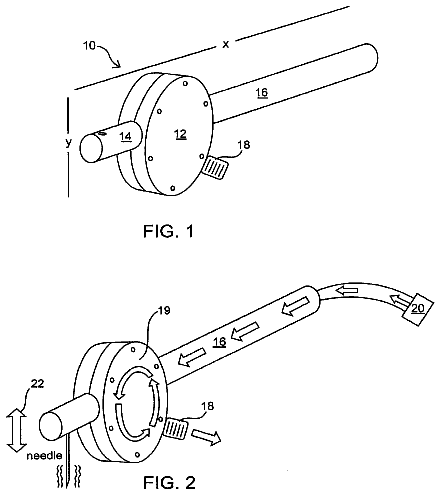
Use of vibration with orthopedic cements
Methods of employing bone defect filling, e.g., orthopedic cements, such as calcium phosphate cements and the like, are provided.
US 9,833,400 B2 · Assignee: L'OREAL · Inventors: Bebot; Cécile et al.
Claude can sketch it from the patent text.
The present patent application relates to a hair styling composition, characterized in that it comprises: (i) one or more cationic fixing polymers, and (ii) one or more (meth)acrylic thickening polymers other than the fixing polymer or polymers (i), and (iii) from 5 to 27% by weight of water, with respect to the total weight of the cosmetic composition, (iv) from 70 to 90% by weight of one or more C.sub.1 to C.sub.6 alcohols, with respect to the total weight of the cosmetic composition.
Ask Claude for concept sketches based only on the patent's text. They are not part of the patent.
What the patent claimed, word for word. All of it is now free to use.
The present invention relates to novel cosmetic compositions comprising one or more fixing polymers and one or more (meth)acrylic thickening polymers, and to the uses of these compositions, in particular in styling.
The present invention also relates to a method of styling keratin materials using these compositions.
The use of fixing polymers in styling and hair-fixing compositions is known. Nevertheless, the use of fixing polymers is not without disadvantage: the application of these polymers in the form of lacquers having a high alcohol content confers a dry feel on the hair after brushing; this undesirable phenomenon is particularly visible for dyed hair; the application of these polymers from conventional gel presents problems of tackiness associated with very long drying times; it is often difficult to ensure homogeneous distribution of these polymers over all the hair to be treated and obtain a uniform coating feel.
Unexpectedly and advantageously, the Applicant Company has demonstrated that the use of one or more fixing polymers with one or more (meth)acrylic thickening polymers in compositions having high levels of alcohols makes it possible to overcome the abovementioned disadvantages.
A subject-matter of the present invention is thus a cosmetic composition, characterized in that it comprises:
(i) one or more cationic fixing polymers, and
(ii) one or more (meth)acrylic thickening polymers other than the fixing polymer or polymers (i), and
(iii) from 5 to 27% by weight of water, with respect to the total weight of the cosmetic composition,
(iv) from 70 to 90% by weight of one or more C.sub.1 to C.sub.6 alcohols, with respect to the total weight of the cosmetic composition.
Another subject-matter of the present invention is a cosmetic composition, characterized in that it comprises:
(i) one or more fixing polymers chosen among cationic, nonionic and amphoteric fixing polymers, and
(ii) one or more (meth)acrylic thickening polymers other than the fixing polymer or polymers (i), and
(iii) from 5 to 27% by weight of water, with respect to the total weight of the cosmetic composition,
(iv) from 70 to 90% by weight of one or more C.sub.1 to C.sub.6 monoalcohols, with respect to the total weight of the cosmetic composition.
The compositions obtained are in the form of gels, mousses, sprays, creams or pastes.
Preferably, the compositions of the invention are not provided in the form of aerosol sprays.
More preferably still, the compositions of the invention are provided in the form of gels.
The compositions according to the present invention are easy to prepare and to apply. They remain satisfactorily localized, without runs, at the point of application. The compositions according to the present invention may be applied without a reduction in viscosity over time. They dry rapidly, without a tacky effect.
Moreover, the compositions according to the present invention make it possible to give the hairstyle a natural and long-lasting form retention.
Another subject-matter of the present invention is a method for styling keratin materials, preferably human keratin materials and in particular the hair, which uses the compositions according to the invention.
Another subject-matter of the present invention is the uses of the compositions according to the invention, especially for styling or shaping keratin materials, preferably human keratin materials and in particular the hair.
Other features, aspects, subject-matters and advantages of the invention will appear even more clearly on reading the description and examples that follow.
“(Meth)acrylic” is understood to mean, within the meaning of the present patent application, “acrylic or methacrylic”.
Thickener
The composition according to the present invention also contains one or more (meth)acrylic thickening polymers.
(Meth)acrylic polymer or more simply acrylic polymer is understood to mean, within the meaning of the present invention, a polymer resulting from the polymerization of one or more monomers including one or more monomers of the structure (A):
R.sub.3 denoting a hydrogen atom or a linear or branched C.sub.1-C.sub.4 alkyl radical,
R.sub.4 denoting a hydrogen atom, a linear or branched C.sub.1-C.sub.4 alkyl radical, an NR.sub.5R.sub.6 radical, or a linear or branched C.sub.1-C.sub.30 alkoxy radical, optionally substituted with one or more hydroxyl radicals or with a quaternary ammonium radical,
R.sub.5 and R.sub.6 denote a hydrogen atom or an optionally oxyalkylenated C.sub.1-C.sub.30 alkyl radical, the alkyl radical possibly comprising a sulphonic group.
Preferably, R.sub.3 denotes a hydrogen atom or a methyl radical.
For the purposes of the present invention, the expression “thickening polymer” means a polymer capable, by its presence, of increasing the viscosity of the medium by at least 50 centipoises at 25° C. and at a shear rate of 1 s.sup.−1. Preferably, the thickening polymer has, at 1% in water or a 50/50 water/alcohol mixture by weight, a viscosity at 25° C. and at a shear rate of 1 s.sup.−1 of greater than 100 centipoises. These viscosities may be measured in particular with viscometers or rheometers with cone-plate geometry.
The acrylic thickening polymers are chosen in particular from:
(a) acrylic associative thickeners;
(b) crosslinked acrylic acid homopolymers;
(c) crosslinked copolymers of (meth)acrylic acid and of (C.sub.1-C.sub.6)alkyl acrylate;
(d) nonionic homopolymers and copolymers comprising ethylenically unsaturated monomers of ester and/or amide type;
(e) ammonium acrylate homopolymers or copolymers of ammonium acrylate and of acrylamide;
(f) homopolymers and copolymers of (meth)acrylamido(C.sub.1-C.sub.4)alkylsulphonic acids;
(g) crosslinked methacryloyloxy(C.sub.1-C.sub.4)alkyltri(C.sub.1-C.sub.4)alkylammonium homopolymers and copolymers.
According to the invention, the expression “associative thickener” means an amphiphilic thickener comprising both hydrophilic units and hydrophobic units, in particular comprising at least one C.sub.8-C.sub.30 fatty chain and at least one hydrophilic unit.
Use may be made, as acrylic associative thickeners according to the invention, of the acrylic associative polymers chosen from
(i) nonionic amphiphilic polymers comprising at least one fatty chain and at least one hydrophilic unit;
(ii) anionic amphiphilic polymers comprising at least one hydrophilic unit and at least one unit possessing a fatty chain;
(iii) cationic amphiphilic polymers comprising at least one hydrophilic unit and at least one unit possessing a fatty chain;
(iv) amphoteric amphiphilic polymers comprising at least one hydrophilic unit and at least one unit possessing a fatty chain;
the fatty chains containing from 10 to 30 carbon atoms.
(i) The acrylic nonionic amphiphilic polymers comprising at least one fatty chain and at least one hydrophilic unit are preferably chosen from:
copolymers of C.sub.1-C.sub.6 alkyl methacrylates or acrylates and of amphiphilic monomers comprising at least one fatty chain (for example oxyethylenated (C.sub.8-C.sub.22)alkyl acrylates), for instance the oxyethylenated methyl methacrylate/stearyl acrylate copolymer sold by the company Goldschmidt under the name Antil 208;
copolymers of hydrophilic methacrylates or acrylates and of hydrophobic monomers comprising at least one fatty chain (for example (C.sub.8-C.sub.22)alkyl (meth)acrylates), for instance polyethylene glycol methacrylate/lauryl methacrylate copolymer.
(ii) The acrylic anionic amphiphilic polymers can be chosen from those comprising at least one hydrophilic unit of unsaturated olefinic carboxylic acid type, and at least one hydrophobic unit of the type of (C.sub.10-C.sub.30)alkyl ester of an unsaturated carboxylic acid. They are preferably chosen from those for which the hydrophilic unit of unsaturated olefinic carboxylic acid type corresponds to the monomer of following formula (I)
##STR00002## in which formula R.sup.1 denotes H or CH.sub.3 or C.sub.2H.sub.5, that is to say acrylic acid, methacrylic acid or ethacrylic acid units, and for which the hydrophobic unit of the type of (C.sub.10-C.sub.30)alkyl ester of an unsaturated carboxylic acid corresponds to the monomer of following formula (II):
in which formula R.sup.1 denotes H or CH.sub.3 or C.sub.2H.sub.5 (i.e. acrylate, methacrylate or ethacrylate units) and preferably H (acrylate units) or CH.sub.3 (methacrylate units), R.sup.2 denoting a C.sub.10-C.sub.30 and preferably C.sub.12-C.sub.22 alkyl radical.
(C.sub.10-C.sub.30)Alkyl esters of unsaturated carboxylic acids in accordance with the invention comprise, for example, lauryl acrylate, stearyl acrylate, decyl acrylate, isodecyl acrylate and dodecyl acrylate, and the corresponding methacrylates, lauryl methacrylate, stearyl methacrylate, decyl methacrylate, isodecyl methacrylate and dodecyl methacrylate.
Anionic amphiphilic polymers of this type are disclosed and prepared, for example, according to U.S. Pat. No. 3,915,921 and U.S. Pat. No. 4,509,949.
The anionic amphiphilic polymers which can be used in the context of the present invention can more particularly denote polymers formed from a mixture of monomers comprising:
(i) acrylic acid and one or more esters of following formula (III):
in which R.sup.1 denotes H or CH.sub.3, R.sup.2 denoting an alkyl radical containing from 12 to 22 carbon atoms, and a crosslinking agent, such as, for example, those constituted of from 95% to 60% by weight of acrylic acid (hydrophilic unit), 4% to 40% by weight of C.sub.10-C.sub.30 alkyl acrylate (hydrophobic unit), and 0% to 6% by weight of crosslinking polymerizable monomer, or 98% to 96% by weight of acrylic acid (hydrophilic unit), 1% to 4% by weight of C.sub.10-C.sub.30 alkyl acrylate (hydrophobic unit) and 0.1% to 0.6% by weight of crosslinking polymerizable monomer,
(ii) essentially acrylic acid and lauryl methacrylate, such as the product formed from 66% by weight of acrylic acid and 34% by weight of lauryl methacrylate.
The said crosslinked agent is a monomer comprising a
##STR00005## group with at least one other polymerizable group, the unsaturated bonds of which are not conjugated with respect to one another. Mention may be made in particular of polyallyl ethers such as, in particular, polyallyl sucrose and polyallyl pentaerythritol.
Among the said polymers above, the ones very particularly preferred according to the present invention are the products sold by the company Goodrich under the trade names Pemulen TR1, Pemulen TR2, Carbopol 1382, and more preferably still Pemulen TR1, and the product sold by the company S.E.P.C. under the name Coatex SX.
As fatty-chain anionic amphiphilic polymers, mention may also be made of the copolymer of methacrylic acid, methyl acrylate and dimethyl-meta-isopropenylbenzyl isocyanate of ethoxylated alcohol sold under the name Viscophobe DB 1000 by the company Amerchol.
Other fatty-chain anionic amphiphilic polymers that may be mentioned include those comprising at least one acrylic monomer containing sulphonic group(s), in free or partially or totally neutralized form and comprising at least one hydrophobic portion.
The hydrophobic portion present in the polymers of the invention preferably contains from 8 to 22 carbon atoms, more preferably still from 8 to 18 carbon atoms and more particularly from 12 to 18 carbon atoms.
Preferably, the sulphonic polymers in accordance with the invention are partially or totally neutralized with an inorganic base (sodium hydroxide, potassium hydroxide or aqueous ammonia) or an organic base such as mono-, di- or triethanolamine, an aminomethylpropanediol, N-methylglucamine, basic amino acids, for instance arginine and lysine, and mixtures of these compounds.
The sulphonic amphiphilic polymers in accordance with the invention generally have a number-average molecular weight ranging from 1000 to 20000000 g/mol, preferably ranging from 20000 to 5000000 g/mol and more preferably still from 100000 to 1500000 g/mol.
The sulphonic amphiphilic polymers according to the invention may or may not be crosslinked. Crosslinked amphiphilic polymers are preferably chosen.
When they are crosslinked, the crosslinking agents may be chosen from polyolefinically unsaturated compounds commonly used for the crosslinking of polymers obtained by free-radical polymerization. Mention may be made, for example, of divinylbenzene, diallyl ether, dipropylene glycol diallyl ether, polyglycol diallyl ethers, triethylene glycol divinyl ether, hydroquinone diallyl ether, ethylene glycol diacrylate di(meth)acrylate or tetraethylene glycol diacrylate di(meth)acrylate, trimethylolpropane triacrylate, methylenebisacrylamide, methylenebismethacrylamide, triallylamine, triallyl cyanurate, diallyl maleate, tetraallylethylenediamine, tetraallyloxyethane, trimethylolpropane diallyl ether, allyl (meth)acrylate, allyl ethers of alcohols of the sugar series, or other allyl or vinyl ethers of polyfunctional alcohols, and also allyl esters of phosphoric and/or vinylphosphonic acid derivatives, or mixtures of these compounds.
Methylenebisacrylamide, allyl methacrylate or trimethylolpropane triacrylate (TMPTA) will be used more particularly. The degree of crosslinking will generally range from 0.01 mol % to 10 mol % and more particularly from 0.2 mol % to 2 mol % relative to the polymer.
The acrylic monomers containing sulphonic group(s) are chosen especially from (meth)acrylamido(C.sub.1-C.sub.22)alkyl sulphonic acids and N—(C.sub.1-C.sub.22)alkyl(meth)acrylamido(C.sub.1-C.sub.22)alkylsulphonic acids, for instance undecylacrylamidomethanesulphonic acid, and also partially or totally neutralized forms thereof.
Use will more preferably be made of (meth)acrylamido(C.sub.1-C.sub.22)alkylsulphonic acids, such as, for example, acrylamidomethanesulphonic acid, acrylamidoethanesulphonic acid, acrylamidopropanesulphonic acid, 2-acrylamido-2-methylpropanesulphonic acid, methacrylamido-2-methylpropanesulphonic acid, 2-acrylamido-n-butanesulphonic acid, 2-acrylamido-2,4,4-trimethylpentanesulphonic acid, 2-methacrylamidododecylsulphonic acid, 2-acrylamido-2,6-dimethyl-3-heptanesulphonic acid, and also partially or totally neutralized forms thereof.
2-Acrylamido-2-methylpropanesulphonic acid (AMPS), and also partially or totally neutralized forms thereof, will more particularly be used.
The amphiphilic polymers in accordance with the invention may be chosen especially from random amphiphilic AMPS polymers modified by reaction with a C.sub.6-C.sub.22 n-monoalkylamine or di-n-alkylamine, and such as those described in Patent Application WO 00/31154; the polymers described in this application form part of the content of the present description. These polymers can also comprise other ethylenically unsaturated hydrophilic monomers chosen, for example, from (meth)acrylic acids, β-substituted alkyl derivatives thereof or esters thereof obtained with monoalcohols or mono- or polyalkylene glycols, (meth)acrylamides, vinylpyrrolidone, maleic anhydride, itaconic acid or maleic acid, or mixtures of these compounds.
The polymers of the invention may be chosen from amphiphilic copolymers of AMPS and of at least one ethylenically unsaturated hydrophobic monomer comprising at least one hydrophobic portion containing from 8 to 50 carbon atoms, more preferably from 8 to 22 carbon atoms, more preferably still from 8 to 18 carbon atoms and more particularly 12 to 18 carbon atoms.
These same copolymers may also contain one or more ethylenically unsaturated monomers not comprising a fatty chain, such as (meth)acrylic acids, β-substituted alkyl derivatives thereof or esters thereof obtained with monoalcohols or mono- or polyalkylene glycols, (meth)acrylamides, vinylpyrrolidone, maleic anhydride, itaconic acid or maleic acid, or mixtures of these compounds.
These copolymers are described in particular in Patent Application EP-A-750899, U.S. Pat. No. 5,089,578 and in the following publications by Yotaro Morishima: “Self-assembling amphiphilic polyelectrolytes and their nanostructures—Chinese Journal of Polymer Science, Vol. 18, No. 40, (2000), 323-336.” “Micelle formation of random copolymers of sodium 2-(acrylamido)-2-methylpropanesulfonate and a non-ionic surfactant macromonomer in water as studied by fluorescence and dynamic light scattering—Macromolecules, 2000, Vol. 33, No. 10, 3694-3704”; “Solution properties of micelle networks formed by non-ionic moieties covalently bound to an polyelectrolyte: salt effects on rheological behavior—Langmuir, 2000, Vol. 16, No. 12, 5324-5332”; “Stimuli responsive amphiphilic copolymers of sodium 2-(acrylamido)-2-methylpropanesulfonate and associative macromonomers—Polym. Preprint, Div. Polym. Chem., 1999, 40(2), 220-221”.
The ethylenically unsaturated hydrophobic monomers of these specific copolymers are preferably chosen from acrylates or acrylamides of following formula (IV):
in which R.sub.1 and R.sub.3, which are identical or different, denote a hydrogen atom or a linear or branched C.sub.1-C.sub.6 alkyl radical (preferably methyl); Y denotes O or NH; R.sub.2 denotes a hydrophobic hydrocarbon-based radical comprising at least from 8 to 50 carbon atoms, more preferably from 8 to 22 carbon atoms, more preferably still from 6 to 18 carbon atoms and more particularly from 12 to 18 carbon atoms; and x denotes a number of moles of alkylene oxide and varies from 0 to 100.
The R.sub.2 radical is preferably chosen from linear C.sub.6-C.sub.18 alkyl radicals (for example n-hexyl, n-octyle, n-decyl, n-hexadecyl or n-dodecyl radicals); branched C.sub.6-C.sub.18 alkyl radicals; cyclic C.sub.6-C.sub.18 alkyl radicals (for example cyclododecane (C.sub.12) or adamantane (C.sub.10) radicals); C.sub.6-C.sub.18 alkylperfluorinated radicals (for example the group of formula —(CH.sub.2).sub.2—(CF.sub.2).sub.9—CF.sub.3); the cholesteryl (C.sub.27) radical or a cholesterol ester residue, such as the cholesteryl oxyhexanoate group; or polycyclic aromatic groups, such as naphthalene or pyrene. Among these radicals, the ones that are more particularly preferred are linear alkyl radicals and more particularly the n-dodecyl radical.
According to a particularly preferred form of the invention, the monomer of formula (IV) comprises at least one alkylene oxide unit (x≧1) and preferably a polyoxyalkylene chain. The polyoxyalkylene chain is preferably constituted of ethylene oxide units and/or of propylene oxide units and more particularly still constituted of ethylene oxide units. The number of oxyalkylene units generally ranges from 3 to 100, more preferably from 3 to 50 and more preferably still from 7 to 25.
Mention may be made, among these polymers, of: copolymers, which may or may not be crosslinked and which may or may not be neutralized, comprising from 15 to 60% by weight of AMPS units and from 40 to 85% by weight of (C.sub.8-C.sub.16)alkyl(meth)acrylamide units or of (C.sub.8-C.sub.16)alkyl(meth)acrylate units, with respect to the polymer, such as those described in Application EP-A-750 899; terpolymers comprising from 10 mol % to 90 mol % of acrylamide units, from 0.1 mol % to 10 mol % of AMPS units and from 5 mol % to 80 mol % of n-(C.sub.6-C.sub.18)alkylacrylamide units, such as those described in U.S. Pat. No. 5,089,578.
Mention may also be made of copolymers of totally neutralized AMPS and of dodecyl methacrylate, and also crosslinked and non-crosslinked copolymers of AMPS and of n-dodecylmethacrylamide, such as those described in the Morishima papers mentioned above.
Mention will more particularly be made of the copolymers composed of 2-acrylamido-2-methylpropanesulphonic acid (AMPS) units of following formula (V):
##STR00007## in which X.sup.+ is a proton, an alkali metal cation, an alkaline earth metal cation or the ammonium ion, and of units of following formula (VI):
in which x denotes an integer varying from 3 to 100, preferably from 5 to 8, and more preferably from 7 to 25; R.sub.1 has the same meaning as that indicated above in formula (I) and R.sub.4 denotes a linear or branched C.sub.6-C.sub.22 and more preferably C.sub.10-C.sub.22 alkyl.
The polymers which are particularly preferred are those for which x=25, R.sub.1 denotes methyl and R.sub.4 represents n-dodecyl; they are described in the abovementioned Morishima papers.
The polymers for which X.sup.+ denotes sodium or ammonium are more particularly preferred.
(iii) The cationic amphiphilic polymers used in the present invention are preferably chosen from polyacrylates containing amine side groups.
The polyacrylates containing quaternized or non-quaternized amine side groups contain, for example, hydrophobic groups of the type of steareth-20 (polyoxyethylenated
stearyl alcohol) or (C.sub.10-C.sub.30)alkyl PEG-20 itaconate.
Examples of polyacrylates containing amine side chains that may be mentioned are the polymers 8781-124B or 9492-103 or Structure Plus from the company National Starch.
(iv) As amphoteric amphiphilic polymers containing at least one fatty chain, mention may be made of methacrylamidopropyltrimethylammonium chloride/acrylic acid/C.sub.10-C.sub.30 alkyl methacrylate copolymers, the alkyl radical preferably being a stearyl radical.
(b) Mention may be made, among crosslinked acrylic acid homopolymers, of those crosslinked by an allyl ether of an alcohol from the sugar series, such as, for example, the products sold under the names Carbopol 980, 981, 954, 2984 and 5984 by Goodrich or the products sold under the names Synthalen M and Synthalen K by 3 VSA.
(c) Mention may be made, among crosslinked copolymers of (meth)acrylic acid and of C.sub.1-C.sub.6 alkyl acrylate, of the product sold under the name Viscoatex 538C by Coatex, which is a crosslinked copolymer of methacrylic acid and of ethyl acrylate as a 38% aqueous dispersion of active material, or the product sold under the name Aculyn 33 by Rohm & Haas, which is a crosslinked copolymer of acrylic acid and of ethyl acrylate as a 28% aqueous dispersion of active material. Mention may be made more particularly of the crosslinked methacrylic acid/ethyl acrylate copolymer in the form of a 30% aqueous dispersion manufactured and sold under the name Carbopol Aqua SF-1 by the company Noveon.
(d) Mention may be made, among nonionic homopolymers or copolymers comprising ethylenically unsaturated monomers of ester and/or amide type, of the products sold under the names of: Cyanamer P250 by the company Cytec (polyacrylamide); PMMA MBX-8C by the company US Cosmetics (methyl methacrylate/ethylene glycol dimethacrylate copolymer); Acryloid B66 by the company Rohm & Haas (butyl methacrylate/methyl methacrylate copolymer); BPA 500 by the company Kobo (polymethyl methacrylate).
(e) Mention may be made, among ammonium acrylate homopolymers, of the product sold under the name Microsap PAS 5193 by Hoechst.
Among the copolymers of ammonium acrylate and of acrylamide that may be mentioned is the product sold under the name Bozepol C Nouveau or the product PAS 5193 sold by the company Hoechst (they are described and prepared in documents FR-2 416 723, U.S. Pat. No. 2,798,053 and U.S. Pat. No. 2,923,692).
(f) Poly(meth)acrylamido(C.sub.1-C.sub.4)alkylsulphonic acids
According to the present invention, the poly(meth)acrylamido(C.sub.1-C.sub.4)alkylsulphonic acid(s) is (are) preferably crosslinked.
Even more particularly, they are partially or totally neutralized.
These are water-soluble or water-swellable polymers.
Mention may in particular be made, among these polymers, of:
polyacrylamidomethanesulphonic acid, polyacrylamidoethanesulphonic acid, polyacrylamidopropanesulphonic acid, poly(2-acrylamido-2-methylpropanesulphonic acid), poly(2-methacrylamido-2-methylpropanesulphonic acid), poly(2-acrylamido-n-butanesulphonic acid).
Polymers of this type and especially crosslinked and partially or totally neutralized poly(2-acrylamido-2-methylpropanesulphonic acid)s are known, described and prepared in Patent Application DE-196 25 810.
They are generally characterized in that they comprise, distributed randomly:
a) from 90 to 99.9% by weight of units of following formula (VII):
in which X.sup.+ denotes a cation or a mixture of cations, including H.sup.+,
b) from 0.01% to 10% by weight of at least one crosslinking unit containing at least two olefinic double bonds,
the weight proportions being defined relative to the total weight of the polymer;
X.sup.+ represents a cation or a mixture of cations chosen in particular from a proton, an alkali metal cation, a cation equivalent to that of an alkaline earth metal, or an ammonium ion.
The crosslinked and neutralized poly(2-acrylamido-2-methylpropanesulphonic acid) preferably comprises from 98% to 99.5% by weight of units of formula (I) and from 0.5% to 2% by weight of crosslinking units.
The crosslinking units containing at least two olefinic double bonds are chosen, for example, from dipropylene glycol diallyl ether, polyglycol diallyl ethers, triethylene glycol divinyl ether, hydroquinone diallyl ether, tetraallyloxyethane or other polyfunctional alcohol allyl or vinyl ethers, tetraethylene glycol diacrylate, triallylamine, trimethylolpropane diallyl ether, methylenebisacrylamide or divinylbenzene.
The crosslinking units having at least two olefinic double bonds are more particularly still chosen from those corresponding to the following general formula (VIII):
in which R.sub.1 denotes a hydrogen atom or a C.sub.1-C.sub.4 alkyl and more particularly a methyl (trimethylolpropane triacrylate).
The crosslinked and partially or totally neutralized poly(2-acrylamido-2-methylpropanesulphonic acid)s are generally known under the names “Ammonium polyacrylamido-2-methylpropanesulphonate” or “Ammonium polyacryldimethyltauramide” (INCI name).
A product that is particularly preferred according to the invention is the one sold by the company Clariant under the trade name Hostacerin AMPS; this is a crosslinked poly(2-acrylamido-2-methylpropanesulphonic acid) partially neutralized with aqueous ammonia.
(g) Crosslinked polymers of methacryloyloxy(C.sub.1-C.sub.4)alkyltri(C.sub.1-C.sub.4)alkylammonium salts, such as the polymers obtained by homopolymerization of dimethylaminoethyl methacrylate quaternised by methyl chloride or by copolymerization of acrylamide with dimethylaminoethyl methacrylate quaternised by methyl chloride, the homo or the copolymerization being followed by a crosslinking by an olefinically unsaturated compound, in particular methylenebisacrylamide. Use may more particularly be made of a crosslinked acrylamide/methacryloyloxyethyltrimethylammonium chloride (20/80 by weight) copolymer in the form of a dispersion comprising 50% by weight of the said copolymer in mineral oil. This dispersion is sold under the name Salcare® SC 92 by the company Ciba. Use may also be made of a crosslinked homopolymer of methacryloyloxyethyltrimethylammonium chloride comprising approximately 50% by weight of the homopolymer in mineral oil or in a liquid ester. These dispersions are sold under the names Salcare® SC 95 and Salcare® SC 96 by CIBA.
Preferably, the (meth)acrylic thickening polymer(s) according to the invention is (are) anionic.
The (meth)acrylic thickening polymers are more particularly chosen from:
(a) acrylic associative thickeners;
(b) crosslinked acrylic acid homopolymers;
(c) crosslinked copolymers of (meth)acrylic acid and of (C.sub.1-C.sub.6)alkyl acrylate.
The composition according to the invention advantageously comprises from 0.05 to 20% by weight, preferably from 0.1 to 10% by weight and better still from 0.3 to 5% by weight of one or more (meth)acrylic thickening polymers, with respect to the total weight of the composition.
Fixing Polymer
As indicated above, the compositions comprise fixing polymers other than the thickening polymers used according to the invention. The expression “fixing polymer” is understood within the meaning of the present invention to mean any polymer that makes it possible to give a shape to the hair or to retain the hair in a given shape.
All the anionic, cationic, amphoteric and nonionic fixing polymers and mixtures thereof used in the art may be used in the compositions according to the present patent application.
The fixing polymers may be soluble in the cosmetically acceptable medium or insoluble in this same medium and used in this case in the form of dispersions of solid or liquid particles of polymer (latex or pseudolatex).
The anionic fixing polymers generally used are polymers containing groups derived from carboxylic, sulphonic or phosphoric acid, and have a number-average molecular weight of between approximately 500 and 5000000.
The anionic fixing polymers containing carboxylic groups that are preferred according to the invention are:
A) copolymers of acrylic acid and of acrylamide sold in the form of sodium salts thereof under the names Reten 421, 423 or 425 by Hercules, or sodium salts of polyhydroxycarboxylic acids;
B) copolymers of acrylic or methacrylic acid with a monoethylenic monomer such as ethylene, styrene, vinyl esters, acrylic or methacrylic acid esters, optionally grafted onto a polyalkylene glycol such as polyethylene glycol and optionally crosslinked. Such polymers are described in particular in French Patent 1 222 944 and German Patent Application 2 330 956, the copolymers of this type comprising an optionally N-alkylated and/or N-hydroxyalkylated acrylamide unit in their chain as described in particular in Luxembourg Patent Applications 75370 and 75371 or provided under the name Quadramer by the company American Cyanamid. Mention may also be made of the acrylic acid/ethyl acrylate/N-tert-butylacrylamide terpolymers such as Ultrahold Strong sold by the company BASF. Mention may also be made of copolymers of acrylic acid and of C.sub.1-C.sub.4 alkyl methacrylate and terpolymers of vinylpyrrolidone, of acrylic acid and of C.sub.1-C.sub.20 alkyl methacrylate, for example lauryl methacrylate, such as the product sold by the company ISP under the name Acrylidone® LM, and methacrylic acid/ethyl acrylate/tert-butyl acrylate terpolymers such as the product sold under the name Luvimer® 100 P by the company BASF;
Mention may also be made of methacrylic acid/acrylic acid/ethyl acrylate/methyl methacrylate copolymers as an aqueous dispersion, sold under the name Amerhold® DR 25 by the company Amerchol.
C) crotonic acid copolymers, such as those comprising vinyl acetate or propionate units in their chain and optionally other monomers such as allyl esters or methallyl esters, vinyl ether or vinyl ester of a linear or branched saturated carboxylic acid with a long hydrocarbon chain such as those containing at least 5 carbon atoms, it being possible for these polymers optionally to be grafted or crosslinked, or alternatively another monomer which is a vinyl, allyl or methallyl ester of an α- or β-cyclic carboxylic acid. Such polymers are described, inter alia, in French Patents 1 222 944, 1 580 545, 2 265 782, 2 265 781, 1 564 110 and 2 439 798. Commercial products that come under this category are the resins 28-29-30, 26-13-14 and 28-13-10 sold by the company National Starch;
D) copolymers of C.sub.4-C.sub.8 monounsaturated carboxylic acids or anhydrides chosen from: copolymers comprising (i) one or more maleic, fumaric or itaconic acids or anhydrides and (ii) at least one monomer selected from vinyl esters, vinyl ethers, vinyl halides, phenylvinyl derivatives, acrylic acid and its esters, the anhydride functional groups of these copolymers optionally being monoesterified or monoamidated. Such polymers are described, in particular, in U.S. Pat. Nos. 2,047,398, 2,723,248 and 2,102,113, and GB Patent 839 805. Commercial products are especially those sold under the names Gantrez® AN or ES by the company ISP; copolymers comprising (i) one or more maleic, citraconic or itaconic anhydride units and (ii) one or more monomers chosen from allyl or methallyl esters optionally comprising one or more acrylamide, methacrylamide, α-olefin, acrylic or methacrylic ester, acrylic or methacrylic acid or vinylpyrrolidone groups in their chain,
the anhydride functional groups of these copolymers optionally being monoesterified or monoamidated.
These polymers are described, for example, in French Patents 2 350 384 and 2 357 241 of the Applicant;
E) polyacrylamides comprising carboxylate groups.
F) Homopolymers and copolymers comprising sulphonic groups, such as polymers comprising vinyl sulphonic, styrenesulphonic, naphthalenesulphonic or acrylamidoalkylsulphonic units. These polymers can be chosen in particular from: polyvinylsulphonic acid salts having a molecular weight of between approximately 1000 and 100000, and also the copolymers with an unsaturated comonomer such as acrylic or methacrylic acids and their esters, and also acrylamide or its derivatives, vinyl ethers and vinylpyrrolidone; polystyrenesulphonic acid salts such as the sodium salts that are sold for example under the names Flexan® 500 and Flexan® 130 by National Starch. These compounds are described in Patent FR 2 198 719; polyacrylamidesulphonic acid salts, such as those mentioned in U.S. Pat. No. 4,128,631 and more particularly polyacrylamidoethylpropanesulphonic acid sold under the name Cosmedia Polymer HSP 1180 by Henkel.
As another anionic fixing polymer that can be used according to the invention, mention may be made of the branched block anionic polymer sold under the name Fixate G-100 by the company Lubrizol.
According to the invention, the anionic fixing polymers are preferably chosen from copolymers of acrylic acid or of acrylic esters, such as the acrylic acid/ethyl acrylate/N-tert-butylacrylamide terpolymers sold especially under the name Ultrahold® Strong by the company BASF, copolymers derived from crotonic acid, such as the vinyl acetate/vinyl tert-butylbenzoate/crotonic acid terpolymers and the crotonic acid/vinyl acetate/vinyl neododecanoate terpolymers sold especially under the name Resin 28-29-30 by the company National Starch, polymers derived from maleic, fumaric or itaconic acids or anhydrides with vinyl esters, vinyl ethers, vinyl halides, phenylvinyl derivatives and acrylic acid and esters thereof, such as the methyl vinyl ether/monoesterified maleic anhydride copolymers sold, for example, under the name Gantrez® by the company ISP, the copolymers of methacrylic acid and of methyl methacrylate sold under the name Eudragit® L by the company Rohm Pharma, the copolymers of methacrylic acid and of ethyl acrylate sold under the name Luvimer® MAEX or MAE by the company BASF, the vinyl acetate/crotonic acid copolymers sold under the name Luviset CA 66 by the company BASF, the vinyl acetate/crotonic acid copolymers grafted with polyethylene glycol sold under the name Aristoflex® A by the company BASF, and the polymer sold under the name Fixate G-100 L by the company Lubrizol.
The cationic fixing film-forming polymers that can be used according to the present invention are preferably chosen from polymers comprising primary, secondary, tertiary and/or quaternary amine groups forming part of the polymer chain or directly attached thereto, and having a molecular weight of between 500 and about 5000000 and preferably between 1000 and 3000000.
Among these polymers, mention may be made more particularly of the following cationic polymers:
homopolymers or copolymers derived from acrylic or methacrylic esters or amides and comprising at least one of the units of the following formulae:
in which:
R.sub.3 denotes a hydrogen atom or a CH.sub.3 radical;
A is a linear or branched alkyl group comprising from 1 to 6 carbon atoms or a hydroxyalkyl group comprising from 1 to 4 carbon atoms;
R.sub.4, R.sub.5 and R.sub.6, which may be identical or different, represent an alkyl group having from 1 to 18 carbon atoms or a benzyl radical;
R.sub.1 and R.sub.2, which may be identical or different, each represent a hydrogen atom or an alkyl group having from 1 to 6 carbon atoms;
X denotes a methosulphate anion or a halide such as chloride or bromide.
The copolymers of the family
also contain one or more units deriving from comonomers that may be chosen from the family of acrylamides, methacrylamides, diacetone acrylamides, acrylamides and methacrylamides substituted on the nitrogen with lower (C.sub.1-C.sub.4) alkyl groups, groups derived from acrylic or methacrylic acids or esters thereof, vinyllactams such as vinylpyrrolidone or vinylcaprolactam, and vinyl esters.
Thus, among these copolymers of the family (1), mention may be made of: copolymers of acrylamide and of dimethylaminoethyl methacrylate quaternized with dimethyl sulphate or with a methyl halide, such as the product sold under the name Hercofloc® by the company Hercules, copolymers of acrylamide and of methacryloyloxyethyltrimethylammonium chloride, described, for example, in Patent Application EP-A-080 976 and sold under the name Bina Quat P 100 by the company Ciba Geigy, the copolymer of acrylamide and of methacryloyloxyethyltrimethylammonium methosulphate, such as the product sold under the name Reten by the company Hercules, quaternized or non-quaternized vinylpyrrolidone/dialkylaminoalkyl acrylate or methacrylate copolymers, such as the products sold under the name Gafquat® by the company ISP, such as, for example, Gafquat® 734 or Gafquat® 755, or alternatively the products known as Copolymer® 845, 958 and 937. These polymers are described in detail in French Patents 2 077 143 and 2 393 573, fatty-chain polymers containing a vinylpyrrolidone unit, such as the products sold under the name Styleze W20 and Styleze W10 by the company ISP, dimethylaminoethyl methacrylate/vinylcaprolactam/vinylpyrrolidone terpolymers, such as the product sold under the name Gaffix VC 713 by the company ISP, and quaternized vinylpyrrolidone/dimethylaminopropylmethacrylamide copolymers, such as the products sold under the name Gafquat® HS 100 by the company ISP;
non-cellulosic cationic polysaccharides, preferably containing quaternary ammonium, such as those described in U.S. Pat. Nos. 3,589,578 and 4,031,307, such as guar gums containing trialkylammonium cationic groups. Such products are sold in particular under the trade names Jaguar C13 S, Jaguar C 15 and Jaguar C 17 by the company Meyhall.
quaternary copolymers of vinylpyrrolidone and of vinylimidazole.
chitosans or salts thereof; the salts that can be used are, in particular, chitosan acetate, lactate, glutamate, gluconate or pyrrolidonecarboxylate.
Among these compounds, mention may be made of chitosan having a degree of deacetylation of 90.5% by weight, sold under the name Kytan Brut Standard by the company Aber Technologies, and chitosan pyrrolidonecarboxylate sold under the name Kytamer® PC by the company Amerchol.
cationic cellulose derivatives such as copolymers of cellulose or of cellulose derivatives grafted with a water-soluble monomer comprising a quaternary ammonium, and disclosed in particular in U.S. Pat. No. 4,131,576, such as hydroxyalkylcelluloses, for instance hydroxymethyl-, hydroxyethyl- or hydroxypropylcelluloses, grafted in particular with a methacryloyloxyethyltrimethylammonium, methacrylamidopropyltrimethylammonium or dimethyldiallylammonium salt.
The products sold corresponding to this definition are, more particularly, the products sold under the name Celquat L 200 and Celquat H 100 by the company National Starch.
The amphoteric fixing polymers that can be used in accordance with the invention can be selected from polymers comprising units B and C distributed randomly in the polymer chain, where B denotes a unit deriving from a monomer comprising at least one basic nitrogen atom and C denotes a unit deriving from an acid monomer comprising one or more carboxylic or sulphonic groups, or alternatively B and C can denote groups deriving from carboxybetaine or sulphobetaine zwitterionic monomers;
The description continues in the full USPTO document.
About 5,673 words. The USPTO PDF has it with every drawing.
Fees are due 3.5, 7.5 and 11.5 years after grant. This patent expired on December 5, 2025, so the fee marked "not paid" was the one that went unpaid.
COSMETIC COMPOSITION COMPRISING A FIXING POLYMER AND A SPECIFIC THICKENER AND USES IN STYLING
Filed Sep 2011 · published Sep 2013Cosmetic composition comprising a fixing polymer and a specific thickener and uses in styling
Filed Sep 2011 · granted Dec 2017Earlier publications, parents and continuations. None of them can still be enforced, or this patent would not be listed.
Prior art cited by the examiner or applicant. Useful when you check your own idea for novelty.
Everything on this page comes from the documents linked above.
